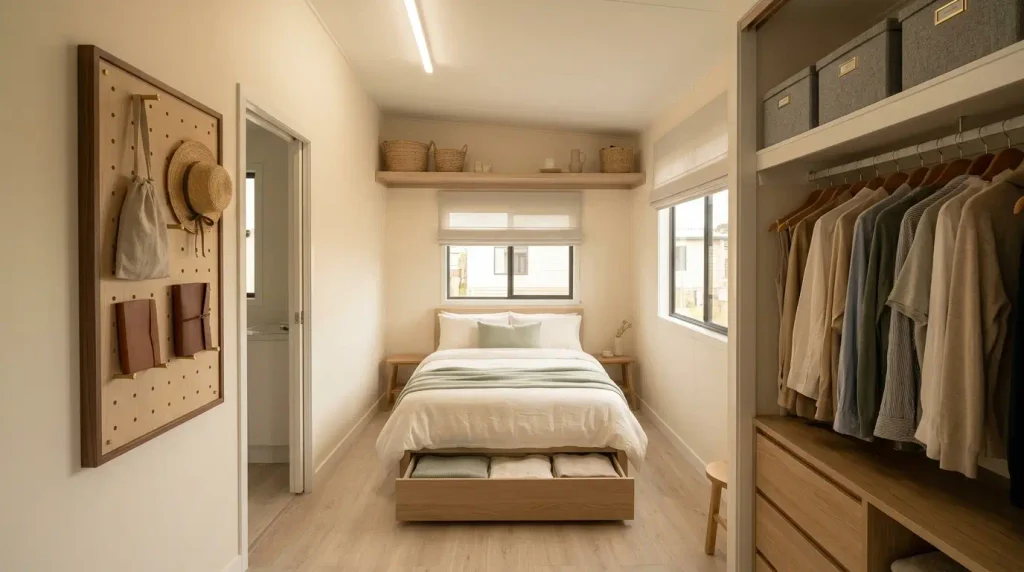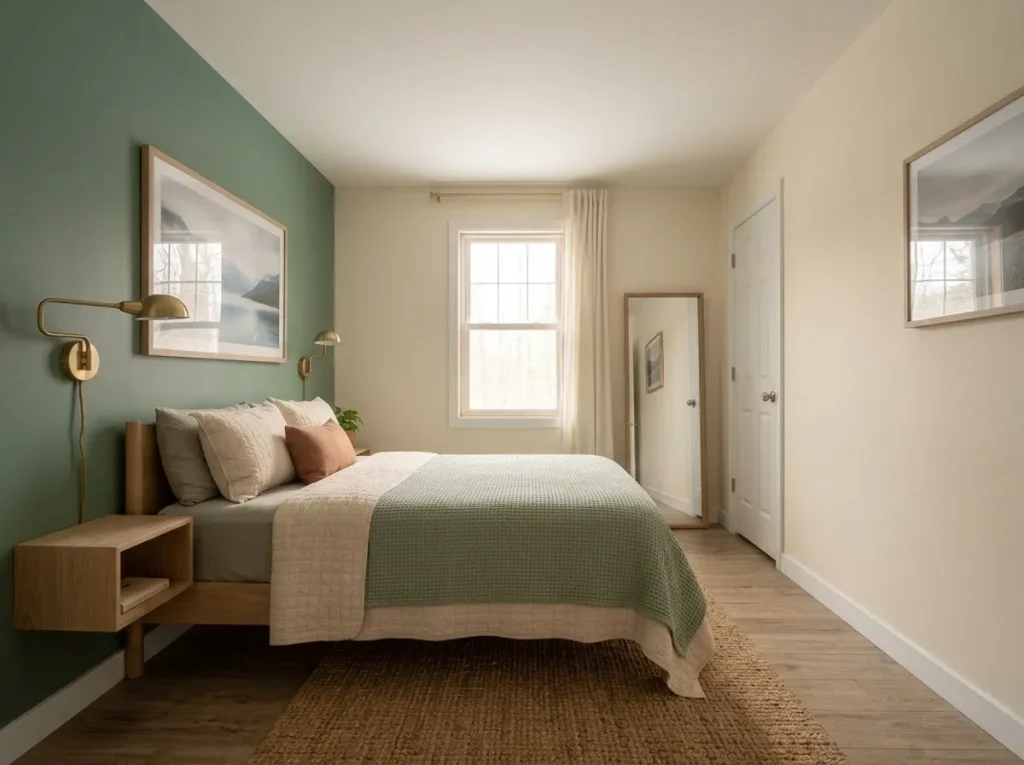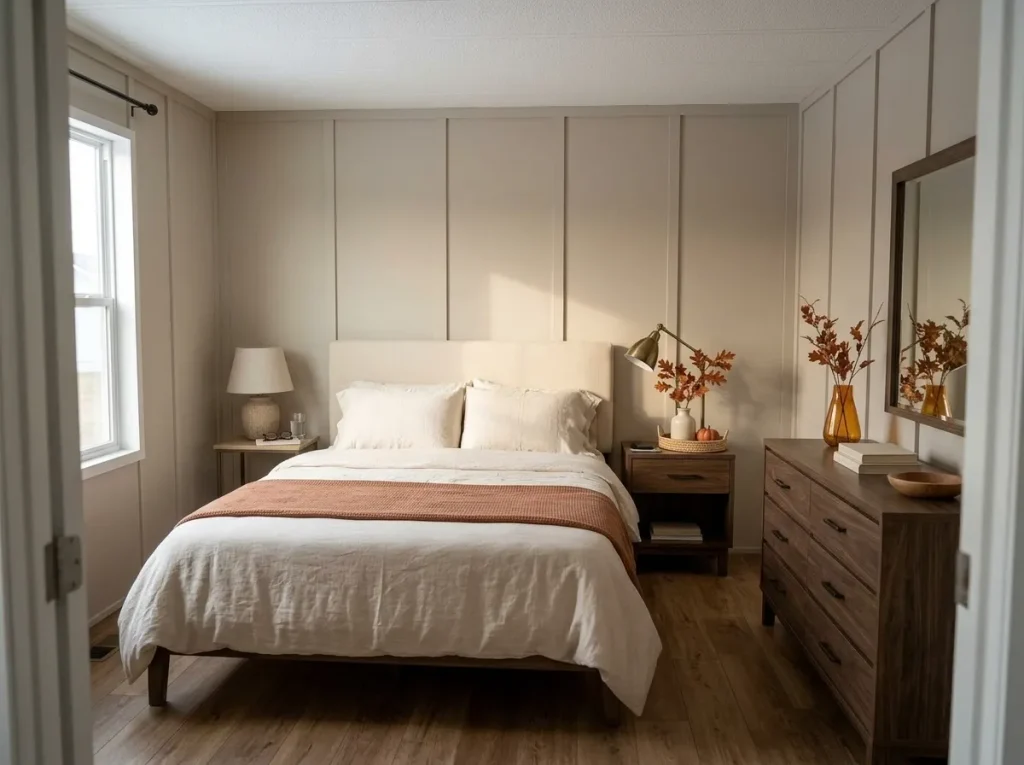
Thanksgiving dinner may last only a few hours, but an overnight guest notices the little things long after everyone has cleared the plates. The lamp they can reach from bed. A spot for a suitcase. Curtains that actually close. A clean extra blanket they do not have to ask for.
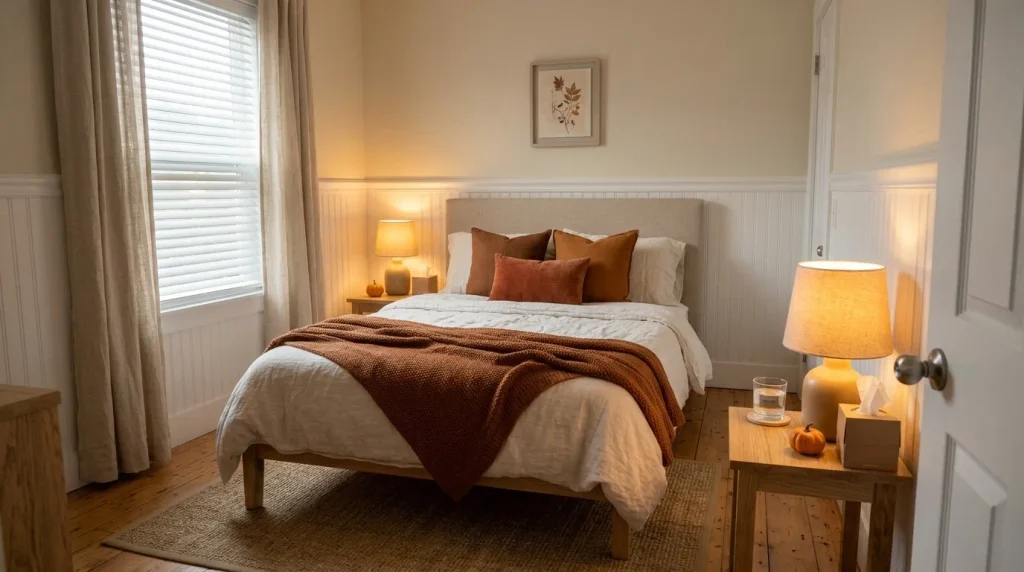
A thanksgiving mobile home guest bedroom needs the same sense of welcome as a bigger guest suite, with more deliberate choices about floor space and storage. The inviting rooms in our inspiration collection combine ivory bedding, rust and mustard accents, soft lighting, plaid, botanical art, and natural wood. The trick is choosing the details that make a visitor comfortable, not filling every narrow surface with fall décor.
These 15 touches move from the bed to the nighttime essentials and finally to the guest’s route through the room. Most can be done with what you already own, and every suggestion includes a reason to scale back when the bedroom is especially small.
1. Start With an Ivory-and-Cinnamon Guest Bed That Feels Like Thanksgiving
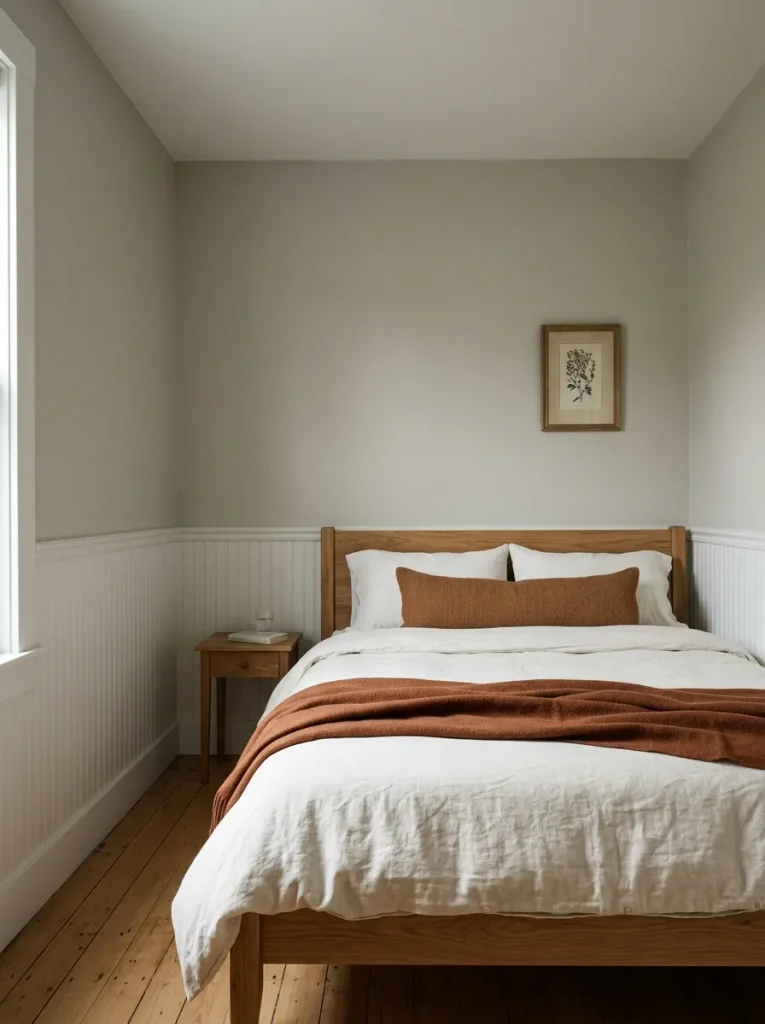
Begin with the largest uninterrupted surface in the room: the bed. A clean ivory duvet or cream coverlet gives rust, cinnamon, and muted pumpkin accents a calm backdrop, particularly when a mobile-home guest bedroom already has dark furniture or a narrow window wall.
Choose one seasonal statement—a cinnamon lumbar pillow, a rust throw, or a subtle harvest-print quilt. Then repeat its color in a smaller detail, such as framed art. A whole set of autumn-themed bedding often costs more and leaves less flexibility when Thanksgiving is over. If your bed already wears patterned linens, carry the seasonal shade in one solid throw so the patterns can breathe.
Before buying anything, photograph the bed from the doorway. If the color is apparent without five different pumpkin motifs competing for attention, the room has its Thanksgiving identity. For more complete color combinations, explore fall bedroom color palettes designed for mobile homes.
2. Layer a Cozy Quilt for Guests Who Sleep Warm or Cold
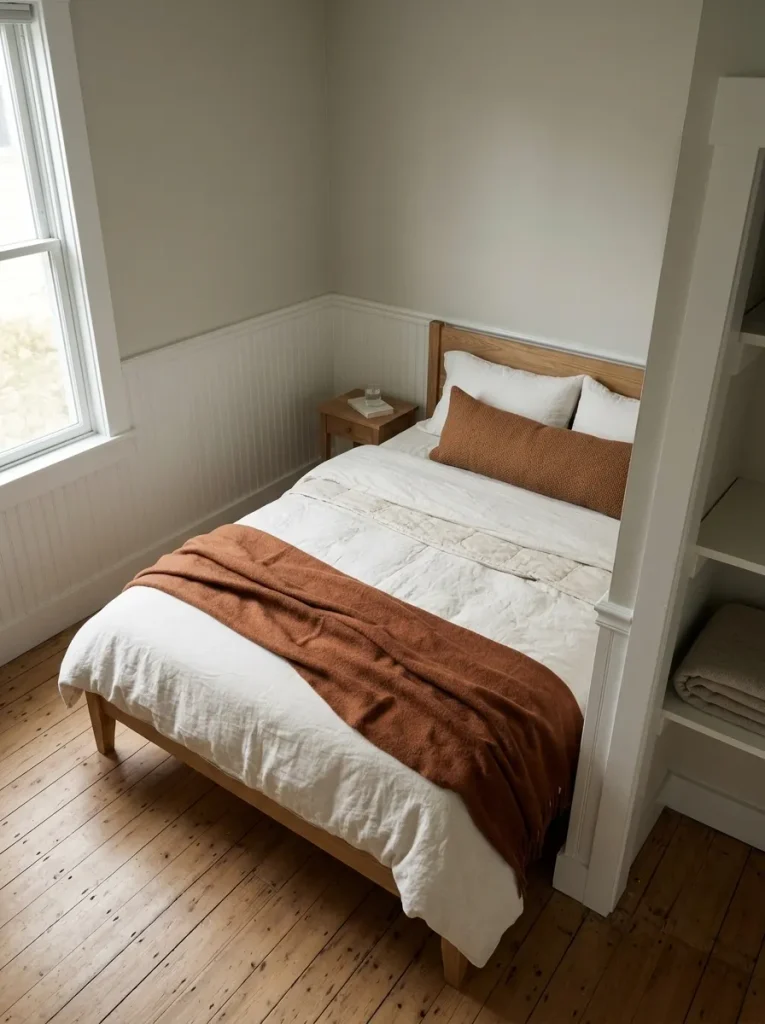
A photogenic pile of blankets can become a nuisance once somebody actually sleeps in the bed. Assemble the bedding in usable layers: breathable sheets, the regular duvet or quilt, and one optional folded throw within easy reach. This arrangement lets a guest adjust warmth without dismantling an elaborate decorative stack.
The choice depends on your room, not a universal “cozy” formula. A bedroom warmed by direct afternoon sun may need only a light cover and an optional quilt. A cooler room at the end of a mobile home can benefit from an extra washable blanket placed at the foot or in a nearby basket. Wash the guest layers before arrival and check for scratchy textures, loose fringe, or excessive weight.
Use the layer selector below to settle on a practical setup. Whatever looks prettiest in a photo, the guest should be able to pull back the covers with one movement.
Overnight Bedding Layer Selector
3. Give Those Beautiful Autumn Pillows Somewhere to Go at Bedtime
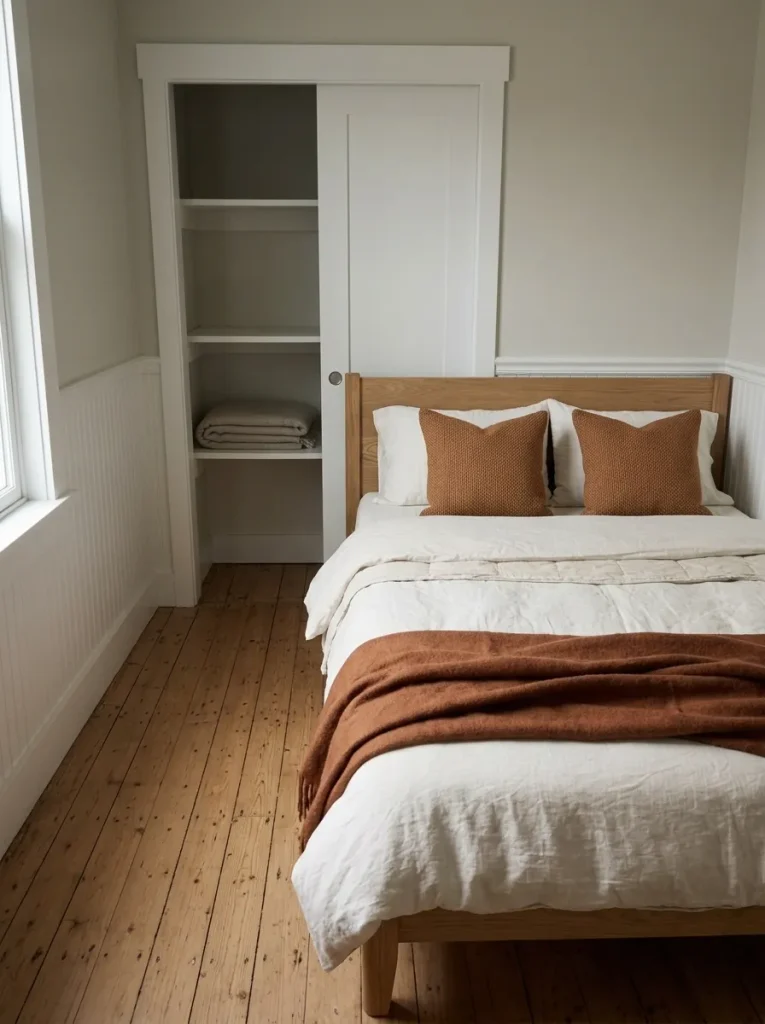
Two rust-colored pillows and a narrow patterned lumbar can make a plain guest bed feel thoughtfully prepared. The missing detail is often where those pillows will go at 10 p.m. A tight mobile-home bedroom may have no spare chair and only a slim gap beside the mattress.
Set the bed with sleep pillows plus no more decorative cushions than the room can store. Test the arrangement by removing every accent and placing it in the proposed overnight spot. A roomy closet shelf works; so does a spare compartment in a bedroom storage bench. The narrow floor between the bed and door does not.
If the only destination is the guest’s suitcase or a walking path, keep a single small accent pillow and let the quilt supply the pattern. The practical luxury is a bed that is effortless to use.
4. Make One Harvest-Inspired Headboard Accent the Room’s Focal Point
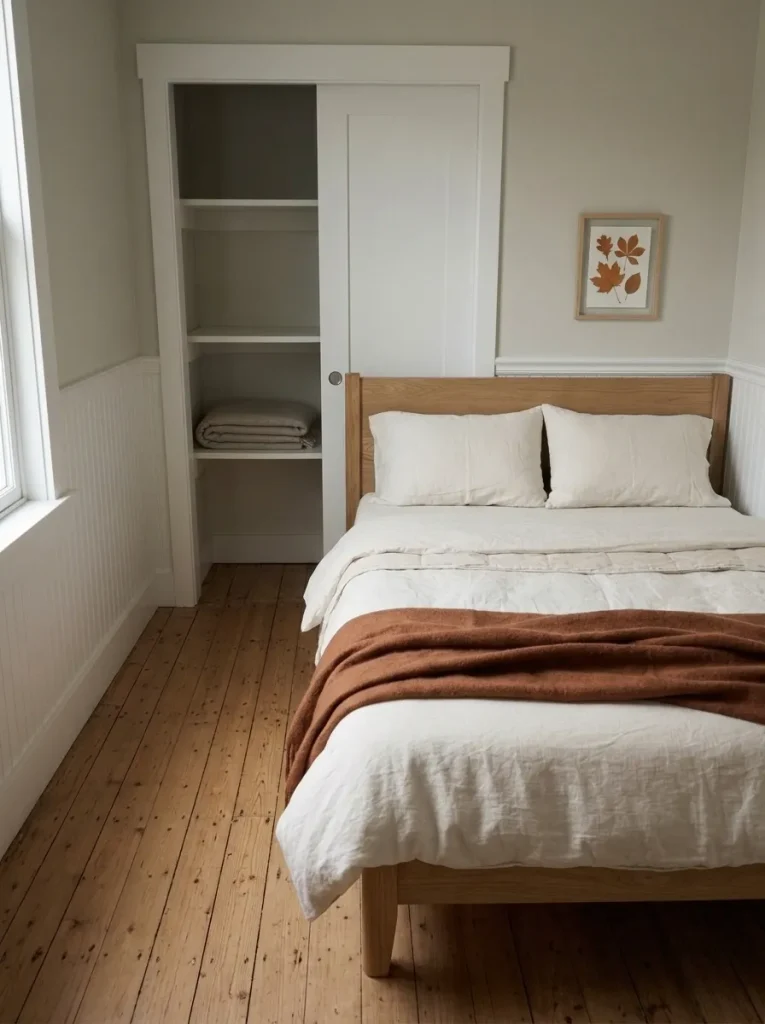
Consider what the guest sees first after opening the bedroom door. In many small manufactured-home bedrooms, the bed occupies most of that view. One lightweight botanical print or a modest autumn wreath on an adjacent wall can create a seasonal focal point without decorating every available surface.
On a short wall, choose a compact framed leaf study or a pair of small coordinated prints. Over a tall headboard, the existing wall art might already be enough; a cinnamon pillow beneath it can make the whole composition feel autumnal. Avoid dangling greenery, unstable objects, or anything heavy directly over a sleeper’s head. Confirm the chosen hanging method suits the wall construction and item weight.
The decision is whether the wall needs any additional decoration at all. For broader year-round composition ideas, see cozy fall bedroom decorating for mobile homes.
5. Create a Soft Amber Glow Without Bedroom Candle Risks
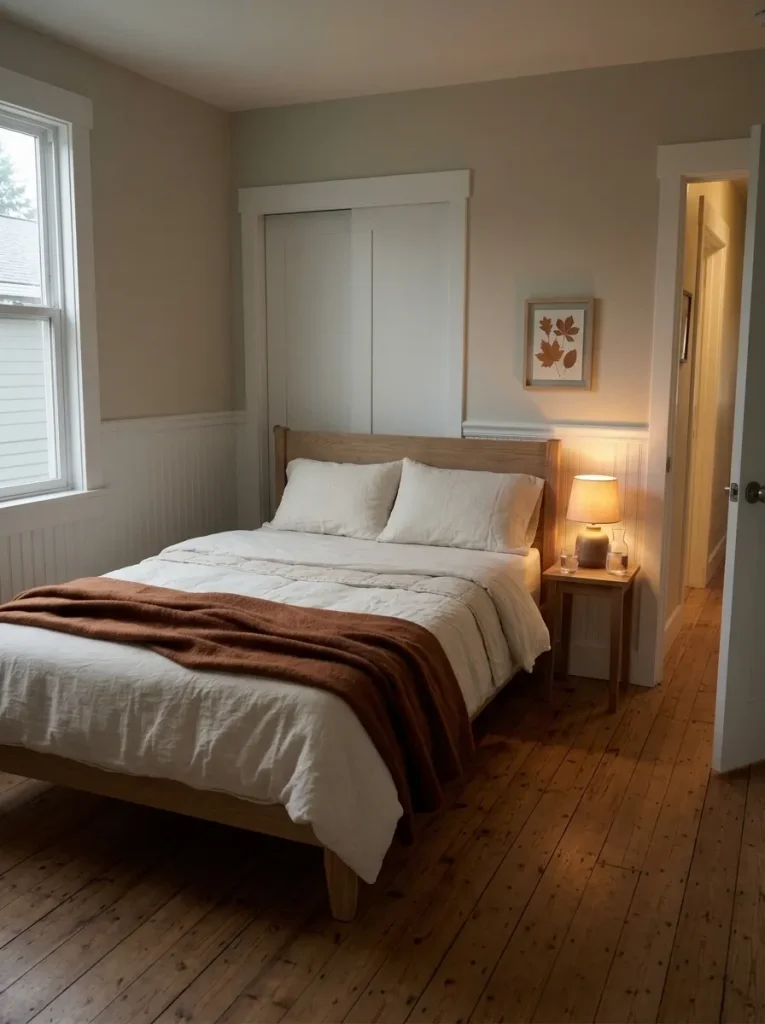
The warmest reference bedrooms use more than daylight: their lamps make neutral fabrics look inviting after dinner. Reproduce that atmosphere with a bedside lamp or an appropriately installed light that the guest can operate from bed. Test it with the overhead light switched off and the curtains closed. Can the visitor find the door, set down glasses, and read a few pages?
Use a warm-white bulb appropriate for the fixture and shade. A small lamp with a stable base may beat a dramatic glass lamp on a shallow nightstand. Where a wall-mounted fixture is already suitable, it can free up surface space; new electrical work belongs with a qualified professional.
Skip open-flame candle displays in sleeping areas. The U.S. Fire Administration advises against lit candles in bedrooms and recommends flameless alternatives. The comparison below shows three ways to deliver an inviting glow without asking your guest to navigate a dark room.
Bedside Lighting Experience Lab
6. Turn a Tiny Nightstand Into a Thoughtful Guest Essentials Station
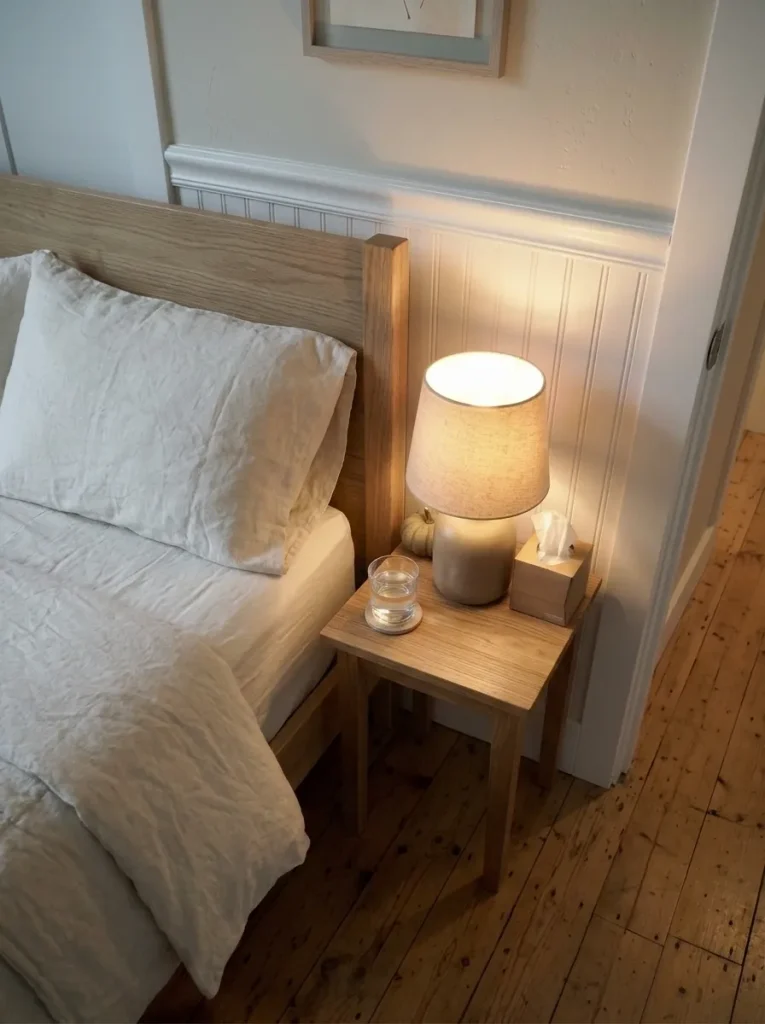
Imagine arriving with a phone, glasses, a water bottle, and no idea where the light switch is. That is a useful test of your bedside styling. In a narrow guest room, a nightstand should first provide a stable place for everyday objects and only then carry holiday decoration.
Leave a genuinely empty area at the front of the table. Put a labeled guest Wi-Fi card, tissues, and a coaster together on a small tray if there is room. Provide a safe, accessible charging point without routing an extension cord through the walking path; avoid overloaded outlets. A miniature pumpkin can sit behind the necessities, but a vase of tall branches does not belong where an elbow can knock it over.
If the bed has one reachable side only, place essentials on that side. When the table is barely wider than the lamp, move optional décor to the dresser. Our fall nightstand and dresser styling guide explores those surfaces in more depth.
7. Give the Windows Soft Curtains That Actually Protect Privacy
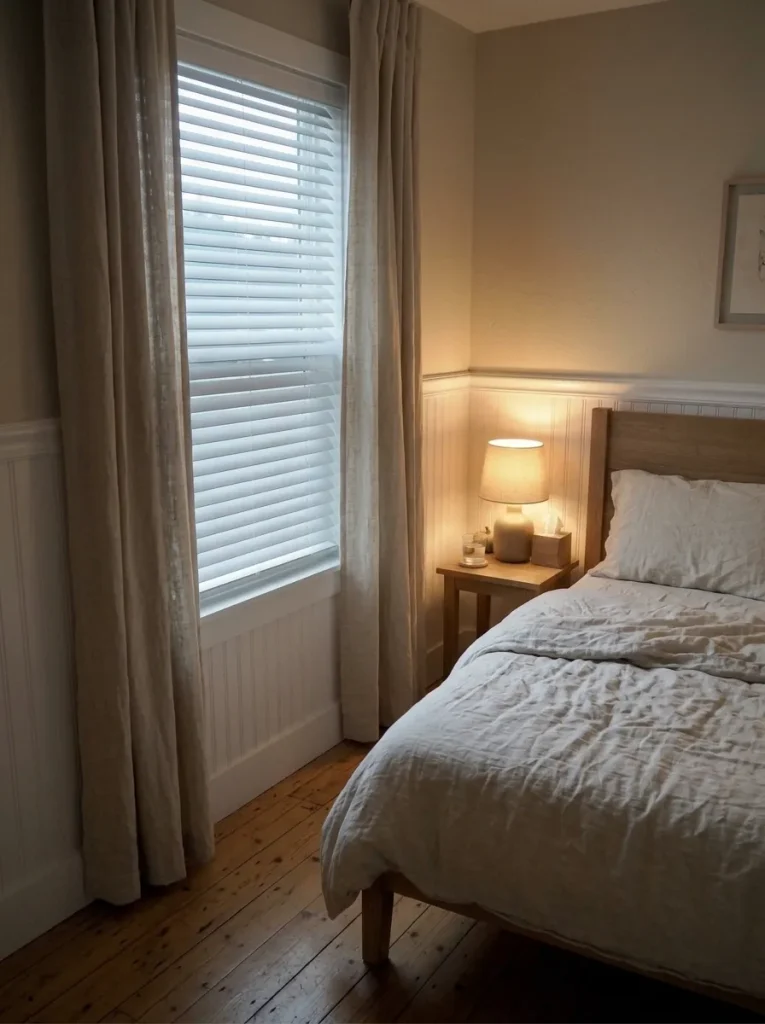
Billowing white curtains look romantic in daylight; at night, some sheers reveal silhouettes or allow streetlights to shine directly onto the bed. A Thanksgiving visitor needs a window covering that looks pleasant and works after dark.
Check privacy from outside while the bedroom is lit. If sheer curtains are already in place, keep the existing working blind beneath them or add an appropriate lined treatment. For a compact window, choosing fabric with a quiet linen texture can soften the room without another busy autumn print. Ensure curtains clear lamps, heaters, and any other heat sources, and verify the window can still be operated.
Don’t block an emergency escape opening with fixed furniture or a decorative installation. The U.S. Fire Administration recommends planning usable escape routes. Privacy is successful only when the room remains functional.
8. Clear a Small Closet Section So Guests Can Unpack
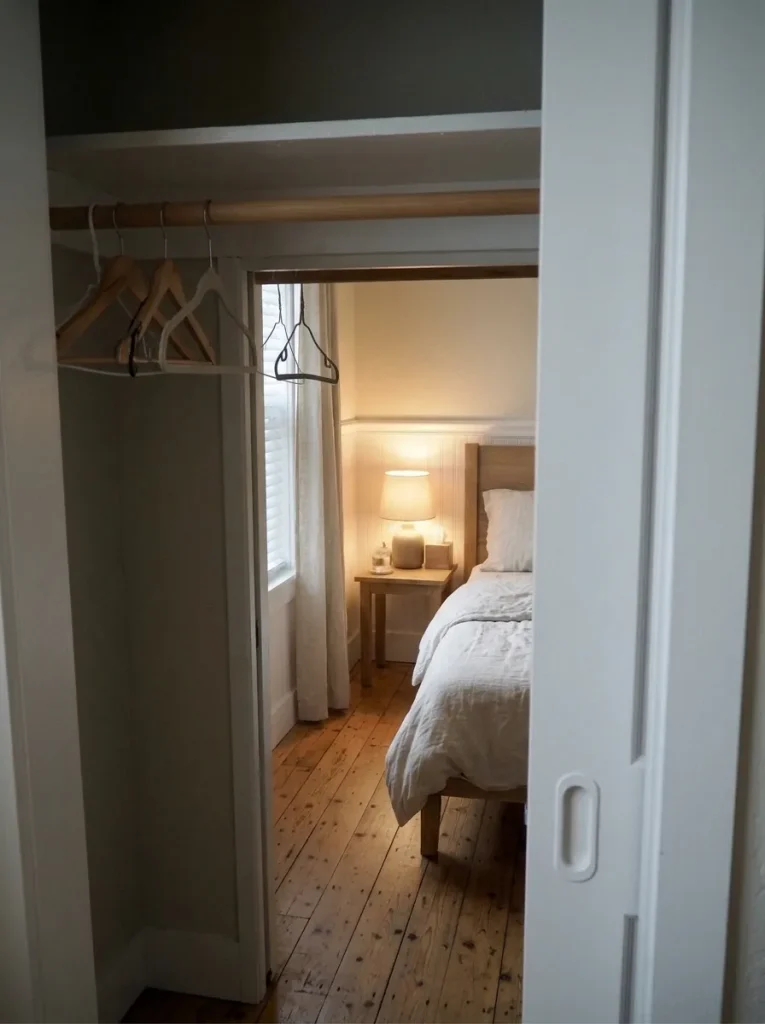
Guests should not have to hang a coat on the closet doorknob because every hanger belongs to the host. Temporarily empty a specific section before Thanksgiving: a few open hangers for jackets or shirts and one reachable shelf for folded items. The amount depends on how long they will stay.
In a shallow mobile-home closet, check the actual usable opening, not merely the wall-to-wall width. Sliding doors, shelf brackets, and stacked storage bins can make half of a closet awkward to reach. Move personal overflow to a sealed bin elsewhere before guests arrive. Keep a laundry bag or separate hamper option visible only if the visit is longer than a night.
Use the closet studio to pick an allocation. If the existing system consistently fails your household, explore these small mobile-home closet improvement ideas after the holiday rather than beginning a last-minute closet rebuild.
One-Night Closet Allocation Studio
9. Protect the Bed-to-Door Walkway Before Adding More Furniture
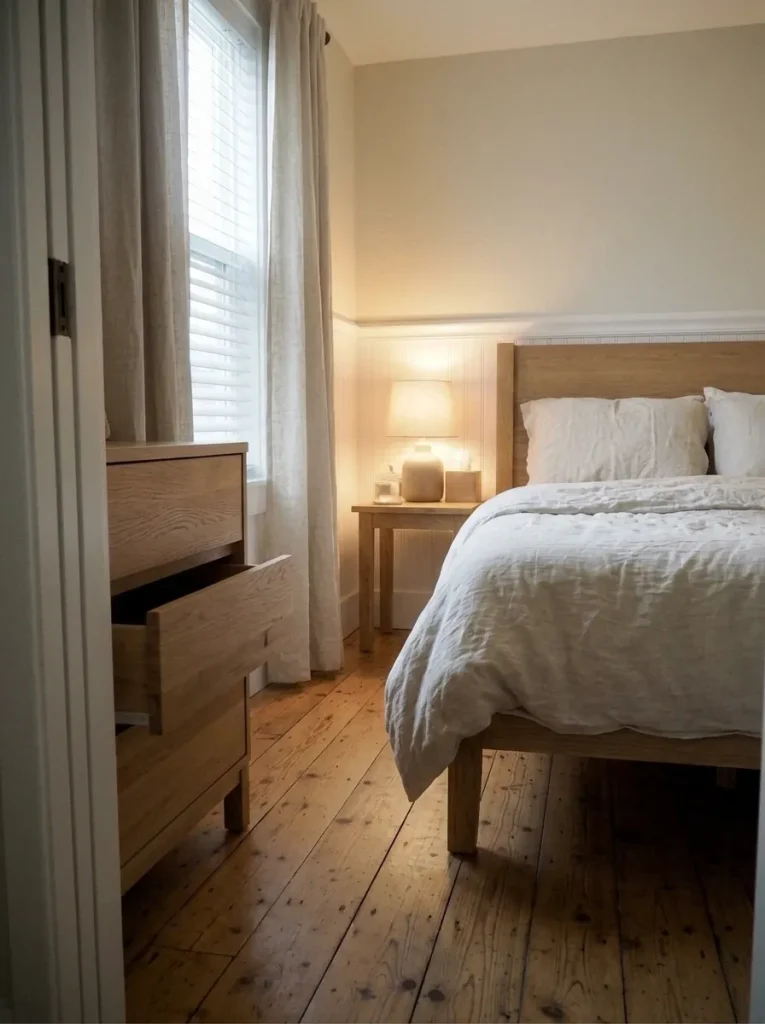
Before decorating the floor, walk from the bedroom entrance to the guest’s sleeping side with the dresser drawer pulled open. Then repeat the route after dark with just the bedside light on. This simple rehearsal catches problems that styled photographs hide: a bench corner, an overhanging throw, a basket handle, or a cable crossing the floor.
In a compact bedroom, the right amount of décor is partly determined by the route it leaves open. Move stools, floor pumpkins, and extra baskets out of that route first. If a guest uses a walking aid or needs additional turning space, plan around their specific needs instead of relying on a decorative layout photograph.
The practical checkpoint: the bedroom door must operate normally, the guest must reach the bed safely, and escape openings must stay available. There is no universal clearance measurement that fits every room and every guest.
This is also the moment to check that tall dressers and televisions are properly secured; the U.S. Consumer Product Safety Commission promotes anchoring furniture against tip-over hazards.
10. Add a Warm, Secure Bedside Rug for a Softer Morning
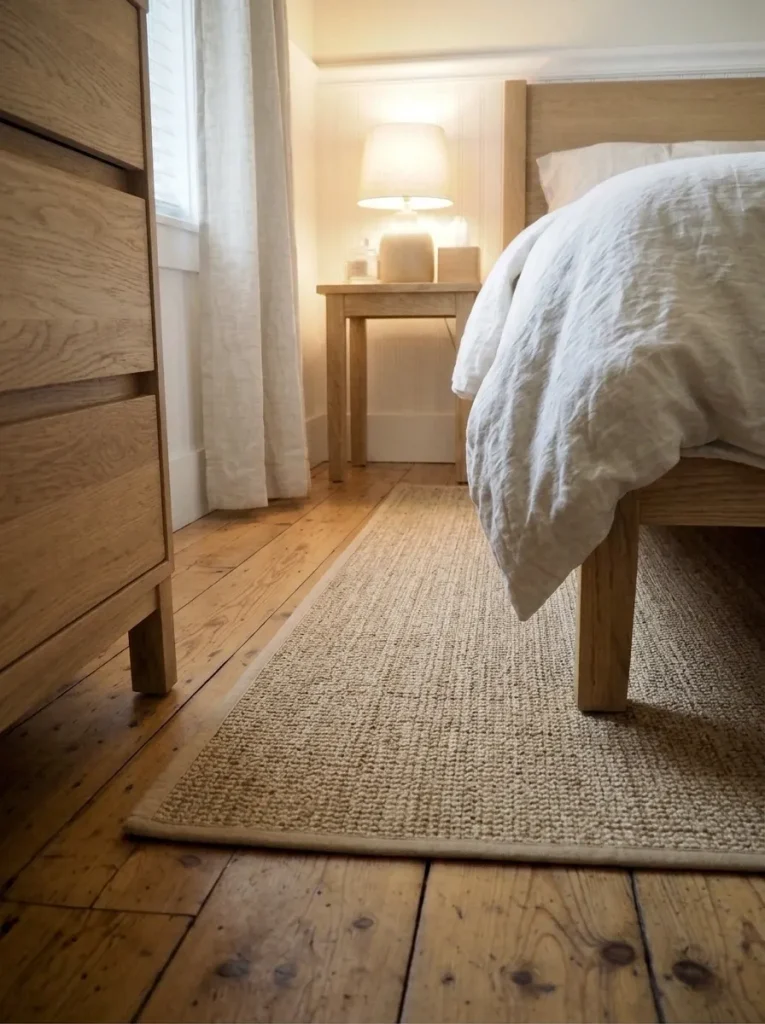
Cold feet are memorable, but so is catching a toe on the corner of a loose rug. For a small Thanksgiving guest bedroom, a single soft rug can be a welcome detail when its placement serves the actual first step out of bed.
Stand beside the bed and mark the spot where feet naturally land. Place a low-profile rug or appropriately secured larger area rug so that zone is covered without pushing a curled edge into the main route. Consider flooring type, door swing, rug backing, and manufacturer guidance. A thick shag rug may look luxurious in a photograph but become impractical under a close-swinging door or unstable beside a wheeled suitcase.
When the room is already carpeted, extra layering may add little comfort. Keep the floor clear and bring texture to the bed instead. A rug should earn its place through comfort and secure footing.
11. Style a Thanksgiving Welcome Tray on an Existing Dresser
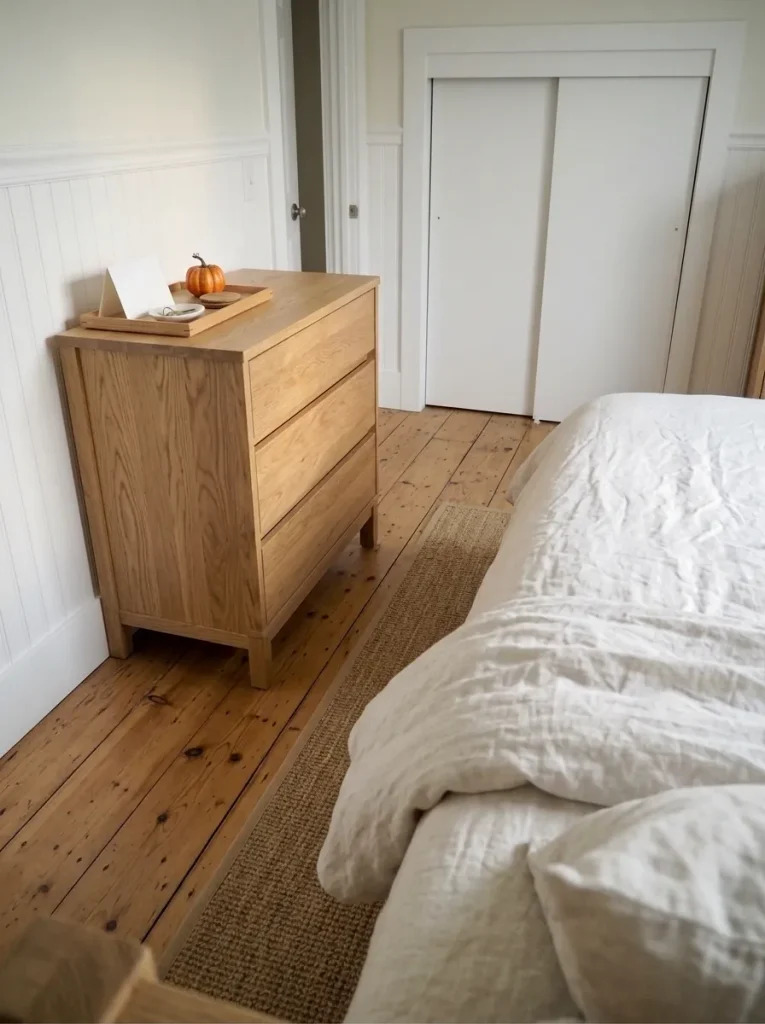
One small gesture can make an overnight stay feel personal: a neat arrival spot with a handwritten welcome note, the Wi-Fi details, and a clear place to put a watch or keys. A dresser makes an excellent landing area if the bedside table is too small.
Build the tray around the visitor’s first five minutes. Use a low-edged tray or dish, one small seasonal accent, and a card with anything they might otherwise have to ask for—bathroom location, spare towel location, or how to adjust the room temperature. Avoid putting scented products beside pillows without knowing your guest’s preferences. Food or drinks belong here only if there is room to place them safely and any dietary needs are known.
Leave space for the guest’s own possessions. A carefully styled tray stops being hospitable the moment it consumes the entire dresser top.
12. Use a Foot-of-Bed Bench Only When It Earns Its Space
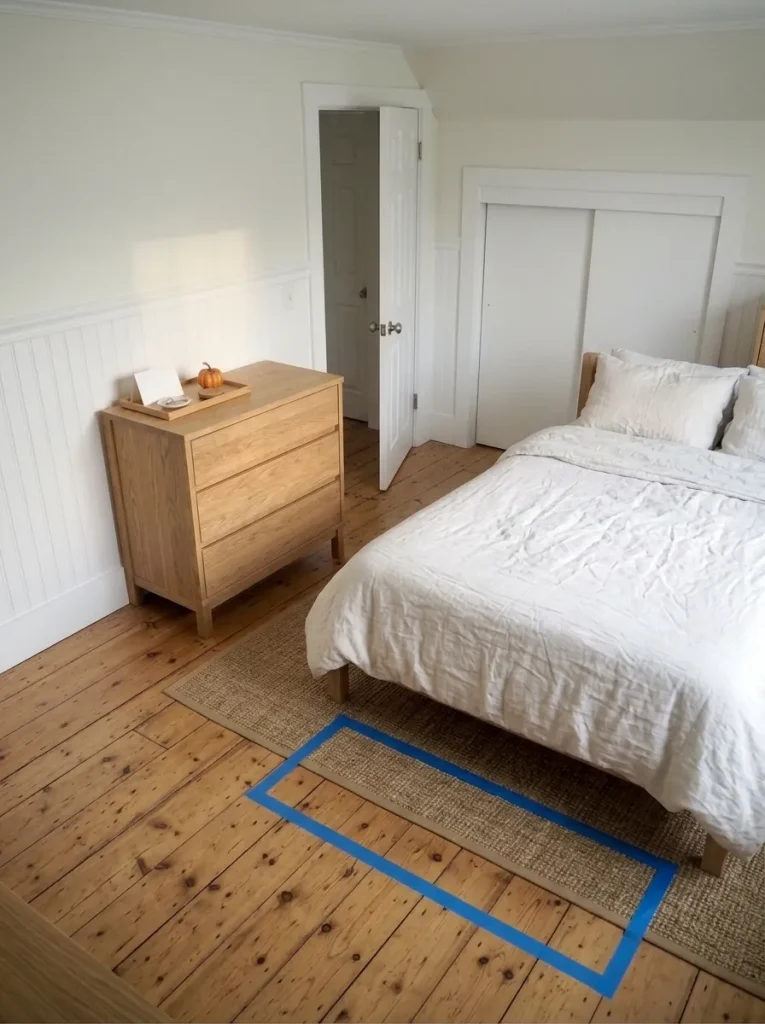
The upholstered benches in the inspiration photos look attractive and give quilts a polished finish. In a small mobile home, however, the extra depth can turn an easy walk to the doorway into a side-step. A piece of furniture is useful only when there is enough room to approach it and open nearby drawers.
Measure the space with the bed made, then place painter’s tape on the floor to simulate the bench footprint. Walk around it, open the bedroom door, and pull out the nearest dresser drawer. Compare a slim bench with a compact luggage rack positioned against a clear wall. Some rooms work best without either: a clean section of closet or dresser space can manage luggage more effectively.
The luggage-fit studio below compares these three arrangements. If the bedroom needs a more fundamental furniture change, use the mobile-home bedroom layout guide as the next step.
Luggage-Bench Fit Studio
13. Bring in Autumn Branches Without Crowding the Sleeping Area
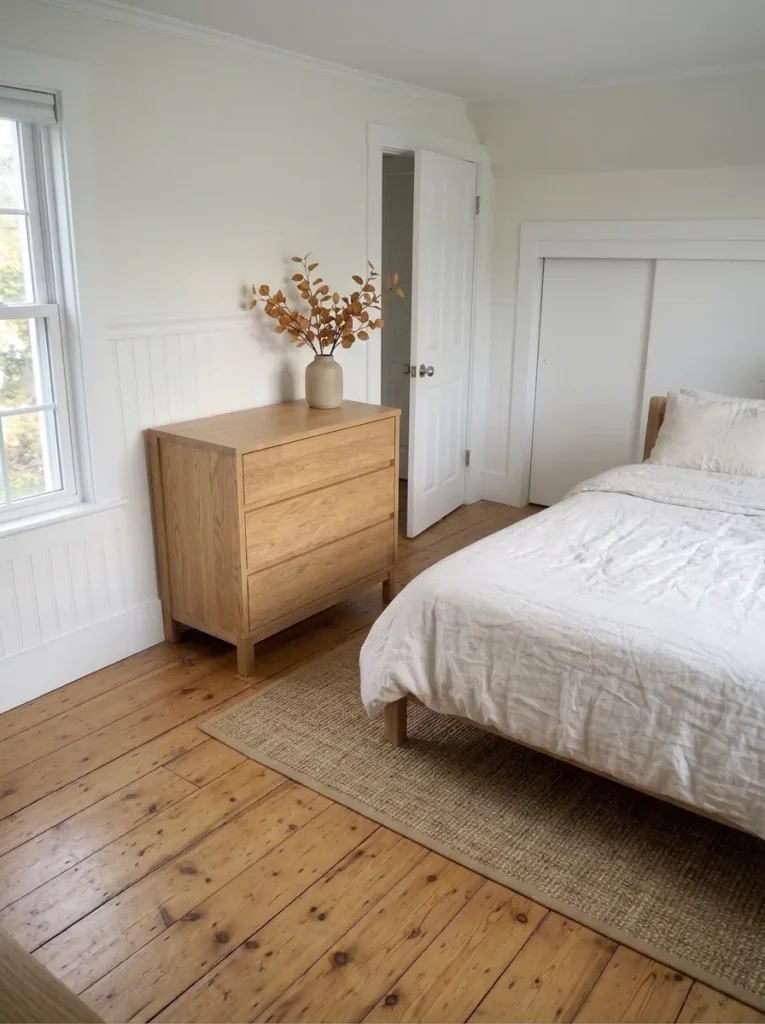
Autumn branches make a strong vertical accent, especially in an otherwise neutral room. Yet a tall arrangement beside a pillow can shed onto bedding, obstruct a curtain, or occupy the one clear nightstand. Treat stems as a room-scale object rather than a small tabletop detail.
Try a short, stable arrangement on the far side of an existing dresser. From the doorway, check that it adds height where the room needs balance, and from the bed, confirm it does not block a view toward the door or interfere with window coverings. A few preserved leaves or faux branches can provide the same seasonal shape without pollen, water spills, or brittle shedding. Skip fragrance-heavy stems when you do not know a guest’s sensitivities.
If the ceiling is low or the furniture is already visually busy, replace the branches with a modest botanical print. The room can feel festive without a tall object.
14. Offer an Extra Blanket in a Basket Guests Can Reach Easily
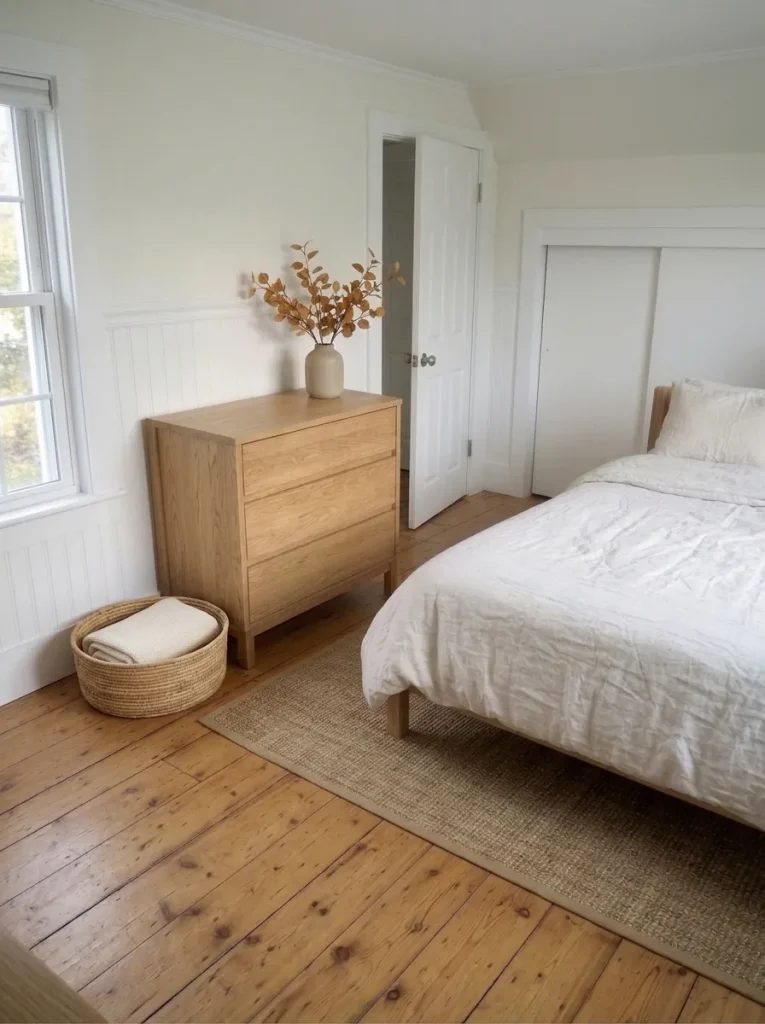
An extra blanket is genuinely thoughtful only when a guest knows it exists and can retrieve it without moving furniture. In some mobile-home bedrooms, the foot of the bed has room for a shallow woven basket. In others, the basket becomes an obstacle to the door.
Fold a freshly laundered throw into a clean, smooth-sided basket on a clear dresser-adjacent section or open shelf. Avoid rough wicker that could snag delicate fabric; line it if needed. A simple note—“Extra blanket”—removes guesswork. For a one-night visitor, an extra folded cover on an accessible closet shelf may be even more convenient.
The ideal position is reachable but off the nighttime route. If no such place exists, add the spare blanket to the closet allocation you already prepared; you do not need an additional basket to convey hospitality.
15. Finish With a Thanksgiving-Night Guest Comfort Walkthrough
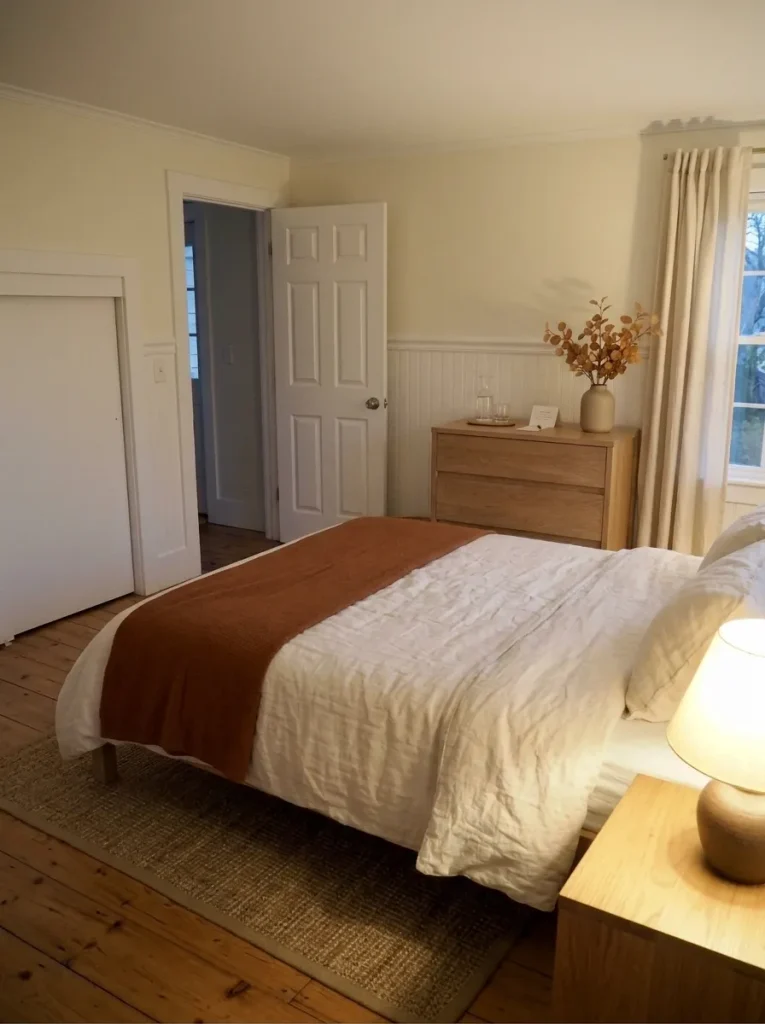
On the evening before the visit, experience the bedroom as someone who has never slept there. Begin at the closed door, switch on only the light your guest will use, set down an imaginary overnight bag, and approach the bed. Try the curtains, charger, nightstand, closet, and any window controls. Small inconveniences become obvious when you perform the routine in order.
Then do the less photogenic checks: fresh linens and towels, comfortable temperature, working smoke alarms, unobstructed exits, secure tall furniture, and a clear route to the bathroom. If the room has a television, put the remote where it can be found and ensure the equipment is stable. A fragrance-free room and an invitation to ask for another blanket often matter more than more decorative accents.
Complete the inspection below. Fix the items that would interrupt sleep first; adjust the Thanksgiving details only after the guest has everything needed for a comfortable night.
Guest-Ready Final Inspection
Make Thanksgiving Hospitality the Finishing Touch
Start with clean, adjustable bedding and lighting a guest can control. Then make room for their belongings and verify the walking route, curtains, and essentials. Those are the details that change the experience of staying in a small mobile home. Rust cushions, botanical prints, and a woven basket can add a lovely Thanksgiving atmosphere once the practical groundwork is in place.
You do not need all 15 touches in one bedroom. Choose the changes that solve an actual inconvenience in yours, and keep the rest of the space comfortably quiet.
Save this guide on Pinterest before your Thanksgiving preparations, and return to the final guest-room walkthrough the night before everyone arrives.