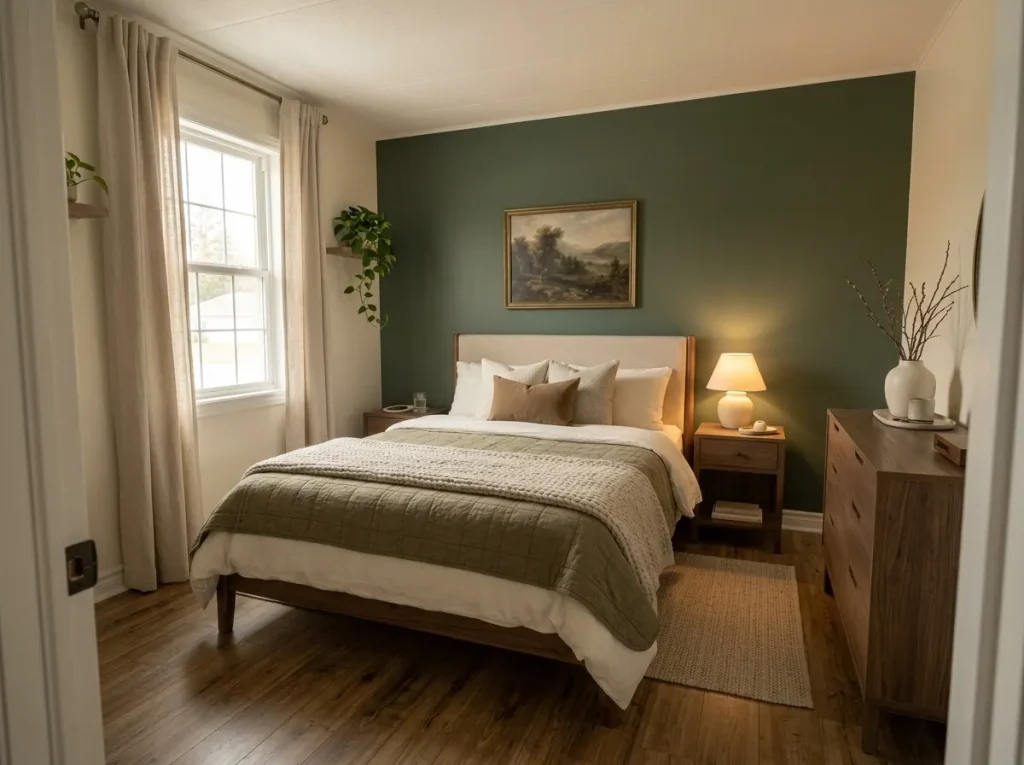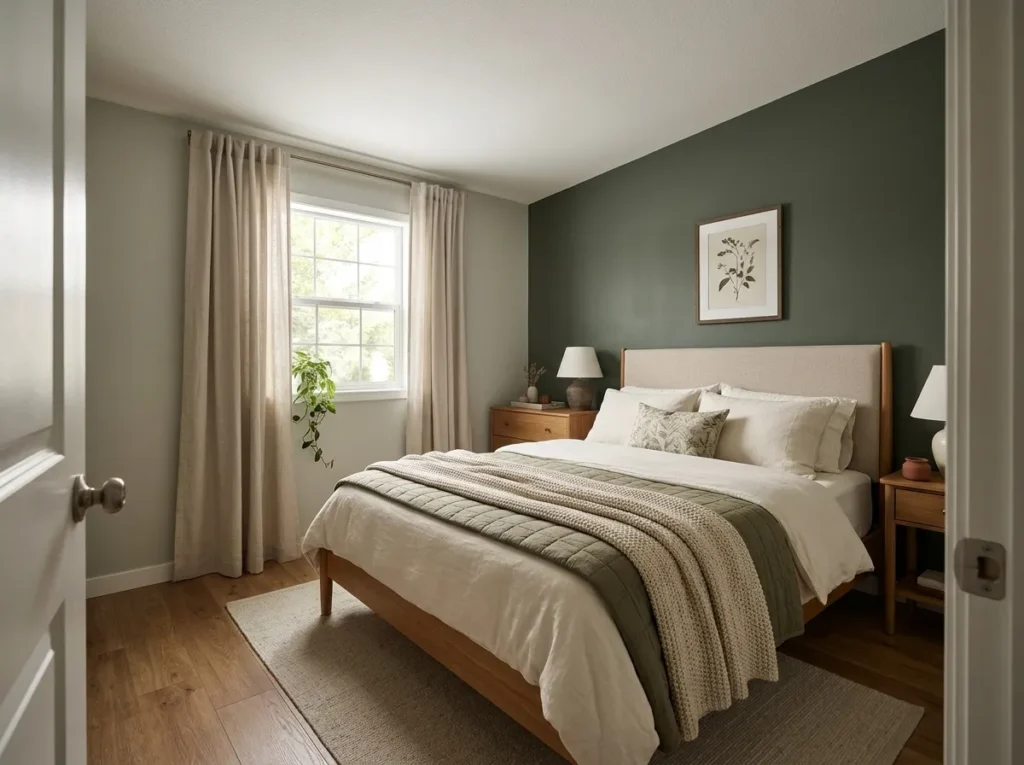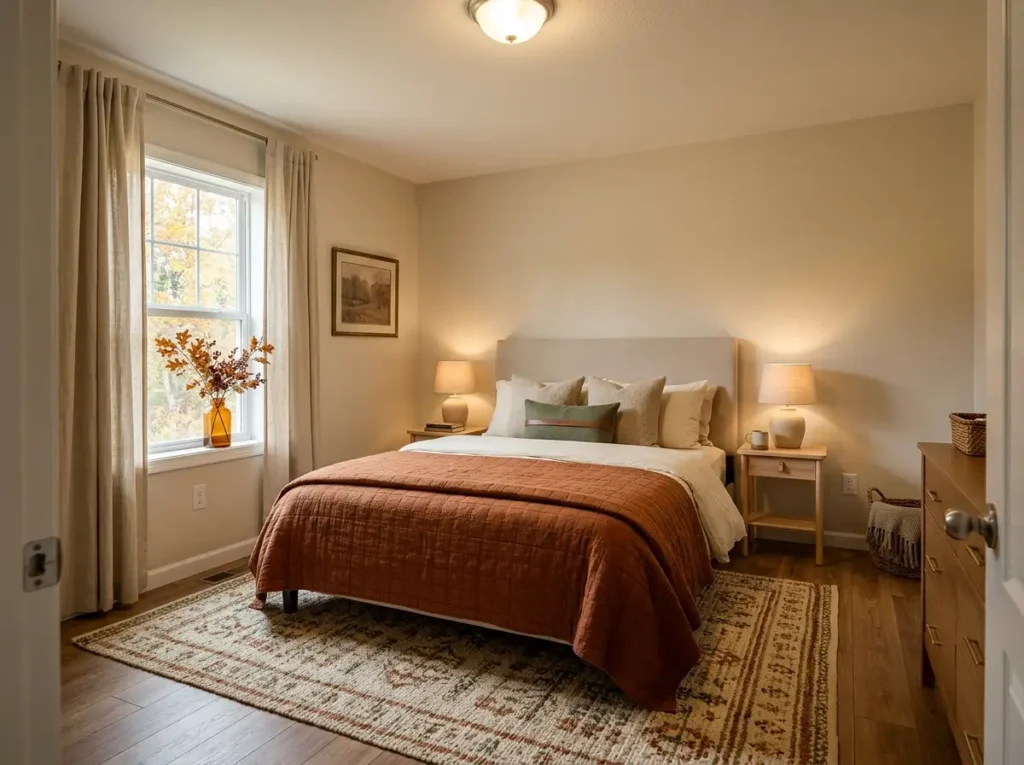
A mobile home bedroom can be surprisingly difficult to decorate well. The bed occupies a large share of the room, closet and bathroom doors can interrupt otherwise useful walls, and a dresser that seems perfectly proportioned in a showroom may make the actual bedroom feel crowded.
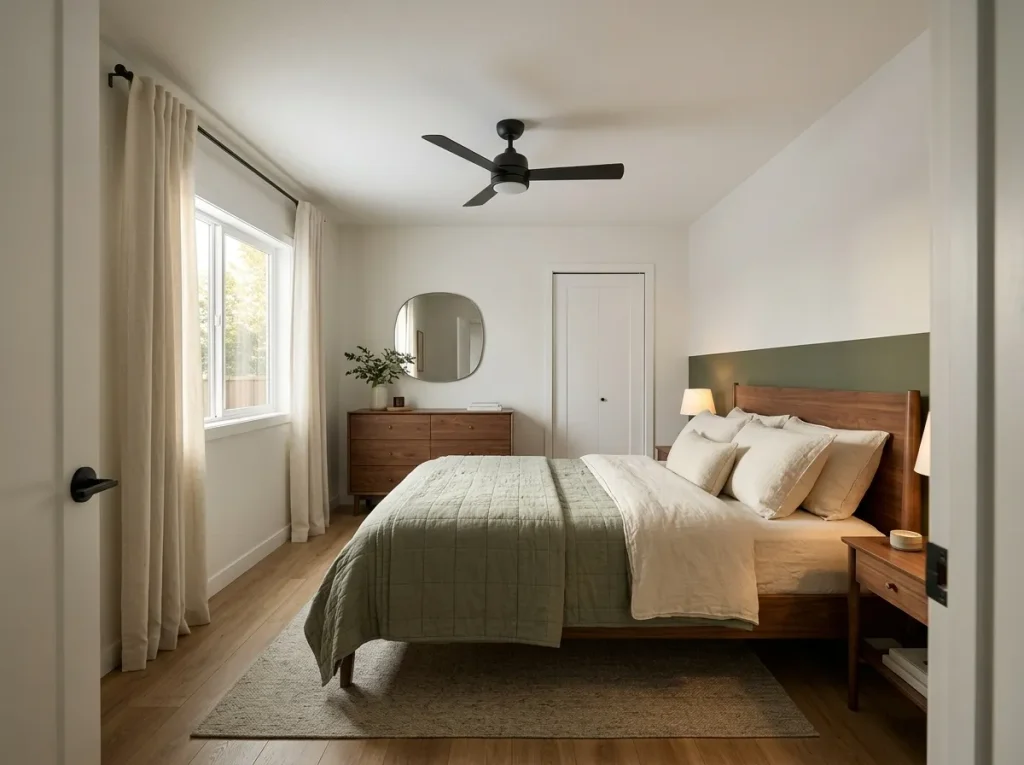
The most useful mobile home bedroom ideas begin with those realities.
Before choosing new bedding, wall décor, storage, or furniture, look at how the room works from the doorway. Notice the route to the closet, which wall gives the bed enough visual authority, what you see while lying down, and which surfaces repeatedly collect everyday items.
Once those relationships are settled, decorating gets easier. Color can become richer without overwhelming the space, storage can blend into the room, and softer layers can add comfort without creating clutter.
These 25 ideas move from layout and furniture pressure toward color, storage, lighting, texture, and the final edit so you can improve the decisions that matter most first.
1. Map the Fixed Openings Before You Decide Where the Bed Goes
Walk into the bedroom and temporarily ignore the furniture. Look first at what cannot easily move: the entry door, closet opening, windows, bathroom access, vents, and permanent storage.
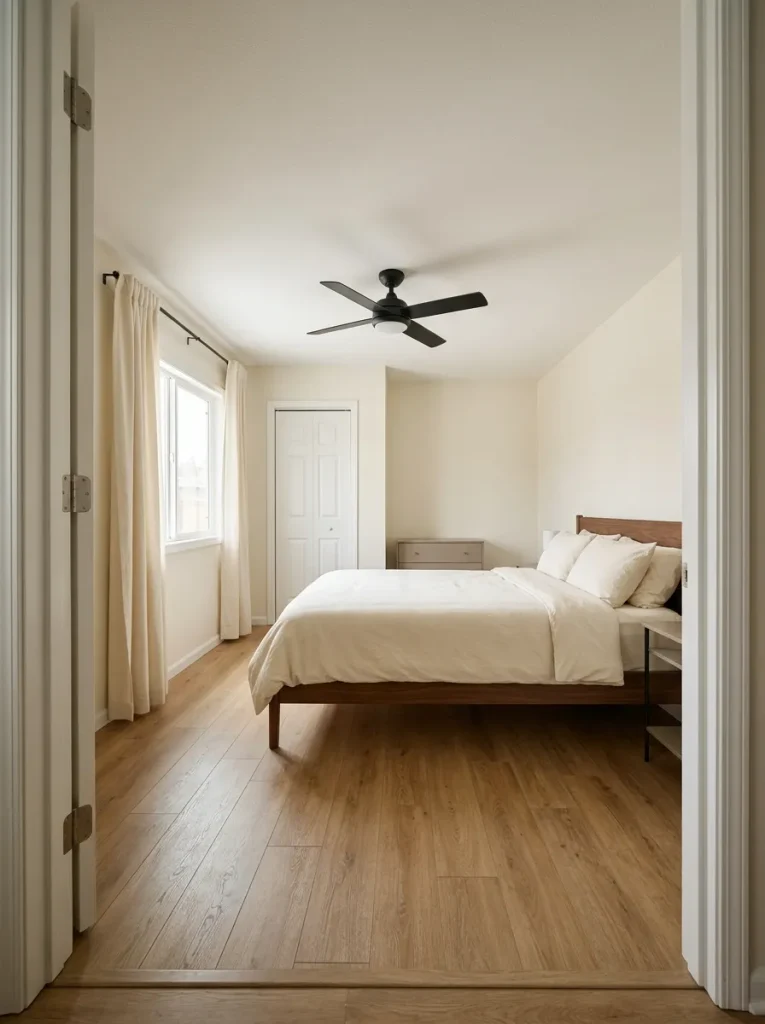
In many mobile home bedrooms, these fixed elements divide the walls into short usable sections. A bed may technically fit against several walls while only one arrangement leaves the rest of the room comfortable.
Find the opening that creates the most pressure. A closet beside the bed may need frequent access. A window centered on the strongest-looking wall may complicate the headboard. A doorway may establish the natural walking route through one side of the bedroom.
Choose the bed position after identifying that pressure.
Which fixed feature is controlling your room?
Choose the condition creating the most pressure. The recommendation changes according to what needs protecting first.
Move the bed away from the natural entry route first
A beautiful bed wall loses value when entering the bedroom requires squeezing around a corner. Favor the viable position that makes the first steps into the room feel obvious.
Let the closet influence placement strongly
Closet access happens repeatedly. A layout that interferes with doors, drawers, or clothing retrieval will affect the bedroom long after the styling feels new.
Choose whether the window frames the bed or stays independent
A window can sit beside the bed, become part of a centered composition, or remain on a quieter wall. Compare the entire wall before rejecting it.
This is a visual planning aid, not a universal floor-plan rule. Existing architecture and your everyday routines should control the final arrangement.
The useful shift is to stop asking only, “Where can the bed fit?” Ask which position allows the whole bedroom to operate with the least friction.
2. Give the Bed the Clearest Wall, Not Automatically the Longest One
A long wall can seem like the obvious location until you notice that it also carries a closet door, window edge, thermostat, or the clearest route through the bedroom.
Raw wall length is less important than how complete the bed composition can look once the room is furnished.
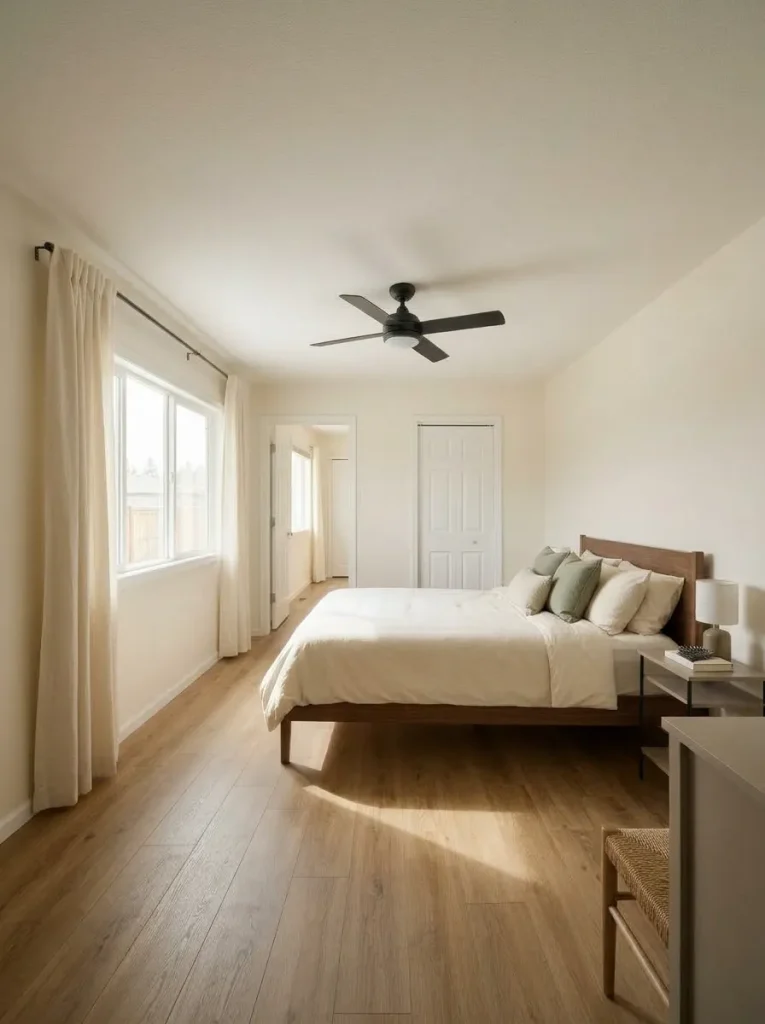
A slightly shorter wall may give you a centered headboard, two usable bedside zones, and a calmer view from the entrance. The longer wall might force the bed off-center and leave disconnected slivers of wall around it.
Stand at the bedroom door and compare each candidate as a complete scene. Include the window, door swing, nightstands, floor area, and anything planned above the headboard.
A centered bed is optional. A bed wall that looks resolved and leaves the room usable is the stronger choice.
3. Choose the Mattress and Bed Frame as One Footprint
Does the mattress size seem appropriate while the bedroom still feels tighter than expected?
Look at the frame.
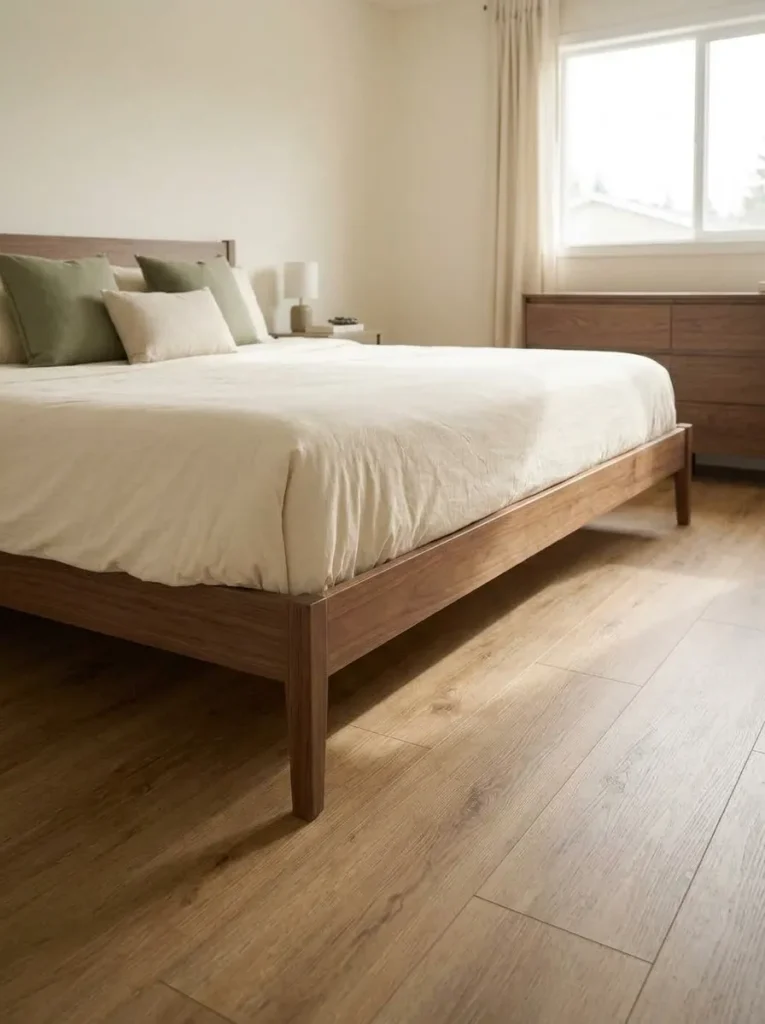
Thick side rails, a projecting footboard, oversized corner posts, attached drawers, and a deep headboard can make the furnished bed occupy much more visual and functional territory than the mattress alone suggests.
That does not mean a compact mobile home bedroom always needs a minimal platform bed. A storage frame may justify its mass when it removes the need for a separate cabinet or dresser. A substantial wood frame can also serve as the room’s dominant decorative feature.
Compare what the frame adds with what it consumes.
Read the frame by the pressure it adds
The strongest option is not automatically the smallest frame. Compare storage value, movement, and visual mass together.
For additional examples where the overall bedroom is extremely compact, the broader small-space guide provides useful furniture inspiration beyond manufactured homes:
43 Small Bedroom Ideas That Feel Cozy Instead of Cramped
4. Use Unequal Nightstands When the Two Bed Sides Have Unequal Space
Picture a bed with open wall space on one side and a closet opening close to the other. Matching nightstands may look balanced in a catalog while forcing the tighter side of the actual room into an awkward squeeze.
That is a useful place to release perfect symmetry.
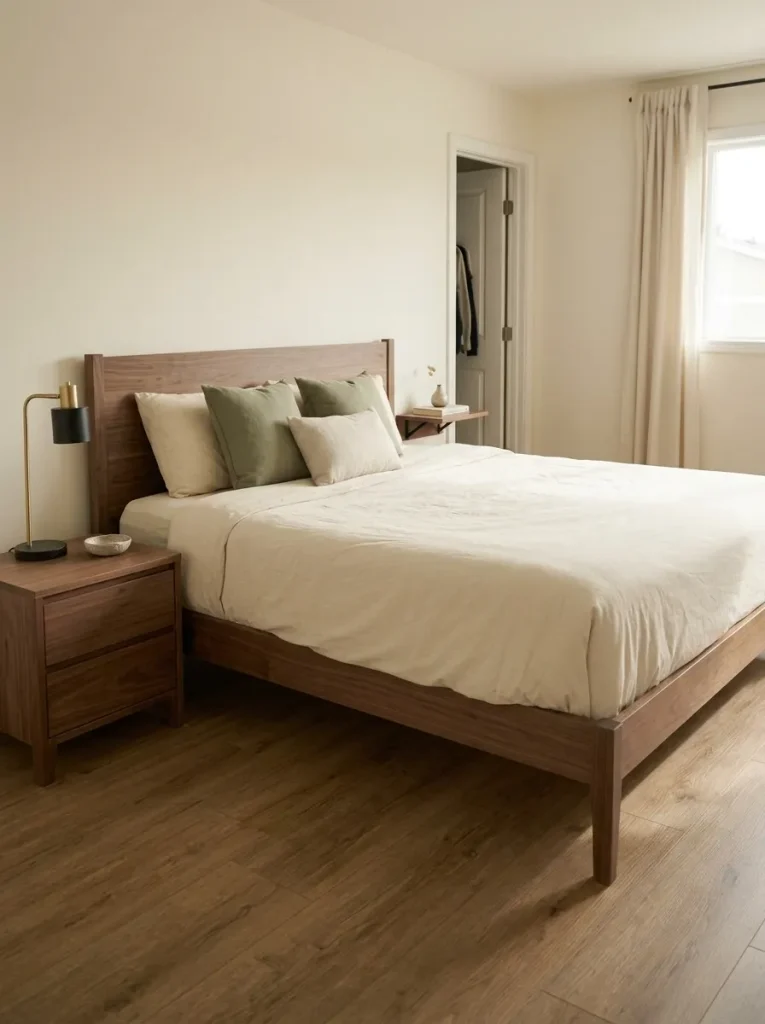
Give the roomier side the more capable piece: perhaps drawers, a broader surface, or extra storage. On the constrained side, use a narrow table, small wall shelf, compact stool, or another surface that supports only what is genuinely needed there.
The two sides can still belong together through material, color, lamp finish, or visual height.
For example, a dark wood nightstand and a slim dark shelf can form one composition even though their footprints differ.
Matching furniture works when the room supports it. Coordinated asymmetry is usually stronger when a closet, window, or wall return makes the architecture itself asymmetrical.
5. Move Bedside Lighting Off a Tiny Table When the Table Needs to Work Harder
A small nightstand can lose most of its useful surface to a lamp base.
Add a phone, glasses, water, or a book and the tabletop may fail at the routine it is supposed to support.
A plug-in wall light can move the lamp upward. A product designed to clip securely to compatible furniture may suit some arrangements. A slimmer table lamp can preserve the familiar setup with less footprint. Where floor area is available, a narrow floor lamp can shift the light source away from the table altogether.
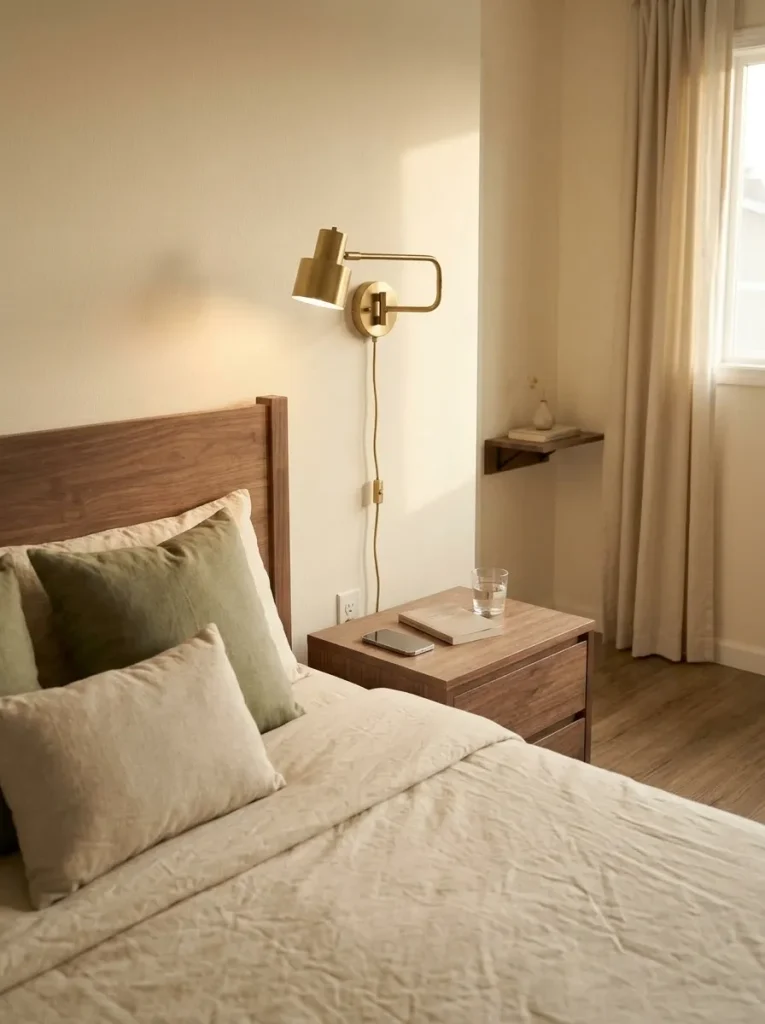
The important question is not which option photographs best. Notice which arrangement leaves the nightly routine easiest to use.
Lighting on the two sides of the bed also does not have to be identical. A table lamp on the roomy side and a related plug-in fixture on the tighter side can solve different spatial problems while sharing a finish or shade color.
Keep the lamp on the tabletop when it still leaves enough useful space. Move it only when the surface repeatedly feels compromised.
6. Let the Headboard Wall Do One Big Visual Job
The wall behind the bed often carries more visual responsibility than any other surface in a compact mobile home bedroom.
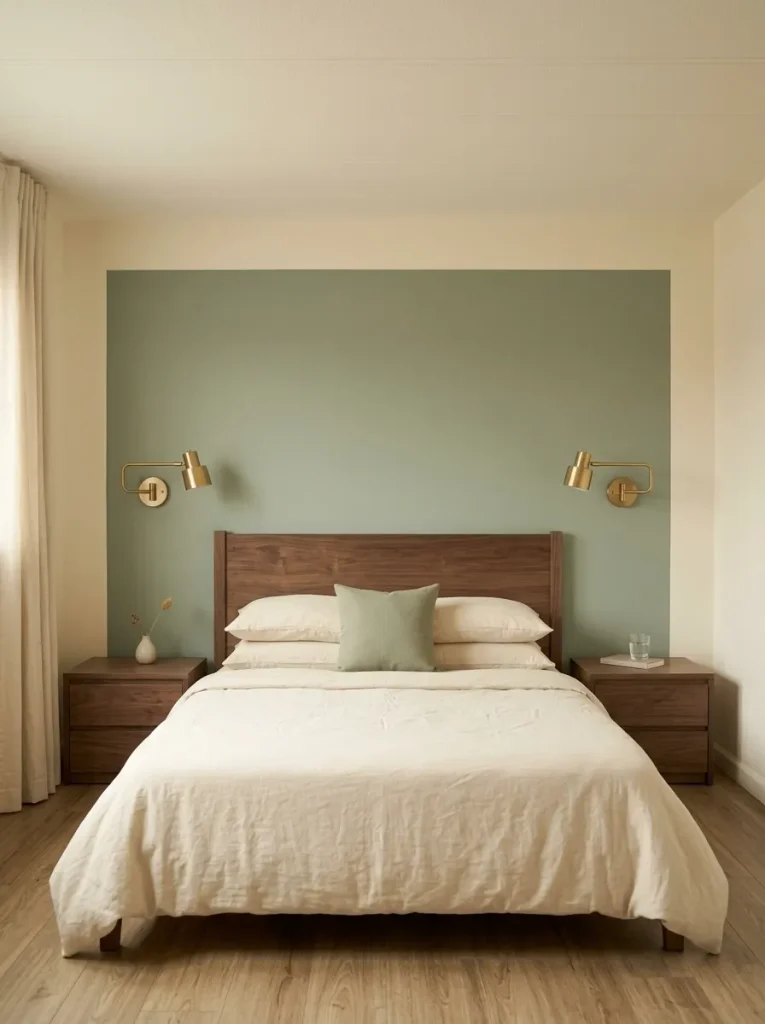
Problems begin when it is asked to support everything at once: dramatic paint, oversized artwork, signs, shelves, sconces, paneling, photographs, and a large headboard.
Choose one feature to lead.
A substantial upholstered or wood headboard may already provide enough shape and texture. A simpler frame can leave more visual room for paint, wallpaper, wood detail, or a controlled group of art. Existing paneling may need little more than a well-proportioned bed placed in front of it.
Try the doorway test. Enter the bedroom and notice the first thing your eye reaches.
Several equally loud elements behind the bed signal that the wall needs editing. One confident focal treatment can make a compact sleeping space feel much more finished than several small competing ideas.
7. Use Vertical Slats or Narrow Trim to Stretch a Short Wall Visually
A wall can feel squat when the mattress nearly fills it from side to side. Adding another broad horizontal feature above the bed may emphasize that width.
Vertical detailing changes the direction of the composition.
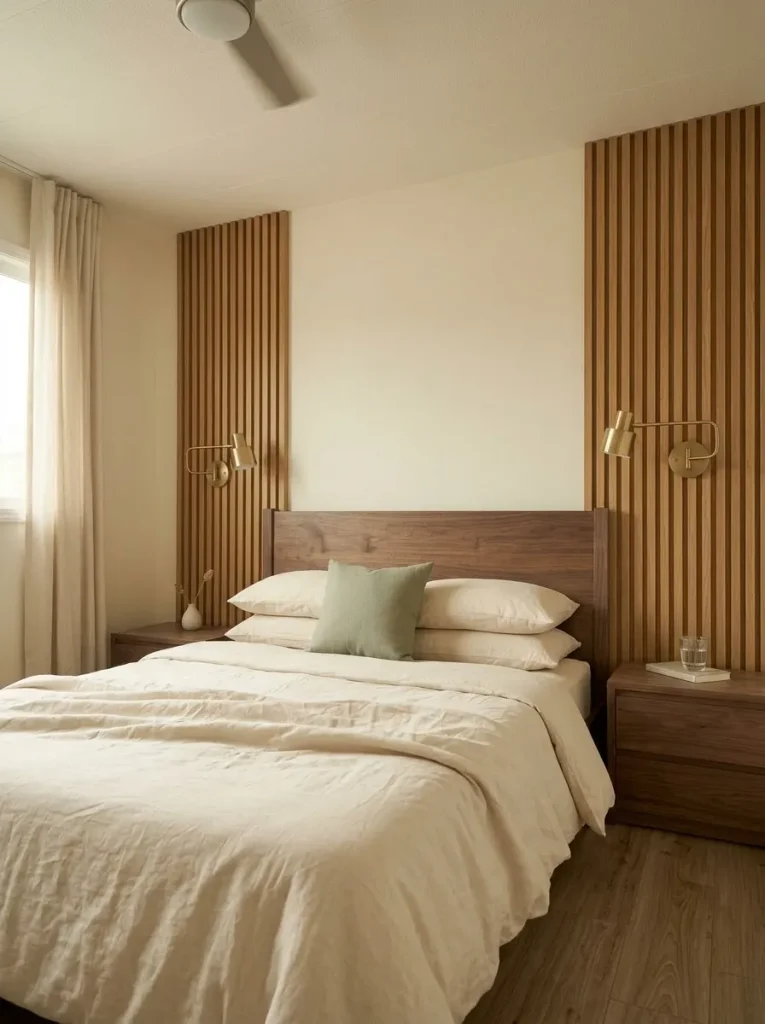
Narrow slat-style panels, slim applied trim, or another simple vertical treatment can guide attention upward and give a short headboard wall more presence. The whole wall does not need covering. Two restrained vertical fields beside the bed may be sufficient, particularly where they visually frame the bedside zones.
This approach is less useful on a wall already broken heavily by doors or windows. Another pattern can make those interruptions more obvious.
Mock up the rhythm before committing. Temporary paper strips or another removable visual guide can show whether the proportions suit the room.
Keep the treatment when the eye reads the wall as taller and more organized. Simplify it when the individual strips become the main thing you notice.
8. Build Storage Around the Bed Only When the Openings Still Breathe
Storage around the bed can be valuable in a mobile home bedroom because one wall can perform several jobs at once. Tall cabinets may replace a separate dresser, a bridge element can use otherwise empty height, and small niches can become bedside zones.
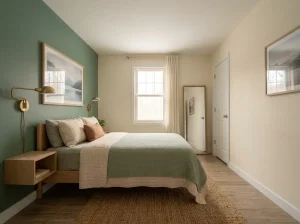
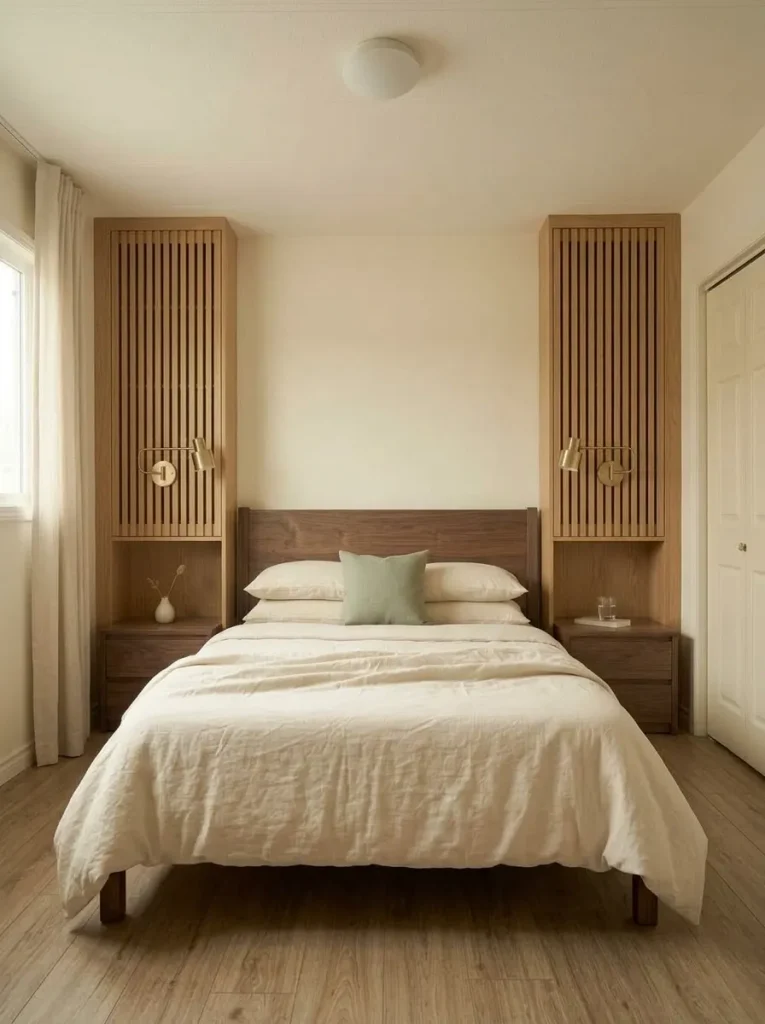
The same arrangement can also make a compact room feel boxed in.
Begin with the interruptions already present. A broad, uninterrupted headboard wall can support more built-up storage than a wall squeezed between a window, closet, or passage.
The useful decision is whether the storage solves enough problems to justify the visual mass it introduces.
How much storage should the bed wall carry?
Choose the wall condition closest to your room. Storage capacity should increase only where the architecture can visually absorb it.
Keep storage lower or move it elsewhere
A window, closet, or doorway may already fragment this wall. More tall storage can turn the remaining open area into narrow leftover strips.
Let the roomier side carry more storage
A single tall cabinet can provide useful capacity while the constrained bedside zone stays lighter. Repeat material or hardware to connect the two sides visually.
A framed sleep zone can justify the extra mass
Coordinated storage on both sides works best where access remains easy and the center around the bed stays visually calmer.
A practical stop signal appears when another cabinet blocks access, crowds a window, or forces a new storage problem somewhere else. At that point, the wall has already reached its useful capacity.
9. Turn a Narrow Wall Edge Into a Full-Length Mirror Zone
A mobile home bedroom may not offer one generous spare wall for a large floor mirror. The useful location is often a narrower strip beside the closet, near a dresser, or on a compatible door surface.
Start with the dressing routine.
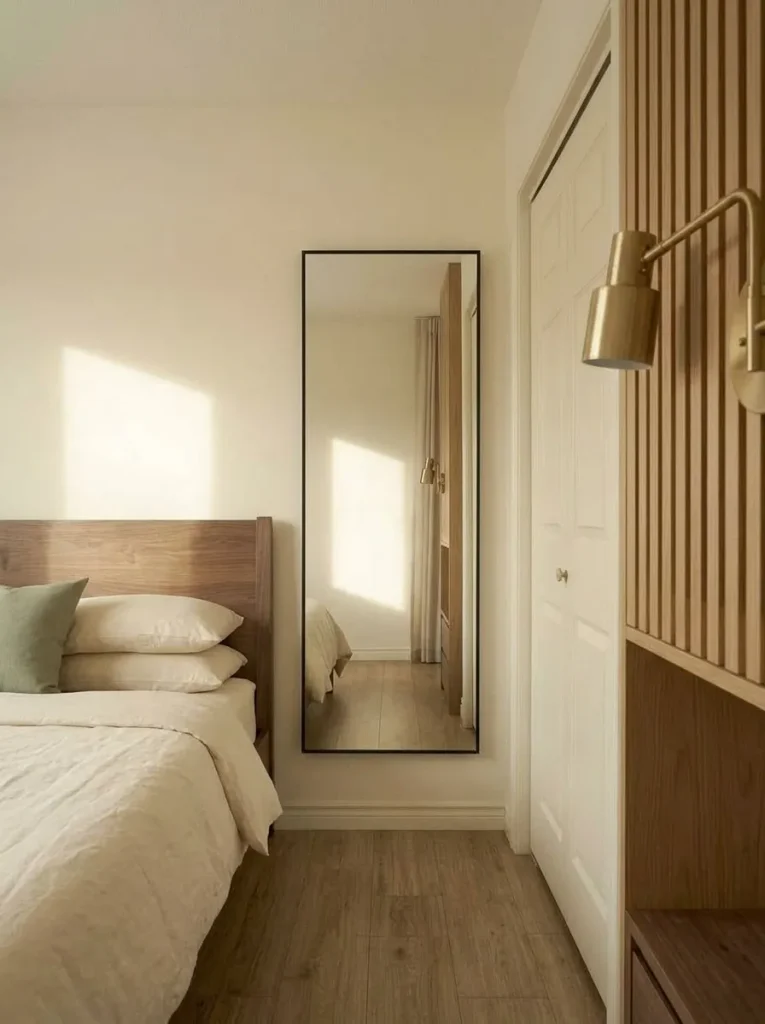
Keeping the mirror close to clothing storage can reduce the need for a freestanding piece in a circulation zone. A wall-mounted format can also preserve floor area where the bed and dresser already occupy most of it.
Check the reflected view before settling the placement. A mirror facing a window may repeat daylight and greenery. One aimed directly into a cluttered closet or busy doorway can magnify exactly the part of the bedroom you were trying to quiet.
Also check the nearby door movement. A mirror is only useful where it does not interfere with how the room opens and closes.
Choose the location where both the reflection and the dressing routine improve.
10. Make the Window Part of the Bed Composition
A window beside or behind the bed does not have to look like an awkward interruption.
Treat the bed, window treatment, and headboard as one relationship.
A window close to one side of the bed can visually connect through curtains that soften the transition between wall and glass. A bed beneath a window needs a headboard and treatment that can share the same zone without either looking accidentally layered over the other.
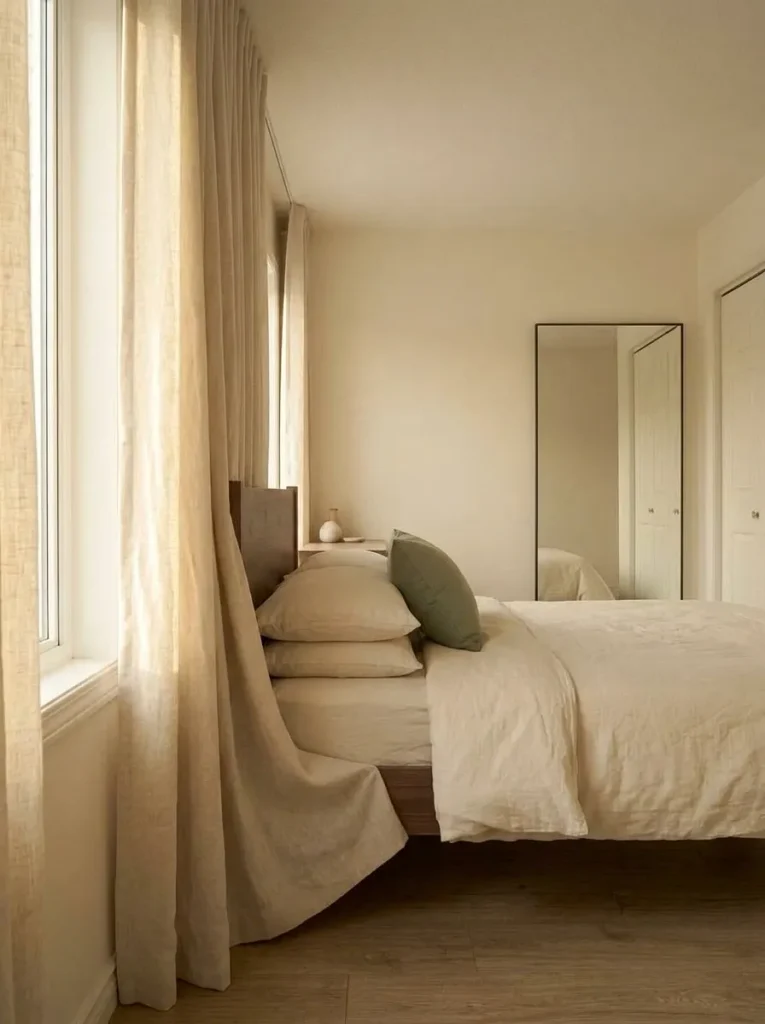
The opening also carries visual weight. A bright window can balance one side of the bed strongly enough that the opposite side does not need an equally large decorative object.
Check the room in ordinary daylight from the entrance. Does the window belong to the sleeping composition, or does it look as though the bed was pushed in front of it without a plan?
Correct that relationship before adding more wall décor. Sometimes the room needs clearer alignment, not another object.
11. Keep the Ceiling Quiet and Bring Warmth Down to Eye Level
A compact bedroom does not need every surface to perform.
Where the ceiling already feels visually close to the bed, several strong overhead elements can make that upper boundary more noticeable.
A quieter ceiling lets the warmth appear lower in the room: bedside lamps, curtains, headboard texture, wood furniture, artwork, and textiles.
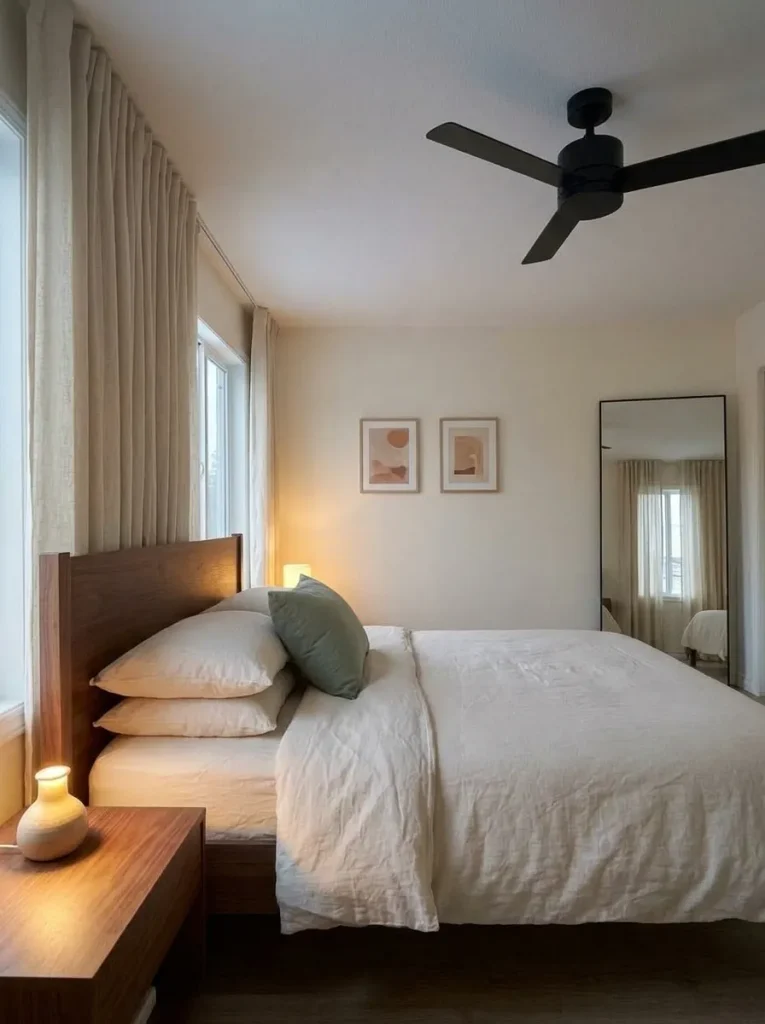
An existing fan or light can remain central to the room without requiring several other ceiling-level details to compete with it.
Sit on the bed and look across the room. Notice where your eye naturally rests. In many small bedrooms, the most inviting layers are concentrated from mattress height through the upper part of the headboard wall.
Use the ceiling as a calm boundary when the room already contains enough visual activity below it.
12. Use One Rug to Define the Sleep Zone Instead of Fragmenting the Floor
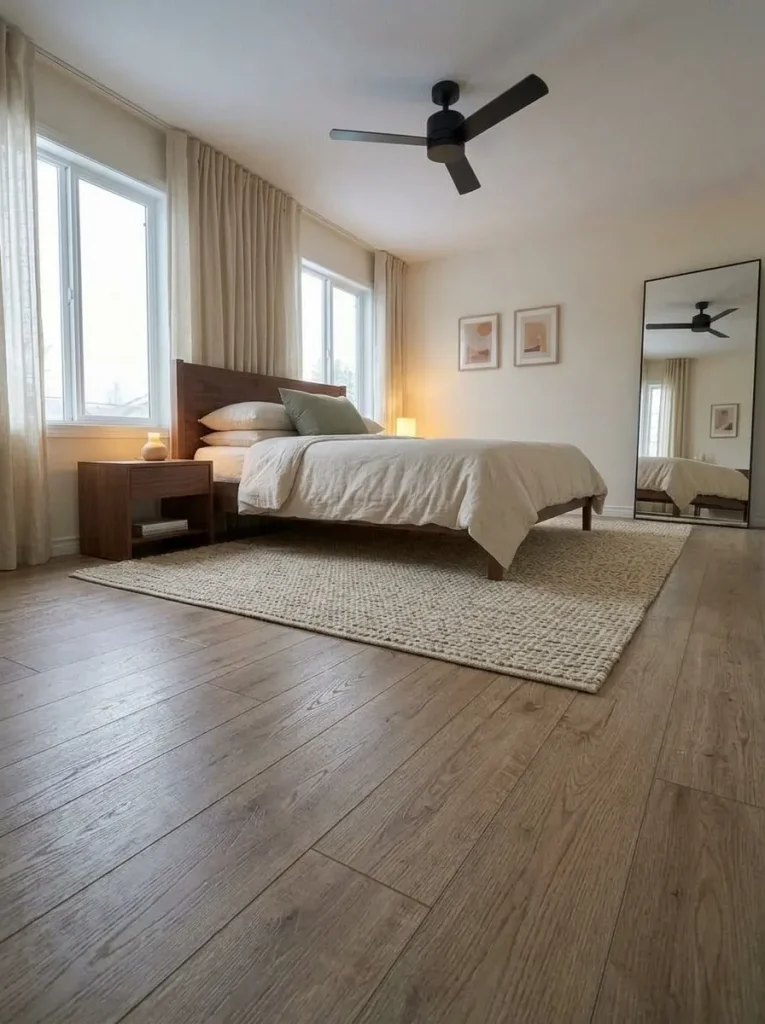
A rug changes how the bed relates to the floor, not merely how the bedroom feels underfoot.
Several small rugs can divide a compact room into many little visual patches. One larger rug associated clearly with the bed often gives the sleeping area a more unified base.
First decide what the rug needs to connect.
Where the bedroom has hard flooring, a bed-centered rug can visually bind the frame, visible floor, and bedside furniture. Where the mobile home already has comfortable wall-to-wall carpet, another rug is optional; the extra layer should add a useful pattern, color, or zoning effect.
Pattern needs context as well. A strongly patterned bed may benefit from a quieter floor. Plain bedding can support more visual movement beneath it.
Skip the rug when the existing floor already provides the softness and visual continuity you want.
13. Build the Palette From the Flooring, Trim, and Furniture You’re Keeping
Color planning becomes easier once paint stops being the first decision.
Your mobile home bedroom already has a palette.
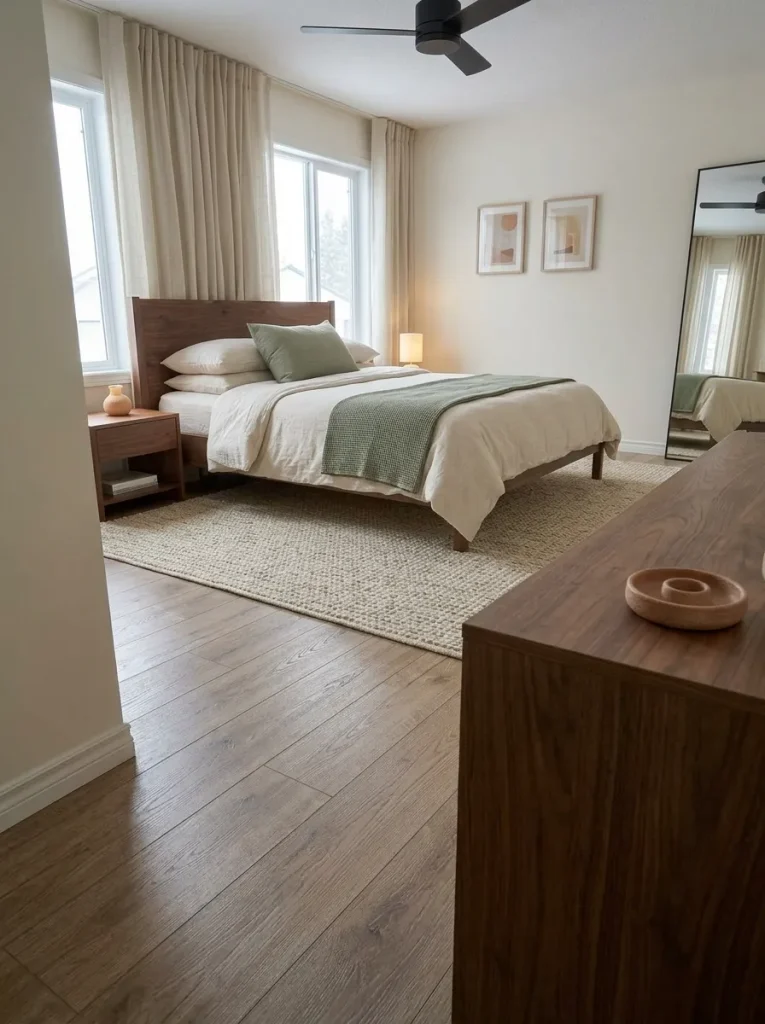
Flooring may contribute beige, gray, honey, or dark brown. Trim and doors repeat another tone. A large dresser, wardrobe, or bed frame can occupy more visual area than any new pillow or decorative object.
Treat those retained finishes as part of the design.
Then give new colors specific roles: a quieter connecting neutral, a grounding tone, and perhaps one richer accent.
Build new color around what already occupies the room
A successful palette connects the finishes you are keeping with the decorative colors you are adding.
Identify the finish seen repeatedly: flooring, wall color, trim, or the largest retained furniture.
Choose a textile or neutral that looks comfortable beside the retained finish and gives richer colors somewhere to rest.
Place the stronger color on one readable surface such as a throw, headboard, art field, or controlled wall zone.
Important: these colors illustrate roles, not prescribed combinations. Compare real samples beside the finishes that will remain and view them in daylight and normal evening light.
For seasonal combinations that go much deeper into this exact branch, continue with the specialist article:
17 Warm Fall Bedroom Color Palettes for Mobile Homes
14. Use Warm Wood to Connect Cool or Flat-Looking Finishes
A mobile home bedroom can contain perfectly usable gray carpet, white trim, pale walls, or painted furniture yet still feel visually flat.
Before changing all of those finishes, inspect the material balance.
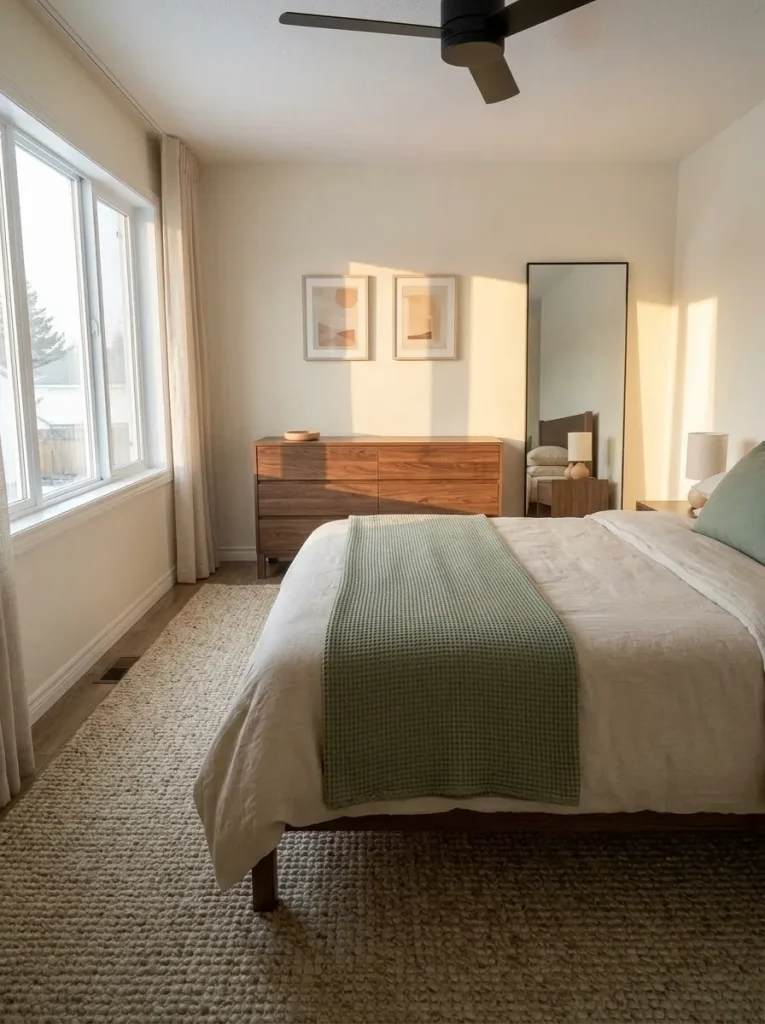
Warm wood adds grain and tonal variation between large plain surfaces. A wood bed, dresser, picture frame, shelf, or bench may provide enough material contrast to make the existing neutral finishes feel more intentional.
Scale matters more than object count.
One meaningful wood surface often has more influence than several tiny wood accessories. A bed frame beside pale carpet creates a clear material relationship. Five unrelated wooden ornaments scattered around the room create five smaller signals.
Where several wood tones already exist, avoid adding another simply for warmth. Repeat the dominant family or let another material provide the contrast.
Test the new material beside the largest cool-looking surface before assuming the whole bedroom needs repainting.
15. Concentrate Deep Color in One Field Instead of Scattering It Everywhere
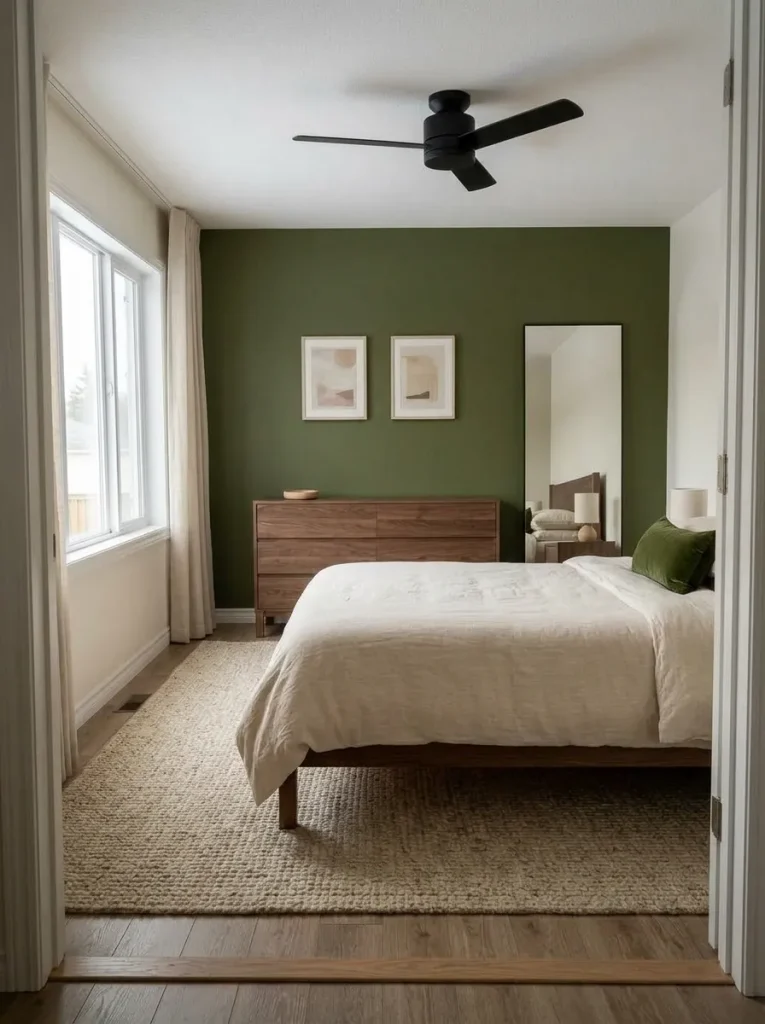
Dark green, charcoal, navy, chocolate, burgundy, and other deep colors can work beautifully in a mobile home bedroom.
Distribution often matters more than the color itself.
Small amounts repeated across curtains, bedding, art, lamps, furniture, and accessories can make the room feel busier than one generous dark field.
Choose the surface that can carry the depth most clearly.
Choose one place for the room’s deepest color to settle
A deep tone often feels calmer as one understandable field than as many unrelated dark fragments.
Small anchor
Use a headboard, artwork field, or limited textile where flooring or furniture already contributes substantial darkness.
Bed-sized field
Use a deep duvet or coverlet where the walls should stay light but the bed needs more visual authority.
Architectural field
Give one clear wall the depth where it has enough uninterrupted area to read as an intentional background.
Stop signal: once the main dark field is established, repeat that color selectively. Matching every accessory to it can flatten the hierarchy again.
A broad duvet may be the better dark field where doors and windows interrupt the headboard wall. A strong wall can work better where the architecture offers one clean surface.
Give the darkest tone one obvious home first.
16. Layer the Bed for Depth, Then Stop Before It Looks Overloaded
Because the bed can occupy such a large share of a mobile home bedroom’s visible area, changes to the bedding affect the whole room quickly.
Texture is useful because it creates depth without demanding several competing colors or patterns.
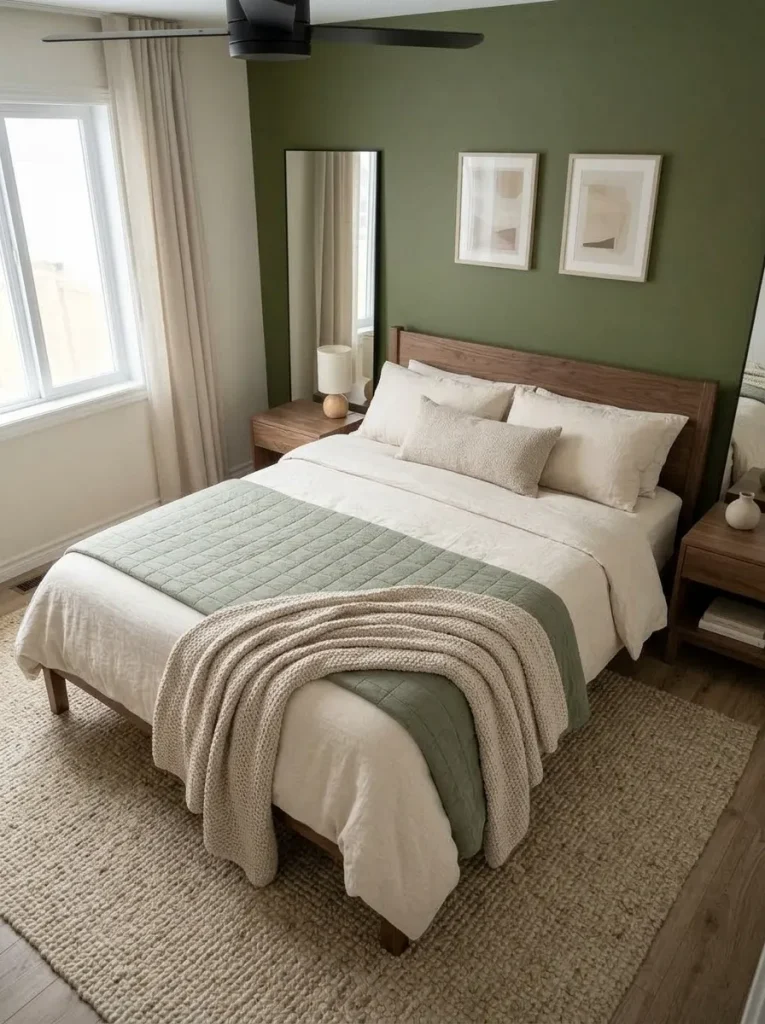
Build the bed in this order:
- Base: the primary duvet, quilt, or coverlet establishes the largest calm field.
- Depth: one second layer introduces a different texture, weave, or restrained color change.
- Support: sleeping pillows and a limited decorative layer give the head of the bed structure.
- Stop: step to the doorway before adding another cushion or throw.
That last decision prevents the bed from becoming visually larger than it already is.
There is a maintenance test too. Bedding that requires a complicated daily removal-and-restacking routine may look attractive while making the room less comfortable to live with.
Keep the layering that gives the bed depth without turning its surface into storage for decorative pillows.
17. Reserve Under-Bed Storage for Things You Don’t Reach for Every Day
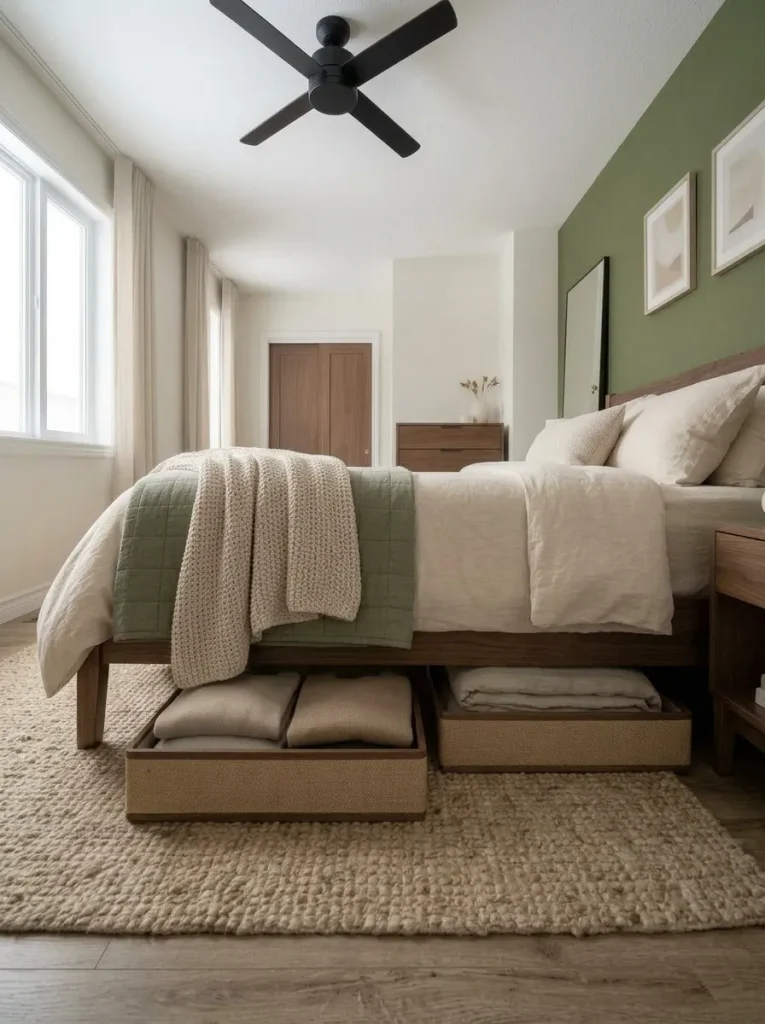
Under-bed storage uses area that the bedroom has already surrendered to the mattress, which makes it valuable in a compact manufactured-home bedroom.
Capacity and convenience are different.
A container can fit perfectly under the frame and still hold the wrong category of belongings when retrieval is awkward every morning.
Use the hidden zone for lower-frequency items such as spare bedding, seasonal clothing, occasional linens, or luggage accessories. Keep daily essentials closer to the routines they support.
The frame should decide the storage method. A purpose-built storage bed may offer integrated drawers. A conventional raised frame may suit shallow compatible containers.
Do not fill the space simply because it exists. Use it to prevent a low-priority category from demanding another visible furniture piece.
For seasonal styling of the surfaces that remain visible, the site already has a narrower mobile-home specialist:
17 Fall Nightstand and Dresser Styling Ideas for Small Mobile Home Bedrooms
18. Make the Dresser or TV Wall a Deliberate Second Anchor
The wall opposite the bed often becomes the bedroom’s accidental collection point.
A dresser arrives first. Then a television, mirror, baskets, artwork, plants, framed photographs, and objects that never found another address.
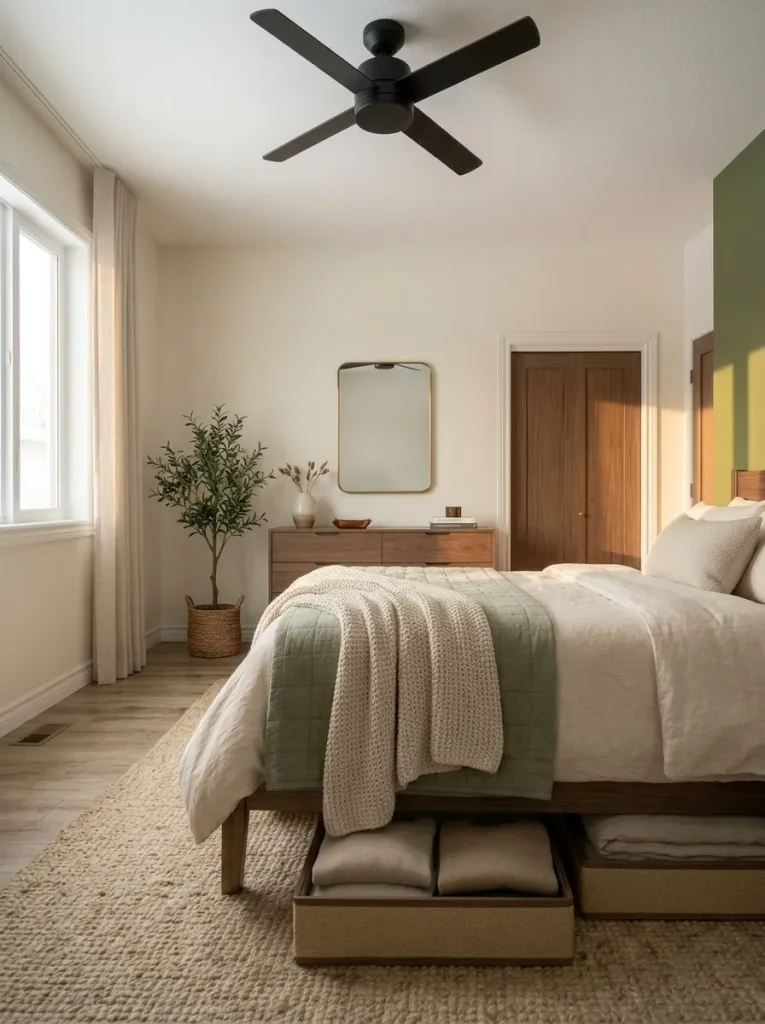
Soon that wall competes with the sleeping zone.
Decide its job before styling it. A television-led wall needs a different hierarchy from a dressing station. A beautiful wood dresser may need less above it than a plain storage unit.
The bed can remain the primary anchor while the opposite wall becomes a quieter, purposeful second zone.
What should the wall opposite the bed actually do?
Choose its dominant job first. The styling changes according to the function that deserves visual priority.
Keep the dresser top quieter
Let the television become the main upper-wall element. A restrained surface below prevents the wall from splitting into several competing focal points.
Keep visible: screen + one controlled supporting layerBuild one compact dressing station
Connect the mirror, dresser, and frequently used items so they read as one working zone. Containment matters more here than decorative symmetry.
Keep visible: mirror + organized daily-use zoneLet attractive material carry the wall
A dresser with strong wood grain, hardware, or proportion may need very little decoration above it. Open wall becomes part of the composition.
Keep visible: furniture + deliberate breathing roomThe second wall should feel intentional without demanding equal visual authority to the bed.
19. Use Closed Containment to Quiet a Busy Dresser Wall
Open storage reveals every object it contains.
That can be attractive with a carefully curated collection, but an everyday bedroom also needs places for perfume, jewelry, chargers, grooming products, folded clothing, and miscellaneous small items.
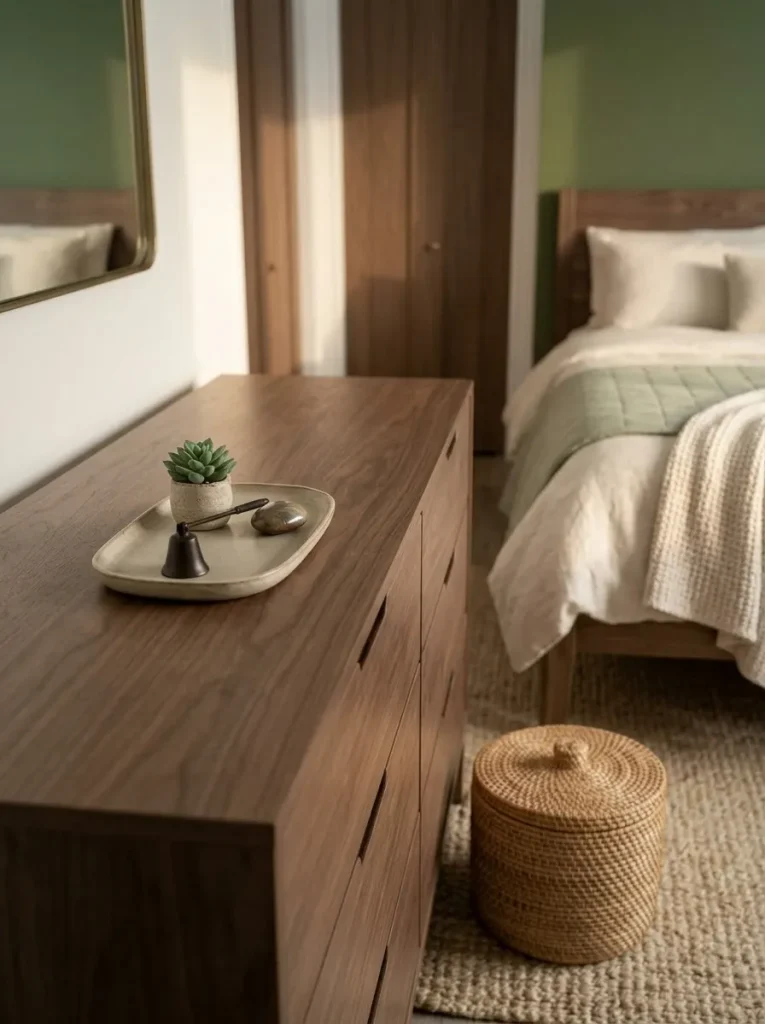
Closed containment can reduce the number of individual objects visible from the bed or doorway.
Begin with the category that repeatedly migrates across the dresser. Jewelry might share one dish or drawer section. Grooming products can occupy a single container or upper drawer. Chargers can have one defined zone.
The purpose is not to empty the surface completely.
It is to turn many small visual signals into a few understandable groups.
Look from the bed. Where your eye notices individual bottles, cords, papers, and containers before it notices the dresser itself, better containment will usually improve the room more than another decorative accessory.
20. Add a Chair, Bench, or Stool Only When It Has a Daily Job
A bedroom chair looks inviting in photographs.
In a compact mobile home bedroom, however, that piece occupies floor area that may already be helping the room feel easier to move through.
Identify the missing routine first.
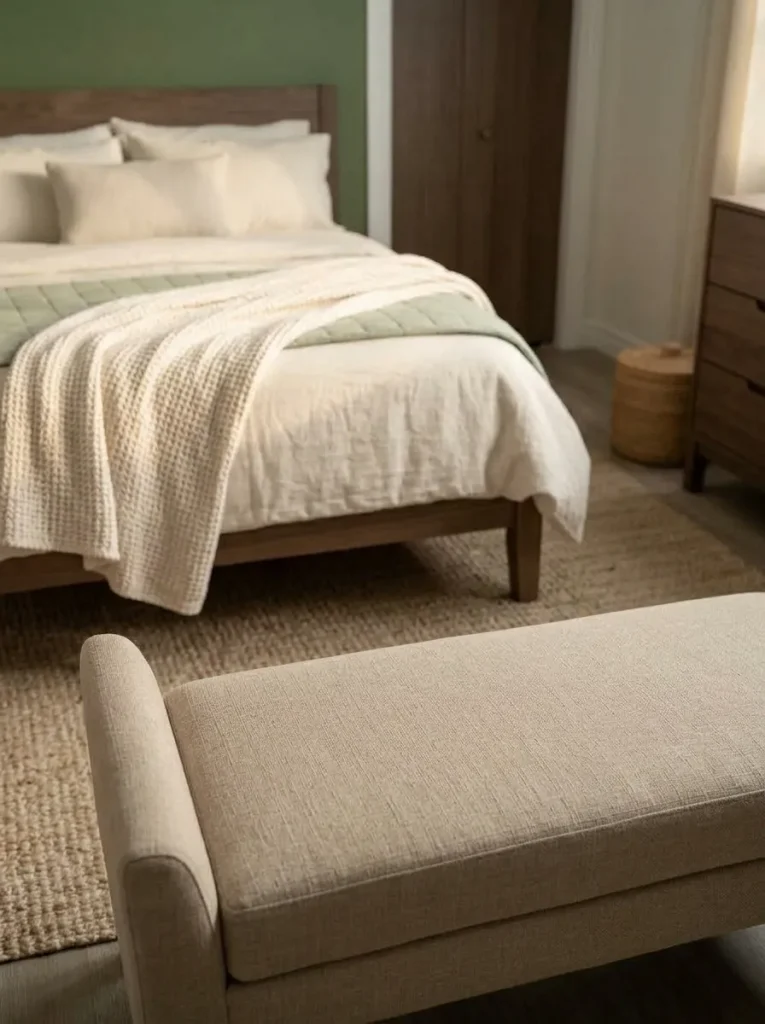
A small bench might make dressing easier. A chair may provide a real reading spot. A stool can serve occasional seating without carrying the footprint of an armchair.
Spend a few days noticing whether you actually search for somewhere to sit other than the bed.
Where the need appears repeatedly, choose the smallest comfortable piece that answers it. Where no routine is missing, leave the floor open.
Open walking space is functional space. It does not need to be filled simply because a furniture arrangement leaves a corner available.
21. Gather Photos and Art Into One Readable Wall Moment
Mobile home bedrooms often contain narrow wall sections between closet doors, windows, corners, and furniture.
Spreading a few small frames across every one of those fragments can make the room feel more interrupted.
Concentration gives the collection more authority.
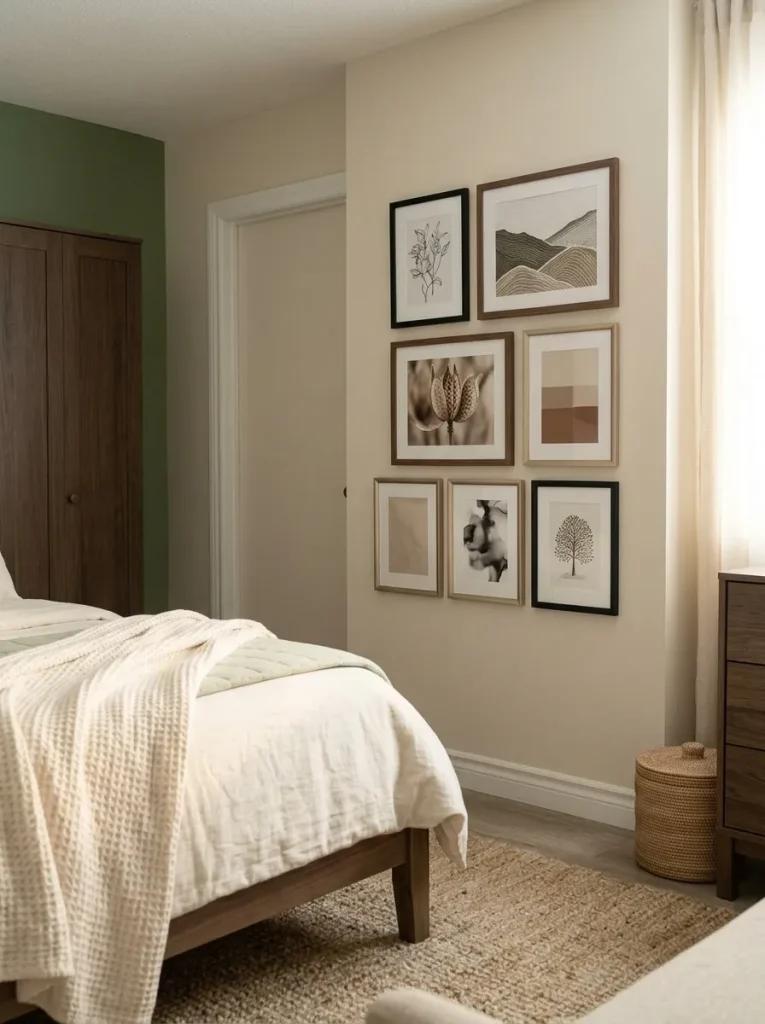
Choose one usable section—perhaps above the dresser, beside the bed, or on a narrow uninterrupted wall—and let photographs or art form one deliberate composition there.
Arrange the frames on the floor before hanging them and judge the outside silhouette of the group. Mixed frames can work well when the overall boundary looks coherent.
Several small pieces grouped together read as one visual event. The same pieces scattered through four wall fragments create four separate events.
Once the group feels complete, let the remaining wall sections stay quieter.
22. Break Up Boxy Furniture With One Softer Shape
A mobile home bedroom can contain many rectangles at once: mattress, dresser, closet doors, windows, cabinet fronts, nightstands, and wall panels.
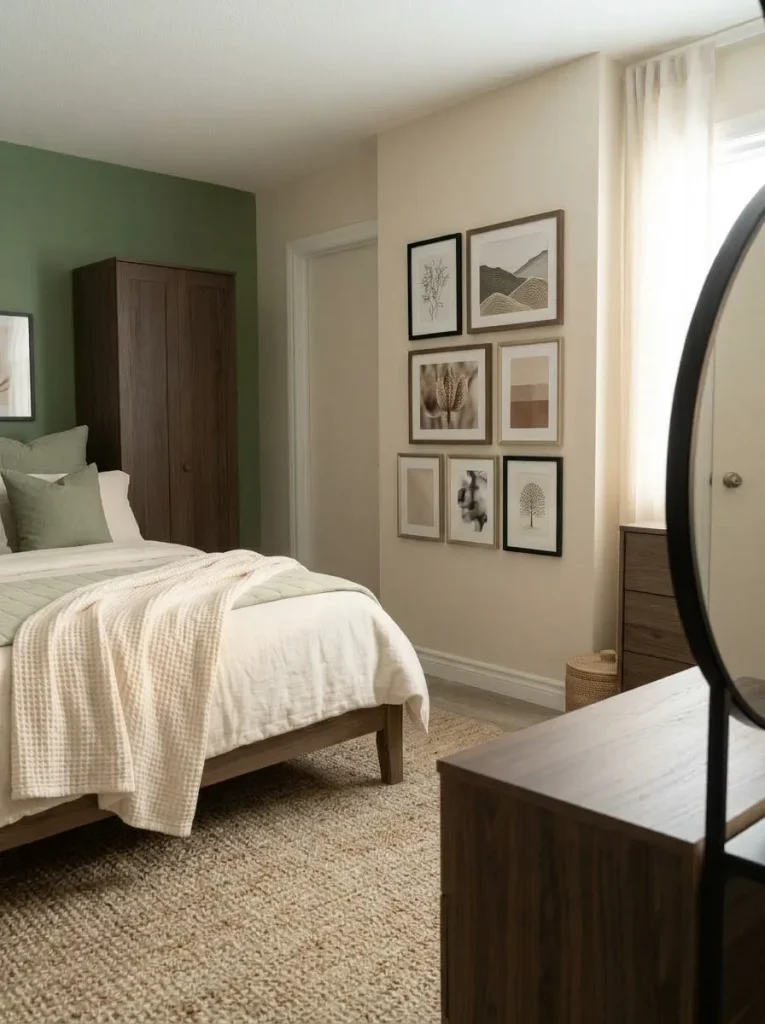
The room may feel rigid even when the colors are gentle.
One curved shape can interrupt that geometry.
A round mirror above a dresser, an arched mirror beside the closet, a curved lamp, softly shaped headboard, or rounded stool can provide enough contrast.
Placement matters more than repetition.
Put the softer outline where straight furniture edges are already concentrated. Then allow the contrast to remain special.
Repeating arches, circles, scallops, curved tables, spherical cushions, and rounded art throughout the room can turn a useful interruption into another busy motif.
One softer shape is often enough to give a boxy furniture arrangement visual relief.
23. Design the Bedroom for Evening Light, Not Just Daytime Photos
A mobile home bedroom can look balanced during the day and feel surprisingly flat after sunset, particularly where one central ceiling fixture is doing most of the work.
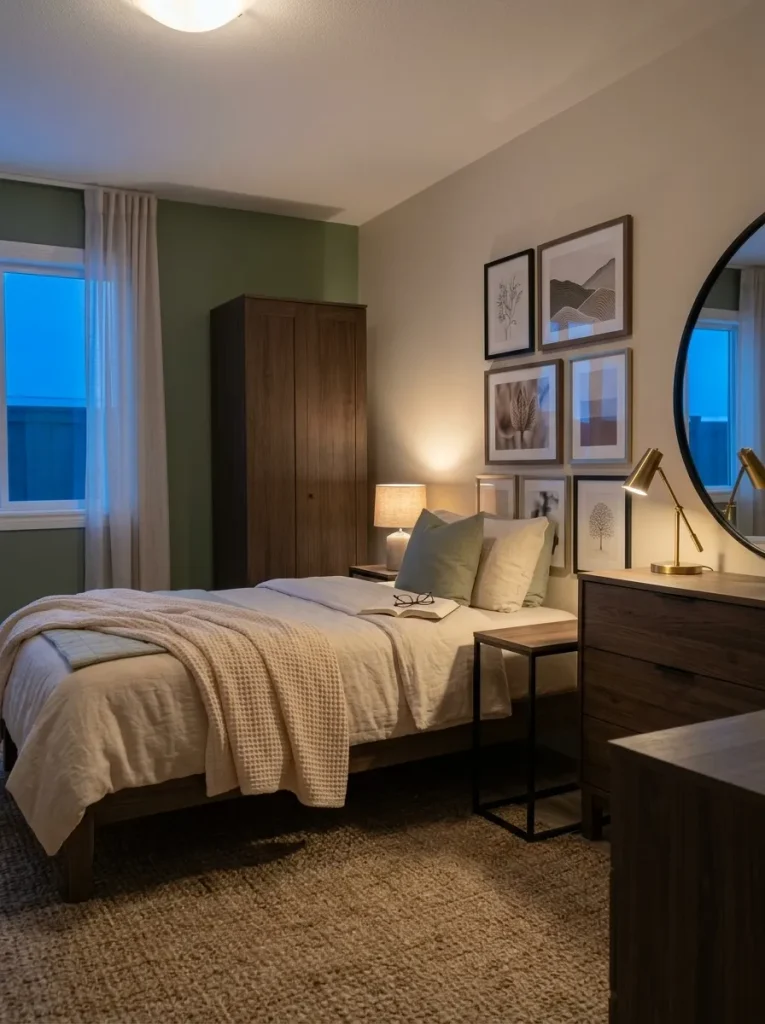
Judge the room during the hours when you actually wind down.
Can you read comfortably in bed? Is the dresser or wardrobe area usable? Does the whole room rely on one bright source overhead?
Different light layers answer different jobs.
Build the room around what you need after sunset
You may not need a separate fixture for every layer. First identify which lighting job the bedroom is currently missing.
Ambient layer
Provides general orientation and keeps the bedroom usable as a whole.
Task layer
Supports reading, grooming, dressing, or another routine at the place where it occurs.
Atmosphere layer
Adds a smaller pool of warmth or depth where the room would otherwise look visually flat.
Night test: evaluate the bedroom after dark using the lighting pattern you genuinely live with. A bright daytime photograph cannot answer this question for you.
The missing layer may be bedside task lighting, a softer general source, or a small secondary glow near another functional zone. Solve the missing job first.
For a broader inspiration article focused mainly on atmosphere and warmth, continue here:
43 Cozy Bedroom Ideas for a Warm and Relaxing Space
24. Leave One Useful Surface Deliberately Quiet
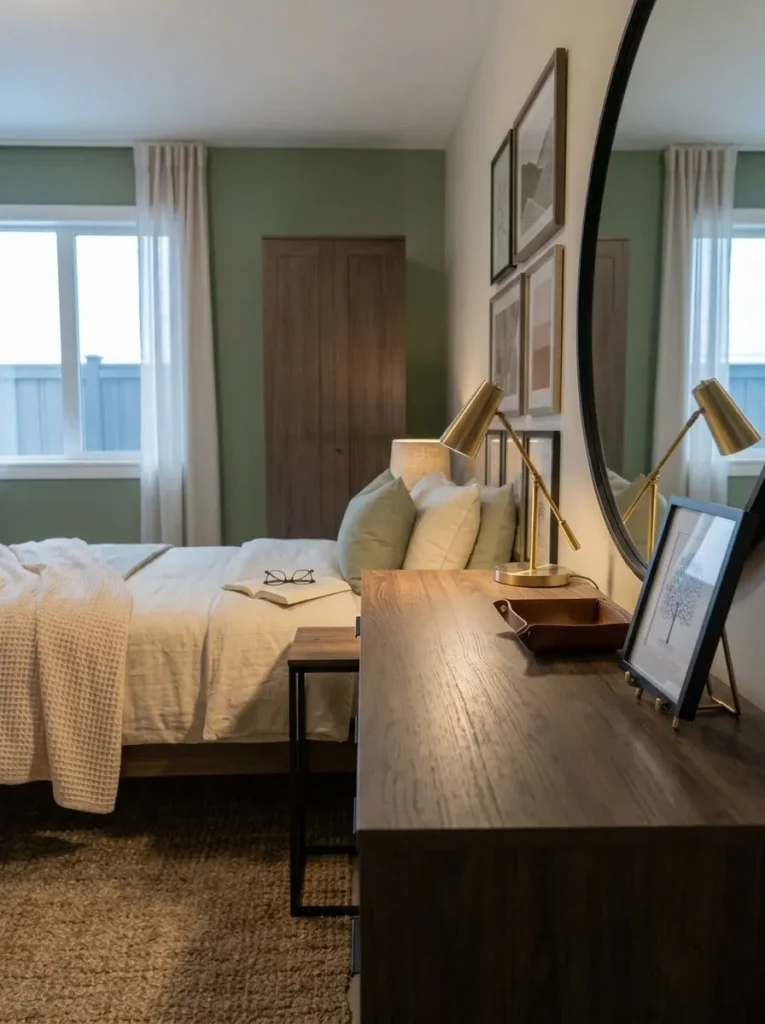
A compact bedroom has fewer spare surfaces, so every tabletop often ends up doing double duty.
That makes deliberate emptiness useful.
A clear section of dresser can receive folded laundry temporarily. A nightstand needs room for a book or water glass. A bench may occasionally hold tomorrow’s clothes.
Fill all of those surfaces permanently with décor and ordinary life has nowhere to land except the bed or floor.
Protect one visible area on purpose.
Photograph the bedroom from the doorway if the empty patch initially feels unfinished. A photograph compresses the scene and makes the relationship between busy and quiet zones easier to notice.
The room may not be missing another decorative object at all. It may be missing a visual pause and a usable landing place.
For a deeper specialist discussion of warmth without surface overload:
How to Make a Bedroom Feel Cozy Without Clutter
25. Do One Doorway Edit Before You Spend on the Final Details
Before buying the final pillows, artwork, baskets, lamps, or decorative accessories, leave the bedroom.
Then walk back in.
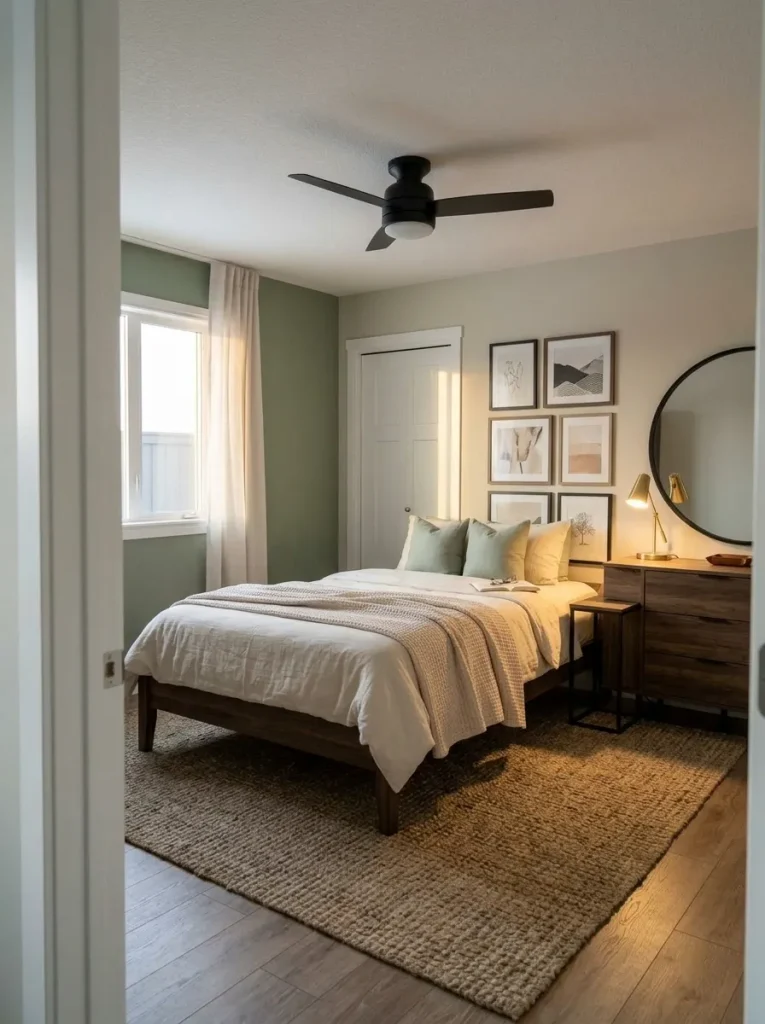
Read the whole room before inspecting individual objects.
Notice where your eye lands first. Is the bed wall understandable immediately? Does the route to the closet feel open? Is one secondary furniture piece competing too strongly? Does a dresser look much busier than everything around it? Is there enough visible floor and wall for the room to feel settled?
Make one editing pass before shopping.
Move the object that appears stranded. Remove the extra pillow turning the bed into a pile. Consolidate dresser items. Relocate the basket interrupting the walking route. Leave a useful empty area alone.
Only then decide whether the room is genuinely missing something.
Correct placement before purchasing decoration. Remove visual noise before trying to cover it.
The strongest mobile home bedroom is rarely the one with the most furniture, storage, textiles, wall treatments, or accessories.
It is the one where the important elements have enough space to matter.
Create a Mobile Home Bedroom That Feels Good to Live In
A beautiful mobile home bedroom starts with how the room works and lets decoration support that structure.
Protect the movement routes. Give the bed a clear role. Make storage solve real problems. Work with the flooring, doors, furniture, windows, and finishes already present before choosing additional color. Then introduce bedding, lighting, artwork, rugs, texture, and personal pieces where they improve the full-room composition.
You do not need to apply all 25 ideas. Start with the two or three decisions connected to what feels most uncomfortable now.
Once those relationships improve, the bedroom may need far fewer new things than it first appeared to need.
Save this guide to Pinterest so you can return to these mobile home bedroom ideas while improving your space one decision at a time.