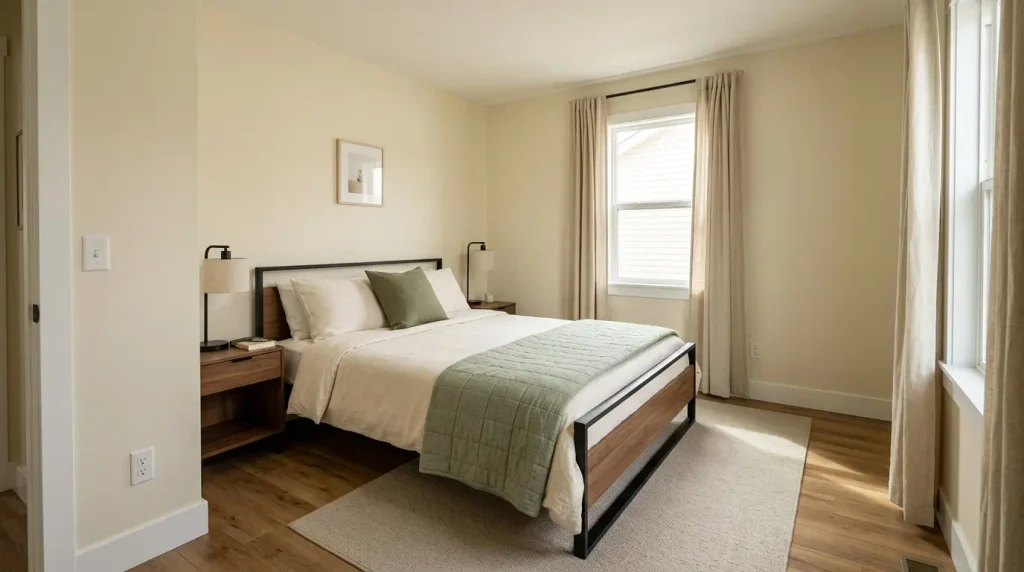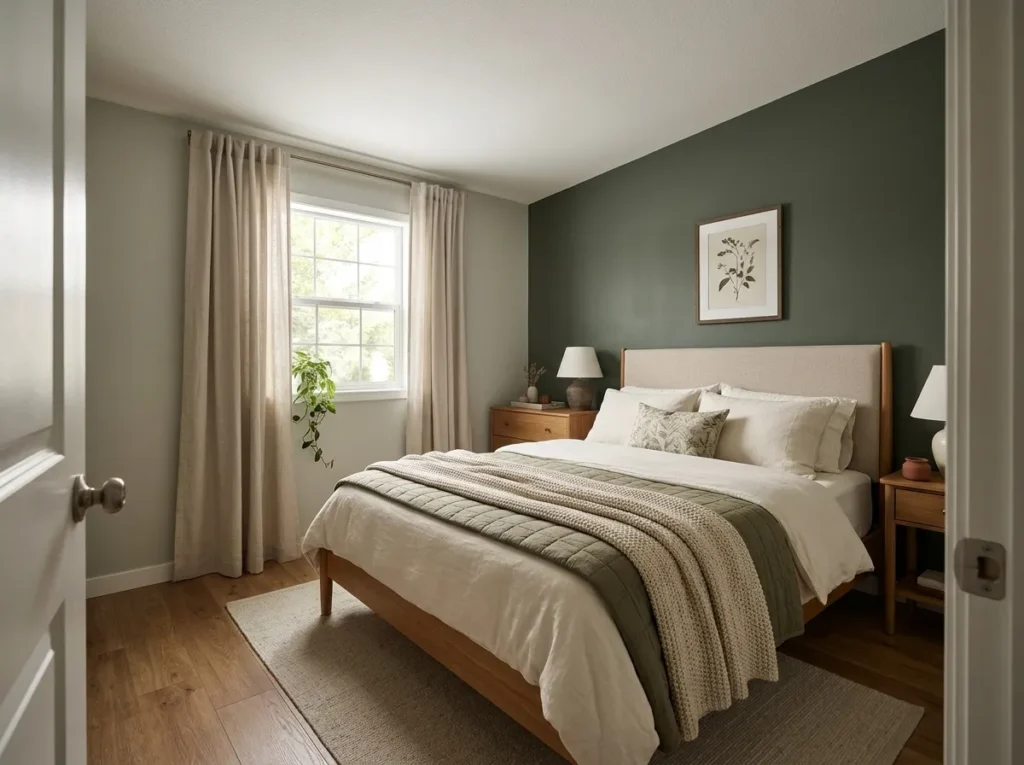
A mobile home bedroom can feel especially inviting in fall, but piling on pumpkins, plaid pillows, and extra blankets is rarely what makes the biggest difference. In a compact room, every color, texture, light source, and piece of furniture carries more visual weight.
Good fall mobile home bedroom decor starts with the room you already have. The bed, windows, flooring, storage, and permanent finishes set the boundaries; seasonal details should work with them, not fight for attention.


That opens the door to a softer kind of autumn decorating—one built around deep earthy color, tactile fabrics, warmer evening light, natural materials, and carefully chosen focal moments.
Some changes can be made in an afternoon. Others involve rethinking proportions or moving one element a few inches. None require turning the bedroom into a themed display.
The 17 ideas below focus on how each fall update changes the bedroom as a whole, so the final space feels comfortable, composed, and genuinely restful through the cooler months.
1. Build the Bed Around One Autumn Anchor Color

The bed usually carries more visual area than anything else in a mobile home bedroom, so it is the strongest place to establish the fall palette. Pick one autumn shade as the anchor instead of asking every pillow and blanket to announce the season.
Rust, tobacco brown, moss, muted ochre, deep cranberry, and earthy terracotta all work well. The right choice depends on the permanent colors already in the room. Cream walls soften rust; warm wood supports moss; gray flooring often benefits from a more subdued clay or wine tone.

Let that anchor appear most clearly in one medium-to-large textile. It might be the duvet, a folded quilt across the lower third of the bed, or a substantial lumbar pillow.
Then reduce its presence elsewhere. A narrow stripe in another pillow or a faint echo in artwork is enough.
The useful test is visual weight, not accessory count. If the strongest fall color appears in several equally dominant places, the bed begins to look assembled from seasonal pieces. One clear anchor gives the eye somewhere to settle while the quieter neutrals keep the sleeping area restful.
2. Raise the Curtains to Correct a Low-Feeling Bedroom
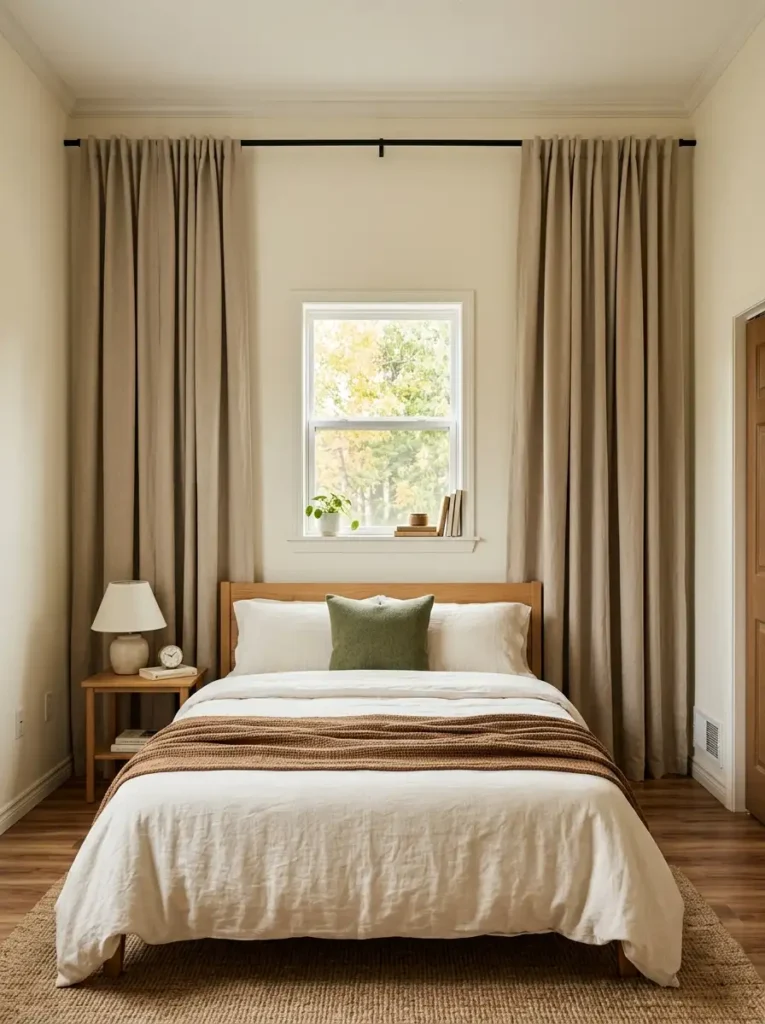
Look at the window wall before buying heavier fall curtains. In many bedrooms, the problem is not the fabric at all—it is where the fabric begins and ends.
A rod mounted only a few inches above the window frame makes the eye treat the window itself as the wall’s vertical limit. Moving that upper line closer to the ceiling lets more of the wall participate in the composition. Long panels then connect that higher reference point to the floor.
Width matters too. Extend the rod beyond the glass far enough for the open panels to sit partly against the wall. More of the window remains exposed during the day, and the fabric looks like part of the architecture instead of a cover placed directly over the opening.
For fall, linen-look panels, cotton velvet, brushed blends, and substantial woven fabrics can all work. Select weight according to the room’s daylight and privacy needs.
Check the practical edges before mounting anything: HVAC vents, baseboard heat, furniture, electrical outlets, and doors all deserve clearance. The strongest installation is the one that improves the wall proportion and still lets the bedroom function normally.
Two curtain details that change the whole window wall
When a window sits slightly off-center, a wider rod and carefully distributed curtain stack can make the entire wall read more deliberately. Do not fake perfect symmetry if it forces fabric into a door, vent, or furniture zone.
Panels that stack almost entirely over the glass reduce daylight and visually narrow the opening. A longer rod gives the folds somewhere to collect beyond the window edge.
Final check: open the curtains fully. The window should still feel generous, and neither stack should crowd a nearby wall feature.
3. Give the Headboard Wall Architectural Weight
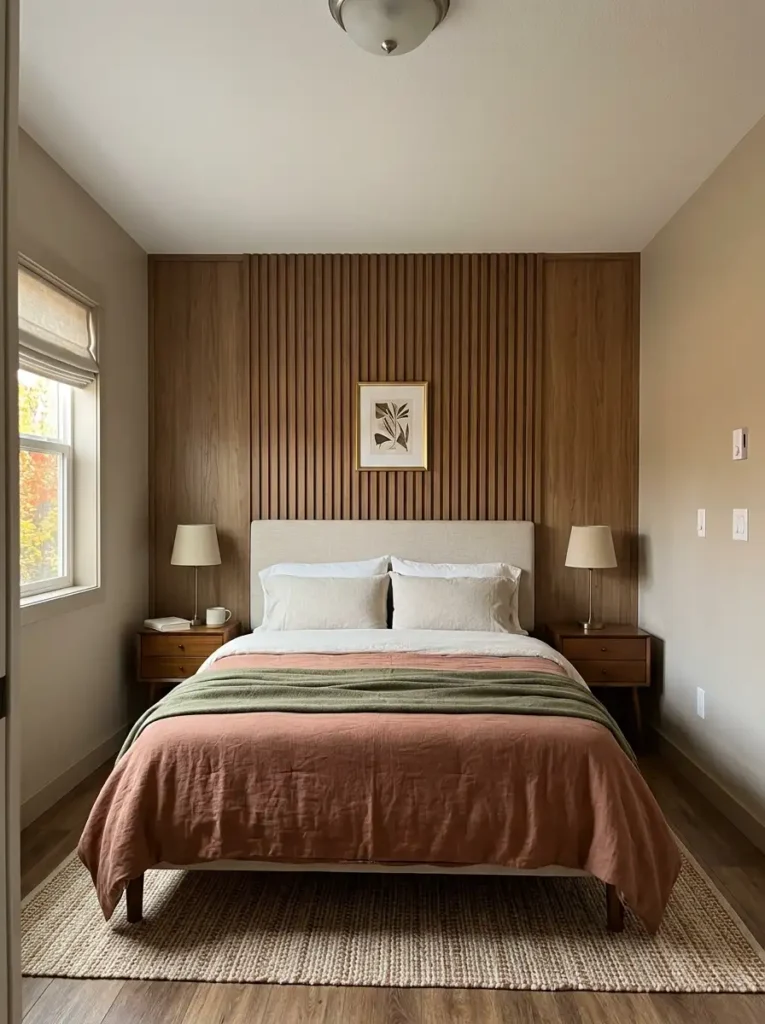
A bed can be perfectly styled and still look as though it has been pushed against an unfinished wall. This is especially noticeable when the bedroom has a long uninterrupted wall and very little architectural detail.
Create a defined zone behind the headboard so the bed has something substantial to belong to. A painted rectangle, removable wallpaper panel, simple vertical trim, peel-and-stick wood treatment, or upholstered fabric panel can establish that boundary without rebuilding the wall.
Let the bed determine the starting proportions. A feature that ends exactly at the mattress edges can feel tight; extending the treatment beyond the bed often gives the composition more authority. Full-wall coverage can work too, particularly when the room already has several smaller visual elements.
Pattern deserves similar attention. Large motifs need enough uninterrupted wall to be read clearly. Tiny repetitive prints can become restless behind patterned bedding.
Before installation, map outlets, switches, vents, thermostat controls, and anything that needs future access.
Think of the finished treatment as a piece of lightweight architecture. Its job is to connect the bed to the wall and make that entire end of the bedroom feel resolved.
4. Replace Harsh Overhead Light With a Three-Level Glow
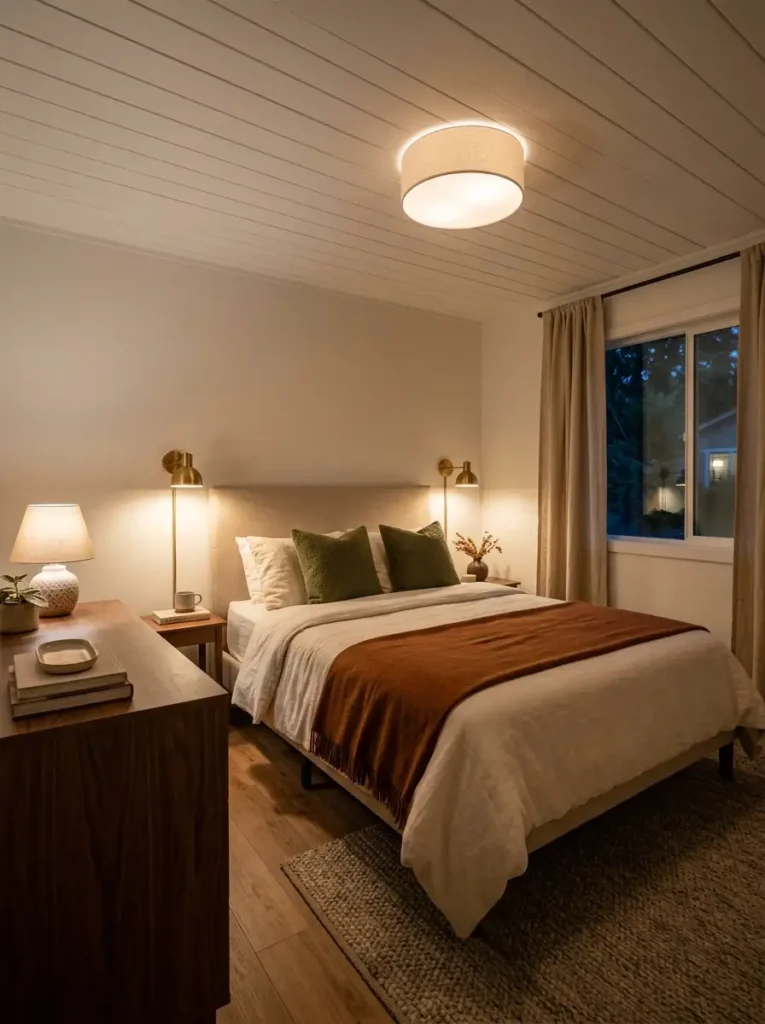
Fall bedrooms become more convincing after sunset, and that is where a single bright ceiling fixture often works against the mood. Light arriving from one high point can flatten the bed, wash out subtle colors, and leave the edges of the room feeling disconnected.
Build the evening lighting in three levels.
1. Background light: Keep a ceiling fixture, shaded lamp, or another broad source for general visibility.
2. Bedside light: Add reading light close to where it is actually needed. A table lamp, wall-mounted plug-in sconce, or compact directional fixture can handle this layer.
3. Low evening glow: Place one softer source lower in the room—a small dresser lamp, concealed shelf light, or gently illuminated corner.
The height difference matters. Light sweeping across linen, wool, wood grain, or textured wall finishes reveals their surface better than a strong source shining down from above.
Brightness still needs to serve real tasks. Bedtime lighting should remain comfortable for reading, dressing, and moving through the room safely.
Once those jobs are assigned to separate sources, the bedroom gains far more control. Morning, early evening, reading time, and late-night winding down no longer require the same light setting.
Give each light level a different job
These color-temperature ranges are useful starting points, not rigid rules.
Check bulb labels across the room. A mixture of very cool and very warm whites can make bedding and wall colors appear inconsistent after dark.
5. Use the Rug to Fix the Bed-to-Floor Proportion
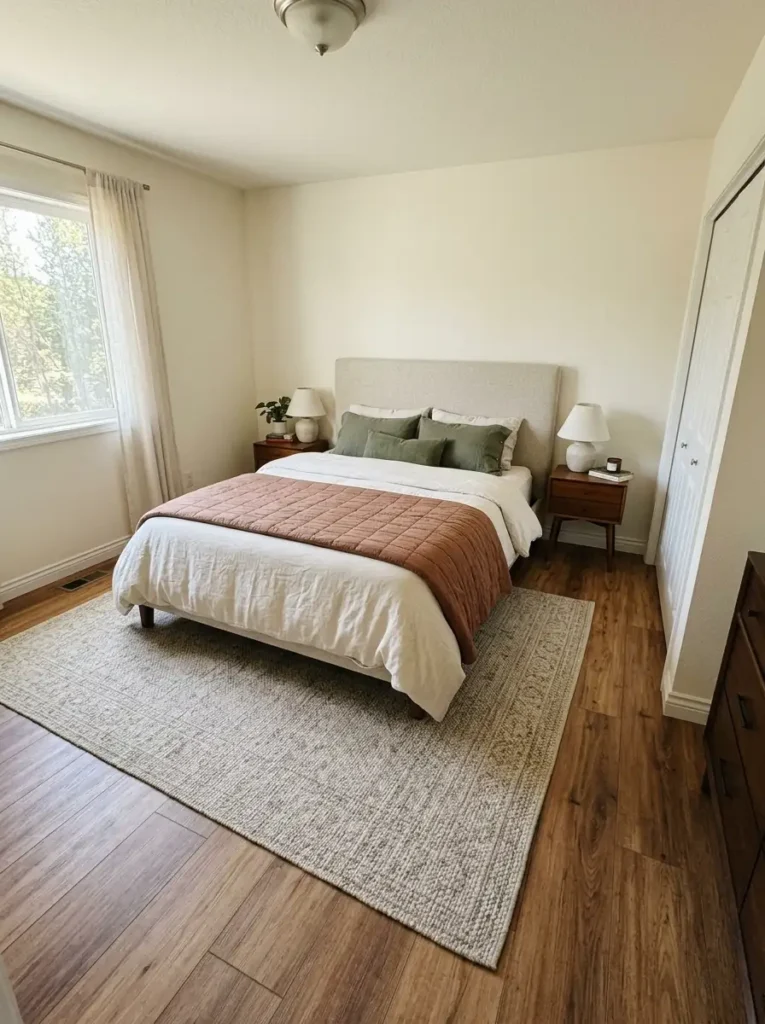
A rug beside the bed may feel cozy underfoot, yet its biggest design job is connecting the bed to the floor around it.
Small floating rugs often create the opposite effect. When only a narrow patch is visible at one side or near the foot, the rug reads as a separate accessory. The bed remains a large visual block with no clear relationship to the surrounding floor.
Evaluate the amount of rug you will actually see after the bed is in place. A larger rug tucked beneath the lower portion of the bed can expose a consistent border on both sides and at the foot. In very tight bedrooms, paired runners may preserve that visual rhythm while keeping costs and door clearance under control.
Pile height deserves practical consideration. Thick, plush rugs feel luxurious but can interfere with closet doors, catch dirt along narrow paths, or make frequently moved storage harder to access. A low- to medium-pile option is often easier to live with.
The correct scale is reached when the visible rug feels connected to the bed yet still leaves enough flooring around the perimeter for the room to breathe.
Measure the rug you can see
The hidden area under the mattress supports placement; the exposed perimeter is what your eye actually uses to judge scale.
6. Build a Fall Palette That Works With the Bedroom’s Existing Undertones
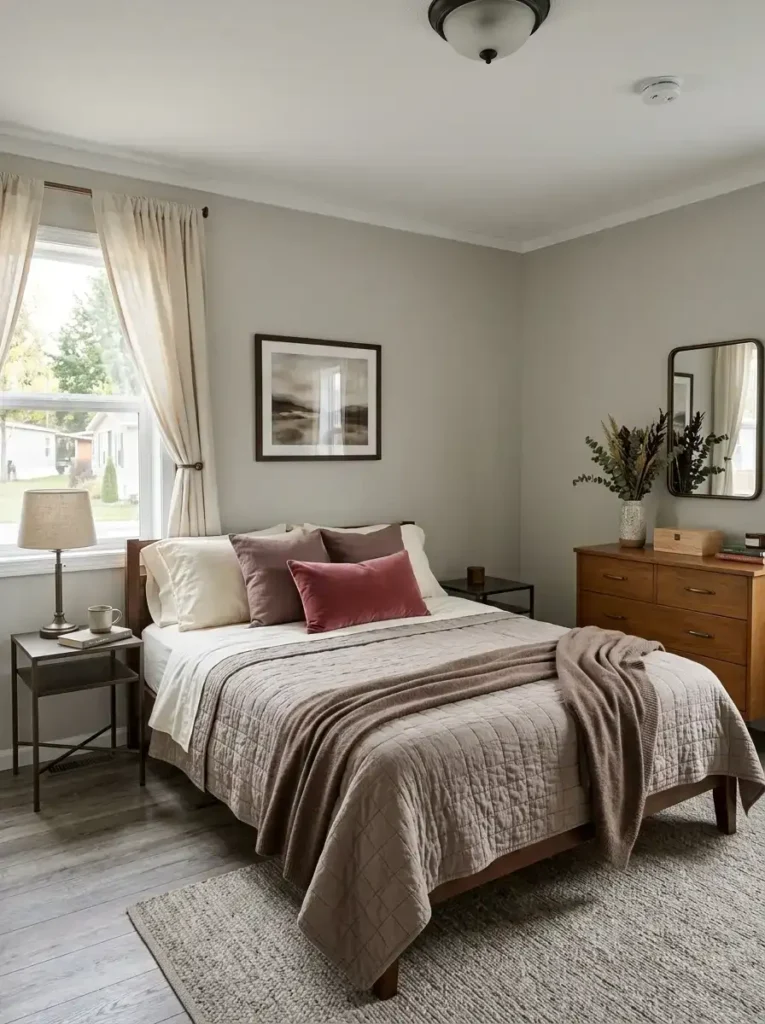
A beautiful autumn color can look completely different once it enters a room. The wall paint, flooring, furniture wood, and even the shade of white in the bedding all influence whether rust feels rich, muddy, bright, or strangely disconnected.
Warm cream or beige finishes: terracotta, tobacco, olive, caramel, and muted ochre usually settle in naturally.
Cool gray surroundings: soften the seasonal palette. Dusty cranberry, mushroom, cocoa, muted plum, and subdued clay often bridge cool permanent finishes more gracefully than brilliant orange.
Red or orange-toned wood: introduce some separation. Moss, faded sage, cream, dark brown, or wine can keep the room from becoming one uninterrupted field of warm red.

Do not judge a fall accent in isolation. Hold the fabric or paint sample beside the flooring, wall, and largest wood surface at the same time.
Saturation matters as much as hue. A softened version of the color often integrates more convincingly with an existing mobile home bedroom because permanent finishes remain visually dominant.
Once the undertones cooperate, even a limited seasonal palette can look deeply layered. Conflict between undertones, by comparison, remains noticeable no matter how many coordinating accessories are added.
7. Mix Four Texture Families, Not Four Versions of the Same Fabric
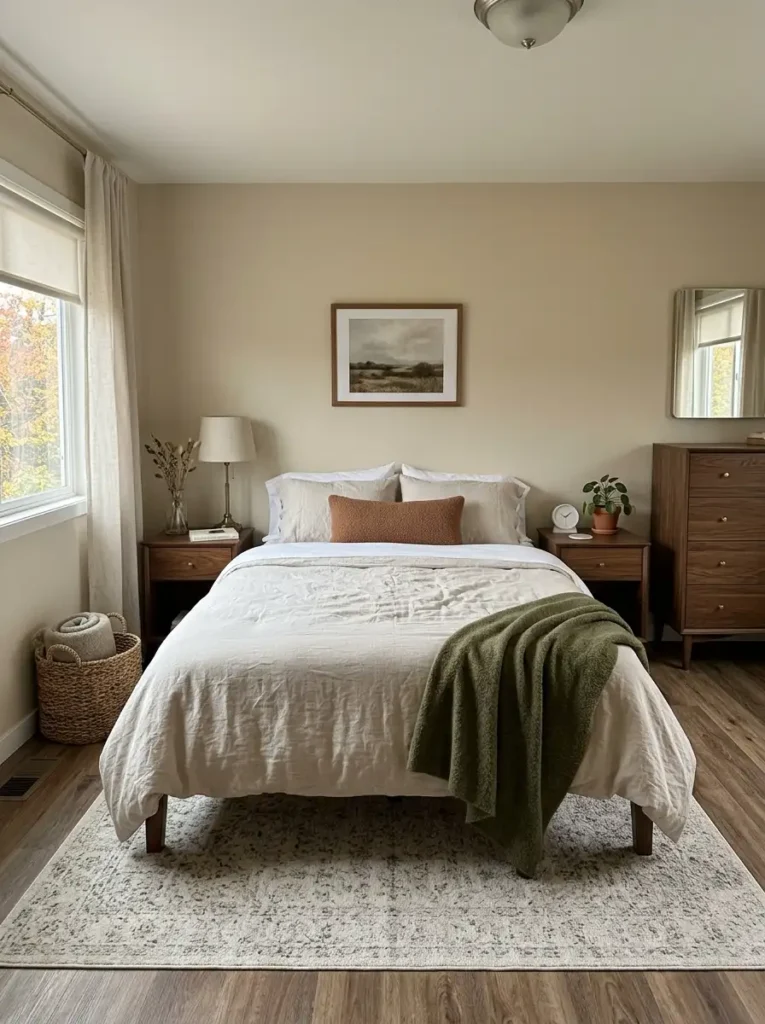
Texture becomes especially important in fall because the bedroom is expected to feel softer before it necessarily looks more decorated.
Yet a chunky knit throw, knitted pillow, knitted pouf, and another knitted blanket do not produce four layers of texture. From across the room, their surfaces may register almost identically.
A richer mix combines different tactile behaviors. Picture rumpled linen beside dense wool, smooth cotton against nubby boucle, a matte woven basket near polished wood, or a soft quilt interrupted by a small amount of leather or aged metal.
Light is part of this material story. Raised fibers catch tiny highlights and shadows. Flat cotton behaves quietly. Velvet shifts as the nap changes direction. Woven grass introduces sharper irregular lines. The contrast becomes visible even before anyone touches the room.
There is also a practical side to the combination. Keep harder-to-clean, highly textured materials away from the bedroom’s busiest walking and storage zones. Bedding that receives daily contact deserves easier care than a decorative textile used only at the foot of the bed.
A successful fall mix therefore feels varied at both arm’s length and from the doorway. Each material contributes a different surface character instead of adding another version of the same softness.
Build contrast across surface families
Linen · Cotton
Excellent visual resting surfaces. They keep more sculptural textures from making the bed look overly dense.
Wool · Bouclé
Best in controlled doses where directional light can reveal loops, fibers, and shadow between strands.
Wood · Basketry
Their grain and irregular edges break up large expanses of soft textiles while maintaining an organic fall character.
Metal · Glass
A small polished or metallic detail prevents the room from becoming visually fuzzy once several textile layers are present.
8. Edit the First View From the Bedroom Door
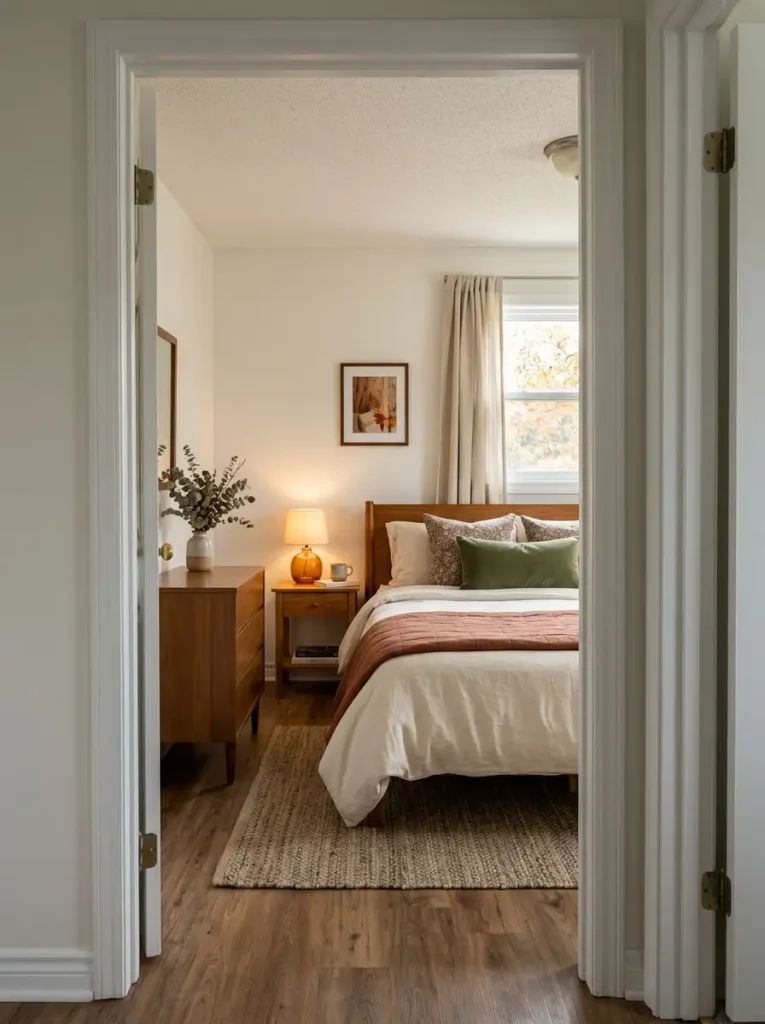
Stand outside the bedroom and look in before changing anything else.
The first view may reveal a problem that is difficult to notice while standing beside the bed: an overflowing laundry basket, the narrow edge of a dresser, exposed storage, a bright television screen, or several decorative objects all asking for attention at once.
Treat that doorway as the room’s opening frame.
Remove the most distracting object first. Then identify what deserves to hold attention from that position. In many bedrooms it will be the bed, but a beautiful window or calm headboard wall can carry that role just as well.
Next, examine the path between the doorway and that visual destination:
- Keep: features that strengthen the chosen focal area.
- Move: objects that interrupt the sightline or appear accidentally placed.
- Quiet: useful pieces that must remain but can be visually reduced through closed storage, lower contrast, or simpler styling.
This exercise is not the same as general decluttering. A room may contain very few belongings and still have a noisy entrance view because those belongings occupy the wrong visual positions.
After the edit, open the door again. The eye should understand where to travel before it begins noticing smaller fall details.
Give the eye one clean destination
9. Match Headboard Height to the Wall, Not Just the Mattress
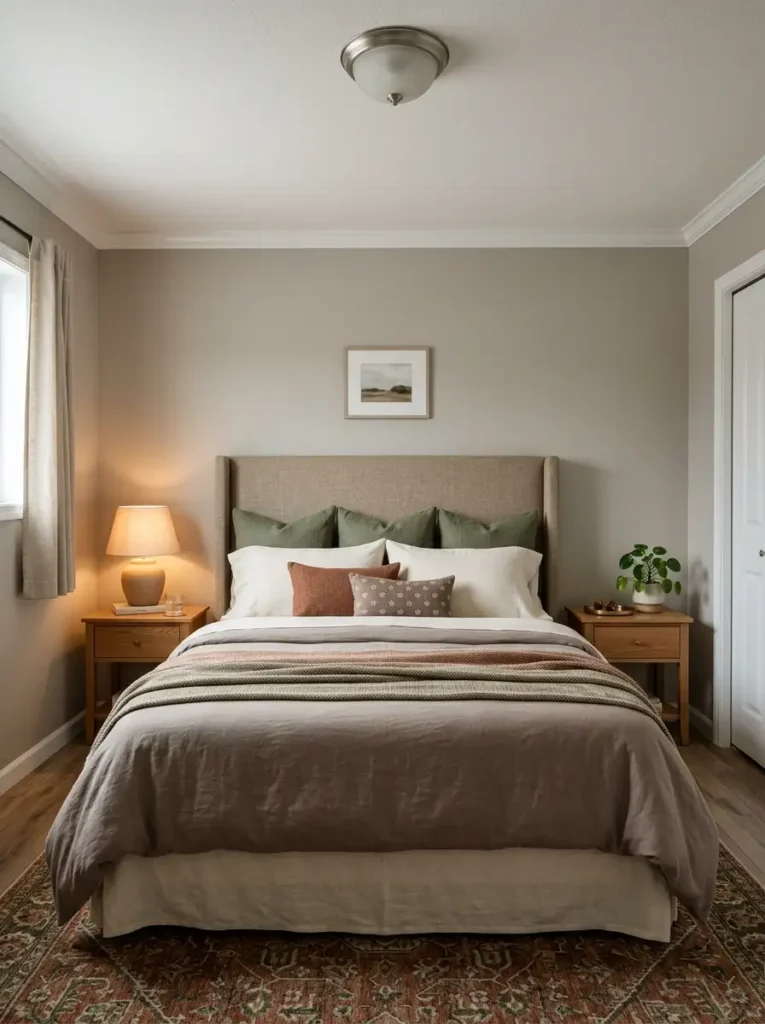
A headboard is not viewed on its own. The wall above it, pillows in front of it, bedside furniture beside it, and ceiling overhead all determine how large it appears.
That makes mattress size an incomplete guide.
A low headboard can work beautifully beneath a low window or strong piece of art. On a tall, blank wall, the same headboard may disappear after sleeping pillows cover much of its visible surface.
Two checks matter most:
- Count the headboard that remains visible after the bed is made. Large euro shams and stacked sleeping pillows can hide a surprising amount of upholstery or wood. A headboard that seemed substantial in an empty showroom may read as a narrow strip once the bedding is added.
- Read the remaining wall above it. A very tall headboard beneath a lower mobile-home ceiling can crowd the upper wall. Too little height leaves the bed visually unfinished. Enough open wall should remain for the headboard to feel deliberately contained.
Bedside furniture also affects the equation. A wide, heavy nightstand makes an undersized headboard appear smaller; delicate tables can make the same headboard feel more dominant.
Photograph the wall straight on before buying. It becomes much easier to judge the full proportion once the ceiling, bed, pillows, and neighboring furniture are visible together.
10. Use a Mirror to Redirect Fall Light, Not Merely Fill a Blank Wall
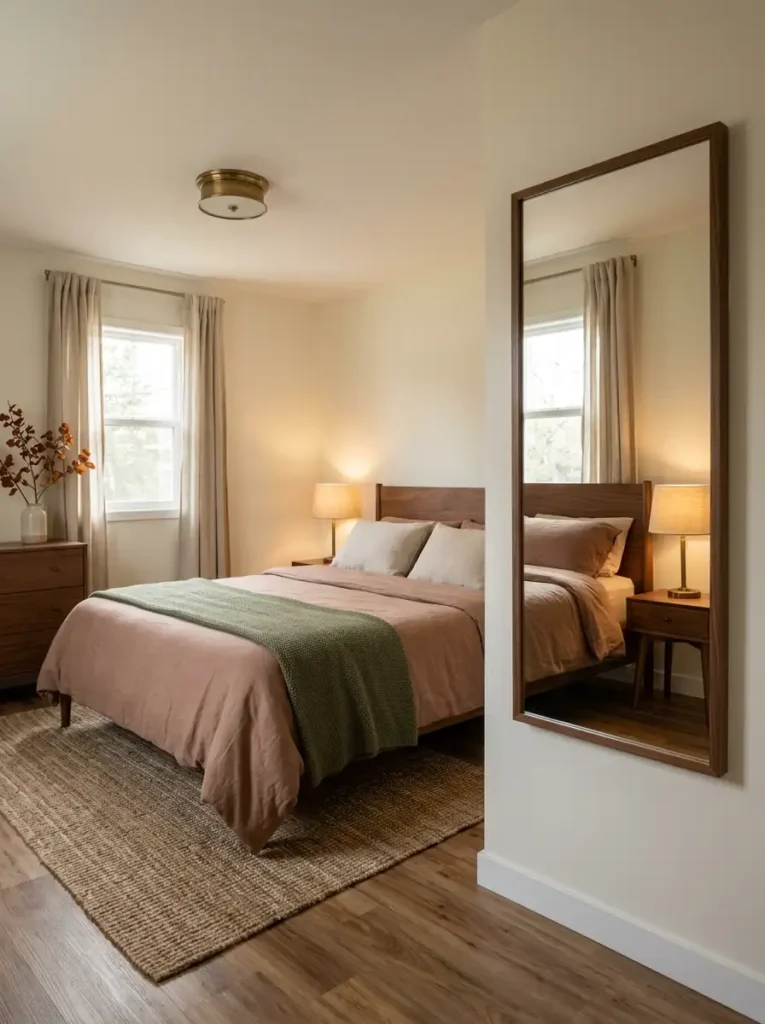
What should a bedroom mirror reflect?
Something you would be happy to frame as a picture.
That might be soft daylight from a window, the edge of the made bed, a warm lamp, a quiet section of the headboard wall, or an attractive natural material elsewhere in the room. The reflection becomes a second view inside the bedroom, so whatever appears there gains visual importance.
Where does that leave the mirror?
Start by testing possible reflections from the position where the mirror will hang. A mirror opposite a window can return useful daylight into the space, but direct sun may also produce uncomfortable glare. Moving it to an adjacent wall often gives softer illumination.
The same logic applies near the bed. Reflecting the calmest side of the room can increase visual depth. Reflecting open storage, laundry, a television, or an overloaded dresser duplicates precisely the element you may prefer to minimize.
What about height?
Choose it according to the mirror’s job. A dressing mirror needs useful body visibility. A dresser mirror should relate to the furniture below it. A decorative mirror can respond more closely to the surrounding wall composition.
Before mounting, walk through the room and inspect the reflection from several normal positions. The best location improves both the real wall and the view contained inside the glass.
Treat the mirror as a second framed view
exposed storage, laundry, screens, bright doorways, or crowded dresser tops.
direct late-day sun can be uncomfortable even when the reflected window looks beautiful.
11. Turn the Dresser Into One Controlled Autumn Composition

A dresser is useful surface area, which is exactly why it can become visually crowded so quickly. Perfume bottles, chargers, jewelry, framed photos, candles, seasonal objects, and everyday necessities often end up competing within the same narrow strip.
For fall, give only part of that surface a decorative job.
One substantial arrangement might combine a lamp, a small branch or dried stem, and one lower object such as a ceramic bowl. Keep the remaining section deliberately open for daily use. That empty area is not wasted space; it strengthens the objects beside it by giving their outlines room to register.
Height variation matters more than adding another accessory. Let one element rise clearly above the others, keep a secondary piece around mid-height, then finish with something low. Three objects with distinct silhouettes can carry more presence than seven pieces sitting at similar levels.
A dresser beneath a mirror needs an additional check. The tabletop display and reflected image should not form two separate piles of visual activity.
The composition is finished when the seasonal cluster reads clearly from across the room and the dresser still functions comfortably during an ordinary morning.
How much of the dresser should actually be styled?
12. Test the Foot of the Bed Before Adding a Bench or Trunk
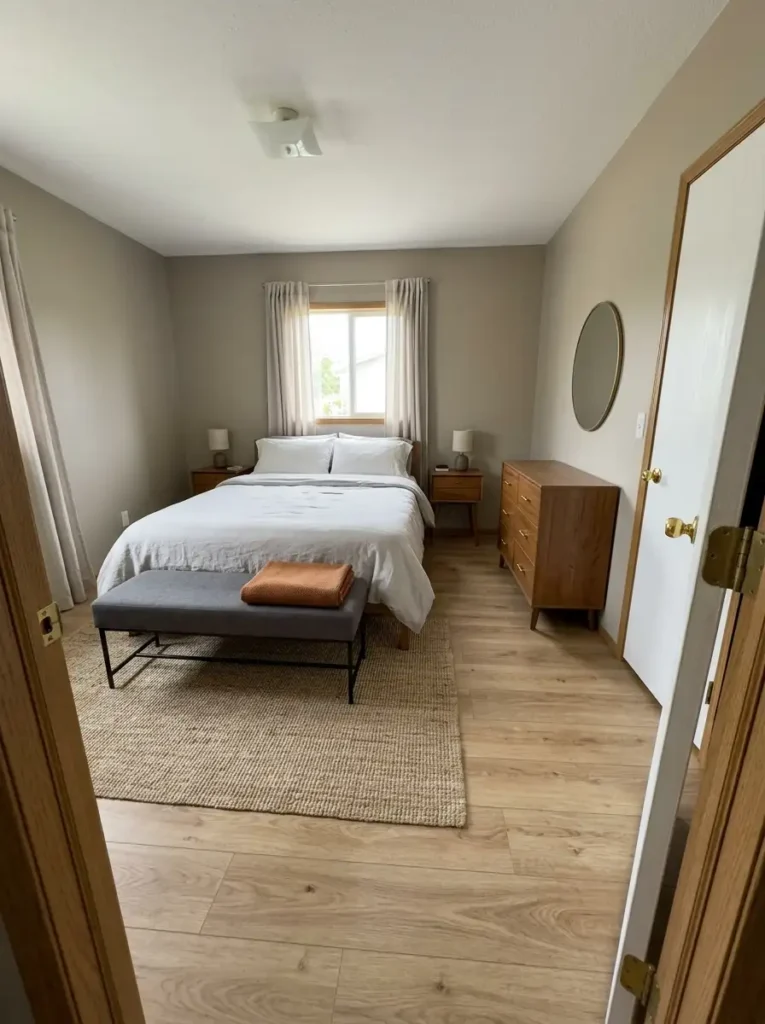
A bench at the end of the bed can look polished in a photograph and awkward in a narrow bedroom. The deciding factor is not style. It is the amount of usable passage left once the furniture enters the circulation path.
If the foot of the bed faces open floor
A slim bench can add a practical landing place for folded blankets, clothing, or a bag. Choose a depth that still leaves comfortable walking room between the bench and the opposite wall or furniture.
If a door or dresser opens into that zone
Leave more clearance. A beautiful trunk loses its usefulness when a dresser drawer hits it or the bedroom door has to squeeze past one corner every day.
If the room already feels visually full
Try the bedroom with no foot-of-bed furniture at all. The uninterrupted foreground can make the bed feel more prominent because nothing divides the floor directly in front of it.
A small pouf or movable stool is another option when occasional seating is useful but permanent depth is not.
Before buying anything, mark the proposed footprint on the floor with painter’s tape. Walk the normal route, open nearby doors and drawers, and make the decision from movement—not from an empty measurement alone.
13. Make Under-Bed Storage Disappear Into the Design
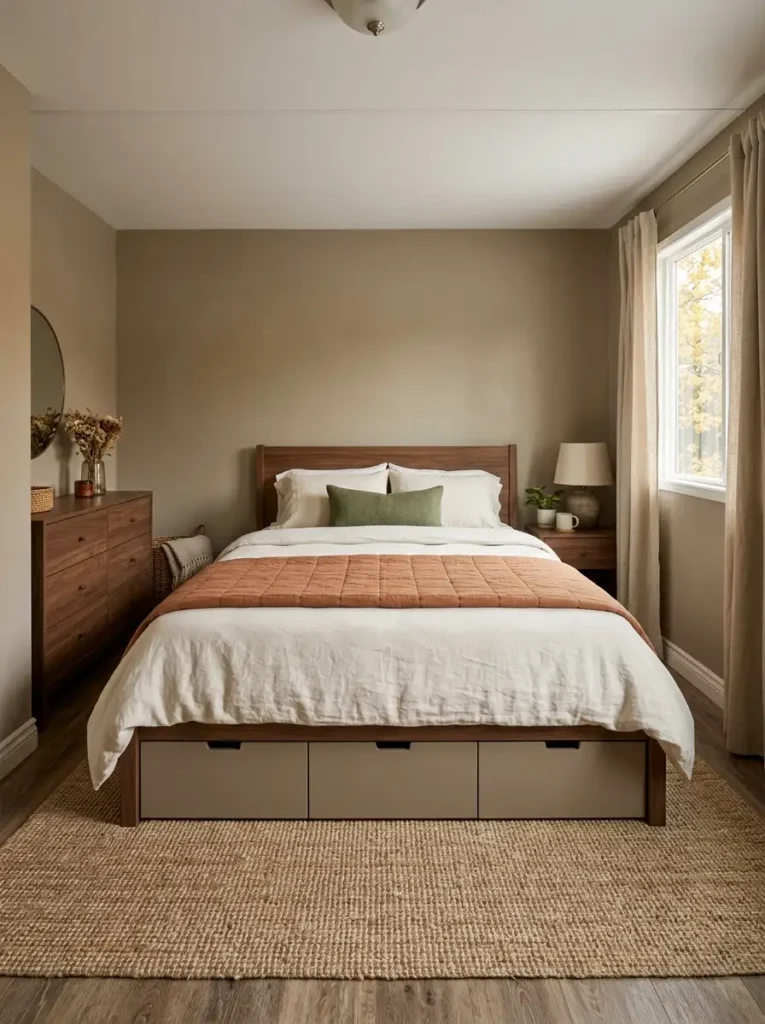
Visible under-bed storage can make the lower half of a bedroom feel fragmented. Clear tubs, fabric bags, cardboard boxes, and several different container heights form a broken row beneath what should be one visually substantial piece of furniture.
The problem is rarely storage itself. The eye is responding to inconsistent edges.
Create one repeated horizontal line under the bed. Matching low-profile bins accomplish this easily. Built-in drawers can do the same. Zipped textile cases work well for seasonal bedding, especially when their colors remain close to the bed frame, rug, or floor.
Measure the actual under-bed clearance before choosing containers. Leave enough room to slide them out without dragging against upholstery or flooring.
Frequency of access should shape the arrangement too. Everyday items belong on the easiest side to reach. Off-season blankets, spare bedding, or rarely used clothing can occupy deeper positions.
Do not seal away anything that needs regular airflow, and avoid overpacking soft cases until they bulge beyond the bed frame.
A bed skirt can conceal storage, but it works best when the fabric falls cleanly. A skirt pulled over protruding boxes simply transfers the visual problem to an uneven fabric line.
The strongest setup reads as one bed base first and storage second.
One clean lower edge beats five different containers
A repeated container height forms a stable horizontal datum beneath the bed.
14. Introduce One Oversized Seasonal Statement Instead of Many Tiny Ones
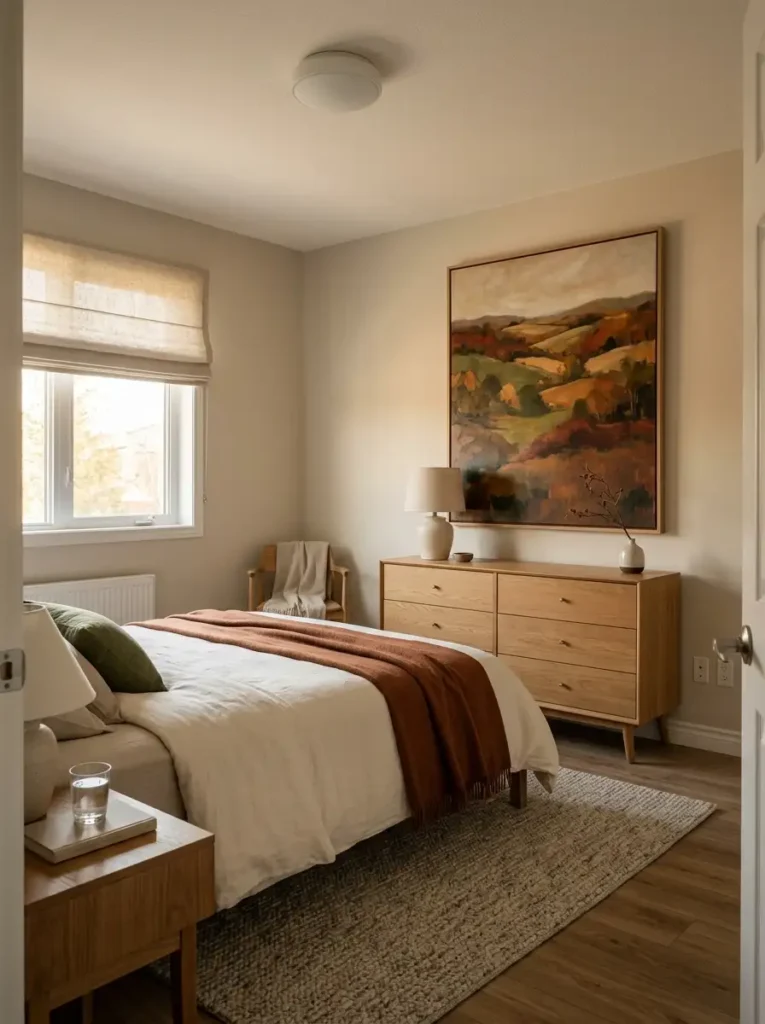
More fall objects do not necessarily produce a stronger fall bedroom.
In a small or medium mobile home bedroom, ten miniature seasonal cues can scatter attention across the room: a pumpkin on each nightstand, several signs, tiny leaf arrangements, themed pillows, small figurines, and another display on the dresser.
One larger statement is often more visually legible.
Consider an oversized autumn landscape above a dresser, a substantial textile hanging, a tall branch arrangement, one dramatic quilt, or a sculptural vessel with enough scale to be noticed from the doorway.
The point is not simply to buy something large. The object needs a clear visual territory.
Give it quieter surroundings. A bold textile on the bed may need simpler wall art nearby. A tall branch arrangement gains presence when the dresser surface around it remains mostly open. Large seasonal artwork becomes easier to appreciate when every adjacent object is not repeating the same motif.
Viewing distance matters as well. Tiny details may disappear from the doorway, while a single larger silhouette remains readable instantly.
There is a useful seasonal advantage here: one dominant piece is easier to remove when autumn ends. The room can return to its everyday character with one change instead of a complete accessory sweep.
Let one fall statement carry the message
15. Warm Up Existing Furniture With Small Metal and Wood Details
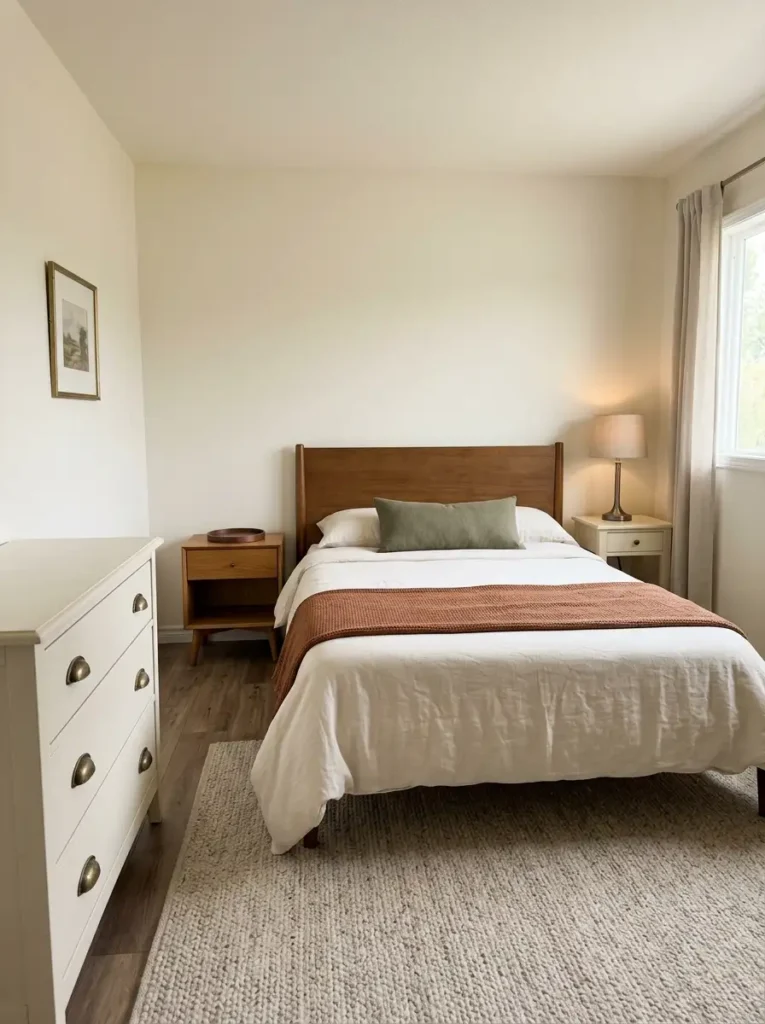
Replacing a dresser or pair of nightstands simply because their finish feels slightly cold can consume a large part of the decorating budget. Smaller finish changes can sometimes connect those pieces to the autumn palette more effectively.
Begin with the furniture you touch most.
Highest-impact move
Hardware can change the character of a plain dresser quickly. Antique brass, aged bronze, dark iron, or warm brushed finishes introduce a new material note without altering the entire piece.
Next priority
Repeat that finish once or twice elsewhere. A lamp base, picture frame, small tray, or mirror edge can establish a relationship between furniture that was never purchased as a matching set.
Optional finish
Introduce a small amount of compatible wood. A walnut-toned tray, oak frame, wooden lamp base, or narrow stool can bridge painted furniture with existing flooring or a wood headboard.
The repeated finish should remain selective. Covering every handle, frame, lamp, hook, and decorative object in identical brass can make the effect look overly coordinated.
Sheen also changes the mood. Highly polished metal catches more attention; aged and brushed finishes remain quieter beside textured fall fabrics.
Spend first on the detail visible from the main room view. A small change earns its budget when it improves the relationship between several existing pieces at once.
16. Free the Nightstands With Wall-Mounted Bedside Details
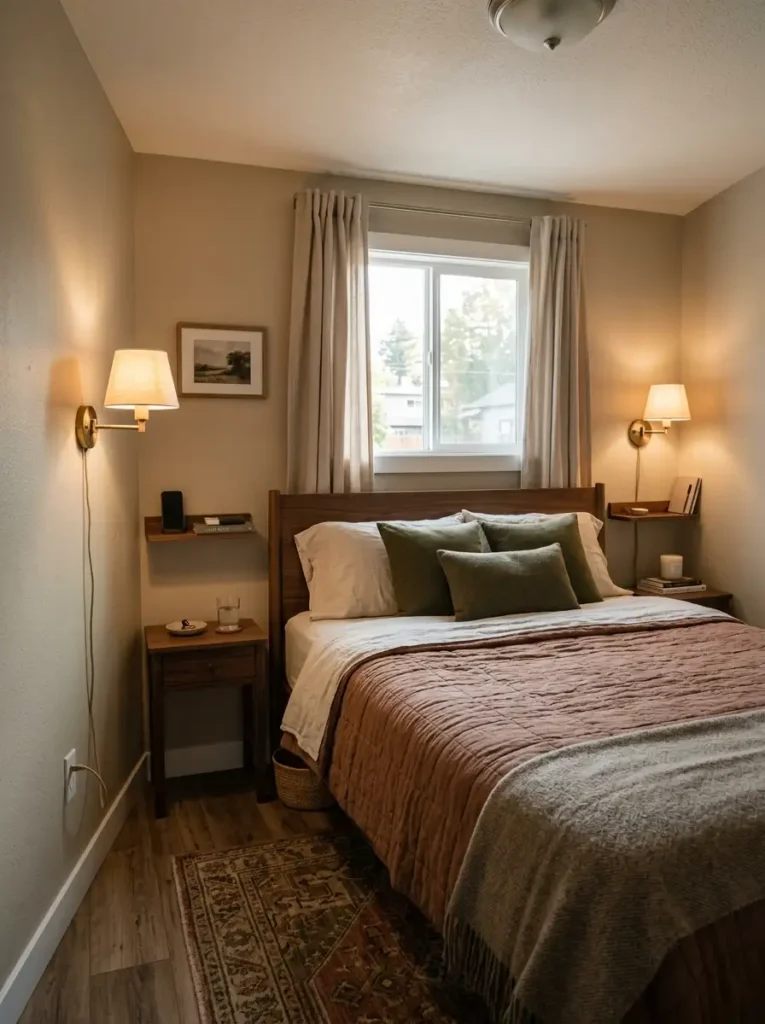
A narrow nightstand can feel crowded long before it is actually full. A lamp, phone charger, water glass, book, alarm clock, and decorative object may leave almost none of the tabletop visible.
Move one or two functions onto the wall.
A plug-in sconce can replace the table lamp. A shallow wall shelf can hold a phone or book. Adhesive cable clips can guide charging cords down the back edge instead of letting them collect across the surface.
The benefit is partly functional, but the visual change comes from exposing the nightstand’s perimeter. More visible tabletop makes a compact piece easier to read as a complete shape, so it no longer looks undersized beneath the bed.
Mounting height should follow real bedtime habits. A reading light needs to illuminate the page from a comfortable angle; a shelf needs to remain within easy reach without becoming a head-bumping hazard.
Renters can achieve a similar effect with plug-in fixtures, lightweight removable mounting systems rated for the intended load, or a slim headboard-mounted reading lamp where appropriate.
Free only the functions that genuinely benefit from moving upward. The wall should solve congestion, not become a second storage surface.
Which function deserves to leave the nightstand?
The lamp occupies most of the tabletop
A plug-in wall sconce can recover the largest amount of surface area. Check beam direction and switch reach from the normal sleeping position before fixing its height.
Books and a phone create the clutter
A very shallow shelf can handle one or two nightly essentials while leaving the main surface available for a water glass or other frequently handled item.
Cords make the area look messy
Cable routing may solve more than another shelf. Guide charging leads along a furniture edge or wall route so the tabletop stays visually uninterrupted.
test shelves, switches, and charging access while sitting or lying in the actual sleeping position.
wall-mounted pieces should remain shallow enough that normal movement beside the bed stays comfortable.
17. Finish With a Doorway-Level Fall Edit
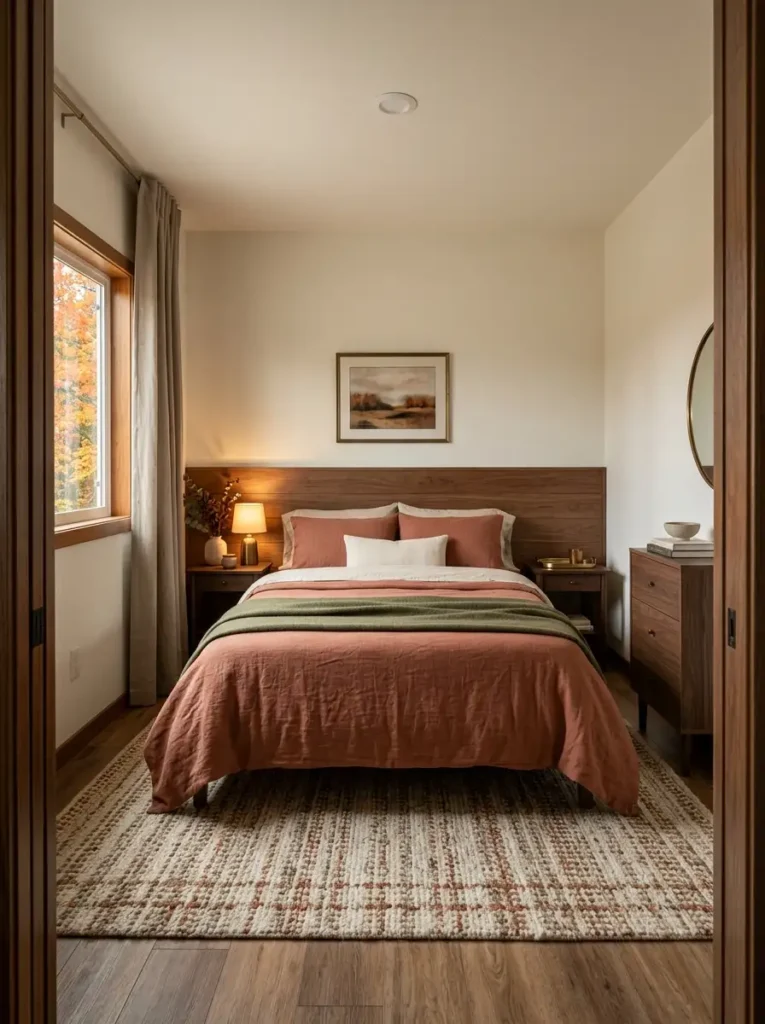
Once the fall layers are in place, resist the urge to search for one final accessory. The stronger last move is usually an edit.
Return to the bedroom doorway and identify three levels of attention.
Dominant: What does the eye notice first? Ideally, one major zone—often the bed or headboard wall—should answer immediately.
Secondary: Which elements support that first impression? Curtains, a rug, warm lighting, or one seasonal statement can reinforce the main zone without competing for equal status.
Quiet: Which areas provide relief? A relatively open nightstand, plain section of wall, clear floor edge, or restrained dresser surface gives the eye somewhere to rest.
Now look for anything that accidentally changes that hierarchy. One bright pillow, extra sign, highly reflective object, or crowded basket can become surprisingly dominant once the room is nearly complete.
Also check the distribution of your fall color. A small echo across the room can connect separate zones; identical accents placed everywhere flatten the hierarchy by making every area equally important.
The room is finished when removing another object would make the composition weaker—not merely emptier.
Three attention levels are enough
The finished bedroom needs emphasis, support, and visual rest—not equal decoration in every corner.
Create a Fall Bedroom That Still Feels Like Home
A cozy autumn bedroom does not require changing everything at once. Start with the issue that affects the whole room most—an unresolved bed wall, flat lighting, poor circulation, mismatched color, or visible storage—and improve that first.
Then add seasonal character where it can make a clear contribution. A richer textile, warmer finish, stronger focal piece, or more thoughtful evening light may be enough to shift the atmosphere.
The best fall mobile home bedroom decor still works after the seasonal pieces come away. Good proportions, functional pathways, useful storage, and a calm visual hierarchy remain valuable all year.
Save the ideas that fit your bedroom now, and return to the rest when the room actually needs them.