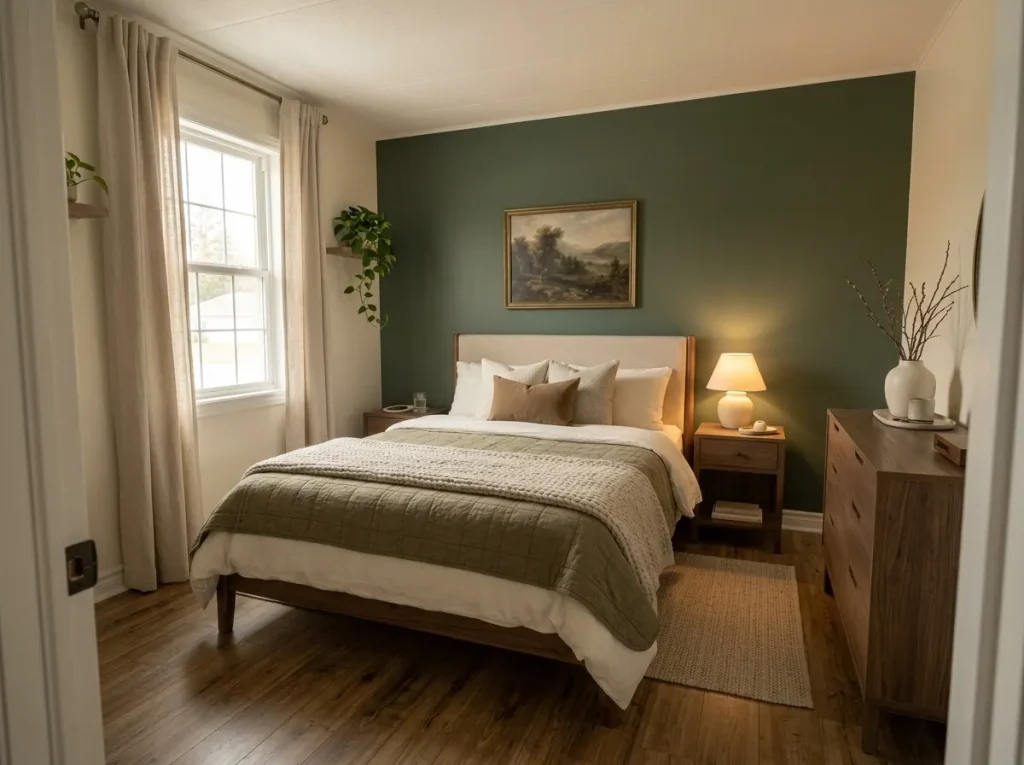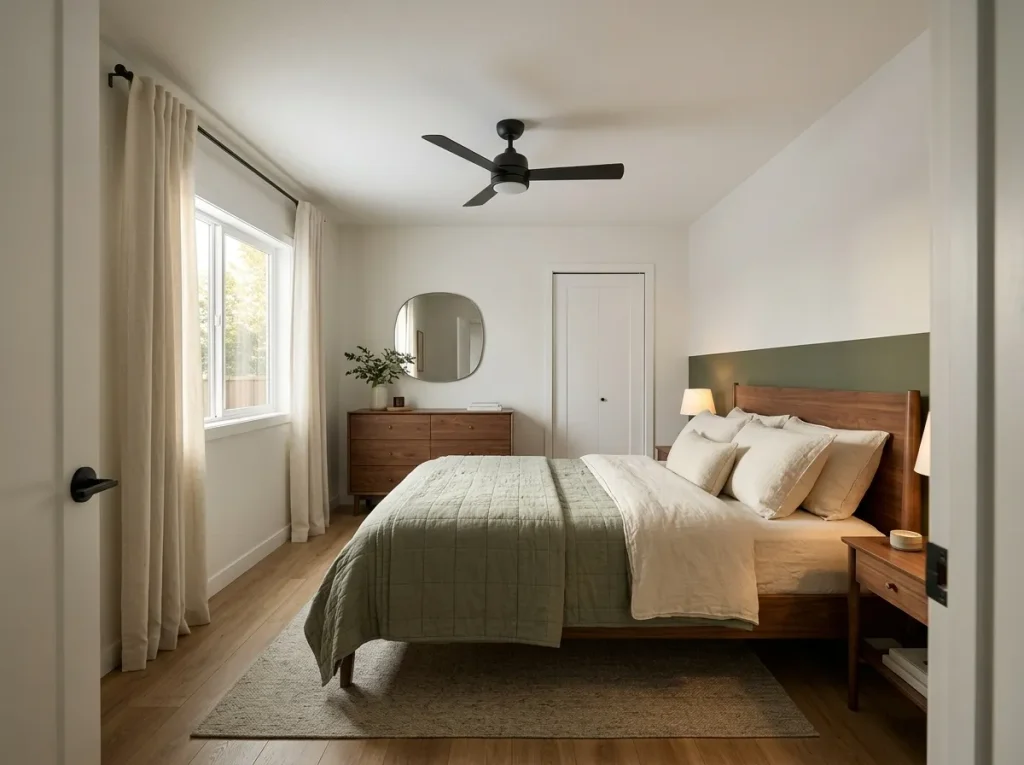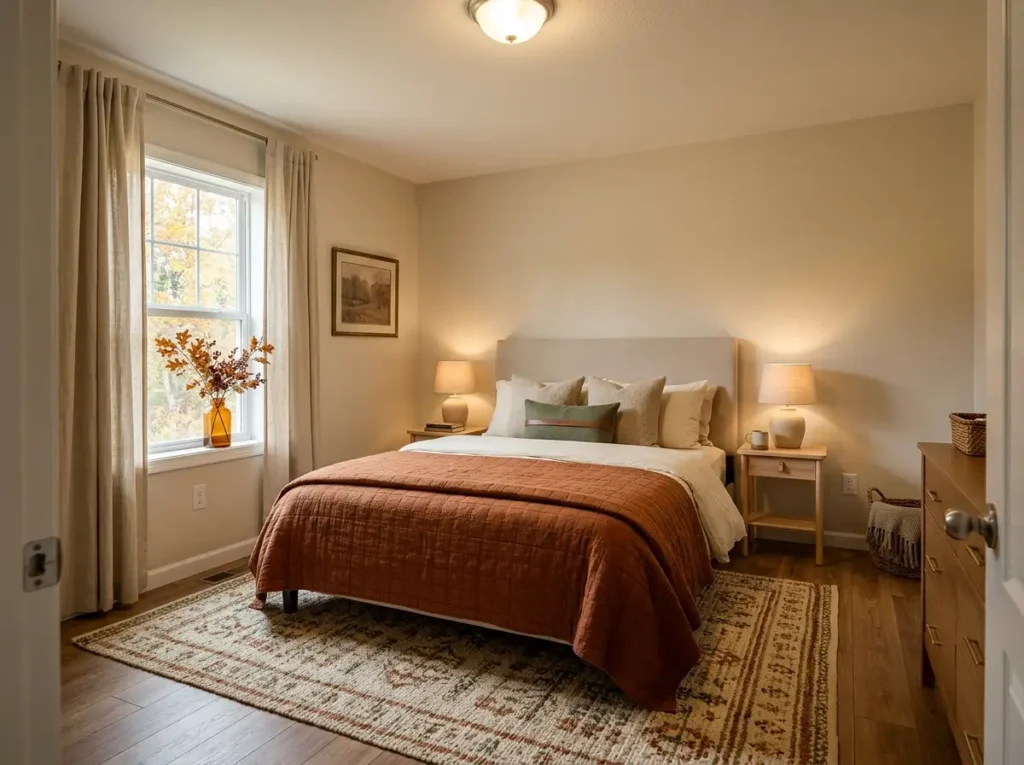
A bedroom can have a soft blanket, warm lamp, and pretty pillows and still feel unfinished. That problem becomes especially noticeable in a mobile home bedroom, where the bed, dresser, window, and main walking path may all appear in one compact view.
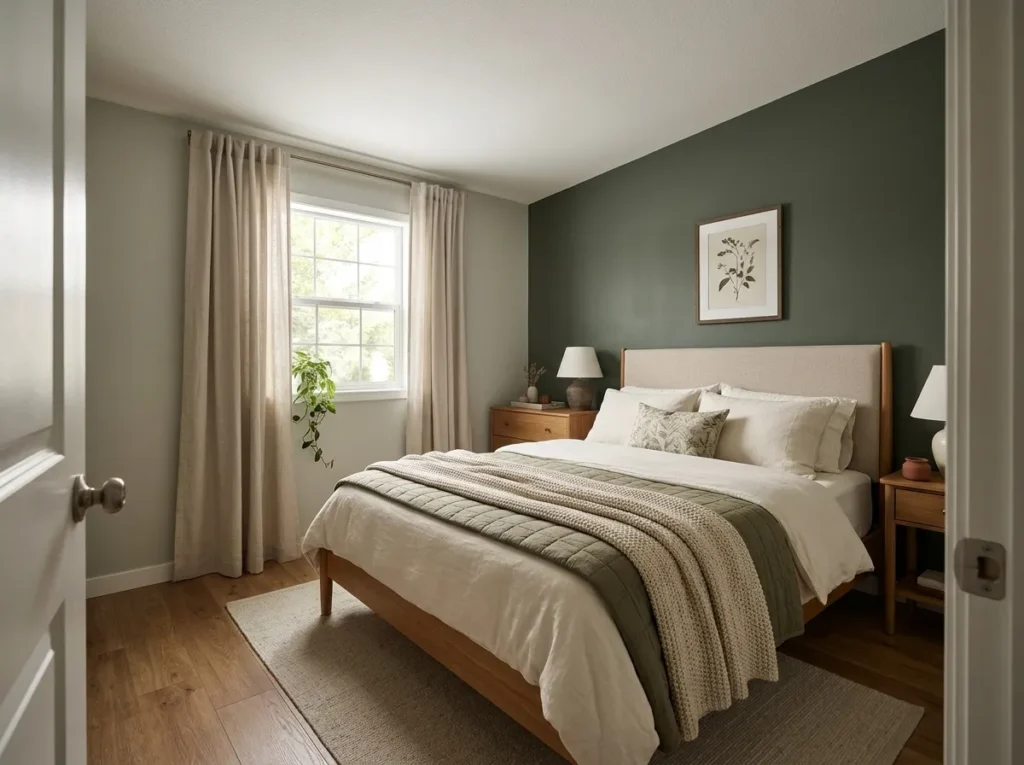
Creating a cozy mobile home bedroom is less about filling every empty surface and more about deciding where warmth should live. Sometimes the biggest improvement is another layer on the bed. In another room, it may be a slimmer bedside table, softer window treatment, better evening lighting, or simply removing one object that makes the space feel crowded.
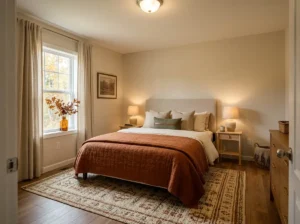
The most inviting manufactured-home bedrooms tend to feel collected without becoming congested. Texture is concentrated where you touch it, light is placed where evening routines happen, furniture earns its footprint, and open space is treated as part of the design.
These 17 ideas will help you build that feeling around the room you already have.
1. Read the Bedroom From the Doorway Before You Decorate
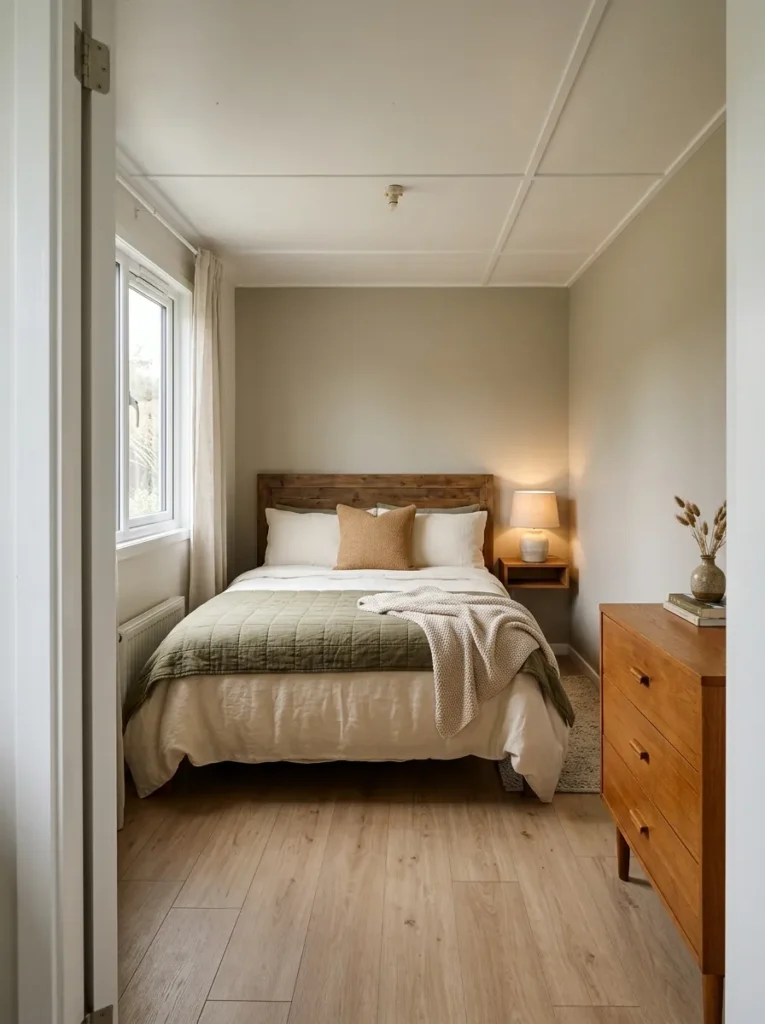
Stand at the bedroom entrance before moving a pillow or buying another accessory. In many mobile home bedrooms, the doorway reveals most of the room at once: bed, dresser, window, closet edge, and the narrow route between them. That makes the first view unusually useful.
Ask what demands attention first. A bed that disappears may need stronger color, texture, art, or lighting around it. A room where every surface competes needs subtraction. A pleasant room that still feels flat may need light depth or tactile contrast. If furniture edges and narrow gaps dominate your view, fix the spatial problem before adding decor.
Use this doorway position again after every major change. It shows whether the room is becoming calmer as a whole, not merely prettier in one corner.
Doorway diagnostic
What catches your eye first?
Use your first five seconds in the doorway to identify the room’s real problem before adding décor.
2. Let the Bed Carry the Softness So the Floor Can Stay Clear
The bed is already the largest soft surface in most bedrooms, so it can create a generous cozy effect without consuming additional floor area.
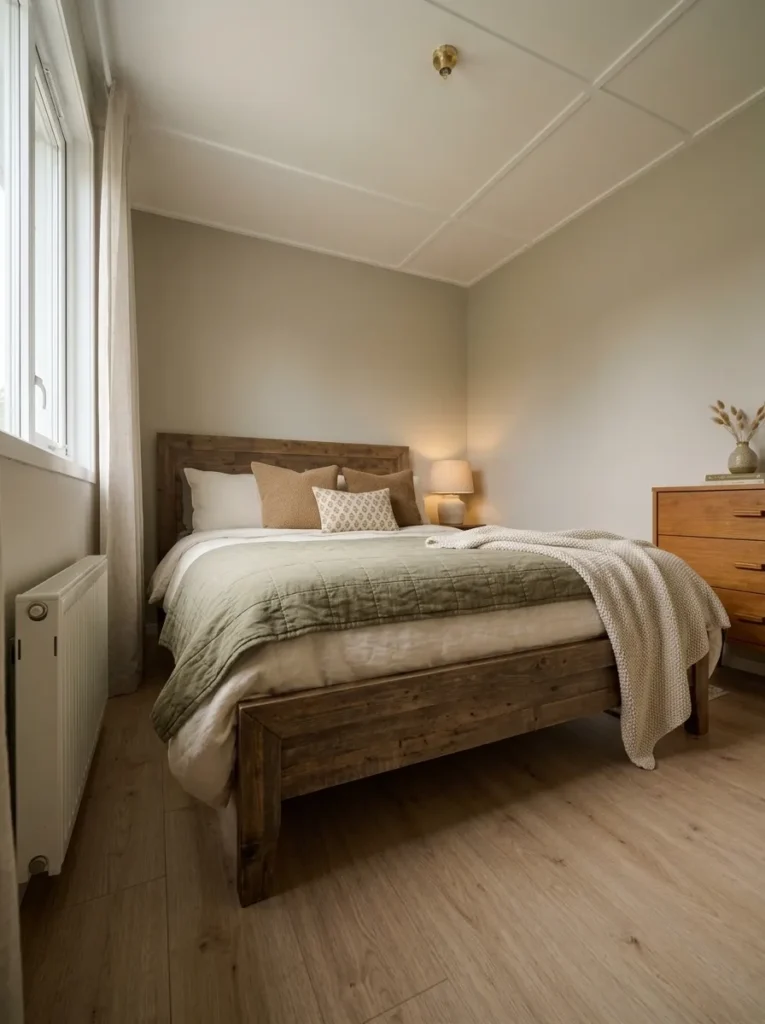
Build the softness in a simple order:
- Keep the main duvet, quilt, or coverlet broad and visually calm.
- Add one clearly different texture across the lower portion of the bed.
- Use a small number of larger pillows that can stay practical enough for daily use.
This matters in a compact mobile home bedroom because baskets, blanket ladders, poufs, decorative stools, and extra floor cushions all compete with circulation. If the bed still feels flat, improve its depth before decorating another corner.
For a fuller layering sequence, continue with How to Style a Bed Like a Designer.
3. Keep the Bed You Love—Slim Down What Sits Beside It
A large bed is often blamed first when a bedroom feels tight, yet the mattress may be the one large item that truly earns its footprint. If it suits the sleepers, inspect the furniture touching the bed zone before replacing it.
Remove one bedside piece temporarily and walk the room normally. If movement improves immediately, look for a narrower table, smaller drawer unit, wall shelf, or a one-nightstand arrangement. A deep dresser or bulky storage chest may also be the real pressure point.
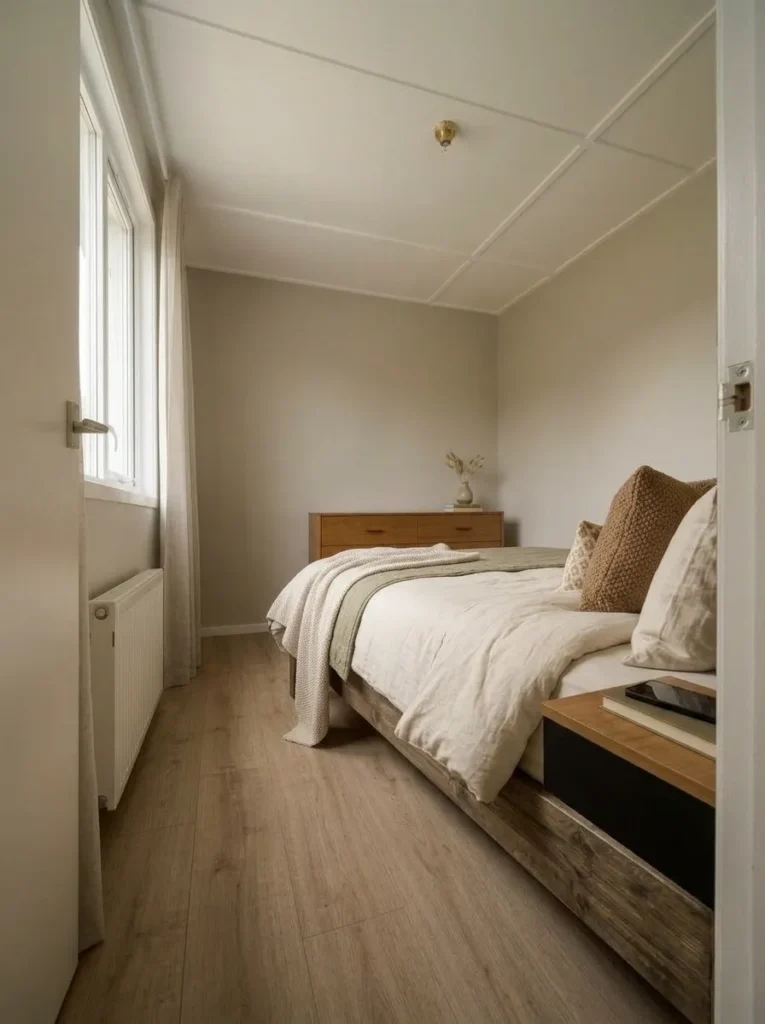
Quick test: protect the bed size first, then edit the furniture that reduces usable width without delivering equal everyday value.
4. Build the Color Story From the Wood and Flooring Already There
Existing wood, flooring, and carpet occupy more visual area than most accessories, so they should influence the palette before you choose bedding or curtains. Honey-toned wood can sit comfortably with muted mustard, olive, cream, tobacco, and warm white; darker timber may support mushroom, oatmeal, forest, charcoal, and softer mineral tones.
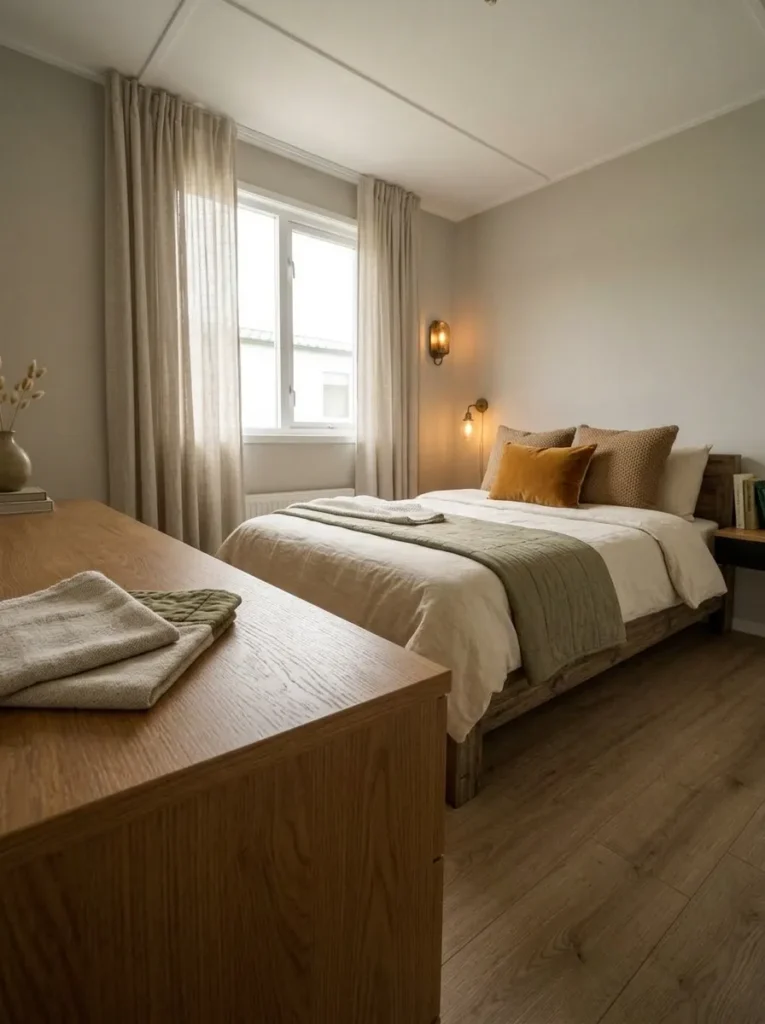
Place a textile sample beside both the furniture and floor in daylight, then look again with the lamps on. You are searching for a bridge between permanent finishes and the soft layer, not an isolated color that looks good only on a product page.
Finish-led palette finder
Start with the finish you are not replacing
Choose the dominant existing finish. The output changes to a palette direction that better connects bedding, curtains, and accents with the room you already have.
5. Put the Deepest Color or Texture Behind the Bed
A darker bedroom can feel cocooning without covering every wall. Concentrating the strongest color, panel effect, wallpaper, or textural treatment behind the headboard gives the eye one clear depth zone.
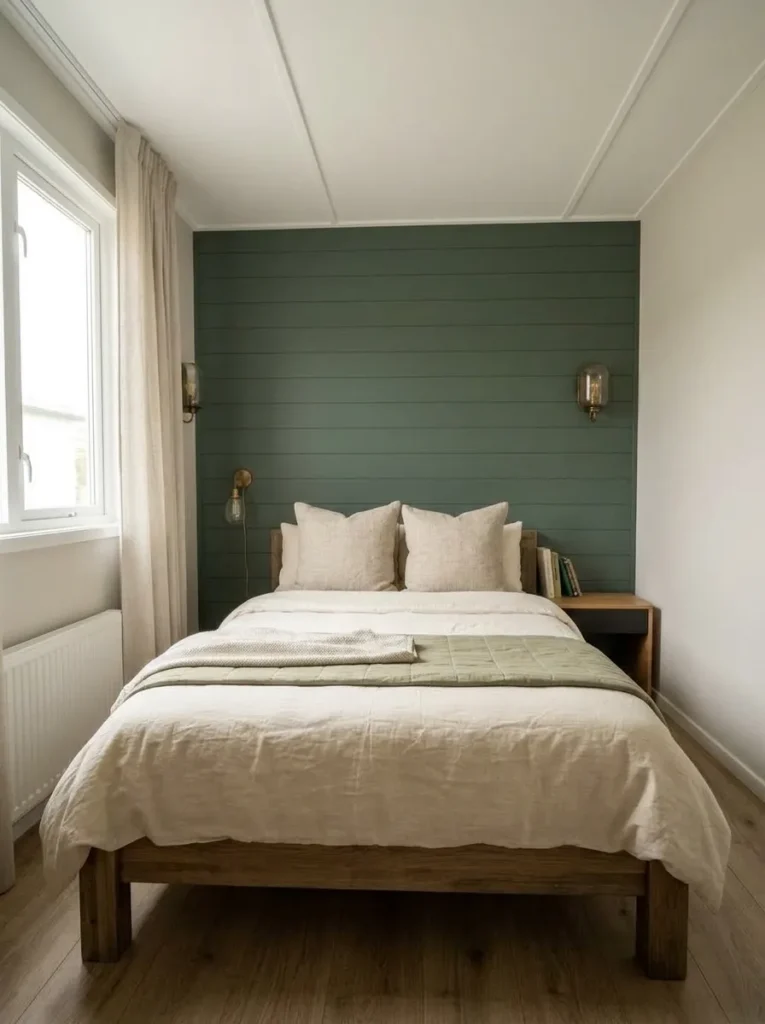
Keep the remaining walls calmer when the room has limited natural light or a narrow circulation edge. That preserves brightness around the window and prevents the darker treatment from visually pressing on every side at once.
This is especially useful if you like forest green, charcoal, clay brown, or smoky blue but are unsure about using the shade everywhere. Let the bed wall carry the enclosure; let the rest of the room support it.
6. Soften the Window Without Giving Up the Walking Edge
Curtains can add vertical softness that immediately changes a small bedroom, but the amount of fabric should follow the space around the window.
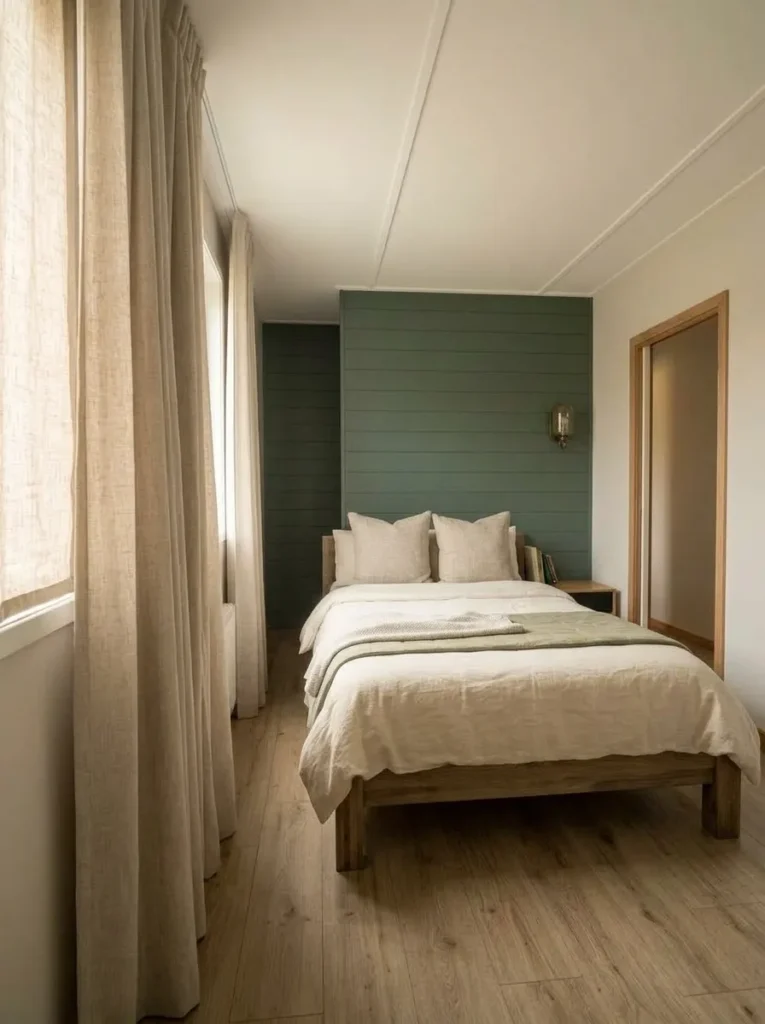
Check three things before choosing fullness:
- Does a dresser or nightstand sit directly beside the panel?
- Will the curtain edge enter the main walking route?
- Would long pooling fabric interfere with ordinary cleaning or movement?
Where the wall is clear, fuller panels can frame the opening and make the room feel more enveloping. In a tighter zone, a cleaner fall and controlled hem usually feel calmer.
Once you know how much fabric your room can handle, browse 39 Gorgeous Bedroom Curtain Ideas for a Cozy & Stylish Sleep Space for more style directions.
7. Create an Evening Glow Around the Bed, Not Just Overhead
Turn off the main ceiling fixture and look at what remains. If the room almost disappears, one light source is carrying every job.
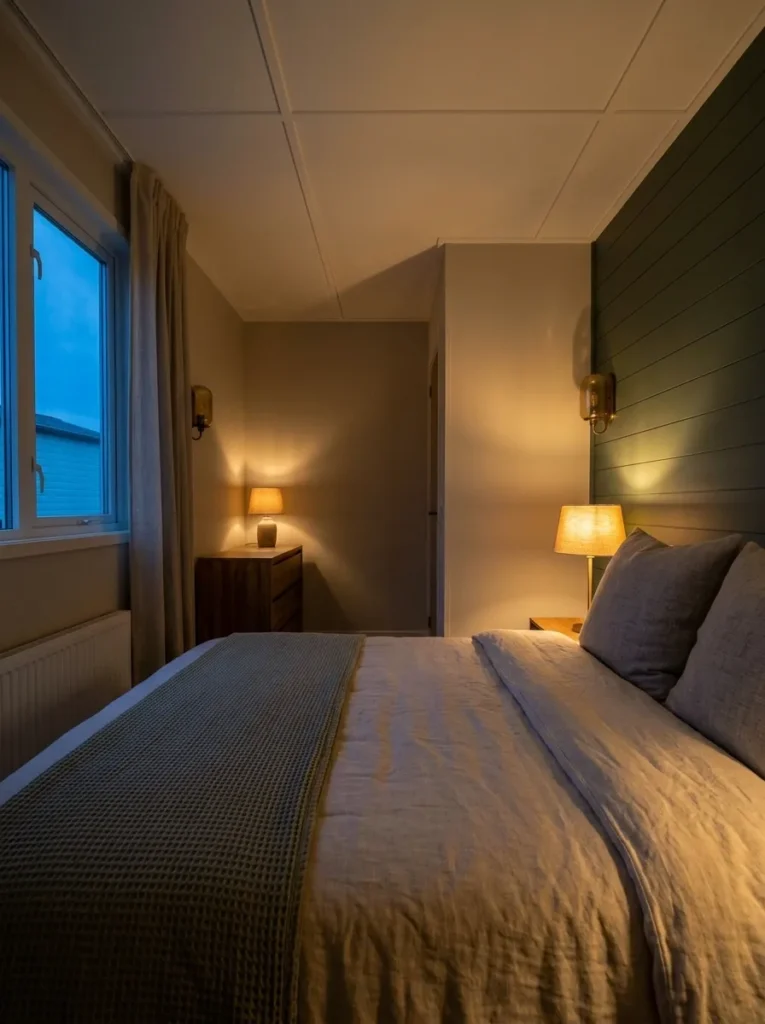
A bedside lamp can warm the sleeping zone while a second low light across the room keeps the dresser or far wall from falling into darkness. You do not need to illuminate every corner; leaving some shadow between light pools gives the room depth and helps the bed remain visually important.
After-dark light map
Build light in layers, not brightness
Choose the problem you notice after dark. Each answer returns a different lighting move instead of one generic recommendation.
For a broader guide to combining several light layers, continue with Why Is My Lighting Harsh? 42 Layered Lighting Tricks to Fix Any Room’s Atmosphere.
8. Put Texture Where Hands and Feet Actually Meet the Room
A room can look cozy in a photograph and still feel ordinary in use. Map the surfaces your body touches during a normal evening and morning, then put the richest texture there.
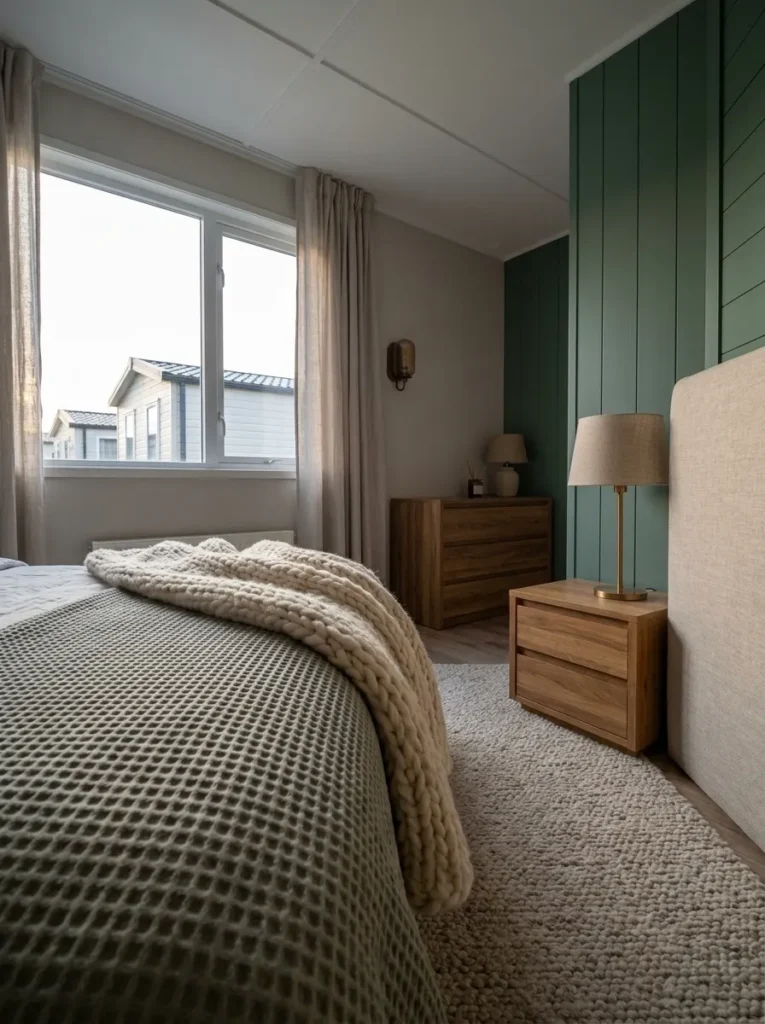
Touchpoint map:
- Hands: pillowcases, throw, curtain edge
- Feet: bedside rug or warm floor surface
- Body: sheets, duvet, quilt, upholstered headboard
- Reach zone: nightstand materials and lamp shade
Pair one smoother surface with one noticeably tactile surface so each can be felt and seen. This gives you a useful shopping filter: improve a daily touchpoint before buying another decorative object that adds only visual weight.
9. Let the Rug Finish the Bed Zone, Not Swallow the Whole Floor
A rug should make the sleeping area feel settled while leaving the circulation route easy to read. On hard flooring, place it where it visually connects to the bed and where bare feet actually land.
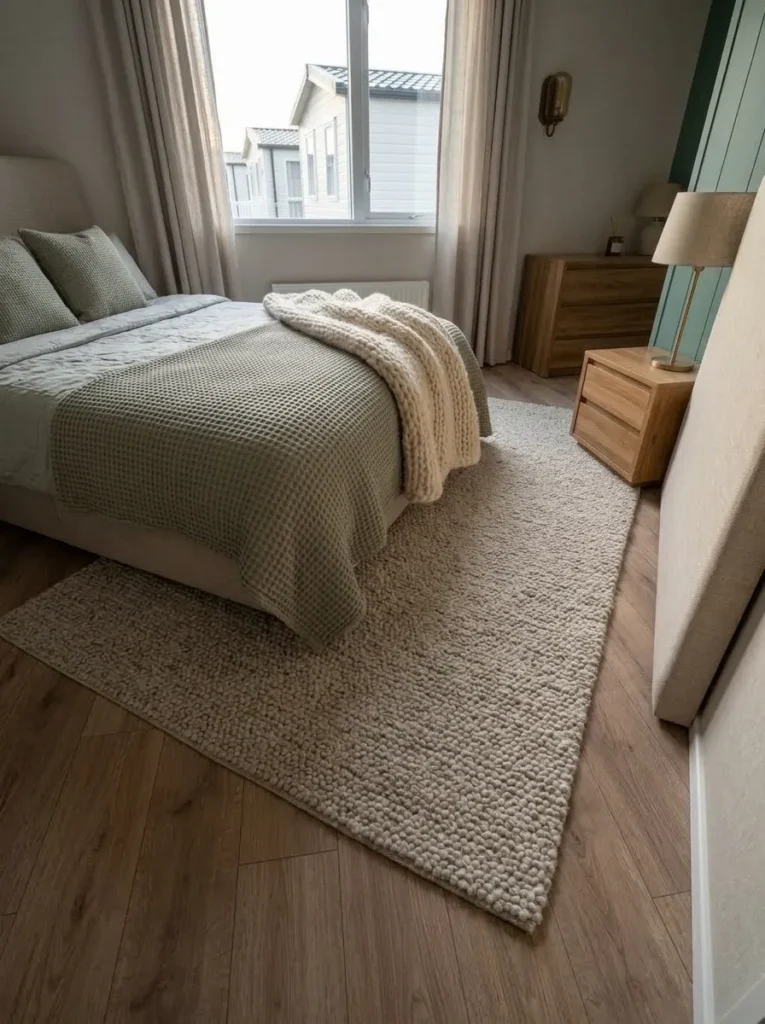
If the room already has carpet, another large rug may add visual thickness without solving a comfort problem. A smaller bedside piece—or no added rug—can be the stronger choice.
Decision: judge the rug by what it improves at the bed edge and walking path, not by whether the room has enough exposed floor to fit one.
10. Give Up Perfect Bedside Symmetry When the Width Says No
Matching nightstands are optional when a doorway, closet opening, window edge, or narrow walkway makes one side of the bed more constrained. The bed already supplies the central anchor, so the furniture beside it can carry different visual weights.
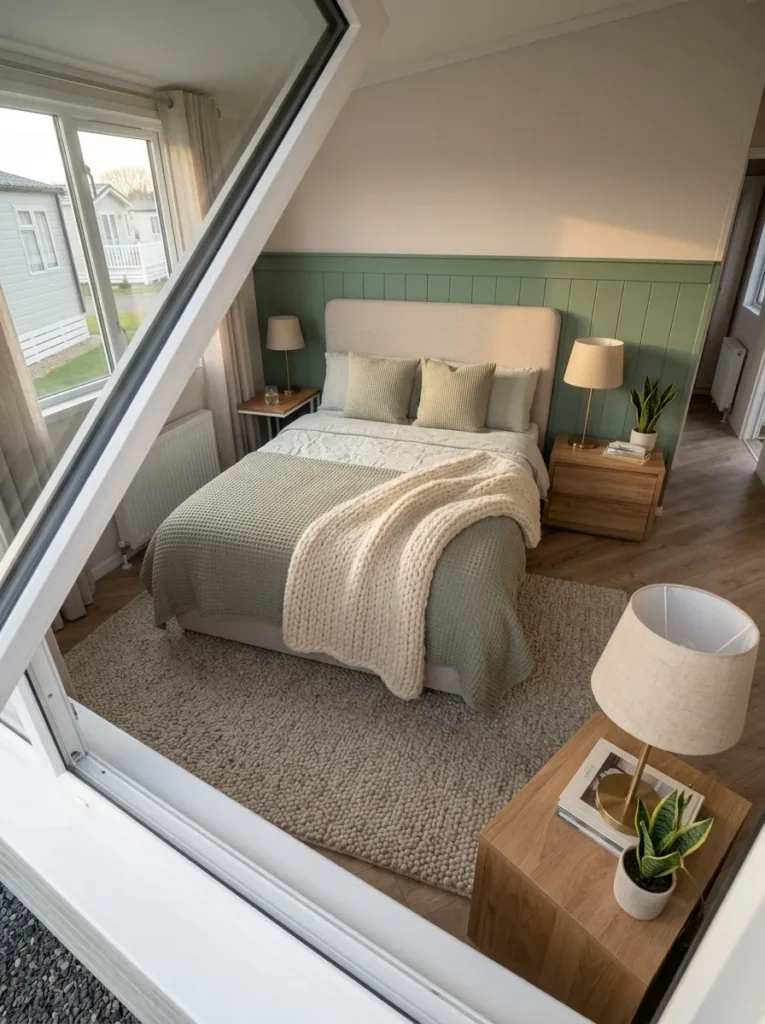
A full drawer nightstand may work on the roomier side while the tighter side uses a smaller table, compact shelf, or another low-footprint surface that still supports the sleeper.
Bedside balance test
Symmetry is optional. Balance is not.
Choose the wall condition beside your bed. The recommendation changes according to the usable width and nearby architecture.
11. Make the Dresser a Quiet Counterweight to the Bed
Picture a bed with layered textiles and a strong headboard. Now give the dresser an equally busy collection of frames, candles, trays, plants, books, and grooming items. The room loses its pause.
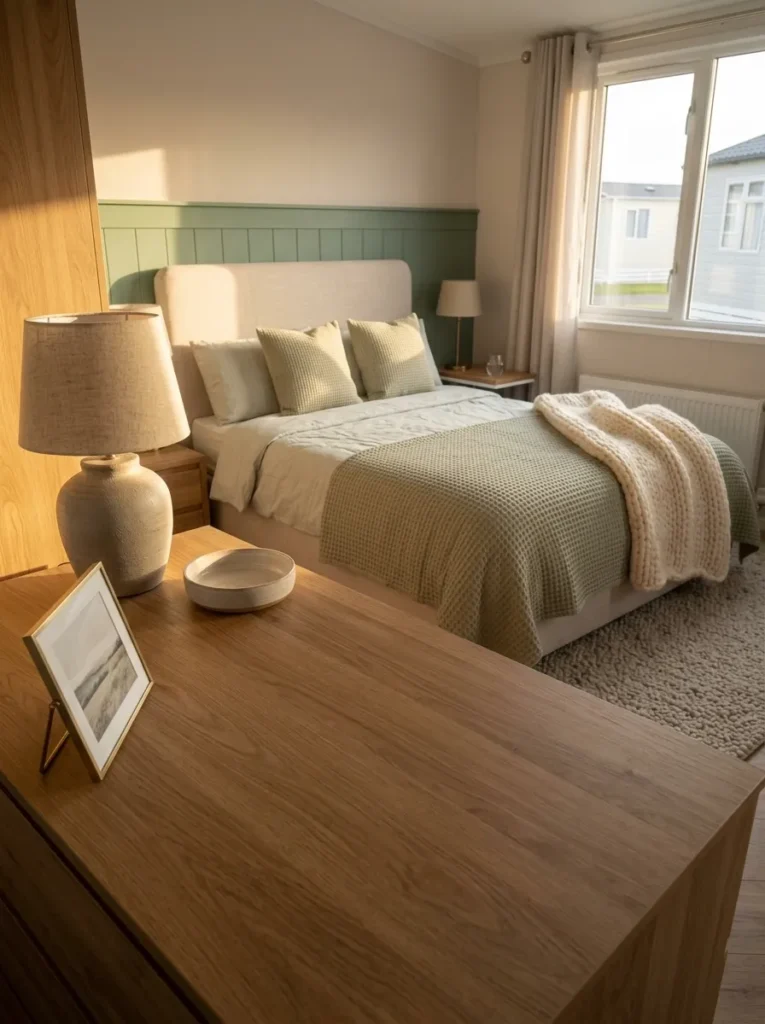
Use a three-part edit:
- Keep the objects that genuinely support the morning or evening routine.
- Group small decorative pieces into one clear arrangement.
- Preserve a visible section of open surface.
The dresser can still balance the bed through its size and material without becoming a second focal wall.
For a seasonal specialist example, see 17 Fall Nightstand and Dresser Styling Ideas for Small Mobile Home Bedrooms.
12. Use a Mirror to Borrow Light Without Creating Another Focal Point
A mirror can brighten one side of the room and extend a pleasant view, but first inspect what it will repeat. A window, lamp, calm bed, or open wall can strengthen the composition; an open closet, crowded dresser, cords, or television can multiply visual noise.
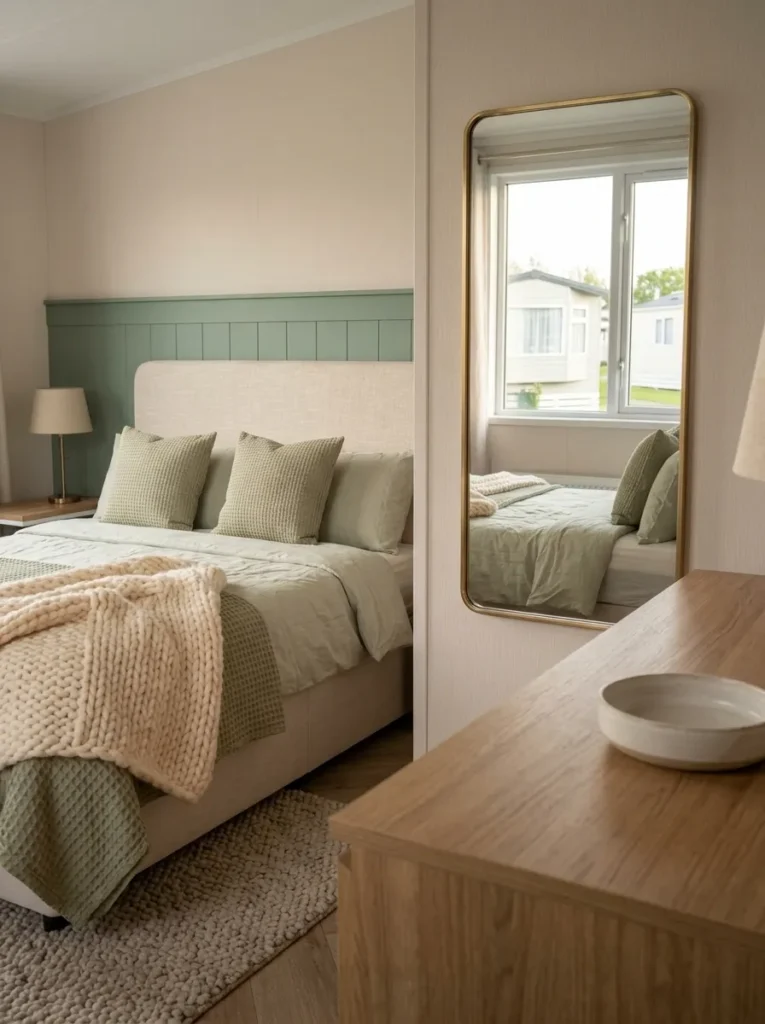
Before hanging it permanently, lean the mirror where you are considering placing it and inspect the reflection from the doorway and from bed. Keep it only if the borrowed scene improves the room more than the frame itself competes for attention.
13. Choose One Pattern Family and Let Solids Do the Rest
Pattern can make a bedroom feel familiar and lived-in. The problem begins when several strong motifs divide a compact room into competing fragments.
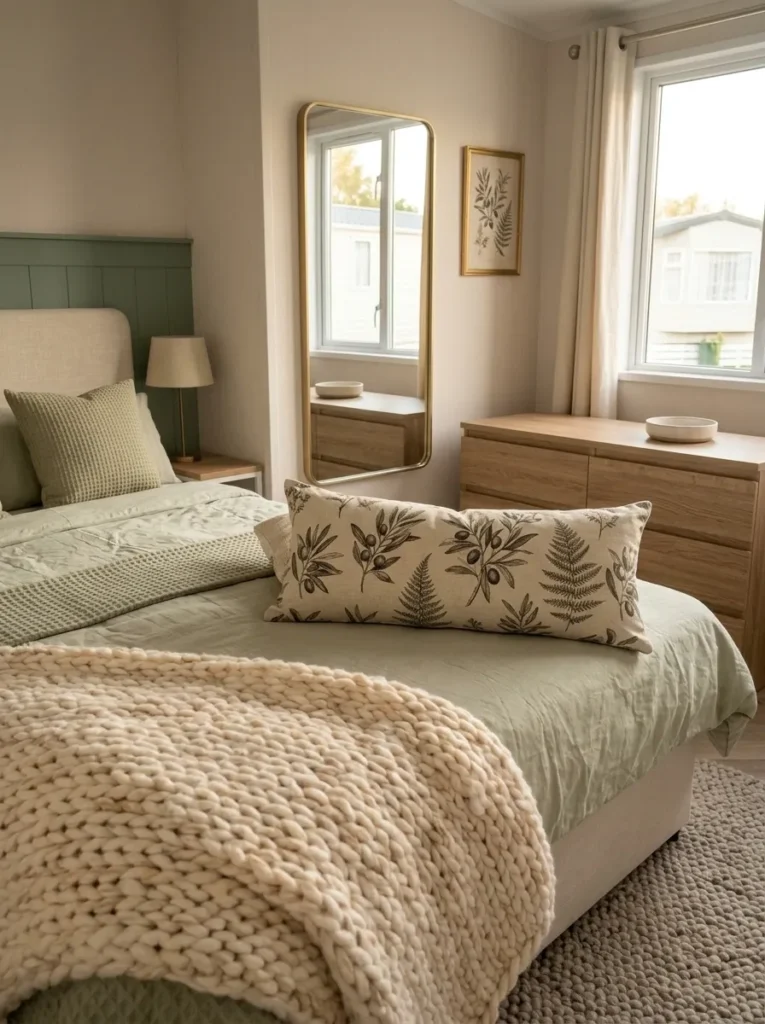
Choose one lead family:
- Floral or botanical for cottage warmth
- Narrow stripe for quieter rhythm
- Gingham or check for a more traditional look
- One vintage-inspired motif for a collected room
Let the largest surrounding textiles stay comparatively quiet. If the pattern is already obvious from the doorway, repeating it once in a small secondary element is usually enough.
14. Make a Bench or Trunk Earn the Foot-of-Bed Space
A bench or trunk can provide seating, bedding storage, or visual closure at the end of the mattress. It can also become the object you walk around every morning.
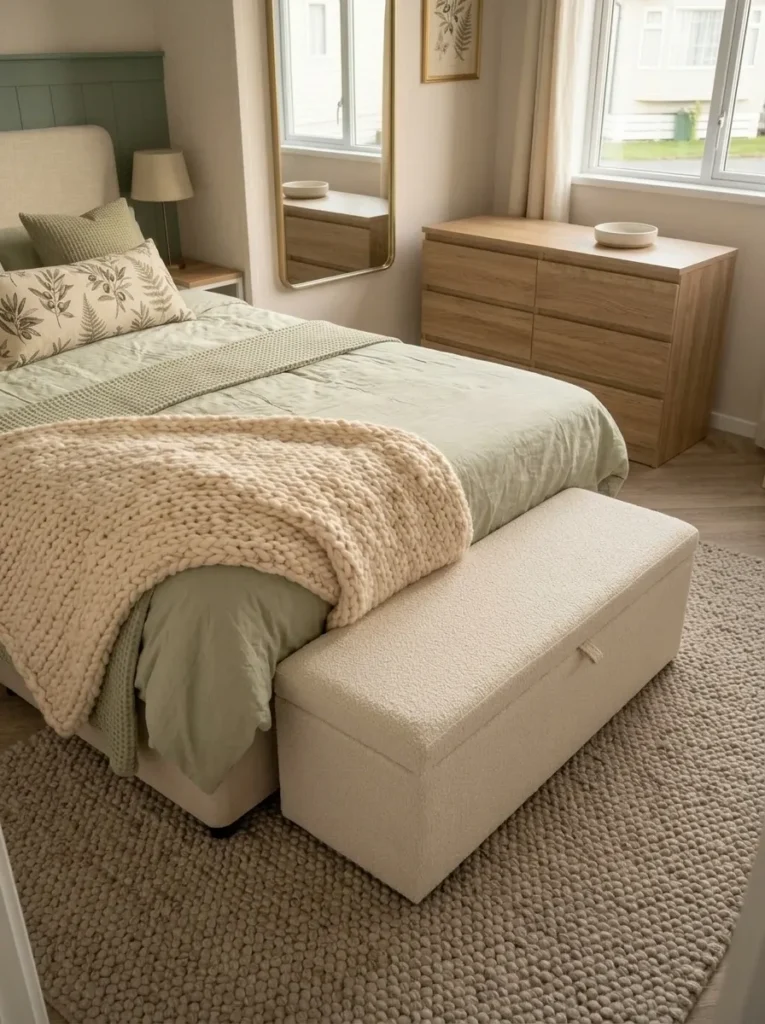
Test the room with the piece removed for several days. Notice whether dressing, turning, opening drawers, or crossing the room becomes noticeably easier. If the furniture solves a real routine or storage problem and the route still feels comfortable, keep it. If its main job is making the photograph look finished, open floor may be more valuable.
Final night test
Stop decorating when the room starts working
Restore the real nighttime routine, then choose how the bedroom feels. The output gives you one final edit—or tells you to stop.
15. Warm the Ceiling Plane Without Making It Feel Lower
The ceiling contributes to the room even when it carries very little decoration. In a compact manufactured-home bedroom, a fan or central light can be visually prominent because the bed and ceiling are seen together from many positions.
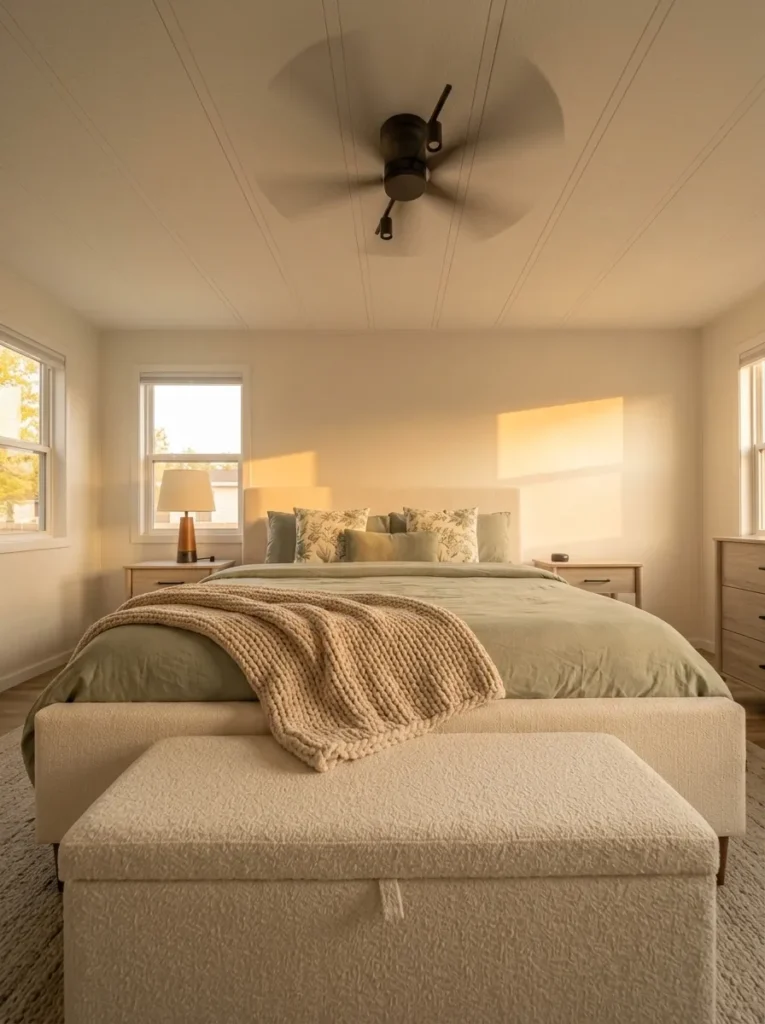
If the room already feels vertically compressed, keep the overhead element visually controlled and let lamps, textiles, or the bed wall provide most of the warmth. Where the ceiling has more breathing room, a modestly textured shade or a finish that connects with the furniture can contribute without dominating.
Ask whether the ceiling truly needs another feature. Sometimes making it quieter lets every lower layer feel richer.
16. Move Greenery Upward When the Floor Is Already Busy
Plants and botanical elements soften square furniture, but a large floor pot is only one route. When the lower room is already occupied, shift the organic layer upward or onto furniture that already has a footprint.
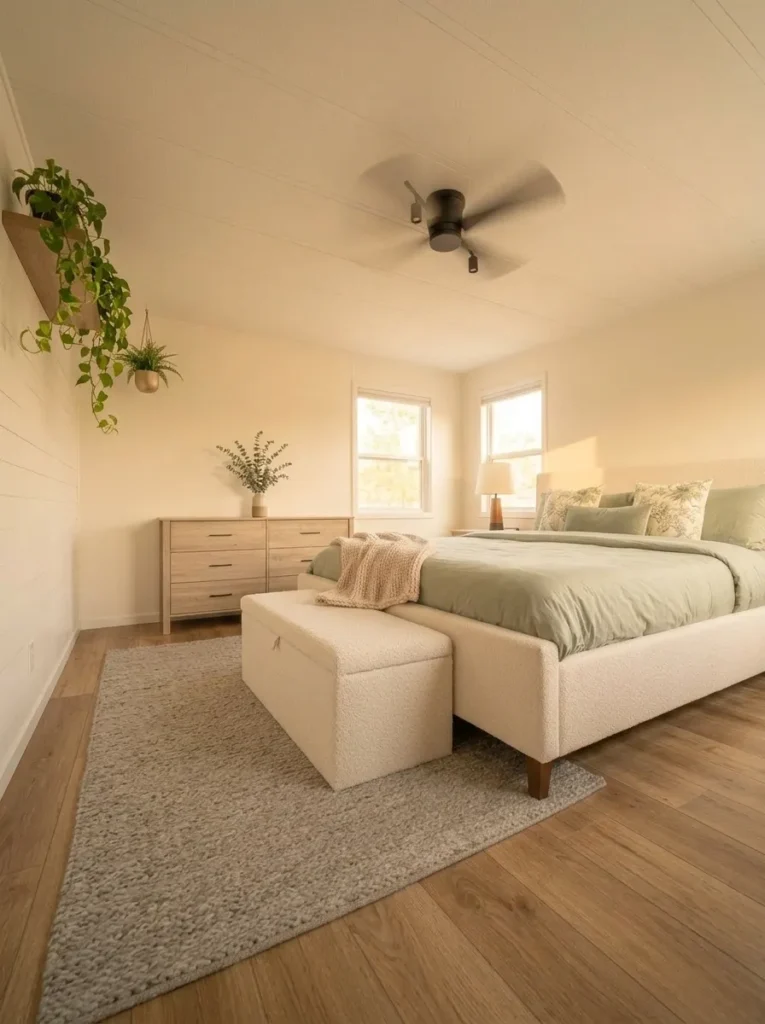
Try one of these:
- A trailing plant on a secure existing shelf
- One branch arrangement on the dresser
- Botanical artwork above the bed or beside a mirror
The point is not to fill the upper wall. Use one controlled organic gesture to break hard furniture lines while keeping the walkway and floor corners open.
17. Do the Cozy Test After Dark Before You Buy One More Thing
Finish the room at night, when the bedroom is actually functioning as a retreat. Close the curtains, switch on the lamps you normally use, and return the book, charger, water glass, robe, and other everyday items to their real positions.
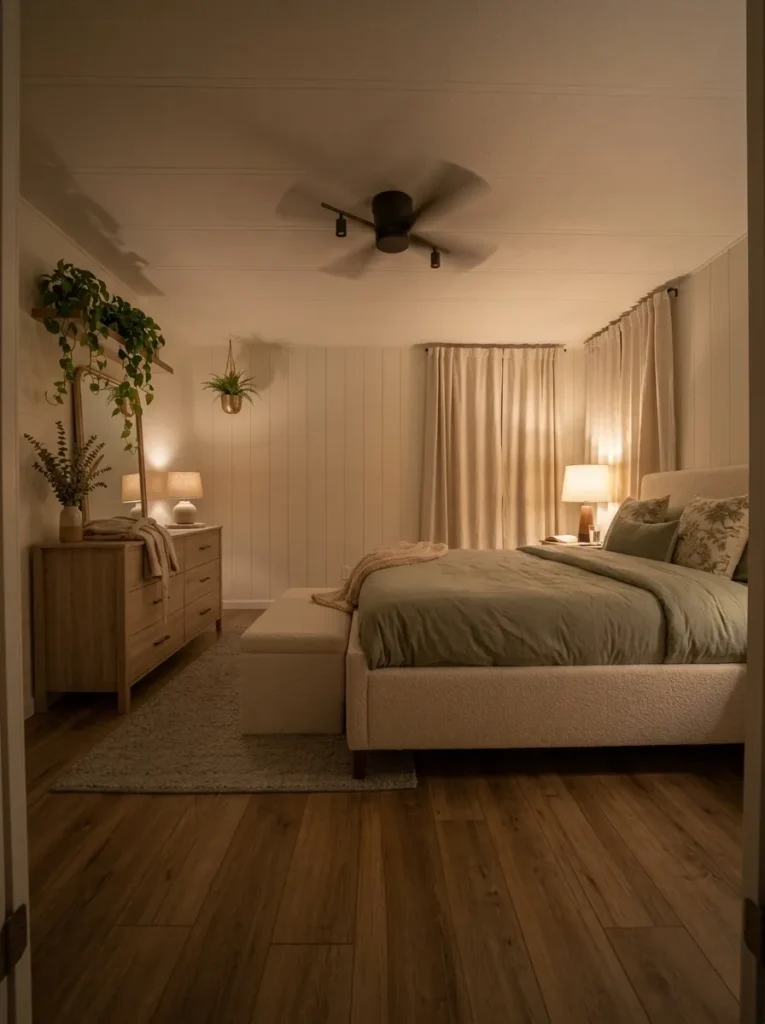
Then enter again. Decide whether the room feels exposed, crowded, flat, or balanced. That answer tells you whether to soften one boundary, remove one layer, create more light depth, or stop.
Final night test
Stop decorating when the room starts working
Restore the real nighttime routine, then choose how the bedroom feels. The output gives you one final edit—or tells you to stop.
If your biggest challenge is keeping warmth without allowing the bedroom to become visually busy, continue with How To Make A Bedroom Feel Cozy Without Clutter.
Make Your Mobile Home Bedroom Feel Like Yours
A cozy mobile home bedroom does not need all 17 ideas. Start with the change that fixes the room you already have: strengthen the bed zone, protect the walking path, work with permanent finishes, or improve the light you actually use at night.
Then live with that change before adding the next one. The most inviting bedrooms are rarely the rooms containing the greatest number of cozy objects. They are the rooms where softness, furniture, lighting, and open space cooperate.
Save these cozy mobile home bedroom ideas to Pinterest so you can return when you’re ready to refresh your own room.