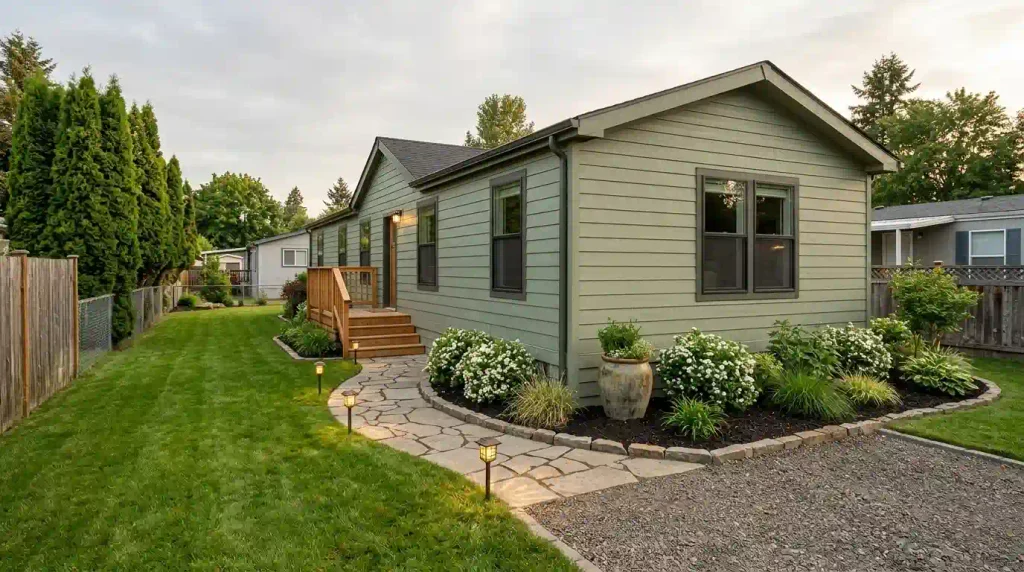
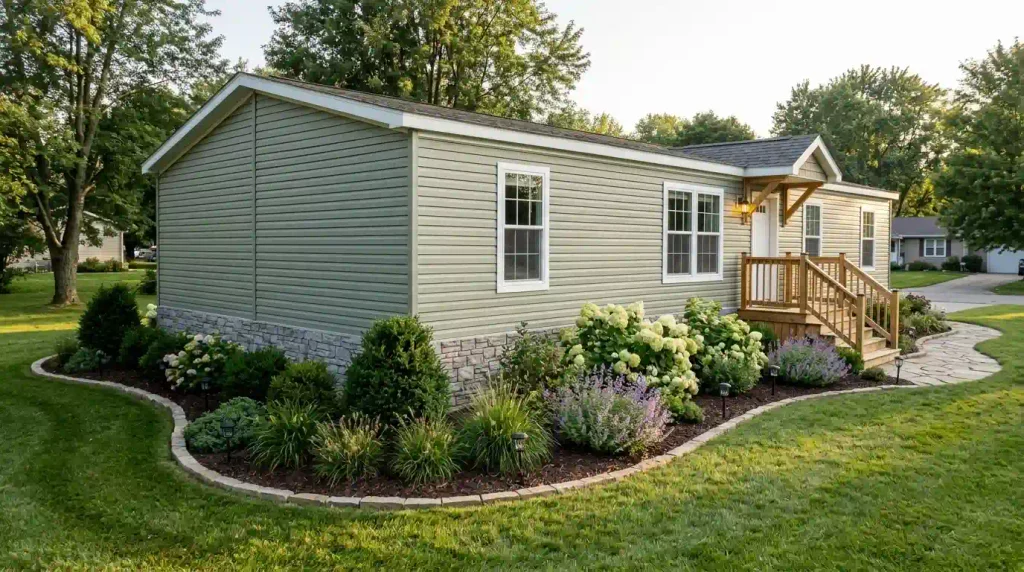
A bare stretch of lawn, exposed skirting, and a few ordinary front steps can make even a well-maintained mobile home feel unfinished. Fortunately, a beautiful exterior doesn’t always require new siding, an expensive porch, or a complete renovation.
The right mobile home landscaping ideas can transform the appearance of your property through defined flower beds, attractive pathways, layered greenery, natural materials, and thoughtfully positioned outdoor features.
For an affordable starting point, concentrate on three improvements: define the garden boundaries, make the entrance more inviting, and introduce plants that complement the size and shape of your home.
Whether you’re landscaping a long single wide, a spacious double wide, or a small rented manufactured-home lot, these 25 ideas will help you create an outdoor space that looks beautiful and works with your everyday life.
Before digging, contact 811, arrange any necessary private utility locating, and check your community’s landscaping restrictions. Keep required ventilation, drainage, and service access clear throughout the project.
1. Frame Your Mobile Home With a Sweeping Flower Bed
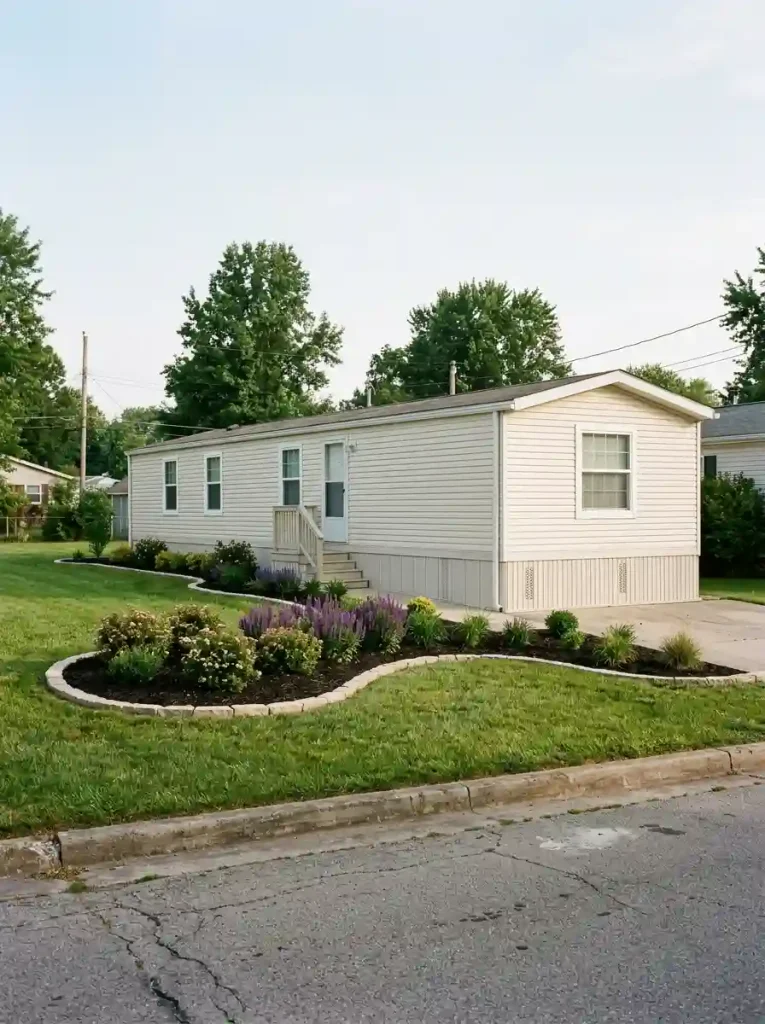
A mobile home’s long, straight exterior often benefits from a softer landscape outline. A gently curved flower bed introduces movement at ground level, connecting the house visually with the surrounding lawn.
Lay a garden hose on the ground to experiment with the shape before making permanent changes. Widen the bed near an empty wall section or the entrance, then narrow it where the available yard becomes restricted.
Combine compact shrubs with flowering perennials and low ornamental grasses for an arrangement that feels full without overwhelming the house.
Try the street-view test: Step back and look at the entire frontage. One generous, flowing curve will often feel more natural than several small, disconnected curves. On narrow lots, a simpler straight border may be the better choice.
Preserve the home’s drainage arrangement and required access as you establish the bed.
2. Break Up a Long Single Wide With Repeated Planting Groups
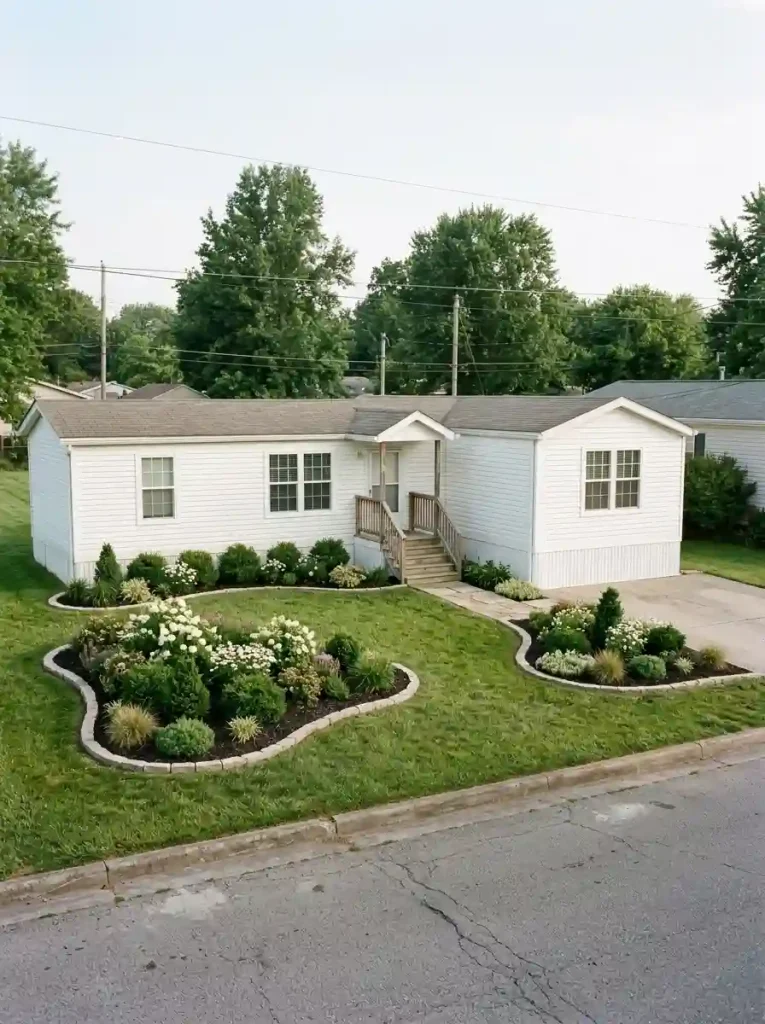
A single-wide mobile home’s horizontal profile becomes especially noticeable when identical plants stretch continuously beneath every window.
Divide the frontage into smaller visual intervals using repeated planting groups. A compact evergreen, a flowering perennial, and a small ornamental grass can form a combination that appears at selected points along the exterior.
Use blank wall sections to accommodate taller plants and keep lower-growing varieties beneath windows. Leave deliberate gaps around entrances, skirting vents, and service openings.
The repeated groupings introduce rhythm, while the open spaces allow the home’s original architecture to remain visible.
For additional ways to complement the proportions of a narrow manufactured home, explore these single-wide exterior makeover ideas.
STYLISH GALORE / LANDSCAPE ARCHITECT
Find Your Perfect Garden Layout
Choose your home or lot configuration to explore a suitable planting arrangement.
Illustrative layouts only. Actual planting positions must account for site drainage, utility access and local requirements.
3. Balance a Double Wide With Layered Garden Islands
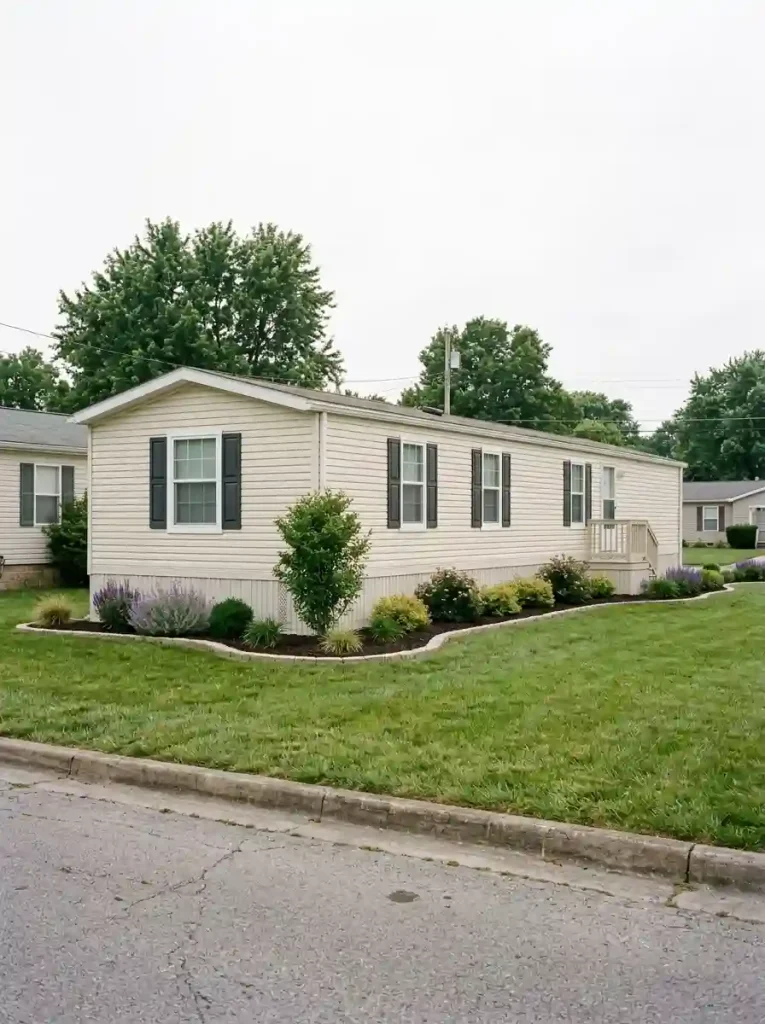
A double wide typically offers more depth and potentially more room for substantial planting arrangements, depending on how the home faces the lot. Instead of treating the entire frontage as one continuous flower bed, consider dividing the landscape into distinct garden masses.
| Frontage arrangement | Landscaping approach |
|---|---|
| Centrally positioned entrance | Complementary planting islands on either side |
| Off-center entrance | A larger garden mass balancing the opposite side |
| Full-width porch | Lower planting along the porch with open views |
| Broad front lawn | A separate garden island connected visually to the house |
Arrange taller plants toward the interior of each island, with lower varieties around the visible perimeter.
Perfect symmetry is optional. An irregular lot or off-center porch may look more balanced with two differently sized planting areas. Additional double-wide exterior design ideas can help you coordinate the garden with the home’s broader architectural features.
4. Make the Front Steps a Beautiful Garden Destination
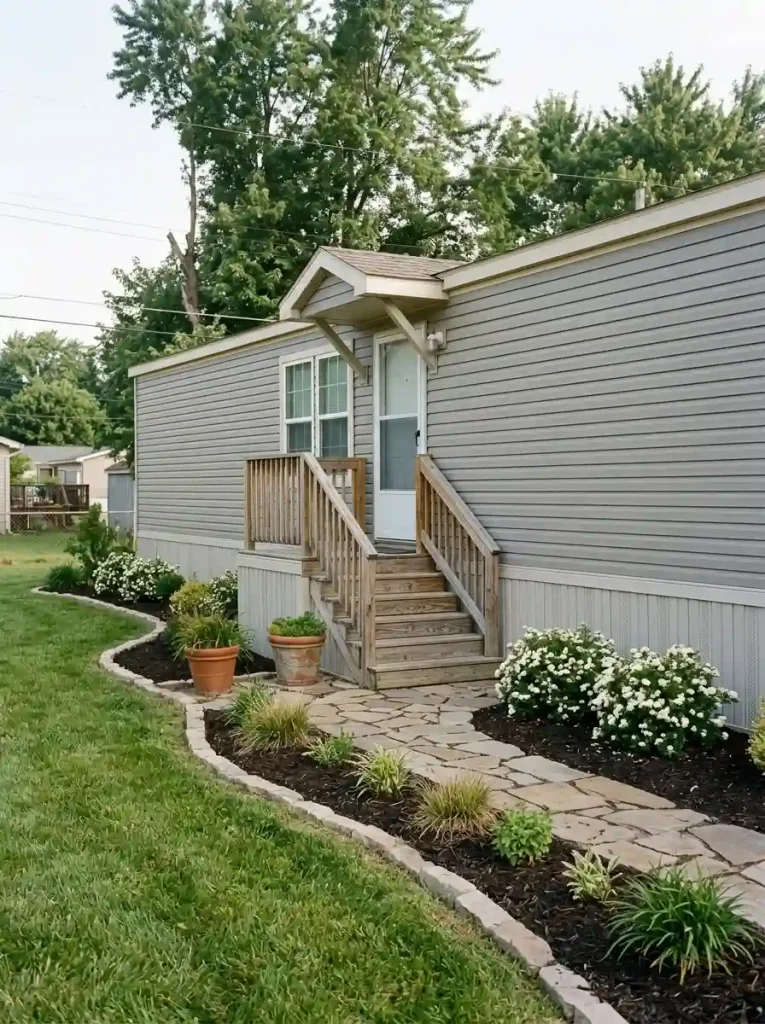
Picture approaching an ordinary mobile home entrance along a neat walkway surrounded by flowering plants, soft greenery, and a pair of welcoming containers.
The stairs themselves may remain unchanged, yet the experience of reaching the door feels completely different.
Place compact planting arrangements beside the base of the steps, where they can frame the entrance without narrowing the approach. For centered stairs, matching planters establish a balanced appearance. Side-facing stairs often benefit from one larger arrangement positioned away from the direction of travel.
Choose plants and containers that echo existing porch materials. White flowers and muted green foliage look particularly attractive alongside natural timber.
Keep the landing, handrails, and walking route unobstructed. These welcoming mobile home porch ideas offer further inspiration if you also want to improve the existing entrance structure.
5. Soften Mobile Home Skirting With Low-Growing Plants
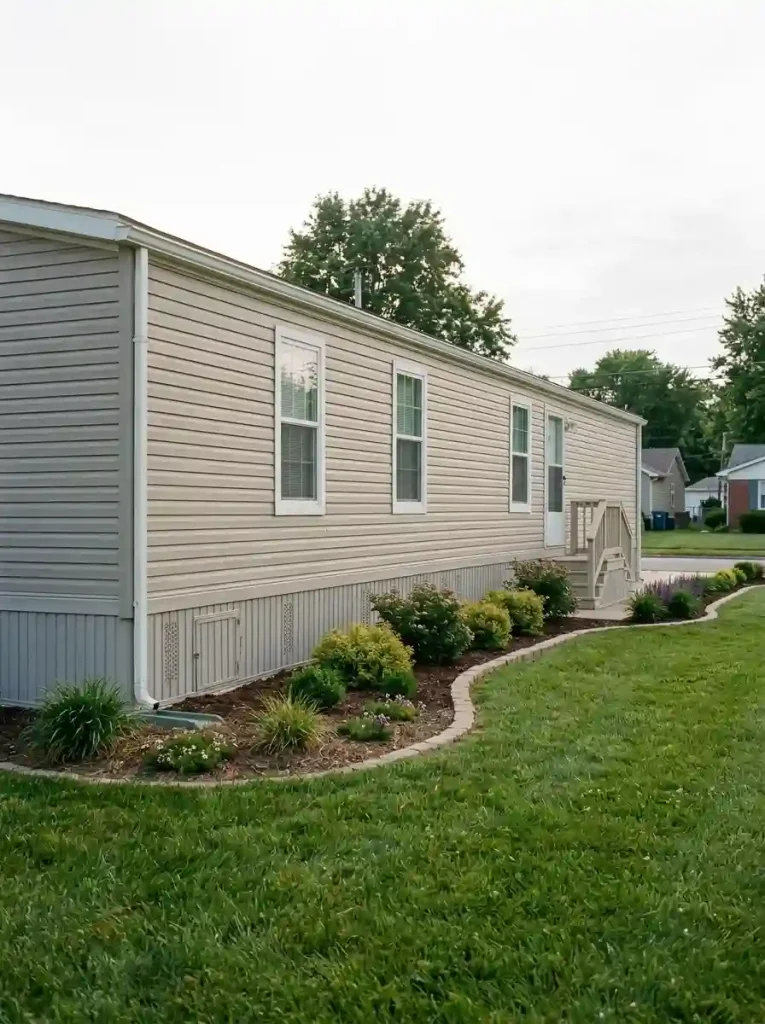
Skirting does not need to disappear completely for a manufactured home to look attractive.
Dense shrubs may conceal an unfinished-looking foundation, but they can also interfere with maintenance and important ventilation openings. A carefully layered foreground provides a more practical solution.
Before buying plants, identify the skirting height, access panels, ventilation openings, and available bed depth. Compare these measurements with the mature dimensions listed on plant labels.
Low-growing ornamental grasses, compact shrubs, and suitable flowering perennials can soften the transition between the skirting and lawn.
Avoid: Piling mulch or soil against skirting, positioning spreading plants over vents, or installing permanent landscape features in front of access panels.
The federal manufactured-home crawlspace ventilation standards explain why these openings matter. Actual requirements depend on the home’s installation and applicable rules.
For improvements to the skirting itself, explore these mobile home exterior makeover ideas.
6. Create a Striking Black Mulch and White Gravel Border
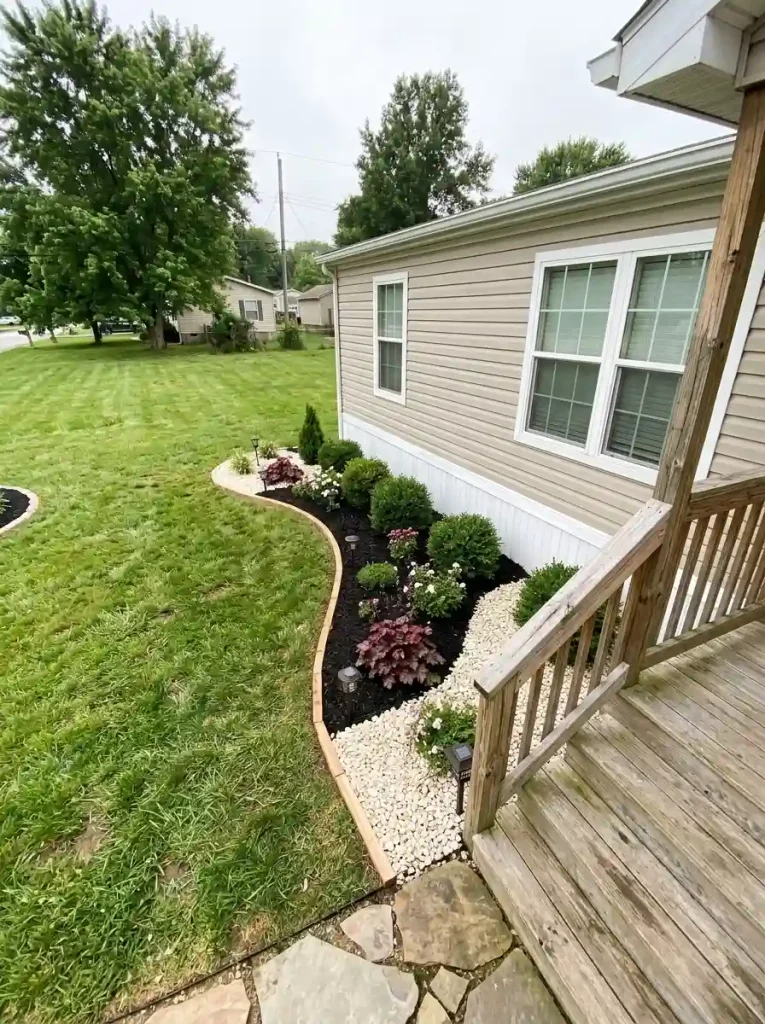
Dark mulch and pale decorative gravel can give a simple mobile home garden a polished, contemporary appearance. The contrast is especially noticeable against beige, gray, or white siding.
The combination also offers an opportunity to connect garden materials with existing exterior colors.
Modern farmhouse: Black mulch, cream gravel, natural cedar, and fresh green foliage.
Natural cottage: Brown bark mulch, rounded fieldstones, soft pink flowers, and informal planting.
Contemporary: Charcoal stone, gray pavers, architectural grasses, and restrained greenery.
Use suitable edging to separate contrasting materials. An irregular mixture of mulch and gravel can quickly lose its original definition.
Consider heat exposure, reflected sunlight, drainage, and maintenance before covering large areas with stone. In regions with wildfire risk, follow local guidance concerning combustible mulch near buildings.
A narrow, carefully composed material border can deliver plenty of visual interest without requiring an expensive whole-yard renovation.
STYLISH GALORE / MATERIAL ATELIER
Create Your Landscape Palette
Explore three coordinated material combinations for your mobile home garden.
01 — Modern Farmhouse
Use clear material boundaries and assess heat and reflected light before installing pale gravel.
02 — Natural Cottage
Choose rounded stones, flowing garden edges and layered perennials suited to your climate.
03 — Contemporary Minimalist
Repeat a limited selection of materials and use simple garden boundaries to maintain a clean appearance.
Material colors are illustrative. Consider drainage, local climate, maintenance and applicable wildfire guidance before purchasing.
7. Give Your Flower Beds a Natural Stone Edge
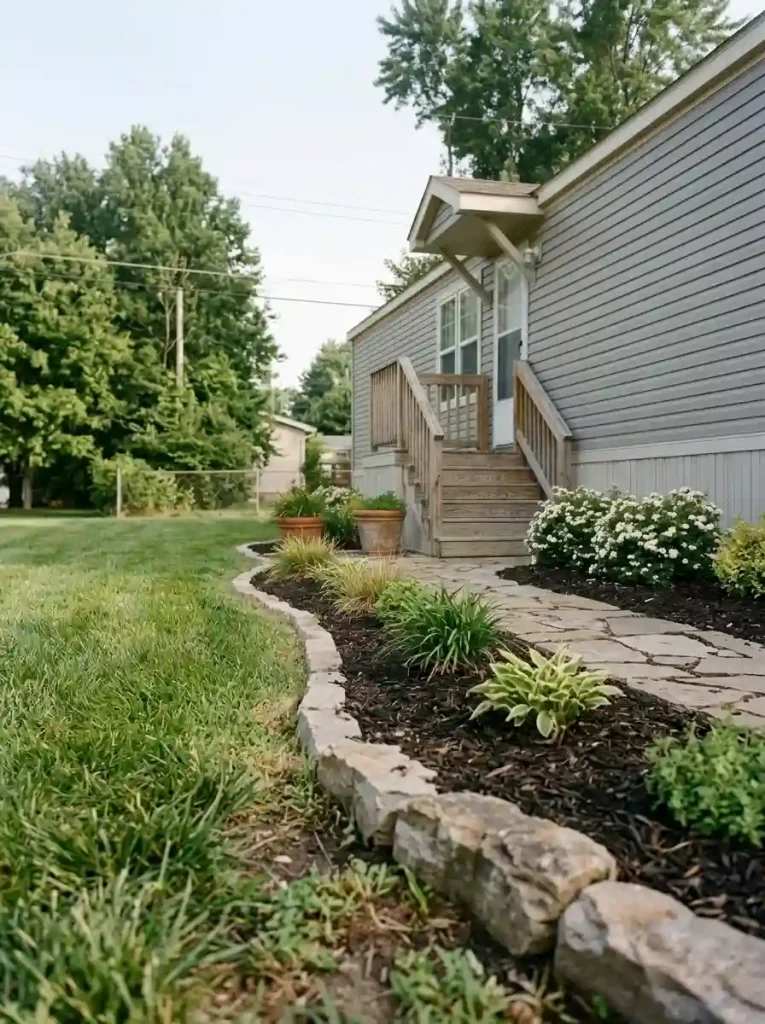
Natural stone introduces a sense of permanence that works beautifully beside manufactured homes with simple horizontal siding.
Rounded fieldstones create a relaxed cottage atmosphere, while flatter pieces of stone produce a more restrained garden boundary. Irregular shapes can soften the straight lines of a single-wide exterior without requiring elaborate planting.
Arrange stones along the proposed border before settling on their final placement. View the arrangement from both ends of the house to check that the material feels consistent.
Stabilize the stones and keep them outside walking routes and mowing areas. Avoid creating a barrier that interferes with surface drainage.
Design rule: Match the scale of the edging to the bed. A narrow flower border generally suits smaller stones; a broad, sweeping garden can accommodate more substantial pieces.
8. Build a Gravel Garden Along a Narrow Side Yard
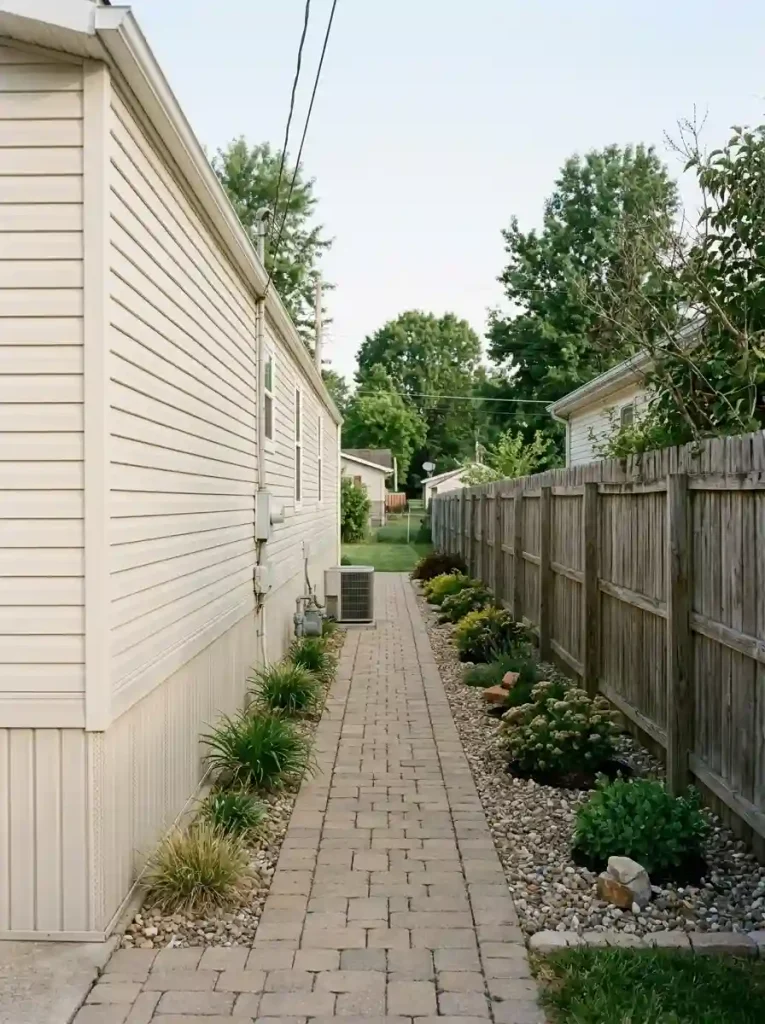
The strip beside a mobile home often becomes one of the property’s most neglected areas. Limited space between neighboring homes, fences, and exterior walls can make mowing or maintaining a conventional lawn inconvenient.
A gravel-based landscape may offer a more intentional alternative, provided the space remains suitable for its intended use.
- Frequently used passage: Establish a stable, continuous walking surface and keep planting outside the travel route.
- Decorative side yard: Combine small planting groups, gravel, and a few carefully positioned garden features.
- Utility access area: Preserve the required working space and use movable decorations only where appropriate.
Loose decorative gravel may be unsuitable for households requiring accessible walking surfaces.
Check how rainwater moves through the passage before introducing new ground materials. The best side-yard arrangement improves both appearance and practical access without making a narrow manufactured-home lot feel more restricted.
9. Lead Visitors to the Door With a Beautiful Garden Walkway
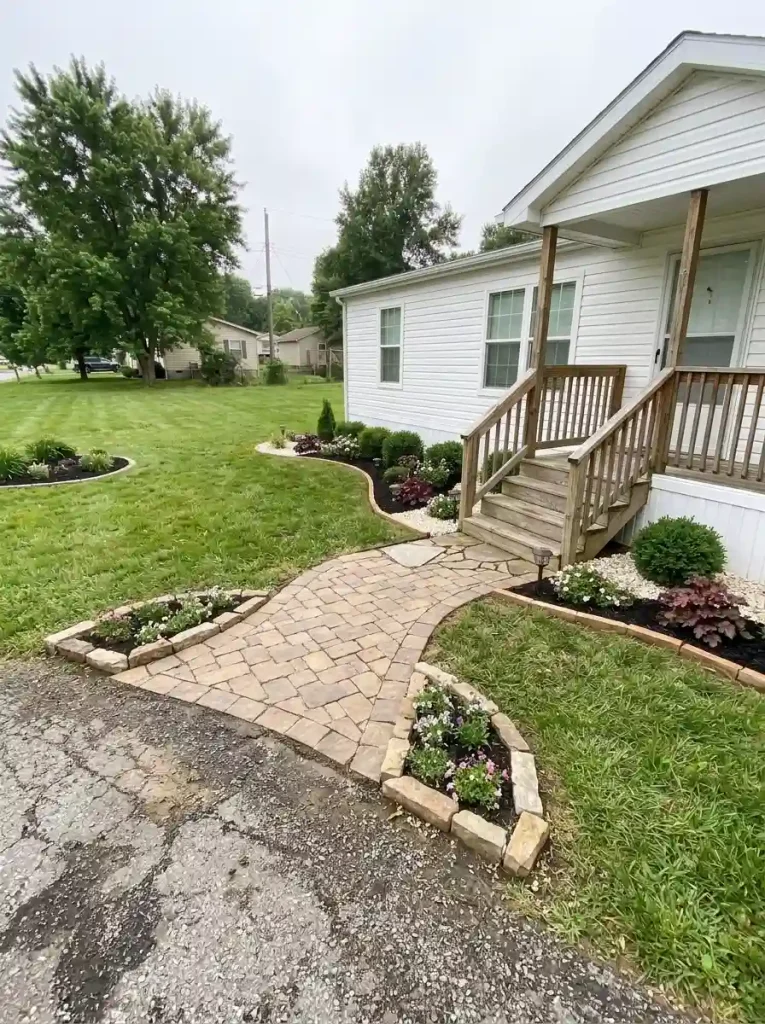
Begin by walking from your usual parking spot to the front door.
Notice where you naturally turn, where the lawn becomes muddy, and whether the existing steps are easy to approach while carrying groceries.
Those everyday movements should determine the layout of your garden walkway.
- Identify the most practical route between parking and the entrance.
- Choose a stable walking surface appropriate for the household.
- Introduce planting along the outer edges without reducing usable width.
- Maintain a clear transition to the front steps or entrance landing.
A gently curved path adds character to a spacious front lawn. A direct walkway often works better on a compact single-wide lot.
Where the route involves substantial changes in level or accessibility improvements, seek appropriate professional guidance. Decorative stepping stones alone may not provide a suitable everyday entrance route.
10. Replace Awkward Lawn Strips With Ground Covers
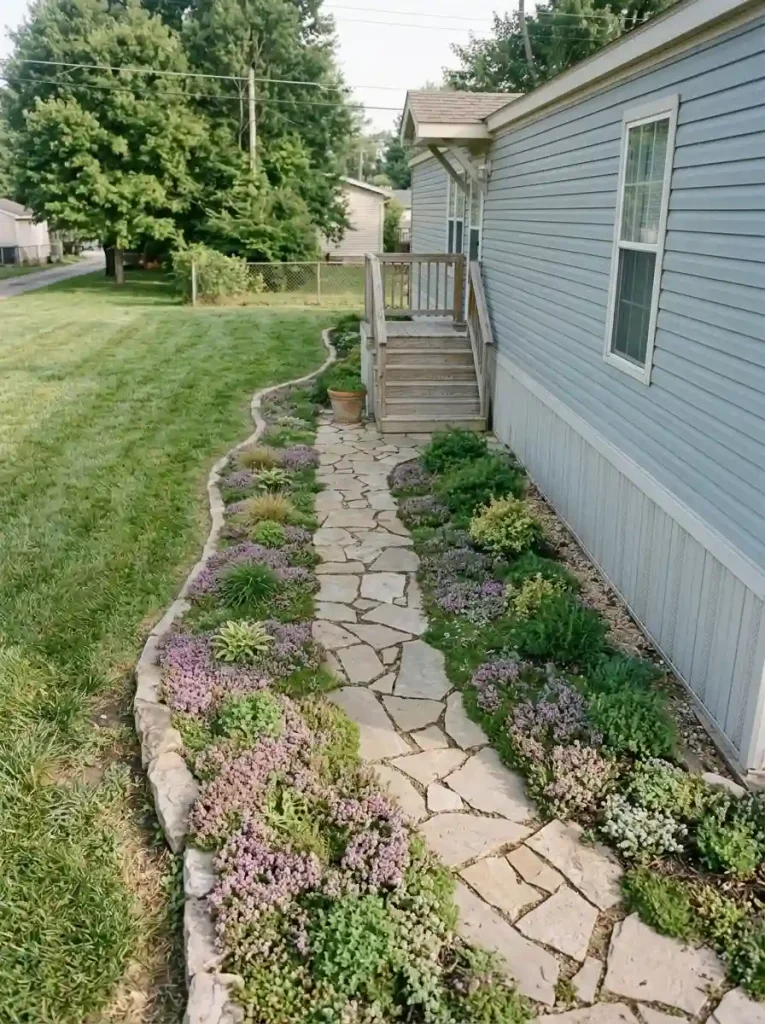
Does your yard contain a narrow stretch of grass that always feels difficult to mow?
Perhaps it runs beneath the windows, follows the skirting, or sits between the driveway and a fence. Replacing suitable sections with ground-cover planting can reduce awkward mowing and create a more continuous garden surface.
Sun-loving creeping thyme, regionally appropriate sedges, and locally native spreading plants are potential options, depending on the site.
Choose plants according to sunlight, moisture, mature spread, and local invasive-species guidance.
Ground covers are most useful in areas that receive little foot traffic. Keep a proper walking surface where people regularly pass, and preserve clear space around skirting vents and service points.
Allow newly planted areas sufficient time and care to establish. A newly installed ground-cover bed will not necessarily require less maintenance immediately.
11. Build a Charming Solar-Lit Address Post With Hanging Baskets
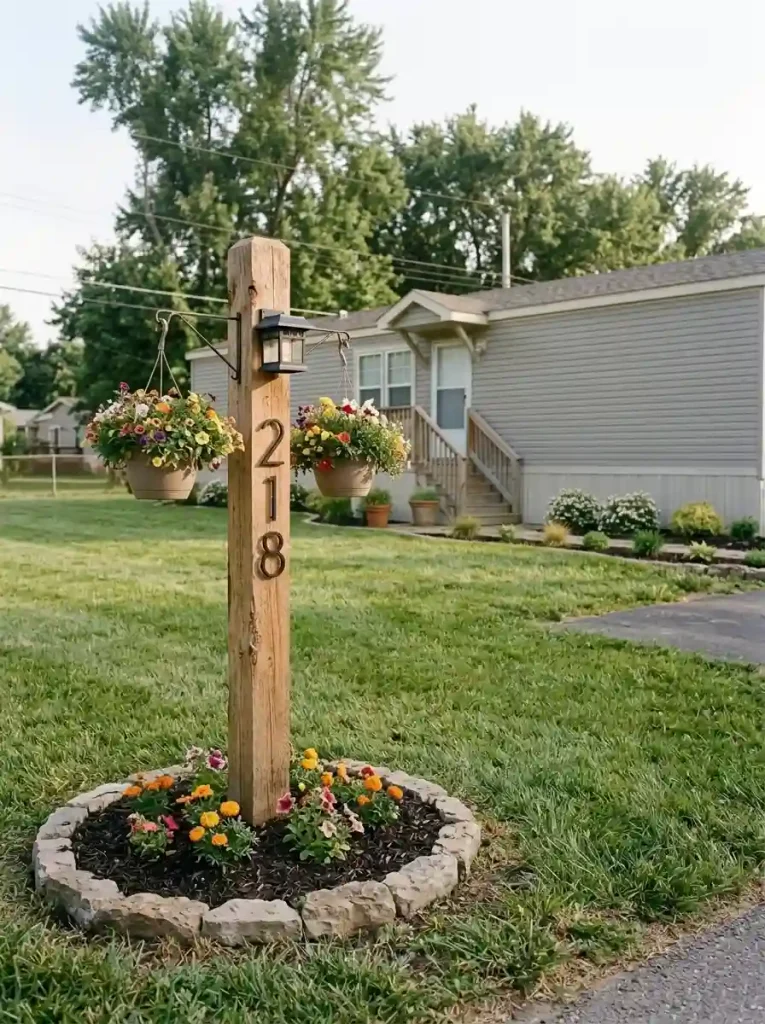
A freestanding address post can become the most memorable feature of an otherwise simple mobile home front yard.
Picture a natural timber post with contrasting house numbers, a solar lantern, two hanging flower baskets, and a small circular planting bed at its base.
The design works particularly well where the home sits back from the road or the original address numbers are difficult to see.
Coordinate the finish with existing porch timber or window trim. A weather-resistant planter at the base can introduce seasonal flowers without requiring a large garden.
Before installation, verify community rules, utility positions, appropriate anchoring, and local address-display requirements.
Choose clear, readable numbers and prevent hanging plants from obscuring them. Keep the feature outside vehicle sightlines and avoid relying on the solar lantern as the only means of identifying the property after dark.
12. Create a Cottage Garden With Layered Flowers
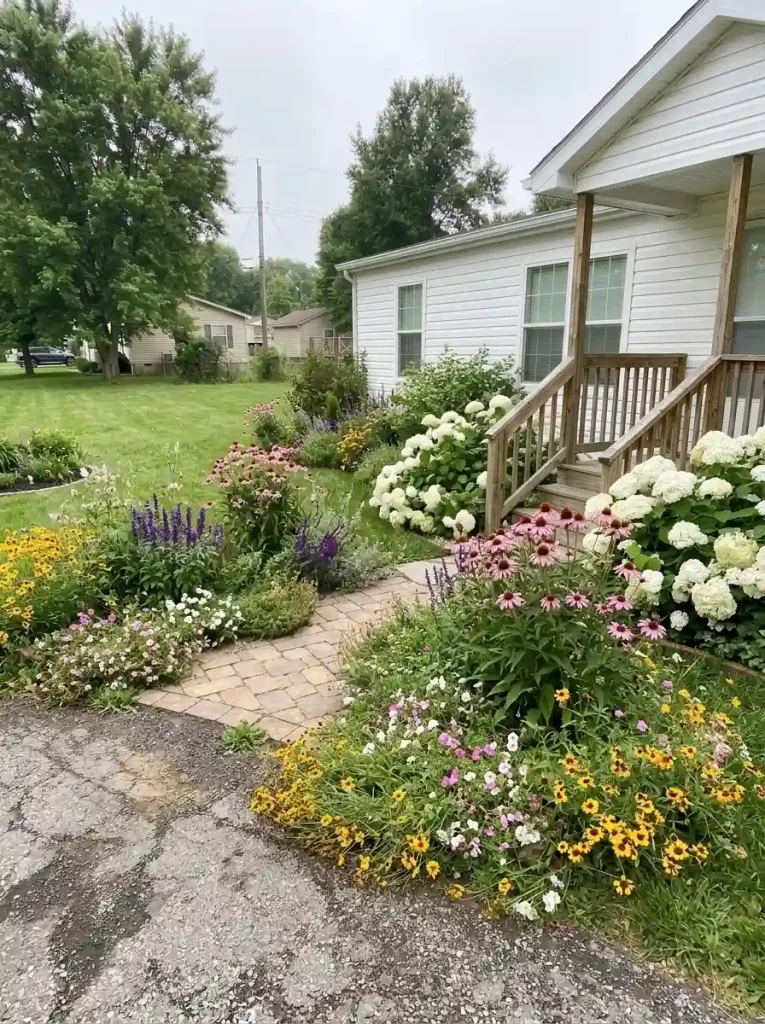
Soft white blooms, purple flowering spikes, warm pink petals, and gently arching greenery can make a plain mobile home exterior feel wonderfully established.
Build a cottage garden around three planting layers: compact shrubs toward the background, medium-height flowering perennials through the middle, and lower plants along the front.
Depending on your climate and growing conditions, suitable varieties of coneflowers, salvia, coreopsis, and hydrangeas may contribute to the arrangement.
For a long manufactured home, concentrate colorful flowers around selected garden pockets and repeat quieter foliage in between. Maintaining the same flower palette across these groups creates continuity without demanding an uninterrupted border.
A smaller, well-planted cottage bed can feel every bit as abundant as a much larger garden. Leave enough space for mature growth and access to the exterior wall.
13. Use Timber and Concrete Blocks to Create a Garden Feature
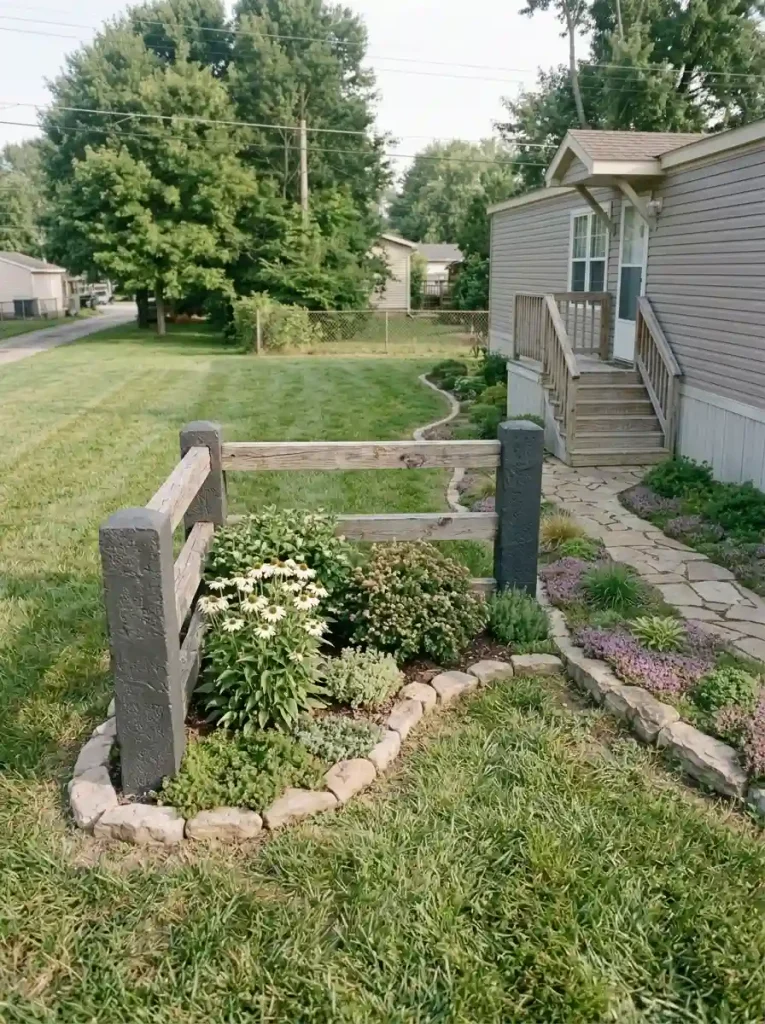
Flat lawns can lack the vertical interest that makes an outdoor space memorable.
A compact timber-and-concrete garden feature introduces a different architectural layer. Natural wood brings warmth, dark concrete adds contrast, and the surrounding greenery softens the finished structure.
Position a purpose-designed, stable freestanding feature near an empty garden corner or an existing planting bed. It can act as a decorative backdrop for flowers without requiring any alteration to the manufactured home itself.
Avoid improvised structural assemblies that have not been assessed for stability, especially in windy locations.
On rented lots, or where permanent installations are unsuitable, a sturdy removable planter with an integrated decorative screen can deliver a similar visual effect.
The feature should provide one clear focal point, leaving the surrounding lawn and home frontage visually open.
14. Introduce Evergreen Shrubs for Year-Round Curb Appeal
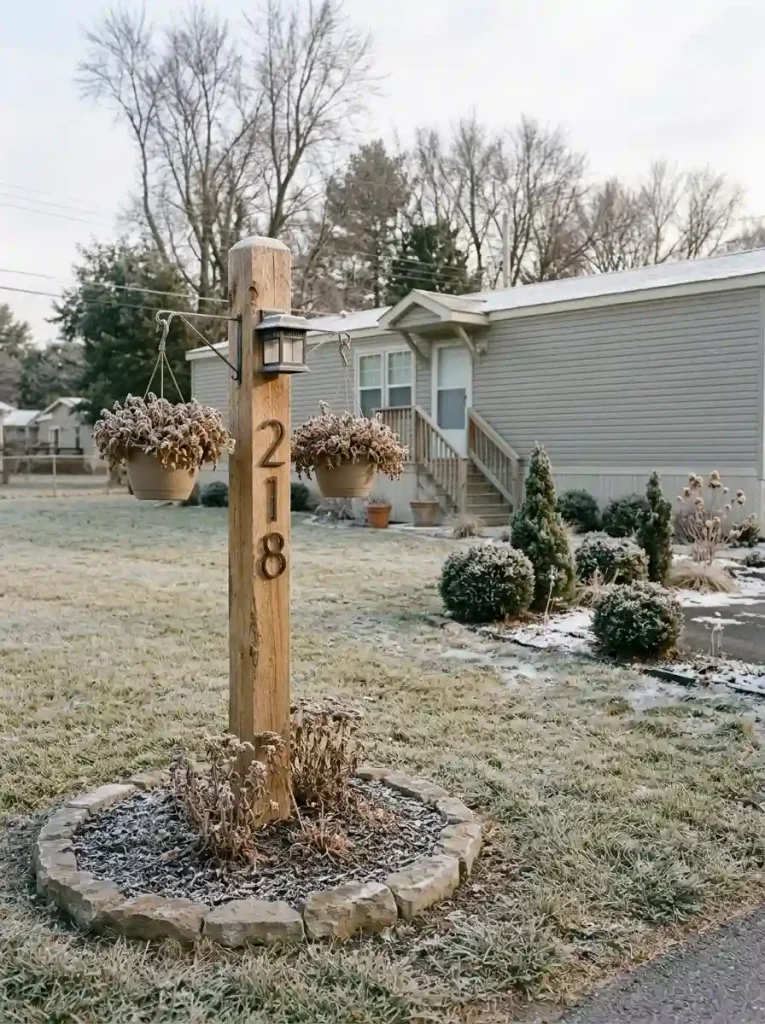
A landscape filled entirely with seasonal flowers can appear surprisingly empty outside its main blooming period.
Evergreen shrubs provide a more permanent framework, helping a mobile home garden retain its shape throughout the year.
Think about the planting arrangement across four seasons:
| Season | Main landscape contribution |
|---|---|
| Spring | Emerging foliage and early flowers |
| Summer | Flowering perennials and lush growth |
| Autumn | Ornamental grasses and changing foliage |
| Winter | Evergreen structure and persistent textures |
Select compact evergreen varieties with mature dimensions that suit the home’s skirting, window height, and available garden space.
The USDA Plant Hardiness Zone Map provides a useful starting point for evaluating winter cold tolerance. However, sunlight, soil conditions, summer heat, and water availability also influence plant suitability.
Start with a balanced arrangement of permanent foliage, then fill selected spaces with seasonal color. The garden should remain attractive even when its flowering plants are dormant.
STYLISH GALORE / BOTANICAL CALENDAR
A Beautiful Garden in Every Season
Explore how different planting layers contribute to year-round mobile home curb appeal.
01 / RENEW Spring Fresh growth and early color
Suitable early-flowering perennials, fresh foliage and existing evergreen shrubs.
Garden priorityReview winter damage, refresh suitable mulch and check drainage before adding plants.
02 / FLOURISH Summer Flowers and abundant foliage
Regionally appropriate flowering perennials, ornamental grasses and compact shrubs.
Garden priorityMonitor soil moisture, water according to plant needs and keep pathways unobstructed.
03 / TRANSITION Autumn Warm tones and texture
Seasonal foliage, suitable grasses and persistent seed heads where appropriate.
Garden priorityClear debris from access points and prepare plants according to their local winter requirements.
04 / ANCHOR Winter Permanent garden structure
Cold-hardy evergreen varieties and selected persistent garden textures.
Garden priorityKeep paths and service openings clear and assess the garden’s underlying visual structure.
Start with suitable permanent shrubs. Add seasonal flowering plants around this framework instead of relying entirely on short-lived color.
Seasonal timing varies by climate. Check local growing conditions and mature plant dimensions before choosing varieties.
15. Bring Color to Shady Areas With a Woodland Planting Bed
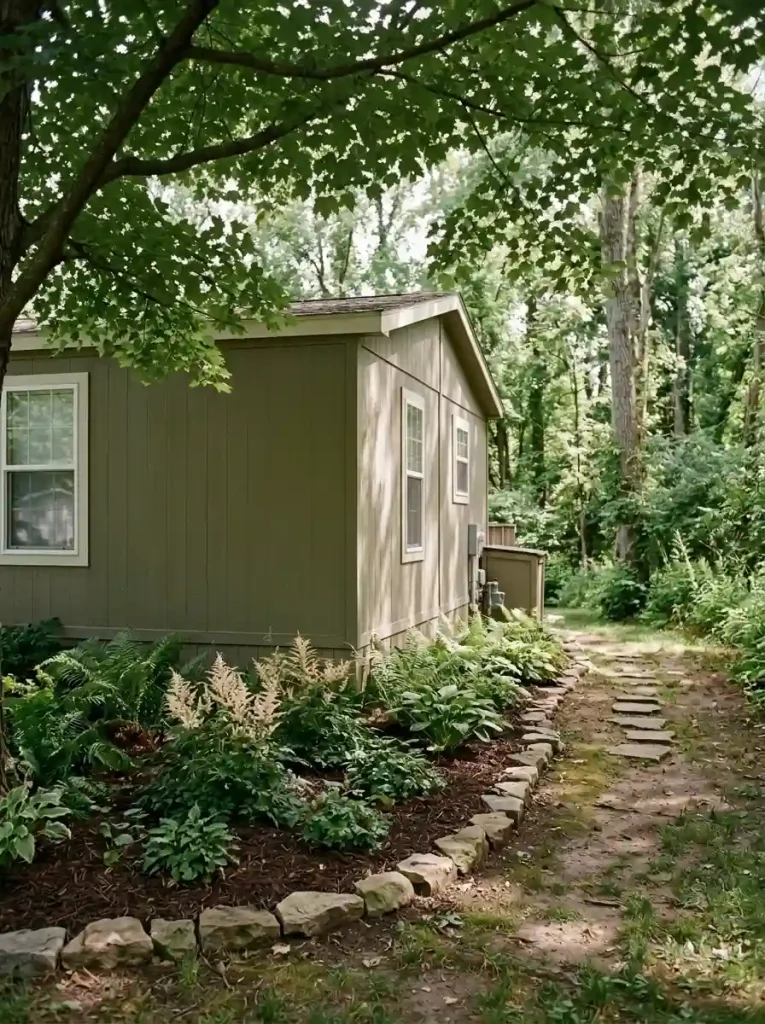
A shaded mobile home exterior can support a beautiful garden with a completely different atmosphere from a sunny front yard.
The important distinction is whether the soil remains moist or dry.
Moist shade: Suitable ferns, astilbes, and other moisture-loving shade plants can provide lush foliage and delicate flowers.
Dry shade: Locally adapted woodland ground covers, suitable sedges, and drought-tolerant shade plants may perform better.
Observe the area at different times of day and after rainfall. The ground beneath a roof overhang can remain dry even where the surrounding yard receives adequate moisture.
Build the composition around contrasting foliage shapes, natural stone, and a restrained selection of flowers. Avoid choosing plants simply because their nursery labels say “shade” without checking their other growing requirements.
Preserve access to windows, utilities, and skirting openings as the planting develops.
16. Create a Movable Container Garden for a Rented Mobile Home Lot
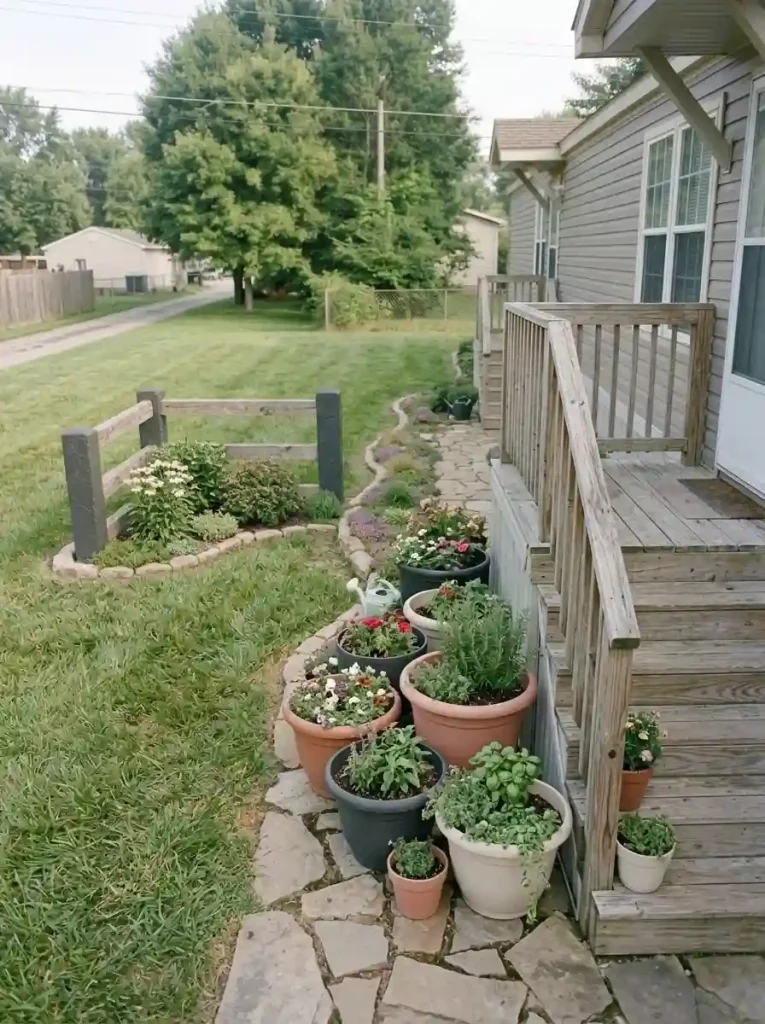
Renting a manufactured-home lot can influence what you are allowed to install, how deeply you can dig, and whether permanent garden features are permitted.
Containers offer a flexible landscaping solution that can adapt to these restrictions.
A coordinated group of weather-resistant pots beside the entrance creates a recognizable garden without committing the entire yard to permanent planting. Choose different heights within a consistent color palette and use suitable plants for the available light.
If you expect to relocate, prioritize manageable containers and removable features. Larger pots may be difficult to transport once filled with wet soil.
Before purchasing, establish whether your community allows:
- Portable planters and freestanding decorations.
- Removable edging or minor ground alterations.
- Approved permanent planting and landscape installations.
Keep containers clear of access openings and regular walking routes. Portability is most useful when the arrangement remains practical to move and maintain.
STYLISH GALORE / RENTAL ADVISOR
What Can You Change on Your Lot?
Choose the permission level that best describes your property.
This tool provides design guidance, not permission to alter a property. Confirm your lease, community rules and applicable local requirements.
17. Use Tall Grasses to Add Privacy Without a Solid Fence
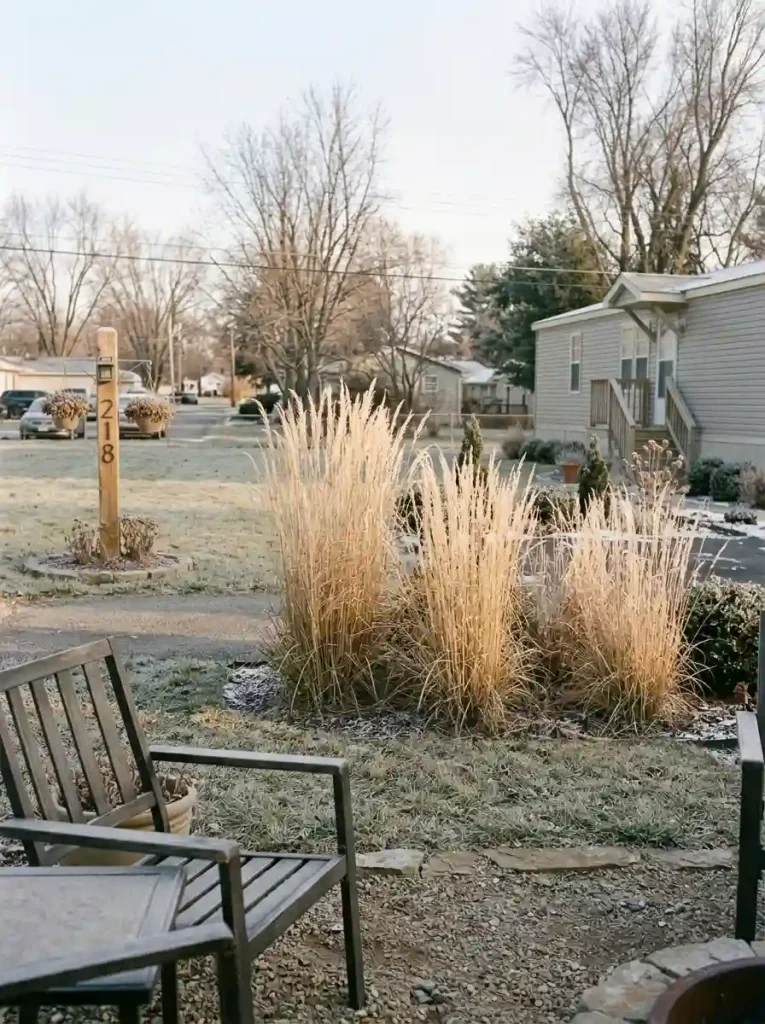
Privacy problems on manufactured-home lots often involve one particular sightline, such as a neighboring driveway or patio.
Screening the entire yard may unnecessarily reduce openness. A small group of ornamental grasses can interrupt the unwanted view while preserving a more natural landscape.
Sit where you normally relax outdoors and identify the exact direction that feels exposed. Position the planting group along that sightline, allowing room for mature growth and seasonal movement.
Choose non-invasive varieties suited to your climate. Bear in mind that deciduous grasses may lose much of their screening effect during winter or after seasonal cutting.
Keep the planting away from equipment clearances, vents, and vehicle sightlines. In wildfire-prone regions, follow local defensible-space guidance before using grasses or other combustible vegetation near the home.
18. Turn an Unused Corner Into a Landscaped Seating Retreat
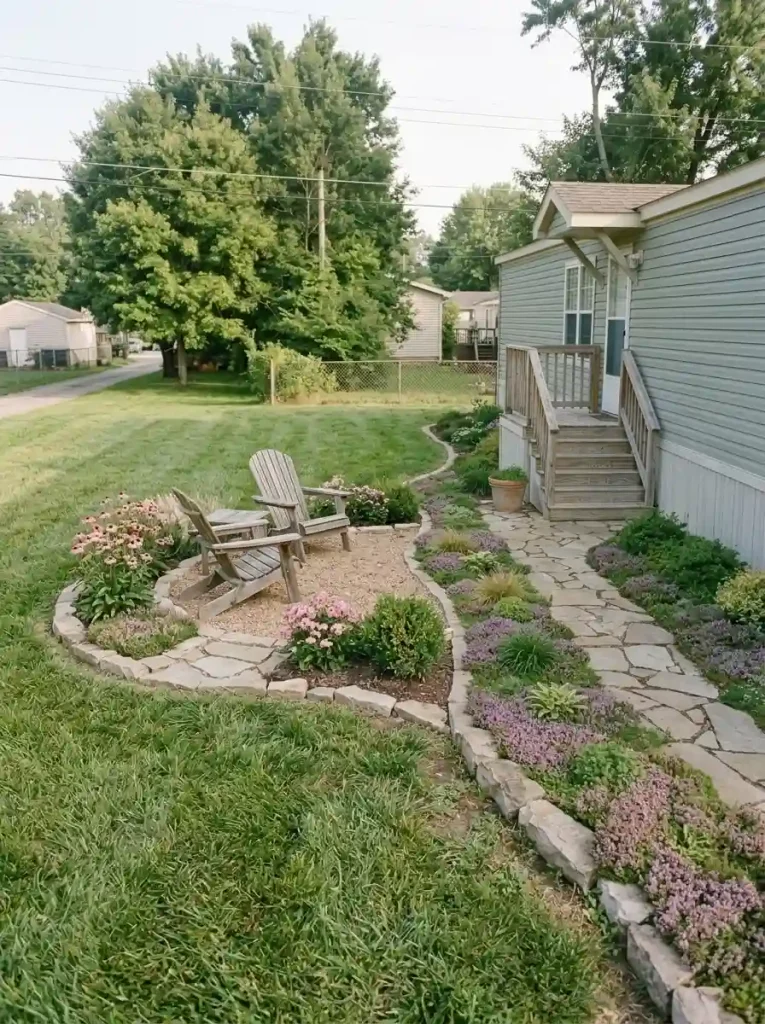
Imagine an underused patch of lawn transformed into a small garden retreat, with two comfortable chairs facing a collection of flowering plants.
The surrounding greenery gives the seating area a sense of enclosure without requiring a solid fence.
Begin with an outdoor corner that receives comfortable light and offers convenient access from the home. Use a stable surface suited to the furniture and the people who will use it.
Place most of the planting around the outer edges, leaving the approach and the space behind chairs open. A compact flowering shrub can create a visual anchor while lower plants maintain views across the lawn.
The garden should support the seating experience without crowding it. For more detailed seating arrangements and surface choices, explore these mobile home patio ideas.
19. Make Your Driveway Edge Part of the Landscape
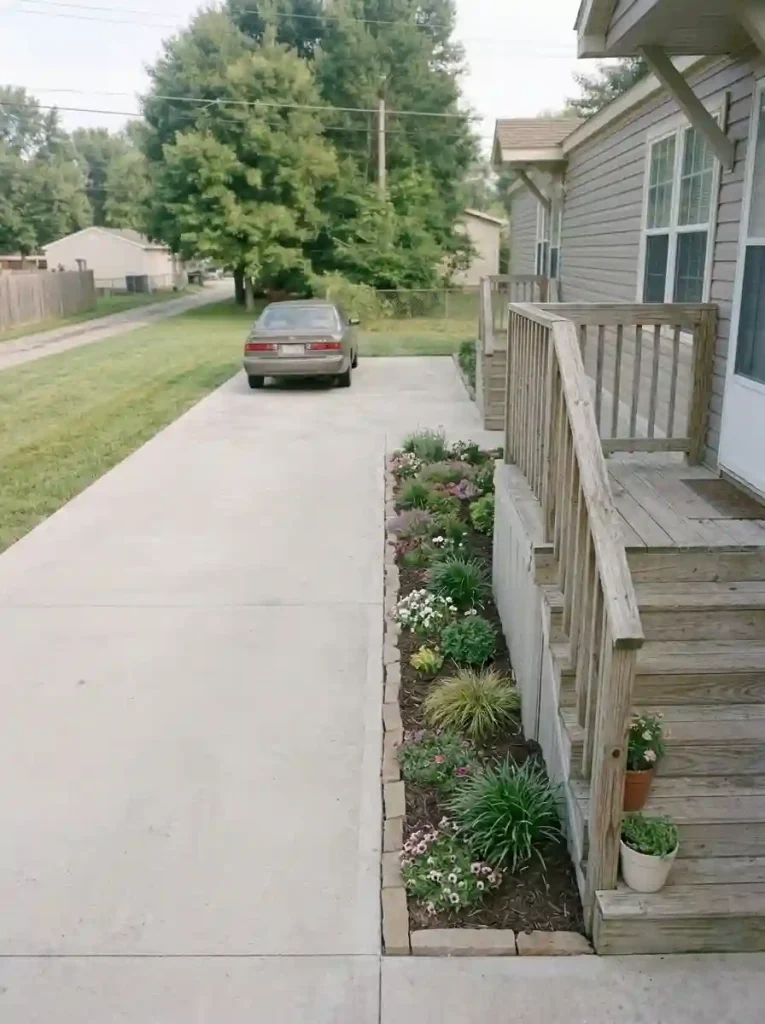
A driveway beside a mobile home creates a strong dividing line between the parking area and the yard. A defined planting strip can soften that boundary and make the property feel more coordinated.
The important measurement is the space vehicles actually need.
Park the usual vehicles, open their doors, and observe the room required for passengers to enter and exit. Consider turning movements and visibility before deciding where the garden should begin.
Choose low-growing plants near driveway entrances and position larger greenery well outside the movement area. Keep stones and raised edging away from locations where they might become obstacles.
For particularly narrow parking arrangements, a small container placed in an unused corner may be more practical than a continuous planting bed.
20. Illuminate Garden Beds and Walkways With Solar Lights
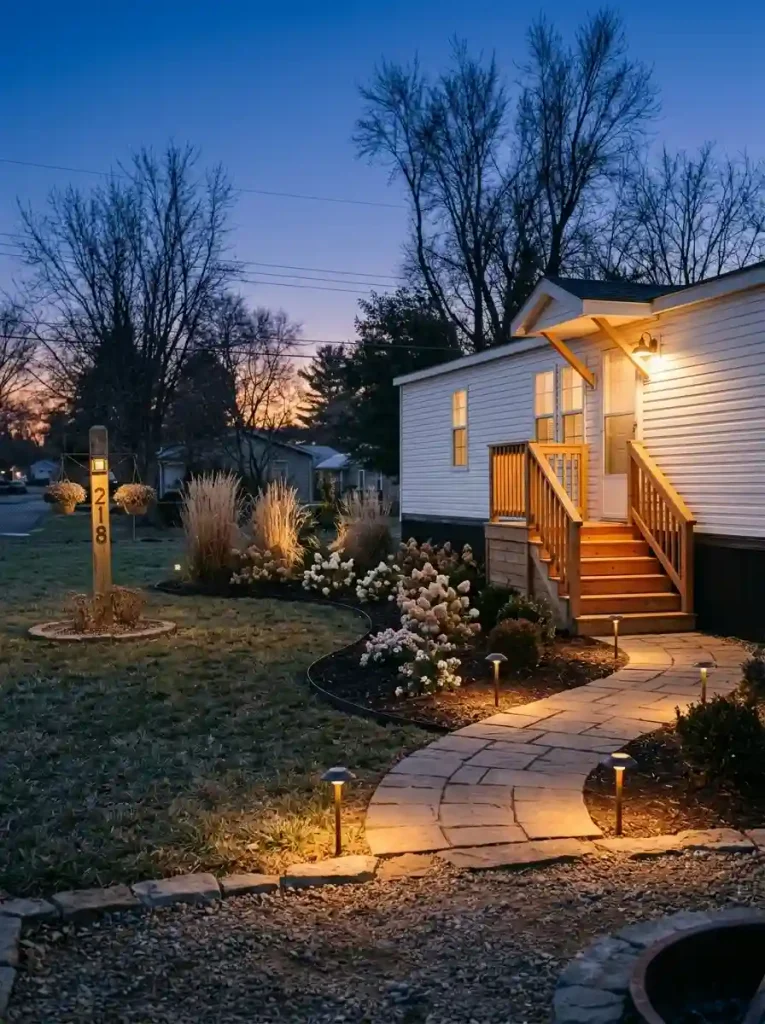
At dusk, the most important garden features can disappear into a dark, undefined outdoor space.
Landscape lighting can reveal the route to the entrance, the outline of a flower bed, or the texture of a particularly attractive plant.
Separate the two lighting functions:
Route lighting helps identify paths, boundaries, and changes in direction.
Accent lighting emphasizes selected shrubs, garden features, and interesting textures.
Begin with the everyday walking route, then add a few warm-toned decorative lights around the garden’s strongest visual features.
Choose solar fixtures appropriate for the available sunlight and expected performance. Dedicated, suitable lighting may be necessary around stairs or other safety-critical locations.
For inspiration on coordinating garden illumination with broader architectural improvements, see these before-and-after mobile home exterior transformations.
STYLISH GALORE / NIGHTSCAPE STUDIO
See Your Garden After Sunset
Change the lighting mode to explore how different fixtures influence the landscape.
Conceptual lighting visualization only. It does not predict brightness, solar runtime or compliance with lighting requirements.
21. Turn a Dry, Sunny Yard Into a Drought-Tolerant Garden
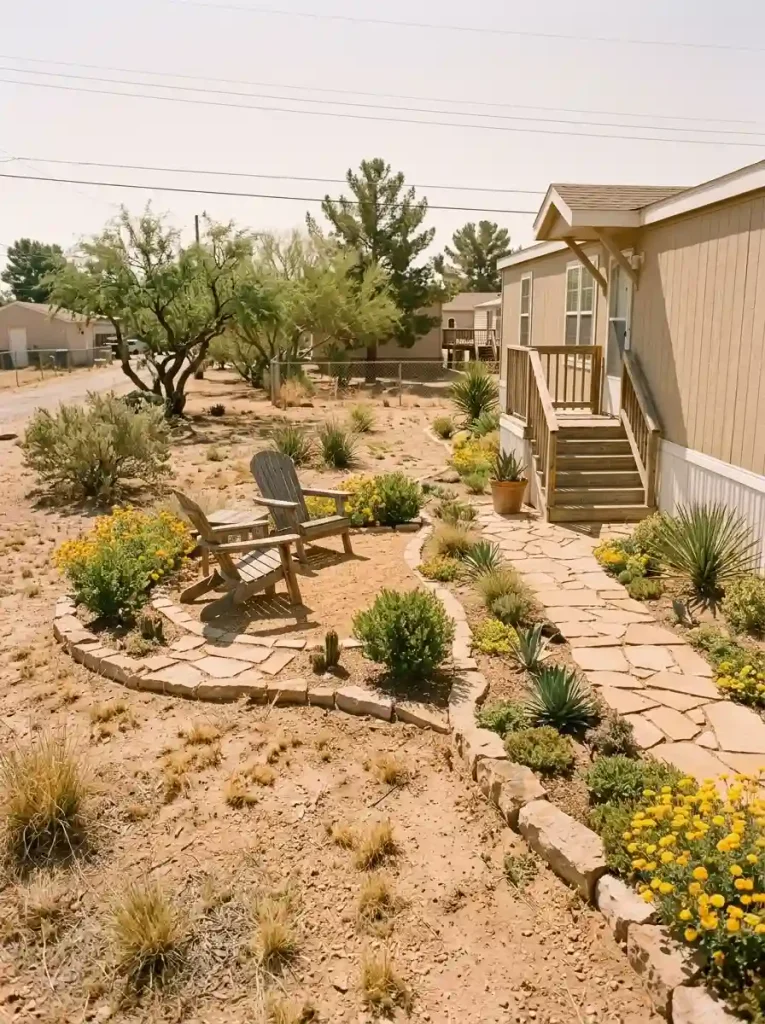
A mobile home yard exposed to strong sunlight does not have to depend on a large, constantly watered lawn.
A drought-tolerant landscape can combine regionally adapted flowering plants, ornamental grasses, compact shrubs, and suitable ground materials.
Group plants with similar moisture requirements so that individual areas can be watered according to their needs. Retain lawn where it serves a genuine purpose, such as a children’s play area, and consider replacing difficult or unnecessary turf elsewhere.
The EPA’s WaterSense landscaping guidance and its regional plant-selection resources are useful starting points.
Consider heat around exposed siding and avoid assuming that extensive gravel is the answer to every dry site.
Drought-tolerant plants still need appropriate care during establishment. Plan for their long-term conditions from the beginning.
22. Design Around Rainwater Runoff and Low Spots
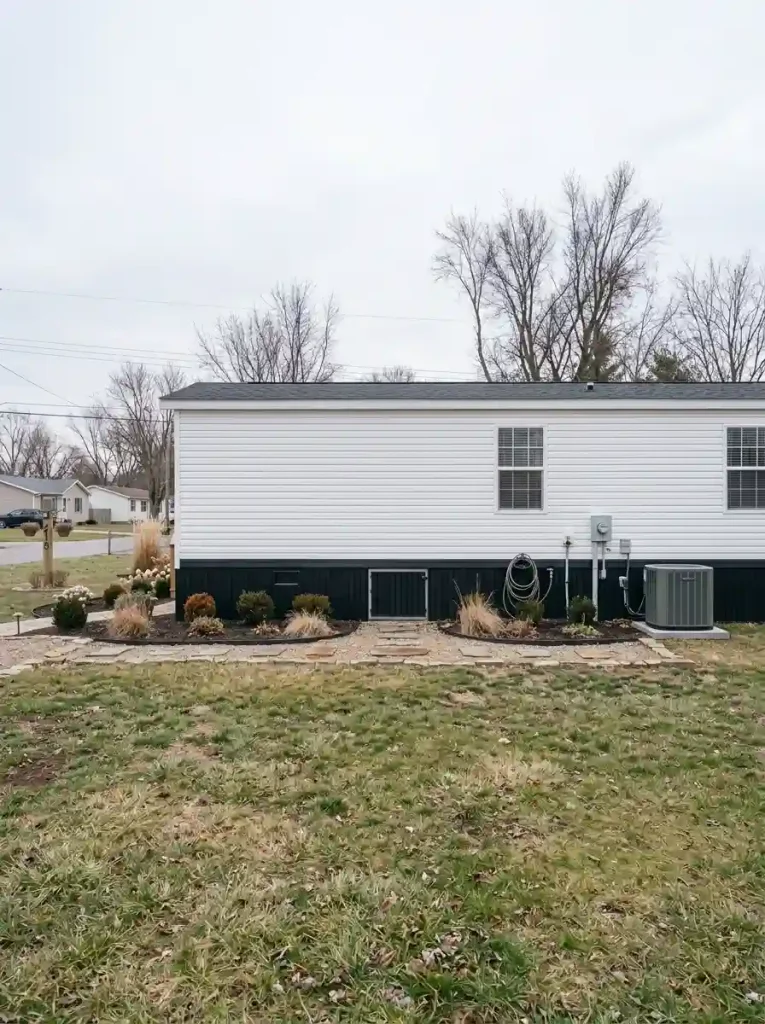
One of the most useful landscaping inspections happens immediately after heavy rainfall.
Look at how water travels around the manufactured home. Pay particular attention to the ground beside the skirting, roof runoff, low areas near the steps, and pathways that become muddy.
| Observation | Appropriate response |
|---|---|
| Minor erosion within a garden bed | Review suitable surface protection and planting |
| Water flowing toward the home | Arrange a grading and drainage assessment |
| Persistent water beneath the home | Investigate and correct the underlying problem |
| Runoff crossing an entrance route | Review drainage and walking-surface suitability |
The federal manufactured-home site drainage standards address the need to direct water away from the home.
Avoid building raised planting beds or decorative borders that trap water against the exterior.
Once the drainage arrangement is suitable, establish garden beds that work with the property’s existing water movement. A beautiful landscape should never conceal a problem that requires repair.
23. Keep Utility Access Clear With a Thoughtfully Planted Service Zone
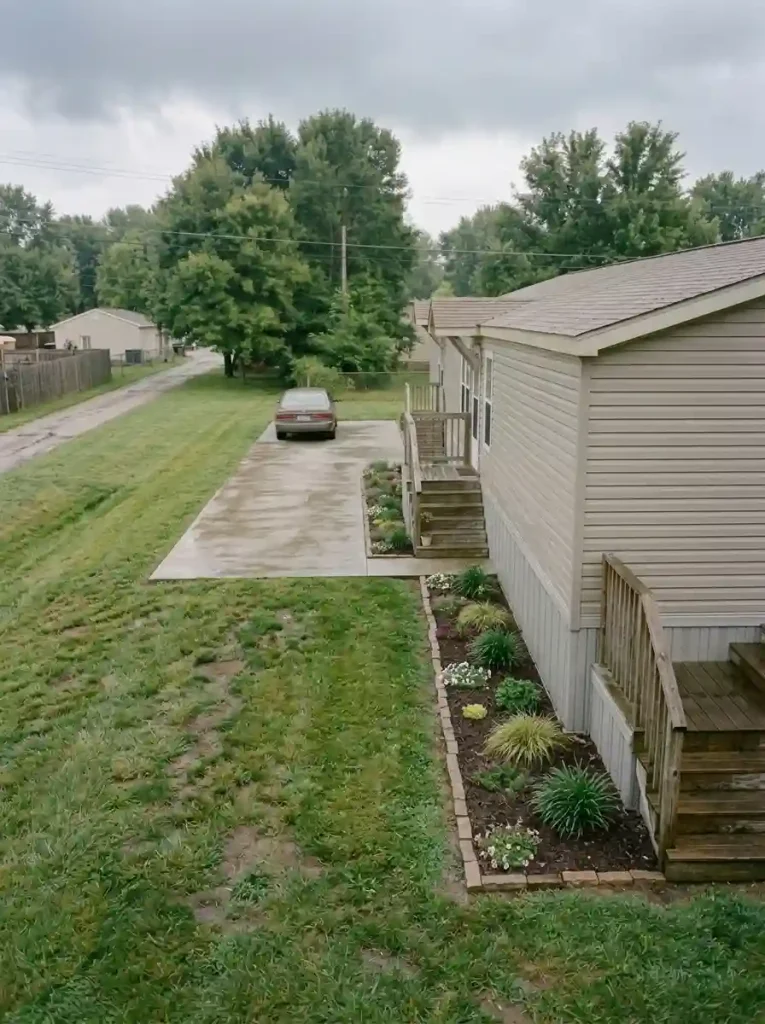
Before drawing a permanent garden outline, map the parts of your manufactured home that must remain accessible.
These may include:
- Skirting ventilation openings.
- Crawlspace access panels.
- Utility connections and shutoff points.
- Outdoor heating and cooling equipment.
- Appliance exhausts and other required clearances.
Treat these locations as designated open zones within the landscape.
A well-defined break between planting groups can look deliberate and attractive, especially when the adjacent borders use matching materials. Where suitable, removable containers may provide decorative flexibility outside the required working space.
Check the home’s installation documentation, equipment instructions, and applicable requirements before determining planting positions. Consider how large each plant will become and how maintenance workers will approach the equipment.
Design the garden so routine servicing does not require removing permanent structures or cutting back established shrubs.
STYLISH GALORE / PROPERTY INSPECTOR
The Four-Zone Landscape Safety Map
Explore the areas that should remain accessible when planning your manufactured home garden.
Illustrative service-zone map. Open the matching inspection points below.
1 Skirting Ventilation
Identify required vents and ensure mature plants, mulch and decorative materials will not obstruct them.
Inspect: Are the ventilation openings unobstructed?2 Crawlspace Access
Preserve a suitable approach to access panels and enough working space to use them.
Inspect: Can maintenance workers reach and open the panel without removing landscaping?3 Outdoor HVAC Equipment
Follow the equipment manufacturer’s airflow, service and vegetation-clearance instructions.
Inspect: Will the selected shrubs remain outside required clearances at maturity?4 Utilities and Shutoffs
Keep utility connections, meters, shutoffs and associated access areas available as required.
Inspect: Have utility locations and applicable access requirements been confirmed?24. Create a Low-Maintenance Landscape That Still Looks Lush
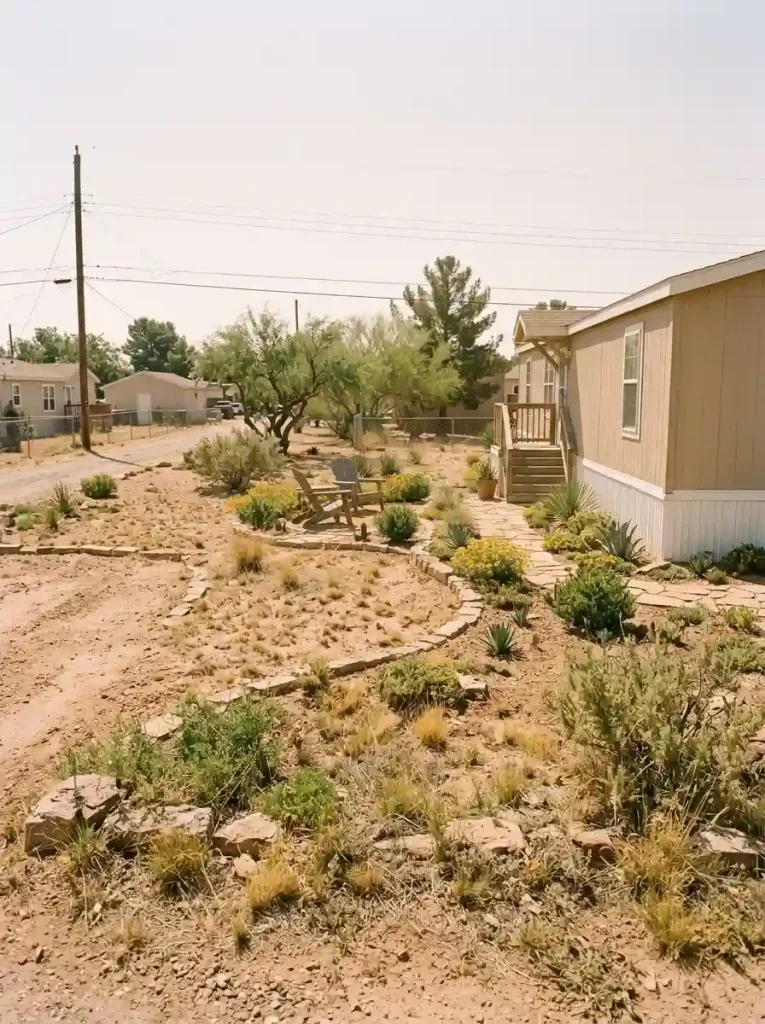
The real test of a mobile home garden comes after the initial excitement of planting has passed.
How often will the shrubs need trimming? Which areas will require frequent mowing? How many containers must be watered during hot weather?
Reduce recurring work through better plant and material choices.
| Maintenance challenge | Simpler landscaping alternative |
|---|---|
| Numerous small containers | Fewer, appropriately sized planters |
| Shrubs that quickly outgrow the bed | Naturally compact varieties |
| Difficult-to-mow lawn strips | Suitable ground-cover planting |
| Intricate edging with tight corners | Broad, uncomplicated garden boundaries |
| Plants with conflicting water needs | Compatible planting groups |
Keep enough open space to maintain the home’s exterior and surrounding property comfortably.
A limited selection of well-adapted plants can appear rich and abundant when repeated thoughtfully. Low maintenance means choosing a garden that fits your available time, while allowing for normal establishment and seasonal care.
25. Transform Your Yard in Affordable, Carefully Planned Phases
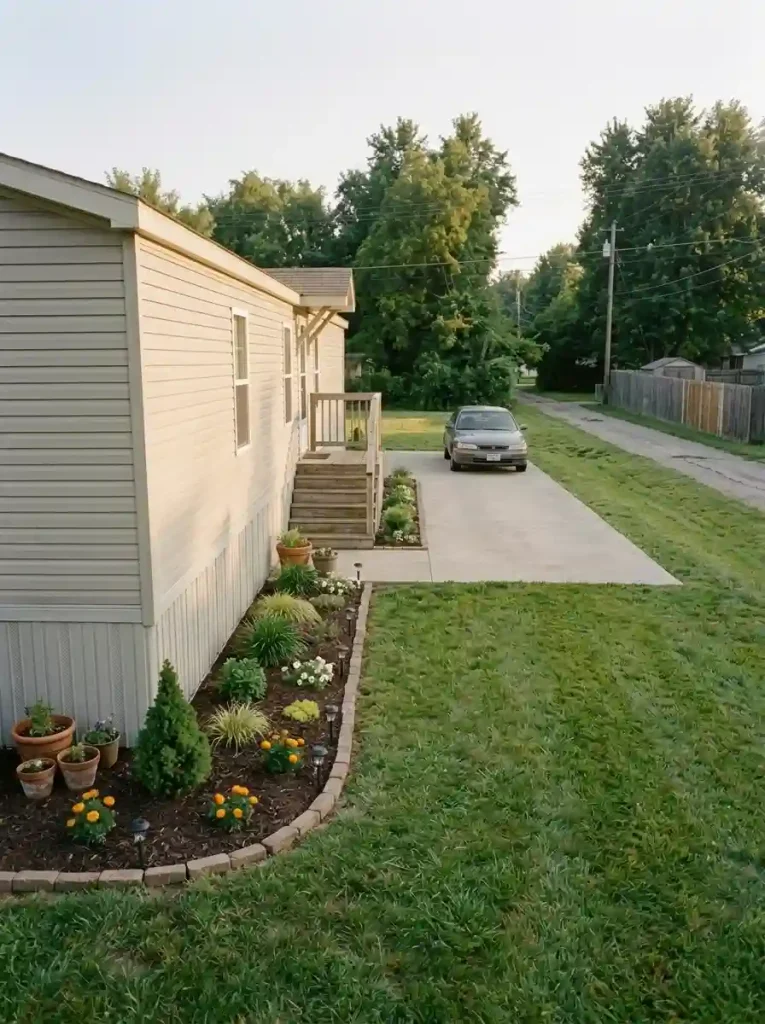
A complete mobile home landscaping makeover does not have to happen in a single weekend or require one large investment.
Begin with the part of the yard that has the greatest everyday visual impact.
For example, these illustrative DIY budgets can help organize spending:
| Available budget | Suggested landscaping focus |
|---|---|
| $150 | Small entrance improvement, cleanup, simple edging, and a few plants |
| $500 | A more developed garden bed, coordinated planting, and selected finishing details |
| $1,500 | Several related planting areas, suitable surface improvements, and a coordinated landscape scheme |
These figures are planning examples, not guaranteed project costs. Local prices, labor, site conditions, and necessary repairs can substantially change the amount required.
Complete the landscape in phases:
Prepare: Address drainage, permissions, utilities, and existing problems.
Establish: Define the garden boundaries and plant the main greenery.
Enhance: Add decorative stone, containers, lighting, or a focal feature.
Refine: Allow plants to establish before expanding the design.
For complementary architectural upgrades, explore these mobile home exterior improvements on a budget.
A phased approach makes it easier to avoid unnecessary purchases and build a landscape in which every improvement contributes to the overall design.
STYLISH GALORE / INVESTMENT PLANNER
Make Every Landscaping Dollar Count
Choose a budget and your main landscaping priority to reveal an illustrative spending plan.
All allocations are hypothetical DIY planning examples, not quotations or guaranteed project costs. Local material prices, labor, permits and site conditions vary. Essential repairs and professionally assessed accessibility improvements may require a separate budget.
Final Thoughts
Beautiful mobile home landscaping begins with understanding the property you already have.
The long shape of a single wide can inspire repeated planting groups. A double wide may benefit from broader garden islands, while a rented lot can look welcoming through coordinated containers and reversible improvements.
Before buying anything, take a photograph of your home from the street. Identify the area that appears most unfinished, consider how people move through the yard, and choose one landscaping improvement that addresses both appearance and practicality.
Perhaps it is a defined flower bed, a more welcoming entrance, or a group of plants that softens the skirting without concealing important openings.
Start there, select plants suited to your local conditions, and build outward gradually.
The most rewarding mobile home landscaping ideas are the ones that make your home feel more welcoming every time you arrive, without creating unnecessary expense or maintenance.