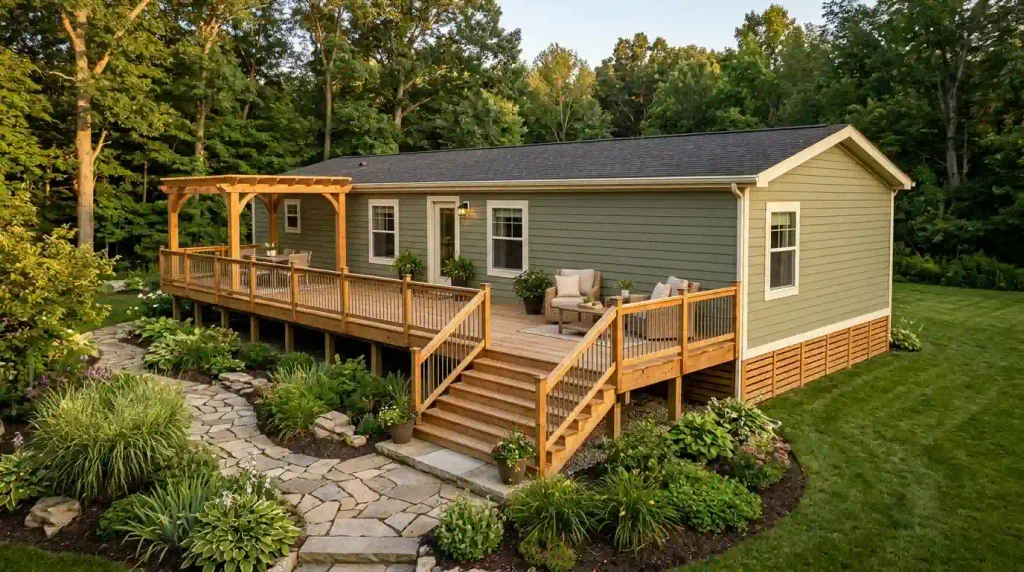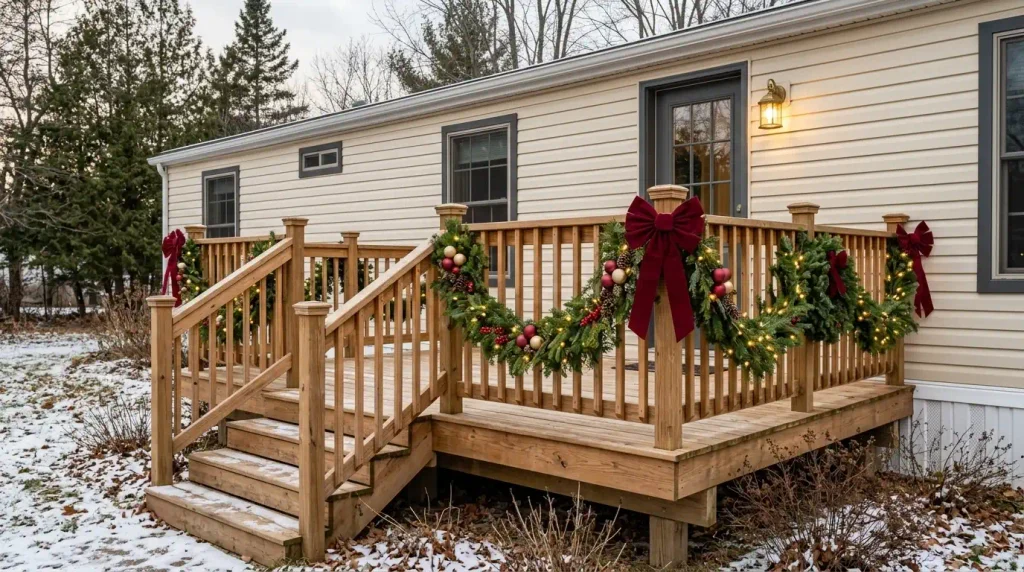
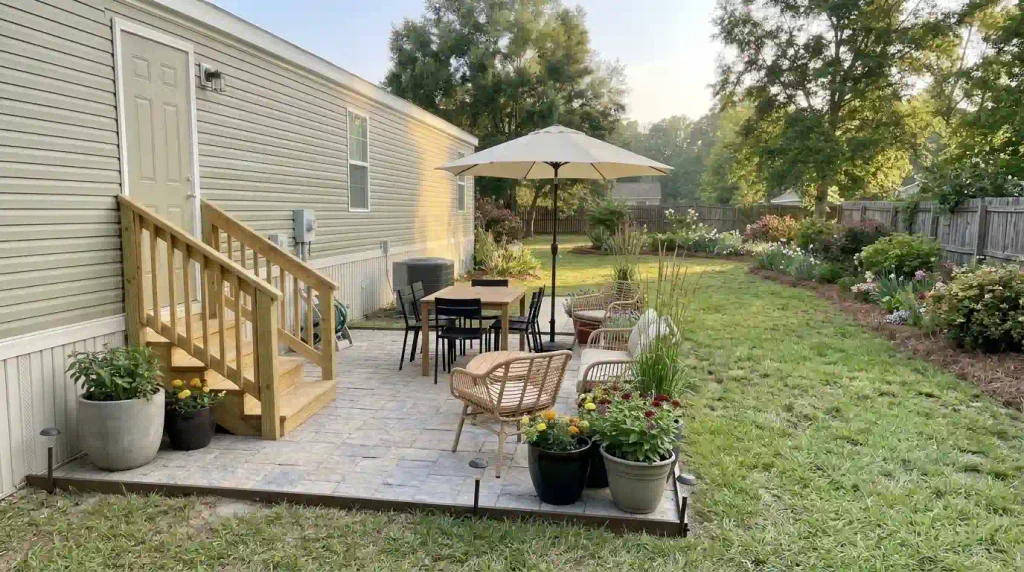
A beautiful outdoor sitting area doesn’t always begin with a new porch. Sometimes it begins with the strip of ground beside a single-wide, an overlooked concrete pad behind a double-wide, or a patch of lawn that could become a place for dinner. The challenge is working with the home as it stands: doors that sit above yard level, long siding walls, skirting that needs access, and outdoor space that may be narrow, sunny, uneven, or rented.
These mobile home patio ideas focus primarily on ground-level outdoor spaces: surfaces, furniture, shade, privacy, lighting, and simple ways to connect a patio to everyday life. You’ll find inexpensive improvements alongside options that call for more planning. A raised deck or roofed entrance is a different project, so those are clearly distinguished along the way.
Before buying anything, picture how you want to spend an ordinary Tuesday outside. Coffee for two? A reliable dinner spot? Somewhere to watch the kids play? That answer matters more than a perfectly styled Pinterest photo.
1. Choose a Patio Spot That Works With Your Mobile Home’s Door
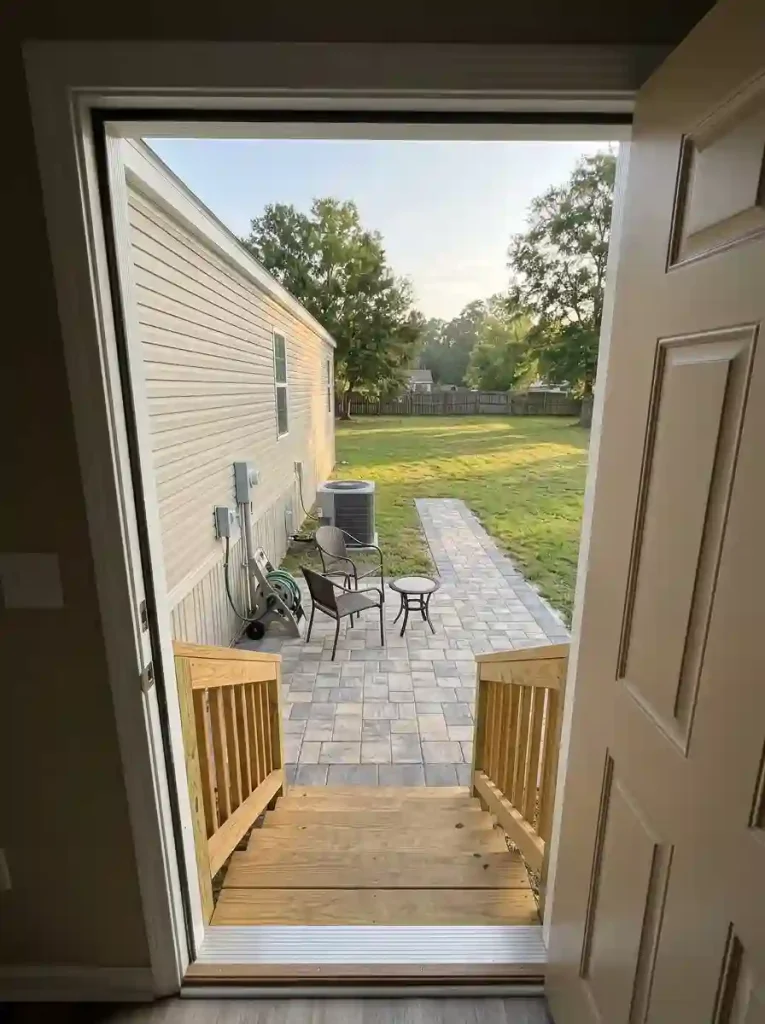
A mobile home’s longest wall isn’t necessarily the best place for a patio. Start at the door you actually use. Look outward: where would a chair fit without blocking the steps, a utility connection, a meter, or the route to the yard? Then walk that route carrying something bulky, as you might with a laundry basket or dinner tray.
Three possible starting points:
- At an existing back door: Convenient for dining, provided the steps and landing connect safely to the patio.
- Beside a long exterior wall: Often useful for a slim sitting area, but leave service points, skirting ventilation, and access panels unobstructed.
- Farther into the yard: May offer better sun or privacy; it needs a stable, usable path from the house.
Pay attention after heavy rain. Water should not accumulate beneath the home or be directed toward its foundation supports. HUD’s manufactured-home site drainage standard explains why site drainage matters.
If the entry itself needs a raised platform or roof, explore our mobile home porch ideas separately. For this patio, choose a location where a small table and two chairs can be used comfortably before committing to a larger footprint.
SITE / USE · INTERACTIVE FIELD GUIDE
Patio Fit Atlas
Choose the existing site condition. The suggested patio type, route and main caution change together.
Existing slab
Use a sound, well-drained concrete pad for a compact dining or conversation area.
Try: Start with a furniture mock-up and check that door swing, steps and servicing stay clear.
Check: Stop if water pools toward the skirting or the slab shows major movement.
New yard zone
Begin by testing the patio location with portable chairs before committing to paving or gravel.
Try: Observe rain runoff and plan a suitable base, edge and connection from the door.
Check: A soft or sloping yard may require a site professional; loose stone is not the best route for every user.
Slim bistro
Keep the arrangement small: one table, two chairs and a clear service corridor.
Try: Tape out the positions and walk past while a chair is pulled out.
Check: If a meter, skirting panel or walking path becomes blocked, change location or furniture size.
Illustrative planning advice only. Check site conditions, local requirements, and product instructions.
2. Turn a Bare Patch of Yard Into a Gravel Patio
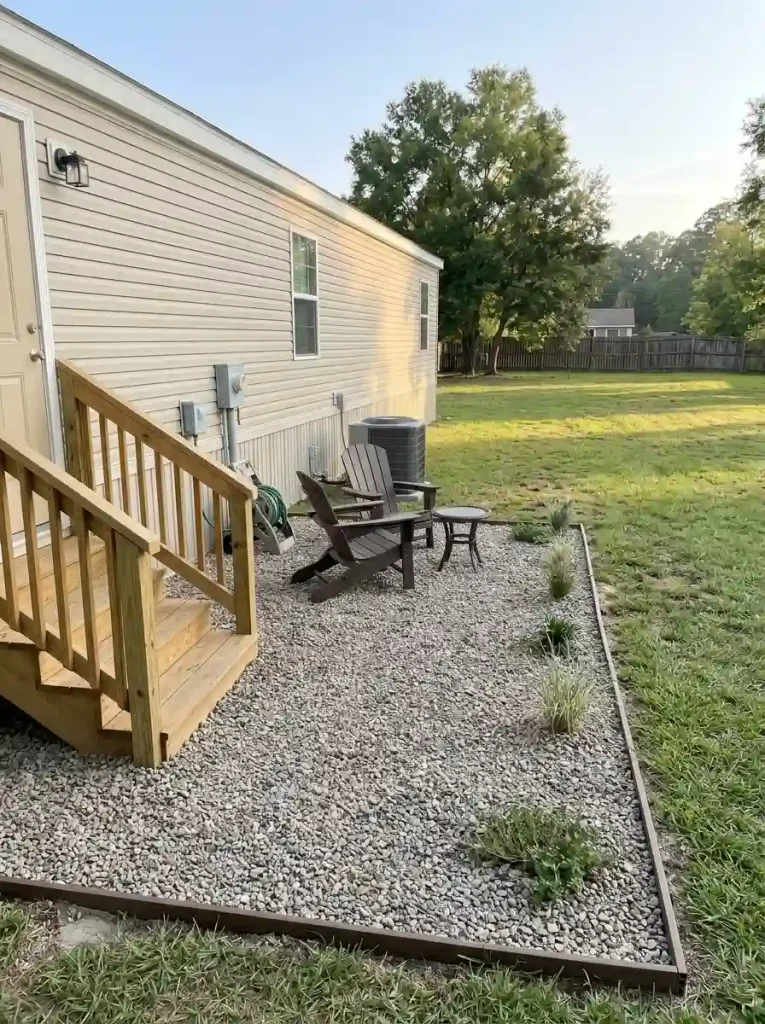
Consider the yard behind a single-wide where the grass never quite grows evenly. A defined gravel area can give that neglected patch a sense of purpose without the look or cost of a full hard-paved terrace. It suits informal seating, especially where the household wants a relaxed garden feel.
But loose gravel has a tradeoff: chair legs can sink, wheels may struggle, and a dining table can wobble. The success of this idea depends on the ground beneath it and the gravel specification, not the decorative color alone.
Before choosing gravel: Check where rainwater already travels, identify underground services before digging, and decide whether the users need a firm, accessible surface. Proper base preparation, edging, compaction, and drainage should be planned for local soil conditions. Don’t pile aggregate against skirting or cover access openings.
An inexpensive look is only inexpensive in practice when it remains comfortable to use. For frequent dining or wheeled mobility, favor a suitably designed firm surface instead. For occasional lounging on stable ground, a modest gravel patio may be exactly enough.
3. Create a Paver Island for a Stable Outdoor Dining Set
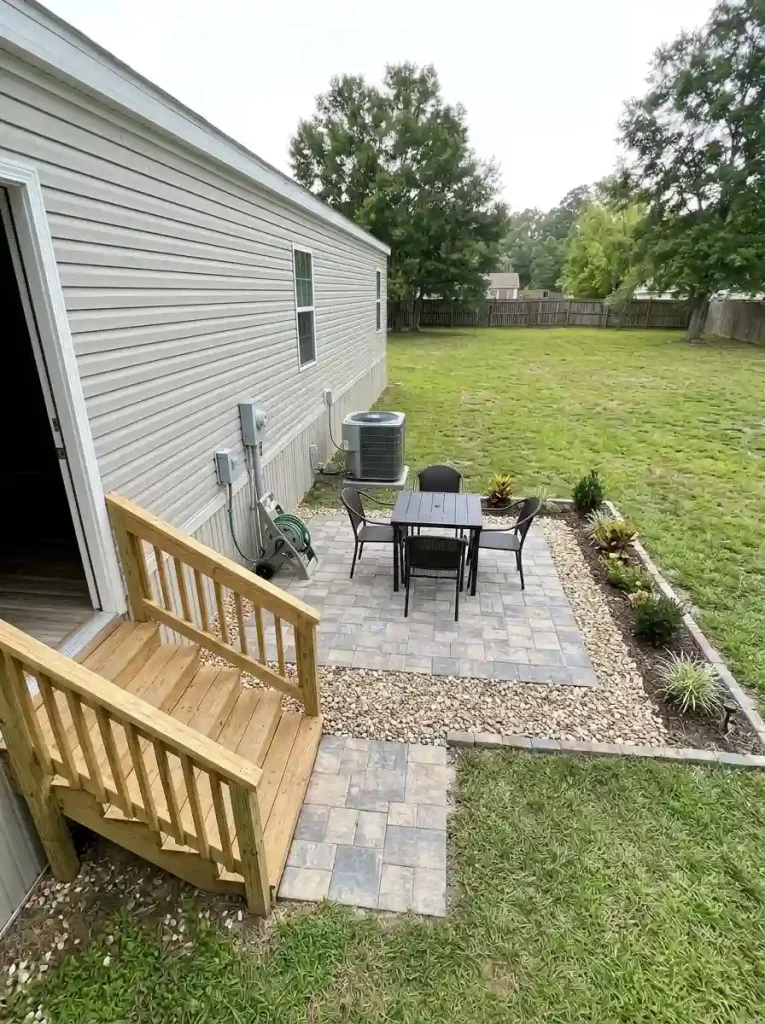
There’s an appealing middle ground between a fully paved yard and furniture standing in grass: build a firm central area for the dining set, then allow softer landscaping to surround it. In a manufactured-home yard, that distinction can keep the patio visually light while protecting chair stability.
| Patio surface approach | Most useful for | Check before choosing |
|---|---|---|
| Compact paver dining zone | Stable table and chairs | Base, edge restraint, drainage, local frost or soil conditions |
| Gravel around a paved center | Casual garden character | Loose stones near chair legs or walking routes |
| Entirely firm paved patio | Regular meals or more demanding access needs | Water runoff, site grading, installation scope |
Imagine a four-chair table on a square paver area with low herbs beyond its edges. When someone slides a chair backward, its legs should remain on sound footing; the usable paved area must account for that movement, not just the tabletop.
Begin with the furniture footprint and how people get into their chairs. That practical test tells you whether a small island will work or a more generous firm surface is justified. Properly installed pavers are a landscape project, not something to place directly over unstable ground.
4. Give an Existing Concrete Patio a Thoughtful Makeover
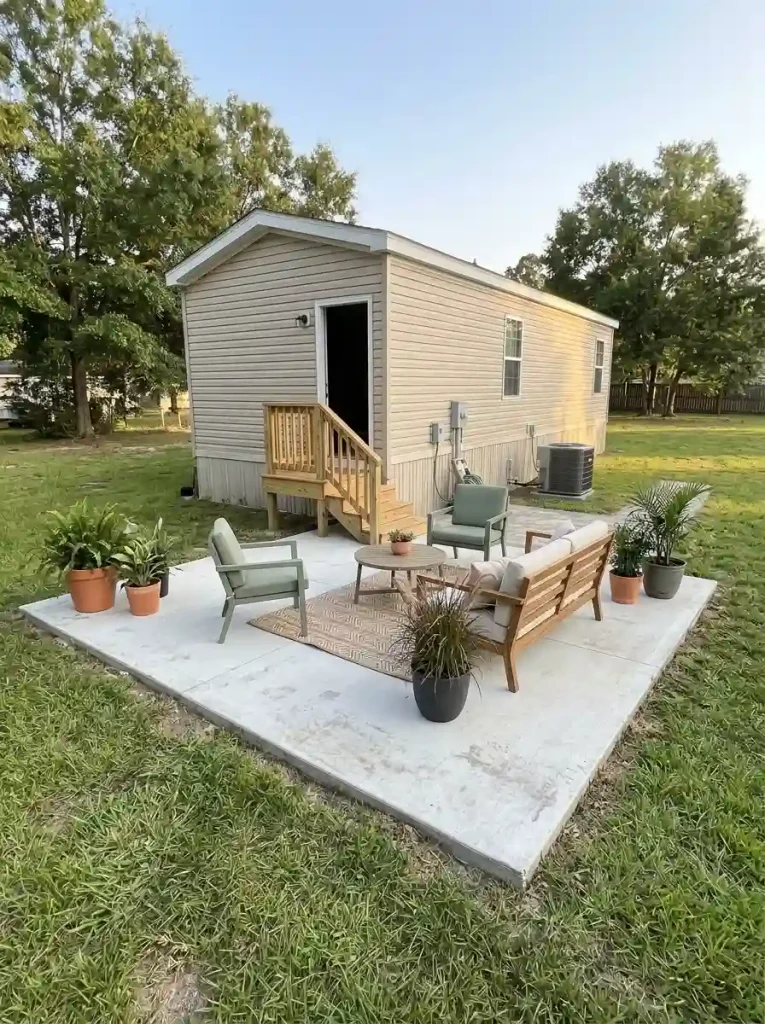
The plain concrete slab beside a manufactured home can become a surprisingly convincing outdoor room. Before looking for floor paint or tile, evaluate whether the existing surface is sound, drains appropriately, and has room for the activity you want.
Try laying out furniture with temporary objects: mark the table location, open the back door, and walk around the seats. That may reveal the slab is already large enough; it simply lacks a clear use.
What the condition tells you:
- Sound but visually dull: Focus on cleaning, furniture placement, containers, and exterior-rated finishes compatible with the slab.
- Small cosmetic defects: Determine whether appropriate maintenance can address them before decorating.
- Movement, significant cracking, sinking, or water pooling against the home: Stop the cosmetic plan and obtain qualified assessment.
An outdoor rug or potted greenery can bring warmth, but neither fixes drainage problems. For projects beyond the patio, our budget mobile home exterior makeover guide covers other affordable improvements without confusing a patio refresh with major construction.
MATERIAL CONDITION / FIRST DECISION
Before You Style the Concrete
Appearance is not the first question. Classify the existing pad and let its condition determine the project.
01 / READY
Sound & well-drained
The slab is stable, with an appropriate surface and no obvious water collection against the home.
Next: Test furniture and clean.
02 / REVIEW
Surface wear
Discoloration or minor surface blemishes may call for compatible maintenance and product-specific preparation.
Next: Verify repair options.
03 / STOP
Movement or pooling
Large cracks, sinking, undermining or runoff toward the home are not decorating problems.
Next: Obtain qualified assessment.
This is a visual screening aid, not a structural diagnosis. If the condition is uncertain, have it assessed before covering the surface.
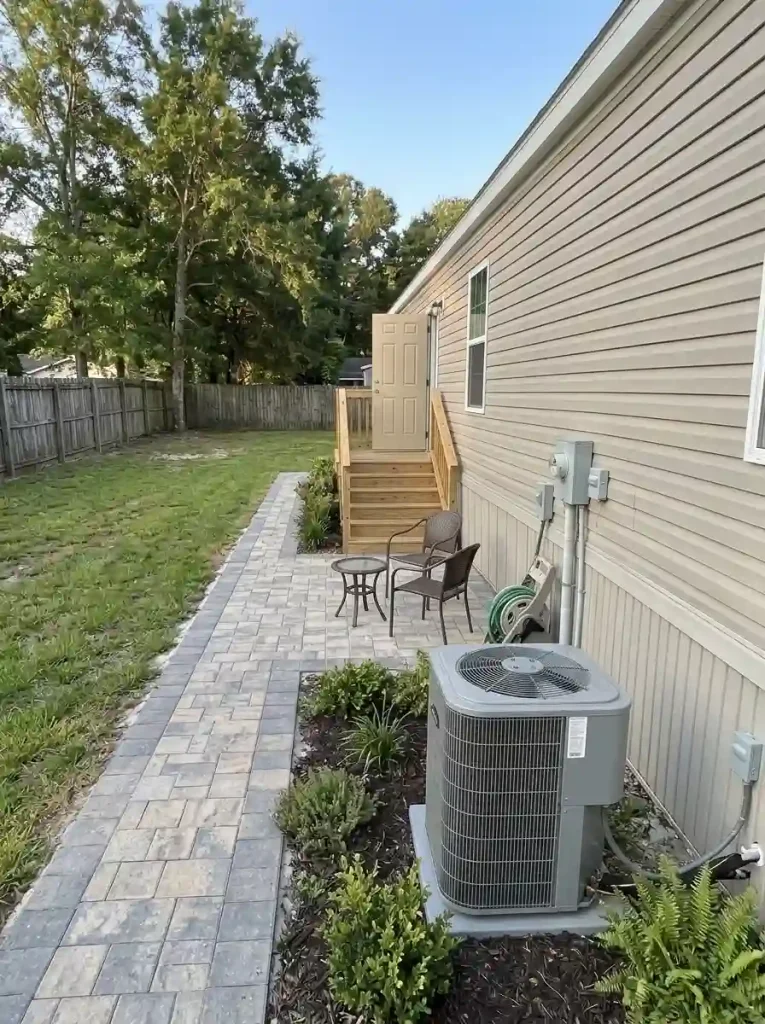
5. Make a Narrow Side Yard Work as a Bistro Patio
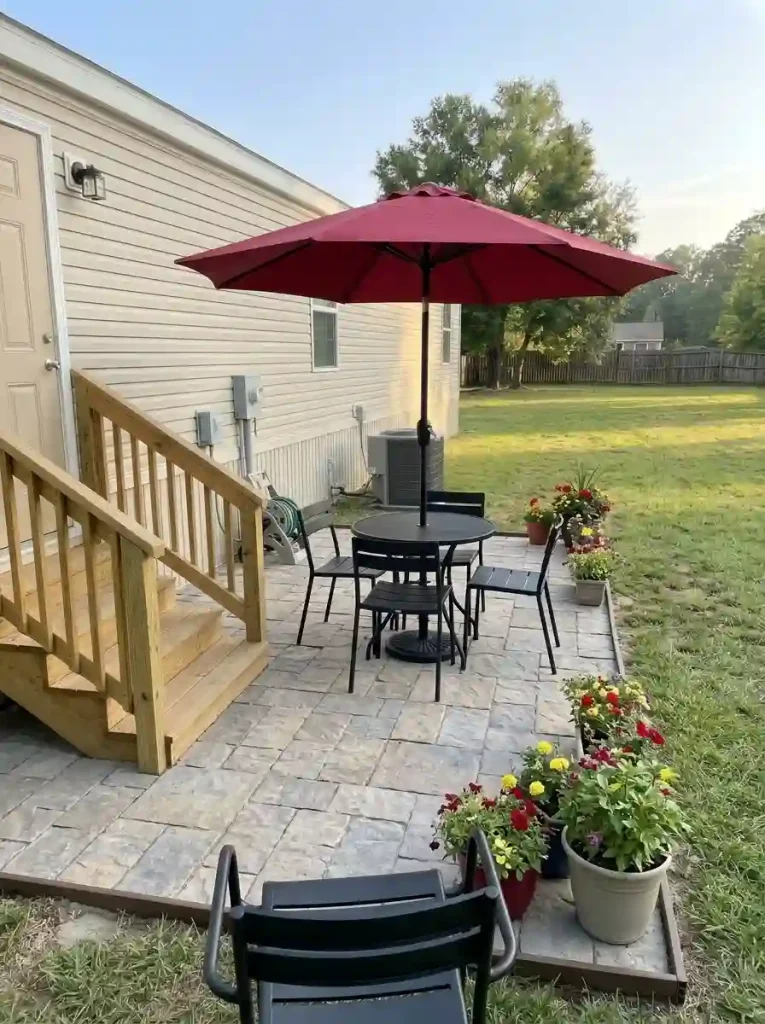
A narrow strip next to a single-wide may be the only outdoor area with afternoon shade. It may also carry a meter, hose connection, service door, or skirting access. That makes it a candidate for a small bistro spot only after those functions have been checked.
Picture two compact chairs facing slightly toward the lawn and a small pedestal table between them. This arrangement can feel more inviting than lining up full-size lounge chairs against the siding. Folding furniture may be especially useful where the same space serves as a passage.
The sideways-walk test: Place the proposed furniture positions on the ground with cardboard or painter’s tape. Walk through while one chair is pulled back. If a person has to step into planting beds or squeeze around the table, scale the setup down or move it elsewhere.
Small patio styling belongs to ground-level living, while a new landing and stair arrangement is porch territory. Our single wide porch ideas offer the more appropriate path if a usable outdoor space must be raised up to the door.
6. Shade a Small Dining Area With a Freestanding Umbrella
A red market umbrella beside a light-colored manufactured home can look cheerful, but its bigger contribution is making a small table usable when the sun shifts. An umbrella may be a practical first shade purchase because it doesn’t require attaching a structure to the house.
Where does the heat arrive? Visit the intended sitting area during the hours you would actually use it. Morning coffee and late-afternoon dinners produce different shade problems. A centered umbrella suits some tables; an offset model may help another arrangement, provided the base, stability, and placement meet the product instructions.
Wind matters as much as sunshine. Close and secure umbrellas when conditions or manufacturer guidance call for it; don’t assume a heavy base makes an open canopy safe in gusts. Leave adequate space around steps and paths.
For renters, an easily removed umbrella can be more appropriate than permanent posts. For homeowners with persistent heat across a larger area, the next section examines the much bigger commitment of a freestanding shade structure.
SUN / WIND · INTERACTIVE FIELD GUIDE
Shade Direction Selector
The best umbrella position depends on the time of use and the wind exposure.
East-side light
Check the early-day sun angle from the chair before choosing a canopy location.
Try: If the low sun reaches under a centered umbrella, move the seating group or consider suitable side shade.
Check: Do not block the door, stairs or utility access with the umbrella base.
Hot late-day sun
Test where the sun hits at the actual dinner hour; a fixed central umbrella may miss the chairs.
Try: Choose an adjustable, properly weighted model if it suits the site and manufacturer guidance.
Check: Heat and glare may still make a different patio location the better decision.
Wind-exposed patio
Treat wind as the deciding factor; a canopy may be unsuitable at certain times.
Try: Use a patio spot with natural shade or a product-rated alternative; close and secure the umbrella as directed.
Check: A heavy base is not a substitute for following wind limitations.
Illustrative planning advice only. Check site conditions, local requirements, and product instructions.
7. Frame an Outdoor Room With a Freestanding Pergola
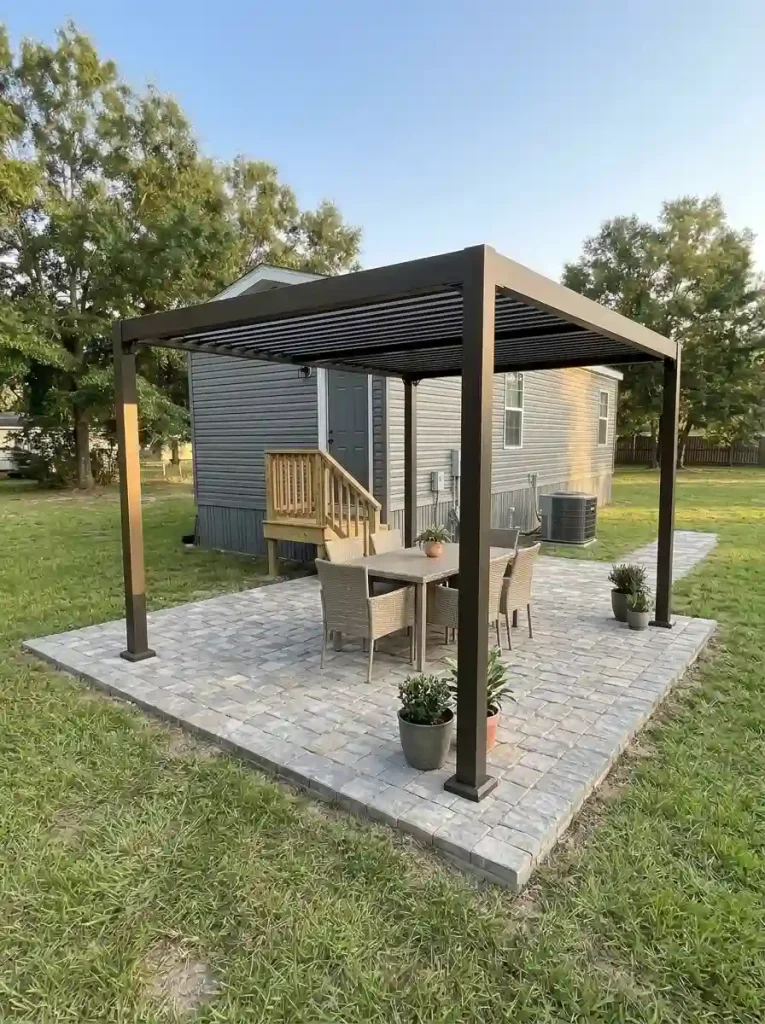
A pergola gives a ground-level patio architectural presence. Even simple open beams can establish the outline of an outdoor dining room beside the home’s long, horizontal siding. The most successful versions relate to existing doors and windows without crowding them.
Here is the distinction that changes the project: freestanding does not mean unanchored. A substantial structure still needs an appropriate engineered design, supports, and foundations for local conditions. It may require permits, and a shade canopy can increase wind loads. It must not be casually fastened into manufactured-home siding or roof framing.
The manufactured-home standard on permits and on-site structures points to the importance of checking with the local authority having jurisdiction before alterations. Manufacturer instructions and a qualified professional should guide structural decisions.
For a visual starting point, imagine a dark metal frame above pale pavers, with a dining set beneath it and the manufactured home visible behind. If that level of construction is excessive for your budget or tenancy, a freestanding umbrella or a naturally shaded patio location is the more sensible choice.
8. Arrange Conversation Seating Along the Patio’s Outer Edge
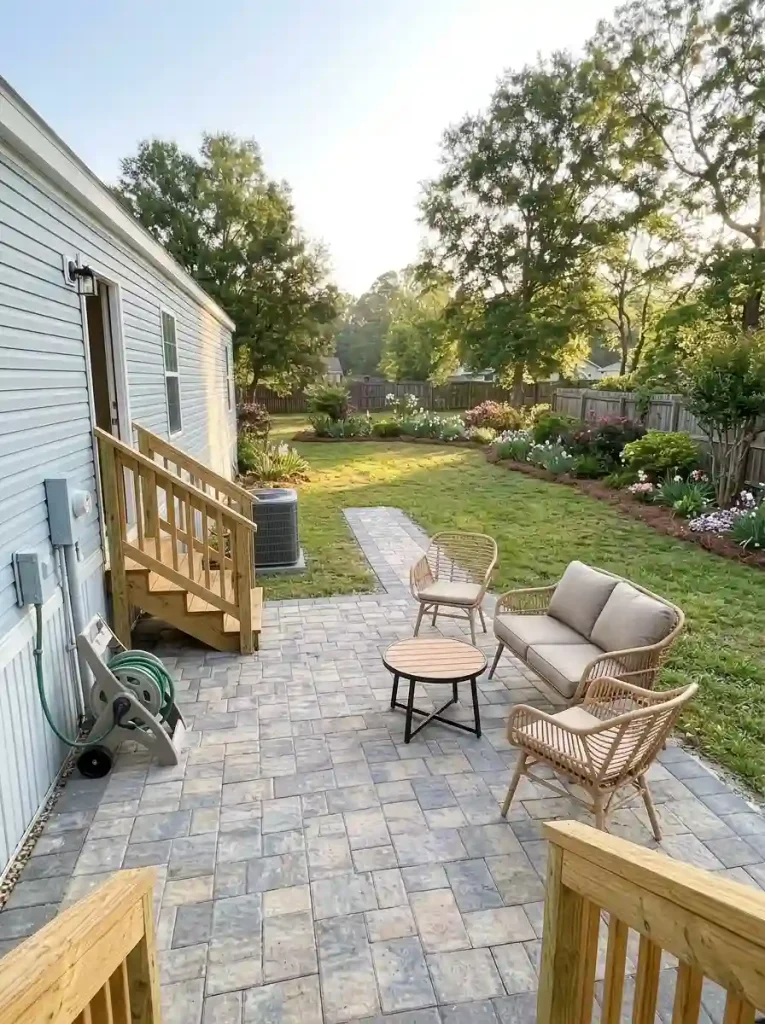
A common mistake is pushing every chair against the manufactured home’s siding. The furniture may fit physically yet leave the people facing a wall or sitting with their backs to the most attractive part of the yard.
Try the seated-view test. Sit where the main chair would be. What is directly in front of you: the garden, the neighbor’s parking area, or the patio door? Turn the arrangement until the view makes sense. A compact loveseat at the outer edge, with two lightweight chairs opposite, can establish a conversational group without turning the entire patio into a furniture showroom.
Allow comfortable circulation around the doorway, stairs, and any required service access. Keep cushions and furniture from sitting tightly against vented skirting or surfaces that routinely stay wet.
A single cluster often feels calmer than four unrelated seats scattered across a narrow side patio. Reserve sectional furniture for ground areas genuinely large enough for it and for a surface that will keep every leg stable.
9. Use Planters to Define the Patio Without Blocking the Skirting
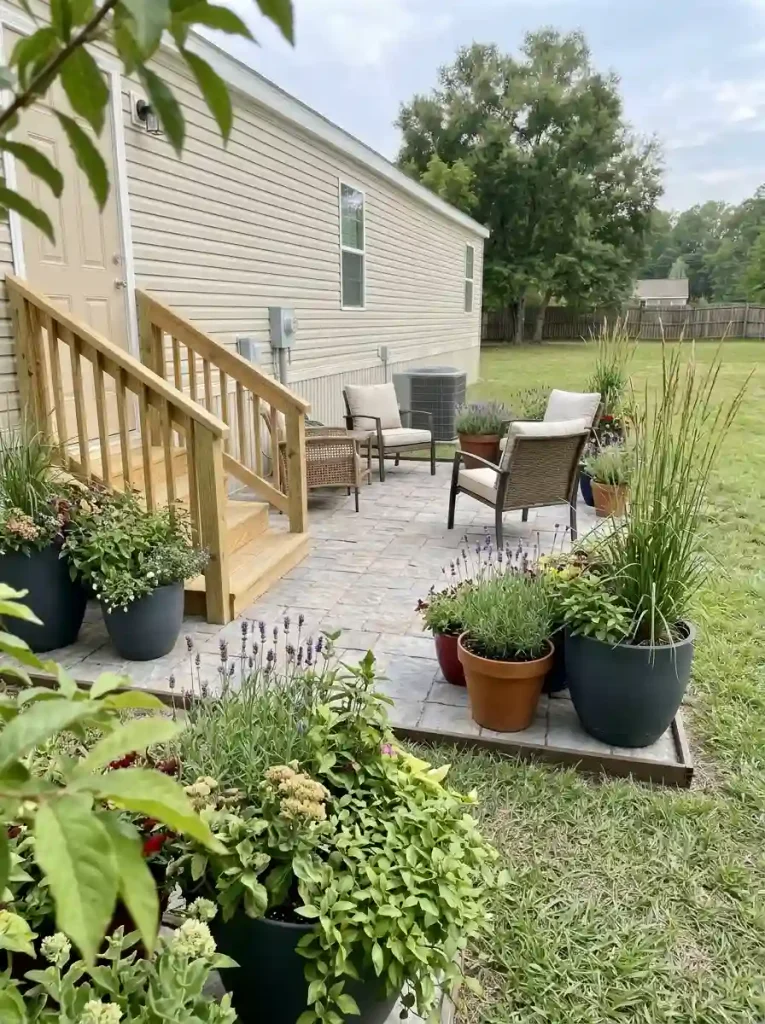
Planters can do the visual work of a low border. A row of grasses along an open patio edge creates an outdoor-room feeling, while herbs near a dining table introduce useful greenery. The plants also soften the meeting point between paving and lawn.
Yet the home-facing edge needs more restraint. Manufactured-home skirting may include ventilation openings and removable panels. Piling soil, decorative rocks, or oversized containers directly against that edge can conceal inspection access and contribute to moisture problems.
A better planting map:
- Put the tallest containers on the yard-facing perimeter, where they won’t block access or create a tipping hazard.
- Keep the home-facing edge clear of vents, doors, meters, and maintenance points.
- Choose pots with suitable drainage and plants adapted to the available sun and climate.
One large, well-positioned planter can look more deliberate than a line of tiny matching pots. If the patio is already narrow, let a low bed at the outer corner carry most of the greenery instead of shrinking the walking route.
10. Screen One Unwanted View for a More Private Patio
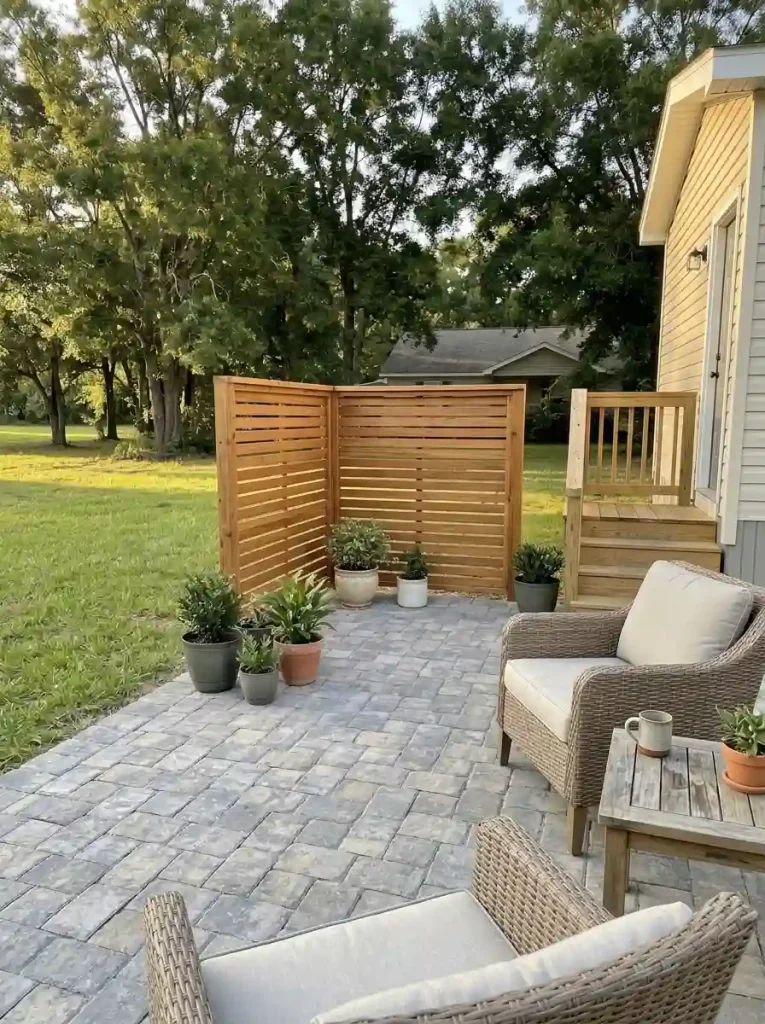
Standing in the middle of the yard, you may assume the whole patio needs a fence. Sit at the intended table first. A neighbor’s window might be visible from just one chair, while the rest of the view is perfectly pleasant.
That observation can turn an expensive enclosure into a much smaller intervention. A freestanding, appropriately secured privacy element, a suitable planting arrangement, or a movable screen may interrupt the particular sightline without boxing in the entire space.
Choose the screen by the view: Street exposure often calls for a boundary-facing treatment; a neighboring window may require shielding one seated angle; an open rear yard might benefit more from strategic planting. Check wind exposure, setbacks, site rules, and utility access. Tall panels can behave like sails and need proper design and anchoring.
Avoid fastening a screen to the mobile home’s wall or altering its structure without appropriate review. A low or flexible solution may be the best answer, especially on a rented lot. The aim is a comfortable place to sit with enough openness to enjoy being outdoors.
VIEW / SCREEN · INTERACTIVE FIELD GUIDE
Privacy Sightline Studio
Select the view you want to soften. The screen position and design tradeoff change.
Edge facing the street
A screening element at the exposed patio edge may protect seated privacy without enclosing the whole yard.
Try: Check the actual seated eye line from every chair before selecting the location.
Check: Retain safe entries, visibility for movement, and all local setbacks.
One angled sightline
A shorter angled element or planting cluster may interrupt the neighboring window view.
Try: Sit at the table and locate the exact unwanted angle; protect only that line of sight.
Check: Tall freestanding panels need proper anchoring and wind review.
Garden-facing openness
Keep most of the view open; use a low planted border for definition and gentle privacy.
Try: Let the main chairs face the garden and reserve screening for the uncomfortable corner.
Check: Avoid turning a peaceful yard into an enclosed corridor without a reason.
Illustrative planning advice only. Check site conditions, local requirements, and product instructions.
11. Anchor a Comfortable Seating Area With an Outdoor Rug
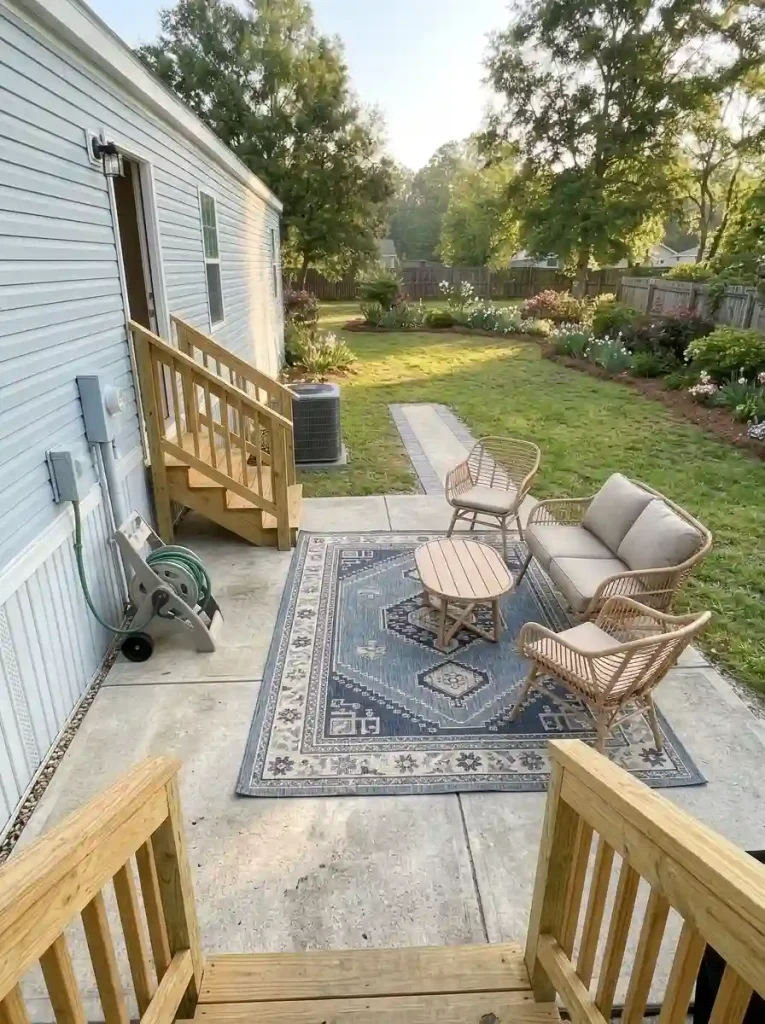
An outdoor rug can visually gather a pair of chairs, a coffee table, and a small bench into one recognizable sitting zone. On a pale concrete pad, a flat-woven design with restrained blue or terracotta detail can add depth without competing with the manufactured home’s siding.
The surface beneath the rug decides whether the idea is practical.
| Underfoot condition | Rug decision |
|---|---|
| Sound, dryable patio surface | A suitable outdoor rug can define the seating group. |
| Rough or irregular gravel | A rug may shift, snag or make chair footing worse; improve the ground first. |
| Area that regularly stays damp | Solve drainage and drying conditions before covering it. |
Look at the composition from the doorway, not only from above. Furniture front legs resting coherently on a suitably sized rug can make the area look assembled; a tiny floating rug may emphasize how far apart everything sits.
For more general styling approaches beyond manufactured-home constraints, see our back patio decorating ideas. Remove and dry rugs as needed, following the rug manufacturer’s care guidance.
12. Plan a Weather-Smart Corner for Cushions and Small Essentials
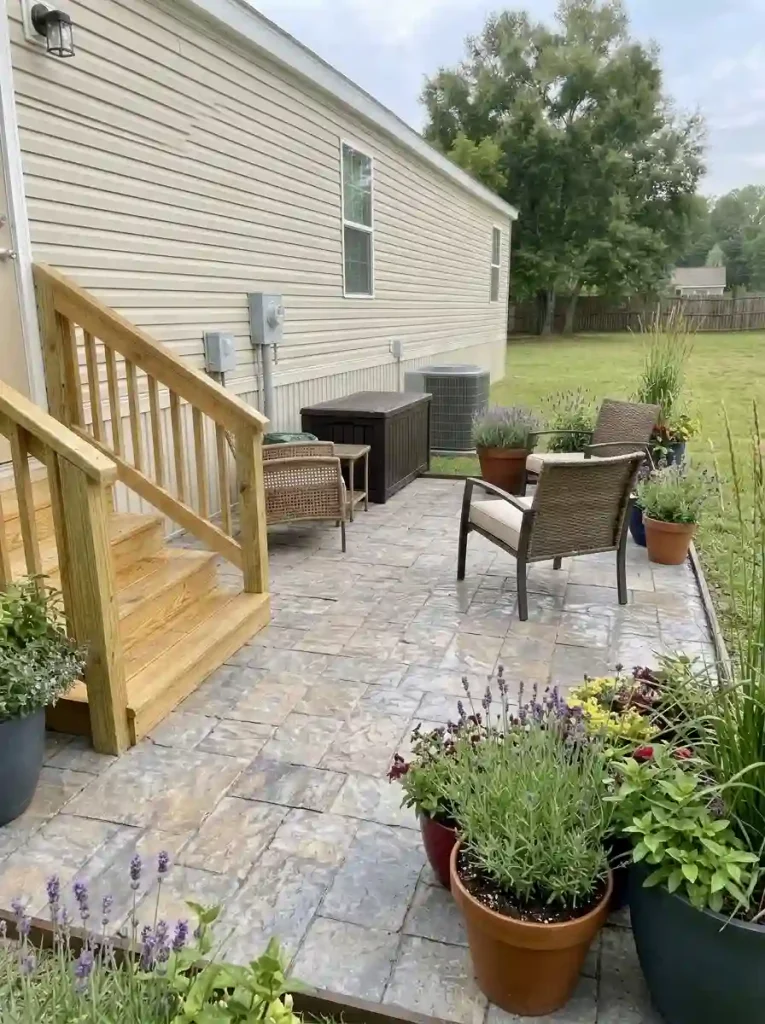
Some patios look wonderful in photographs and become frustrating after the first storm. If bringing in every cushion feels like a major chore, the setup will probably be used less often.
Imagine coming outside after a rainy night. You want the chairs to be ready and the seat cushions dry, not to spend twenty minutes rescuing decor. Make storage part of the furnishing decision.
A simple routine might look like this:
- Keep durable, appropriately rated outdoor furniture in the open area.
- Store cushions and throws in a suitable dry location when they cannot safely remain outdoors.
- Reserve an accessible place for lanterns, table linens, and lightweight accessories.
- Check that storage containers don’t obstruct skirting access, ventilation, or the path to the door.
A weather-resistant deck box can be useful if it fits the site and its contents remain dry; an indoor closet may work better where humidity is high. For small rented lots, portable storage and a minimal accessory collection offer flexibility without building new cabinetry against the home.
13. Give the Grill Its Own Open-Air Cooking Spot
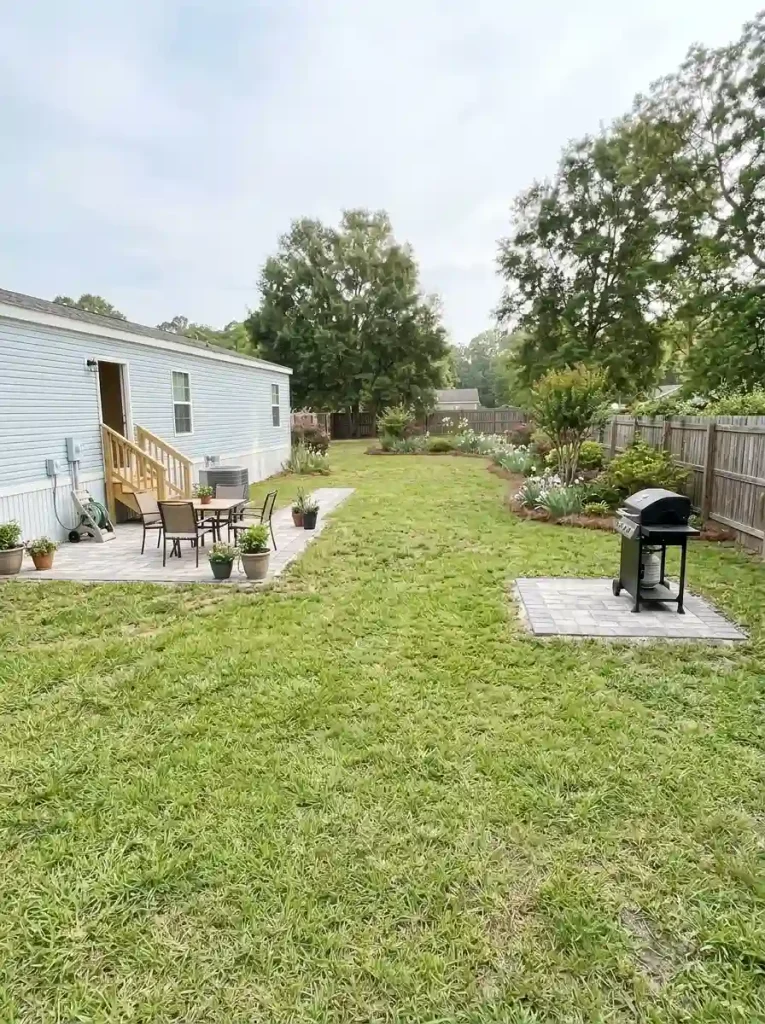
A patio can be a lovely place to serve dinner, but the grill should not automatically stand beside the exterior wall or beneath the attractive covered seating area shown in some inspiration photographs.
The National Fire Protection Association’s grilling guidance advises placing grills well away from the home and railings, and out from under eaves and overhanging branches. The U.S. Fire Administration offers additional outdoor fire-safety advice. Follow the grill manufacturer’s clearances and all local restrictions; mobile-home communities may have their own rules.
For a practical arrangement, keep the dining set on its comfortable patio surface, then identify a separate open-air grilling location on stable ground, away from combustibles and traffic. Don’t treat fabric curtains, pergola roofs, awnings, or exterior siding as harmless backdrops for a hot grill.
The useful distinction: A nearby serving table may improve convenience, but it does not make a too-close cooking position safe. If the site cannot accommodate the required separation, plan an outdoor dining patio without a grill. Good design includes knowing what not to place in the space.
ILLUSTRATIVE SITE PLAN / SAFETY FIRST
Keep Cooking Out of the Lounge
A nearby patio table and a grill are different zones. This conceptual diagram deliberately leaves the separation distance unspecified.
Seating, service, conversation and shade. Keep fabric and combustibles away from heat.
CHECK RULES & CLEARANCES
Stable outdoor ground, away from the home, overhangs, rails, trees and pedestrian traffic.
Do: Check the grill manual and local rules before choosing a position.
Don’t: Grill beneath curtains, patio covers or the home’s eaves.
Not to scale. This is not a certified clearance diagram or permission to place a grill in a specific location. If safe separation is unavailable, omit the grill.
14. Connect the Raised Entry to a Ground-Level Patio
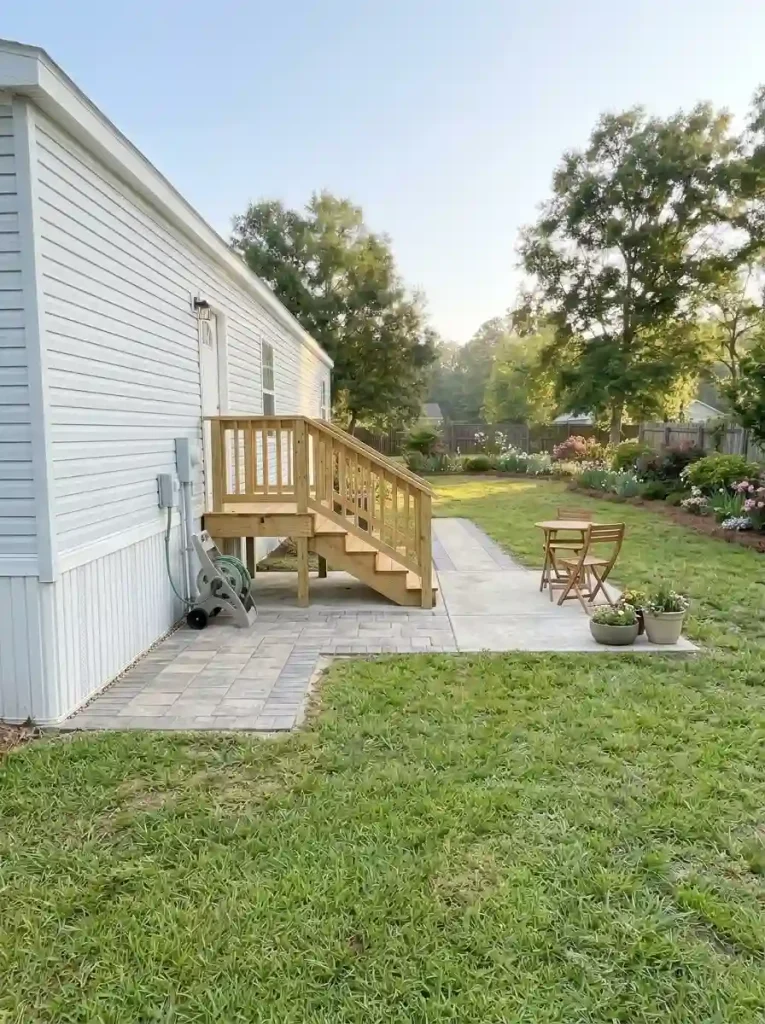
Many manufactured homes have doors well above the yard. In that situation, a patio may be a comfortable destination but not an immediate extension of the doorway. The transition deserves as much attention as the chairs.
Trace the route from the door to the planned table. Where do the existing steps land? Will people cross loose stones, negotiate a muddy patch, or carry plates around a railing? A clear, suitably stable walking surface makes the patio more useful in everyday life.
For a home with safe existing steps, the answer may be a thoughtfully placed ground-level walkway connecting the landing to the patio. Loose or deteriorated stairs, problematic changes in level, or a need for accessible entry may require professional design and work beyond cosmetic landscaping.
Do not use paving to bury skirting, cover ventilation openings, or redirect runoff beneath the home. Changes involving steps, ramps, landings, or the home itself must satisfy applicable rules and manufacturer guidance. The most attractive patio photograph matters little if reaching the table is awkward or unsafe.
15. Make Outdoor Meals Easier With a Compact Serving Station
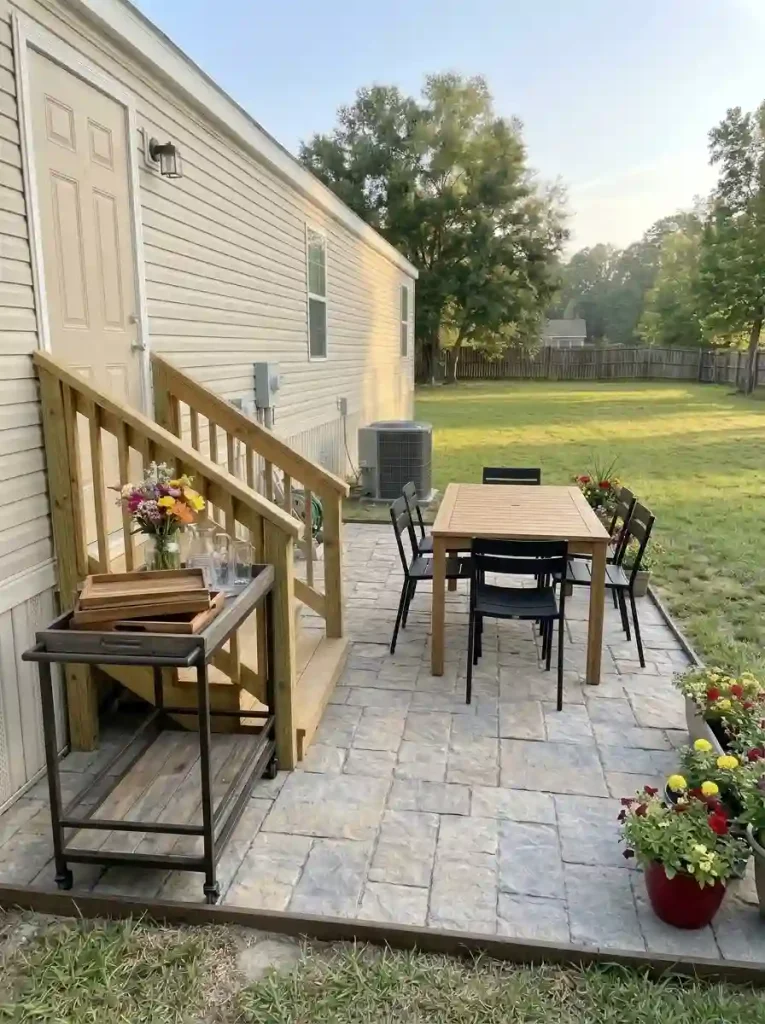
Picture a Sunday lunch outside. People carry drinks and dishes through the door, but the only available place to set them is the dining table already crowded with plates. A small serving station could transform the experience without enlarging the patio.
On a firm, level paved area, a suitably stable rolling cart may be useful for transporting supplies. On gravel or uneven ground, a sturdy fixed-position side table will often work better because small wheels can snag or tip.
One purchase, two possible outcomes:
- A cart suits an outdoor area with a smooth route from storage to the table.
- A compact sideboard-style table suits a patio where the serving point should stay in one place.
Choose exterior-appropriate materials and put the station near the dining group while maintaining a clear door and walking route. Store food safely, follow food-handling guidelines, and bring perishable leftovers inside promptly. The station is a convenience tool, not outdoor food storage.
16. Layer Patio Lighting for the Path, Table and Seating
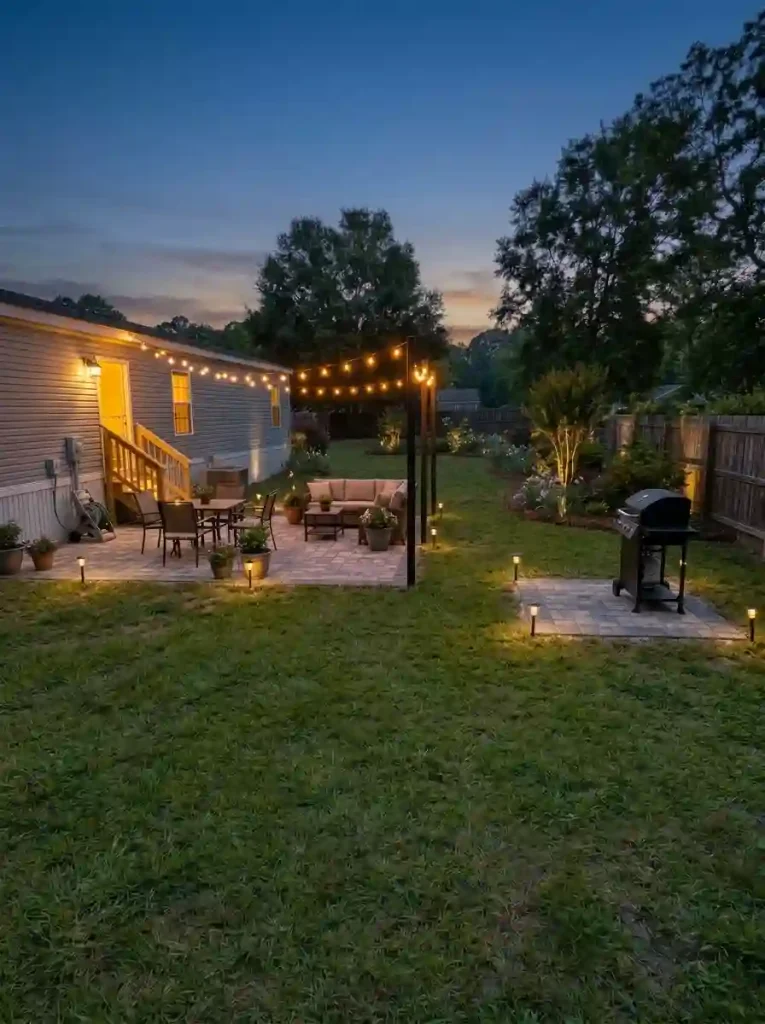
The warm glow in your reference images is appealing because it gives the outdoor area depth. But a manufactured-home patio needs practical visibility first, particularly when steps or a change in level separate the home from the seating area.
Think in three layers:
First — the route. Make entrances, steps, uneven areas, and walking paths clear enough to navigate. Lighting should illuminate hazards without creating glare.
Next — the task. A dining table or serving station benefits from light positioned where people can see what they’re doing.
Finally — the atmosphere. Subtle string lights or suitable portable lighting can soften the edge of the patio after the functional areas are addressed.
Choose equipment specifically rated for its intended outdoor exposure. Keep cords away from standing water and trip routes, and use appropriate GFCI protection. The Electrical Safety Foundation International’s outdoor electrical guidance is a useful safety reference. Permanent outdoor wiring should be handled by a qualified electrician.
DUSK / WAYFINDING · INTERACTIVE FIELD GUIDE
After-Dark Lighting Planner
Pick the task you need to solve first. Each choice produces a different lighting sequence.
Path and steps first
Illuminating the path, change in level and doorway should be the first layer.
Try: Test visibility from the yard looking back to the door and eliminate shadows that hide steps.
Check: Avoid cords crossing walking routes; use appropriate outdoor-rated gear and GFCI protection.
Food and table first
A dining activity needs suitable task light once the walking route is safe.
Try: Position light where food and faces are visible without a bare lamp shining into seated eyes.
Check: Do not attach fixtures or string lights to electrical components without suitable installation.
Atmosphere in layers
Use restrained indirect light around the sitting zone after navigation is addressed.
Try: Try a few appropriate low-glare fixtures and check them from the doorway at night.
Check: Mood lighting should never replace adequate visibility on the route home.
Illustrative planning advice only. Check site conditions, local requirements, and product instructions.
17. Divide a Larger Patio Into Dining and Lounging Zones
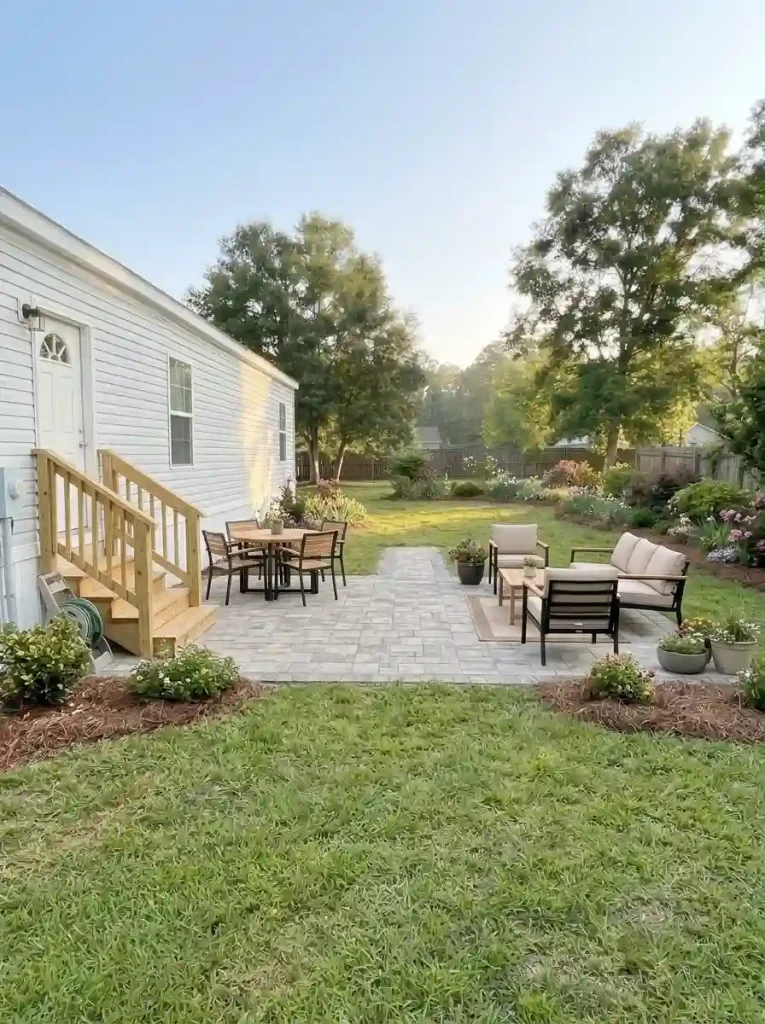
A larger yard beside a double-wide may invite an ambitious patio, yet one giant matching furniture set rarely uses the space as thoughtfully as two related activity areas. A narrow single-wide yard may be better served by one flexible group.
Layout A: Long and slim. Place a small dining table near the convenient door and a pair of chairs farther along the firm patio surface. Use compatible furniture finishes to unify the zones without placing everything in one line against the siding.
Layout B: Broad and open. Put dining near the house and a casual conversation group toward the garden, keeping a clear route between them. A planted edge or change in furniture orientation can define the groups without a permanent divider.
Stand in each proposed zone and check the view, sun, traffic, and distance to the door. Avoid placing an outdoor lounge over utility access simply because that location looks balanced in an overhead diagram.
A household that rarely hosts may gain more use from one spacious seating area. Two zones earn their space only when the household genuinely uses both.
SPACE / ROUTINE · INTERACTIVE FIELD GUIDE
Patio Zoning Studio
Three household patterns lead to different patio zones, pathways and furniture priorities.
One generous conversation zone
For two people, a compact seating group and side table may be more comfortable than splitting the area.
Try: Position chairs for the best yard view; keep a direct route from the house.
Check: Skip a second zone unless it serves a real habit.
Distinct dining and lounge areas
Put table service closer to the relevant door and separate the lounge toward the garden.
Try: Check chair pull-back space and the walking route between both groups.
Check: If people must cross the cooking zone or step off firm ground, revise the plan.
Open center with seating edge
Keep a flexible central area and place adult seating along a secure, usable edge.
Try: Use robust furniture and protect the connection to the door and yard.
Check: The arrangement does not replace supervision, fencing or other child-safety measures.
Illustrative planning advice only. Check site conditions, local requirements, and product instructions.
18. Choose Easy-Care Patio Furnishings for Kids and Pets
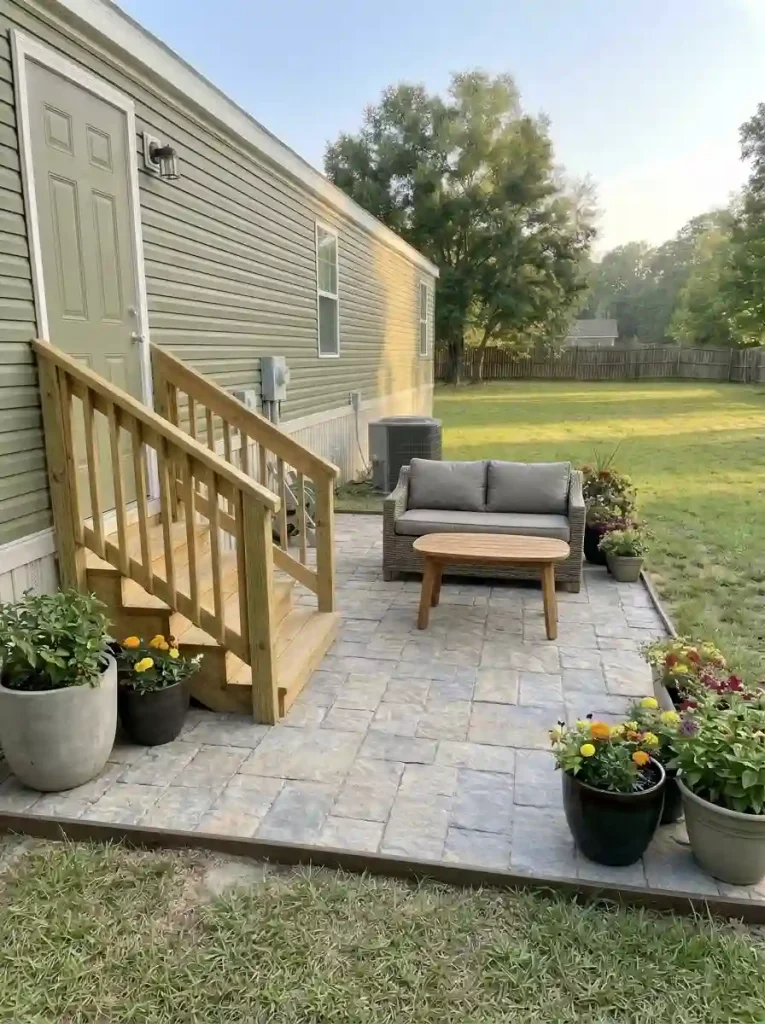
A patio that doubles as a family hangout needs a different shopping list from a quiet two-person coffee corner. Instead of starting with a decorative theme, consider what will happen to the furniture on an average day: spilled drinks, muddy paws, a ball passing through, or frequent trips to the yard.
Three considerations outweigh coordinated accessories: stable seating on the actual surface, materials that can be cleaned or maintained realistically, and a layout with room to move. Exterior-rated furniture still has product-specific upkeep requirements, and light cushions may not be the most practical choice for a household that leaves seating exposed.
A low, robust side table can be more useful than a delicate glass-topped coffee table. Washable textiles may improve the day-to-day experience, while a few well-secured plants keep the area inviting without filling the walking route.
Keep grills, cords, small choking hazards, and breakable lanterns away from children and pets. If the yard boundary is not secure, patio furniture should never be treated as a substitute for supervision or appropriate fencing.
19. Style a Flexible Patio That Works Across the Seasons
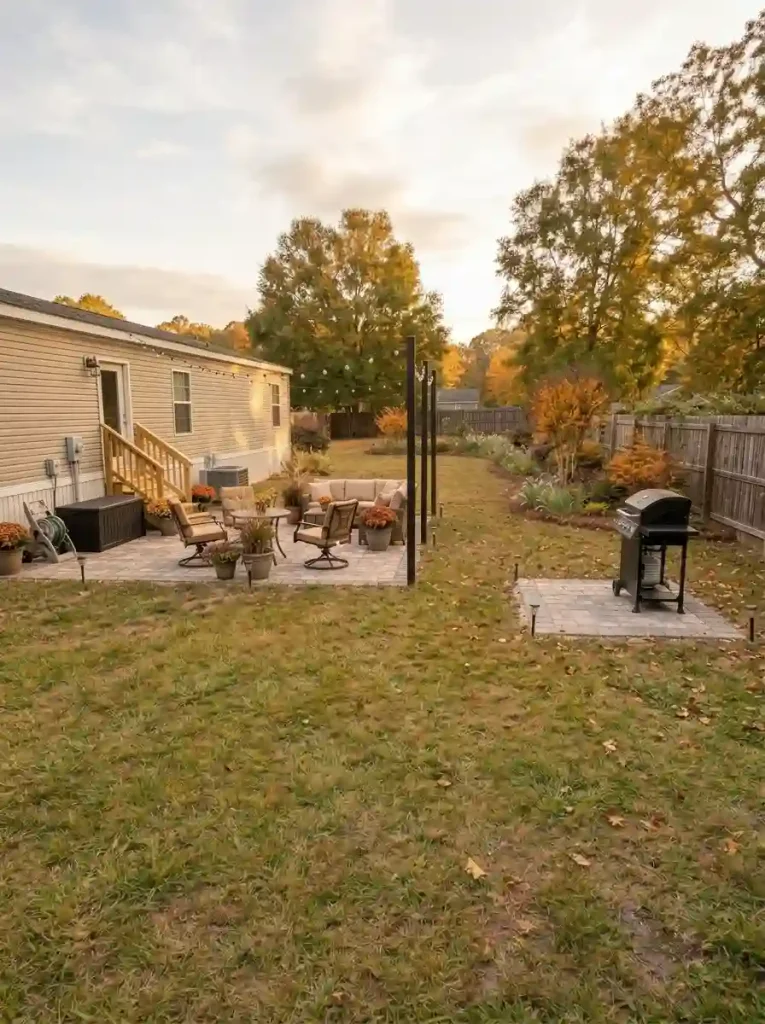
A patio can feel beautiful in late spring and almost abandoned by autumn. The most resilient approach begins with pieces that serve the everyday routine, then changes the smaller details as the weather shifts.
Spring: Clean the surface, inspect furniture and drainage, and refresh plants adapted to the local climate.
Summer: Reassess shade, sun exposure, and where people actually sit during the hottest part of the day.
Fall: Introduce weather-suitable textures and a few seasonal accents without crowding circulation.
Winter or storm season: Secure or store loose accessories, follow product care guidance, and keep access routes clear. Weather and climate differ widely, so no single patio setup works year-round everywhere.
A small mobile-home patio with two good chairs, a stable table, appropriate shade, and a clean path can look finished without elaborate decoration. For a temporary holiday makeover, explore our Halloween patio ideas for mobile homes while keeping this everyday patio as the evergreen foundation.
A Better Patio Begins With One Everyday Habit
Choose the activity you’ll genuinely enjoy outside, then locate the safest practical place to do it. A comfortable surface and an easy route from the door usually deserve attention before pillows, lighting, or ornamental pieces. Once those essentials work, the right furniture scale, shade, and privacy treatment become much easier to judge. Your manufactured home doesn’t need a large attached outdoor structure to have a welcoming place to sit. Take a photograph from the doorway to check how the furniture, walking route, and view relate before committing to new purchases. The best patio makes sense for your site, your budget, and the way you live.