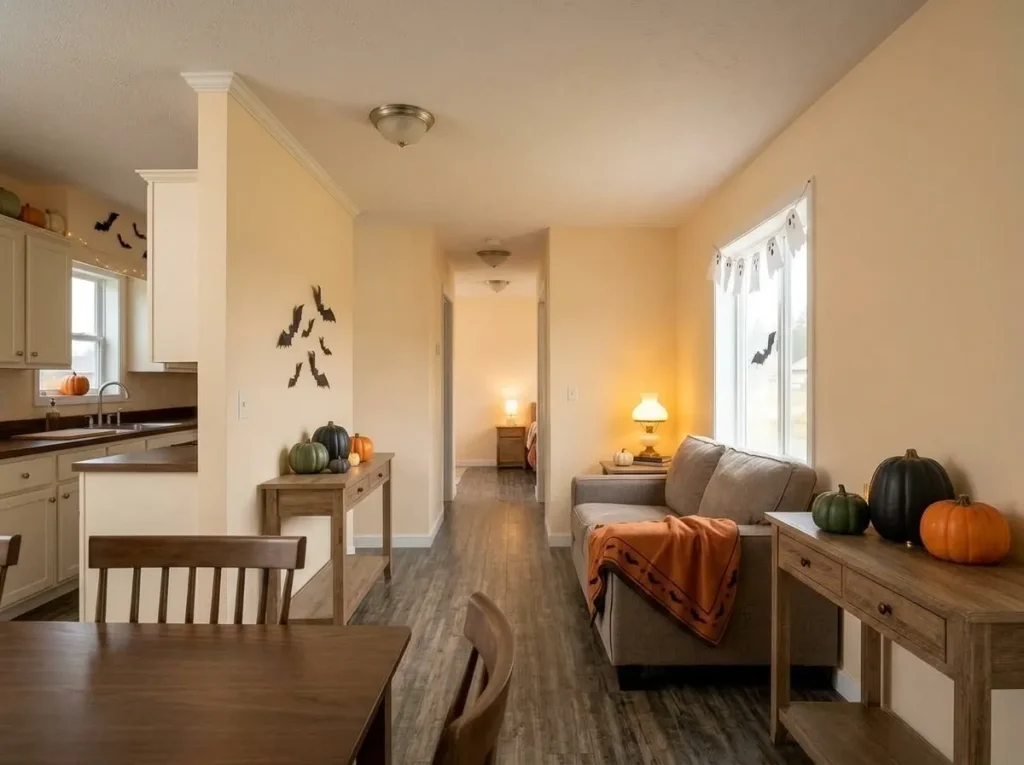
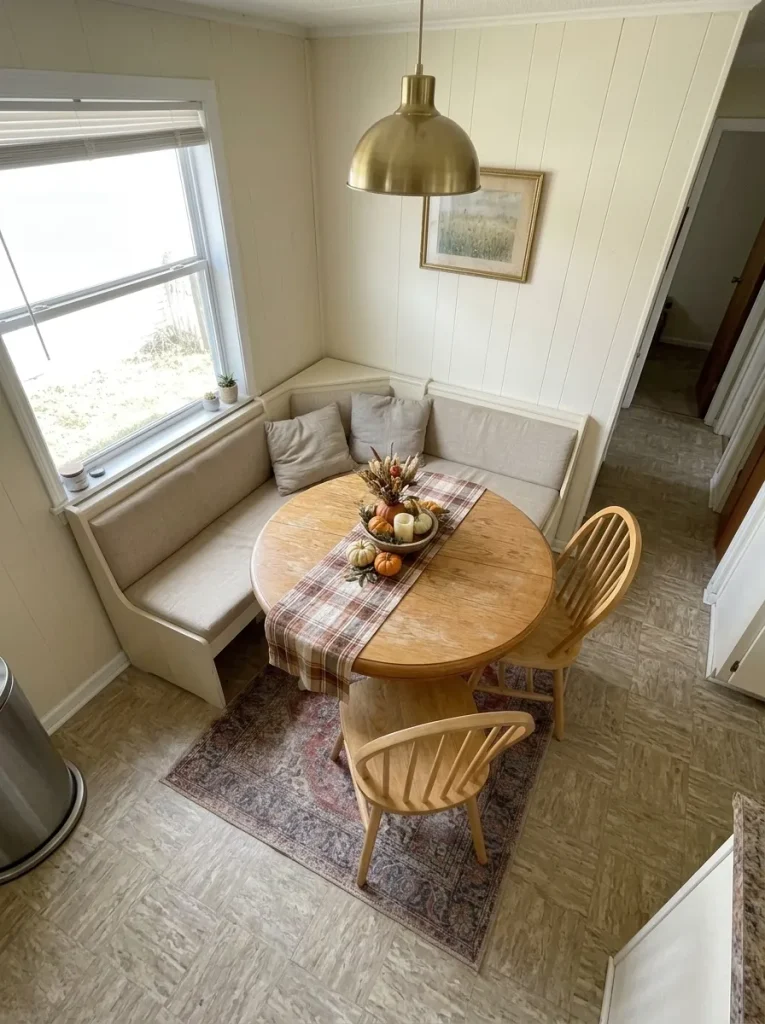
A small dining nook can feel unfinished all year, then suddenly feel overcrowded once Thanksgiving arrives. A table that normally holds two coffee mugs has to accommodate dinner plates, serving bowls, guests, and a centerpiece. In a mobile home, the dining corner may also sit directly beside the kitchen walkway, a window, or a frequently used storage bench.
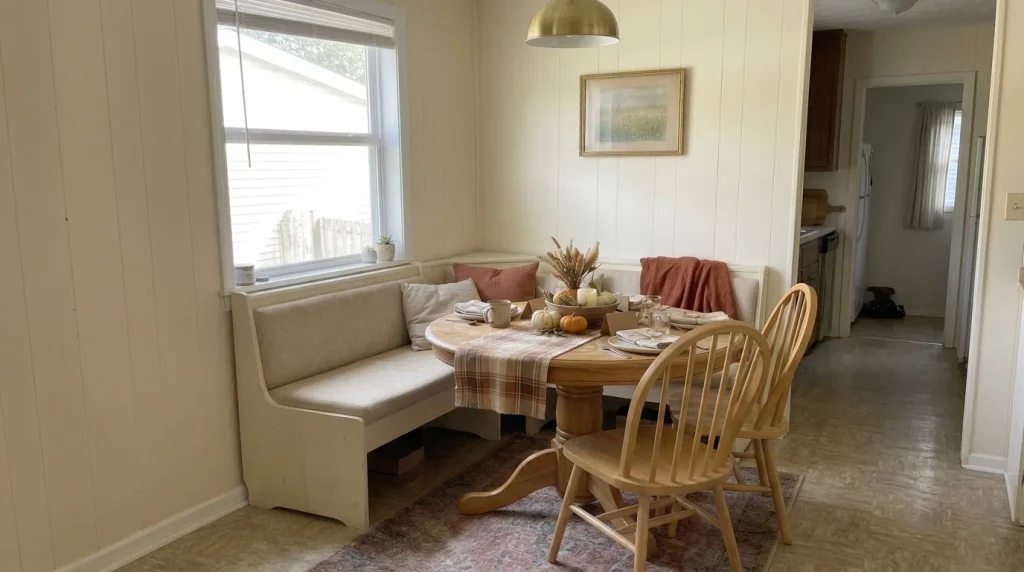
This budget Thanksgiving mobile home dining nook makeover starts with the room you already have. Keep the table, chairs, lighting fixtures, and any built-in seating. With a $50 maximum budget, use a few textiles, a compact harvest display, modest lighting, and thoughtful finishing details to change the mood without sacrificing a place to eat.
Below is a specific sample shopping plan, three ways to adapt it to different nook layouts, and a real-life dinner test. Prices are planning allowances, not current retailer quotations, so your purchases may vary. Most importantly, the makeover is a proposed styling project, not a claim that the accompanying inspiration photographs document a completed $50 renovation.
1. Take a Before Photo and Find the Nook’s Biggest Problem
Take a wide photograph from the entrance to the dining area, then another from a seated guest’s position. These reveal different issues: the doorway image shows clutter and competing focal points, while the seated view exposes an awkward centerpiece, a busy window, or a cushion that pushes someone too far forward.
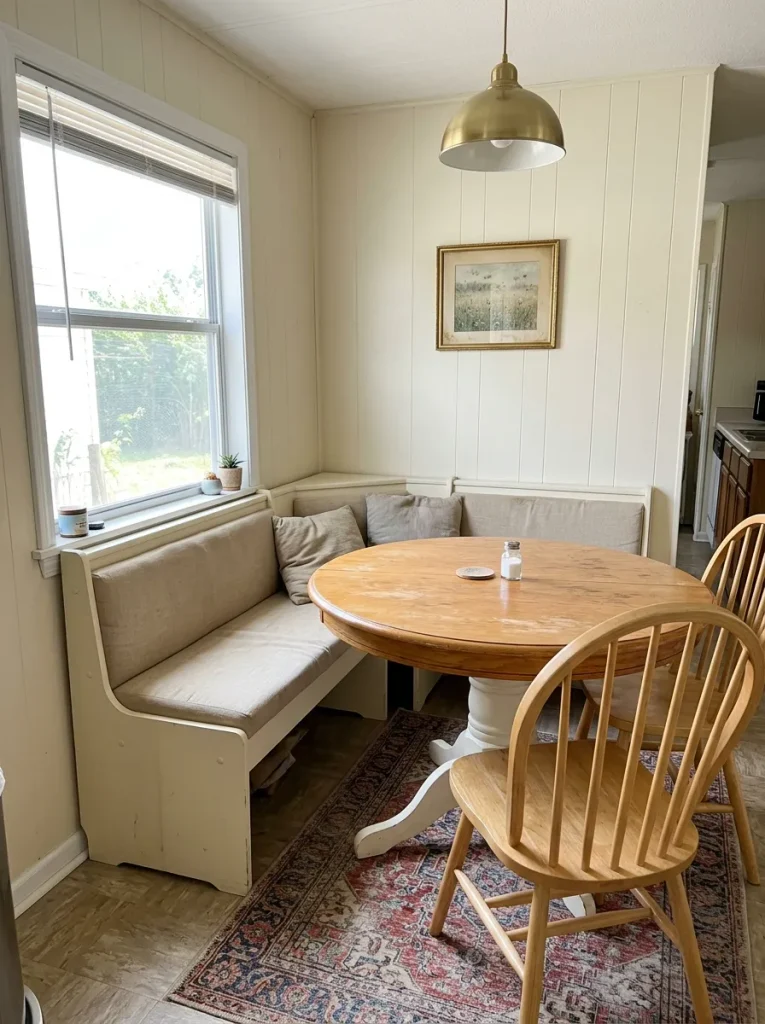
Clear unrelated items from the tabletop. Pull every chair out as if guests were arriving, and open nearby cabinet or refrigerator doors. Anything that becomes difficult to reach during that rehearsal deserves attention before decorations arrive. In many small mobile homes, a narrow passage between the kitchen and table matters more than another seasonal object.
Choose one primary problem to solve:
- Bare and disconnected: Introduce a table textile to visually anchor the nook.
- Dark or flat in the evening: Prioritize a low-glare lighting accent.
- Visually scattered: Collect the seasonal objects in one small display.
- Physically cramped: Keep decor off the floor and use fewer table pieces.
For a broader look at furniture and seasonal arrangements, the existing guide to fall dining nook ideas for small mobile homes explores alternatives beyond this one-budget project.
2. Plan the Entire $50 Thanksgiving Makeover Before Shopping
A price ceiling becomes useful only when every purchase has an assigned job. The example below budgets $41 for decor and supplies, leaving $9 uncommitted for applicable sales tax, price variation, or an essential substitution. If nothing changes at checkout, spend $41 and keep the difference. The reserve is money that can remain unspent.
| Makeover purchase | Allowance | What it changes |
|---|---|---|
| Thrifted runner or fabric remnant | $10 | The largest visible surface |
| Used pillow covers or small textile accents | $8 | Seating warmth without new furniture |
| Small pumpkins and greenery | $7 | Seasonal focal point |
| Paper print or removable wall-styling materials | $5 | Eye-level Thanksgiving detail |
| Battery-powered lighting accent | $7 | Evening atmosphere |
| Ribbon, paper, or napkin finishing details | $4 | Place settings using dishes you own |
| Unspent reserve | $9 | Tax and price flexibility |
| Maximum available | $50 | $41 planned purchases + $9 reserve |
This example assumes existing dinnerware, a suitable vase or jar, scissors, furniture, and functioning room lighting. It excludes new furniture, major curtain purchases, delivery fees, and installation work.
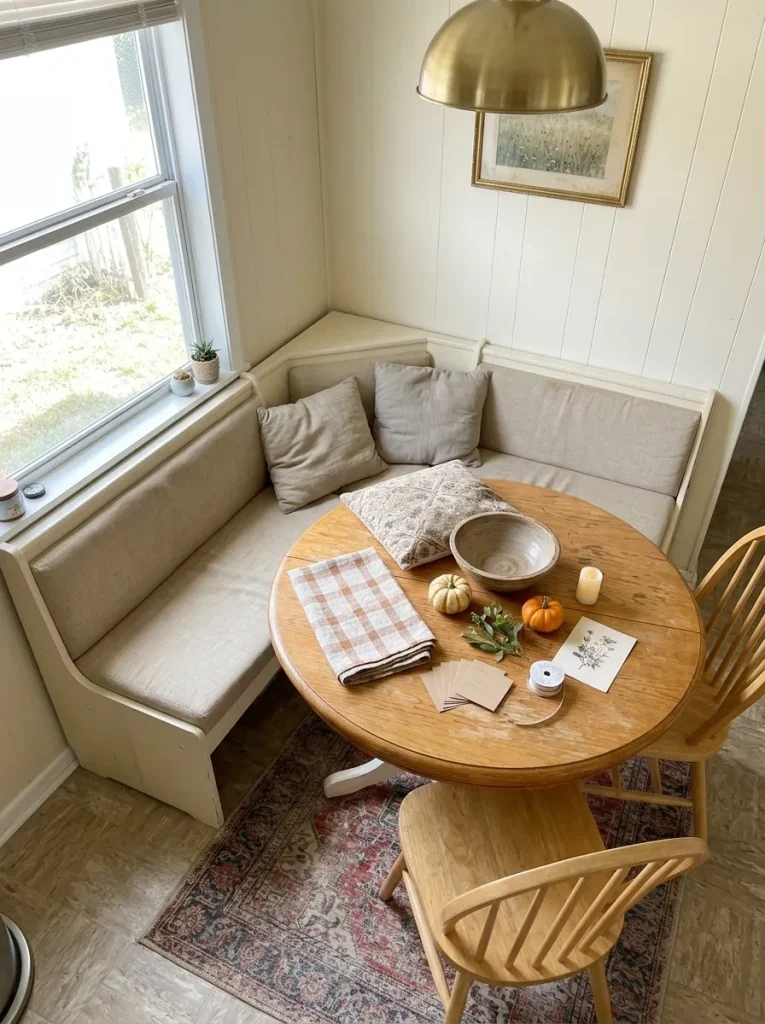
Confirm local prices and tax before committing. Should the basket exceed your ceiling, remove the wall-print or lighting-accent category first.
The Thanksgiving Spending Studio
Plan by what you already own.
Choose the closest starting point; every sample preserves a $50 maximum.
Illustrative U.S. dollar allocations. Check local prices, shipping and applicable tax; never exceed the $50 checkout ceiling.
Three sensible substitutions keep the project flexible: reuse existing cushions and move their $8 allowance to a worn table textile; skip a new battery light when the current lamp creates a pleasant glow; or gather permitted greenery from your own yard and redirect the saved centerpiece money to an item you will use after the holiday.
For broader spending priorities throughout the home, consult mobile home decorating ideas on a budget.
3. Adapt the Makeover to Your Dining Nook’s Actual Layout
The same shopping basket looks different in three common dining arrangements. A round table inside an L-shaped banquette can carry one compact centerpiece; a narrow rectangular table beside the kitchen needs a long, slim runner; and a two-chair corner may benefit from placing the seasonal focal point on the wall.
Small Nook Configuration Atlas
One budget. Three very different dining corners.
These conceptual overhead sketches locate the table, seating, and small decorative focal point. They are not measured floor plans.
Ochre: table · Ivory: seats · Burgundy: centerpiece
- Center the fabric beneath a low bowl.
- Reserve a clear arc for each place setting.
- Lift the centerpiece off for serving.
Best when chair access works from more than one side.
Ochre: table · Ivory: bench · Burgundy: centerpiece
- Put autumn color on the back cushion.
- Keep cushions shallow enough for dining.
- Shift flowers away from the serving zone.
Best when the existing bench supplies useful seating.
Ochre: table · Ivory: chairs · Burgundy: centerpiece
- Choose a slim runner along the long axis.
- Keep chair legs out of the walking route.
- Move flowers to the wall if space is tight.
Best when the dining area shares a route to the kitchen.
For a round table: Center a low, removable bowl only after setting all the plates. Allow guests to reach their glasses without brushing branches.
For a banquette: Add textile color along the backrest but keep bulky pillows out of the seat depth.
For a wall-side or galley table: Orient the runner along the table’s length and leave the traffic-side edge completely clear.
Do not use a styled photograph as evidence that a layout fits your room. Move an actual chair, sit down, and walk to the kitchen while someone remains seated.
If your current arrangement passes that test, preserve it; the $50 belongs to decor, not furniture rearrangement for its own sake.
4. Give the Table a Harvest Look With a $10 Textile Upgrade
A runner changes more of the dining nook’s visible color than most small accessories. Before buying, measure the usable length and width of the tabletop. Lay a folded bedsheet, dish towel, or fabric scrap along the intended path to preview how the textile will sit beneath actual plates.
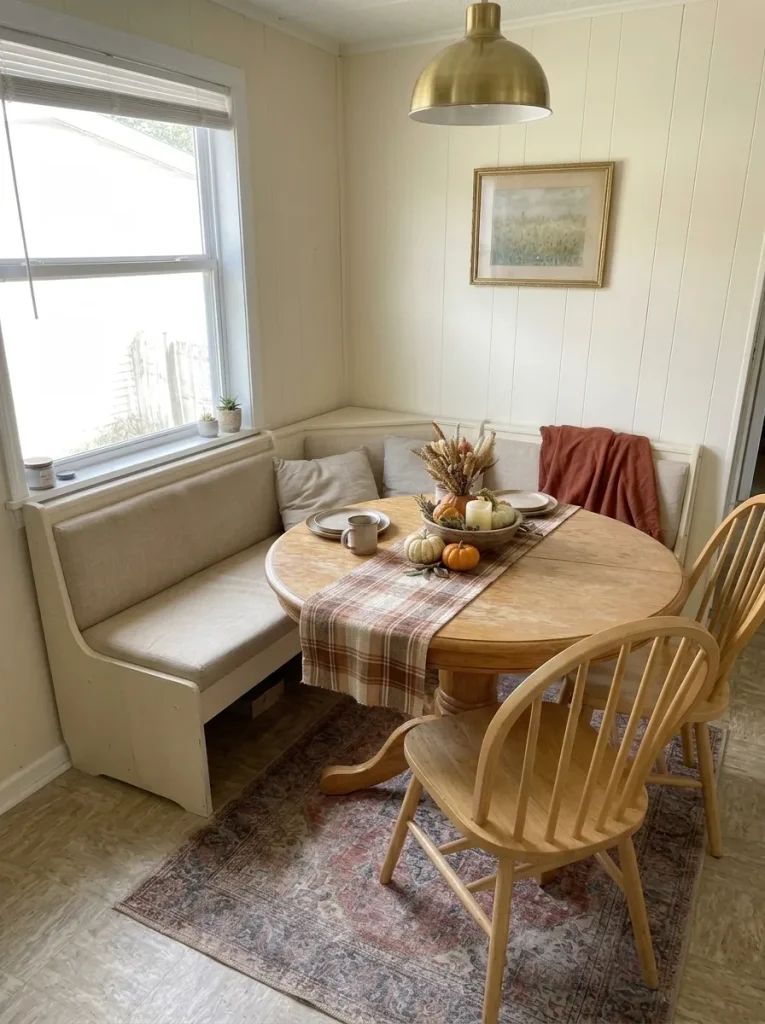
A warm oatmeal, faded rust, muted check, or subdued olive works with many of the oak tables and cream walls found in cottage-inspired rooms.
A thrift-store tablecloth can be cut or folded into a narrower runner; unfinished edges can be folded underneath where they will not snag. Check secondhand fabric for stains, odors, loose dye, and laundering instructions before purchase.
There is no need for a dramatic drop over the table ends. On a small round pedestal table, a shorter central fabric panel may give dishes more stable contact with the tabletop. In a narrow nook, avoid long fringes near knees or chair legs.
The shopping decision: Spend the full $10 only when the existing table surface needs a stronger visual anchor. For a beautifully grained table, try a $0 runner made from a clean fabric remnant and preserve that allowance.
5. Add Autumn Texture to the Seating Without Replacing Cushions
Consider the seating you already own. A built-in bench may have two full-size back pillows but only enough depth for comfortable upright dining. Adding another oversized cushion can turn a beautiful banquette into an awkward seat.
A better use of the $8 textile allowance is one washable cover or a small pair of coordinating fabric accents purchased secondhand. Rust, tobacco brown, soft sage, and warm cream can bridge existing wood furniture and Thanksgiving decor.
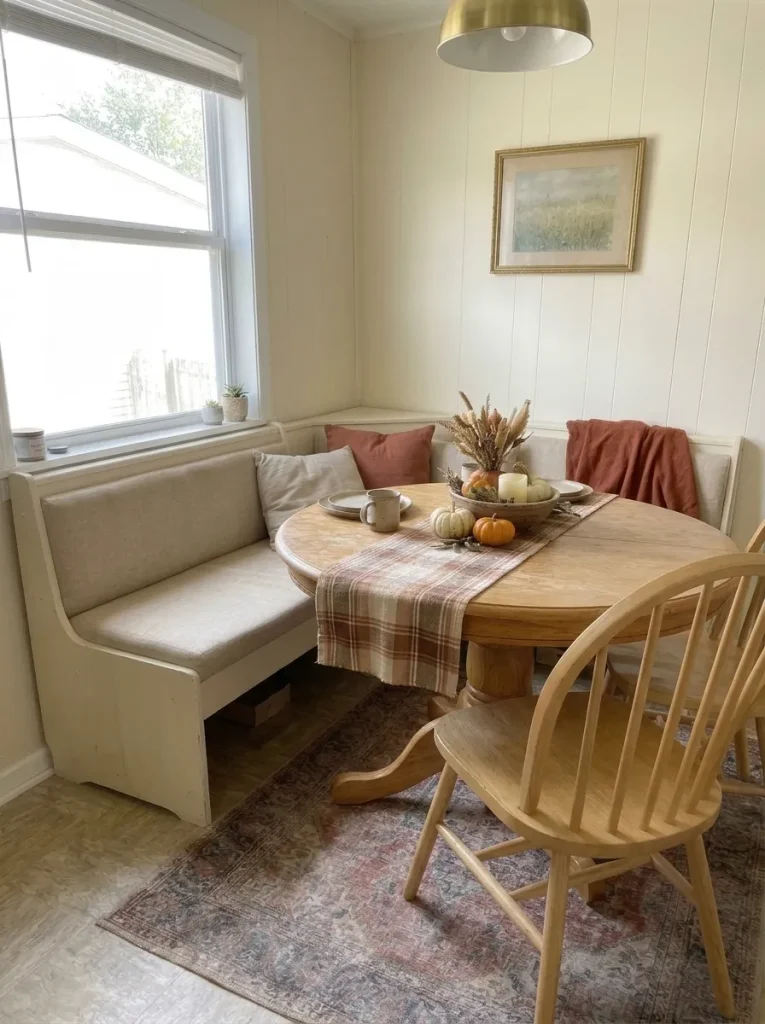
For existing neutral cushions, knot a narrow checked cloth around one removable pillow or simply rotate a warmer-toned cushion from another room.
Try this seated test: Place the pillow, sit back naturally, and check whether your feet remain comfortably supported and whether you can pull your chair or bench close enough to eat.
A scratchy or bulky cover does not earn its place, regardless of how attractive it looks from the doorway.
A bench storage compartment should still open. Keep folded seasonal textiles in a basket you already own, and avoid arranging decor on a lid that must be lifted several times each day.
6. Build a Removable $7 Thanksgiving Centerpiece
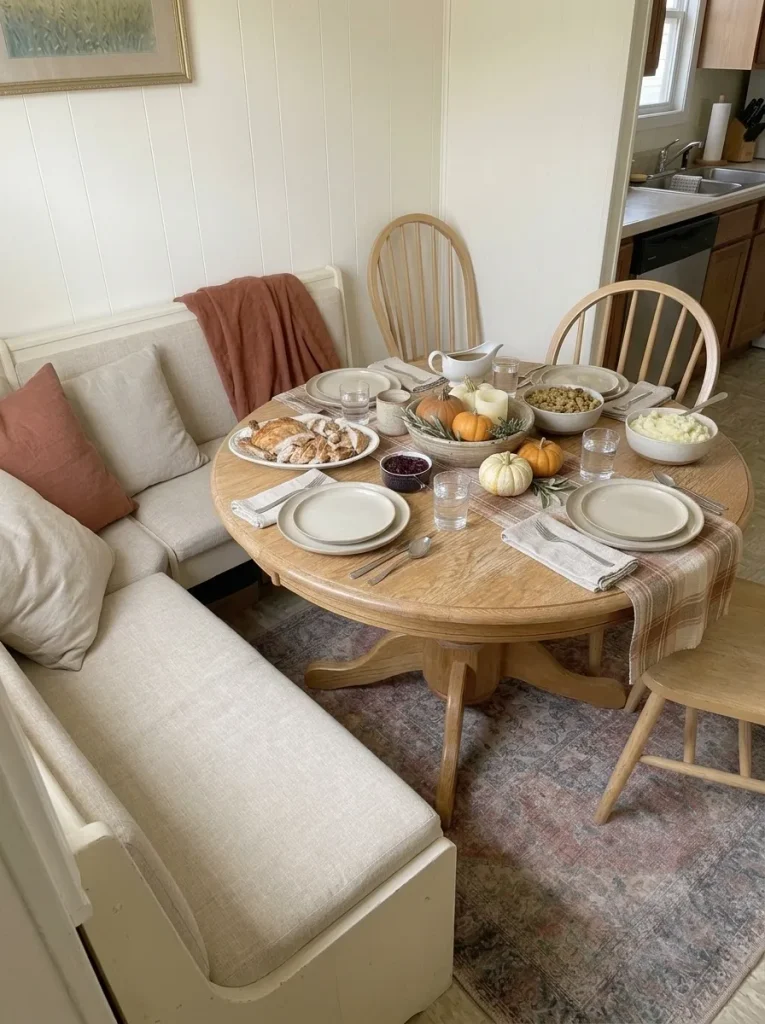
The Thanksgiving table needs an arrangement that can disappear in five seconds when the mashed potatoes arrive.
Use an existing jam jar, low ceramic bowl, or shallow tray; add a small quantity of greenery and one or two miniature pumpkins within the $7 allowance. Pick colors already present in the textile so the arrangement looks deliberate.
Set out all expected plates, water glasses, and shared dishes before deciding on the centerpiece’s footprint. Then slide the arrangement to the space that remains.
A low bowl works especially well near an L-shaped banquette, where taller branches could obscure conversation across the table.
Centerpiece Footprint Study
The dinnerware gets first claim on the table.
Decor absorbs the serving zone. Guests move ornaments before food arrives.
One small harvest vessel lifts off as a unit when the main dishes are served.
Use no centerpiece when the complete meal already occupies every practical surface.
Quick test: set every guest’s plate, glass and expected serving dish in place. Then decide whether the autumn arrangement stays, moves, or disappears.
Where no stable tabletop space remains, put the decorative vessel on an existing nearby shelf or kitchen counter that does not interrupt food preparation.
Artificial foliage should stay clear of flames, hot dishes, and heating equipment; for tabletop atmosphere, flameless lights are easier to manage around branches and fabric.
There are more detailed low-footprint designs in Thanksgiving centerpieces that leave room for food on a small table.
This makeover needs just one reusable version, not a collection of competing centerpieces.
7. Refresh One Wall or Shelf With $5 of Seasonal Details
Stand at the kitchen entrance and identify what fills the space above the table. A blank wall often benefits from one modest print in an existing frame. A crowded gallery or shelf may need its smallest objects removed before anything new is introduced.
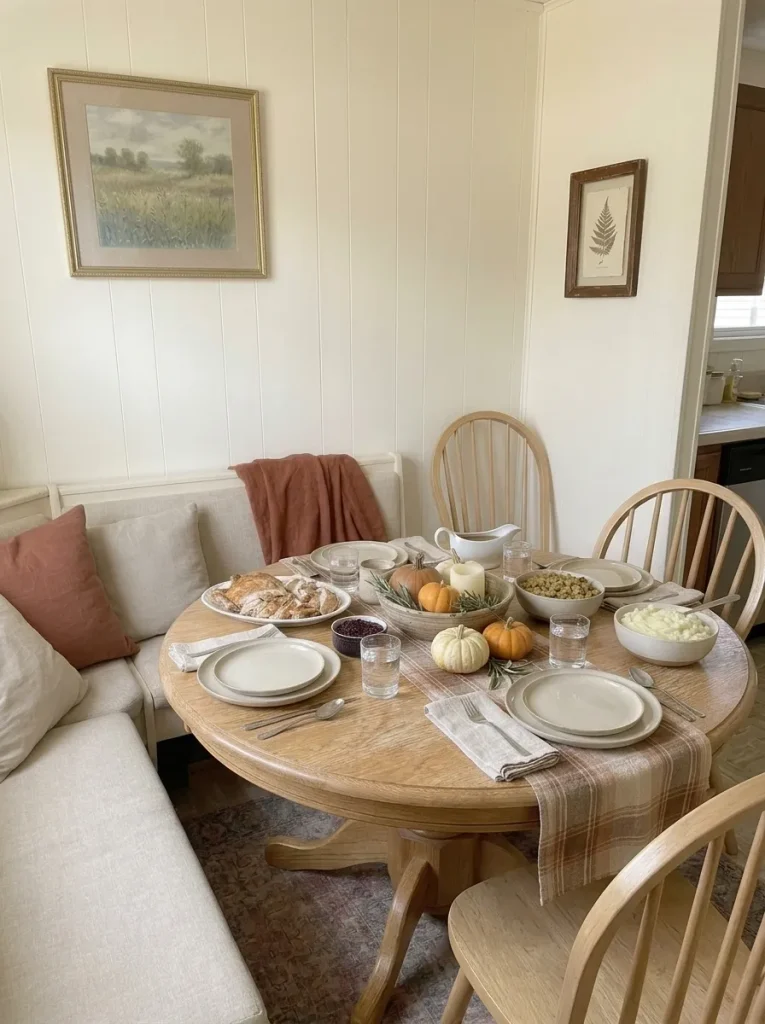
Use the $5 allowance for an inexpensive paper print, cardstock, or removable accent supplies.
A simple botanical illustration, handwritten gratitude card, or autumn-toned print can replace a current insert without buying a new frame. Repeat one color from the table textile; that visual connection matters more than the amount spent.
For renters, avoid assumptions about removable hooks and tapes. Follow the product instructions, check the finish in an inconspicuous area, and use existing attachment points when possible. A delicate wall panel or painted surface may not tolerate adhesive removal.
Skip this purchase entirely when the original artwork already complements the room. The $5 can remain in reserve.
One calm wall composition will usually read better than several tiny decorations spread across a compact dining corner.
8. Make the Window Work With the Thanksgiving Palette
Window styling is the tempting part of the reference photographs: some feature greenery over the frame, others soften the nook with printed cafe curtains or an uncovered sunny pane.
Those are different architectural situations, and a full curtain replacement is outside this makeover’s price ceiling.
Observe the window twice—once during daytime dining and once after dark.
If daylight is the room’s main asset, leave the glass and any operating hardware unobstructed. Tie existing curtains with a spare fabric strip, or place a tiny harvest accent on a sufficiently deep, stable sill where it will not interfere with opening the window.
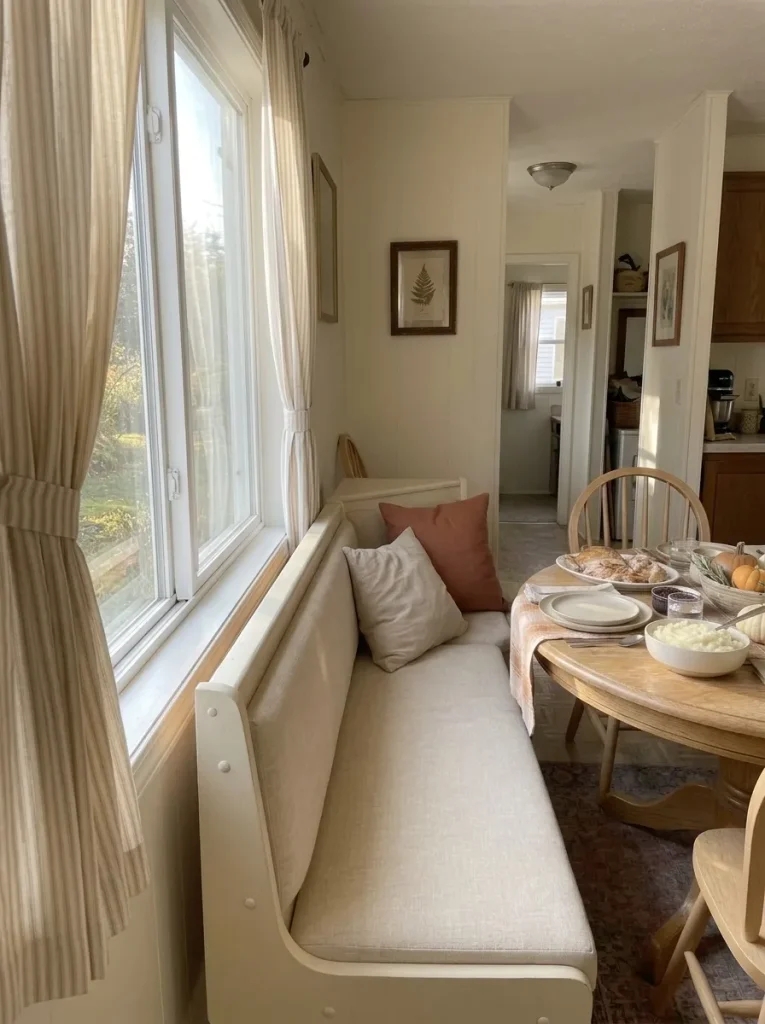
A window beside a cramped table may need no decoration at all. Let the fabric runner supply the season’s color while the glazing keeps the corner bright.
Keep foliage away from heaters and electrical equipment, and never obstruct an exit or a window used for emergency escape.
The best decision here may cost $0: preserve the useful natural light that made the nook appealing in the first place.
9. Create a Cozy Evening Glow With a $7 Lighting Allowance
Thanksgiving doesn’t end when the sun goes down. The room must remain comfortable for conversation, but guests also need enough light to distinguish dinnerware, read a name card, and move safely between the table and kitchen.
Use the existing ceiling or wall light for functional illumination.
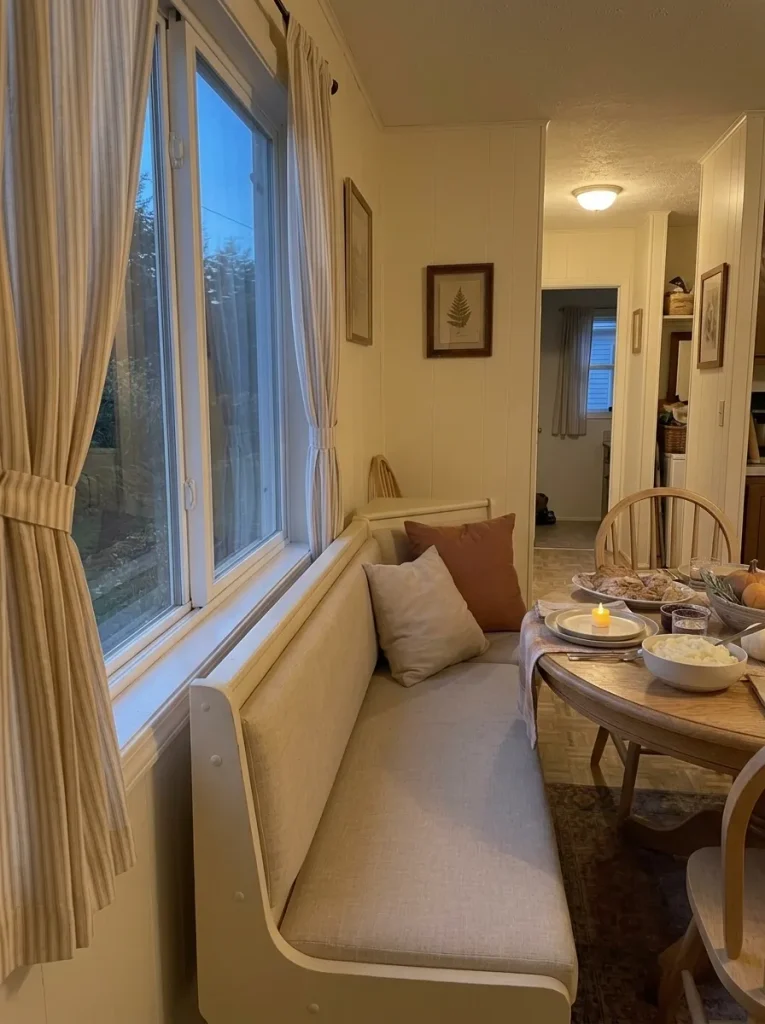
For a room that needs a smaller glow, allow up to $7 for one battery-operated accent and position it where diners will not knock it over. Check that the chosen item includes or fits the required batteries within your planned amount; otherwise reuse a lamp already in the home.

Evening Glow Laboratory
Check the glow against the job of the room.
Select the situation that most resembles your nook. The right treatment changes with the available light.
- Leave the window glass clear.
- Use runner and cushions for autumn warmth.
- Buy no accent light unless evening needs one.
- Keep normal room lighting functional.
- Try a stable battery-powered accent.
- Keep decor clear of food and chairs.
- Switch on existing room lighting.
- Check plates and walkways are visible.
- Do not buy decor that leaves the room dark.
Open-flame candles are a poor substitute beside loose curtains, paper decorations, or greenery.
The U.S. Fire Administration’s candle-safety guidance recommends considering battery-operated flameless candles as an alternative. For this particular setup, a stable flameless light avoids adding heat to the close quarters.
Turn on the planned lights, sit in each chair, and look across the table. A decorative glow that leaves the serving surface shadowy needs to be supplemented by the room’s normal lighting—not another purchase.
10. Finish the Existing Dinnerware With $4 of Small Details
Bring out the plates, cups, and napkins you already use. A visually coordinated table can be built from mismatched dishes when one material connects the place settings: a strip of natural ribbon, folded craft-paper name card, or neatly tied napkin.
Use the $4 allowance for these tiny finishing supplies only after the runner and centerpiece are in place.
For example, cut cardstock into small tent cards, write guests’ names in dark ink, and position each on a napkin so it doesn’t take extra tabletop area. Existing washable fabric napkins may bring that spending close to zero.
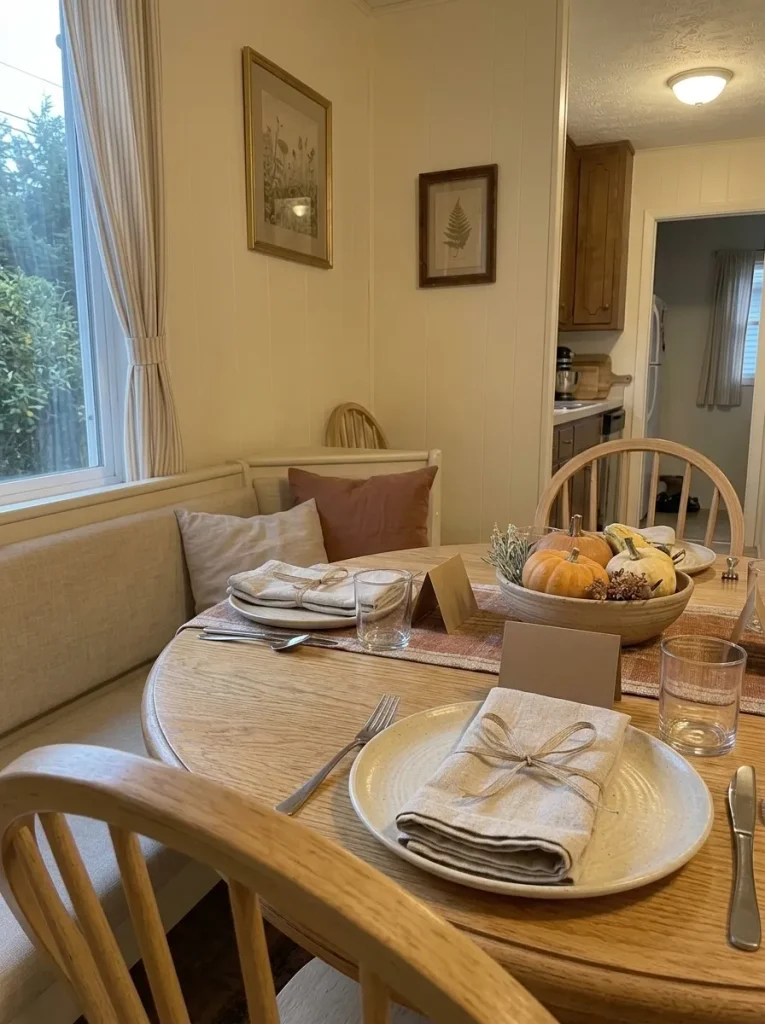
Test every detail against a real dinner setting. A bulky napkin ring that rolls toward a glass or a decorative tag placed beneath a hot serving bowl is a nuisance, however lovely it looks in a photo.
Our guide to Thanksgiving table settings for small mobile home dining nooks shows complete styling combinations.
For craft variations and construction methods, see DIY Thanksgiving place cards and napkin rings for a small dining nook.
Here, one repeatable finishing motif is enough.
11. Test the Makeover With Thanksgiving Dinner in Place
A dining corner isn’t finished until the full meal can happen there.
Conduct a ten-minute hosting rehearsal: move every chair to its occupied position; set one plate and drink per guest; introduce the actual serving bowls or similarly sized substitutes; and walk the route from the kitchen with both hands occupied.
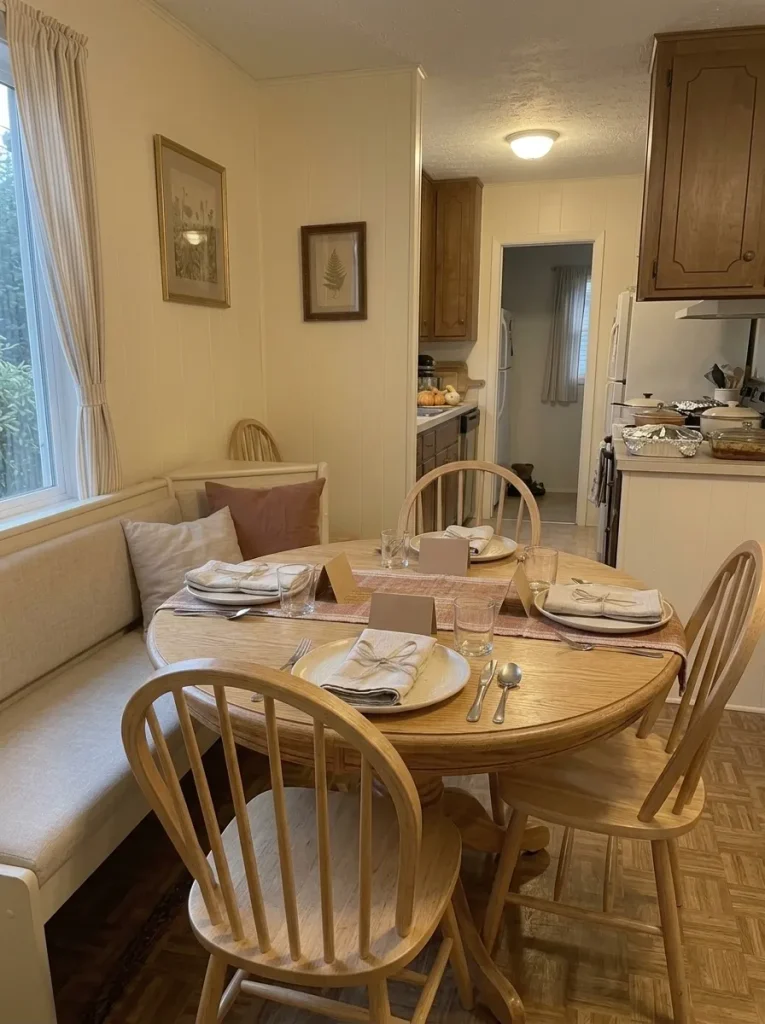
Run the test in this order:
- Seat: Does every diner have a comfortable position, without compressing an exit route?
- Serve: Where will the turkey, sides, and drinks go when the table is full?
- Reach: Can people lift their glasses and pass dishes without moving the display?
- Clear: Where will used dishes land before they return to the kitchen?
- Reset: Can the decorative items be removed or restored in under a minute?
When the rehearsal exposes a bottleneck, edit the decor before considering another product.
A buffet stationed away from the small table may help, provided kitchen access remains clear.
For detailed serving arrangements, use the dedicated Thanksgiving buffet setup for a narrow mobile home kitchen guide.
The strongest sign of success is mundane: guests can eat without protecting the centerpiece, moving pillows, or reaching around decoration.
12. Compare the Before and After—and Save the Decor for Next Year
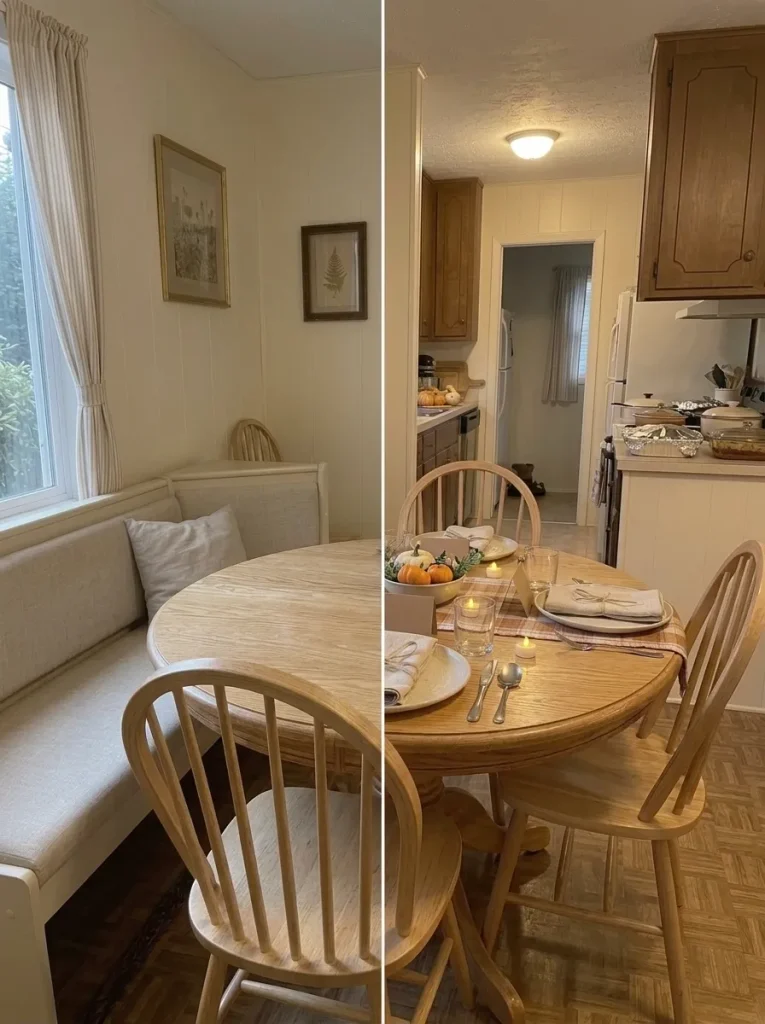
Recreate the doorway photograph from section one at the same height and angle. Keep the table, chairs, window, and architectural features unchanged between the two views.
The difference should come from the runner, cushions, compact harvest accent, simpler wall composition, and warmer evening layer—not imagined construction work.
The $50 Before/After Reveal
Same room. No renovation. A clearer story.
Switch between the untouched room and a proposed after view. These are explanatory illustrations, not documented makeover photographs.
Before: functional but unfinished
- Wood table and existing seats remain.
- The decor lacks a unified harvest palette.
- No additional furniture is needed.
After: coordinated and dinner-ready
- The runner anchors the unchanged table.
- Textiles and a removable display add color.
- Gentle light supports the evening mood.
Stylized visualization for shopping and composition decisions. Replace with matched photographs only if an actual makeover has been completed and photographed.
Make a final receipt check. Under the example plan, the purchased supplies total $41 before any applicable tax, with up to $9 available for that tax or price variation.
The result is still a $50-maximum project, even when the reserve is left unused. For money saved by reusing a cushion or skipping wall art, report the real total without suggesting the full $50 was spent.
Pack dried reusable decor, undamaged ribbon, and the cleaned textile together in a labeled container.
Keep perishable greenery separate and discard it when appropriate. Next November, you’ll already own most of the decorative pieces and can change the look with only a small seasonal addition.
A Small Nook That Feels Ready for Thanksgiving
For a small mobile-home dining space, the worthwhile makeover is one that looks inviting from the doorway and still functions when everyone sits down.
Begin with the existing furniture, let one textile establish the palette, then add the smallest seasonal display that survives the dinner test. A compact wall detail and a gentle evening glow can complete the mood if your budget allows.
Keep the reserve unless you genuinely need it. Take matched before-and-after photos, write down the actual receipts, and save the reusable pieces after dinner.
That gives you a Thanksgiving nook you can enjoy now and improve next year without starting the shopping list from scratch.
Planning your own small-space Thanksgiving? Save this makeover on Pinterest so the $50 shopping plan and dining-nook layout checks are easy to find when you’re ready to decorate.