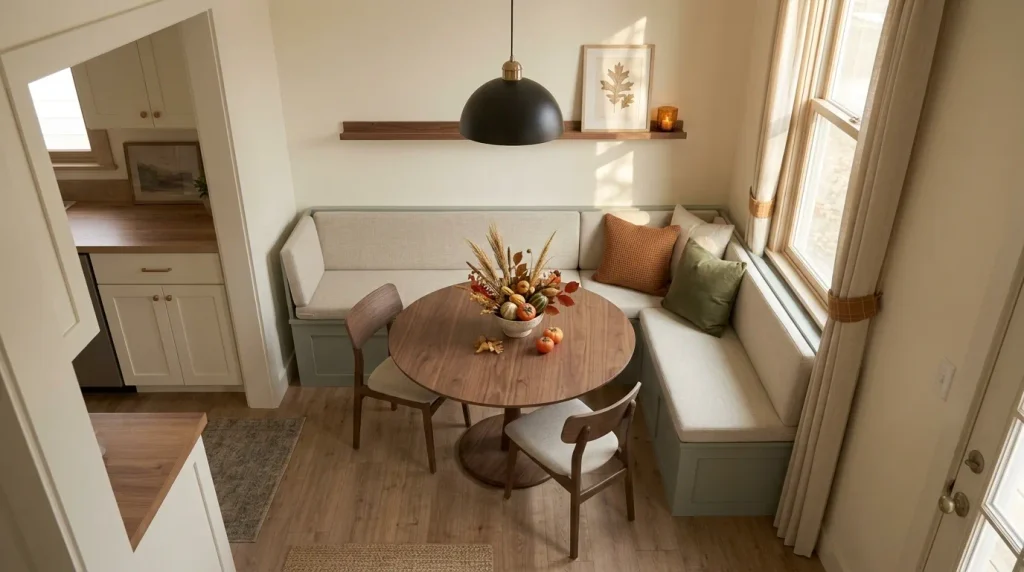
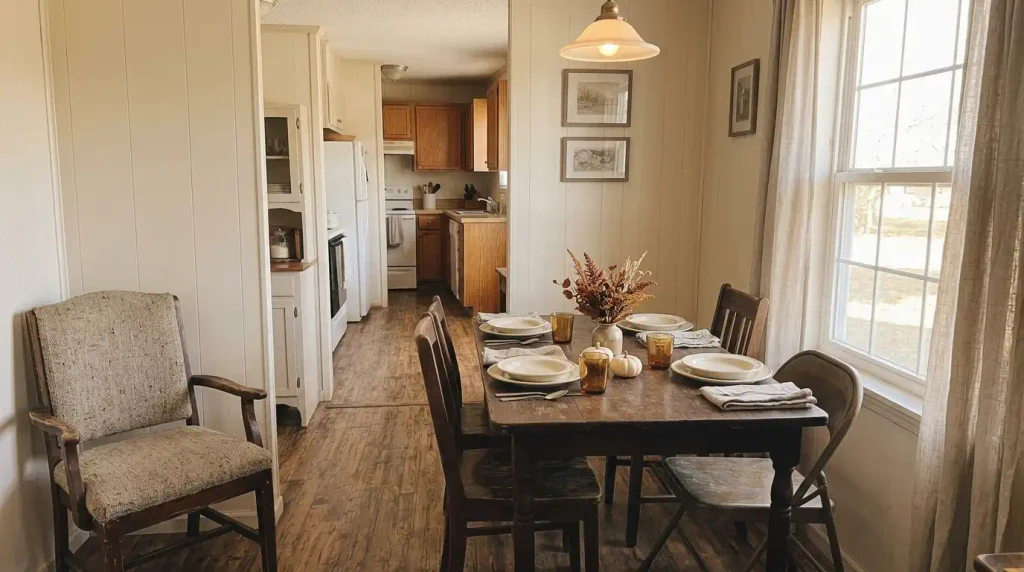
A Thanksgiving table can look beautifully finished at noon and become frustrating the moment dinner arrives. In a small mobile home, the dining nook may hold four chairs, share its edge with the kitchen walkway, or double as the spot for homework and morning coffee. Add chargers, water glasses, serving bowls, a centerpiece, and a guest’s elbow, and an otherwise lovely setting can stop working.
These Thanksgiving table settings for a small mobile home take a more useful approach: each idea offers a distinct look and a practical way to serve the meal. You’ll find ivory-and-amber elegance, gingham farmhouse charm, dramatic charcoal plates, simple paper place settings, and a few formats designed for two people or extra guests. The decorating is seasonal, but the decisions are specific to compact dining.
Before choosing a look, set out the actual dinner plates and glasses you intend to use. Sit at every seat, place a serving dish where it would land, and see which surfaces are still available. A polished setting begins with what the Thanksgiving meal needs to do.
Thanksgiving Table Fit Studio
Host’s tabletop / fit studio
Choose the setting that survives dinner.
Select a guest count. These are arrangement concepts, not universal table-size guarantees: test them with your actual plates, seats, and the route to the kitchen.
Two full places + one shared dish
A small round table looks finished with patterned napkins and a vase-free centerpiece. Place a shared dish only after the two glasses fit comfortably.
If the shared dish still crowds the table, serve from the kitchen counter.
Four settings + removable décor
Give every seat a plate, glass, and napkin. Keep the center empty for food until you know the actual serving arrangement.
Make one small centerpiece removable in seconds before the food is placed.
Six seats require a service plan
Only use six seats at the main table if chairs, elbows, tableware, and walking space genuinely fit. A separate serving station is usually easier than a decorative centerpiece.
If seats or routes overlap, use a second suitable table or reduce the seated guest count.
1. Ivory Linen and Amber Glass for a Narrow Thanksgiving Table
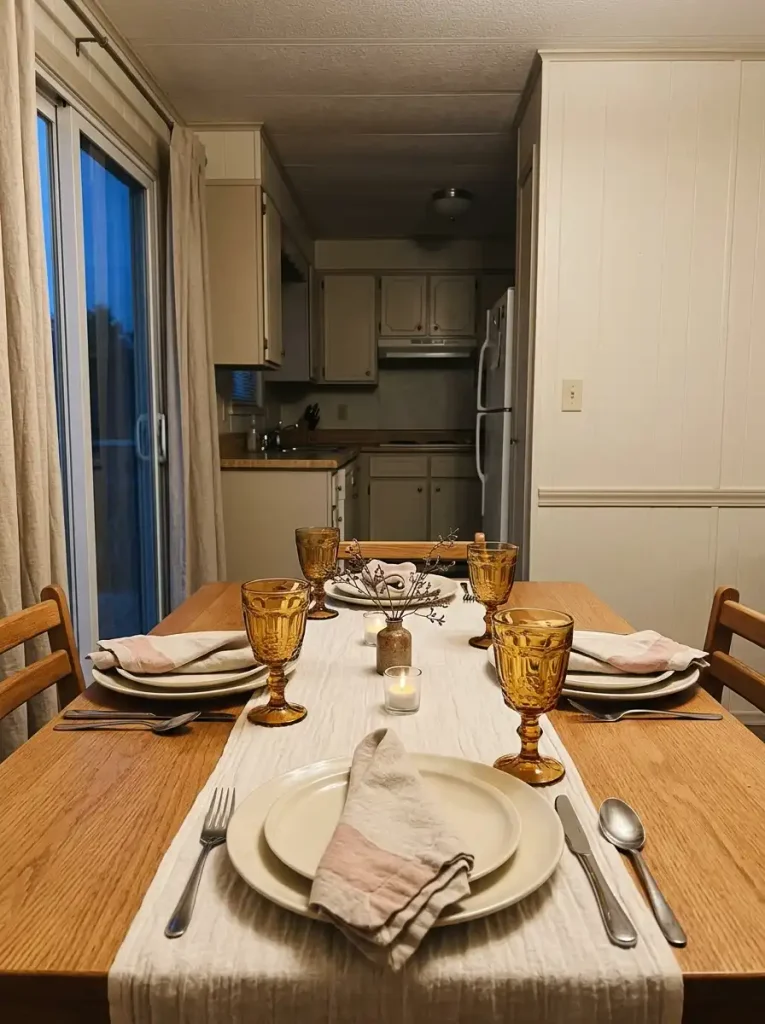
An ivory-and-amber tablescape feels rich through rumpled pale fabric, warm glass, cream pumpkins, and coppery dried stems. Its appeal comes from a tight palette and materials that catch warm light. On a narrow mobile-home table, though, a full-width cascade of fabric and foliage would compete with plates and serving dishes.
Start with ivory dinner plates, soft blush or oatmeal napkins, and amber drinking glasses. Give each guest a modest placemat or slim woven base; skip oversized chargers if they force neighboring settings together. Run a thin fold of gauzy linen down the middle, leaving the working edges clear. A single small vase or two low pumpkins can repeat the neutral tones without claiming the entire table.
The seated-view test: Look across the table from the lowest chair. If the stems interrupt conversation or you need to move décor to reach your glass, edit the arrangement before adding any more texture. Flameless votives create the candlelit look without open flames close to fabric and dried flowers.
2. Sage Greenery and Personalized Leaf-Name Place Settings
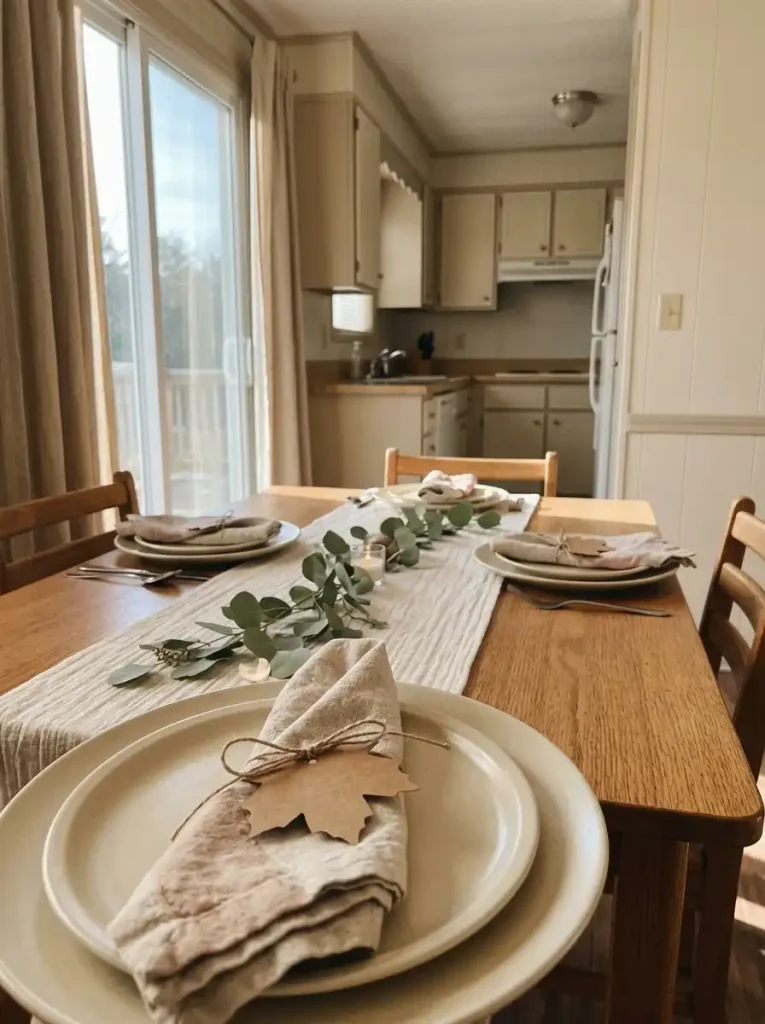
A personalized leaf tag adds hospitality without taking an additional square inch of table space. Tie a paper leaf to each folded linen napkin, write guests’ names legibly, and rest the napkins on the plates. Carry the sage-green color into one short branch at the center, leaving a sprawling garland out of the picture.
For an everyday four-seat nook, choose real leaves only if they are clean, dry, and unlikely to crumble into dinner. Cut cardstock is easier to prepare ahead and lets names remain readable. Pair it with simple cream plates and one understated brass or wood accent.
Where this earns its place: use name cards when assigned seating actually helps—perhaps a bench corner that is harder to leave, or a guest who needs the easiest access to the kitchen-side chair. If everyone seats themselves comfortably, personalized napkins can still be a keepsake, but a full formal place-card system is optional. Emily Post’s basic table-setting guidance provides a useful baseline for the plates, utensils, and glasses underneath the styling.
3. Mini Pumpkin Place Settings That Replace a Bulky Centerpiece
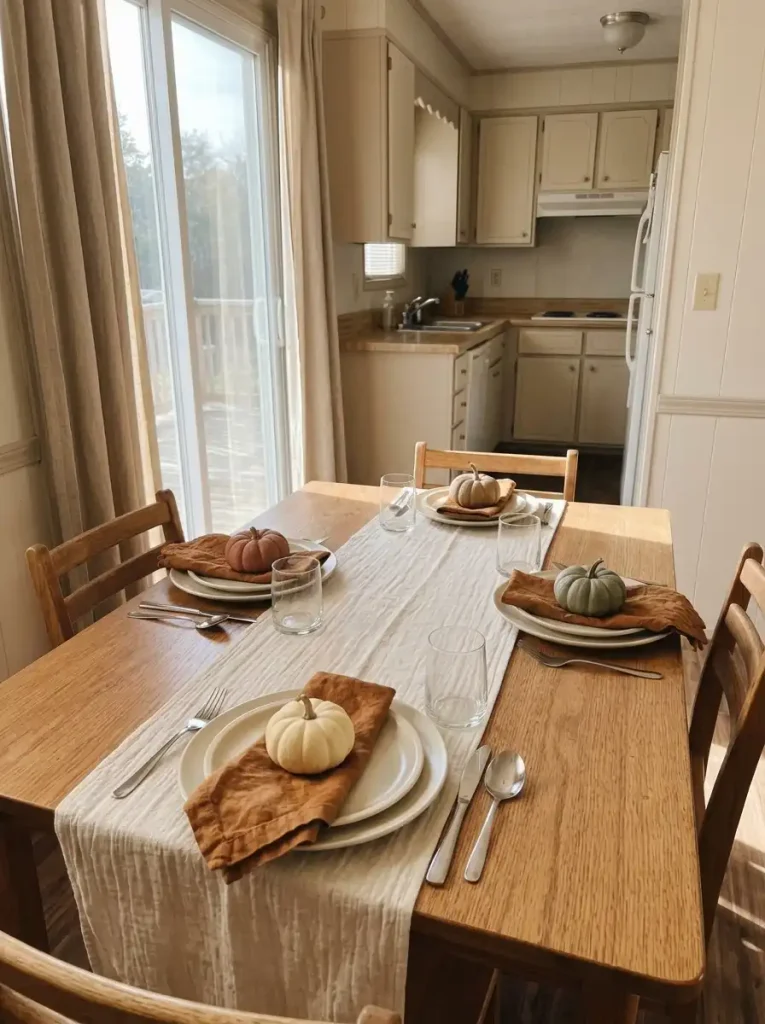
Put one palm-sized pumpkin or faux pumpkin on each empty dinner plate for the moment guests arrive. A rust-colored napkin under it delivers the harvest color, and the table’s middle can remain open for the turkey platter or a shared vegetable dish.
Before serving, lift each pumpkin into a small basket or onto a nearby shelf. Because the decoration belongs to the place setting, clearing it takes one simple action per guest. A pile of pumpkins along the center, by contrast, must be dismantled around hot dishes.
For a mobile-home dining table that seats four close together, keep the pumpkins visually similar in size. Mix their colors—cream, burnt orange, smoky green—but avoid stems that protrude toward another person’s plate. This is the easiest choice when the table will be fully served at dinner rather than used primarily for photographs.
4. Gingham Farmhouse Thanksgiving Settings for a Wall-Side Dining Nook
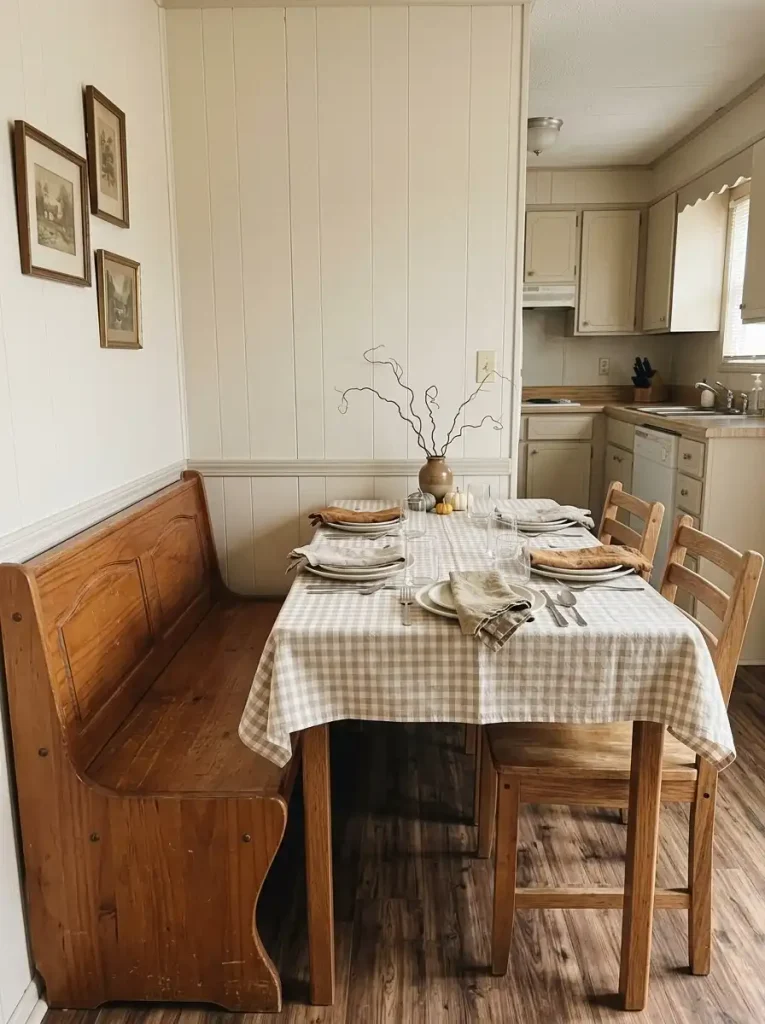
Picture a narrow farmhouse table pushed toward a fixed wall bench. A small-scale tan gingham cloth softens the wood, handmade-looking ceramic plates add depth, and one pottery vase holds sparse branches. The composition reads like a relaxed Thanksgiving meal in a real home, not a temporary showroom.
The cloth’s edge deserves attention. On the bench side, a generous overhang can bunch against guests’ knees as they slide in; on the walkway side, loose fabric may catch a passing hip. Test the tablecloth with every seat occupied and shorten or fold it if it interferes.
Use the pattern once. When the cloth is checked, choose solid napkins, plain plates, and minimal foliage. A tall centerpiece makes sense only if it can be moved before anyone sits down. For an open-plan mobile home, this simple farmhouse setting can feel more cohesive than adding gingham to the runner, napkins, and chair cushions at the same time.
5. White Fringed Runner With a Slim Pumpkin-and-Greenery Arrangement
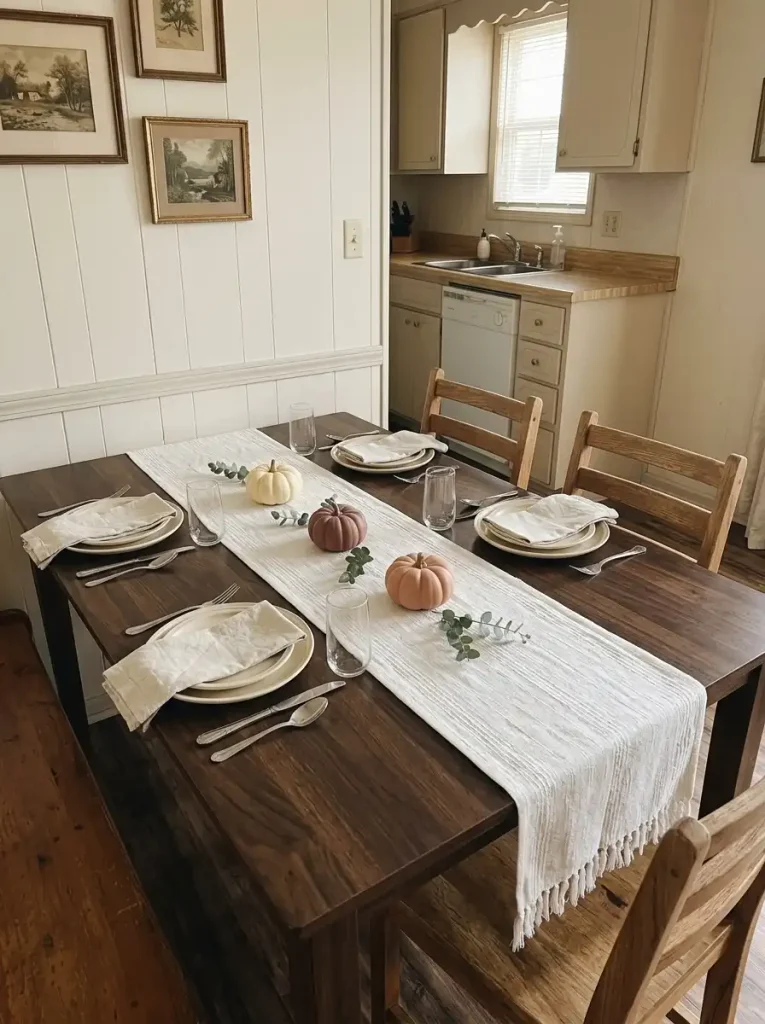
A long, white fringed runner provides a strong visual line on a dark dining table. Space small white and terracotta pumpkins along it, leaving generous intervals where serving dishes might be placed. Eucalyptus-style greenery can connect the pieces, but stems should stay within the runner’s footprint and away from food.
The usable space is decided by the widest object, not by the runner itself. A wide pumpkin, flower head, or candleholder can block a neighboring glass even when it looks centered. Lay out the plates first, then position the décor within the actual space that remains.
Runner Footprint Diagram
The runner footprint / Top-down view
A line of decoration, not a wall of decoration.
This conceptual four-seat table shows the runner staying within the middle strip while the plate zones remain independent. Real spacing depends on your table and dinnerware.
Choose this treatment for a slim rectangular table where the décor can form a low line. If a family-style meal will require several dishes in the center, shorten the decorated stretch to one end or lift the arrangement onto a removable tray. The purpose of the runner is to organize the table visually—not to occupy every inch of it.
6. Charcoal Plates and Rust Accents for a Moody Friendsgiving Table
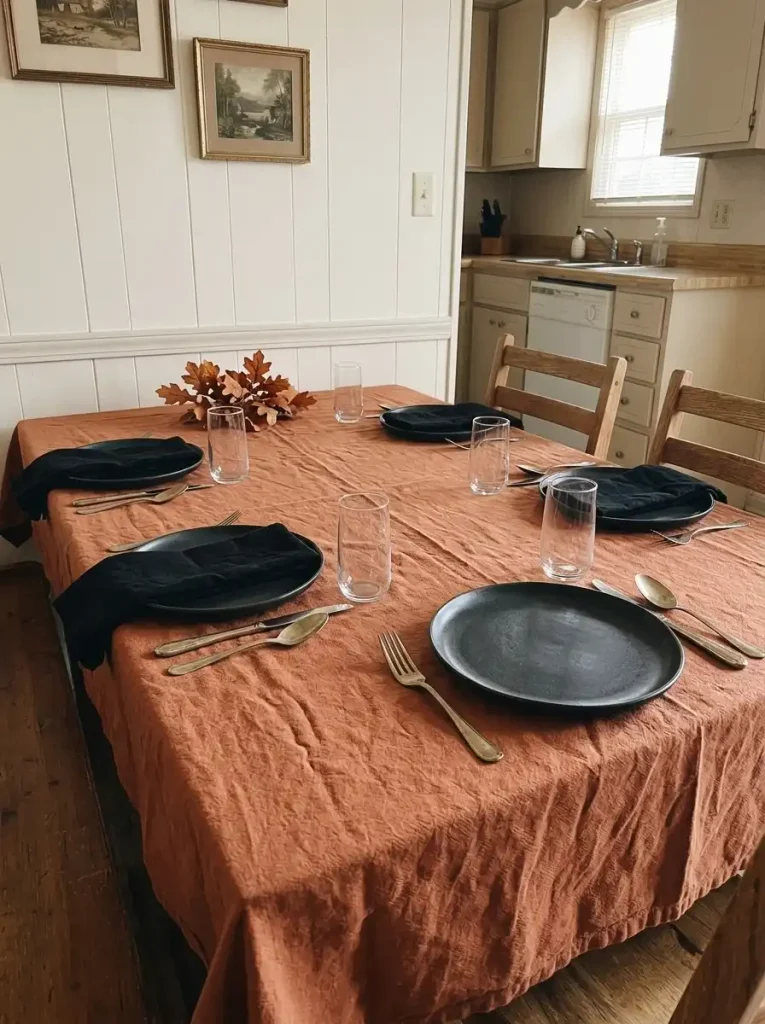
A rust tablecloth and matte charcoal plates offer a striking departure from pale farmhouse Thanksgiving décor. The contrast looks especially effective under soft window light: dark plates become the focal shapes, black napkins connect them, and tiny copper or golden accents warm the setting.
There is a scale tradeoff. Very wide dark chargers can make a four-person table feel as though every seat has its own giant disc. Test the charcoal dinner plate alone first. Add a charger only if glasses and forks still have comfortable positions; a plain folded napkin can provide the layer that the table actually needs.
For guests who prefer a dramatic holiday look, keep the center nearly empty—perhaps one modest arrangement of russet leaves at the table’s short end. The wider Thanksgiving table-setting inspiration collection explores more formal and decorative directions, while this version focuses on a compact, usable Friendsgiving meal.
7. DIY Kraft-Paper Thanksgiving Place Settings for a Folding Table
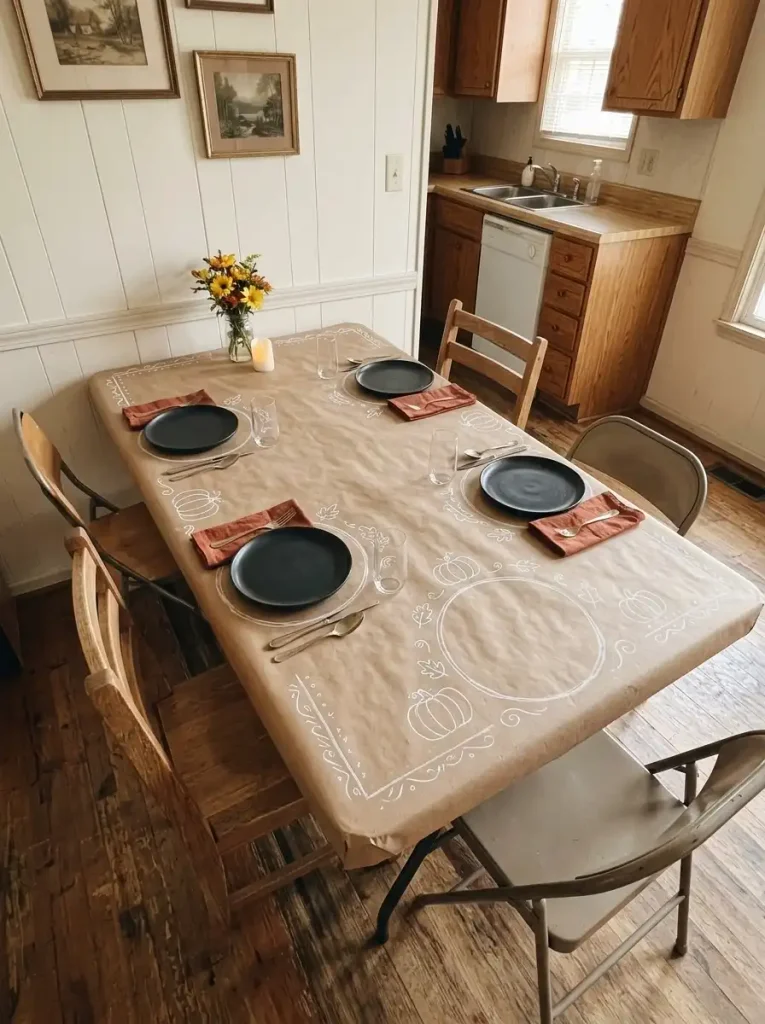
A roll of brown kraft paper can cover a temporary guest table and establish a charming, intentionally informal Thanksgiving setting. Draw plate outlines only after placing a real dinner plate at each seat. Add one handwritten name or gratitude prompt beside the plate, then place an orange napkin and simple reusable dinnerware on top.
Build it in this order:
- Open the folding table where guests will actually eat, checking that chairs and walking routes still work.
- Secure paper edges underneath with a suitable removable method that will not damage the table.
- Put plates, utensils, and drinking glasses in their final positions; mark the remaining open areas with simple leaf motifs.
- Provide a separate small surface for markers so ink never competes with hot food and drinks.
Paper is a disposable decorative surface, not a heat-resistant mat or food-contact serving surface. Put hot pots on manufacturer-appropriate trivets and use plates or serving dishes for food. This concept suits a family gathering that needs a few extra seats without buying matching chargers or specialty linens.
8. Matching Thanksgiving Settings Across Two Small Guest Tables
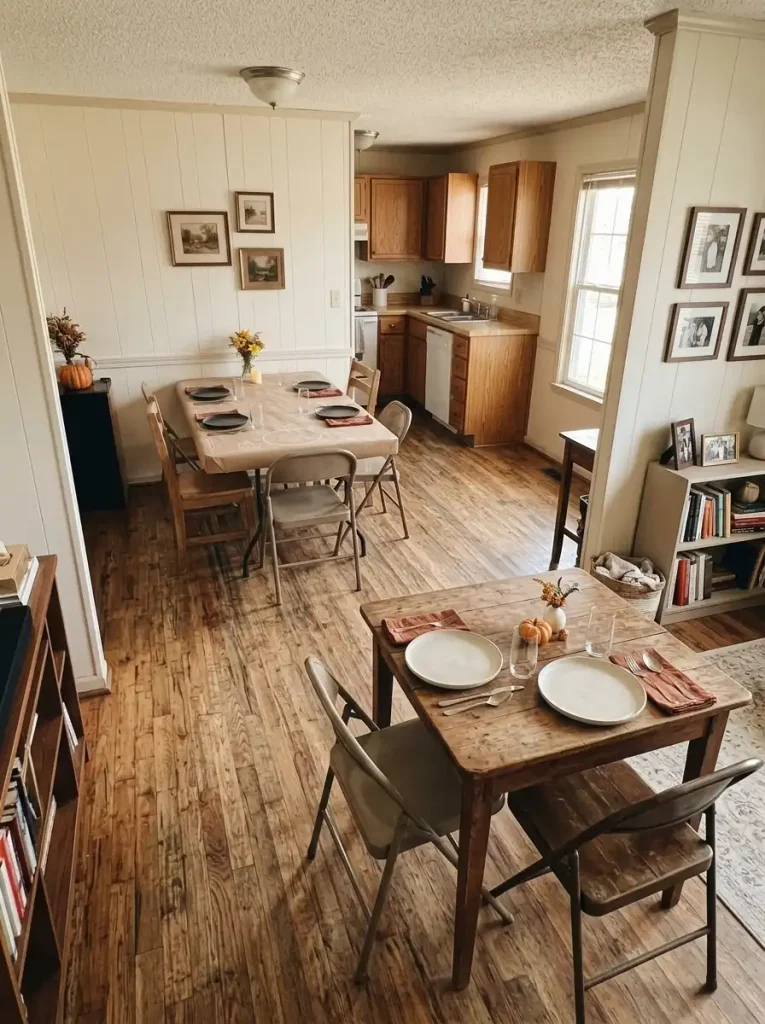
One long banquet arrangement often looks spectacular in photographs, but a small mobile home may function better with two separate tables: the usual four-seat dining nook and an additional two-seat or four-seat surface elsewhere. The visual connection can come from matching napkins, plates, or one rust-and-cream color story. There is no need to duplicate a centerpiece on each table.
Decide which location gets the main food service and which simply needs comfortable place settings. Carrying every hot dish through a tight route between tables is less convenient than identifying a sensible shared serving point. The route between seats, doors, and kitchen should remain clear with chairs pulled out.
Two-Table Hosting Planner
Gathering geometry / Guest-table planner
One celebration. More than one possible table.
Choose a hosting scenario. The arrangement and service recommendation change together. Only add furniture when the real room passes the chair-and-walkway test.
4 matching settings
2 matching settings
Use one consistent color signal
Repeat the napkin color and plate style on both tables. Keep flowers at the main nook and a single small accent at the two-seat table.
- Service: kitchen counter or accessible sideboard
- Check: guest chairs and return route
4 places
4 places
Split decoration, centralize serving
Use smaller matching center accents; avoid duplicating tall florals. Place buffet service where neither table blocks the route.
- Service: one shared station
- Check: all eight seats pulled out simultaneously
Comfortable places only
Clear walking route
Don’t force the layout
If a second table blocks circulation or usable seating, retain the existing nook and change the hosting plan or guest count.
- Service: use current kitchen and dining surfaces
- Check: unobstructed routes and stable seating
This is a place-setting decision, not a recommendation to squeeze more furniture into the room. If a second table would block access, keep the party smaller at the nook and examine other hosting arrangements in these small-space Thanksgiving table ideas.
9. Elegant Neutral Settings With a Separate Thanksgiving Buffet
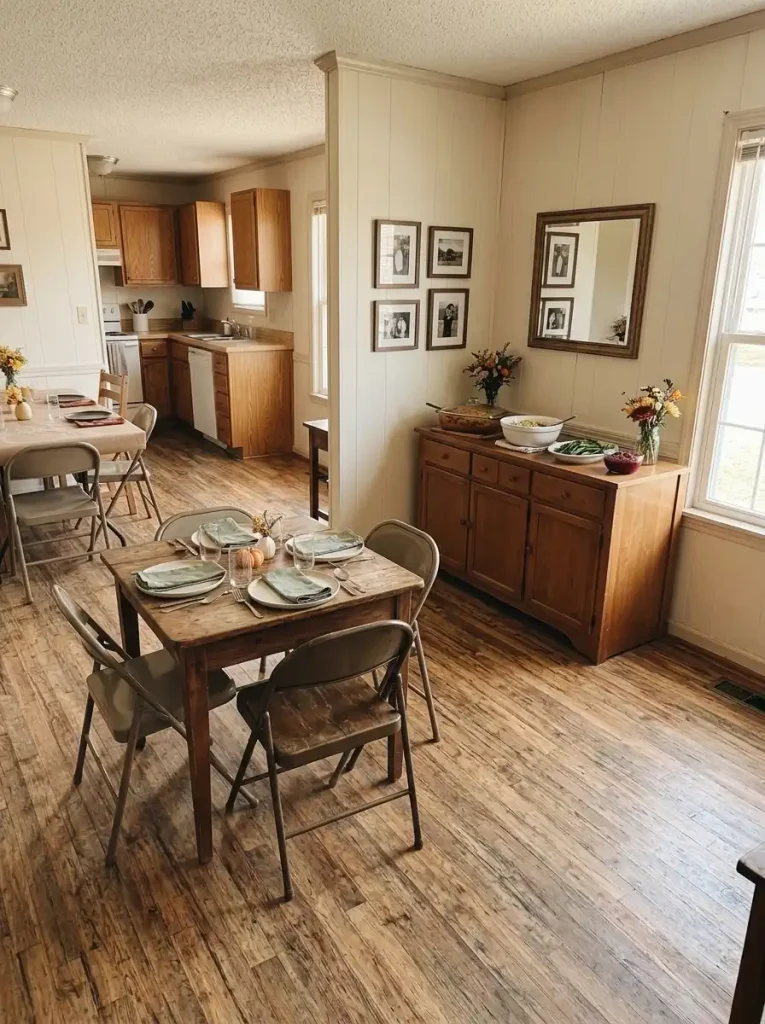
A separate buffet makes it possible to shift abundant serving dishes off the dining table. An existing sideboard or safe kitchen counter can hold the meal while the nook carries a restrained cream-and-sage setting: plates, folded napkins, one water glass each, and a small seasonal accent.
Before committing, trace the serving trip. A buffet on the opposite side of a narrow passage may make guests pass through people who are seated. A buffet near the kitchen can work better if the counter remains available for safe meal service and guests can reach it without crowding exits or hot cooking areas.
Buffet Service Explorer
Serving route / Table-space explorer
Where should the food live?
Choose the arrangement nearest your real Thanksgiving meal; the table arrangement and traffic decision change with each option.
Plates + shared platters
Prepare / refill
Reduce the decoration first
Keep a removable accent at one end and set out actual serving dishes before committing to runner length. Passing food takes priority over flowers.
Best only when the tabletop still holds the meal comfortably.
Plates + napkins + glasses
Buffet line
Preserve the table; assess the route
A fuller seasonal setting fits at the table, but guests need a simple path to an appropriately equipped buffet station. Keep doorways and working kitchen surfaces usable.
Best when the serving counter is accessible without crossing seated guests.
Plates + one passing dish
Most hot and cold foods
Use one shared dish as the table centerpiece
Keep bread or a room-temperature, safely served item on the table. Place bulky serving equipment elsewhere, then use minimal table decoration.
Best when family tradition includes passing one dish but table width is limited.
For inspiration on decorating a nearby counter without overwhelming working surfaces, see fall mobile home kitchen décor ideas. Keep hot food at safe serving temperatures according to your food-safety plan; a decorative towel or wooden riser is not a substitute for the proper equipment.
10. Buffalo-Check Table Styling for a Cozy Mobile Home Bench Nook
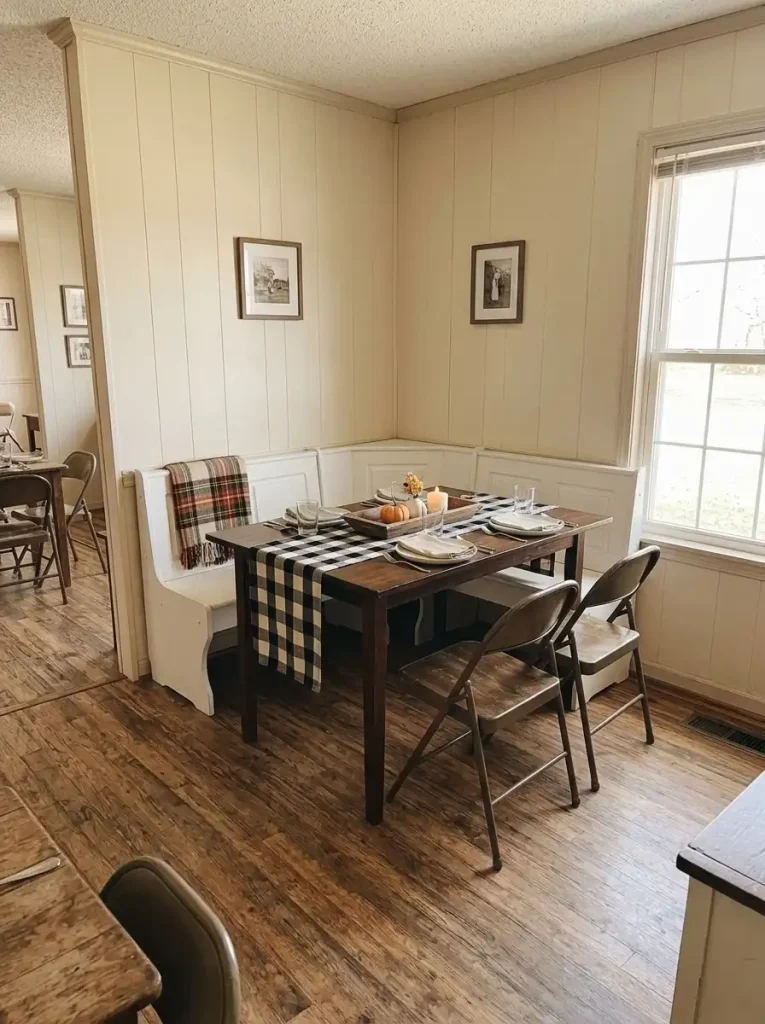
Buffalo check has enough contrast to make a small dining corner feel festive with very few other additions. A black-and-white runner over dark wood, a shallow wooden tray, and warm ceramic plates create a familiar farmhouse look that works with the seating already in the room.
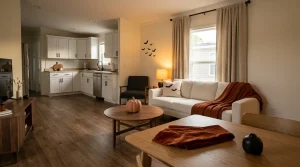
A bench changes how the table is used. Guests often enter the middle seat by sliding sideways, so tall decorations and loose textiles along that edge become obstacles. Keep the tray low and closer to the end that is easiest to reach; position the primary serving bowls off the runner when dinner begins.
Try a quick removal exercise: can you clear the tray in one motion and still have a table that looks thoughtful? If yes, you have found the right amount of decoration. For a deeper look at bench placement and seasonal room styling, continue with fall dining nook ideas for small mobile homes.
11. Petite Vintage Thanksgiving Settings for a Two-Person Bistro Table
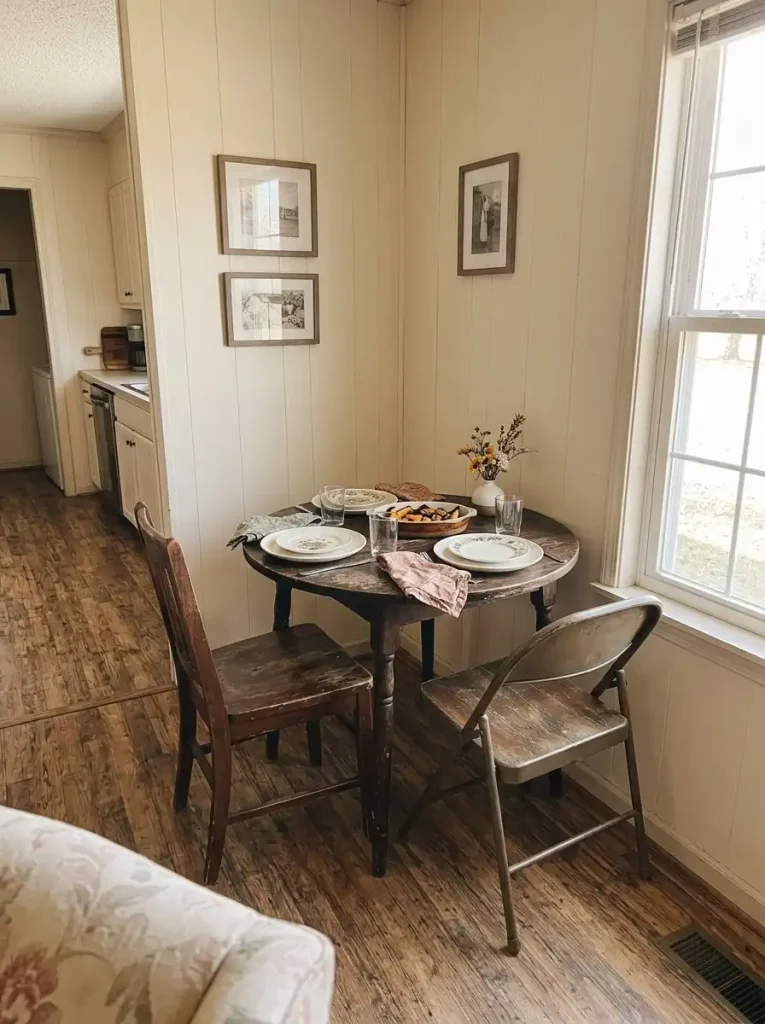
A little café table needs a different kind of abundance: detail close to each person, not a decorative collection at the center. Choose mismatched vintage-look dessert plates as accents above two plain dinner plates, add small patterned napkins, and place one tiny bud vase on the outer edge that is least used.
A simple test can decide whether to include the vase. Put your main-course plates and drinks on the table, then simulate passing the bread. If the arrangement makes you lift a glass to make room, skip the vase and tuck a sprig into each napkin instead.
Two-person setting, three essentials: comfortable plates; room for one shared serving item; and a personal Thanksgiving detail such as a handwritten note. Use a low-profile tray elsewhere for salt, condiments, or extra utensils. An intimate dinner gains more from generous usable space than a miniature reproduction of an eight-person holiday tablescape.
12. One-Glass Thanksgiving Place Settings for Shallow Dining Tables
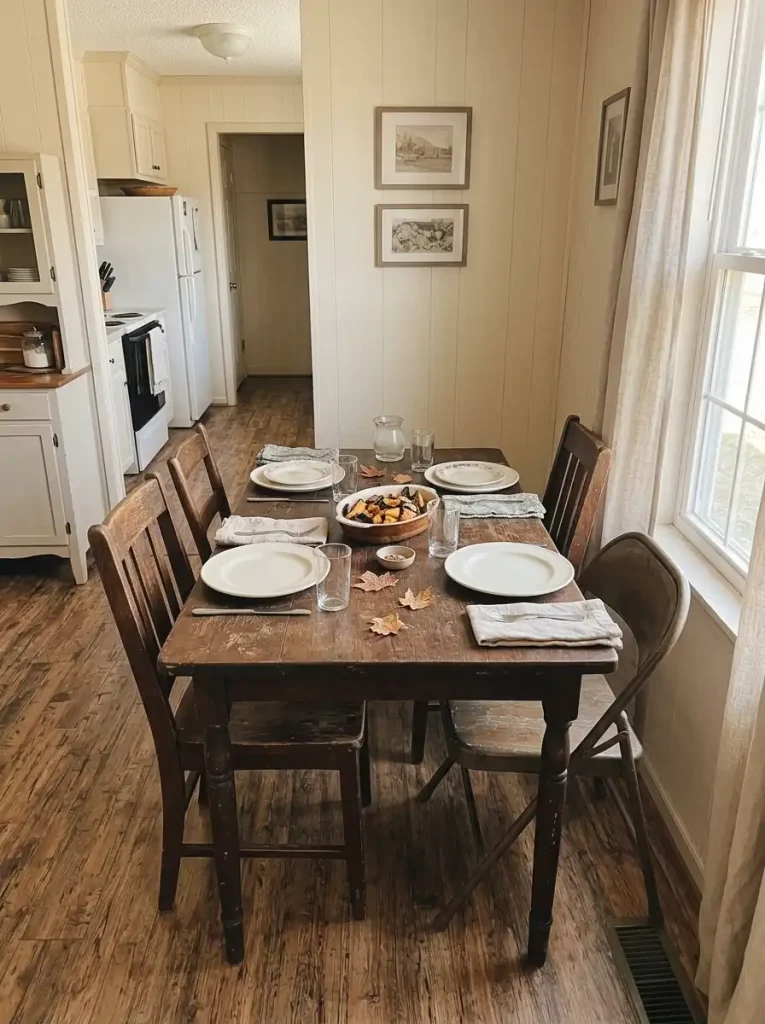
Is your plate close to the opposite edge before you even put down a water glass? That is a sign to edit the serving pieces, not a reason to abandon a pretty table setting.
For an informal Thanksgiving menu, begin with one drinking glass per person, a dinner plate, a napkin, and only the utensils needed for the dishes being served. Skip the second glass, bread plate, and extra dessert utensil until there is a reason to use them. Keep a pitcher or refill station conveniently nearby, outside the busiest part of the table.
What changes: this creates a more comfortable reach zone for a mobile-home table that is shallow front-to-back. It also lets a textured napkin or colored plate do the decorative work. The Emily Post Thanksgiving guide demonstrates how settings become simpler as the meal becomes less formal. Use the simplified version when the menu and available tabletop space call for it.
13. Soup-First Thanksgiving Settings With an Easy Dinner-Plate Swap
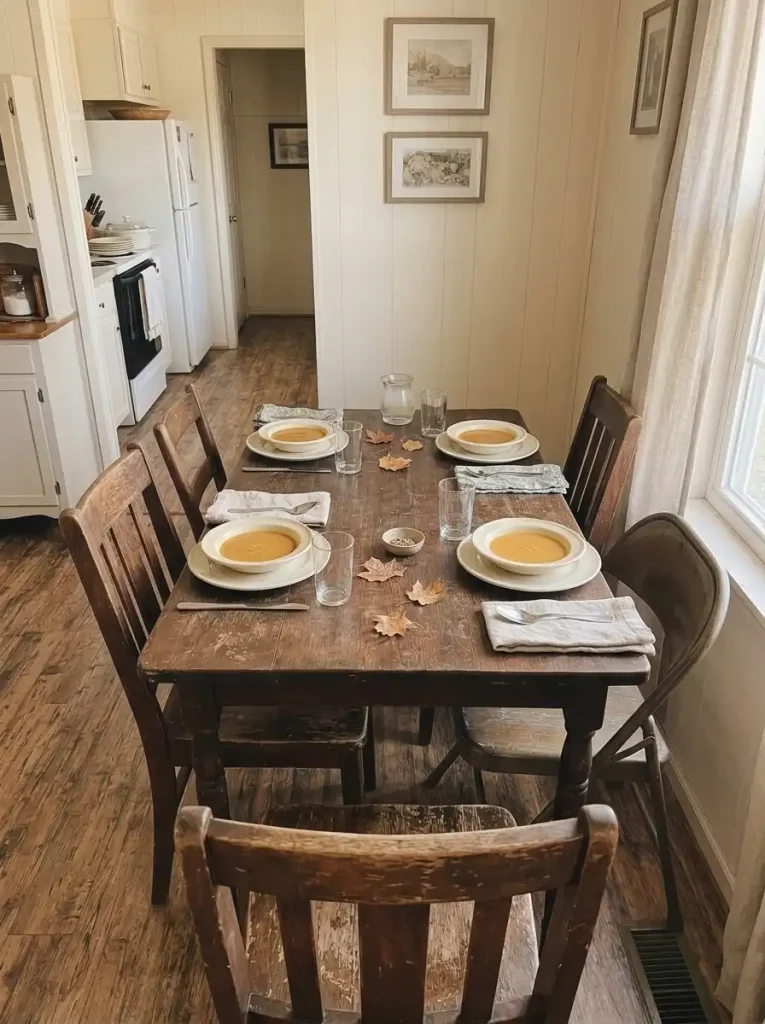
A first-course soup can look elegant even in the smallest dining corner, provided the table does not remain set for every course at once. Start with a shallow bowl on the dinner plate, one soup spoon, and a folded napkin. Keep main-course extras on a nearby storage shelf or in the kitchen until they are needed.
Then follow a short clearing sequence:
- Serve the soup with an uncluttered center.
- Clear the bowls and used soup spoons completely.
- Bring the main course to the table or direct guests to the buffet.
- Introduce dessert forks and pie plates only after the main meal has been cleared.
This sequence matters when two facing plates are close and a complete formal setting would fill the surface. If guests will serve themselves all at once, abandon the multi-course layering and use the simpler one-glass arrangement above. The menu should determine the tabletop—not the desire to display every piece of dinnerware you own.
14. Washable Harvest Place Settings for a Family Table With Children
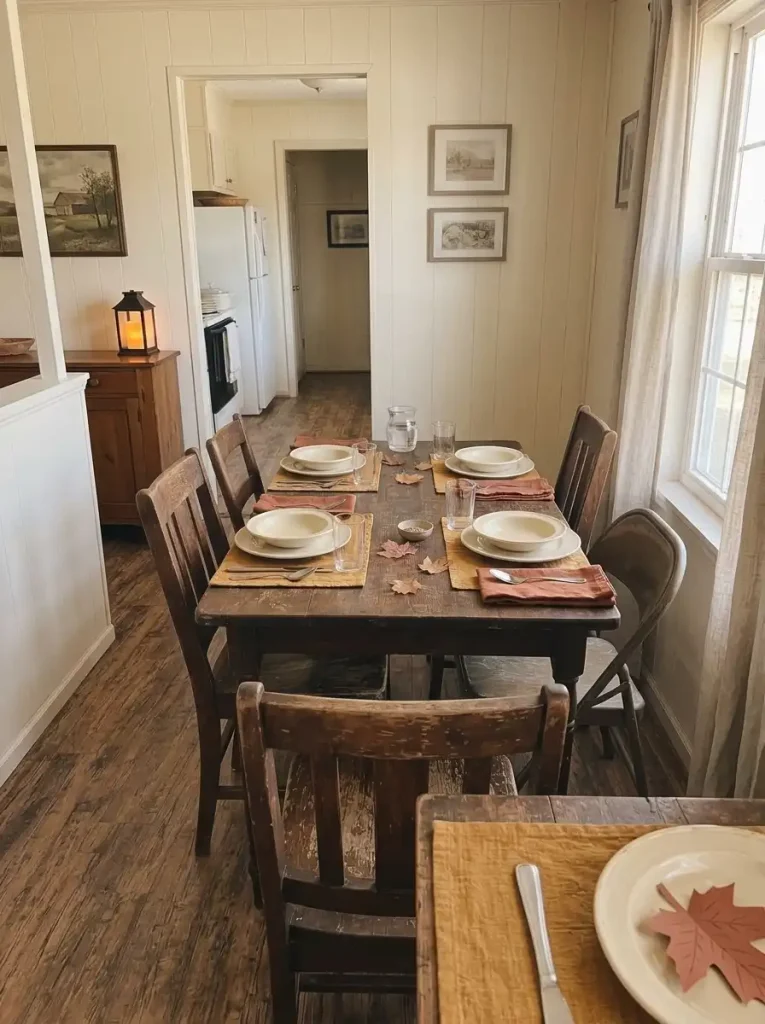
A family table has different priorities from a formal adult dinner. Choose washable fabric placemats in ochre, rust, or olive, plain sturdy dinnerware appropriate for the children using it, and cloth or paper napkins that are easy to replace. The Thanksgiving personality can live in a printed leaf design or a large flat paper name card.
Keep small loose décor off younger children’s place settings. Miniature ornaments, detachable berries, and tiny decorative charms may look appealing in photographs but can become choking hazards. Glass and open-flame candles also need particular care around active seating; the U.S. Fire Administration recommends battery-operated flameless candles as an alternative.
Here is the useful dividing line: if the decorative element has to be removed before a child can eat safely, place it on a high shelf as a room accent instead. That way the dining nook still feels festive, the adults can serve food calmly, and cleanup does not require extracting glitter or foliage from every plate.
15. A Thanksgiving Dessert Table Reset for Pie, Coffee, and Conversation
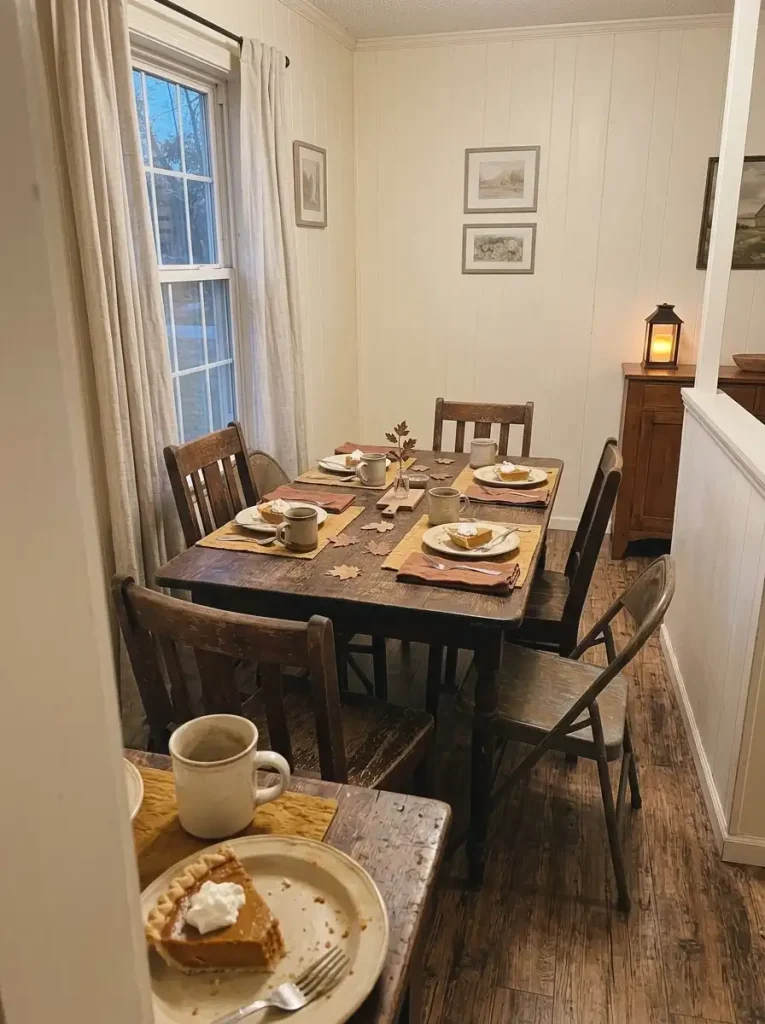
The best final look may happen after the turkey leaves the room. Clear dinner plates, serving utensils, and the main centerpiece; wipe the table; bring out smaller pie plates and coffee cups. A narrow wooden board with a small seasonal sprig can take the place of a full harvest arrangement.
In a compact mobile-home nook, the change from main course to dessert often matters more than one extra decoration. People may want to linger, pull their chairs closer, and chat while enjoying pie. A lightly reset table makes that feel intentional.
Dinner-to-Dessert Reset
The After-Dinner Edit
One Small Table. Three Beautiful Moments.
Your Thanksgiving table doesn’t need extra furniture to feel completely different throughout the meal. Discover how one compact dining nook moves gracefully from dinner to dessert.
The Main Event Set the Dinner Table Everything guests need to enjoy the meal
Begin with the real dinner setting. Give guests comfortable access to their plates, glasses, and shared food. Decorations should already have their own removal plan.
Plates and serving dishes take priority.
The Transition Clear & Refresh Give your compact table its breathing room
Once the main meal finishes, remove everything guests no longer need. Clear used dinnerware, wipe the surface, and enjoy a brief visual pause before dessert arrives.
SURFACE
A clean, open tabletop creates the reset.
The Cozy Finale Bring Out Pie & Coffee A lighter setting for relaxed conversation
Dessert needs fewer tabletop pieces. Bring out small pie plates, coffee cups, and a single understated autumn accent. The same nook now feels relaxed and inviting.
ACCENT
A lighter setting welcomes pie and coffee.
This approach is particularly useful when the dining table also serves everyday functions. Store the Thanksgiving centerpiece in one container, return the table to normal after dessert, and keep only the small pieces you genuinely enjoy seeing through the rest of the season.
Make the Thanksgiving Table Work as Beautifully as It Looks
The strongest Thanksgiving setting for a small mobile-home dining nook begins with the real meal: who is sitting where, which dishes need to reach the table, and how guests move in and out. Once that is settled, choose one visual signature—amber glass, a checked cloth, a personalized leaf tag, or a slim pumpkin runner—and let it set the atmosphere.
If the room is especially tight, begin with one plate, one glass, and one thoughtful detail per person. Build outward only where the table still feels comfortable. Your guests should notice the warmth of the celebration long before they notice the square inches of tabletop.
Save this article on Pinterest so you can revisit your favorite table setting before Thanksgiving.