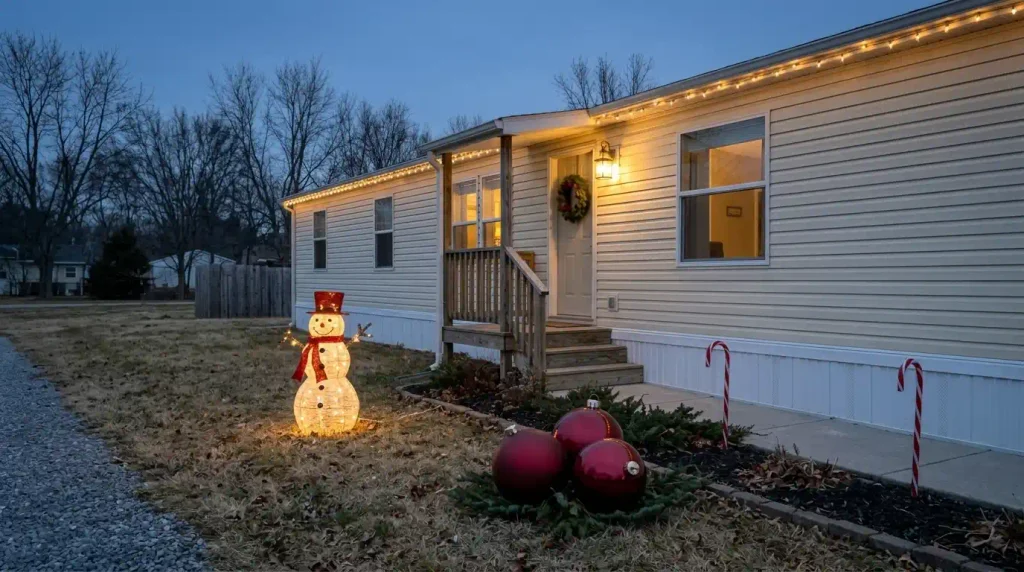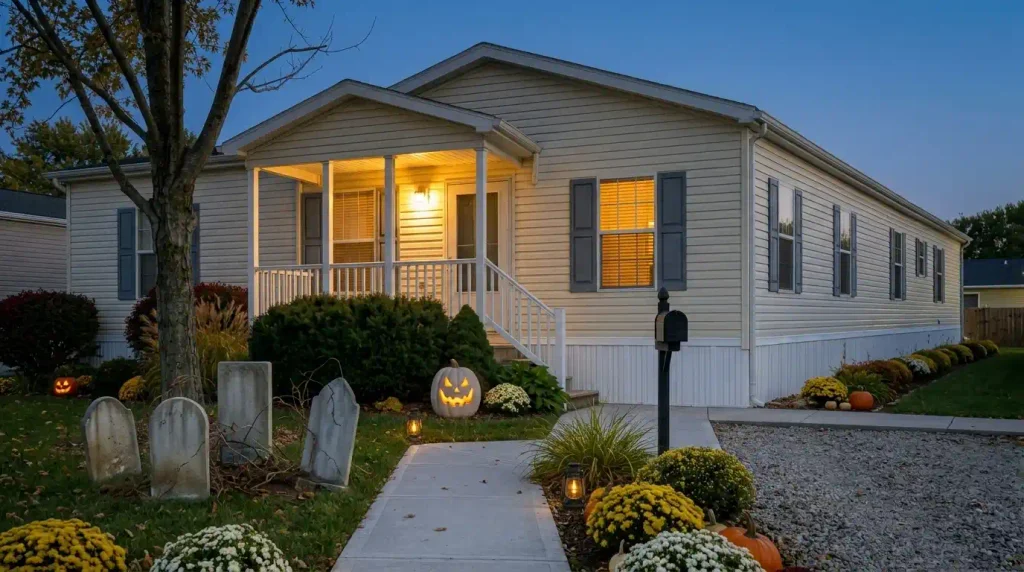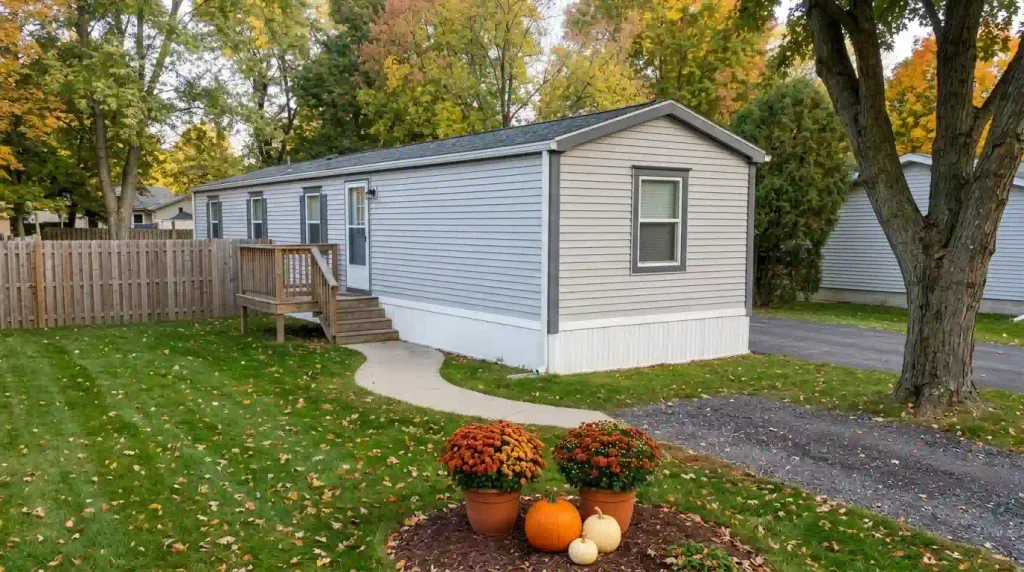
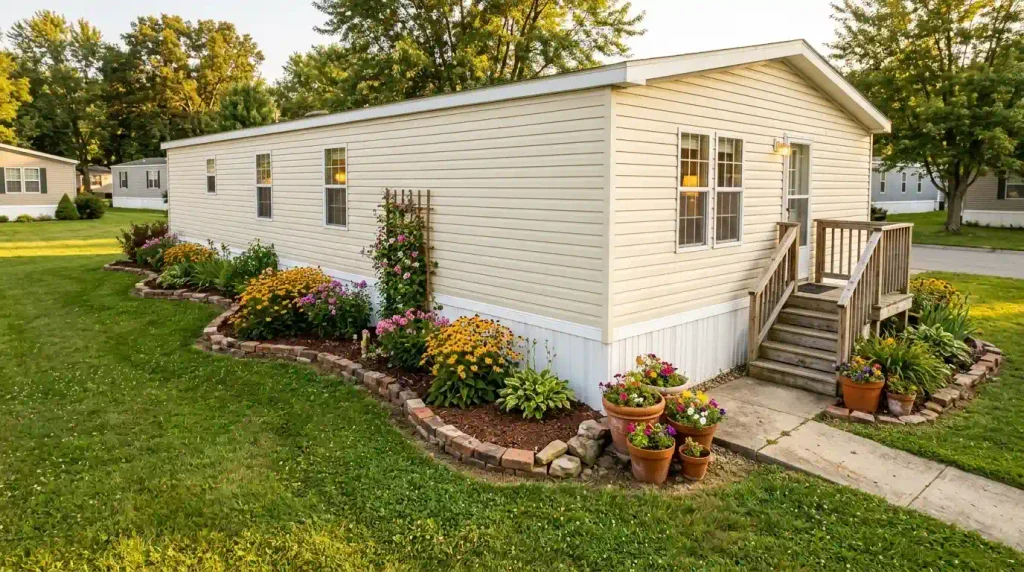
From the road, an older mobile home with a neatly framed entrance, healthy flowers and a clean stretch of lawn can look every bit as inviting as a property with an expensive landscape. The difference often comes down to how carefully the available space and materials have been used.
The best mobile home front yard ideas begin with the property you actually have. A shallow single-wide lot needs a different approach from a double-wide with an open lawn, and a rented community lot may limit permanent improvements. Even a beautiful garden must leave room for everyday arrivals, drainage and home maintenance.
These 19 affordable ideas cover everything from recovering existing plants to styling thrifted containers and planning a complete weekend refresh. You’ll also find sample spending plans to help you choose a project that fits your budget.
Start small, keep the features that still work and give each new purchase a clear purpose. For wider garden inspiration, explore these mobile home landscaping ideas.
1. Give Your Existing Front Yard a No-Spend Reset
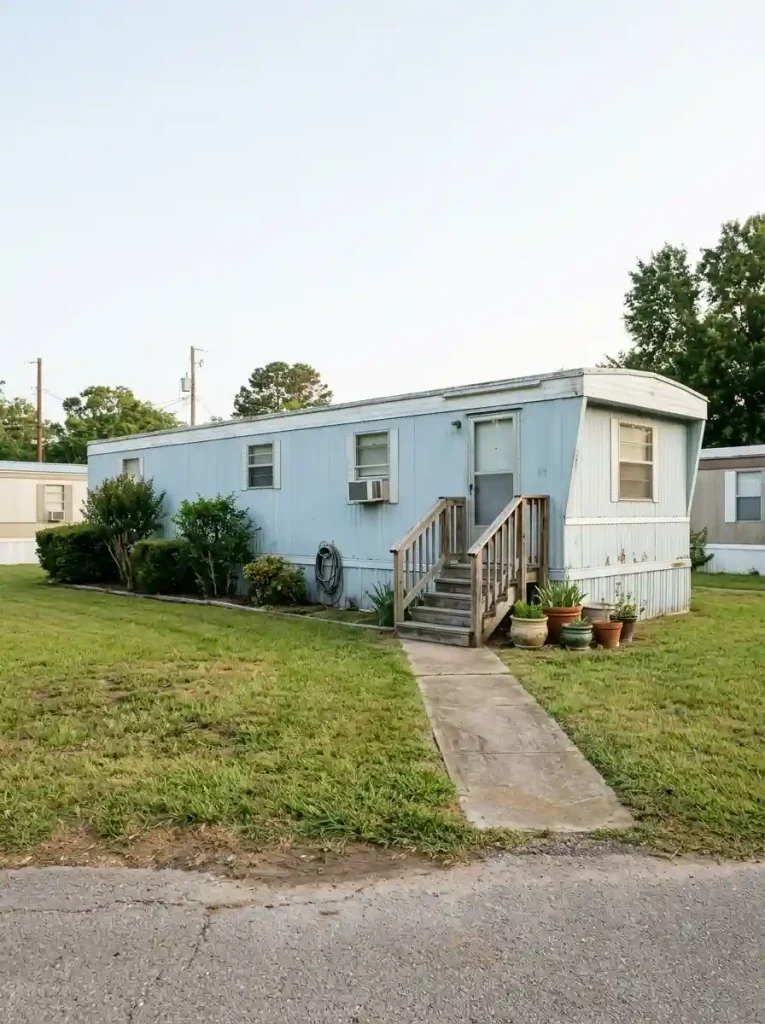
Before visiting a garden center, photograph your mobile home from the community road or sidewalk. Pay particular attention to the ground beneath the long exterior wall and the area around the raised entry steps.
- Remove empty pots, broken ornaments and unused supplies.
- Sweep sound paths and clean reusable containers.
- Prune suitable plants at the appropriate time for their species.
- Set aside usable bricks, pots and garden accessories for later projects.
Stop before shopping: Take another photograph from the same position. The areas that still look unfinished are your genuine priorities. A tidy stretch of frontage often needs far fewer purchases than it first appeared to need.
2. Put Your Money Into the Most Noticeable Part of the Yard
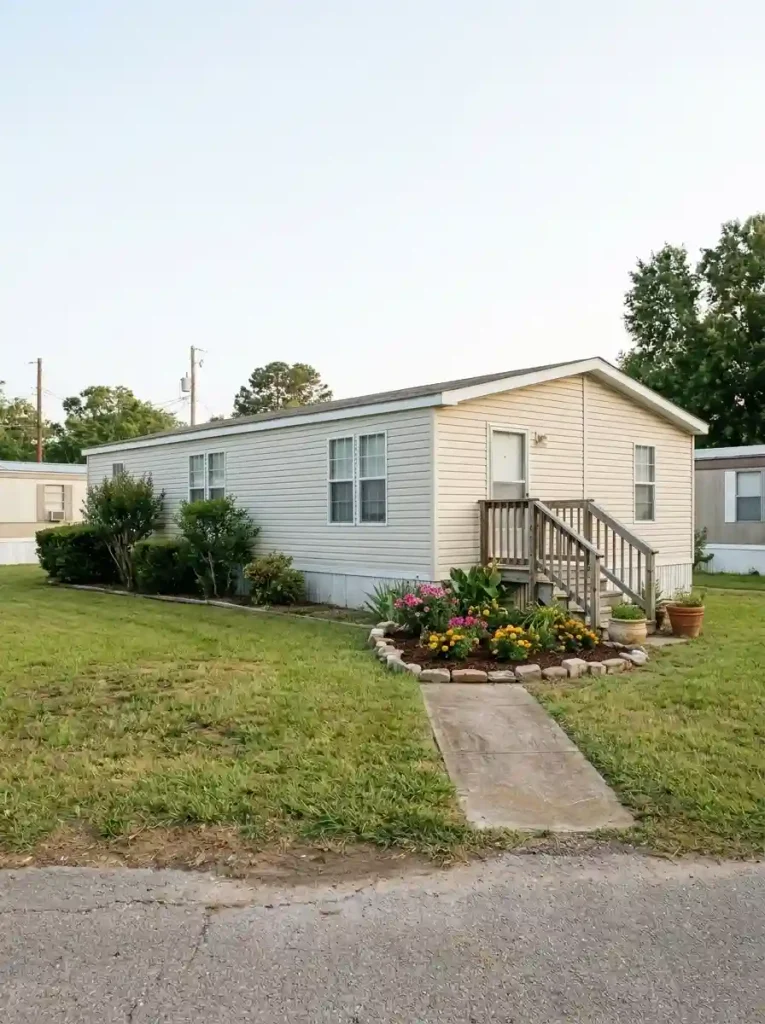
Where would a limited budget have the greatest effect? On a shallow lot, a single attractive entrance-side garden may be visible from almost every approach. On a wider double-wide frontage, a neglected corner might deserve attention first.
| Illustrative budget | Suggested project |
|---|---|
| $25 | Refresh one existing planter or small bed. |
| $50 | Improve a compact planting pocket. |
| $100 | Coordinate flowers and materials around an existing entrance. |
| $150 | Allocate money to preparation, plants, accents and a reserve. |
| $300 | Plan several modest, connected yard improvements. |
Treat these figures as spending ceilings, not market-price estimates. Necessary repairs come first. For projects involving the house itself, see these mobile home exterior ideas on a budget.
Make every dollar visible.
Choose your biggest curb appeal problem.
3. Repair Bare Lawn Patches Without Replacing All the Grass
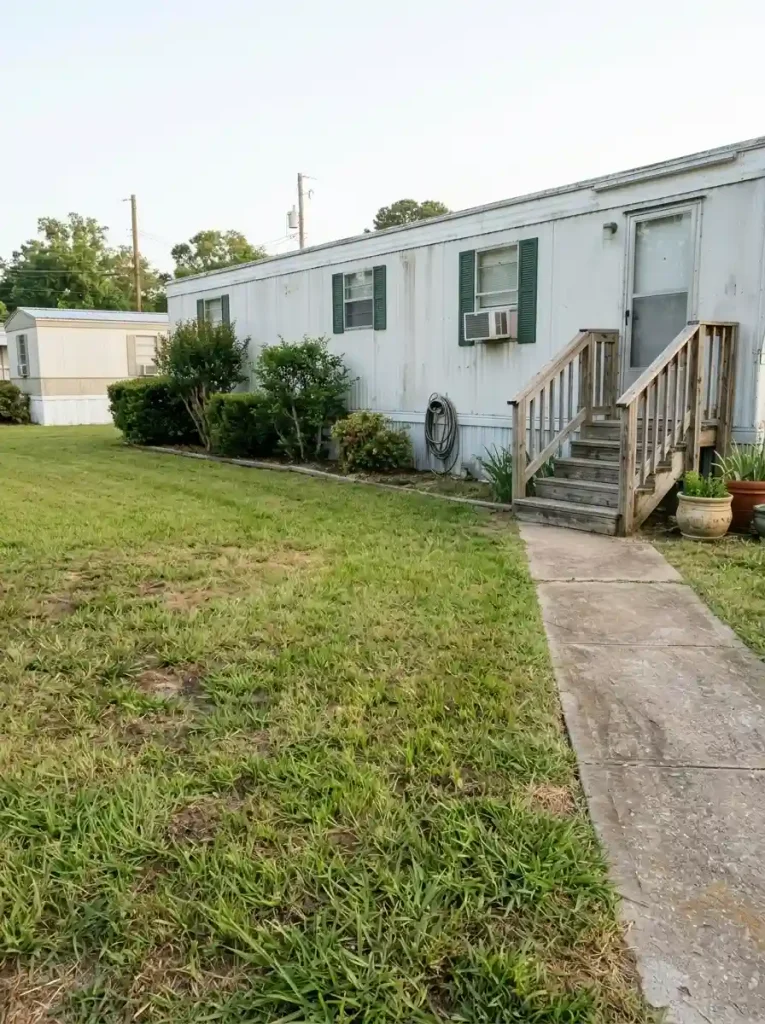
A worn shortcut between a parking space and mobile home steps tells a different story from thinning grass beneath a shaded window. Find the cause before buying seed.
Foot traffic: Consider redirecting everyday movement onto an existing sound path. Shade: Choose a regionally appropriate shade-tolerant lawn or ground cover. Persistent wetness: Investigate drainage before attempting a cosmetic repair.
Once the cause is addressed, repair only the affected area with a suitable method for your grass type and season. On compact lots, restoring a small patch can improve the appearance of much of the frontage. Skip reseeding where the same underlying condition would simply damage new growth.
4. Refresh Flower Beds With Only the Mulch They Need
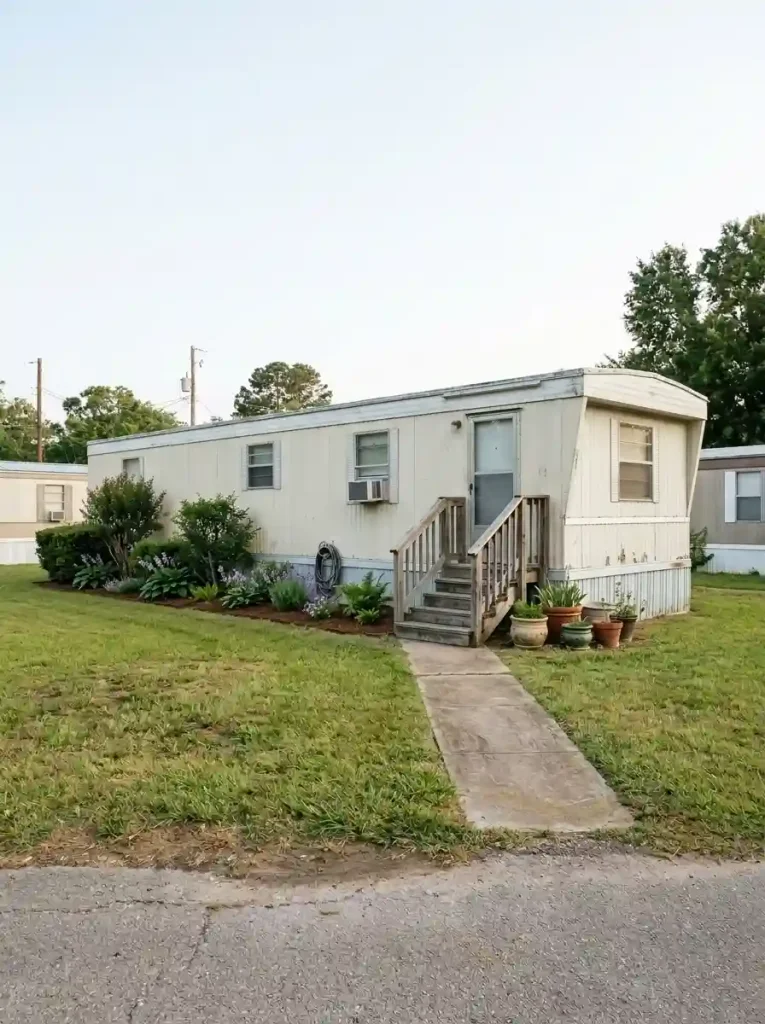
A fresh layer of natural mulch can make an older manufactured home’s garden look carefully maintained. Existing beds may need only a top-up, and buying several extra bags can waste money or encourage excessive buildup.
A simple quantity example
20 ft × 2 ft bed = 40 sq ft. An additional 1 inch requires about 3.33 cubic feet, so two 2-cubic-foot bags would cover the calculated volume.
Measure existing depth first; the example is not a recommended depth. Follow University of Minnesota Extension’s mulching guidance and keep material away from plant crowns, trunks and required skirting openings. Preserve the home’s existing drainage arrangements.
Buy only the mulch you need
Open the closest bed size. Estimates assume 2 cubic feet per bag.
Small bed · 10 × 2 ft (20 sq ft)
Medium bed · 20 × 2 ft (40 sq ft)
Long bed · 30 × 3 ft (90 sq ft)
Examples, not recommended depths. Measure existing mulch; keep plant crowns, vents and required access clear. Round bag quantities up using the actual package volume.
5. Turn One Established Perennial Into Several Plants
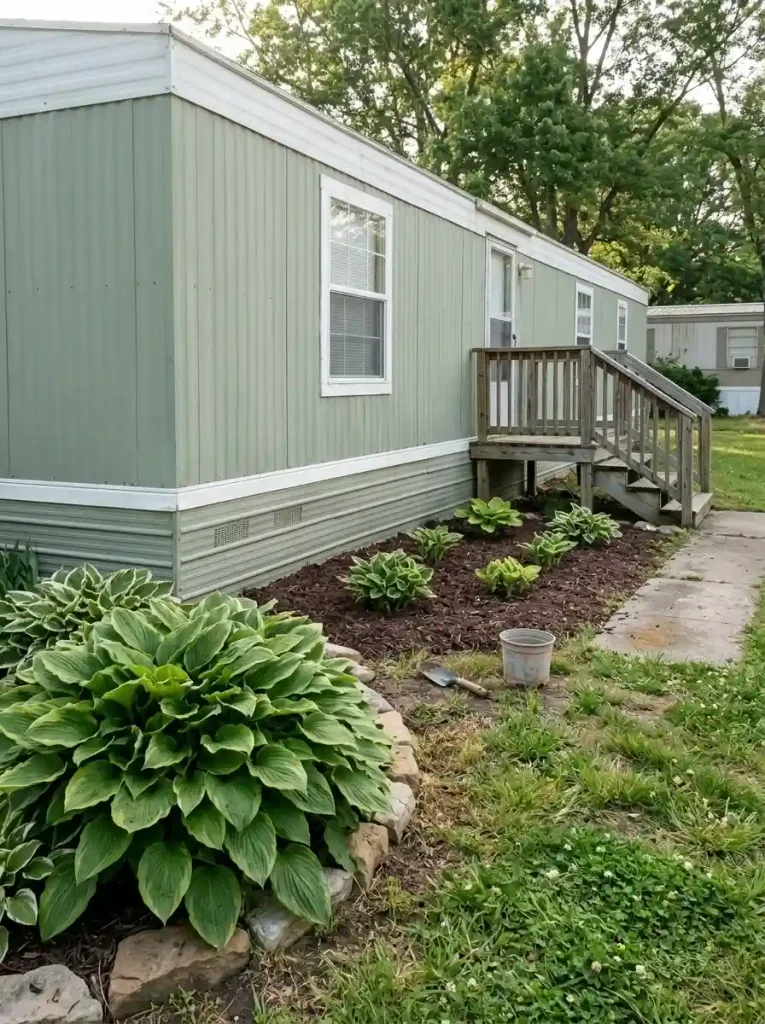
A mature hosta or daylily clump in an established garden can become a source of affordable planting material. Suitable perennials may be divided, replanted and used to fill approved empty pockets in the front yard.
- Identify the species and check its recommended division season.
- Select a healthy, established plant suitable for division.
- Replant viable divisions in comparable growing conditions and provide appropriate establishment care.
Repeat a familiar plant near widely spaced windows on a long single-wide frontage to connect separate beds without buying an entire row of shrubs. Check that both locations have similar light and that mature foliage will leave skirting vents and access panels clear.
The University of Minnesota Extension’s perennial division guide explains species-specific considerations. Not every perennial benefits from division.
6. Buy Smaller Plants and Allow Room for Growth
| Purchase choice | Best application |
|---|---|
| Young plants | Filling an approved bed gradually at a lower initial cost. |
| Larger specimens | Establishing one focal point where immediate impact matters. |
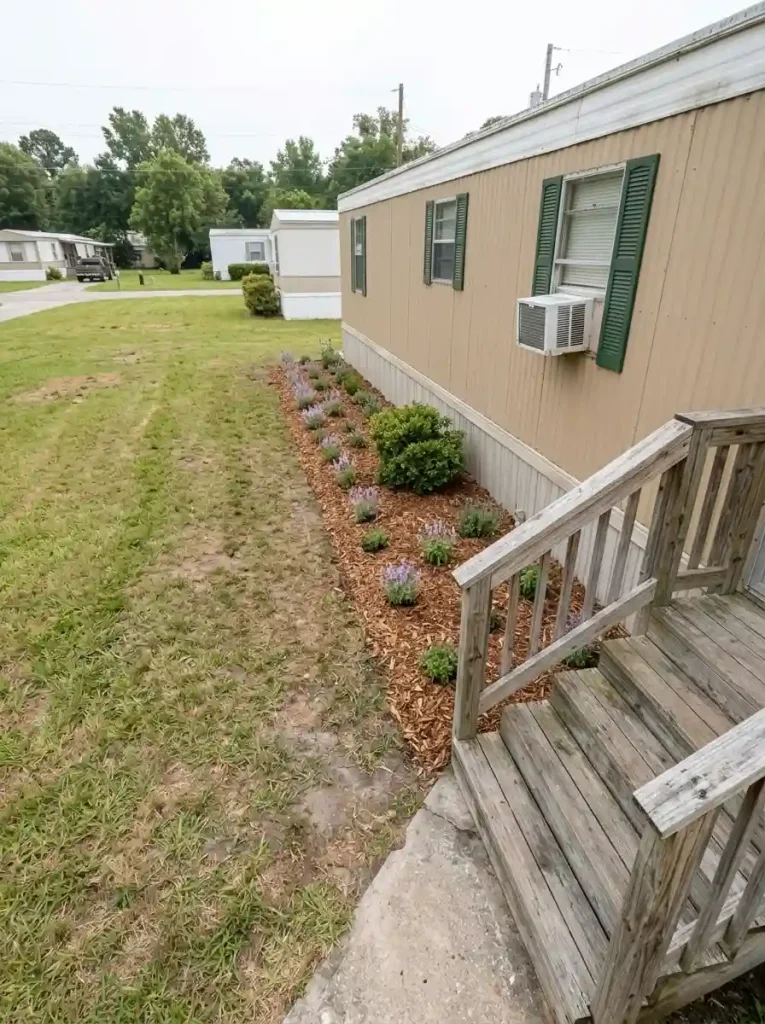
For a shallow garden beneath mobile home windows, the plant’s mature width matters more than how compact it appears at the nursery. Measure the available bed and check the plant label before purchasing.
A few young plants spaced for their eventual size can prevent paying twice: first for crowded plants, then for removing or relocating them. Choose a larger specimen only where it can develop without obstructing access or windows.
7. Give Leftover Bricks and Pavers a New Purpose
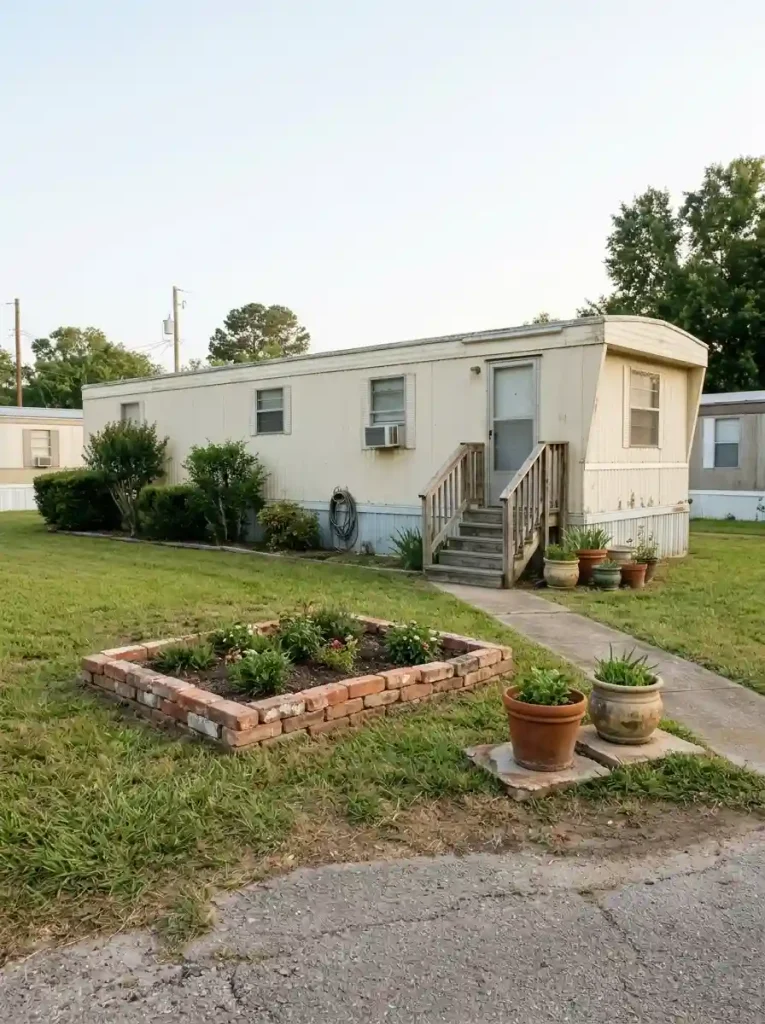
A handful of bricks from a previous project may not be enough to outline an entire garden, but it could finish one small decorative pocket beside an existing bed. Leftover paving pieces can also provide stable bases for pots on appropriate, level ground.
Lay the available pieces out first and design around the quantity you own; short, deliberate features suit compact manufactured-home lots better than an unfinished border stretching the length of the house.
Reject cracked, contaminated or unstable pieces. Keep decorative materials outside walking routes, and never treat salvaged bricks as structural supports for the home or its steps.
8. Use Leftover Gravel to Finish One Small Garden Pocket
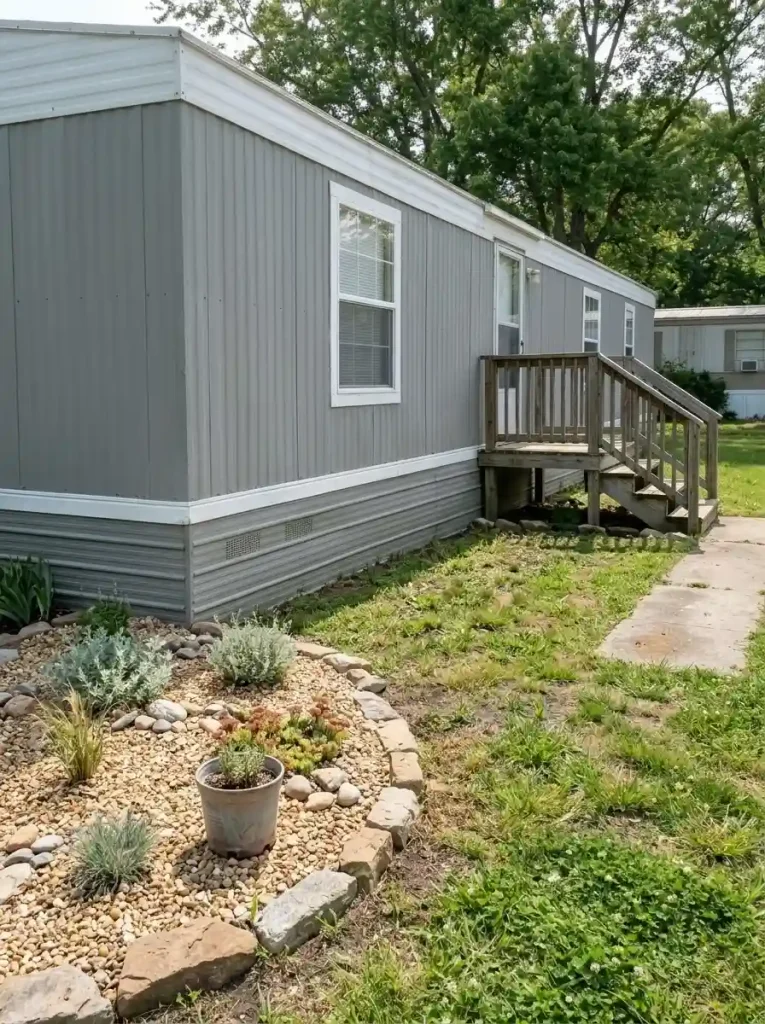
Suppose you have a few bags of gravel left after another project. On a single wide with only a narrow strip between the long wall and the road, a compact, approved pocket at an exposed short-end corner can use that material without narrowing the everyday approach to the steps.
- Mark out a small proposed area without digging.
- Compare the volume available with the quantity required for the chosen surface system.
- Include preparation and edging in the cost before expanding the design.
Keep the pocket away from access routes and avoid altering drainage. For different lot configurations, explore single-wide landscaping ideas for small lots.
Before any digging, follow 811 notification guidance and arrange separate locating of private lines where necessary.
9. Make an Existing Walkway Look Better Before Rebuilding It
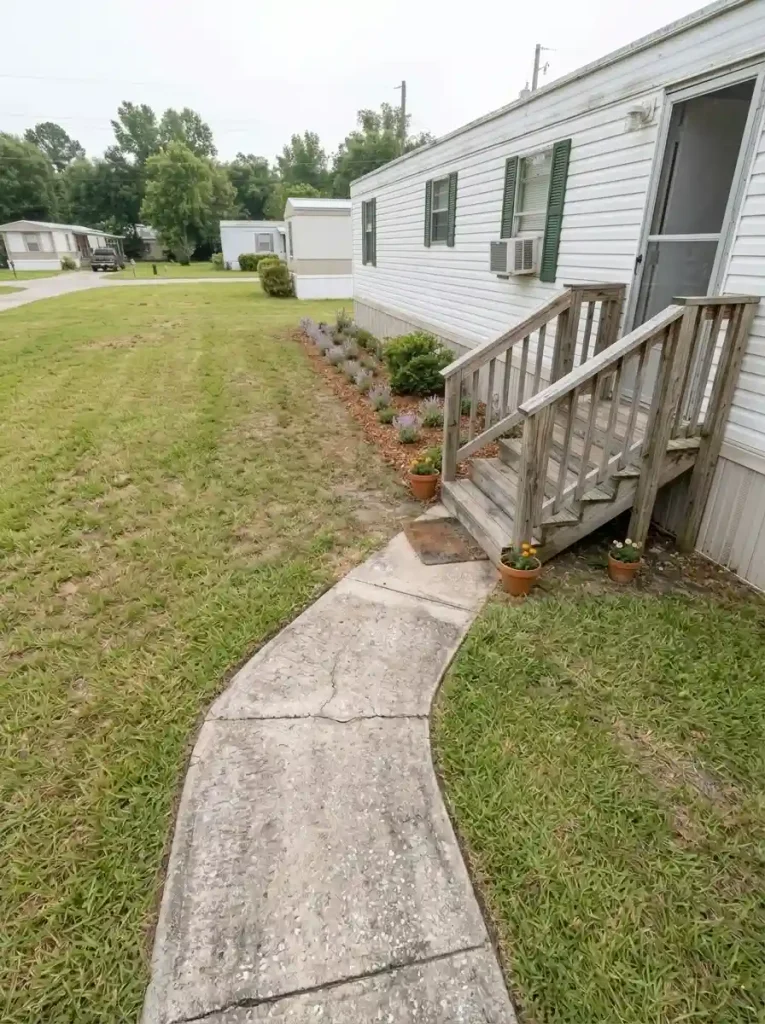
A plain concrete path leading to raised mobile home steps can look unfinished because the surroundings have become untidy, even when the walking surface remains in good condition.
Sound but stained? Use a cleaning method appropriate for the surface.
Sound but crowded? Remove pots and encroaching vegetation from the approach.
Loose, uneven or damaged? Prioritize assessment and repair before decorating.
A clean route framed by a few well-chosen garden accents connects the front yard to the entrance without the cost of new paving. Maintain the usable path width and keep the stair approach clear.
Extend that approach to the landing with these small mobile home porch ideas.
Does your walkway really need replacing?
10. Turn Thrifted Containers Into a Charming Cottage Garden
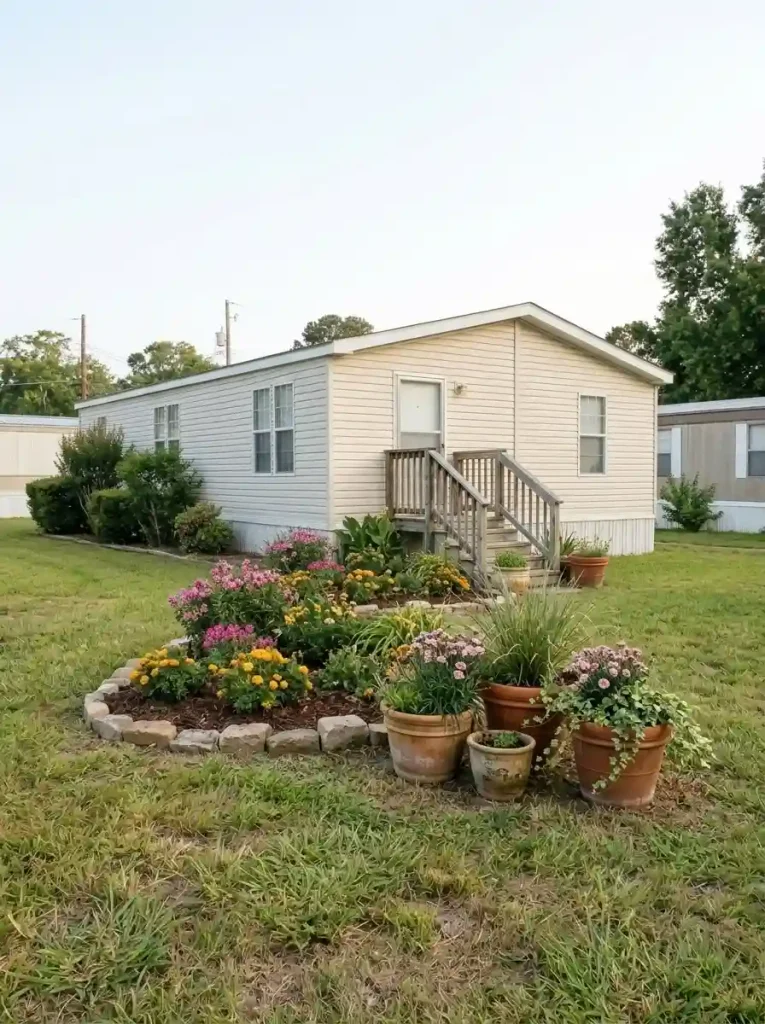
Picture a trio of secondhand terracotta pots beside a cream-colored single wide. One holds upright foliage, another contains flowers and the third repeats the same warm clay finish. Together they look like a collection, even though none was purchased as part of a matching set.
The shopping test is simple: look for stable containers with suitable drainage, outdoor durability and a known, safe previous use. Avoid vessels that held chemicals or have sharp edges.
On a manufactured home with a tiny raised landing, keep the display on suitable level ground beside the garden to preserve the space needed to open the door. Preserve the stair approach and skirting access. Compare the total cost of containers, potting mix and plants before bringing home oversized bargains.
11. Make Mismatched Garden Accessories Look Like a Collection
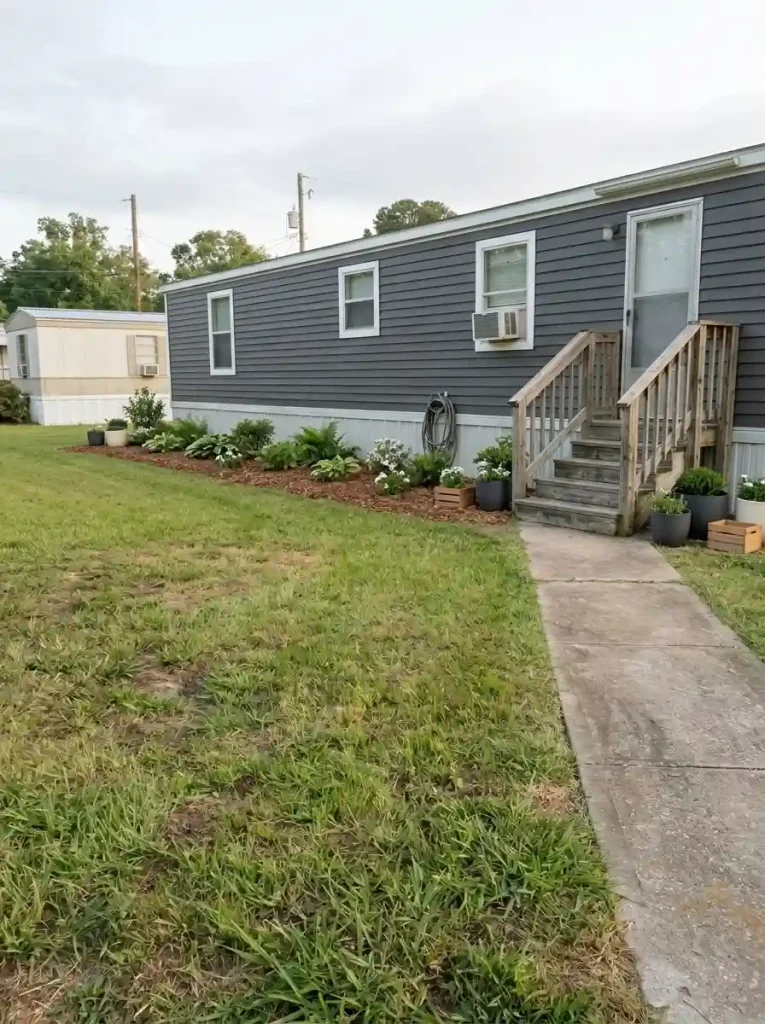
Match accessories to the siding that is already there; refinishing compatible pots may be more economical than buying a new set.
| Existing siding | Accent colors and finishes |
|---|---|
| Cream or white | Terracotta, olive, natural wood |
| Gray | Charcoal, muted green, ivory |
| Sage | Warm brown, dusty pink, cream |
| Tan | Bronze, golden yellow, earthy green |
Choose one accent finish that complements both the siding and visible skirting of the manufactured home; repeat it on pots along the frontage to connect those two exterior finishes. Use a compatible exterior-rated coating on suitable surfaces, following its instructions.
Buy or repaint? Compare preparation supplies and coating costs with the price of a replacement pot. Leave attractive, sound natural finishes untouched.
Find your front yard color story
Conceptual colors only. Compare actual outdoor finishes and existing siding before buying.
12. Add Vertical Interest With One Freestanding Trellis
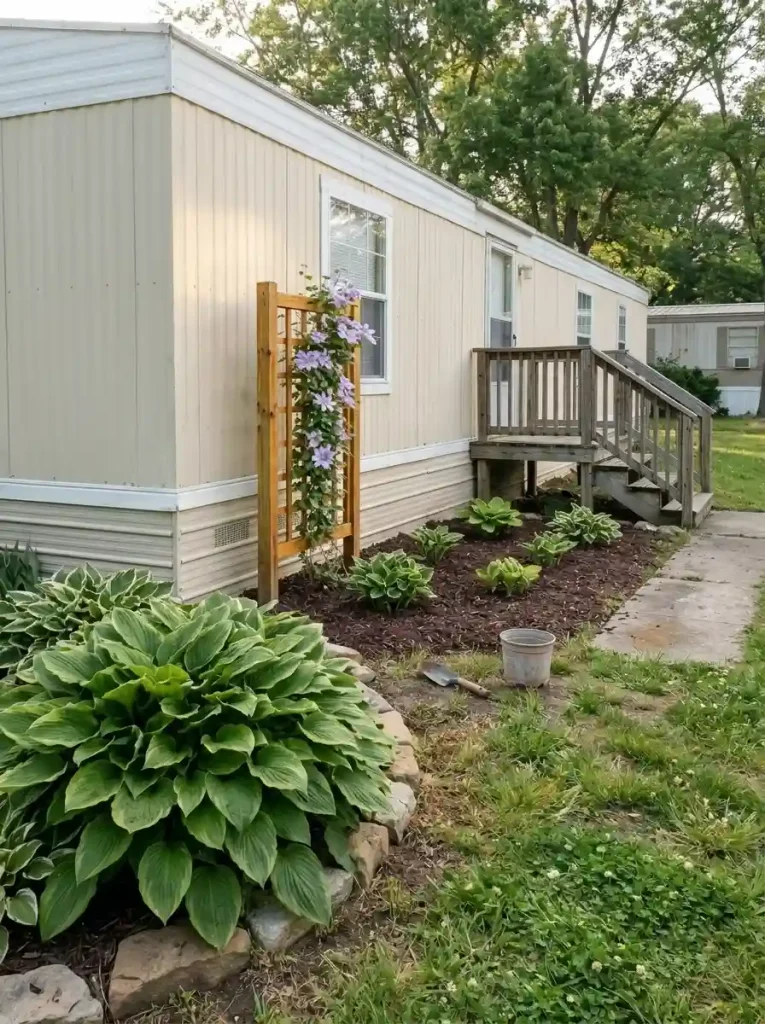
On a long single wide, a slim vertical accent can interrupt the horizontal silhouette without the cost of a hedge or a new architectural feature.
A modest freestanding trellis and a suitable climbing plant are especially attractive near a blank portion of the front yard. Choose a system appropriate to local wind conditions and follow its installation and anchoring instructions. Locate it where its mature planting will not obstruct windows, exits, utilities or service access.
There is one important exception: a very exposed or restricted lot may not have a suitable place for a trellis. In that case, choose a compact upright plant in a stable, approved container. Avoid improvised attachments to mobile home siding.
13. Create a Focal Point With One Secondhand Garden Treasure
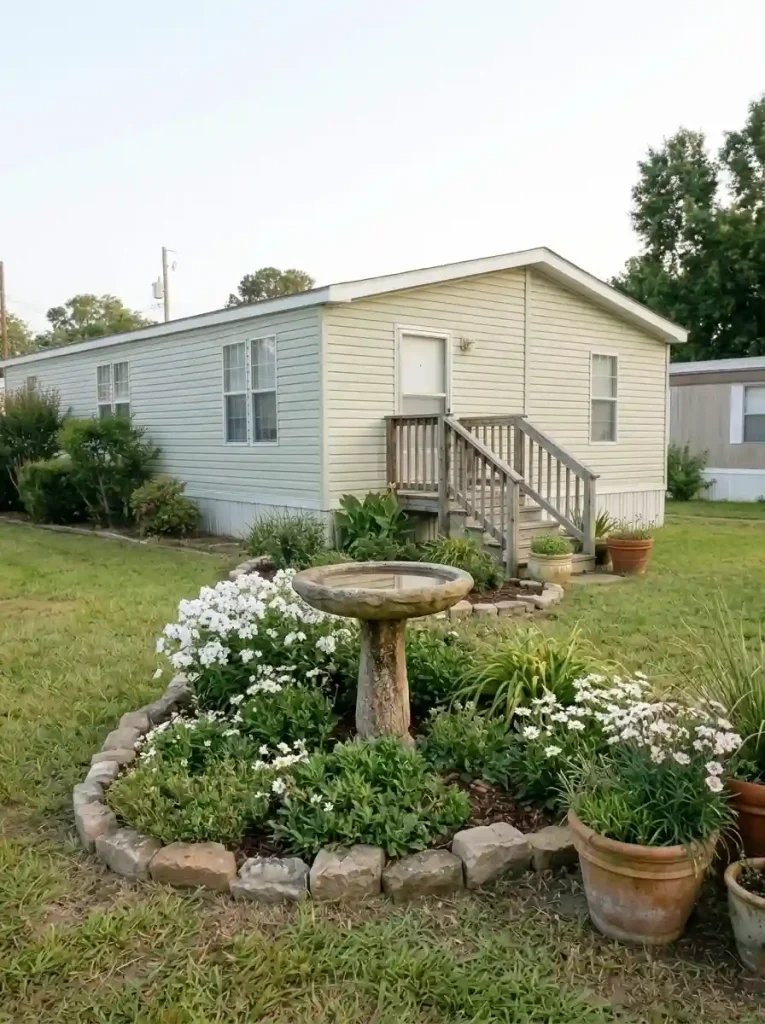
A weathered birdbath can give an open front lawn a sense of character without requiring a complete planting scheme. So can a distinctive stone ornament or a vintage watering can used as a decorative object.
Position one stable feature where it can be seen from the road, with the mobile home providing a quiet backdrop. Keep it away from the entrance route and maintenance areas.
A birdbath needs regular cleaning and fresh water, so choose another accent if that routine is impractical. Purchase a second ornament only if the first leaves a genuine visual need; small lots rarely benefit from a collection of competing showpieces.
14. Save Seasonal Color for One Easy-to-Refresh Display
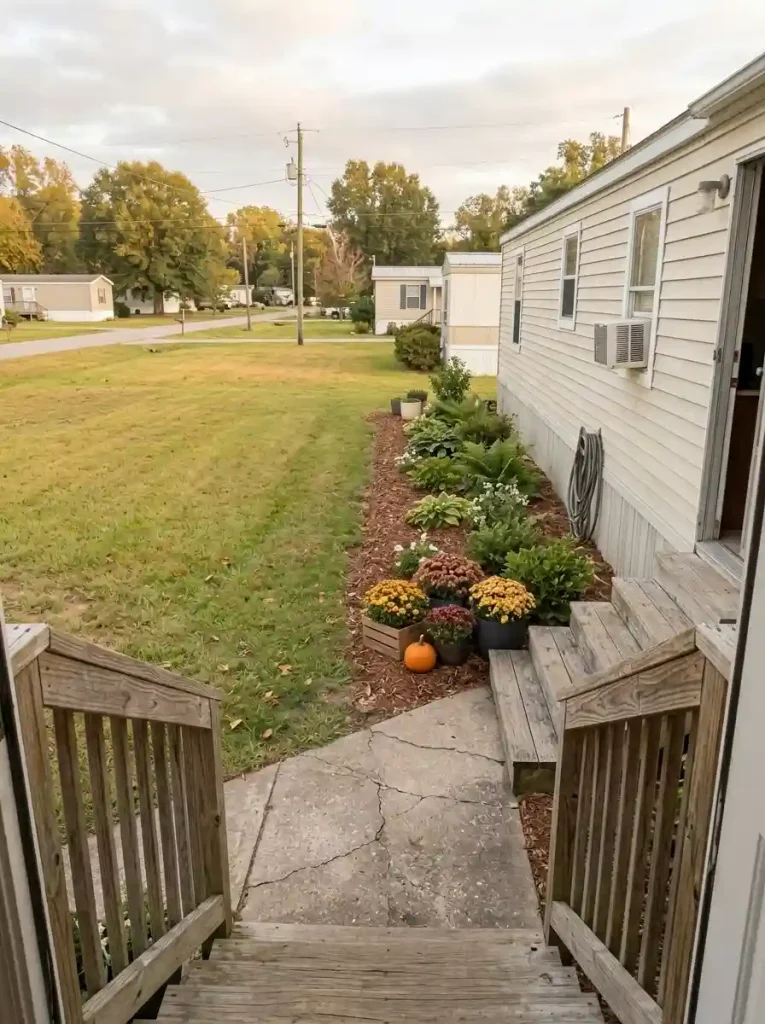
Spring and summer: Use suitable annuals or flowering containers for a burst of color near the approach.
Fall: Exchange the temporary accents for climate-appropriate flowers or natural decorations.
Winter: Retain suitable permanent greenery or leave the containers stored until conditions improve.
Concentrating the changing display in one prominent pocket reduces the area that requires repeated purchases. On a narrow manufactured-home frontage with a small raised landing, place the seasonal display on permitted ground near the approach so the front door and steps remain usable even as the display changes.
Compare the annual cost of refreshing that pocket with the cost of replacing flowers across several beds. Keep permanent plants suited to local growing conditions, and avoid arrangements that interfere with steps or access.
15. Invest in Front Yard Improvements You Can Take With You
A renter who owns the manufactured home but leases its lot faces a different financial decision from a homeowner who owns the land. A permanent garden improvement may have little recoverable value at the end of a lease.
Consider two types of expenditure:
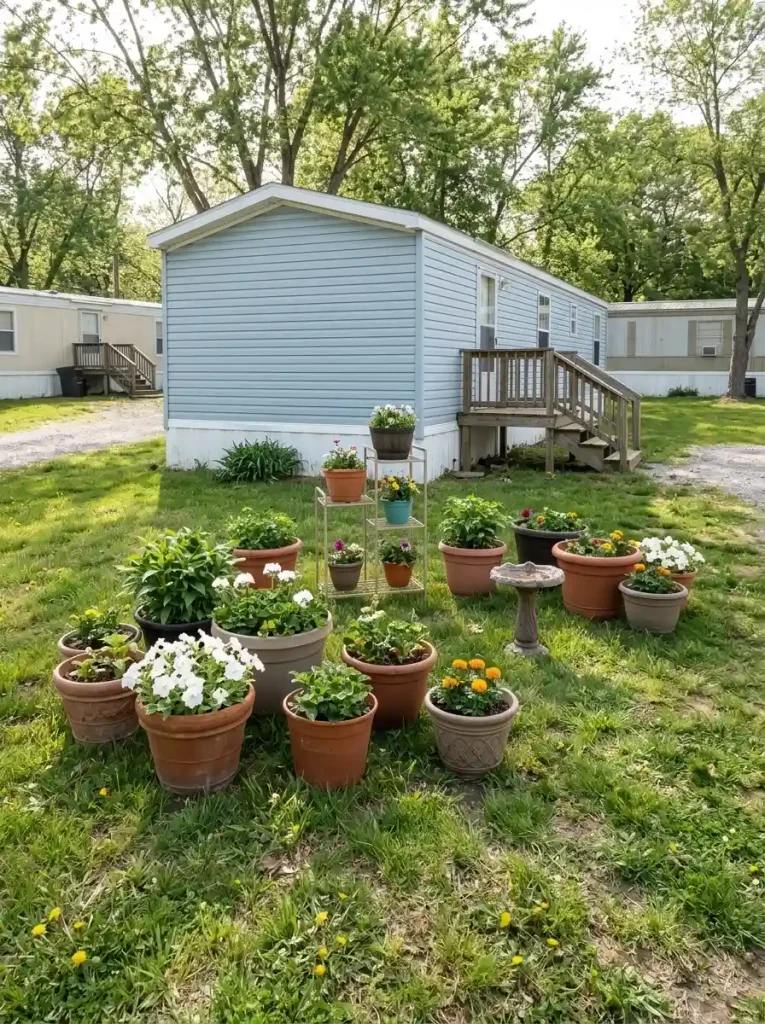
- Portable investment: Permitted containers, reusable garden accessories and stable removable accents that are practical to relocate.
- Site-bound expenditure: Excavation, fixed edging or permanent planting that may require approval and may be left behind.
Before buying, check the lease and community rules, including restrictions on removable objects. Estimate the weight of planted containers and the effort involved in moving them.
An inexpensive feature that remains useful at your next home may offer better value than an elaborate fixed installation.
A yard you can take with you.
Make improvements that fit your land and permissions.
16. Leave a Neat, Unobstructed Margin Around Service Areas
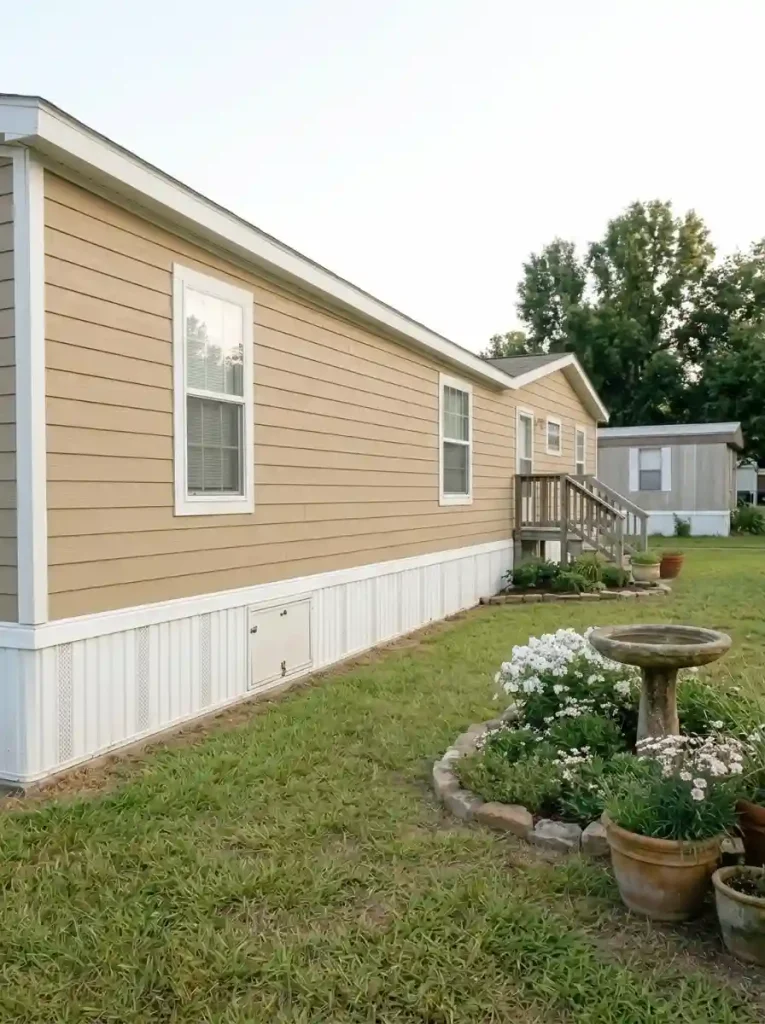
A garden feature becomes an expensive mistake if it must be removed whenever the home’s skirting or utilities need attention. Before spending on a garden beside the manufactured home, identify the openings, vents, equipment and routes that must remain accessible. Leave their required clearances unobstructed and place decorative planting beyond that area.
The federal manufactured home installation standards address site drainage and crawlspace ventilation and access.
Applicable requirements vary with the home and installation; consult the manufacturer and a qualified professional where needed.
Spending rule: Do not buy plants or screens for an area that needs to stay open. A simple margin is a finished landscape choice.
17. Recover Existing Garden Lights Before Buying New Ones
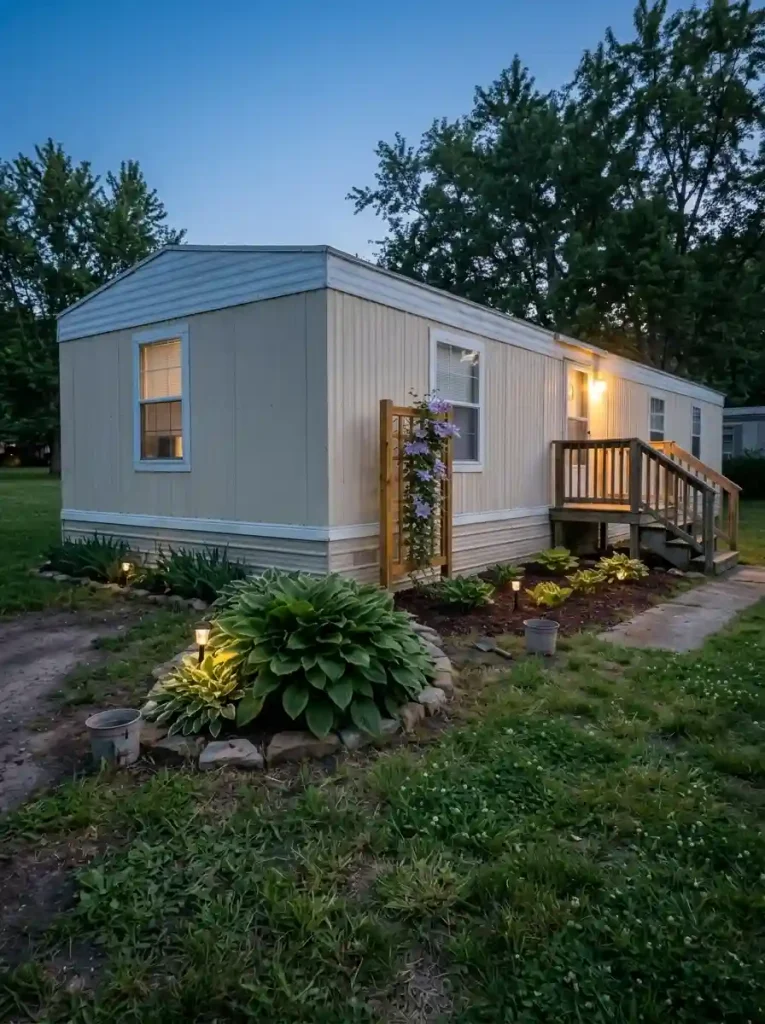
At dusk, check which of your existing decorative lights actually operate. A solar light near the sunny end of a single wide may work perfectly, while the same model beneath a shaded porch may perform poorly.
Test before replacing: Clean serviceable units as directed, check their condition and move suitable solar accents to locations that receive the manufacturer’s recommended sunlight. Replace damaged or unsuitable lights only where a decorative accent is genuinely useful.
A single working light can emphasize a favorite garden feature without buying an entire new set. Decorative solar lights must never substitute for appropriate safety illumination of stairs, entrances and walking routes.
18. Create a Tidy Outdoor Watering Station With Existing Supplies
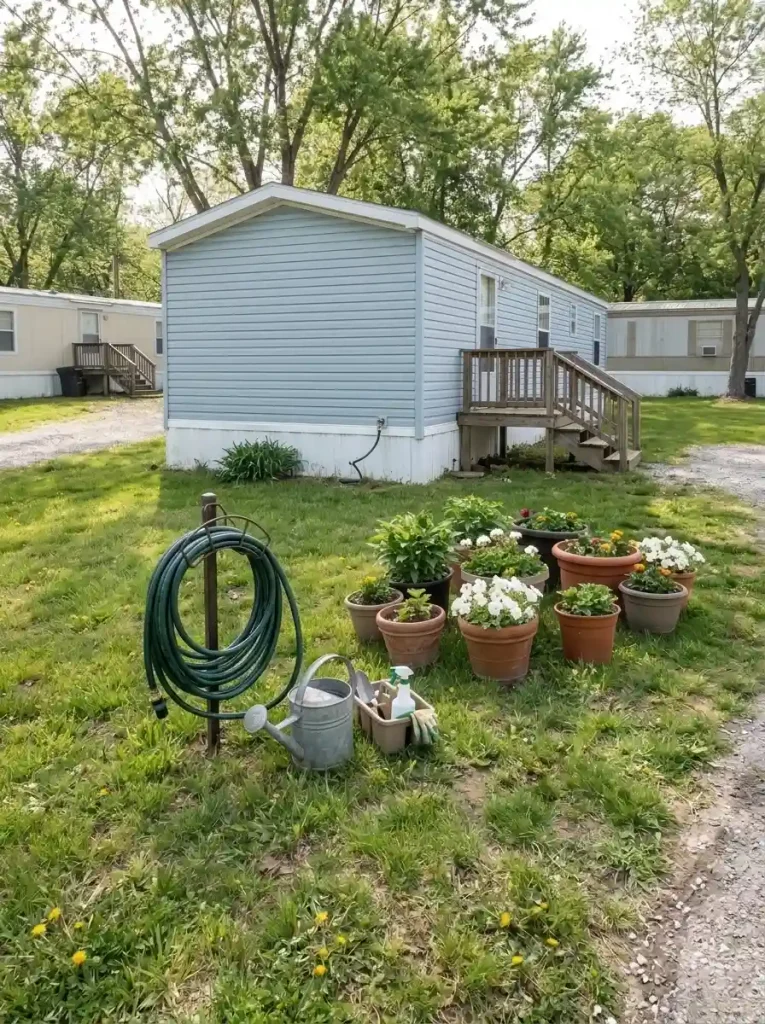
A tangled hose, loose watering cans and scattered tools can be surprisingly prominent beside the raised steps of a mobile home. Grouping them in one accessible location gives the entrance a calmer appearance and makes regular garden care easier.
Choose a permitted spot near the existing water supply, outside the walking route, required equipment clearances and skirting access. Reuse a sound freestanding hose holder or an appropriate outdoor storage container; drain and store equipment as needed for the climate. Keep the hose off walking surfaces when it is not in use.
For a compact lot, a single organized watering point can provide more everyday value than another purely decorative purchase.
19. Create a Coordinated $150 Weekend Front Yard Refresh
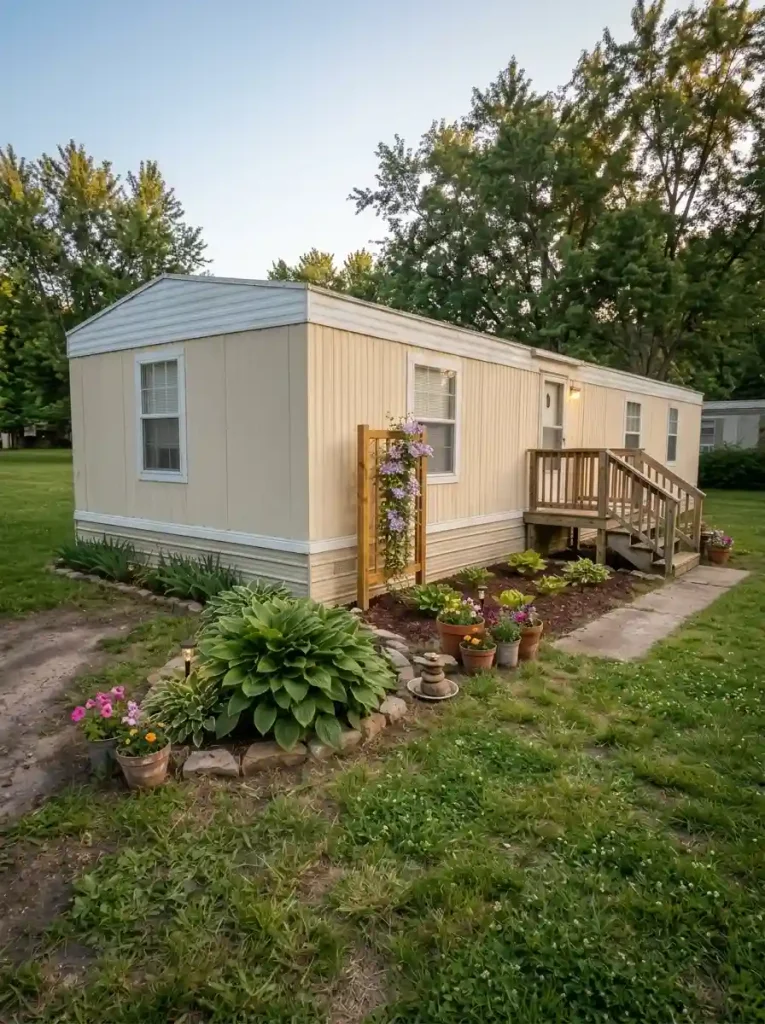
Use the existing lawn, path and entrance as the foundation for one compact makeover. These sample allocations assume the infrastructure is sound and necessary permissions are in place.
| Spending category | Illustrative allowance |
|---|---|
| Preparation and cleaning supplies | $20 |
| Suitable plants and growing supplies | $45 |
| Mulch or other garden materials | $25 |
| Reused or secondhand decorative accents | $35 |
| Reserve | $25 |
| Total | $150 |
Saturday: Recover existing materials and prepare the approved garden area.
Sunday: Arrange the planting and decorative features, leaving paths and access clear.
Adjust quantities to actual local prices; postpone anything requiring professional repairs, utility locating or approval. For future architectural projects, explore these before-and-after mobile home exterior transformations.
Your weekend makeover plan
Check off completed tasks as you go.
Schedule repairs, excavation, drainage work and projects awaiting permission separately. Checkmarks are not saved permanently.
Final Thoughts
A beautiful front yard feels connected to the home, works with everyday routines and remains manageable long after the first weekend of decorating. That is especially valuable on a compact manufactured-home lot, where each purchase occupies a noticeable share of the available space.
Choose one improvement that you can finish comfortably within your budget. Photograph the yard, set a spending ceiling and make a short inventory of usable materials before shopping. Once the project is finished, live with it for a while before deciding what comes next.
The most rewarding mobile home front yard ideas make ordinary surroundings feel cared for, personal and welcoming without sacrificing practical needs or financial peace of mind.