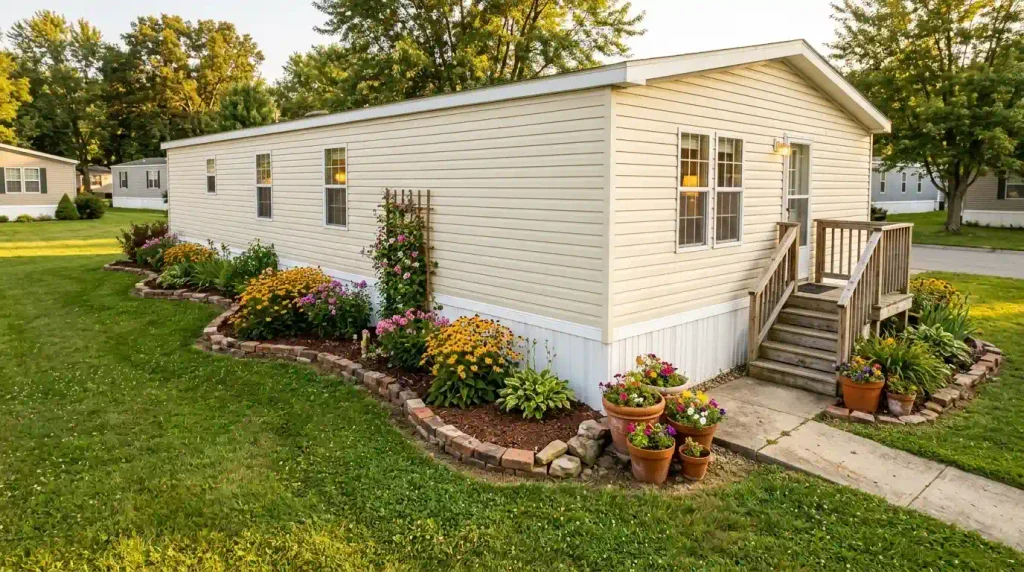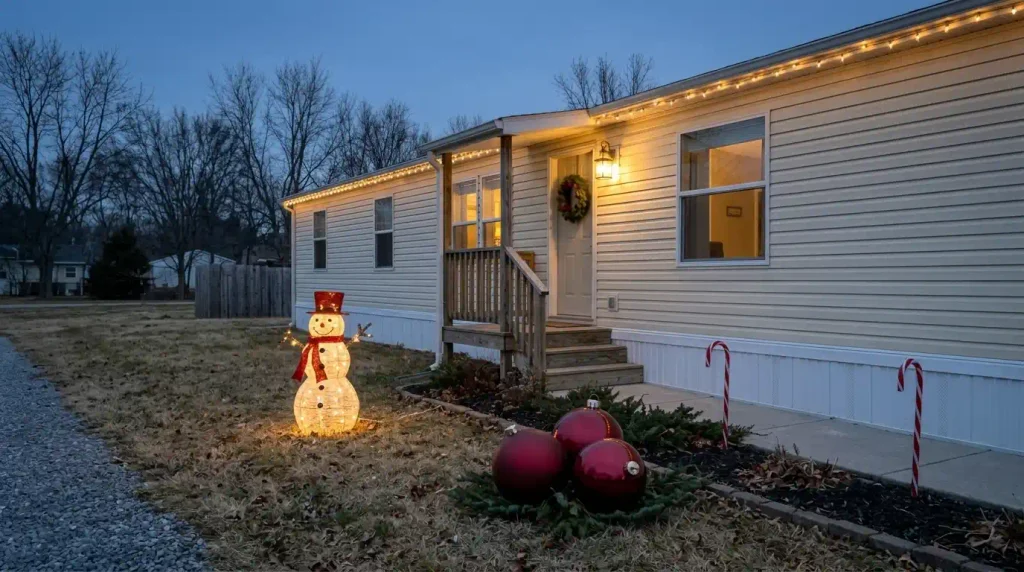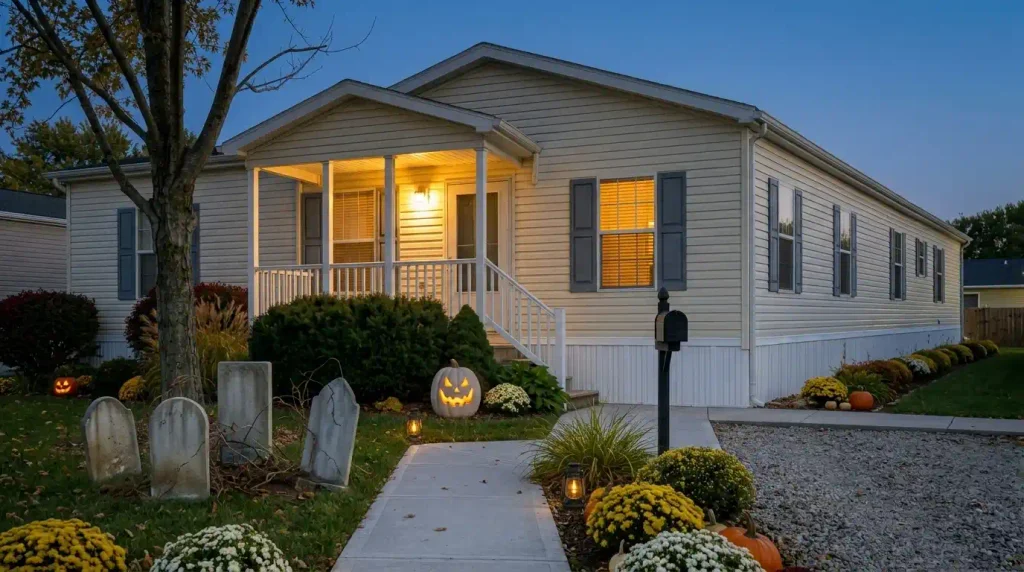
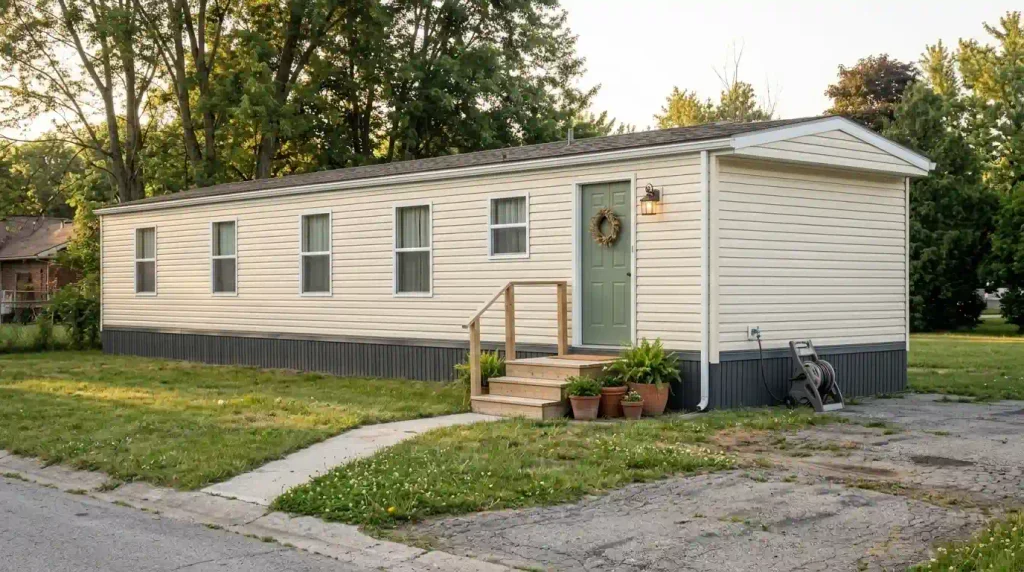
An older single-wide with ordinary siding, a small set of front steps and a modest lawn can look every bit as welcoming as a recently renovated manufactured home. Often, the difference lies in how the existing features are presented.
Coordinated windows, an inviting entrance, thoughtfully positioned greenery and a few attractive outdoor accessories can completely change the way your home feels from the street.
The best mobile home curb appeal ideas work with your home’s existing architecture, available outdoor space and everyday needs. Many improvements require little more than rearranging what you already own, while others involve a few carefully chosen purchases.
Whether you live in a manufactured-home community or on your own land, these 15 easy ideas will help you create a more beautiful exterior without committing to a major renovation.
1. Make Street-Facing Windows Look Fresh and Consistent
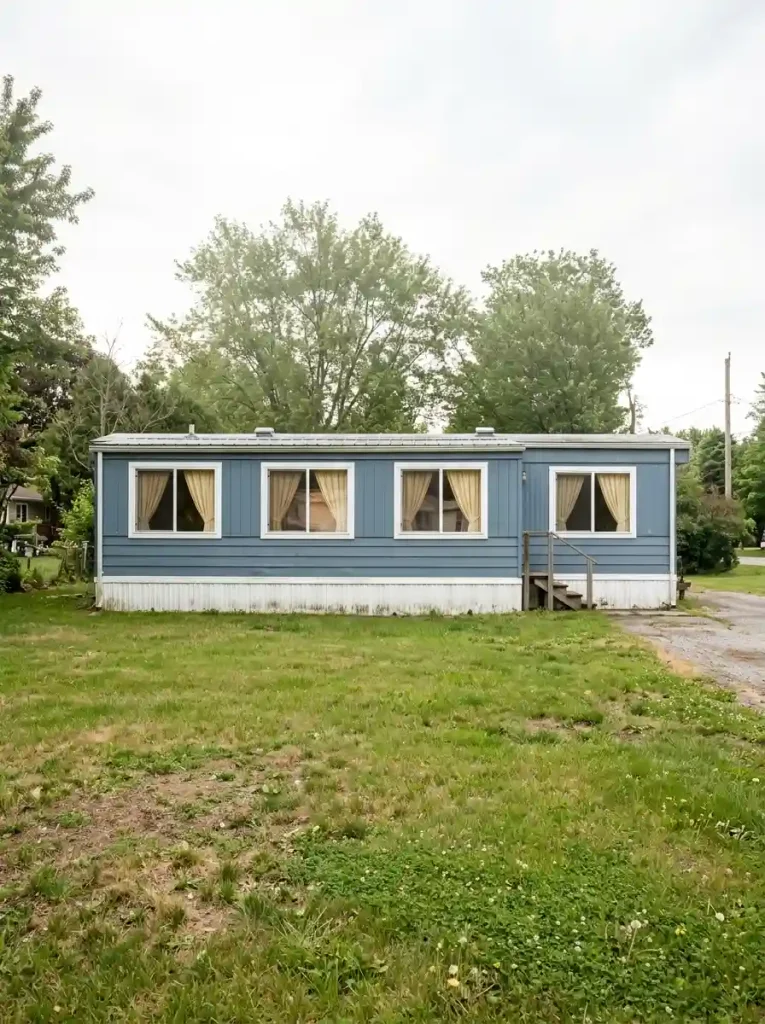
Stand back from your mobile home and look at the windows as a group. Do they feel like parts of the same exterior, or does each one introduce a completely different color and pattern?
The long, horizontal profile of a single-wide makes repeated windows particularly noticeable. Inconsistent blinds, faded curtain linings and neglected window frames can interrupt the visual rhythm of otherwise attractive siding.
Clean the accessible glass and frames using methods appropriate for their materials. Then consider coordinating the visible side of your window treatments.
White, warm ivory or soft linen-colored curtain linings can bring a sense of consistency to the frontage while allowing different decorating styles inside each room.
There is no need to replace perfectly functional curtains. Begin with the windows that sit closest together or are most visible from the street, and preserve the privacy each room requires.
2. Build Your Exterior Accents Around the Colors You Already Have
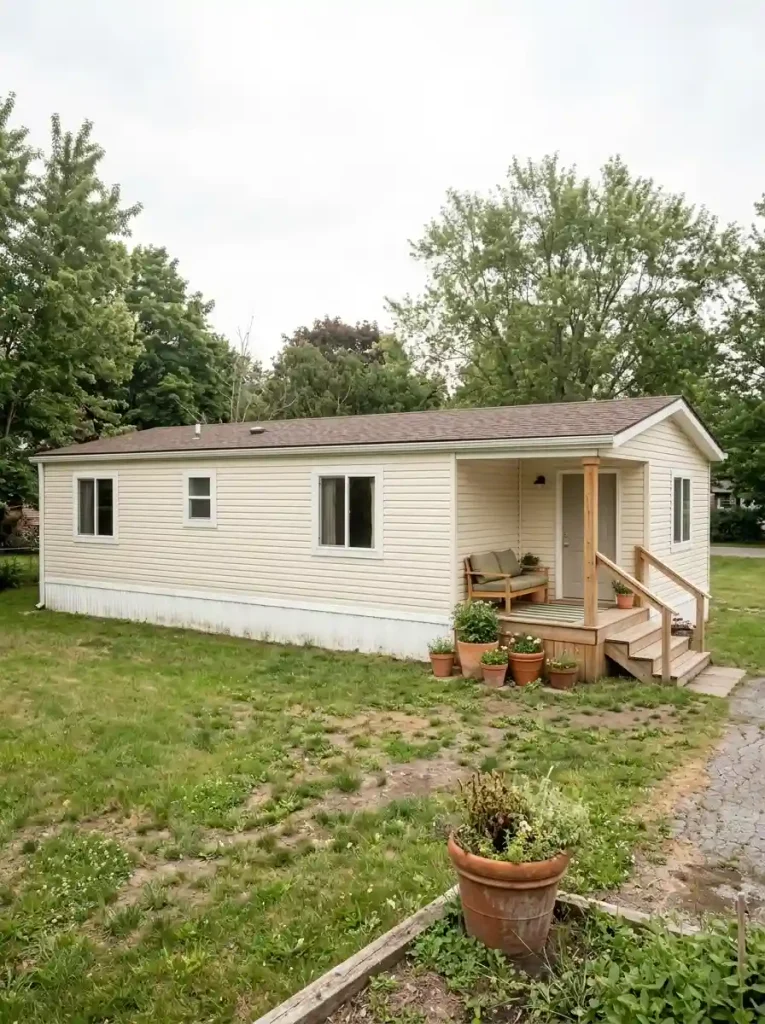
Your mobile home’s siding, roof and trim have already established a color palette. Choosing accessories that complement those permanent finishes can make the entire exterior feel more thoughtfully designed.
Use these combinations as starting points:
| Existing siding | Complementary accents | Attractive finishing material |
|---|---|---|
| Warm cream | Muted olive and terracotta | Natural wood |
| Cool gray | Navy and charcoal | Matte black metal |
| Soft sage green | Ivory and tobacco brown | Weathered timber |
| Classic white | Deep teal and warm clay | Cedar |
| Pale blue | Cream and muted navy | Natural terracotta |
Try repeating your selected accent through a planter, doormat or outdoor cushion. Two well-coordinated details often provide enough visual continuity for a compact entrance.
Check your choices against the actual siding in daylight before buying anything.
If your permanent exterior finishes are genuinely due for replacement, these mobile home exterior makeover ideas explore more substantial design directions.
Find the colors your home already wants.
Choose your existing siding. See how removable accents can complement it without a full exterior repaint.
3. Give an Off-Center Front Door a Stronger Visual Presence
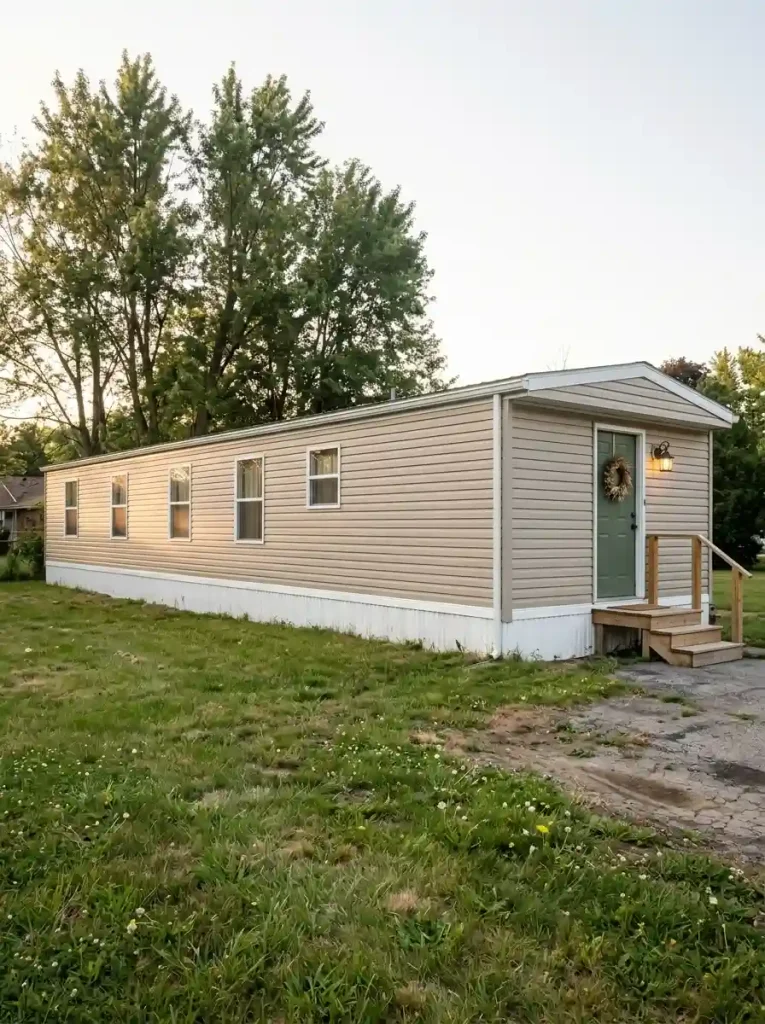
Picture a long, cream-colored single-wide with its entrance positioned toward one end. A large stretch of siding separates the front door from the windows on the opposite side.
Trying to decorate both ends equally can make the exterior feel disconnected from its actual entrance.
Give the doorway its own recognizable identity with a distinctive wreath, an attractive existing light fixture or a carefully selected door accessory. The surrounding elevation can remain comparatively understated.
A warm botanical wreath against a muted green door, for example, draws attention toward the entrance without requiring additional furniture or a larger porch.
For double-wide homes with more centrally positioned entrances, keep the doorway visually prominent while allowing existing architectural features to provide balance.
These single-wide exterior makeover ideas offer further inspiration for working with the proportions of a long manufactured home.
4. Make the Mailbox Feel Like Part of Your Home’s Exterior
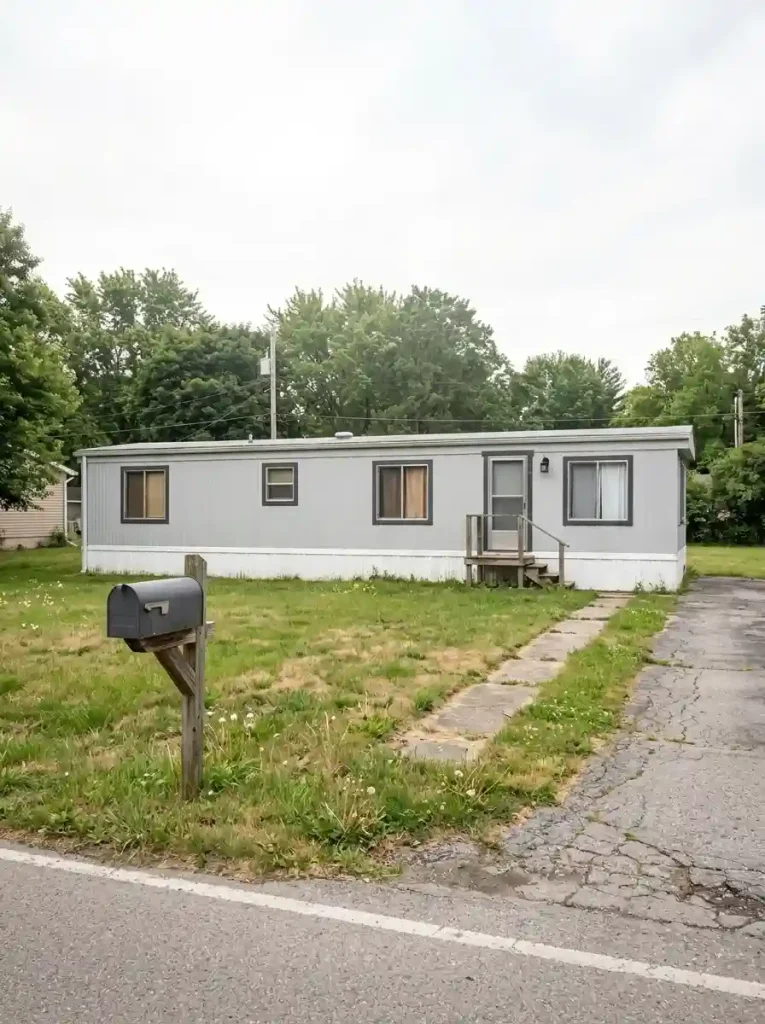
An individual roadside mailbox offers a small opportunity to establish the personality of your home before visitors reach the front yard.
A charcoal finish can echo dark window trim, while a soft cream mailbox may complement light-colored siding. Existing timber details on the house can also provide inspiration for coordinating a permitted mailbox support.
You may discover that cleaning your current mailbox and replacing damaged or faded markings is enough to improve its appearance.
Keep delivery requirements in mind: Follow the USPS mailbox installation and maintenance guidance before replacing or repositioning an individual mailbox.
For manufactured-home communities with shared mailbox stations, leave those facilities unchanged unless the responsible management has authorized modifications. Concentrate your decorating efforts within your own permitted frontage instead.
5. Choose a Doormat That Fits Your Actual Front Landing
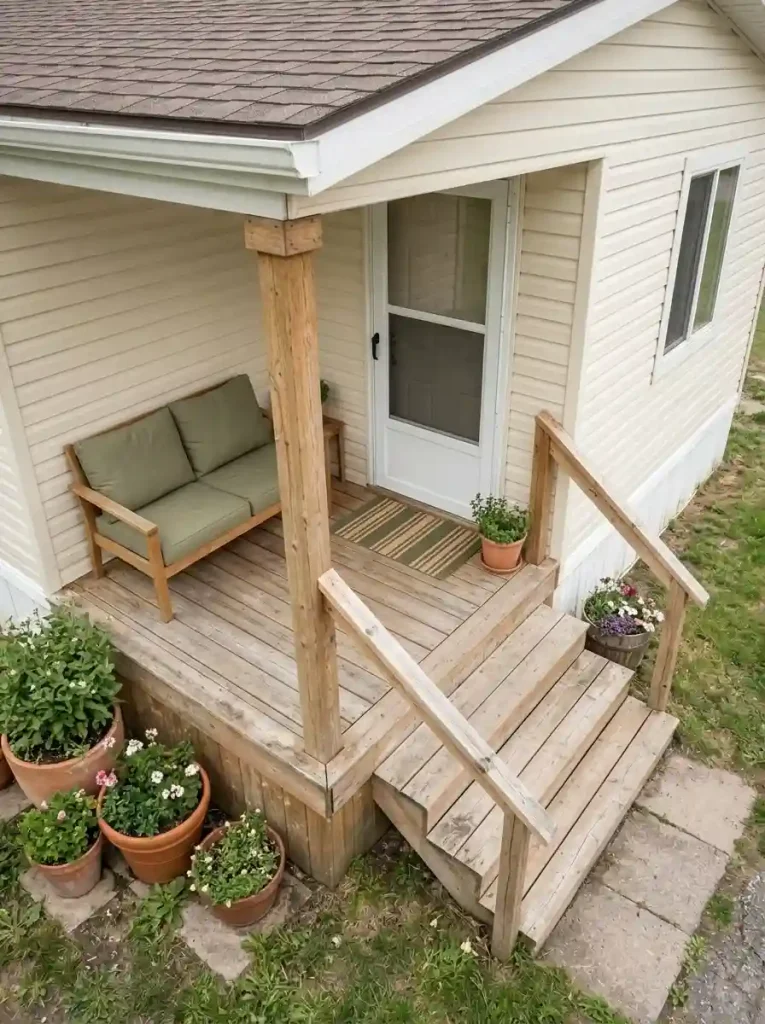
Large layered rugs look beautiful on spacious farmhouse porches, but many mobile homes have a very different entrance configuration.
A compact elevated landing may contain a railing, a storm door and only a limited area between the doorway and steps. An oversized mat can make that space appear crowded and interfere with everyday movement.
Before purchasing a new mat, check:
- The usable surface between the doorway and steps.
- The movement of the main door and storm door, where present.
- Whether the mat can sit flat without loose edges or obstructing the route.
A low-profile mat with a simple stripe, subtle botanical design or natural-looking texture can introduce character without dominating the landing.
Save layered outdoor rugs for larger porches with enough space to accommodate them properly. Let the dimensions of your entrance determine the decoration, not the other way around.
A little more room to arrive.
Compare the same compact raised landing with two different mat arrangements. The dashed arc shows a conceptual outward-opening door.
- Measure the usable landing, not just the width of the door.
- Open the main and storm doors fully, where present, and check for catching.
- Check mat stability, flat edges, and an unobstructed route to the steps. Skip the mat if there is no suitable position.
6. Make Your House Numbers Easier to Spot From the Road
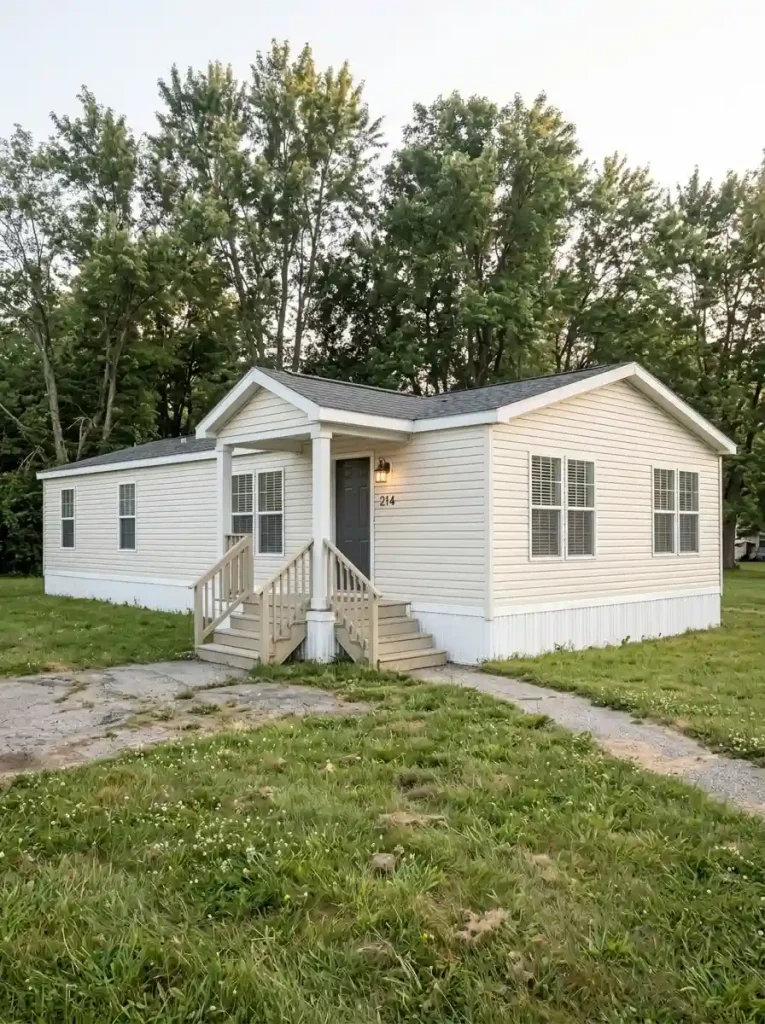
Attractive house numbers serve a practical purpose, especially in manufactured-home communities where several properties may have similar exterior finishes.
Begin with a simple visibility test. Look toward your home from a safe position along its usual approach and see whether the address is immediately recognizable.
| Existing problem | Suitable improvement |
|---|---|
| Silver numbers disappear against pale siding | Choose a contrasting dark finish |
| Numbers blend into dark exterior surfaces | Consider a lighter finish |
| Porch posts conceal the address | Review an authorized, more visible position |
| Decorations surround the numbers | Simplify the surrounding area |
Check community requirements and local addressing rules before making permanent changes. Preserve any required unit identification.
For a more decorative finish, coordinate the numbers with existing door hardware or exterior trim. Keep their shape clear and readable rather than choosing an elaborate design that sacrifices visibility.
7. Add Removable Exterior Decor That Works for Renters
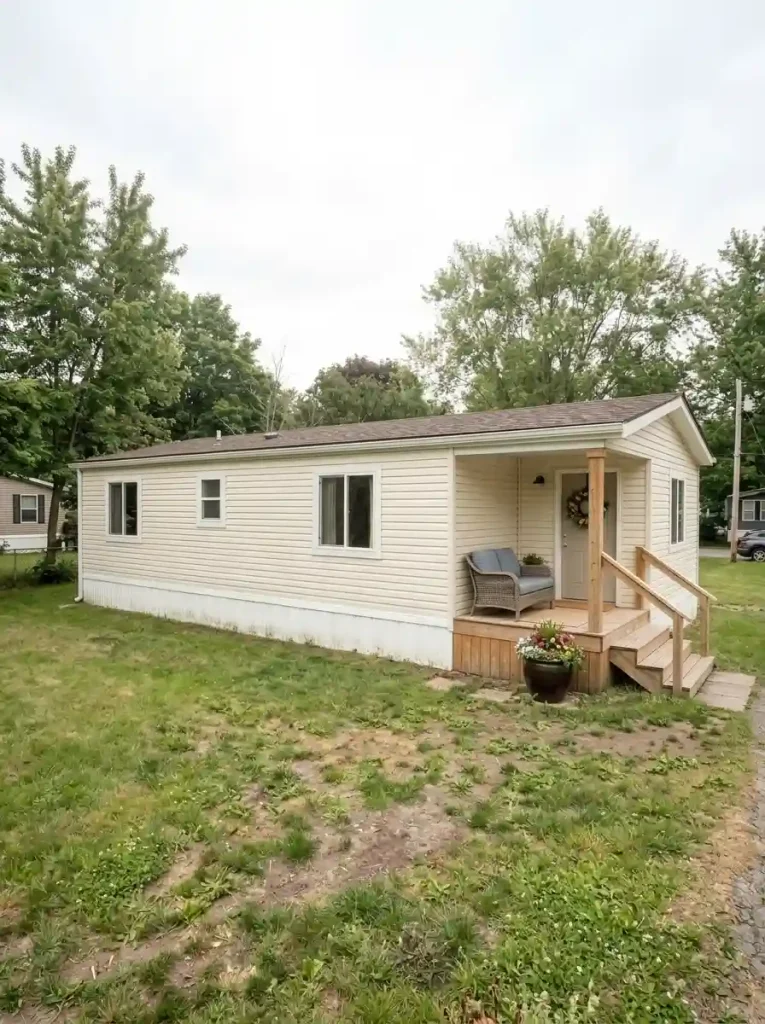
One of the advantages of removable outdoor decorating is that your investment does not have to remain with the property when you move.
For rented mobile homes, classify potential improvements according to how permanent they are.
Easy to take with you: Outdoor cushions, suitable freestanding containers, removable mats and portable decorative accessories.
Check permission first: Hanging decorations on siding, repainting doors, attaching window boxes or installing new exterior fixtures.
Leave for an authorized project: Changes to steps, railings, structural components or permanent utility connections.
Even homeowners may face restrictions when their manufactured home sits on a leased community lot.
Prioritize weather-appropriate accessories that can be repositioned or reused elsewhere. A smaller collection of portable, coordinated decorations is usually more valuable to a renter than an elaborate arrangement designed for one particular entrance.
Keep the doorway, service areas and shared walking routes unobstructed.
Make it feel like yours.
Open the situation that matches your home. Compare more than one if your ownership and permission arrangements overlap.
A I rent the home; approval is unclear
Reuse suitable mats, cushions and stable freestanding containers where permitted. Avoid buying items that only fit this particular entrance.
Confirm before you attach.Check the rental agreement and community rules before hanging objects on siding or altering the door.
B I own the home but lease the lot
Coordinate existing accessories on your own permitted frontage. Check the lot agreement before changing the yard, mailbox, path or exterior finishes.
Preserve shared access.Keep items within authorized boundaries and away from utilities and communal routes.
C I own the home and land
Begin with sound existing features. Replace worn accessories only when useful, and follow manufacturer guidance and applicable rules for fixed changes.
Separate repair from decor.Arrange appropriate assessment for damaged skirting, steps or electrical equipment before styling around them.
D Specific cosmetic changes are approved
Combine portable accessories with the specific approved cosmetic changes. Retain any documentation and respect finish or installation conditions.
Do not assume broader authorization.Structural, electrical and utility work may need separate permissions and qualified professionals.
8. Use One Statement Planter Where It Will Make the Biggest Difference
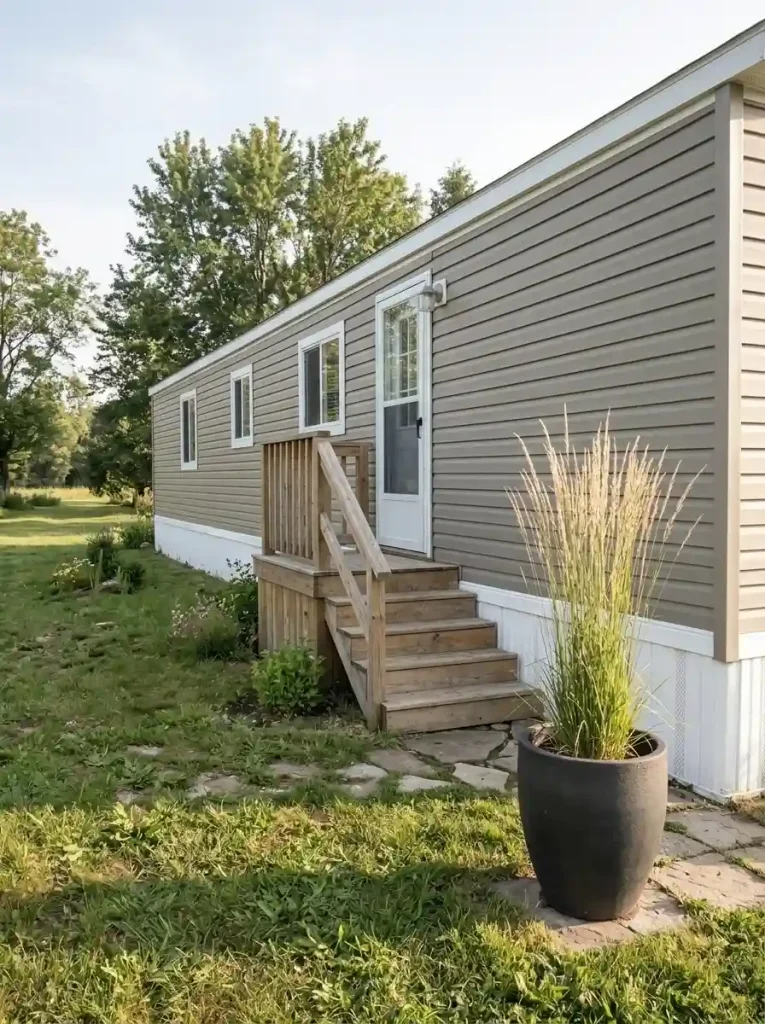
A row of small, unrelated flowerpots can disappear against the long exterior of a manufactured home. One distinctive container, positioned carefully, often has a stronger decorative presence.
The most suitable shape depends on the available space.
For a narrow single-wide frontage, consider a tall, stable planter containing locally suitable ornamental grass or upright foliage. Its vertical form introduces contrast against the home’s horizontal siding.
A double-wide with an open entrance area may benefit from a broader container filled with layered greenery and flowering plants.
Choose a stable location beside the entrance or within an existing decorative area. Avoid placing the container on a small landing where it would compete with the doorway or walking route.
Where an established garden already surrounds the home, select a planter that complements its colors. These flower bed ideas for mobile homes can help connect your container display to the broader landscape.
9. Give Everyday Outdoor Essentials a Less Visible Home
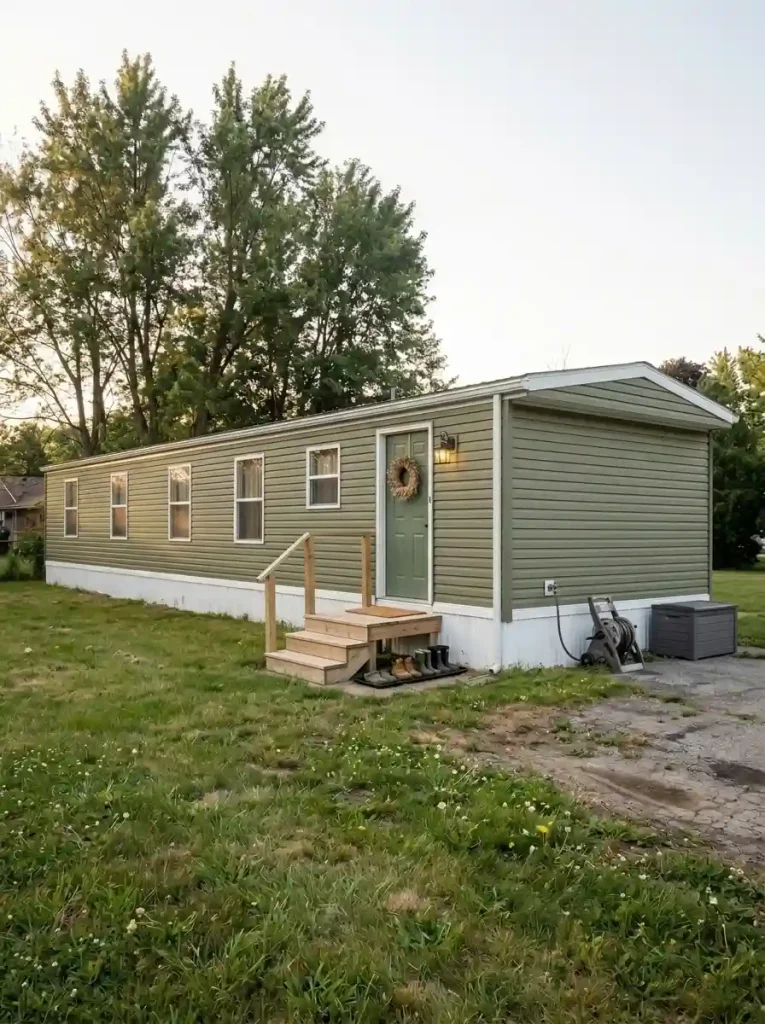
A garden hose may need to remain close to an outdoor faucet. Watering cans belong near the plants you use them for, and muddy garden shoes need somewhere convenient to dry.
The problem begins when all those everyday items accumulate beside the front entrance.
Observe which outdoor supplies repeatedly end up in the same visible location. Their position usually reveals where a more practical storage arrangement would be useful.
A compact hose reel near an appropriate faucet, a small weather-resistant container for gardening supplies or a designated footwear area can reduce visual clutter without interrupting your routine.
On a narrow manufactured-home lot, avoid shifting the problem into a neighboring access route or directly in front of utility equipment.
Store frequently used supplies where they remain convenient, but keep the entrance and street-facing frontage available for more attractive features.
10. Let Your Existing Skirting Form a Clean Visual Base
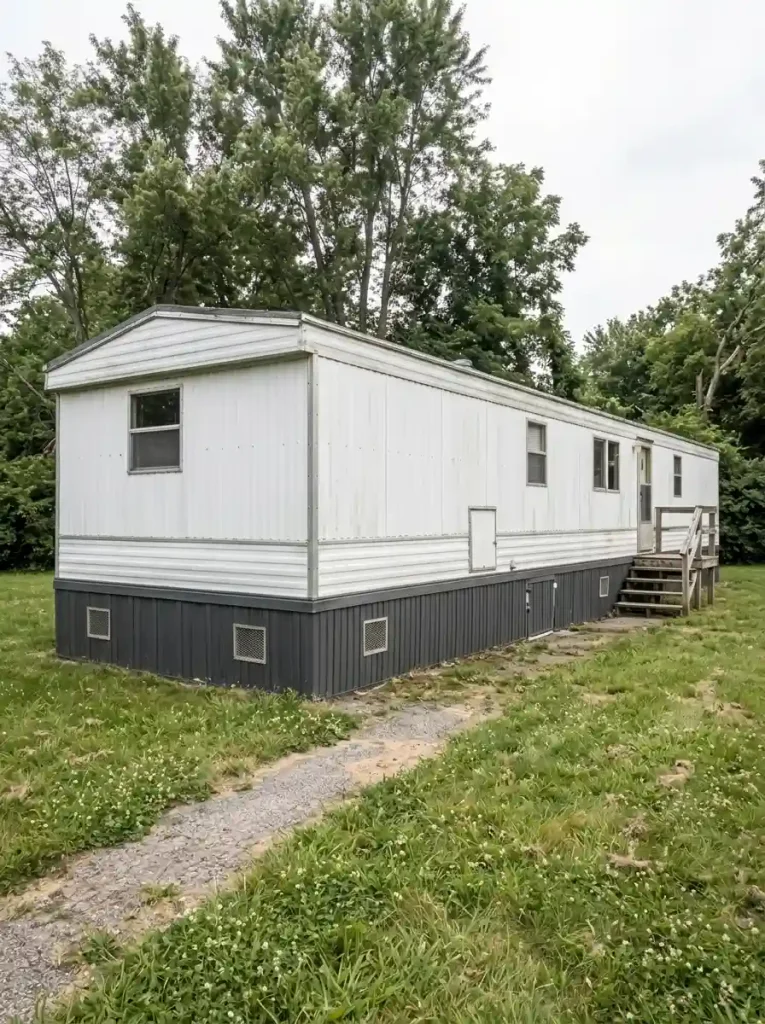
Look at the line where your mobile home meets the ground. Leaves, discarded containers and miscellaneous decorations can make this area appear untidy, even when the skirting itself remains in good condition.
Where the skirting is sound, remove loose debris and unnecessary objects from the surrounding ground. Allow its existing color and texture to form a relatively uninterrupted visual base beneath the siding.
Resist the temptation to conceal damaged panels or openings with dense decorations.
The HUD Model Manufactured Home Installation Standards address skirting and crawlspace ventilation for applicable installations. Preserve required ventilation openings, drainage and maintenance access, and follow the guidance appropriate to your particular home.
Loose, damaged or deteriorating skirting should be assessed before you invest in cosmetic styling.
For projects that require actual repairs or refinishing, these mobile home exterior ideas on a budget provide additional inspiration.
11. Give Your Front Porch One Clear Decorating Theme
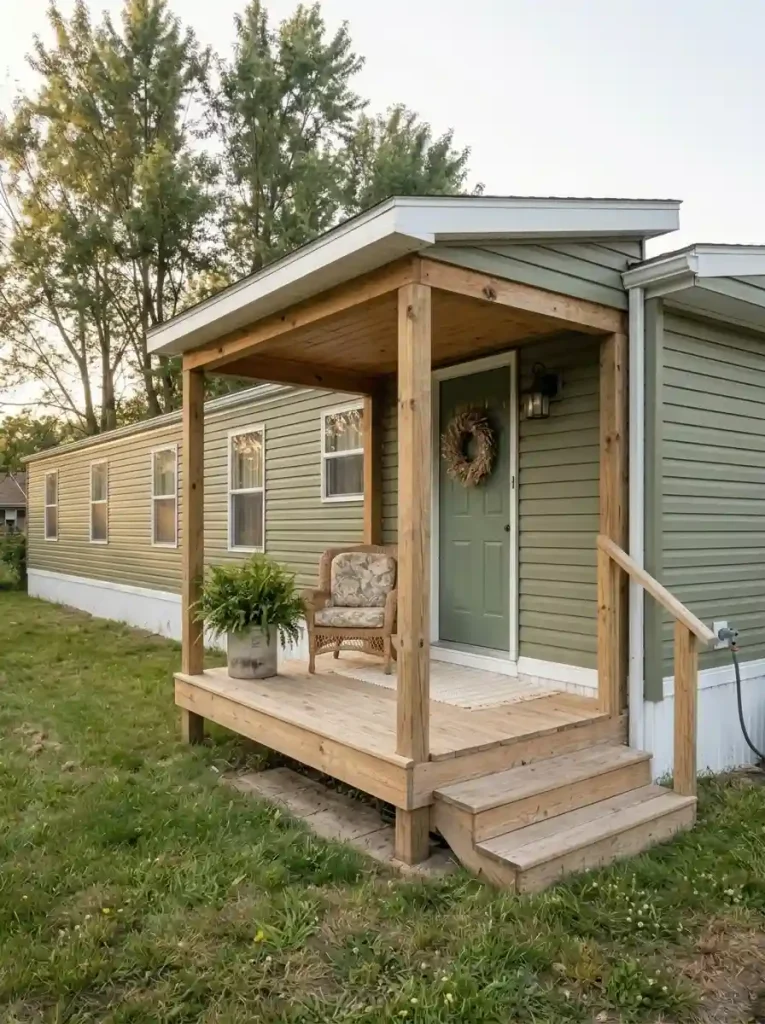
A small porch can quickly lose its character when every accessory introduces a different decorating style.
Imagine a wicker chair with a bright floral cushion, a geometric rug, colorful plastic pots and several unrelated signs. Removing just a few competing elements could make that same porch look more inviting.
Choose a direction that complements the home:
Charming cottage: Soft floral textiles, muted colors and natural-looking baskets.
Relaxed modern: Simple cushions, dark metal finishes and restrained patterns.
Warm rustic: Earthy tones, suitable timber finishes and understated outdoor accessories.
Work with your existing furniture before purchasing replacements. A single chair with a fresh cushion and an attractive mat may be enough for a compact porch.
For entrances used primarily as passageways, leave furniture out entirely if it compromises available space. These small mobile home porch ideas explore additional ways to make limited outdoor space feel more intentional.
12. Create a Welcoming Approach After Sunset
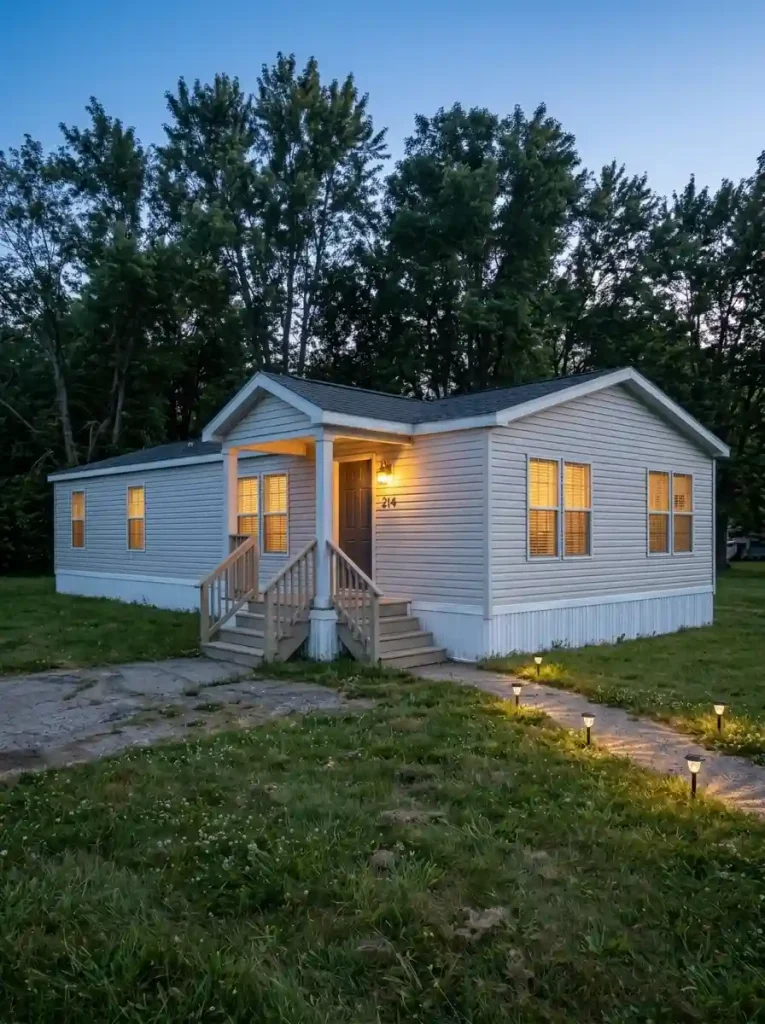
A mobile home’s evening appearance can be surprisingly different from its daytime exterior. Siding colors become subdued, porch posts cast shadows and illuminated details begin to define the entrance.
Switch on your existing outdoor lights and inspect the property after dusk from a safe location.
Notice whether the doorway stands out, whether the raised steps remain clearly visible and whether an existing fixture produces unnecessary glare.
Sometimes the most useful first step is simply cleaning a suitable existing fixture or arranging replacement of a failed bulb with a compatible one.
Outdoor-rated solar lights can add gentle definition along an established pathway where the site receives sufficient sunlight. Treat them as supplemental decorative lighting, not the sole illumination for steps or potentially hazardous walking surfaces.
Consider neighboring homes when positioning lights on a close-set community lot. Electrical repairs and new hardwired installations should be handled by a qualified professional.
See your home in a different light.
Explore the same manufactured-home frontage across five viewing conditions. Identify the next useful inspection, not simply the brightest scene.
13. Style the Side of Your Mobile Home That Visitors See First
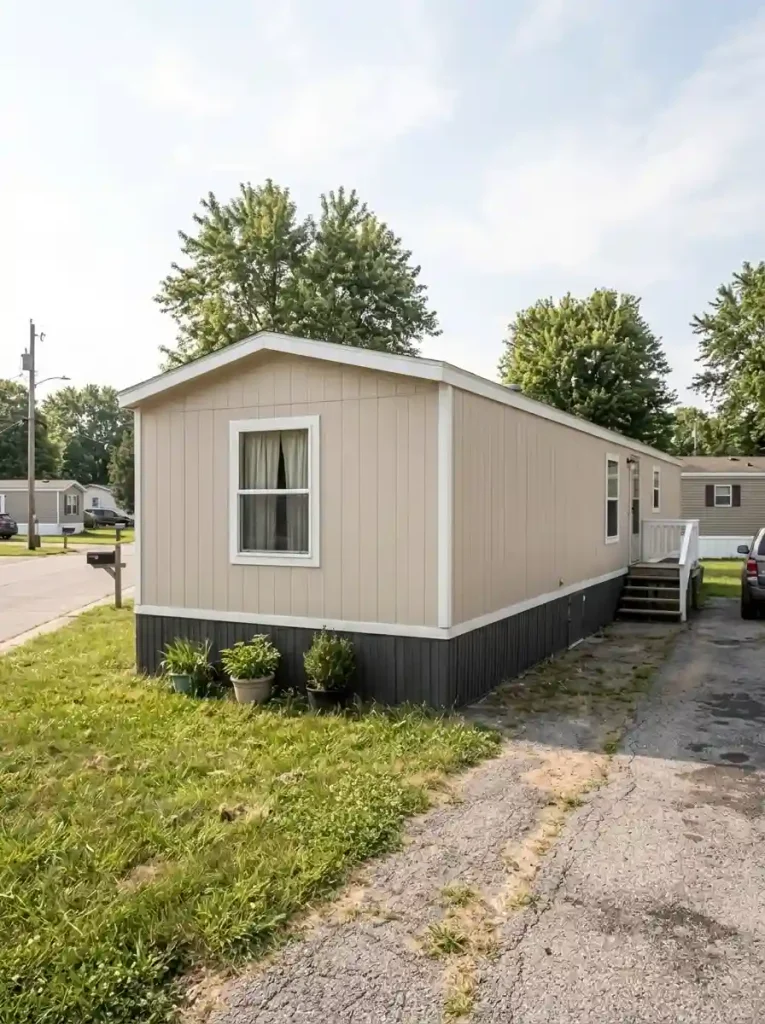
Not every manufactured home presents its main entrance directly toward the street.
Some single-wides sit lengthwise beside a driveway, while corner lots may expose the short end wall before visitors see the doorway. Decorating only the front entrance can leave the most prominent exterior surface looking unfinished.
Walk along the normal approach to your property and identify its first recognizable view.
For a prominent end wall: Give existing features, such as a window or trim, the same visual attention as those on the main elevation. Remove distracting accessories from the foreground.
For a long side-facing elevation: Pay particular attention to consistent window presentation and a clearly identifiable route toward the actual entrance.
You do not need to decorate every exposed surface. Concentrate your effort where the existing architecture is most visible.
These mobile home front yard ideas offer additional inspiration for coordinating the surrounding yard with your home’s position.
14. Choose Exterior Decorations That Look Good All Year
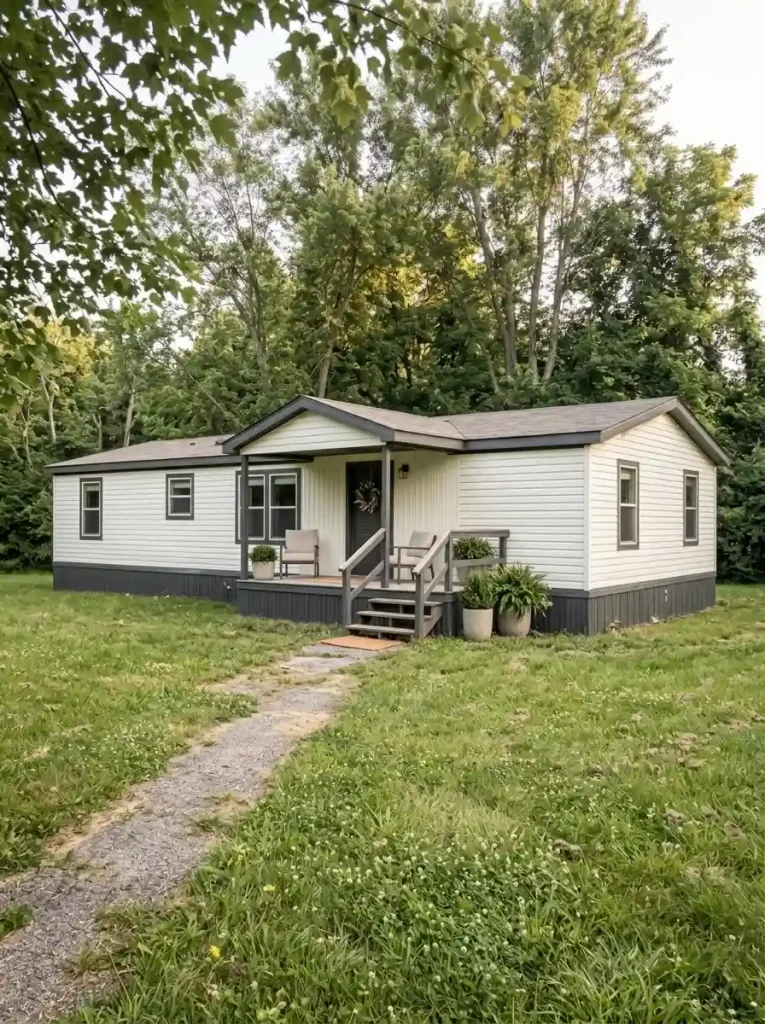
The easiest seasonal decorating routine begins with an exterior that already looks attractive between holidays.
Build a simple collection of reusable outdoor accessories in colors that complement your mobile home. Neutral containers, understated textiles and weather-appropriate decorative materials can provide a flexible foundation.
Then introduce a small seasonal layer.
Fresh botanical accents can brighten spring. Autumn arrangements introduce earthy warmth. Winter greenery and a suitable wreath can give the entrance a festive appearance without replacing every accessory.
For mobile homes with limited storage, this approach avoids accumulating large collections of decorations that are used only briefly each year.
Choose accessories that are appropriate for your local climate and exposure. Bring vulnerable items indoors during severe weather, and secure or remove decorations that could become unstable in strong winds.
A beautiful everyday exterior makes seasonal decorating much easier.
15. Reveal the Edges of Your Existing Front Walkway
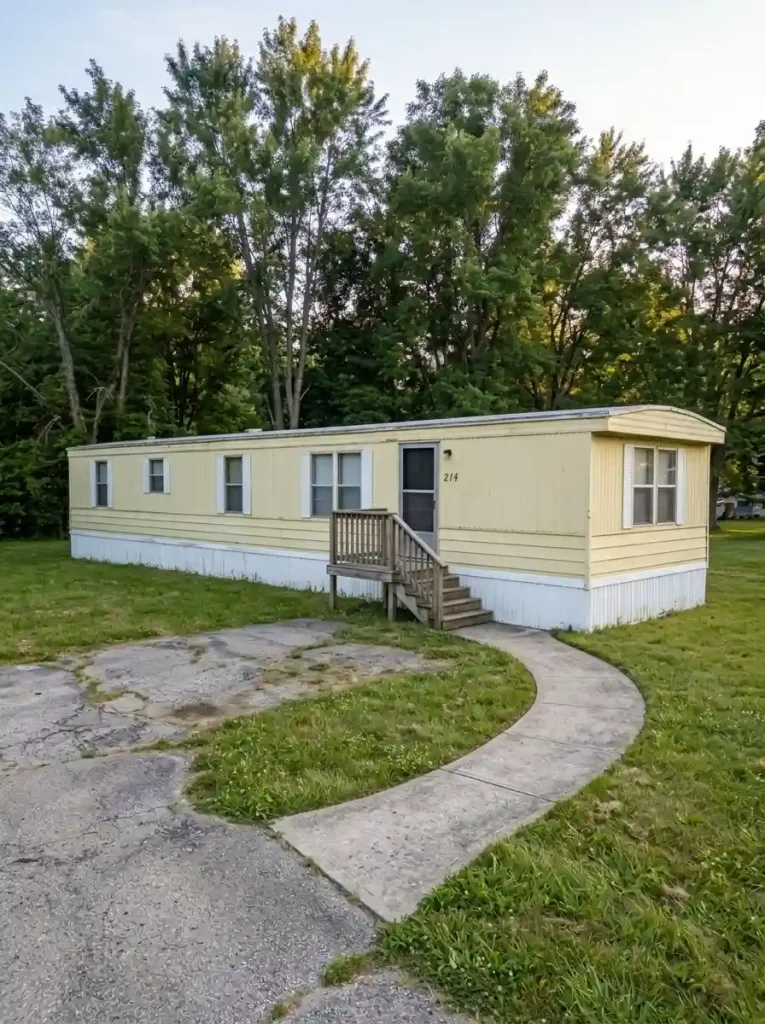
A walkway can lose much of its visual appeal without actually needing replacement.
Grass growing over its edges, scattered leaves and containers positioned too close to the walking surface can make an otherwise functional route look neglected.
Where an existing path is in good condition, sweep away loose debris and carefully maintain its established lawn or planting edges. Move unnecessary decorations away from the route.
The improvement is particularly noticeable on compact mobile-home lots, where the walkway may occupy much of the space between the driveway and raised entrance.
Exposing the original boundaries of an existing concrete or paver path can give the entire approach a cleaner, more deliberate appearance without introducing new materials.
Cracked, unstable or uneven walking surfaces require appropriate assessment and repair. Do not disguise damaged areas with rugs, loose stones or decorative objects.
A tidy, clearly defined walkway should make the entrance feel more welcoming while preserving comfortable access.
Choose your time. Make it count.
Pick a realistic time window. Begin with sound existing features, and focus on the details that change the first impression most.
Final Thoughts
Improving your mobile home’s curb appeal does not require turning the property into something it was never designed to be.
Its existing windows, siding, entrance and outdoor space already provide the foundation for an attractive exterior.
Start with a photograph taken from your usual approach. Identify three details that most affect the first impression, then choose the mobile home curb appeal ideas that address those particular areas.
For one property, the biggest improvement might come from coordinated accessories and an attractive planter. For another, a tidy walkway, refreshed window presentation and a more recognizable entrance may make the greatest difference.
Give the improvements time to work together before adding more.
A beautiful mobile home exterior is ultimately one that feels cared for, welcoming and comfortably suited to the people who live there.