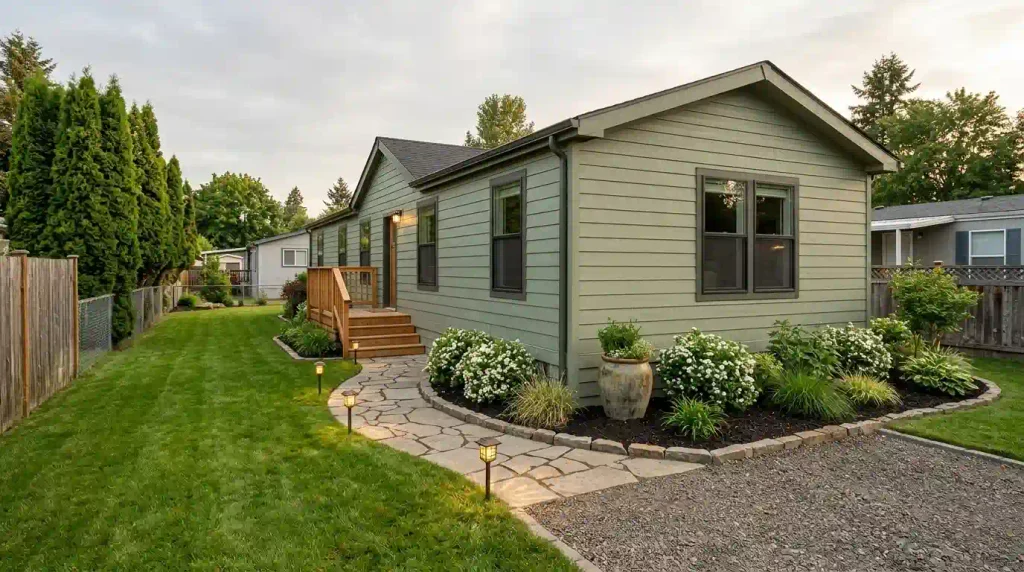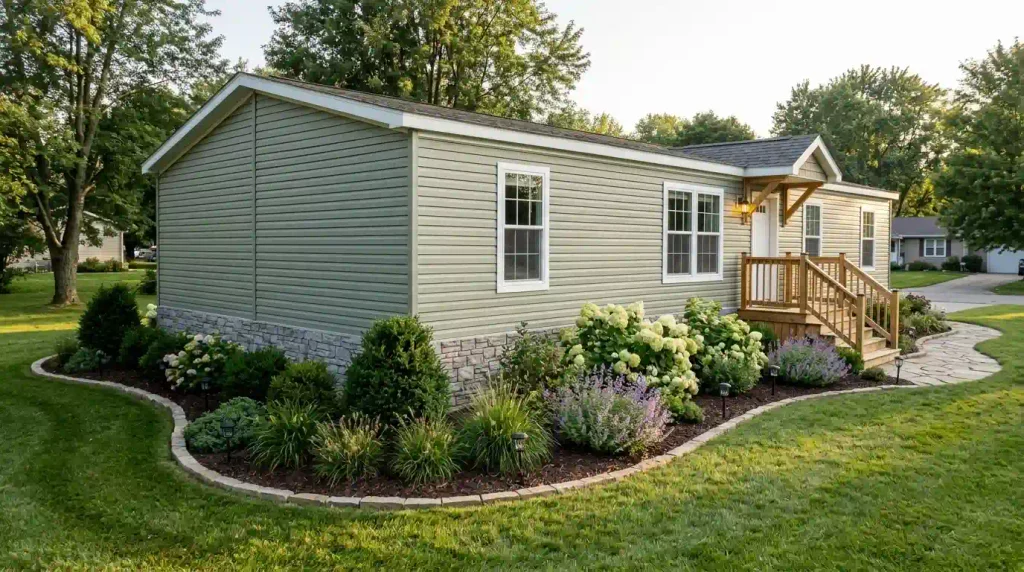
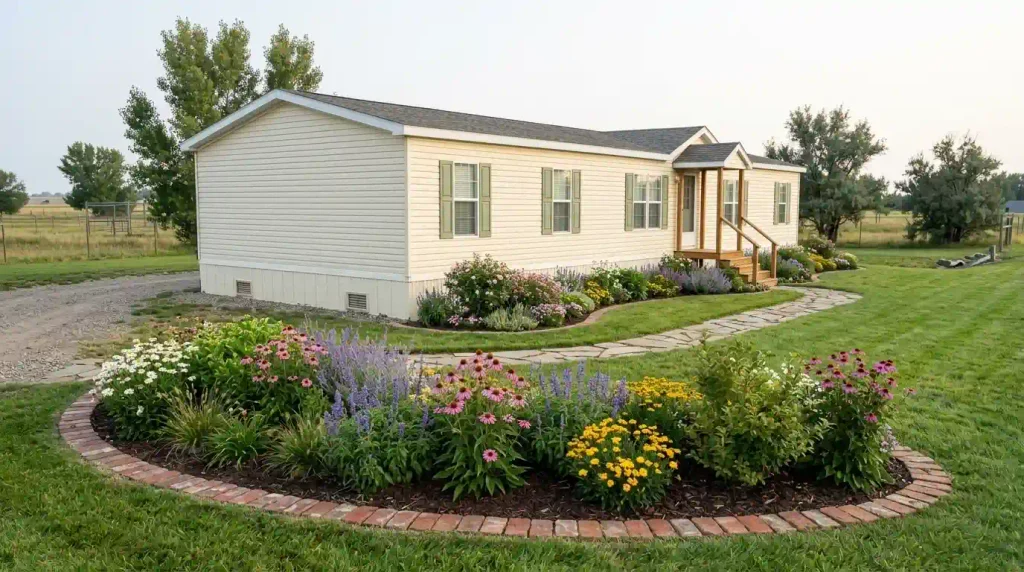
A beautiful flower bed can give a mobile home an entirely different personality. A simple ribbon of colorful perennials can soften its long exterior, a cottage-inspired garden can make the entrance feel more welcoming, and a carefully planted island can turn an empty lawn into an attractive focal point.
The most successful mobile home flower bed ideas respond to the property’s architecture, available yard space and growing conditions. A narrow single-wide lot calls for a different planting arrangement than a double-wide surrounded by an open lawn. Similarly, flowers that thrive beside a sunny driveway may struggle beneath a covered porch.
Before breaking ground, check your community’s landscaping rules, contact the applicable 811 utility-location service and arrange identification of private utility lines where necessary. Preserve drainage, skirting ventilation and maintenance access throughout the project.
Whether you prefer romantic cottage flowers, contemporary borders or affordable, low-maintenance planting, these 17 ideas will help you create a garden that feels beautifully connected to your mobile home without demanding more space, money or maintenance than you can comfortably manage.
1. Create a Narrow Perennial Ribbon Along Your Mobile Home
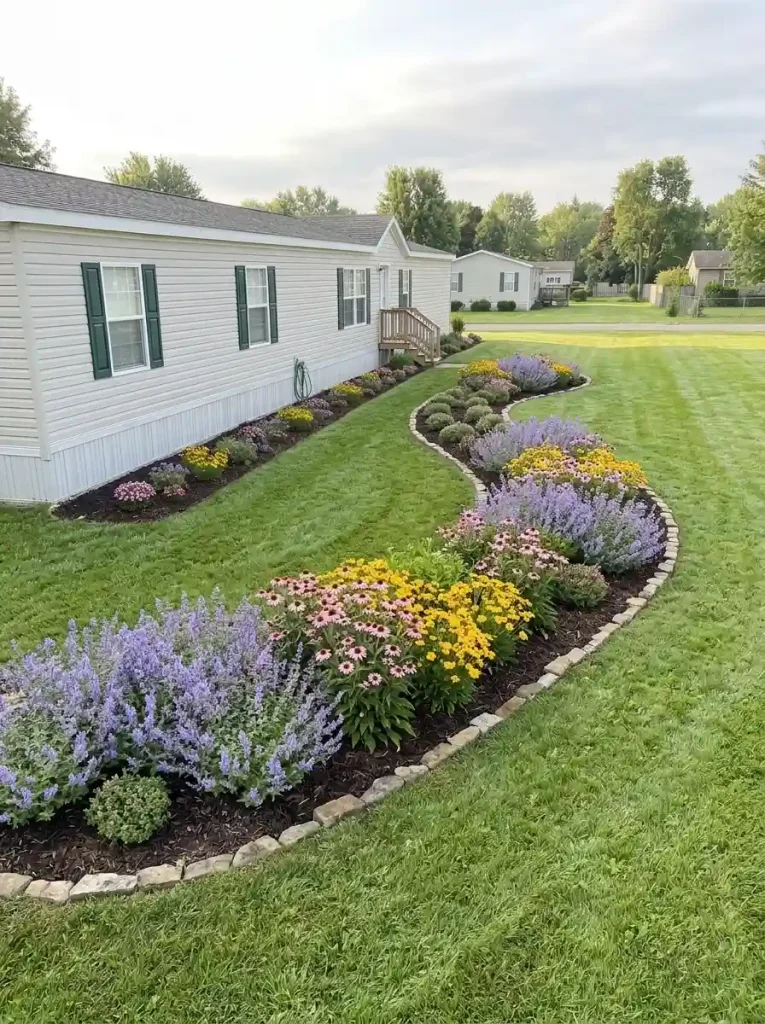
A long single-wide can look more inviting with a slender ribbon of flowers following its exterior. Repeating compact flowering perennials introduces color and movement without sacrificing valuable lawn space.
For a sunny, well-drained location, consider low-growing dianthus, compact coreopsis and suitable hardy geraniums. Arrange them in recurring groups, leaving breaks wherever maintenance access is necessary.
The most important measurement is the usable planting depth after accounting for the home’s service requirements. Compare that space with each cultivar’s mature spread. A particularly shallow border may accommodate only one staggered row of flowers.
Where the available strip becomes too narrow, interrupt the ribbon with open spaces or separate planting pockets.
Explore these single wide landscaping ideas for additional ways to coordinate your garden with a compact lot.
Find your perfect flower bed shape
Compare three conceptual layouts before digging. Tan strip = illustrative service zone. Plans are not to scale; actual clearances vary.2. Shape a Sweeping Flower Bed With Color That Flows
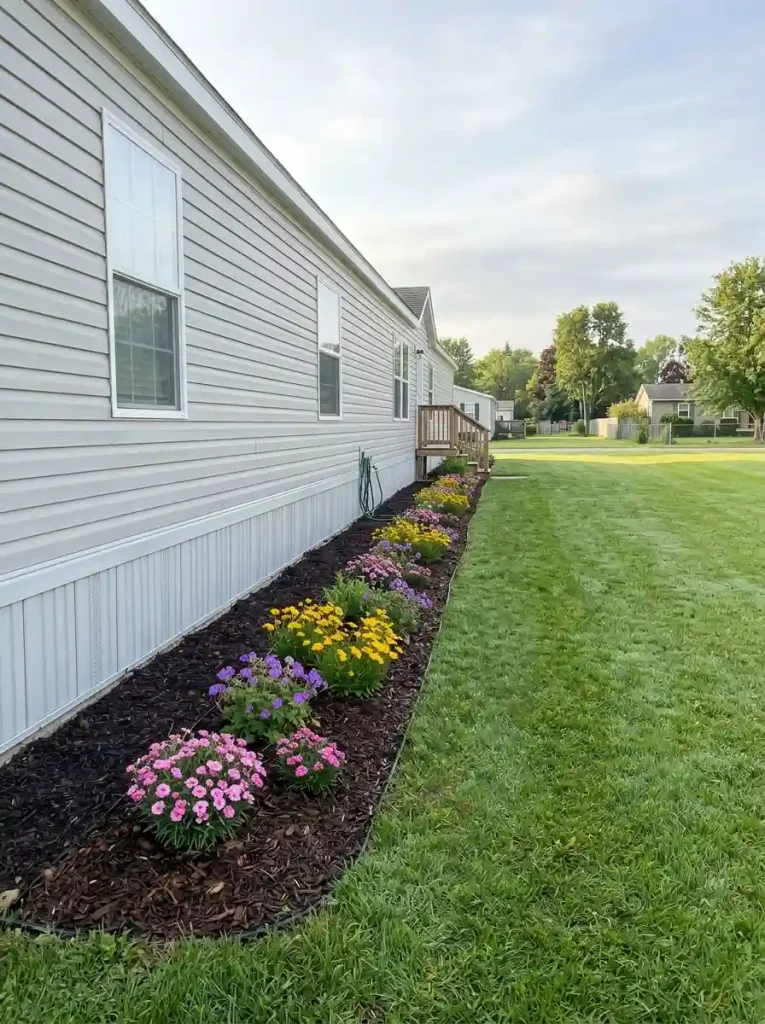
Picture a sweeping garden filled with lavender-blue salvia, pink coneflowers and golden coreopsis. Each color occupies its own loose grouping, with neighboring flowers gradually blending into the next section.
A curved bed introduces softer lines beside the rectangular proportions of a manufactured home, particularly a double-wide with a generous front lawn.
Lay a garden hose on the ground to experiment with the outline. Concentrate larger flowering groups within the wider sections of the curve and use compact varieties where the bed narrows.
Repeat one of the flower colors farther along the border to connect the composition visually. Select plants with compatible growing requirements and check that the finished curve leaves sufficient space for mowing and everyday yard activities.
3. Frame Your Front Steps With an Asymmetrical Flower Garden
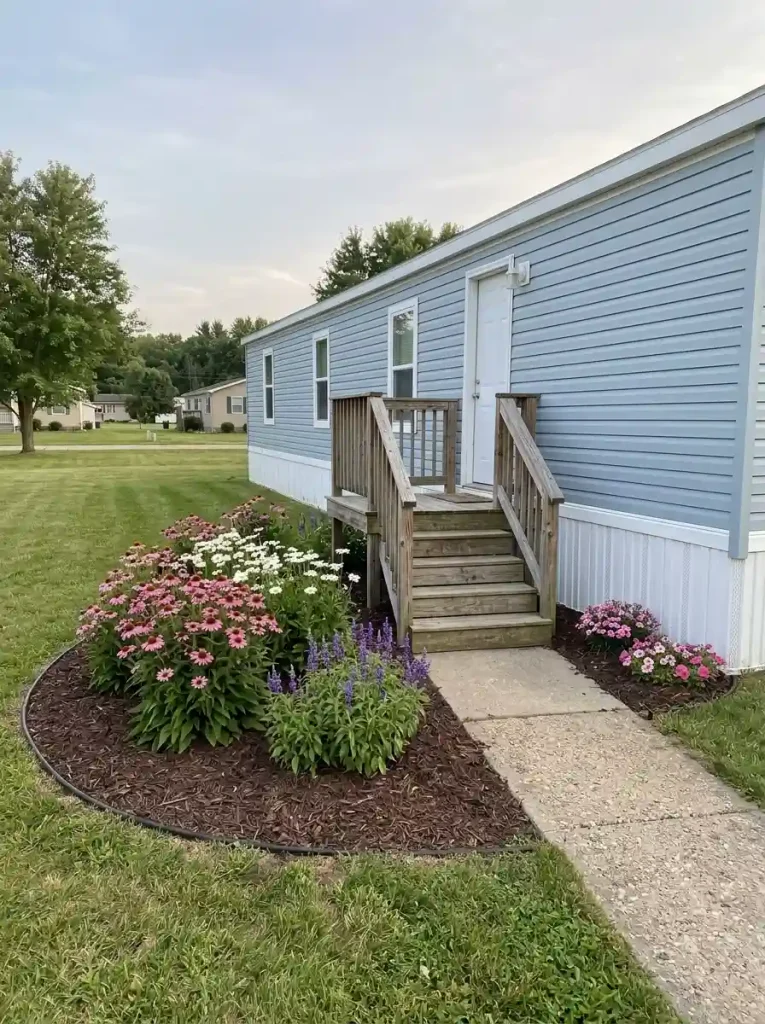
Mobile home entrances often sit away from the center of the façade. Matching flower beds on both sides of the stairs can consume unnecessary space or make an already narrow approach feel crowded.
Try an asymmetrical planting arrangement:
- The larger side: A generous group of medium-height flowering perennials, such as compact coneflowers in a sunny location.
- The smaller side: A compact grouping that repeats one flower color from the larger bed.
- The pathway edge: Low-growing flowers that remain clear of walking surfaces as they mature.
The repeated colors establish a visual connection between both sides while accommodating the actual dimensions of the entrance.
Keep thorny plants away from narrow steps and preserve access to handrails and landings.
For a more coordinated entrance transformation, combine this garden arrangement with these mobile home porch ideas.
4. Plant Low-Growing Flowers Beneath Mobile Home Windows
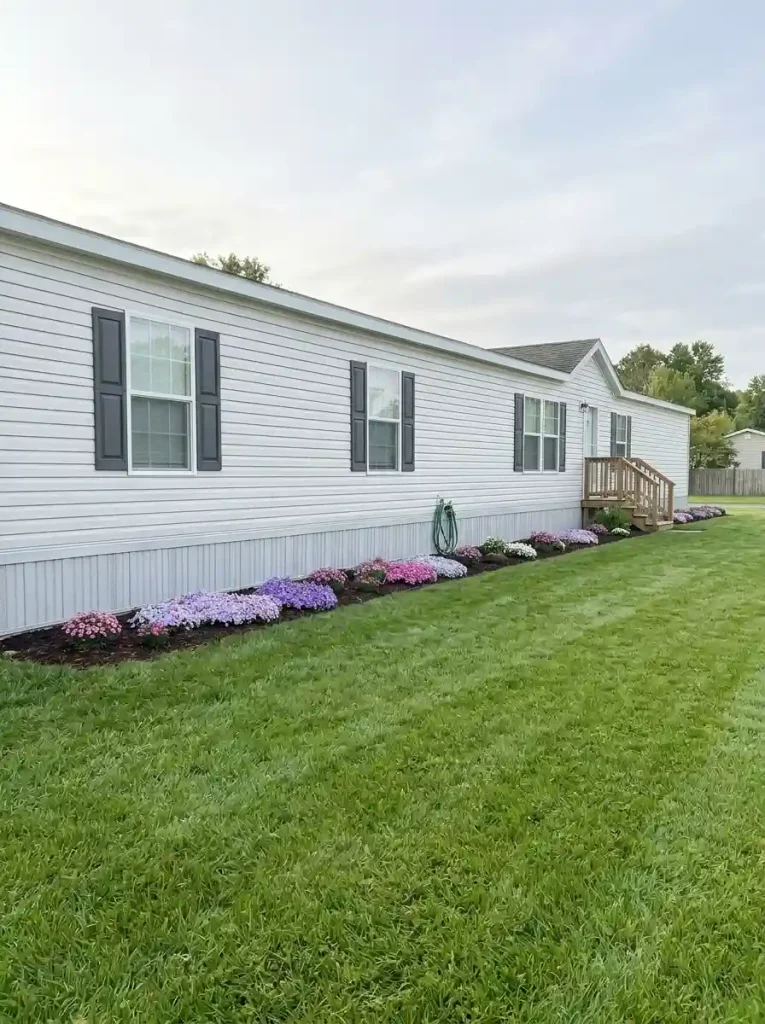
How tall should flowers grow beneath a mobile home window?
The answer depends on the window’s position and function. Relatively low windows can disappear behind oversized flowering plants, while dense growth may complicate exterior cleaning or interfere with access.
Choose compact dianthus, creeping phlox or suitable low-growing annuals for these locations. Their flowering surfaces can soften the bottom of the façade while allowing the windows to remain visually prominent.
Before buying: Measure from the intended soil surface to the window and compare that measurement with the cultivar’s mature flowering height.
Preserve the operation and accessibility of windows, particularly required emergency escape openings. Reserve taller flowers for window-free sections or detached planting areas where they have room to develop.
5. Build a Freestanding Island Flower Bed in the Front Yard
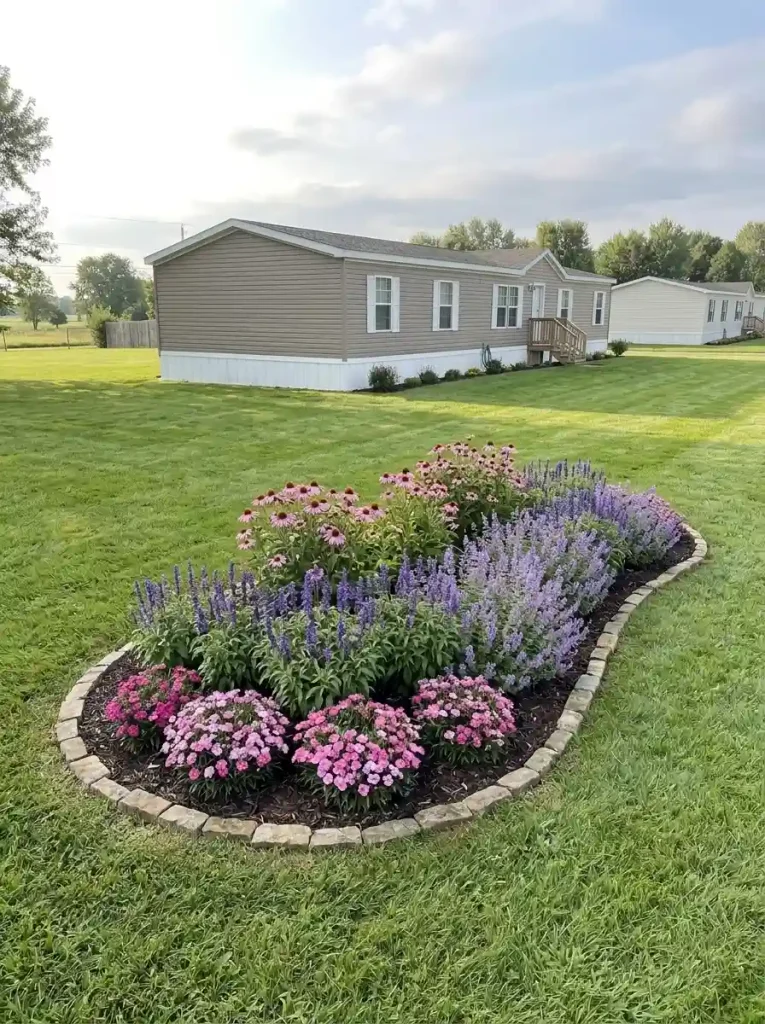
Some mobile homes have plenty of open lawn but little suitable planting space beside their skirting. A freestanding island flower bed solves that problem by creating an independent garden focal point.
Position an oval, circular or kidney-shaped bed within an available section of the front yard. For a garden visible from several directions, arrange taller flowers near its interior and progressively lower plants around the outside.
In a sunny location, a compact combination of coneflowers, salvia and dianthus can provide contrasting heights and flower forms.
Walk around the proposed bed before digging. Consider parking, mowing, underground utilities and access across the lawn. On particularly small lots, a compact island may work better toward one side of the yard than directly in its center.
Discover more ways to arrange your outdoor areas in these mobile home landscaping ideas.
6. Give Your Mobile Home a Romantic Cottage Flower Garden
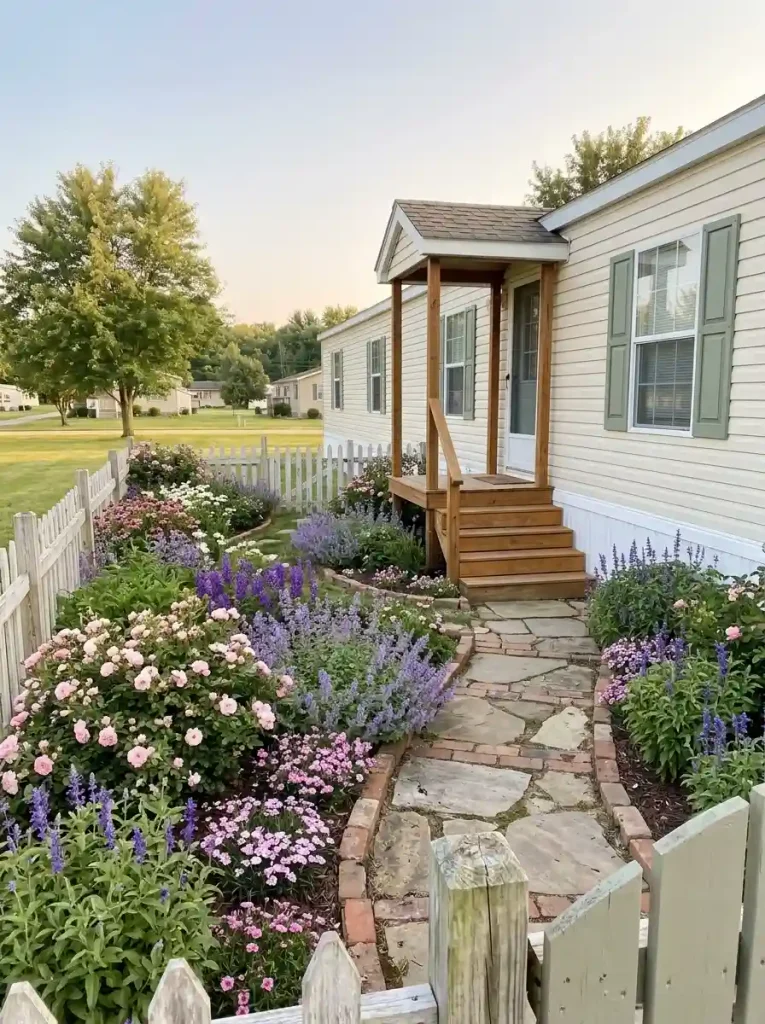
A cottage garden introduces softness and an established, welcoming character to a manufactured home’s relatively simple exterior. Its beauty comes from flowers with different forms growing together in a relaxed but intentional composition.
A sunny cottage garden planting recipe:
Flowering framework: Compact shrub roses suited to the local climate and available space.
Vertical accents: Perennial salvia with upright flowering spikes.
Soft foreground: Compact catmint with delicate lavender-blue blooms and spreading foliage.
Repeat the arrangement along suitable sections of the home, choosing cultivars with compatible water requirements. The mixture of rounded flowers, upright spikes and softer foreground growth gives the bed depth.
For a narrow single-wide lot, omit the roses where their mature spread or thorns would compromise access. A smaller composition built around salvia, catmint and compact dianthus can offer similar charm.
7. Design a Modern Flower Bed With Just Two Bloom Colors
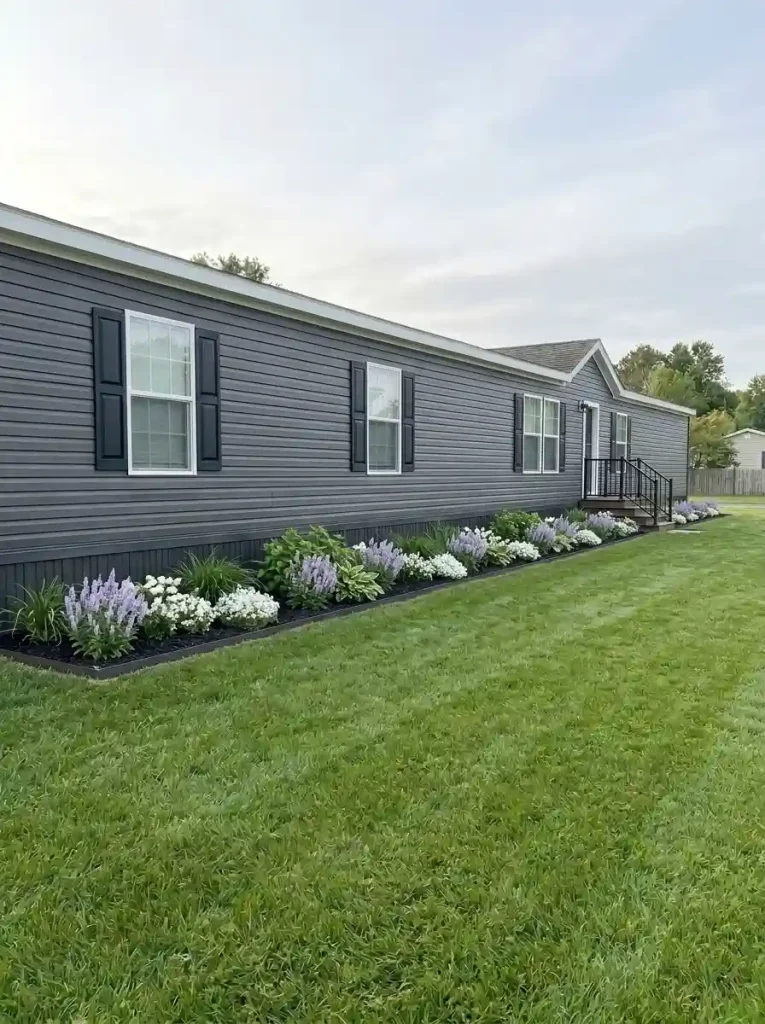
A limited flower palette can make an inexpensive garden look remarkably refined. Choosing colors that complement the home’s siding and trim gives the exterior a more coordinated appearance.
| Mobile home siding | Flower color combination |
|---|---|
| Cream or beige | Dusty pink and violet |
| Charcoal gray | White and lavender |
| Sage green | Blush pink and ivory |
| Muted blue | White and buttery yellow |
| Warm brown | Cream and soft coral |
Use green or silvery foliage to connect the flowering groups. The foliage also contributes visual interest between flowering periods.
Select actual plants according to the site’s sunlight, moisture and climate before finalizing the colors. Two compatible flower varieties repeated along a small manufactured-home exterior can look more deliberate than a collection of unrelated blooms.
Coordinate your planting palette with these mobile home exterior makeover ideas for a cohesive whole-property design.
Match flowers to your siding
These are aesthetic combinations. Select cultivars with compatible light, moisture and climate requirements.8. Fill a Sunny Mobile Home Flower Bed With Water-Wise Blooms
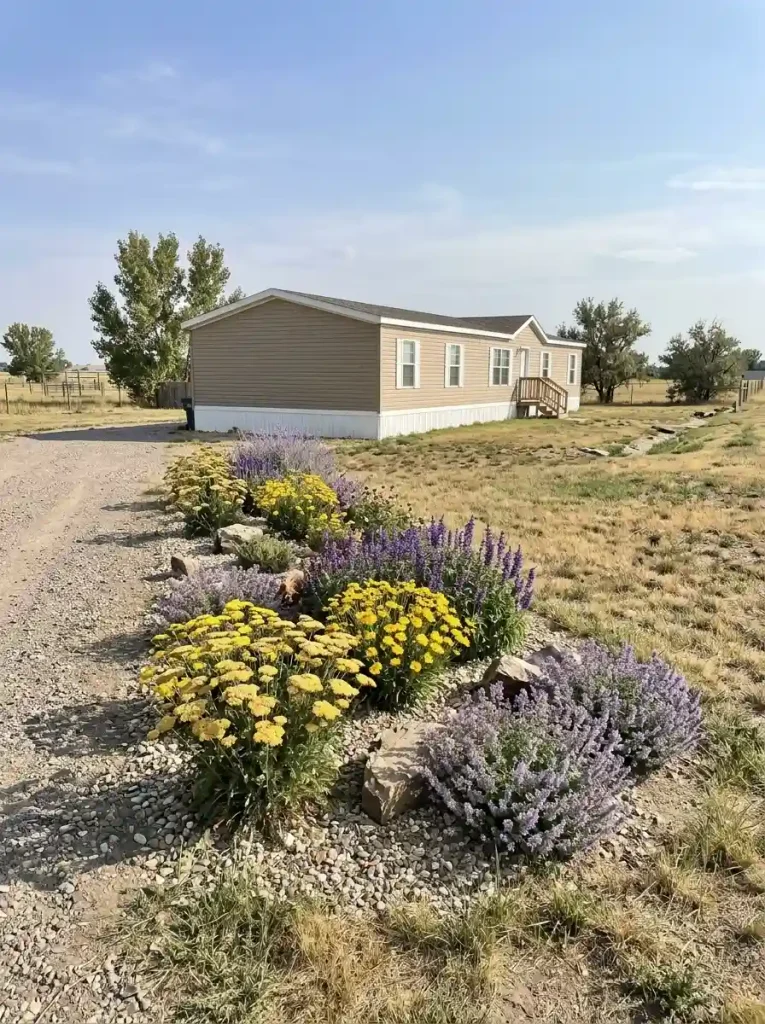
An exposed flower bed beside a driveway or sun-facing mobile home wall may experience heat from surrounding surfaces as well as direct sunlight. A water-wise planting arrangement can make these areas easier to maintain.
For sunny, relatively dry soil: Consider suitable varieties of yarrow, coreopsis, catmint and perennial salvia.
For sunny soil that retains moisture: Choose plants adapted to those conditions and investigate persistent wetness near the home before planting.
Group plants with similar watering requirements so that one part of the garden does not require an entirely different irrigation routine from another.
The University of Minnesota Extension’s water-wise gardening guide provides further guidance on matching plants to available growing conditions.
Remember that drought-tolerant flowers still require appropriate watering during establishment. Direct irrigation toward the planting area without encouraging water accumulation beneath the home.
9. Bring Color to a Shaded Flower Bed Beside Your Mobile Home
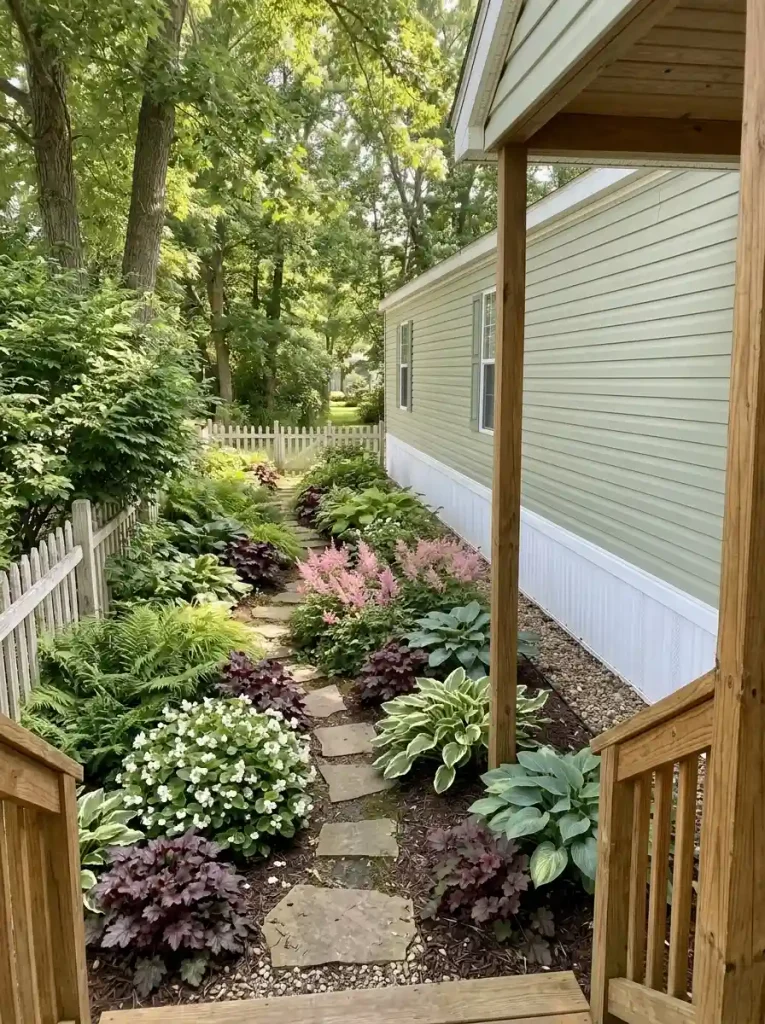
A shaded side yard may appear unsuitable for flowers, especially beneath a covered porch or along a narrow gap between neighboring homes. However, shade gardens can be exceptionally attractive with the right plants.
Start by observing the area throughout a typical growing-season day. Bright morning light, filtered sunlight and deep shade create different planting opportunities.
| Growing condition | Plant candidates |
|---|---|
| Partial shade with moist soil | Astilbe and suitable woodland perennials |
| Bright shade | Wax begonias and suitable coral bells |
| Shadier locations | Impatiens, suitable hostas and foliage plants |
Beneath roof overhangs, check soil moisture separately because the planting area may receive less rainfall than the surrounding yard.
In very deep shade, rely more heavily on attractive foliage if flowers bloom poorly. The contrast between colored leaves, delicate flowers and neat edging can brighten an otherwise overlooked part of the property.
Which flowers will thrive here?
Observe direct sunlight over a typical growing-season day.
Light ranges are approximate. Check individual cultivar requirements, soil moisture and local climate.10. Grow a Native Pollinator Flower Bed in a Small Yard
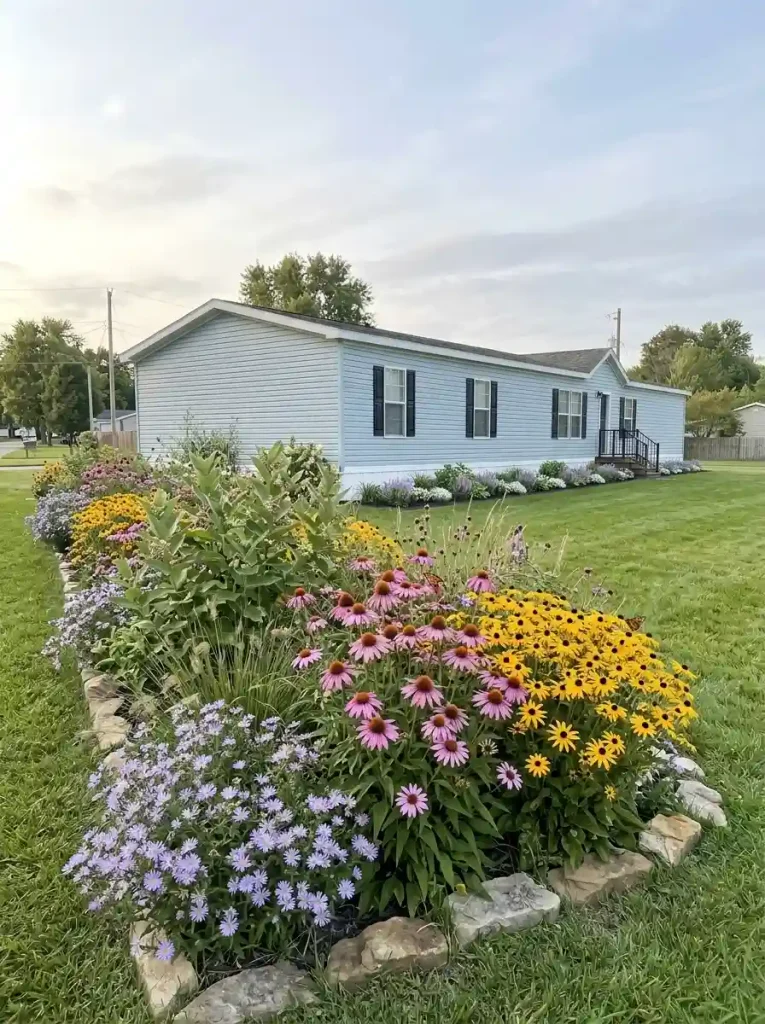
A modest planting area can become a beautiful miniature habitat for butterflies and native bees without requiring an extensive garden.
For a sunny mobile home lot, build a compact composition around regionally appropriate native flowering plants. In suitable parts of the eastern United States, locally native species of coneflower, black-eyed Susan and asters may contribute to such an arrangement.
The planting should provide resources at different times of the growing season:
- Spring-flowering plants for early activity.
- Summer flowers for the main display.
- Late-flowering species for autumn interest.
Choose locally native caterpillar host plants as well as nectar-producing flowers where space allows. Avoid routine broad-spectrum insecticide use.
Penn State Extension’s guide to pollinator-friendly gardens explains how plant diversity and flowering succession support pollinator habitat.
On a compact lot, position the main pollinator bed away from frequently used steps, doorways and narrow walking routes where practical.
11. Install Freestanding Raised Flower Beds for Easier Gardening
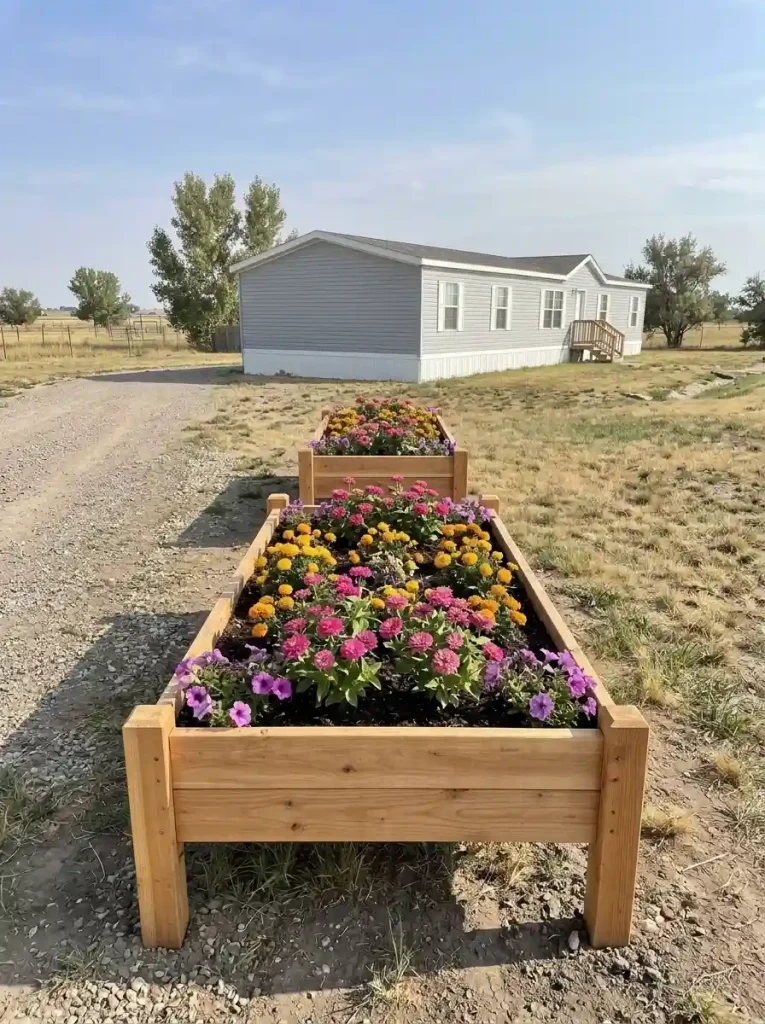
A freestanding raised flower bed offers a useful alternative when the ground around a mobile home contains difficult soil or when bending to maintain flowers is uncomfortable.
Choose an independent timber, metal or purpose-built planter designed to hold the intended growing medium safely. Consider its filled weight, drainage and stability before deciding where it will sit.
Compact zinnias, marigolds and petunias can create attractive seasonal displays in suitable sunny raised beds. Annuals may also be a simpler choice in cold climates because perennial roots can face greater winter exposure in elevated containers.
Select a width that allows you to reach the flowers comfortably from the available sides. Leave sufficient access around the structure, keep it independent of the home’s siding and skirting, and ensure its drainage does not direct water toward the home.
12. Finish Your Flower Bed With a Beautiful, Practical Border
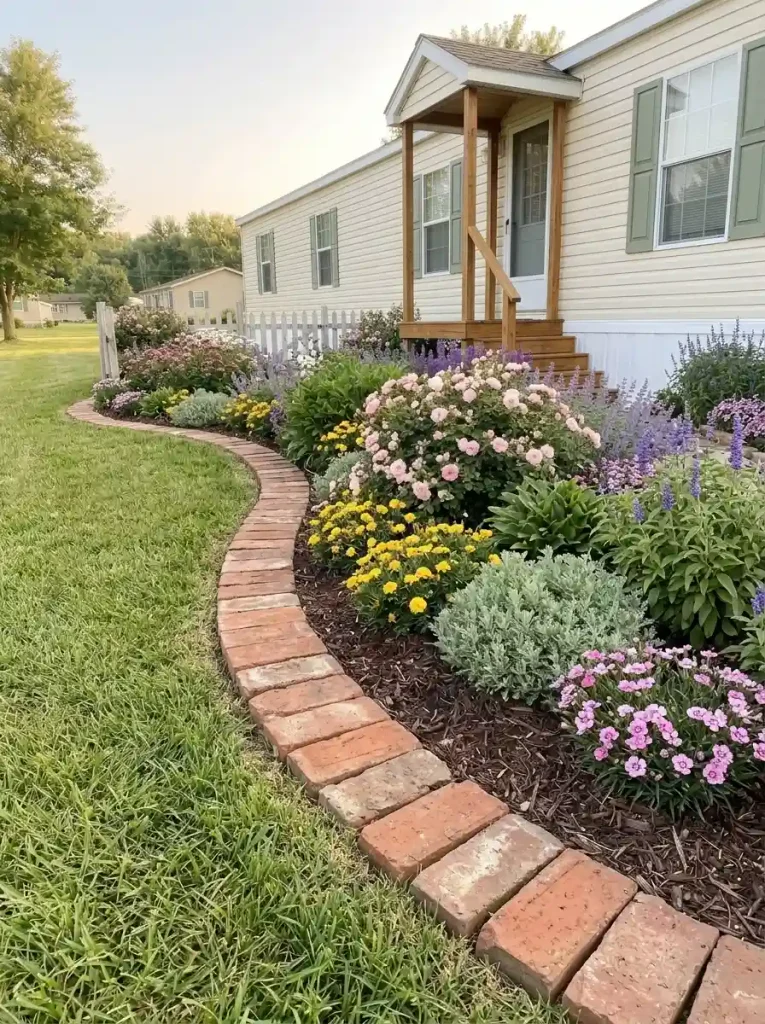
The most attractive garden edging is the material that complements the mobile home’s exterior while making everyday maintenance easier.
| Border material | Best use | Maintenance consideration |
|---|---|---|
| Natural stone | Cottage-style gardens | May require additional grass trimming |
| Brick pavers | Traditional flower beds | Install securely on a suitable base |
| Metal edging | Contemporary planting | Choose safe, finished edges |
| Spade-cut edge | Budget-friendly gardens | Requires occasional reshaping |
A neatly installed, suitably flush border can make mowing easier, while raised decorative stones create a more pronounced separation between flowers and lawn.
Choose the edging according to the actual ground conditions and nearby exterior finishes. Avoid creating a continuous raised barrier that traps runoff beside the manufactured home. Keep edging independent of the skirting and preserve the property’s existing drainage routes.
13. Plan a Flower Bed That Changes Beautifully Through the Seasons
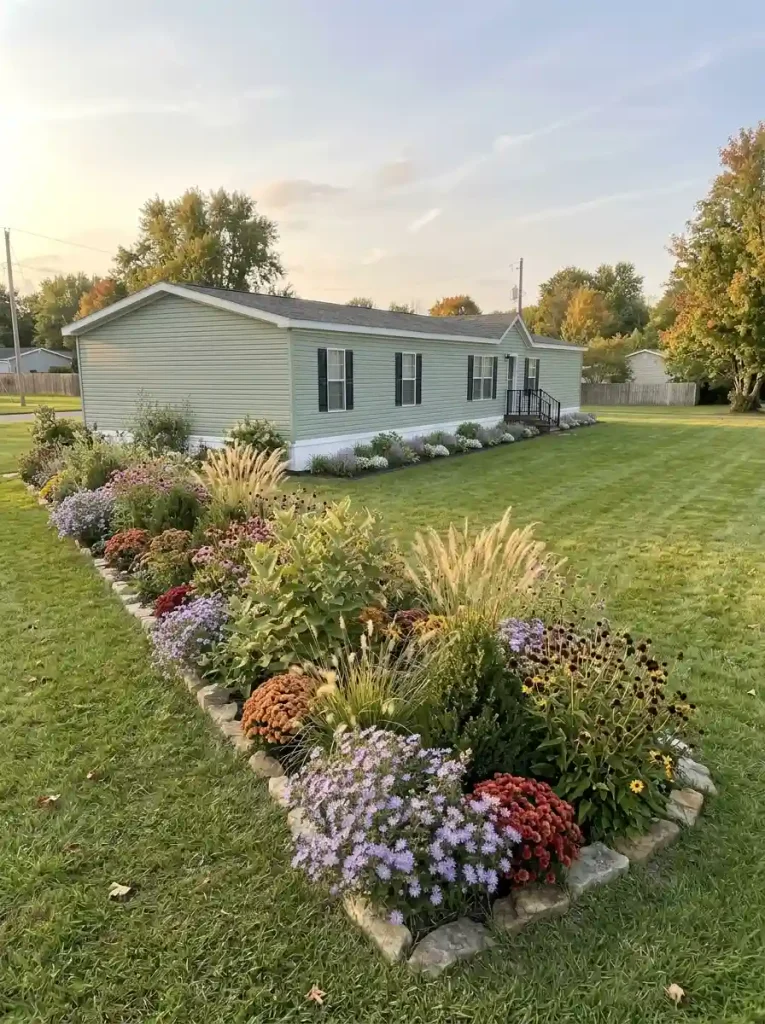
The best-looking manufactured-home gardens offer changing displays throughout the year. A single planting combination that flowers for only a few weeks can leave the exterior looking unfinished for much of the remaining season.
For a suitable temperate climate, build your garden around four seasonal layers:
Spring — Early color: Daffodils or other suitable spring-flowering bulbs.
Summer — Main display: Compatible flowering perennials and long-season annuals.
Autumn — Extended interest: Locally suitable asters, garden mums or other late-flowering plants.
Winter — Lasting structure: Selected evergreen foliage, ornamental grasses or attractive seed heads where appropriate.
Use the USDA Plant Hardiness Zone Map to assess perennial winter hardiness. It does not replace checking summer temperatures, soil, moisture and light requirements.
On a narrow lot, repeat seasonal planting groups within the same bed instead of creating a separate garden for every season.
These pumpkin and mum landscaping ideas offer additional inspiration for adding removable autumn accents to an established flower garden.
A garden for every season
Build a succession of flowers and foliage within the same bed.
Spring bulbs and early-flowering perennials.
JobWake up the garden.
Long-season annuals and flowering perennials.
JobMaintain the main color show.
Suitable asters, mums and late perennials.
JobExtend seasonal interest.
Evergreen foliage, grasses or attractive seed heads.
JobKeep the bed visually interesting.
Planning tip: Identify your weakest season and choose a locally suitable plant group to fill that gap.
Illustrative temperate-climate sequence; flowering dates vary. Winter structure does not imply continuous bloom.14. Create a Removable Flower Bed for a Rented Mobile Home Lot
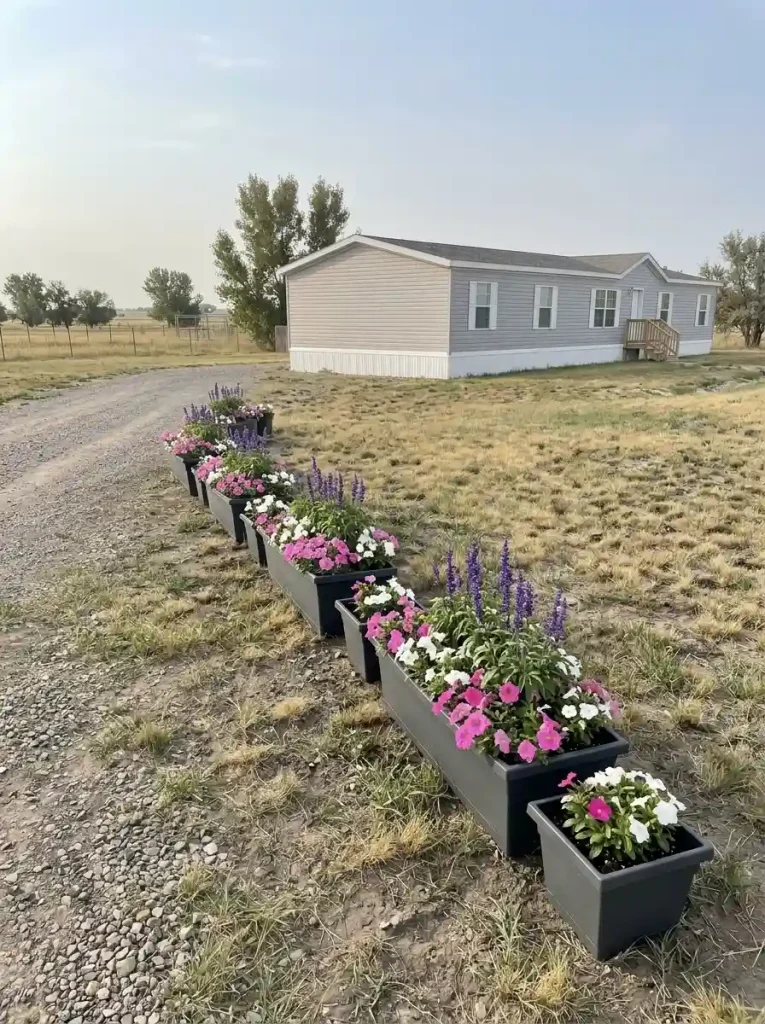
Living on a rented lot does not necessarily mean giving up the idea of a beautiful flower garden. A coordinated arrangement of movable planters can provide the appearance of a continuous flower bed without permanent excavation.
Use rectangular troughs to form the main planting line and introduce individual containers at the ends for height variation. Repeated materials and flower colors will connect the separate planters visually.
For sunny locations, compact petunias or suitable annual salvias can provide generous color. Begonias may be a better choice for appropriately shaded positions.
Before investing, check community rules and consider the weight of the containers when filled with moist growing medium. Use suitable drainage holes and ensure runoff is directed away from the home.
Keep planters clear of skirting vents, equipment and service routes. The arrangement should be genuinely removable when maintenance or relocation becomes necessary.
15. Soften Mobile Home Skirting With an Access-Friendly Flower Bed
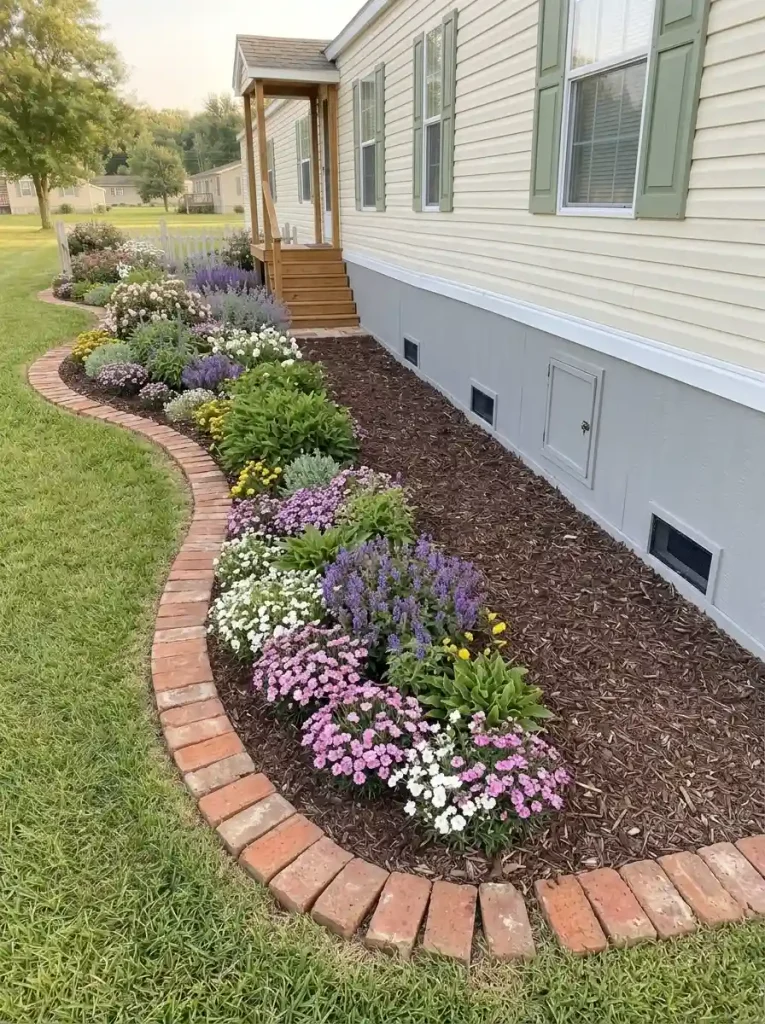
Plain skirting can make the lower portion of a manufactured home look visually prominent. A separated foreground of compact flowering plants can soften its appearance while preserving the practical functions of the space beneath the home.
Begin with an inspection, not a planting plan.
Locate ventilation openings, access panels, utility connections, combustion air inlets, dryer vents and other equipment. Identify the clearances and access routes required for your particular home.
The Federal Manufactured Home Installation Standards address drainage, skirting and crawlspace ventilation for applicable installations.
Keep mature plant growth, mulch, containers and decorative materials outside required clear areas. Follow the home’s installation instructions, applicable local requirements and equipment-specific clearances.
Where a house-adjacent bed cannot accommodate those requirements, move the flowers farther into the yard or establish a detached border. Do not alter the home’s grading or pile soil against skirting to make the garden fit.
Plant beautifully. Keep access clear.
16. Start a Beautiful Flower Bed on a Small Budget
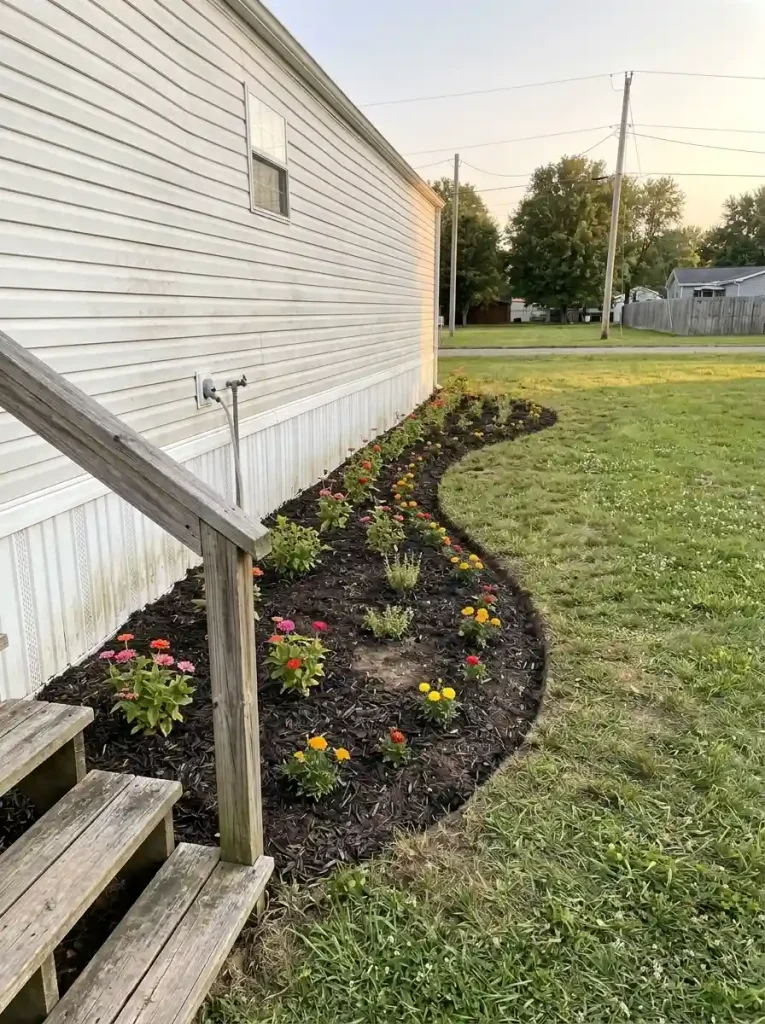
A small, flourishing garden will usually look more attractive than an oversized flower bed filled with struggling plants and unfinished edges. Starting with one section of a mobile home exterior also makes it easier to control ongoing expenses.
Spend first: Assess the soil, address planting conditions and establish a manageable bed shape.
Spend second: Purchase a few well-adapted perennial plants that can become the garden’s permanent framework.
Save on seasonal color: Sow suitable inexpensive annuals, such as compact zinnias or marigolds, to fill appropriate spaces during the first growing season.
Apply a suitable mulch where helpful, keeping it away from plant crowns, the home’s siding and required service areas.
As the permanent flowers mature, expand into another section only when the existing garden fits your watering and maintenance routine. This phased approach is especially useful on manufactured-home lots where outdoor space serves several functions.
17. Plant in Generous Flower Drifts Without Overcrowding the Bed
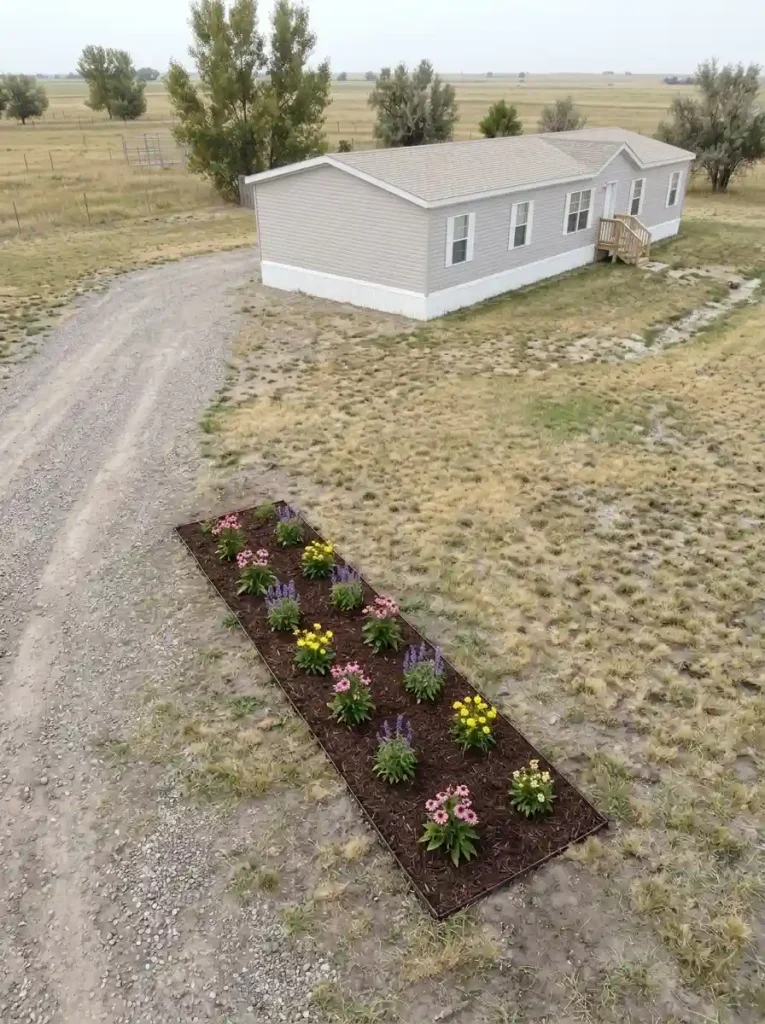
Long manufactured-home exteriors benefit from recurring groups of the same flowers. These groups, known as drifts, give the garden a recognizable rhythm and reduce the scattered appearance of individually placed plants.
The challenge is buying enough flowers for an attractive composition without crowding them at maturity.
Consider this illustrative planting calculation:
| Planning measurement | Example |
|---|---|
| Rectangular flower bed | 12 × 3 feet |
| Total area | 36 square feet |
| Usable planting area | 80%, or 28.8 square feet |
| Uniform center-to-center spacing | 18 inches |
| Estimated purchasing quantity | 12 plants |
The estimate divides usable planting area by the square of the spacing in feet, then rounds down. Actual planting positions may differ depending on bed shape, edge setbacks and the mature spread of individual varieties.
Mark the planting centers before purchasing and reserve sufficient room for each cultivar. Suitable temporary annuals can provide additional color while the permanent flowers establish.
How many flowers should you buy?
Choose the spacing recommended for your plants. Compare estimates for common bed sizes.
For other bed sizes: Divide usable area in square feet by spacing in feet squared; round down. This is a square-grid approximation, not a guaranteed layout. Mark planting positions and account for mature growth before purchasing.Final Thoughts
A flower bed becomes a truly beautiful feature of a mobile home when its shape, flowers and planting scale complement the property. You can achieve that effect with a narrow perennial border, a romantic entrance garden, a freestanding raised bed or a colorful island surrounded by lawn.
Start with one location that offers suitable growing conditions and meaningful visual improvement. Choose compatible plants, preserve necessary maintenance access, and allow the garden enough room to mature naturally.
There is no need to transform every part of the yard at once. A carefully established flower bed can become the foundation for a more attractive, welcoming and enjoyable outdoor space, with each new season bringing its own colors and character.