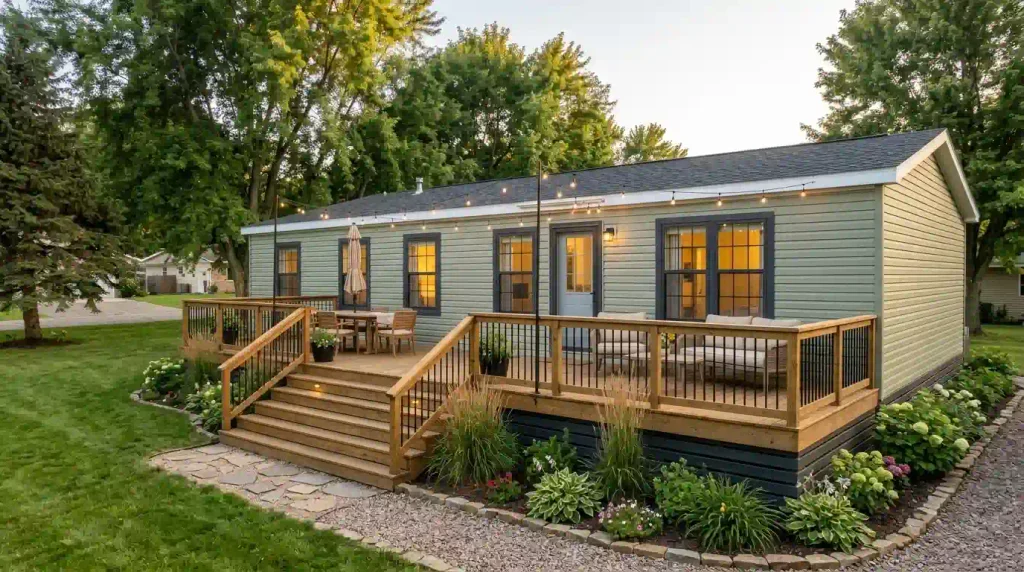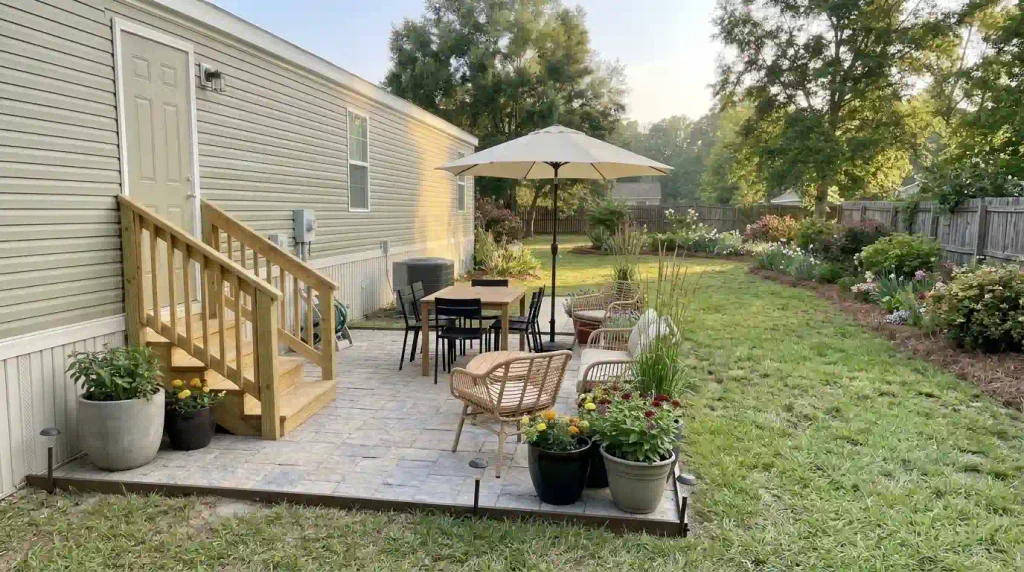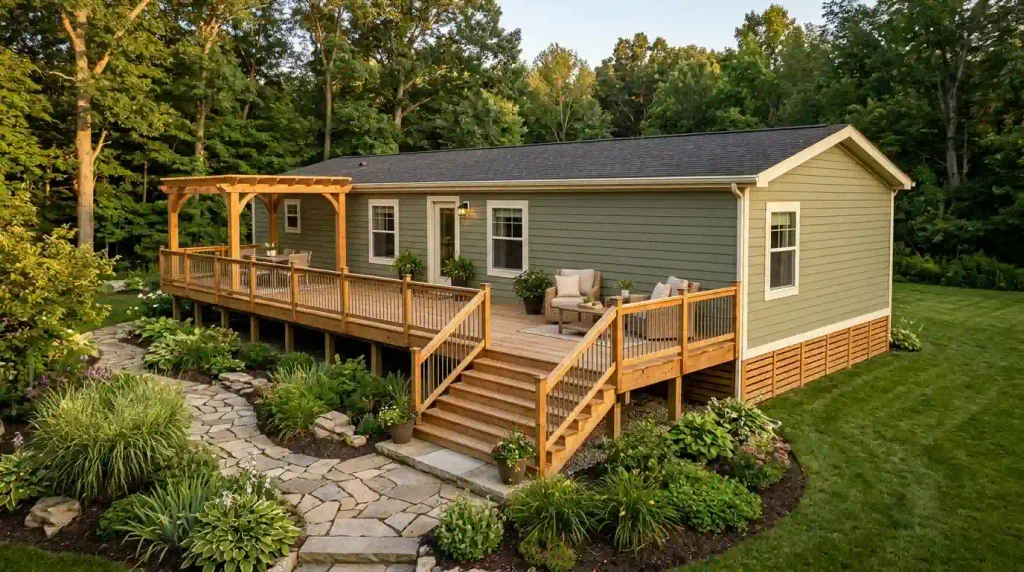
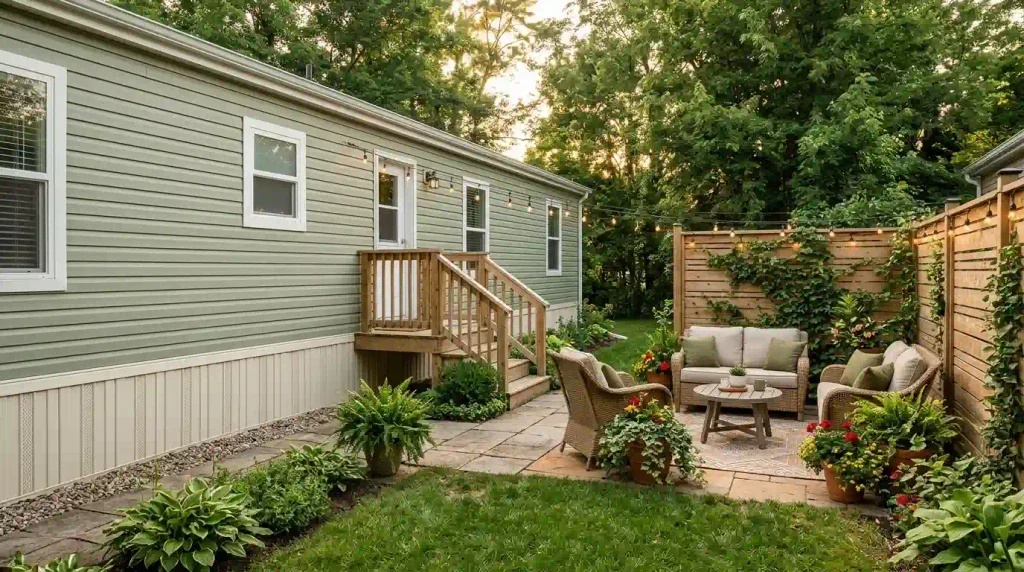
A little stretch of lawn beside your mobile home might not look particularly promising at first. But with comfortable seating, thoughtful planting and a few carefully chosen details, it could become the place where you enjoy your morning coffee, unwind after work or spend long summer evenings with family.
The most inviting mobile home patio ideas begin with understanding the space you already have. A narrow side yard, an overlooked concrete pad or a quiet corner behind a single-wide can offer more possibilities than you might expect.
Unlike a raised deck or covered entrance porch, a ground-level patio lets you create an outdoor living area directly within your yard, often without extending the home’s existing platform.
From affordable garden retreats to intimate dining areas and beautifully illuminated seating spaces, these 21 ideas will help you create a cozy patio that suits your mobile home, your budget and your everyday routine.
1. Turn an Unused Strip Beside Your Mobile Home Into a Cozy Pocket Patio
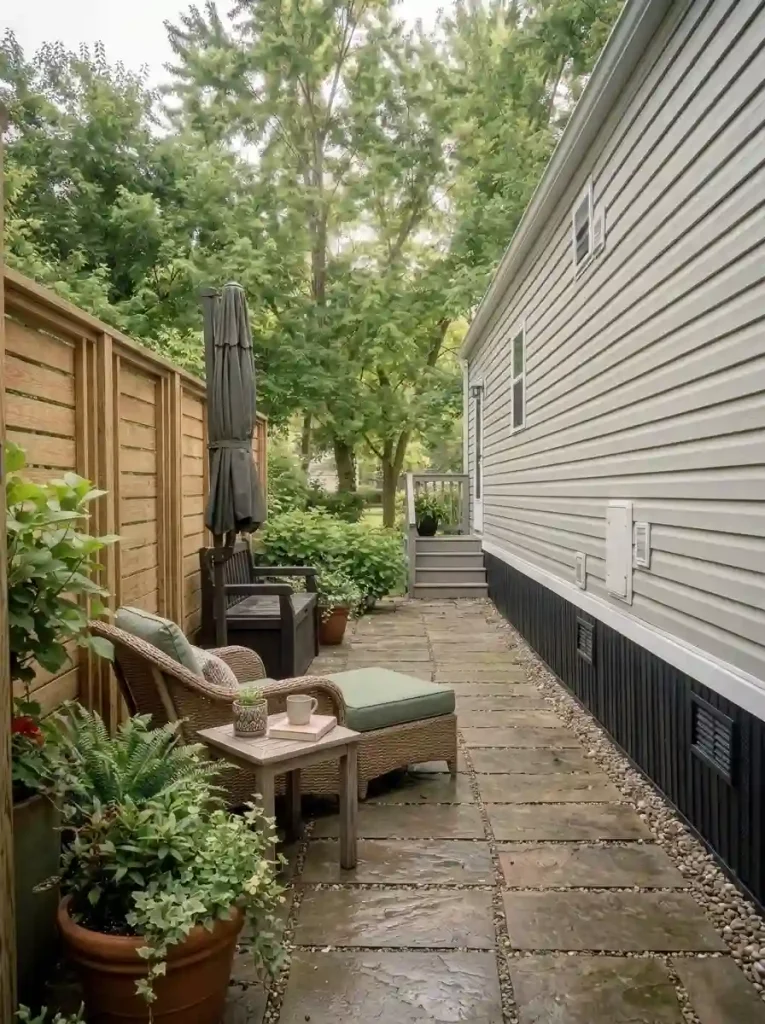
The narrow strip running alongside a single-wide mobile home often becomes wasted space. Yet its elongated shape can be surprisingly suitable for a small outdoor retreat.
Start by identifying the usable area after accounting for utility connections, skirting access, windows, doors and property boundaries. Position shallow outdoor furniture lengthwise to take advantage of the yard’s proportions.
A compact bench, two small chairs and a narrow side table can establish a comfortable seating area without consuming the entire strip.
Consider a simple arrangement with:
- A slim seating group positioned along one edge.
- A continuous, unobstructed walking route.
- A small cluster of plants at the far end.
- A warm outdoor color palette that complements the siding.
Before purchasing furniture, mark its footprint on the ground and walk through the proposed arrangement.
A pocket patio succeeds when it feels like a destination rather than an obstacle between your home and the rest of the yard.
Patio studio / 01
Find your yard’s hidden room
Select the shape that resembles your mobile home lot to discover a suitable layout.
Cream: home and seating · Tan: patio · Dashed: route
Narrow side yard
Position shallow seating lengthwise and reserve a continuous walking route alongside the home.
Check: Keep utilities, windows and skirting access clear.
Cream: home and seating · Tan: patio · Dashed: route
Compact rear yard
Concentrate seating around one shared table to retain more open lawn.
Check: Trace the route from the existing stairs before establishing the patio perimeter.
Cream: home and seating · Tan: patio · Dashed: route
Corner yard
Use two adjoining seating edges to create an intimate, inward-facing patio arrangement.
Check: Leave one edge open for access and confirm property boundaries.
These are conceptual layouts, not dimensioned construction plans.
2. Create a Small Courtyard Feel With an L-Shaped Patio Layout
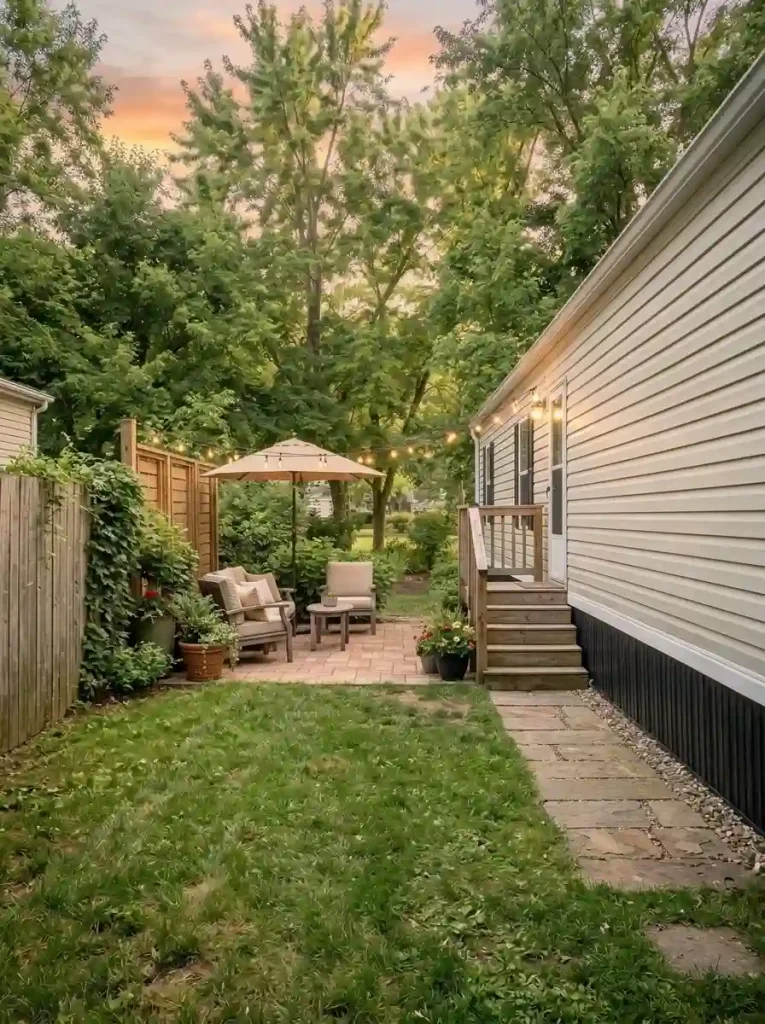
Imagine stepping around the corner of your manufactured home and discovering a little courtyard framed by greenery, comfortable seating and warm-toned paving.
An L-shaped layout can bring that intimate atmosphere to an otherwise exposed corner of the yard.
Place a compact bench along one patio edge and a pair of chairs along the adjoining side. An open center provides room for movement, while the angled arrangement encourages conversation.
A straight layout generally suits a narrow side yard. An L-shaped configuration becomes more useful where the garden widens around the end of the home.
For a softer courtyard appearance, use planting to define the outer boundary without creating a solid enclosure.
The objective is to establish a recognizable outdoor room while retaining a clear connection to the entrance and surrounding garden.
3. Build a Comfortable Ground-Level Retreat Beyond Your Existing Steps
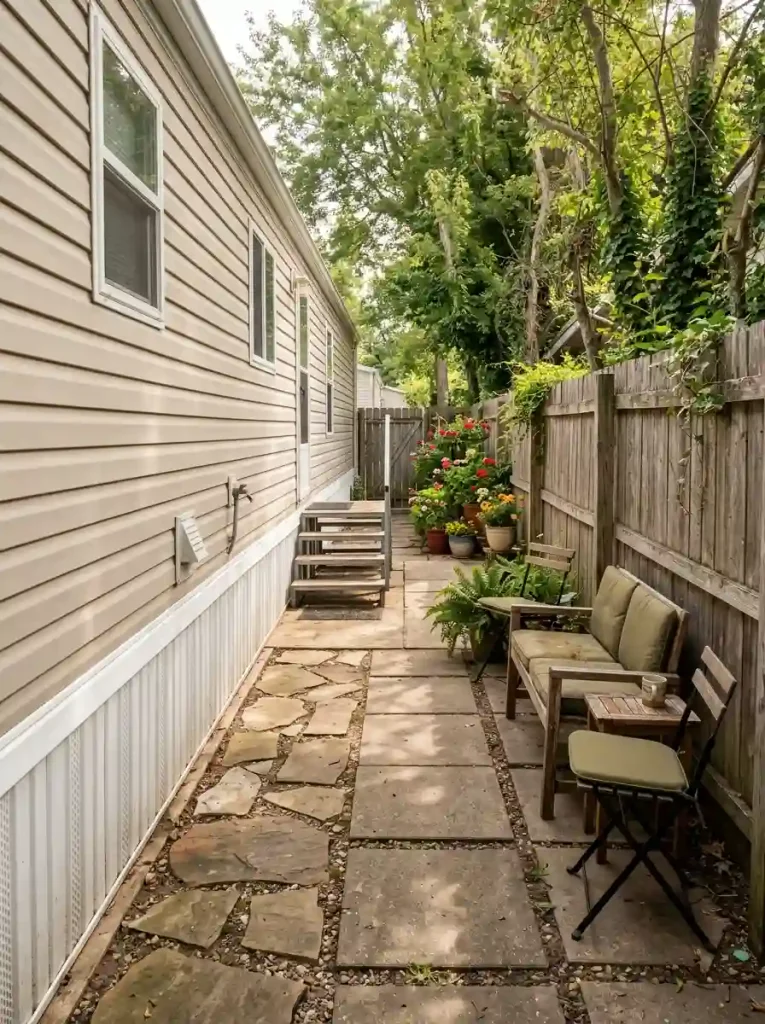
A manufactured home’s raised entrance does not have to determine the size of its entire outdoor living area.
Where the existing stairs and landing are structurally sound, a ground-level patio beyond them can provide additional space for seating and relaxation without requiring a larger elevated platform.
Plan the transition in this order:
- Preserve the existing doorway, landing and stair access.
- Establish a stable walking route from the bottom of the steps.
- Position furniture beyond the main arrival area.
- Repeat compatible colors or materials across both spaces.
For example, timber steps can look beautifully connected to a ground-level paver patio through wooden furniture, earthy containers and coordinated planting.
Homeowners considering a larger elevated platform can explore these mobile home deck ideas for more suitable configurations.
Before altering the stairs or adding attached structures, consult your local building authority and the applicable manufactured-home installation provisions concerning alterations and accessory structures.
4. Give an Old Concrete Patio a Warm, Welcoming Refresh
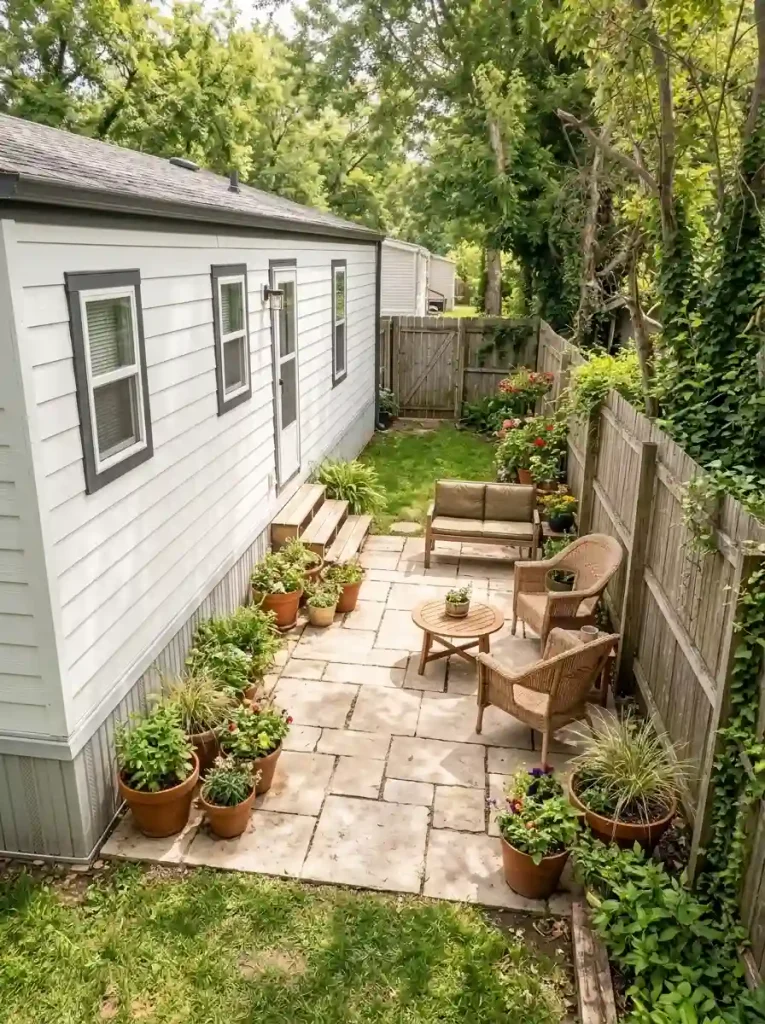
An existing concrete pad may be one of the most valuable features of a small mobile home yard. Even when its appearance feels plain, a sound surface provides a useful foundation for an affordable makeover.
The appropriate improvement depends on its condition.
Sound but visually plain: Clean the surface, introduce comfortable furniture and soften the arrangement with plants and suitable outdoor textiles.
Minor cosmetic deterioration: Explore a compatible exterior concrete finishing product after reviewing its preparation and application requirements.
Uneven, damaged or poorly draining: Address the underlying problem before investing in decorative finishes.
Avoid covering damaged concrete simply to disguise it. Persistent moisture, movement or significant deterioration may require professional assessment.
Warm-toned furniture, textured cushions and terracotta planters can make an existing slab feel considerably more welcoming. Reusing a serviceable surface also leaves more of your budget available for the features that directly improve comfort.
Material field guide / 02
Which surface deserves your investment?
Compare your existing surface with two alternatives before committing to a new patio.
Site conditions and installation quality determine the suitability of each patio surface.
5. Use a Compact Paver Patio to Preserve More of Your Yard
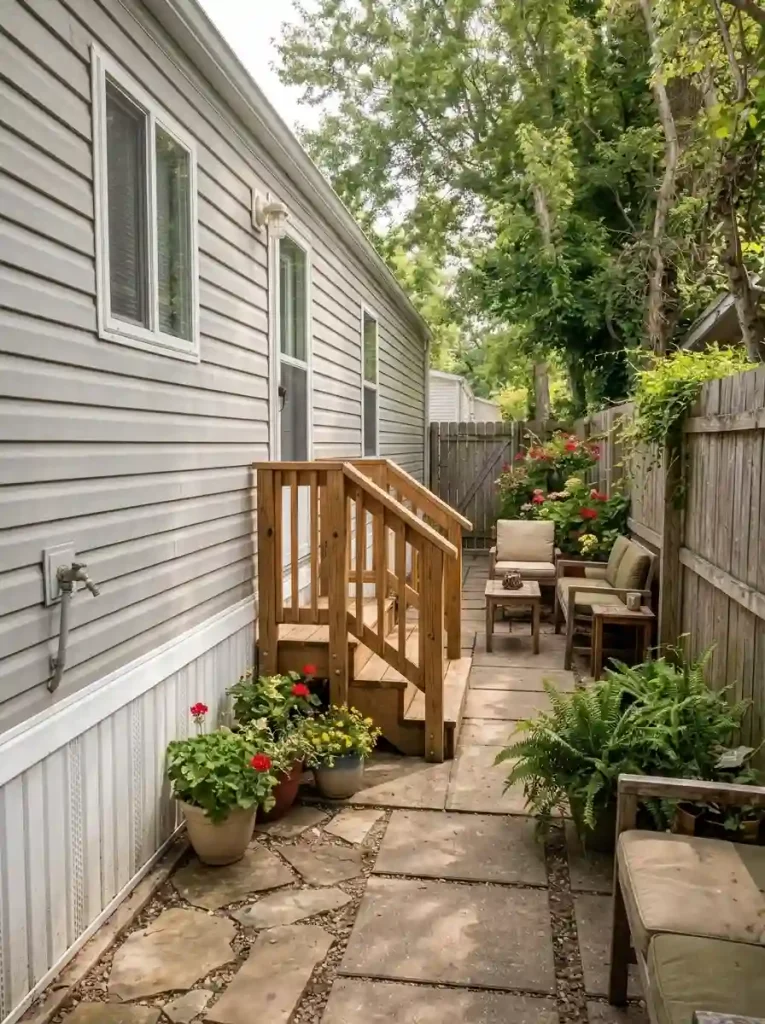
Covering an entire small backyard with paving can leave very little room for greenery or other outdoor activities.
A compact paver island offers a more balanced approach. Establish a hard surface around the furniture you actually need, leaving the remaining yard available for lawn, planting or circulation.
As an illustrative starting point, mark out an 8-by-10-foot area and test whether it accommodates your preferred seating arrangement. Adjust the dimensions according to furniture depth, occupied chair positions and required access. This is a planning example, not a universal size requirement.
Permeable paving may also be worth considering where stormwater management is important. The EPA’s guide to permeable pavement explains how appropriately designed systems can reduce surface runoff.
Choose a suitable installation system and ensure drainage does not direct water beneath the manufactured home or toward its supports.
6. Make a Gravel Garden Patio Feel Like a Hidden Retreat
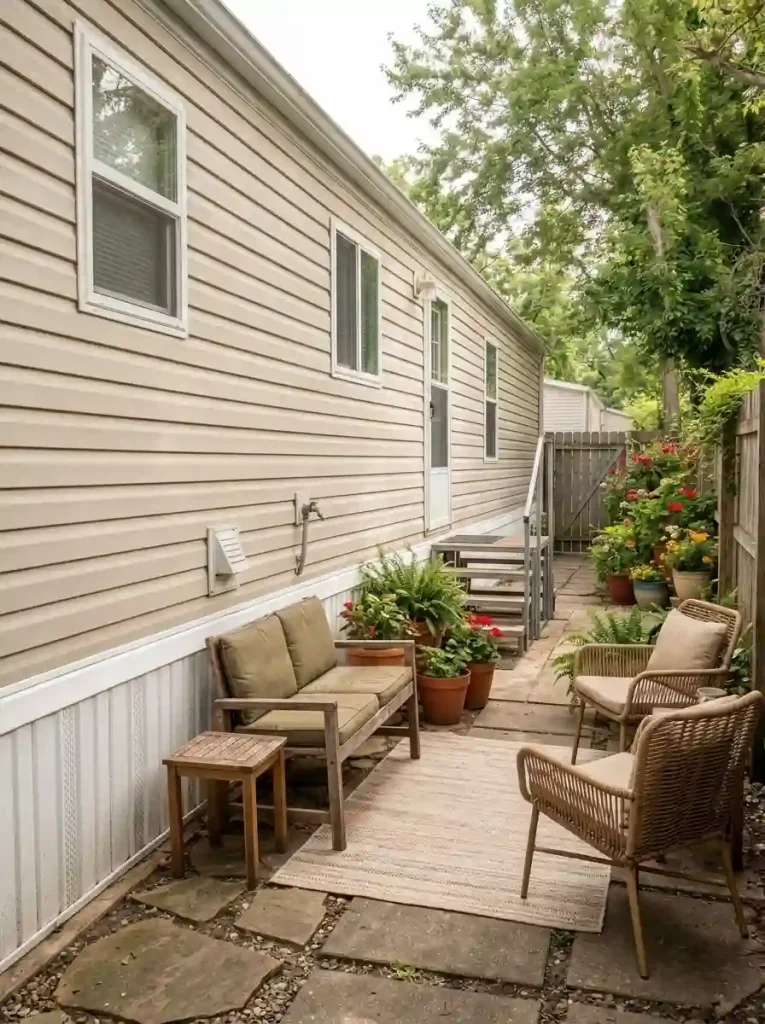
There is something wonderfully relaxed about a garden patio surrounded by natural stone, ornamental grasses and softly colored outdoor furniture.
Gravel can contribute to that informal atmosphere, particularly in a modest yard where extensive hard paving would feel visually heavy.
Define the seating area with compatible edging and select a suitable surface system for the intended activity. Wide furniture feet generally perform better than narrow legs on loose material.
Consider how the patio will actually be used. Frequent dining, mobility aids and furniture that needs regular repositioning may benefit from a firmer surface.
A hybrid arrangement can offer the best of both appearances: stable paving beneath the seating group, with decorative gravel and planting around the perimeter.
The surrounding greenery softens the edge of the patio and helps it feel naturally integrated into the garden.
7. Set Up a Two-Person Coffee Corner Outside Your Mobile Home
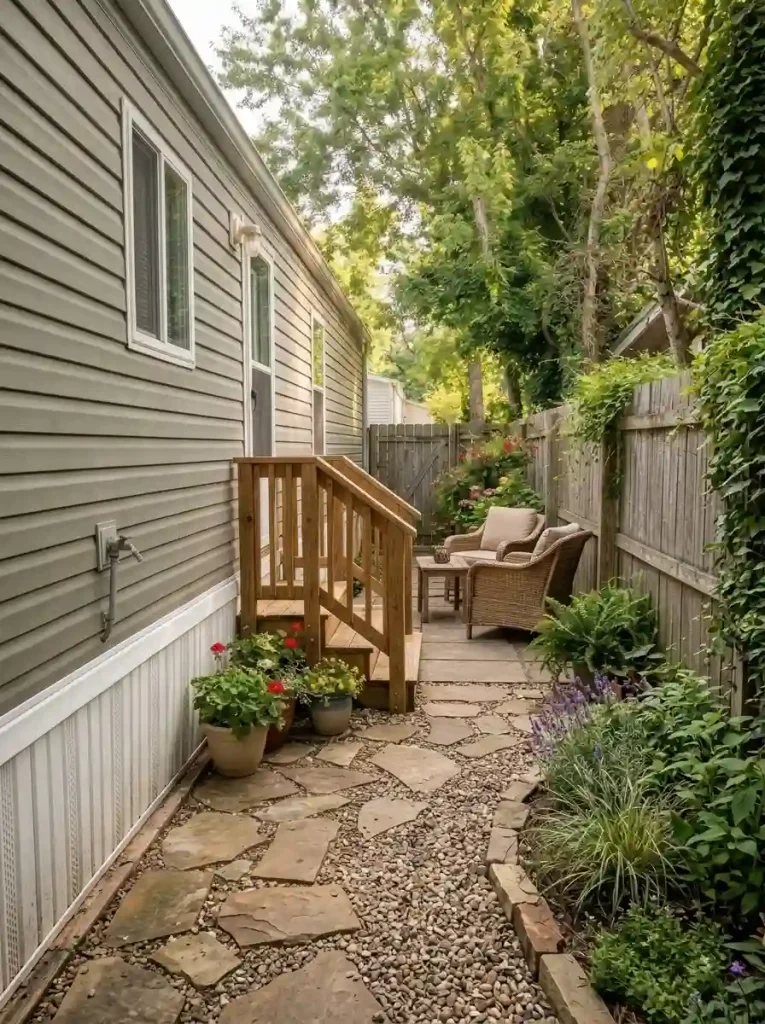
Picture a quiet morning outside with a cup of coffee, a small round table and two comfortable chairs catching the first sunlight of the day.
A two-person coffee corner is one of the simplest ways to make a small mobile home patio feel purposeful.
Position a compact bistro set near a convenient entrance, provided the chairs do not interfere with the steps or landing. A round table can reduce awkward projecting corners in a restricted space.
Observe the proposed location during your usual coffee hours. A shaded corner may be perfect during hot afternoons, while gentle morning sunlight might make another area more inviting.
For homes where the available sitting area is elevated near the entrance, these small mobile home porch ideas offer additional compact seating inspiration.
A successful coffee corner needs very little decoration beyond a welcoming place to sit and something pleasant to look at.
8. Create a Cozy Patio Lounge With One Well-Sized Loveseat
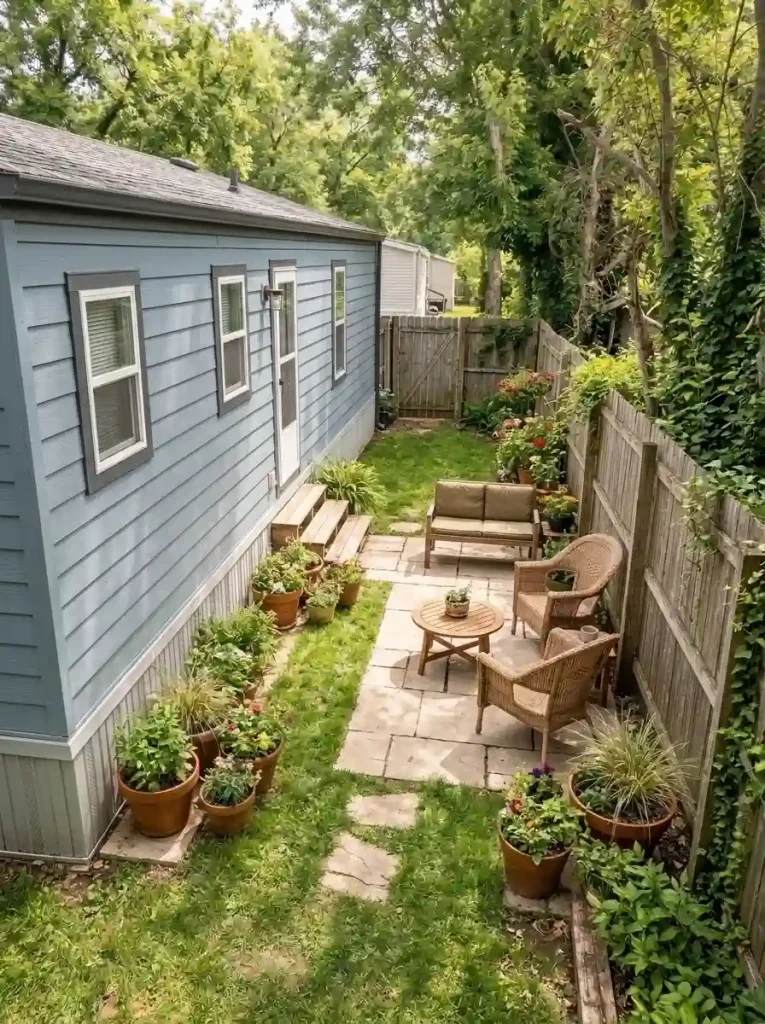
How much furniture does a small outdoor lounge really need?
Often, a single comfortable loveseat, one occasional chair and a compact table provide everything required for everyday relaxation.
Oversized sectionals can dominate narrow manufactured-home yards, especially once their full depth is considered alongside the surrounding pathways.
Before choosing a loveseat, compare three measurements:
- Its complete width, including the arms.
- Its depth when positioned for comfortable use.
- The remaining space for approaching the seat and moving around the table.
A loveseat with an open-looking frame can feel lighter visually than a bulky, fully enclosed design. Natural wicker-style finishes, muted cushions and small textured pillows add warmth without introducing unnecessary visual clutter.
Mark the furniture footprint before buying. The best arrangement is the one that remains comfortable when someone is seated, another person is passing and the side table is being used.
9. Choose a Foldaway Dining Arrangement for Flexible Outdoor Meals
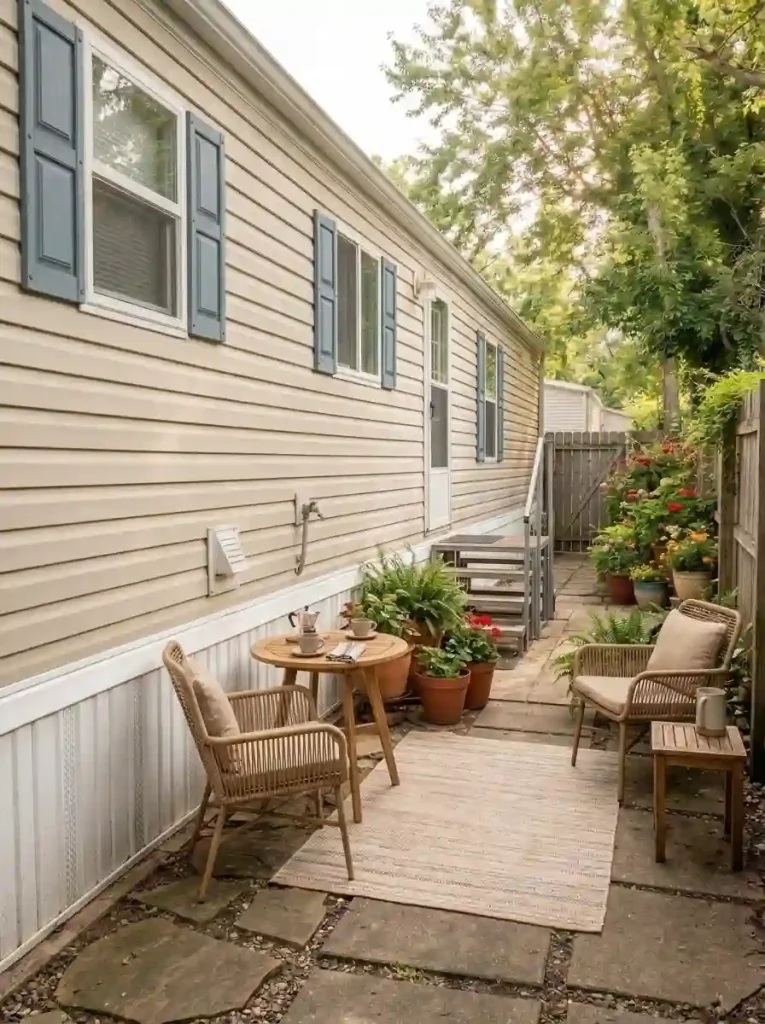
A dining table can occupy valuable patio space throughout the day, even when nobody is eating.
For a small mobile home yard that serves multiple purposes, folding furniture offers a practical alternative.
| Furniture arrangement | Best suited for |
|---|---|
| Folding bistro set | Everyday meals for one or two people |
| Outdoor drop-leaf table | Occasional dining with additional guests |
| Stackable chairs | Flexible seating without permanent clutter |
| Lightweight side table | Shared dining and lounging functions |
Evaluate furniture in both its stored and fully occupied positions. A compact folding table becomes far less useful when there is nowhere convenient to store it.
Choose outdoor-rated furniture with stable frames and secure folding mechanisms.
A flexible dining arrangement can turn the same modest patio into a breakfast spot, an afternoon lounge and an intimate evening dining area.
10. Make a Small Patio More Comfortable With the Right Kind of Shade
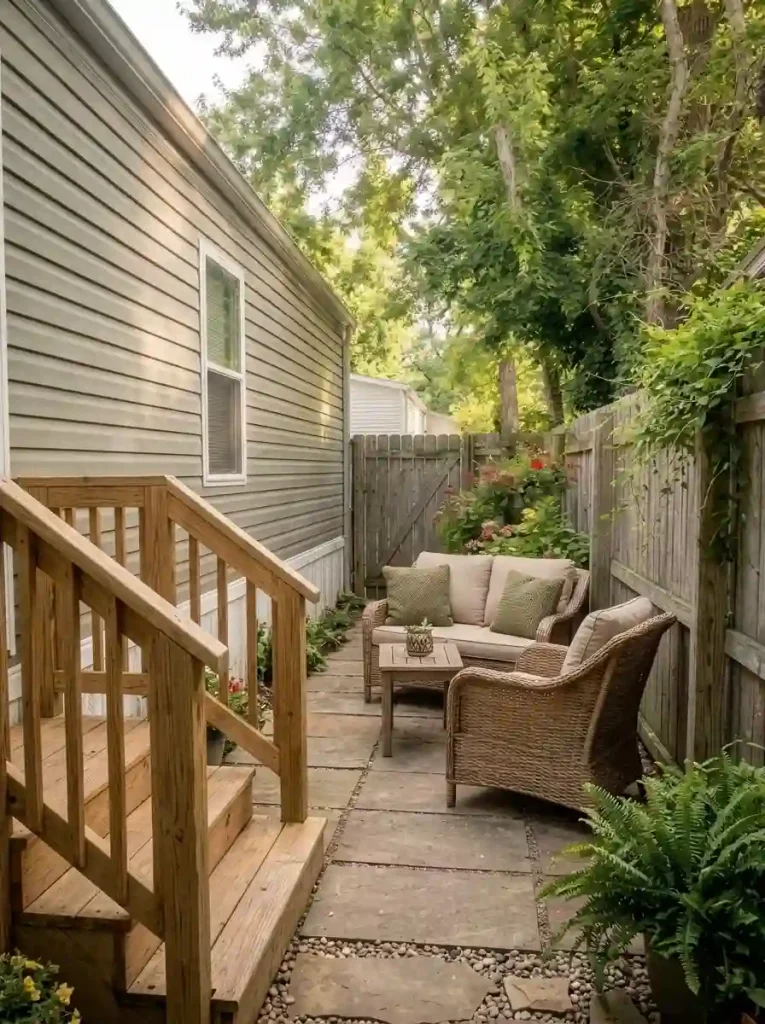
A beautifully decorated patio may remain empty throughout the afternoon simply because the seating area receives too much direct sunlight.
Before purchasing a shade product, observe where the sun falls during the hours you intend to spend outdoors.
Morning exposure may only require occasional shade. Strong afternoon sunlight can call for an adjustable solution that responds to lower sun angles, while all-day exposure may justify a more extensive shelter.
A suitable freestanding patio umbrella is often a practical starting point for smaller seating groups. Consider its base footprint, operating clearance and manufacturer-specified wind limitations.
Homeowners wanting more extensive architectural shelter can explore these covered mobile home porch ideas.
Permanent patio covers require additional planning. Do not assume that a manufactured home’s existing siding or roof can carry new structural loads. Obtain the appropriate approvals and professional guidance before construction.
Shade intelligence / 03
Make the sunny hours comfortable
Match your patio’s sun exposure with the alterations your property allows.
Morning · Removable
Adjustable patio umbrella
Position shade around your morning seating location. Confirm the base footprint and wind limitations.
Morning · Permanent considered
Adjustable overhead protection
Observe the actual morning shadow and seek approval for fixed supports.
Afternoon · Removable
Tilting or repositionable umbrella
Test low-angle sunlight and keep the umbrella base outside the main access route.
Afternoon · Permanent considered
Overhead shade with approved side protection
Compare afternoon shadow direction and wind exposure before planning a permanent improvement.
All day · Removable
Freestanding adjustable shade
Compare coverage at different hours and follow anchoring and wind-use instructions.
All day · Permanent considered
Professionally planned freestanding cover
Evaluate independent structural support, approvals and drainage before proceeding.
Illustrative recommendations only. Actual sun angles vary by location, season and orientation.
11. Add Privacy Without Making Your Mobile Home Yard Feel Boxed In
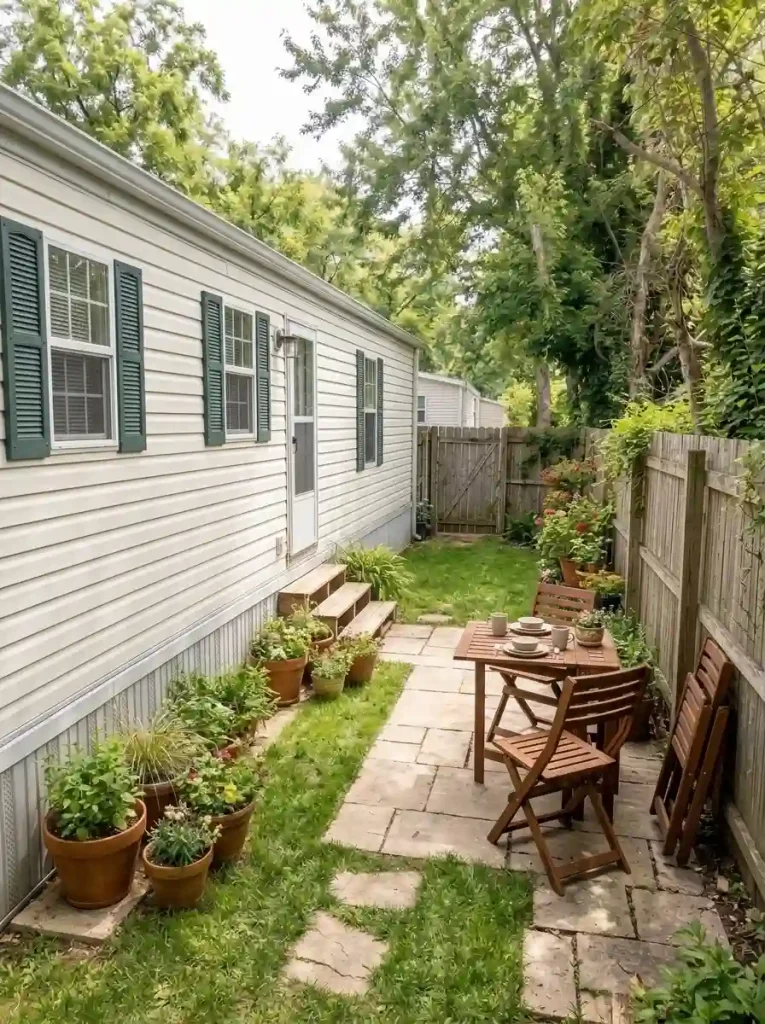
Creating a private patio does not necessarily mean surrounding the entire space with tall fencing.
In closely spaced mobile home communities, discomfort often comes from one particular sightline: a neighboring window, a parking area or a frequently used walkway.
Sit where your outdoor furniture will be positioned and identify the direction that feels most exposed.
A carefully placed group of taller containers, an approved freestanding privacy screen or a suitable panel can interrupt that view while preserving the open character of the remaining yard.
Avoid screening areas that already offer attractive garden views or useful daylight.
Permanent screens may require approval and appropriate structural design, particularly in windy locations. Keep windows needed for emergency escape, skirting ventilation and service access unobstructed.
Targeted privacy feels especially effective in a small yard because it provides a sense of shelter without turning the patio into a confined outdoor corridor.
12. Soften a Sheltered Patio With Airy Outdoor Curtains
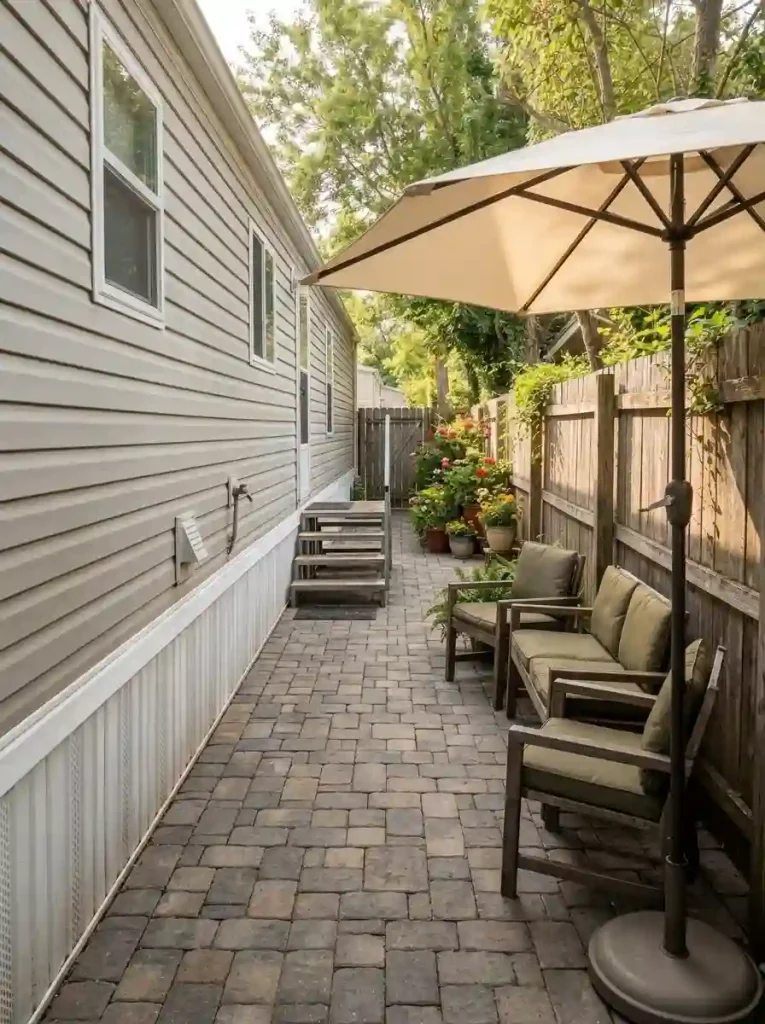
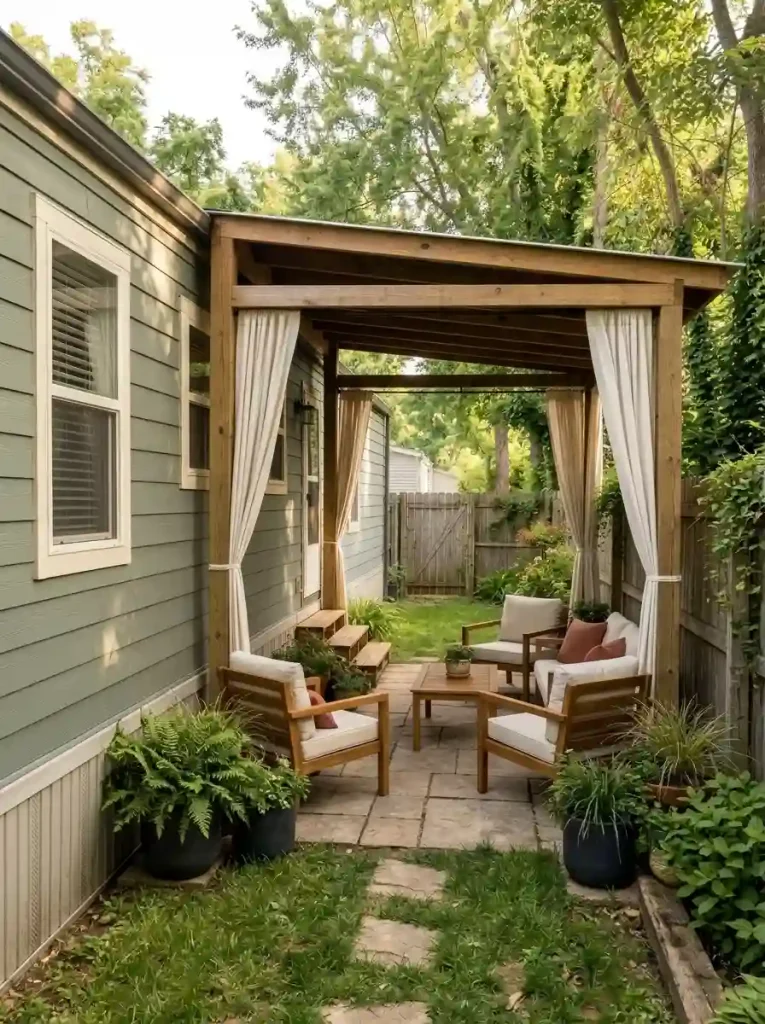
Outdoor curtains can make an existing sheltered patio feel beautifully soft and residential.
Lightweight, linen-look outdoor fabrics complement natural timber, cream siding, black metal furniture and warm garden colors. When pulled back, the curtains frame the seating area; when closed appropriately, they provide additional visual privacy.
This idea works best where the patio already has a suitable overhead structure and compatible mounting points.
An exposed or frequently windy yard may benefit more from an appropriately designed privacy product. Loose curtains that move across furniture and pathways can quickly become inconvenient.
Select exterior-rated materials and follow the manufacturer’s mounting and wind-use instructions.
Keep fabrics away from flames and heat sources. The U.S. Fire Administration’s outdoor fire safety guidance also advises keeping grills clear of combustible exterior materials and away from overhead obstructions.
For evening atmosphere, battery-operated lanterns are a charming alternative to candles near curtains.
13. Frame the Patio With a Compact Container Garden
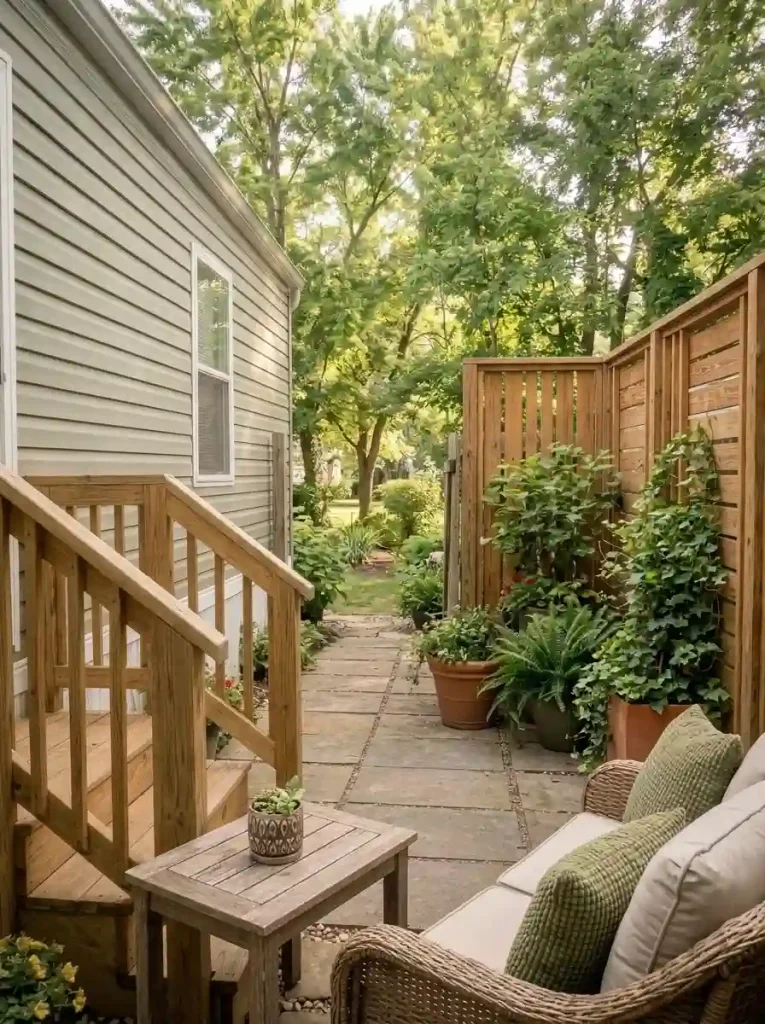
Greenery can make a small patio feel established without requiring an extensive landscaping project.
Concentrate containers around the edges and corners of the seating arrangement, leaving the center available for furniture and movement.
A combination of upright plants, softer foliage and low flowering varieties introduces different heights and textures. One taller container can establish a focal point, while smaller pots soften the transition between paving and lawn.
Repeat two or three planter finishes to create a coordinated appearance. Terracotta, charcoal and muted stone colors work particularly well with many manufactured-home exteriors.
Keep containers clear of skirting vents, access panels and utility equipment. Avoid placing heavy pots where they would need to be moved regularly for maintenance.
Choose plants according to local growing conditions and the patio’s actual sunlight exposure. A smaller collection of healthy plants usually looks more attractive than numerous overcrowded containers.
14. Create an Outdoor Rug Arrangement That Makes the Patio Feel Finished
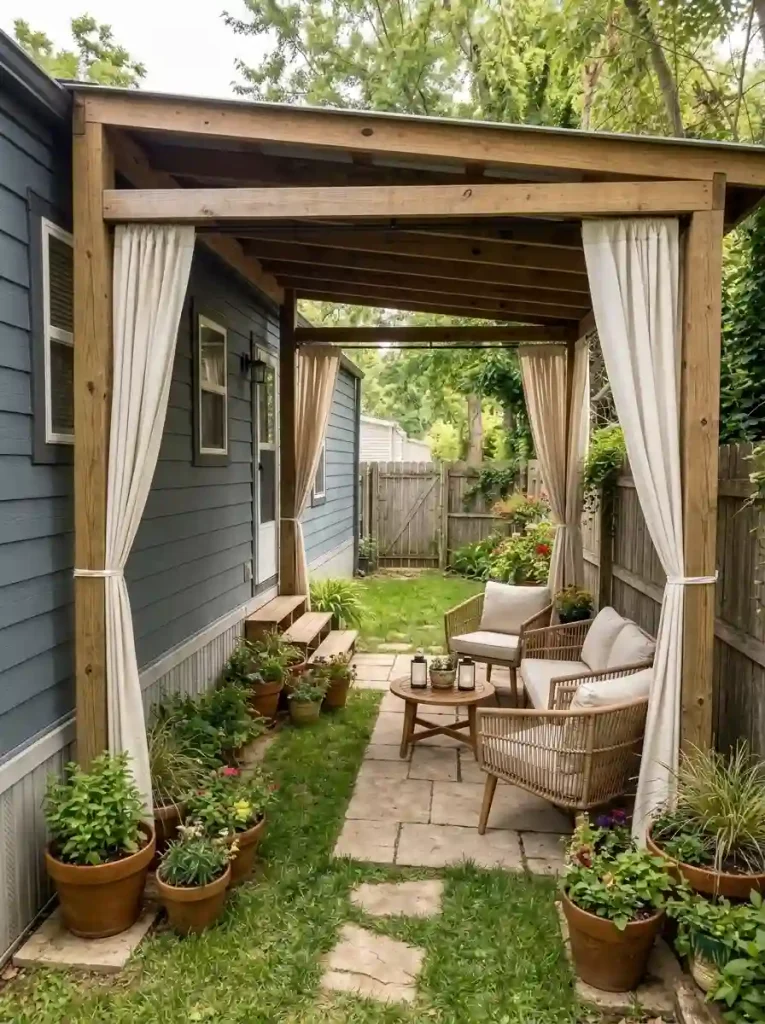
An outdoor rug can visually transform separate chairs and tables into a recognizable outdoor living area.
For a small concrete or paved patio, select a rug that relates to the actual furniture arrangement. Where practical, allowing the front legs of the seating pieces to rest on the rug creates a stronger sense of connection.
A very small rug floating beneath a coffee table may look disconnected from the surrounding furniture. An excessively large rug can interfere with walking routes or extend into unsuitable areas.
Test the proposed size with removable markers before purchasing.
Use a rug intended for outdoor conditions and compatible with the underlying surface. Skip it where persistent moisture, uneven flooring or moving edges could create problems.
Earthy stripes, restrained botanical patterns and warm neutral textures can all add character without overwhelming the compact patio.
15. Give Your Patio a Distinctive Look With Coordinated Exterior Colors
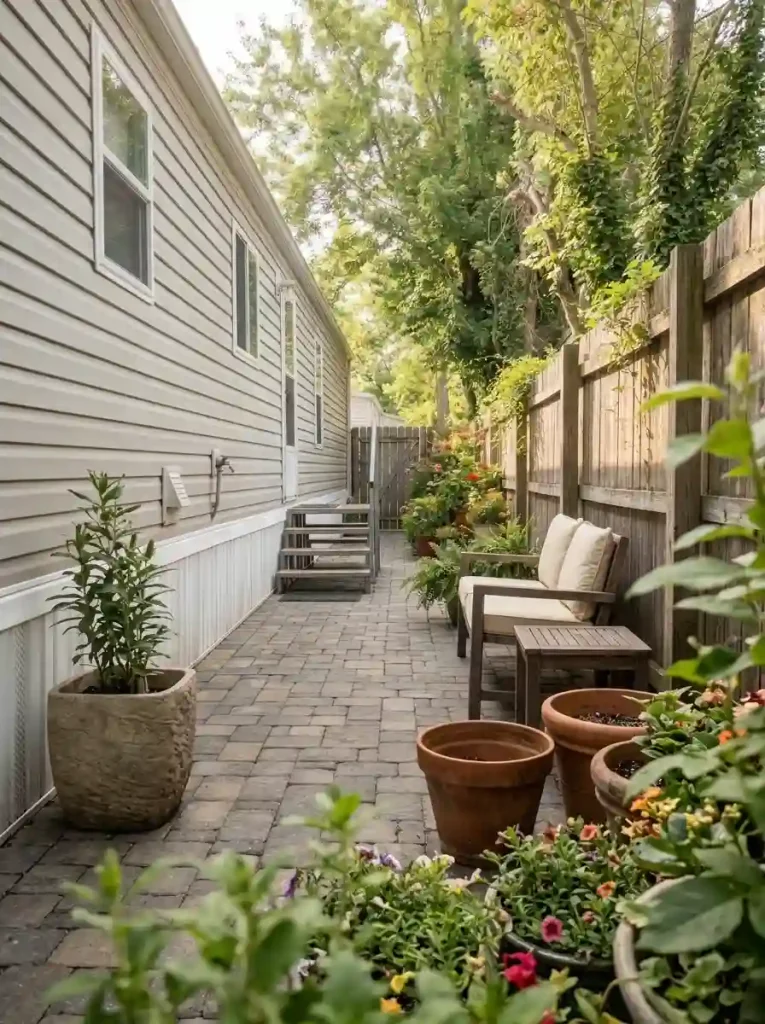
One of the easiest ways to make a mobile home patio look thoughtfully designed is to connect its colors with the architecture behind it.
The long exterior elevation of a manufactured home provides a natural backdrop. Siding, window trim, doors and existing timber details can all influence the patio’s palette.
Consider these combinations:
| Existing home exterior | Complementary patio palette |
|---|---|
| Cream or beige | Olive green, warm timber and terracotta |
| Cool gray | Oatmeal, charcoal and muted blue |
| Sage green | Natural wood, ivory and rust |
| White farmhouse siding | Black, warm tan and soft garden greens |
| Muted blue | Sandy beige, weathered wood and white |
Choose one dominant neutral, one repeated material and a restrained accent color. Repeat the accent across a few cushions, flowers or containers.
For broader architectural inspiration, explore these mobile home exterior makeover ideas.
Coordinating the patio with existing finishes can produce a surprisingly cohesive transformation without repainting the entire home.
16. Use Layered Lighting to Create a Magical Evening Patio
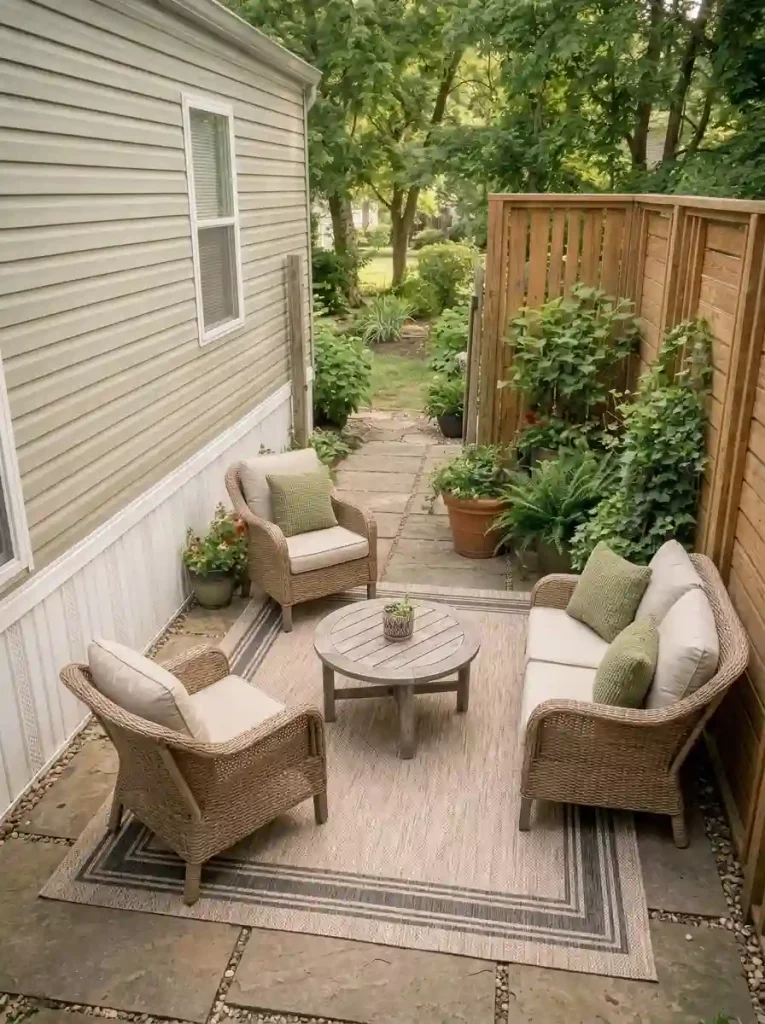
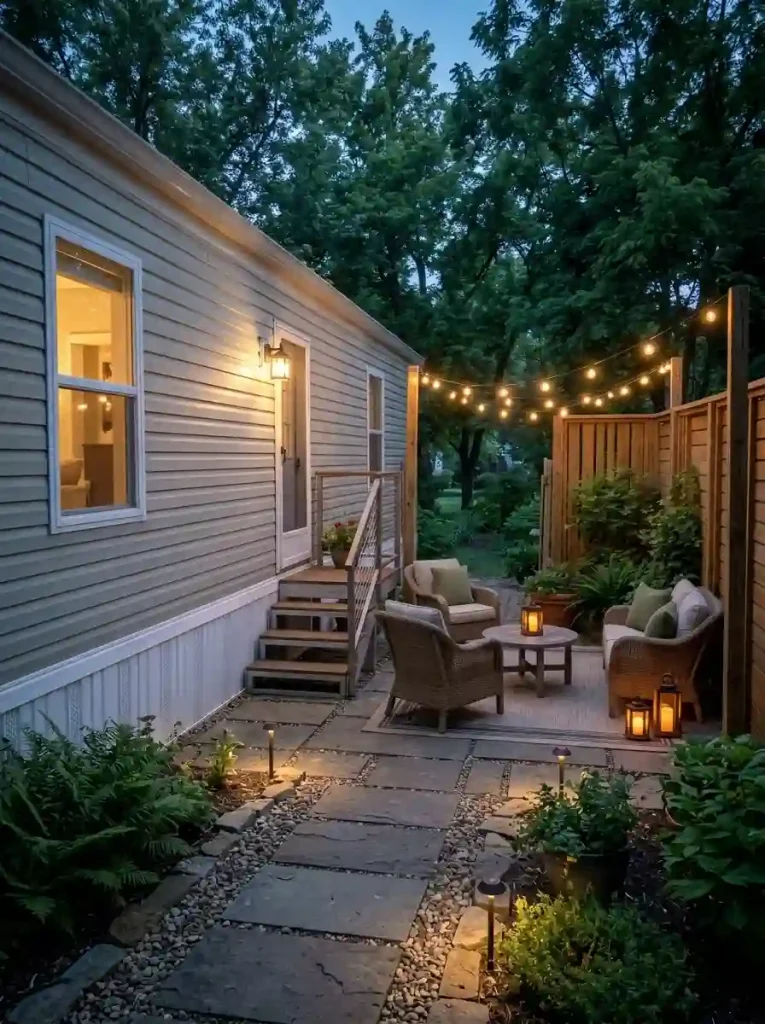
As daylight fades, warm lighting can completely change the atmosphere of a small manufactured-home yard.
The most successful lighting arrangements serve three distinct purposes.
Navigation lighting: Illuminate the steps, landing and walking route between the home and patio.
Functional lighting: Provide sufficient visibility around doorways, dining surfaces and frequently used areas.
Ambient lighting: Introduce a softer glow around the seating group using suitable string lights, decorative lanterns or other outdoor fixtures.
Avoid filling a compact patio with excessively bright decorative lighting. A few thoughtfully positioned sources can create more depth and intimacy.
Use products rated for the actual outdoor exposure, and keep electrical cords away from walking routes. The Electrical Safety Foundation International’s outdoor lighting safety guidance recommends outdoor-rated electrical accessories and GFCI-protected circuits.
Dependable access lighting should remain the priority, even when the decorative lights are switched off.
Lighting atlas / 04
Three layers of evening comfort
Begin with safe navigation, then establish a gentler glow around your outdoor seating area.
-
Navigation lightingClearly illuminate the steps, landing and route between the home and patio.
-
Functional lightingProvide useful visibility around the doorway and frequently used surfaces.
-
Atmospheric lightingIntroduce a softer decorative glow around the seating area.
Conceptual lighting placement. Select fixtures suitable for their outdoor exposure and follow installation requirements.
17. Design a Small Outdoor Reading Retreat Away From the Busy Entrance
Some of the most enjoyable outdoor spaces are designed for solitude.
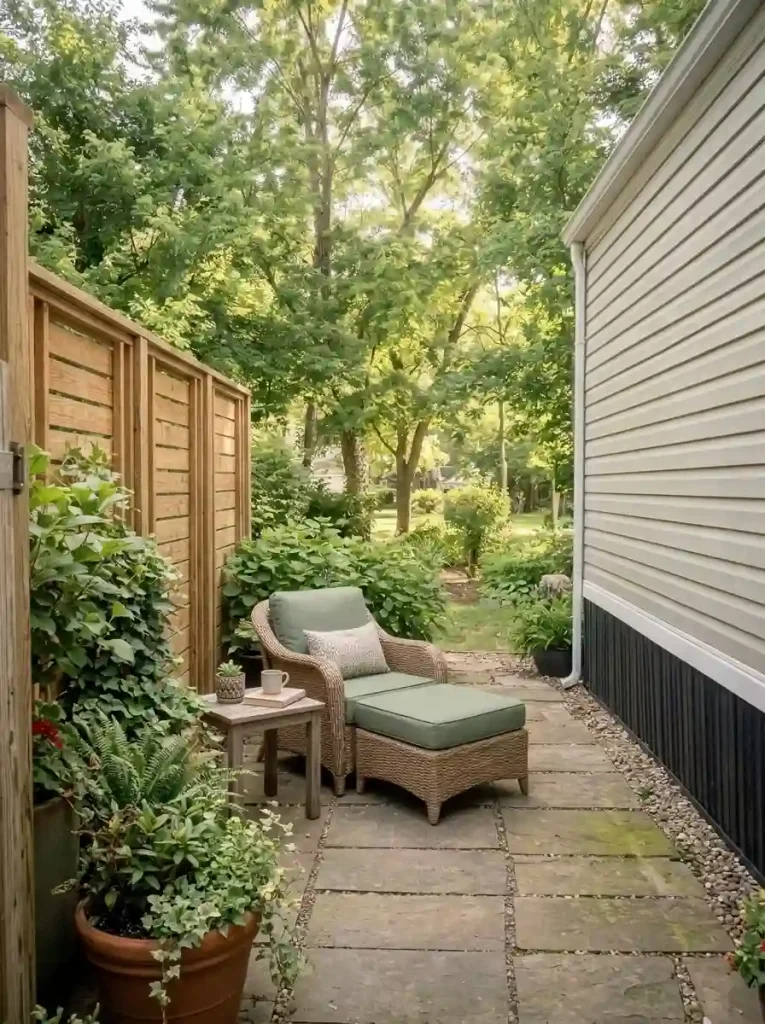
A quiet garden corner away from the busiest entrance route can become a comfortable reading retreat with just one supportive chair, a small side table and a pleasant surrounding view.
Position the chair toward a planted border or attractive garden feature. Looking toward greenery can feel more relaxing than facing a parking area or utility equipment.
Observe the space during the hours you would normally read. A corner that appears peaceful in the morning may become noisy, exposed or uncomfortable later in the day.
Introduce a weather-resistant cushion, a portable lantern and a convenient surface for a book or drink.
This arrangement is particularly suitable for mobile home yards where there is insufficient room for a large lounge but enough space to establish a personal retreat.
18. Make a Compact Patio Work for Both Everyday Living and Guests
Designing a small patio exclusively for occasional gatherings can leave the yard feeling unnecessarily crowded throughout the rest of the week.
A more flexible arrangement begins with the household’s ordinary outdoor routine.
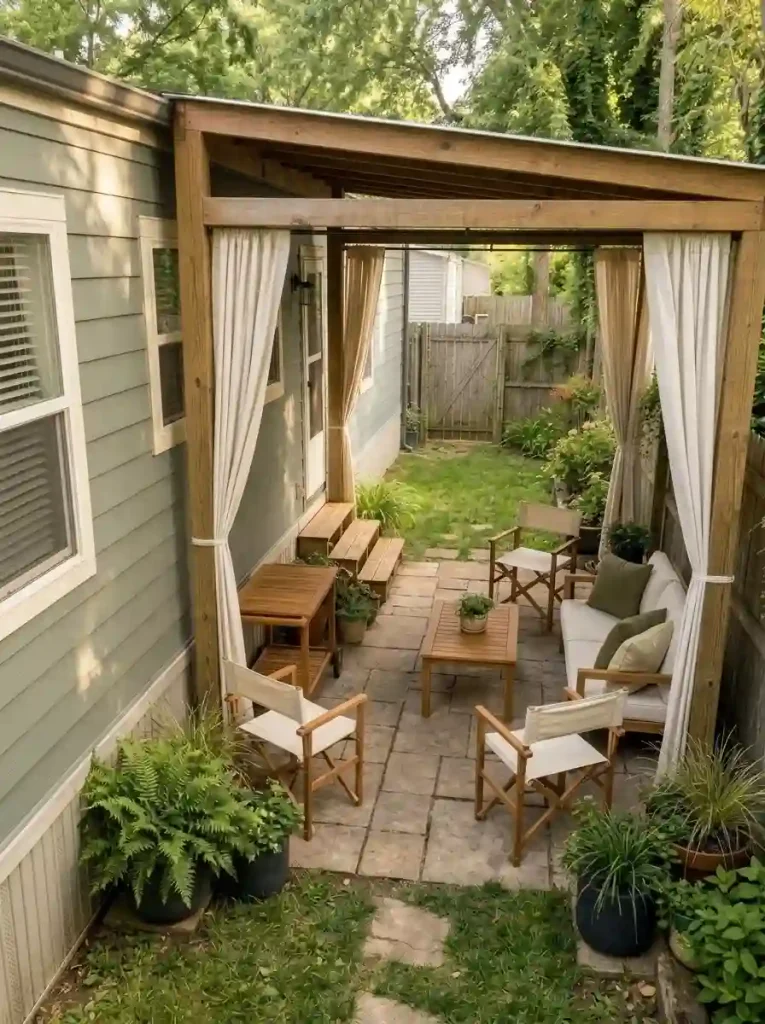
For everyday use, a loveseat and compact table might provide a comfortable conversation area. When visitors arrive, additional lightweight chairs can be brought into the arrangement.
Everyday configuration: A small permanent seating group with open circulation.
Guest configuration: Additional portable seating and a movable serving surface.
Keep larger furniture in its regular position so preparing for guests does not require reorganizing the entire patio.
Test the expanded arrangement with chairs occupied, especially near the home’s stairs and entrance. Avoid adding seating where it would obstruct essential access.
A patio that adapts naturally to different occasions can feel much more spacious than one permanently filled with furniture.
19. Turn a Rental Mobile Home Patio Into a Reversible Outdoor Escape
Renting a manufactured home or mobile home lot does not prevent you from creating an inviting outdoor space.
The most practical rental-friendly improvements are those that can be removed without damaging the property.
Portable seating, outdoor rugs on suitable surfaces, coordinated planters and battery-operated lanterns can significantly change the atmosphere without requiring permanent construction.
Before investing, ask yourself:
- Can the item be removed without leaving damage?
- Does the lease or community require permission?
- Will it interfere with utility access or neighboring properties?
- Can it be safely managed during strong wind or severe weather?
- Would it be useful at a future home?
Build your patio around furniture and accessories that remain valuable even if you move.
A carefully coordinated collection of removable outdoor pieces can feel personal, comfortable and beautifully established without altering the home’s structure.
20. Keep Your Cozy Patio Comfortable Through Changing Weather
A patio should provide relaxation, not another demanding maintenance routine.
Small mobile home yards may be exposed to intense sunlight, wind, heavy rain or seasonal temperature changes. Choosing accessories with those conditions in mind makes the outdoor space easier to enjoy.
Prepare your patio according to its most common weather challenges.
For sunny locations: Select outdoor materials suitable for ultraviolet exposure and provide appropriate shade.
For rainy locations: Prioritize suitable drainage, moisture-resistant furnishings and convenient cushion storage.
For windy locations: Limit lightweight decorative objects and follow the operating and storage instructions for shade products.
For colder seasons: Clean and store vulnerable accessories according to their care requirements.
A compact storage bench may be useful where permitted, provided its position does not reduce essential circulation.
Weather-conscious choices allow the patio to retain its comfortable appearance while reducing unnecessary replacement, cleaning and rearrangement.
Seasonal comfort / 05
Is your patio ready for changing weather?
Review each condition to track your patio maintenance priorities.
This review is not a safety certification. A checked item indicates that it has been reviewed, not necessarily resolved.
21. Transform a Plain Mobile Home Yard One Affordable Upgrade at a Time
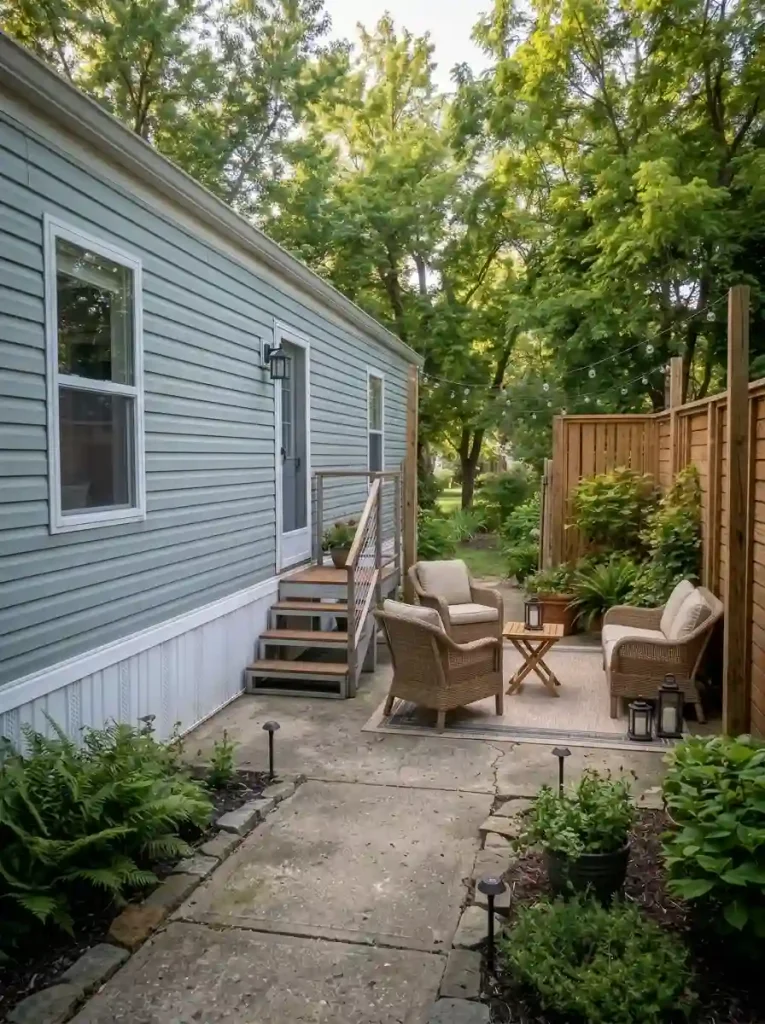
A beautiful patio does not have to emerge from a single expensive renovation.
The most rewarding transformations often begin by solving the problem that currently prevents you from enjoying your yard.
A bare patch of ground may need a suitable patio surface. An old concrete pad might only require cleaning and new seating. A cluttered outdoor area could benefit from removing oversized furniture before buying anything else.
Approach the transformation in three stages.
Establish the Foundation
Address surface condition, drainage, property restrictions and safe access. Reuse existing features wherever they remain suitable.
Introduce Everyday Comfort
Choose furniture around the activities you genuinely enjoy. Add appropriate shade or privacy where those are the main limitations.
Finish With Personality
Introduce coordinated cushions, greenery, gentle lighting and a few meaningful accessories.
For affordable improvements beyond the patio itself, these mobile home exterior ideas on a budget offer further inspiration.
Allow your patio to develop gradually. Spending time in the space before completing every decorative detail often reveals which improvements are genuinely worth making.
Transformation roadmap / 06
Give every upgrade a purpose
Choose your existing patio condition to discover a personalized three-phase improvement plan.
Bare yard / recommended sequence
-
FOUNDATION Establish a usable surface
Address ground conditions, drainage and access.
-
FUNCTION Introduce compact seating
Create one comfortable activity zone.
-
FINISH Add atmosphere
Finish with plants, textiles and lighting.
Plain concrete / recommended sequence
-
FOUNDATION Inspect and clean the pad
Resolve deterioration or drainage problems first.
-
FUNCTION Define a seating arrangement
Reuse the surface with appropriately scaled furniture.
-
FINISH Soften the space
Add suitable outdoor textiles and greenery.
Cluttered patio / recommended sequence
-
FOUNDATION Remove unnecessary furniture
Recover movement space and essential access.
-
FUNCTION Rebuild one activity zone
Choose a clear lounge or dining purpose.
-
FINISH Edit the accessories
Retain coordinated pieces that serve a useful purpose.
Exposed patio / recommended sequence
-
FOUNDATION Identify environmental concerns
Observe sunlight, wind and privacy during normal patio use.
-
FUNCTION Introduce suitable protection
Select permitted shade and privacy solutions.
-
FINISH Complete the comfort layer
Add comfortable seating, greenery and finishing details.
These are suggested project priorities, not construction instructions or cost estimates.
Final Thoughts
A cozy mobile home patio does not require an enormous backyard, expensive furniture or a dramatic architectural transformation.
It begins with recognizing the potential of the outdoor space you already have.
Perhaps your yard needs a peaceful coffee corner, a compact garden lounge or a comfortable place to enjoy dinner beneath warm evening lights. An existing concrete pad could become your favorite outdoor room with a little attention, while a narrow side yard might offer the perfect location for an intimate retreat.
Start with a layout that respects your home’s access requirements and the natural limitations of the property. Introduce comfortable furniture, thoughtful planting and the features that make outdoor living easier.
Then finish with the colors, textures and personal details that make the space feel unmistakably yours.
The best mobile home patio ideas are not necessarily the biggest or most expensive. They are the ones that make everyday life outdoors a little more comfortable, beautiful and enjoyable.