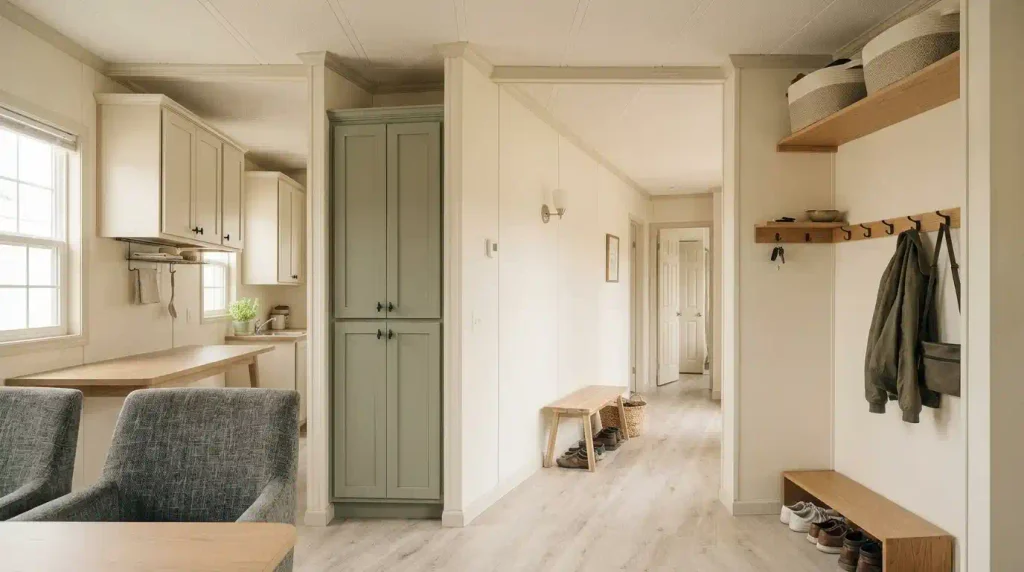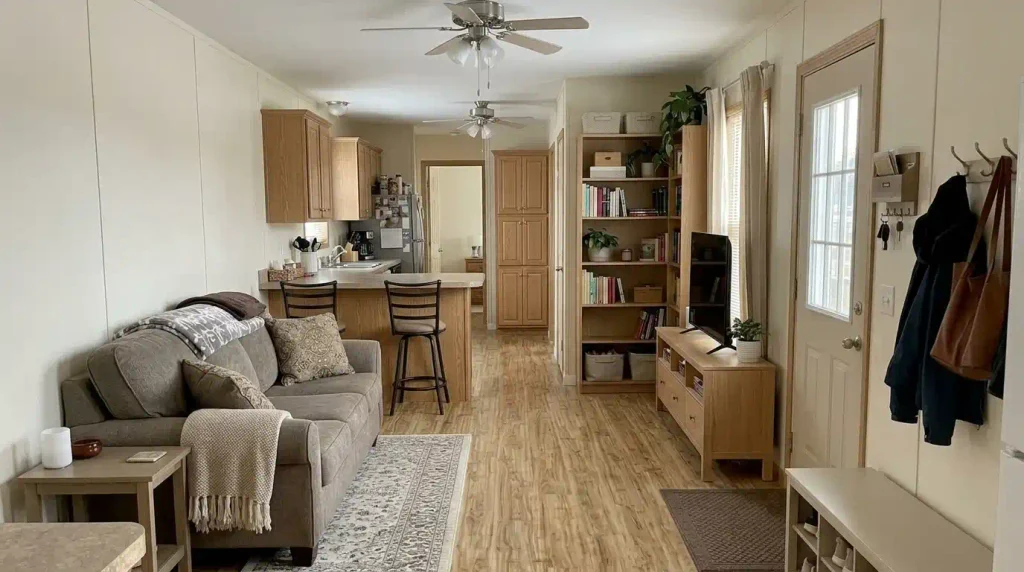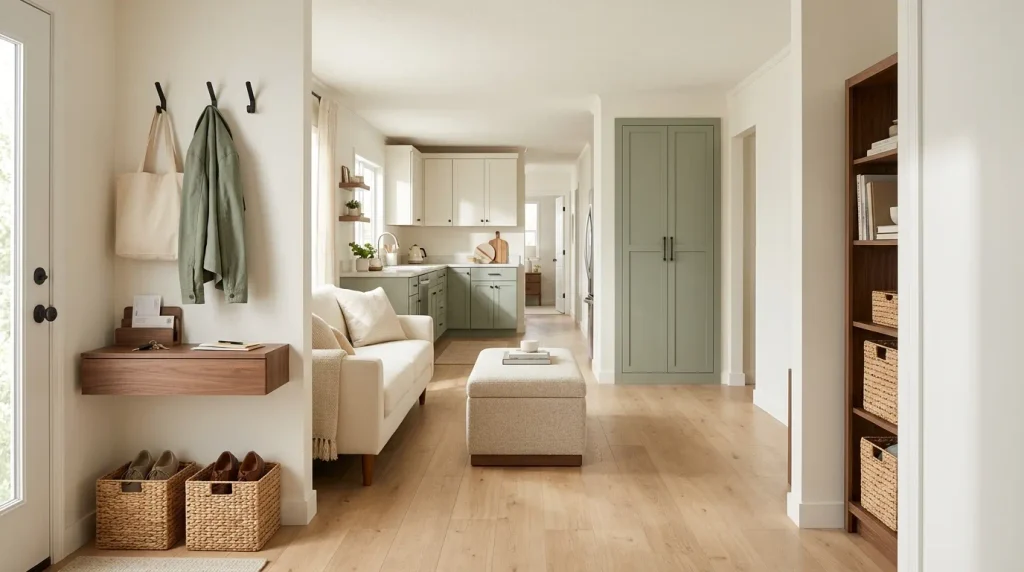
Storage can solve a space problem and still make a small mobile home feel more crowded. Open baskets, freestanding carts, stacked bins and overloaded shelves may hold plenty, yet they also leave everyday clutter visible from several rooms at once. That is why the most useful hidden storage mobile home ideas work differently: they build capacity into furniture, shallow wall zones, cabinet fronts and overlooked gaps so the room can look calmer even when it is storing more.
The smartest solutions are not always the deepest ones. In a compact manufactured home, a shallow concealed compartment that opens easily can be more useful than a large cabinet placed where it narrows circulation.
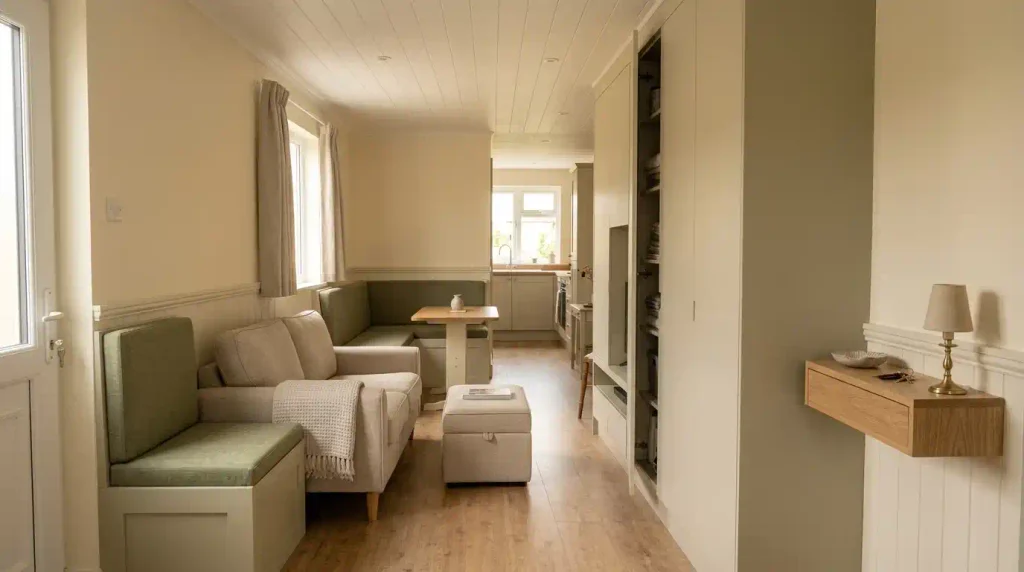
The 21 ideas below move from easy furniture swaps to more integrated storage, with practical checks for access, frequency of use and visual impact. Start by identifying what you want to hide and how often you actually need to reach it. That one decision can prevent a clever-looking storage idea from becoming an inconvenient one.
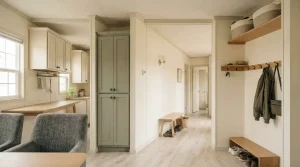
1. Hide the Entry Drop Zone Inside a Wall-Hugging Closed Cabinet
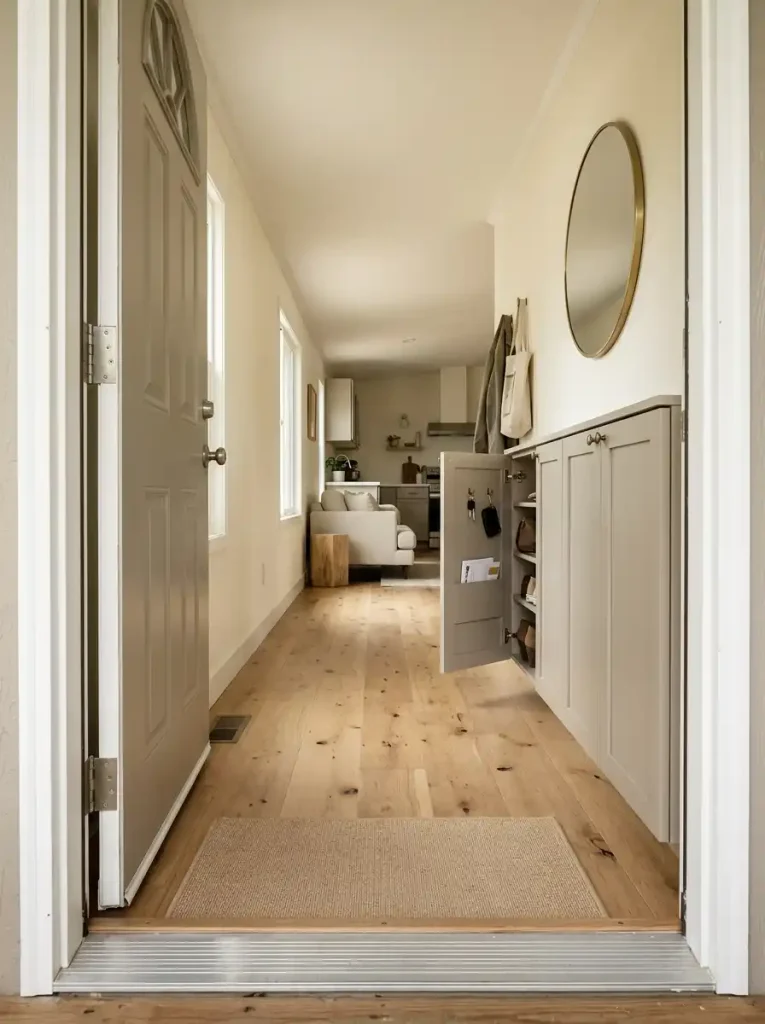
The entry is often where a mobile home begins to look cluttered first because shoes, keys, bags, mail and pet gear collect within a very small footprint. A shallow closed cabinet can absorb that daily drop zone without turning the doorway into an open storage display.
Stand at the entrance with the door open and walk through the route you normally use. Look for a wall segment where shallow storage would not force you to sidestep around it. That circulation test matters more than squeezing in the largest possible cabinet.
Keep the interior assigned to fast-moving categories. Hooks can hold keys or a small bag, a narrow shelf can catch mail, and the lowest compartment can handle shoes. If the cabinet interferes with the door or noticeably tightens the route, preserve the entry and move the storage deeper into the home.
Hidden Storage Fit Lab
Hidden Storage Fit Lab
Where is your unused space actually hiding?
Choose the condition that best describes the room. The useful storage mechanism changes with the type of space you already have.
Select your strongest opportunity:
Think shallow + closed.
A slim cabinet can conceal shoes, mail and grab-and-go items. Check the door path first. If the entrance becomes awkward, shift storage away from this zone.
Think vertical pullout.
A narrow slot can become useful when the full depth remains reachable. Pulling storage toward you is usually easier than reaching sideways into a deep gap.
Make the footprint work twice.
Look first at ottomans, coffee tables, beds, benches and media furniture. Hidden capacity inside an object already occupying the room can prevent a second storage piece entering the layout.
Think shallow concealment.
Mirrors, framed fronts and slim wall cabinets suit belongings that do not need much depth. Use them for small categories and preserve the floor for circulation.
2. Let a Storage Ottoman Replace the Living Room’s Visible Basket Collection
A storage ottoman works best when it replaces something the living room already needs. If you buy one only to gain storage, you may simply exchange visible clutter for another piece of furniture.
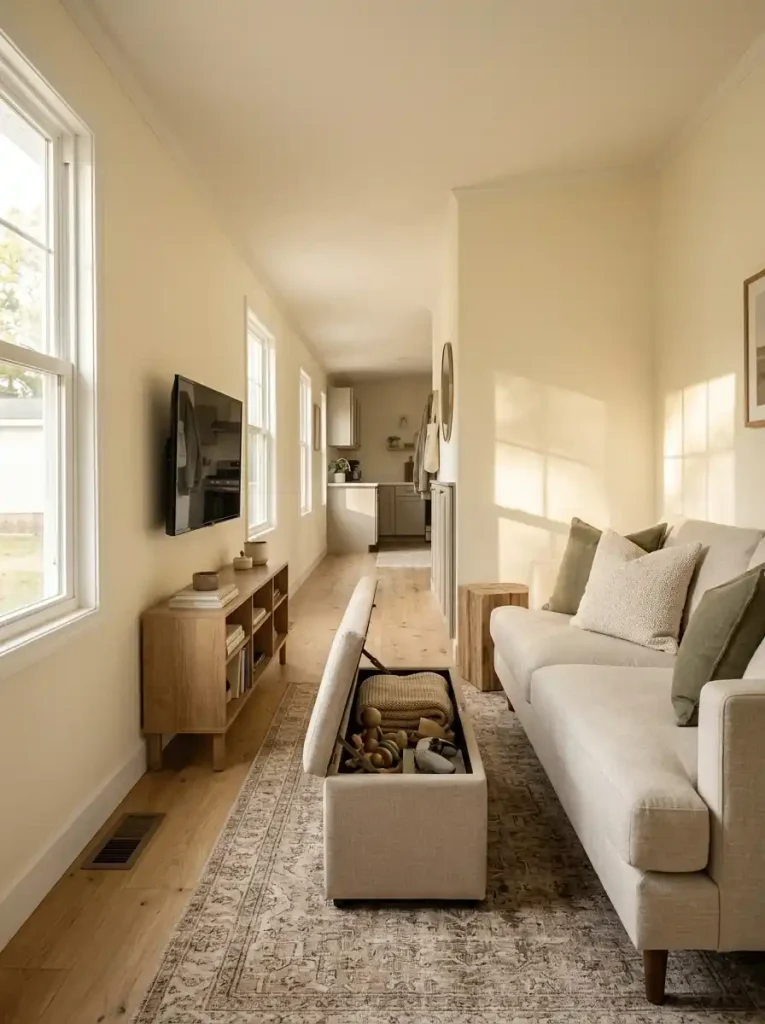
In a narrow mobile-home living area, the stronger move is to replace an existing footstool, small coffee table or occasional seat with an ottoman that opens. The room gains hidden capacity without expanding the furniture footprint.
Reserve the cavity for soft items used often enough to justify the easy access: throws, children’s toys, game controllers or a compact exercise set all fit the logic. Bulky seasonal belongings usually belong elsewhere because they turn prime living-room storage into long-term parking.
For storage problems that extend beyond concealment, continue with the broader [mobile home storage ideas for small spaces](/mobile-home-storage-ideas/).
3. Choose a Coffee Table With Storage You Cannot See Until It Opens
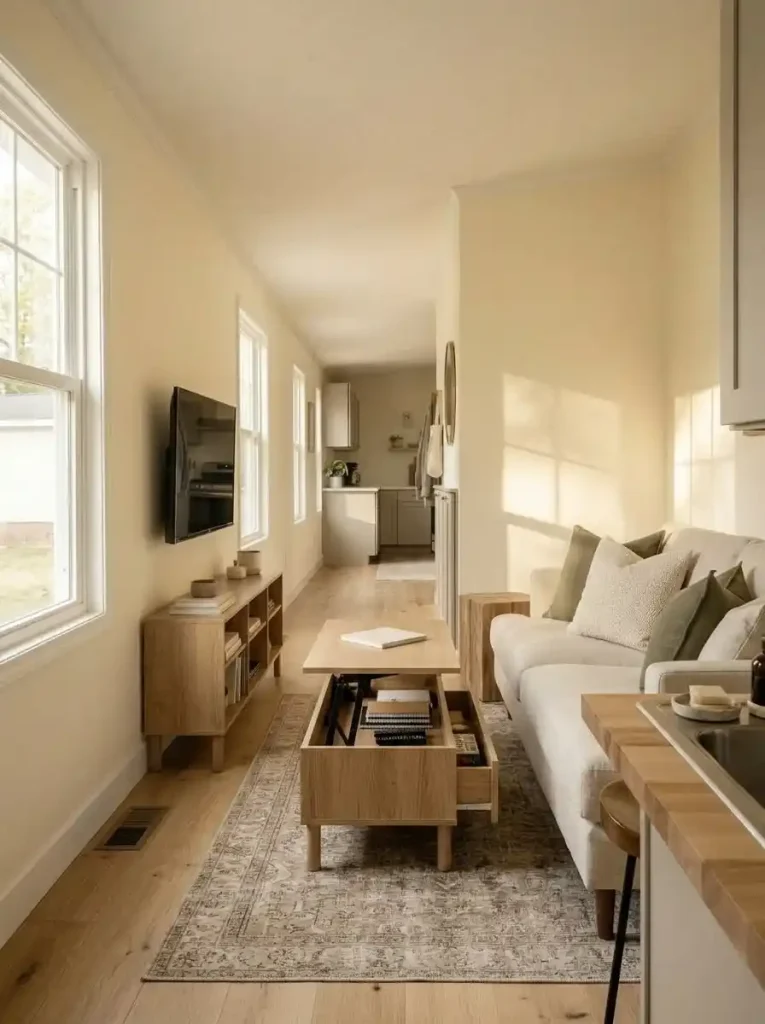
Before choosing a lift-top or drawer coffee table, ask one question:
What is currently left on top because there is nowhere convenient to put it?
That answer should determine the interior.
- Choose shallow drawers for remotes, coasters and chargers.
- Use a lift-top cavity for notebooks, games or occasional work supplies.
- Avoid oversized storage when the table itself would need to become bulky enough to crowd the sofa route.
The advantage is not maximum capacity. It is rapid reset.
In an open mobile-home living area, clearing five or six small objects from the coffee table can noticeably reduce visual noise because that surface may also be visible from the entry, dining area and kitchen.
4. Hide Chargers and Remotes Inside a Sofa-Side Table With a Drawer
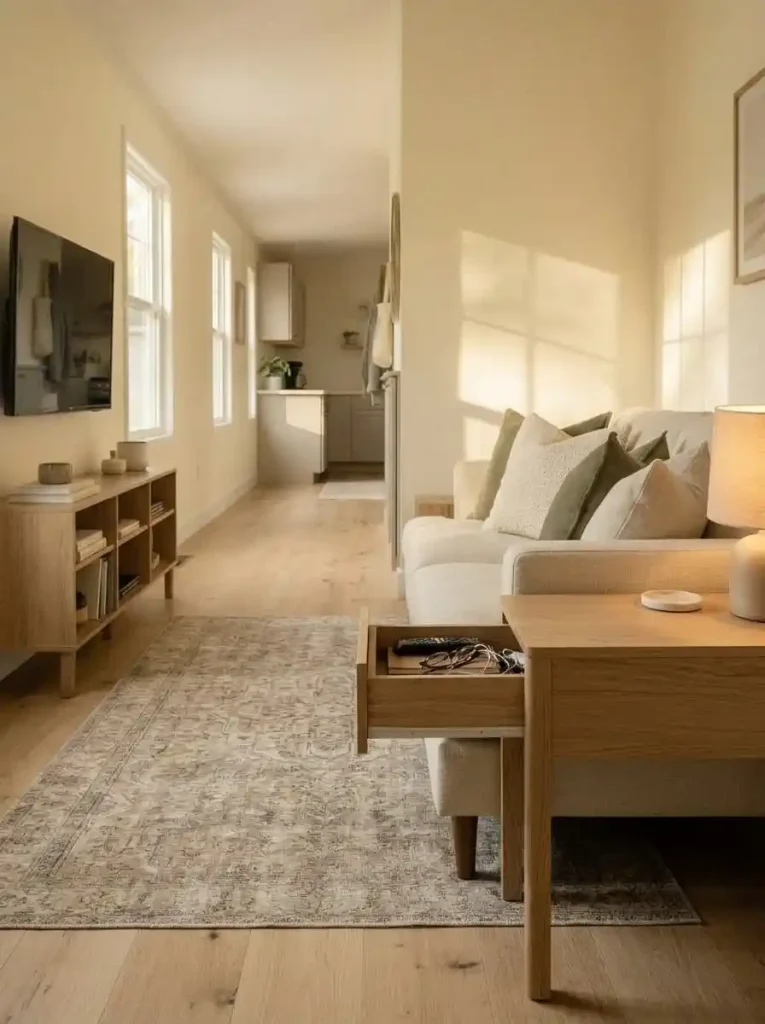
Where do the smallest living-room objects end up at night?
If the answer is the sofa arm, floor, window ledge or coffee table, a narrow side table with one usable drawer may be more effective than a larger cabinet placed across the room.
Placement matters more than drawer size. Put it beside the seat where the objects are actually used so storage becomes part of the routine: remote out, remote back; reading glasses out, glasses back.
This is especially useful in a mobile home where placing an organizer on the opposite wall can consume aisle width for very little functional benefit.
Quick test: if you can put the item away without standing up or crossing the room, the hidden storage is positioned for the habit—not merely for the photograph.
5. Make the Media Console Swallow Cords, Controllers and Small Electronics
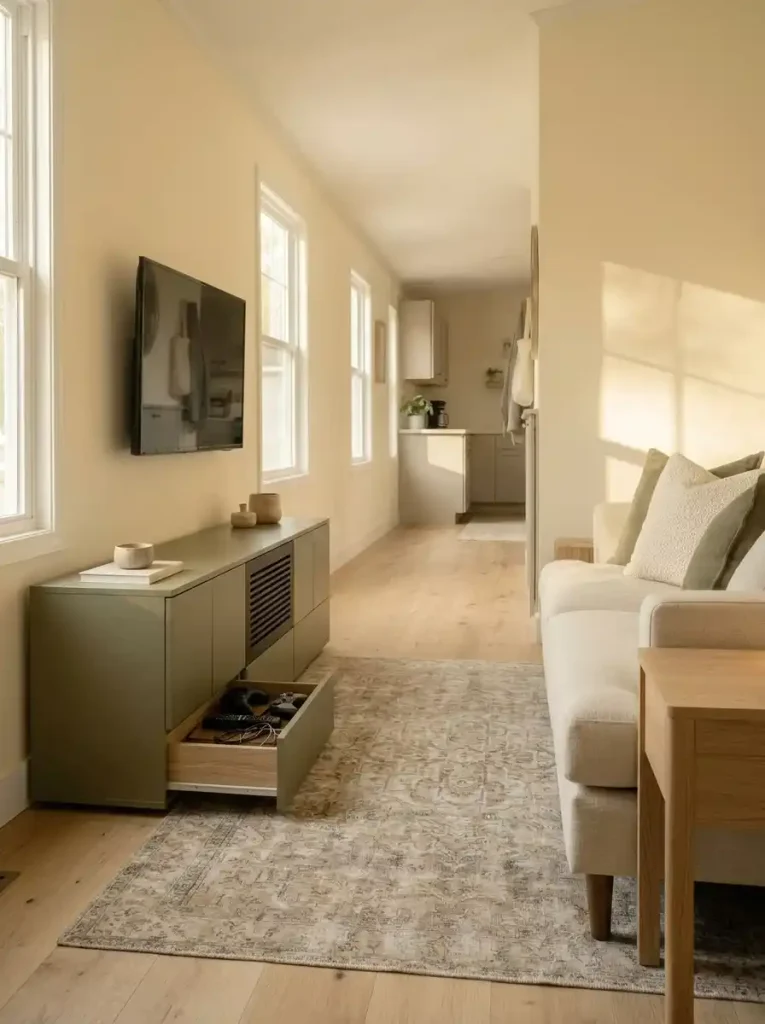
A media console becomes useful hidden storage when it separates three kinds of clutter that usually merge into one messy shelf: items you handle frequently, loose accessories you rarely handle, and equipment that needs to remain installed.
- Give controllers and remotes the easiest drawer or door. They need the shortest reset path.
- Group spare cables and adapters inside one contained compartment. A clear category is more useful than keeping every cable visible.
- Keep installed electronics only where their own setup instructions allow. A closed compartment should not be selected solely because it hides the equipment.
In a compact living room, closed fronts also calm the television wall. Once small electronics disappear, the screen and a few deliberate objects can carry the visual focus without dozens of accessories competing underneath.
6. Use a Lift-Up Bed Base for the Bulky Things You Rarely Need
Under-bed storage is most valuable when it handles categories that would otherwise consume an entire closet shelf.
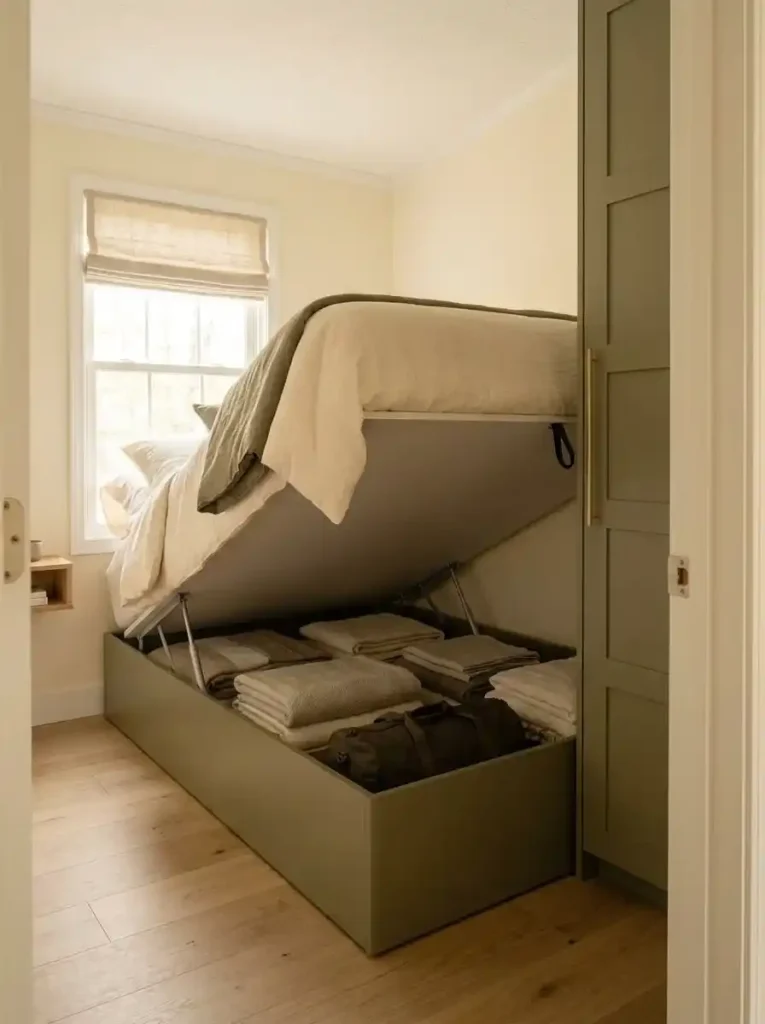
A lift-up bed base can suit extra bedding, travel bags, off-season textiles or other bulky belongings that are needed occasionally but do not deserve daily-access space.
Frequency is the deciding factor. If you reach for something every morning, hiding it beneath the mattress creates unnecessary effort. Keep frequently used clothing and bedside items in easier drawers or closets, then reserve the deeper bed cavity for lower-frequency belongings.
Also test how far the bed can actually open in the room. A storage mechanism offers little benefit if a wall, cabinet or tight walkway makes it frustrating to operate.
If the bedroom itself is your main pressure point, these [small mobile home bedroom storage ideas](/mobile-home-bedroom-storage-ideas/) explore the wider room strategy, including closets, bed footprints, vertical storage and circulation.
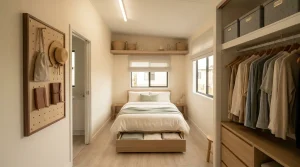
7. Put Hidden Storage Into the Sides of the Headboard Instead of the Walkway
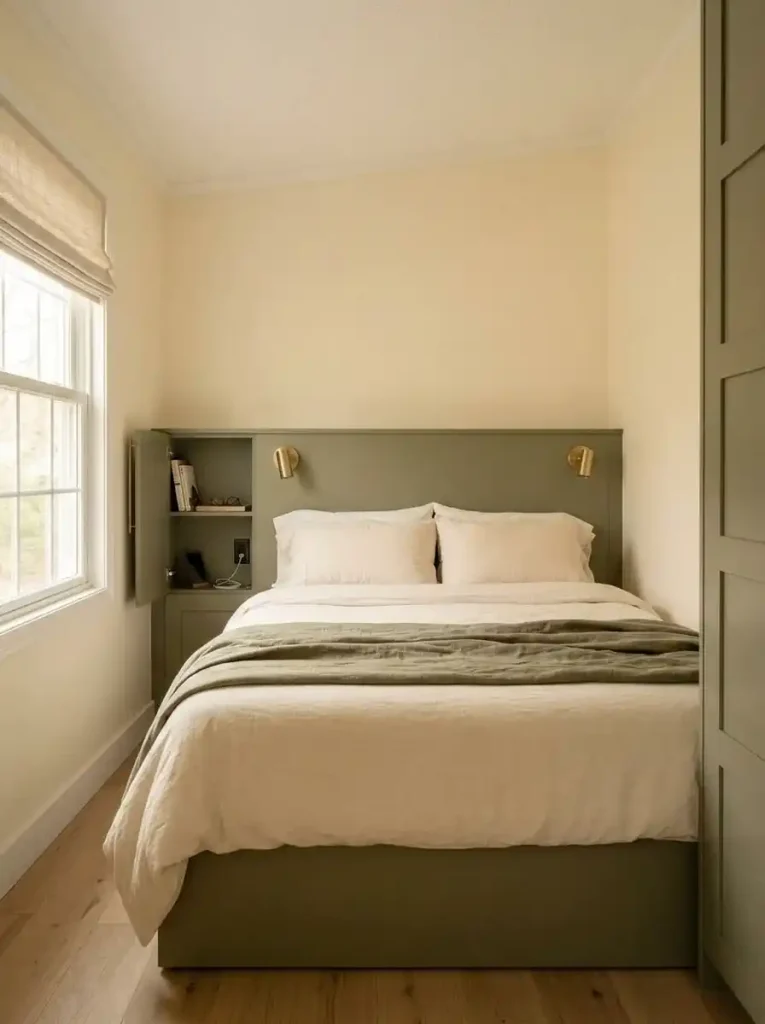
Imagine a bedroom where the bed already fits but adding two conventional nightstands would noticeably tighten the route around it.
The headboard wall may be the better place to look.
A headboard with shallow side cubbies, narrow concealed doors or slim pullouts can keep books, glasses, charging cables and other bedside essentials inside the bed’s existing visual zone.
The important distinction is direction of access. A compartment that opens toward a blocked wall is wasted capacity. Choose a side, front or upper access point according to the clearance that already exists around the mattress.
Keep these compartments shallow enough that small items remain visible once opened. Deep hidden pockets tend to collect forgotten objects.
This idea earns its place when it removes the need for wider bedside furniture. If the bedroom already accommodates useful nightstands comfortably, there is little reason to complicate the headboard merely to create another secret compartment.
8. Turn a Narrow Closet Strip Into a Full-Height Pullout Behind One Matching Door
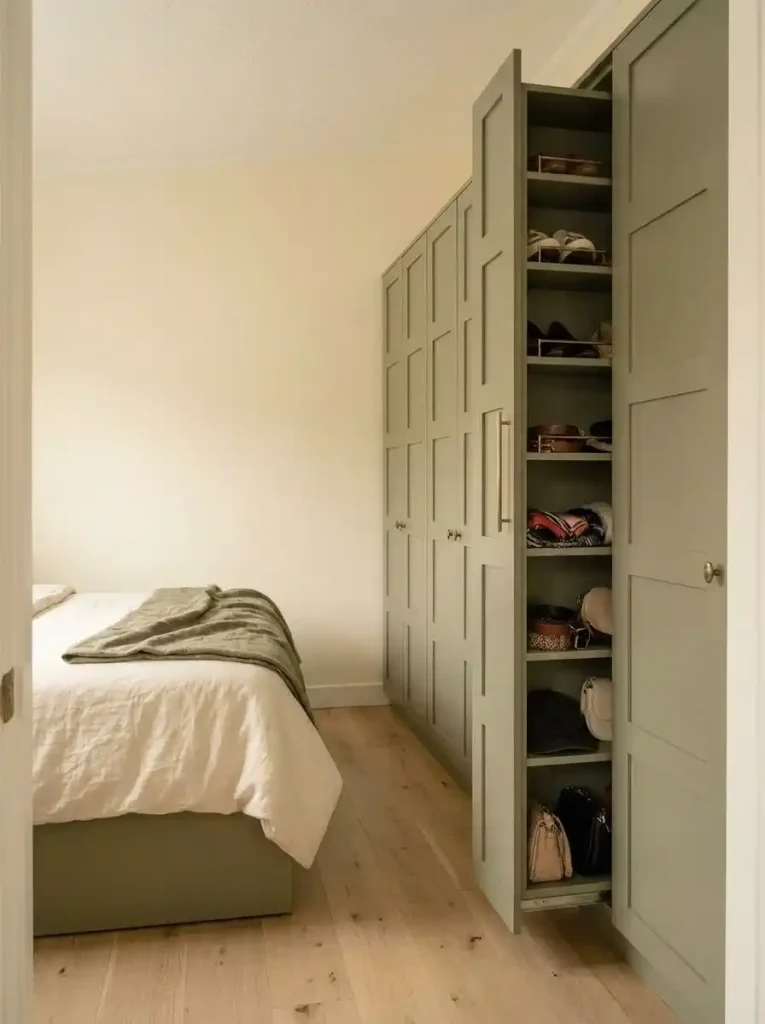
A narrow gap beside closet cabinetry can look too small to matter because reaching sideways into a deep slot is awkward.
A pullout changes the access direction.
Instead of asking your arm to reach deep into the cavity, the stored items move forward where the entire depth becomes visible from the front.
This arrangement suits categories that benefit from narrow vertical storage—shoes, folded accessories, small bags or other compact groups—provided the unit has an unobstructed travel path.
Matching its front to the surrounding closet doors keeps the extra capacity visually quiet. Before committing, check the complete opening motion. A pullout that collides with the bed, bedroom door or adjacent closet front solves capacity while introducing a new circulation problem.
Pullout Geometry Lab
Pullout Geometry Lab
A narrow gap only counts when the stored depth can come to you.
Think through the movement before the capacity. The front needs somewhere clear to travel.
Identify the unused vertical strip.
Check the pull direction against doors, furniture and walking space.
Assign narrow categories that stay readable when the unit opens.
What happens directly in front of the gap?
The gap can benefit from pullout storage because its depth becomes visible without forcing a sideways reach.
Side access may work better with shallow fixed storage or a different opening direction.
Capacity is not worth a collision. Preserve the route and look for storage inside an existing furniture or cabinet footprint.
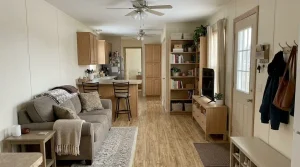
9. Hide Jewelry and Small Accessories Behind a Bedroom Mirror Panel
A full-length or dressing mirror can occupy valuable wall space while doing only one job.
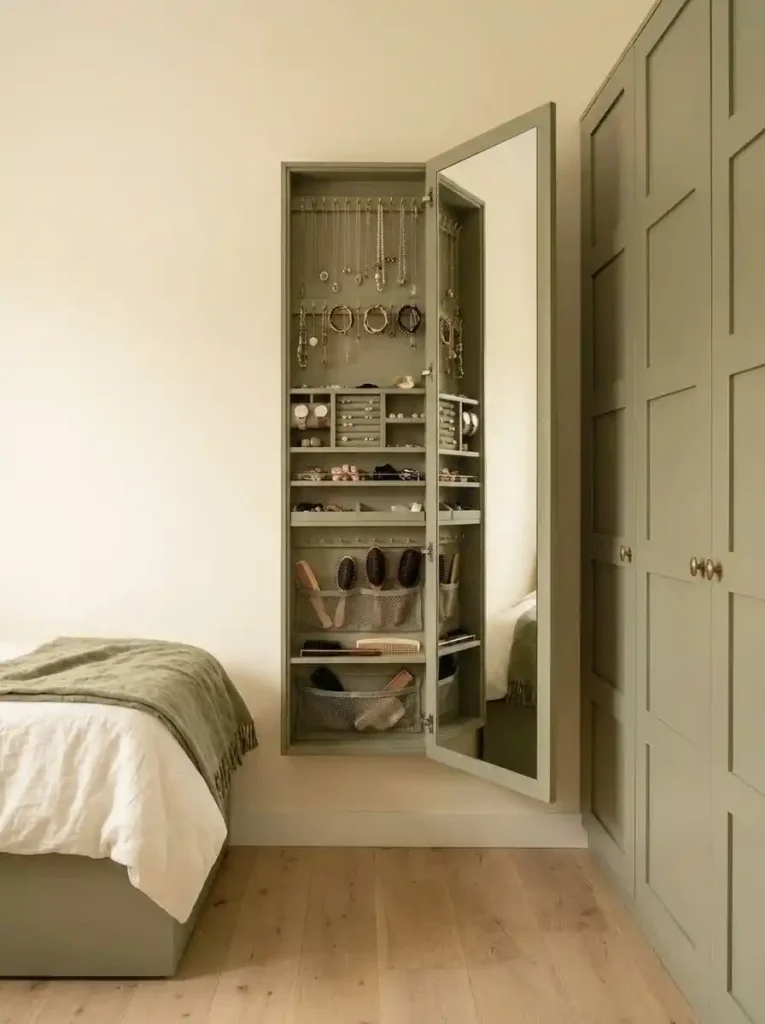
Where the wall location and mounting system suit it, a shallow cabinet concealed behind the mirror can turn the same surface into storage for jewelry, watches, hair accessories and other compact grooming pieces.
Shallow depth is an advantage here. Small objects remain visible as soon as the panel opens, which makes the compartment less likely to become a dark catch-all.
Place frequently worn pieces near eye level and reserve the upper or lower zones for less-used belongings.
The mirror earns the hidden-storage role when it replaces a jewelry stand, countertop tray or another visible organizer. If it merely adds another storage location without eliminating clutter elsewhere, the bedroom has gained complexity rather than calm.
10. Slide Cleaning Supplies Into a Laundry-Side Pullout With a Matching Front
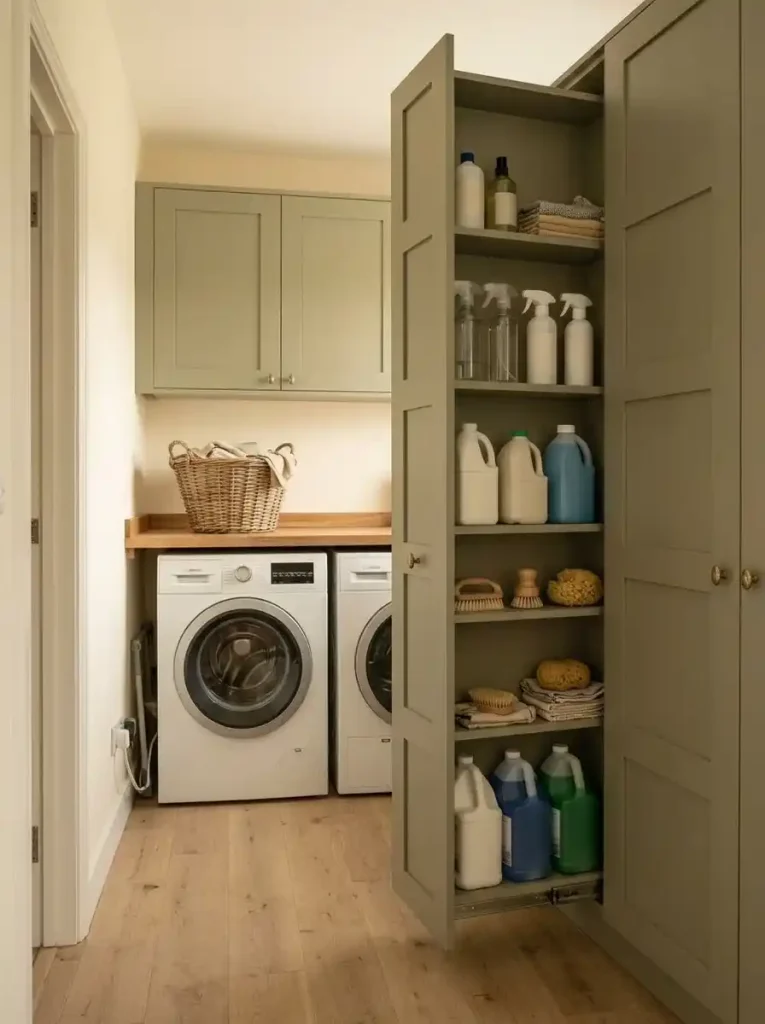
The slim space beside a washer or dryer can be useful, but only when the contents can be retrieved without dragging bottles from the back of a deep gap.
A narrow pullout converts a difficult sideways reach into one forward movement. Taller bottles can sit low while smaller laundry supplies remain higher where they are easier to scan.
Judge the real usable gap only after accounting for the appliance installation and any access required by the manufacturer’s instructions. Do not assume every visible sliver beside a machine is available for cabinetry.
A matching flat front can visually connect the pullout to surrounding storage, but appliance access takes priority.
Laundry Pullout Check
Laundry Pullout Check
Three conditions have to work together.
Usable gap
Confirm that the space is genuinely available after the appliance is installed as intended.
Clean pull path
The unit needs room to travel outward without striking a doorway, cabinet or laundry basket.
Readable contents
Organize vertically so bottles and supplies remain visible when the pullout reaches you.
Skip signal: if adding storage compromises appliance access or makes servicing the machine more difficult, the gap has a more important job than storage.
If you want to build solutions for similarly awkward areas, these [DIY mobile home storage projects](/diy-mobile-home-storage/) go deeper into project-focused ideas without turning this concealed-storage guide into a construction manual.
11. Hide the Laundry Hamper Behind a Tilt-Out Cabinet Front
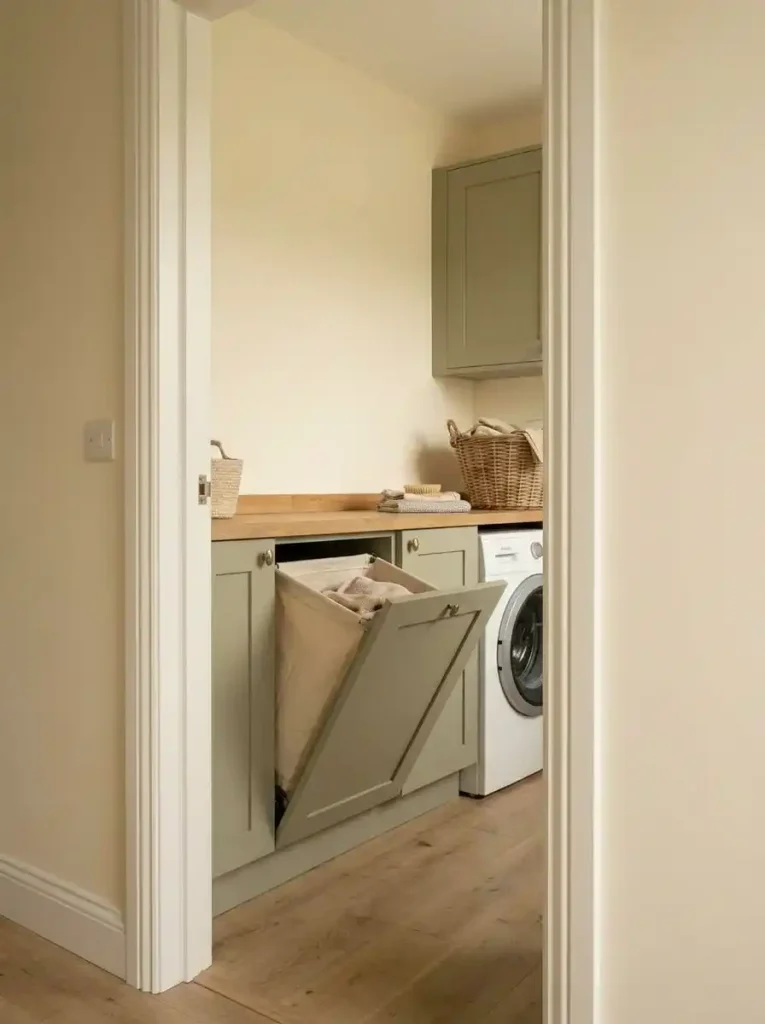
A freestanding laundry basket can become one of the largest visible objects in a compact bedroom, bathroom or laundry corner.
A tilt-out hamper uses a cabinet front to conceal the basket while keeping the opening motion straightforward enough for routine use.
- Best location: close to where clothing is normally removed or sorted.
- Best contents: ordinary dry laundry that can be emptied on a predictable routine.
- Weak location: a cabinet where the open front blocks the main walkway or another door.
The important question is whether concealment improves the routine.
If every load requires moving furniture or clearing the aisle before the hamper can open, an attractive cabinet front has created friction. Hidden storage should make the room calmer without making an everyday task slower.
12. Use the Inside of a Pantry Door for Small Packets That Normally Create Shelf Clutter
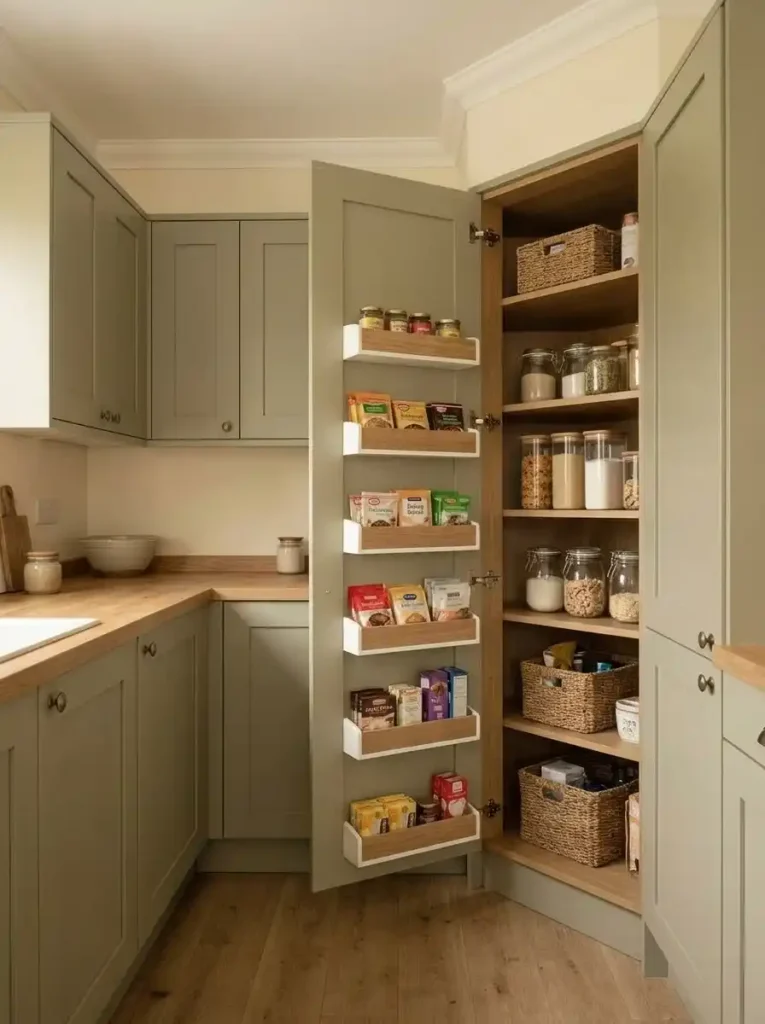
Small seasoning packets, mixes and lightweight sachets rarely need the full depth of a pantry shelf.
They often disappear behind larger containers, then multiply because nobody can easily see what is already there.
The back of a pantry door can turn that thin category into a shallow hidden layer that appears only when the door opens.
Keep the system light and shallow enough that the door still closes freely and the stored pieces do not collide with shelves inside. Grouping packets by use—seasonings, baking, sauces or drink mixes—usually works better than filling every available inch.
The purpose is to clear the main shelf plane and make small inventory readable at a glance.
13. Use Toe-Kick Drawers for Flat Items That Do Not Deserve Prime Cabinet Space
The low strip beneath base cabinets is easy to overlook because it visually belongs to the cabinet base rather than the storage system.
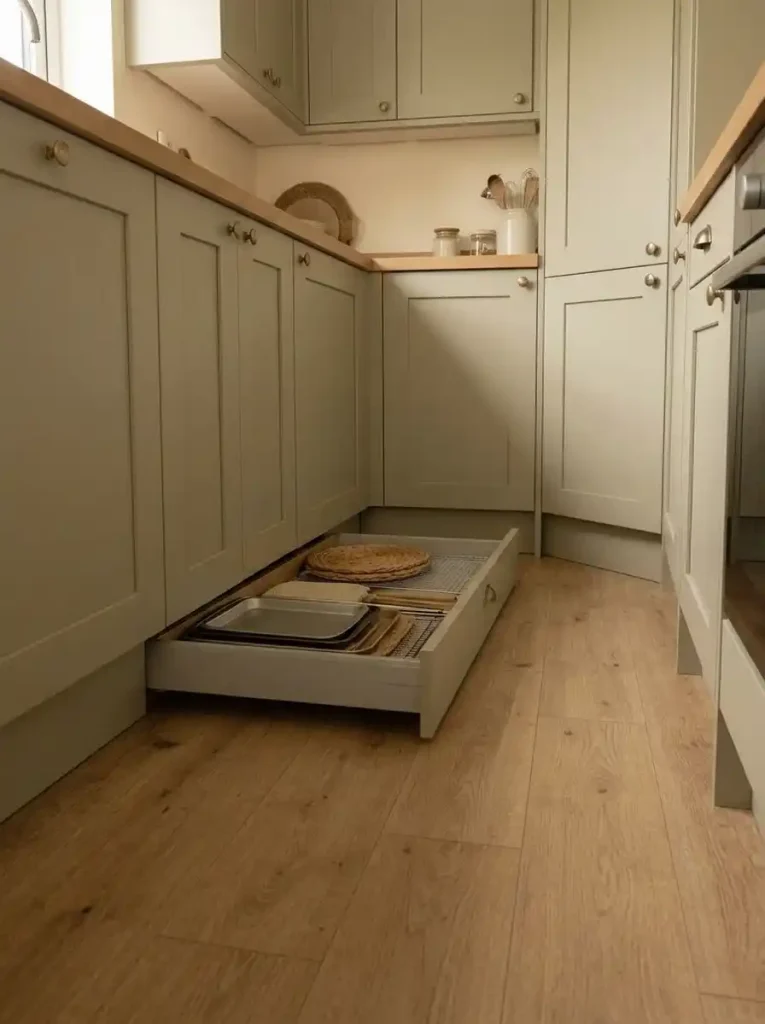
In cabinetry designed or appropriately modified to accommodate it, a shallow toe-kick drawer can handle flat, low-frequency pieces such as placemats, trays, baking accessories or spare linens.
This zone should not become an excuse to cut blindly into existing cabinet bases. First establish what the cabinet construction actually allows and whether the modification is worthwhile.
When the space can be used, choose categories thin enough to remain in one layer. Once objects are stacked deeply, the low position becomes frustrating to browse.
Decision rule: give the lowest storage zone to flat things you need occasionally—not to tiny belongings you would have to kneel down and search for every day.
14. Turn a Usable Sink False Front Into a Tip-Out Tray—Only When the Service Area Allows It
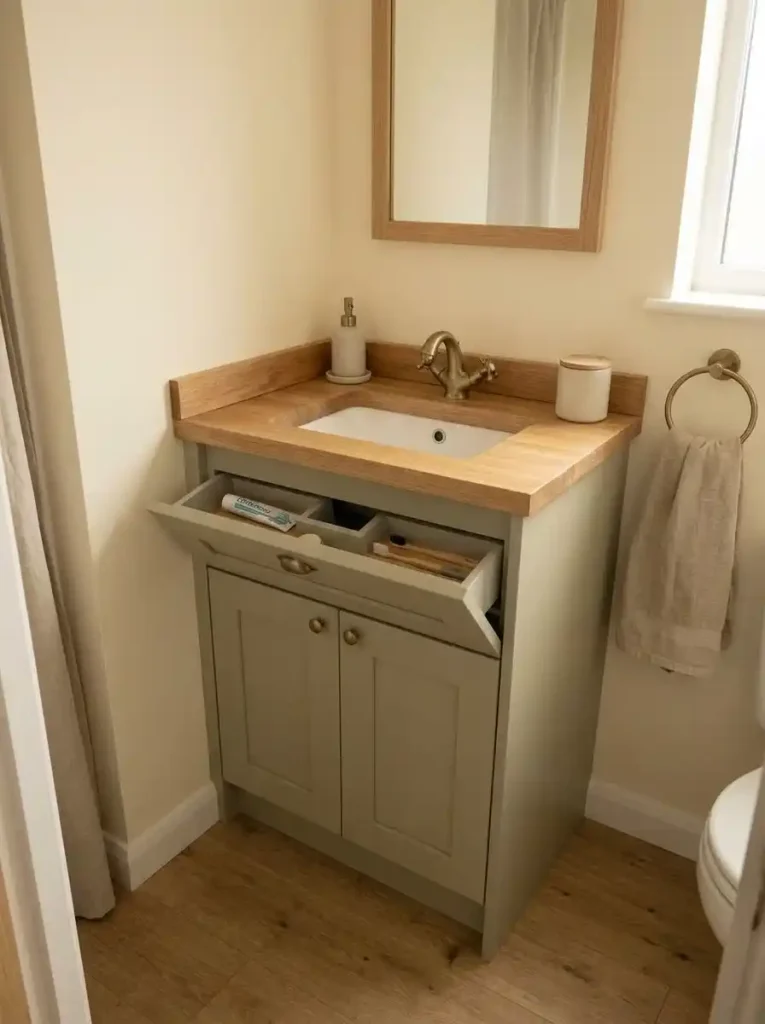
A decorative panel beneath a sink can look like wasted space, but the cavity behind it may contain plumbing, basin hardware or other components that have priority over storage.
A tip-out tray is therefore a conditional idea, not an automatic upgrade.
Where the cavity is genuinely clear and the cabinet configuration supports the mechanism, a shallow tray can hold lightweight sink-side items that would otherwise remain on the counter.
The value comes from relocating a few small objects out of sight while preserving deeper cabinetry for larger supplies.
Sink False-Front Fit / Skip Test
Is that panel truly unused?
Judge the cavity behind the front before buying a tray or hardware.
A shallow tray may earn the space for light, frequently used sink-side items. Keep the category small so the mechanism remains easy to operate.
The service area is doing a more important job. Do not force storage into space required by the sink or cabinet hardware.
A concealed tray is not useful when opening it interrupts another door, a tight vanity zone or the normal standing position at the sink.
15. Hide a Narrow Pantry Pullout Behind a Matching End Panel
A slim gap at the end of a kitchen cabinet run can hold far more efficiently when the contents move outward in one layer.
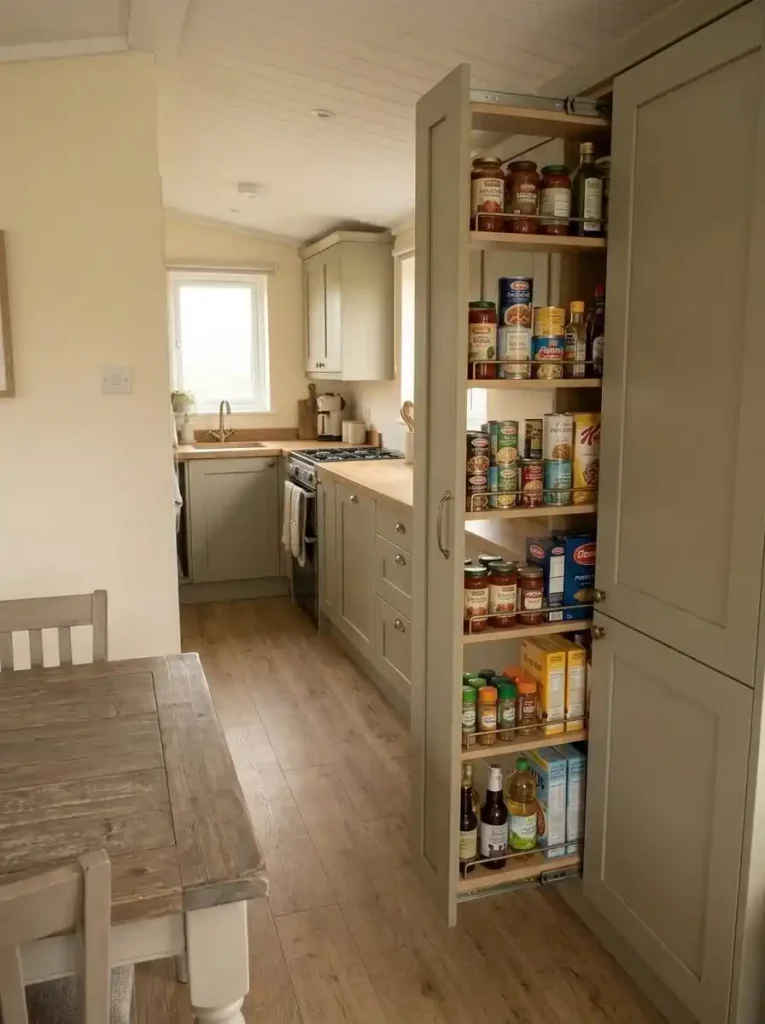
A narrow pantry pullout makes bottles, jars and packaged foods visible from the side, avoiding the familiar problem of losing smaller products behind one another on a deep shelf.
The visual advantage comes from the front. Matching the pullout panel to neighboring cabinetry lets the extra storage read as part of the kitchen architecture, which is particularly useful in mobile homes where the kitchen may remain visible from the living or dining area.
- Use the lowest section for stable, heavier pantry categories.
- Keep frequently used products between comfortable hand and eye level.
- Avoid converting an exceptionally narrow gap into a complicated mechanism when an ordinary cabinet nearby still has unused capacity.
A pullout earns the installation when it converts genuinely stranded width into accessible storage. If it simply duplicates half-empty cabinetry elsewhere, reorganizing what you already own is the simpler move.
For a broader look at recovering overlooked kitchen space, see these [small mobile home kitchen ideas](/small-mobile-home-kitchen-ideas/).
16. Conceal a Shallow Bathroom Cabinet Behind Framed Artwork
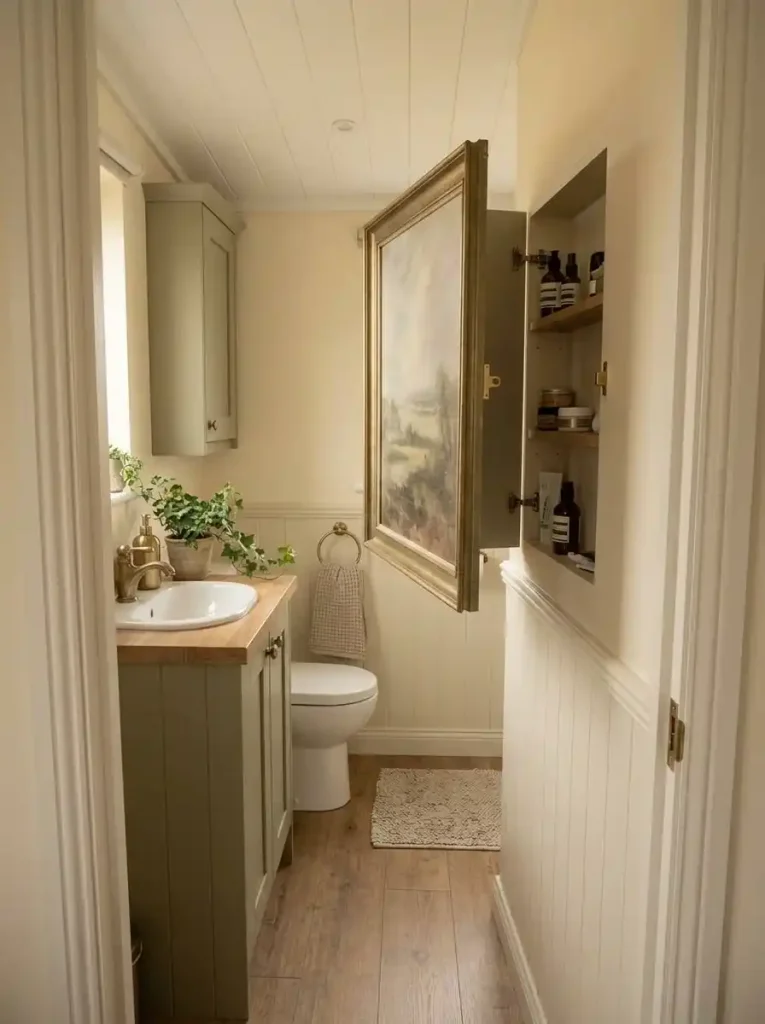
A compact bathroom does not always have enough visual breathing room for another obvious cabinet.
Framed artwork can disguise a shallow storage box so the wall continues to read as décor until the front opens.
This idea is best suited to compact grooming products, backup toiletries and other lightweight categories that need only shallow storage.
The cabinet should remain subordinate to the room. If it projects so far that the frame looks bulky from the doorway or begins to interfere with the vanity, toilet or shower approach, the concealment has failed visually even if the compartment technically holds more.
Concealment Depth Studio
Let the wall look decorated before it looks stored.
An art-front cabinet works because the storage remains shallow enough for the frame to retain a believable relationship with the wall.
+
SHALLOW STORAGE
What do you want to hide?
Small categories benefit most from shallow depth because the full contents remain readable as soon as the art front opens.
A modest backup supply can work, provided the cabinet stays shallow enough to look intentional from the doorway.
Deep categories require a cabinet that projects farther into the room and weakens the disguise. Keep bulky storage lower or deeper elsewhere.
17. Use a Mirror-Front Cabinet When the Bathroom Cannot Afford Another Visual Object
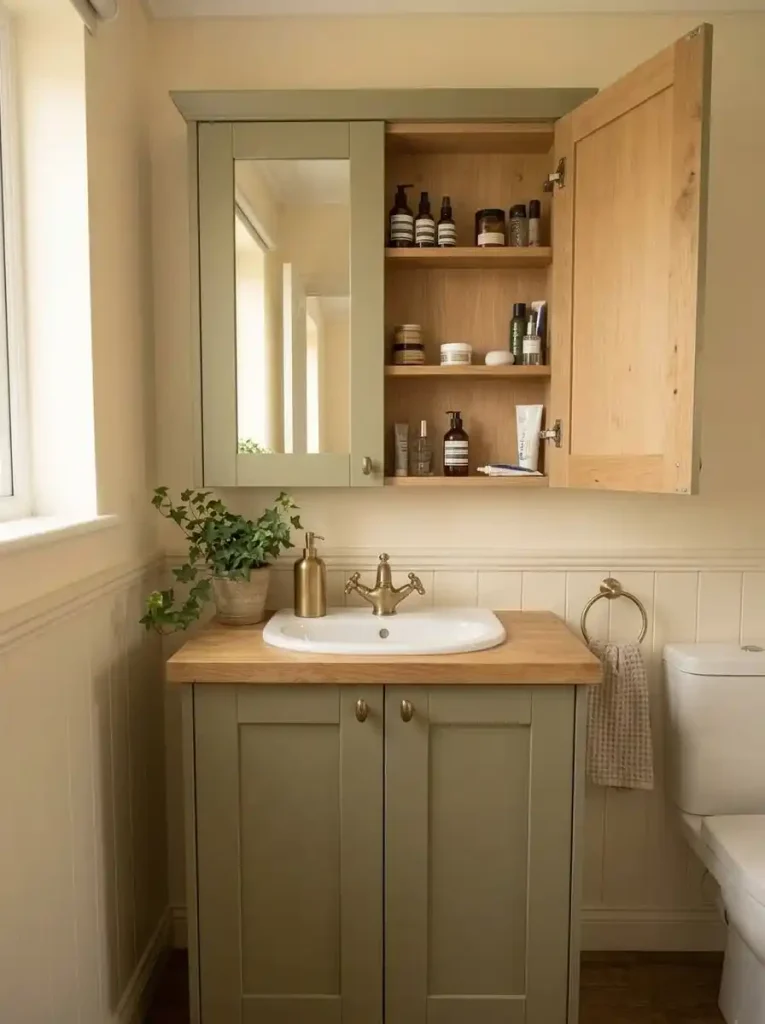
A mirror-front cabinet solves a different problem from framed-art storage.
It does not disguise the cabinet as decoration. It combines two functions the bathroom probably needs anyway.
That makes it especially effective above a vanity where adding both a separate mirror and another obvious storage box could make a small wall feel fragmented.
Prioritize the viewing function first. The mirror should sit at a useful height and relate properly to the vanity before you judge the storage capacity behind it.
Inside, reserve the easiest shelves for everyday grooming categories and avoid filling the cabinet so densely that opening it becomes a search exercise.
The idea becomes less useful when an existing mirror already performs an important visual job and moving it would weaken the room’s light or sightlines.
For larger bathroom storage problems, continue with these [mobile home bathroom storage ideas](/mobile-home-bathroom-storage-ideas/).
18. Add a Hidden-Drawer Floating Shelf for Keys or Bedside Essentials
A floating shelf with a concealed drawer is most convincing when the drawer stores exactly the small objects that would otherwise sit on top of the shelf.
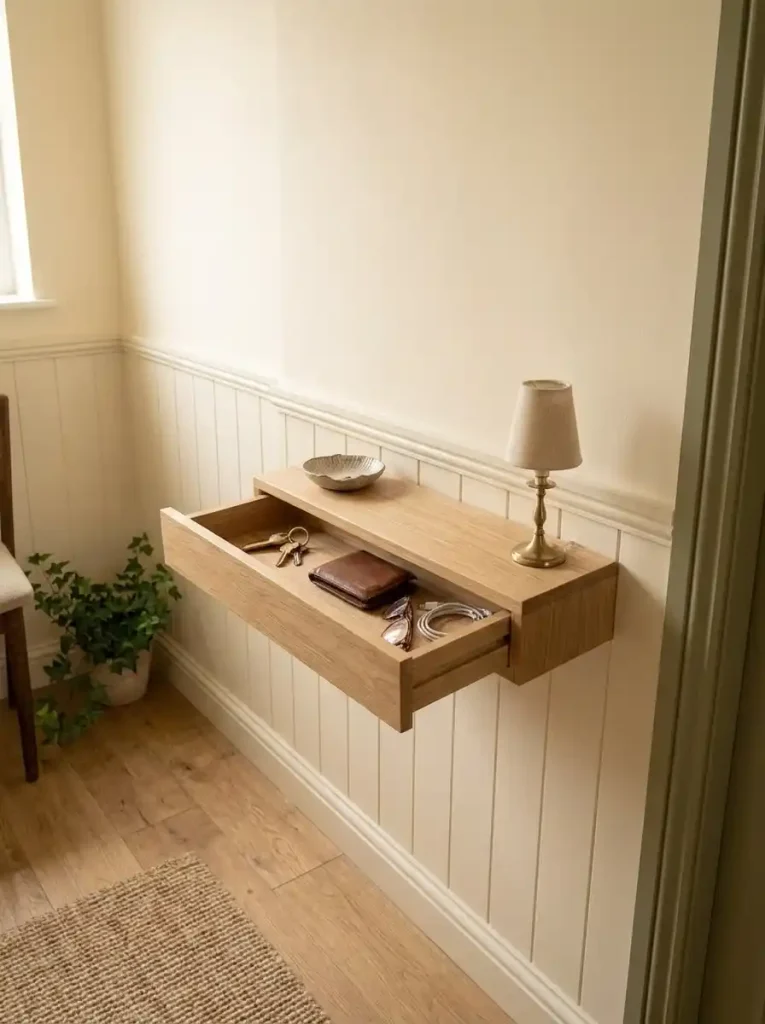
Near an entry, that might mean keys and a wallet. Beside a bed, it could hold glasses, a book light or charging cables.
Because the compartment is shallow, it encourages a tightly edited category rather than becoming general storage.
Keep the shelf visually light and treat mounting as part of the product decision. Follow the mounting instructions for the chosen shelf and hardware system and confirm that the wall location is appropriate before loading the drawer.
Do not assume a decorative wall surface can support any weight you choose to place on it.
This is a strong option when floor area matters more than deep capacity. If the belongings you need to hide are blankets, appliances or bulky household supplies, a floating shelf is simply the wrong scale.
19. Run a Slim Flat-Front Cabinet Along a Hallway Dead Wall
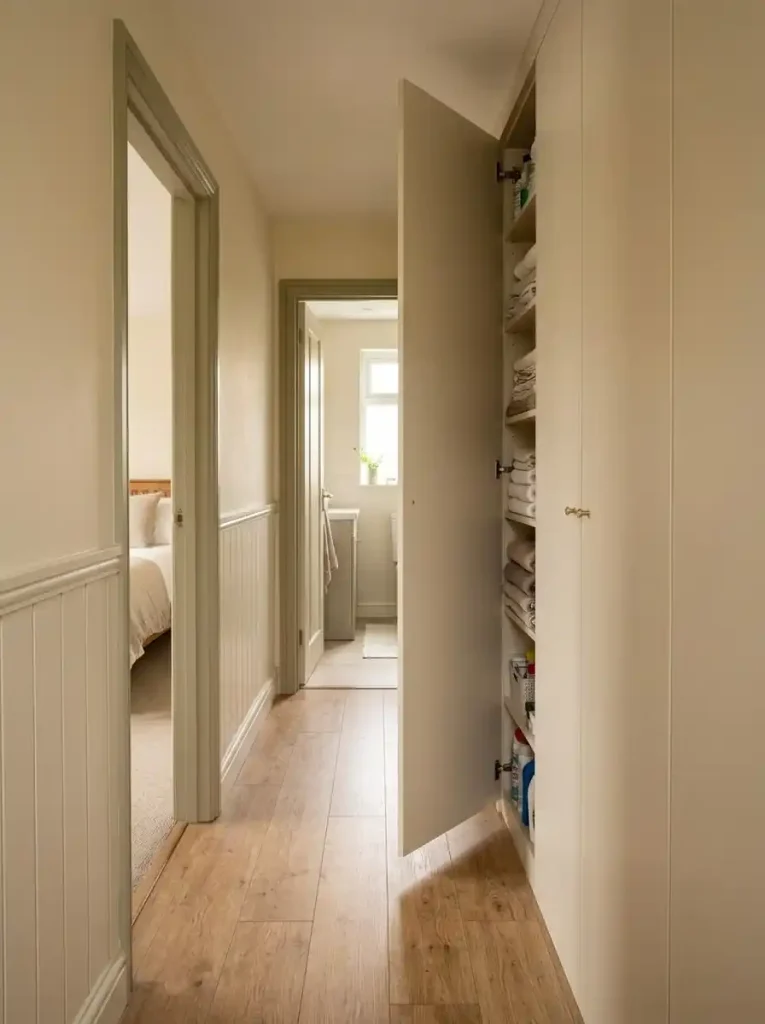
Look down the hallway from one end before deciding whether the blank wall is actually available.
In a mobile home, a corridor can already feel narrow because several doors, trim lines and room openings share the same long sightline. Deep cabinetry can amplify that pressure quickly.
A shallow cabinet works better when it behaves like an additional wall layer rather than a conventional piece of furniture.
Flat fronts, restrained hardware and a finish related to the surrounding wall help the storage recede visually.
Use the interior for thin household categories—paper supplies, folded linens, small tools or backup toiletries—where shallow depth is genuinely useful.
Before committing, walk through the hall carrying something bulky such as laundry or groceries. A passage that feels acceptable with empty hands may feel very different in normal use.
If the cabinet turns a clear route into a shoulder-level obstacle, preserve the corridor and recover capacity somewhere else.
20. Hide Seasonal Linens Inside a Dining Banquette Seat
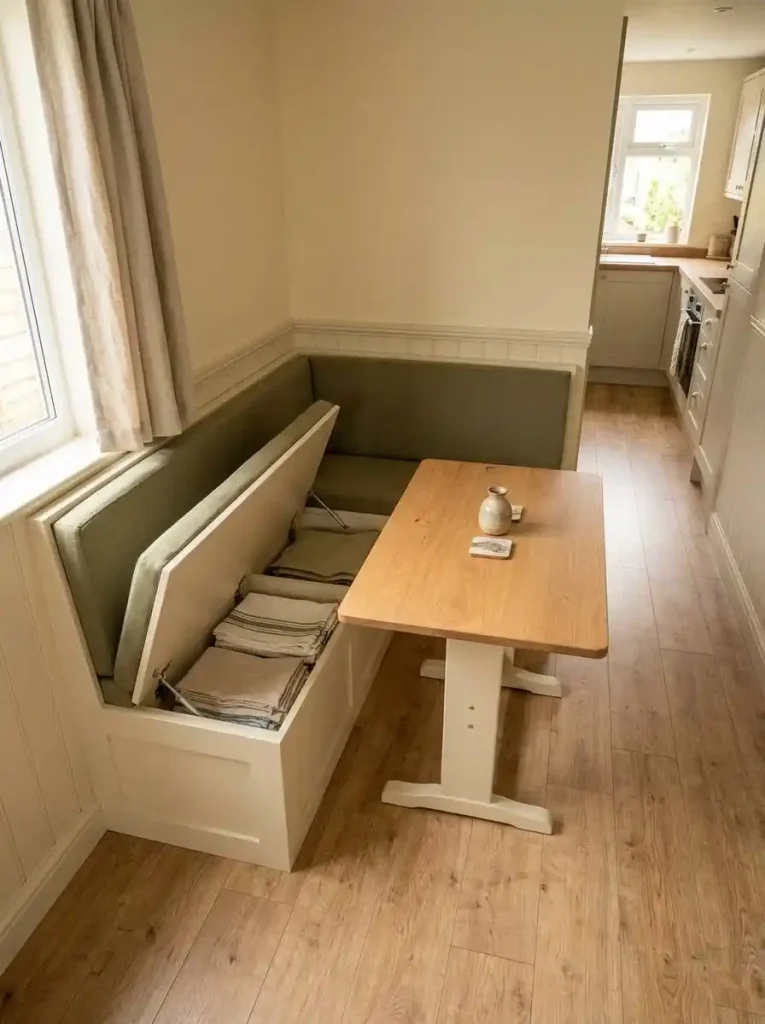
A banquette already occupies floor space for seating, so storage beneath the seat can add capacity without introducing another freestanding cabinet.
Its best use is low-frequency, bulky-but-light household storage: seasonal table linens, spare cushion covers, entertaining pieces or occasional bedding can live there without competing with daily kitchen cabinetry.
Use a simple access test:
- Open the seat first. Does the table need to move before you can reach the compartment?
- Consider frequency. Storage used only a few times a year can tolerate more steps than something opened every day.
- Assign one category. Deep bench storage becomes difficult when unrelated belongings are layered on top of each other.
If accessing the compartment requires dismantling the dining setup every week, move frequent-use items somewhere easier.
Banquette storage succeeds when it absorbs things you want nearby but rarely need.
21. Make Existing Storage Visually Disappear With Tone-on-Tone Flat Fronts
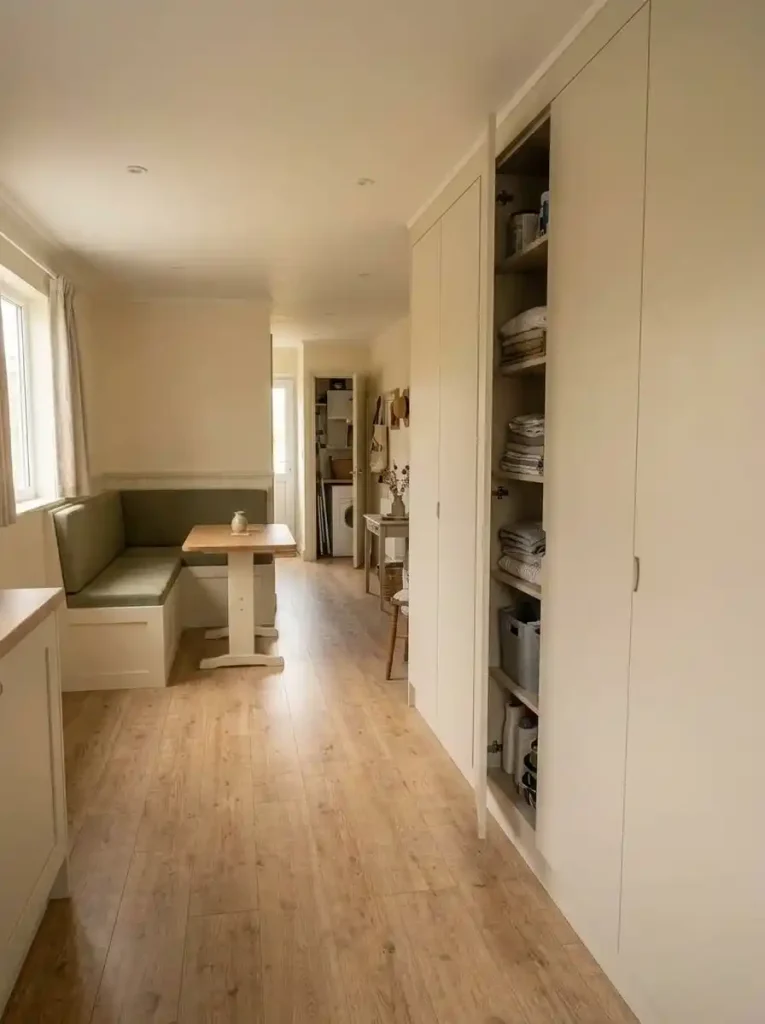
Hidden storage does not always require a secret door.
Sometimes a mobile home already has enough cabinets, but contrasting colors, exposed containers, decorative handles and broken-up fronts make every storage zone announce itself.
That visual fragmentation can feel like clutter even when the interiors are perfectly organized.
Flat or visually quiet fronts in a color related to the surrounding wall can turn several separate storage pieces into one calmer architectural plane.
This approach works particularly well along hallways, laundry walls, bedroom cabinetry and built-in dining storage where long sightlines reward continuity.
Visual Noise Comparator
Same capacity. Very different visual pressure.
Use this final check when your problem is no longer lack of storage, but how loudly that storage appears in the room.
Contrasting fronts, visible containers and unrelated hardware make the eye register several storage elements separately—even when everything is organized.
Related fronts and restrained hardware allow the capacity to remain while the cabinetry behaves more like one continuous background surface.
Before replacing perfectly functional storage, simplify what is already visible.
Removing one open organizer, reducing contrasting hardware or bringing compatible cabinet fronts closer to the surrounding wall color can sometimes create the effect of hidden storage without adding another compartment.
Final Thoughts on Hidden Storage in a Mobile Home
The best hidden storage does more than hold belongings. It removes visual noise, protects circulation and places each category where retrieving it still feels natural.
Start with the clutter you see every day: the entry pile, bedside accessories, exposed laundry products or crowded bathroom counter. Then ask whether those belongings can disappear inside a footprint the room already uses before adding another cabinet.
You do not need all 21 ideas. A few carefully placed concealed zones usually create more calm than activating every available cavity. Prioritize easy access for daily belongings, deeper storage for low-frequency pieces, and leave space unused whenever filling it would make the home harder to move through.
Save this guide to Pinterest so you can revisit these hidden storage ideas when you are ready to organize your mobile home.