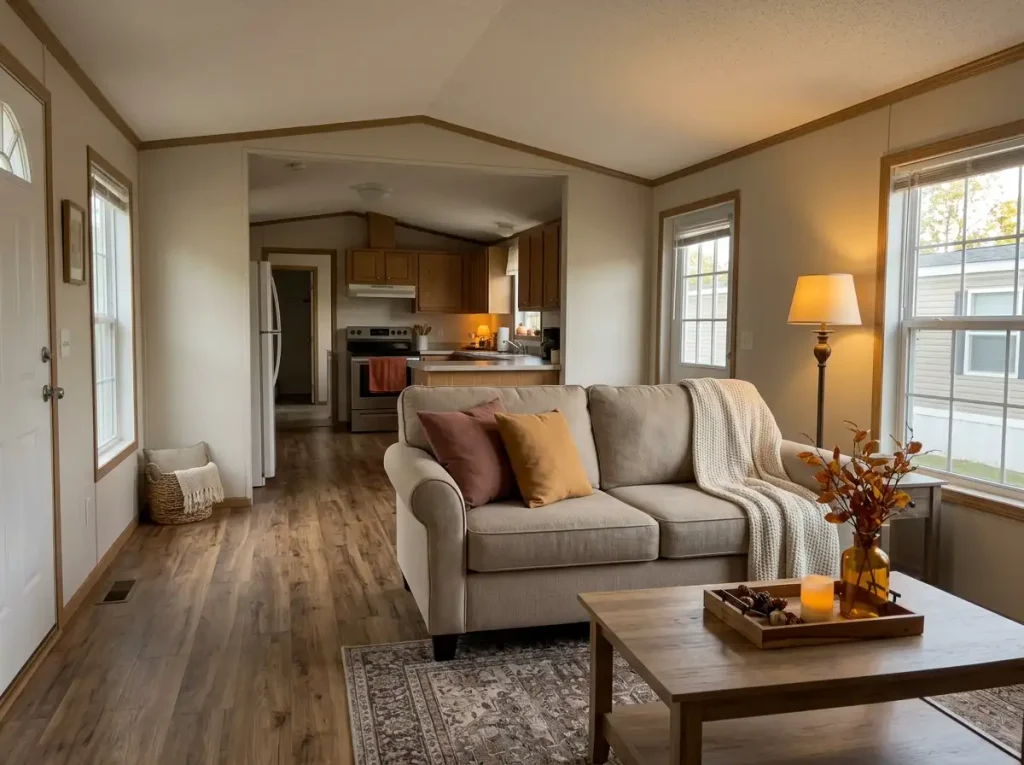
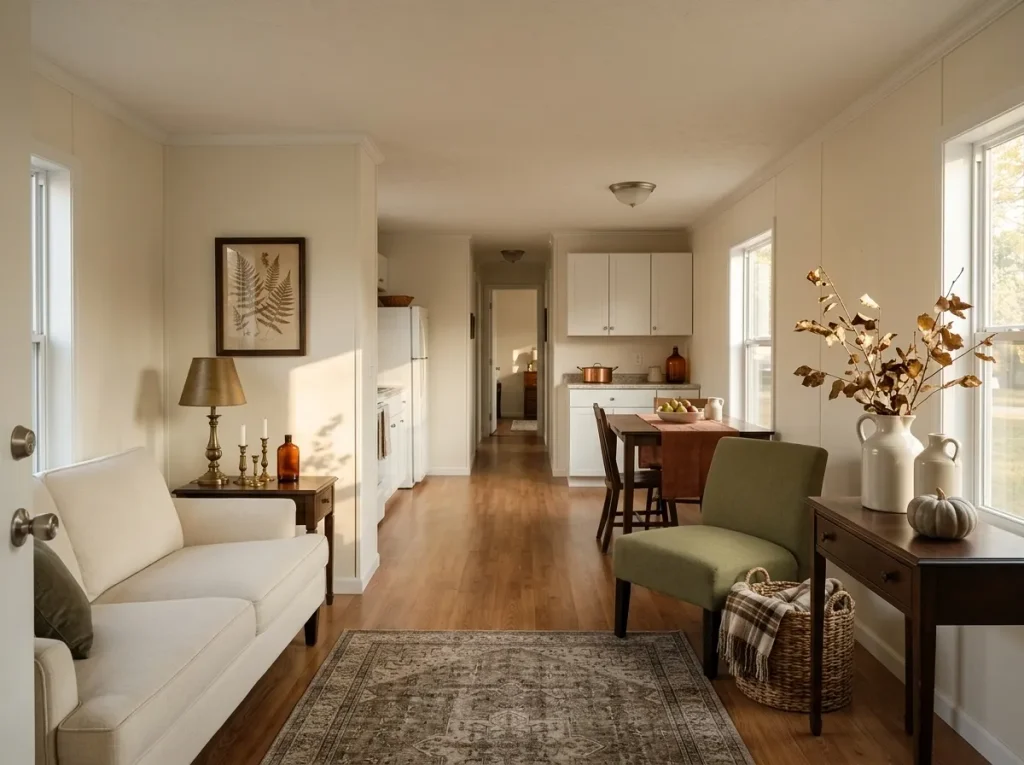
Thrift stores are full of pieces that could look beautiful for fall: amber glass, old frames, baskets, pottery, brass candlesticks, worn wood, faded art, and vintage textiles. The harder part is knowing which finds will actually improve your home once you bring them inside.
That decision matters even more with thrifted fall mobile home decor. Compact rooms, limited surfaces, and connected living areas mean one mismatched object can carry far more visual weight than it would in a larger house. A bargain only remains a bargain when it has somewhere useful to go.
The most convincing thrifted rooms rarely look as though everything was purchased for autumn at once. They feel layered over time. A little age, repeated materials, useful objects, and restrained seasonal accents build that collected quality.
So these ideas focus less on buying more fall décor and more on choosing secondhand pieces that earn their place.
1. Build a Four-Material Thrift List Before You Enter the Store
The quickest way to make secondhand décor look random is to let price make every decision. A $4 pitcher, $6 frame, $8 basket, and $5 candlestick can all be attractive individually while creating a disconnected room together.
Before shopping, study the finishes already visible across your main mobile-home sightline and choose three or four materials worth repeating. A room with medium wood furniture, cream upholstery, black hardware, and olive accents might translate into a thrift list of dark wood, aged brass, woven fiber, and amber glass.
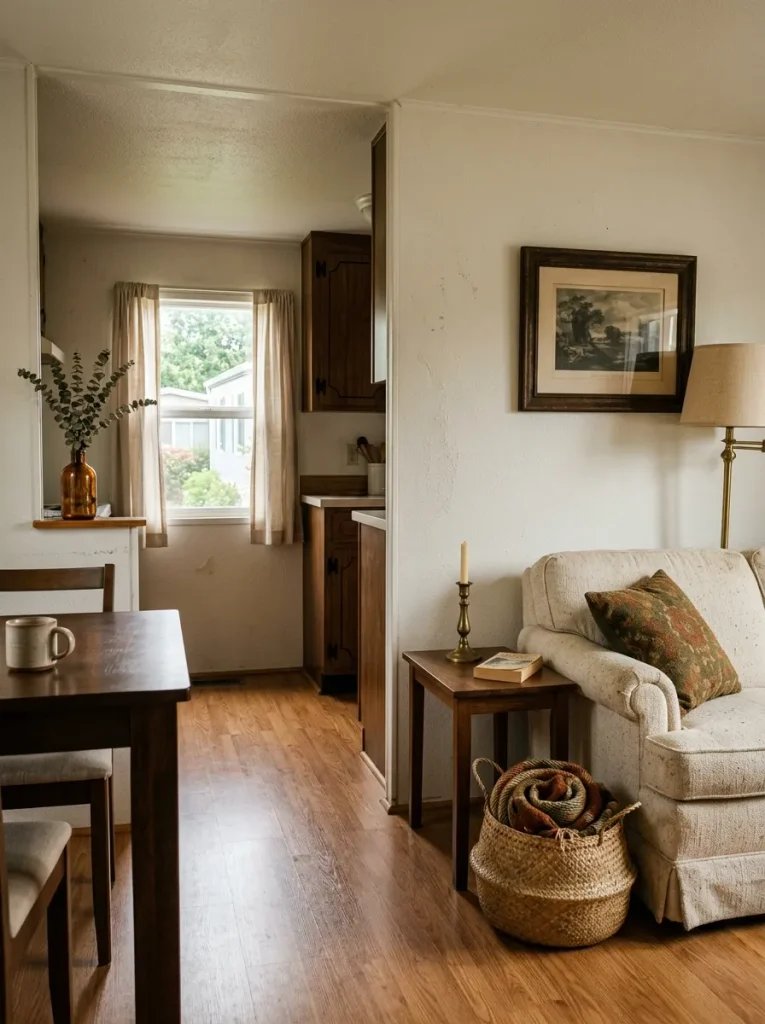
Now unrelated finds have a common language.
Also give a possible purchase an address before it enters the cart. Decide whether it belongs on the dresser, wall shelf, dining surface, kitchen ledge, or beside the sofa. A beautiful object without a destination is much more likely to become clutter in a compact home.
For the broader seasonal layer around those thrifted finds, the cozy fall mobile home decorating guide can help establish the whole-home foundation.
The Collected-or-Cheap Thrift Filter
Give the object one point for every test it passes:
- Material: Does it repeat a finish, texture, or color already present?
- Address: Can you name the exact shelf, wall, counter, or table where it belongs?
- Scale: Will it fit without crowding the surface or movement route?
- Afterlife: Could it remain useful or attractive after autumn?
Then use the score below.
Thrift-store decision tool
Will this piece look collected—or simply cheap?
Give the find one point for every test it passes. Low price should never be the only reason an object comes home.
- 1Material
It repeats a finish, texture, or color already present. - 2Address
You know the exact surface, wall, or zone where it belongs. - 3Scale
It will not crowd the surface or interfere with movement. - 4Afterlife
It can remain useful or attractive beyond autumn.
Editorial rule: a bargain with no visual address is usually future storage.
The shift is simple: shop for continuity, not merely for “fall.” Once the material list starts filtering your choices, pieces found months apart can feel related.
2. Let One Old Landscape or Botanical Print Set the Fall Palette
A faded landscape, floral study, fruit print, or old botanical can do more than fill an empty wall. It can become the color reference for the entire seasonal layer.
Imagine finding a thrifted print with moss-green foliage, muted rust flowers, parchment paper, and a dark walnut frame. You now have four usable autumn colors without buying a single object printed with the word “fall.” Repeat only two or three of those tones elsewhere—a rust throw, amber vessel, green cushion, or cream pumpkin—and the room begins to connect.
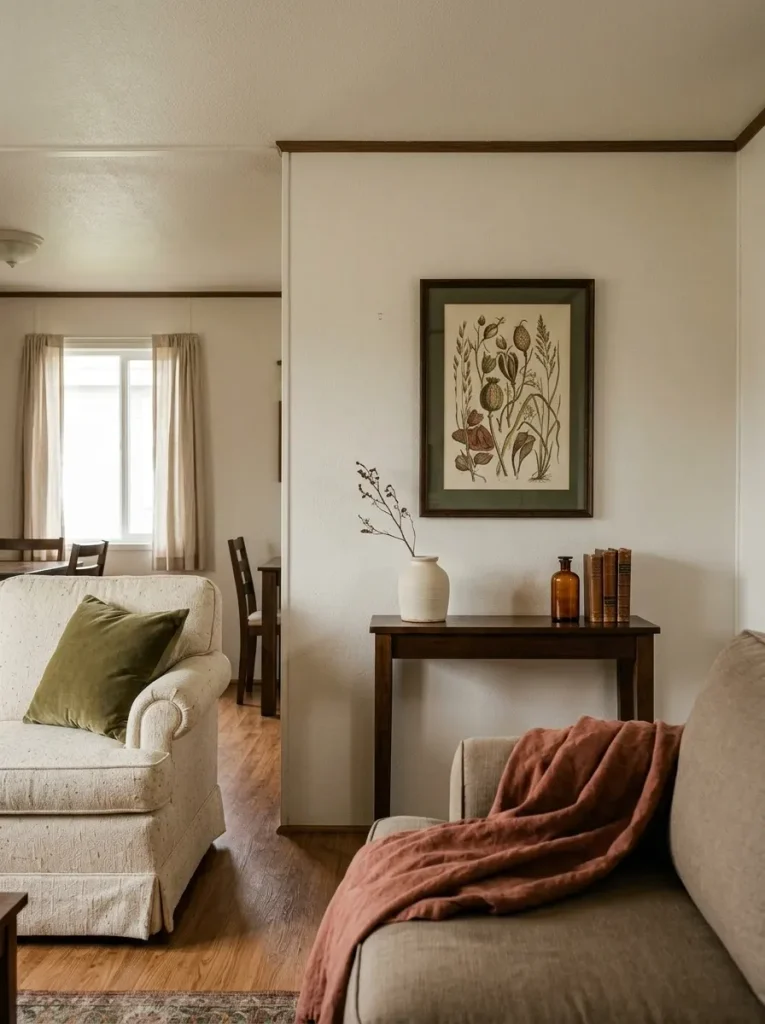
Artwork is especially valuable in a compact mobile home because it adds color vertically. The tables and counters remain usable.
Before buying a print, step several feet away and ignore its subject for a moment. Look only at the dominant colors. Do they already have somewhere to echo in your interior?
Good thrift signal: aged color, a useful frame, restrained subject matter, and tones that relate to existing finishes.
Skip signal: the art is attractive in isolation, but its colors introduce an entirely separate palette.
3. Group Mismatched Brass Candlesticks by Height, Not Matching Patina
Secondhand brass rarely matches perfectly. One candlestick may be bright, another softly darkened, and a third more reddish. Those differences can look intentional once the objects form a clear silhouette.
Three pieces usually work well when their heights create a visible low–middle–high progression. Put the tallest toward the rear or outside edge and let the shorter pieces step down.
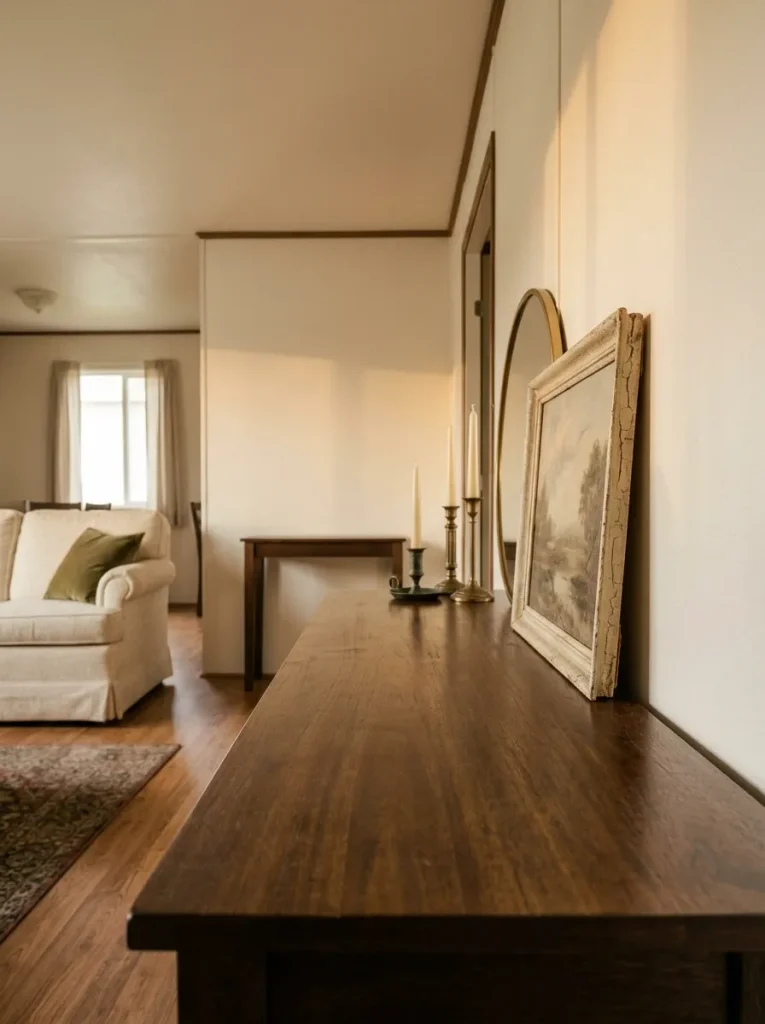
On a compact console, dresser, or shelf, surrounding empty space matters too. Five tiny candlesticks can occupy less physical space than three larger pieces while producing more visual noise because the eye has to process five separate vertical forms.
Choose the group by shape first, surface variation second.
Try the Height Rhythm Composer
Visual rhythm test
How many thrifted candlesticks fit the surface?
Judge the set as one silhouette. A clear height rhythm lets mixed patinas feel related.
If the arrangement still seems busy from the doorway, remove one piece. The strongest composition is often the version that stopped one object earlier.
4. Turn a Stoneware Pitcher or Crock Into the Room’s Seasonal Vessel
A secondhand pitcher, crock, jug, or substantial ceramic vase can carry more visual authority than several small fall accessories because it creates one confident shape.
Look for earthy glazes such as cream, tobacco brown, muted green, charcoal, or speckled beige. Add branches, dried grasses, rust-colored foliage, or restrained faux stems for autumn. After the season, the same vessel can hold spring branches, flowers, kitchen utensils, or stand empty
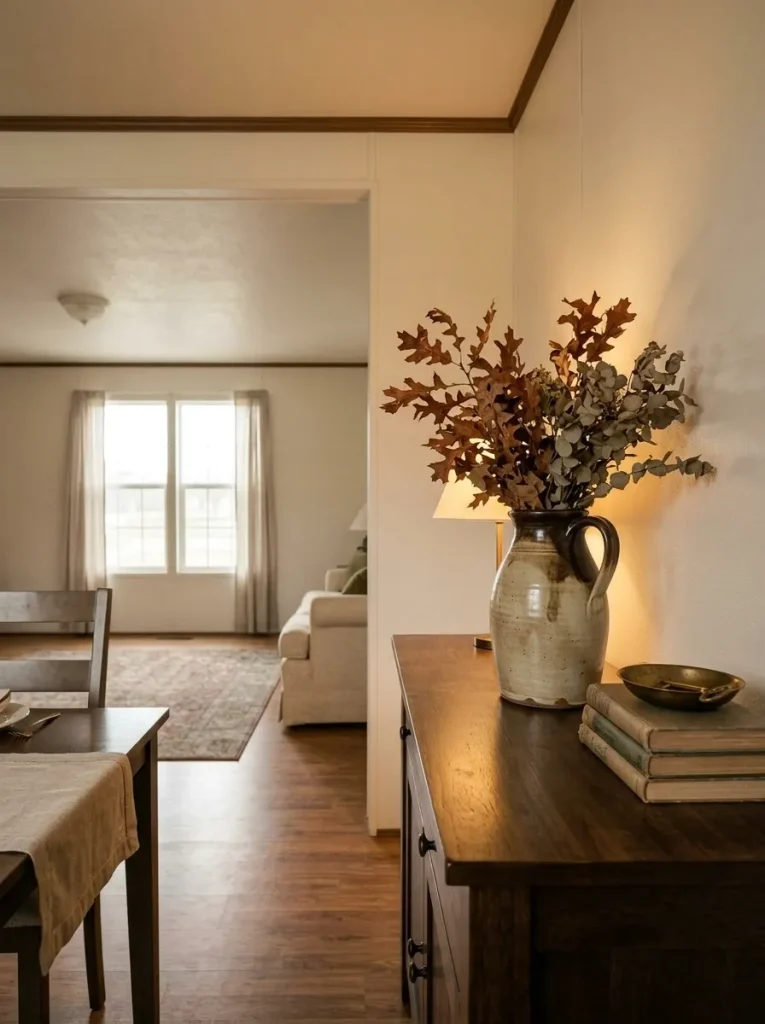
.
That flexibility matters in a mobile home where seasonal storage can become more troublesome than seasonal decorating.
Scale the vessel to the surface. A generous crock can sit comfortably on a dresser or dining buffet, while a narrow pitcher is easier to accommodate on a compact kitchen counter or bedside table.
Ask one question before buying:
Would I still like this completely empty?
A yes means the vessel has character of its own. The seasonal layer can change without turning the base object into another item that needs storing.
5. Use an Old Wood Board or Tray to Give Small Objects One Boundary
Three thrifted pieces spread across a counter read as three separate decisions. Place those same objects on one shallow wood board, woven tray, or aged serving platter and the eye starts reading them as one arrangement.
That visual compression is especially useful on mobile-home kitchen counters, dressers, entry ledges, and narrow consoles. The boundary also creates an automatic editing rule: once objects begin spilling beyond it, the vignette is probably full.
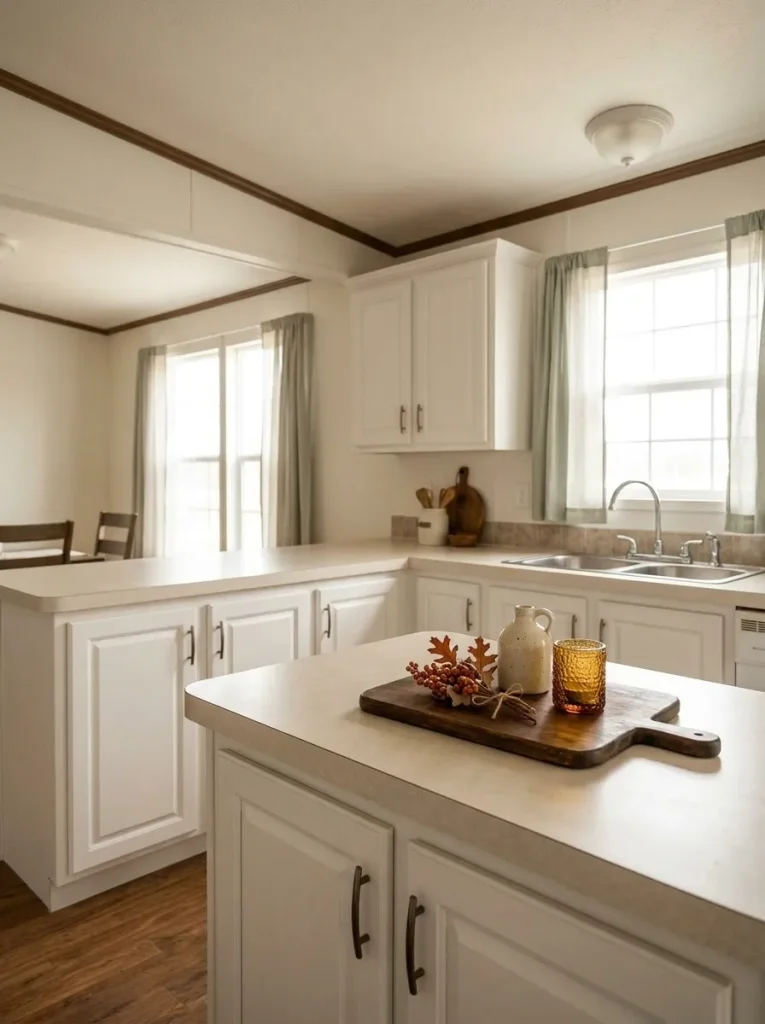
Choose a tray noticeably smaller than the surface beneath it. Visible counter or furniture around the perimeter is what makes containment work.
Simple breadboards, low wicker trays, dark wood platters, shallow baskets, and old metal serving trays tend to transition easily into other seasons.
The Boundary Test
Small-surface visual
Contain the vignette, then protect the empty space.
The tray is not merely holding objects. It turns several small pieces into one perceived visual unit while protecting breathing room around them.
The payoff is not only tidiness. Fewer separate visual decisions make inexpensive pieces feel more deliberate.
6. Put Amber Glass Where Daylight Can Do the Decorating
Amber bottles, brown glass vases, old jars, and honey-colored bowls often become far richer when daylight passes through them. Placement can matter almost as much as the object itself.
Try one or two pieces near a window, on the brighter end of a kitchen counter, or on a shelf that catches indirect daylight. The glass begins producing its own warm highlights, so the room gains autumn color without another printed sign or novelty accessory.
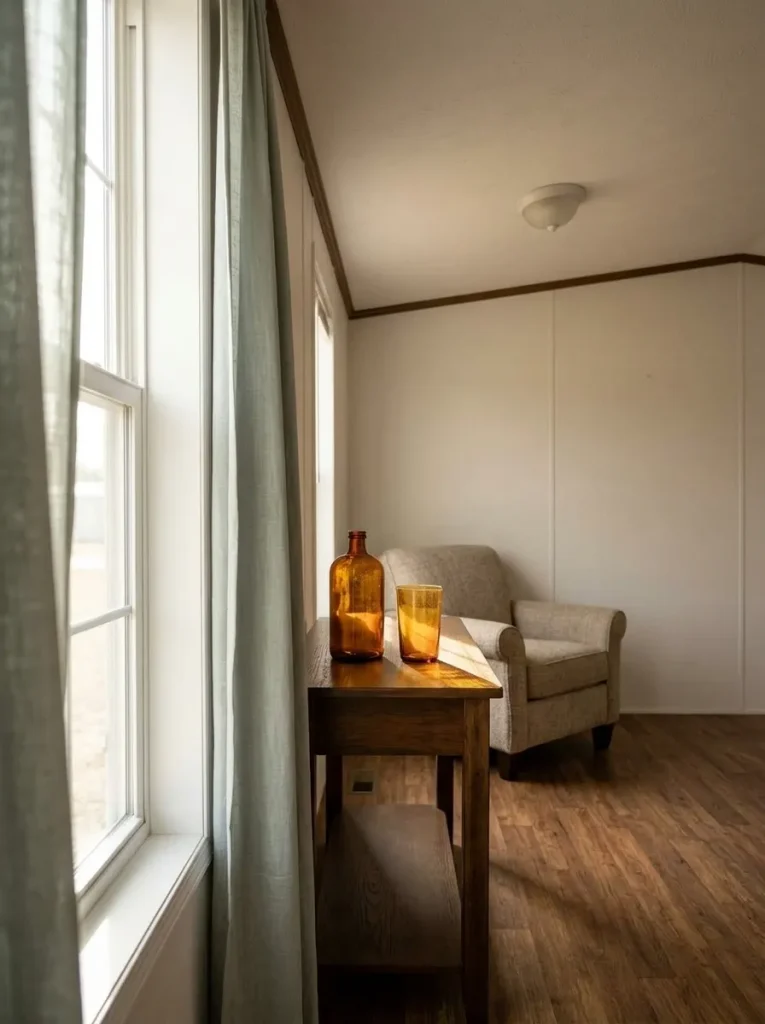
Transparent pieces are particularly useful in a compact mobile home because they generally carry less visual mass than solid décor of comparable size.
Do not automatically fill every vessel with stems. An empty amber bottle with a good silhouette may be all the window zone needs.
Use the light as your test. Move the object between two possible locations and view each from normal room distance. Keep it where color and transparency become noticeable without blocking the window itself.
7. Use Two or Three Old Books as a Low Riser, Not a Decorative Library
A few thrifted books solve a useful styling problem: several objects sitting at exactly the same height.
Place two or three hardcovers under a small brass piece, pottery vase, framed photograph, or candle. That small elevation separates the forms without introducing another decorative material.
Look for muted cloth covers, worn brown spines, olive, faded burgundy, cream, charcoal, or deep rust. The colors should cooperate with the palette already in the room.
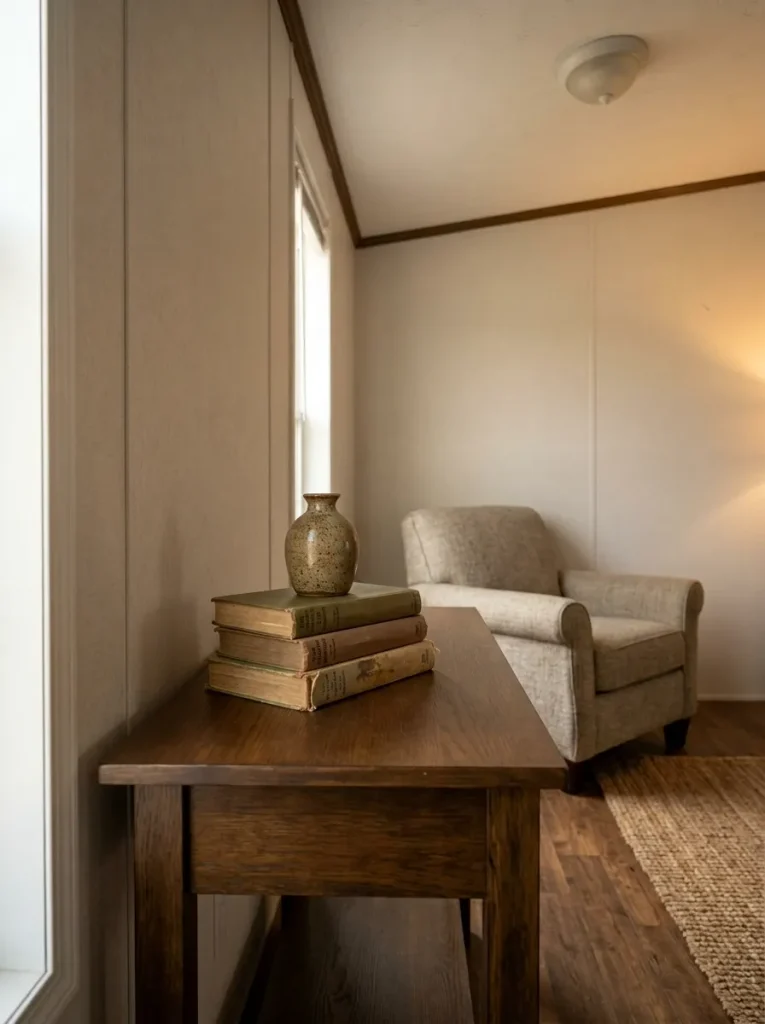
Keep the stack deliberately low on shallow mobile-home consoles and side tables. Tall towers consume more visual volume and can make a narrow furniture surface feel top-heavy.
Here is the easiest diagnostic:
If the books attract more attention than the object they were meant to lift, remove one.
Use books you already own first. Thrifting more only makes sense when a particular scale or color is genuinely missing.
8. Give Every Thrifted Basket a Job Before It Gets a Styling Job
Baskets are easy thrift-store wins because storage and texture can come from the same object.
They are also easy to overuse.
A floor basket, shelf basket, wall basket, tray basket, and blanket basket may all look beautiful individually while creating an overload of woven texture together. In a mobile home, floor baskets deserve the strictest scrutiny because they use the same limited area needed for movement.
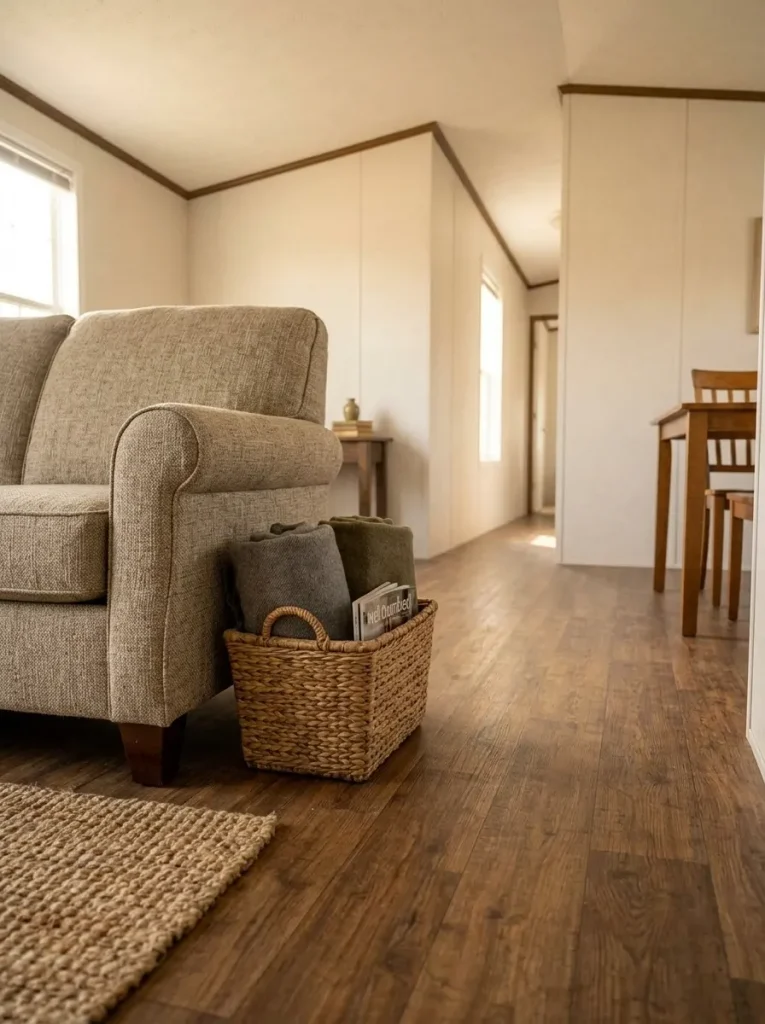
Assign the job first.
A larger basket could contain throws beside the sofa. A shallow one might collect magazines under a coffee table. A small handled basket can organize items on a shelf.
Once the object does something useful, the weave becomes decorative almost for free.
Basket Footprint + Function Selector
Footprint check
Where will the basket earn its space?
Choose the proposed location. The more useful its household job, the easier it is to justify the physical and visual footprint.
A basket that solves a household problem is easy to justify in January too. A basket bought only because it looked autumnal in the thrift aisle deserves more scrutiny.
9. Choose One Vintage Textile With Enough Pattern to Carry the Room
Thrift stores can make fall textile shopping dangerously easy. Plaid blankets, crocheted throws, floral quilts, needlepoint cushions, tapestry pillows, and woven runners can all seem perfect for autumn.
Using several strong patterns together is where the room starts to lose hierarchy.
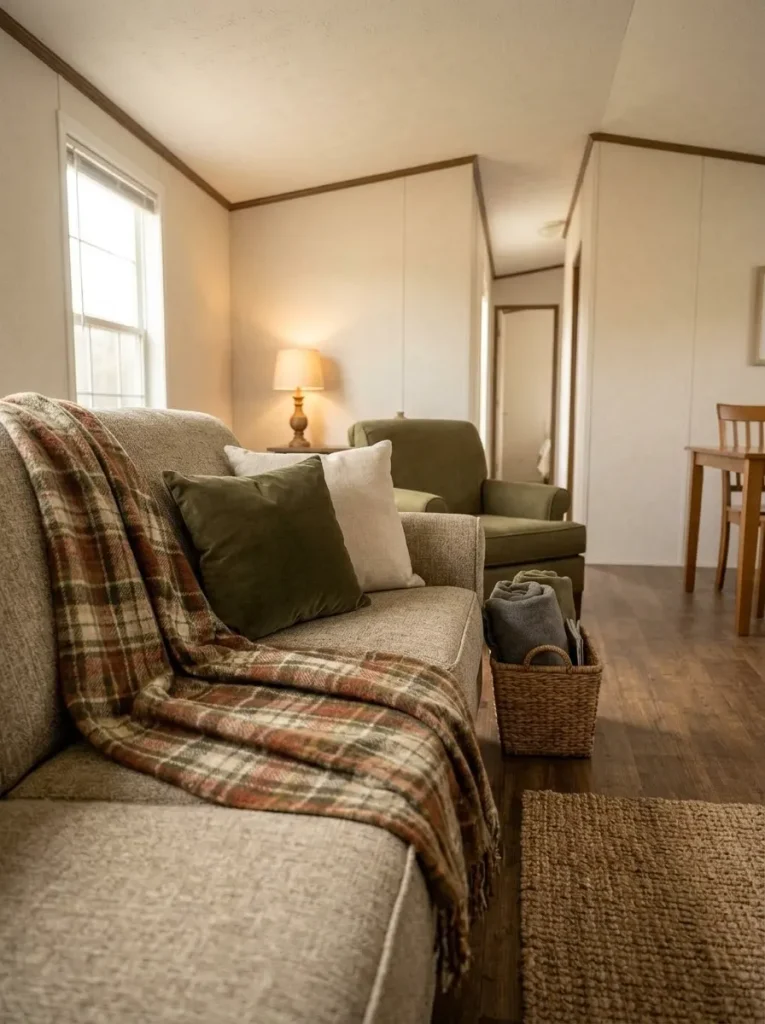
Choose one vintage textile with enough personality to act as the pattern anchor. It could be a faded floral quilt at the end of a bed, one plaid wool throw on a sofa, or a needlepoint cushion whose rust, olive, cream, and brown already connect with the room.
Then quiet the supporting textiles.
This becomes particularly important in a mobile-home living area where the sofa, rug, curtains, cushions, and adjoining kitchen may all appear in the same view. One strong pattern can carry far more than it first appears to.
For the room-wide textile strategy, see the fall mobile home living room ideas guide.
Editing test: remove the other seasonal textiles temporarily. If the room already feels warm and autumnal, your anchor is doing enough.
10. Build a Tiny Gallery From Dark Wood Frames and Faded Art
A thrifted gallery wall can add more character than a shelf full of seasonal accessories while using almost no horizontal space.
Start small. Three to five pieces are enough.
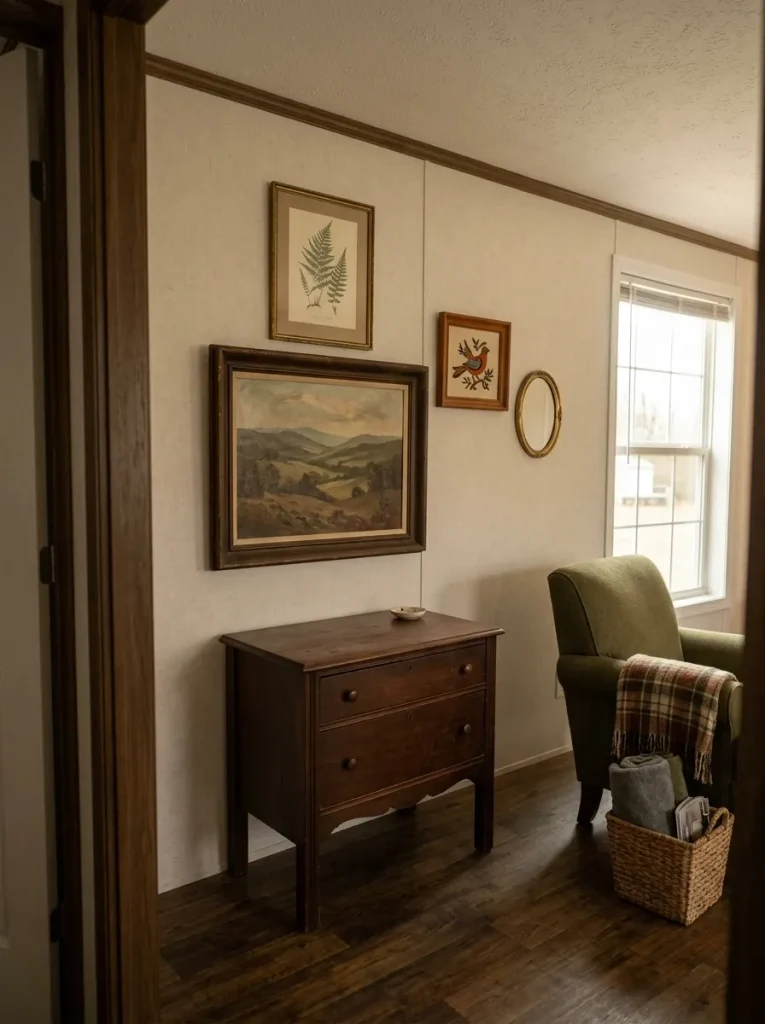
Look for dark wood, medium oak, aged metallic frames, muted landscapes, botanical studies, needlework, miniature still lifes, or a small mirror. The frames can differ as long as something connects them: similar warmth, repeated wood tone, compatible color, or comparable visual age.
Lay everything on the floor before hanging. Establish one stronger anchor piece, then let the smaller frames support it. Keep the outer silhouette of the grouping compact.
That restraint is valuable above a mobile-home dresser, short console, reading chair, or bench because visual interest moves upward while the furniture surface stays useful.
Blank wall around the arrangement is part of the composition. Once the group has a clear outer boundary, stop looking for another $3 frame to fill the gap.
11. Thrift Bowls and Crockery for Things You Would Display Anyway
A wooden bowl filled with apples can communicate autumn more naturally than a bowl shaped like a pumpkin.
Search for simple wooden bowls, handled crocks, small pitchers, divided trays, and ceramic vessels that have enough presence without seasonal graphics. Fill them with things you may already keep visible: apples, pears, wrapped treats, napkins, pinecones, or a small grouping of seasonal produce.
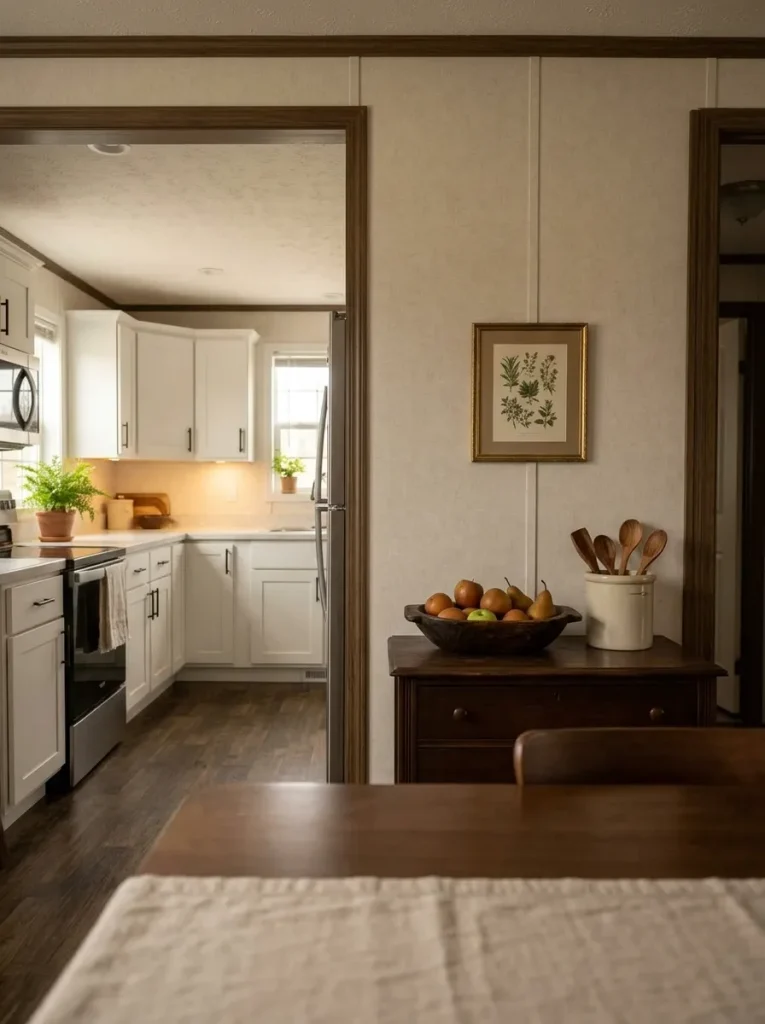
The container becomes the permanent layer while its contents change.
That is useful in a compact mobile-home kitchen or dining area because resetting the season requires changing a few contents rather than storing an entire alternative collection of dishes and containers.
Choose one worthwhile bowl before collecting several novelty serving pieces.
For a more complete approach to counters, working zones, windows, shelves, and kitchen sightlines, use the fall mobile home kitchen decor guide.
A useful question in the thrift aisle is simple: What would this hold in February? If you already know, the object has a much stronger case for coming home.
12. Let One Substantial Aged-Metal Find Carry the Patina
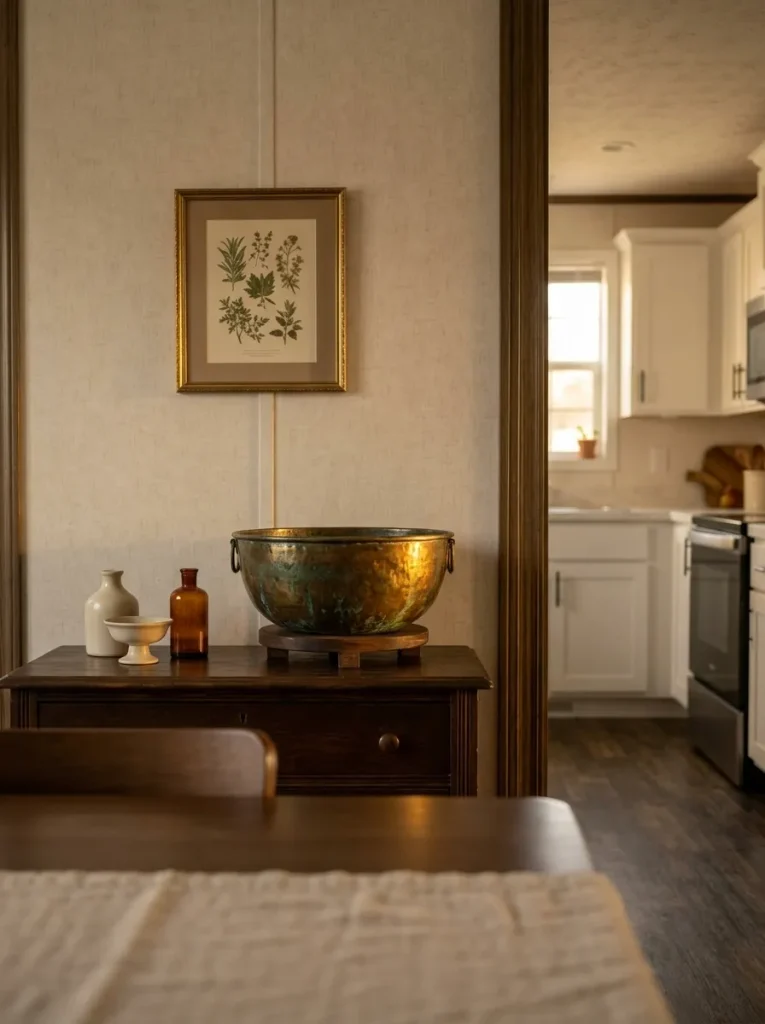
A room does not need six distressed accessories to look layered.
One substantial brass bowl, copper vessel, aged tray, candlestick, or old metal container can supply enough surface variation and age to give an entire vignette character.
This is particularly effective in a mobile home because one readable accent produces less visual fragmentation than a collection of tiny faux-vintage objects. The metal should register from normal viewing distance, then be supported by quieter materials such as wood, stoneware, glass, or linen.
You do not need every metal finish in the home to match. You need the aged piece to have a clear role.
Patina Density: Anchor, Support, Edit
Patina density
Let one substantial aged-metal find do the visual work.
One thrifted bowl, tray, candlestick, or vessel can carry enough age and warmth that the room does not need a cluster of small faux-vintage accents.
Choose one metal object substantial enough to register from normal viewing distance.
Pair it with quieter wood, glass, stoneware, or natural material so the aged surface remains distinct.
If several tiny distressed pieces compete for attention, remove the weakest ones before introducing another metal accent.
Decision: once one convincing aged surface gives the vignette enough character, let it stay singular.
The object is valuable because it brings age to the room in one readable move, not because you now need five more things that look equally old.
13. Let a Slim Thrifted Stool or Side Table Create a Seasonal Landing Spot
Sometimes the most useful thrift-store décor find is technically furniture.
A narrow stool, tiny side table, plant stand, or compact pedestal can create enough vertical surface for one autumn arrangement without forcing a kitchen counter, dining table, or dresser to surrender working space.
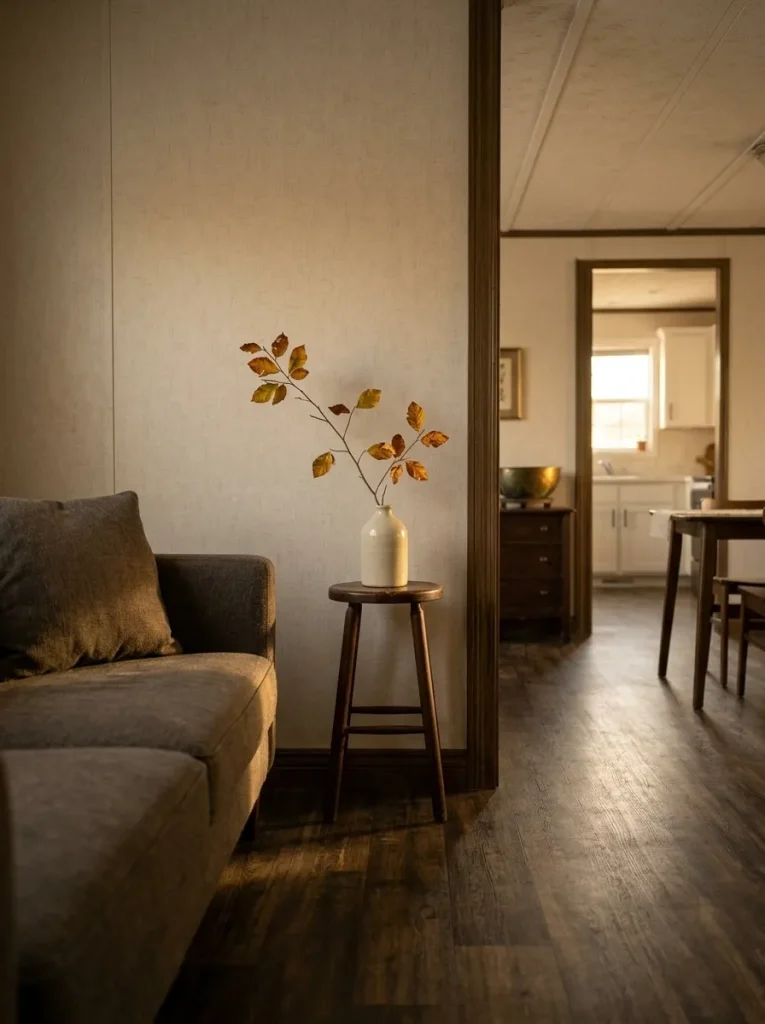
This can work beside a reading chair, near a sofa arm, or against an otherwise quiet wall section.
Furniture still has a circulation cost, however small it appears in the store. Note its widest dimension and identify the destination before buying it. Imagine walking past that point carrying groceries, laundry, or bedding.
A piece you constantly sidestep is solving the wrong problem.
Buy it when the room actually needs height, function, or a small landing surface. One lamp, crock, or vase on top may be enough. Leaving part of the furniture visible is what keeps the arrangement from becoming another overloaded vignette.
14. Thrift a Shallow Wall Shelf When Your Counters Are Already Working Hard
A kitchen counter, dresser, or vanity should not become seasonal real estate simply because autumn arrived.
When horizontal surfaces are already doing enough, a shallow secondhand shelf can shift decorative interest upward.
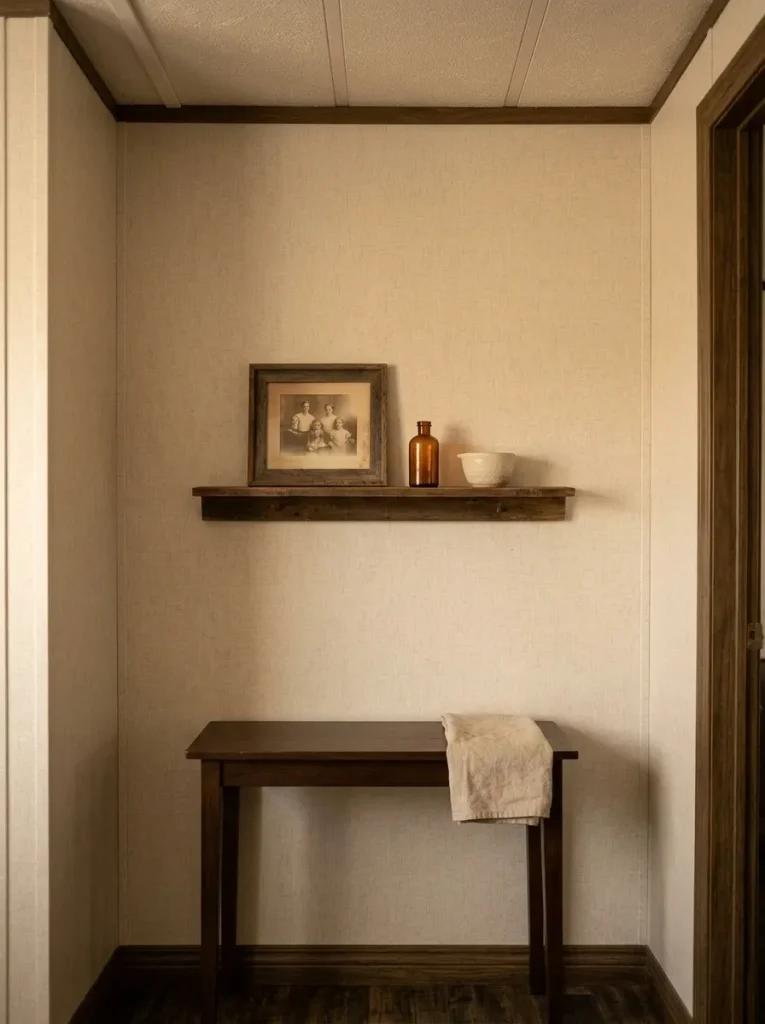
Look for solid-wood shelves, peg shelves, narrow ledges, or small vintage wall racks with enough depth for a framed print, compact vessel, or one fall accent. Avoid bulky pieces that project heavily into a narrow room.
The shelf itself should contribute something—wood grain, age, an interesting edge, or useful hooks—so it does not need to be filled end to end.
One shallow shelf carrying three thoughtfully spaced pieces can contribute more character than seven objects spread across working surfaces.
Use this buying question:
Which surface becomes clearer because this shelf exists?
If no surface gets easier to use, you may simply be purchasing another place that will require styling.
15. Hang Vintage Baskets, Plates, or Trays Where Floor Space Is Scarce
Some of the best secondhand finds for small mobile homes are broad but shallow.
A woven basket, carved wood tray, decorative plate, or aged metal platter can introduce texture and shape on the wall while consuming almost no usable floor space.
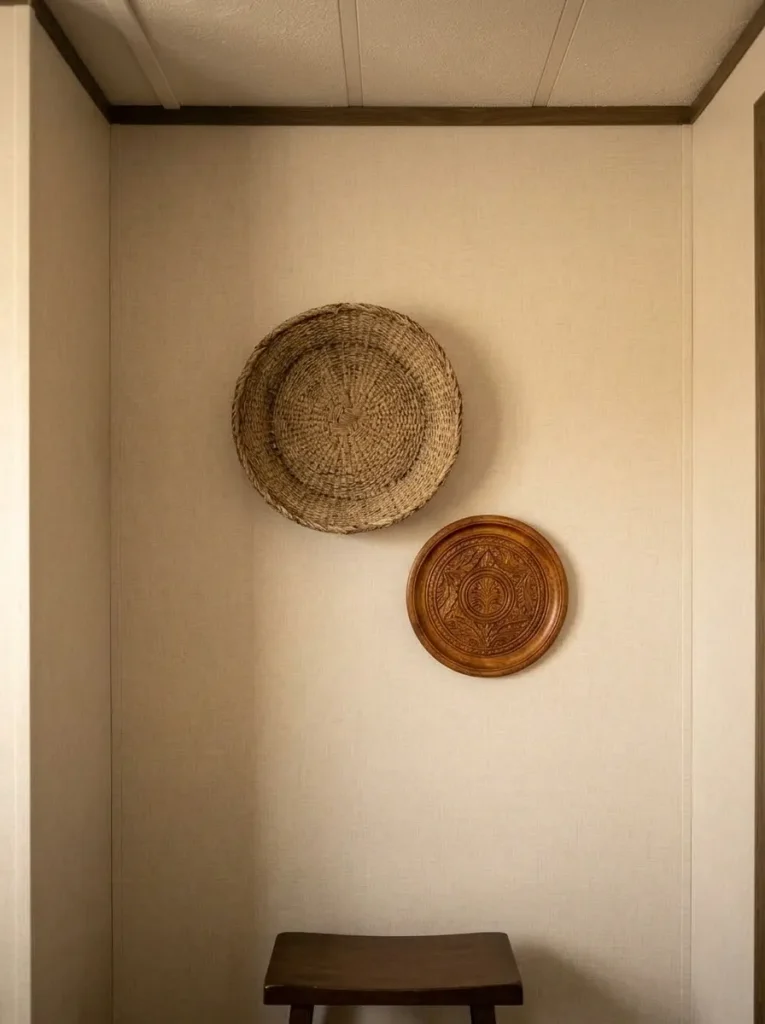
Try one larger piece alone or a tightly edited pair. This is particularly effective in long rooms where an empty wall needs material interest but does not need a console, basket stand, or additional furniture beneath it.
Projection matters. Pieces that remain relatively close to the wall are usually more comfortable around narrow routes than chunky wall objects.
The thrifted piece also does not need a pumpkin or leaf printed on it. Woven texture, dark wood, warm metal, or faded florals can deliver autumn character through material.
Choose wall texture when the room needs personality but the floor plan needs to stay exactly as open as it is.
16. Pair One Obviously Old Piece With One Clean, Current Piece
A room filled only with distressed wood, aged frames, crocks, baskets, patinated metal, and antique-style accessories can eventually stop feeling collected and start feeling staged.
Age becomes more convincing when there is contrast around it.
Put a thrifted brass candlestick on a clean contemporary side table. Hang an old landscape above an uncluttered dresser. Place a worn ceramic pitcher beside a simple lamp.
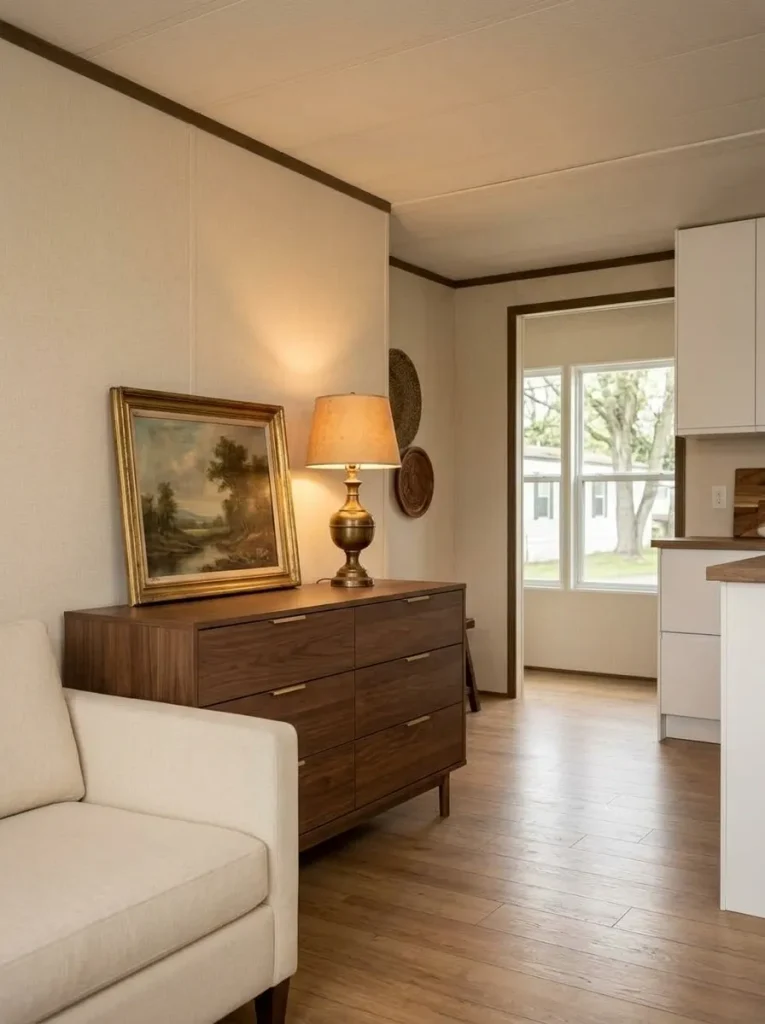
The newer piece gives the older one space to show its history; the older piece gives the clean setting character.
This is particularly useful in renovated or newer mobile homes where you want autumn warmth without covering the finishes you already like. For a cleaner seasonal direction, continue with the modern fall mobile home decor guide.
Homes that deliberately lean rustic can take the opposite branch through the fall farmhouse mobile home decor guide.
A convincing collected interior usually includes contrast in age, not twenty objects all trying to appear equally old.
17. Repeat One Thrifted Material Across the Long Mobile-Home Sightline
Stand at one end of your main living area and look toward the other.
If the living room, dining space, and part of the kitchen are visible at once, treating each zone as a completely separate fall display can fragment the home.
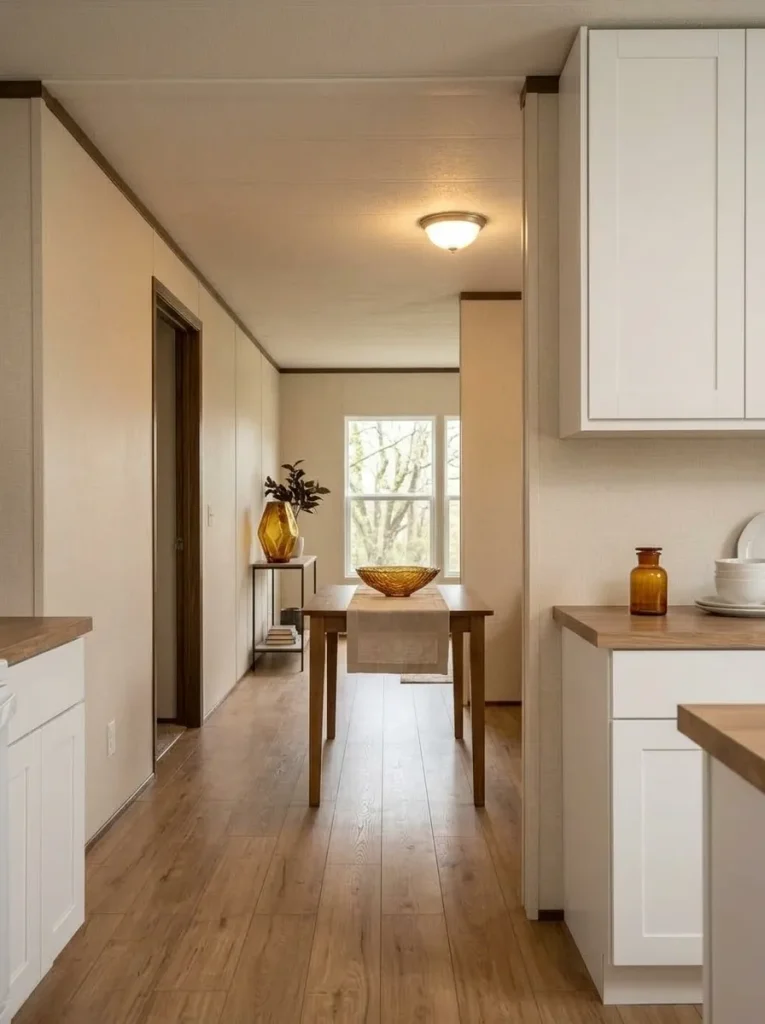
A more controlled approach is to repeat one thrifted material along the view.
For example:
- an amber bottle near the living-room window,
- an amber bowl around the dining zone,
- a small amber vessel farther into the kitchen.
The same principle works with brass, woven texture, warm stoneware, or dark wood.
The objects should not match. Their material relationship is enough.
Connected Sightline Echo Map
Whole-home rhythm
How many times should one thrifted material echo?
Connected interiors do not need matching décor in every zone. They need enough repetition for the eye to recognize a relationship.
Repeat the material, not the vignette. One amber vase, one bowl, and one bottle feel related. Three nearly identical arrangements feel manufactured.
18. Buy Fall Pieces That Still Have a Job in January
A worthwhile thrifted autumn purchase should not automatically become a storage problem when the season ends.
Mentally remove the pumpkins, branches, leaves, or fall textile surrounding the object.
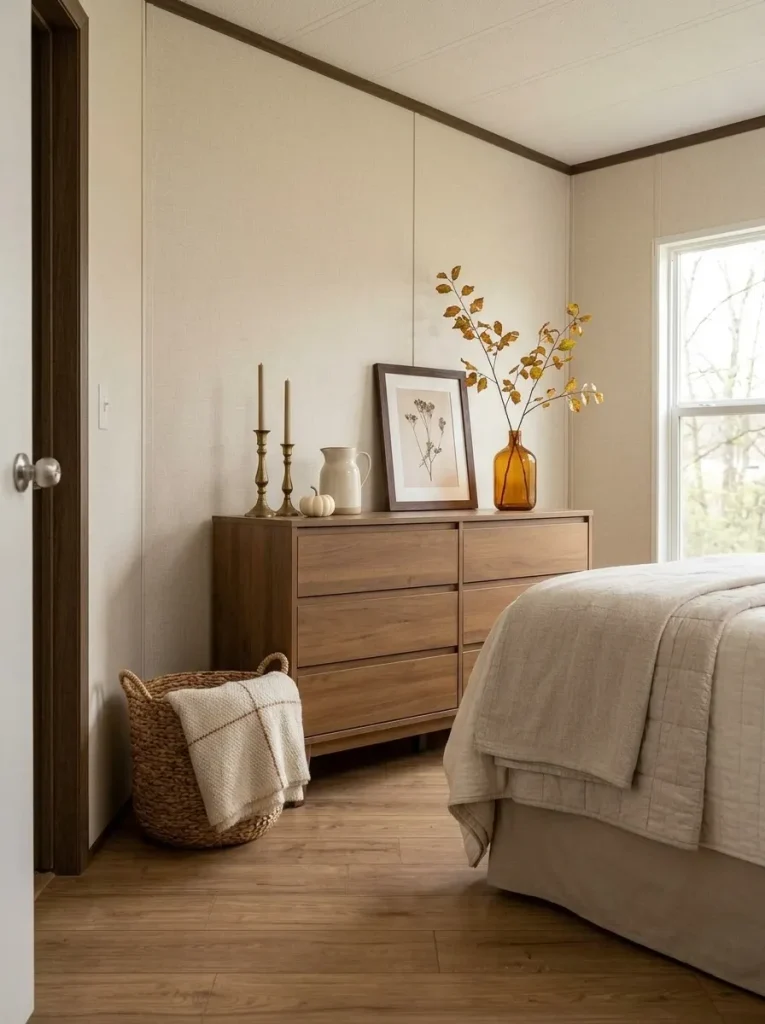
What remains?
A woven basket can hold towels. A stoneware pitcher can carry flowers. A dark wood frame can remain on the wall. Brass candlesticks can move into winter styling. An amber vase can take spring greenery. A wooden tray can organize a coffee table all year.
Those objects possess seasonal flexibility.
Literal fall décor can still deserve space when you genuinely love it. The difference is that its off-season storage cost becomes part of the buying decision.
Try the January test in the thrift aisle:
Where does this go after the autumn styling comes down?
An immediate answer is a strong buying signal.
If the only answer is “into a box,” the piece needs to be distinctive enough to justify the storage space that box will consume.
19. Edit by Role: Keep Only the Strongest Thrifted Piece Doing Each Job
A room can become cluttered even when every thrift find is individually attractive.
The hidden problem is often duplicate roles.
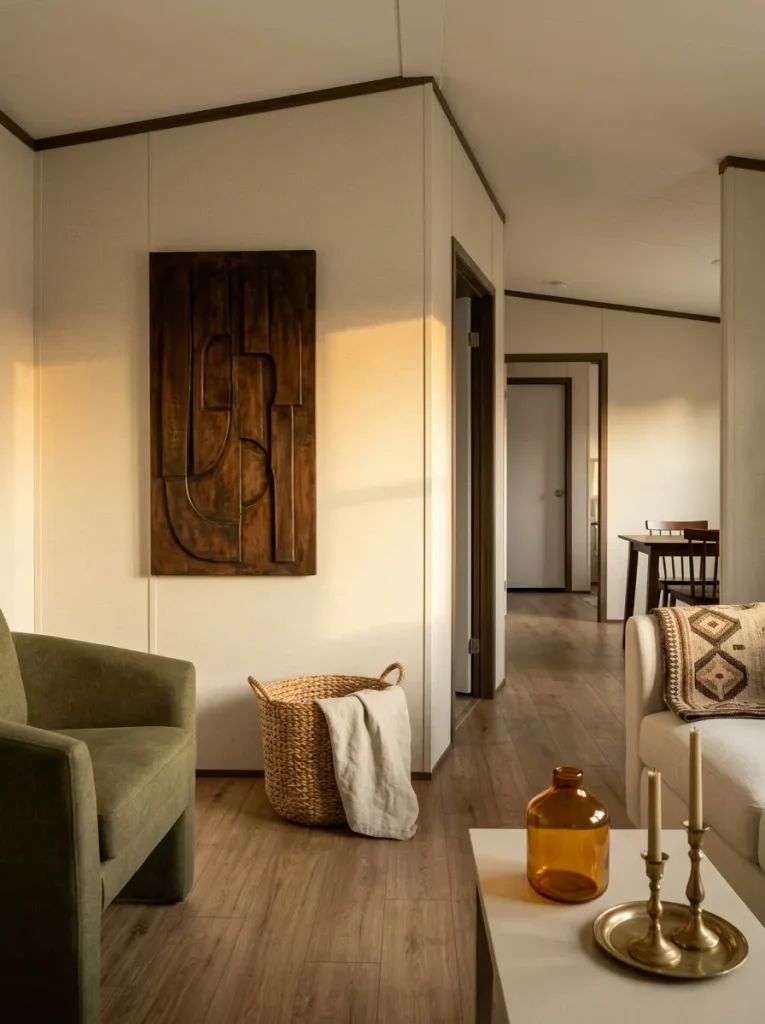
Two different objects may both be trying to supply rust color. Three pieces may all exist to add woven texture. Several tiny accessories may each be providing height. Once you identify those roles, editing becomes easier because you no longer have to decide which object is “pretty enough.”
Instead, compare the pieces doing the same job and keep the strongest one.
In a compact mobile-home room, this protects visual hierarchy while still allowing the décor to feel layered.
Keep / Move / Store Final Thrift Edit
Final thrift edit
Keep only the strongest piece doing each visual job.
Choose the thrifted object you are least certain about and compare its role with what the room already contains.
Final check: name each remaining object’s main job—color anchor, height, texture, storage, function, or focal point. When two pieces perform the same job, compare them directly and keep the stronger one.
That final edit is what separates collected from merely accumulated. The room can still contain mismatched pieces, aged surfaces, and visible personality; each object simply needs a reason to remain.
Conclusion
The strongest thrifted fall mobile home decor does not depend on finding the most seasonal objects. It comes from choosing secondhand pieces with a clear material connection, useful scale, defined location, and life beyond autumn.
Before your next thrift trip, photograph the longest sightline through your home and write down four materials worth repeating. Use that short list to filter what enters the cart, then let each find perform one clear job once it comes home.
That slower approach may produce fewer purchases, but the pieces you keep will have more room to matter. Over time, the home begins to feel layered and personal—the quality that matching seasonal décor rarely creates.