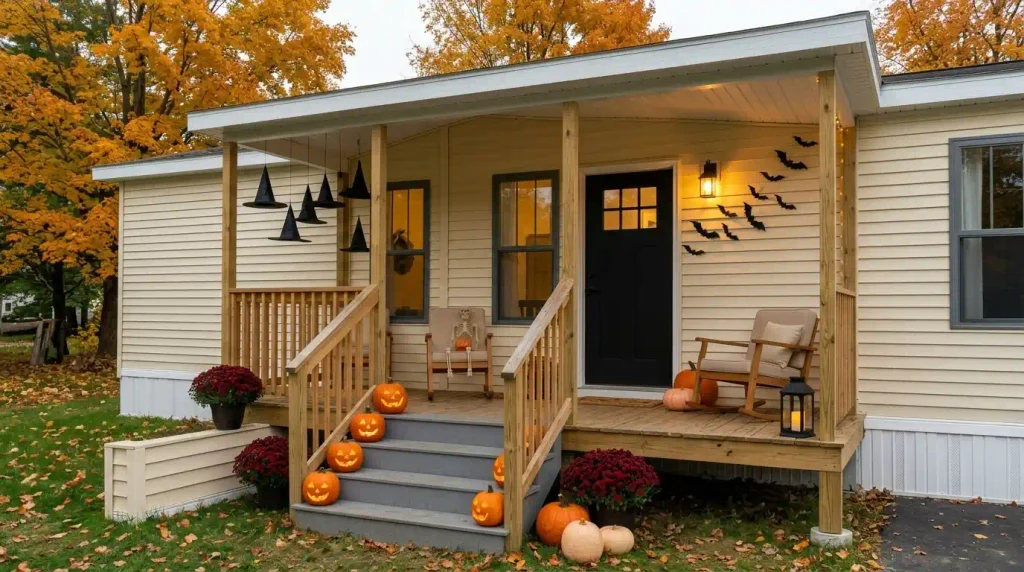
A mobile-home porch does not need dozens of decorations to feel ready for fall. In fact, pumpkin porch decor for a mobile home usually looks stronger when the pumpkins are treated as part of the porch’s visual structure—anchoring a doorway, marking the ends of steps, filling one unused corner, or adding height without consuming the walking path.
The challenge is scale. A pumpkin arrangement that feels relaxed on a deep farmhouse porch can quickly crowd a narrow manufactured-home entry. The most useful approach is to decide where pumpkins can live first, then vary their size, shape, color, and elevation inside those limited zones.
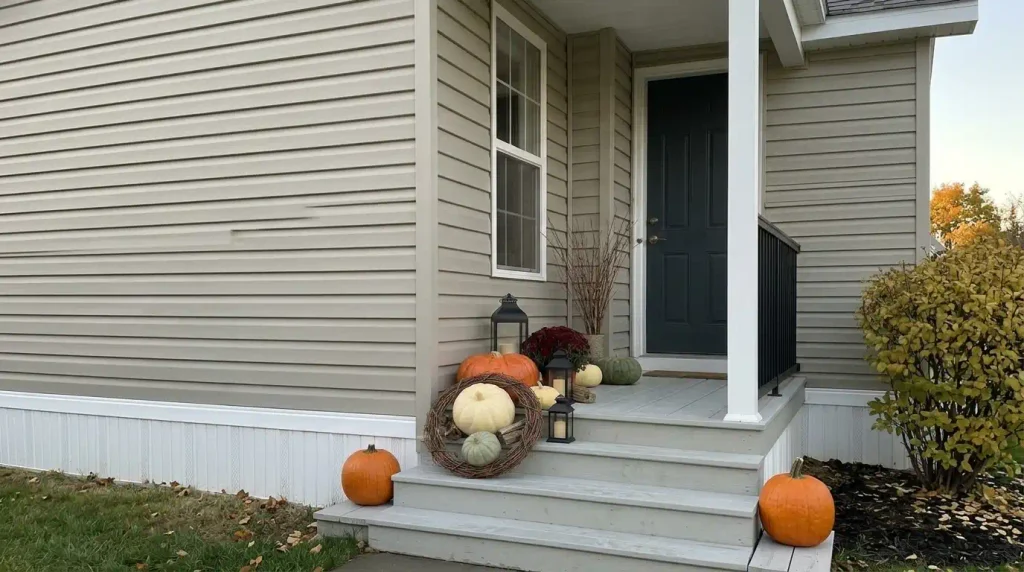
The 17 ideas below move from footprint and proportion to color, vertical styling, lighting, and late-season editing. You will also find simple visual tools for deciding how much décor your own porch can comfortably carry. For broader seasonal styling beyond pumpkins, these fall mobile home porch decorating ideas explore the whole porch as a fall composition.
1. Map Your Porch Into Pumpkin Zones Before You Buy Another One
Stand at the sidewalk or bottom step and look for unused pockets, not empty square footage. On many mobile-home porches, the workable places are surprisingly specific: one corner beside the door, the outer ends of two steps, a strip next to a railing, or the wall beneath a window. Those are your pumpkin zones.
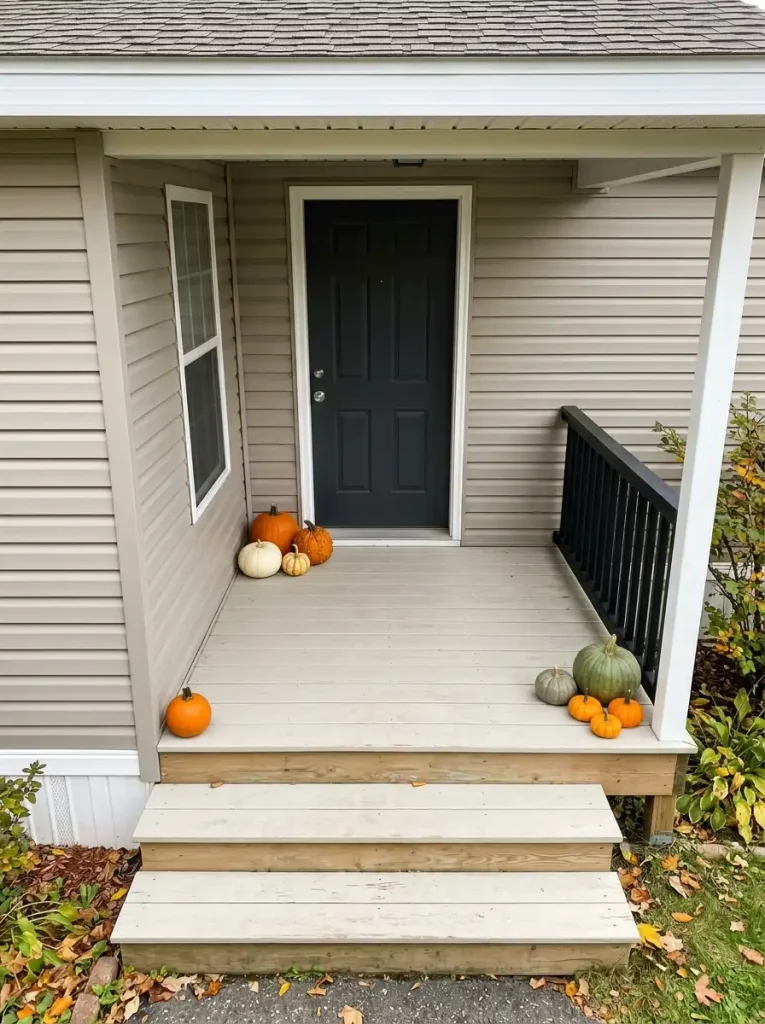
Treat the central route from the steps to the door as protected space. A decorative grouping can look perfectly reasonable from the street yet feel irritating every time someone has to sidestep it with groceries. Once the movement path is mentally removed, the remaining pockets tell you whether your porch needs one substantial pumpkin cluster or several smaller accents.
Use the selector below as a starting point. Choose the condition closest to your porch and let that determine the distribution of pumpkins before you decide how many to buy.
Pumpkin footprint check
Where can your porch actually carry the fall display?
Choose the condition that best describes the space after the walking route is kept clear.
Protect the route first. Whatever space remains becomes the décor footprint—not the other way around.
Keep one medium or large pumpkin on the floor and move supporting detail upward with a wall basket, narrow stand, ledge or hanging element.
Use three to five pumpkins with deliberately different scales in the side pocket. Let that group carry most of the porch’s seasonal weight.
Anchor selected outer step corners and preserve a clear central line. Empty treads become part of the composition instead of wasted space.
Build a stronger doorway or seating cluster, then repeat only one pumpkin color or shape elsewhere so the porch still has visual pauses.
2. Build One Three-Scale Pumpkin Cluster Beside the Door
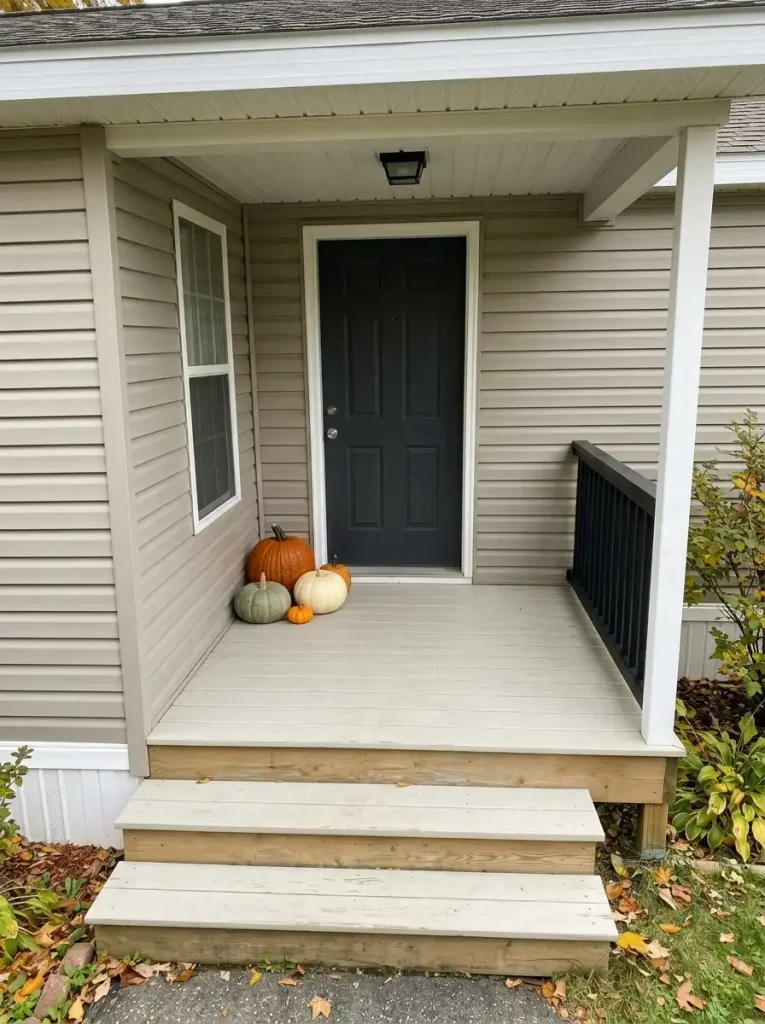
A compact porch usually needs hierarchy more than quantity. Start with one large pumpkin as the anchor. Place a medium pumpkin slightly forward or to one side, then use one or two mini pumpkins to connect the group visually to the floor.
That size progression keeps three or four pumpkins from reading like separate objects. The large form catches the eye, the medium one bridges the height change, and the smallest piece prevents an abrupt finish at the base.
Avoid lining three similarly sized pumpkins shoulder-to-shoulder. On a narrow mobile-home entrance, that creates a horizontal block that can make the doorway feel tighter. A triangular arrangement takes up roughly the same footprint but gives the composition more depth.
A useful stopping test is simple: photograph the doorway from several steps away. If the cluster has one obvious anchor and the door still feels easy to approach, the scale relationship is doing enough work.
3. Mix Tall, Round and Squat Pumpkins to Change the Silhouette
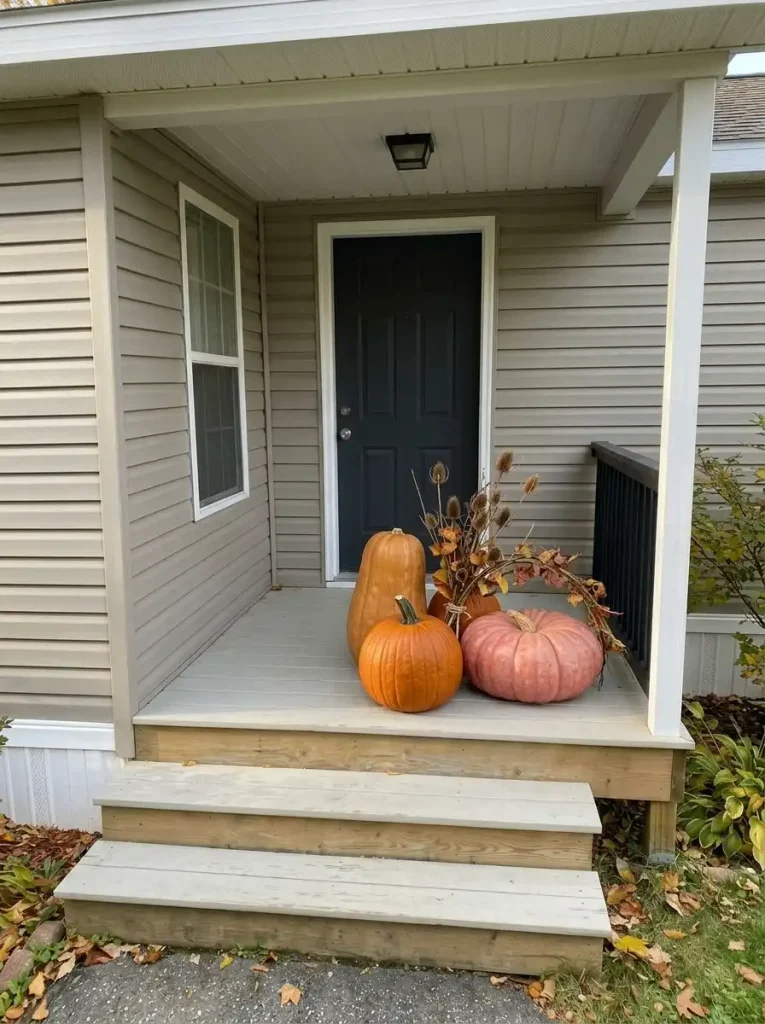
Color gets most of the attention in fall decorating, but pumpkin shape can solve a small-porch problem without adding another object.
A tall pumpkin creates lift beside a low planter. A classic round pumpkin gives the eye a stable central mass. A wide, squat pumpkin spreads visually across the floor and works especially well beneath taller elements such as branches, cornstalks or a lantern.
That means three pumpkins with different profiles can look more layered than six pumpkins of nearly identical shape.
When choosing from a farm stand or store, view the pumpkins from the side before putting them in the cart. If every outline ends at roughly the same height and width, the finished cluster may feel flatter than expected. For a compact mobile-home porch, shape diversity is often the easiest way to create depth without consuming additional walking space.
Silhouette stack
Three outlines, three different jobs
Choose shapes according to the gap your porch composition needs to fill.
4. Choose One Pumpkin Color Family, Then Add a Single Contrast Note
A small porch can make every color look louder because the door, siding, railing and decorations all sit within a tight field of view. Give your pumpkins a dominant palette before mixing every variety you like.
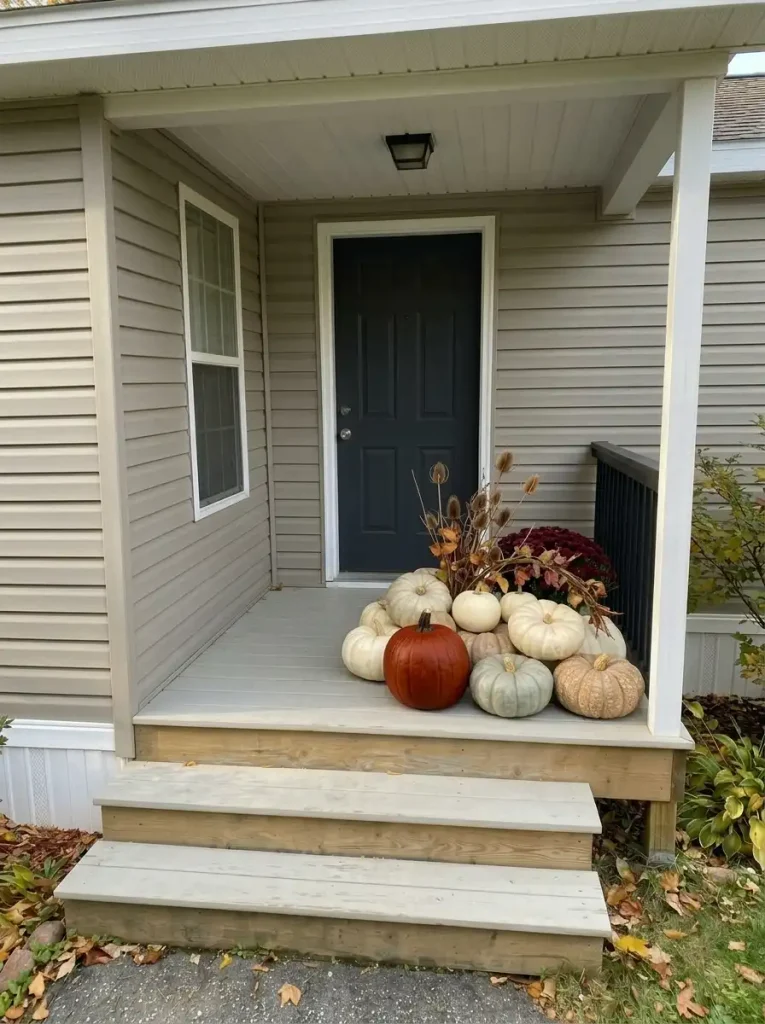
For a classic fall porch, let burnt orange and cinnamon tones lead, then introduce one cream pumpkin as the contrast. For a softer exterior, reverse the ratio: use ivory, pale sage or dusty tan pumpkins, with one saturated orange accent near the center of the arrangement.
The contrast pumpkin should have a job. Place it where you want the eye to pause—near the door handle side, at the base of a tall mum, or at the point where two groups visually connect.
If orange siding, brick or warm wood already provides plenty of autumn color, a mostly neutral pumpkin group can be especially useful. The porch still reads as fall without turning into one continuous orange surface.
5. Bookend the Steps Instead of Filling Every Tread With Pumpkins
Pumpkins marching down every step create a strong Pinterest image, but that treatment is not automatically the best fit for a narrow mobile-home entrance. A quieter option is to use selected outer corners as bookends and let the empty portions of the steps stay visible.
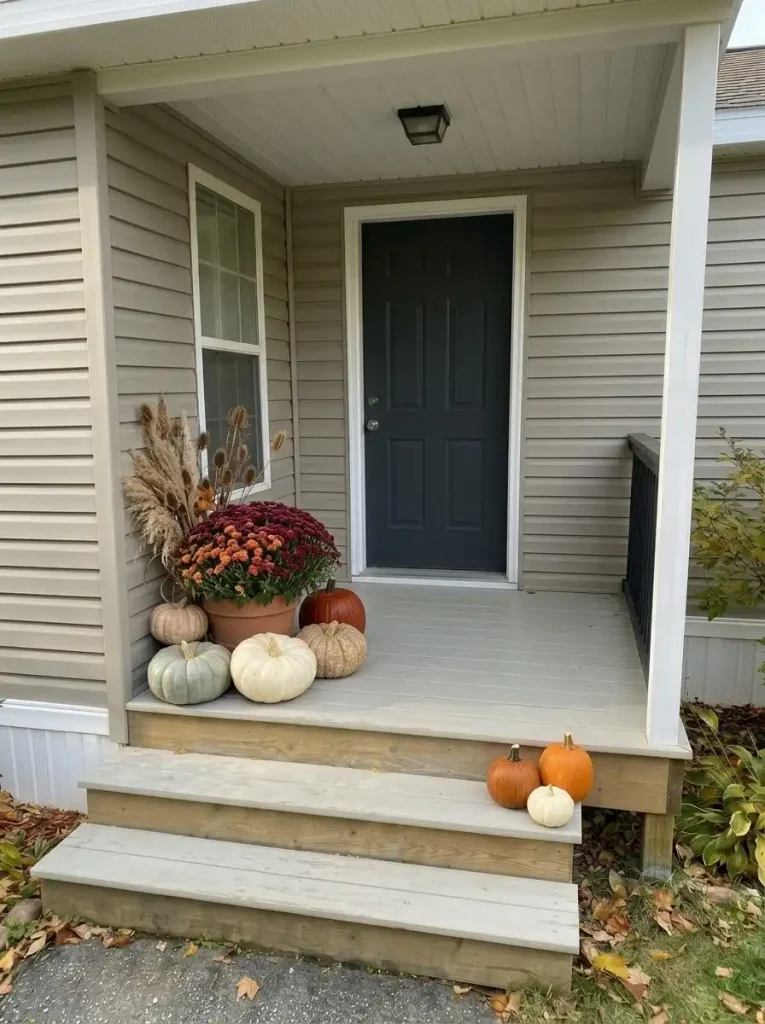
Try one larger pumpkin or mum-and-pumpkin pairing near the top landing, then repeat a smaller note near the lowest step on the opposite side. The diagonal relationship gives the staircase movement while the center remains visually open.
This works particularly well when the stairs are shallow, the railing already occupies one side, or the porch is used frequently. It also reduces the pressure to buy enough pumpkins to decorate every tread.
From the front, you should be able to read three things almost instantly: where the steps begin, where the door is, and where the main fall cluster sits. If the pumpkins erase that hierarchy, edit the middle of the staircase first.
Step bookend route
Let the staircase breathe between two seasonal anchors
center
6. Raise a Pumpkin Cluster on One Galvanized Pedestal
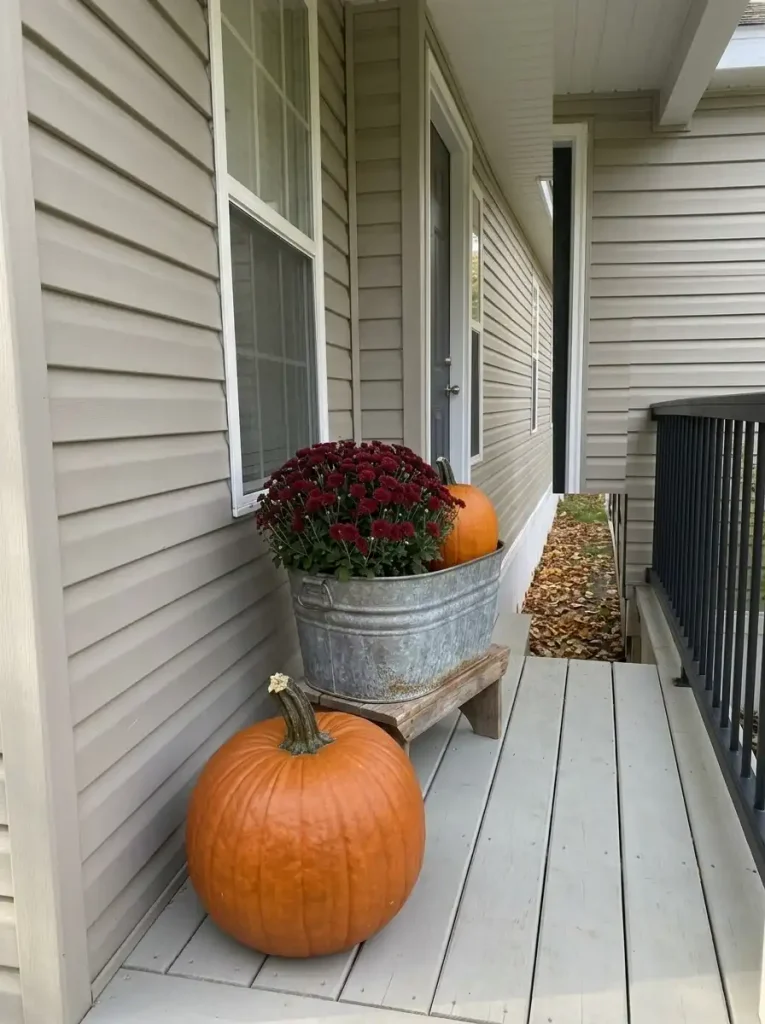
When the porch floor feels full but the composition still looks low, add elevation before adding more pumpkins. A galvanized tub, broad-based plant stand, weathered stool, or another stable outdoor pedestal can lift one part of the arrangement into the middle of the sightline.
Keep the elevated group compact. One medium pumpkin paired with a small mum often has more impact than stacking several pumpkins at the same height on the floor. Below it, a larger pumpkin can remain grounded, producing a simple high-and-low relationship.
The pedestal should look substantial enough for what sits on it. A top-heavy arrangement on a narrow stand will feel visually uneasy even before practical stability becomes a concern. When the base is questionable, keep the pumpkin on the floor and use the pedestal for something lighter.
This move is most valuable beside a blank section of siding or next to a low collection that needs height—rather than on a porch already dominated by tall cornstalks or branches.
7. Nest Pumpkins Into Mums Without Letting the Flowers Disappear
Mums and pumpkins are natural fall companions, but putting equal amounts of both everywhere can turn a small mobile-home porch into one dense block of orange, burgundy, and foliage.
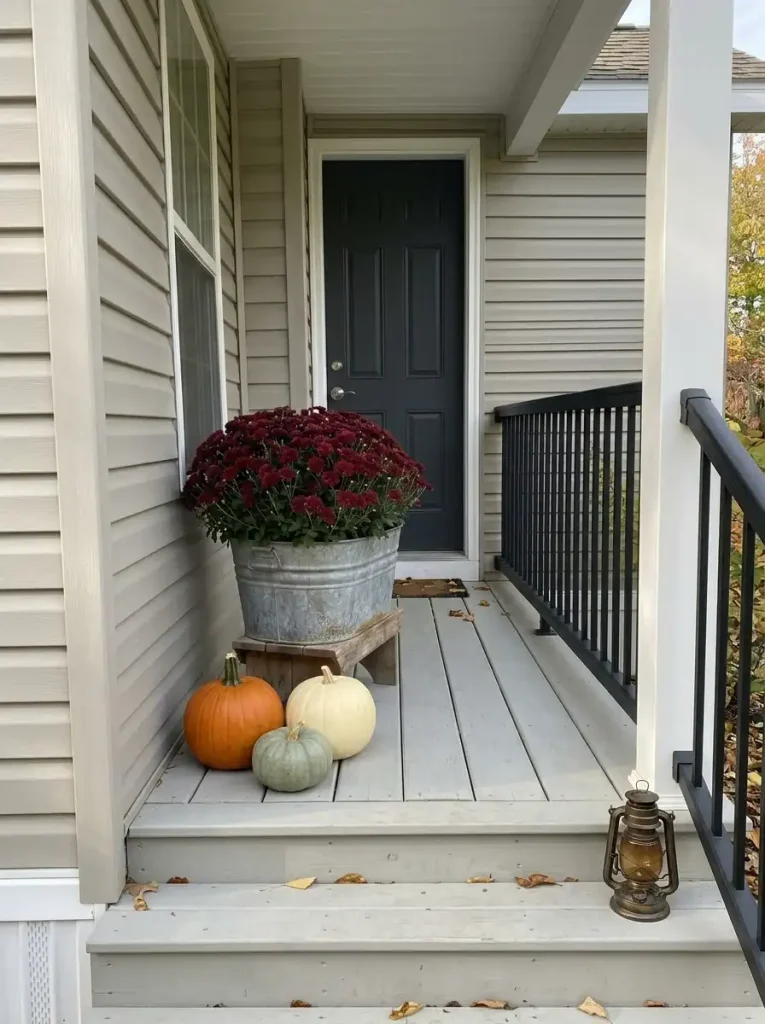
Decide which element owns the height. In most compact arrangements, the mum should rise above the pumpkins while the pumpkins form a lower base around only part of the pot. Leave some visible pot edge, foliage, or porch floor between elements so the flower still reads as a separate form.
Color also changes the relationship. Burgundy mums become richer beside orange or cream pumpkins, while orange mums gain definition from white, sage, or muted-green varieties. When both flowers and pumpkins are bright orange, introduce a quieter object—weathered wood, galvanized metal, or a dark lantern—to interrupt the color field.
Use the composer below according to the strongest companion already on your porch.
Pumpkin companion composer
Let one fall element lead—and make the pumpkins support it
Select the feature already carrying the strongest visual weight on your porch.
8. Frame a Narrow Mobile-Home Door With Cornstalks and a Low Pumpkin Base
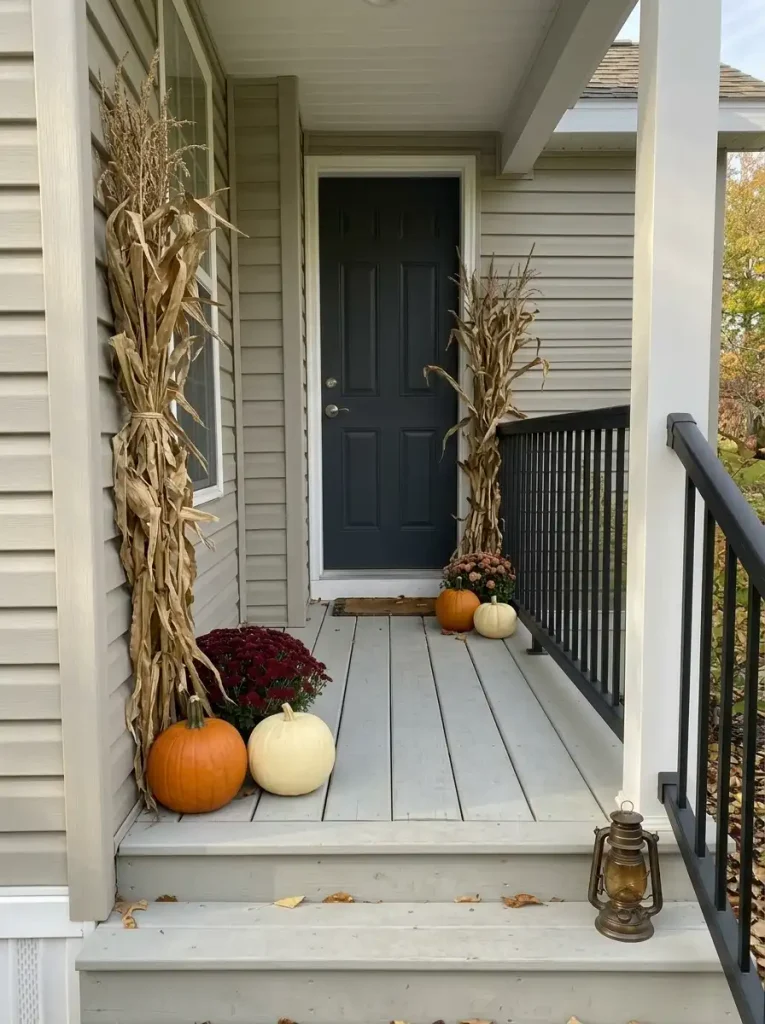
A pair of tall cornstalk bundles can make a modest entrance feel more intentional because they draw the eye vertically along the doorway. The pumpkins then work best as the low counterweight, not as another tall layer.
Place the stalks outside the active door area and build a short pumpkin grouping around their bases. One larger orange pumpkin, a smaller cream variety, and a mum are usually enough to connect the vertical stalks back to the porch floor.
Perfect symmetry is optional. On a particularly tight porch, use the fuller arrangement on the roomier side and a quieter echo on the other. The doorway can still feel framed without forcing identical displays into unequal spaces.
Check the actual door or storm-door movement before settling the arrangement. Decorative stalks, leaves, and pumpkins should stay away from the handle and normal sweep of the door. For a deeper treatment of the entrance itself, see these fall mobile home front door ideas.
9. Move Pumpkins Onto the Wall Plane When the Porch Floor Is Already Full
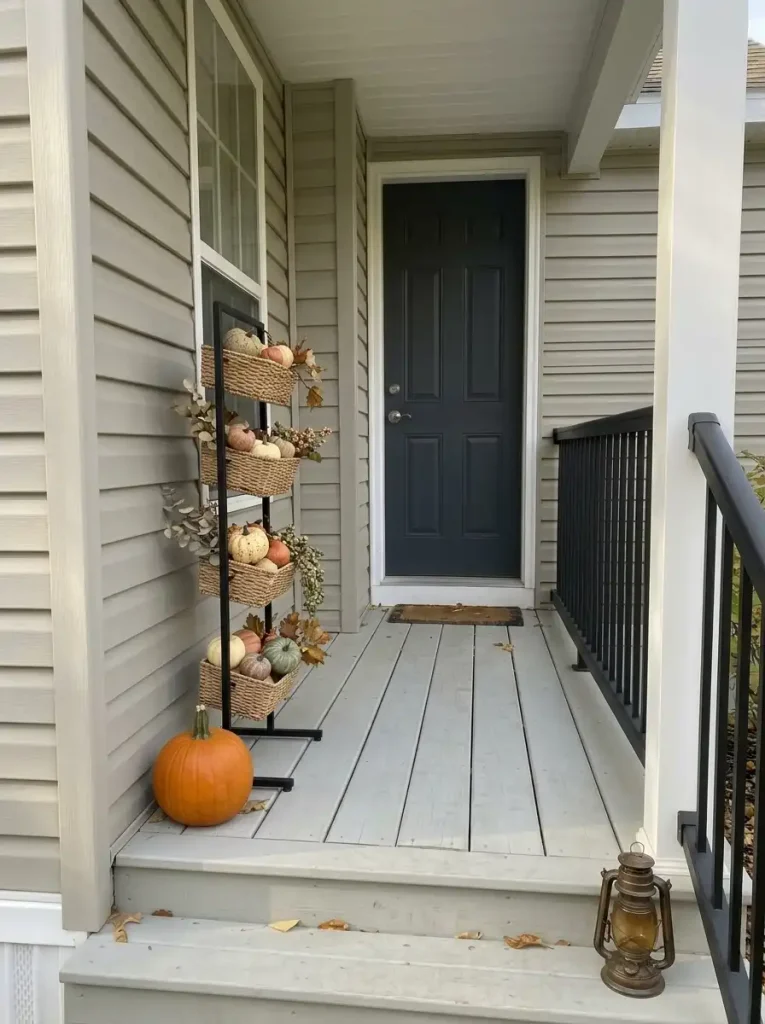
A porch with almost no spare floor area can still carry pumpkin décor by using the vertical plane beside the door. The effect works especially well with shallow baskets containing mini pumpkins or lightweight faux gourds, an existing outdoor shelf, or a slim freestanding display placed against the siding.
Keep the wall arrangement visually narrower than the doorway. A broad display that stretches across the siding can make a compact entrance feel busier, while one vertical composition adds interest without competing with the architecture.
Real, heavier pumpkins belong on a surface designed to support them. Wall baskets are better suited to lightweight seasonal pieces unless an appropriate secure fixture already exists. Where there is no suitable attachment point, use a freestanding vertical stand instead of making a new seasonal hole in the siding.
The decision test is straightforward: when the floor must stay almost empty, move visual interest upward before shrinking the walking route.
10. Turn One Crate Cubby Into a Pumpkin Alcove
A single crate can give a porch pumpkin its own architectural frame. Turn the crate so the opening faces forward, place one pumpkin inside, and use the top surface for a smaller contrasting element such as a lantern, compact mum, or pale gourd.
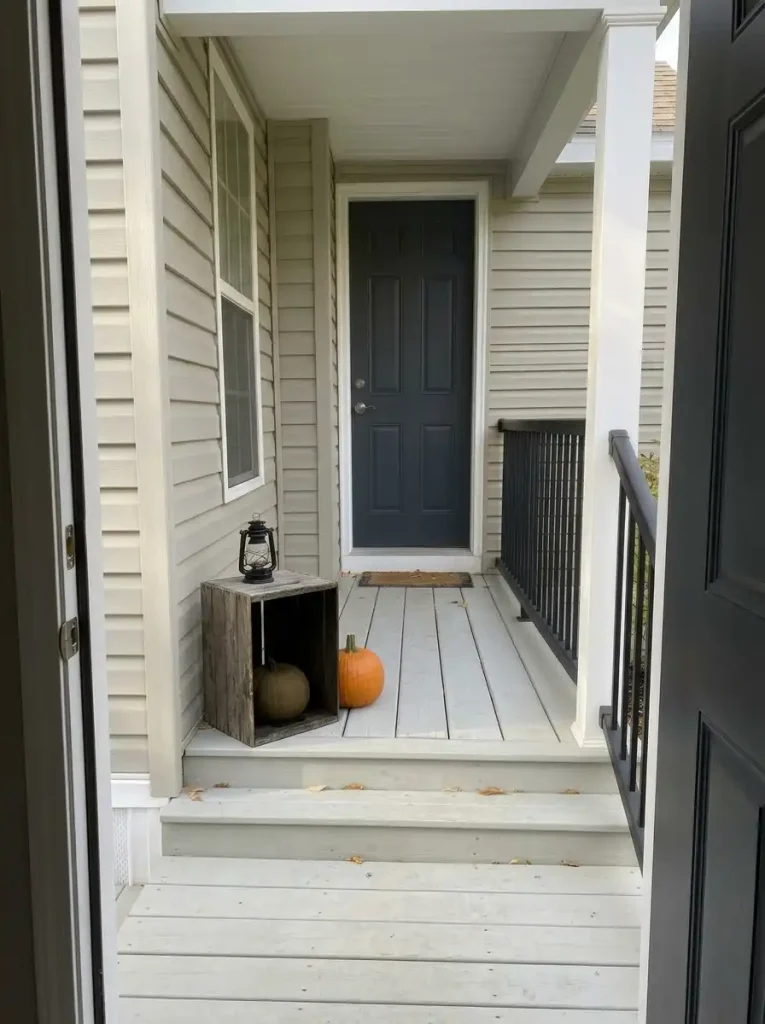
The value comes from containing the display. Pumpkins that might otherwise spread across several feet of porch can occupy one vertical footprint, and the open cubby creates shadow around the pumpkin so its shape stands out.
Avoid building an entire crate wall unless the porch genuinely has the room. On a narrow mobile-home entry, one or two purposeful levels tend to look more polished than a tall stack assembled only to hold additional décor.
For readers who want the construction side of this idea—including more developed crate and vertical pumpkin projects—the separate guide to DIY pumpkin decor for small mobile homes is the better next step.
11. Pair Pumpkins and Lanterns by Height, Not by Quantity
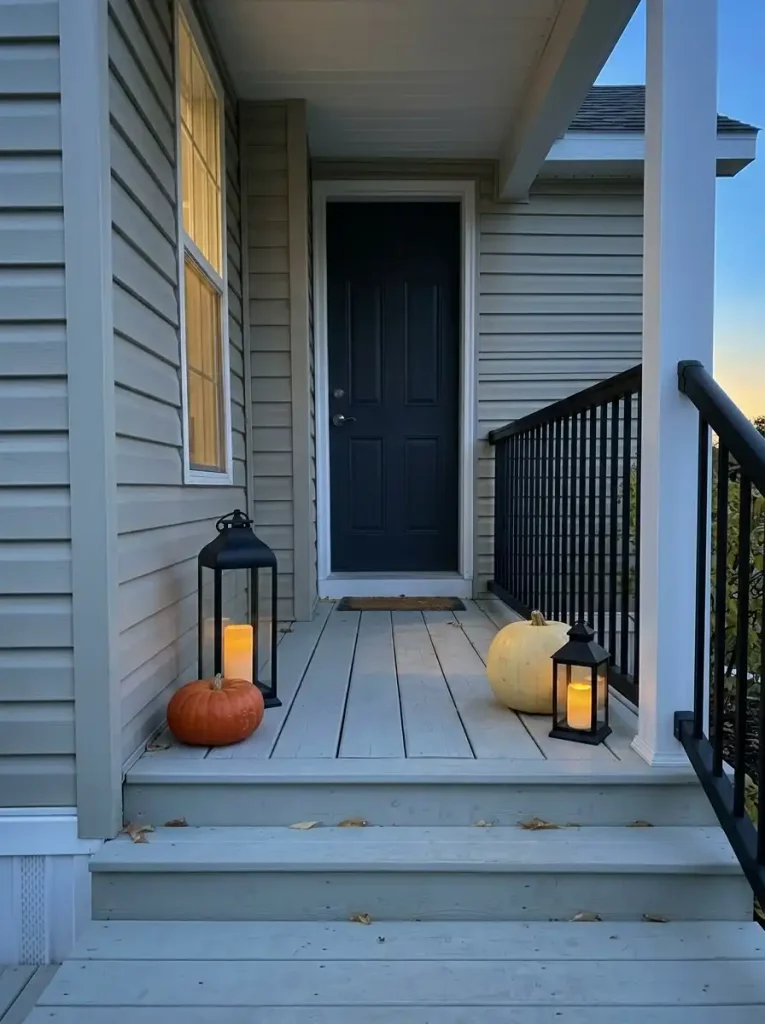
Lanterns work best when they fill a height gap that the pumpkins cannot. A tall lantern can rise behind one squat pumpkin, while a small lantern can sit slightly forward beside a larger round variety. The relationship feels deliberate because each object owns a different part of the silhouette.
Repeating pumpkin, lantern, pumpkin, lantern across the whole porch usually weakens both elements. Build one strong pair, then let nearby pumpkins stand on their own.
Material contrast matters too. Black metal looks crisp beside orange pumpkins, aged brass warms cream and sage varieties, and galvanized finishes pair naturally with muted harvest colors.
If you want lantern glow among dry leaves, branches, wood, or cornstalks, use flameless LED candles so the styling does not rely on an open flame. From the walkway, the lantern should reveal the pumpkin arrangement—not overpower it with a brighter decorative object.
12. Use a Rocker or Bench as the Boundary of the Pumpkin Display
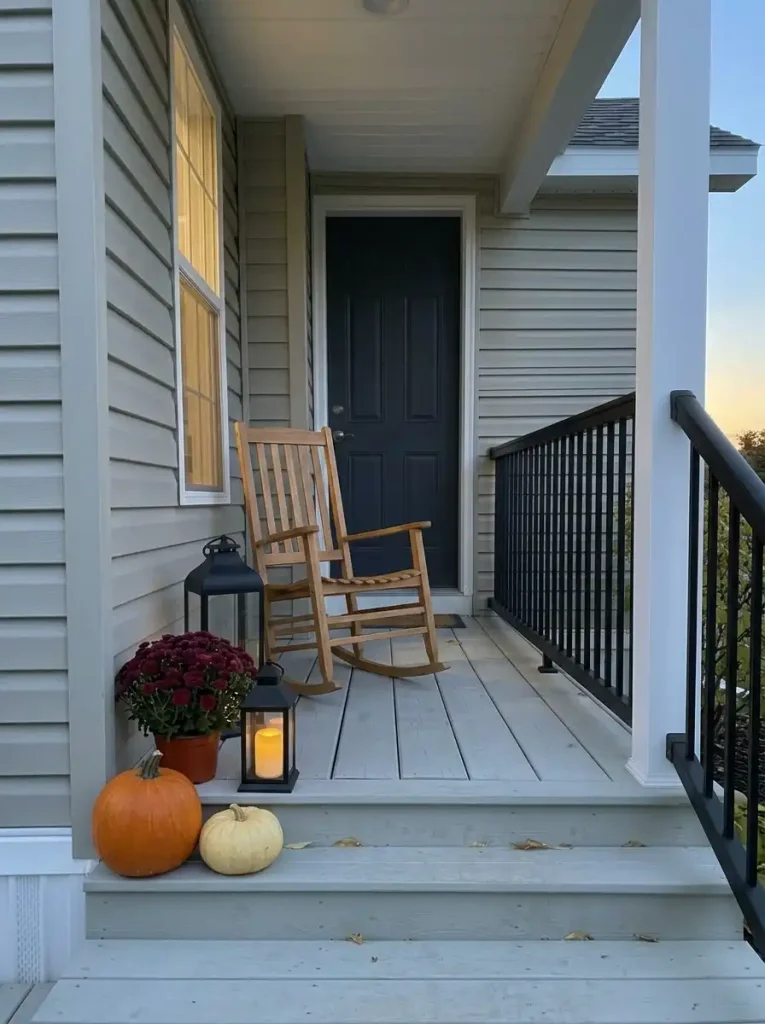
A chair or bench can solve a common small-porch problem: where should the decorations stop?
Treat the outer edge of the seating as a visual boundary. Place pumpkins on the side away from the main sitting and walking zone, then let the furniture create a clean break between décor and usable porch space.
For a rocker, keep the arrangement visually low so the furniture remains the taller element. A large pumpkin near one front leg, a smaller one behind it, and perhaps a mum farther back can establish the seasonal corner without decorating the chair itself.
With a bench, resist the urge to cover the seat with pumpkins. That may photograph well but removes the function that gives the bench visual credibility. A usable seat beside a concentrated floor arrangement feels more like a real porch and less like a temporary display set.
The furniture should still look available for everyday use once the decorating is finished.
13. Break Up a Dense Pumpkin Group With Grapevine, Branches and Berries
Six round pumpkins placed together can merge into one heavy visual mass even when their colors differ. A small amount of fine, linear texture interrupts that repetition.
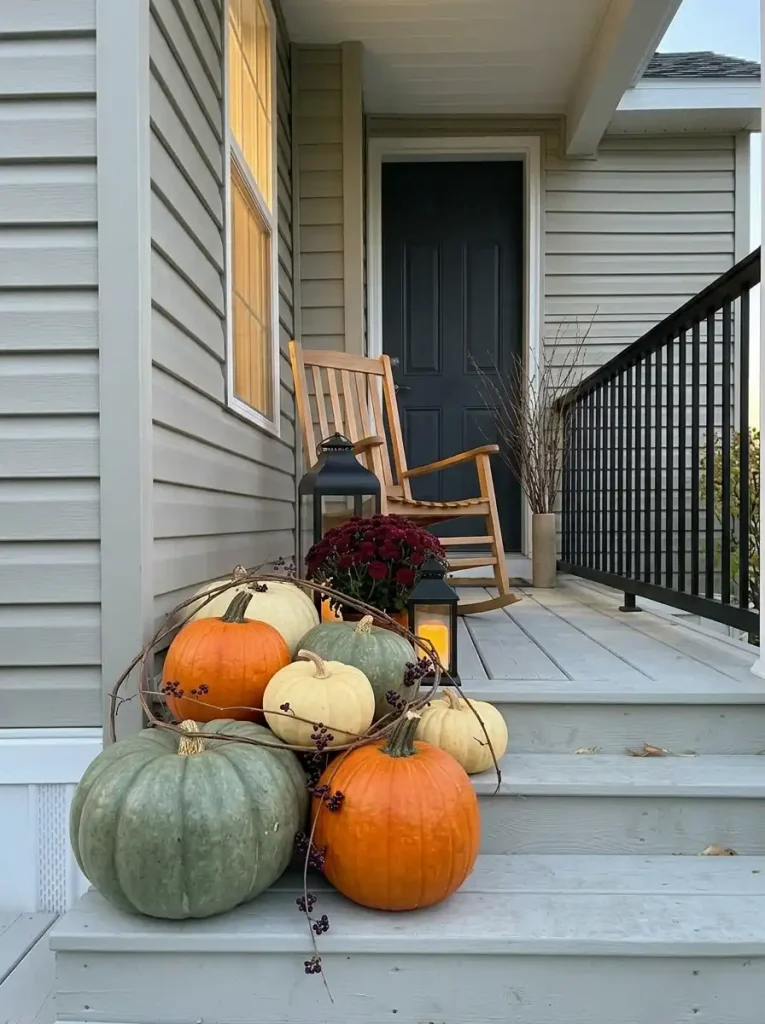
Thread a loose grapevine through the back of the grouping, place a few berry stems between two larger pumpkins, or introduce one vase of bare branches behind the cluster. The thin lines contrast with the broad pumpkin shapes and pull the eye through the arrangement.
Keep these materials secondary. Branches spreading across the entire doorway or vines wrapping every crate can turn a pumpkin-focused porch into a generic rustic fall display.
A useful editing check is to squint at the arrangement from several feet away. When all you see is one solid mound of circles, introduce one narrow texture. When individual pumpkins, negative spaces, and the vertical accents are already distinct, additional branches are unnecessary.
The restraint is what lets the pumpkin forms remain recognizable.
14. Build a Neutral Pumpkin Porch Without Making It Look Washed Out
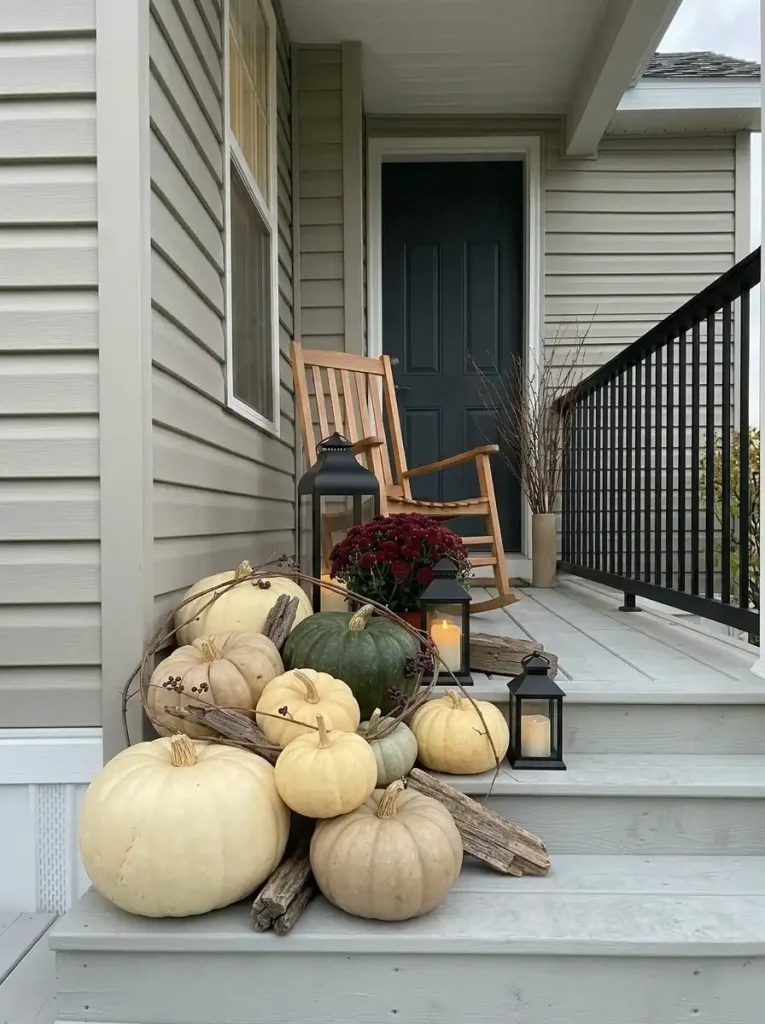
White, cream, pale green, and muted beige pumpkins can look sophisticated against mobile-home siding, but a completely pale arrangement often loses depth from the street.
Build contrast through value and texture, not simply through brighter color. Pair a chalky white pumpkin with a darker sage one. Place smooth gourds against rough wood. Add a black or aged-metal lantern beside cream varieties. Burgundy mums can introduce depth while keeping the pumpkin palette quiet.
The siding matters as well. Cream pumpkins disappear faster against a warm white exterior than against dark gray, blue, green, or brick. On a pale façade, create a darker layer behind the pumpkins before adding more of them.
Use the band below as a quick reminder: a neutral pumpkin palette still needs a dark note, a midtone, and something light.
Heirloom color band
Neutral does not mean every object sits at the same visual value
15. Make a Tiny Porch Look Fuller With One Deep Corner Cluster
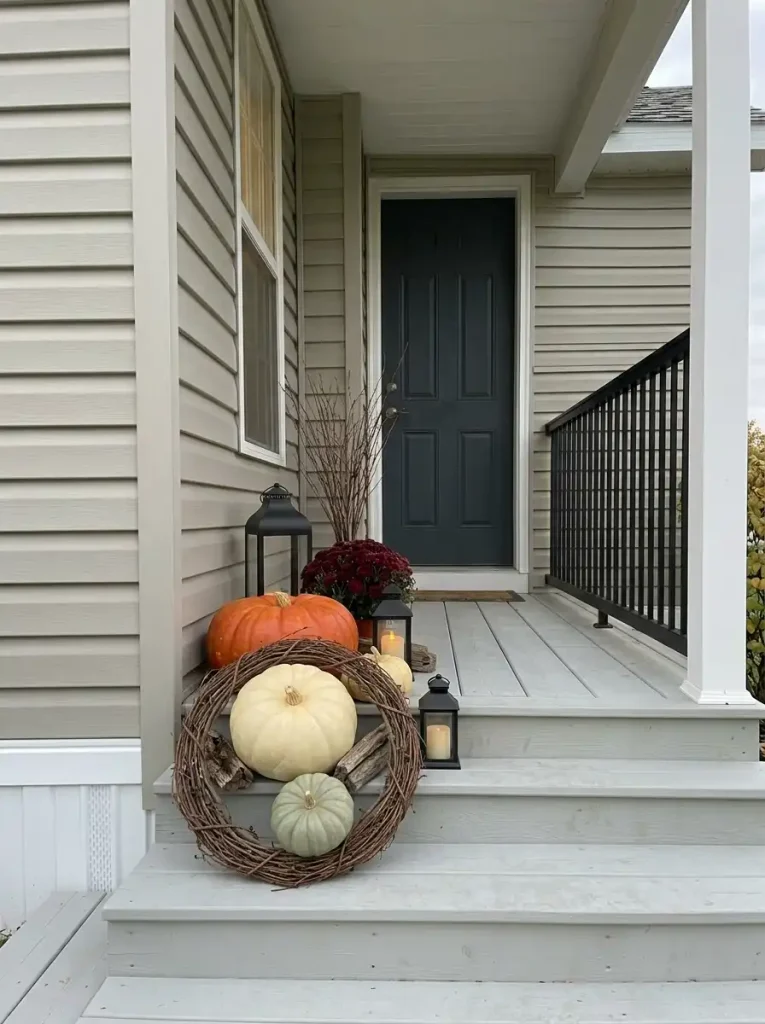
When the porch is exceptionally narrow, spread is the enemy. Build the arrangement front-to-back inside one corner so the eye reads layers without décor creeping across the entire entrance.
Start with the tallest component at the back: a mum, a narrow branch arrangement, or an existing porch feature. Move forward to a large pumpkin, then finish with a smaller pumpkin slightly off-center at the front. Three depths can produce a surprisingly full composition from a footprint barely wider than the largest object.
The corner also provides a natural backdrop. Siding on one side and the doorway, railing, or porch edge on the other visually contain the arrangement, so fewer pieces are needed to make it feel complete.
Photograph the porch straight on after arranging it. When the cluster looks generous in the image while a significant portion of the floor remains visually quiet, the depth strategy is working. When décor starts migrating sideways, bring the smallest pieces back toward the anchor.
16. Check the Pumpkin Silhouettes at Dusk Before Adding More Decor
A pumpkin porch that feels balanced at noon may change dramatically once the porch light comes on. Dark pumpkins can merge into shadow, cream varieties may become the brightest objects in the arrangement, and lanterns can suddenly dominate the composition.
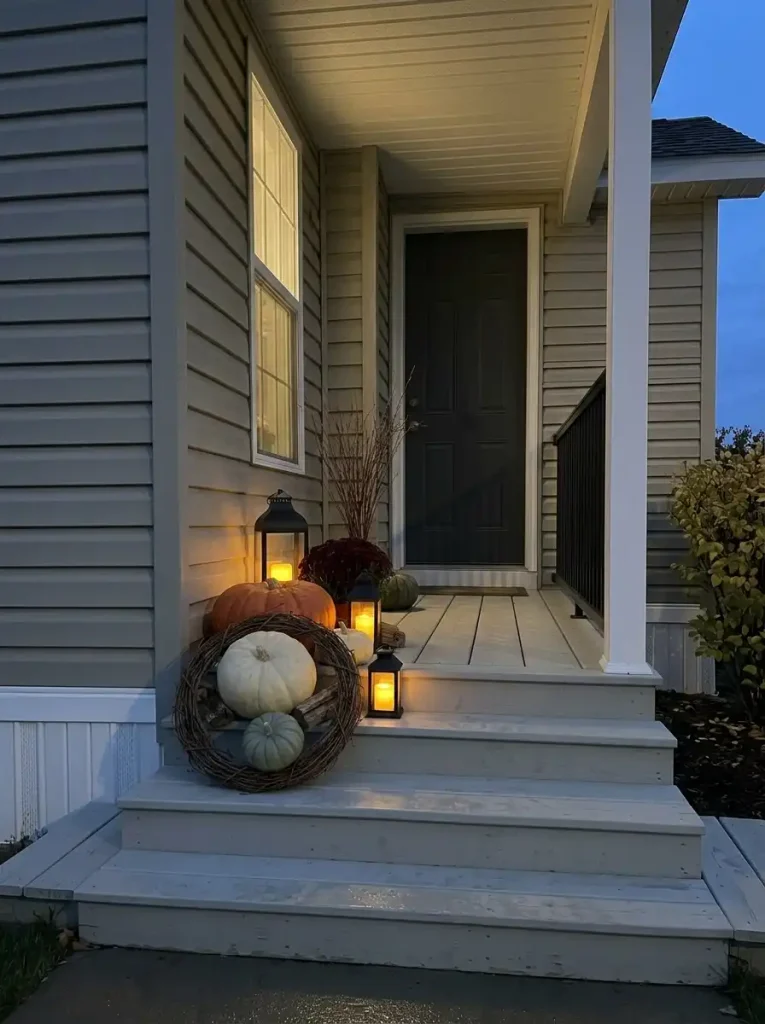
Do one final styling check at dusk before buying more décor.
Stand where a visitor first approaches the porch. Look for the large shapes first: doorway, main pumpkin cluster, flowers, lanterns, and any tall stalks or branches. The arrangement should still have one obvious seasonal focal point.
When a pumpkin disappears, move it slightly toward the available light or place a lighter-toned pumpkin nearby. When every object is illuminated equally, remove or reposition one light source so the porch has depth.
For lanterns within dry fall displays, flameless lighting is the simplest choice. The evening test is not about turning the porch into a light show; it reveals whether the composition still reads after the daylight details disappear.
17. Plan a Pumpkin Porch That Can Simplify as Fall Moves On
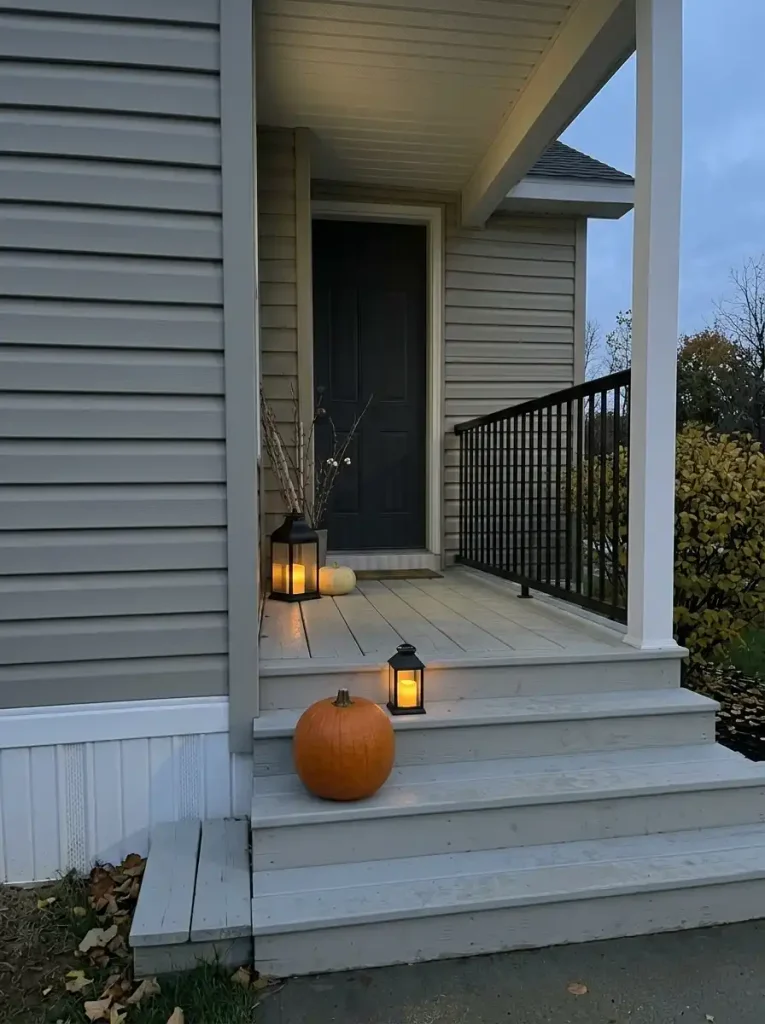
The easiest seasonal porch to maintain is one that does not depend on every layer staying in place for the entire season.
Build the display around a core pumpkin structure first: perhaps one doorway cluster, two step anchors, or one deep corner arrangement. Mums, leafy garlands, berries, branches, and extra mini pumpkins can then act as removable layers.
Early in fall, the porch may stay relatively light. During peak harvest season, add the richest color and texture. Later, edit back to the strongest pumpkins, lanterns, and durable neutral elements rather than rebuilding the porch from scratch.
This also reveals which decorations actually mattered. If the arrangement still looks complete after several accessories disappear, the underlying pumpkin composition was strong.
Use the seasonal editor below to decide what deserves to stay.
Season simplifier
Keep the pumpkin structure. Change the supporting layers.
Use the main cluster plus one supporting plant or lantern. Let the porch retain plenty of quiet space.
Optional: restrained foliage or one early-season floral note.Bring in mums, stalks, berries, branches or extra minis where they strengthen an existing composition.
Stop when a second focal point begins competing with the first.Retain the strongest pumpkins, lanterns and neutral structure. Remove tired florals and accessory layers selectively.
The porch should become simpler without looking unfinished.Final Thoughts
A successful pumpkin porch does not depend on squeezing every possible fall decoration into the entrance. Start with the porch’s real usable zones, give one pumpkin arrangement clear visual priority, and build height, color, texture, and evening interest around that anchor.
For a particularly small mobile-home porch, the biggest improvement often comes from editing sideways spread: stack visual interest, deepen one corner, or raise a single element while preserving calm space around the doorway.
Once the porch itself feels resolved, you can carry the same seasonal language into steps, skirting, window areas, and other visible zones with these fall mobile home exterior decor ideas.
Save this guide to Pinterest so you can come back to these pumpkin porch ideas when you start decorating your mobile home for fall.