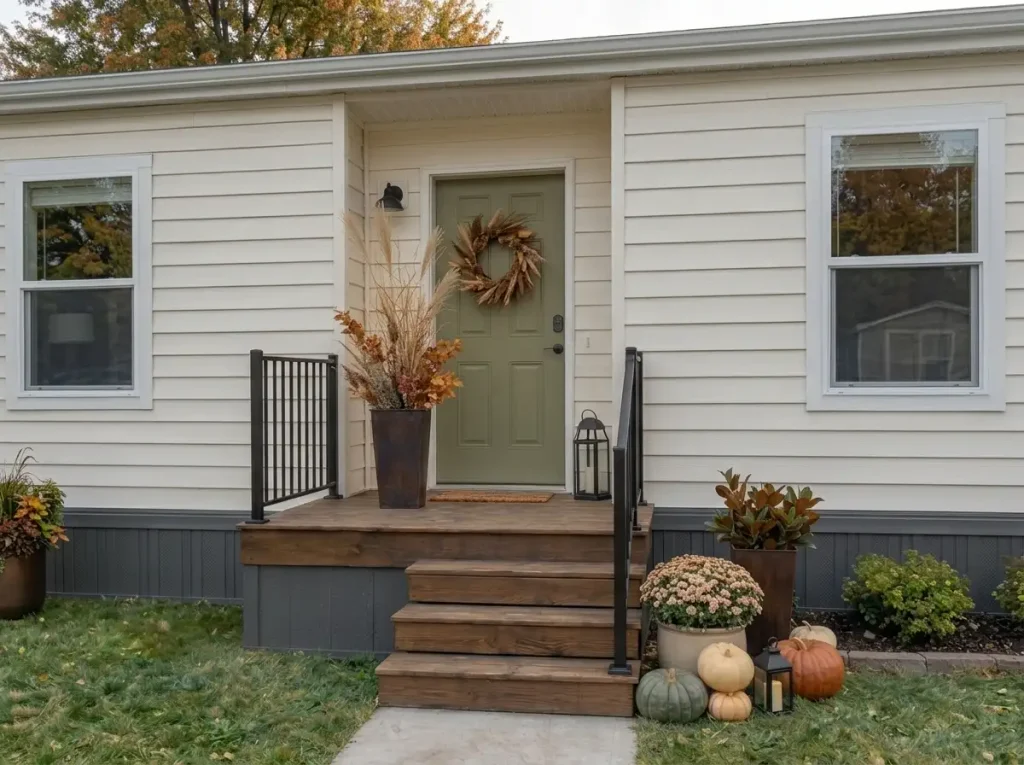
A mobile home front door has a smaller canvas than many Pinterest entrances, which makes every fall detail more noticeable. A wreath that looks restrained on a deep farmhouse porch can overpower a narrow door, while too many pumpkins can quickly claim the landing space you actually need for coming and going.
The smartest fall mobile home front door ideas start with the door itself: its panel pattern, glass, storm-door layer, hardware, trim, and the amount of usable space immediately around it. Once those fixed features become part of the decorating plan, even a simple wreath or hanging basket can look deliberate.
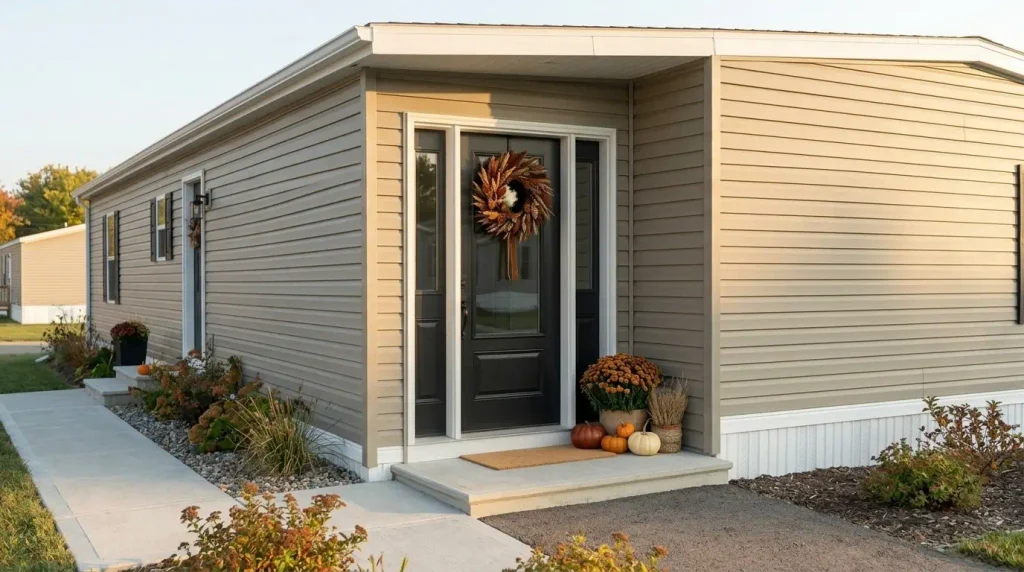
The ideas below focus closely on the front-door zone, so you can create a seasonal entrance without turning a compact stoop into a miniature display area. Some looks use almost no floor space; others rely on controlled contrast, texture, or one carefully placed supporting accent. Start by identifying what kind of door you actually have, because that decision changes almost everything that follows.
1. Identify Your Front Door Type Before You Copy a Fall Look
Two mobile-home entrances can have almost the same footprint yet need completely different fall arrangements. A solid panel door gives you a large uninterrupted decorating plane. Half-lite glass removes much of that surface. A clear storm door adds another visual layer, while sidelights make the whole doorway appear wider before a single pumpkin arrives.
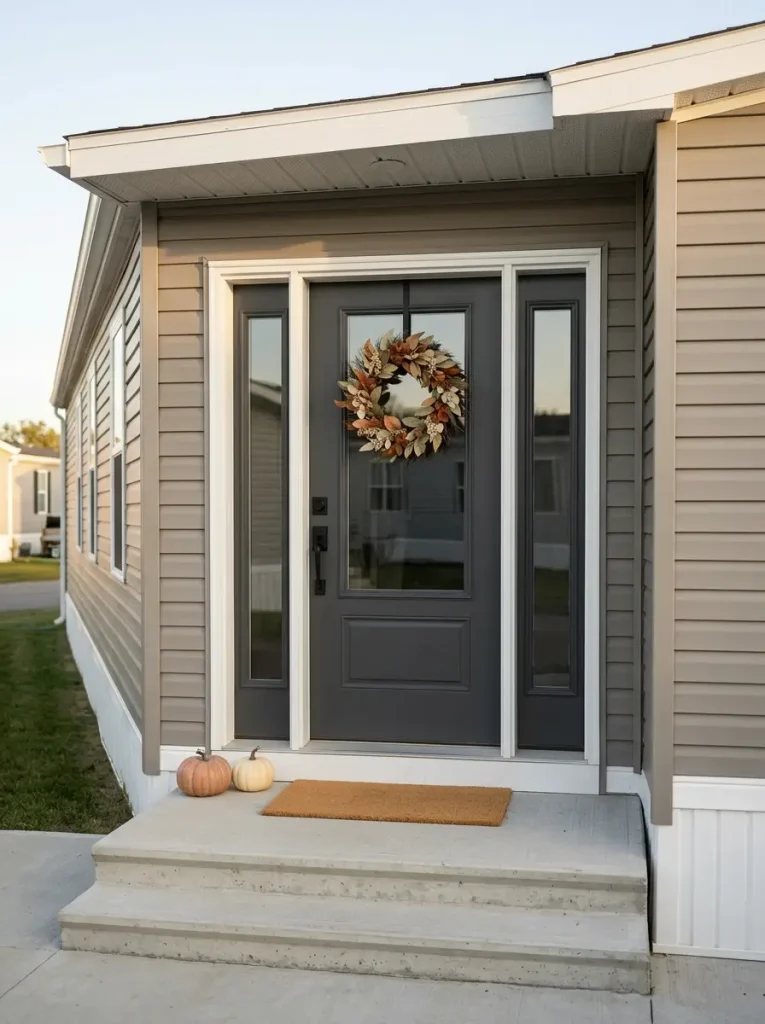
Begin with the permanent architecture. Look straight at your entrance from the normal approach and decide which description below is closest. The useful question is not “Which Pinterest door do I like?” It is “Where does my particular door have enough visual space for one strong autumn focal point?”
The selector below turns that door type into a starting composition.
Front-door fit finder
Start with the door you already have
Choose the closest configuration. The result changes the focal point, the area worth leaving visible, and how much supporting décor the threshold can comfortably carry.
Let the door carry the focal point
A solid panel gives fall décor room to read clearly. Use one wreath, basket or swag as the dominant gesture and allow the door color and panel lines to remain part of the composition.
Protect some light and reflection
Choose an airy or lower-profile focal point that works with the glazing. Dense foliage across the center of the glass can make a compact entrance feel heavier than it needs to.
Choose which door gets the decoration
A transparent storm door can already frame the main entry door. Give one plane visual priority, check normal operation, then keep the other plane quiet.
Use the glass as breathing room
Sidelights already extend the doorway horizontally. Keep their transparency doing useful work and concentrate seasonal color near the central door instead of filling every vertical strip.
Once you know the type, the decorating question becomes much easier: enhance the strongest usable plane and let architectural features that already add interest remain visible.
2. Give a Solid Panel Door an Open-Center Wreath
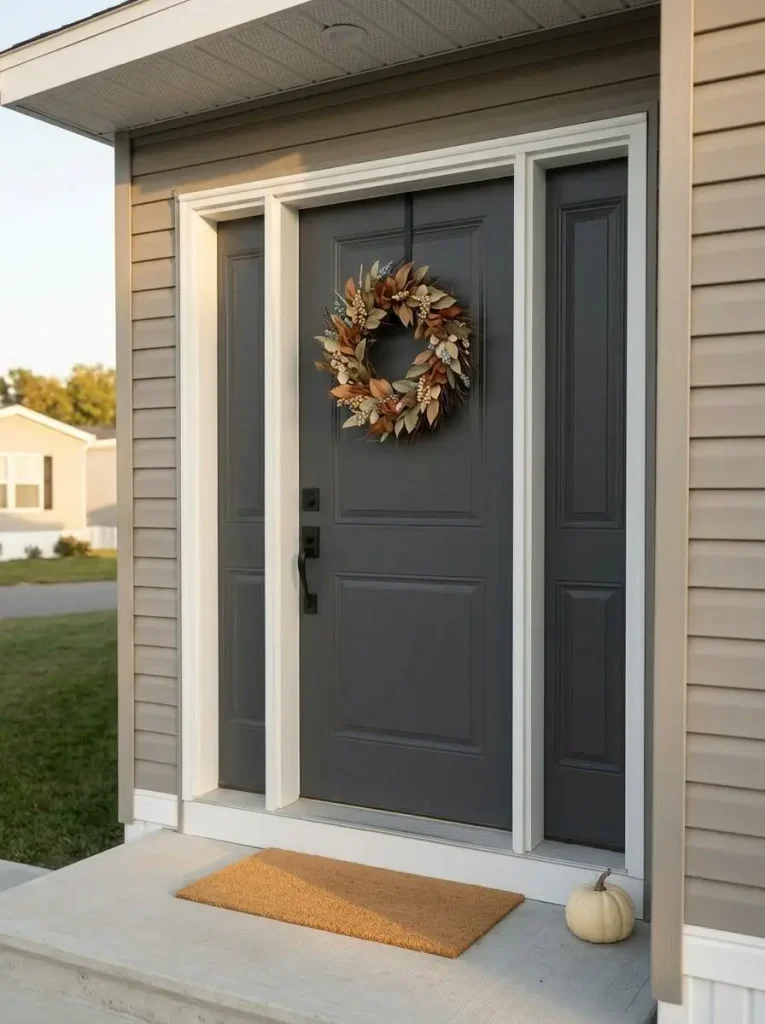
A solid front door can support a substantial wreath, but density matters. On a compact mobile-home entrance, a completely packed circle of leaves and flowers can cover so much of the door that its panels disappear, leaving one heavy seasonal mass at eye level.
An open-center wreath works differently. Grapevine, thin branches, eucalyptus-style foliage, dried leaves, muted berries, or sparse rust-colored stems can form a strong perimeter while the opening still reveals the door beneath it. A charcoal, deep green, brown, or navy door becomes part of the autumn palette through that negative space.
Try this before choosing the wreath: make a rough paper or cardboard outline and hold it against the door. Step back to the normal approach point. You should still notice the door’s main panel structure before your eye moves to the handle.
When the temporary shape wipes out most of that architecture, reduce the visual mass. When it looks lost, enrich the outer edge with deeper rust, brown, copper, or ochre texture before simply making the whole wreath larger.
The decision is about visual weight, not how many fall materials can fit inside one circle.
3. Swap the Round Wreath for a Hanging Harvest Basket on a Narrow Door
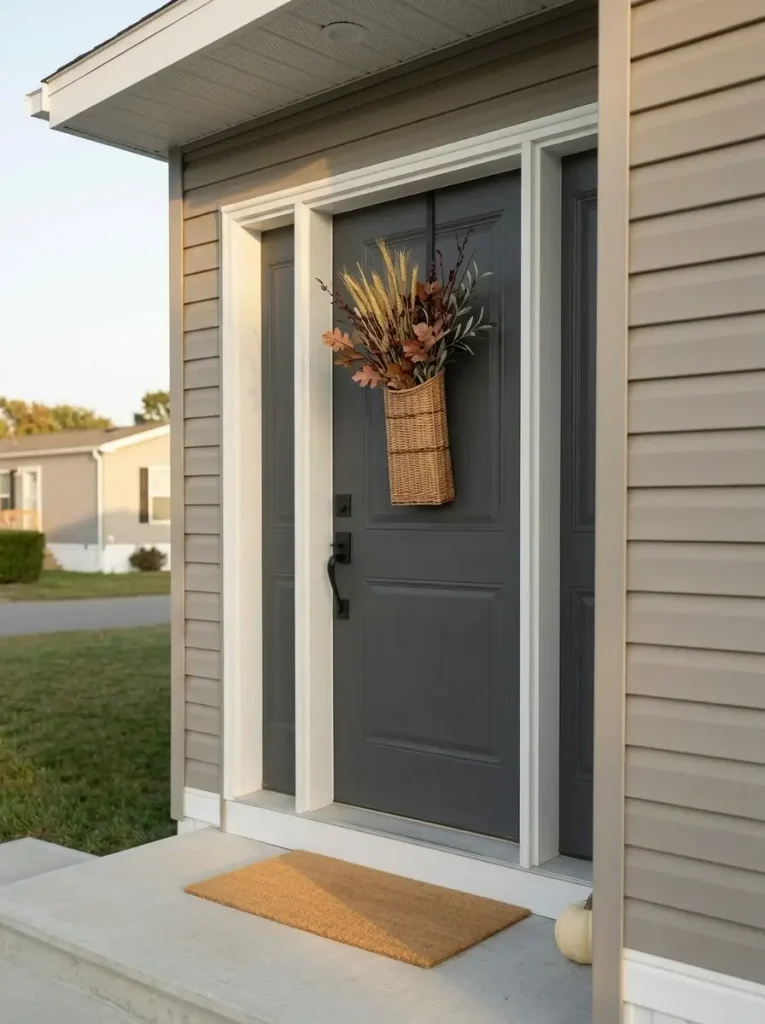
A tall or visually narrow front door does not always benefit from another wide circle. When a standard wreath seems to push toward both edges of the door, a vertical harvest basket can work with the door’s proportions.
Think of a shallow woven wall basket, hanging pocket, or tapered container filled with a controlled spray of dried grasses, muted leaves, wheat-like stems, or burgundy branches. Let a few stems rise above the vessel and keep the lower half relatively neat. The eye follows that long silhouette vertically, so the door can feel taller and less crowded.
| If the door needs… | Try… |
|---|---|
| More visible width | A round wreath |
| More vertical emphasis | A hanging harvest basket |
| Less visual bulk | Sparse stems with open space |
| A stronger autumn hit | One concentrated rust or amber cluster |
There is one practical condition: test the complete door operation before committing to a dimensional arrangement, especially where another door sits immediately in front of it. A basket that repeatedly catches or compresses is the wrong design for that entrance.
For a very tight doorway, a flatter arrangement gives a similar seasonal silhouette with less projection.
4. Keep Half-Lite Glass Visible With a Low, Airy Wreath
Glass changes the composition because the upper part of the door is already active. During the day it may reflect sky, trees, and autumn color. Covering the middle with dense faux foliage can remove one of the entrance’s strongest existing visual features.
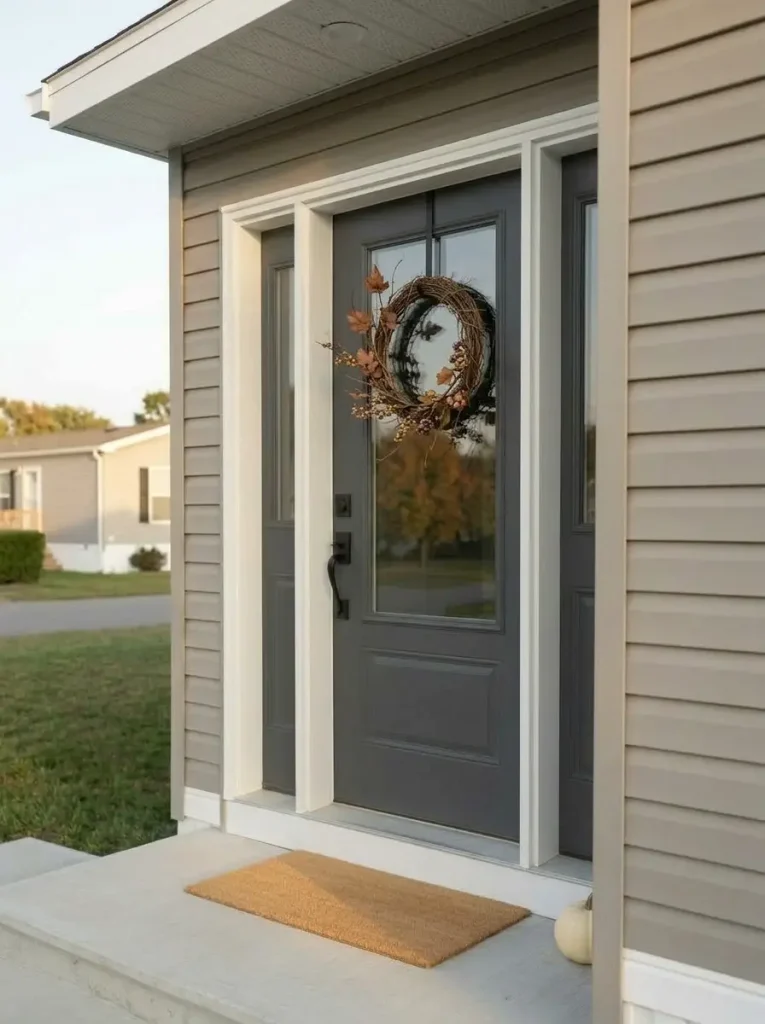
A better starting point is an airy wreath with a readable center, positioned so the glazing still feels like glass rather than a backdrop hidden behind décor. Vine bases, loose branches, thin leaf sprays, and uneven organic edges tend to preserve more breathing room than tightly packed florals.
Glass-first test: Look at the door from outside, then from inside. When the fall piece dominates both views and the window seems to disappear, edit the foliage before adding anything else.
On a compact mobile home, that restraint can have a bigger visual effect than adding another pumpkin or sign. The changing reflection becomes part of the seasonal look.
Where privacy treatments already make the glass visually dense, go lighter still: use one restrained wreath or shift more seasonal color toward the solid portion of the door.
5. Treat a Storm Door as a Clear Layer, Not a Second Decorating Surface
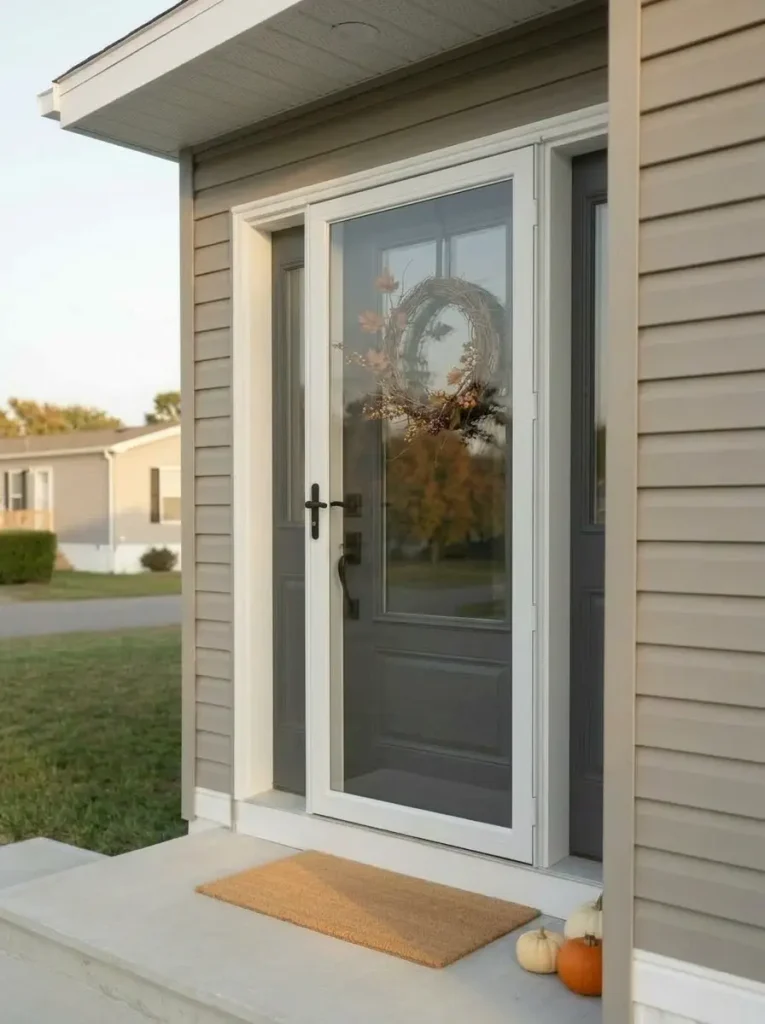
A storm door introduces a design problem that ordinary front-door inspiration often ignores: more than one visual plane can be visible at the same time. Decorate both aggressively and leaves, bows, hardware, reflections, frames, and door panels may all compete within a shallow space.
Use this short sequence:
- Choose the dominant plane. Decide whether the seasonal focal should visually belong to the main entry door or the outer storm-door layer.
- Close and operate everything normally. Make sure the chosen placement suits your own door setup and hanging method.
- View the entrance from outside. When one wreath already reads clearly through the transparent layer, avoid introducing another major ornament.
- Add floor décor afterward. A small low pumpkin group can finish the threshold; it should not rescue an unresolved two-door composition.
Stop signal: when the storm-door frame, wreath, second decoration, hardware, pumpkins, and a sign all register as separate competitors, remove one seasonal layer.
A transparent outer door can make restrained decorating feel richer because reflection and depth are already part of the view.
6. Use Sidelights as Breathing Space Around the Door
Sidelights already make a mobile-home entrance read wider than the door alone. That extra glass is valuable because it creates visual space without occupying an inch of the landing. Filling both sidelights with garlands, decals, signs, or hanging décor can erase that advantage.
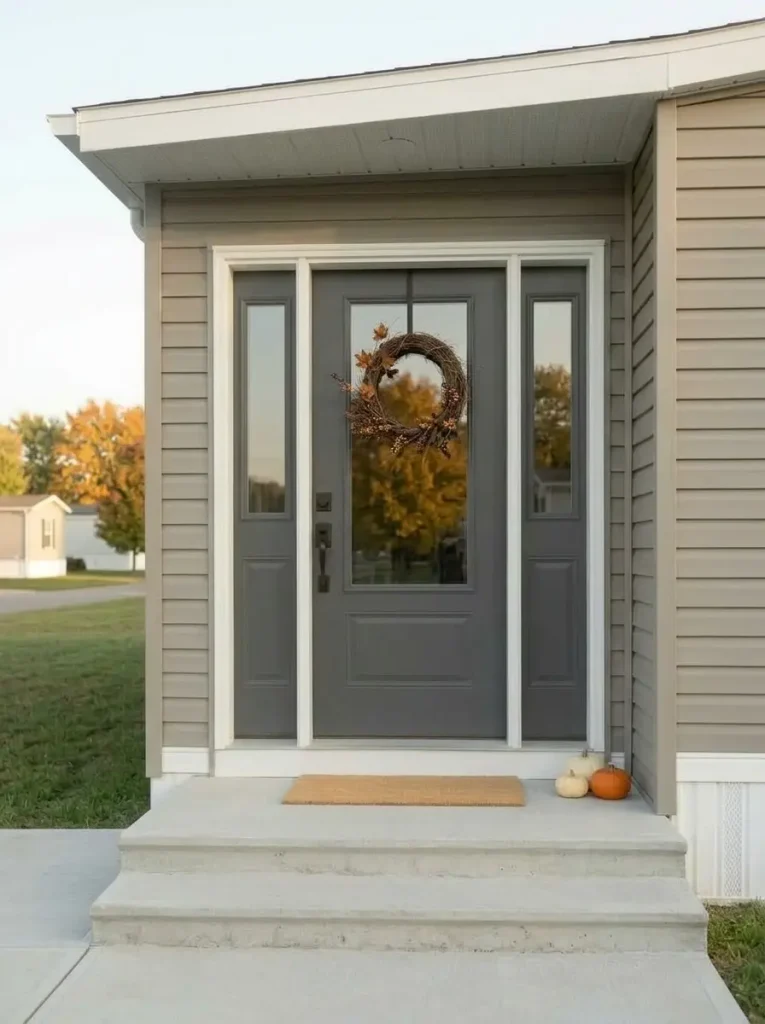
Keep the strongest seasonal element on the central door plane. Then stand at the walkway and look at the doorway as one composition. The wreath should register first, while the sidelights remain quieter areas of reflection and transparency.
A small accent near the threshold can balance the entrance where one side feels visually empty, but it does not need to mirror the other side perfectly.
Sidelight composition map
Let the glass widen the entrance without asking it to hold more décor.
When the central door already carries a readable autumn focal point, the transparent areas beside it can stay almost undecorated. Their emptiness is doing compositional work.
The decision test is straightforward: when removing sidelight décor makes the central wreath clearer and the entrance wider, leave the glass alone.
7. Build an Asymmetrical Top-Corner Swag When Floor Space Is Almost Zero
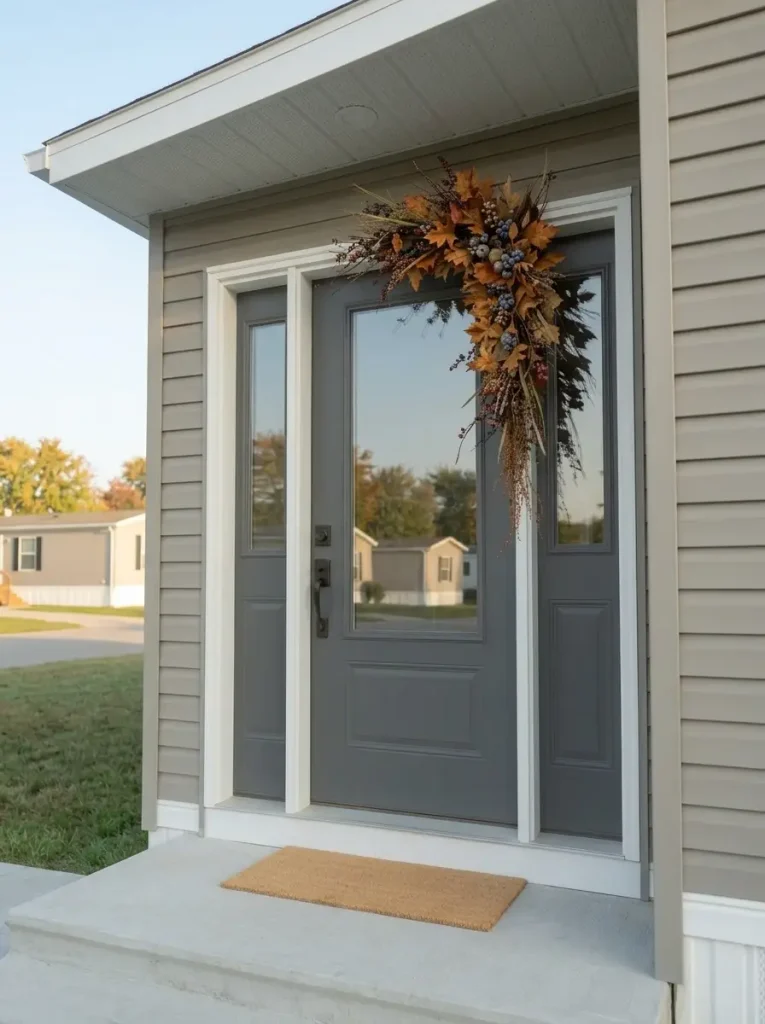
Some mobile homes have barely enough exterior landing space for the person opening the door, which makes pumpkin clusters and tall planters a poor starting point. Move the fall composition upward.
An asymmetrical swag can begin near one upper corner of the door or surrounding trim, gather most of its visual weight close to that anchor, then taper downward. Dried-looking leaves, fine branches, grasses, berries, and restrained ribbon work well because the silhouette can feel generous without becoming a solid block.
The important part is the taper. A swag that keeps the same thickness all the way down begins behaving like a full garland and can crowd the door visually.
Give the swag a heavy beginning, a lighter trail and a clear stopping point.
Use this approach when the entrance needs seasonal presence but the landing needs to remain almost completely open.
8. Use One Long Ribbon Tail to Visually Lengthen a Short Door
A wreath does not have to end where its foliage ends. One controlled ribbon tail can extend the eye downward and give a relatively short-looking door more vertical rhythm without adding another object to the stoop.
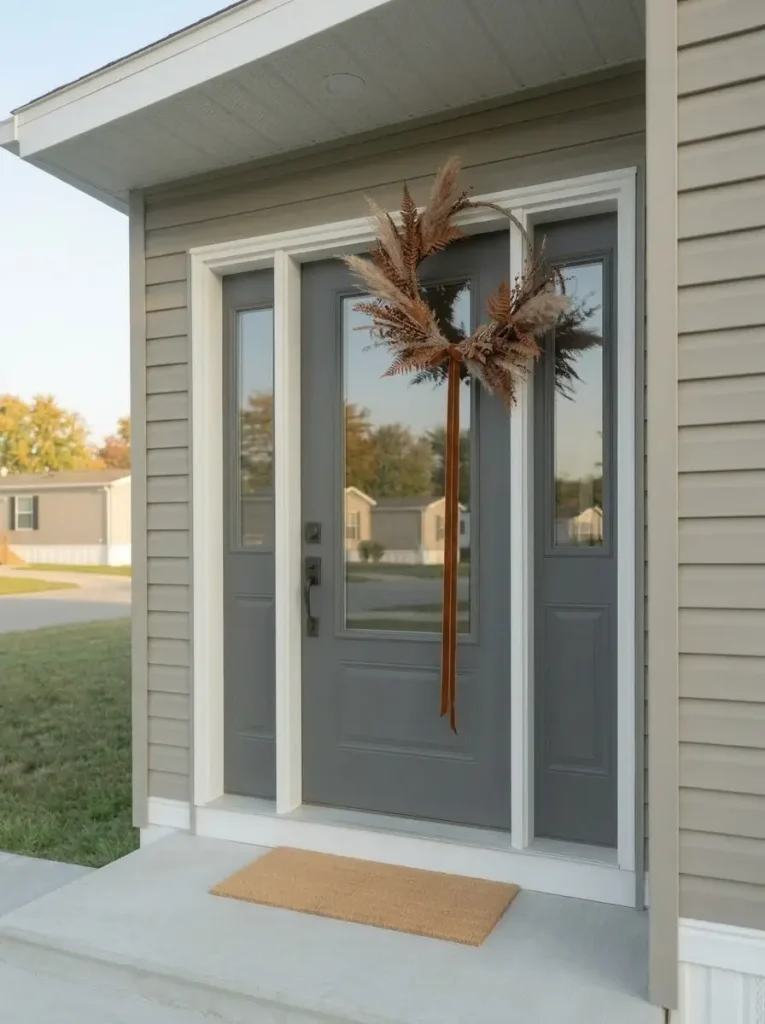
Keep the ribbon narrower than the wreath’s dominant mass and allow it to read as a single descending line. Velvet-look rust, tobacco brown, muted ochre, taupe, deep olive, or a subtle woven neutral can feel autumnal without turning the door into a gift package.
The useful contrast is between round foliage and vertical movement. A large bow with several curled tails adds volume; one longer, relaxed tail changes proportion.
Before settling on the length, close the door and view it from the walkway. The ribbon should extend the wreath visually while leaving the hardware area easy to read.
Skip the treatment where the tail repeatedly reaches the handle or bottom edge. The proportional effect is only valuable while the door still feels effortless to use.
9. Choose Wreath Contrast From the Door, Then Stop the Palette There
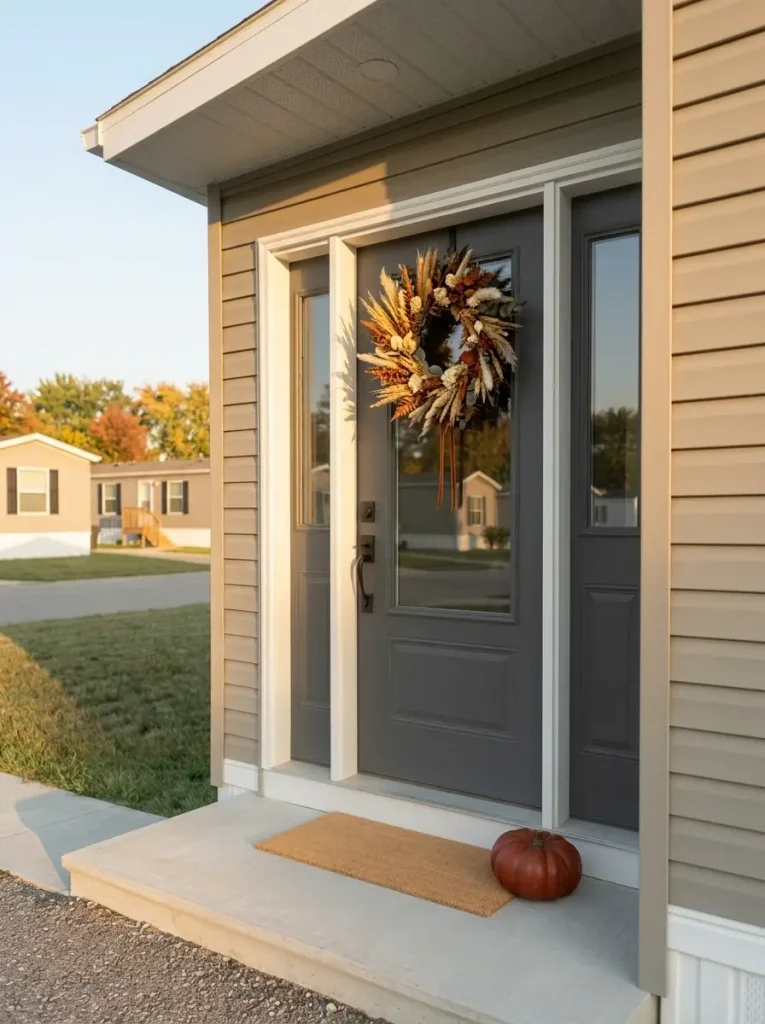
The door is usually the largest block of color in this small exterior composition, so let it decide the wreath’s contrast before introducing pumpkins, mats, ribbons, and flowers.
A charcoal door can carry cream, amber, wheat, copper, or muted orange beautifully. A light door may need deeper rust, burgundy, brown, olive, or dark twig texture to prevent the wreath from disappearing. Warm brown doors often respond well to ochre and subdued green, while blue or green doors can look especially polished with copper, muted persimmon, wheat, and natural brown.
The point is not to find a universal fall palette. It is to create enough separation for the wreath to read clearly, then repeat only one or two of those notes elsewhere.
Choose fall color from the door outward.
Select the closest door-color family. Each state changes which autumn notes create useful separation and which direction is more likely to disappear against the background.
Lift a dark door with warm light notes
Wheat, pale grasses, muted orange and soft cream establish enough value contrast for the wreath to remain legible from the walkway.
Give a pale door a deeper autumn outline
Burgundy, brown, olive and concentrated rust define the wreath against a light background while still feeling seasonal.
Separate warm brown with ochre and lighter natural texture
Wheat, ochre, muted green and small touches of cream keep the arrangement from merging into the door’s existing warmth.
Let copper and wheat bridge blue or green
Warm coppery orange sits clearly against cool painted doors, while brown and natural grasses keep the composition grounded.
Once the wreath separates clearly from the door, consider the palette finished. More color is optional.
10. Make the Wreath Hanger Look Like Part of the Door Hardware
A wreath hanger can become surprisingly visible on a compact front door because there may be very little surrounding architecture to distract from it. Treat that small strip of material as part of the door’s hardware story.
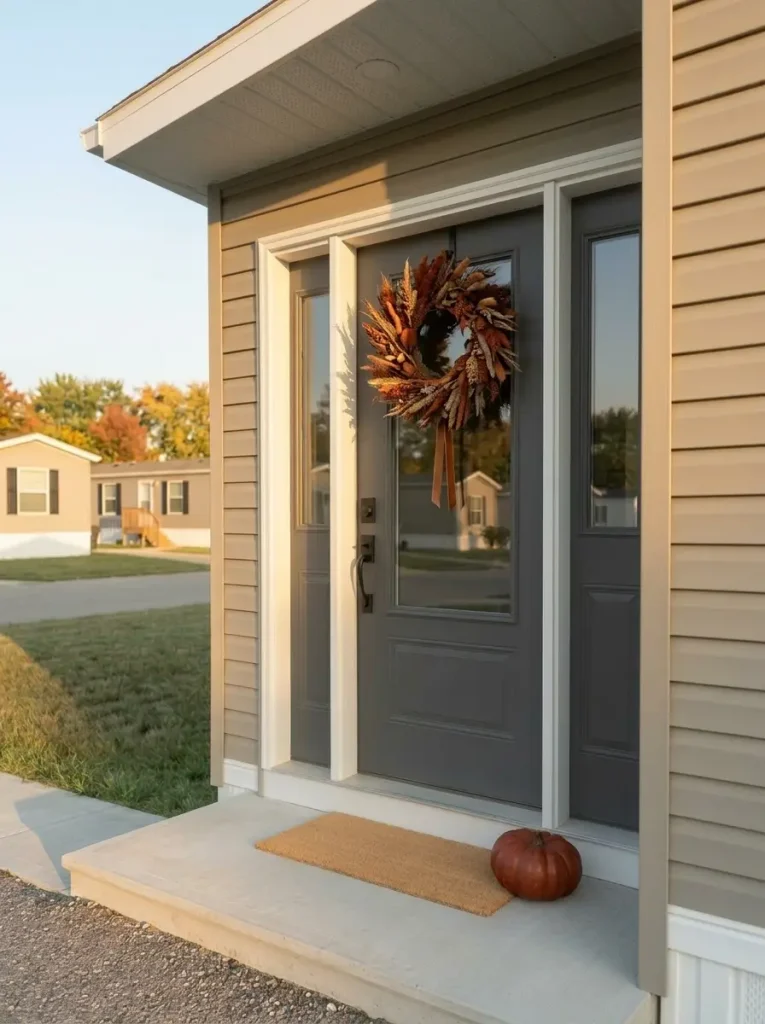
With black or dark bronze-looking handles, a dark hanger can visually recede. Warm brass-toned hardware may suit a warmer metallic finish. On a pale door, a bulky contrasting hanger can become the first line the eye notices above the wreath.
There is another option: make the suspension deliberately decorative. A restrained ribbon running from the wreath upward can feel integrated when its tone already exists in the arrangement.
Ask one question:
Does your eye notice the fall focal point first, or the mechanism holding it up?
When the hanger wins, either quiet its finish or make the suspension deliberately part of the composition.
Use an attachment method appropriate for your particular door, hanger, and product instructions rather than assuming every surface or door construction should be treated identically.
11. Soften a Brick Door Surround With Woven and Dried Textures
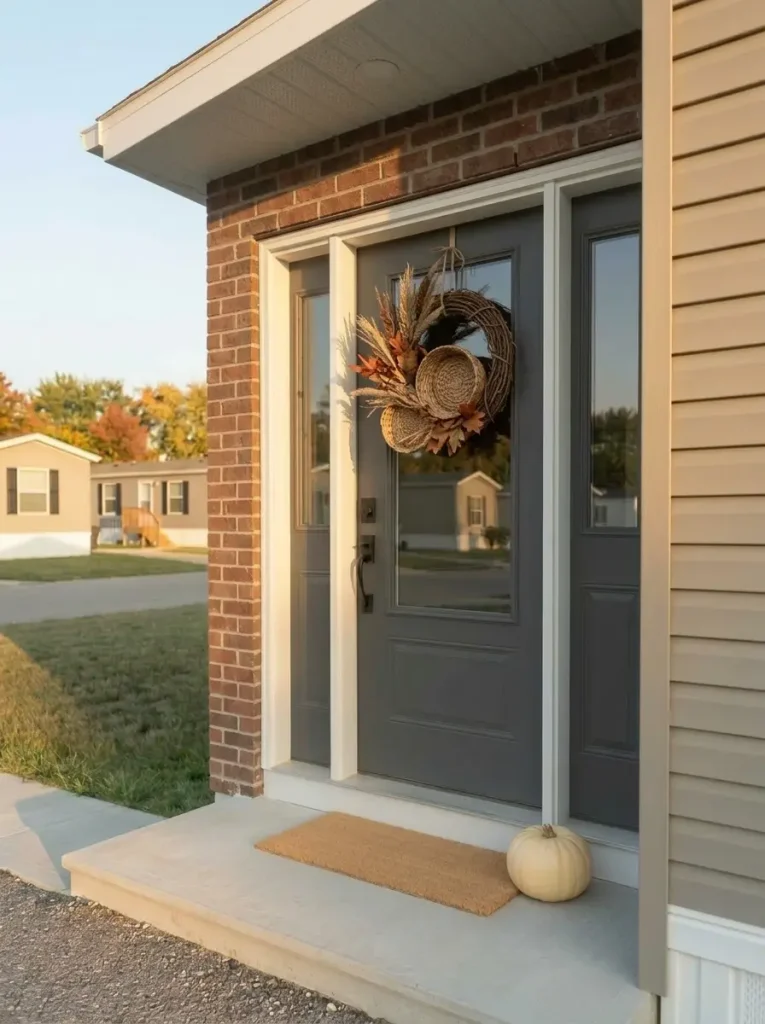
Brick already supplies variation before fall décor arrives: multiple colors, mortar lines, rough texture, and a strong repeating pattern. Adding many tiny leaves, miniature signs, berries, and patterned accessories can create more visual information than the doorway needs.
Try a quieter material contrast.
A grapevine-style wreath, dried grasses, shallow woven basket, muted foliage, or natural ribbon introduces larger organic textures against the small repeated units of brick. The eye can separate the seasonal element from the wall because the surfaces have different visual rhythms.
For a brick-front mobile home, hold the proposed wreath against the door and step far enough back to include the surrounding masonry. When the foliage fragments into dozens of tiny details against the brick, simplify the wreath silhouette.
One cream pumpkin or plain natural doormat can provide extra relief near the floor, but the brick does not require a large harvest collection to look seasonal.
Let the masonry provide the pattern. Give the fall décor the softer shape.
12. Keep Vinyl-Siding Entrances Cleaner With Fewer, Larger Shapes
Horizontal vinyl siding creates a strong set of repeated lines around many mobile-home entrances. Those lines are visually orderly, but several small fall accessories can quickly break them into a busy field.
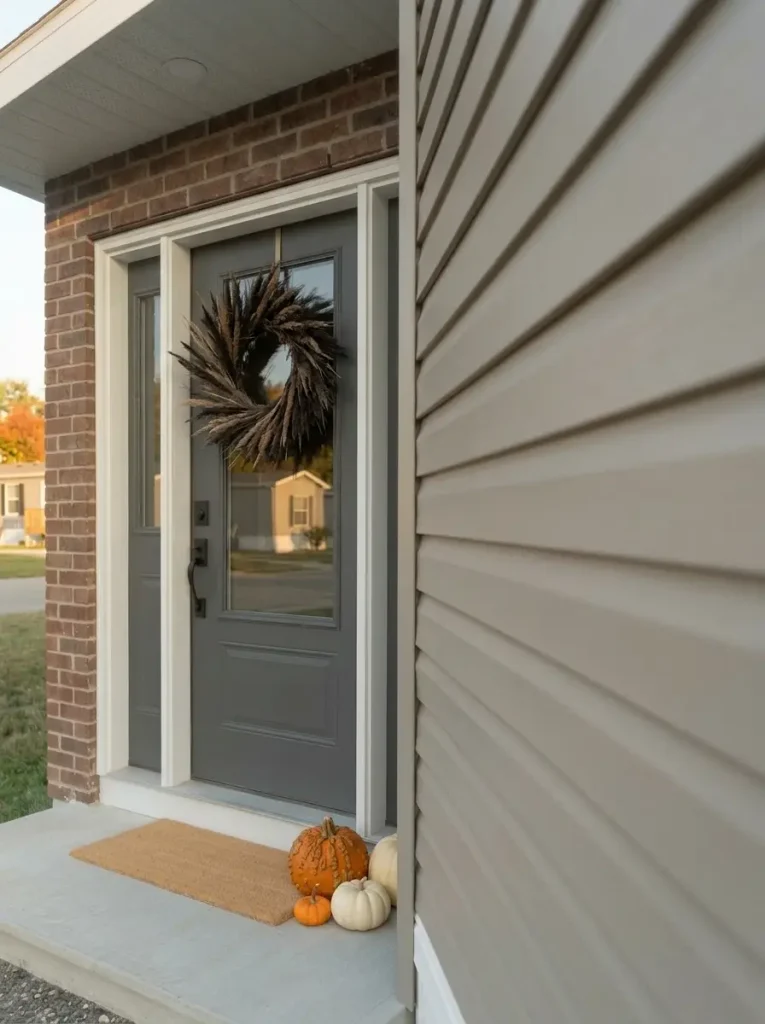
A cleaner approach uses fewer objects with stronger silhouettes.
Choose one wreath that reads from several steps away. Where the threshold needs support, add one low pumpkin grouping or a single container rather than scattering small seasonal pieces across both sides of the door.
Then examine where each silhouette ends against the siding. A tall narrow sign, several twig sprays, multiple lanterns, and an irregular wreath can all compete for the same vertical emphasis.
A simpler composition often gives the door more authority:
one focal element at eye level → one grounding element near the floor → open siding around them.
That sequence works especially well where the siding already supplies texture.
When the first impression is “front door” and the second is “fall,” the hierarchy is working.
13. On a Tiny Stoop, Move the Fall Story Onto the Door Plane
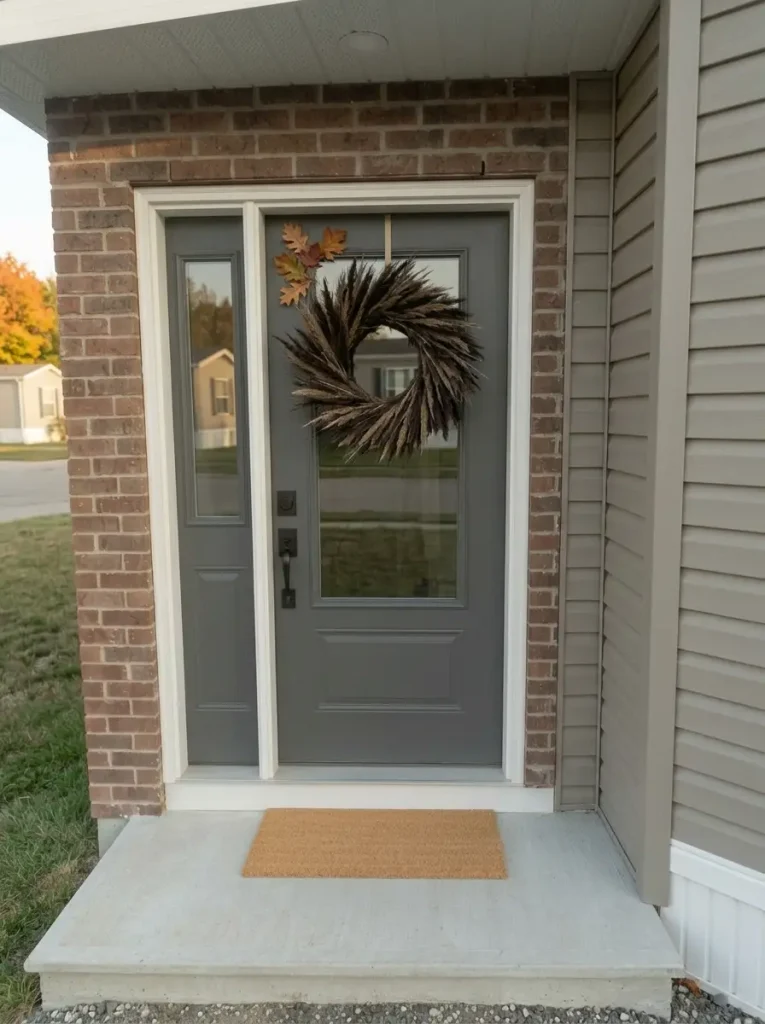
When a mobile home’s front stoop offers almost no spare floor area, the missing space does not have to become a decorating problem. Treat it as a signal to relocate the seasonal story.
The door, upper trim, hanging focal point, and mat can carry almost all the autumn character. Floor accents become optional.
Use the mapper below to identify what your threshold can reasonably support.
Open the condition that looks most like your entrance.
Almost no usable floor pocket
Move nearly everything upward. Use the wreath, basket, ribbon or upper-corner swag for seasonal character. Let the mat be the only low layer when the landing needs to stay completely open.
One small side pocket beside the door
Keep the floor accent on one side. A compact pumpkin grouping or one planter can visually ground the door without forcing matching objects into the opposite side of the walking area.
Small landing with a little breathing room
Use the extra area selectively. Build one clear door focal first, then add a low secondary element only where the entrance still feels easy to approach and operate.
A tiny stoop does not need to look incomplete. It needs a composition designed for a vertical surface instead of a deep porch.
14. For a No-Porch Entrance, Use a Wreath, Mat and One Low Pumpkin Group
A mobile home with a simple step-up entrance can still look intentionally decorated for fall. The strongest version usually needs fewer layers because there is no porch architecture to hold a large display together.
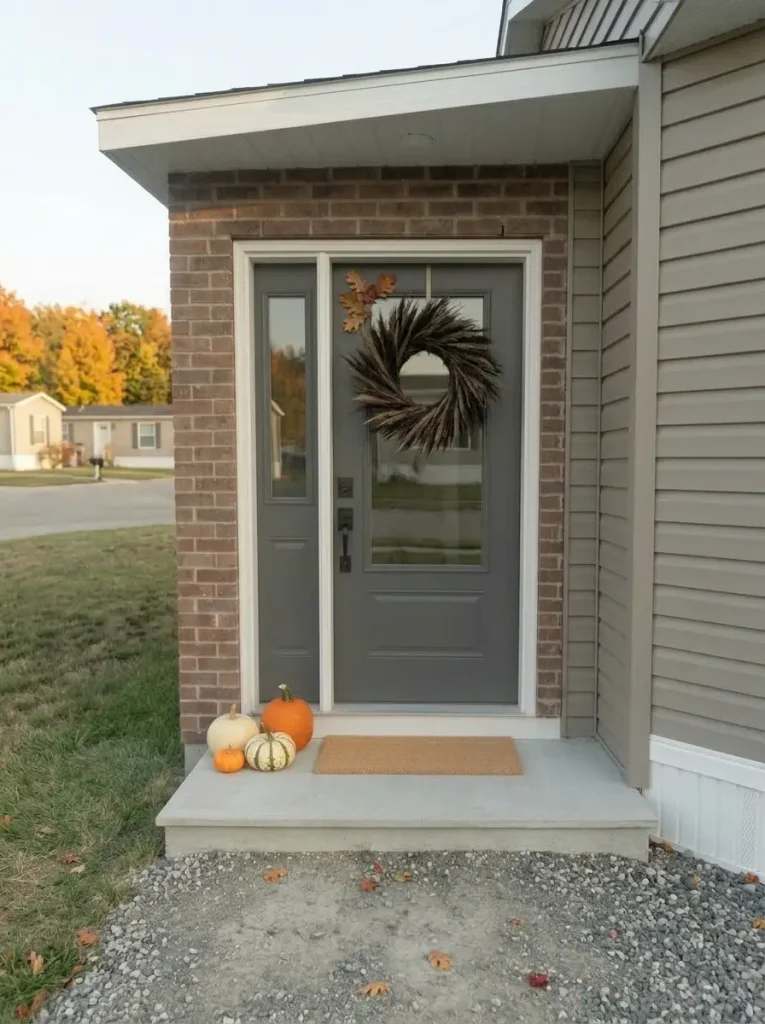
Start with three levels:
- Eye level: one wreath, hanging basket, or swag on the door.
- Ground plane: a clean seasonal or neutral doormat.
- Low side note: a small pumpkin group placed outside the natural approach.
That gives the eye a clear downward progression without turning the step into storage for seasonal objects.
Keep the pumpkin group compact. Combining one medium pumpkin with a smaller companion often reads more naturally than lining several pieces along the entire threshold. A pale pumpkin can also provide contrast where the door and mat are dark.
Now imagine the pumpkins removed. When the door and mat already create a complete entrance, the floor grouping is only an accent.
On an especially tight approach, stop at two levels. A wreath plus mat can be enough.
15. Brighten a Dark Door With One Pale Counterpoint, Not a White Theme
Dark charcoal, black, espresso, and deep green doors make rich autumn colors look sophisticated, but rust, burgundy, and brown can all lose definition when the whole arrangement stays equally dark.
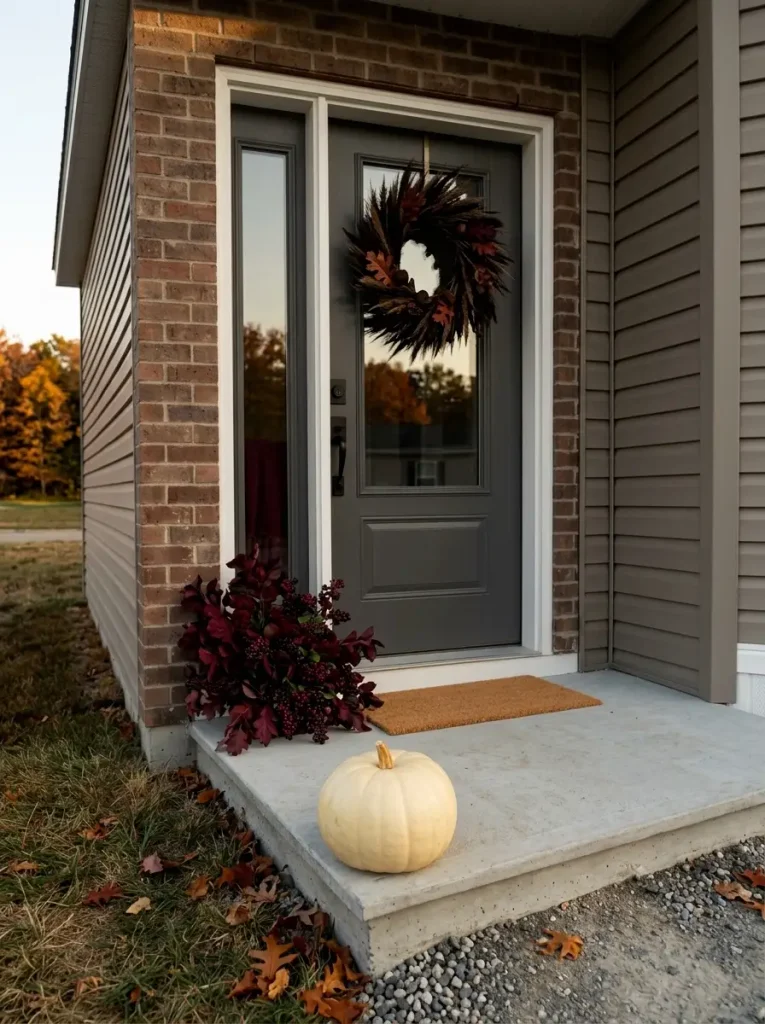
Introduce one pale counterpoint.
It might be a cream pumpkin below the door, a few pale dried-looking grasses inside the wreath, a warm ivory ribbon, or a small cluster of off-white flowers. Its job is to provide a visual pause—not to convert the entrance into a neutral fall scheme.
Try covering the pale element with your hand while viewing the setup from several steps away. Does the door suddenly feel flatter or heavier? When it does, the contrast is earning its place.
When several cream objects begin competing with one another, choose the strongest one and remove the extras.
The dark door should remain the dramatic backdrop. One light note simply gives the eye a point of relief before it moves through the deeper autumn colors.
16. Add One Tall Mum or Grass Cluster Only When the Door Needs More Height
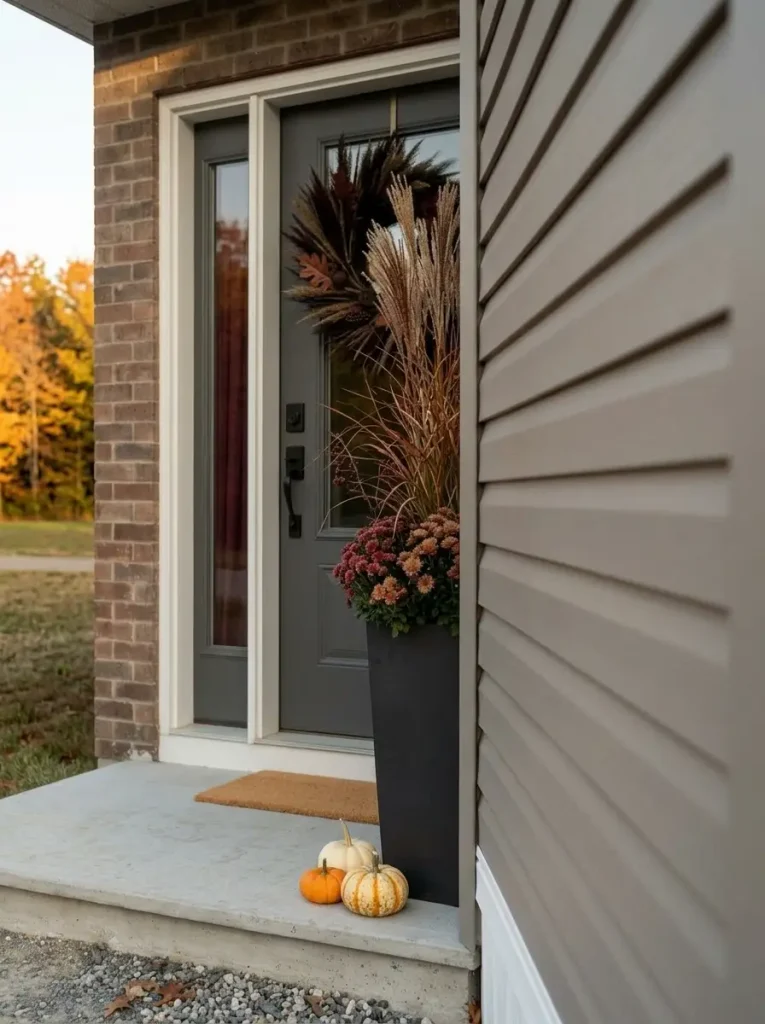
A planter beside the front door can solve a proportion problem, but every fall entrance does not automatically need one.
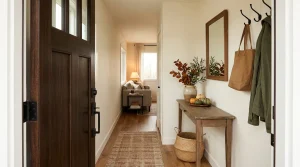
Stand back and compare the wreath to the entire doorway. Where all the visual interest is concentrated near the middle and the entrance feels short or bottom-heavy, one taller mum, grass arrangement, or upright foliage cluster can extend the composition vertically.
Place it on the side with the better floor pocket. An asymmetrical arrangement is often more believable on a compact mobile-home entrance than forcing a second container onto the tighter side.
Use the planter as support for the door, not as the beginning of a porch-wide display. Once pumpkins, crates, multiple pots, lanterns, hay bales, and step styling become the primary project, continue with StylishGalore’s dedicated fall mobile home porch decorating guide.
The decision comes down to proportion: add the tall accent when it improves the doorway’s vertical balance. Otherwise, keep the floor quieter.
17. Keep the Handle, Lock, Doorbell and Swing Path Out of the Decoration Zone
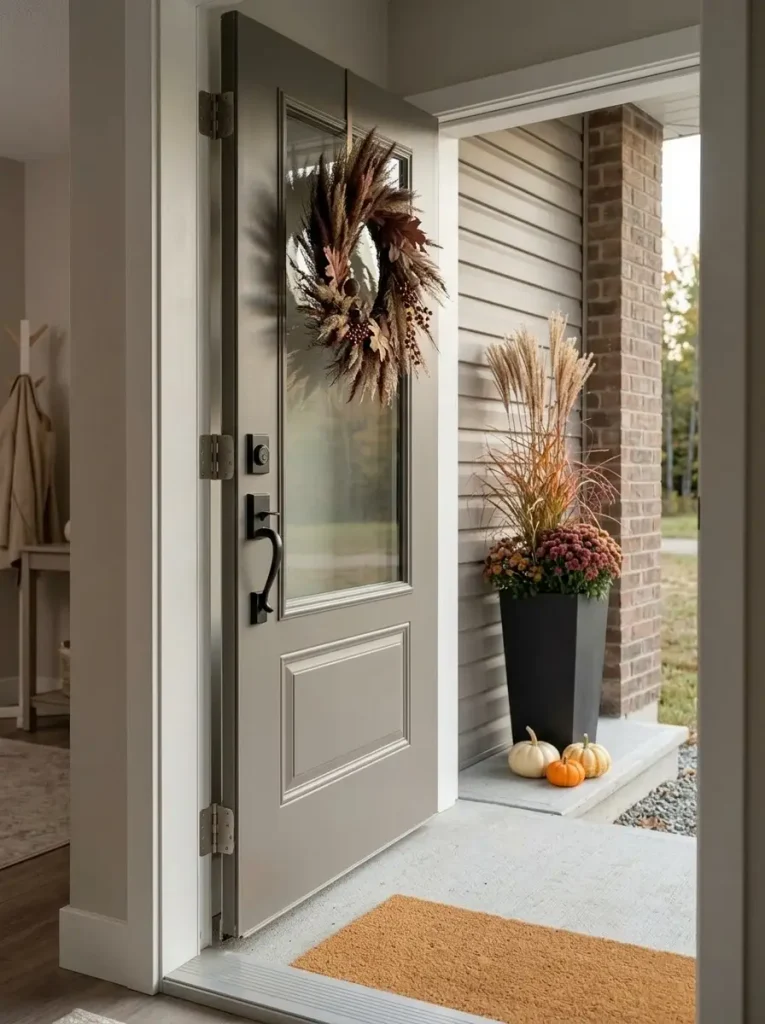
A front-door arrangement is successful only when the entrance still behaves like an entrance. On a compact mobile home, decorative pieces sit close to the places hands, feet, bags, deliveries, and the moving door already use.
Before calling the setup finished, inspect three routines separately: opening, reaching, and walking.
Test the entrance through the routines that actually happen here.
Switch between the three checks. The highlighted zone changes because opening a door, reaching for hardware and walking through the threshold create different conflicts.
Watch the moving edge
Open the door as you normally would and notice which floor pieces or hanging elements enter its path. Decorative objects that repeatedly require adjustment have occupied functional space.
Protect the everyday reach area
Use the handle, lock and nearby doorbell exactly as you normally do. Long ribbon, loose branches or nearby objects should not turn a simple reach into an avoidance maneuver.
Keep the approach psychologically open
Walk through with a bag or parcel in hand. Floor décor belongs outside the natural arrival line, particularly where a compact landing gives little room to correct your step.
For the inside half of the arrival sequence, continue with StylishGalore’s small fall entryway ideas for mobile homes.
Once the door can open, hands can reach, and someone can enter naturally, the space that remains is the genuine decorating zone.
18. Design the Door for Evening With Warm Existing Light and Shadow
A front door that looks layered at noon can flatten after sunset. Dark wreaths may disappear against dark doors, fine branches can lose definition, and a display built mainly from similar mid-tone oranges can merge into one shape.
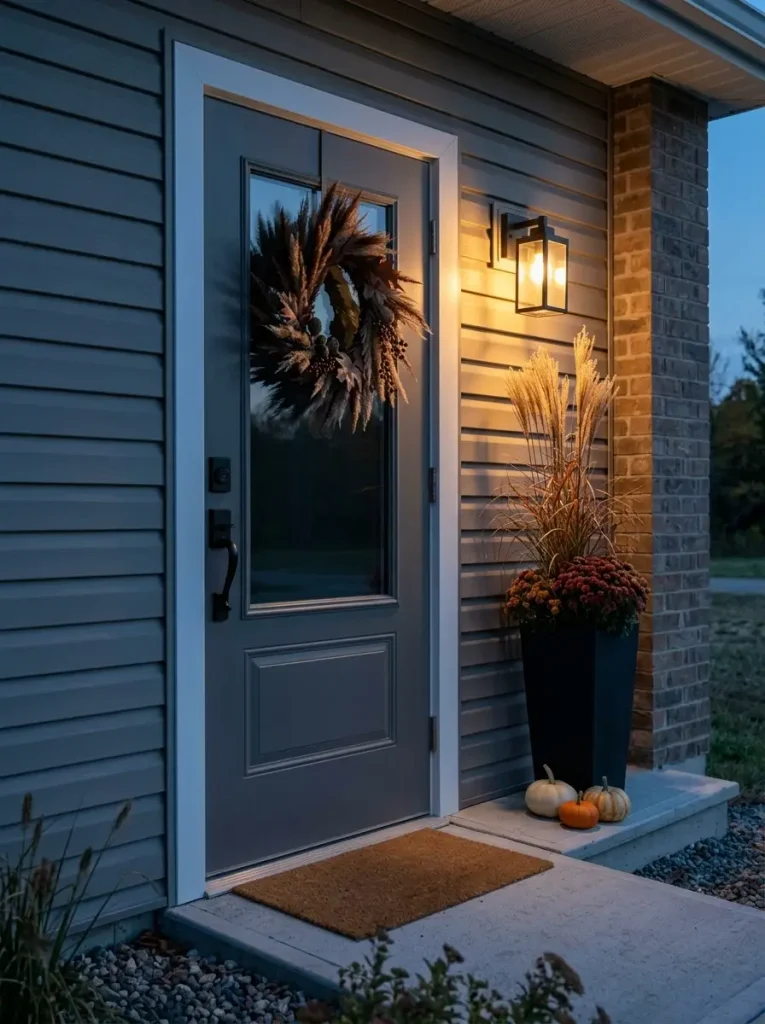
Check the entrance again with the existing exterior lighting on.
Notice where that light already falls. Dried grasses and irregular wreath edges may become more visible when their texture catches light from the side. A pale pumpkin near the lower edge of the doorway can provide enough contrast to make the ground plane easier to read. Highly reflective ribbon or glossy surfaces may also become more prominent than they appeared during the day.
Do not assume another fixture is necessary. Begin by moving or editing the décor already present.
View the door from the normal approach after dusk. Identify the first recognizable seasonal shape. When nothing separates from the door, introduce one lighter texture or clearer silhouette.
The evening composition should still feel like the same carefully edited entrance.
19. Photograph the Door From the Walkway and Remove the First Competing Element
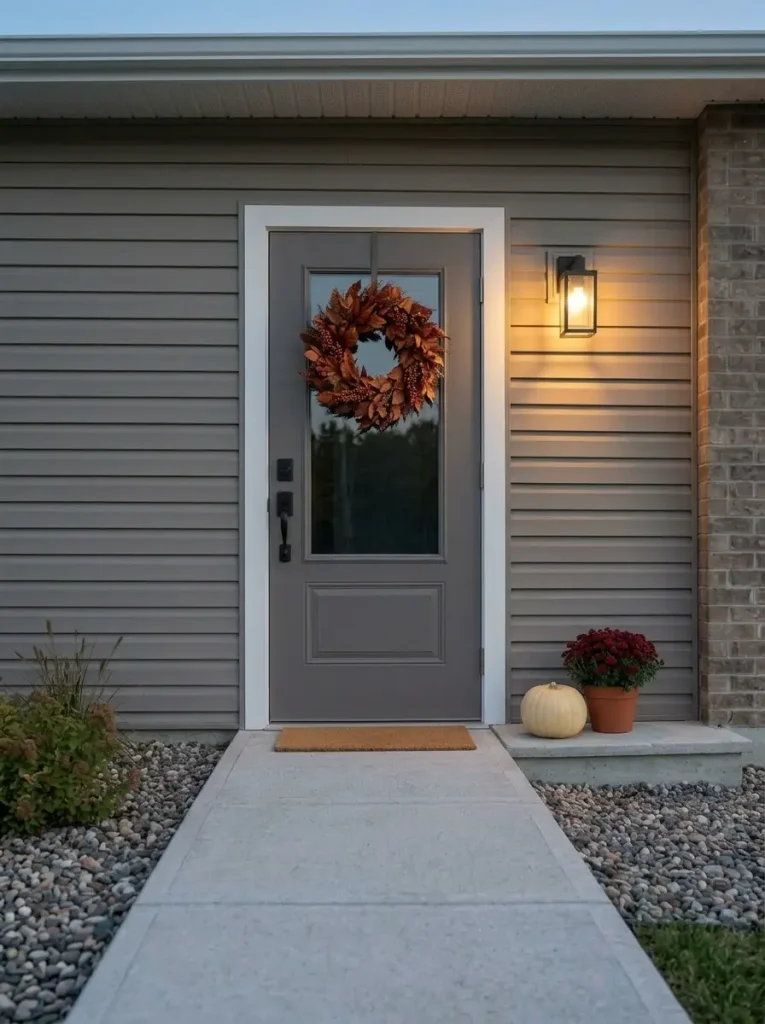
Your eye adapts quickly to décor while you are arranging it. A phone photo interrupts that familiarity and compresses the entire entrance into one frame, which can make hierarchy problems easier to notice.
Stand where a visitor would first get a clear view of the door. Take a straight photograph without trying to make the setup more flattering. Then ask one question:
What competes with the front door first?
It may be a sign, bright planter, second wreath-like shape, too many pale pumpkins, a large lantern, or a floor grouping extending too far across the threshold.
Remove one competitor before you add one more fall accessory.
The bright side block represents the first element competing with the door. Toggle the edit to see what happens when that distraction disappears.
Make that same removal in the real setup, photograph the doorway again, and compare the two images. When the edited version makes the entrance easier to read, stop decorating.
To evaluate the door as part of the siding, windows, roofline, landscaping, and complete curb-facing composition, continue with StylishGalore’s fall mobile home exterior decor guide.
Final Thoughts
The strongest fall mobile home front door ideas do not depend on squeezing a farmhouse porch display into a smaller footprint. They make the actual door more expressive by working with its glass, color, panels, hardware, surrounding material, and available threshold space.
Give the door one unmistakable seasonal focal point first. Protect the areas that still need to remain visually clear and easy to use, then add only the support the composition genuinely needs.
Before buying another pumpkin, planter, ribbon, or sign, step back to the walkway and look again. A compact mobile-home entrance often becomes more polished when the final decorating decision is subtraction.