

A fall window box can do more for a mobile-home exterior than add seasonal color. Positioned beneath a modest window, it becomes part of the façade itself, so scale, height, siding color, trim and the spacing between windows matter almost as much as the plants you choose.
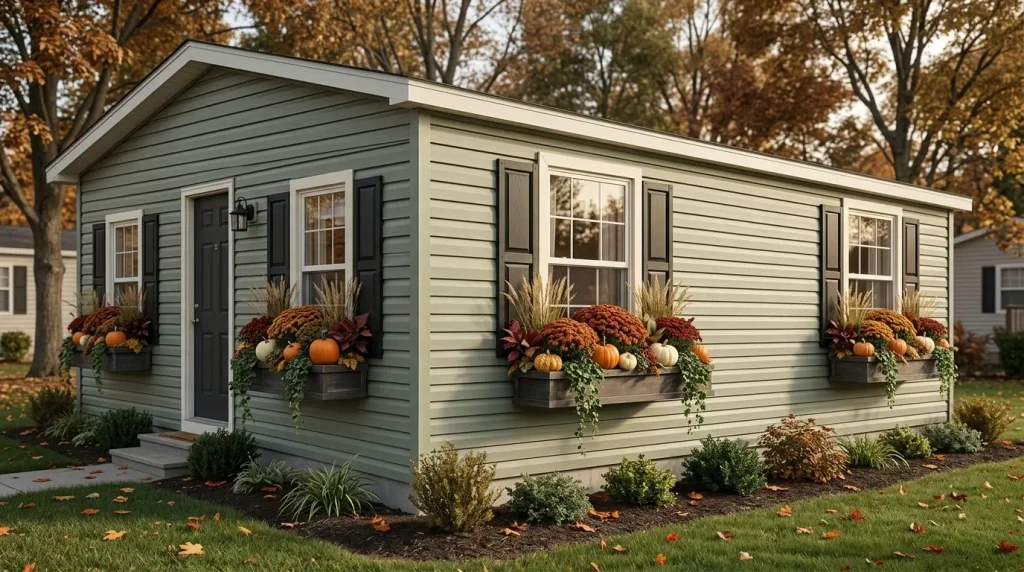
The strongest fall window box ideas for a mobile home usually combine three things: enough vertical texture to give the window presence, a fuller middle layer of mums or foliage, and a softer lower edge made with pumpkins or trailing greenery. The challenge is keeping that combination lush without making a shallow window, long wall or closely spaced set of windows feel overloaded.
The 15 ideas below move from proportion and planting structure into color, repetition, seasonal transitions and container finish. Use them as adaptable compositions rather than rigid recipes. A box beneath one narrow single-wide window may need a very different balance from three coordinated boxes across a double-wide façade.
1. Match the Window Box to the Window Before You Choose a Single Mum
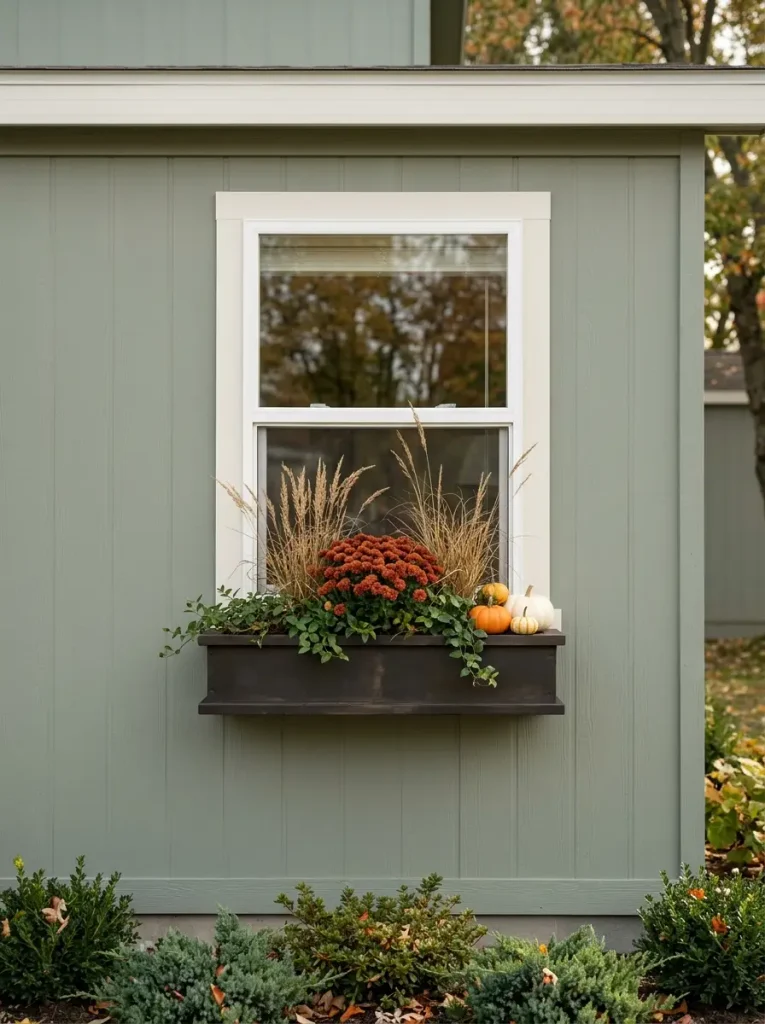
The first decision is not orange versus burgundy mums. It is whether the box looks visually connected to the window above it.
On a mobile home, an oversized arrangement can make a modest window appear even smaller, while a planter that feels too slight may disappear against a long run of siding. Stand far enough away to see the window, trim and surrounding wall together. The box should appear to belong to that opening, not like an unrelated seasonal shelf.
Use the window itself to control density. A compact opening benefits from cleaner edges and fewer competing plant masses. A broad window can support more repetition, while several windows often look more intentional when their boxes share a visual language without becoming exact copies.
The practical decision comes before shopping: determine how much visual weight the window can comfortably carry, then build the planting to that scale.
Window Box Fit Studio
What kind of window are you decorating?
Choose the condition closest to your exterior. A compact opening, a broad window and a repeated façade need different visual weight.
Keep the silhouette edited
Start with one strong mum mass, limited height and a small pumpkin accent. Breathing room around the trim keeps the window as the architectural anchor.
Priority: clarity before fullness.
Use a wider visual rhythm
A broad opening can carry repeated flowers, two height moments or a low pumpkin grouping. Spread the composition instead of piling everything at the center.
Priority: distribute visual weight.
Coordinate the façade, not every stem
Repeat one or two ingredients across the boxes, then vary pumpkin placement or trailing foliage so the windows feel related without looking cloned.
Priority: rhythm with controlled variation.
2. Build the Box in Three Layers: Grasses High, Mums in the Middle, Trailing Greens Low
A full fall planter becomes easier to control when you stop thinking about individual decorations and build a single readable silhouette.
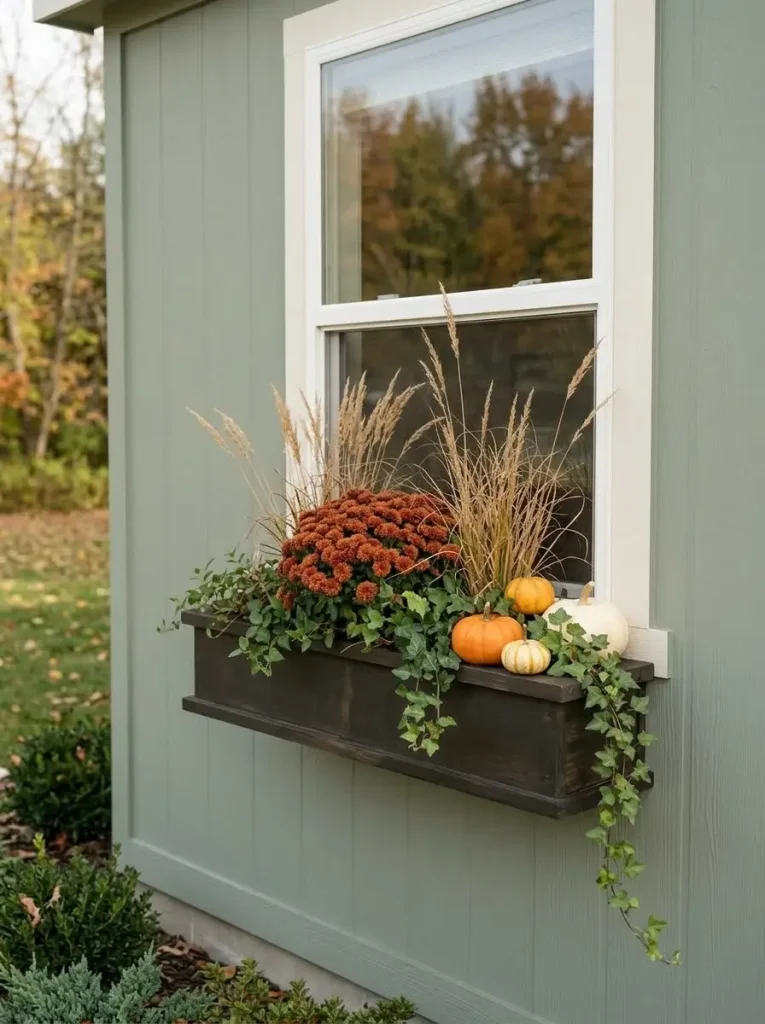
Begin at the back with the lightest vertical material: ornamental grass, wheat-colored stems or loose branches. That upper layer should frame the window without creating a dense wall. Give the middle of the planter most of its visual mass with rounded mums, foliage or ornamental kale. Finally, allow ivy or another trailing plant to cross the lower edge in a few places.
This arrangement is especially useful beneath mobile-home windows because the layers introduce depth against a relatively flat exterior wall. From farther away, the eye reads one composition: airy above, substantial through the center and relaxed along the bottom.
If all three zones compete equally, simplify one. Clear hierarchy usually looks richer than maximum fullness.
Three-Layer Box Anatomy
Build one silhouette, not a collection of decorations
Read the planter from top to bottom before adding extra seasonal pieces.
Editing rule: if all three layers demand attention at once, simplify one. A clear silhouette can look fuller from a distance than a planter filled with unrelated pieces.
3. Nest One Pumpkin Cluster Into the Plants Instead of Filling Every Gap
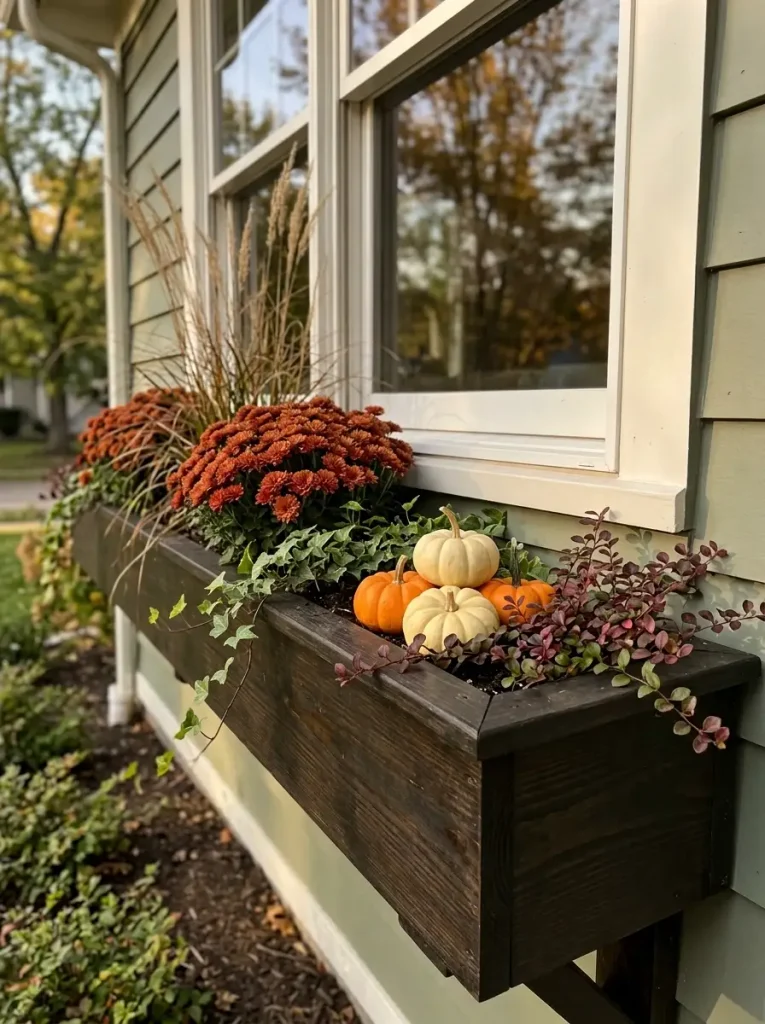
Picture two otherwise similar window boxes. One has miniature pumpkins tucked into every open patch. The other uses a small pumpkin grouping slightly off center, surrounded by mums and foliage. The second composition gives the eye a clearer destination.
Treat pumpkins as a focal accent, not mandatory filler. Nest them into the lower third of the planting so they appear to emerge from the foliage rather than sit in a row along the front edge. Varying the sizes or mixing one pale pumpkin with warmer orange tones can make the group feel collected rather than arranged by formula.
This restraint is particularly useful beneath smaller mobile-home windows, where too many separate objects become visual noise quickly.
Once the pumpkin cluster is immediately readable from several steps away, stop. Empty space around it can make the focal point stronger.
4. Use Ivory Pumpkins and Wheat-Toned Grasses to Lift Dark Siding
Dark brown, charcoal, deep green or heavily shaded siding can absorb rust and burgundy when every ingredient falls into a similar tonal range.
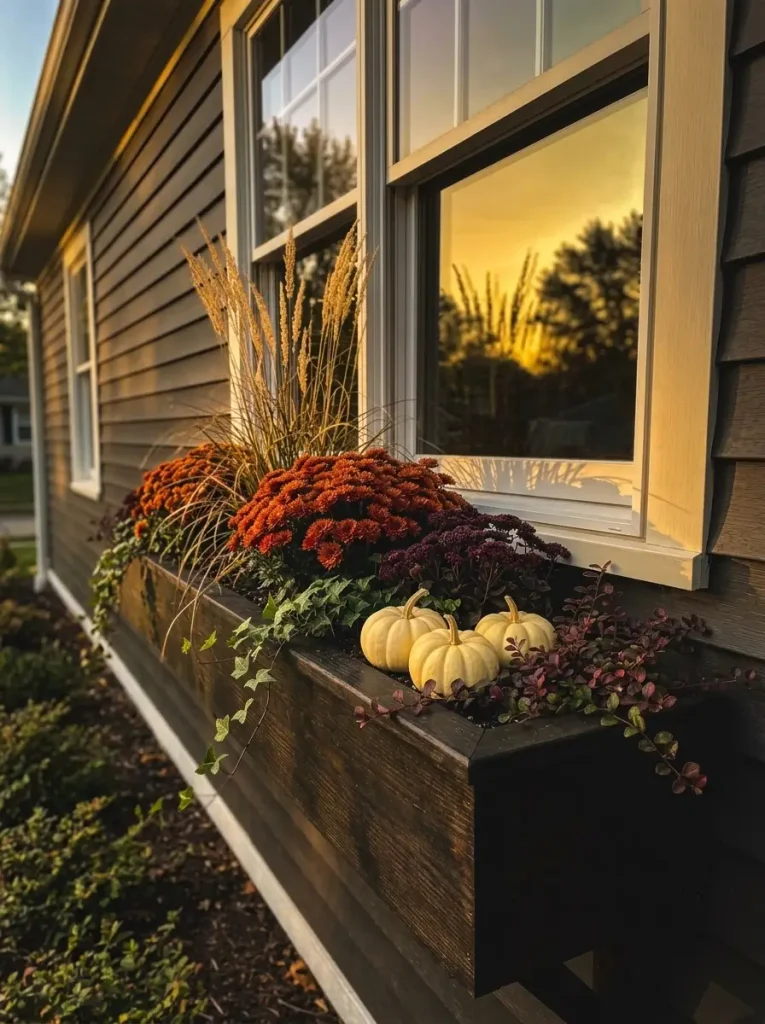
Introduce pale accents where the planter needs separation. An ivory pumpkin placed low among darker foliage creates a distinct focal point, while wheat-toned grasses lighten the upper silhouette without turning the arrangement into a white theme. Warm orange or coppery mums can bridge those lighter notes back into the rest of the fall palette.
The contrast works across several levels of the box: pale stems catch the eye above, deeper flowers create mass through the middle and a light pumpkin punctuates the base.
Keep the pale pieces selective. When nearly every pumpkin and stem becomes cream, the arrangement loses the dark autumn depth that gave those accents their impact.
Choose this approach when the box visually disappears into the wall, not simply because white pumpkins are seasonal.
5. Warm Pale Vinyl Siding With Rust Mums, Burgundy Leaves and Deep Green
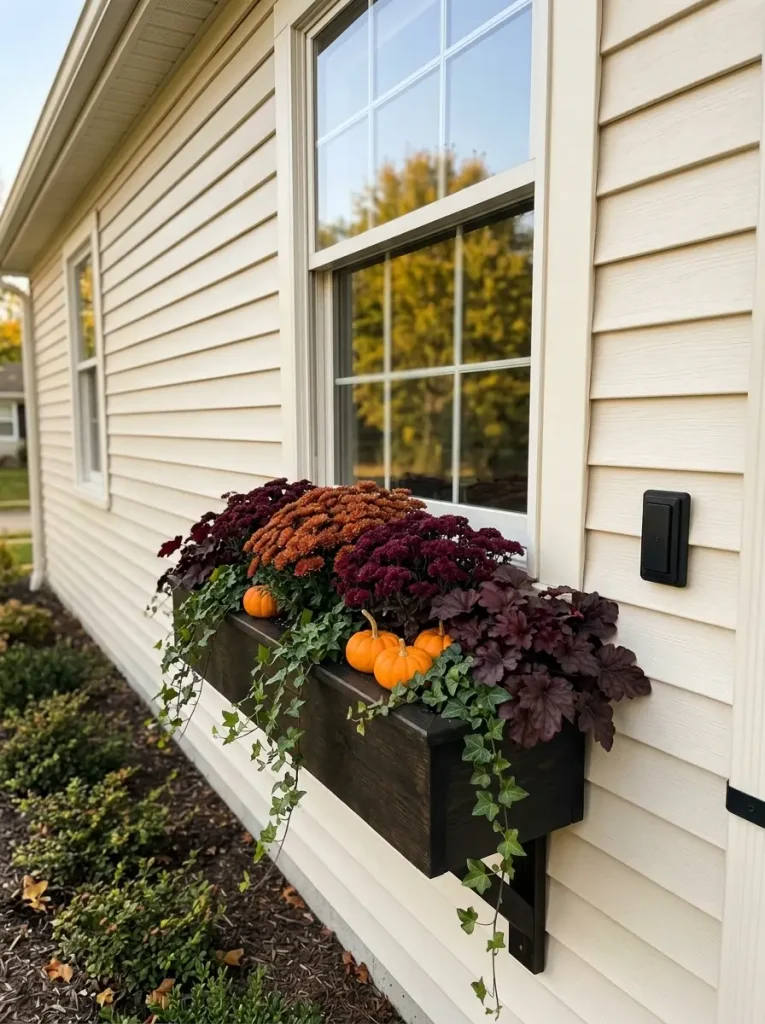
Light beige, cream, pale gray or muted vinyl siding gives a fall window box plenty of visibility, but bright orange alone can appear detached from such a large neutral wall.
Build a deeper bridge between planter and façade. Rust mums provide seasonal warmth, burgundy foliage contributes a darker intermediate note, and deep green gives the composition enough weight to retain its shape from farther away. Small orange pumpkins can then work as highlights instead of carrying the entire color story.
This mix is particularly useful where the window trim is also white or cream. Darker foliage separates the arrangement from the trim and prevents the flowers from visually dissolving into the opening.
Before buying another bright color, compare the box with the full window area. If the flowers are the only saturated feature, deepen the foliage first. The decision is about contrast structure, not the number of fall colors present.
6. Make a Narrow Window Box Look Intentional With an Asymmetrical Fall Cluster
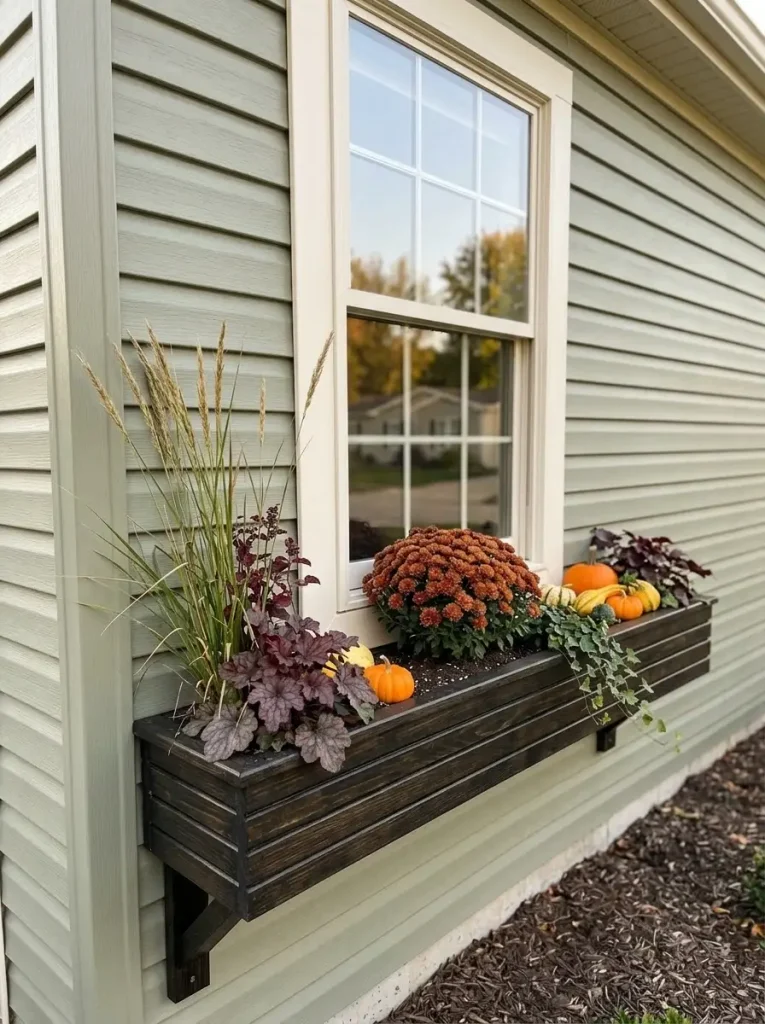
A narrow window does not require a perfectly mirrored arrangement to look finished. Strict symmetry can actually make a small box feel tighter because every ingredient fights for equal space.
Let one side carry the strongest vertical gesture—perhaps a loose cluster of ornamental grass—then position the fullest mum slightly toward the center. A small pumpkin group or lower foliage mass can balance the opposite end without copying the height.
Leave visible breathing space between the major ingredients. On a compact window, those gaps allow each element to register as part of one composition instead of merging into a dense strip of color.
Choose asymmetry when the planter is narrow, shallow or surrounded by strong siding lines. A more formal symmetrical arrangement can still suit a window framed by prominent matching shutters, but it should be a response to the architecture rather than the default layout.
7. Repeat Window Boxes Down a Single-Wide Façade Without Making Them Identical
A single-wide exterior often presents one long horizontal field. When several windows sit along that wall, coordinated fall boxes can create rhythm, but exact duplicates can make the façade feel staged.
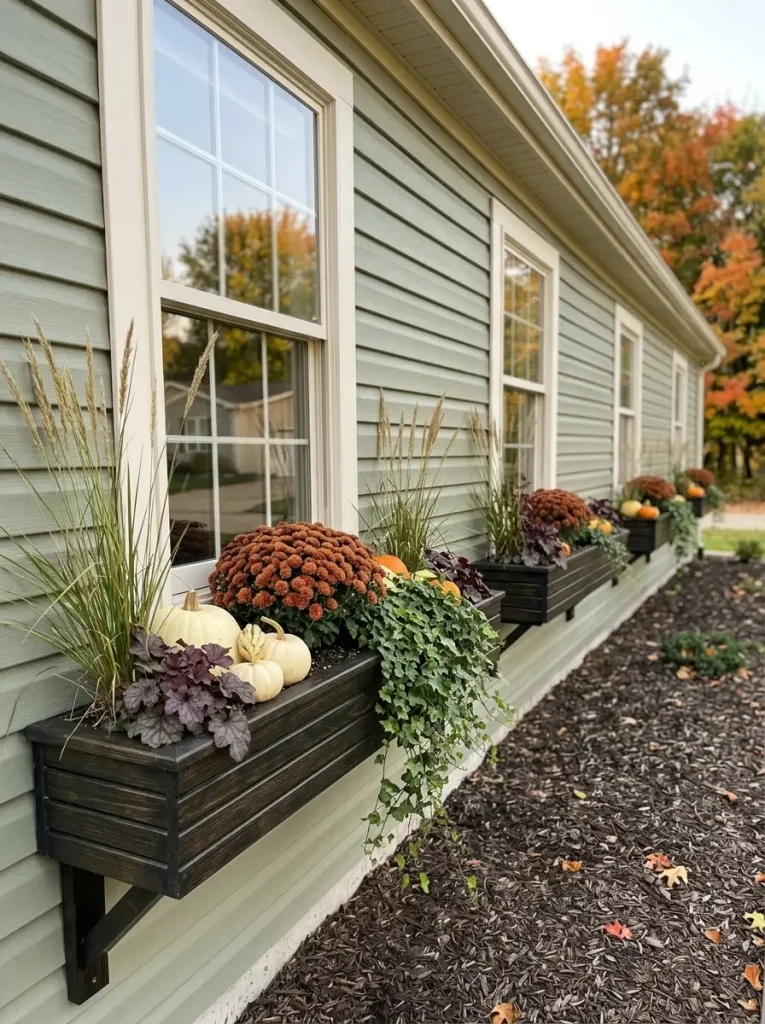
Select two anchor ingredients to repeat across the windows. Rust mums and wheat-colored grasses might become the common thread. Then change one supporting feature in each box: pumpkin position, trailing foliage, grass height or the proportion of burgundy leaves.
The repeated ingredients allow the eye to connect the windows before it notices the differences.
When you want to carry that seasonal rhythm beyond the window area, continue with StylishGalore’s broader exterior guide rather than turning the window boxes into a whole-house decorating system. Fall Mobile Home Exterior Decor: A Cozy Curb Appeal Makeover
Façade Rhythm Mapper
How much repetition should your window boxes use?
Choose a rhythm based on how repetitive the windows already are. Connect the boxes without turning the entire wall into one repeated template.
8. Balance Two or Three Double-Wide Windows With Related, Not Cloned, Arrangements
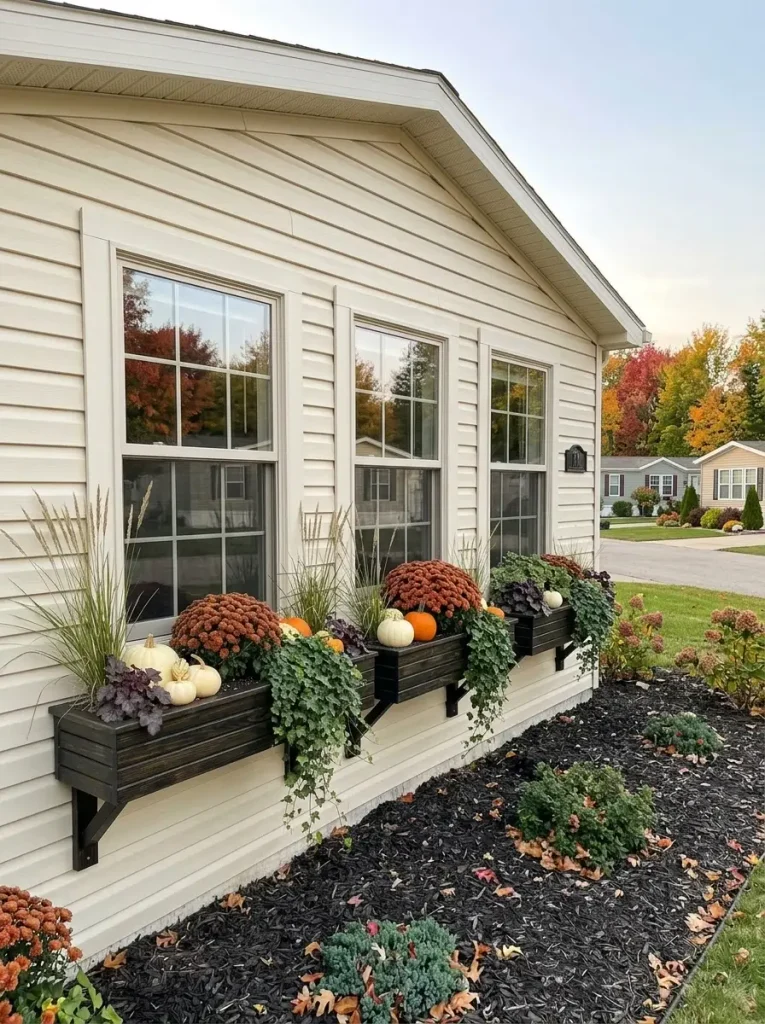
A double-wide can provide enough façade width for several substantial windows, so each box does not need to perform the same role.
Give the most prominent opening the fullest arrangement. That box might carry the strongest grass height or clearest pumpkin grouping. A second window can repeat the same mum color with less vertical texture, while a third uses more foliage and fewer seasonal accents.
The shared palette connects the boxes; the changing density establishes hierarchy.
Think of one box as the primary seasonal moment, one as support and another as the quiet version. This prevents three equally elaborate arrangements from competing across the wider façade.
Choose the primary box based on the architecture already present—such as the larger window or the opening nearest the entry—not merely because one planter happens to be easiest to reach.
9. Use Ornamental Grasses at the Ends When a Short Window Needs More Presence
A low or visually modest window can make a planter filled only with round mums and pumpkins look squat.
Place ornamental grasses or wheat-like stems toward the outer areas of the box and allow them to rise above the central flower mass. The additional height creates a taller visual frame while leaving enough of the glass and trim exposed to keep the window recognizable.
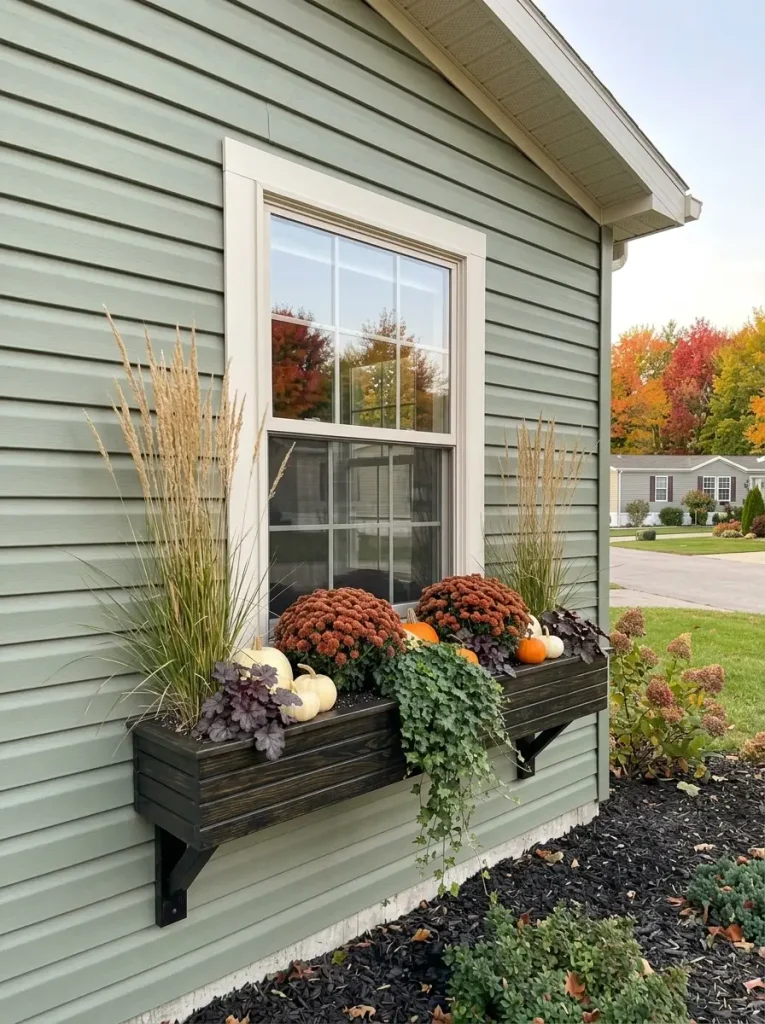
For a relaxed arrangement, let the two grass clusters reach slightly different heights. A window centered between strong matching shutters can tolerate a more balanced treatment because the surrounding architecture already provides structure.
Judge the stems from farther away, not while standing beside the planter. If they appear to extend the composition upward and make the window feel better proportioned, keep them. If they resemble two detached towers, reduce their density or loosen the outline.
Height should improve the window’s proportion, not simply make the arrangement larger.
10. Let Ivy and Trailing Foliage Break the Hard Horizontal Edge of the Box
A rectangular planter beneath horizontal siding introduces another long straight line. Trailing greenery can interrupt that geometry without requiring another color or decorative object.
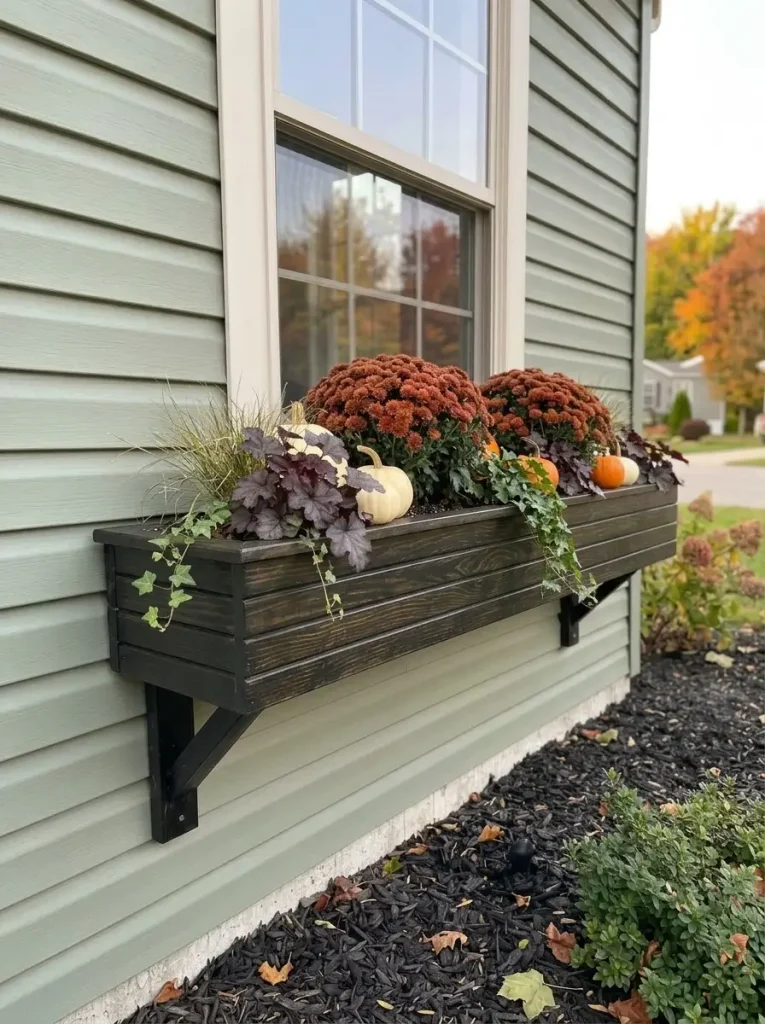
Allow ivy or another draping plant to cross the front edge at a few irregular points. Those downward movements create visual relief and help the planting feel less like a solid rectangular block attached beneath the window.
There is an important difference between softening the planter and hiding it. Enough of the box should remain visible for its shape to register. When foliage covers almost the entire front edge, the arrangement can become visually heavier and the trailing layer loses its purpose.
This technique is particularly useful along long single-wide walls where siding, windows and window boxes all emphasize the same direction.
If the planter looks like one continuous horizontal strip from a few steps away, add downward texture before adding more flowers.
11. Mix Fresh Mums With Faux Pumpkins and Dried Stems for a Longer Fall Display
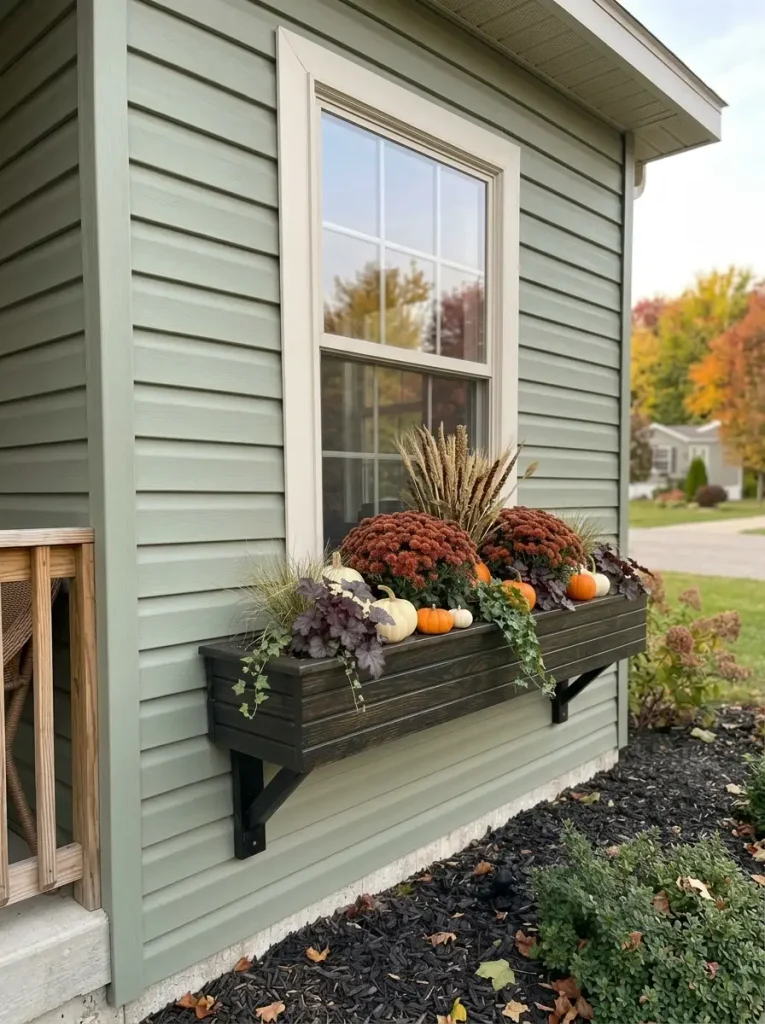
A convincing fall window box does not have to be entirely fresh.
Use living mums or foliage where natural softness and seasonal color matter most. Let dried grasses or seed heads provide dependable height, while reusable mini pumpkins hold the lower focal layer as the arrangement changes through the season.
How much of each material you use should reflect the amount of upkeep you actually want. A prominent window near the entry may justify a fresh-forward composition. A secondary window can use more dried or reusable elements while still belonging to the same exterior scheme.
The useful question is not whether faux materials are acceptable. It is which components need to look alive for the overall planter to read naturally.
Fall Box Maintenance Selector
How much seasonal upkeep do you want?
Choose the maintenance level first, then decide how much of the arrangement should be fresh, dried or reusable.
12. Switch to Seed Heads, Dried Hydrangeas and Foliage When the Mums Fade
A box that looks beautiful in early fall does not need to be rebuilt once the first flowers decline.
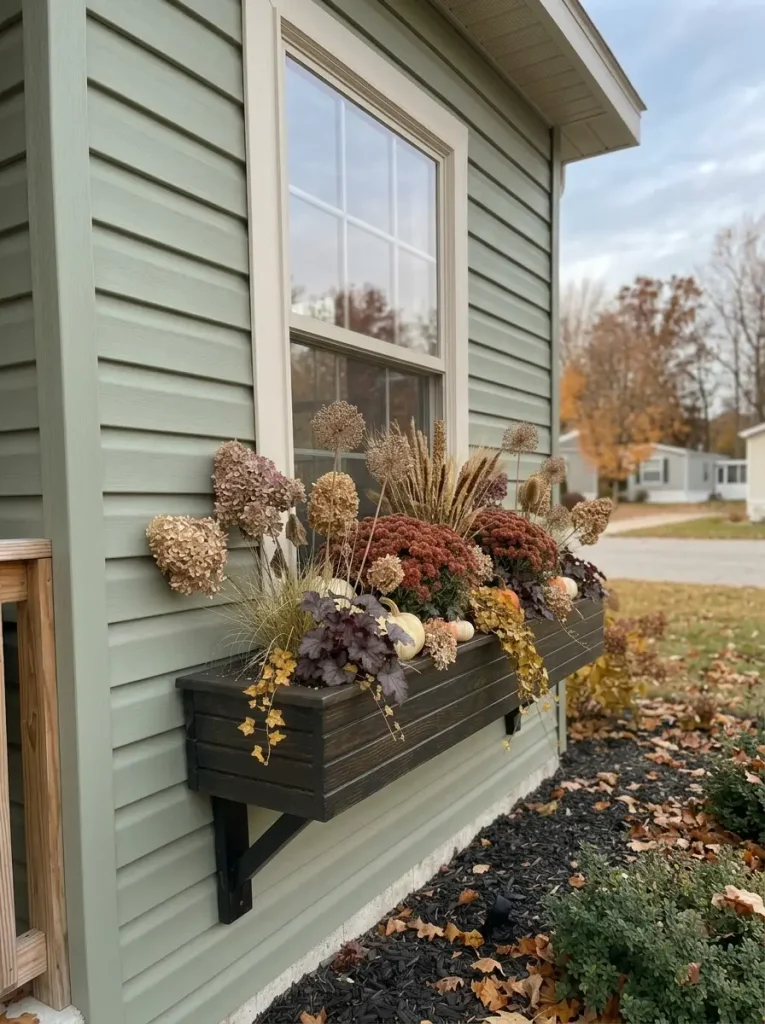
Start the transition by removing only the plant material that has stopped contributing to the composition. Keep grasses, pumpkins and healthy trailing foliage that still provide useful structure. Replace the missing middle volume with dried hydrangeas, seed heads, preserved-looking foliage or textured stems.
The visual character can gradually move from bright harvest color toward a quieter late-fall palette as the landscape outside becomes less saturated.
Early in the season, mums can carry most of the color. Mid-season, pumpkins and deeper foliage become more important. Later, grasses, seed heads and dried textures can take over the structure.
The stop point matters: replace enough to recover a deliberate silhouette, then leave it alone. Late fall benefits from a little more openness than peak-season planting.
13. Add One Removable Halloween Detail, Then Let the Box Return to Fall
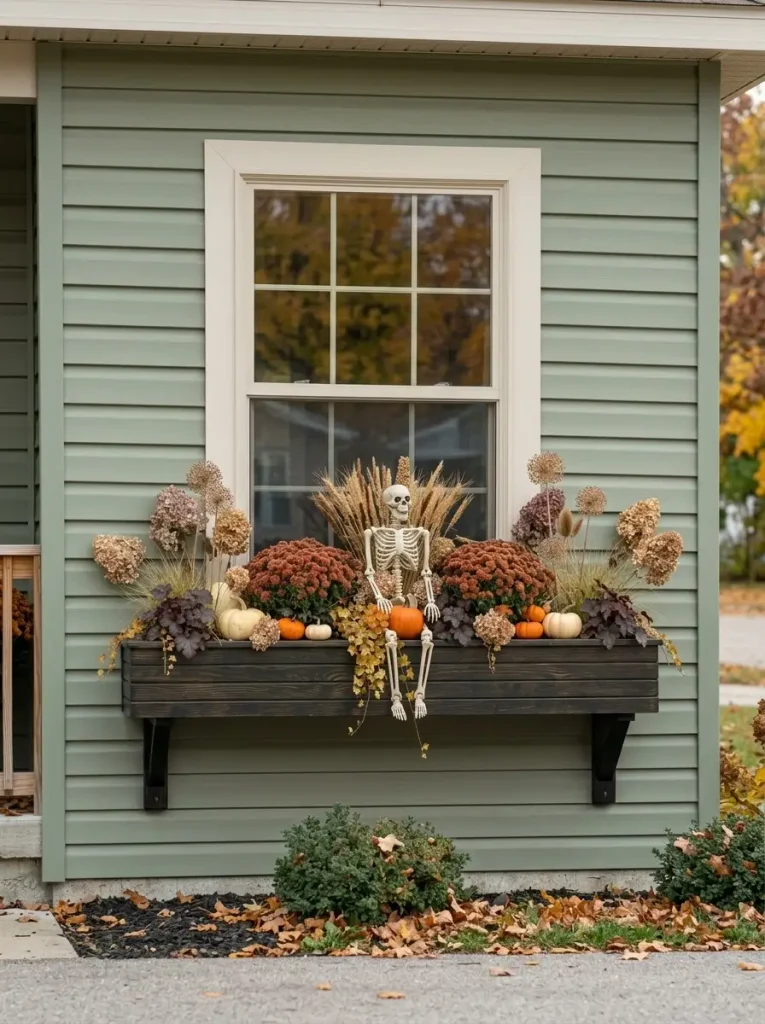
A window box can participate in Halloween without becoming obsolete on November 1.
Build the permanent seasonal foundation first: mums, grasses, pumpkins and trailing foliage. Then introduce one clearly removable Halloween cue. A small skeleton seated behind the pumpkins, a few black twig-like stems or another restrained dark accent can shift the mood without changing the composition underneath.
After Halloween, remove that layer and the box returns immediately to a harvest display.
This strategy becomes even more useful when several windows face the street. Putting a Halloween character or dramatic black accent in every planter can break the façade into too many competing moments. Give one visible box the playful feature and allow the others to support it through ordinary fall materials.
Use a simple decision test: if the Halloween piece disappeared, would the planter still look complete? If the answer is yes, you built the seasonal foundation correctly.
14. Repeat One Window-Box Material at the Front Door to Tie the Exterior Together
The window boxes should relate to the entrance without becoming smaller copies of the front-door display.
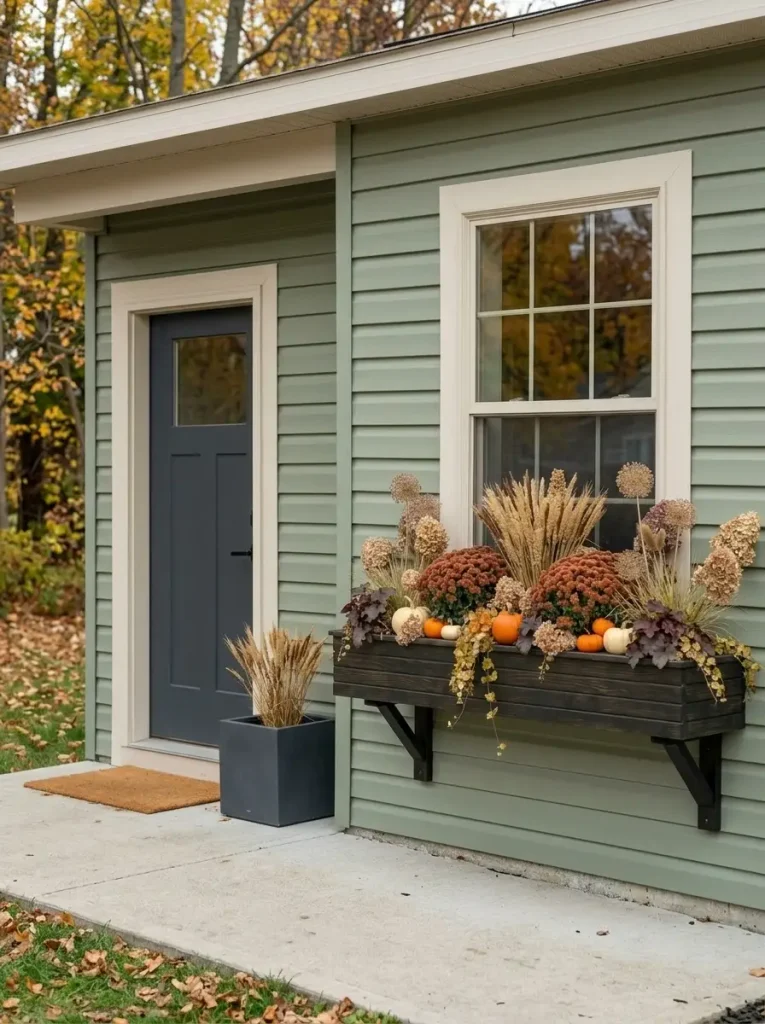
Choose one material that can travel between the zones. Wheat-colored grass from the window boxes might reappear in a small entry arrangement. Ivory pumpkins could return as one low cluster beside the threshold. Rust mums can provide the same visual connection.
One repeated material is usually enough to establish continuity. Copying every flower, pumpkin and foliage type at the door weakens hierarchy because the windows and entrance begin demanding equal attention.
For deeper styling of the doorway itself, let the specialist page own that territory. 19 Fall Front Door Ideas for Mobile Homes
If a porch sits within the same sightline, its arrangement can extend the palette using different scale and placement. 19 Fall Mobile Home Porch Decorating Ideas
The useful rule is connection without duplication: repeat a recognizable ingredient, then allow each architectural zone to keep its own composition.
15. Choose the Window Box Finish From the Trim, Not From the Pumpkins
Seasonal plants change. The box itself remains part of the exterior.
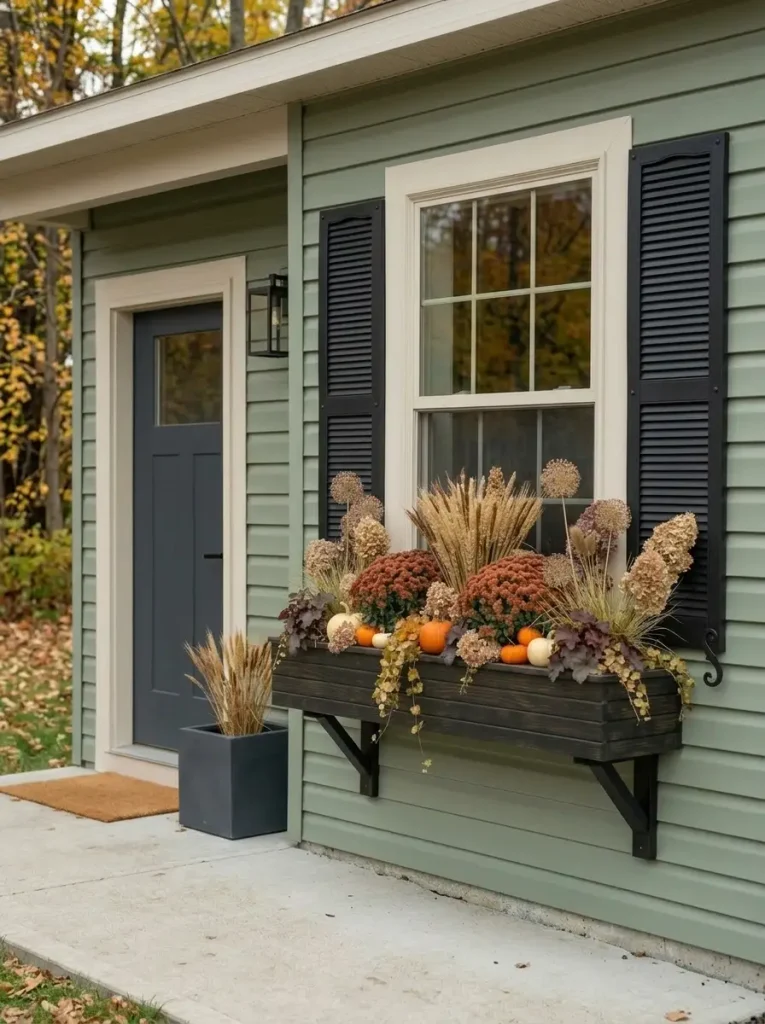
Choose its finish by looking first at permanent architecture: window trim, shutters, door color, porch wood and other fixed accents. A charcoal planter can visually connect with dark shutters or black hardware. Weathered wood can make sense where natural wood already appears near the entry. Against a pale façade with light trim, a medium-to-dark neutral box can establish a clearer base beneath the window.
This distinction keeps the container from competing with the fall planting. Orange pumpkins do not require an orange-toned box, and burgundy mums do not need a matching planter.
Think of the planter finish as architecture and the contents as the seasonal layer. When those roles are clear, the same box can support very different arrangements without looking disconnected from the home.
Container Finish Studio
Let the permanent exterior choose the box finish
Select the architectural cue that already has the strongest presence around the window. The planter finish can echo that cue while the plants carry the seasonal color.
Final Thoughts
A strong fall window box begins with the window, not with the seasonal accessories. Get the proportion and planting silhouette right first, then use mums, pumpkins and grasses to create contrast, texture and a clear focal point.
Across several windows, repeat only enough material to establish rhythm. Let the entry and porch keep their own visual roles, and choose a planter finish that still belongs to the exterior after the autumn decorations are gone.
When the box feels connected to the window even before you notice the individual pumpkins or flowers, the composition has moved beyond seasonal clutter and become part of the home’s curb appeal.
Save this fall window box guide to Pinterest so you can return to the combinations that fit your mobile home best.