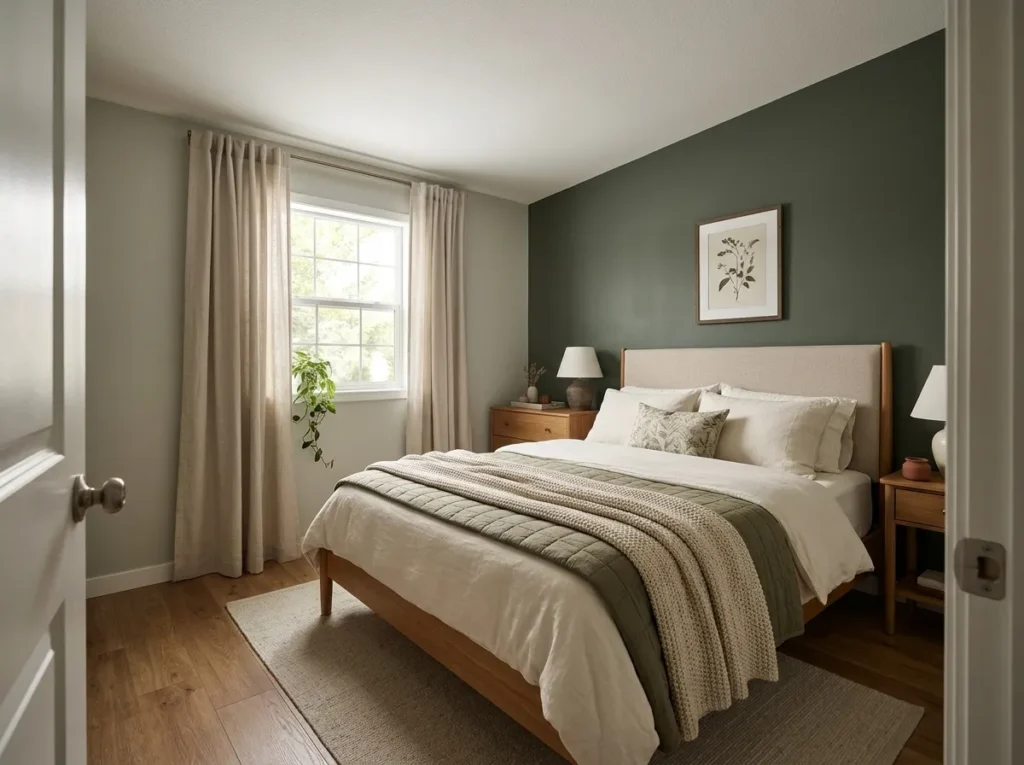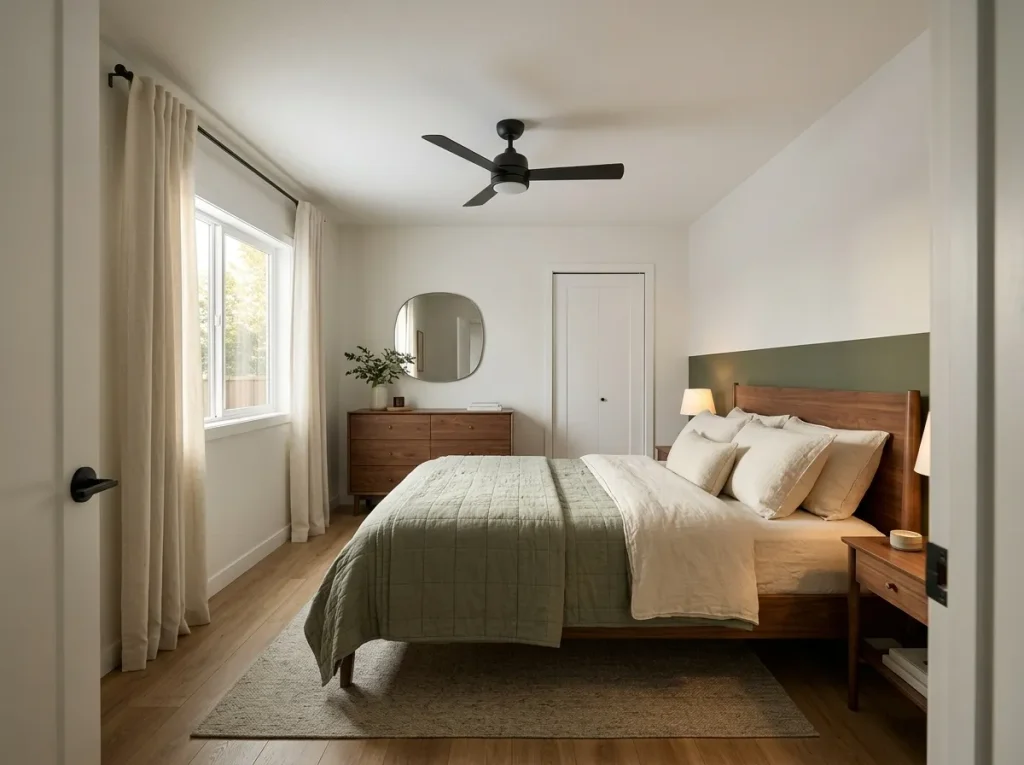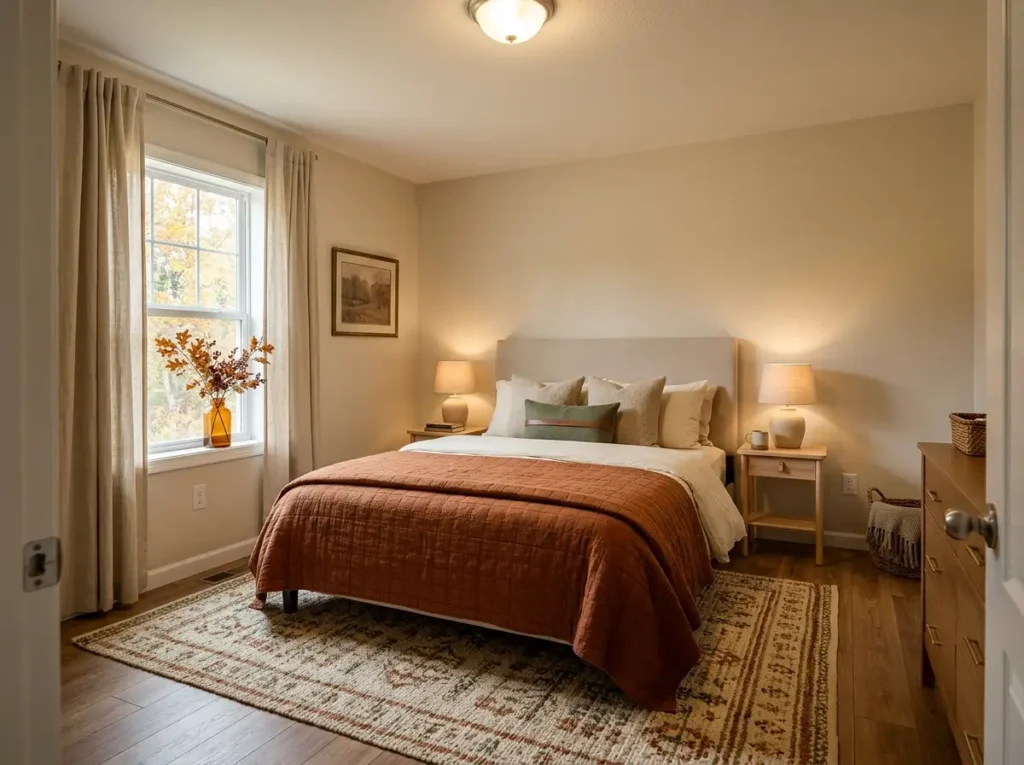
A mobile home primary bedroom can feel surprisingly polished without becoming crowded or overdecorated. The problem is that many mobile home master bedroom ideas online borrow their formula from oversized conventional bedrooms—rooms with wide bedside zones, tall ceilings, generous walkways, and enough unused wall space to make almost any furniture arrangement work.
A mobile or manufactured-home primary bedroom asks more from each visible area. The bed may dominate the entrance view. Closet and ensuite doors can interrupt the walls. A ceiling fan may command much of the upper plane, while dressers, mirrors, televisions, and everyday storage compete within a compact sightline.
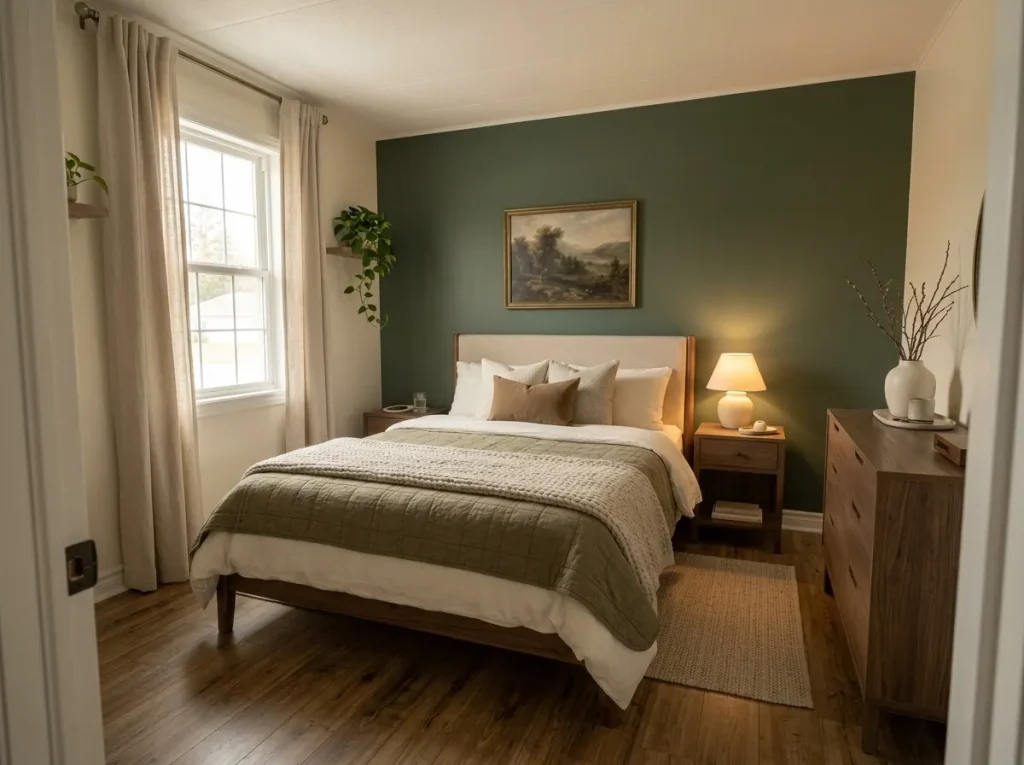
That changes the luxury formula.
Begin with relationships: what you see when you enter, how large the bed appears, where storage collects, what the mirror reflects, and whether movement still feels effortless.
These 15 ideas work from those decisions outward.
1. Make the Doorway Reveal Feel Like a Finished Suite
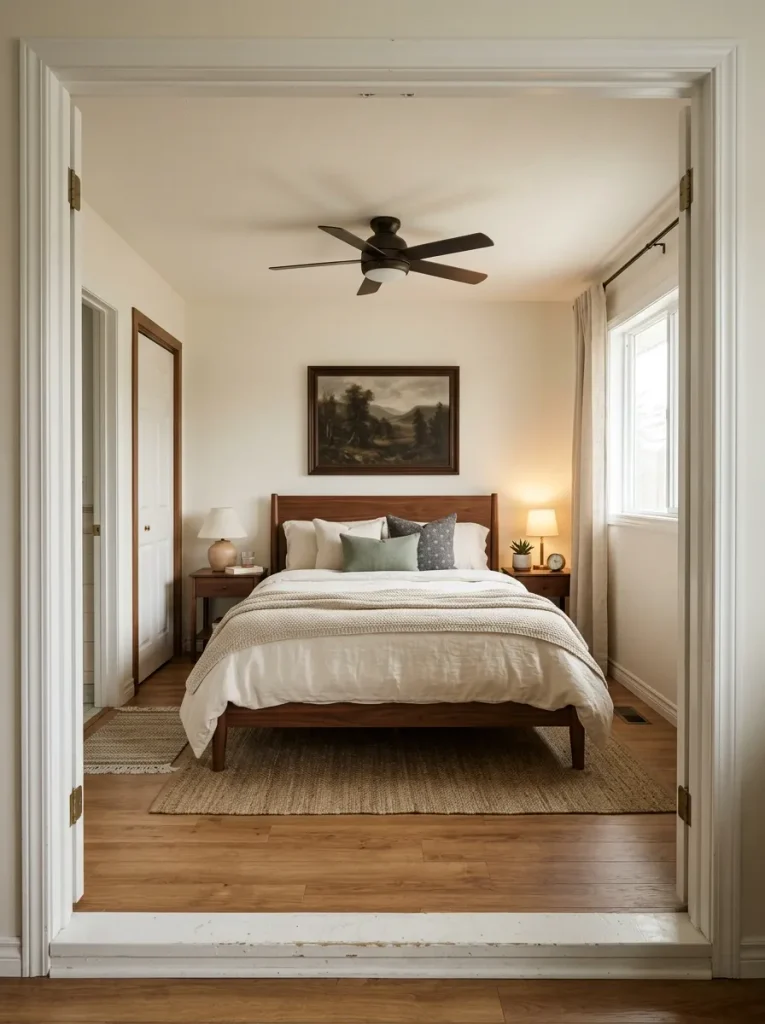
Stand outside the primary bedroom with the door open and stop there.
Before studying the bedding, paint, or accessories, notice where your eye lands first. In many mobile-home bedrooms, a large percentage of the room can be understood from this one position. That makes the entrance view unusually powerful.
Choose one dominant element for that sightline. Usually it will be the bed wall: a substantial headboard, one large piece of artwork, coordinated bedside lighting, or a restrained architectural treatment.
Now examine what competes with it.
A laundry basket near the entrance, a dresser protruding into view, exposed cords, several undersized frames, and unrelated storage pieces can fragment an otherwise attractive bedroom.
Take a quick phone photo from the entrance. If the bed already looks composed but the edges of the photograph feel chaotic, the room probably needs editing more urgently than decorating.
The first luxury upgrade is visual hierarchy.
2. Replace Separate Storage Pieces With One Quiet Bedside Storage Frame
Small bedrooms often accumulate storage one problem at a time.
A second nightstand appears. Then a basket. Then a cube shelf. Then a narrow cabinet.
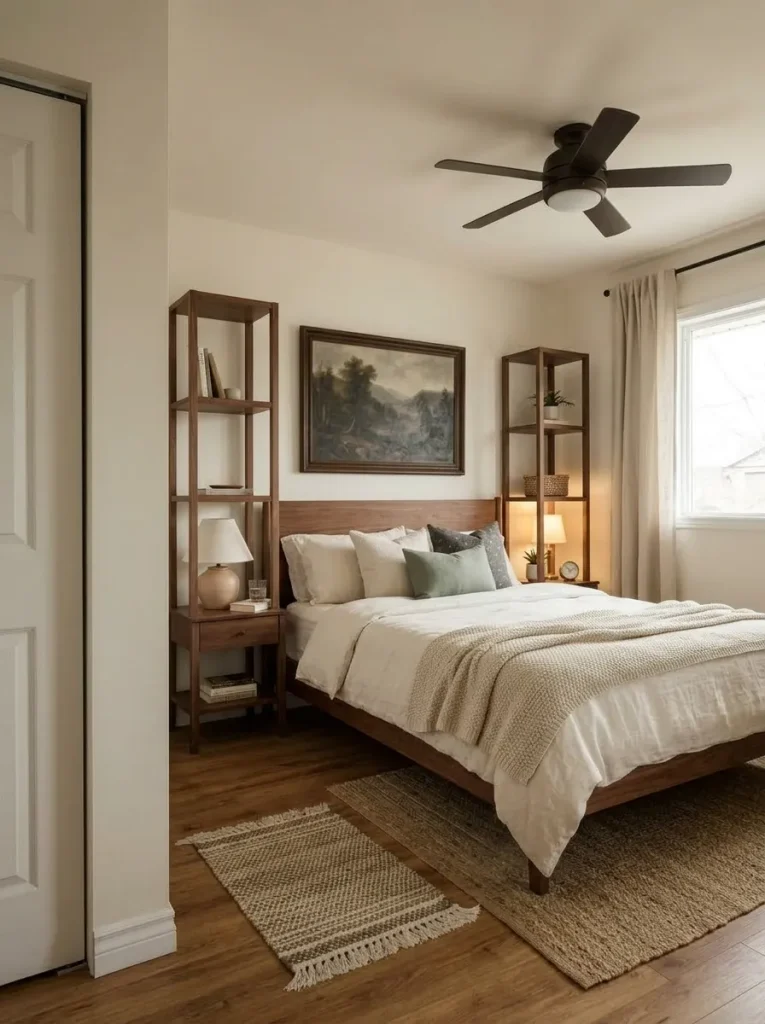
Each object may solve a genuine need, yet together they create many separate furniture boundaries for the eye to process.
In a mobile home primary bedroom, ask whether several pieces could be visually consolidated onto one wall. Matching bedside storage, shallow vertical cabinets, or carefully coordinated shelving can make storage read as one architectural composition around the bed.
That does not mean every room needs built-ins. An open wall can feel more luxurious than cabinetry that overwhelms the mattress.
Start with the storage you truly require. Then choose the quietest structure that can contain it.
For deeper storage-specific ideas, continue with StylishGalore’s bedroom storage solutions guide.
Bed-Wall Storage Planner
What is making your bedroom storage look busy?
Choose the condition closest to your room. The recommendation changes because luxury depends as much on what you leave open as what you store.
One visual center
Consolidate the edges
Look for two or three pieces that can disappear into one coordinated zone. Matching bedside storage, shallow vertical cabinets, or a single organized wall can reduce the number of separate outlines your eye has to process.
Redistribute the visual mass
A dresser may technically fit while still making one side of the room feel heavy. First test whether some functions can move into bedside drawers, under-bed storage, or the closet before replacing the dresser.
Protect the open wall
An uncluttered bedroom does not become more luxurious simply because empty wall space could hold cabinetry. Let visual breathing room become part of the design.
3. Lower the Visual Weight of the Bed Before You Shrink the Mattress
A large bed can seem like the obvious problem in a modest primary bedroom.
Sometimes it is.
Often the frame contributes more bulk than the mattress.
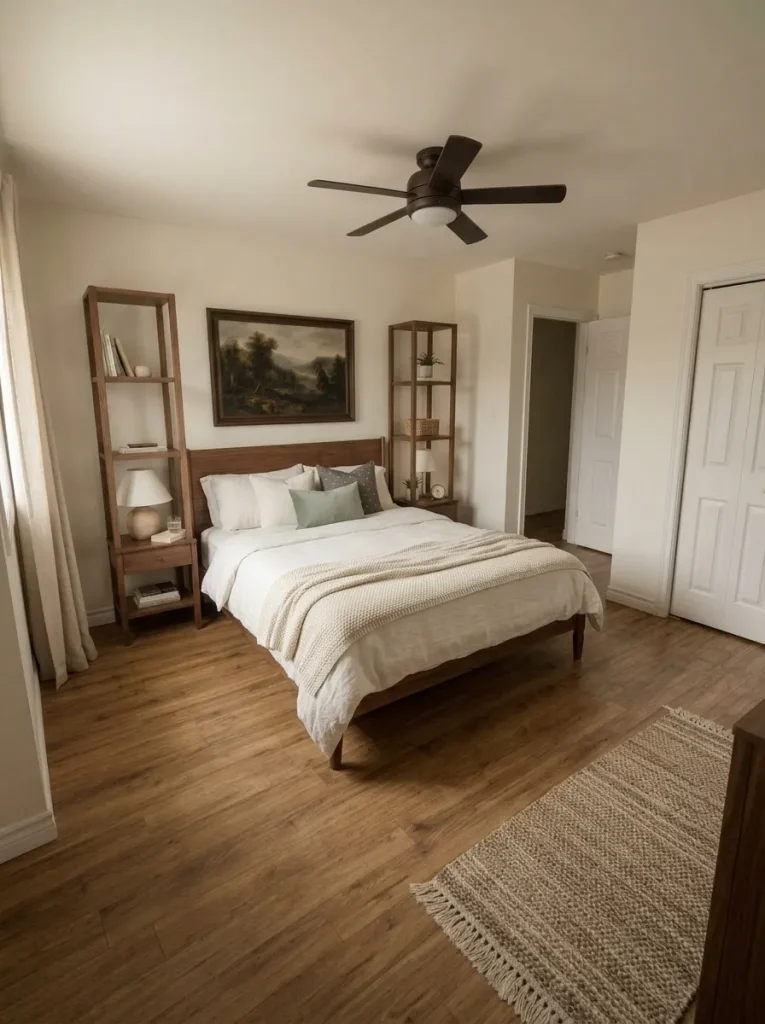
Look at the bed as a collection of edges. A tall solid footboard closes the view across the room. Thick side rails reduce visible floor. An oversized upholstered headboard can spread well beyond the mattress, while heavy matching nightstands extend that same block across most of the wall.
Before replacing a comfortable mattress, test a lighter-looking frame.
Exposed legs, slimmer rails, a lower footboard, or a cleaner headboard outline may allow the same sleeping surface to sit more comfortably within the room.
Ask one practical question: does the mattress actually interrupt circulation, or does the furniture surrounding it merely look oversized?
When the walking routes still function, reducing visual mass may accomplish more than sacrificing sleep space.
4. Give the Window Enough Fabric to Look Intentional
A bedroom window can appear surprisingly small once a large bed, dresser, and headboard enter the composition.
That imbalance often explains why an otherwise attractive room feels unfinished.
Compare two approaches.
In the first, a short curtain rod hugs the exact window opening and the fabric remains tightly confined to it. The window continues to read as a small isolated rectangle.
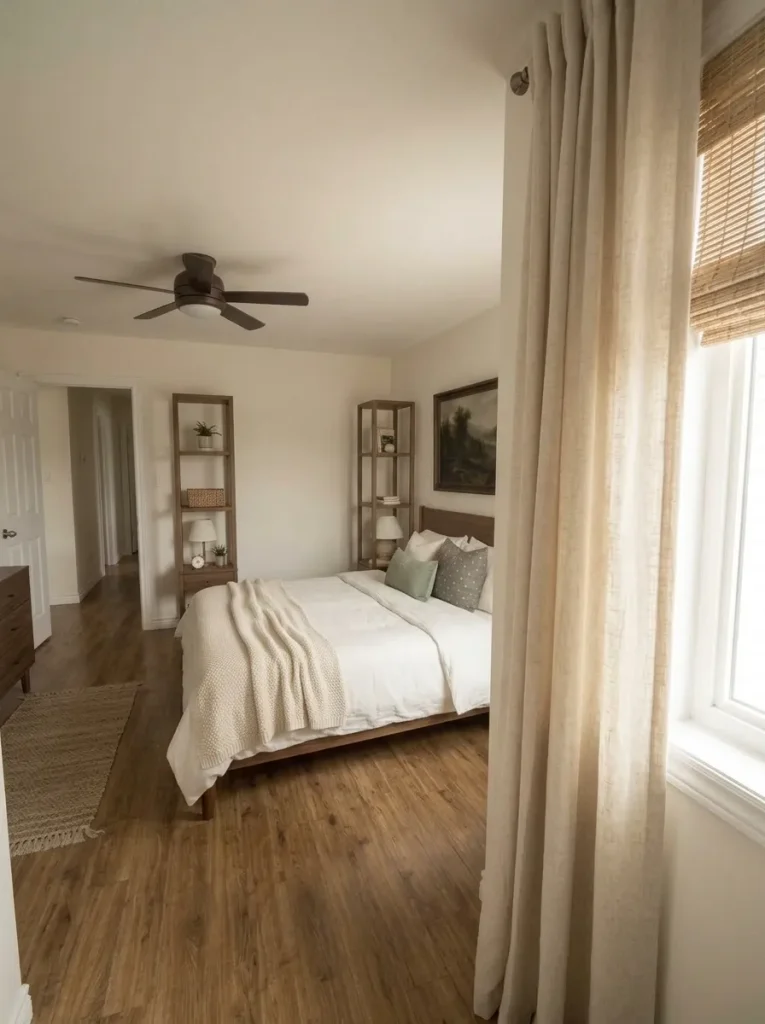
In the second, the treatment has enough visual width to relate to the surrounding wall while remaining practical to open and close.
That extra presence can make the window feel more deliberately integrated with the room.
Keep the real layout in charge. Curtains should not create conflicts with frequently used doors, furniture, vents, or useful daylight.
In a narrow mobile home bedroom, a generous-looking treatment does not require excessive fabric. The aim is simply to make the window feel proportionate to the larger bed composition around it.
5. Treat the Ceiling Fan as Part of the Room’s Composition
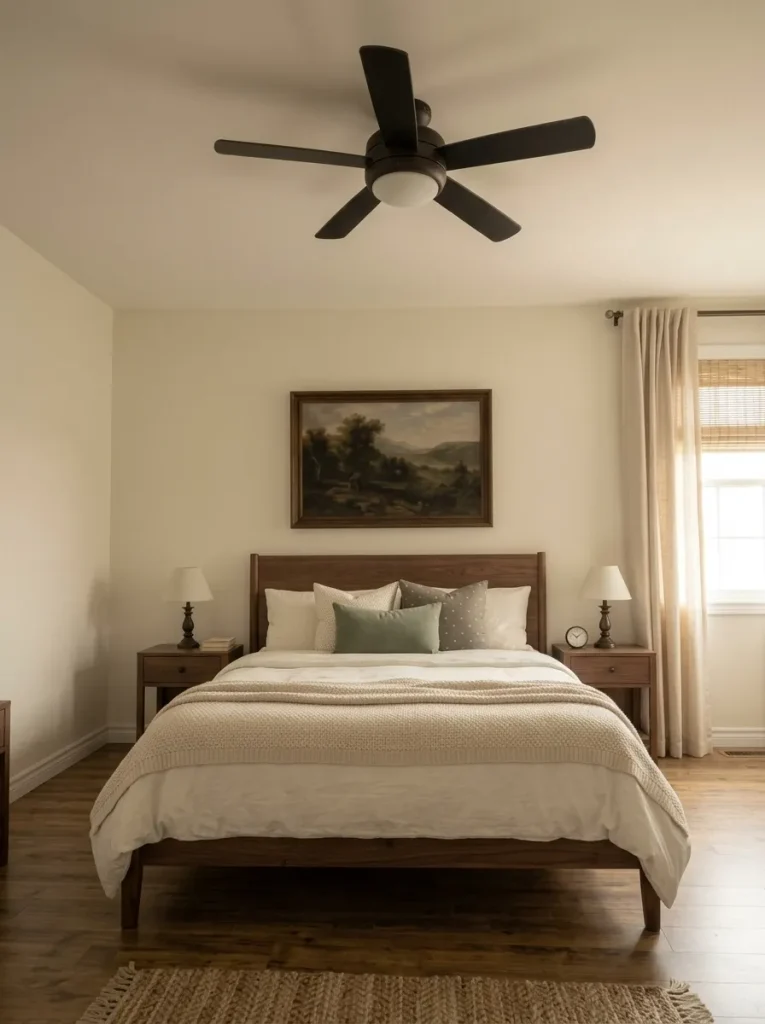
If your primary bedroom uses a ceiling fan, pretending it has no visual impact rarely works.
Control the surrounding ceiling plane instead.
The fan already contributes blades, a central housing, and often a light fixture. When several additional decorative elements compete nearby, the upper half of the room can become busier than the bed wall beneath it.
Read the room vertically.
Let the bed remain the visual anchor. Allow the fan to sit in the supporting layer.
A restrained repeat of one dark or metal finish elsewhere—perhaps a curtain rod, frame, or furniture-hardware detail—can visually connect the fixture without forcing every element to match.
Ceiling Pressure Map
Read the fan as one layer in a vertical composition: ceiling activity above, the bed as the room anchor below, and small repeated finishes connecting the two.
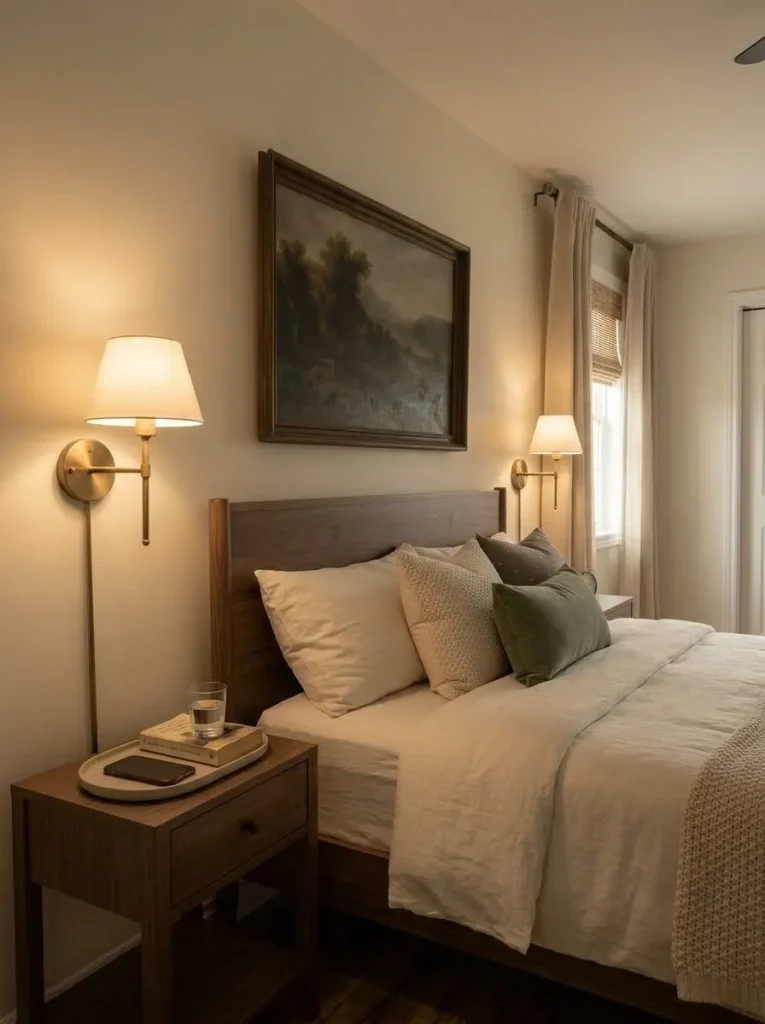
6. Let One Large Headboard-Wall Gesture Carry the Room
Look at the bed wall from across the bedroom and count its visual statements.
A headboard.
Three frames.
Two sconces.
A shelf.
Decorative molding.
Plants.
Objects on both nightstands.
Individually, each may be attractive. Together, they can flatten the hierarchy because nothing receives enough visual room to matter.
A mobile home primary bedroom often benefits from one major wall gesture: a substantial headboard, one calm landscape artwork, restrained vertical paneling, a shallow picture ledge, or a larger textile piece.
Let the supporting elements stay quieter.
This matters especially where the mattress already occupies most of the wall width. Several medium-size decorations can start competing much faster here than they would in a large conventional bedroom.
For deeper wall-treatment inspiration, continue with StylishGalore’s bedroom wall decor guide.
For this room, however, the useful decision comes first: determine which single element deserves to lead.
7. Move Bedside Light Off the Nightstand When the Surface Is Too Valuable
Think through your actual bedtime routine.
Phone. Water. Glasses. Book. Charging cable. Perhaps medicine or a small tray.
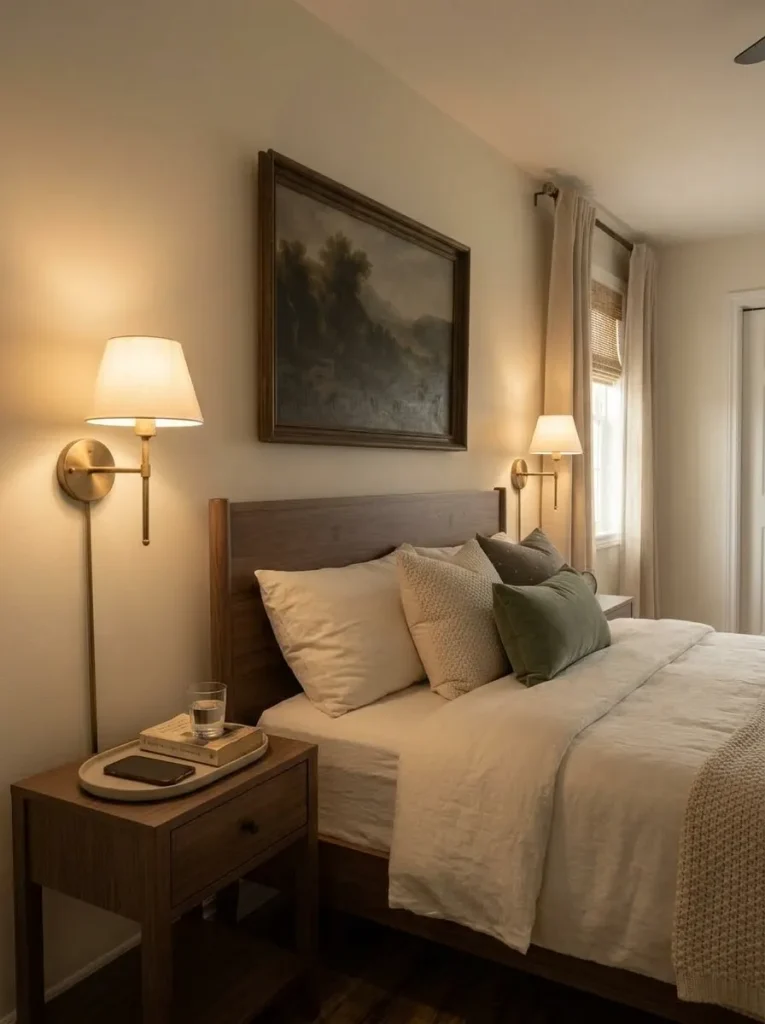
Now place a large table lamp in the middle of the same compact nightstand.
The arrangement can look attractive in a photograph while functioning poorly every evening.
Where bedside surfaces are narrow, moving light upward can release valuable horizontal space. A plug-in wall sconce or appropriately positioned pendant can also make the bed zone feel deliberately planned because lighting becomes part of the architecture around it.
Keep the fixture proportional to the actual wall. An oversized sconce beside a closely positioned door may solve one problem and introduce another.
For any new hardwired electrical installation, use an appropriately qualified professional and follow the requirements applicable to the home.
The decorating decision itself is simpler: preserve the nightstand for activities that genuinely require a surface.
8. Make Closet and Ensuite Doors Belong to the Bedroom Design
A primary bedroom can contain several visible openings at once: the main door, closet access, and an ensuite door.
When every opening, handle, mirror, and trim treatment behaves independently, the walls can begin to look pieced together.
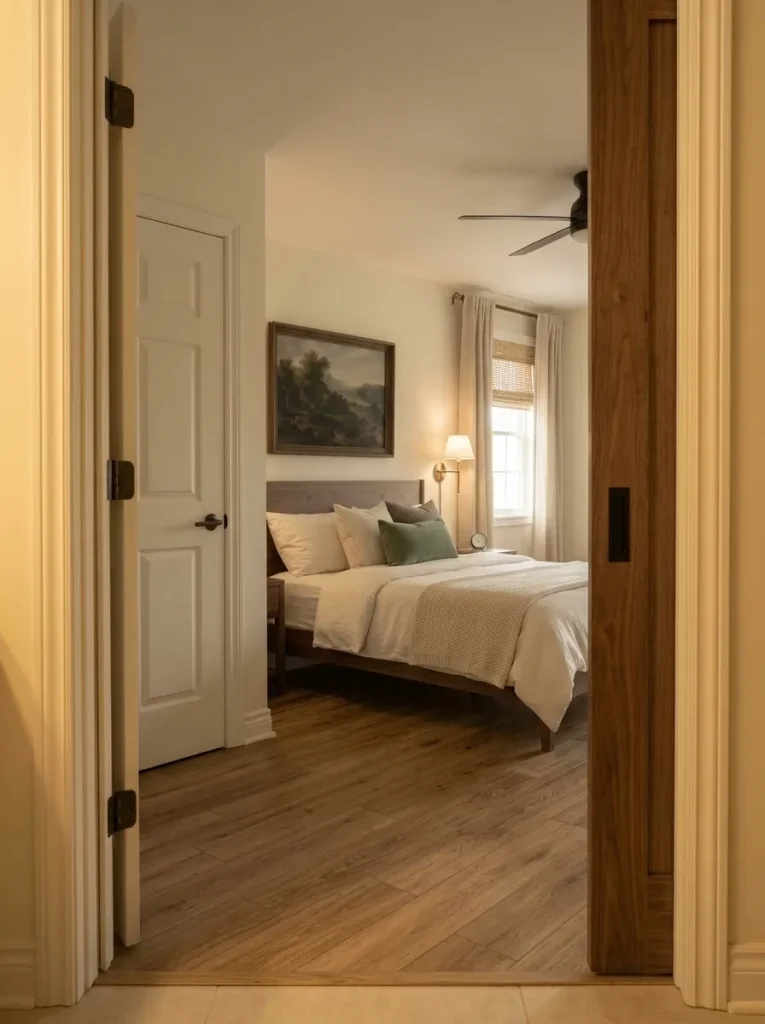
First decide which doors should visually recede.
A door close to the bed may feel calmer when its color relates closely to the wall and trim. A larger sliding or barn-style door can work as a deliberate architectural feature, but it should then receive enough surrounding visual space to perform that role.
Mirrored closet doors deserve another test: look at what they reflect, not merely at the doors themselves.
Hardware can provide a quieter connection. Repeating one restrained finish across door levers, curtain hardware, and a few furniture details can tie separate architectural interruptions together.
The bedroom begins to read more like one suite and less like several functional zones meeting by accident.
9. Place the Full-Length Mirror Where It Reflects Your Best View
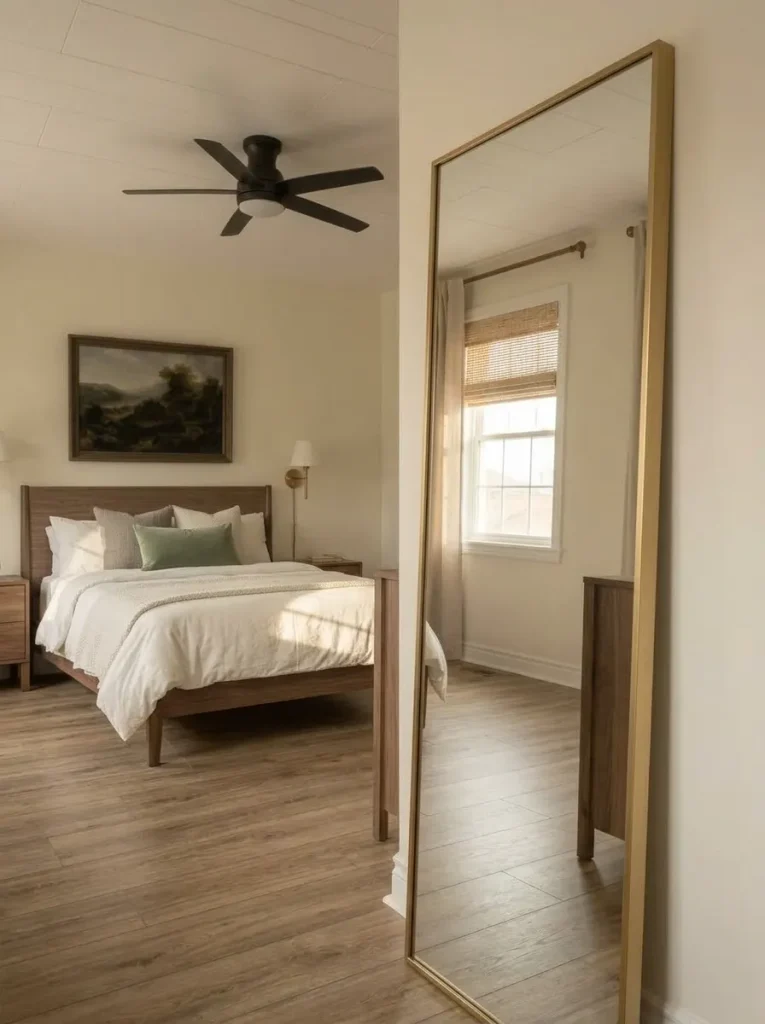
The empty wall is not automatically the correct wall for a full-length mirror.
Stand where the mirror would go and look in the opposite direction.
That scene is what you are about to duplicate.
A reflection containing daylight, a made bed, or a calm section of wall can visually extend a successful composition. A reflection dominated by an overloaded dresser, open closet, tangled cords, or television equipment reproduces the clutter at a larger scale.
That matters considerably in a compact bedroom because a tall mirror may occupy a meaningful share of the visible wall area.
Choose the reflected scene first.
Choose the mirror frame second.
What would the mirror duplicate?
Select the dominant view opposite your proposed mirror location. A large reflection behaves almost like a second wall, so its content should earn that extra visibility.
Strong candidate
Daylight and an uncluttered window zone can make the mirror feel expansive. Check for glare and make sure the reflected scene remains calm from the bed.
Usually a useful reflection
A well-composed bed wall can be worth seeing twice, especially where the reflection adds depth from the entrance or dresser side of the room.
Reconsider the angle
A mirror that doubles cables, toiletries, television equipment, or surface clutter can visually increase the problem you were trying to solve.
10. Let One Generous Rug Define the Bed Zone
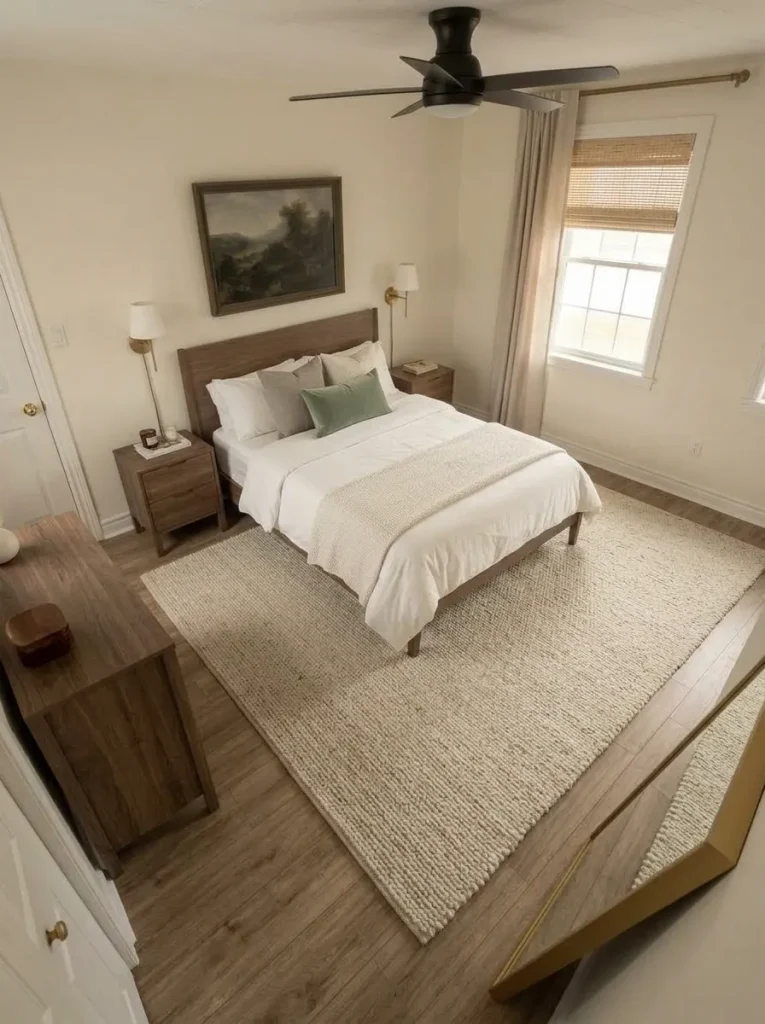
Several small rugs positioned around a large bed can make the floor feel divided into even smaller pieces.
One more generous rug can visually gather the mattress and bedside furniture into a single zone, especially when existing carpet or hard flooring does little to anchor the furniture.
Before buying anything, outline the proposed rug footprint with painter’s tape, flattened cardboard, or another temporary marker.
Then check three relationships:
- First step from bed: does the rug reach the place where your feet actually land?
- Closet and doorway route: will an edge cut awkwardly across a frequently used path?
- Visible perimeter: does enough existing floor remain visible for the rug to look deliberate?
If those three conditions cannot coexist comfortably, change the rug orientation or skip it.
The more luxurious choice is the one that improves the whole floor composition, not simply the one with the plushest texture.
11. Build Bedding in Fewer, More Substantial Layers
Luxury bedding is often translated into quantity.
More pillows. More throws. More patterns.
A compact primary bedroom usually benefits from the opposite strategy.
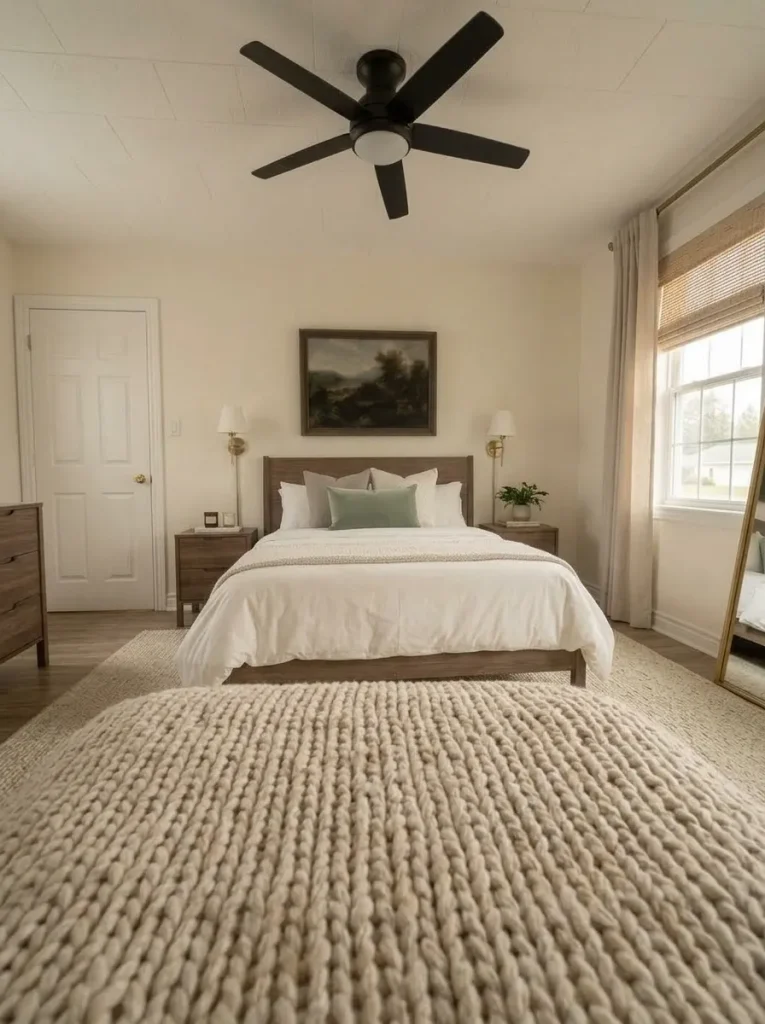
Start with the largest surfaces. A well-proportioned duvet or coverlet, substantial sleeping pillows, and one strong textural layer can create most of the richness. Smaller accents should support that composition rather than bury it.
Then perform a nightly reset test:
- Where do the decorative pillows go at bedtime?
- Does the throw have a genuine use?
- Can the bed return to its daytime state without a long styling routine?
Anything that repeatedly ends up on a chair or the floor is probably adding maintenance more successfully than luxury.
For a deeper bedding sequence, continue with StylishGalore’s guide to styling a bed like a designer.
A luxurious bedroom should still look intentional on an ordinary morning.
12. Balance Unequal Bedside Zones Without Forcing Perfect Symmetry
Perfectly matching nightstands look effortless in a wide bedroom.
A compact mobile-home primary bedroom may give you a different reality.
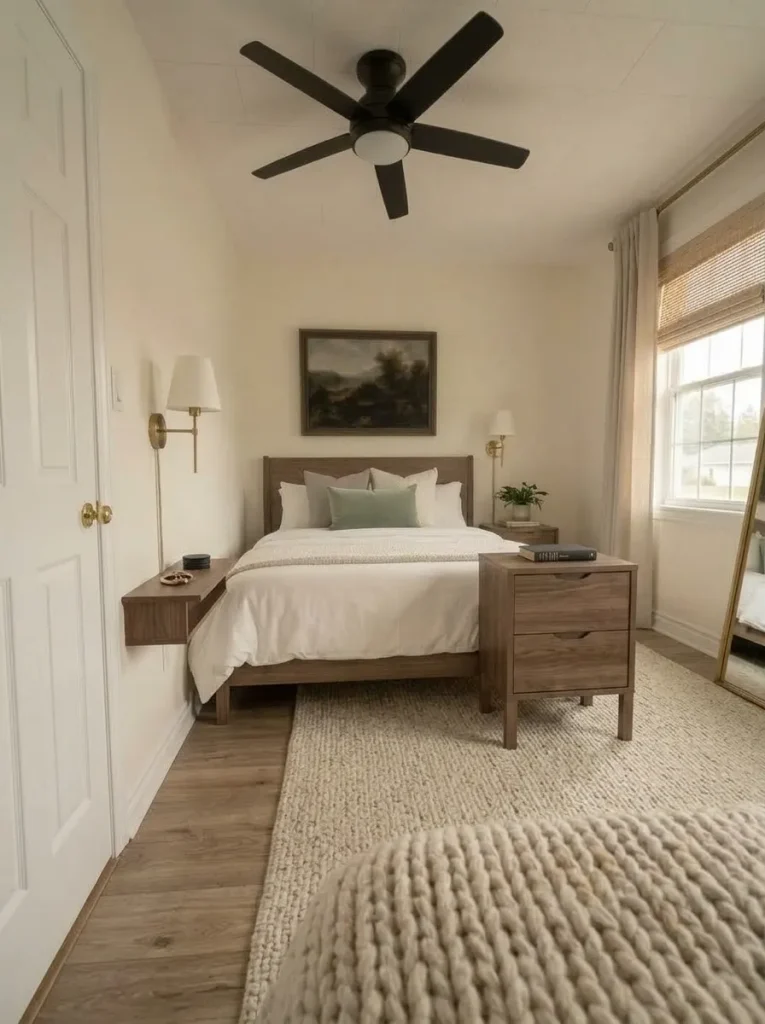
One side of the bed might meet a window. The other may sit close to a closet opening. One walkway may be comfortable while the opposite side is noticeably tighter.
Forcing two identical furniture pieces into those unequal zones can reduce usable space purely for the sake of symmetry.
Aim for visual balance, not identical footprints.
Two bedside pieces can have different widths while sharing a similar top height, material family, or visual weight. The smaller side might use a narrow table or floating surface while the more generous side carries drawers.
That can look more custom because the furniture responds to the room instead of ignoring it.
Which condition is breaking the symmetry?
Choose the constraint closest to your room. The best pair of bedside pieces may share visual rhythm while using very different footprints.
ZONE
ZONE
Protect the door route first
Use the tighter side for a slimmer table, floating ledge, or another low-footprint bedside solution. Allow the opposite side to carry more storage if necessary.
Let the window set the limit
Keep the furniture low enough that the opening still feels intentional and usable. Balance the opposite side through similar visual weight rather than a duplicated cabinet.
Coordinate what you already own
Different nightstands can work when their top heights, hardware family, material tone, or bedside objects create a visible relationship.
13. Make the Dresser and TV Wall Read Like One Designed Composition
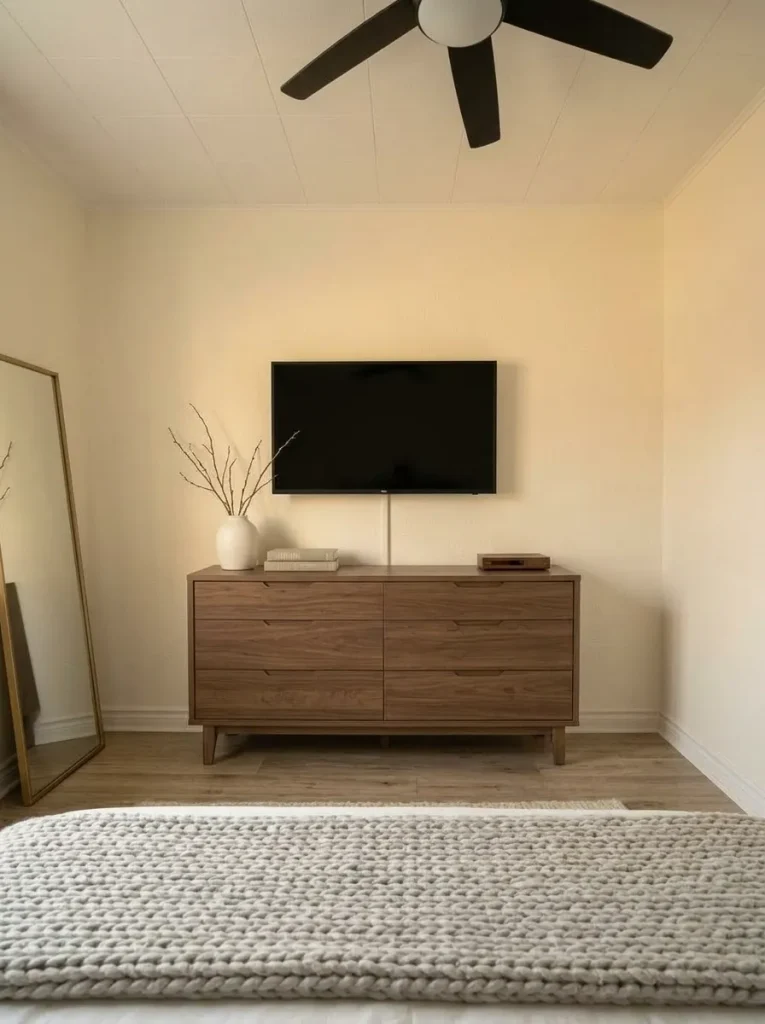
Sit on the bed and look straight ahead.
What does the opposite wall say?
Version A: a television centered independently, dresser slightly off-axis, mirror beside it, small accessories covering the top, visible cables below, and artwork filling the leftover wall.
Version B: one strong furniture line, a television or artwork positioned deliberately in relation to it, surface objects grouped into a limited composition, and enough blank wall for the arrangement to breathe.
Version B can feel more expensive even when every piece of furniture costs less.
Treat the dresser and anything above it as one elevation.
Check widths. Check centers. Check the negative space between objects.
If the television is essential, allow it to be the dark rectangle it already is. Surrounding it with many small objects frequently attracts more attention to it.
The opposite wall should support the bed composition—not begin a second competition.
14. Make the Foot of the Bed Earn Every Inch It Uses
A bench at the foot of the bed is a classic luxury-bedroom image.
That does not automatically make it luxurious in a mobile home.
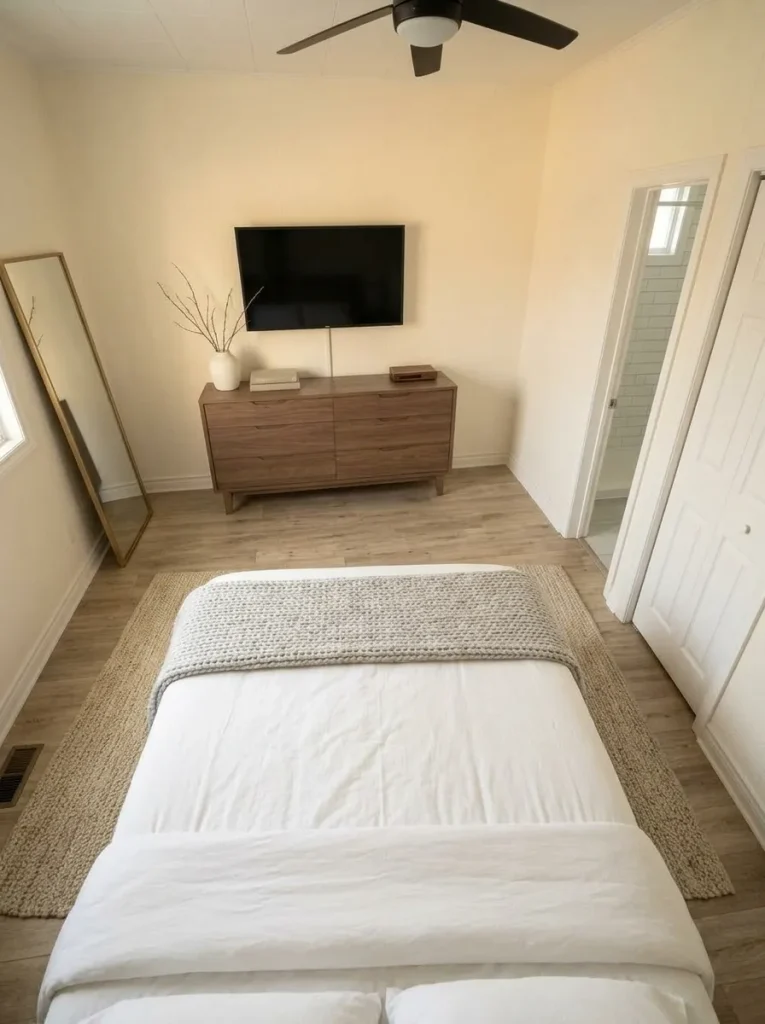
The floor beyond the mattress may also be the main route between the door, closet, dresser, bathroom, and opposite side of the bed. Furniture placed there has to justify the circulation it removes.
Test the area during ordinary use.
Carry laundry.
Open the closet.
Pull out the dresser drawers.
Walk around the bed at night.
Get dressed.
Only then decide whether the room needs a full bench, a narrow perch, or simply open floor.
Foot-of-Bed Route Test
Choose how the route feels during ordinary use—not how much empty floor appears in a staged photograph.
Choose open floor
A bench would turn an existing circulation constraint into an additional furniture constraint. Preserve the route and let the open floor become part of the design.
Consider a very light-use perch
If seating serves a real purpose, test a narrow stool or visually light piece before committing to a substantial bench or storage trunk.
A bench may earn the space
A well-proportioned bench can visually finish the bed and provide a dressing surface where circulation remains comfortable.
15. Leave One Zone Deliberately Empty
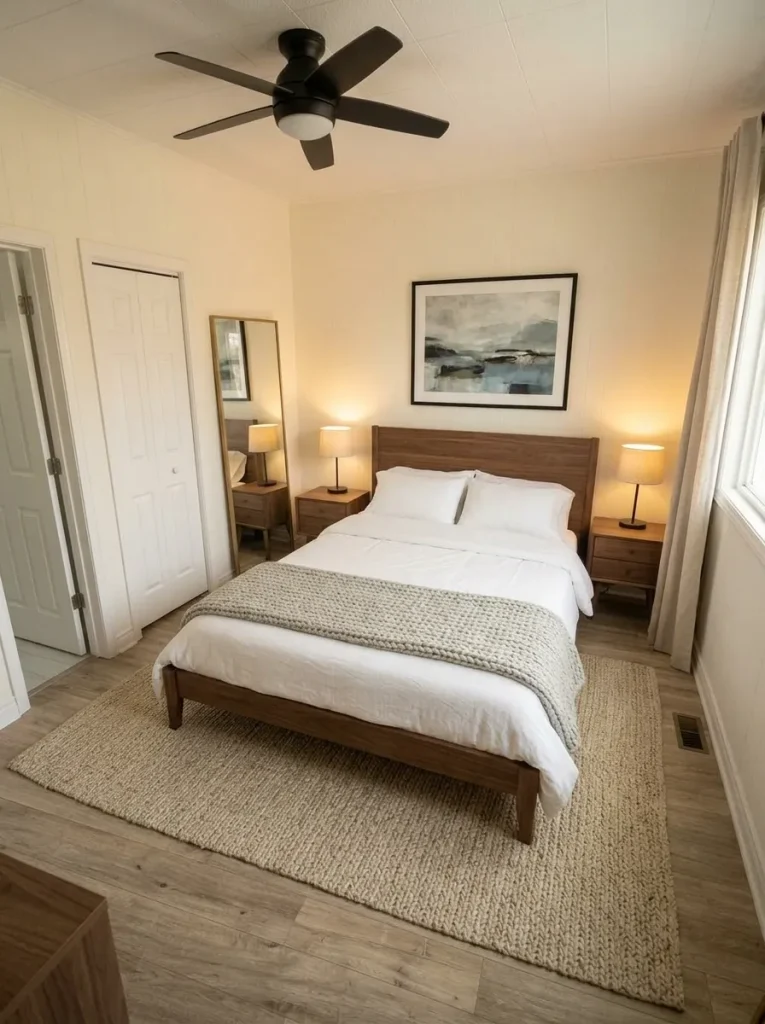
The final upgrade may be the part of the bedroom you choose not to fill.
Look for one area where emptiness can become visible on purpose.
It might be the strip of wall beside a large artwork.
It might be one corner of the dresser top.
It might be the floor beyond the bed.
It might be the space between a mirror and nearby furniture.
Protect that pause.
When every wall gap receives artwork, every tabletop receives an arrangement, and every floor corner receives a basket or plant, the room loses the contrast that allows important objects to stand out.
Try removing one object from the busiest surface and one from the most crowded wall. Then live with the change for several days before replacing anything.
A luxurious bedroom does not have to prove that every available inch can be decorated.
Sometimes the most intentional-looking part of the room is the space you had enough confidence to leave alone.
A More Luxurious Mobile Home Bedroom Starts With Better Editing
A primary bedroom does not need the proportions of a large custom home to feel refined. Its strongest features can come from responding intelligently to the dimensions and architecture already there.
After making changes, look at the room as one composition. The bed should feel intentional, storage quieter, circulation easier, reflections more controlled, and the major walls clearer about which one leads.
You may discover that fewer purchases were necessary than expected.
That is a useful form of luxury in a mobile home: each visible piece has a reason for being there, daily routines still work comfortably, and enough visual space remains for the room itself to breathe.