A cramped room changes how you live and breathe inside your own home. Bulky furniture and bad zoning make tiny homes feel like storage closets rather than sanctuaries. You end up bumping into tables and feeling trapped.
You need clear rules to fix this mess. This guide covers the essential Small Space Layout Basics. I will show you how to apply the new Small Space Modern design trend. You will master circulation paths to create breathing room. You will also learn visual tricks to double the perceived size of your room.
Good compact apartment organization relies on math and placement. We will cover the exact measurements you need to follow. You can stop guessing where things should go. Let us fix your cramped room right now.
Follow the 36 Inch Circulation Rule
Space Layout Basics
Unlocking The Secrets of Tiny Home Design
-
The Golden Secret
The 36-Inch Rule
You must maintain exactly 36 inches of clear walking space through primary paths to prevent the room from feeling cramped.
-
Do This, Not That
Avoid Flow Blockers
Do measure walkways today. Do not buy a chaise sectional if it cuts off room flow, making your brain feel trapped.
-
Proportions
Entertainment Math
Designers recommend placing sofas 1.5 to 2.5 times the screen diagonal distance from the TV to stop it from dominating the space.
-
Action Step
Let Energy Flow
A good layout connects spaces smoothly. Grab a measuring tape and ensure your main path is exactly 36 inches wide today.
People often block their entryways with massive sofas. This blocks traffic and makes the whole room feel cramped. You must maintain exactly 36 inches of clear walking space through primary paths. This 36 inch rule is the golden secret of tiny home interior design. A clear path lets energy flow through your home.
Do This, Not That: Do measure your main walkways today. Do not buy a chaise sectional if it cuts off the room flow. A blocked path makes your brain feel trapped. You will constantly bump your shins.
You also need to measure your entertainment area. Designers recommend placing your sofa 1.5 to 2.5 times the screen diagonal distance from the TV. This keeps the room proportional. It stops the television from dominating your space.
Once your walkway is clear, you need to focus on what goes against the walls. A good layout connects these spaces smoothly.
Action Step: Grab a measuring tape and ensure your main walking path is exactly 36 inches wide today.
Invest in 2026 Space Saving Furniture
The Multifunctional Shift
Maximizing Compact Living Spaces
-
Ditch Single-Use Blocks
Solid coffee tables waste floor space. Serve multiple purposes by choosing nesting tables that expand only when needed.
-
Open Base Profiles
Pick sofas with exposed legs to let light and energy pass underneath, maximizing the visual flow of every square foot.
-
Conceal the Clutter
Storage units make up over 28% of compact furniture sales. Buy a storage ottoman instead of a standard footrest to hide daily items.
-
Visualize Before Buying
Take the guesswork out of design. Use AI visualization tools like ReimagineHome.ai to test layouts and save money.
-
Immediate Action Step
Transform your space today: Swap out one single-use item for a piece with hidden storage this week.
Buying a solid block coffee table wastes precious floor space. Single use pieces hurt your layout terribly. You need items that serve two or three purposes simultaneously. The major shift right now favors multifunctional pieces over single use items.
You should look for low profile seating and open bases. You need to invest in space saving furniture 2026 to maximize every square foot. The global space saving furniture market hit 52.4 billion dollars in 2025. Millennials drive 43 percent of this massive demand. People want homes that work harder for them.
Storage units are currently the most valuable addition to compact rooms. In fact, storage units make up over 28 percent of all compact furniture bought right now. Hidden compartments keep your daily clutter out of sight.
- Choose nesting tables over a solid coffee table.
- Buy a storage ottoman instead of a standard footrest.
- Pick sofas with exposed legs to let light pass underneath.
Before you buy anything new, test your ideas. I highly recommend using AI visualization tools like ReimagineHome.ai to test layouts before buying furniture. Visualizing the pieces first saves you money and headaches. It takes the guesswork out of design.
Action Step: Swap out one single use item for a piece with hidden storage this week.
Use Mirrors to Cheat Square Footage
The Space Illusion
Mastering Scale & Natural Light
-
Scale Matters
Tiny mirrors create visual clutter. Instead, oversized floor mirrors actually change the room’s architecture by creating a fake window effect.
-
Bounce the Sunlight
Place massive mirrors directly opposite natural light sources. This layout basic floods dark corners with light, making shallow rooms feel deep.
-
Phantom Square Footage
A 2026 psychology study confirms mirrored rooms are perceived as up to 35% larger. You gain immediate phantom space for zero construction cost.
-
Action Step
Instantly double your light. Stop what you are doing and move your largest mirror opposite a window right now.
Hanging tiny decorative mirrors on a large wall does nothing to expand your room. It just looks like visual clutter. Scale matters immensely when trying to trick the eye. Oversized floor mirrors actually change the architecture of the room. They create a fake window effect.
You should place these massive mirrors directly opposite your natural light sources. Bouncing sunlight around is one of the best Small Space Layout Basics you can use. This simple trick floods the dark corners with light. It makes a shallow room feel deep.
Science backs this up completely. A 2026 study from the Journal of Environmental Psychology confirms this trick works. The study states that mirrored rooms are perceived as up to 35 percent larger. That is a massive difference for zero construction cost. You gain phantom square footage instantly.
When you fix the light, you can start fixing the layout of your furniture. Bright rooms always feel larger than dark ones.
Action Step: Move your largest mirror opposite a window right now to instantly double your light.
Zone Your Rooms Without Walls
Zoning Without Walls
Mastering Open Layout Flow
-
Visual Boundaries
Shoving furniture against walls creates a “waiting room” vibe. Create distinct zones using visual cues like rugs and lighting to separate sleeping, working, and living areas.
-
Float & Ground
Floating a sofa to divide a room works much better than pushing it into a corner. Ground the space by ensuring the front legs of your seating sit entirely on a rug.
-
Intentional Spaces
Zoning gives a small space purpose. When every corner has a reason to exist, the room feels intentional rather than cluttered. (Remember: know when to leave a space blank, too!)
-
Action Step
Instantly create a better visual zone: Stop right now and physically pull your sofa just two inches away from the wall to let the room breathe.
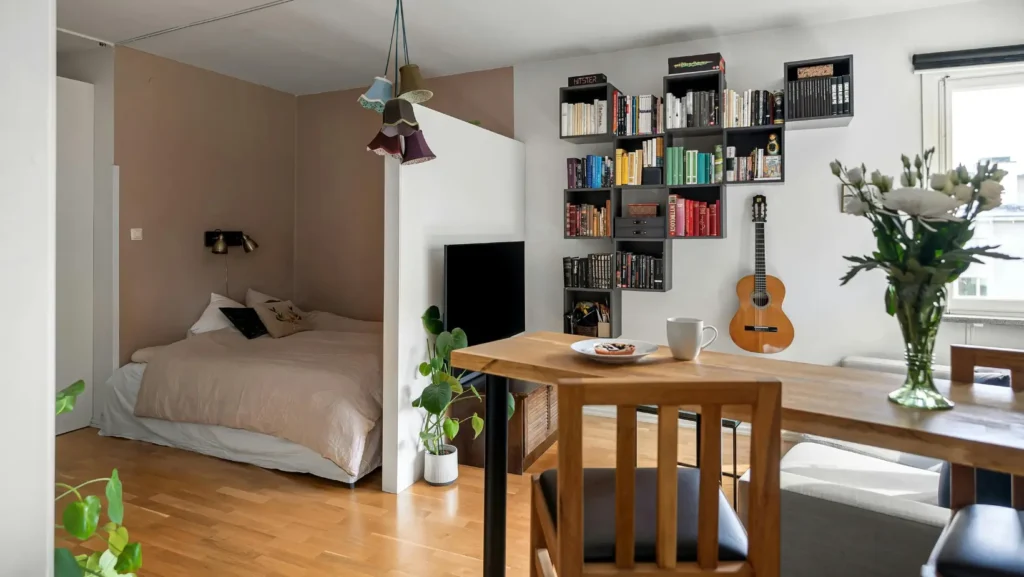
Shoving all your furniture against the walls makes your room look like a doctor waiting area. It ruins the flow of the room. You must create distinct zones using visual cues instead of physical barriers. Use rugs and lighting to separate your sleeping, working, and living areas.
A pendant light anchors a dining spot beautifully. Ensure the front legs of your seating sit on the rug to ground the space. This grounding technique is vital for compact apartment organization. Floating a sofa to divide a room works much better than pushing it into a corner. It creates a dedicated living zone.
Geoff Brand from Bean Bags R Us explains this clearly. He says: “Zoning gives a small space purpose. When every corner has a reason to exist, the room feels intentional rather than cluttered.” Every section of your home needs a clear job.
You can zone a room, but you must also know when to leave a space blank.
Action Step: Pull your sofa two inches away from the wall to instantly create a better visual zone.
Practice the Negative Space Discipline
The Negative Space Discipline
Curating Calm in Small Interiors
-
Embrace Empty Corners
Filling every empty corner with a plant or table creates visual panic. Your eyes need a place to rest. You must leave specific corners entirely empty.
-
Curate & Elevate
Edit surfaces heavily and keep your palette to 3–5 warm neutral hues (beige, oat, walnut). Draw the eye upward by hanging curtain rails close to the ceiling to make walls look taller.
-
The Calm Room Effect
A 2026 Built Environment study proves visual clutter shrinks perceived room size. Reducing noise improves psychological comfort. Empty space is a design feature, not a mistake.
-
Action Step
Remove three decorative items from your coffee table or bookshelf right now to instantly practice surface editing.
Filling every empty corner with a plant or side table creates visual panic. Your eyes need a place to rest. You must leave specific corners entirely empty. This is called the negative space discipline.
Edit your surfaces heavily. You should curate your shelves instead of filling them. Keep your color palette to 3 to 5 warm neutral hues like beige, oat, and walnut. Reducing visual noise is crucial for modern tiny home interior design. You can also draw the eye upward by hanging curtain rails close to the ceiling. This makes the walls look taller.
A recent 2026 Frontiers in Built Environment study confirms this. The study shows that visual clutter directly shrinks perceived room size. It also proved that negative space improves psychological comfort. A calmer room makes a calmer mind. Empty space is a design feature, not a mistake.
Action Step: Remove three decorative items from your coffee table or bookshelf right now.
Conclusion
The Breathable Sanctuary
Geometry & Light in Small Spaces
-
Geometry of Movement
Maintain the 36 inch rule for all your main walkways. Good layout is about mathematically protecting your circulation paths.
-
Purposeful Furniture
Buy multifunctional pieces instead of single use items. Let your furniture work twice as hard to save precious square footage.
-
Expand Visually
Use oversized mirrors to bounce natural light around the room. These strategies turn a cramped box into a breathable sanctuary.
-
Take Control
You have the power to change your environment. Grab a tape measure and check your main walkway today.
Living in a small area does not mean you have to sacrifice comfort. You just need to follow the rules of geometry and light.
Maintain the 36 inch rule for all your main walkways. Buy multifunctional pieces instead of single use items. Use oversized mirrors to bounce natural light and expand the room visually. These strategies turn a cramped box into a breathable sanctuary.
You have the power to change your environment. Take control of your floor plan. Grab a tape measure and check your main walkway today. Mastering these Small Space Layout Basics will completely change how you experience your home.