You sit on your sofa and stare at the walls closing in. The room feels tiny and dark. Knocking down a wall is out of the question for most of us. Your current layout feels tight and visually suffocating. But you have options.
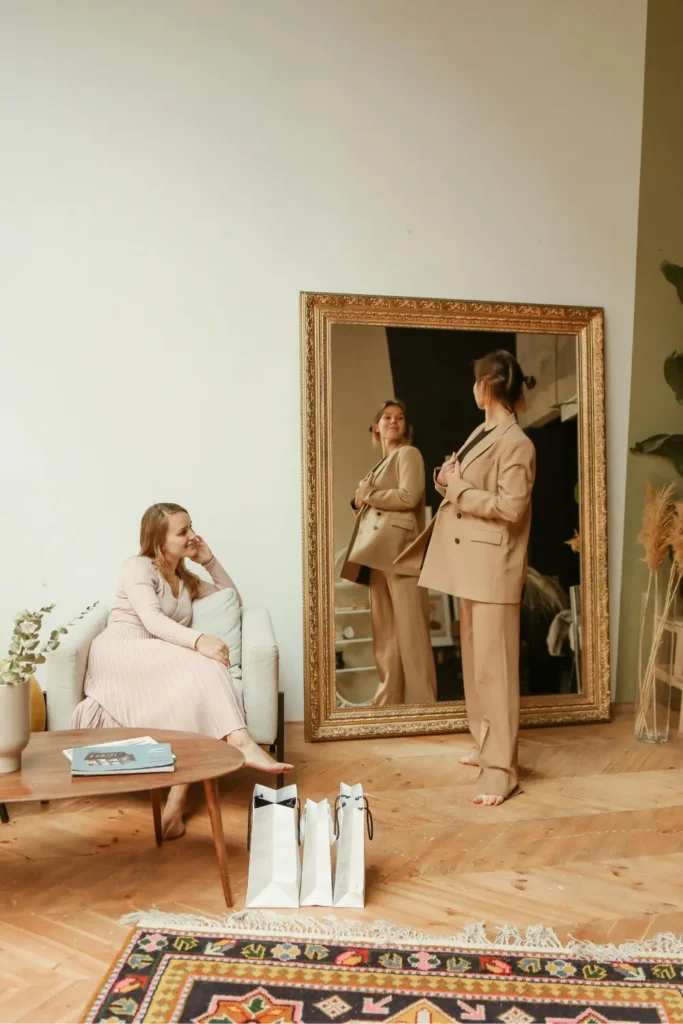
You will learn a strategic plan to use reflective surfaces to expand your room visually. This is exactly how to use mirrors to make a small space look bigger. You can double your light and create the illusion of extra square footage easily.
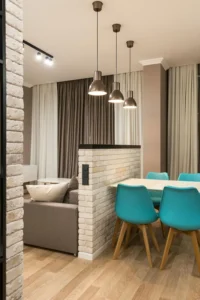
Proper small apartment mirror placement changes everything. Interior design expert Geoff Brand shared his thoughts in 2026. He said people underestimate how much mirrors can do in a small room. Place one strategically, and the room immediately feels more open.
We will show you exactly where to put them. You will see how simple changes make a massive difference. But placing a mirror is just the start. Location is everything. Here is why.
1. Position Opposite Windows for Natural Light Amplification
Mirror Placement Simulator
Select a wall to place your mirror and test the room lighting.
Bouncing photons from a window directly doubles the daylight in your room. Placing a mirror across from a light source acts like a second window. This floods dark corners with beautiful glowing light. Natural light changes how a room feels completely. Plants grow better and you feel happier.
A 2026 study in the Journal of Environmental Psychology proves this works. Researchers found that reflective surfaces and daylight multiplication significantly increased perceived spatial openness. Participants rated mirrored rooms as up to 35 percent larger.
Sometimes placing a mirror directly across from a window causes terrible glare. You can fix this easily. Just place the mirror on a wall next to the window instead. You still get the bouncing light without the blinding reflection.
Be careful with direct sunlight. Intense rays will damage the silver backing of your mirror over time. You want to catch soft ambient light instead. Using mirrors for natural light amplification is your best first step. Once you maximize the light from your windows, your next step is addressing the height of the room.
Designer Tip: Always check what the mirror reflects from a seated position to ensure you avoid blinding glare while watching television.
2. Draw the Eye Upward with Tall Oversized Mirrors
Space Enhancer Planner
Design the perfect leaning mirror setup for a small space.
Secure leaning mirror to wall with anchors.
Tall vertical lines change how you see the space to make low ceilings feel much taller. Drawing the eye upward creates an instant feeling of height. Large leaning mirrors are perfect for this.
You do not always need to mount heavy glass to the wall. Leaning a massive mirror against the wall adds an effortless architectural element. This works exceptionally well in tight hallways or narrow entryways. Ceiling height matters just as much as floor space.
People love using arched mirrors to soften harsh architectural corners in modern homes right now. The curved top draws attention upward and adds elegant style. These are great space enhancing mirror ideas for tight layouts.
Always secure leaning mirrors with basic wall anchors for safety. A tall mirror expands cramped corners immediately. But you must be mindful of what sits in front of it. A large mirror reflecting a cluttered coat rack makes the room feel chaotic and small. A tall arched mirror reflecting a tidy organic modern dining space makes the room feel expansive and calm.
Designer Tip: Place a tall mirror at the end of a short hallway to make the corridor look twice as long.
3. Create Depth by Layering Mirrors Behind Furniture
Layering for Depth
Organic Modern Space Expansion
Continuous Space
Anchoring your focal point behind furniture tricks the brain. It creates the illusion of continuous space extending far beyond the console.
The Glowing Window
Completely transform flat spaces. The mirror acts as a glowing window exactly where needed, forcing your eye to travel past the furniture.
The 2/3 Rule
Balance proportions to avoid a floating effect. The mirror should be roughly two thirds the width of the mid-century credenza it sits behind.
Designer Tip: The Gap
For a beautiful layered look that feels expensive, always leave about four to six inches of space between the top of your furniture and the bottom of the frame.
Placing a mirror behind a sofa or console anchors your focal point. This creates the illusion of continuous space extending beyond your furniture. It tricks the brain into thinking the room keeps going.
This technique completely transforms flat spaces. The mirror adds a glowing window exactly where you need it most. Your eye travels past the furniture instead of stopping at a blank wall.
You must balance the proportions carefully. A tiny mirror floating behind a massive sofa looks strange. The mirror should be about two thirds the width of the furniture piece it sits behind.
Consider a moody organic modern living space. A large round wood frame mirror looks stunning behind a sleek mid century credenza. This specific small apartment mirror placement adds instant depth to flat walls. It creates a beautiful layered look that feels expensive. But a single mirror is not your only choice for flat walls.
Designer Tip: Leave about four to six inches of space between the top of your furniture and the bottom of the mirror frame.
4. Build a Mirror Gallery Wall to Disguise Clutter
Gallery Wall Planner
Lay out your design to maximize the broken window effect.
Using multiple smaller mirrors acts as a beautiful broken window effect. This scatters light across the room and adds immense visual interest. It is a fantastic trick for how to use mirrors to make a small space look bigger.
Mixing frame materials creates a beautifully styled look. You can blend different materials together:
- Warm wood
- Sleek metal
- Frameless pieces
Start with one large anchor mirror in the center and work outward. You can find cheap vintage mirrors at thrift stores to build your collection. This keeps your budget low while creating a massive visual impact. You turn empty wall space into a brilliant light trap.
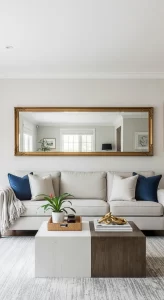
You must maintain tight and symmetrical spacing. Chaotic spacing creates a chaotic reflection. You can use basic layout tools like Canva or phone apps that let you see furniture in your room to plan your spacing before picking up a hammer.
Designer Tip: Lay your entire gallery wall design flat on the floor to finalize the arrangement before putting any holes in the wall.
5. Frame Selection Matches Your Interior Style
Mirror Frame Studio
Design the perfect space-enhancing mirror layout.
Does the mirror metal match the light fixture?
Frameless or thin frames maximize the illusion of space. They blend seamlessly into the wall and let the reflection do the work. Thick and heavy frames actively eat into your visual square footage.
Using warm wood frames adds natural beauty to sterile rooms. The material brings warmth while the glass brings light. You can find trending 2026 shapes to match your style:
- Geometric
- Wavy
- Asymmetric
The frame acts as the jewelry for your room. It needs to compliment the space without overwhelming it. A smart frame choice ties the entire room design together instantly.
These simple choices are powerful space enhancing mirror ideas. Keep the frame minimal if your room is incredibly small. Avoid dark bulky frames that act like visual stop signs on your wall.
Designer Tip: Match the metal finish of your mirror frame to the light fixtures or cabinet hardware in your room for a clean look.
Start Expanding Your Space Today
The Pillars of Mirror Design
Visual Architecture & Light
1. Size & Scale
You can double your daylight and physically push back your walls with the right placement. Ensure the mirror’s scale accurately matches the furniture it supports.
2. Reflection Targets
Look at the darkest corner of your room today. Visualize a large reflective surface sitting exactly in that spot catching the ambient light.
3. Curate the View
Always avoid reflecting messy areas like kitchen counters or ceiling fans. Keep the reflection’s focus strictly on beautiful, clean architectural spaces.
Action: The Blueprint
Now that you know how to expand small spaces, you should save these images to your design boards right now. It is time to start decorating.
The three pillars of mirror design are:
- Size
- Scale
- Reflection targets
You can double your daylight and push back your walls with the right placement. Look at the darkest corner of your room today. Visualize a large reflective surface sitting exactly in that spot. Notice how much brighter the space could be. You should save these images to your design boards right now so you have them ready.
Avoid reflecting messy areas like kitchen counters or ceiling fans. Keep the focus on beautiful clean spaces. Now that you know exactly how to use mirrors to make a small space look bigger, it is time to start decorating.