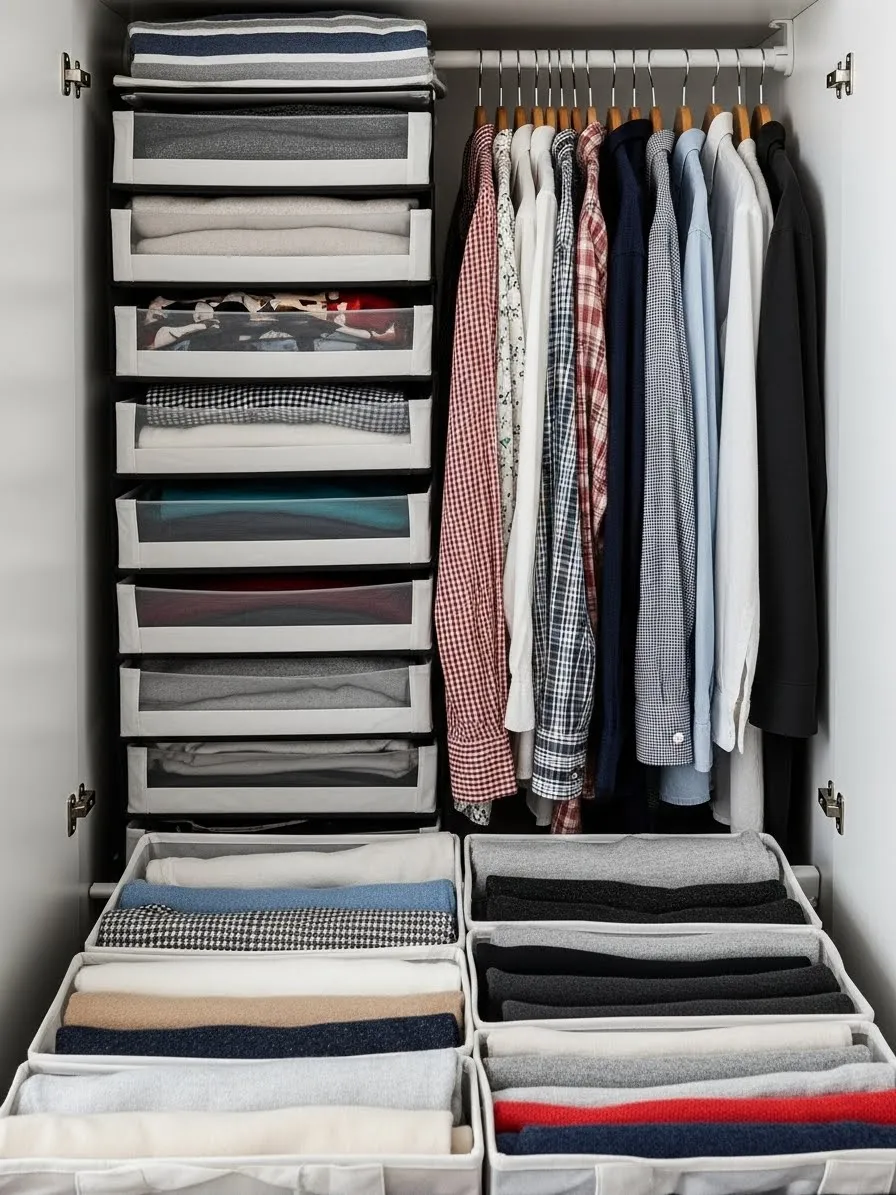
Do you struggle to close your closet door? Cramped closets make mornings stressful. Finding that one shirt feels like a treasure hunt. Many people fight limited space every single day.

Your wardrobe deserves room to breathe. The good news is you do not need a major renovation to solve this problem. Smart organization solves the biggest storage challenges. You only need to think vertically and strategically.
We compiled 40 clever solutions just for you. These ideas focus on utilizing every wasted inch of space. Get ready to transform your tiny closet instantly.
1. The Vertical Chain Cascade Hanger
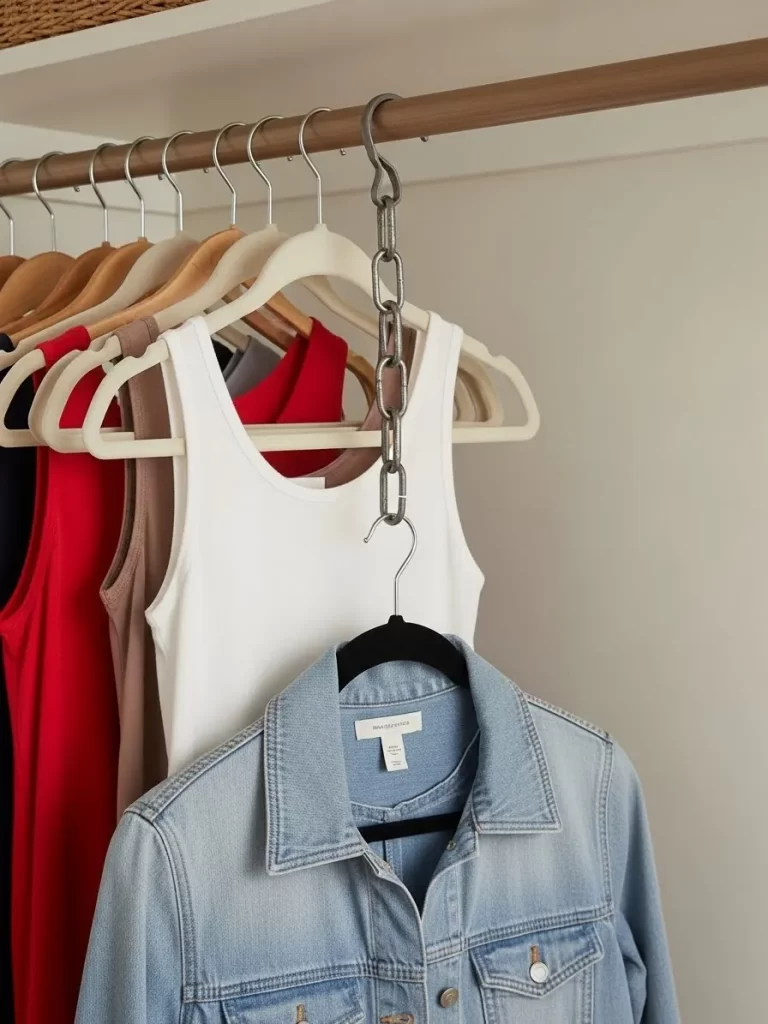
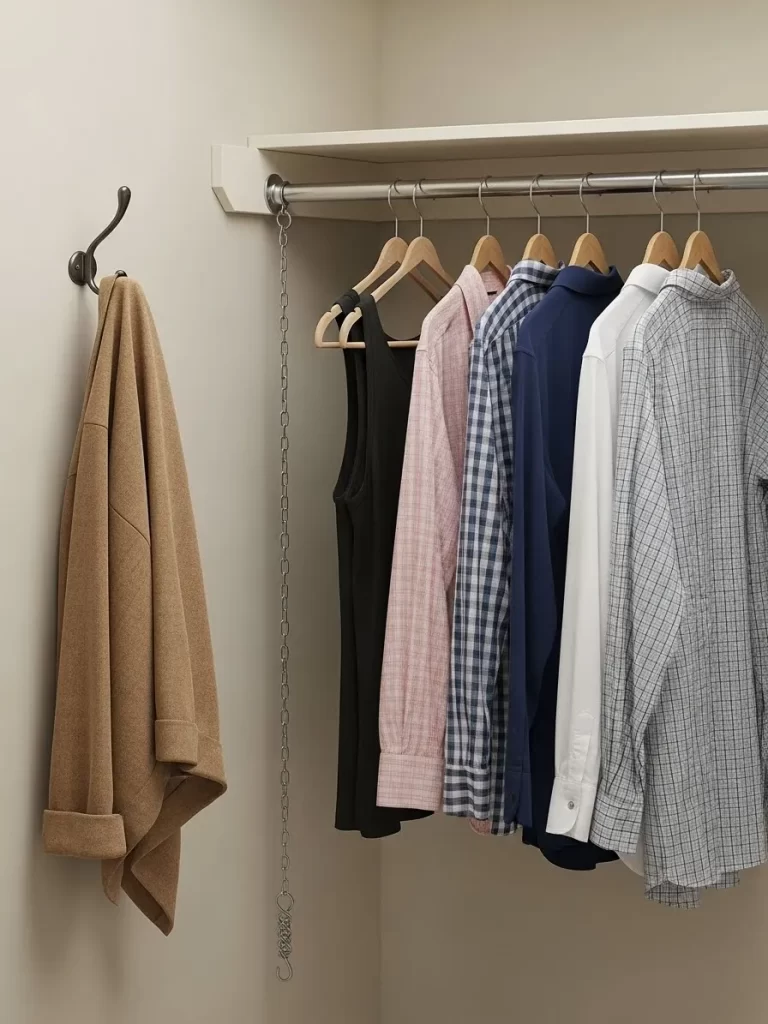
Vertical storage often goes unnoticed in cramped closets. You can reclaim that valuable area using a simple heavy metal chain. This clever method allows you to cascade hangers downward instead of crowding them sideways on the rod. It works very well for grouping tank tops or creating an outfit station for the week.
The chain acts as a tiered system that essentially triples your hanging capacity in one single spot. Your clothes stay wrinkle free because they are not squished together tightly. You save horizontal inches for bulky coats or dresses. The industrial look adds a cool texture to the space too. A quick trip to the hardware store creates a customized organizer for cheap. This trick turns dead air into functional storage immediately.
Material Required List
- Zinc plated steel chain (1 to 2 feet in length)
- Large S hook or a heavy duty carabiner
- Standard velvet or plastic hangers
- Spray paint (optional for color)
Equipment Required List
- Measuring tape
- Bolt cutters or a hacksaw (if chain is not pre cut)
- Two pairs of pliers
DIY Instructions Step by Step
- Measure your vertical drop.Take your tape measure and check the distance from your closet rod to the floor or the top of a shelf. Decide how long you want the chain. Usually, 18 inches works well.
- Cut the chain.Use bolt cutters to snip the link at your desired length. Many hardware stores do this for you if you ask.
- Form the top loop.Take your pliers and pry open the top link slightly if you need to fit it over a thick rod. A better way is using a large S hook. Place the S hook over the closet rod.
- Connect the chain.Slip the top link of your chain onto the bottom curve of the S hook. Squeeze the S hook closed with pliers so it stays secure.
- Start hanging.Place your clothing hangers into the individual chain links. Skip a link between items if they look too crowded.
2. The Exterior Valet Hook
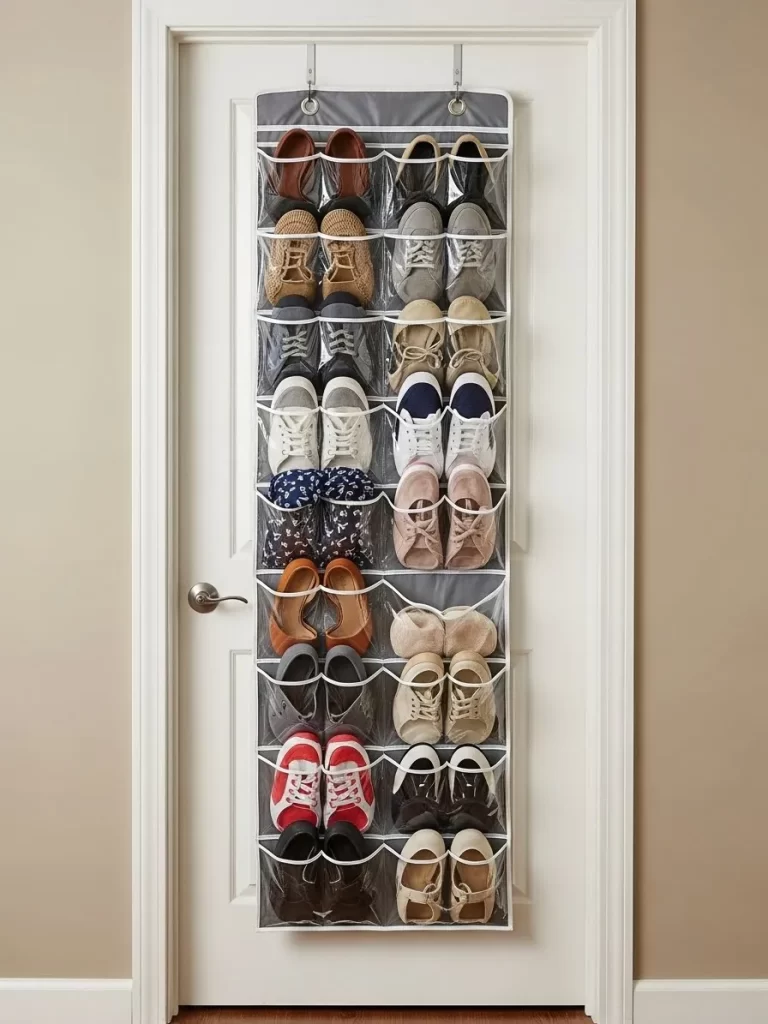
Most people ignore the empty wall space just outside the closet door. You can transform this dead zone into a functional staging area with a single heavy metal hook. This simple addition allows you to plan your outfit for the next day without opening a single drawer. It also serves as a great spot to air out a jacket that does not need washing yet.
The hook keeps your clothes off the floor and prevents clutter from piling up on your bed. You gain a designated spot for transient items. This tool helps you utilize vertical space that usually goes to waste. The installation is quick and creates immediate value. Your morning routine becomes smoother when your clothes are ready and waiting for you.
Material Required List
- One heavy duty metal wall hook
- Two mounting screws (usually included)
- Two plastic wall anchors (if no stud is available)
Equipment Required List
- Power drill
- Drill bits
- Phillips head screwdriver
- Pencil
- Stud finder
- Bubble level
DIY Instructions Step by Step
- Choose your location.Stand near your closet and find a spot on the wall that allows a long coat to hang freely. Ensure the garment will not block the door handle or walkway. Mark this height with your pencil.
- Find the support.Use your stud finder to locate a wooden beam behind the drywall. Using a stud provides the strongest hold for heavy winter coats. If you cannot find a stud, you must use wall anchors.
- Drill the holes.Hold the hook against the wall at your mark. Use your pencil to fill in the screw holes. Remove the hook and drill into the wall at these new pencil marks.
- Install the hook.Place the hook back over the holes. Insert the screws and tighten them with your screwdriver until the hook feels solid against the wall.
3. The Accessory Pegboard Wall
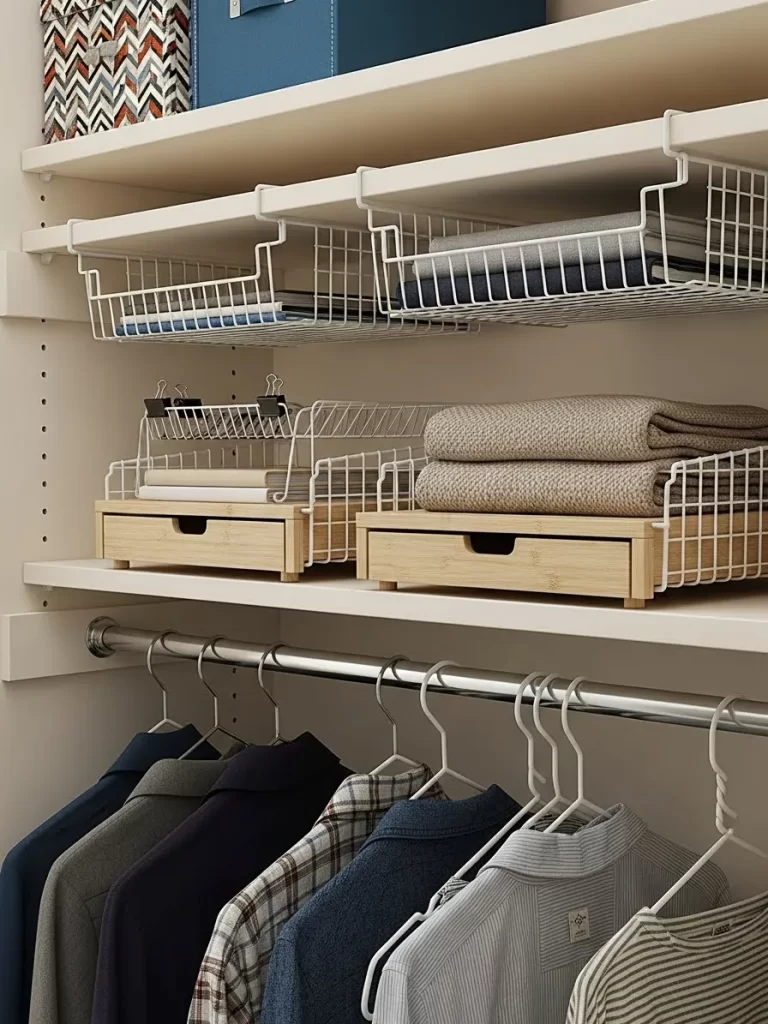
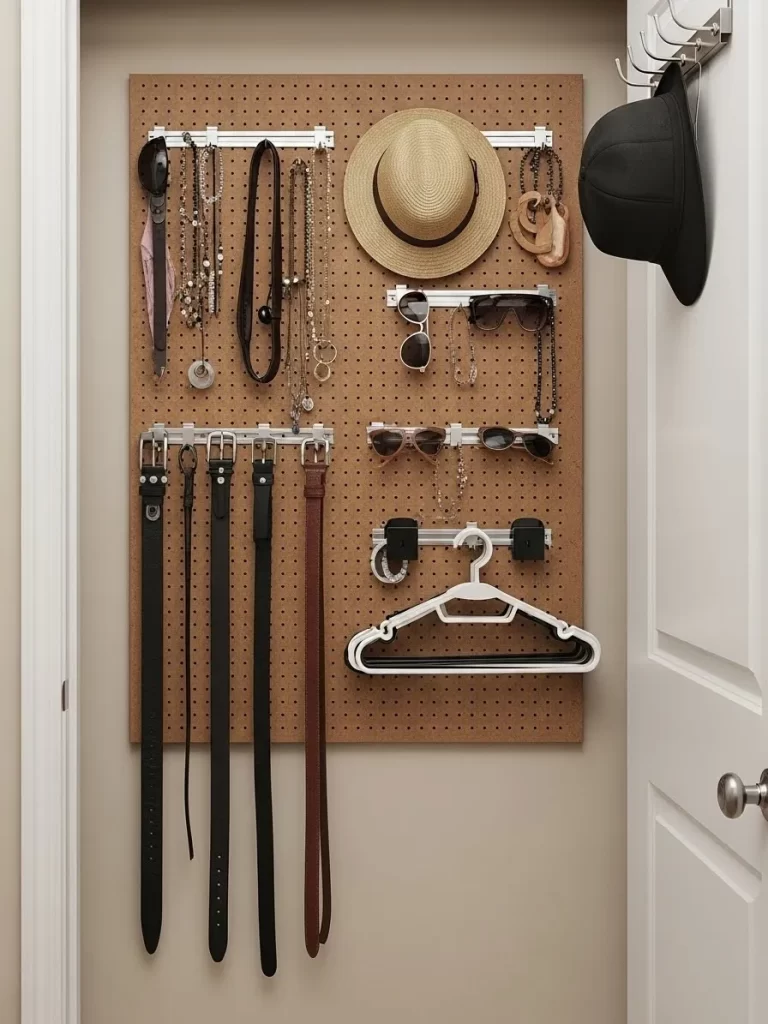
Small items like belts and sunglasses often get lost in deep drawers. A pegboard system brings these accessories out into the open where you can see them. This vertical organizer turns a blank wall or the back of a door into a custom display. You can arrange hooks and rails to fit your specific collection of jewelry and hats.
This method frees up shelf space for bulkier items like sweaters. It creates a visual inventory so you know exactly what you own. You stop buying duplicates because you can see everything clearly. The cork or wood texture adds a warm design element to the room. It is a flexible solution that changes as your wardrobe evolves.
Material Required List
- Pegboard panel (wood or fiberboard)
- Pegboard mounting kit (spacers and screws)
- Assorted pegboard hooks and rails
- Small baskets or bins for the board
Equipment Required List
- Measuring tape
- Power drill
- Level
- Pencil
- Screwdriver
DIY Instructions Step by Step
- Measure the surface.Determine the width and height of the wall or door where you want the board. Purchase a board that fits these dimensions or ask the hardware store to cut it for you.
- Mark the mounting points.Hold the board against the wall. You need a friend to help you here. Place your level on top to ensure it is straight. Mark the four corners through the peg holes with your pencil.
- Install the spacers.Pegboards need a small gap behind them for the hooks to fit. Screw the plastic spacers from your kit into the wall at your pencil marks.
- Mount the board.Align the board holes with the spacers. Insert the screws and tighten them down.
- Arrange your hooks.Insert your hooks and rails into the holes. Test different layouts with your hats and belts until you like the look.
4. The Under Shelf Basket Drawer
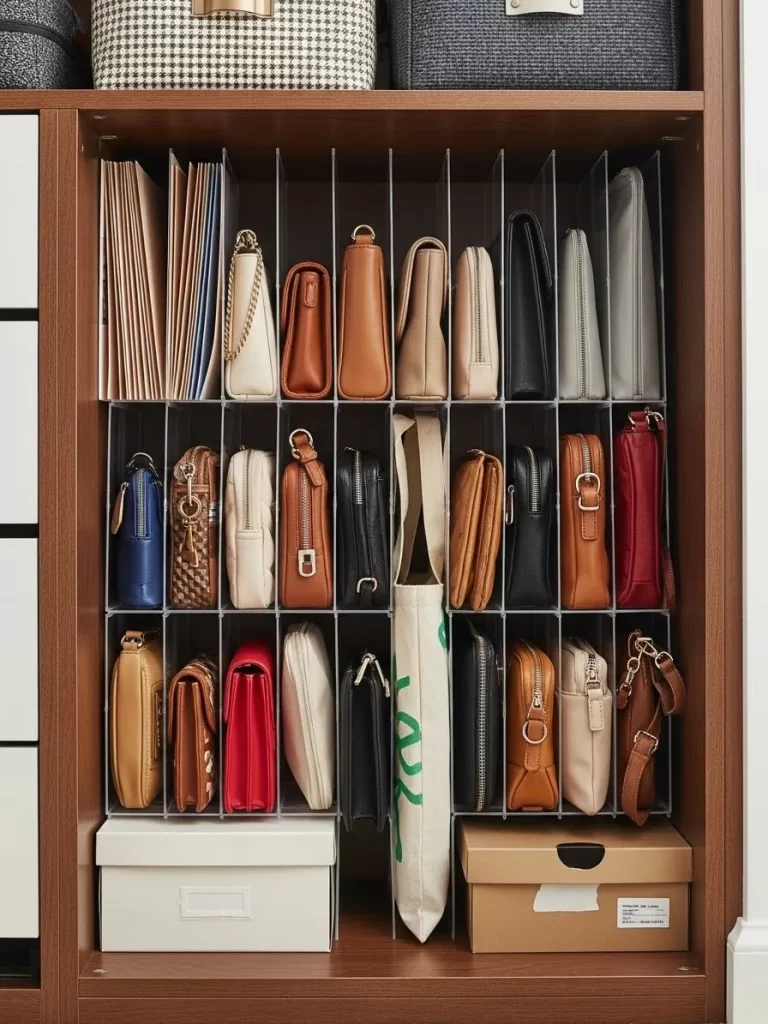
Shelves often have wasted air space above the items stacked on them. You can capture this lost area with slide on wire baskets. These clever organizers clip right onto the existing wood shelf without any tools. They add a new layer of storage for thin items like clutches or documents.
Some versions come with a bamboo drawer front to hide the contents. This gives the closet a polished and custom look for a low cost. You gain extra drawers without buying a heavy dresser. It keeps small items from floating around loosely on large shelves. This solution maximizes every inch of vertical height available to you.
Material Required List
- Under shelf wire baskets (measure your shelf thickness first)
- Adhesive grip tape (optional)
Equipment Required List
- Measuring tape
- Cleaning cloth
DIY Instructions Step by Step
- Check shelf thickness.Measure the thickness of your closet shelf. Most baskets fit shelves that are one inch thick. Ensure your shelf is not too thick for the bracket arms.
- Clear the shelf.Remove any clothes or boxes from the shelf where you plan to install the basket. Wipe the surface clean with a cloth to remove dust.
- Add grip (optional).If you are worried about the basket sliding, cut a small piece of adhesive grip tape. Stick it to the top of the shelf where the bracket arm will rest.
- Slide it on.Align the arms of the basket with the shelf edge. Push it firmly all the way back until it stops.
- Fill the drawer.Place your items inside. Avoid very heavy objects to prevent the wire from bending.
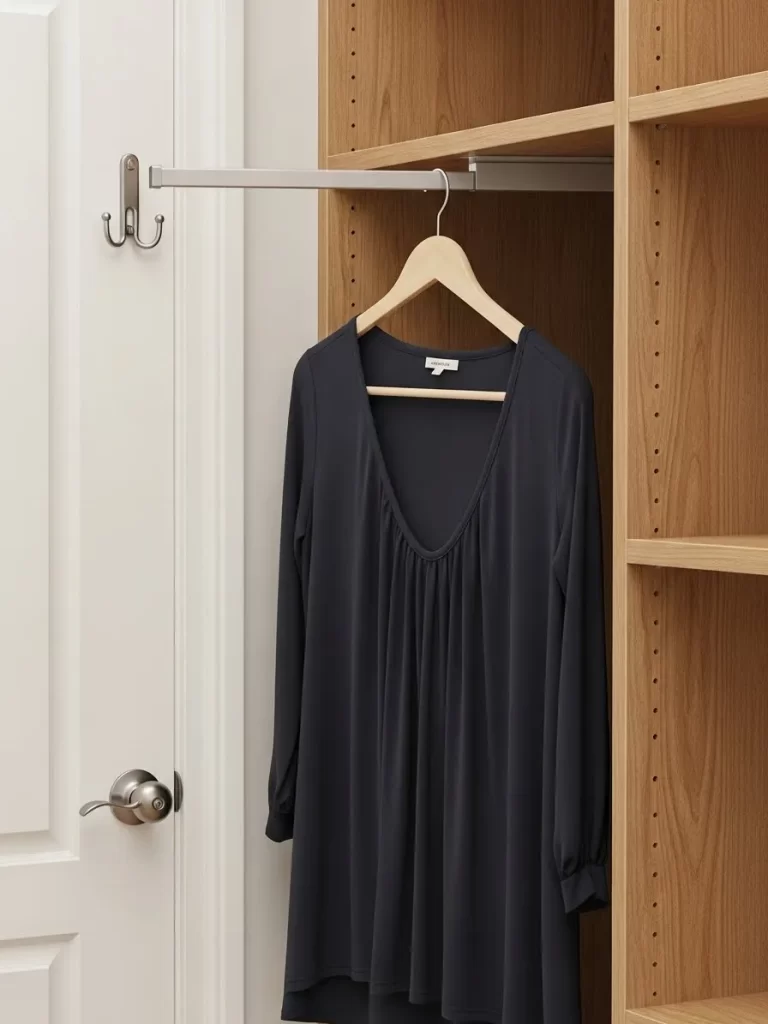
5. The Retractable Wall Rack
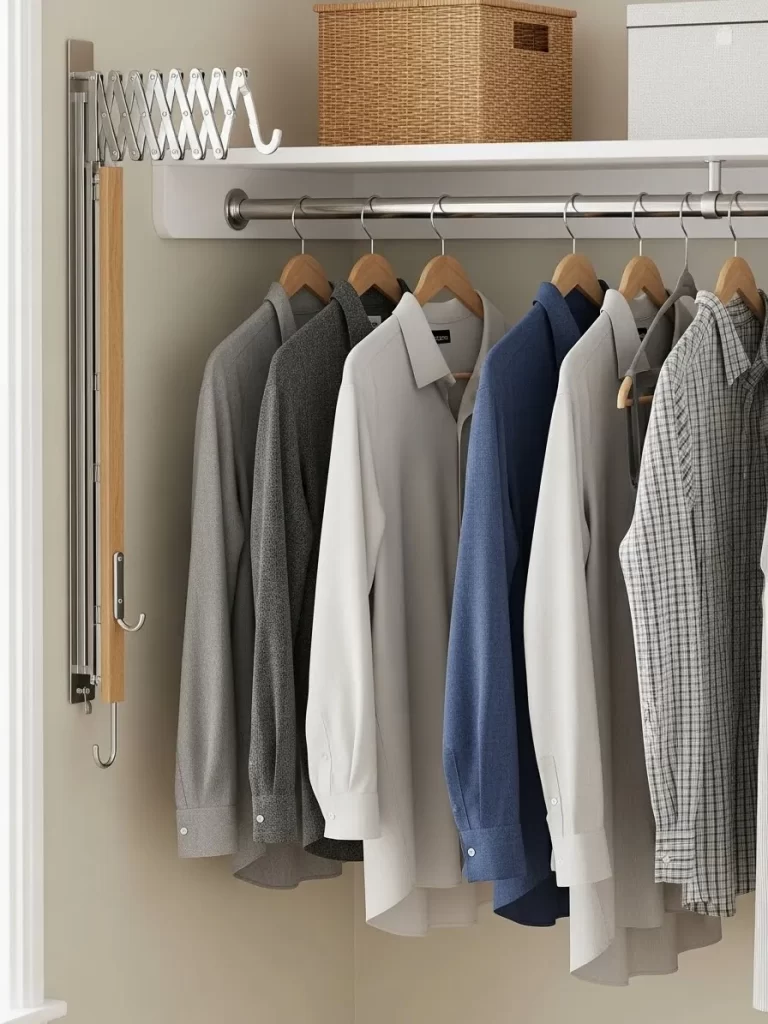
Ironing clothes or packing for a trip requires temporary hanging space. An accordion style wall rack provides this function without taking up permanent room. It folds flat against the wall when you are not using it. When you need it, the rack extends out to hold several hangers at once.
This tool acts like a pop up closet rod. It is excellent for tight corners where a full rod fits poorly. You can use it to separate dry cleaning or plan a week of outfits. The wood and metal construction looks sleek and modern. It solves the problem of where to put clothes during transition moments.
Material Required List
- Retractable accordion wall rack
- Wall anchors and screws
Equipment Required List
- Power drill
- Pencil
- Level
- Screwdriver
- Hammer
DIY Instructions Step by Step
- Determine the height.Find a spot on the wall that is easy to reach. Ensure there is enough clearance for the rack to expand fully without hitting a door.
- Mark the holes.Hold the rack in place. Put your level on top to keep it straight. Use your pencil to mark the screw holes.
- Drill and anchor.Drill holes at your marks. Tap the wall anchors in with a hammer so they are flush with the surface.
- Secure the rack.Line up the rack holes with the anchors. Drive the screws in tightly.
- Test the movement.Pull the rack out and push it back in to ensure it moves smoothly.
6. The Clear Acrylic Divider
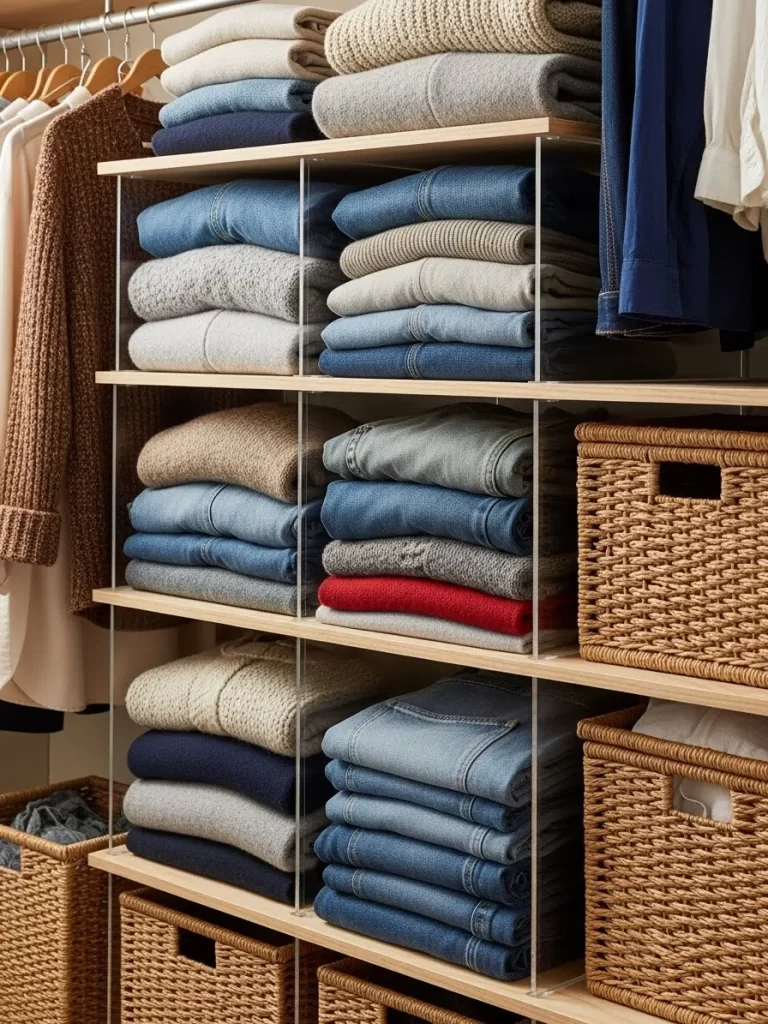
Stacks of sweaters often topple over and create a mess. Clear acrylic dividers solve this by creating rigid boundaries on your open shelves. They slide onto the wood and lock your piles of clothes in place. This keeps denim and woolens neat and upright.
The clear material makes the dividers invisible so your closet looks airy. You can see everything you own at a glance. They act like thin walls that stop items from merging into one giant heap. This system forces you to maintain order. You can pull one shirt out from the bottom of the stack without ruining the whole pile.
Material Required List
- Acrylic shelf dividers (ensure the base fits your shelf depth)
- Double sided nano tape (optional for extra hold)
Equipment Required List
- Microfiber cloth
- Mild cleaner
DIY Instructions Step by Step
- Clean the surface.Remove all clothes from the shelf. Clean the wood thoroughly to ensure no dust interferes with the divider grip.
- Plan your spacing.Decide how wide you want each stack to be. A width of 10 to 12 inches is usually good for folded sweaters or jeans.
- Slide them on.Open the bottom clip of the divider slightly. Slide it onto the front edge of the shelf. Push it back until it is fully seated.
- Align them.Step back and look at the dividers. Adjust them left or right to make them perfectly parallel.
- Stack your clothes.Fold your items neatly and place them between the dividers.
7. The Slim Velvet Hanger
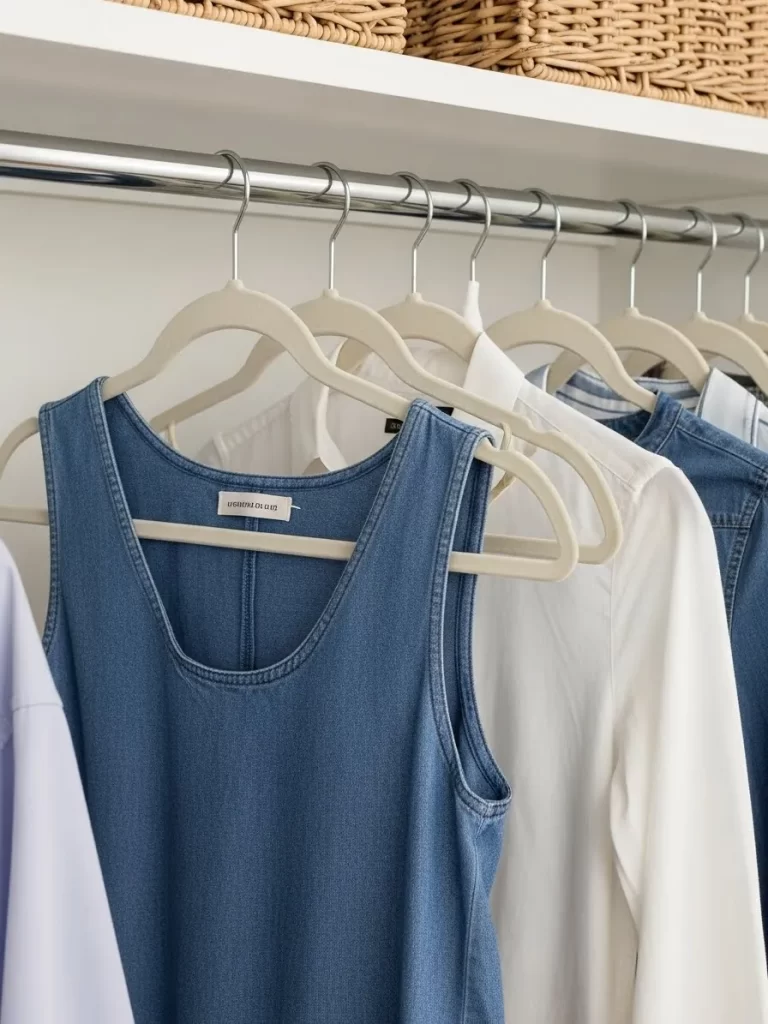
Standard plastic or wood hangers take up a surprising amount of width. Switching to slim velvet hangers is the fastest way to double your rod space. These thin hangers allow you to pack clothes closer together without crowding them. The velvet texture grips the fabric so nothing slips off.
Your closet immediately looks more organized because all the hangers match. The uniform height keeps shoulders aligned and neat. You get a boutique look for a small investment. This simple swap frees up inches of rod space for new purchases. It works well for everything from silk blouses to heavy cotton shirts.
Material Required List
- Pack of slim velvet hangers (50 to 100 count)
- Trash bag for old hangers
Equipment Required List
- None
DIY Instructions Step by Step
- Remove old hangers.Take a section of clothes out of the closet. Remove them from the mismatched plastic or wire hangers.
- Inspect clothes.This is a good time to check for stains or donations. Only keep what you actually wear.
- Rehang on velvet.Place each garment on a new velvet hanger. Ensure all hooks are facing the same direction.
- Group by category.Hang the items back up. Group them by type or color for a better visual effect.
- Repeat.Continue this process until you have replaced every single hanger in the closet.
8. The Labeled Storage Bin
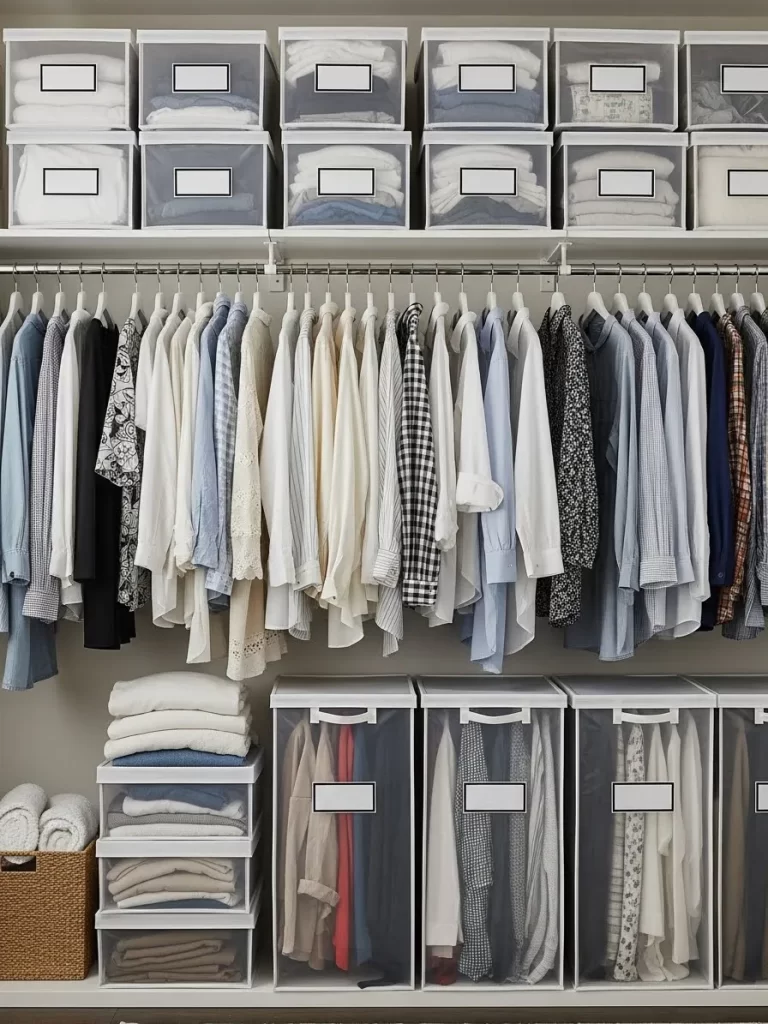
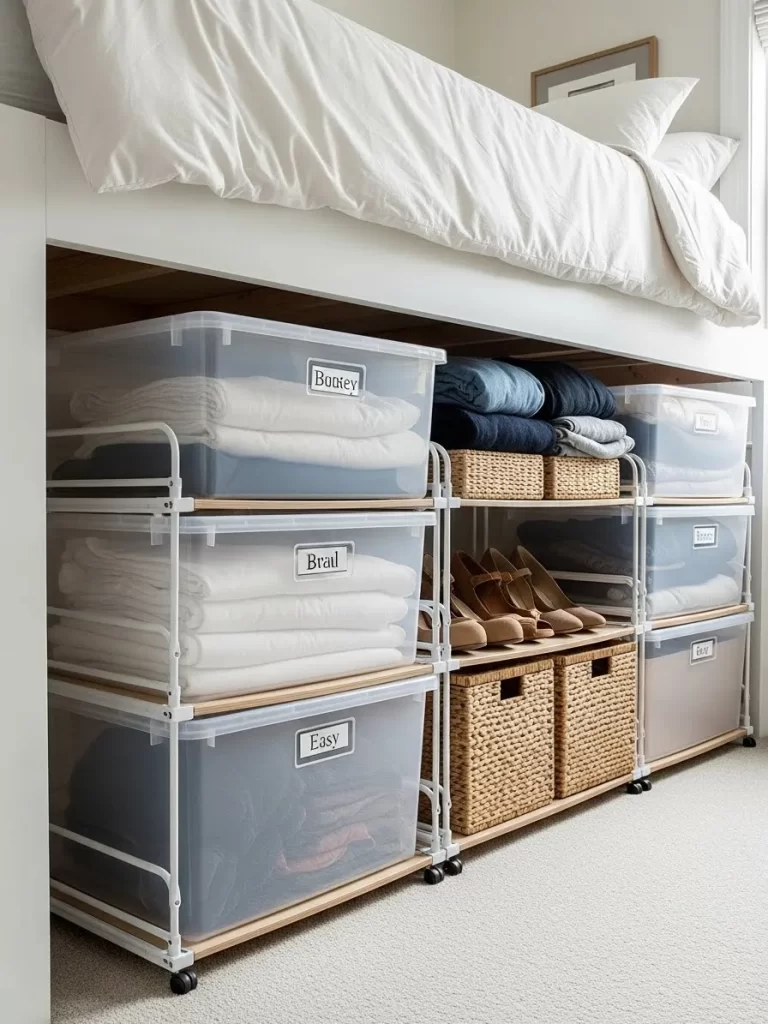
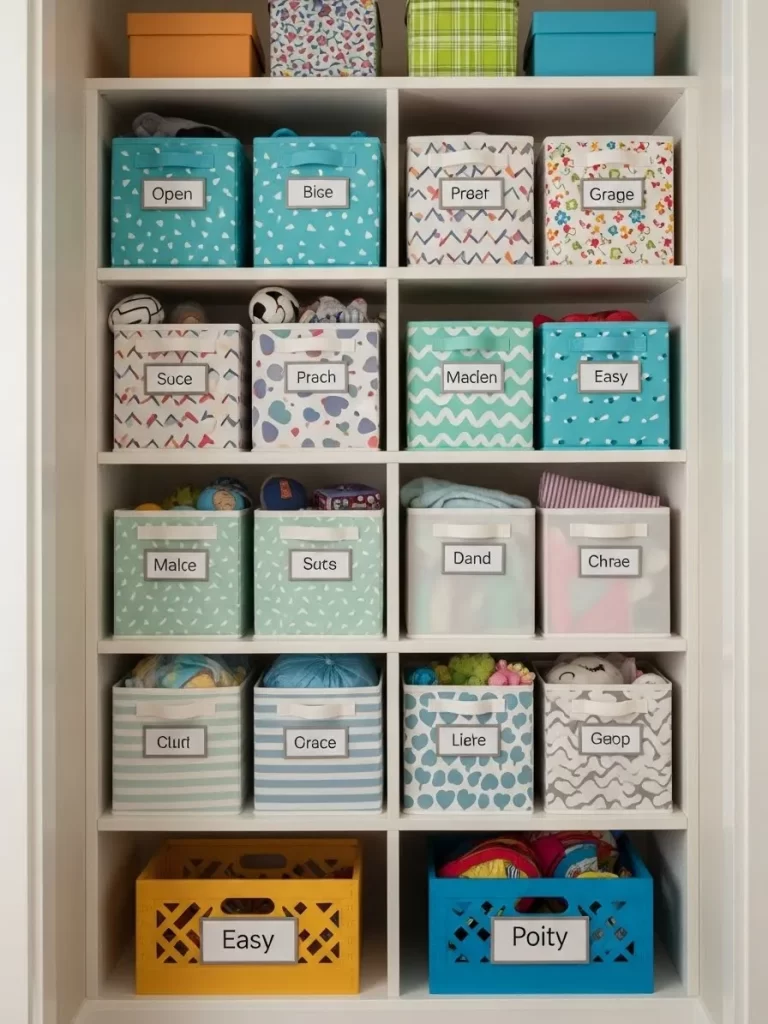
Top shelves often become a graveyard for lost items. Using identical storage bins transforms this area into a functional archive. Clear or semi opaque bins let you see what is inside while hiding visual noise. Adding labels ensures you never have to guess where your winter scarves are.
This system protects off season clothes from dust and light. The handles make it easy to pull the bins down when needed. It creates a clean line of symmetry across the top of your closet. You can utilize the full height of the shelf by stacking them. It turns chaos into a categorized library of your belongings.
Material Required List
- Matching storage bins (measure shelf height first)
- Cardstock or adhesive labels
- Marker
Equipment Required List
- Step stool (if shelf is high)
DIY Instructions Step by Step
- Sort your items.Pull everything off the top shelf. Group items into categories like “Winter Accessories,” “Swimwear,” or “Keepsakes.”
- Choose the right bin.Select a bin size that fits your shelf height. Ensure you can fit at least two or three across the width.
- Fill the bins.Place your sorted groups into the bins. Fold items neatly to maximize space.
- Create labels.Write the category name on a label using a bold marker. Stick or insert the label into the holder on the front of the bin.
- Position the bins.Lift the bins onto the shelf. Line them up with the handles facing out.
9. The Rolling Utility Cart
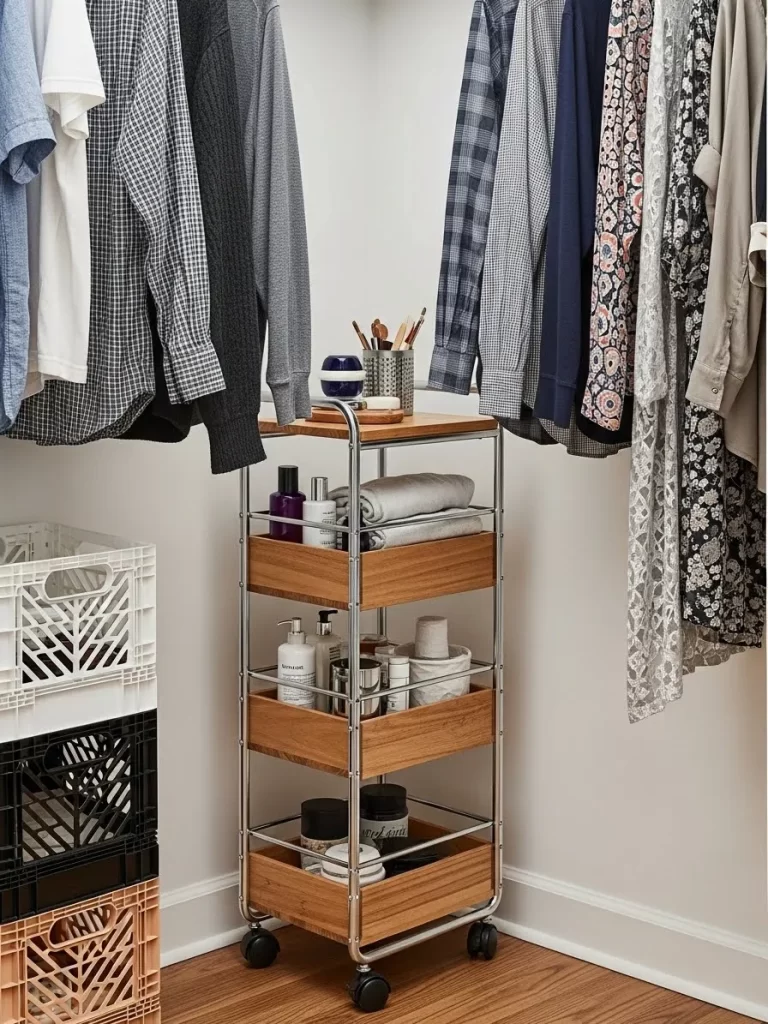
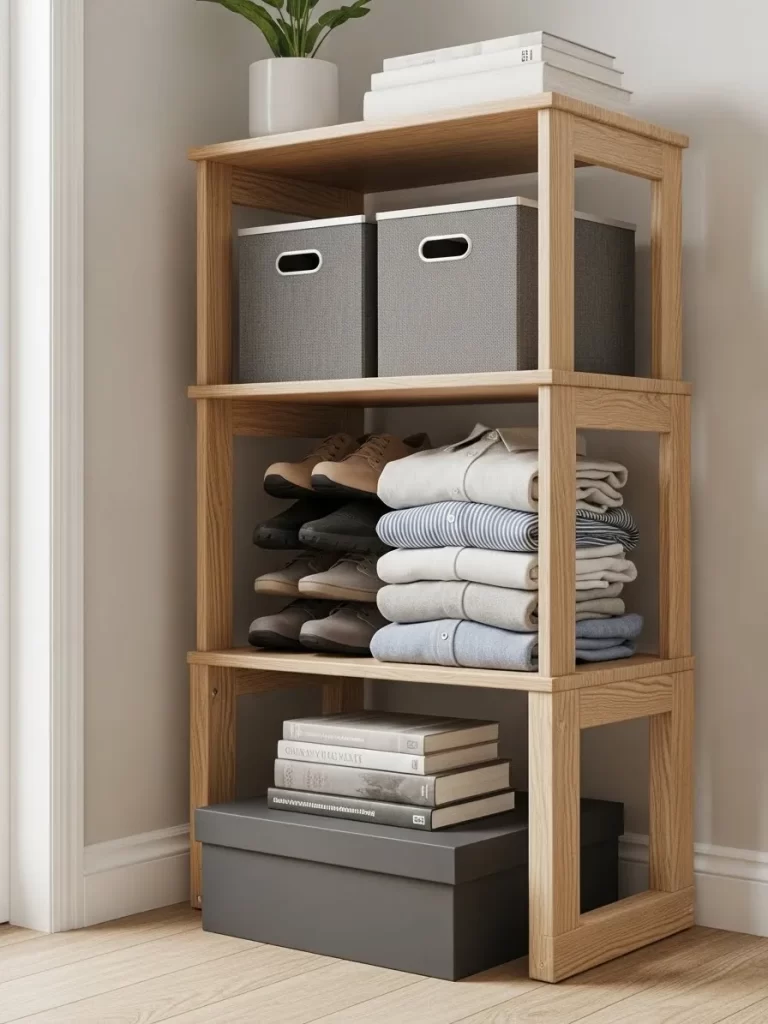
Floor space under hanging clothes is often dark and unused. A slim rolling cart fits perfectly into these narrow gaps. This multi tier unit creates drawers and shelves where there were none before. It is excellent for holding beauty products, socks, or craft supplies.
The wheels allow you to roll the entire unit out into the room. You can use it as a dressing station and then tuck it away. The wood and metal design adds a high end feel to the closet interior. It maximizes vertical storage in the lower half of your closet. You turn a shadowy corner into a productive asset.
Material Required List
- Slim rolling cart kit (check width of your closet gap)
- Small wrench (usually included)
Equipment Required List
- Screwdriver (if required by kit)
DIY Instructions Step by Step
- Unpack the parts.Lay out all the metal frames, wooden drawers, and wheels on the floor. Check the manual to ensure no screws are missing.
- Build the frame.Connect the side poles with the crossbars. Tighten the screws loosely at first to ensure everything fits.
- Attach the wheels.Push or screw the caster wheels into the bottom of the frame legs. Make sure they click into place.
- Insert the drawers.Slide the wooden boxes or shelves onto the rails.
- Tighten everything.Go back and tighten all screws fully. Roll the cart into your closet to test the fit.
10. The Pocket Door Organizer
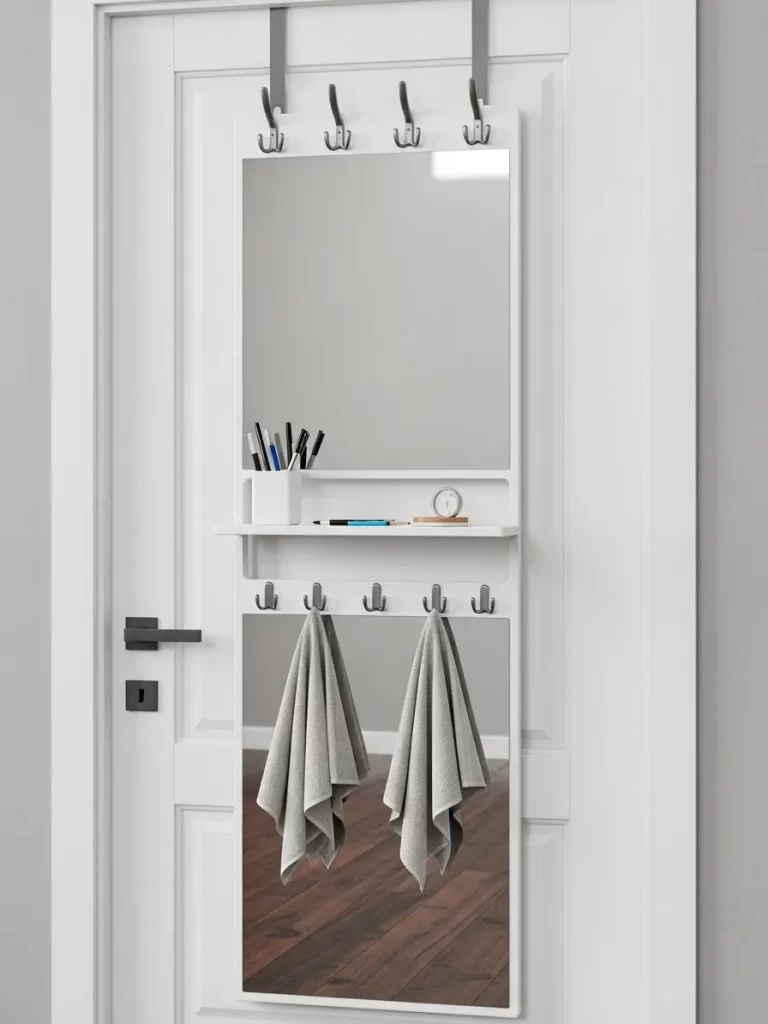
The back of the closet door is a massive surface that often goes bare. A pocket organizer hangs right over the top and provides instant storage slots. This is typically used for shoes but works well for anything small. You can store rolled belts, socks, or even jewelry in the clear pockets.
This method keeps items visible and separated. You free up floor space by getting shoes off the ground. The installation requires zero drilling or damage to the door. It is a rental friendly solution that packs a lot of storage into a thin profile. You gain easy access to items you use every day.
Material Required List
- Over the door pocket organizer
- Three or four metal over door hooks (included)
Equipment Required List
- Step stool
DIY Instructions Step by Step
- Prepare the hooks.Take the metal hooks provided with the organizer. Some have a spring mechanism to adjust to the door thickness.
- Place hooks on door.Open the closet door. Place the hooks over the top edge of the door. Space them out evenly.
- Check the close.Try to close the door gently. Ensure the hooks do not scrape the frame. If they do, you might need thinner hooks.
- Hang the organizer.Unfold the pocket organizer. Loop the grommet holes at the top onto the metal hooks.
- Fill the pockets.Place one shoe or item in each pocket. Put heavier items at the bottom to keep the organizer stable.
11. The Uniform Velvet Hanger
You can instantly double the hanging space in a cramped closet by swapping out mismatched hangers. Thick plastic or wooden hangers consume valuable horizontal inches that you need for your clothes. This creates a streamlined look that makes the entire wardrobe feel larger and more organized.
The slim velvet hangers allow garments to sit closely together without overcrowding. The velvet material provides a non slip grip that prevents silky or wide neck tops from sliding onto the floor. This creates a uniform height that keeps shoulders aligned and neat. It is a cost effective upgrade that requires zero construction skills. Your clothes stay wrinkle free because they are not crushed by bulky plastic hardware.
Material Required List
- Pack of 50 or 100 slim velvet hangers (beige or black)
- Garbage bag for old hangers
Equipment Required List
- Damp cloth
DIY Instructions Step by Step
- Clear the rod.Remove a section of clothes from your closet rod. Place them on your bed so you can work easily.
- Clean the rod.Wipe the top of the closet rod with a damp cloth to remove dust. This prevents dirt from falling onto your clean clothes later.
- Swap the hangers.Take one garment off its old hanger. Place it onto a new velvet hanger. Ensure the hook faces inward so all clothes hang in the same direction.
- Group and hang.Place the item back on the rod. Repeat this for every piece of clothing. Slide them close together to see how much space you have saved.
12. The Ceiling Grid Rack
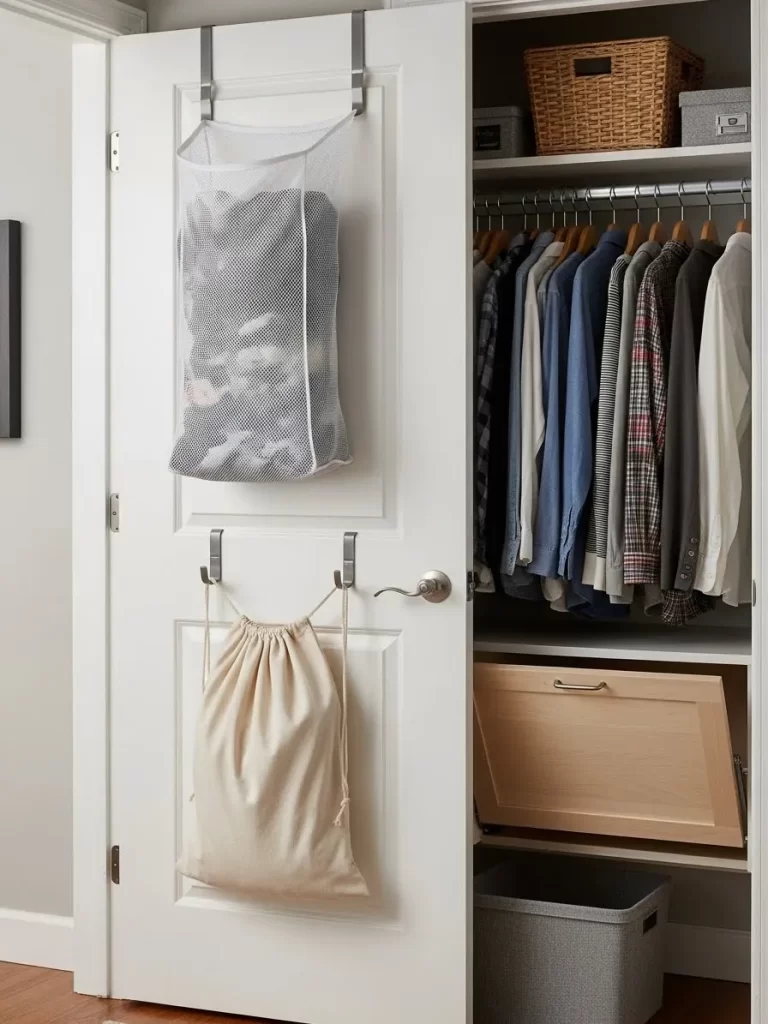
Floor space is often nonexistent in small rooms, so you must look up. This wire grid system utilizes the neglected area near the ceiling to store bulky items that you do not use daily. It keeps these awkward shapes off your shelves and out of the way.
The open grid design allows you to see exactly what is stored up there without needing a ladder. You can adjust the hooks to fit different item sizes instantly. This method turns dead air into a heavy duty storage zone. It works exceptionally well in closets with high ceilings. Your floor remains clear for shoes or furniture.
Material Required List
- Wire grid panel (2 feet by 4 feet is standard)
- Four ceiling mount brackets
- Toggle bolts or heavy duty drywall anchors
- S hooks or carabiners
Equipment Required List
- Power drill
- Pencil
- Measuring tape
- Ladder
- Stud finder
DIY Instructions Step by Step
- Locate the studs.Stand on your ladder and use a stud finder to locate the wooden joists in your ceiling. Mark these solid points with a pencil. Mounting into wood is safer for heavy items.
- Mark bracket spots.Hold the wire grid up against the ceiling. Mark the four corners where the brackets will attach. Ensure these align with your stud marks if possible.
- Drill holes.Drill pilot holes into the ceiling at your pencil marks. If you missed a stud, insert a toggle bolt anchor into the hole.
- Install brackets.Screw the ceiling brackets firmly into place. Ensure they are tight and do not wiggle.
- Hang the grid.Lift the wire grid and slide it into the brackets. Tighten the side screws on the brackets to lock the grid in place.
- Add hooks.Clip S hooks onto the wire mesh where you want to hang your gear.
13. The Accordion Valet Rod
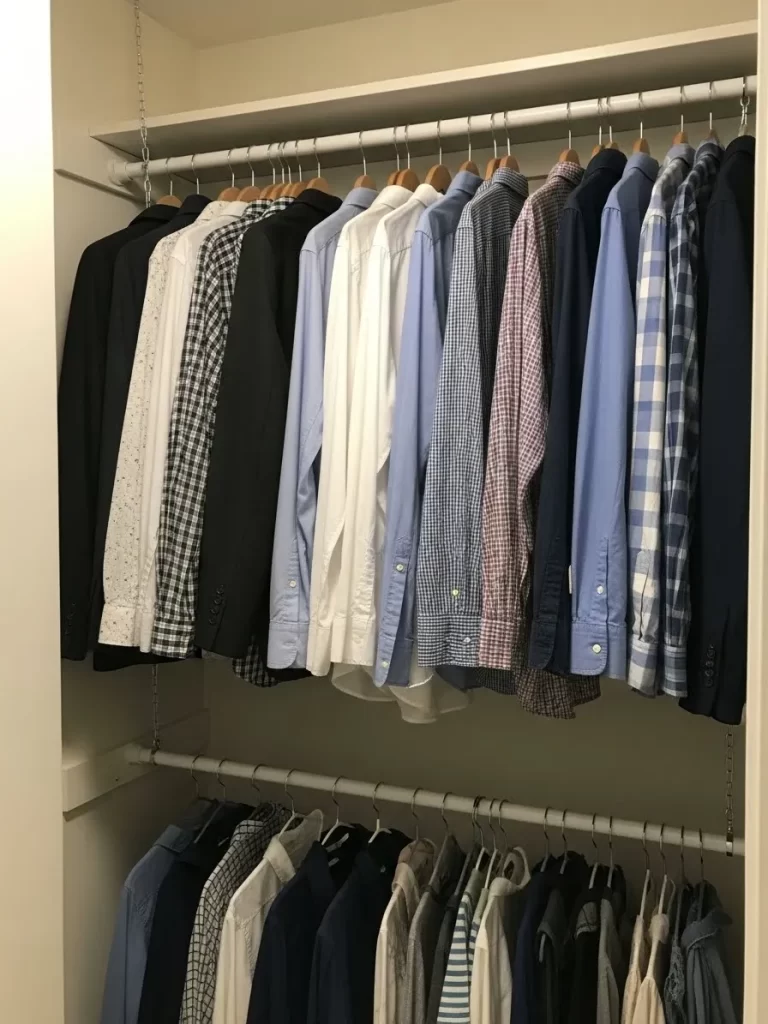
A full closet often lacks a place to hang a single outfit for the next day. This retractable accordion rack mounts to the wall and extends outward to create a temporary hanging rod. It folds flat against the wall when you finish using it.
This tool acts like a pop up closet rod. It is excellent for tight corners where a full rod fits poorly. You can use it to separate dry cleaning or plan a week of outfits. The wood and metal construction looks sleek and modern. It solves the problem of where to put clothes during transition moments.
Material Required List
- Retractable accordion wall rack
- Wall anchors and screws
Equipment Required List
- Drill
- Level
- Screwdriver
- Pencil
- Hammer
DIY Instructions Step by Step
- Determine the height.Find a spot on the wall that is easy to reach. Ensure there is enough clearance for the rack to expand fully without hitting a door.
- Mark the holes.Hold the rack in place. Put your level on top to keep it straight. Use your pencil to mark the screw holes.
- Drill and anchor.Drill holes at your marks. Tap the wall anchors in with a hammer so they are flush with the surface.
- Secure the rack.Line up the rack holes with the anchors. Drive the screws in tightly.
- Test the movement.Pull the rack out and push it back in to ensure it moves smoothly.
14. The Chain Link Drop
You can triple your vertical hanging capacity with a simple length of chain. This method allows you to stagger hangers vertically so they do not crowd each other horizontally. It is a smart way to store coordinate outfits or bulky coats.
The chain links act as individual slots that keep hangers separated and visible. You prevent clothes from getting squashed and wrinkled. This solution is extremely cheap and requires no permanent installation. You can move it around the closet as your needs change. It utilizes the empty vertical space that usually goes to waste below short items.
Material Required List
- One foot of zinc plated steel chain
- One large S hook
- Pliers (if needed to close links)
Equipment Required List
- None
DIY Instructions Step by Step
- Select your chain.Buy a small length of chain from a hardware store. Ensure the links are wide enough to fit a hanger hook.
- Attach the top hook.Loop one end of the S hook through the top link of the chain.
- Hang it up.Place the top curve of the S hook over your existing closet rod. Let the chain dangle down freely.
- Load clothes.Place a hanger with a shirt or jacket into the chain links. Skip a link or two between items to ensure you can see them clearly.
15. The Labeled Bin Archive
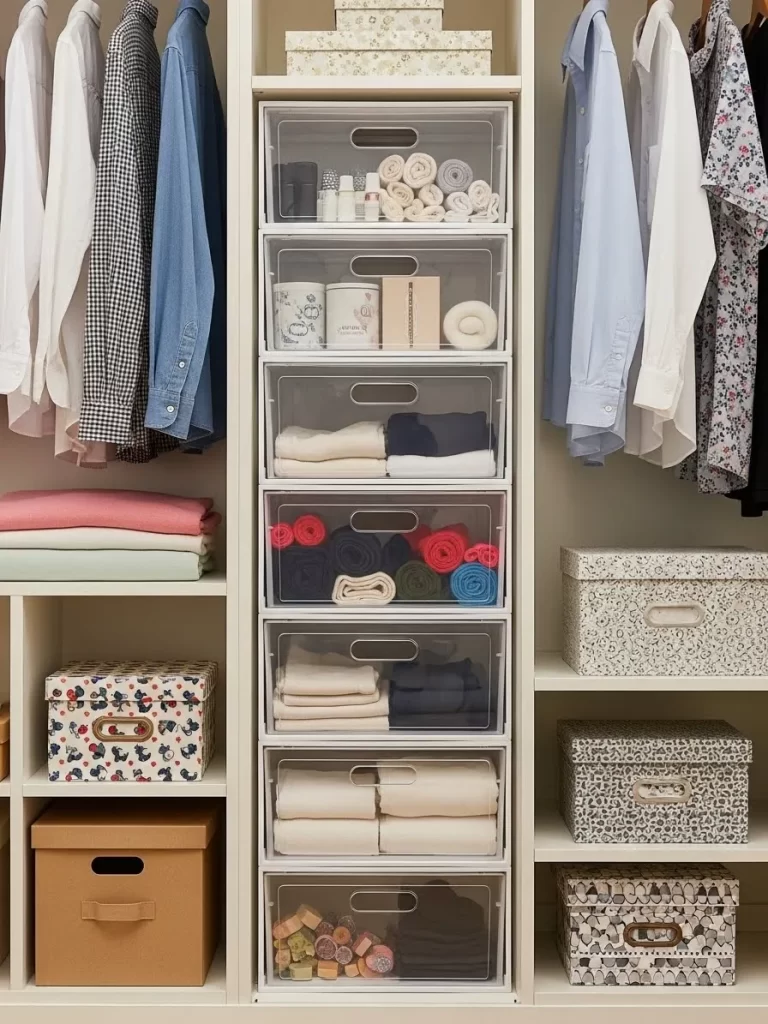
Top shelves often become messy dumping grounds for random items. Using uniform clear bins with white lids creates a clean and organized archive. Adding labels ensures you know exactly where your linens or off season clothes are located.
This visual uniformity makes a small closet feel professionally designed. The clear front panels allow you to verify the contents at a glance. You can stack these bins safely without fear of them toppling over. This system protects off season clothes from dust and light. It transforms an undefined space into a functional library of your wardrobe.
Material Required List
- Six to eight matching clear storage bins with lids
- Adhesive labels or cardstock
- Black marker
Equipment Required List
- Step stool
- Cleaning cloth
DIY Instructions Step by Step
- Measure your shelf.Check the height from the shelf to the ceiling. Buy bins that fit this space comfortably without scraping the top.
- Sort your items.Pull everything off the shelf. Group items by category, such as “Sweaters,” “Scarves,” or “Bedding.”
- Fill the bins.Fold your items neatly. Place them inside the bins. Try to keep similar colors together for a tidy look.
- Label clearly.Write the category name on a label in large block letters. Stick the label on the center front of the bin.
- Position the bins.Lift the bins onto the shelf. Line them up with the handles facing out.
16. The Invisible Shelf Divider
Tall stacks of folded clothes often fall over and mix together. Clear acrylic dividers create rigid walls that keep sweaters and jeans in neat piles. They are virtually invisible, which maintains an open and airy feel in the closet.
These transparent panels slide onto the shelf and lock your clothing stacks in place. You can pull a shirt from the bottom of the stack without toppling the rest. This tool creates designated zones for different clothing categories. It forces you to maintain the organization every time you do laundry. Your shelves look like a high end retail display.
Material Required List
- Four to six acrylic shelf dividers
- Measuring tape (to check shelf thickness)
Equipment Required List
- Microfiber cloth
- Glass cleaner
DIY Instructions Step by Step
- Check the fit.Measure the thickness of your wooden shelf. Buy dividers that match this specific measurement so they fit tightly.
- Clean the wood.Remove all clothes. Wipe the shelf down to ensure it is free of dust and lint.
- Position the divider.Slide the bottom clip of the divider onto the front edge of the shelf. Push it back firmly until it sits flush.
- Space them out.Place the next divider about 10 to 12 inches away. This width is standard for folded shirts or pants.
- Stack clothes.Fold your garments to a consistent width. Slide the stack between the dividers.
17. The Double Rod Extender
Most closets have a single high rod that leaves a massive empty space near the floor. A hanging rod extender instantly adds a second row of storage. This system hooks onto the top bar and suspends a new rod below using adjustable chains. It effectively doubles your hanging capacity for shirts and skirts.
You can install this in seconds without drilling any holes. It is fully adjustable so you can change the height based on your clothing length. This is an excellent solution for renters who cannot modify the walls. It creates a two tier system that separates tops from bottoms. You utilize the full vertical volume of the closet.
Material Required List
- Adjustable closet rod extender kit (rod and chains)
Equipment Required List
- None
DIY Instructions Step by Step
- Assemble the rod.Connect the horizontal rod pieces if they come in sections. Adjust the width to match your closet space.
- Attach the hooks.Place the two large hooks over your existing top closet rod. Space them out by about two or three feet.
- Hang the chains.Let the chains drop down from the hooks. Ensure they are not twisted.
- Insert the lower rod.Loop the bottom of the chains around the ends of the new lower rod.
- Level the rod.Adjust the chain links on both sides until the new rod hangs perfectly straight and level.
18. The Magnetic Beauty Strip
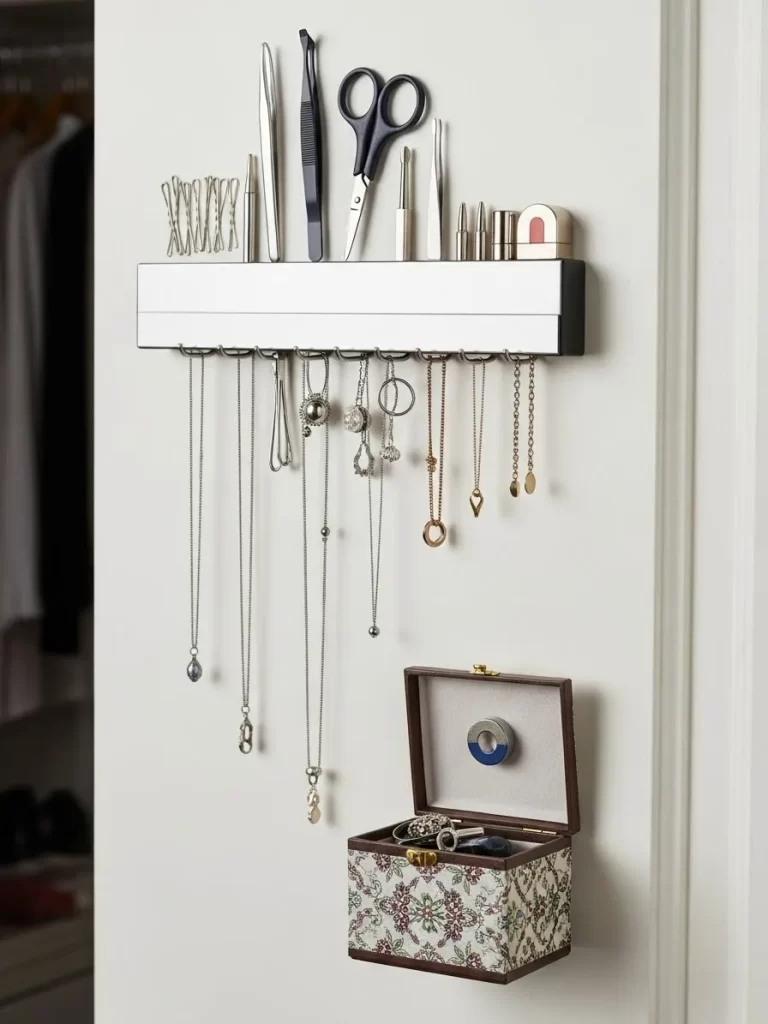
Small metal tools like tweezers and scissors often get lost in deep drawers. A magnetic strip mounted on the wall or door holds these items securely. It also works well for necklaces or metal hair clips. This keeps your daily grooming tools visible and within easy reach.
You clear up drawer space and prevent sharp tips from damaging other items. The sleek metal design looks modern and clean. It turns a vertical surface into a functional organizer. You never have to dig through a messy bag to find your tweezers again. It is a smart way to store small, easy to lose objects.
Material Required List
- Magnetic knife strip or tool holder
- Double sided mounting tape or screws
Equipment Required List
- Level
- Pencil
- Drill (if using screws)
DIY Instructions Step by Step
- Choose the spot.Find a flat section on the wall or the inside of a cabinet door. Ensure the tools will not bump into anything when the door closes.
- Level it.Hold the magnetic strip against the surface. Place a level on top to ensure it is horizontal. Mark the position.
- Mount the strip.If using tape, peel the backing and press the strip firmly against the wall for 30 seconds. If using screws, drill small pilot holes and screw the strip into place.
- Attach items.Place your metal tools against the magnet. Arrange them so they do not touch each other.
19. The Floating Wire Basket
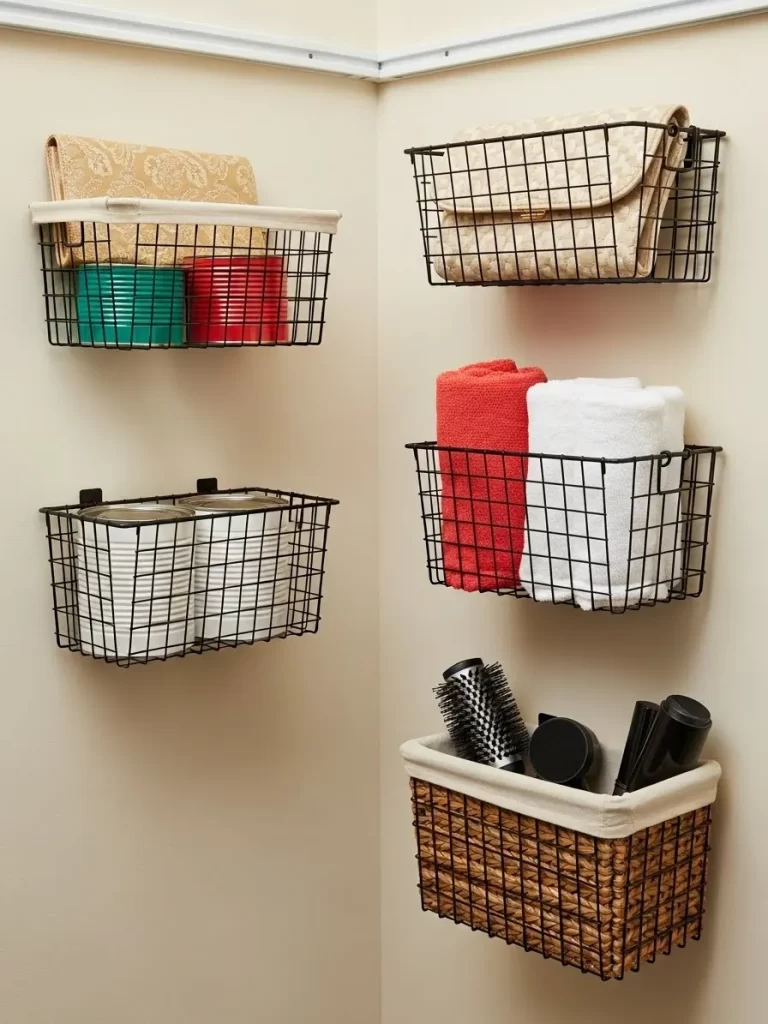
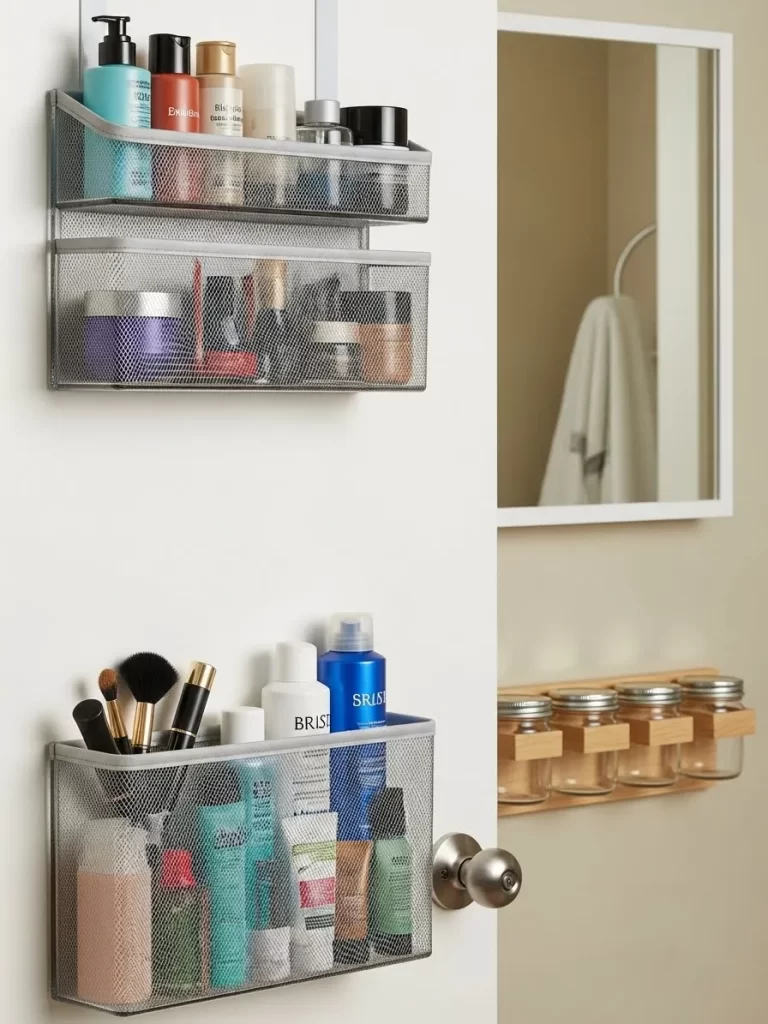
Wall space in a closet is often underutilized. Wire baskets mounted directly to the wall can hold rolled towels, handbags, or toiletries. These baskets provide deep storage that keeps items contained but visible. You can stack them vertically to create a column of storage on a narrow wall.
The open wire design lets air circulate, which keeps fabrics fresh. It is easier to grab a towel from a basket than to pull one from a high shelf. This method works well in corners or behind the door. You gain accessible storage without taking up any floor space. It adds a rustic or industrial look to the room.
Material Required List
- Three wire wall baskets
- Drywall anchors and screws
- Washers (if screw heads are small)
Equipment Required List
- Drill
- Level
- Pencil
- Screwdriver
DIY Instructions Step by Step
- Plan the layout.Hold the baskets up to the wall to decide on the spacing. Leave about 8 inches of clearance between them for easy access.
- Mark the holes.Use a pencil to mark the screw locations through the back wire loop or mounting plate of the basket.
- Drill and anchor.Drill holes at your marks. Insert wall anchors if you are not drilling into a stud.
- Secure the baskets.Place a washer on your screw if the wire gap is wide. Drive the screw through the basket mount and into the anchor. Tighten until the basket does not wobble.
20. The Door Hung Hamper
Dirty laundry often takes up valuable floor space in a bulky plastic basket. A mesh laundry bag system hangs flat against the back of a door. This utilizes the dead space behind the door and keeps the floor completely clear. The breathable mesh allows damp clothes to dry out, preventing odors.
You can unhook the bag and carry it directly to the washing machine. This creates a hidden spot for dirty clothes so your room looks tidy. It is effortless to install using over the door hooks. You gain square footage in the closet for shoes or storage units. It is a simple solution for small bedrooms.
Material Required List
- Door mounted laundry bag (mesh or canvas)
- Two stainless steel over the door hooks
Equipment Required List
- Step stool
DIY Instructions Step by Step
- Install hooks.Take the metal hooks and place them over the top edge of your closet door. Slide them to position them about a foot apart.
- Check clearance.Open and close the door to ensure the hooks do not scrape against the door frame.
- Hang the bag.Locate the loops or grommets on the top of the laundry bag. Place these loops over the hooks.
- Test the bag.Toss a few items into the bag to ensure it hangs flat and does not swing wildly when you move the door.
21. The Pegboard Accessory Station
Small items often get lost in the depths of a drawer. You can utilize the empty vertical space on a door or wall with a simple pegboard sheet. The image shows how you can arrange hooks to hold belts, long necklaces, and even sunglasses in one visible spot. This system keeps your accessories untangled and ready to grab.
The wood or fiberboard adds a warm texture to the room while serving a practical purpose. You can move the hooks around whenever you buy new items. It turns a blank surface into a custom jewelry display. You stop buying duplicates because you can see everything you own. This setup saves shelf space for bulkier folded items.
Material Required List
- One pegboard panel (cut to size)
- Pegboard mounting kit (spacers and screws)
- Assorted metal pegboard hooks and rails
- Small plastic clips for loose items
Equipment Required List
- Power drill
- Phillips head screwdriver
- Measuring tape
- Bubble level
- Pencil
DIY Instructions Step by Step
- Measure the area.Determine the width of your door or wall section. Purchase a pegboard that fits this space.
- Mark the corners.Hold the board against the wall. Place your level on top to ensure it is straight. Mark the four corner holes with your pencil.
- Install the spacers.Pegboards need a gap behind them for the hooks. Screw the plastic spacers from your kit into the wall at your pencil marks.
- Mount the board.Align the board holes with the spacers. Drive the screws through the board and into the spacers until tight.
- Arrange the hooks.Insert hooks and rails into the peg holes. Test different layouts with your belts and hats until you like the look.
22. The Corner Shelving Unit
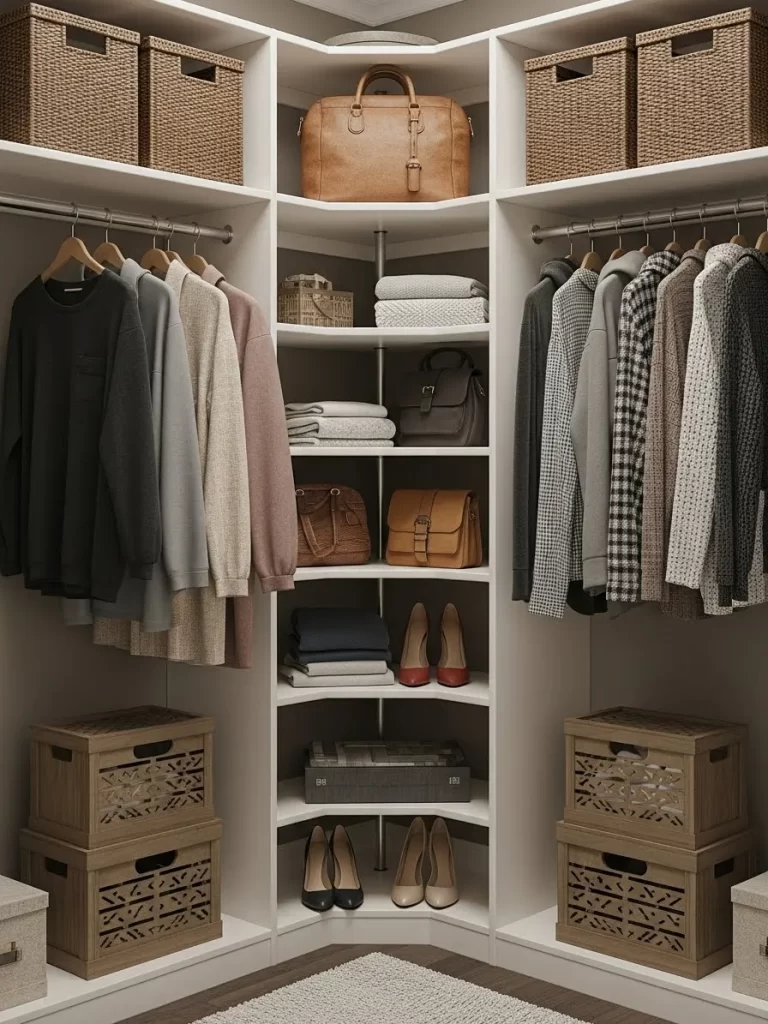
Corners are notoriously difficult to use in standard closets. The image displays a specialized corner unit that connects two hanging rods and creates deep storage shelves. This method captures the dead space that usually sits empty between two walls. You can stack bulky sweaters or place handbags in this wedge shaped area.
The central pole provides stability for the entire structure. It allows you to wrap your wardrobe around the room seamlessly. You gain a significant amount of square footage for folded clothes. The white finish keeps the dark corner looking bright and clean. It is a smart way to maximize every inch of the floor plan.
Material Required List
- Corner closet shelving kit (wood or laminate)
- Wall anchors and screws
- L brackets for support
Equipment Required List
- Power drill
- Stud finder
- Level
- Screwdriver
- Rubber mallet
DIY Instructions Step by Step
- Clear the corner.Remove existing rods or shelves from the corner area. Patch any old holes with spackle.
- Locate studs.Use your stud finder to mark the wooden beams on both walls meeting in the corner.
- Assemble the base.Build the bottom shelf and the vertical panels according to the kit instructions.
- Position the unit.Slide the assembled unit into the corner. Check that it stands straight with your level.
- Anchor to wall.Drive screws through the mounting cleats or L brackets into the wall studs.
- Add shelves.Insert the shelf pins and slide the triangular shelves into place.
23. The Mobile Wood Cart
Fixed shelves cannot move, but a rolling cart gives you flexibility. The image highlights a slim cart with wood drawers and a metal frame that fits into narrow gaps. You can roll this unit out to pack for a trip or use it as a vanity station. The drawers are excellent for concealing small clutter like socks or toiletries.
The open top shelf offers a quick place to set down your phone or jewelry. The wheels allow you to clean the floor underneath easily. This piece adds a high end furniture feel to a basic closet. It creates storage where there was only air before. You can change its location as your needs shift.
Material Required List
- Slim rolling cart kit (3 or 4 tier)
- Four caster wheels
- Wood glue (optional for strength)
Equipment Required List
- Allen wrench (usually included)
- Small hammer
DIY Instructions Step by Step
- Unbox the parts.Lay out the metal side frames and the wooden drawer boxes.
- Connect the frame.Insert the crossbars between the two side frames. Tighten the bolts with the Allen wrench.
- Install the wheels.Push the caster wheels into the holes at the bottom of the legs. Tap them gently with a hammer if they are stiff.
- Assemble drawers.If the drawers are flat packed, fold them up and snap the bottoms in.
- Slide them in.Place the drawers onto the metal runners. Roll the cart into your closet space.
24. The Angled Shoe Display
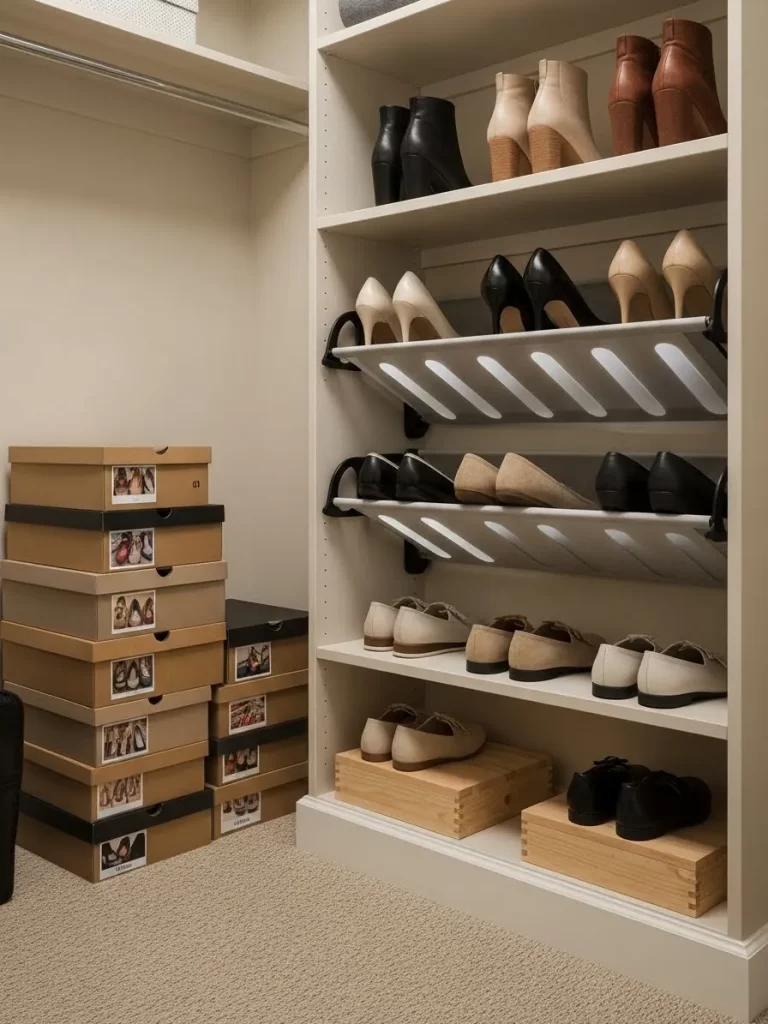
Flat shelves often make it hard to see shoes stored at the back. The image presents a custom rack with angled shelves that display heels and flats clearly. The downward slope keeps the shoes visible and accessible. A lip at the front prevents them from sliding off onto the floor.
This setup mimics a luxury boutique display. You can fit more pairs because the angle reduces the depth required. It transforms your footwear collection into a visual feature. You never have to dig around in dark boxes again. The white background makes the colors of the shoes pop.
Material Required List
- Melamine or wood boards (cut to shelf width)
- Angled shelf brackets or shoe rail molding
- Front edge trim (to stop sliding)
- Wood screws
Equipment Required List
- Circular saw (or have store cut wood)
- Drill
- Level
- Measuring tape
DIY Instructions Step by Step
- Measure and cut.Determine how wide your shoe rack needs to be. Cut your boards to this length.
- Attach the stop.Screw or glue a small strip of wood along the front edge of each shelf. This acts as the lip to hold the shoes.
- Install brackets.Mark the height for each shelf on the side walls. Screw your angled brackets into the studs or side panels.
- Mount the shelves.Place the boards onto the brackets. Secure them from underneath with short screws.
- Test the angle.Place a pair of shoes on the shelf to ensure they sit securely without falling.
25. The Over Door Laundry Bag
Floor space is precious in small bedrooms. The image shows a mesh laundry bag hanging flat against the back of a door. This system utilizes the vertical surface of the door to store dirty clothes. The mesh material allows air to circulate, which keeps damp gym clothes from smelling.
You can unhook the bag and carry it directly to the washing machine. This creates a hidden spot for dirty clothes so your room looks tidy. It is effortless to install using over the door hooks. You gain square footage in the closet for shoes or storage units. It is a simple solution for small bedrooms.
Material Required List
- Door mounted mesh laundry hamper
- Two stainless steel over door hooks
- Canvas drawstring bag (optional extra)
Equipment Required List
- None
DIY Instructions Step by Step
- Place the hooks.Take the metal hooks and slide them over the top edge of your door.
- Check the fit.Close the door gently to ensure the hooks do not rub against the frame.
- Hang the hamper.Loop the top straps of the mesh bag onto the hooks.
- Add the second bag.If you have a smaller canvas bag, hang it on the lower hooks of the main unit or add two more hooks below.
- Test stability.Open and close the door to ensure the bags do not swing too much.
26. The Vertical Ironing Nook
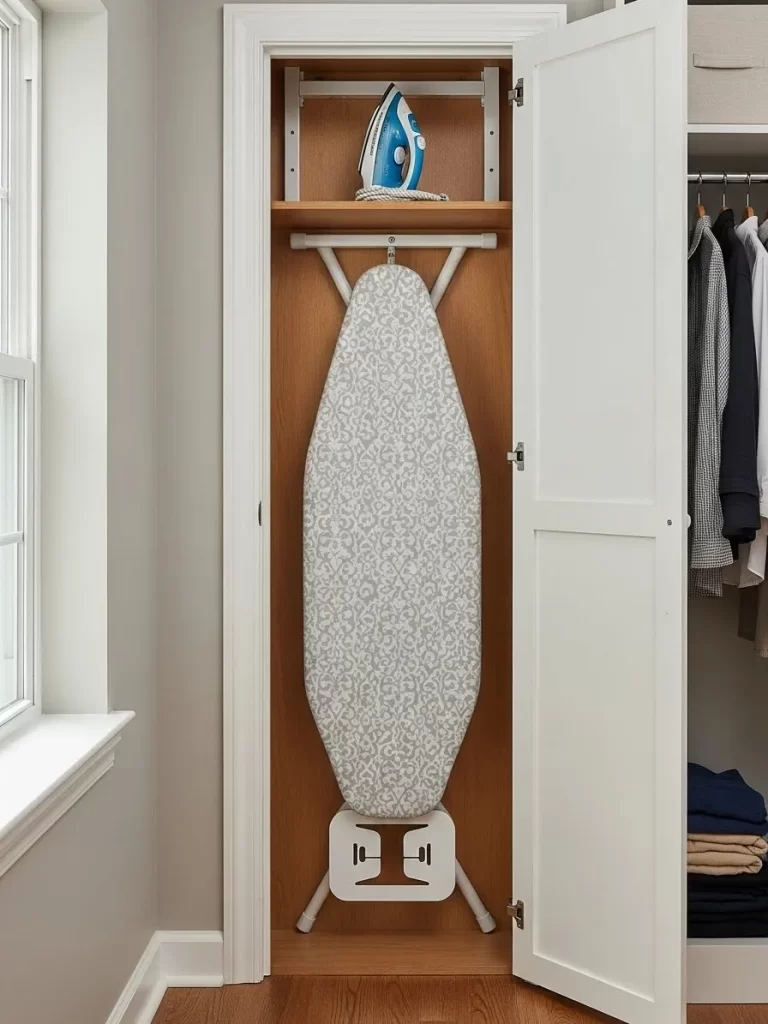
Ironing boards are awkward to store and often fall over. The image demonstrates a dedicated shallow closet niche that holds the board upright. A specialized bracket secures the legs while a shelf above holds the iron. This keeps the entire ironing setup hidden behind a narrow door.
You free up space in your main closet or laundry room. The board stays secure and does not rattle. It is a specific home for a clumsy item. The vertical orientation uses very little floor area. You can grab the board and iron in one motion.
Material Required List
- Wall mounted ironing board hanger
- Small floating shelf (for the iron)
- Drywall anchors and screws
Equipment Required List
- Drill
- Level
- Pencil
- Stud finder
DIY Instructions Step by Step
- Choose the wall.Find a narrow wall space or the back of a tall cabinet door.
- Mark the hanger.Hold the ironing board hanger at a height where the board will clear the floor. Mark the screw holes.
- Install the hanger.Drill pilot holes and insert anchors if needed. Screw the bracket firmly to the wall.
- Add the shelf.Position the small shelf about 6 inches above the hanger. Install it using the provided brackets.
- Store the gear.Hang the board by its T leg. Place the iron and starch on the shelf above.
27. The Chain Hanger Hack
You can create a cascading storage system with a single piece of hardware. The image reveals a heavy metal chain suspended from the main closet rod. Hangers hook into the chain links vertically, which allows you to stack clothes downward. This trick triples the number of shirts you can fit in one horizontal spot.
It is particularly useful for grouping outfits for the week. The metal look adds an industrial edge to the space. You prevent clothes from getting crushed together on the main rail. It utilizes the empty air below shorter garments. This solution costs almost nothing and installs in seconds.
Material Required List
- One foot of steel chain (zinc or chrome)
- One large S hook
- Pliers
Equipment Required List
- None
DIY Instructions Step by Step
- Prep the chain.Purchase a short length of chain. Ensure the links are large enough to accept a hanger hook.
- Attach the S hook.Loop one end of the S hook through the top link of the chain. Squeeze it closed with pliers if you want a permanent bond.
- Hang it up.Place the large curve of the S hook over your closet rod.
- Load it up.Place a hanger with a shirt or jacket into the chain. Move down two links and add the next one.
- Balance the load.Don’t make it too heavy. Three to four shirts per chain is usually safe.
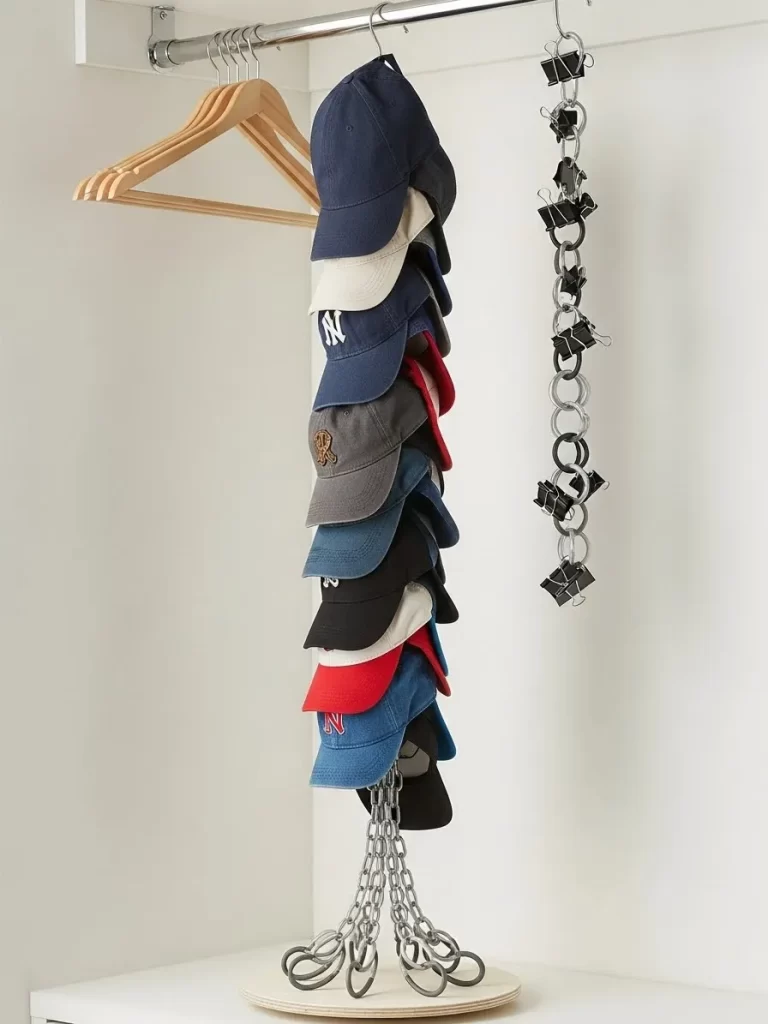
28. The Cap Chain Organizer
Baseball caps often end up in a messy pile. The image shows a clever hack using a chain and binder clips to hang hats vertically. The chain hangs from the rod, and each clip holds a cap by the brim or button. This creates a tall, thin column of hat storage that takes up minimal width.
You can see every logo and color clearly. It keeps the hats from getting crushed or losing their shape. You can store over a dozen hats in the space of one coat. It is easy to add more clips as your collection grows. This is a very cheap and effective DIY.
Material Required List
- Two to three feet of lightweight plastic or metal chain
- One large S hook or ring
- Pack of binder clips (black or silver)
Equipment Required List
- None
DIY Instructions Step by Step
- Hang the chain.Attach the chain to your closet rod using the S hook. Let it dangle to the desired length.
- Prep the clips.Take a binder clip and attach it to a chain link. You can clip it directly to the link or thread the chain through the metal arms.
- Attach the hats.Squeeze the binder clip to open it. Clamp it onto the top button or the back strap of the baseball cap.
- Repeat down.Add a clip every few inches. Continue until the chain is full.
- Adjust spacing.If the hats overlap too much, skip a few links between clips.
29. The Accordion Valet Rod
Sometimes you need a temporary spot to hang clothes. The image displays a retractable accordion rack mounted high on the wall. It pulls out to create a long hanging rod and pushes back flat when empty. This is great for air drying delicates or planning tomorrow’s suit.
The wood mounting strip makes it look like a deliberate design choice. The metal scissor mechanism is strong and durable. It solves the problem of where to put laundry that is not quite ready for the closet. You gain function without losing permanent space. It fits well in tight corners.
Material Required List
- Wall mounted accordion drying rack
- Wall anchors and screws
Equipment Required List
- Power drill
- Level
- Pencil
- Hammer
DIY Instructions Step by Step
- Select height.Find a spot on the wall where you can reach easily. Ensure the rack can expand fully.
- Level the base.Hold the rack against the wall. Place your level on top. Mark the screw holes with a pencil.
- Drill holes.Drill into the wall at your marks. Tap anchors in if you are not hitting a stud.
- Mount the rack.Drive the screws through the rack holes and into the anchors. Tighten them fully.
- Test the action.Extend and retract the rack a few times to ensure it moves smoothly.
30. The Honeycomb Drawer Divider
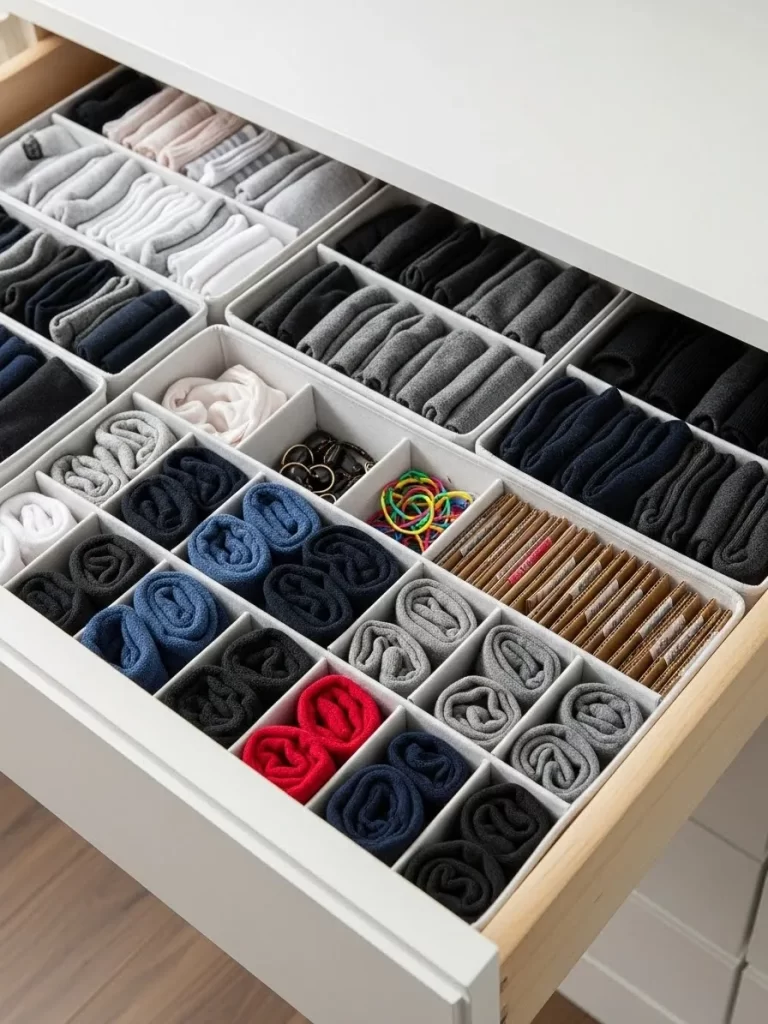
Small items like socks and underwear often turn into a jumbled mess in large drawers. The image shows fabric drawer organizers with individual cells for each item. You can roll your socks and place one pair in each slot. This keeps everything visible and separated by color or type.
The soft fabric protects delicate materials from snagging. You can fit more items in the drawer because the rolling compresses them. It forces you to stay organized every time you do laundry. The uniform look is very satisfying. You can lift the entire organizer out to clean the drawer.
Material Required List
- Fabric honeycomb or cell drawer organizers
- Scissors (if resizing is needed)
Equipment Required List
- None
DIY Instructions Step by Step
- Measure the drawer.Check the width, depth, and height of your drawer. Buy organizers that fit these dimensions.
- Unfold the organizer.Pop the organizer open. Zip the bottom zipper if it has one to keep it rigid.
- Insert into drawer.Place the unit inside the drawer. You can mix and match sizes to fill the space.
- Sort and roll.Group your socks and underwear. Roll each item into a tight cylinder.
- Fill the slots.Place one rolled item into each cell. Organize them by color for a neat effect.
31. The Side Wall Hook
Narrow wall spaces in a closet are often ignored. The image shows how a single heavy-duty metal hook can be mounted on the side wall to hold a coat or robe. This simple addition utilizes the dead vertical space right next to your hanging clothes.
It is an excellent spot for preparing tomorrow’s outfit or airing out a jacket. The hook is strong enough to hold heavy winter gear. You gain a functional storage spot without taking up any floor or shelf area. The metallic finish adds a nice detail to the closet’s interior.
Material Required List
- One heavy-duty metal robe hook
- Two mounting screws (usually included)
- Two plastic wall anchors (if no stud is available)
Equipment Required List
- Power drill
- Drill bits
- Phillips head screwdriver
- Pencil
- Stud finder
DIY Instructions Step by Step
- Choose your location.Find a spot on the side wall of your closet. Ensure the hanging item will not interfere with your clothes on the main rod. Mark the desired height with a pencil.
- Find the support.Use a stud finder to see if there is a wooden stud behind your mark. Mounting into wood is best for heavy items. If not, you will need wall anchors.
- Drill the holes.Hold the hook against the wall and mark the screw holes. Drill pilot holes at these marks. If using anchors, tap them into the holes.
- Install the hook.Place the hook over the holes. Insert the screws and tighten them securely with your screwdriver.
32. The Built-In Ironing Board Cabinet
Ironing boards are clumsy and hard to store. The image demonstrates a dedicated shallow closet niche that holds the board upright. A specialized bracket secures the legs while a shelf above holds the iron. This keeps the entire ironing setup hidden behind a narrow door.
This clever solution frees up significant floor or closet space. The board is always set up and ready to use in seconds. It creates a sleek, uncluttered look in your laundry area or bedroom. The cabinet door can be painted to match your walls for a seamless appearance.
Material Required List
- In-wall ironing board cabinet kit
- Wood shims
- Drywall screws
Equipment Required List
- Drywall saw
- Power drill
- Level
- Tape measure
- Stud finder
- Pencil
DIY Instructions Step by Step
- Locate the space.Find a wall cavity between two studs that is free of electrical wires or plumbing. Use a stud finder to locate the studs.
- Cut the opening.Measure and mark the rough opening size specified by your kit on the drywall. Carefully cut out the drywall using a saw.
- Test the fit.Place the cabinet into the opening to ensure it fits snugly. Use wood shims to level it if necessary.
- Secure the cabinet.Drive screws through the sides of the cabinet frame into the wall studs. Ensure it is secure.
- Install the door.Attach the cabinet door according to the manufacturer’s instructions.
33. The Bench with Box Storage
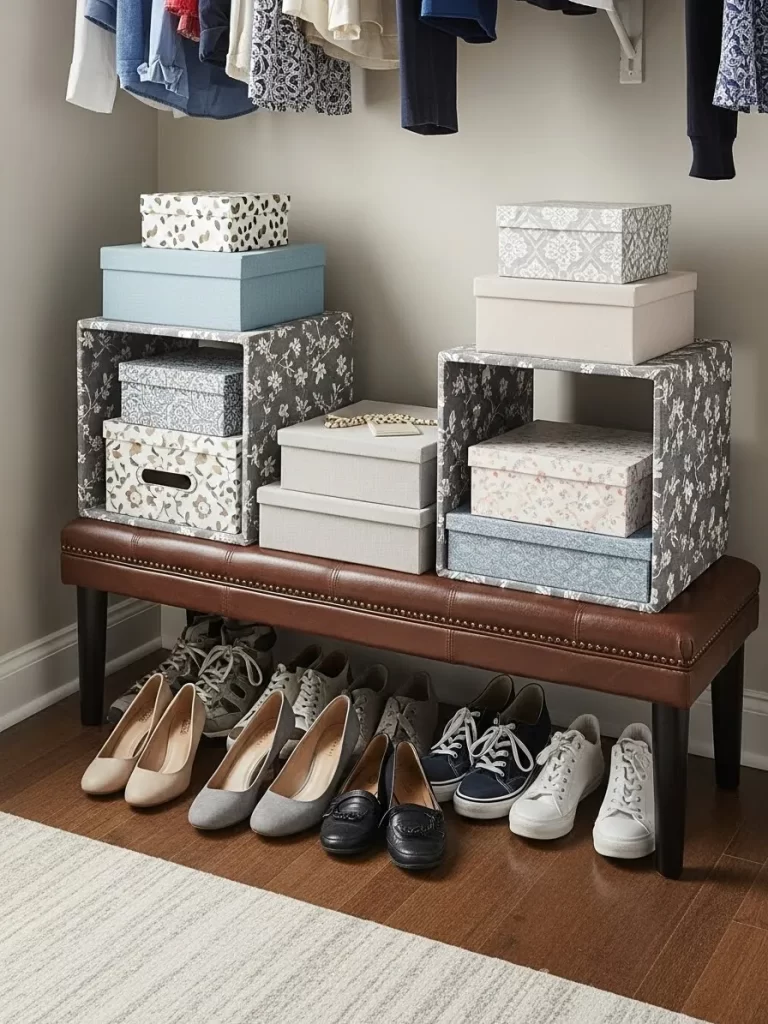
The floor space under short hanging clothes is often wasted. The image displays a long upholstered bench placed in this area, with shoes stored underneath. Above it, stacked cubbies with decorative boxes provide additional storage for smaller items.
The bench offers a convenient place to sit while putting on shoes. The boxes keep clutter like scarves or gloves out of sight. This setup turns an empty floor area into a multi-functional zone. The combination of textures adds a cozy feel to the closet.
Material Required List
- Upholstered storage bench
- Modular cubby shelf units
- Decorative storage boxes to fit cubbies
- Wall anchors and screws (for cubbies)
Equipment Required List
- Power drill
- Level
- Screwdriver
- Pencil
DIY Instructions Step by Step
- Place the bench.Assemble the bench if necessary. Place it against the back wall of your closet under your hanging clothes.
- Arrange shoes.Line up your most frequently used shoes underneath the bench for easy access.
- Mount cubbies.Decide on the placement for your cubby shelves above the bench. Use a level to mark the holes. Drill and anchor them securely to the wall.
- Fill boxes.Assemble the storage boxes. Fill them with small items and place them inside the cubbies.
- Stack remaining boxes.Place any extra boxes on top of the cubby units.
34. The Pegboard Accessory Wall

Small items can easily get lost in large drawers. The image shows a pegboard system mounted on a narrow wall, holding belts, sunglasses, and hats. A combination of hooks, rails, and clips keeps everything organized and visible.
This vertical solution frees up valuable drawer and shelf space. You can easily customize the layout as your collection changes. The cork-like texture of the board adds a warm element to the space. It turns a blank wall into a functional display for your accessories.
Material Required List
- Pegboard panel (sized for your wall)
- Pegboard mounting kit (spacers and screws)
- Assorted pegboard hooks, rails, and clips
Equipment Required List
- Power drill
- Level
- Pencil
- Screwdriver
DIY Instructions Step by Step
- Position the board.Hold the pegboard against the wall. Use a level to ensure it is straight. Mark the mounting holes with a pencil.
- Install spacers.Screw the plastic spacers from your kit into the wall at the marked points. These create room behind the board for the hooks.
- Mount the board.Align the board with the spacers. Drive screws through the board into the spacers until tight.
- Add accessories.Insert hooks, rails, and clips into the peg holes. Arrange your belts, sunglasses, and hats on them.
35. The Hanging Drawer Organizer
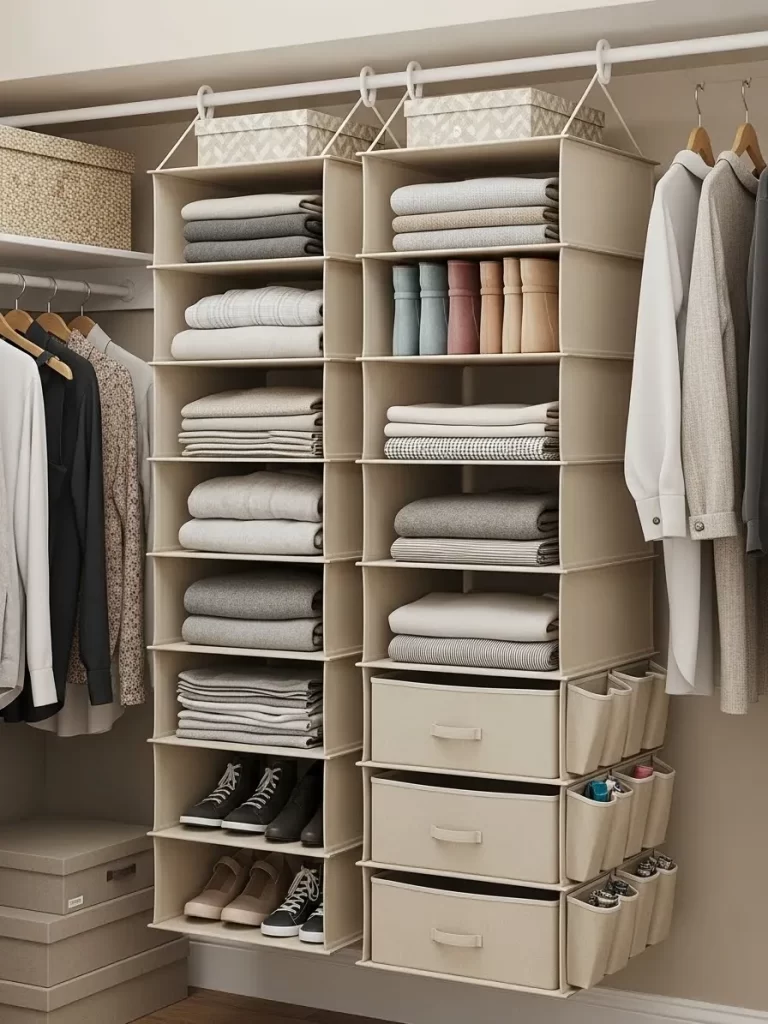
Shelves can become messy with stacks of clothes. The image illustrates a hanging fabric organizer with drawer compartments suspended from the closet rod. Each “drawer” holds folded items like shirts or sweaters, keeping them neat and contained.
This system adds shelves and drawers to a closet that has only a rod. The opaque drawer fronts hide the contents for a clean look. It uses vertical space efficiently. You can easily move it to a different location if needed. It is a great way to organize clothes by category.
Material Required List
- Hanging fabric closet organizer with drawers
Equipment Required List
- None
DIY Instructions Step by Step
- Unpack the organizer.Remove the organizer from its packaging. Unfold it completely.
- Hang it up.Locate the strong velcro strap or hooks at the top of the unit. Secure it firmly around your closet rod.
- Insert drawers.If the drawers are separate, unfold them and place the stiffener inserts into the bottom. Slide them into the shelves of the hanging unit.
- Fill it up.Fold your clothes neatly. Place them inside the drawers, organizing by type.
36. The High-Density Hanger Pack
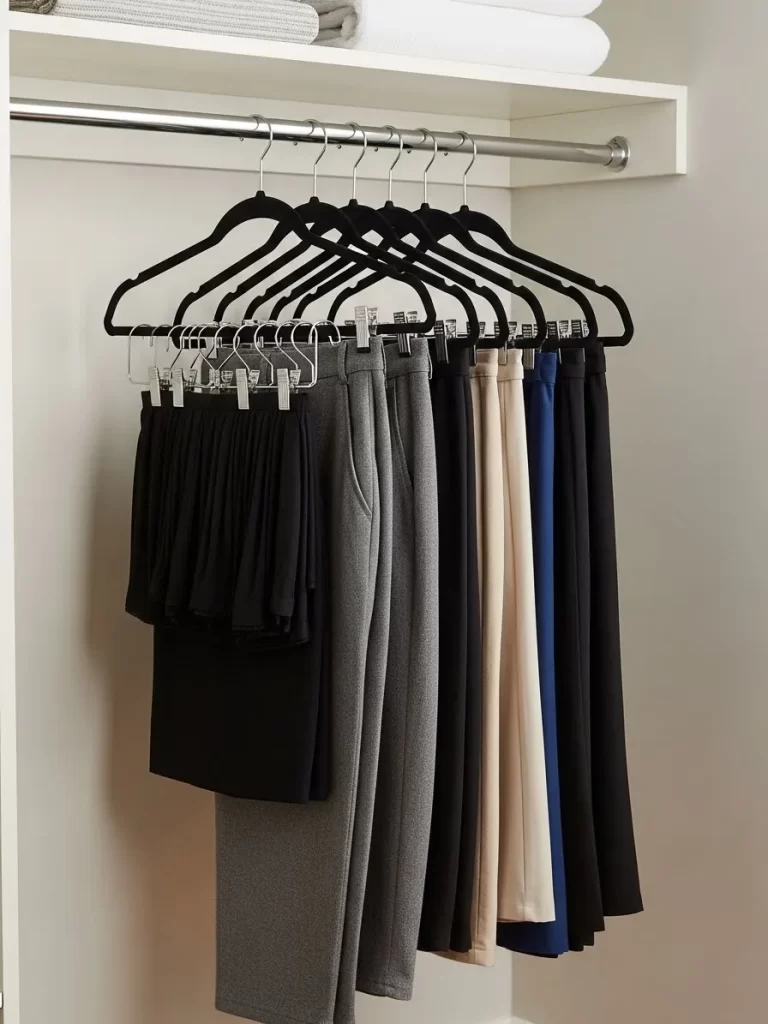
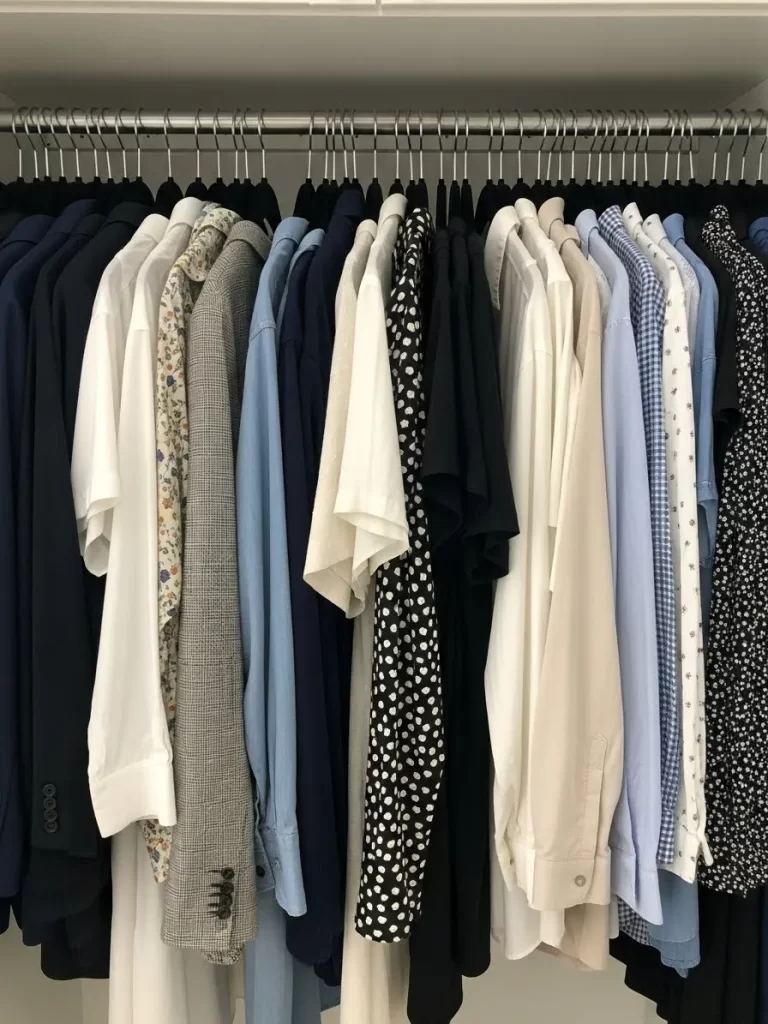
Bulky hangers waste a lot of horizontal space on a closet rod. The image shows a rod packed tightly with clothes on slim hangers. Using uniform, thin hangers allows you to fit significantly more garments in the same amount of space compared to using mismatched ones.
This simple change instantly increases your closet’s capacity. The uniform look of the hangers makes your wardrobe appear more organized. It is a cost-effective upgrade that requires no tools. You can see how many more items fit when they are not spaced out by thick plastic or wood.
Material Required List
- Large pack of slim velvet or plastic hangers (50-100+)
Equipment Required List
- None
DIY Instructions Step by Step
- Remove clothes.Take a few garments off the rod at a time.
- Switch hangers.Remove the old hanger and replace it with a new slim velvet one.
- Rehang.Place the item back on the closet rod.
- Repeat.Continue the process until all your clothes are on the new hangers.
37. The Tiered Wire Basket Rack
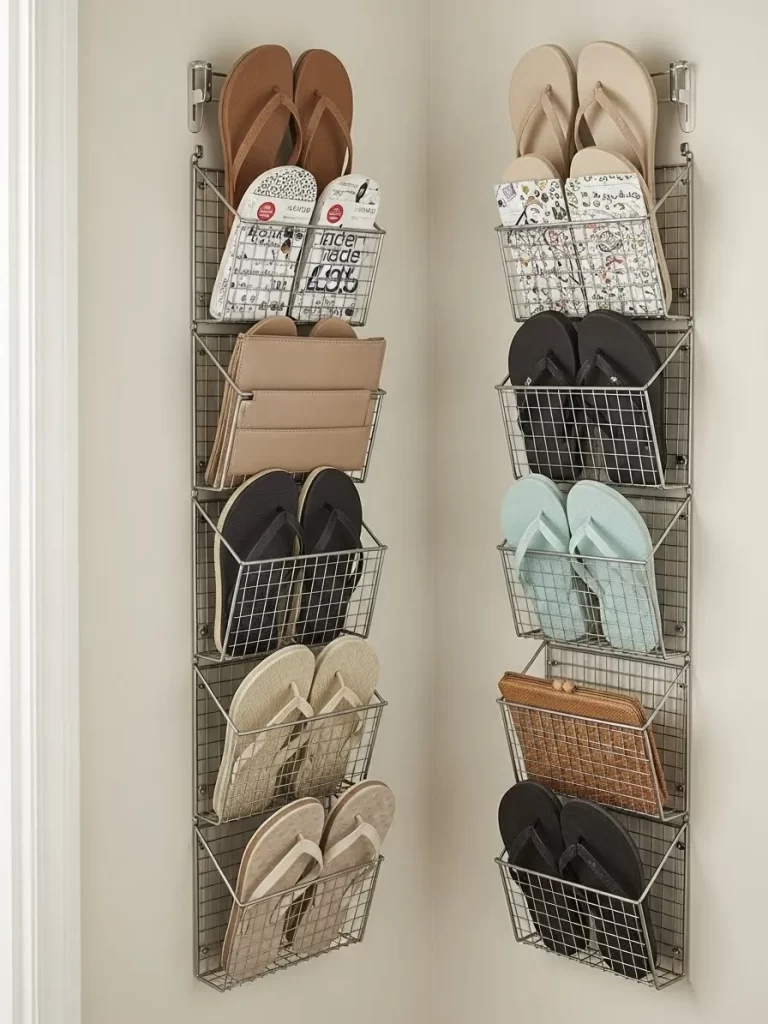
Corners are often difficult to utilize effectively. The image demonstrates two tall, wall-mounted wire racks with multiple tiered baskets installed in a corner. These baskets are holding shoes, sandals, and clutches, making good use of the vertical space.
The open wire design allows you to see the contents easily. It keeps shoes off the floor and organized. This is a great solution for narrow wall strips or behind doors. The metal construction is durable and has a modern, industrial feel.
Material Required List
- Two tiered wall-mounted wire basket racks
- Drywall anchors and screws
Equipment Required List
- Power drill
- Level
- Pencil
- Screwdriver
- Hammer
DIY Instructions Step by Step
- Determine placement.Hold one rack against the wall to find the right height. Mark the screw holes. Repeat for the second rack.
- Drill and anchor.Drill pilot holes at your marks. Tap wall anchors into the holes if you are not drilling into studs.
- Mount the racks.Place the racks over the anchors. Drive the screws in tightly to secure them to the wall.
- Fill the baskets.Place your shoes, purses, or other small items into the baskets.
38. The Angled Shoe Shelf System
Flat shelves make it hard to see shoes stored at the back. The image shows a custom white shelving system with angled shelves designed specifically for footwear. A lip at the front prevents shoes from sliding off, while a back rail holds heels in place.
This setup displays your shoes like a retail store. The angle allows you to fit more pairs in less depth. You can easily find the pair you want without digging through boxes. Flat shelves below can be used for flat shoes or boxes. It is a polished, high-end look for any closet.
Material Required List
- Pre-cut melamine or wood shelves
- Angled shelf brackets
- Front shoe stops (molding or metal rail)
- Back heel rails (dowels or metal rods)
- Wood screws
Equipment Required List
- Power drill
- Level
- Tape measure
- Screwdriver
DIY Instructions Step by Step
- Install vertical supports.If using a track system, mount the vertical standards to the wall studs.
- Attach brackets.Insert the angled brackets into the standards at your desired heights.
- Prepare shelves.Screw the front shoe stop and back heel rail onto each shelf board.
- Place shelves.Set the prepared shelves onto the angled brackets. Secure them from underneath with screws.
- Add flat shelves.Install flat brackets and shelves below for other items.
39. The Ceiling Grid Storage
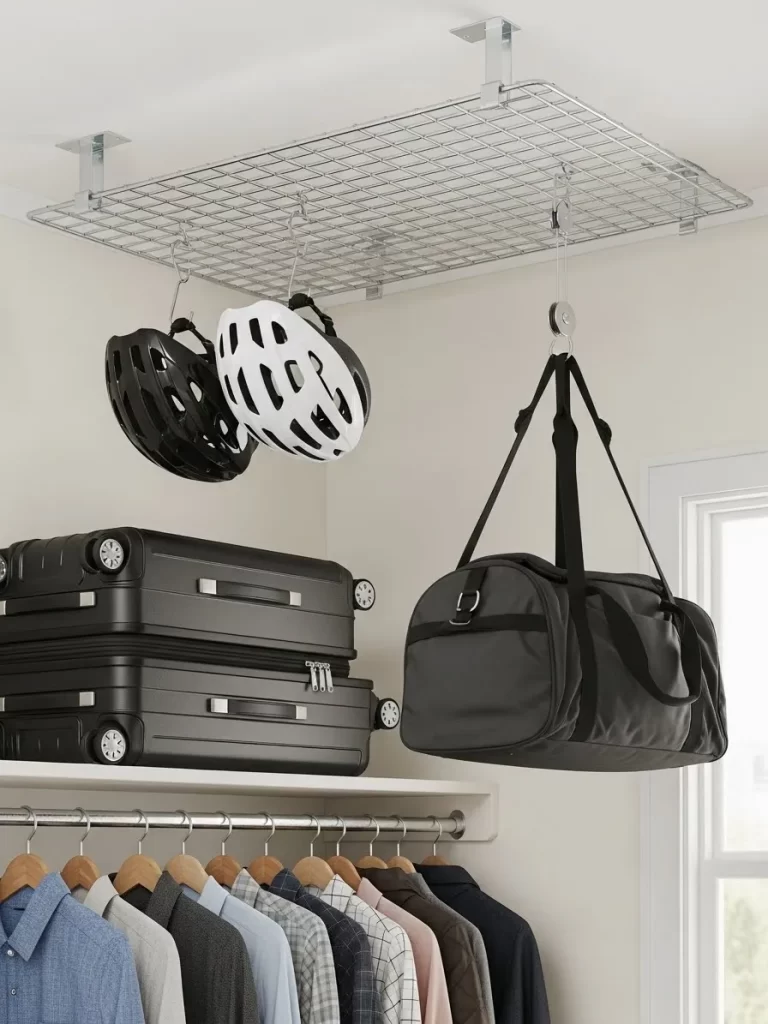
Floor space is limited in many closets. The image shows a metal wire grid rack mounted to the ceiling. Hooks dangle from the grid, holding items like bike helmets and a large duffel bag, keeping them up and out of the way.
This utilizes the often-forgotten space above your head. It is perfect for storing lightweight but bulky items that you don’t use every day. The open grid allows you to see what is stored there. You can easily adjust the hook positions. It is a smart way to add storage without cluttering walls or floors.
Material Required List
- Wire grid panel
- Four ceiling mounting brackets
- Toggle bolts or heavy-duty anchors
- S-hooks or carabiners
Equipment Required List
- Power drill
- Stud finder
- Pencil
- Ladder
- Wrench or screwdriver
DIY Instructions Step by Step
- Find ceiling joists.Use a stud finder to locate the wooden joists in your ceiling. Mark their locations.
- Mark bracket spots.Hold the grid up and mark where the four corner brackets should go, aligning them with joists if possible.
- Drill holes.Drill holes at your marks. Insert toggle bolts if not hitting a joist.
- Install brackets.Screw the ceiling brackets securely into place.
- Hang the grid.Lift the grid into the brackets and tighten the holding screws.
- Add items.Use S-hooks to hang your gear from the wire mesh.
40. The Slim Velvet Hanger (Again)
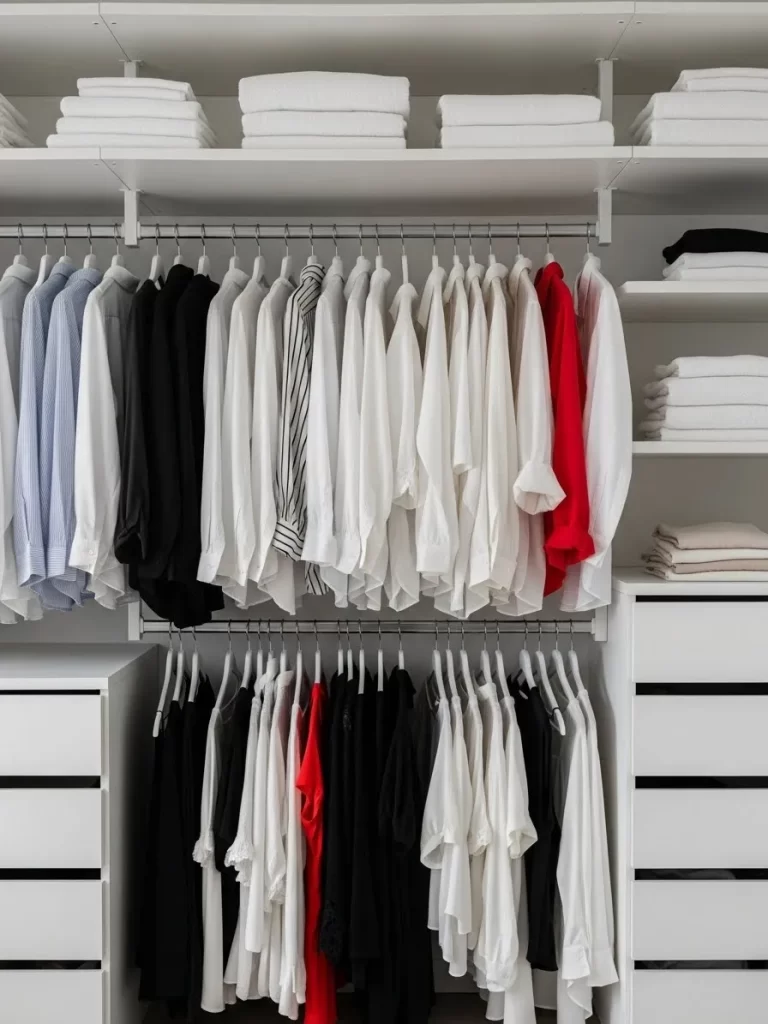
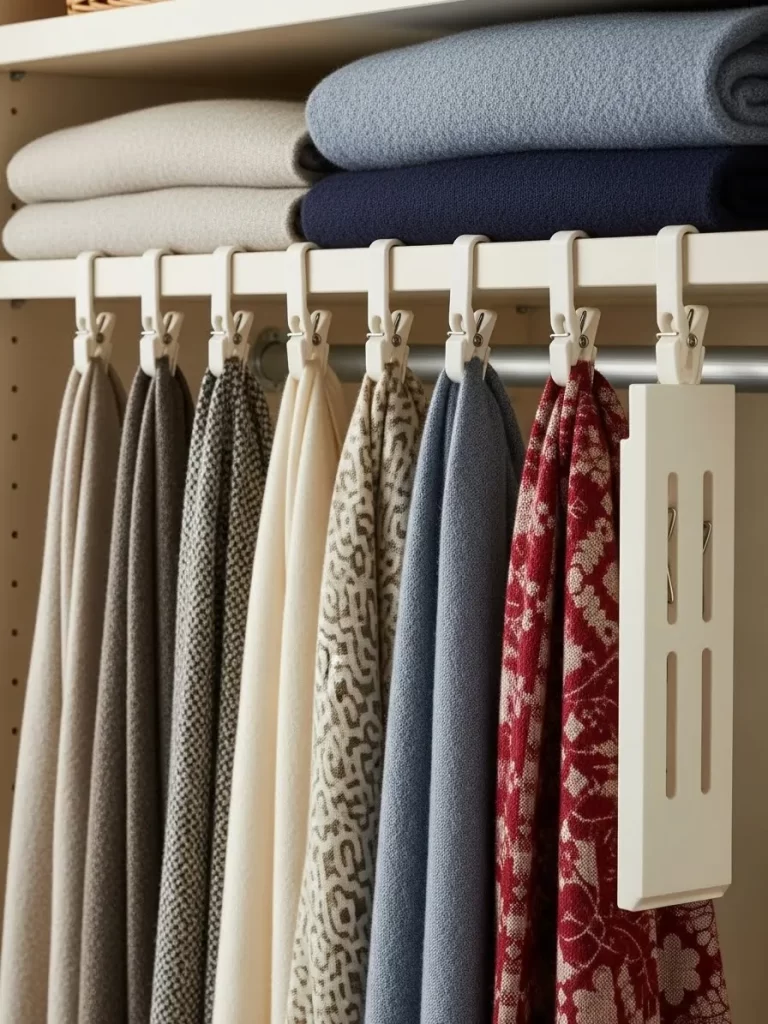
Standard hangers take up too much space. The image shows slim velvet hangers on a rod, holding various tops and scarves. The thin profile of these hangers allows clothes to hang closer together, maximizing the use of the rod space.
The velvet material prevents slippery fabrics from falling off. Your closet looks neater and more uniform with matching hangers. You can fit more clothes without them getting wrinkled. This is one of the easiest and most effective closet upgrades you can make.
Material Required List
- Pack of slim velvet hangers
Equipment Required List
- None
DIY Instructions Step by Step
- Remove clothes.Take a few garments off the rod at a time.
- Switch hangers.Remove the old hanger and replace it with a new slim velvet one.
- Rehang.Place the item back on the closet rod.
- Repeat.Continue the process until all your clothes are on the new hangers.
You have now explored 40 excellent ways to reclaim your closet. Small spaces feel much larger when you maximize vertical storage. Remember to use the back of your door and the space beneath hanging clothes.
Clutter causes stress, but organization brings peace. Implementing just a few of these simple tricks creates dramatic results. Your morning routine will become simpler and faster.
Start small by switching your hangers or adding a chain drop. Maintain order by labeling bins clearly. Every single solution helps you manage your wardrobe better.