Living in a confined space presents unique design challenges. Decorating a tiny apartment requires smart choices. You want comfort without creating a chaotic environment. Many renters unintentionally shrink their rooms through common aesthetic errors. Too much bulky furniture traps the eye immediately. Dark wall colors often make spaces feel boxed in.
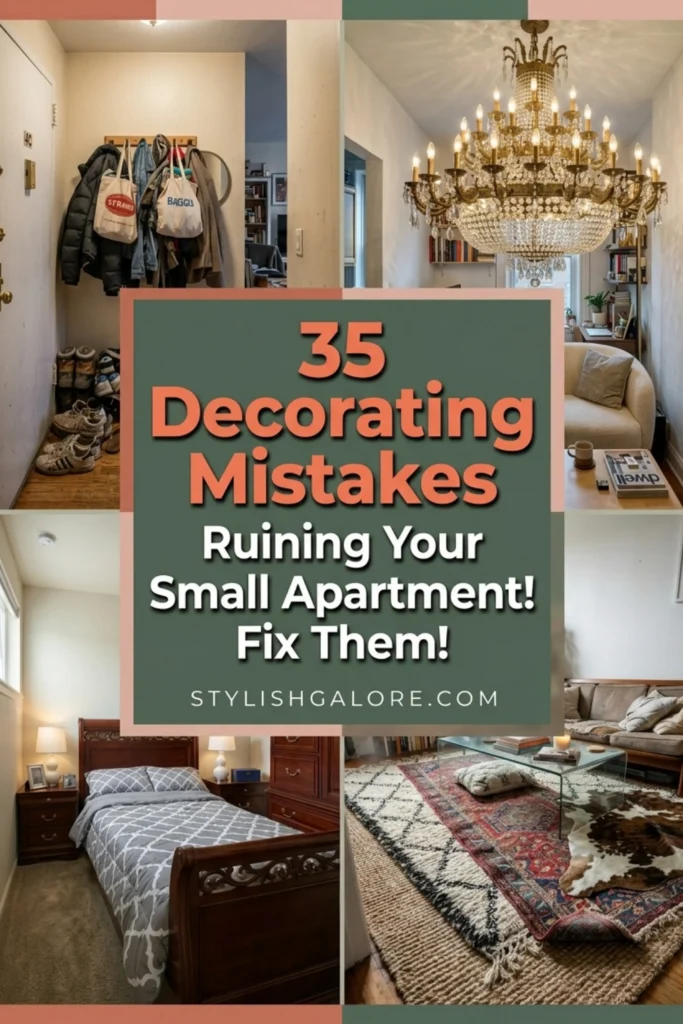
Clutter easily accumulates when vertical storage solutions fail. We compiled a comprehensive guide highlighting frequent traps that ruin cramped floor plans. Avoiding these visual roadblocks completely transforms your living area. Small adjustments yield huge impacts on daily functionality. Now is the time to fix those cramped zones.
1. Oversized Crystal Chandeliers
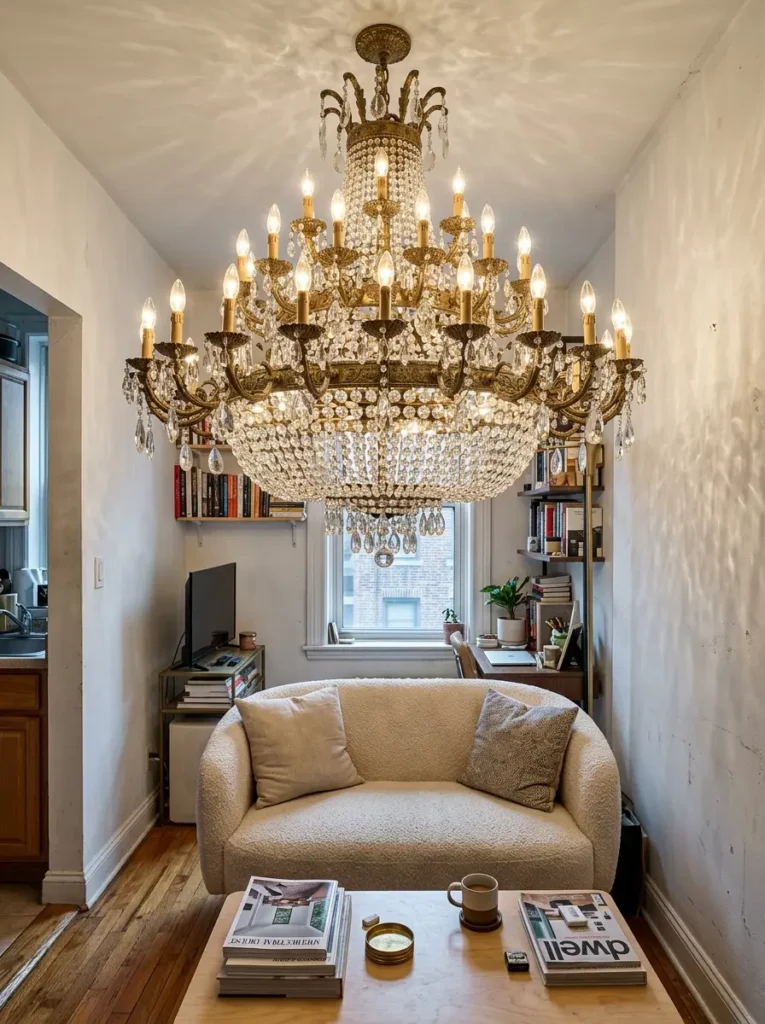
Massive lighting installations overwhelm tight spaces instantly. A giant crystal piece dominates this narrow room visually and physically. The grand scale clashes heavily with the modest sofa below.
Hanging such bulky decor creates an oppressive ceiling effect. Rooms shrink when huge ornaments draw all attention upward. Choose flush mounts or slender pendants to maintain open sightlines.
2. Dark Accent Walls
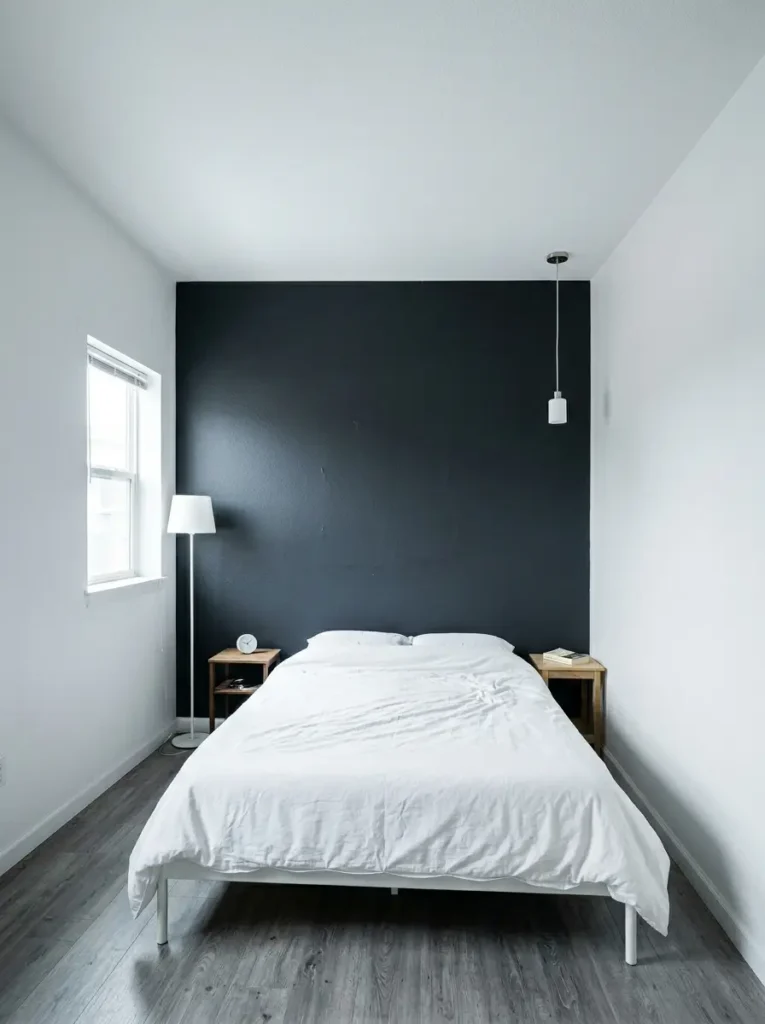
Painting a single wall jet black creates a tunnel effect in tight bedrooms. Dark colors absorb light rapidly. This harsh contrast makes the sleeping area feel incredibly narrow.
You should stick to lighter palettes for confined spaces. Bright hues reflect sunlight beautifully. Soft tones help walls recede visually.
3. Excessive Throw Pillows
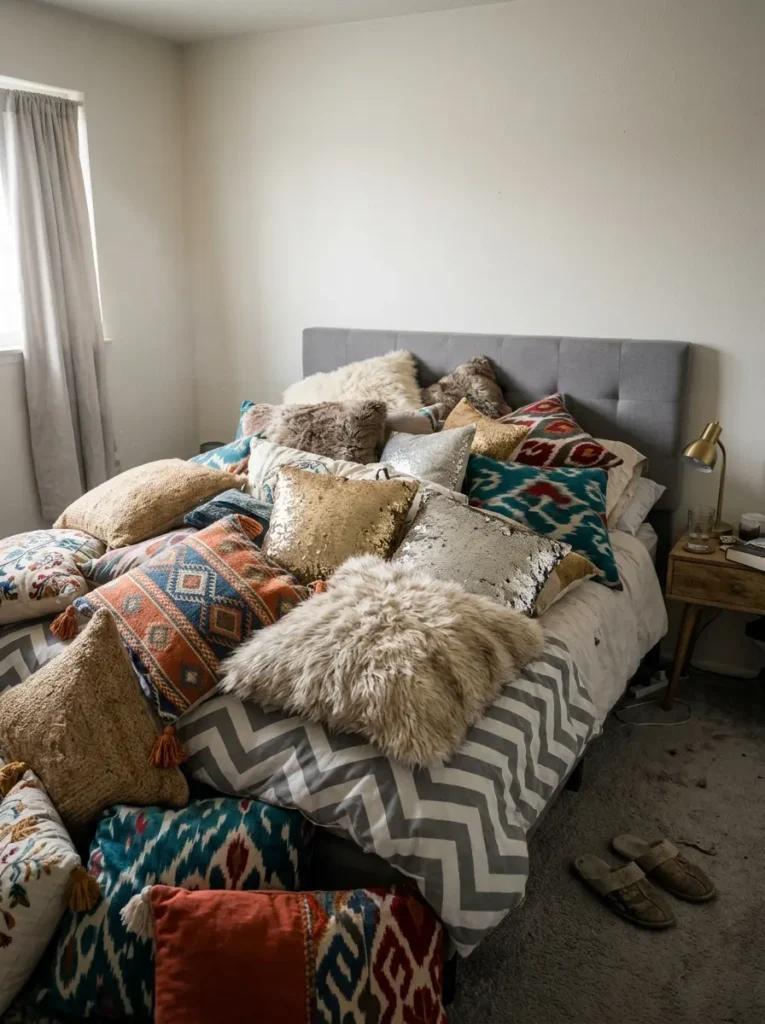
Stacking dozens of decorative cushions consumes valuable sleeping real estate. The mattress disappears under a chaotic mountain of textiles. Mixing too many shiny fabrics and fuzzy textures generates visual noise.
Keep bedding simple in compact rooms. Two functional pillows and one accent piece provide enough style. Minimal arrangements make making the bed much easier daily.
4. Overcrowded Gallery Walls
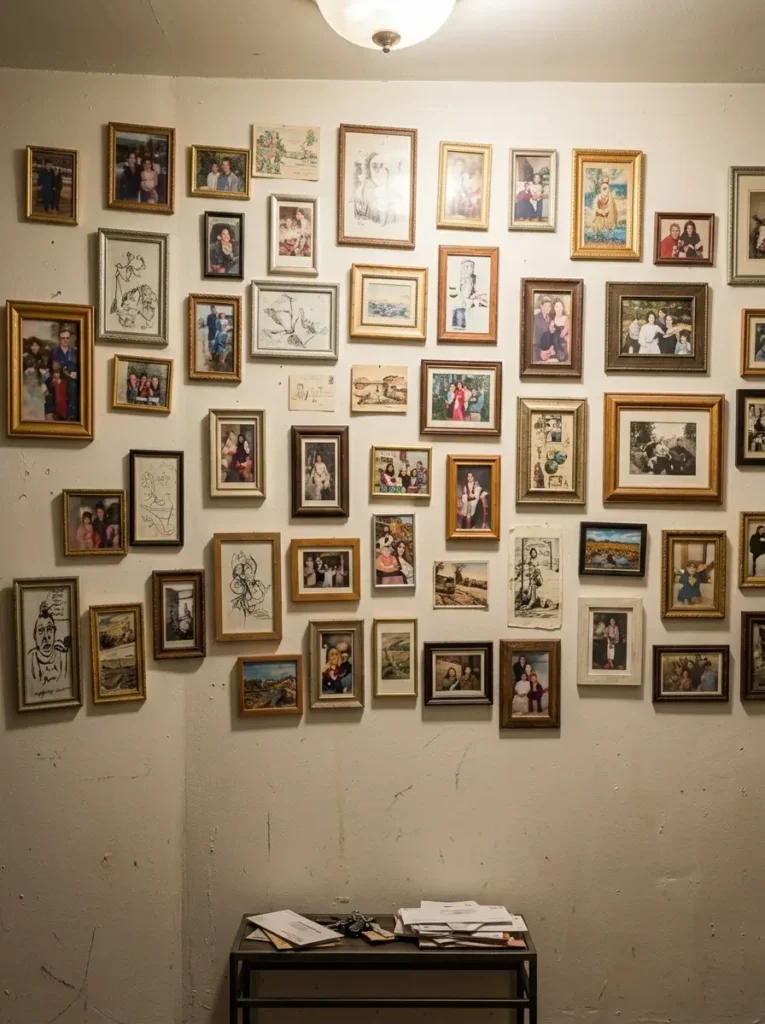
Filling an entire wall with tiny frames creates overwhelming clutter. Hundreds of mismatched borders confuse the eye. Dense layouts lack necessary breathing room between individual artworks.
Curate a small selection of your favorite pieces instead. Large canvases expand the perceived volume of the room. Clean arrangements look much more intentional.
5. Transparent Coffee Tables
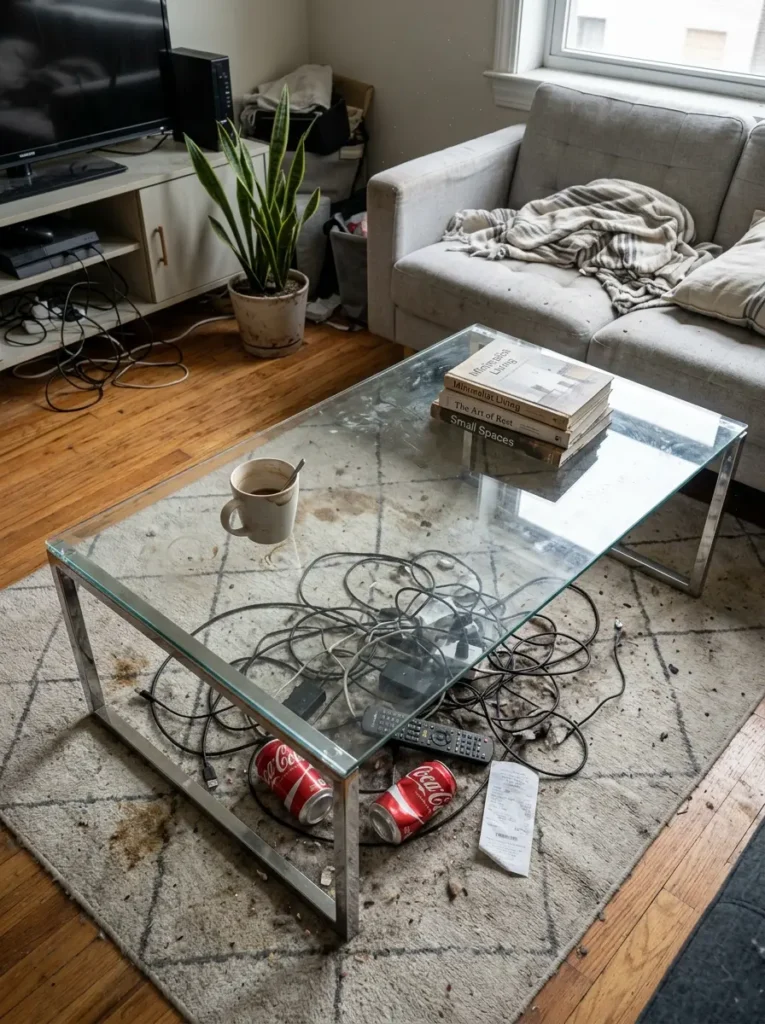
Transparent furniture exposes every single item stored underneath. A tangled mess of black electronics cords becomes the focal point. Empty soda cans and discarded receipts ruin the aesthetic completely.
Solid surfaces conceal everyday living debris effectively. Wood tables hide ugly wires from plain sight. Concealed storage keeps lounging areas relaxing.
6. Short Window Curtains
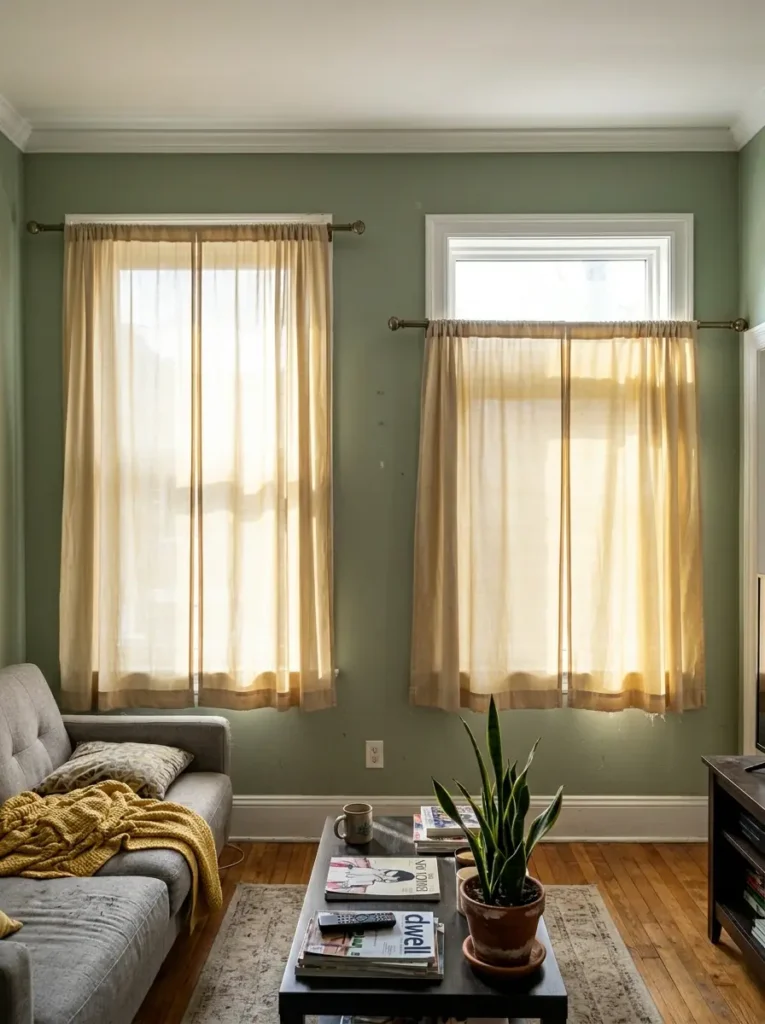
Hanging short drapery cuts vertical space in half drastically. Flimsy yellow fabric panels stop awkwardly below the window sill. Such placement makes the ceiling appear significantly lower than reality.
Install rods close to the ceiling line. Long textiles draw your vision upward naturally. Tall window treatments trick the mind into perceiving more height.
7. Bulky Recliner Chairs
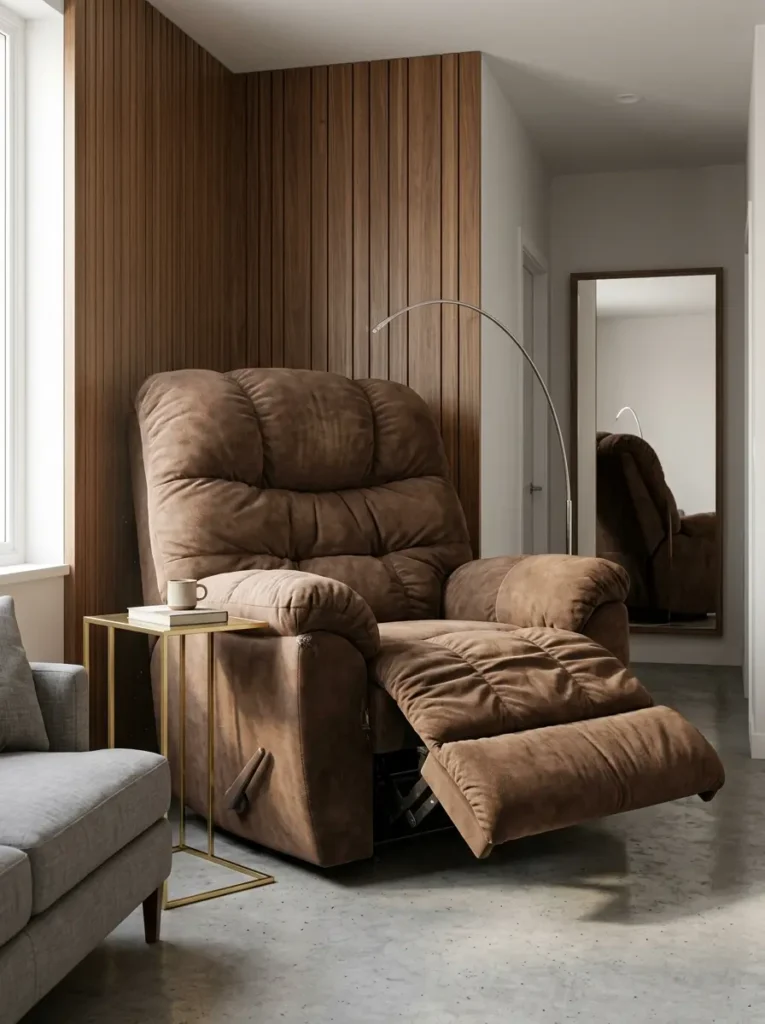
Placing a massive brown recliner inside a tight corner blocks walkways. Bulky upholstery consumes precious square footage rapidly. Heavy silhouettes dominate the surrounding delicate furniture.
Select streamlined seating options with exposed legs. Slim profiles allow light to pass underneath the frame. Open floor space makes navigation much smoother.
8. Cluttered Cabinet Tops
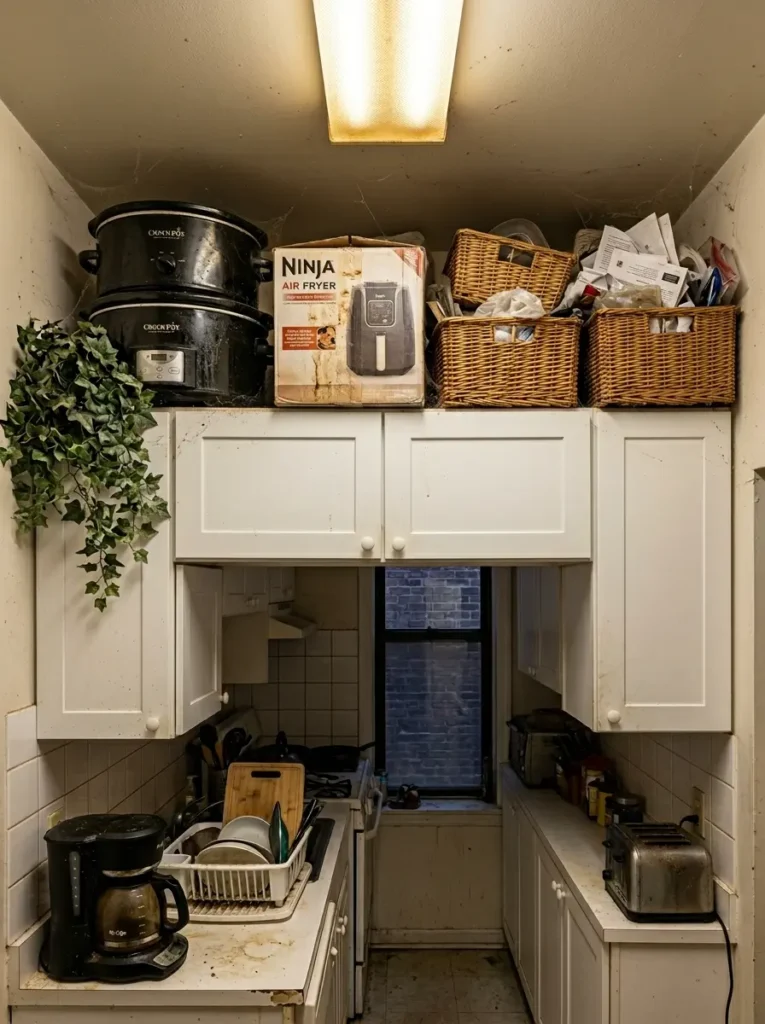
Shoving slow cookers and cardboard boxes above cabinets looks incredibly messy. Wicker baskets create dust traps near the ceiling. Overhead junk draws attention straight to the cramped dimensions.
Store bulky appliances inside closed pantries or lower cupboards. Leaving top surfaces bare promotes a cleaner atmosphere. Negative space helps tiny kitchens breathe properly.
9. Exposed Television Cables
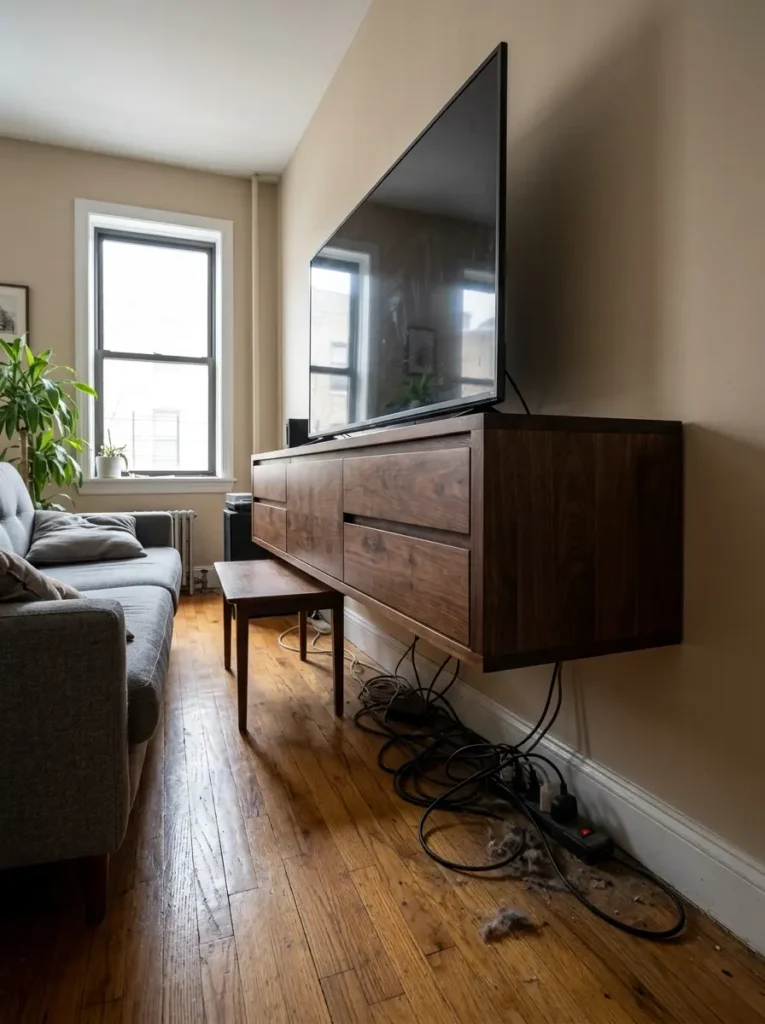
Mounting a floating console fails when cords dangle freely underneath. Thick webs of dark wiring ruin the minimalist wooden design. Dust bunnies gather quickly around exposed power strips on the floor.
Hide electrical wires inside walls or trunking channels. Cable management boxes tame wild connections instantly. Bare floors elevate the entire room aesthetic.
10. Unmanaged Electronics Hubs
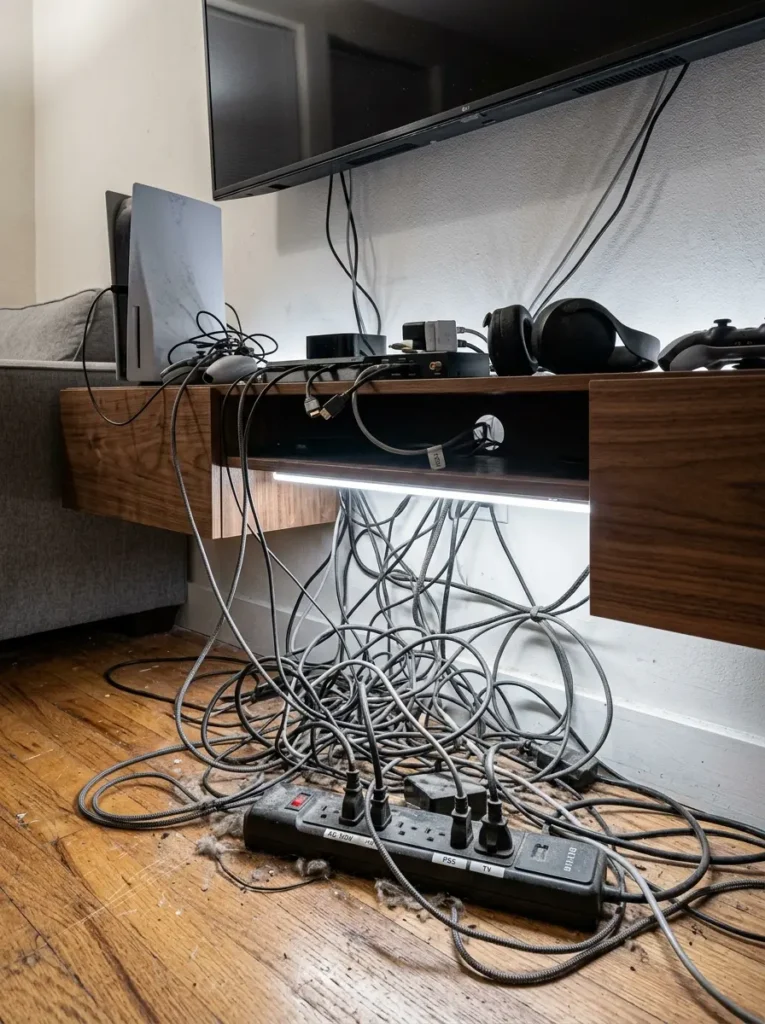
Illuminating a tangled wire disaster with LED lights highlights the mess. Dozens of grey cords spill out from the open shelving unit. Gaming consoles and accessories look sloppy without proper cord routing.
Zip ties bundle loose strands together neatly. Backing panels conceal digital equipment spaghetti. Organized electronics stations look professional and tidy.
11. Bulky Dining Sets
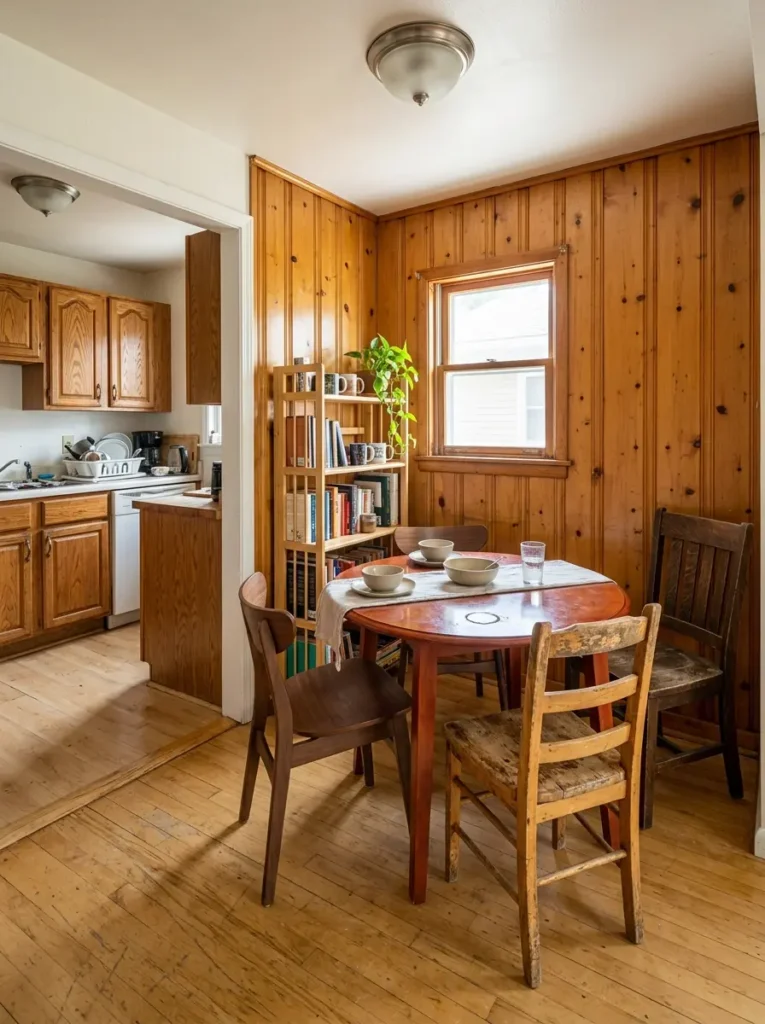
Cramming a full dining arrangement into a narrow kitchen passage blocks traffic flow completely. Thick wooden chairs pushed against paneled walls create a feeling of claustrophobia. Round tables demand more floor area than rectangular alternatives.
You should consider drop leaf designs for tight eating nooks. Folding furniture allows clear movement when meals finish. Slim bar stools tuck away neatly under counters.
12. Busy Geometric Tiles
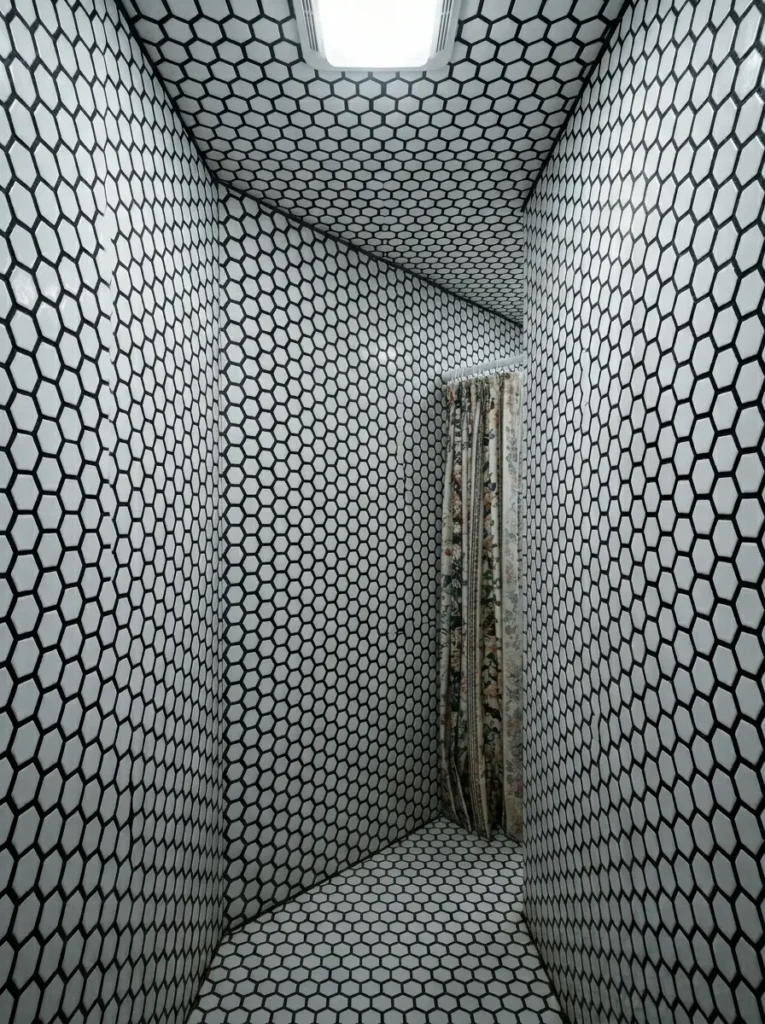
Covering every surface with stark black and white honeycomb shapes creates a dizzying funhouse effect. Wrapping bold patterns across the ceiling makes the bathroom feel incredibly small. High contrast designs overwhelm the senses rapidly in confined quarters.
Select solid colors or subtle textures for tiny washrooms instead. Light grout lines blend seamlessly into pale backgrounds. Simple finishes visually expand limited square footage beautifully.
13. Overloaded Kitchen Islands
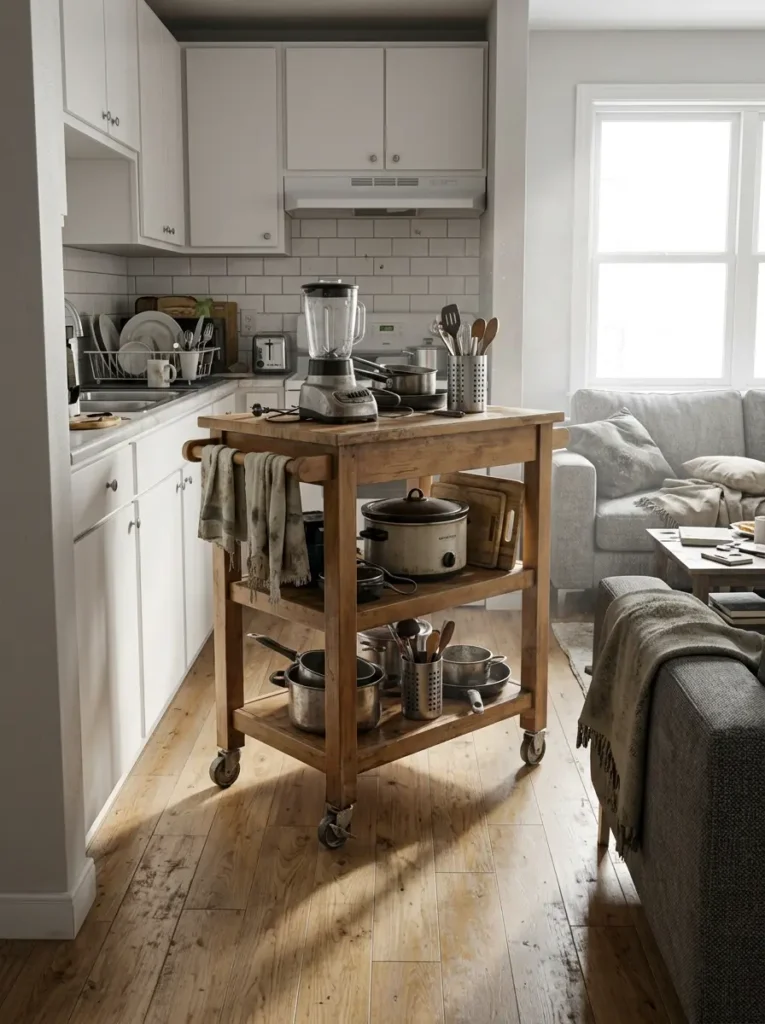
Stacking heavy pots and tall blenders on open utility carts creates a disorganized focal point. Exposed shelving displays every cooking utensil right next to the living room sofa. Mobile stations become junk catchers quickly if left unmanaged.
Keep prep surfaces completely clear of bulky appliances. Closed cabinets hide unattractive culinary tools effectively. Consolidating gadgets prevents visual chaos from spreading into relaxation zones.
14. Overflowing Entryway Hooks
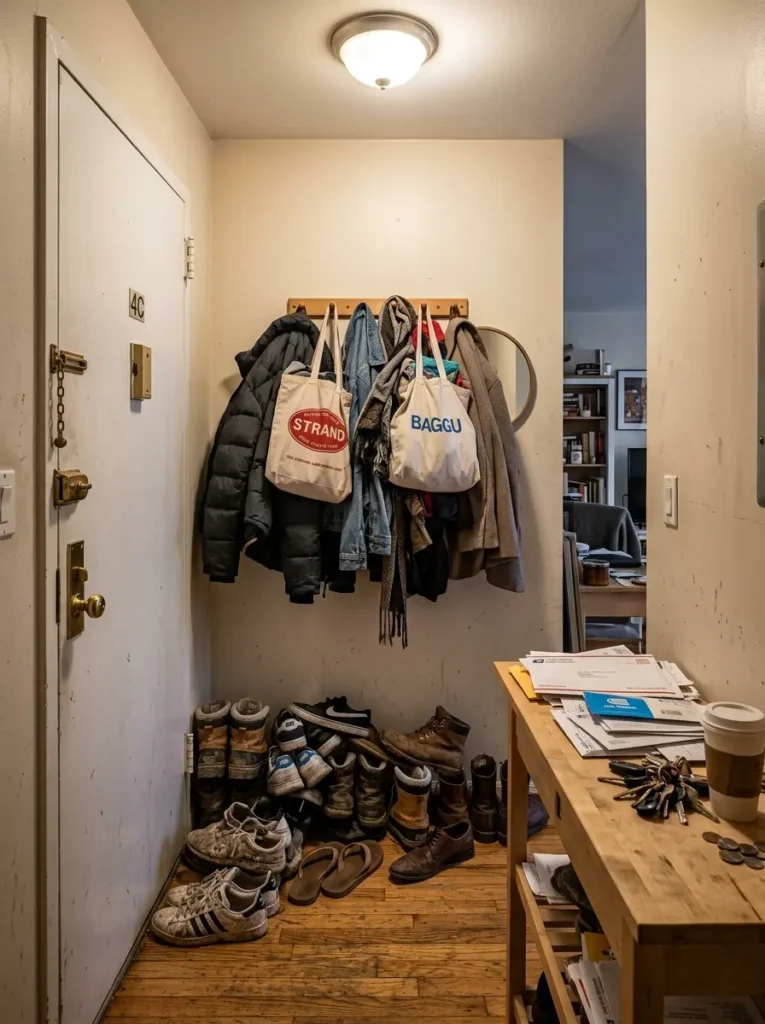
Piling dozens of winter jackets and tote bags onto a single wall rack looks chaotic immediately. Mountains of dirty shoes stacked haphazardly below block the front door. Mail and loose keys scatter untidily across the narrow wooden console table.
Limit hanging items to daily essentials only. Shoe cabinets conceal messy footwear behind closed doors. Dedicated sorting trays control paper accumulation near the entrance effortlessly.
15. Mirrored Furniture Sets
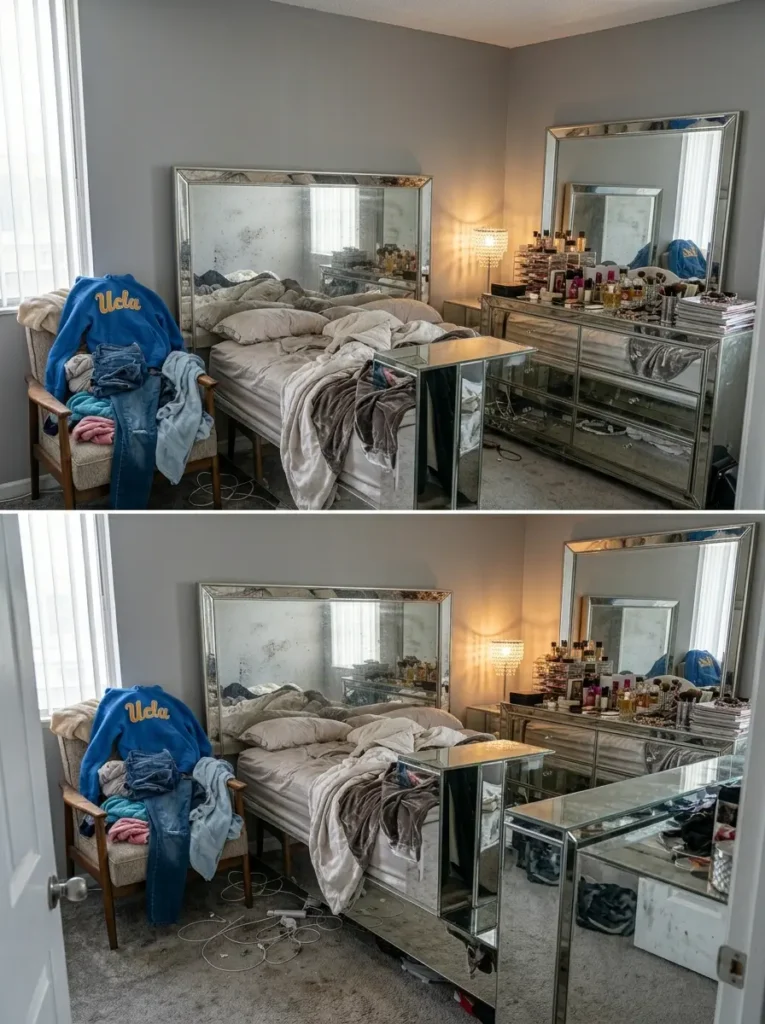
Reflective surfaces double the visual impact of any existing bedroom mess. Massive mirror frames bounce images of crumpled laundry and unmade sheets across the space. Shiny dressers amplify the feeling of disorder instead of adding glamour.
Matte finishes absorb light and forgive daily untidiness much better. Natural wood tones ground the sleeping area effectively. Carefully placed wall mirrors work better than entirely reflective nightstands.
16. Heavy Wooden Barstools
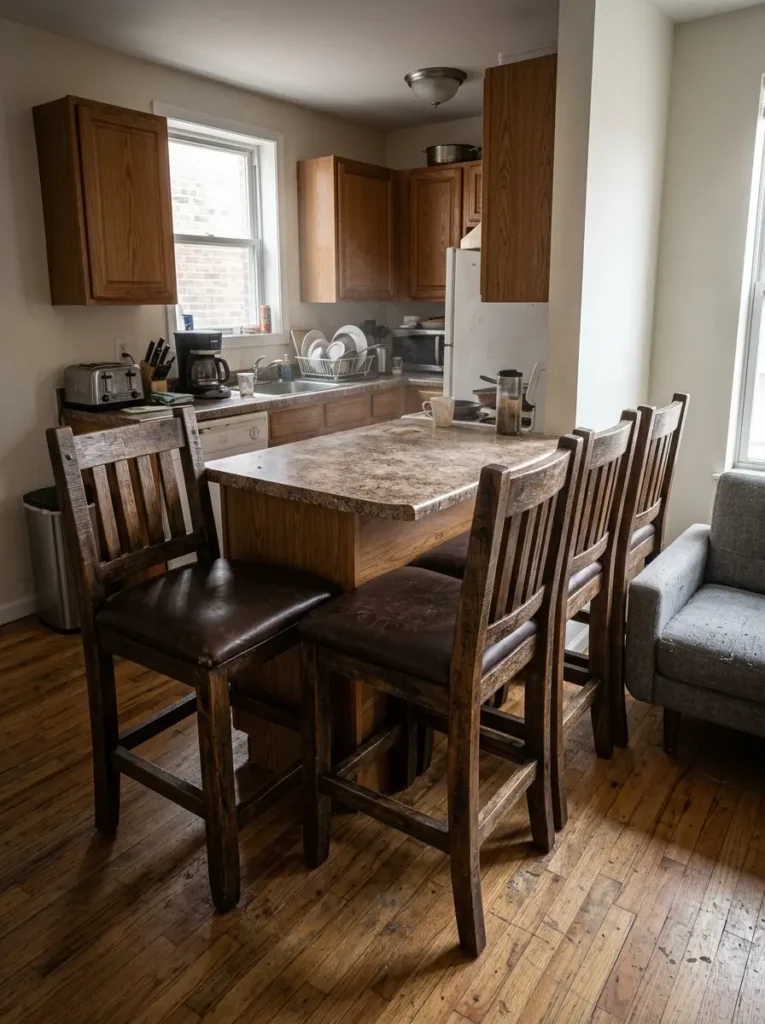
Placing thick dining chairs around a small kitchen peninsula consumes all available walking room. Dark leather upholstery adds unnecessary visual weight to the cooking zone. Tall backrests disrupt the open sightlines between adjoining rooms.
Backless stools slide completely underneath overhangs when not in use. Wire frames provide sturdy seating without blocking natural sunlight. Low profile options keep sightlines clear across the entire apartment.
17. Overcrowded Display Shelves
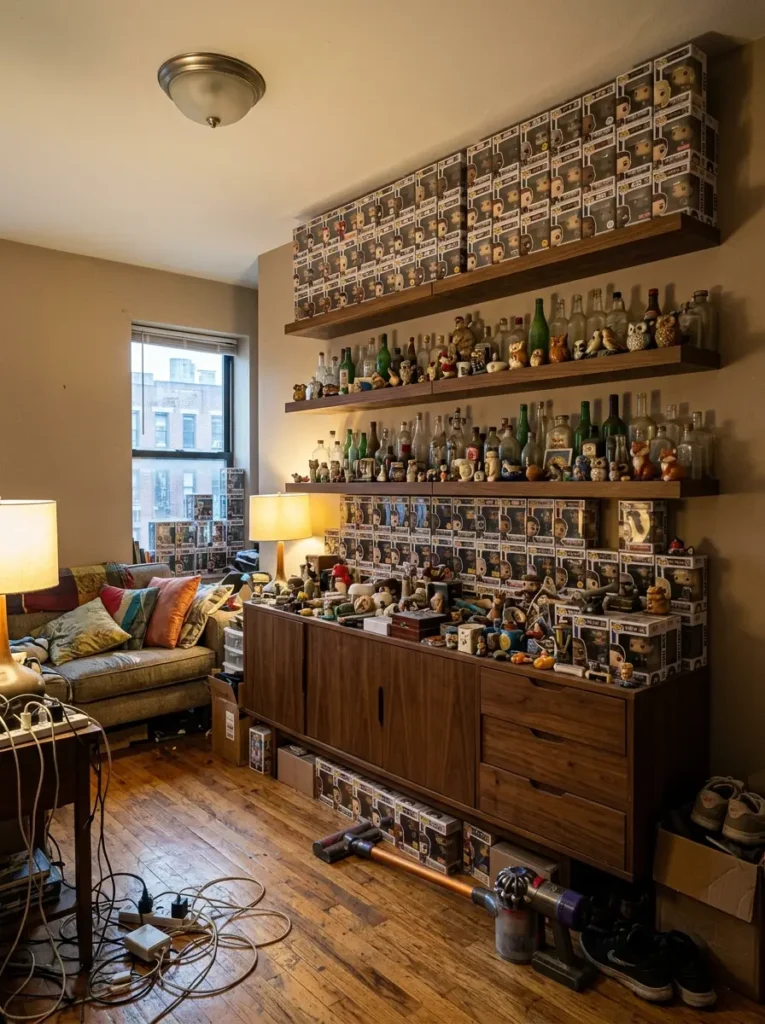
Lining floating shelves with hundreds of glass bottles and boxed figurines creates an overwhelming museum aesthetic. Dense collections visually weigh down the living room walls. Every inch of the wooden sideboard holds a distracting trinket.
Rotating your favorite items seasonally keeps displays fresh and uncluttered. Grouping similar objects together forms cohesive focal points. Leaving empty gaps between decor allows the eye to rest naturally.
18. Inadequate Room Lighting
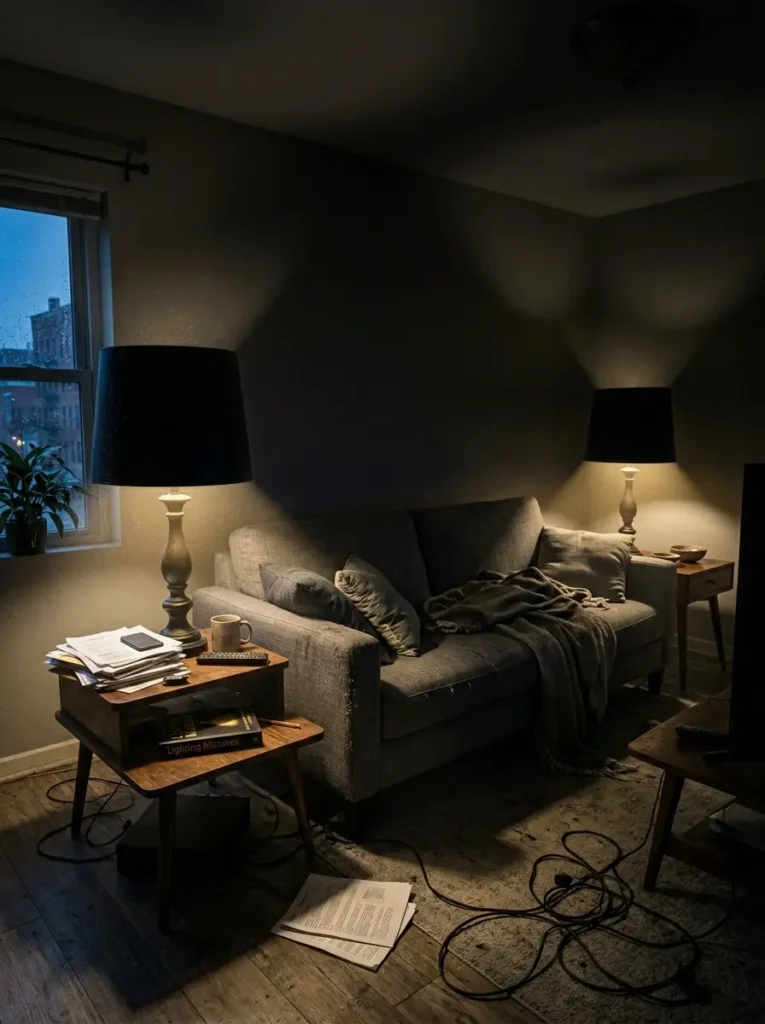
Relying solely on two dim table lamps leaves corners drowning in deep shadows. Uneven illumination makes the grey sofa appear gloomy and uninviting. Dark spaces always feel much smaller than brightly lit areas.
Multiple light sources brighten up cramped quarters efficiently. Floor lamps bounce warm glows against the ceiling. Task lighting provides necessary brightness without overwhelming the cozy atmosphere.
19. Exposed Wardrobe Racks
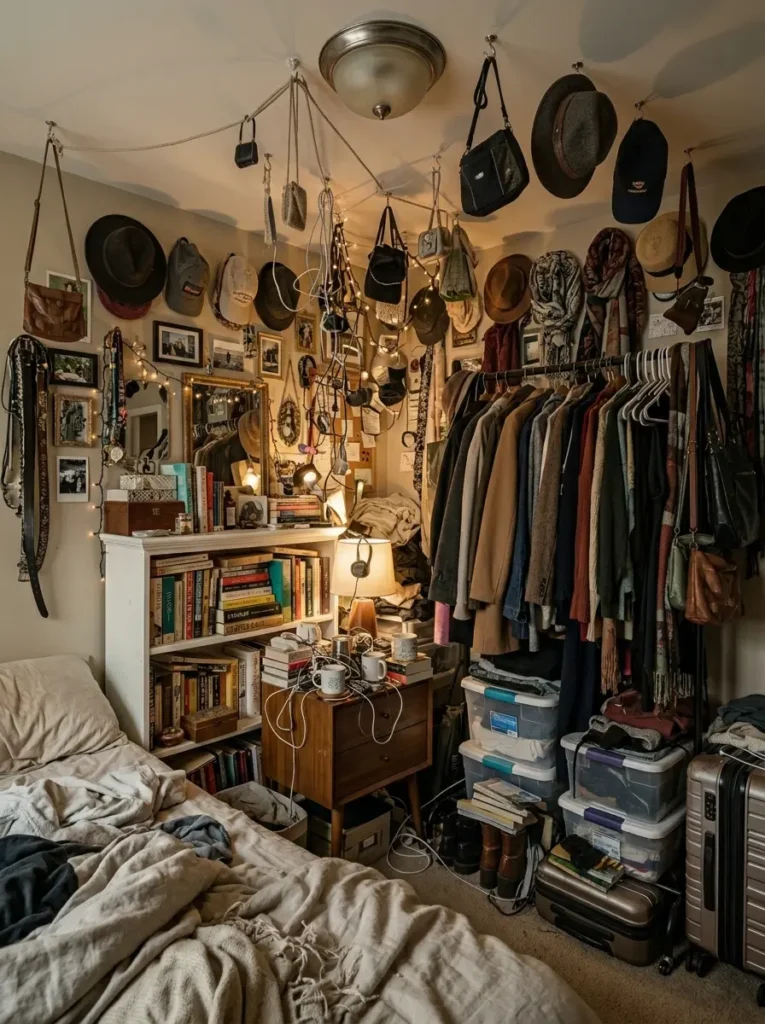
Hanging garments from ceiling hooks and freestanding poles transforms a bedroom into a chaotic closet. Open storage puts mismatched fabrics and cluttered accessories on full display constantly. Stacks of plastic bins crowd the walkway next to the mattress.
Enclosed wardrobes hide your clothing away neatly. Underbed drawers offer discrete solutions for bulky seasonal sweaters. Clean walls without suspended bags create a peaceful sleeping environment.
20. Layered Area Rugs
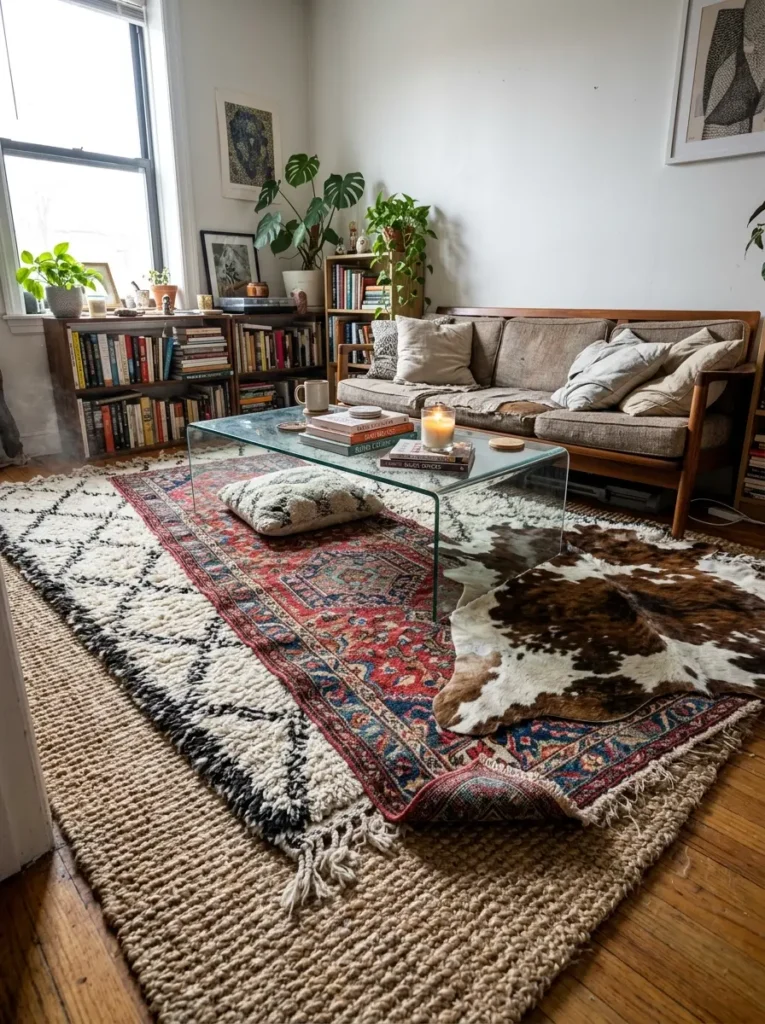
Piling an ornate patterned carpet over a thick woven mat creates a tripping hazard. Tossing an animal hide on top adds chaotic texture to an already busy floor. Heavy fabric layers make the living room feel distinctly stuffy.
A single correctly sized rug unifies the seating arrangement elegantly. Exposing bare hardwood edges makes the room feel much wider. Simple floor coverings enhance spaciousness instantly.
21. Cramped Bedroom Workspaces
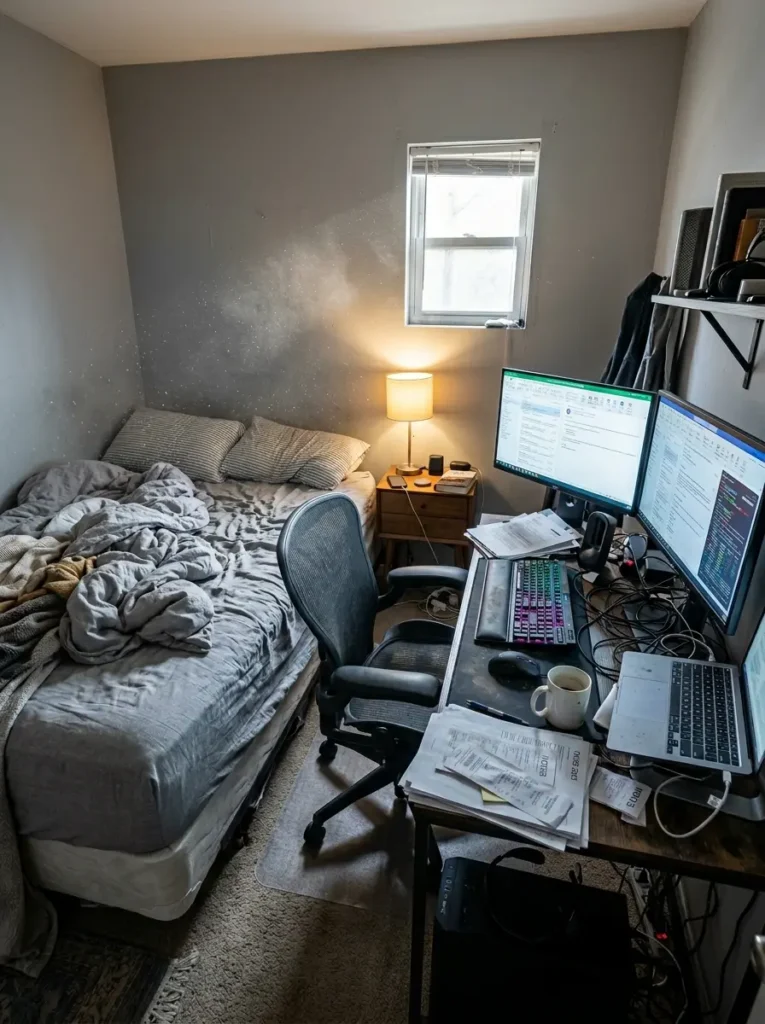
Squeezing a massive desk setup next to your mattress eliminates any sense of relaxation. Huge dual monitors visually dominate the tiny sleeping quarters instantly. Piles of paperwork spill over onto the floor and chair.
You need physical separation between professional duties and rest areas. Using a smaller laptop stand clears valuable square footage effectively. Moving the workstation to another zone preserves the peaceful bedroom atmosphere.
22. Overgrown Plant Collections
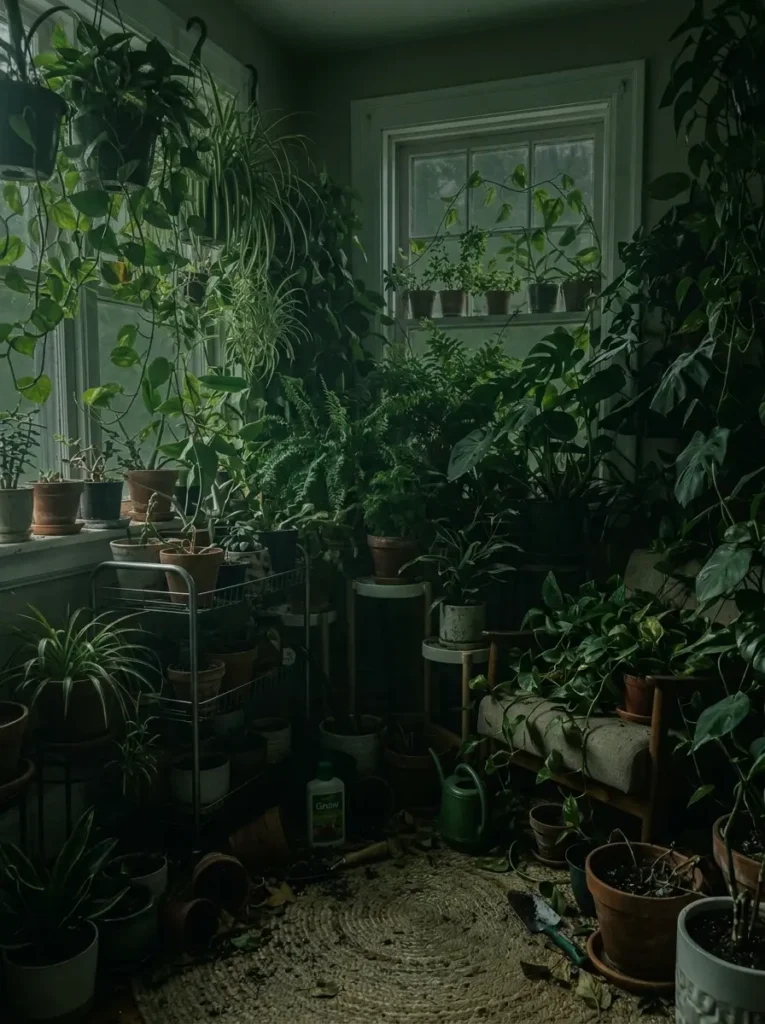
Filling every corner with potted foliage turns a living room into a dark jungle. Dense leaves block natural sunlight from entering the small window. Dirt and fallen debris scatter across the floor constantly.
Select just a few statement greenery pieces for tight spaces. Hanging vines near the ceiling draws the eye upward beautifully. Keeping floor areas clear allows much better daily movement.
23. Exposed Plastic Storage
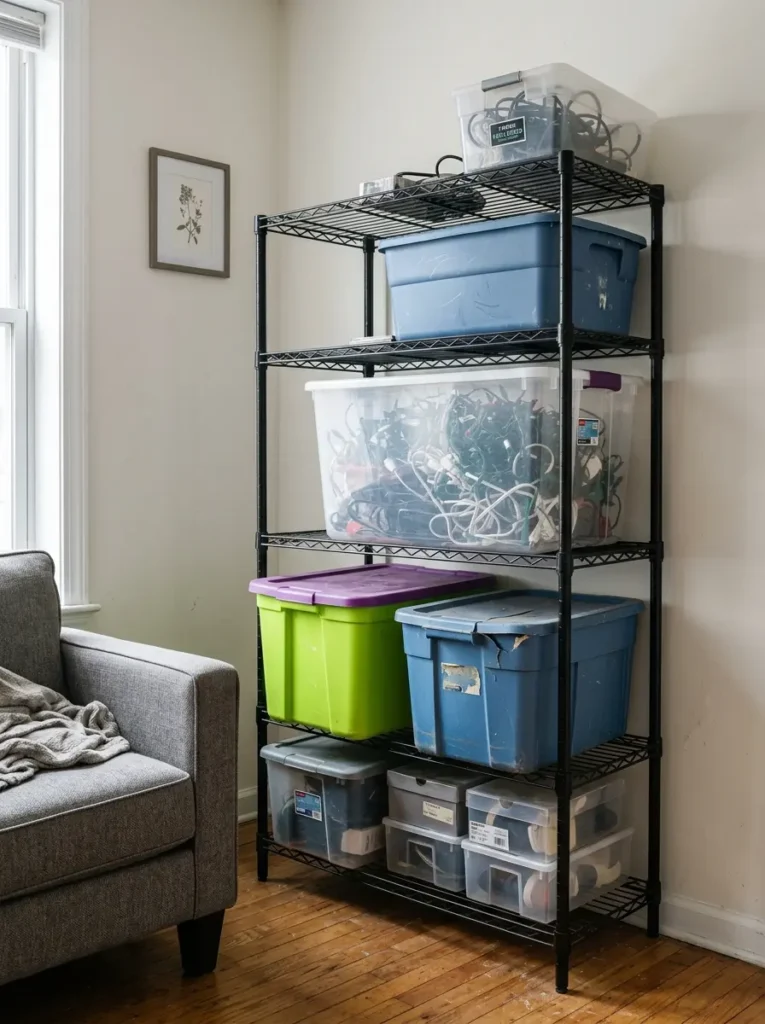
Stacking translucent colored bins on open wire racks looks extremely untidy. Blue and green tubs clash directly with the neutral living room furniture. Tangled holiday lights remain completely visible inside the clear containers.
Opaque boxes hide internal clutter from plain sight effortlessly. Woven baskets offer a much warmer aesthetic for visible organization. Relocating utility shelves to a closet improves the overall room design.
24. Cluttered Bookshelves
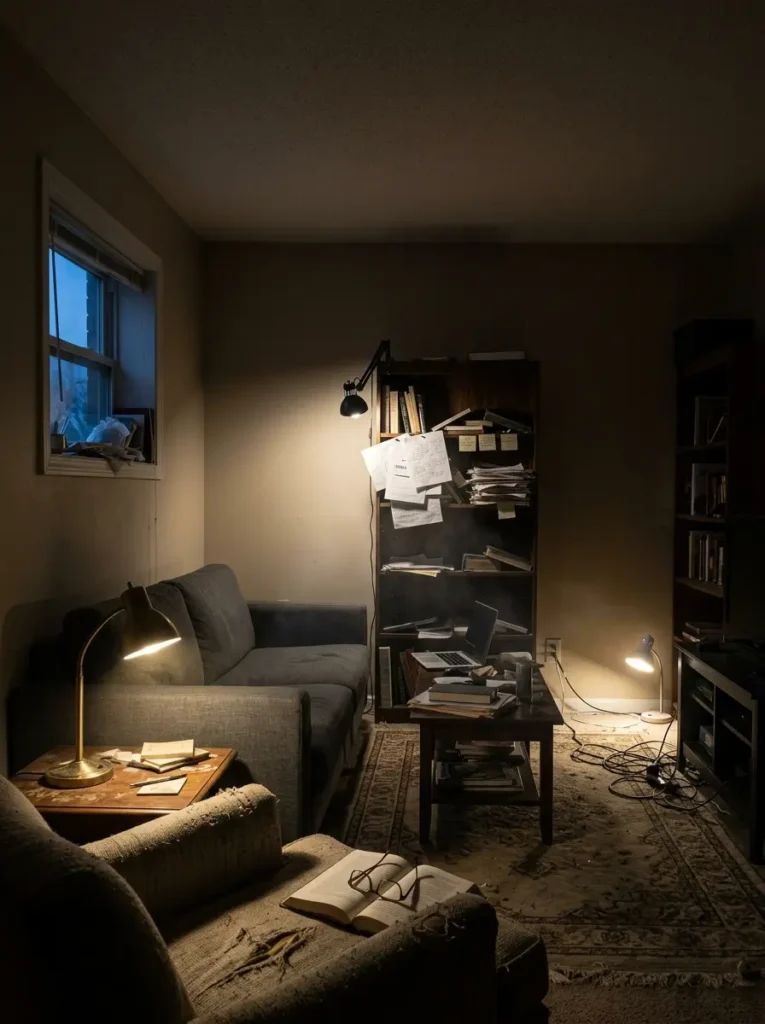
Stuffing tall bookcases with loose papers creates an immediate focal point of chaos. Messy documents spill out onto the coffee table below. Harsh directional lighting casts intimidating shadows across the entire wall.
Sorting loose sheets into closed binders removes visual distraction completely. Storing reference materials behind solid doors maintains a clean living environment. Soft ambient lamps illuminate the space much more evenly.
25. Pooling Heavy Curtains
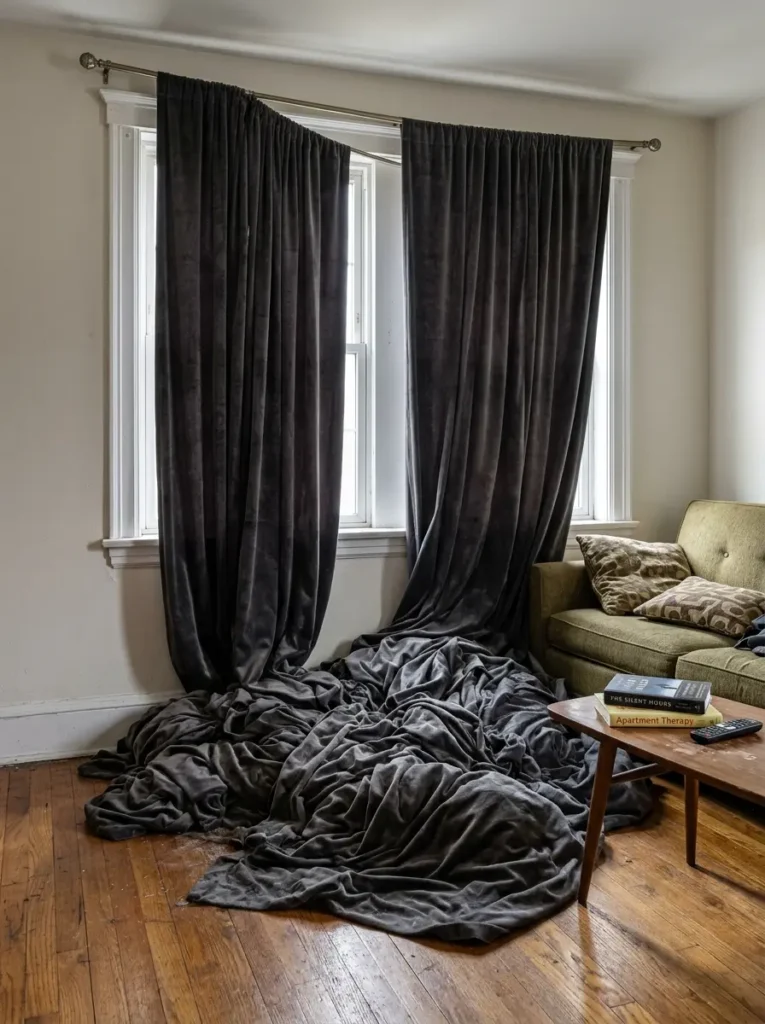
Allowing yards of thick velvet fabric to gather on the floor creates a messy hazard. The dark gray material absorbs light and shrinks the corner visually. Puddled textiles collect dust and pet hair incredibly fast.
Hemming window treatments so they just touch the baseboards looks much crisper. Tailored lengths prevent the fabric from looking like a neglected pile. Lighter textiles allow natural brightness to fill the room naturally.
26. Massive Coffee Tables
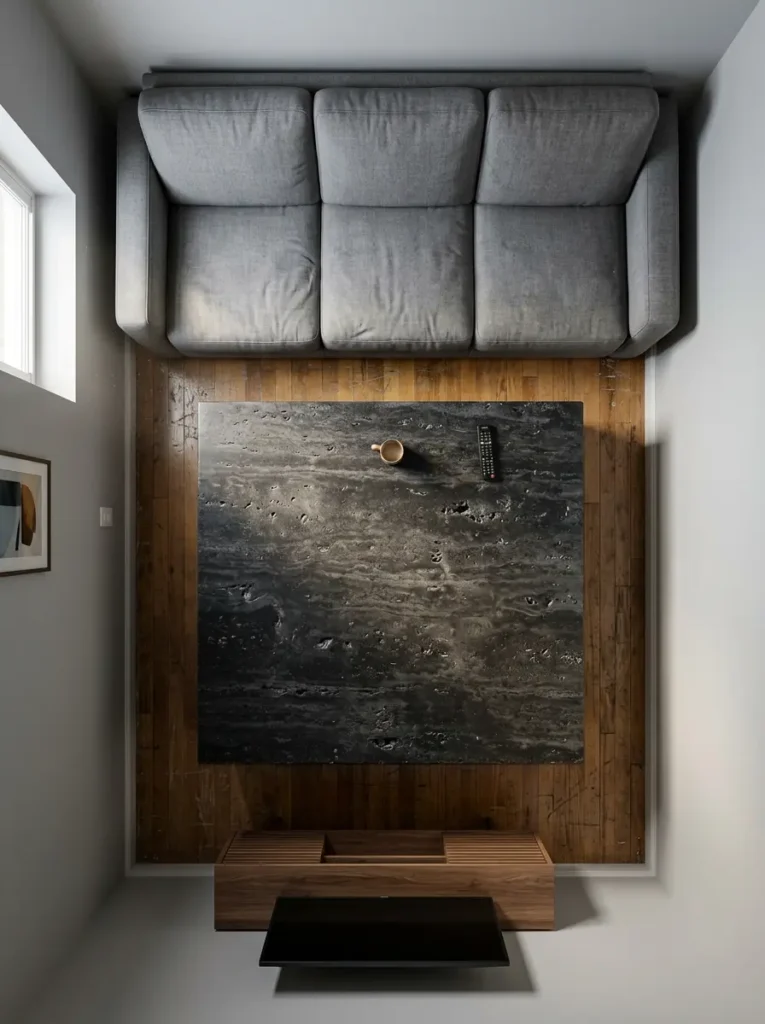
Dropping a giant block of dark stone in the center of a room destroys foot traffic. This oversized square leaves barely any walking room near the sofa. The heavy material grounds the space too aggressively.
Choosing a narrow oval shape improves circulation significantly. Nesting tables provide flexible surface area without permanent bulk. Selecting pieces with slender legs keeps the floor visible and open.
27. Overwhelming Geometric Wallpaper
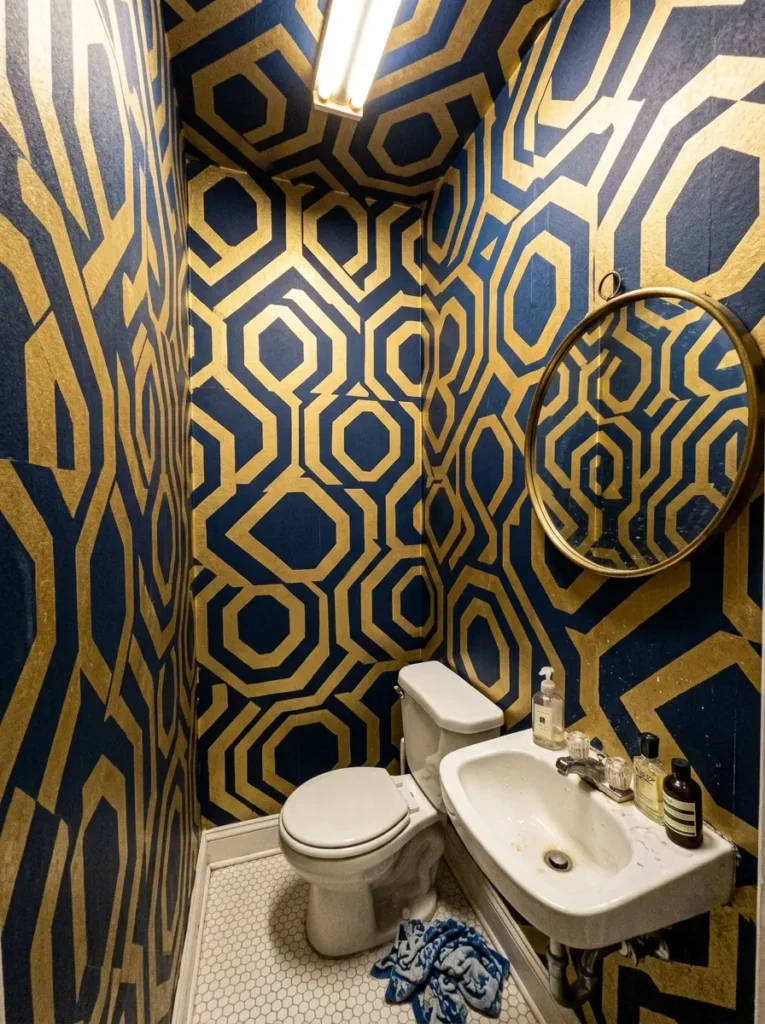
Wrapping a tiny powder room in bold blue and gold patterns causes extreme visual confusion. The large scale print makes the walls feel like they are closing in. Such loud designs compete heavily with the basic white fixtures.
Applying subtle textures works much better in restricted spaces. Painting the walls a soft solid shade reflects light effectively. Using decorative accents sparingly prevents the decor from becoming oppressive.
28. Wall Trapped Beds
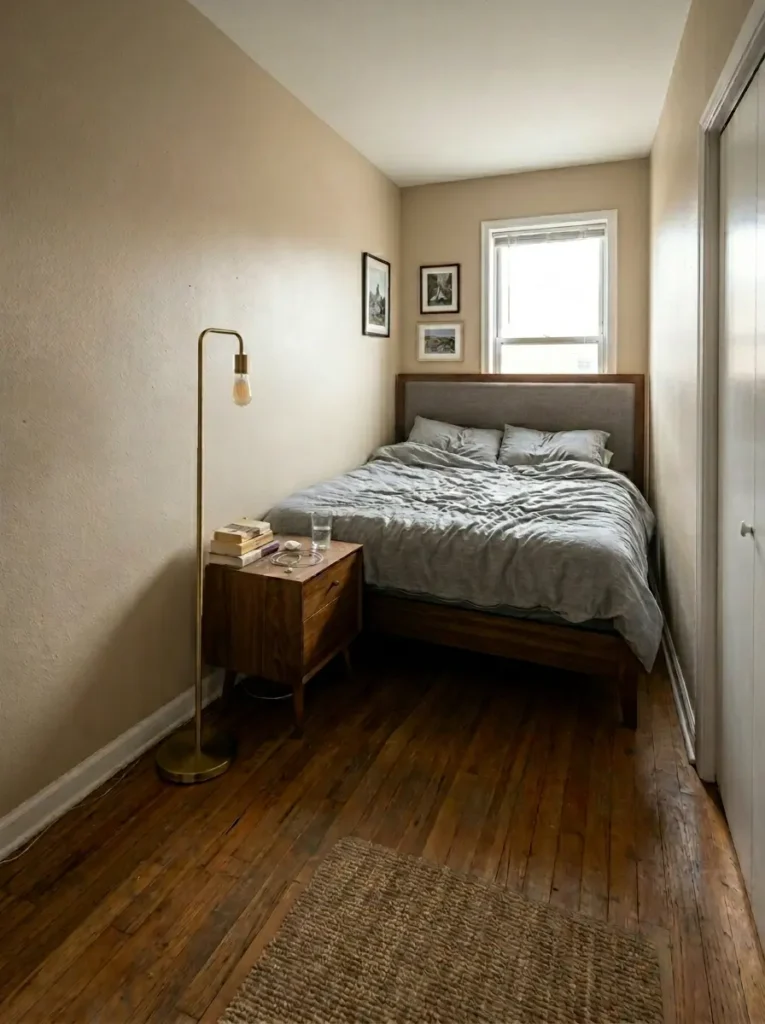
Wedging a large mattress tightly between two opposing walls eliminates crucial breathing room. Placing a nightstand directly in the narrow walkway blocks access entirely. This cramped layout makes changing the bedsheets nearly impossible.
Downsizing to a smaller frame restores necessary floor space around the sleeping area. Mounting a floating shelf replaces the bulky bedside table efficiently. Creating clear pathways makes the bedroom feel significantly larger.
29. Light Blocking Drapes
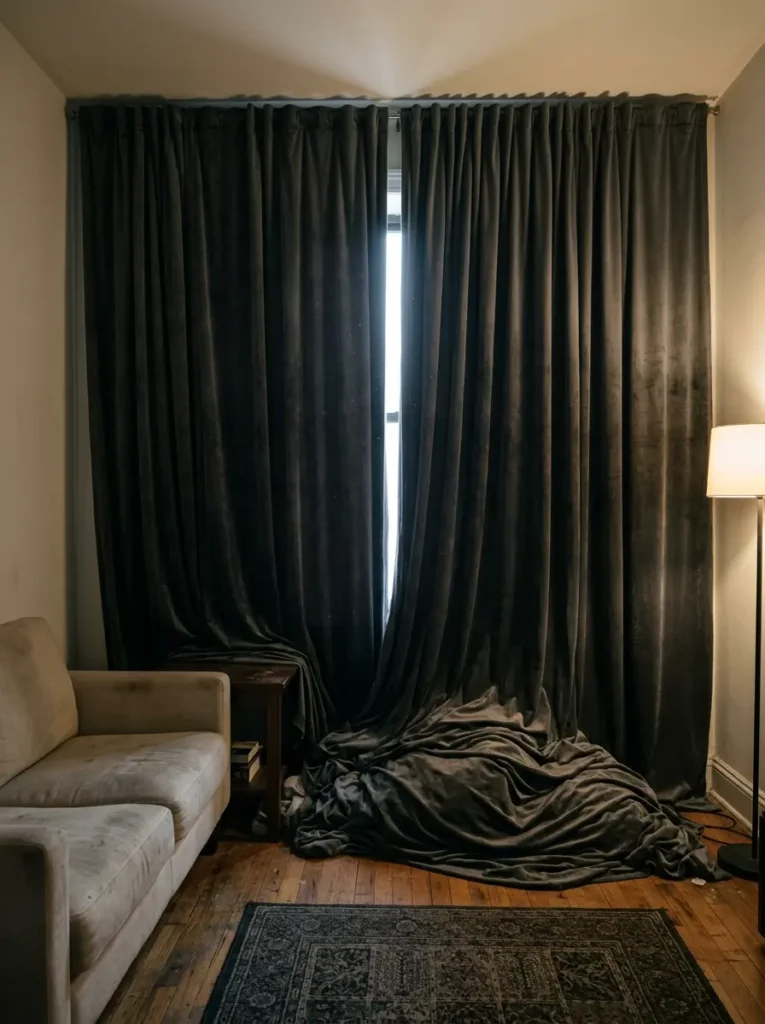
Hanging solid black panels across the only light source creates a cave atmosphere. These heavy textiles swallow up all the natural sunshine immediately. The massive pile of extra fabric on the floor looks unkempt.
Swapping dark materials for sheer fabrics transforms the mood instantly. Letting sunlight pour inside expands the perceived volume of the apartment. Crisp window coverings promote a much more cheerful living environment.
30. Bulky Matching Furniture
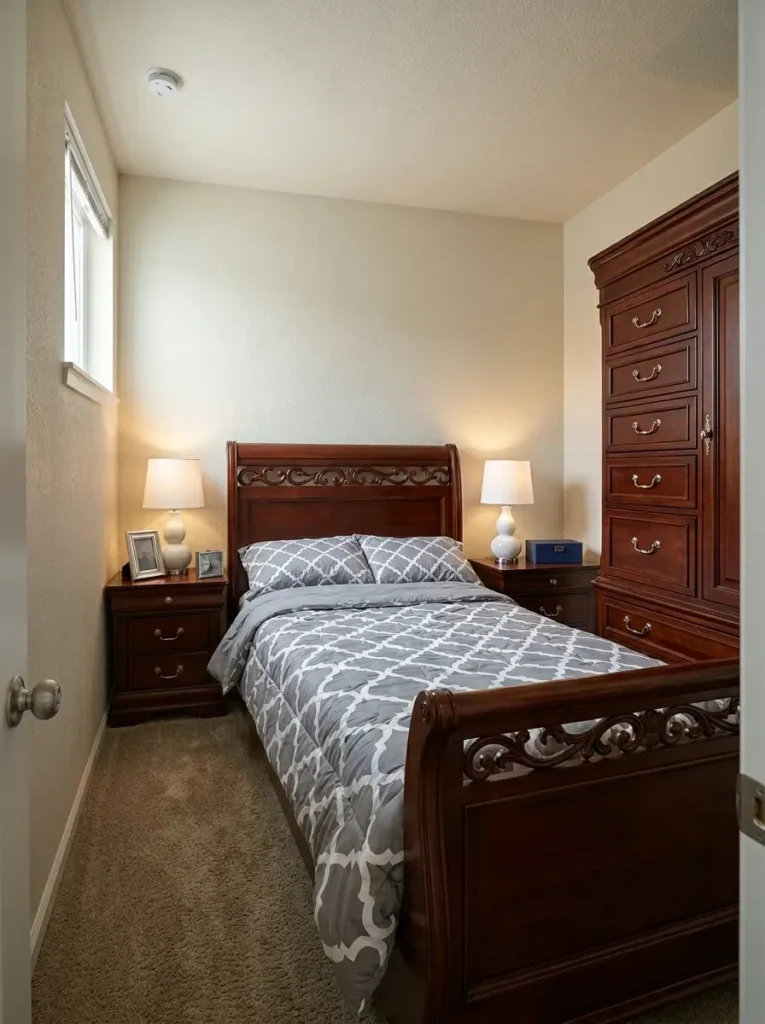
Squeezing an entire suite of dark carved wood into a tiny room feels incredibly heavy. The massive tall dresser dominates the right wall completely. Thick headboards consume valuable inches in an already tight floor plan.
Mixing lighter standalone pieces creates a much more curated aesthetic. Platform beds without footboards open up the visual flow at the end of the mattress. Slim dressers provide storage without overwhelming the modest square footage.
31. Oversized Ornate Mirrors
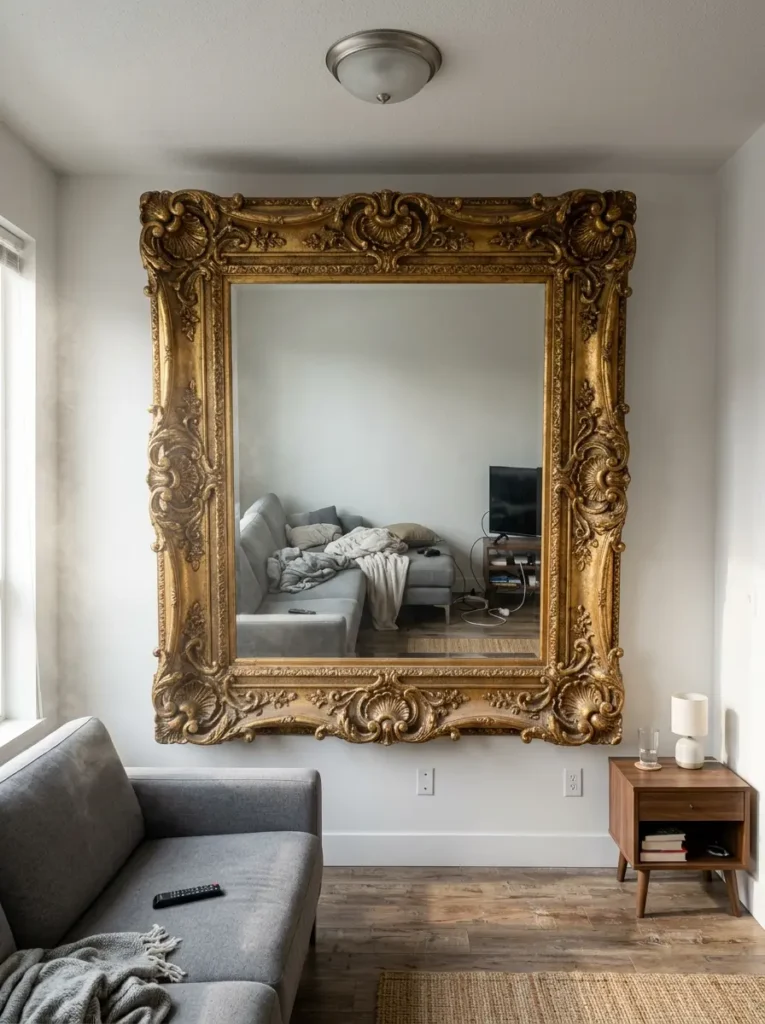
Hanging a gigantic gold frame overwhelms a modest living area quickly. This massive piece dominates the entire wall and reflects unmade furniture. Such bulky designs weigh down the visual balance heavily.
You should select sleeker profiles for reflective decor. Thin borders blend into the background smoothly. Minimalist edges keep the focus on the room rather than the heavy ornament.
32. Furniture Hugging Walls
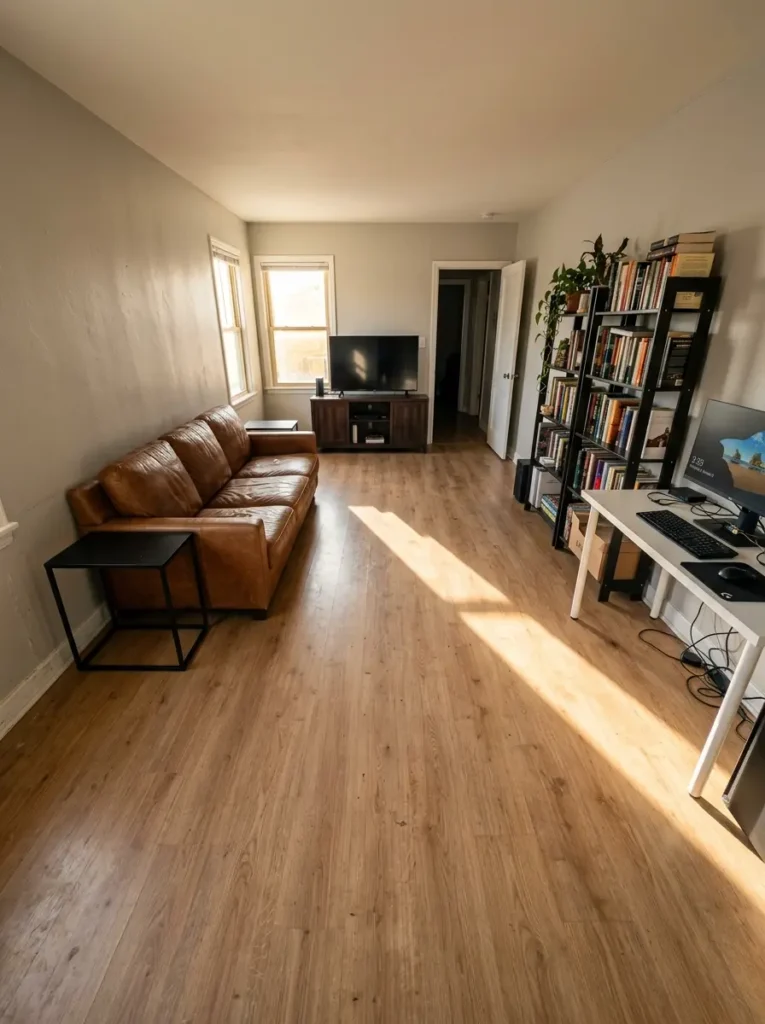
Pushing every seating element against the perimeter creates an awkward empty corridor. The brown couch sits too far from the television screen. This arrangement leaves a massive void right in the center.
Pulling pieces closer together forms intimate conversation zones. Leaving a gap behind the sofa makes the area feel cozier. Floating your layout utilizes the floor plan much better.
33. Exposed Corner Racks
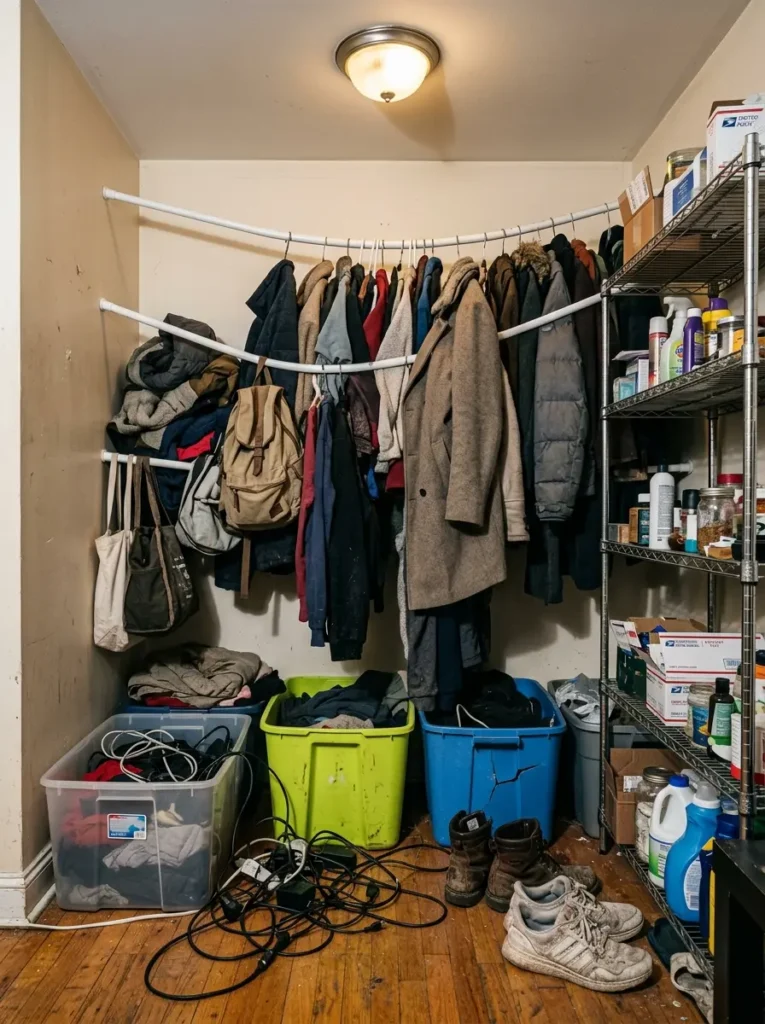
Suspending heavy winter coats on bent plastic poles looks incredibly unstable. This makeshift wardrobe exposes chaotic clothing piles to anyone entering the space. Bulky storage bins litter the floor directly underneath.
Freestanding armoires conceal garments behind solid wooden panels efficiently. Using dedicated closet systems prevents garments from spilling into walkways. Proper organization units maintain a structured aesthetic.
34. Postage Stamp Rugs
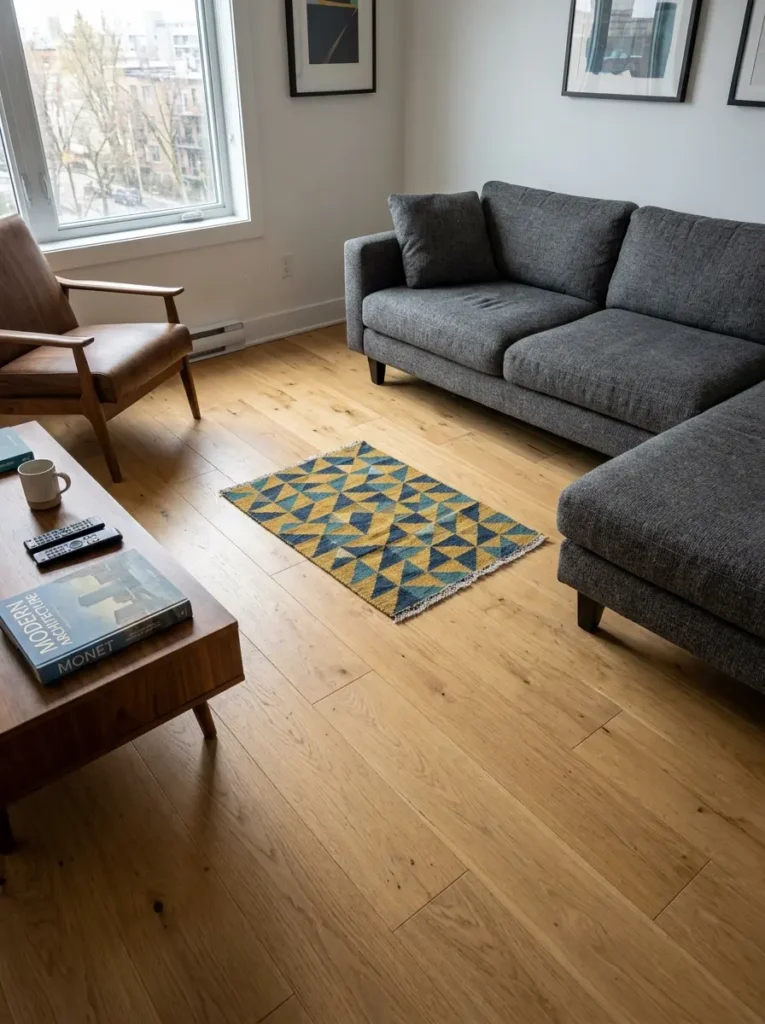
Placing a tiny mat in the middle of a room highlights the limited square footage. This small geometric piece fails to anchor the gray sofa or wooden armchair. The floor covering looks completely lost among the larger furniture.
Sizing up your textiles connects seating arrangements properly. Front furniture legs must rest entirely on the woven fabric. Large carpets expand the visual boundaries of tight spaces.
35. Competing Maximalist Patterns
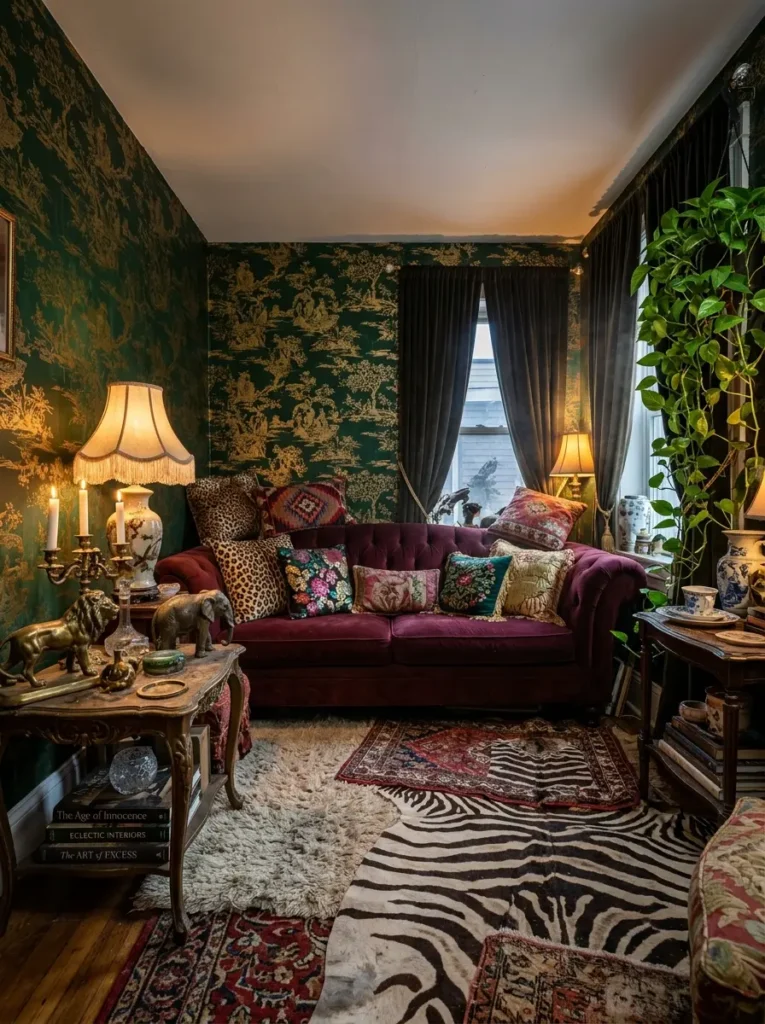
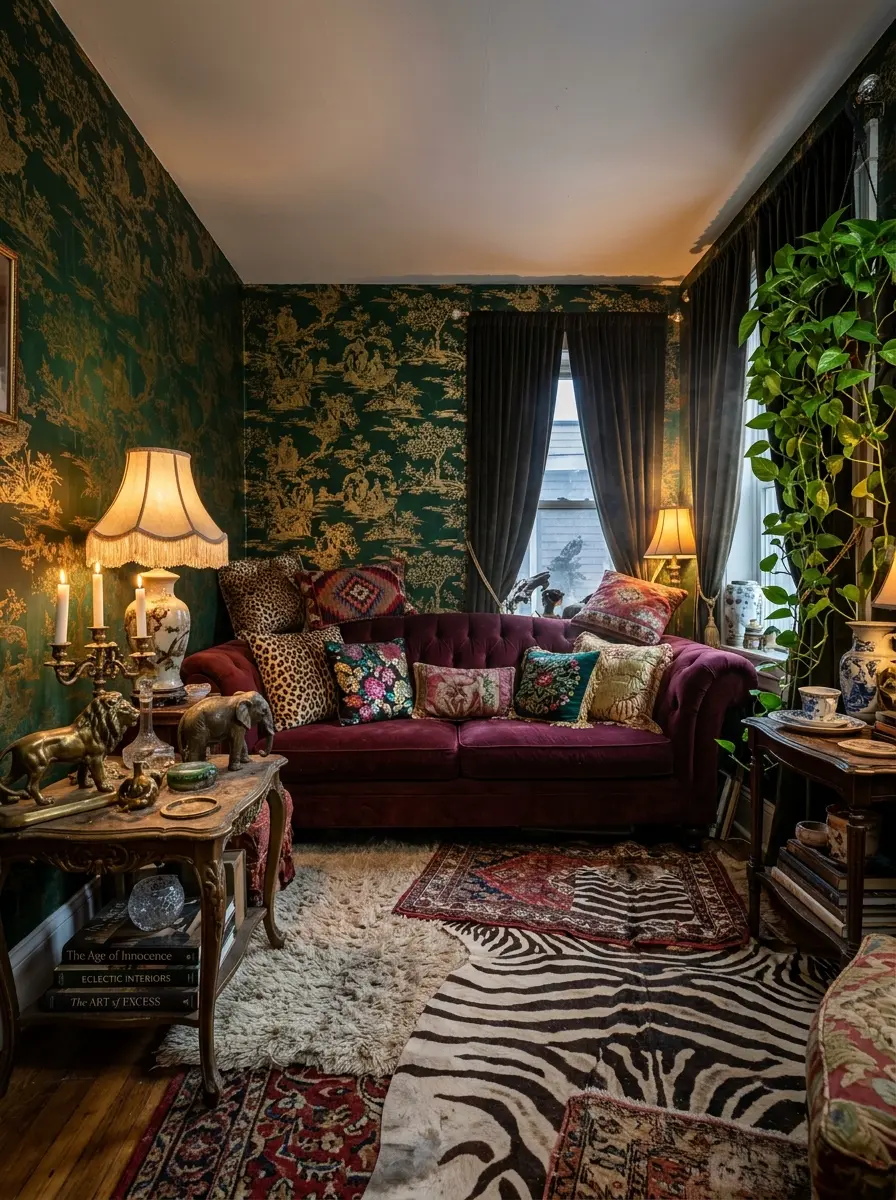
Mixing dark green wallpaper with zebra print flooring creates severe sensory overload. Every surface competes for attention simultaneously in this confined zone. Heavy velvet seating gets lost among the chaotic animal textiles.
Limiting wild prints to one focal point calms the atmosphere greatly. Solid colors provide necessary resting spots for tired eyes. Restraint stops small rooms from feeling like an unorganized antique shop.