It is an age old problem: the bedroom, meant to be a sanctuary, often becomes a chaotic catch all space. Clutter accumulates quickly, transforming restful retreats into sources of stress. If you struggle to maintain order, understand this: you are not alone, and the fault lies not with you, but with the lack of smart systems.

The future of home organization, particularly in bedrooms, is about maximizing vertical space and utilizing multi functional furniture. We must stop relying on bulky, single purpose pieces that fail to contain our ever growing collections. Achieving a truly tidy space requires a shift in mindset and a deployment of clever architectural and DIY strategies.
We have compiled 37 transformative solutions, ranging from simple weekend projects to sophisticated built in cabinetry, all designed to conquer the chaos by 2026. Explore these ingenious storage concepts to reclaim your room, simplify your routines, and finally create the serene, organized environment you deserve.
1. Integrated Wall Unit and Storage Bed
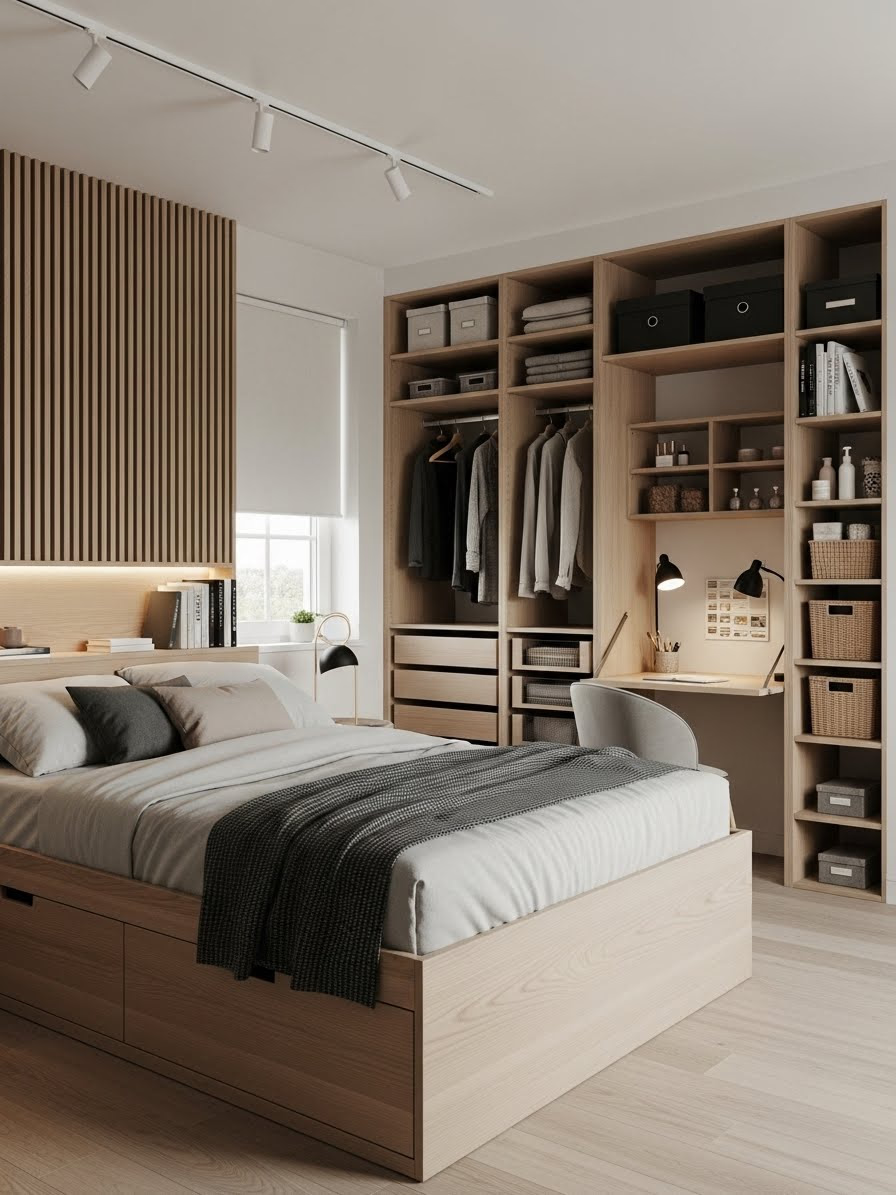
This stunning bedroom setup showcases how built-in cabinetry can completely transform organization. Notice the variety of storage solutions packed into one cohesive wall unit—this is crucial for keeping clutter hidden and surfaces clear. Closed drawers and uniform, labeled boxes house small, messy items, ensuring the open shelving remains visually appealing and tidy.
The system incorporates hanging space, folded garment sections, and even a compact desk area, making the most of every vertical inch. Additionally, the platform bed cleverly includes under-bed drawers. These drawers offer hidden, accessible space for linens or seasonal clothes, eliminating the need for bulky extra dressers. Choosing a light natural wood keeps the room feeling spacious and airy, preventing the large structure from overwhelming the area. A truly smart approach to maximizing storage.
DIY Instruction: Converting a Standard Bed Frame to a Storage Bed
Material Required List
- Two large sheets of thin plywood (1/4 inch or 6 mm thickness)
- Four heavy-duty caster wheels (the rotating kind)
- Wood glue
- Small decorative pulls or handles (2 per box)
- Small finishing nails (1 inch or 25 mm)
- Primer and paint (optional)
- Sandpaper (medium and fine grit)
Equipment Required List
- Measuring tape
- Circular saw or jigsaw (or have the wood pre-cut at the hardware store)
- Drill and drill bits
- Hammer
- Safety glasses
- Clamps
- Square
DIY Instruction Step by Step
- Measure and Design Your Boxes: First, carefully measure the height, depth, and available width under your current bed frame. Subtract at least one inch from the height to ensure the boxes roll easily without scraping the frame. Decide on the dimensions for two long storage boxes that will fit under one side of the bed.
- Cut the Wood Panels: Use your saw to cut the plywood sheets into the necessary pieces for two boxes: four long sides, four short ends, and two large bottoms. If you are a beginner, it is strongly recommended to have the local lumber yard make these precise cuts for you.
- Assemble the Sides: Apply a generous but not excessive amount of wood glue along the edges of the bottom panel where the sides will attach. Place the four side pieces vertically onto the bottom panel, forming a simple rectangle. Secure these joins by hammering small finishing nails through the side panels into the edges of the bottom panel. Use clamps to hold the corners tightly as the glue dries.
- Reinforce the Corners: Once the glue is mostly dry, add extra reinforcement by gluing and nailing the four vertical corners of the box where the long and short side pieces meet. Wipe away any excess glue immediately with a damp rag.
- Attach the Wheels: Flip the now sturdy box upside down. Position the four caster wheels near the corners, making sure they will not interfere with any structural parts of the box. Use your drill to attach the wheels securely with screws.
- Sand and Finish (Optional): Lightly sand down all the exterior surfaces and edges, especially where the wood was cut. This removes splinters and prepares the surface for paint. Apply a coat of primer, followed by two coats of your chosen paint, allowing ample time for drying between coats.
- Add Handles: On the front facing side of each box, measure and mark where you want the handles to sit. Drill pilot holes and then screw your decorative pulls or handles into place.
- Load and Organize: Slide your new rolling storage boxes under the bed. Use them to hold extra blankets, out of season clothing, or spare towels, keeping them both accessible and out of sight.
2. Industrial Style Wall-Integrated Murphy Bed and Storage System
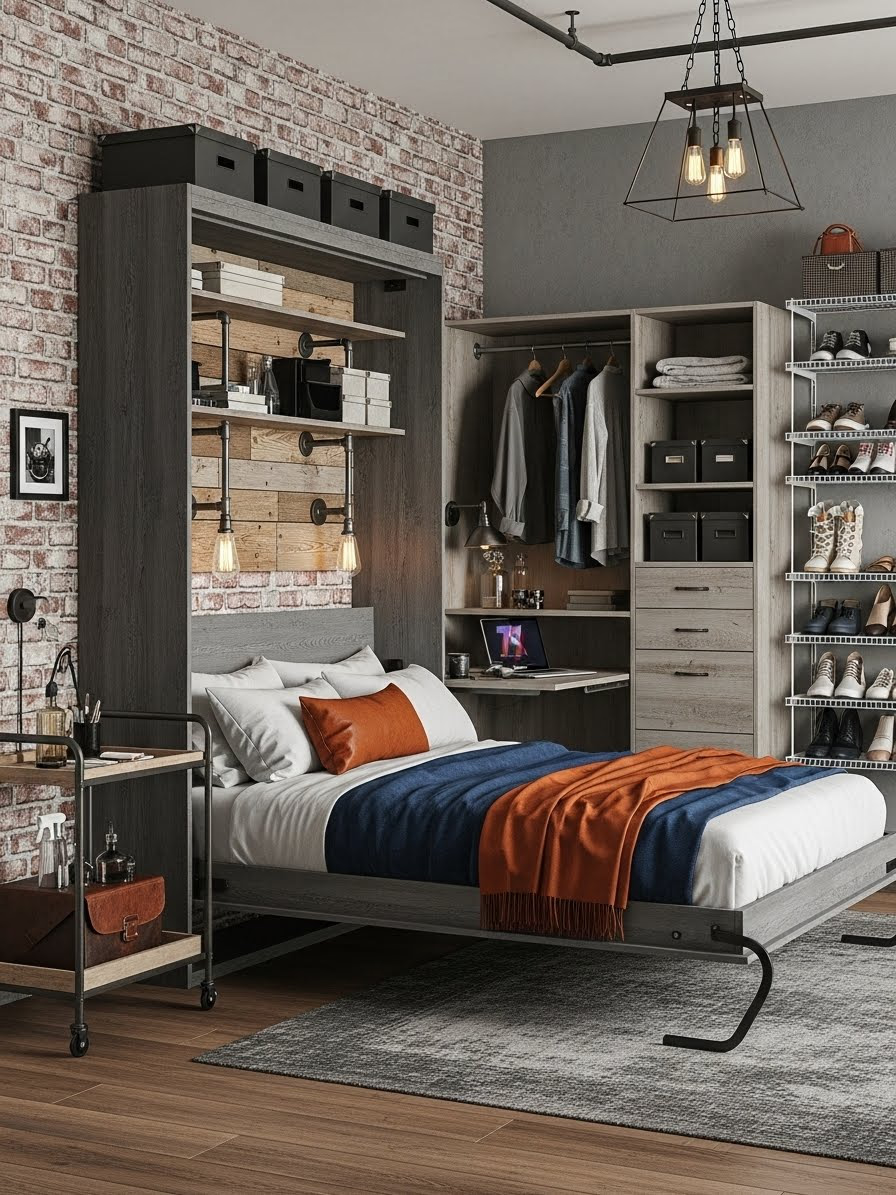
This impressive setup demonstrates how to maximize space in a smaller footprint using vertical design. The main feature is a cleverly concealed wall unit, likely housing a Murphy bed that folds down when needed. When upright, it reveals open shelving accented with industrial pipe fittings and warm, reclaimed-style wood paneling. This provides essential display and accessible storage right behind the headboard.
Adjacent to the main unit, a dedicated open closet organizes hanging clothes and folded items, complemented by deep drawers for miscellaneous accessories. The shelving utilizes consistent black bins, which instantly reduces visual chaos and gives the whole unit a clean look, even though many items are visible. Nearby, a slim rolling cart adds flexible bedside storage, proving that even small pieces can hold significant organizing power. This robust system is a game-changer for studio apartments or tight bedrooms.
DIY Instruction: Building Industrial Pipe Shelves
Material Required List
- Two solid wood planks (dimensions depending on your space)
- Black pipe pieces (varying lengths, e.g., 6 inches, 12 inches)
- Pipe fittings (elbows, tees, and flanges)
- Wood screws
- Wall anchors (if attaching to drywall)
- Wood stain or paint (optional)
- Polyurethane sealant (optional)
Equipment Required List
- Drill and drill bits
- Level
- Stud finder (necessary if you are not using wall anchors)
- Tape measure
- Screwdriver
- Sandpaper (medium grit)
- Rags or brush for staining
DIY Instruction Step by Step
- Prepare the Wood Planks: Start by sanding your wood planks until they are smooth and splinter-free. If you want a darker, aged look, apply your chosen wood stain, following the product instructions. Once the stain is completely dry, apply a layer or two of polyurethane sealant to protect the wood surface.
- Plan the Pipe Assembly: Lay out your pipe pieces and fittings on the floor to visualize the shelf brackets. You will generally need one flange to attach to the wall, a pipe piece for the vertical support, an elbow or tee fitting, and a final pipe piece that runs under the shelf plank. Screw the pieces together hand-tight. Ensure you have two identical bracket assemblies for each shelf.
- Mark the Wall: Use your tape measure and level to determine the precise placement of your shelves. Mark where the wall flanges need to be secured. It is extremely important that the flanges are perfectly level with one another for the shelves to sit straight.
- Install the Flanges: If possible, locate wall studs using your stud finder and attach the back flanges directly into the wood for maximum strength using wood screws. If you must attach to drywall, use appropriate heavy-duty wall anchors before screwing the flanges into the wall.
- Attach the Pipe Structure: Screw the pre-assembled pipe brackets into the installed wall flanges. Give them a final tighten to make sure the structure is rigid and oriented correctly.
- Secure the Shelf Planks: Place one of the prepared wood planks across the top of the pipe brackets. The plank should extend slightly beyond the pipe structure for the best look. Drill pilot holes up through the top pipe piece into the underside of the wood plank. Screw the shelf plank firmly onto the metal supports.
- Test and Organize: Gently press down on the finished shelf to ensure it is secure on the wall. Once confirmed, you can use these sturdy shelves to organize books, small decorative storage boxes, or lighting elements.
3. Luxurious Built-In Bedroom Storage System
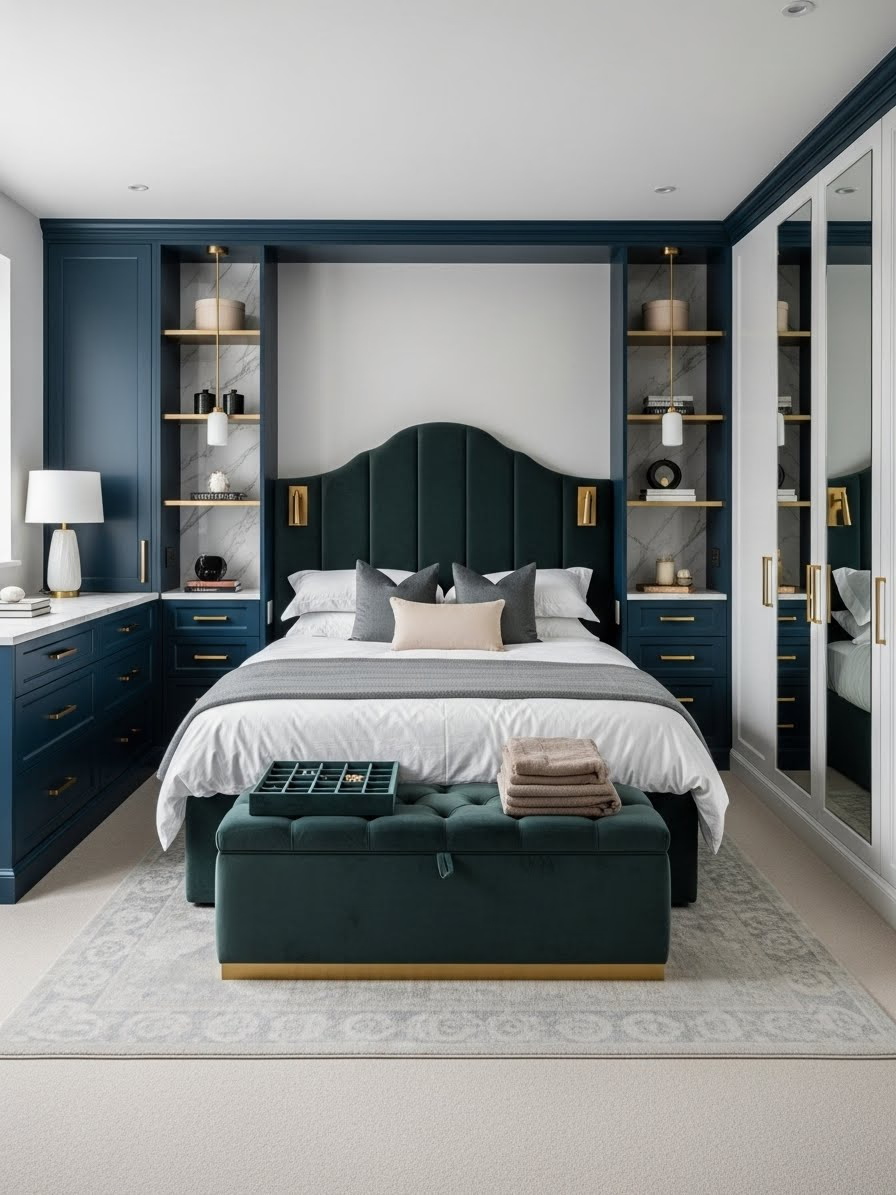
This bedroom truly embodies elegance and organization with its deep blue built-in cabinetry, extending across one entire wall. The custom headboard area is flanked by tall, structured cabinets that provide substantial hidden storage, while the open shelves above the bedside tables offer a decorative touch. These shelves, backed with a subtle marble pattern, are thoughtfully lit, highlighting curated accessories without adding clutter. Gold accents on the hardware, lighting, and shelf brackets introduce a touch of opulence.
On the left, a long dresser unit matches the built-ins, offering expansive drawer space for folded clothing and personal items, keeping surfaces clear. To the right, mirrored wardrobes reflect light, making the room feel larger and brighter while concealing a generous amount of hanging and shelf space. At the foot of the bed, a upholstered storage ottoman serves as both a chic seating area and additional discreet storage, demonstrating how even furniture can contribute to a tidy environment.
DIY Instruction: Creating a Upholstered Storage Ottoman
Material Required List
- One sheet of plywood (3/4 inch or 18 mm thickness)
- Four furniture legs (with mounting plates or pre-attached screws)
- High-density foam (2-3 inches thick)
- Batting or wadding
- Upholstery fabric (velvet, linen, or a sturdy decorative fabric)
- Wood screws
- Staples
- Wood glue
- Fabric glue (optional)
Equipment Required List
- Circular saw or jigsaw (or have the wood pre-cut)
- Drill and drill bits
- Staple gun
- Scissors or fabric shears
- Tape measure
- Marker
- Safety glasses
DIY Instruction Step by Step
- Cut the Plywood Pieces: Determine the desired length, width, and height for your ottoman. You will need one piece for the bottom, one piece for the lid, and four pieces for the side walls. Make sure the side wall pieces are cut to the exact height you want your ottoman to be, subtracting the thickness of the lid and bottom. For instance, if you want a 18-inch tall ottoman and your plywood is 3/4 inch thick, your side pieces will be 16.5 inches tall.
- Assemble the Box Frame: Using wood glue and screws, attach the four side pieces to the bottom plywood piece, forming an open box. Make sure all corners are square and the frame is stable. Allow the glue to dry completely.
- Attach the Legs: Flip the assembled box upside down. Attach the furniture legs to the four corners of the bottom plywood piece using the provided mounting plates or screws. Ensure they are secure and the ottoman stands level.
- Prepare the Lid: Place the foam on top of the plywood lid piece. Trim the foam so it fits perfectly, perhaps extending slightly over the edge for a softer look. Secure the foam to the lid with fabric glue or spray adhesive.
- Upholster the Lid: Lay your upholstery fabric face down on a clean surface. Center the foam-covered lid on the fabric. Pull the fabric tightly over the foam and around the edges of the lid, stapling it to the underside of the plywood lid. Start in the middle of each side and work your way outwards, carefully folding corners for a neat finish. Trim any excess fabric.
- Upholster the Box Frame: Repeat the upholstery process for the main box frame. Drape the fabric over the exterior of the box, ensuring it is smooth and taut. Staple the fabric to the top inside edge of the box and along the bottom edge (where it meets the legs). Again, take care with corners for a professional appearance.
- Attach the Lid: Now you need to create a hinge for the lid. You can use two standard cabinet hinges. Position them along one of the long edges of the box and the lid. Mark and drill pilot holes, then screw the hinges into place, ensuring the lid opens and closes smoothly.
- Final Touches: Add any desired decorative trim or piping if you wish. Place your new storage ottoman at the foot of your bed to hold blankets, pillows, or books, adding both style and invaluable hidden storage.
4. Vertical Bedroom Library System
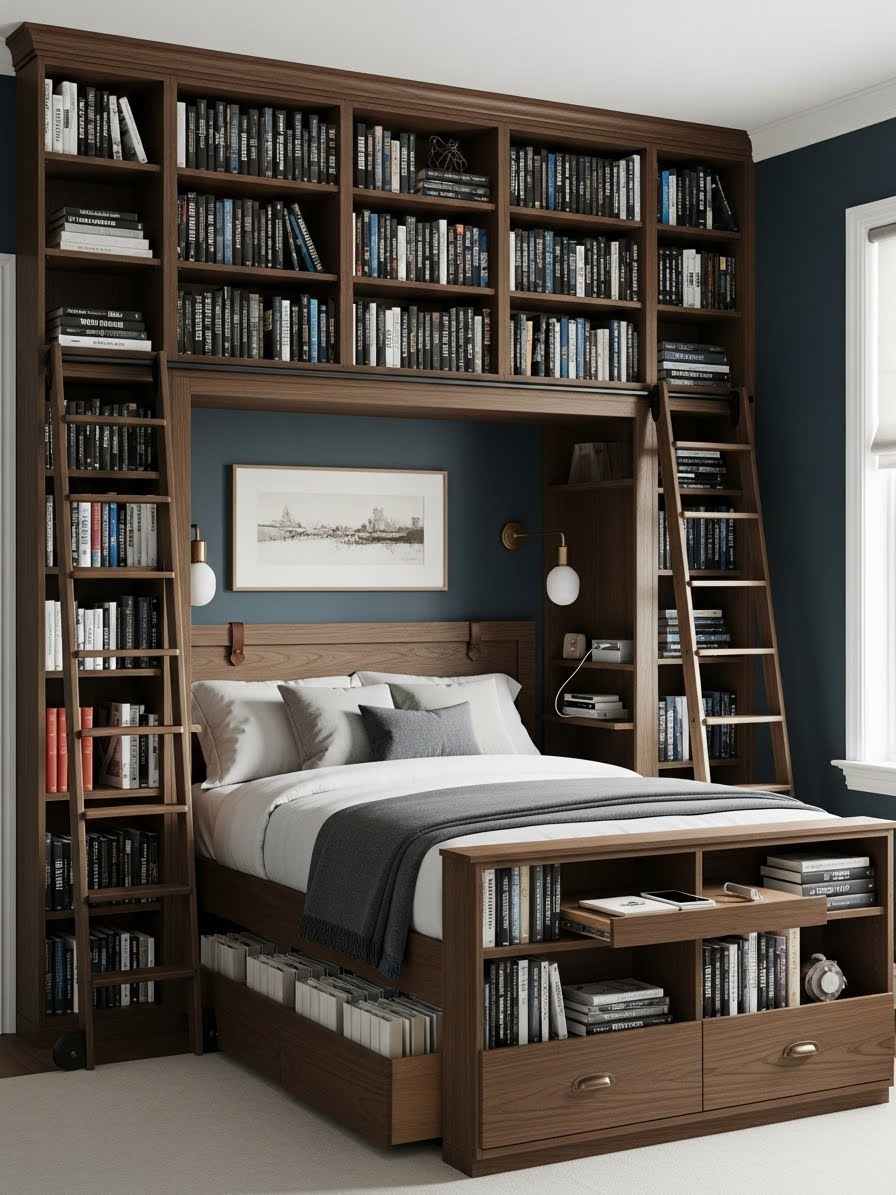
This amazing configuration utilizes vertical space to create a massive library surrounding the bed. Custom built-in units frame the bed, providing a cozy alcove feeling and keeping reading materials organized. Accessing the highest shelves is easy with rolling ladders anchored to the frame, an ingenious touch for safety and convenience.
A deep walnut wood provides a classic, substantial aesthetic to the room. The bed itself rests on a platform with large drawers beneath, proving that every inch of floor space is utilized for hidden storage. Even the footboard is a low bookshelf with open compartments and small drawers, demonstrating how furniture can be multifunctional. This design is outstanding for book lovers in smaller spaces who need serious organizational muscle.
DIY Instruction: Building a Bookshelf Footboard
Material Required List
- One sheet of plywood (3/4 inch or 18 mm thickness)
- Wood veneer edging (optional, for a polished look)
- Wood screws
- Wood glue
- Paint or wood stain
- Small cabinet hardware pulls (if adding drawers)
- Drawer slides (if adding drawers)
Equipment Required List
- Circular saw or jigsaw (or pre-cut wood)
- Drill and drill bits
- Clamps
- Tape measure
- Level
- Safety glasses
- Sandpaper
DIY Instruction Step by Step
- Determine Dimensions: Measure the width of your bed frame. Your footboard should match this width. Decide on the height and depth; a good depth is around 12 inches to accommodate most books. You will need panels for the top, bottom, two sides, and interior shelves.
- Cut and Sand the Panels: Cut the plywood into the six main pieces: one top, one bottom, two side panels, and two interior shelf panels. If you are adding a back panel, cut that piece as well. Thoroughly sand all edges and surfaces to ensure a smooth finish.
- Assemble the Outer Frame: Using wood glue along the seams for added strength, attach the side panels to the bottom panel using wood screws. Make sure the corners are flush and secure. Use clamps to hold the structure while you work.
- Install the Shelves: Decide where you want your vertical shelf dividers and horizontal shelves to be positioned. Measure and mark these spots precisely on the interior of the side panels. Apply wood glue to the edges of the shelf pieces and slide them into position. Secure the shelves by driving screws through the outer side panels into the ends of the shelf pieces.
- Attach the Top: Apply wood glue to the top edges of the side and shelf panels. Carefully place the top panel onto the structure, ensuring it sits flush on all sides. Secure the top panel by driving screws down into the frame below.
- Finish and Stain: If you used wood veneer edging, apply it to the exposed plywood edges according to the product instructions for a refined look. Wipe down the entire unit to remove sawdust. Apply your chosen wood stain or paint, following the product’s recommended drying times.
- Final Positioning: Once the finish is fully cured, carefully move the bookshelf footboard to the end of your bed. This low structure provides easy access to your reading material right before bedtime, significantly reducing clutter on your nightstands.
5. Clear Acrylic and Suspended Closet System

This innovative organizational approach proves that storage does not have to be bulky or heavy. The suspended closet system uses thin metal rods and clear acrylic components, creating a light, nearly invisible framework that keeps the room open and bright. This method is incredibly effective for visual organization; clothes are easily accessible and visible, which encourages tidiness.
Various clear storage boxes and stacking acrylic drawers are utilized for accessories, folded garments, and shoes. Uniform white boxes line the very top shelf, effectively hiding seasonal or less frequently needed items while maintaining a cohesive look. Note the floating effect of the bed and dressing table, further enhancing the spacious, minimalist aesthetic. This design is exceptional for smaller rooms where traditional dark furniture would feel too imposing.
DIY Instruction: Creating Stackable Acrylic Drawers for Accessories
Material Required List
- Clear acrylic sheets (thin, easy to cut; 1/8 inch or 3 mm thickness is good)
- Acrylic solvent cement or specialized acrylic glue
- Small decorative pulls or finger holes (optional)
- Fine grit sandpaper
Equipment Required List
- Acrylic cutter or scoring tool (a sharp utility knife can work)
- Clamps or masking tape
- Straight edge or ruler
- Safety glasses
- Gloves
DIY Instruction Step by Step
- Measure and Score the Sheets: Determine the dimensions for your box (e.g., 10 inches wide, 10 inches deep, 4 inches high). You will need five panels for each box: a bottom panel, two side panels, and two front/back panels. Use the straight edge and scoring tool to deeply score the acrylic sheets along your cut lines. Score repeatedly until the groove is deep.
- Snap the Panels: Place the scored line right along the edge of a table or workbench. Apply quick, firm downward pressure to snap the acrylic cleanly along the score line. Repeat until all five pieces for one box are cut. Use sandpaper to smooth any rough edges.
- Assemble the Box Base: Lay the bottom panel flat. Apply a thin, even bead of acrylic solvent cement along the edge of the bottom panel where a side piece will sit. The cement works quickly; you only need a light touch. Place the side panel onto the cemented edge.
- Secure the Sides: Immediately secure the joint using masking tape or clamps while the cement sets. Repeat this process for the remaining three sides, working quickly and ensuring all corners meet squarely.
- Finish the Box: Allow the cement to cure completely according to the manufacturer’s instructions. Once dry, remove the tape or clamps. You now have a transparent, open box.
- Create the Drawer (Optional): If you want a drawer effect within a larger unit, repeat steps 1–5 to create several identical, slightly smaller boxes that can slide into a permanent shelf frame (which would be constructed in a similar, larger fashion). Add a small pull or cut a simple finger hole into the front panel of the box before assembly to make sliding easier.
- Stack and Organize: Stack the finished clear boxes on a shelf or dresser. Use them to sort jewelry, scarves, folded undergarments, or small electronic cords, instantly creating a tidy and easy-to-view organization station.
6. Coastal Style Integrated Storage with Basket Solutions
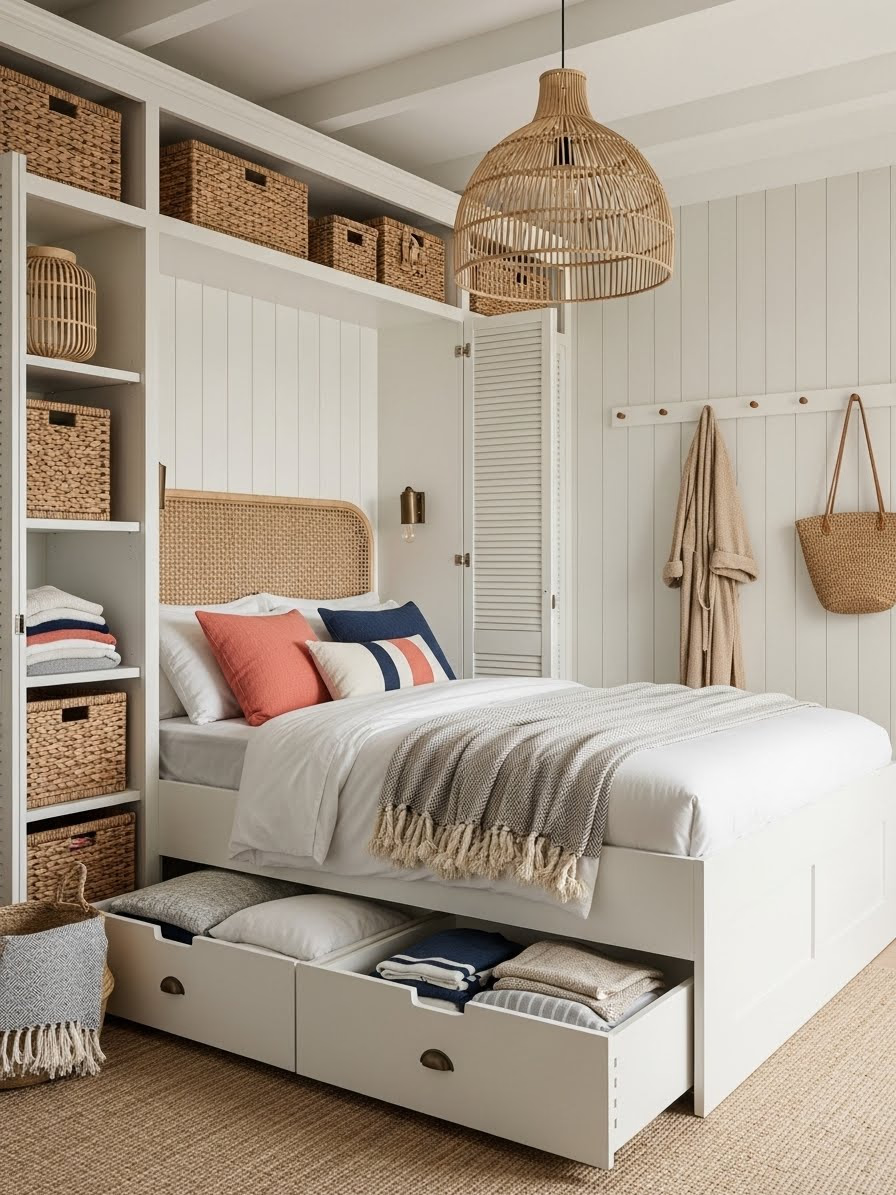
This charming coastal-inspired bedroom uses texture and natural materials to manage clutter effectively. A bright white, custom storage unit frames the bed, extending right up to the ceiling. The key to its organization is the consistent use of natural wicker and rattan baskets. These containers, placed on open shelves, instantly hide a variety of items, maintaining a clean visual line.
The bed itself features deep, generous pull-out drawers, which are essential for storing extra linens, pillows, or bulky seasonal sweaters. This maximizes floor space by incorporating storage directly into the furniture. Notice the simple, painted peg rail on the adjacent wall—an often overlooked but highly useful detail for hanging robes, bags, or next day’s outfits. Using a uniform material like the baskets provides a cohesive, peaceful, and tidy atmosphere.
DIY Instruction: Installing a Simple Decorative Peg Rail
Material Required List
- One piece of solid pine or oak wood (3/4 inch thick, 4-6 inches wide, length depends on your wall space)
- Wooden dowels (3/4 inch or 1 inch diameter)
- Wood glue
- Wood screws (long enough to go through the rail and into a wall stud)
- Paint or wood stain
- Wall anchors (if not mounting directly into studs)
Equipment Required List
- Drill and drill bits (specifically a paddle bit or spade bit matching the dowel diameter)
- Miter saw (or hand saw and miter box)
- Level
- Tape measure
- Pencil
- Safety glasses
DIY Instruction Step by Step
- Prepare the Rail and Pegs: Cut the main wood plank to the desired length for your wall. Lightly sand all surfaces. Cut your wooden dowels into 3-4 inch lengths to create the individual pegs. You will need one peg every 6-8 inches along the rail.
- Mark and Drill the Peg Holes: Use your tape measure and pencil to mark the exact locations where you want the pegs to be along the front face of the wooden rail. Ensure the spacing is even. Using the paddle bit, drill holes halfway through the thickness of the rail at each mark. These holes should be drilled slightly upward (at a gentle angle) so the pegs slope up, helping items stay hung securely.
- Insert the Pegs: Apply a generous amount of wood glue inside each drilled hole. Push the dowel pegs firmly into the holes. Wipe away any excess glue immediately with a damp rag. Allow the glue to dry completely and firmly bond the pegs to the rail.
- Finish the Rail: Once the glue is dry, paint or stain the entire assembly to match your wall color or other wood tones in the room. This makes the final piece look custom and professional.
- Mark the Wall Position: Decide on the final mounting height on your wall. Use your level to draw a light, straight pencil line where the top edge of the rail will sit.
- Mount the Rail: Locate the wall studs using a stud finder and mark their positions. If you cannot hit studs, you will need to pre-drill holes in the wall and insert sturdy wall anchors. Drill pilot holes through the wooden rail at the stud locations or where your anchors are. Hold the rail against the wall and use long wood screws to drive the rail securely into the studs or anchors.
- Test and Organize: The new peg rail is ready for robes, towels, handbags, or coats, keeping them off the floor and chair backs.
7. Integrated Desk, Pegboard, and Smart Headboard Storage
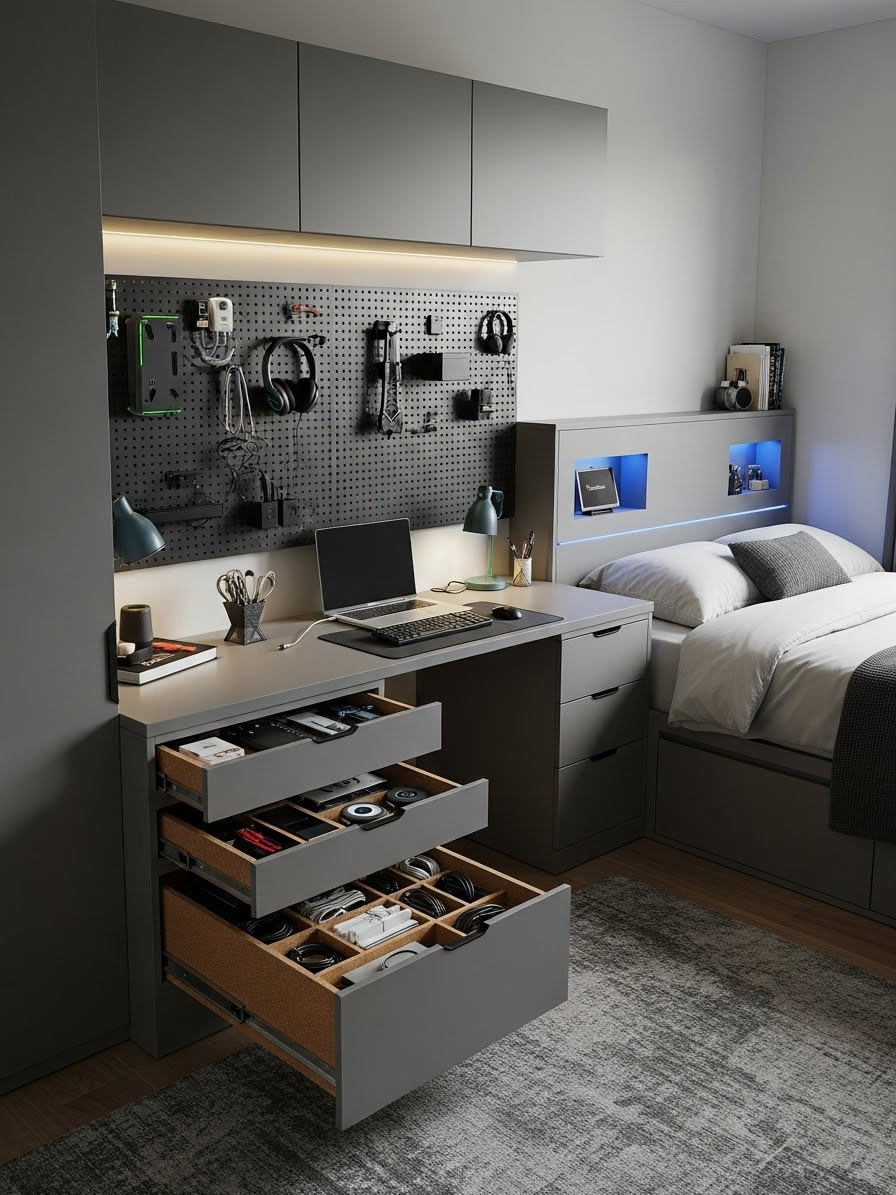
This contemporary design focuses on maximum organization for a tech-savvy user or student. The key feature is the large, backlit pegboard panel above the desk area, which provides flexible vertical storage for tools, headphones, cables, and various small gadgets. Getting these items off the desk surface instantly frees up valuable workspace.
Under the desk, the drawers are meticulously organized using dividers and trays, showing how simple inserts can tame even the messiest collection of electronics, supplies, and office accessories. The gray cabinets above the desk provide essential hidden storage, keeping visual clutter contained. Further boosting the organization, the headboard features open, illuminated shelves, a handy spot for books, phones, or charging devices right next to the bed. This entire setup is a model of practical, consolidated storage.
DIY Instruction: Customizing Drawers with Cork and Wood Dividers
Material Required List
- Thin sheet of cork (1/8 inch or 3 mm thickness)
- Thin strips of wood or hobby wood (1/4 inch thick)
- Strong adhesive (contact cement or high-strength spray adhesive)
- Wood glue
- Measuring tape
- Utility knife
- Safety glasses
Equipment Required List
- Utility knife or sharp scissors
- Metal ruler or straight edge
- Pencil
- Sandpaper (fine grit)
DIY Instruction Step by Step
- Empty and Measure the Drawer: Completely empty the drawer you plan to organize. Use your measuring tape to find the precise length, width, and depth of the interior drawer box. This ensures your cork and dividers fit snugly.
- Cut and Install the Cork Lining: Use the interior dimensions to mark the cork sheet. With the utility knife and metal ruler, carefully cut the cork to size. Apply the strong adhesive evenly to the bottom surface of the drawer and the underside of the cork. Carefully place the cork lining into the drawer base, pressing down firmly to ensure full adhesion. The cork provides a non-slip surface, which is excellent for tools and electronics.
- Plan the Compartments: Sketch a quick layout for the drawer. Consider what items you need to store (cables, batteries, pens, small tools) and how large each compartment needs to be.
- Cut the Dividers: Using your measurements and layout plan, cut the thin wood strips to create the lengths needed for the perimeter and interior sections of your grid. The height of the strips should be slightly less than the drawer depth so the drawer closes smoothly.
- Assemble the Grid (Temporary Fit): Place the dividers inside the drawer on top of the cork. Use small dabs of wood glue to join any intersecting strips (like creating cross shapes) to make small, rigid sections. Ensure the whole structure fits tightly against the drawer walls without permanent gluing yet.
- Secure the Dividers (Optional): For a more permanent installation, you can place a tiny drop of wood glue along the base of the dividers where they meet the cork, or use small dots of hot glue in the corners. If you prefer flexibility, simply rely on the tight fit to hold the dividers in place.
- Organize: Let the glue dry completely. Now you have custom, specialized compartments for every item, making it easy to find and return things, effectively eliminating junk drawer chaos.
8. Loft Bed with Integrated Staircase Storage and Open Closet
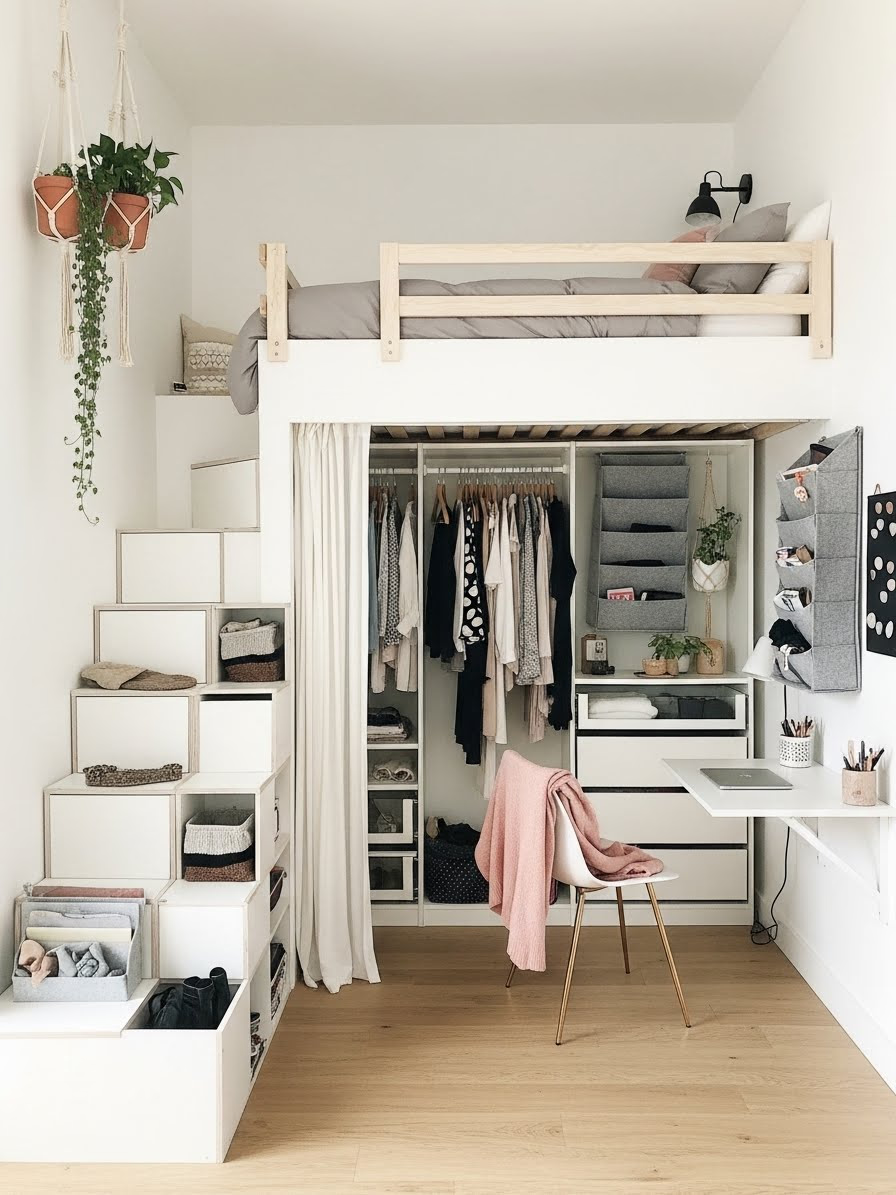
This clever design is the epitome of maximizing vertical space in a small room. The bed is elevated into a loft, freeing up the entire footprint beneath for a functional workspace and closet. The most ingenious organizational element is the staircase, where every single step is a deep, pull-out drawer or an open storage cubby. This system brilliantly replaces bulky dressers and shelves, keeping items out of sight until needed.
Beneath the loft, a simple open closet area provides hanging space, while a small dresser adds essential drawers. Crucially, soft fabric storage pockets hang on the side wall, offering specialized slots for shoes or small accessories. A clean white palette throughout prevents the large structure from feeling heavy, making this small space feel open yet highly functional and well-organized.
DIY Instruction: Creating Hanging Fabric Pocket Organizers
Material Required List
- Sturdy, heavy canvas or felt fabric (color of your choice)
- Wooden dowel rod (1/2 inch or 12 mm thickness, slightly wider than your fabric)
- Twine, rope, or ribbon for hanging
- Fabric glue or a sewing machine with matching thread
- Grommets and grommet setting tool (optional, for a neater look)
Equipment Required List
- Sewing machine (or needle and thread for hand stitching)
- Iron and ironing board
- Ruler or tape measure
- Fabric scissors
- Pencil or tailor’s chalk
DIY Instruction Step by Step
- Cut the Fabric Pieces: You will need one long rectangle for the back panel and several smaller rectangles for the pockets. Decide on the size and number of pockets you want. For example, cut one back panel (e.g., 30 inches by 15 inches) and several pocket pieces (e.g., 7 inches by 15 inches). Add an extra half inch all around for seam allowances.
- Prepare the Back Panel and Rod Casing: Along the top edge of the large back panel, fold the fabric over about two inches and press it flat with an iron. Stitch this fold down to create a hollow sleeve or casing for the dowel rod to slide through later. Hem the other three edges of the back panel for a clean finish.
- Create the Pockets: Take each pocket piece and fold and hem the top edge. Iron it flat. Now, stack the pockets evenly onto the bottom half of the main back panel, spacing them out vertically. You will only be sewing the side and bottom edges of the pockets to the main panel.
- Sew the Pockets: Pin the pockets in place. Carefully stitch the side and bottom edges of the pocket pieces onto the back panel. To create multiple smaller compartments within each pocket row, sew vertical lines of stitching from the top of one pocket to the bottom. Be sure to backstitch at the beginning and end of each seam for strength.
- Insert the Dowel: Once the sewing is complete, slide the wooden dowel rod through the casing at the top of the fabric organizer.
- Attach the Hanging Rope: Cut a length of rope or twine. Tie or knot each end securely to the dowel, creating a loop for hanging.
- Mount and Fill: Hang the fabric organizer from a sturdy wall hook. Use the various pockets to sort socks, belts, shoes, or beauty supplies, effectively clearing up drawer and shelf space.
9. Monochromatic Closet System with Maximized Hidden Storage
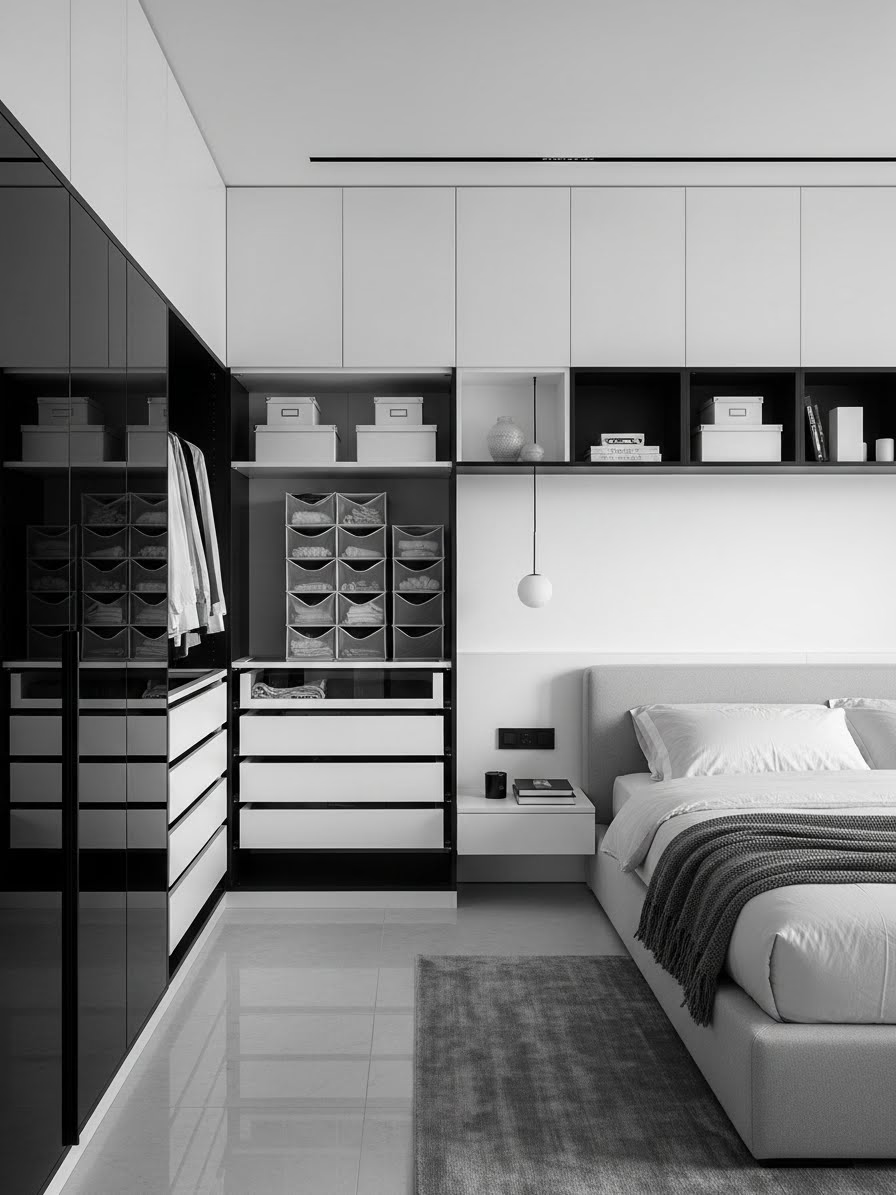
This striking, contemporary bedroom achieves exceptional tidiness through meticulous organization and a high contrast color scheme. The entire wall is dedicated to floor-to-ceiling storage, utilizing a mix of black and white elements to create a dramatic yet uncluttered aesthetic. The main focus is the enclosed closet area, featuring glossy black cabinet doors that reflect light and effectively conceal the contents. Hidden storage is crucial for maintaining this minimalist look.
Inside the open sections, the organization is visible and highly structured. Multiple drawers provide easy access to folded garments, while open shelves are used for specialized storage. Notice the small, stackable cloth organizers; these are exceptionally useful for neatly rolling or folding items like t-shirts or underwear. The uniform white boxes placed across the top shelving keep less frequently used items stored away, completing this clean, streamlined look.
DIY Instruction: Making Roll-and-Fold Stackable Fabric Organizers
Material Required List
- Stiff felt or heavy-duty canvas fabric (pre-cut into rectangular panels)
- Cardboard inserts or thin plastic sheets (for structure and stability)
- Fabric glue or a sewing machine with matching thread
- Measuring tape
- Ruler or straight edge
- Clips or clamps (to hold pieces while glue dries)
Equipment Required List
- Sewing machine (or needle and thread)
- Iron and ironing board
- Fabric scissors
- Utility knife (for cutting cardboard/plastic inserts)
DIY Instruction Step by Step
- Determine Bin Dimensions: Decide on the size of the organizers that best fit your shelf or drawer space. A standard size might be 10 inches wide, 15 inches long, and 5 inches high. You will need one piece for the bottom, and four pieces for the sides (two short, two long).
- Cut the Fabric: Cut the fabric pieces, adding 1 inch to all dimensions for seams and folding. For instance, the bottom piece (10 inches by 15 inches) will be cut at 12 inches by 17 inches. Cut the side pieces accordingly.
- Prepare the Cardboard Inserts: Cut the cardboard or plastic sheets exactly to the size of the bottom and the four sides (e.g., 10×15 for the bottom, 5×15 for the long sides, etc.). These pieces provide the necessary rigidity.
- Create the Side Casings: Take one fabric side panel. Fold the fabric edges over the cardboard insert, pulling it taut. Use a running stitch on your sewing machine (or fabric glue) to create a neat fabric sleeve around the cardboard insert. Repeat this process for all four side panels and the bottom panel.
- Assemble the Bin: Now you have five rigid, fabric-covered panels. Apply strong fabric glue along the vertical edges of the side panels. Begin assembling the box by standing the four sides up and gluing the edges together firmly. Use clips or tape to hold the corners while the glue sets completely.
- Attach the Bottom: Once the sides are stable, apply glue along the bottom interior edges of the four sides. Carefully place the bottom panel into the box and press down firmly to secure the base.
- Utilize the Organizer: After the glue has fully cured, your structured fabric bin is ready. Use a consistent folding method (like the KonMari roll or file fold) to place your items vertically inside the bins. This keeps your clothing visible, wrinkle-free, and contained on any open shelf or deep drawer.
10. Hidden Office Armoire and Console Storage
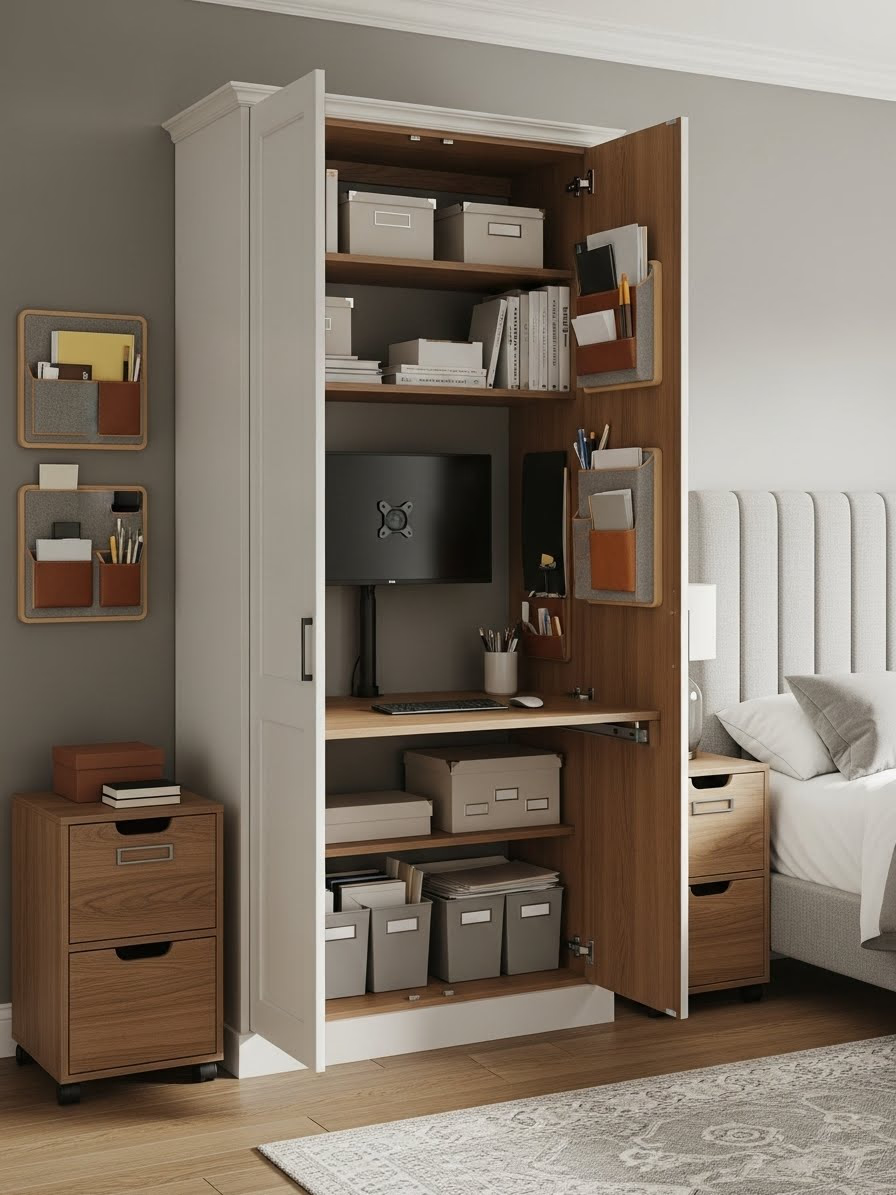
This brilliant piece of furniture is the ultimate solution for keeping work and life separate, especially in a small bedroom. The tall armoire features classic white doors that, when closed, completely conceal a compact, yet fully functional, home office. Opening the doors reveals a cleverly designed interior with a pull-out desk surface, monitor mount, and plentiful shelving.
The interior organization is exceptional; the shelves are filled with uniform storage boxes and fabric bins, minimizing visual clutter when the doors are opened. Furthermore, the inside of the doors is utilized with mounted fabric and leather organizers, providing accessible vertical storage for pens, notebooks, and mail. This unit, paired with rolling, wood filing cabinets on either side, offers a huge amount of hidden space, ensuring the bedroom maintains a tranquil, tidy atmosphere when the workday is done.
DIY Instruction: Making Simple Wall-Mounted Felt and Leather Pockets
Material Required List
- Stiff, heavy-duty felt fabric (at least 3mm thick)
- Small scraps of faux leather or real leather
- Thin wood board or mounting panel (optional, to give the felt a rigid backing)
- Industrial strength fabric glue or strong contact cement
- Small nails or heavy-duty tacks (for mounting)
- Ruler and pencil
Equipment Required List
- Fabric scissors or utility knife
- Hole punch (for leather)
- Clamps or heavy books (for pressing glue)
DIY Instruction Step by Step
- Cut the Felt Base: Decide on the size of your organizer panel. Cut the stiff felt into a large rectangular base (e.g., 10 inches by 15 inches). If you are using a thin wood backing, glue the felt securely to the wood panel and trim the felt flush with the edges.
- Design the Pockets: Determine the size and number of pockets you need. You will likely want a few large pockets for mail or notebooks and a couple of smaller ones for pens. Cut the felt pocket pieces.
- Create the Leather Accents: Cut thin strips or small rectangular pieces from the leather. These pieces will serve as stylish accents and also reinforce the top edge of the felt pockets for durability.
- Assemble the Pockets: Lay a pocket piece onto the felt base. Apply glue only along the side and bottom edges of the pocket. Press it firmly into place.
- Add the Leather Trim: Place a leather strip along the top, open edge of the pocket. Fold the leather over the top edge and glue it securely on the front and back of the pocket, creating a neat band. Use clamps or heavy books to press the glued pieces while they dry completely.
- Mount the Organizer: Once the glue is fully set, the organizer is ready to mount. Position the organizer on your wall, closet door, or cabinet. Drive small nails or tacks through the corners of the felt base to attach it securely to the surface.
- Organize Supplies: Use the different sized pockets to sort stationery, charging cables, pens, and paper, clearing your desk surface instantly.
11. Jewel-Toned Closet and Display Cabinet
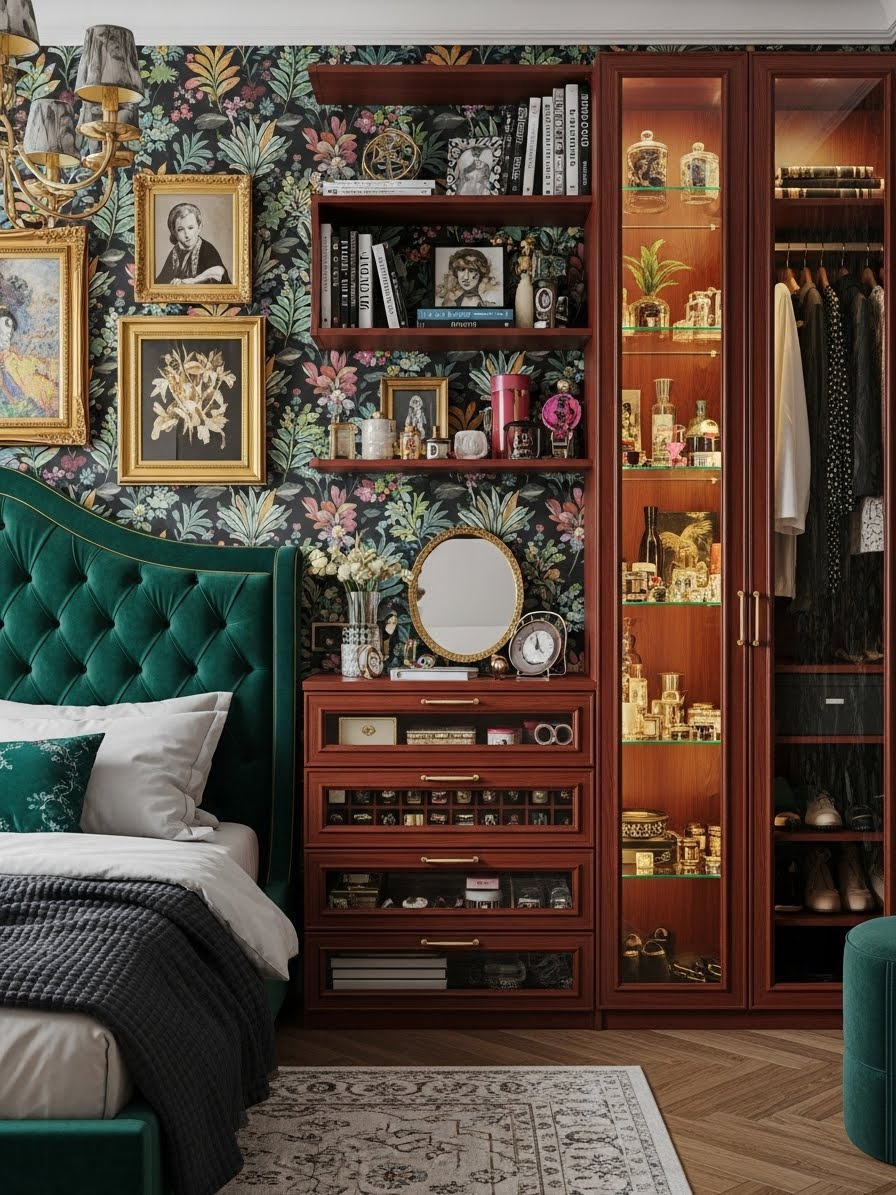
This room showcases organization through luxury and display, rather than hidden storage. A tall cherry or mahogany wood unit stands adjacent to the bed, functioning as a beautiful storage centerpiece. The right side features illuminated glass-fronted cabinets, turning collections of perfumes, accessories, and shoes into a museum-like display. The lighting and glass doors encourage fastidious arrangement, as the contents are constantly visible.
In the center, a generous chest of drawers provides concealed storage, with the top drawer cleverly divided into small sections—perfect for sorting jewelry, watches, and delicate items. Above the drawers, open shelves hold books and framed photos, blending organization with personal style. This approach uses handsome furniture and specific internal dividers to manage clutter while enhancing the room’s rich, layered aesthetic.
DIY Instruction: Creating Custom Jewelry Drawer Inserts
Material Required List
- Thin basswood or balsa wood strips (1/8 inch or 3 mm thickness)
- Felt fabric (for lining the compartments)
- Wood glue
- Fabric glue or strong spray adhesive
- Ruler or tape measure
- Fine grit sandpaper
- Pencil
Equipment Required List
- Utility knife or small hobby saw
- Cutting mat or surface protector
- Clamps (optional)
DIY Instruction Step by Step
- Measure the Drawer Interior: Completely remove one drawer and measure its precise inner length, width, and depth. You will be building a rigid grid that sits snugly inside.
- Plan the Layout: Sketch a detailed plan of your jewelry and accessory types (e.g., small squares for earrings, long rectangles for necklaces). Based on your items, decide where the long primary dividers and the short secondary dividers should be placed.
- Cut the Wood Strips: Cut the wood strips according to your layout plan. The dividers should be slightly less than the drawer depth. You will need full length strips and shorter strips to fit between them. Sand the edges of all the cut strips to ensure they are smooth.
- Assemble the Grid: Starting with the longest divider strips, apply a thin line of wood glue to the ends and press them into place inside the drawer. You can hold them temporarily with clamps or weights until the glue dries. Then, measure and fit the shorter cross sections, gluing them securely to the long dividers where they intersect, forming a complete rigid grid.
- Cut the Felt Liners: Once the grid is dry and stable, measure each individual compartment opening. Cut pieces of felt fabric to match the size of the bottom of each compartment.
- Install the Felt: Use fabric glue or spray adhesive to lightly coat the bottom of each wooden compartment. Carefully press the felt pieces into the base of each section. The felt cushions the jewelry and prevents items from shifting.
- Organize: Let the glue cure completely. The drawer is now professionally divided and ready to house your accessories neatly, keeping everything separated and easy to locate.
12. Modular Cube Shelving and Mobile Pegboard Divider
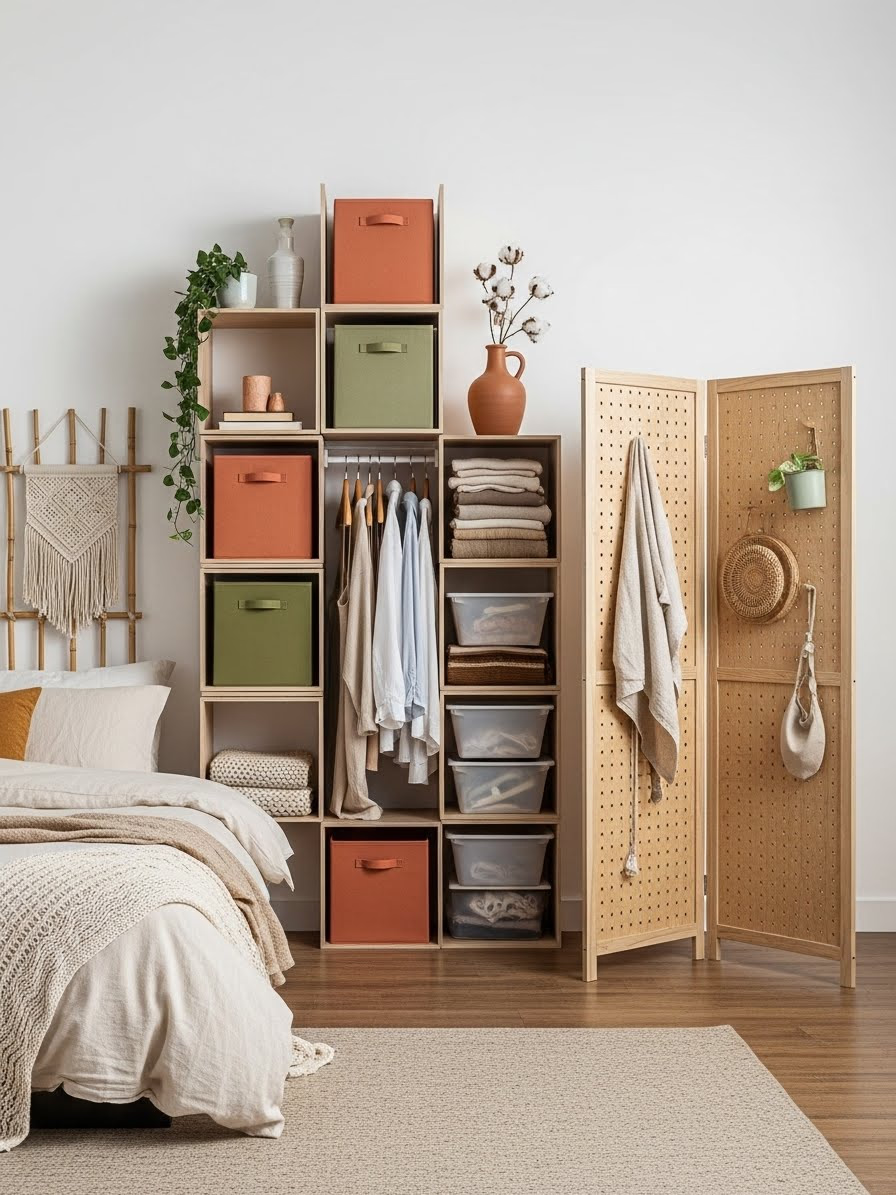
This light and airy room uses adaptable components to tackle storage challenges. The central element is a modular cube shelving unit, which allows for versatile storage arrangement. Some cubbies are left open for folded clothes and clear plastic containers, offering quick visual access. Other cubbies hold colorful fabric bins with handles, which are great for hiding clutter while adding pops of warm color. One section is strategically used for hanging space, providing a compact closet area.
A significant organizational tool here is the mobile, folding pegboard screen. This acts as both a room divider and a vertical organization station, perfect for hanging small items like hats, towels, or plants. The flexibility of this unit allows it to be moved or folded away, maximizing the usable floor space. This is an efficient, scalable, and non-permanent solution for keeping a bohemian or minimalist space tidy.
DIY Instruction: Making and Utilizing Custom Modular Cube Bins
Material Required List
- Stiff fusible interfacing or thin plastic sheets (for structure)
- Decorative heavy-weight fabric (canvas or duck cloth)
- Matching thread
- Cardboard (for the bottom insert)
- Fabric scissors
- Ruler or tape measure
Equipment Required List
- Sewing machine
- Iron and ironing board
- Pins
- Hole punch and metal eyelets (for handles, optional)
DIY Instruction Step by Step
- Measure and Cut the Fabric: Measure the inner dimensions of your cube shelf (e.g., 12 inches by 12 inches by 12 inches). You will cut fabric pieces for the bottom, four sides, and any interior reinforcement. Be sure to add seam allowances (typically 1/2 inch) to all edges. You will also need two small strips of fabric for handles.
- Reinforce the Sides: Iron the stiff fusible interfacing onto the wrong side of your side and bottom fabric pieces. This step is crucial; it gives the fabric the necessary structure to stand upright like a box.
- Assemble and Sew the Box: Pin and sew the four side pieces together to form a square column. Then, pin the bottom piece onto the column and sew all four seams securely. Turn the fabric box right side out, pushing out the corners to make them crisp.
- Prepare the Handles (Optional): Take the handle fabric strips. Fold and press them neatly, then sew along the edges to create sturdy handles. Place them on one side of the bin, making sure they are centered, and stitch them firmly to the bin’s exterior.
- Create the Base Stabilizer: Cut a piece of rigid cardboard to the exact interior dimensions of the bin’s base. Wrap this cardboard piece in a scrap of the bin fabric, securing it with glue or a few stitches. This piece will drop into the finished bin.
- Final Assembly and Utilization: Drop the fabric-wrapped cardboard base into the bottom of the bin. This provides a solid floor, allowing the fabric walls to stand perfectly straight. Place the finished bins into your modular unit and use them to categorize and hide various items like workout clothes, accessories, or seasonal decorations.
13. Integrated Hidden Vanity and Beauty Station
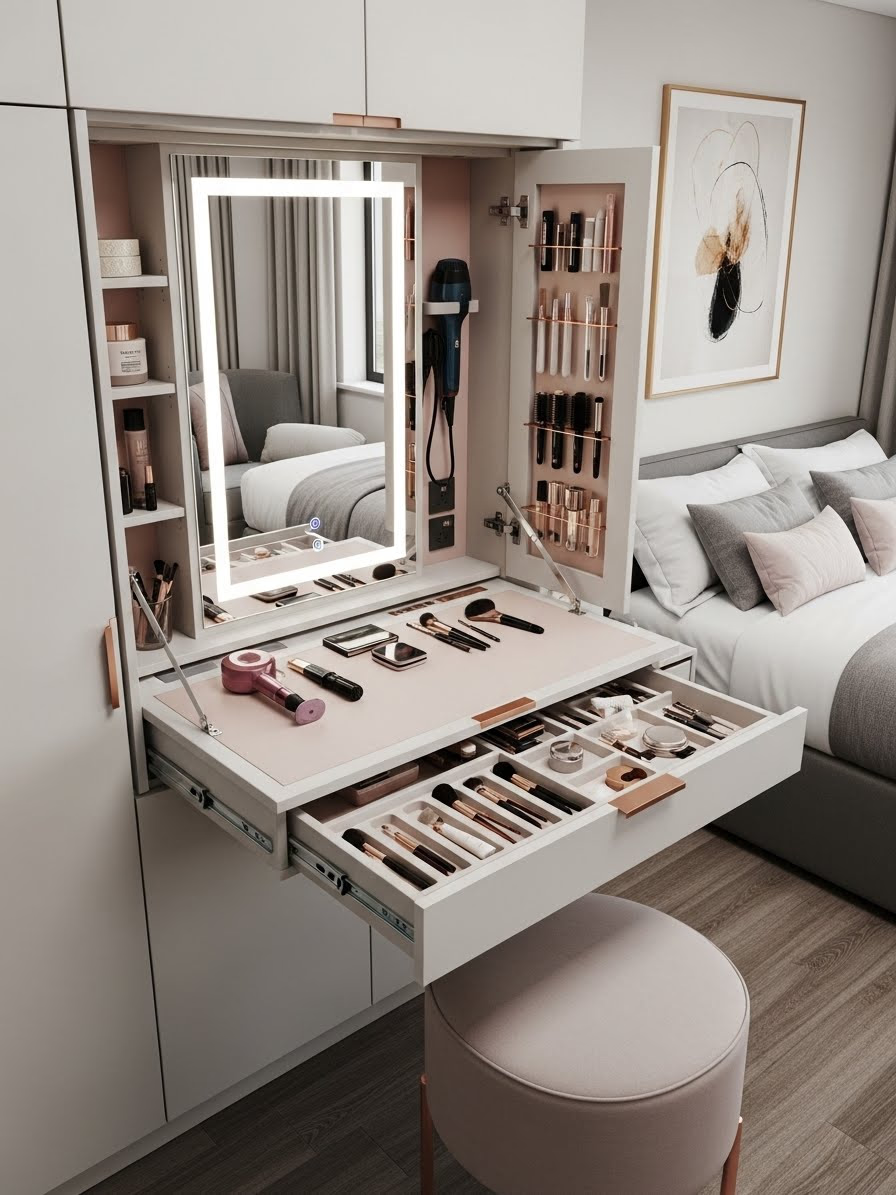
This sophisticated design brilliantly addresses the issue of organizing extensive beauty supplies by concealing the entire vanity within a closed cabinet. When the doors are opened, they reveal a large, lighted mirror and organized vertical storage on the inside door panels, featuring small shelves and elastic bands for bottles and tools. A counter surface pulls out to create a workspace.
The main organizational triumph is the deep pull-out drawer below the counter. This drawer is precisely fitted with custom trays and dividers, separating brushes, compacts, and various items into dedicated compartments. This system keeps every tool and cosmetic item perfectly categorized and immediately accessible. When finished, the counter folds up and the doors close, making the entire station disappear, leaving the bedroom tidy and minimalist.
DIY Instruction: Creating Custom Foam Insert Trays for Drawers
Material Required List
- High-density craft foam sheet (1/2 inch or 1 cm thickness)
- Strong adhesive (craft glue or hot glue gun)
- Ruler or measuring tape
- Fine-tip marker or sharp pencil
- Utility knife or exacto knife
- Thin card stock or construction paper (for tracing templates)
Equipment Required List
- Utility knife or exacto knife
- Cutting mat or thick cardboard
- Scissors
DIY Instruction Step by Step
- Measure the Drawer and Items: Measure the inner length and width of the drawer. Next, gather all the items (brushes, lipsticks, compacts) you plan to organize and measure their individual sizes.
- Cut the Foam Base: Cut the high-density foam sheet to the exact size of the drawer bottom. This base layer will sit flush and secure the organizational pieces.
- Create the Compartment Walls: Decide on the layout. You can create walls by cutting long strips of foam equal to the desired compartment depth (e.g., 1 inch or 2.5 cm). Cut these strips into the lengths needed for your internal grid.
- Assemble the Walls: Using the strong adhesive, glue the foam wall strips directly onto the foam base layer, following your predetermined layout. Apply the glue carefully so it does not squeeze out the edges. Let the glue set slightly.
- Custom Cutouts (Optional, for brushes): If you want specialized cutouts for brushes, trace the handle shapes onto a piece of card stock. Cut out these templates. Place the templates onto the foam strips where the brushes will rest. Carefully use the utility knife to cut out a notch in the foam wall that precisely fits the brush handle, allowing the brush to lay flat and stay put.
- Secure the System: Once all the glue is dry, place the entire foam insert system into the drawer. It should fit snugly.
- Organize: Place your brushes in the cutouts and your cosmetics in the dedicated foam compartments. The custom fit ensures nothing rolls around, keeping the drawer perfectly tidy and maximizing space.
14. Vertical Craft and Hobby Pegboard Station
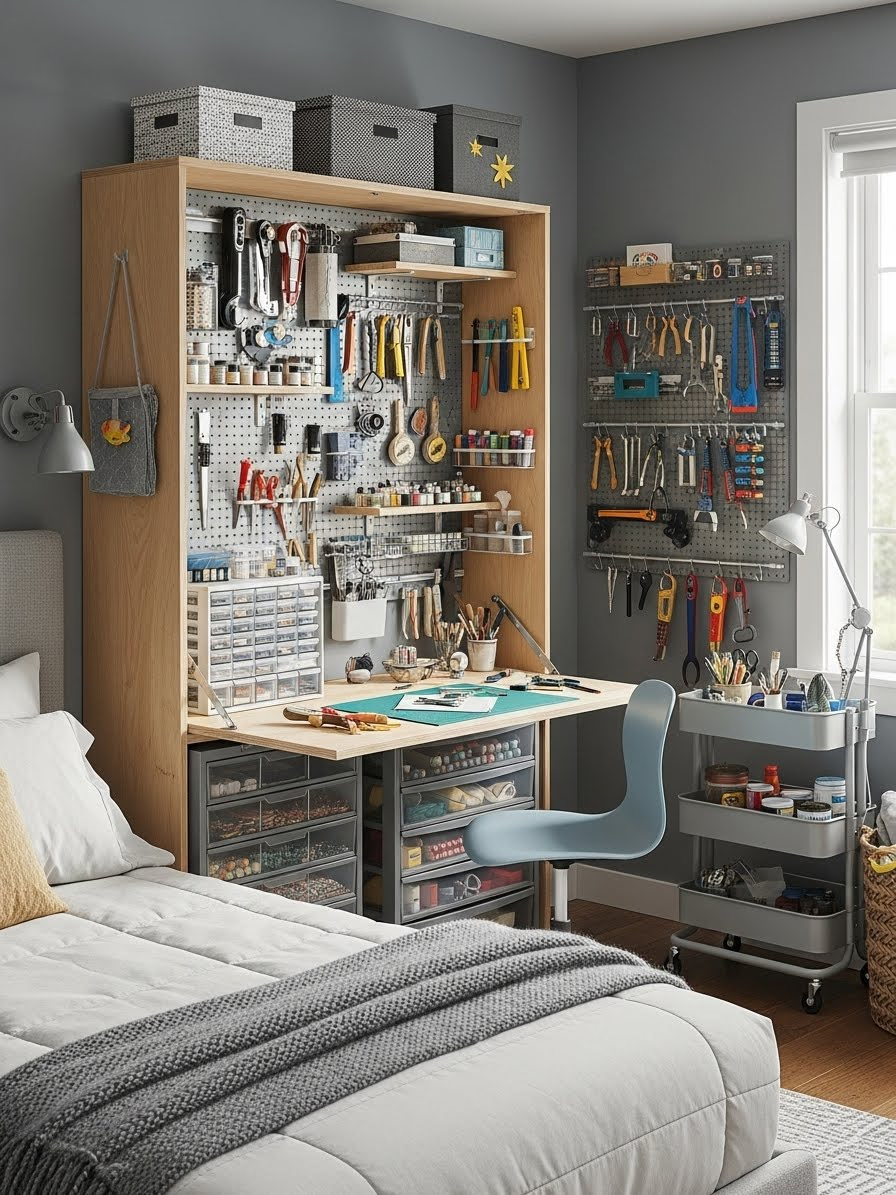
This solution is perfect for individuals who work or craft in their bedrooms and need extensive, accessible storage. The central feature is a massive, freestanding pegboard system, framed by natural wood, which efficiently uses vertical space. The grey pegboard is covered in a variety of hooks, bins, and small shelves, allowing immediate access to tools and supplies without cluttering the floor.
The setup is brilliantly complemented by clear plastic multi-drawer units positioned under the work surface. These small drawers are essential for sorting tiny items like beads, buttons, or electronic components, making inventory easy. Additional tools are kept on a rolling utility cart, which provides flexible storage that can be moved wherever it is needed. Uniform, lidded boxes on the top shelf house bulky or seasonal supplies, completing this highly adaptable and organized workspace.
DIY Instruction: Making a Mobile Rolling Utility Cart
Material Required List
- Small, open cube bookshelf or simple three-tiered shelf unit (wood or metal)
- Four heavy-duty, locking caster wheels
- Wood screws or metal bolts (appropriate for your cart material)
- Drill and drill bits
- Metal corner braces or support brackets (optional, for extra rigidity)
Equipment Required List
- Drill and drill bits
- Screwdriver or wrench
- Tape measure
- Safety glasses
DIY Instruction Step by Step
- Prepare the Shelf Unit: Start with a lightweight, open shelf unit. If it is already assembled, ensure all screws and joints are tight. If it is flat packed, assemble the main frame according to the instructions, but do not attach any original feet.
- Mark the Wheel Placement: Turn the shelf unit upside down. Use your tape measure to mark the position for each of the four caster wheels, placing them near the corners of the base for maximum stability. Ensure the mounting surfaces are flat.
- Pre-Drill Holes: Use the wheel base plate as a template. Mark where the screws or bolts will go. Drill pilot holes into the base of the shelf unit at these marks. If the unit is metal, you may need a specialized drill bit.
- Attach the Wheels: Place the wheel mounting plate over the pilot holes. Securely attach the caster wheels using the appropriate screws or bolts. Make sure they are tightened firmly but do not overtighten, which could damage the shelf material.
- Check Stability: Turn the cart upright. Roll it across the floor to ensure all four wheels spin smoothly and evenly. Engage the locks on the two locking wheels to verify it remains stationary when needed.
- Load and Utilize: Load the shelves with small bins, jars of supplies, or tools. The cart can now be easily moved from the bedside to the work area, providing customized organization wherever you need it most.
15. Mid Century Modern Bedside Storage and Charging Hub
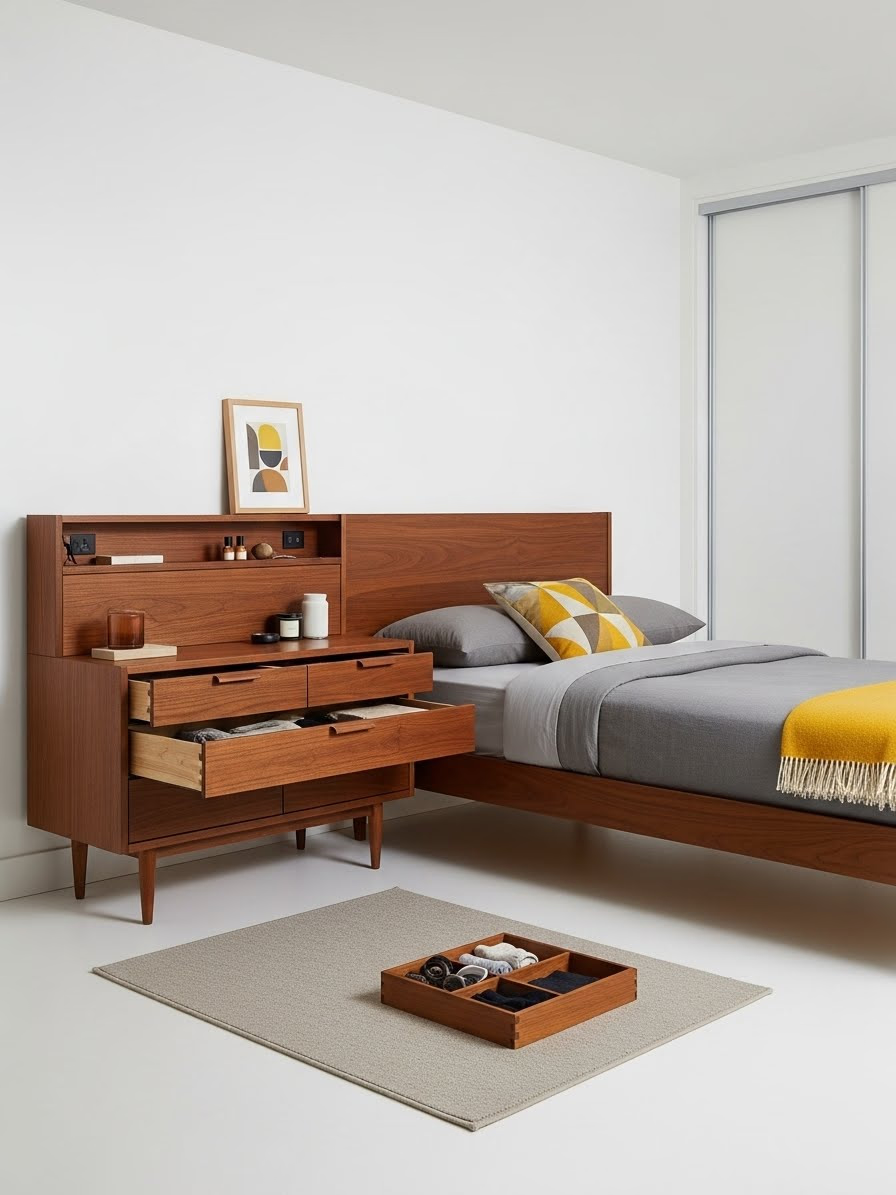
This elegant, mid century modern inspired setup showcases how nightstands can offer discreet, multifunctional storage. The main piece is an extended bedside chest featuring a raised lip that functions as a small shelf and integrated charging hub. This area neatly holds small essentials and provides hidden access to power outlets, keeping unsightly cords off the floor and nightstand surface.
The deep drawers below provide significant concealed storage. The top drawer is intentionally shallow, often designed for organizing thin items like reading glasses, sleep masks, or electronic accessories. The lower drawers are deeper, perfect for clothes or books. The inclusion of a small wooden tray on the rug demonstrates an easy method for sorting accessories like sunglasses, keys, and wallets outside of the drawer, ensuring they have a designated spot. This is a beautiful example of form meeting function.
DIY Instruction: Converting a Drawer into a Charging Station
Material Required List
- Power strip with surge protection
- Drill and drill bits
- Safety glasses
- Cable ties or Velcro strips
- Small command hooks (optional)
Equipment Required List
- Drill with a large spade bit or hole saw (at least 1 inch or 25 mm diameter)
- Screwdriver
- Measuring tape
DIY Instruction Step by Step
- Select the Drawer: Choose a drawer in your bedside table or chest, preferably a top or mid-level one, where you usually charge your phone and other devices.
- Determine the Power Strip Location: Place the power strip inside the drawer and measure the distance from the power strip’s plug end to the back of the drawer.
- Drill the Cable Hole: Remove the drawer completely. Using the spade bit or hole saw, drill one large hole (1 inch or larger) through the back panel of the drawer box, close to the bottom. This hole must be big enough to easily feed the power strip’s plug through.
- Secure the Power Strip: Place the power strip inside the drawer. You can secure it to the side or bottom of the drawer using industrial-strength double-sided tape, or by attaching small command hooks to the drawer wall and wrapping a cable tie around the power strip to hold it in place.
- Feed the Cable: Feed the power strip’s plug end through the hole you drilled in the back of the drawer.
- Connect to Power: Slide the drawer back into the chest. Plug the power strip’s cord into the wall outlet. Place your charging devices inside the drawer, plugging them into the strip.
- Manage Cables: Use cable ties to bundle and shorten any excess charging cable length inside the drawer. Now you can charge your devices neatly inside the drawer, closing it to keep the nightstand surface completely free of clutter.
16. Murphy Bed System with Integrated Desk and Full Closet
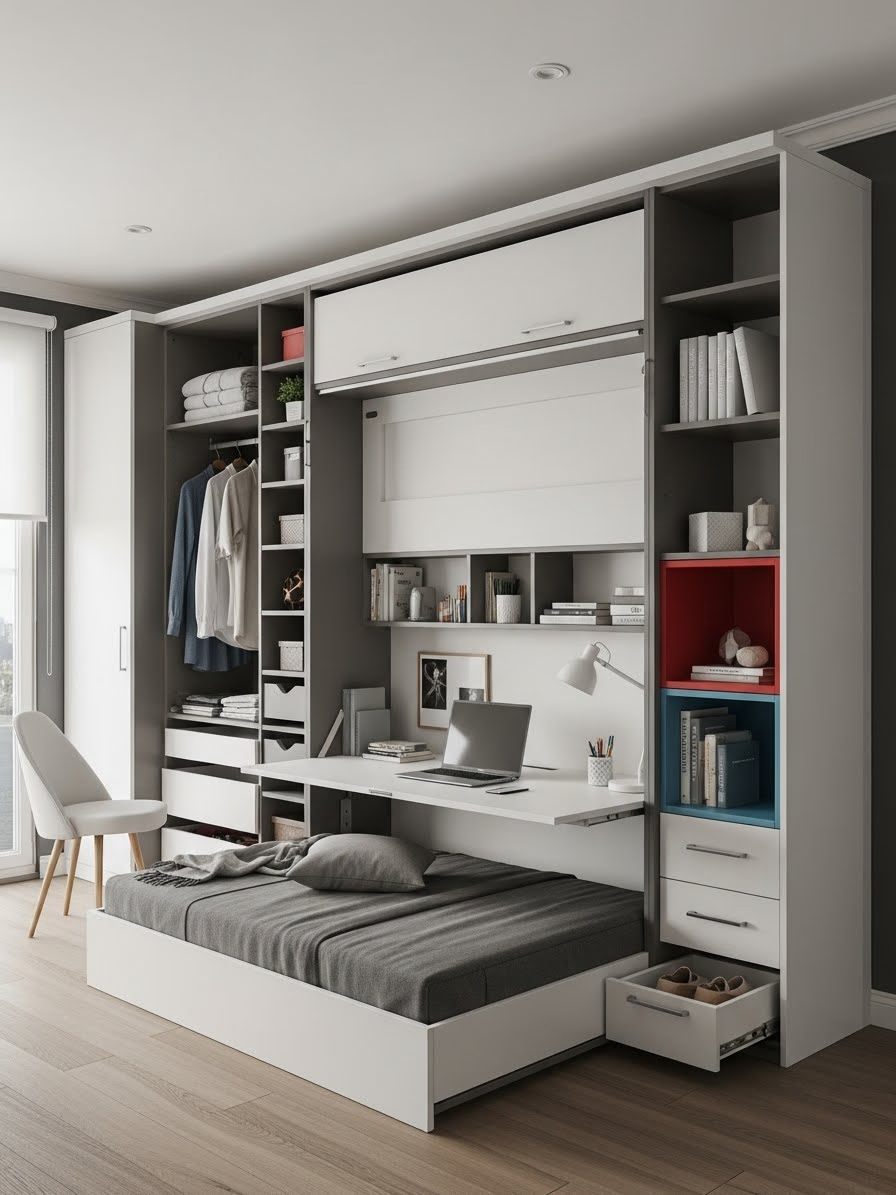
This design is a masterclass in maximizing functionality within a single wall unit. It incorporates a bed, a full closet, and a desk, making it outstanding for studio living or small bedrooms. The bed neatly folds up, allowing the desk to transition into a usable workspace. This transition is key to keeping the room tidy; work clutter disappears when the desk folds away or the bed comes down.
The surrounding cabinetry offers diverse storage solutions. Open shelving, some accented with vibrant red and blue cubes, holds books and decor. Adjacent to this, a large section is dedicated to closet storage with hanging rails, deep drawers, and open shelving for folded laundry. This integrated approach ensures that every essential item—from clothing to electronics—has a dedicated, structured place, preventing room-wide disarray. The lower pull-out drawer on the bed frame adds invaluable footwear or blanket storage.
DIY Instruction: Installing Drawer Dividers for Footwear Storage
Material Required List
- Thin, smooth wood strips or MDF board (1/4 inch or 6 mm thickness)
- Small metal brackets or L-brackets (optional, for permanent placement)
- Wood glue
- Measuring tape
- Pencil
- Sandpaper
Equipment Required List
- Small handsaw or coping saw
- Clamps
- Ruler or straight edge
DIY Instruction Step by Step
- Measure the Drawer: Remove the drawer and measure the interior length, width, and depth. This ensures your dividers will fit perfectly and the drawer can still close.
- Plan the Layout: Decide on the size of the compartments. For instance, if storing shoes, the compartments must be wide and long enough for one pair of shoes. Plan for one long divider running front to back, and several shorter dividers running across the width.
- Cut the Dividers: Cut the wood strips to the required lengths for your chosen layout. The height should be slightly less than the drawer depth. Sand the cut edges until they are smooth.
- Assemble the Grid (Non-Permanent Method): This method allows you to remove the grid if needed. Simply place the longest divider inside the drawer first. Then, slide the shorter cross dividers into place. Ensure the fit is tight enough that the strips hold each other securely without glue, relying on the friction against the drawer walls.
- Assemble the Grid (Permanent Method): If you prefer a fixed solution, apply wood glue to the ends of the short cross dividers where they meet the long divider and the drawer walls. Hold them in place with clamps until the glue is fully set. You can use small L-brackets on the bottom corners for added strength.
- Organize Footwear: Once the grid is in place, you can place one pair of shoes in each section. This prevents shoes from being tossed in a pile, keeping them tidy and visible.
17. Built-in Window Seat and Hidden Drawer Storage
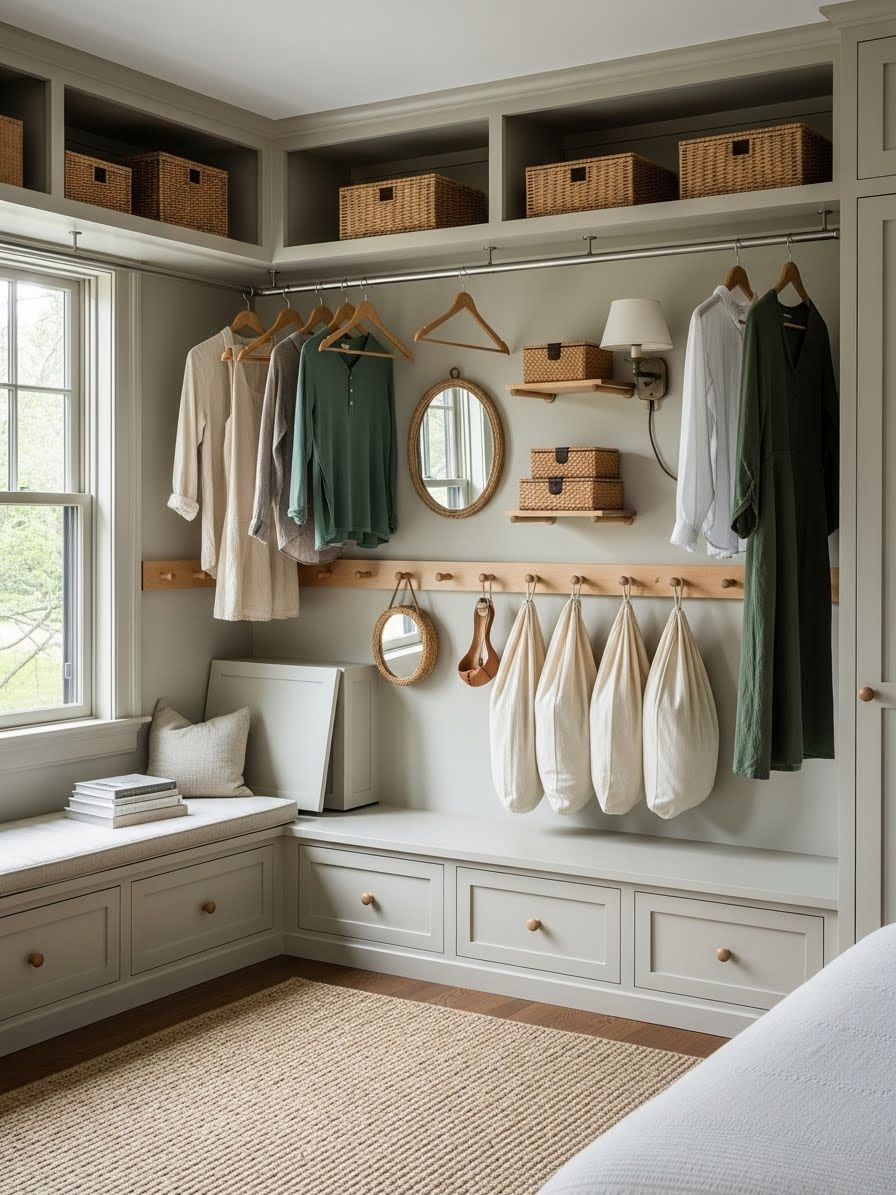
This cozy, refined design focuses on integrating storage seamlessly into architectural features. The highlight is the custom window seat, which not only provides a pleasant reading nook but also features deep, handle-less drawers beneath it. These drawers are essential for housing blankets, books, or extra linens, effectively utilizing the space that would otherwise be wasted.
Above the window, recessed cabinets with uniform wicker baskets conceal less-used items, keeping them easily accessible but visually hidden. The clothing storage is kept entirely tidy with a hanging rail beneath a low wooden peg rail. This unique combination offers both long hanging space and dedicated spots for bags or towels on the pegs. The overall light color palette and cohesive design make this highly functional space feel calm and effortlessly organized.
DIY Instruction: Making Simple Fabric Storage Bags for Hanging
Material Required List
- Sturdy, durable canvas or cotton duck cloth
- Drawstring cord or thick rope
- Safety pin or bodkin (for threading the cord)
- Matching thread
- Fabric scissors
Equipment Required List
- Sewing machine (or needle and thread)
- Iron and ironing board
- Ruler or tape measure
- Pins
DIY Instruction Step by Step
- Cut the Fabric: Decide on the size of your bag (e.g., a rectangle 20 inches wide by 36 inches long, which will result in a bag about 10 inches wide when folded). Cut the fabric.
- Prepare the Drawstring Casing: Along the top 1 inch edge of the fabric, fold the edge over and press it flat. Then, fold it over again (about 1.5 inches this time) to create a tunnel or casing for the drawstring. Pin and stitch this casing down, making sure to leave small openings on both ends for the cord.
- Sew the Bag Sides: Fold the long fabric rectangle in half, right sides together. Pin the raw side edges and the bottom edge. Sew a straight line down the side and across the bottom, leaving the drawstring casing open.
- Finish the Seams (Optional): If you are using canvas, you can iron the seam allowances flat and zigzag stitch over the edges to prevent fraying, or use a French seam for a clean interior.
- Thread the Drawstring: Turn the bag right side out. Use a safety pin or bodkin to thread the cord through the casing, entering one side and coming out the same side opening. Knot the ends of the cord together securely.
- Hang and Utilize: Place a small hook on your peg rail or closet rod. Pull the drawstring tight to gather the top of the bag and hang it from the hook. These bags are exceptionally useful for separating delicates, collecting dirty laundry, or storing seasonal hats and gloves.
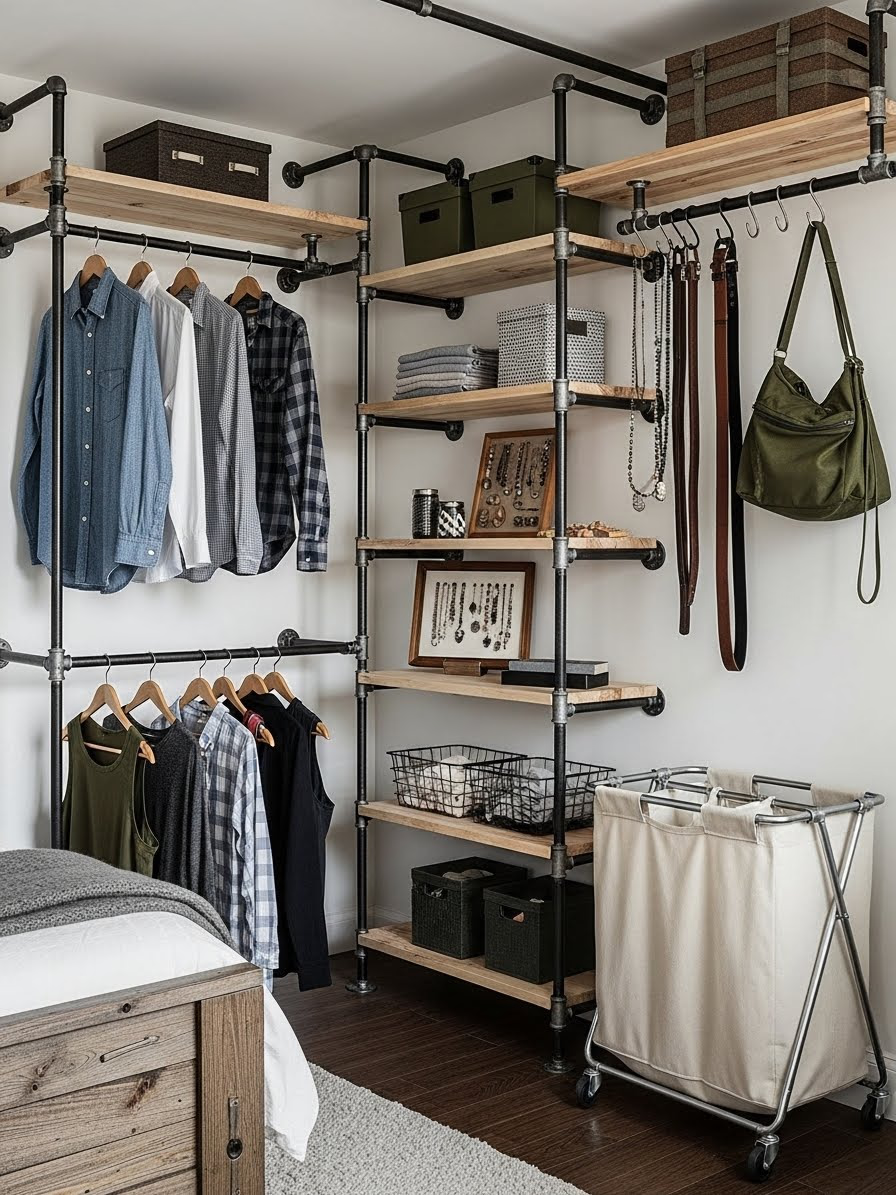
18. Industrial Pipe Open Closet System
This design champions open, accessible organization using industrial materials. The entire closet is constructed from metal piping and wooden shelves, creating a robust, urban aesthetic. This system forces tidiness because everything is visible; garments must be hung neatly, and storage must be contained.
The setup offers diverse storage zones: double hanging rods maximize vertical capacity for clothes. Solid wood shelves provide space for folded items, separated by wire baskets and small boxes. Crucially, S-hooks and hanging bars are utilized along the sides to organize small items like belts, ties, and jewelry, preventing them from tangling in drawers. A mobile laundry hamper on wheels provides a specific collection point, ensuring dirty clothes do not contribute to room mess.
DIY Instruction: Creating a Vertical Accessory Hanging Rack
Material Required List
- Small section of straight metal pipe (1/2 inch or 12 mm diameter, desired length)
- Two pipe flanges (matching the pipe diameter)
- Four wood screws (long enough for the pipe material)
- Six to eight S-hooks (medium size)
- Spray paint (optional, to match the pipe color)
- Wall anchors (if not attaching to studs)
Equipment Required List
- Drill and drill bits
- Level
- Tape measure
- Screwdriver
DIY Instruction Step by Step
- Prepare the Pipe: If desired, clean and spray paint the metal pipe and the two flanges in your chosen color (like matte black). Allow them to dry completely.
- Assemble the Ends: Screw one pipe flange onto each end of the straight pipe. Do not overtighten, as you may need to adjust the angle later.
- Mark the Wall: Use your tape measure and level to determine the precise placement for the rack on the wall or inside your closet. Mark where the screw holes for the flanges need to be located.
- Mount the Flanges: If possible, drill directly into a wall stud for maximum strength. If not, use appropriate wall anchors. Drill pilot holes and then attach the two pipe flanges to the wall using screws, ensuring the pipe is perfectly level.
- Secure the Pipe: Hand-tighten the flanges around the pipe to lock it firmly into place. The pipe should now be held rigidly against the wall.
- Add the Hooks: Slide the S-hooks onto the pipe.
- Organize Accessories: Hang belts, necklaces, scarves, or small handbags directly onto the S-hooks. This keeps accessories visible, untangled, and frees up drawer space.
19. Shōji-Inspired Closet and Platform Bed Storage
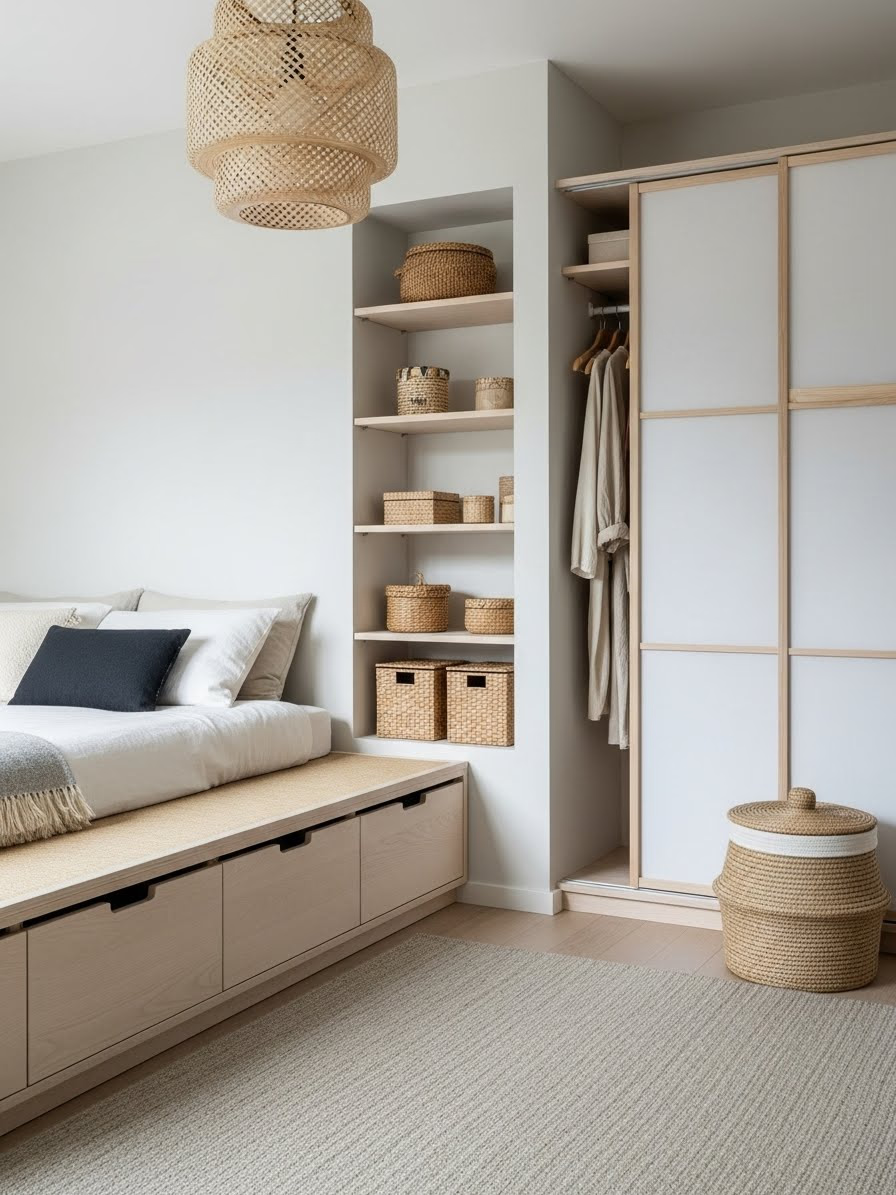
This serene, minimalist bedroom excels in organization by employing concealed storage and natural textures. The bed sits upon a low, built-in platform that integrates large drawers beneath. This foundational storage eliminates the need for separate dressers, keeping the sightlines low and open. The platform drawers, with their seamless handles, are perfect for blankets and seasonal clothing.
A key organizational feature is the full-height closet with sliding doors featuring light wood frames and white panels, reminiscent of traditional shōji screens. These doors glide shut to hide all hanging garments, maintaining a perfectly clean wall surface. Adjacent to the closet, a recessed wall niche features open shelves lined with various woven baskets. Using consistent basketry throughout, including the large floor hamper, adds textural interest while ensuring all clutter remains unseen.
DIY Instruction: Building a Platform Bed Frame with Storage Drawers
Material Required List
- Plywood sheets (3/4 inch or 18 mm thickness, for the frame and drawer boxes)
- Dimensional lumber (2×4 or 2×6, for internal support)
- Heavy-duty drawer slides (one set per drawer)
- Screws (2 inch and 1.25 inch lengths)
- Wood glue
- Handles or pulls for drawers
Equipment Required List
- Circular saw or table saw
- Drill and drill bits
- Tape measure
- Level
- Clamps
- Safety glasses
DIY Instruction Step by Step
- Determine Dimensions: Decide on the final height of your platform (including the mattress). Measure the length and width of your mattress. Your frame must be slightly larger than the mattress on all sides.
- Build the Outer Frame: Cut the 2×4 lumber to create a rectangular base frame the size of your mattress. This frame provides internal support. Screw and glue the corners together firmly.
- Construct the Drawer Boxes: Decide how many large drawers you want. Cut the plywood into five pieces for each drawer (four sides and a bottom). Assemble each drawer box using wood glue and 1.25 inch screws.
- Install Drawer Slides: Following the manufacturer’s instructions, mount the inner tracks of the drawer slides onto the sides of the constructed drawer boxes. Mount the outer tracks onto the side and internal supports of the main 2×4 base frame. Ensure all tracks are level.
- Attach the Drawer Fronts: Slide the drawer boxes into the frame. Cut plywood panels for the drawer fronts. Hold or clamp a drawer front panel against the box so it is flush with the frame. Screw it in place from the inside of the drawer box into the back of the front panel. Attach handles.
- Add the Top Deck: Cut a large sheet of plywood to fit over the entire 2×4 frame. This is the solid deck that will support your mattress. Screw it securely into the 2×4 frame using 2 inch screws, making sure the top surface is completely flush.
- Finalize: Sand and finish the exposed wood, then place your mattress on the platform. The large, easily accessible drawers provide ample hidden storage beneath your bed.
20. Open Concept Modular Closet System
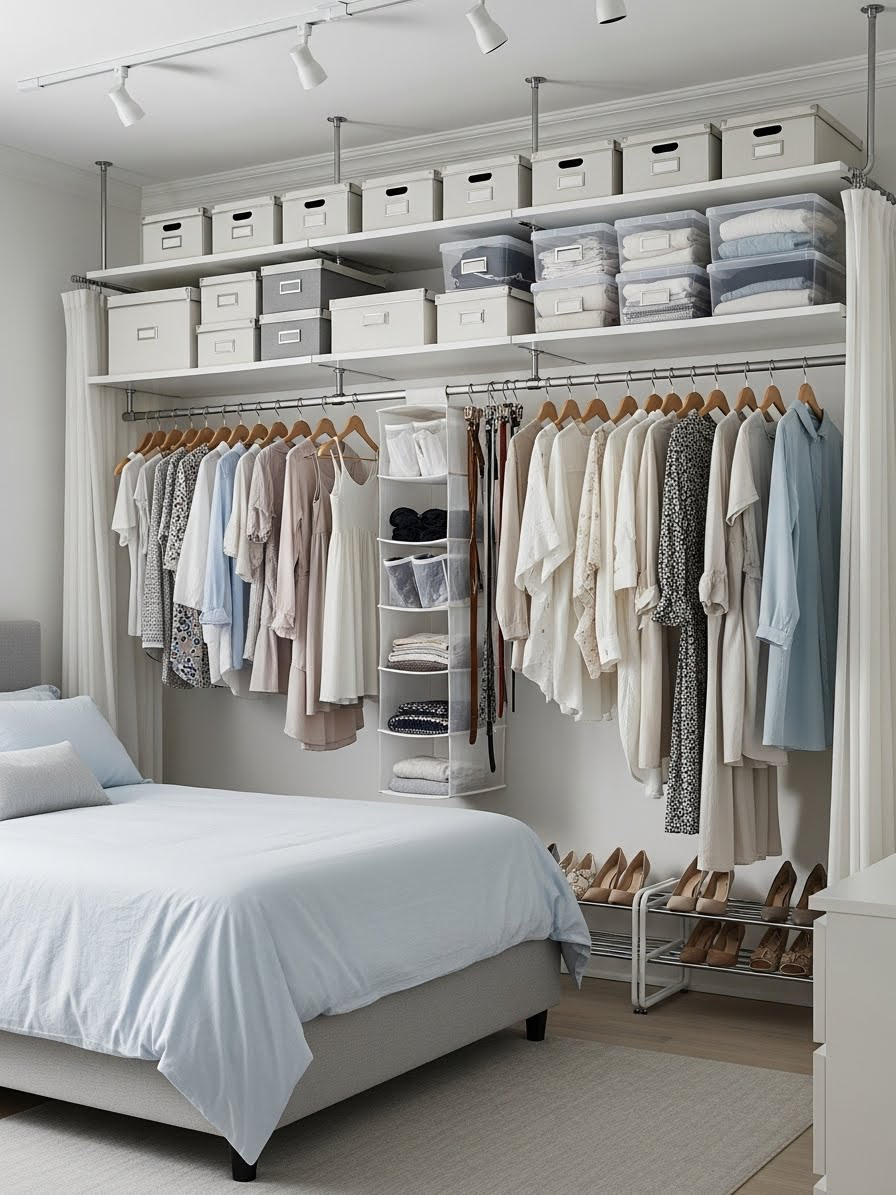
This wide-spanning open closet provides a fantastic framework for maximizing clothing and shoe organization. The system relies on sturdy, floor-to-ceiling metal rods and easily adjustable shelves. The ability to customize the layout is key to keeping the space tidy, as shelves and hanging rods can be repositioned as needed.
Visual organization is achieved through the use of consistent white and clear storage boxes across the top shelves. These hold less frequently accessed items, minimizing visual clutter. The central vertical fabric organizer is highly functional, offering dedicated slots for sweaters, t-shirts, and small accessories like belts. Below, a simple tiered metal rack keeps shoes paired and off the floor. The open design encourages discipline in hanging and folding, making it easy to identify and put back items.
DIY Instruction: Utilizing Hanging Fabric Shoe/Sweater Organizers
Material Required List
- Multi-tiered hanging fabric organizer (available at most home goods stores)
- Cable ties or small metal hooks (for securing)
- Measuring tape
Equipment Required List
- None needed beyond the basic item
DIY Instruction Step by Step
- Assess Hanging Space: Measure the distance between your hanging rod and the floor, or the next shelf down. Ensure the tiered organizer is the right height for your space and will not drag.
- Hang the Organizer: Simply place the organizer’s built-in hooks over the main closet rod. If the organizer tends to swing, use small cable ties to secure the top of the organizer to the rod, preventing movement.
- Categorize the Compartments: Assign a specific category to each shelf or pocket. For example, use the top shelves for folded jeans, the middle for sweaters, and the bottom for shoes or accessories.
- Load Vertically: When loading sweaters or t-shirts, use the file-folding method (folding them to stand upright) to maximize space and visibility within each cubby. For shoes, place one shoe per pocket or pair them in every other pocket.
- Maintain Tidiness: Because the compartments are open, they visually limit how much you can store in one area. This structure provides a clear boundary, making it easy to see when a shelf is getting too full, which encourages regular editing.
21. Jewel-Toned Closet and Display Cabinet
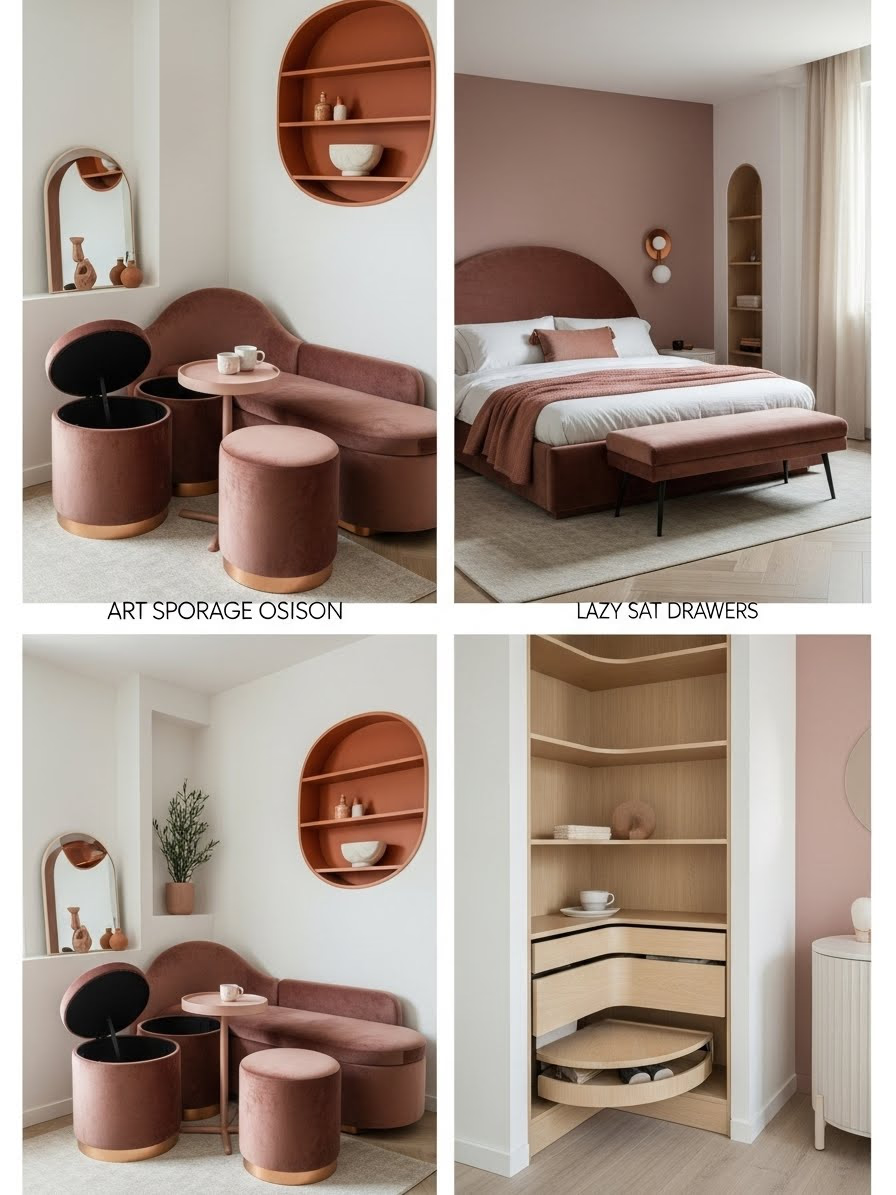
This serene, minimalist bedroom excels in organization by employing concealed storage and natural textures. The bed sits upon a low, built-in platform that integrates large drawers beneath. This foundational storage eliminates the need for separate dressers, keeping the sightlines low and open. The platform drawers, with their seamless handles, are perfect for blankets and seasonal clothing.
A key organizational feature is the full-height closet with sliding doors featuring light wood frames and white panels, reminiscent of traditional shōji screens. These doors glide shut to hide all hanging garments, maintaining a perfectly clean wall surface. Adjacent to the closet, a recessed wall niche features open shelves lined with various woven baskets. Using consistent basketry throughout, including the large floor hamper, adds textural interest while ensuring all clutter remains unseen.
DIY Instruction: Making and Utilizing Custom Modular Cube Bins
Material Required List
- Stiff fusible interfacing or thin plastic sheets (for structure)
- Decorative heavy-weight fabric (canvas or duck cloth)
- Matching thread
- Cardboard (for the bottom insert)
- Fabric scissors
- Ruler or tape measure
Equipment Required List
- Sewing machine
- Iron and ironing board
- Pins
- Hole punch and metal eyelets (for handles, optional)
DIY Instruction Step by Step
- Measure and Cut the Fabric: Measure the inner dimensions of your cube shelf (e.g., 12 inches by 12 inches by 12 inches). You will cut fabric pieces for the bottom, four sides, and any interior reinforcement. Be sure to add seam allowances (typically 1/2 inch) to all edges. You will also need two small strips of fabric for handles.
- Reinforce the Sides: Iron the stiff fusible interfacing onto the wrong side of your side and bottom fabric pieces. This step is crucial; it gives the fabric the necessary structure to stand upright like a box.
- Assemble and Sew the Box: Pin and sew the four side pieces together to form a square column. Then, pin the bottom piece onto the column and sew all four seams securely. Turn the fabric box right side out, pushing out the corners to make them crisp.
- Prepare the Handles (Optional): Take the handle fabric strips. Fold and press them neatly, then sew along the edges to create sturdy handles. Place them on one side of the bin, making sure they are centered, and stitch them firmly to the bin’s exterior.
- Create the Base Stabilizer: Cut a piece of rigid cardboard to the exact interior dimensions of the bin’s base. Wrap this cardboard piece in a scrap of the bin fabric, securing it with glue or a few stitches. This piece will drop into the finished bin.
- Final Assembly and Utilization: Drop the fabric-wrapped cardboard base into the bottom of the bin. This provides a solid floor, allowing the fabric walls to stand perfectly straight. Place the finished bins into your modular unit and use them to categorize and hide various items like workout clothes, accessories, or seasonal decorations.
22. Industrial Hanging Ceiling Rack with Wire Baskets
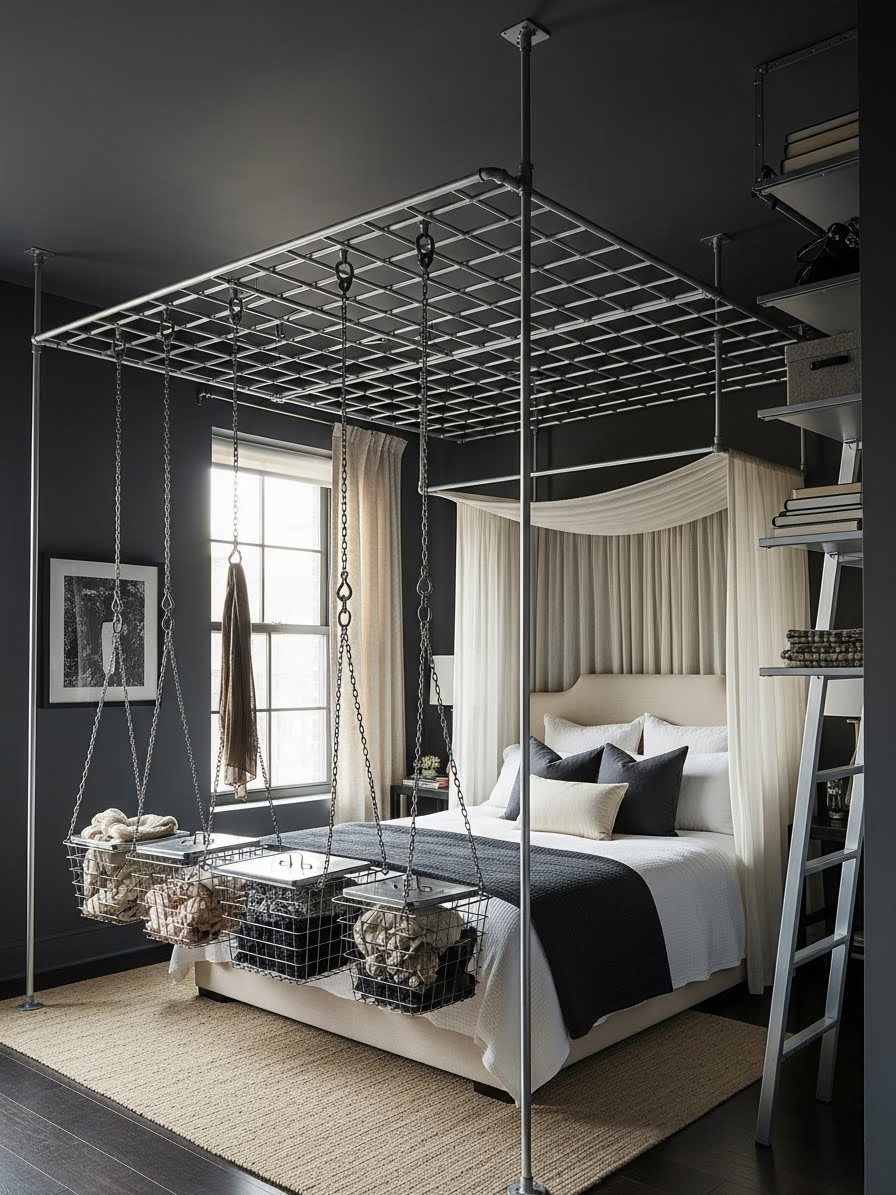
This striking, unique organizational feature is excellent for loft spaces or rooms with high ceilings. A sturdy metal grid is suspended from the ceiling, creating an overhead storage canopy above the bed. From this grid, heavy chains are used to hang open wire baskets at accessible heights near the window.
The suspended wire baskets offer creative, accessible storage for throw blankets, pillows, or towels, keeping them off the bed and floor. The open nature of the wire baskets, while visible, keeps the items contained, ensuring that the necessary overflow items are managed neatly. This industrial-style solution is both visually dramatic and highly practical for utilizing otherwise unused vertical space in a room with limited floor area.
DIY Instruction: Converting a Standard Metal Grid into a Hanging Storage Rack
Material Required List
- Metal wire grid panel or shelf rack (strong enough to hold weight)
- Four heavy-duty ceiling hooks or eye bolts (rated for the weight of your items)
- Four strong metal chains (length based on ceiling height)
- Carabiner clips or S-hooks (to connect the chains to the grid)
- Wire baskets (four large)
- Tape measure
Equipment Required List
- Stud finder
- Drill and drill bits
- Wrench or pliers
- Safety glasses
DIY Instruction Step by Step
- Locate Ceiling Joists: Use the stud finder to locate the ceiling joists. It is critical that the ceiling hooks are screwed directly into the wood joists, not just the drywall, to support the weight safely. Mark the four locations for your hooks.
- Install Ceiling Hooks: Pre-drill pilot holes into the marked joist locations. Screw the four heavy-duty ceiling hooks or eye bolts firmly into the joists until they are completely secure.
- Prepare the Chains: Cut the metal chains to your desired length. The grid should hang high enough so that you cannot bump your head on it.
- Hang the Grid: Attach one end of each chain to the ceiling hooks using a carabiner or clip. Use a second set of carabiners or S-hooks to attach the other end of the chains to the four corners of the metal wire grid panel.
- Attach the Baskets: Decide where you want the wire baskets to hang. Using shorter chains or S-hooks, attach the wire baskets to the underside of the main suspended grid. Ensure they hang level and are within easy reach.
- Load and Utilize: Use the baskets for soft, lightweight items like rolled-up throw blankets, magazines, or extra pillows. This creates statement storage that clears floor and surface space dramatically.
23. Illuminated Niche and Frosted Glass Closet
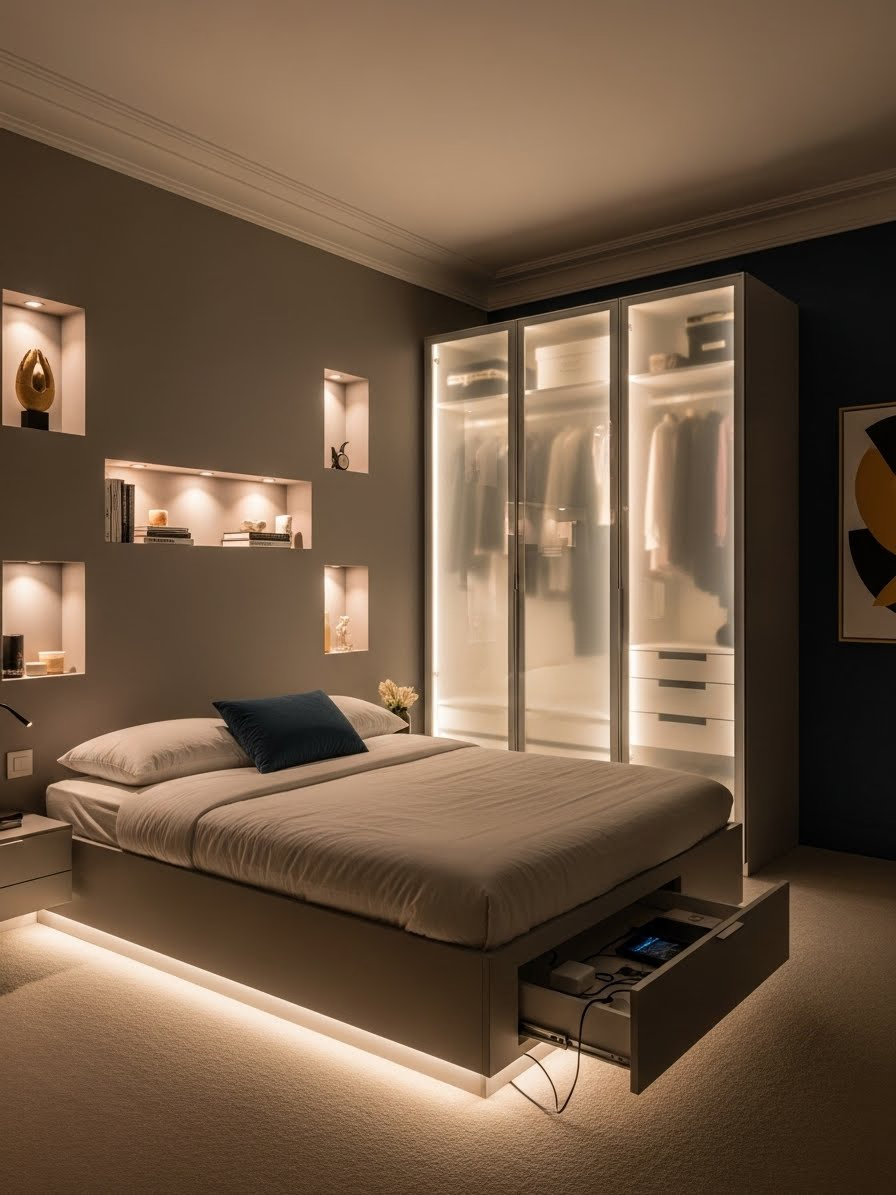
This design prioritizes a calming, organized atmosphere through lighting and concealment. The sleeping area features a floating bed frame with under-bed LED lighting, creating an ambient glow that visually emphasizes the tidiness. A critical organizing element is the drawer built into the foot of the bed. This is cleverly designed to house a charging station, keeping cords and phones out of sight and off the nightstand.
The walls are detailed with multiple recessed niches that are individually lit. These niches serve as display spots for small, curated items, proving that organization does not mean empty walls—it means controlled display. The main closet unit uses frosted glass doors and internal lighting. This design softens the visual impact of the clothing while still allowing you to quickly perceive the contents, encouraging neat folding and hanging.
DIY Instruction: Creating a Recessed Wall Niche
Material Required List
- Dimensional lumber (2x4s, for framing)
- Drywall patch or scrap
- Drywall screws and joint compound
- Primer and paint
- Small battery-operated LED puck lights (optional)
- Wood shelf insert (optional)
Equipment Required List
- Stud finder
- Utility knife or drywall saw
- Measuring tape and level
- Drill and drill bits
- Trowel or putty knife
- Sandpaper (medium and fine grit)
- Safety glasses
DIY Instruction Step by Step
- Locate a Clear Wall Area: Use the stud finder to locate two wall studs in your desired niche area. The niche must be placed between the studs. Mark the location and size of your desired niche opening.
- Cut the Opening: Carefully use the utility knife or drywall saw to cut out the rectangular section of drywall, exposing the inside of the wall cavity between the studs.
- Frame the Niche: Inside the wall cavity, use 2×4 lumber to create a small frame for the top and bottom of the niche opening. Screw these new horizontal 2×4 “blocking” pieces securely to the vertical wall studs, creating a defined box. This stabilizes the opening.
- Install the Backing and Shelf: If the exposed wall cavity insulation is messy, cover the back with a piece of thin drywall scrap, securing it to the frame. Install a horizontal wood shelf piece if desired, securing it to the vertical studs.
- Finish the Drywall Edges: Apply joint compound to smooth and feather the cut edges of the existing drywall around your new frame. Let it dry, then sand it smooth. Repeat this process until the edges are seamless with the wall.
- Paint and Light: Prime and paint the interior of the niche. Once dry, install small battery-operated LED puck lights on the top inner surface.
- Organize: Use the niche to display small, meaningful, and tidy accessories, keeping them off your nightstands and dresser surfaces.
24. Lift-Top Platform Bed with Integrated Storage Steps

This outstanding custom design is the epitome of maximizing storage in a high-impact, architectural way. The entire bed rests upon a substantial platform containing numerous drawers and cubbies. The staircase leading up to the bed is especially clever, with each riser functioning as a deep, pull-out storage drawer. This utilizes vertical space that is normally wasted.
The organization continues under the bed itself, which features a lift-top mechanism. This allows the mattress to be raised with ease, revealing a vast, open compartment beneath that is perfect for storing large, bulky items like suitcases and seasonal sports gear—items that usually contribute to significant clutter. The surrounding drawer units, accented with simple leather pulls, offer categorized storage, keeping everything tidy yet easily accessible. This is truly smart, consolidated storage.
DIY Instruction: Making Leather Drawer Pulls
Material Required List
- Leather strips (faux or real, about 1 inch or 25 mm wide)
- Chicago screws or decorative brass hardware (one set per pull)
- Hole punch (for leather)
- Ruler and pencil
- Utility knife or sharp scissors
Equipment Required List
- Drill and drill bits (if mounting to furniture)
- Screwdriver
DIY Instruction Step by Step
- Measure and Cut the Leather: Determine the desired loop size. A good starting length for a finished loop is 6-8 inches. Cut the leather strips to this length. Use the ruler and utility knife to ensure clean, straight cuts.
- Mark and Punch Holes: Measure and mark two points on each end of the leather strip where the screw will go, about 1/2 inch from the end. Use the leather hole punch to create clean holes at these marked points.
- Mount to the Drawer (Modification): If you are replacing existing handles, remove the old hardware. If you are adding pulls to a drawer without holes, drill two pilot holes in the drawer front, spaced about 1.5 inches apart, where you want the pull to sit.
- Create the Loop: Thread the leather strip through the existing or newly drilled holes from the outside in, so the ends of the strip are inside the drawer.
- Secure the Pull: Bring the two ends of the leather strip together inside the drawer, overlapping the holes you punched in step 2. Pass a Chicago screw post through all four layers of leather and the drawer front. Twist the corresponding screw cap onto the post from the outside. Tighten securely.
- Finalize: The leather will form a relaxed loop handle, offering a soft, stylish, and functional way to open the drawers without intrusive hardware.
25. Desk and Vanity with Integrated Power and Divided Drawers
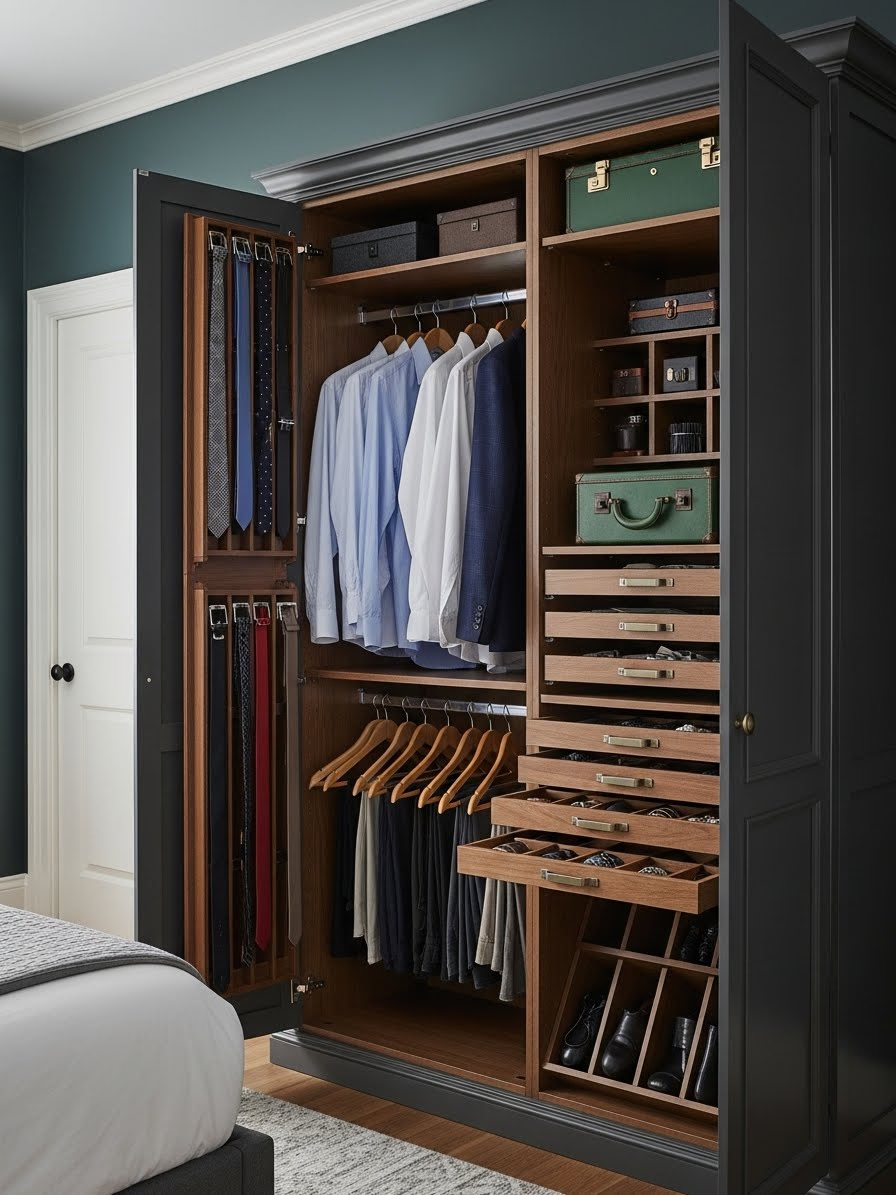
This beautiful, multi-functional piece serves as both a spacious dresser and a compact desk, managing clutter brilliantly. The sleek stone countertop features a subtle raised shelf area that houses integrated power outlets, providing a discreet charging and organization spot for electronics and pens. This small back shelf keeps cords off the main counter surface, a huge win for tidiness.
The storage capacity is excellent, featuring numerous deep drawers painted in a rich navy blue. Leather tab pulls add a touch of warmth while remaining subtle. Crucially, the drawers are fitted with internal divisions and trays. The top drawer appears shallow and is likely compartmentalized for small accessories, while the deeper drawers below offer concealed space for clothing and bulky items. This piece consolidates office, vanity, and clothing storage into one tidy unit.
DIY Instruction: Adding a Countertop Charging Strip
Material Required List
- Small, shallow wooden box or tray (ready-made or built from thin wood strips)
- Power strip (with surge protection and flat plug head)
- Cable access hole grommet (plastic or rubber)
- Drill and drill bits (with hole saw bit matching the grommet size)
- Wood glue
- Small screws or strong adhesive (to secure the tray)
Equipment Required List
- Drill and appropriate bit (hole saw)
- Measuring tape
- Pencil
DIY Instruction Step by Step
- Measure the Tray: Determine the ideal size for the tray that will sit at the back of your dresser top. It needs to be just wide enough to hold the power strip and a few accessories, but narrow enough not to interfere with your workspace.
- Cut the Grommet Hole: On the back panel of your dresser or desk, measure and mark a spot for the power cord to exit. Use the hole saw to drill a clean hole large enough for the power strip’s plug to pass through easily. Insert the cable access grommet into the hole to give it a finished look.
- Secure the Tray: Position the wooden tray on the countertop directly in front of the back panel. Secure it to the countertop using a strong wood glue or small screws from the underside of the top surface.
- Install the Power Strip: Place the power strip inside the tray. Feed the power strip’s cord through the grommet hole to the wall outlet behind the unit. Use adhesive or small command hooks to secure the power strip inside the tray so it does not shift when you plug things in.
- Organize: Plug in phone chargers, lamps, or laptops inside this designated zone. The raised sides of the tray contain the accessories and cords, keeping the main marble surface completely clear and tidy.
26. Gentleman’s Wardrobe with Specialized Accessory Storage
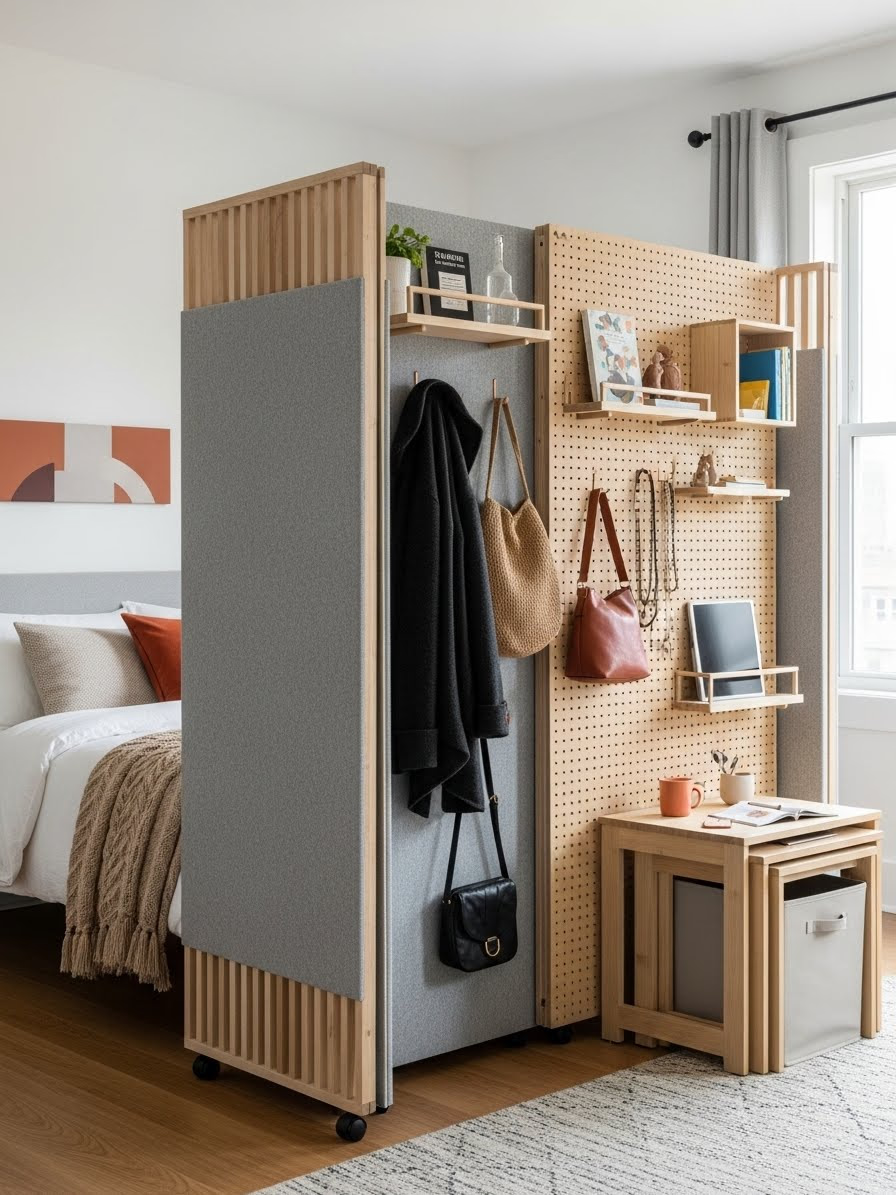
This magnificent, traditional armoire is the epitome of high-end, structured organization for clothing and accessories. It utilizes every inch of vertical space behind its large, dark doors. The interior reveals a combination of specialized storage zones. Hanging rods accommodate suits and shirts.
The right side is a masterclass in small item organization, featuring numerous shallow, pull-out drawers that are clearly designed to hold cuff links, tie clips, and smaller personal items. Below these drawers is a vertical shoe organizer, keeping footwear paired and off the floor. Most importantly, the interior side of the door is fitted with specialized racks for hanging belts, ties, and scarves. This vertical storage system eliminates clutter in the drawers and keeps accessories instantly visible and untangled.
DIY Instruction: Installing a Tie and Belt Rack on a Closet Door
Material Required List
- Two long, thin strips of solid wood (about 1 inch wide, 1/4 inch thick)
- Small metal hooks or wooden pegs (spaced evenly)
- Wood glue
- Small wood screws (appropriate length for your door thickness)
- Drill and drill bits
- Ruler and pencil
Equipment Required List
- Drill and small bit
- Screwdriver
- Clamps
DIY Instruction Step by Step
- Measure and Mark the Door: Open the closet door fully. Measure the available vertical space. Decide on the height for the belt rack (lower) and the tie rack (higher). Mark the position of the wood strips with a light pencil line.
- Prepare the Strips: Cut the wood strips to the required length. Mark the positions for the hooks or pegs on the strips, spacing them evenly (e.g., every 2 inches).
- Install Hooks/Pegs: Pre-drill small pilot holes into the wood strips at the marked points. Screw in small metal hooks or glue in short wooden pegs, ensuring they stick out enough to hold a tie or belt securely.
- Mount the Strips: Apply wood glue to the back of the first wood strip. Carefully align it with the pencil line on the door. Clamp it in place. For added security, drill pilot holes through the strip and screw it into the door, making sure the screws are not too long and will not pierce the exterior of the door. Repeat this process for the second strip.
- Let it Cure: Allow the glue to dry completely before hanging heavy items.
- Organize: Hang all your ties, belts, and scarves vertically. This solution not only saves drawer space but also prevents these items from becoming wrinkled or tangled in a pile.
27. Simple White Wardrobe with Vertical Shoe Stacks
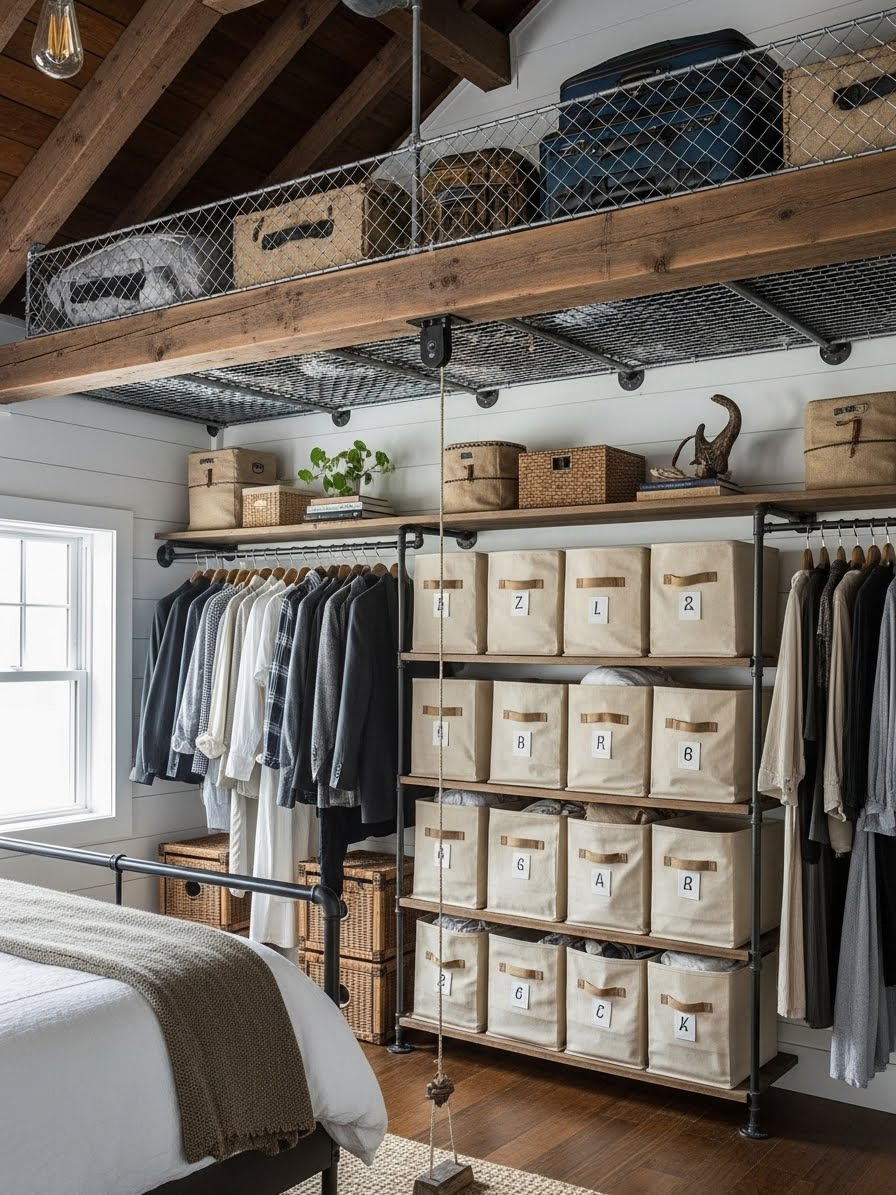
This clean, white wardrobe demonstrates high-impact storage that works well in minimal spaces. The unit offers a mix of hanging, folding, and concealed storage, organized efficiently in vertical columns. Hanging space is dedicated to daily garments, while open shelving holds neatly folded items and pillows. Upper shelves house dark fabric bins, keeping seasonal items tucked away.
The most effective organizational trick here is the use of clear, stackable shoe boxes placed at the base of the open shelving. These containers keep footwear perfectly paired, protected, and visible, eliminating the common messy pile of shoes. Additionally, the clear design allows for immediate inventory, while the external wall features a simple peg rail, perfect for hanging up jackets or bags right next to the wardrobe.
DIY Instruction: Making Simple, Vertical Shoe Box Stacks
Material Required List
- Clear, rectangular plastic storage containers (sized to fit your shoes)
- Labels (optional, if you want to identify contents without opening)
- Measuring tape
Equipment Required List
- Utility knife or scissors (if modification is needed)
DIY Instruction Step by Step
- Measure the Space: Measure the depth and width of the shelf or floor space where you want to stack the shoes. Measure the height of your shoes, especially high heels or boots, to ensure the boxes are tall enough.
- Acquire Containers: Purchase clear, uniform plastic containers that fit your largest shoes comfortably and match the dimensions of your available space. Containers with lift-off or hinged lids work well.
- Load the Shoes: Place one pair of shoes in each container. If you have bulky footwear, you may need one shoe per box. Placing the shoes heel-to-toe often saves space.
- Stack Safely: Begin stacking the containers vertically. Place a heavy item (like a board or book) on top of the stack if it seems wobbly, though well-designed containers should interlock or stack securely.
- Label (Optional): If the contents are not immediately obvious, place a small label on the outside of the box indicating the style (e.g., “Black Boots,” “Summer Sandals”).
- Organize: Now you can instantly identify where everything is stored, making it simple to put items back where they belong and maintain a highly organized system across multiple shelves.
28. Mobile Pegboard and Slatted Screen Divider
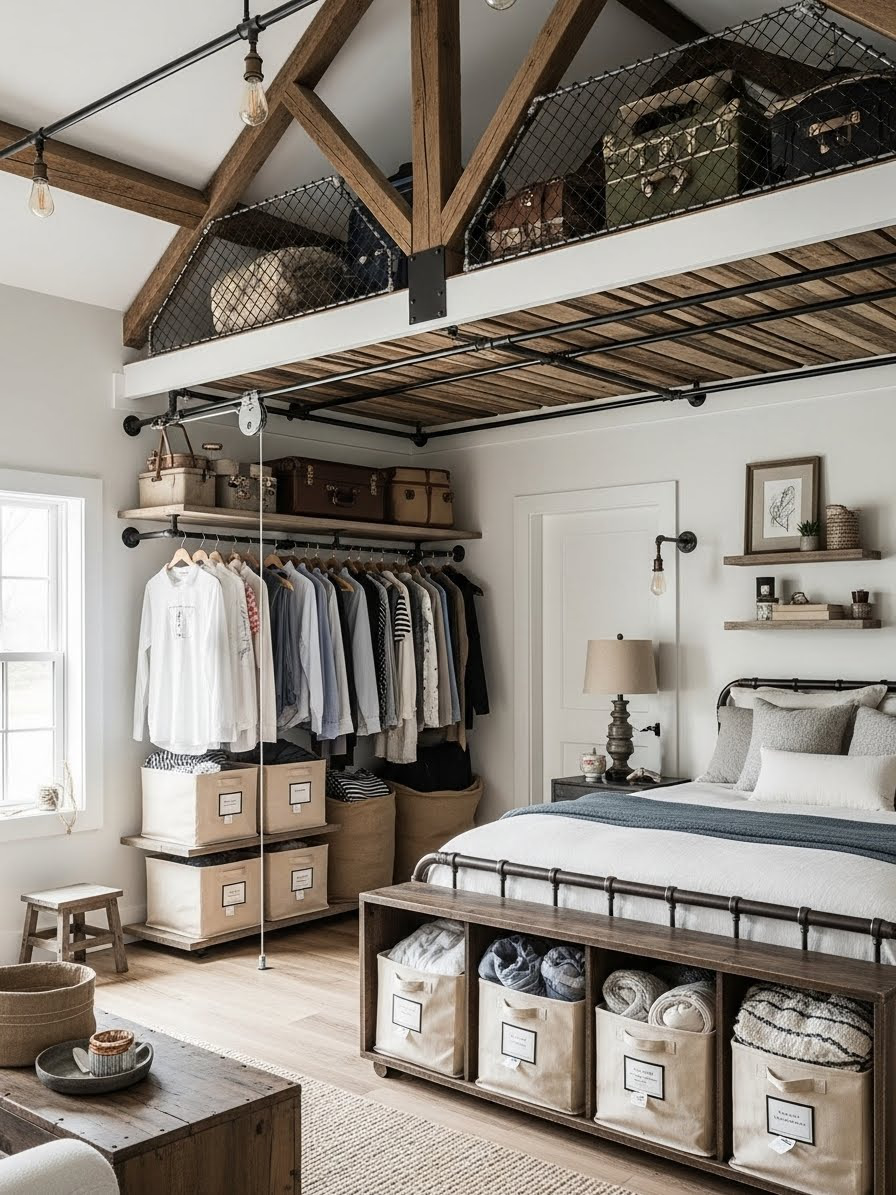
This fantastic solution addresses organization and zoning in an open-concept living space. A tall, mobile screen functions as both a room divider and a highly effective storage unit. The unit features three sections: two slatted wood panels for texture and one central grey pegboard. The use of wheels makes this entire wall of storage flexible and repositionable.
The pegboard is the organizational hero, fitted with small wooden shelves and hooks to hold books, decor, jewelry, and a laptop, keeping these items off the bedside table. The narrow central section uses hanging rods for coats and bags, offering quick-access ‘entryway’ storage without a formal mudroom. This unit is an exceptional, non-permanent way to establish structure, privacy, and substantial organization in a studio apartment or large shared bedroom.
DIY Instruction: Building Simple Wooden Pegboard Shelves
Material Required List
- Thin wood strips (1/2 inch thick) for the shelf base and sides
- Pegs or dowels (matching the thickness of your pegboard holes)
- Wood glue
- Small finishing nails
- Ruler and pencil
- Wood stain or paint (optional)
Equipment Required List
- Small handsaw or hobby saw
- Drill and drill bit (matching the dowel size)
- Clamps
DIY Instruction Step by Step
- Determine Shelf Size: Decide on the depth and width of the shelf you want (e.g., 5 inches deep, 12 inches wide).
- Cut the Wood Pieces: Cut the wood strips to create a simple shelf box: one top/base piece, two side walls, and one back wall.
- Assemble the Shelf: Apply wood glue to the edges and assemble the four pieces into a shallow box shape (the open side will face forward). Secure the joins with small finishing nails and clamps.
- Drill the Peg Holes: On the back panel of the assembled shelf, decide where you want the pegs to insert into the pegboard. Mark two points vertically down the back, spaced to align with the pegboard holes. Use the drill bit to drill holes through the shelf’s back panel at these marks.
- Insert the Pegs: Cut two wooden dowels or pegs to the length of the shelf depth plus the pegboard thickness (e.g., 5 inches total). Apply a generous amount of wood glue to one end of each peg. Insert the glued end of the pegs into the holes in the back of the shelf. Let the glue dry completely.
- Mount and Utilize: The shelf is now ready to mount. Simply push the wooden pegs into the corresponding holes on your pegboard. This creates a sturdy shelf perfect for displaying small books, art, or organizing office supplies off the desk surface.
29. Rustic Industrial Pipe Closet with Canvas Bins
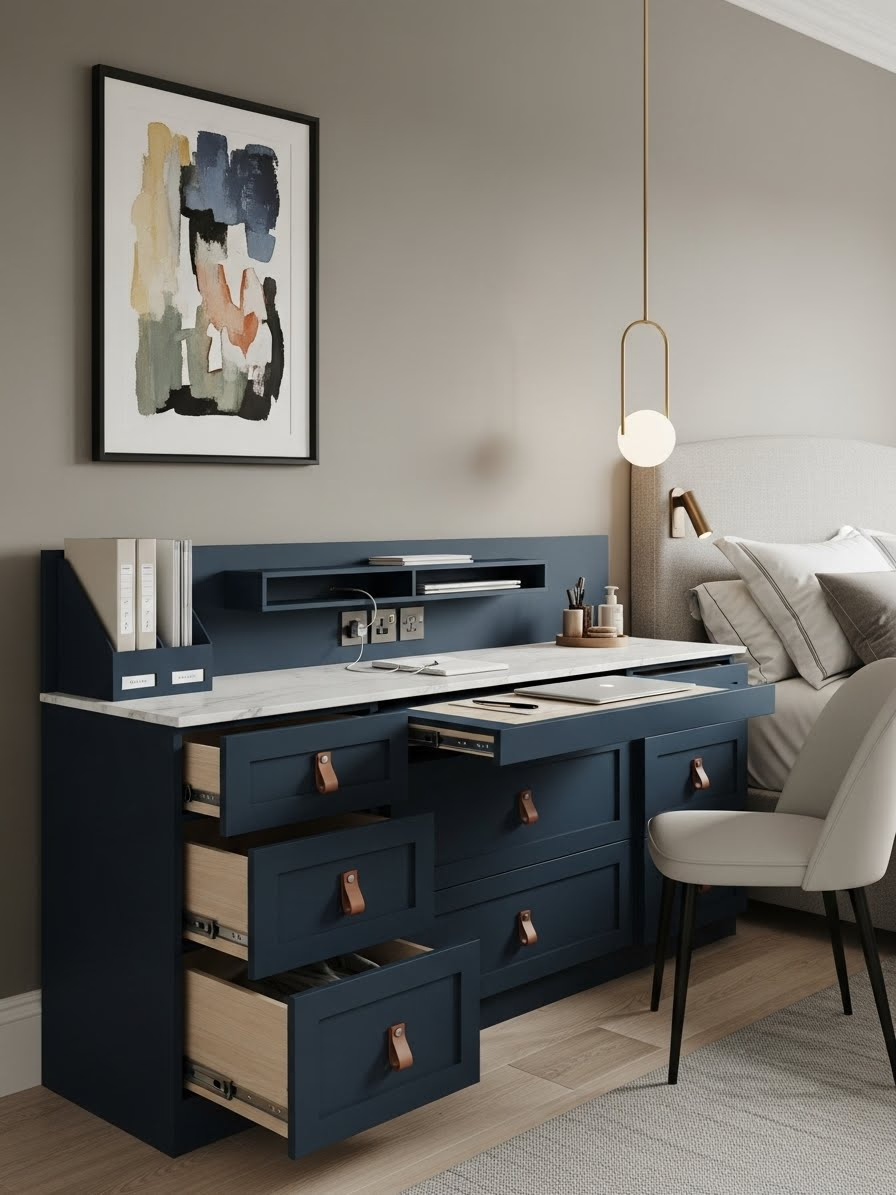
This expansive open closet system uses rugged materials—dark metal pipes and thick wood planks—to create a very substantial and customizable storage space. It takes organization to the ceiling, utilizing high shelves for luggage and seasonal items, accessible via a pulley system or ladder.
The central organization relies heavily on uniform, large canvas bins. These bins, labeled with letters or names, instantly conceal a large amount of folded clothing or miscellaneous items, making the overall look structured and tidy despite being open. Lower hanging rods provide space for shirts and jackets. The addition of a canvas storage bench at the foot of the bed, also using matching bins, reinforces the organized theme and offers overflow space for bulky blankets. The visual repetition of the pipe and canvas reduces visual noise.
DIY Instruction: Labeling Canvas Storage Boxes
Material Required List
- Cardstock or thick card for the labels
- Leather scraps or ribbon (for the label holder)
- Metal eyelets and eyelet setter, or a hole punch
- Fabric glue or a small needle and thread
- Permanent marker or printed text
Equipment Required List
- Hole punch
- Scissors
- Ruler
DIY Instruction Step by Step
- Prepare the Canvas Box: If your canvas box has handles, you can attach the label to the handle. If not, you will need to create a small attachment point on the front of the box.
- Create the Label Holder: Cut a small, rectangular piece of leather scrap. Punch a small hole on each side of the leather strip.
- Attach the Holder: Position the leather strip onto the front of the canvas box (centered on the handle if applicable). Use the needle and thread or strong fabric glue to secure the two ends of the leather holder onto the box, ensuring it forms a small loop or bracket.
- Create the Card Label: Cut the cardstock into a rectangle that fits neatly inside the leather holder. Write or print your desired label (e.g., “G” for Gloves, “S” for Sweaters).
- Insert the Label: Slide the finished card label into the leather holder on the front of the box.
- Organize: Now you can instantly identify where everything is stored, making it simple to put items back where they belong and maintain a highly organized system across multiple shelves.
30. Vaulted Ceiling Loft Storage with Pulley Access
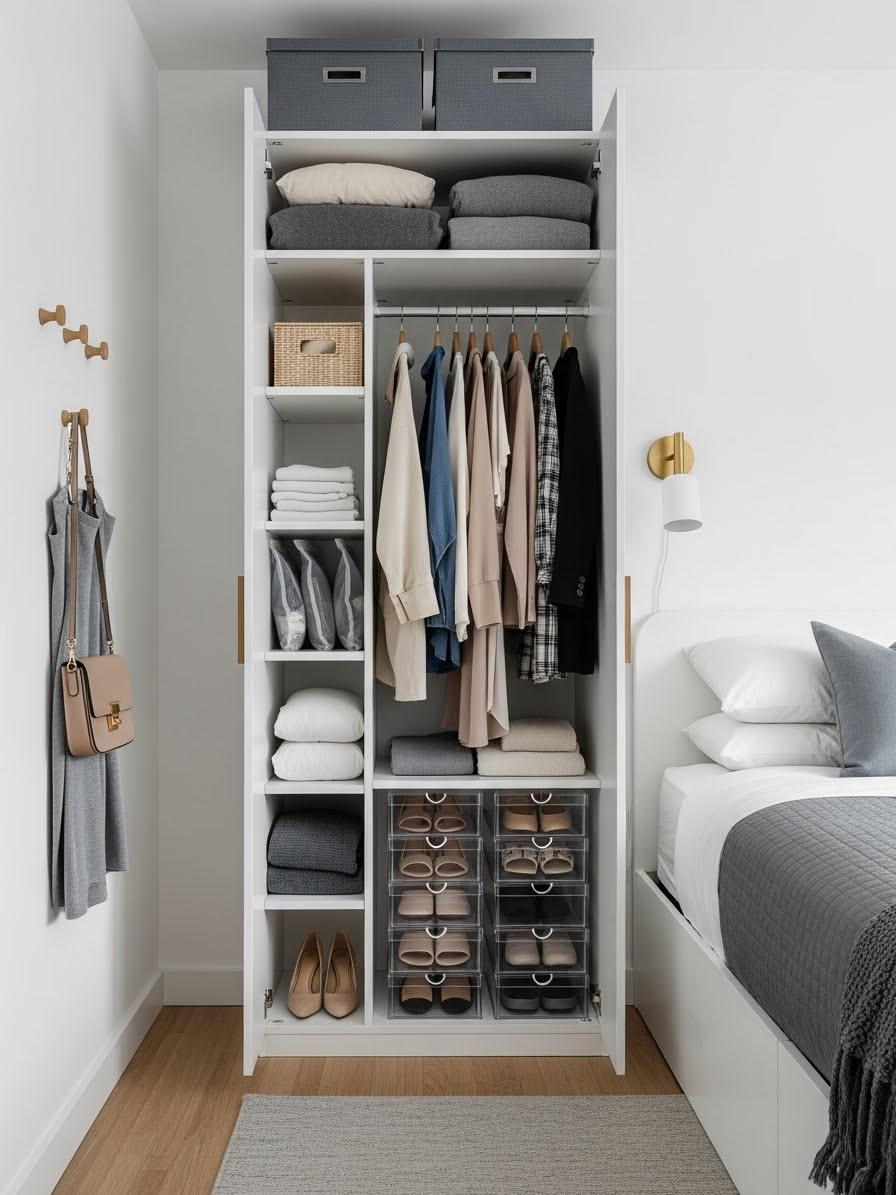
This image focuses on utilizing high, vaulted ceiling space for long-term storage, often a major clutter point in small homes. Above the main closet area, a sturdy, mezzanine level of shelving is created. This level, secured by metal mesh and thick wooden beams, is designed to hold large, bulky items like suitcases and storage trunks.
The unique organizational element is the manual pulley system clearly visible in the center. This mechanism allows the user to safely hoist heavy items (like the vintage trunks) up to the inaccessible loft space without needing a dangerous tall ladder every time. This solution effectively removes large, seldom-used items from the main living area, freeing up valuable floor and closet space while showcasing a rustic, industrial design.
DIY Instruction: Installing a Simple Pulley System for High Storage
Material Required List
- Simple rope and pulley wheel set (rated for the weight you plan to lift)
- Two heavy-duty eye bolts (rated for the same weight)
- Strong rope
- Carabiner clip
- Stud finder
Equipment Required List
- Drill and drill bits
- Wrench
DIY Instruction Step by Step
- Locate Ceiling Joists: Using the stud finder, find a strong ceiling joist directly above the center of your storage area. This location is crucial for safety.
- Install the Pulley Hook: Drill a pilot hole into the joist. Securely screw one heavy-duty eye bolt into the pilot hole. Use a wrench to ensure it is tightened fully.
- Install the Tie-Off Hook (Wall): Find a wall stud at an easily accessible height below the pulley. Install the second eye bolt or a simple wall cleat into this stud. This is where the rope will be tied off.
- Thread the Rope: Attach the pulley wheel to the ceiling eye bolt. Thread the strong rope through the pulley wheel. On the hanging end of the rope, tie a large loop or attach a carabiner clip. This is what you will hook to your item (e.g., the handle of a storage box).
- Test the System: Test the pulley system by slowly raising and lowering a weighted box, ensuring the rope runs smoothly and the wall cleat holds the rope firmly when tied off.
- Utilize: This system allows you to effortlessly lift and lower large, organized storage boxes up to high shelves, keeping the floor clutter-free.
31. Sliding Closet System with Hidden Office and Charging Hub
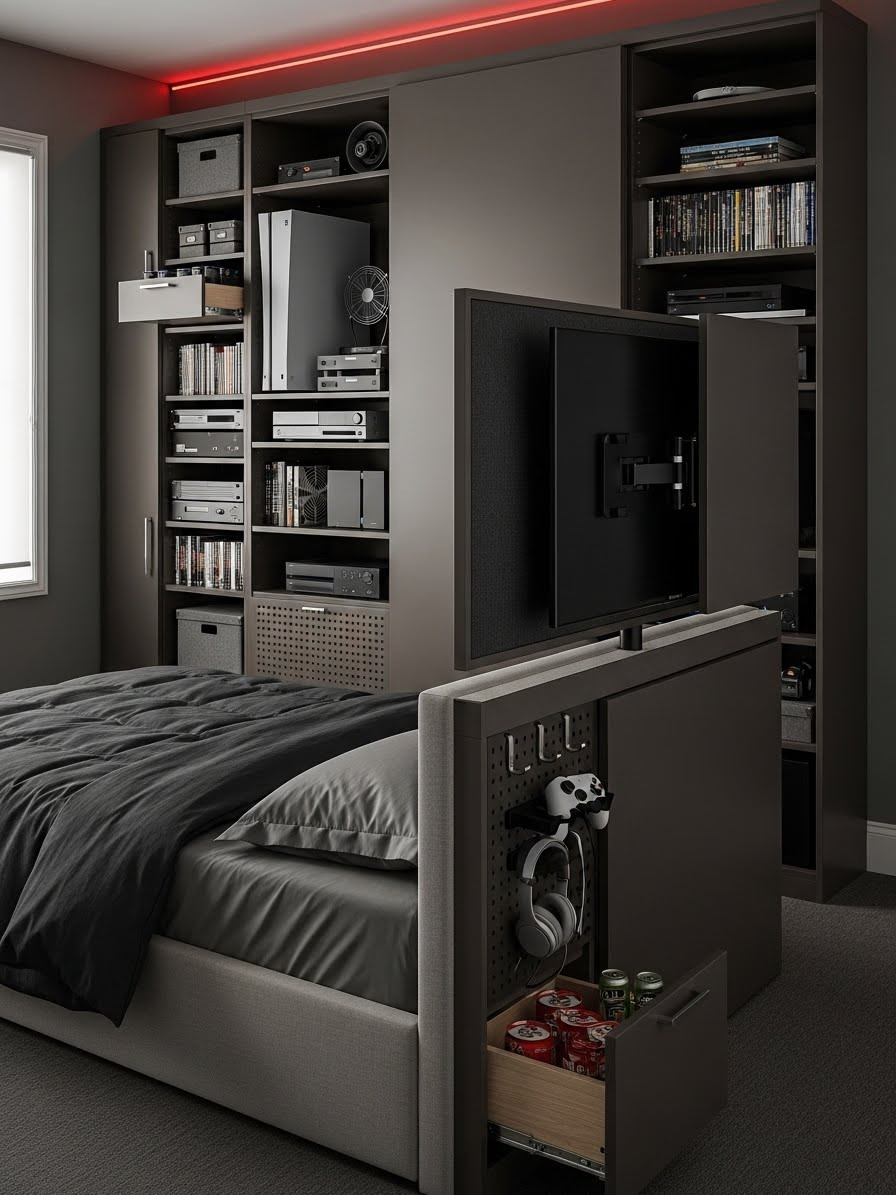
This sleek, modern closet unit provides exceptional hidden storage and versatility. The genius lies in the large sliding door, which, when moved, reveals either open shelving on the left or a dedicated, illuminated micro-office space on the right. This arrangement is outstanding for flexible living; work supplies and the desk are fully concealed when not in use.
The left side organizes items with open shelving, wicker baskets, and books, while the right side integrates a workspace with a compact drawer unit and a lit mirror. A unique feature is the vertical niche on the far right, highlighted with yellow, designed specifically for cable management and charging access. This ensures messy power cords are contained and organized in one structured spot, eliminating desk and floor clutter. Matching gray boxes on top provide high-level storage containment.
DIY Instruction: Building a Vertical Cable Management Niche
Material Required List
- Thin wood strips or plywood (1/4 inch or 6 mm thickness)
- Small metal hooks or cable clips
- Power strip (with a flat plug head)
- Wood glue
- Small finishing nails
- Paint (optional, matching the wall or an accent color)
Equipment Required List
- Small handsaw
- Drill and drill bits
- Ruler
- Screwdriver
DIY Instruction Step by Step
- Determine Niche Size: Measure the available vertical space. The niche should be tall and narrow, wide enough to hold a power strip and allow cables to hang neatly.
- Cut the Wood Panels: Cut the wood strips to create a simple, long, narrow box structure: a bottom piece, a top piece, and two long side pieces.
- Assemble the Box: Glue and nail the pieces together to form a shallow, open-front box. This box will form the interior of your niche.
- Cut Cable Entry/Exit Points: Drill small holes in the bottom and top of the assembled box. The bottom hole allows the main power strip cord to exit, and the top hole can be used to feed charging cables to the desk above, if applicable.
- Install the Box (Surface Mount): Position the assembled wooden box on the wall in your desired location. Secure it to the wall studs using long screws driven through the back of the box. Ensure the box is perfectly straight.
- Install the Power Strip and Hooks: Place the power strip inside the bottom of the box. Use adhesive or small screws to attach small hooks or cable clips to the interior walls of the niche. These will hold excess cable slack.
- Organize and Utilize: Plug the power strip into the wall outlet via the bottom hole. Plug your charging cables into the strip, draping the excess length onto the internal hooks. This contained area keeps all charging accessories tidy and accessible.
32. Gaming and Media Center with Hidden Headboard Storage
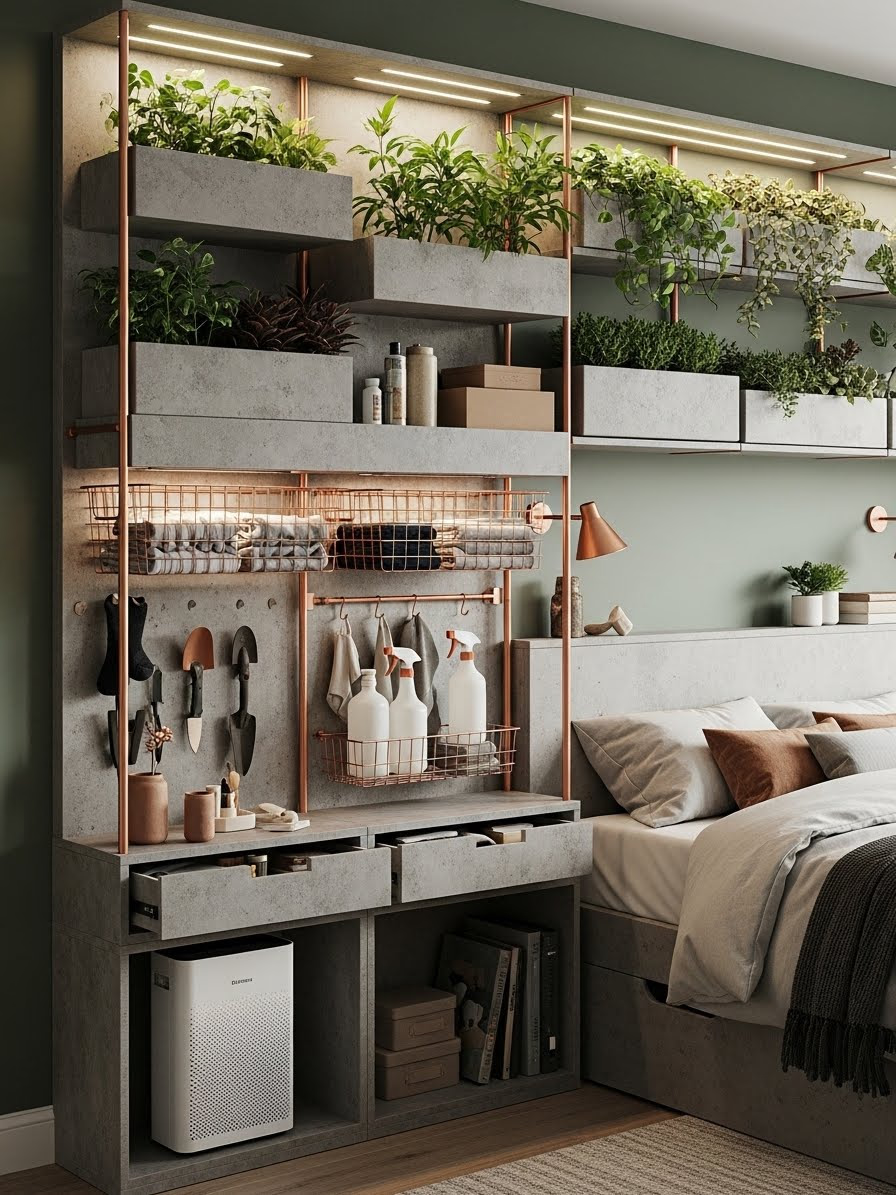
This dark, modern bedroom is designed for media enthusiasts, with organization built around gaming consoles and accessories. The core organization is the massive wall unit, which features deep shelves explicitly sized for media equipment, allowing space for ventilation. Sliding panels or doors on the central units keep the majority of the equipment concealed, preventing visual overload.
The bed itself is highly multifunctional. The tall, wide footboard is a key organizing feature. It incorporates a swivel mount for a television, allowing the screen to rotate when viewing. Most ingeniously, the back of the footboard facing the bed features a small pegboard wall. This provides vertical, organized storage for headphones and gaming controllers, keeping them off the floor. A drawer built into the foot of the bed offers cold storage or discreet access to snacks and drinks, showcasing maximized furniture utility.
DIY Instruction: Building a Footboard Pegboard Organizer
Material Required List
- Small sheet of sturdy pegboard
- Thin wooden strips (for framing the pegboard)
- Wood glue
- Small wood screws (1/2 inch or 12 mm length)
- Pegs, hooks, and small baskets (pegboard accessories)
- Paint (optional)
Equipment Required List
- Handsaw or jigsaw
- Drill and drill bits
- Screwdriver
- Clamps
DIY Instruction Step by Step
- Measure and Cut the Pegboard: Determine the available flat surface area on the back of your footboard. Cut the pegboard sheet to fit this area.
- Build a Simple Frame: Cut the thin wooden strips to create a small, shallow frame around the edges of the pegboard. This frame is essential as it creates a small space between the pegboard and the footboard, allowing the pegs to be inserted. Glue and nail the frame strips to the edges of the pegboard.
- Secure to the Footboard: Apply wood glue to the back of the assembled frame. Position the pegboard unit onto the footboard surface. Secure it further by driving small screws through the wooden frame into the footboard. Ensure the screw heads are flush.
- Customize with Accessories: Once the frame is securely attached, insert pegs, hooks, and small baskets into the pegboard holes.
- Organize: Use the customized pegboard to hang up headphones, store gaming controllers, or hang small remotes, transforming a decorative piece of furniture into a functional organization hub.
33. Geometric Accent Closet with Angled Storage
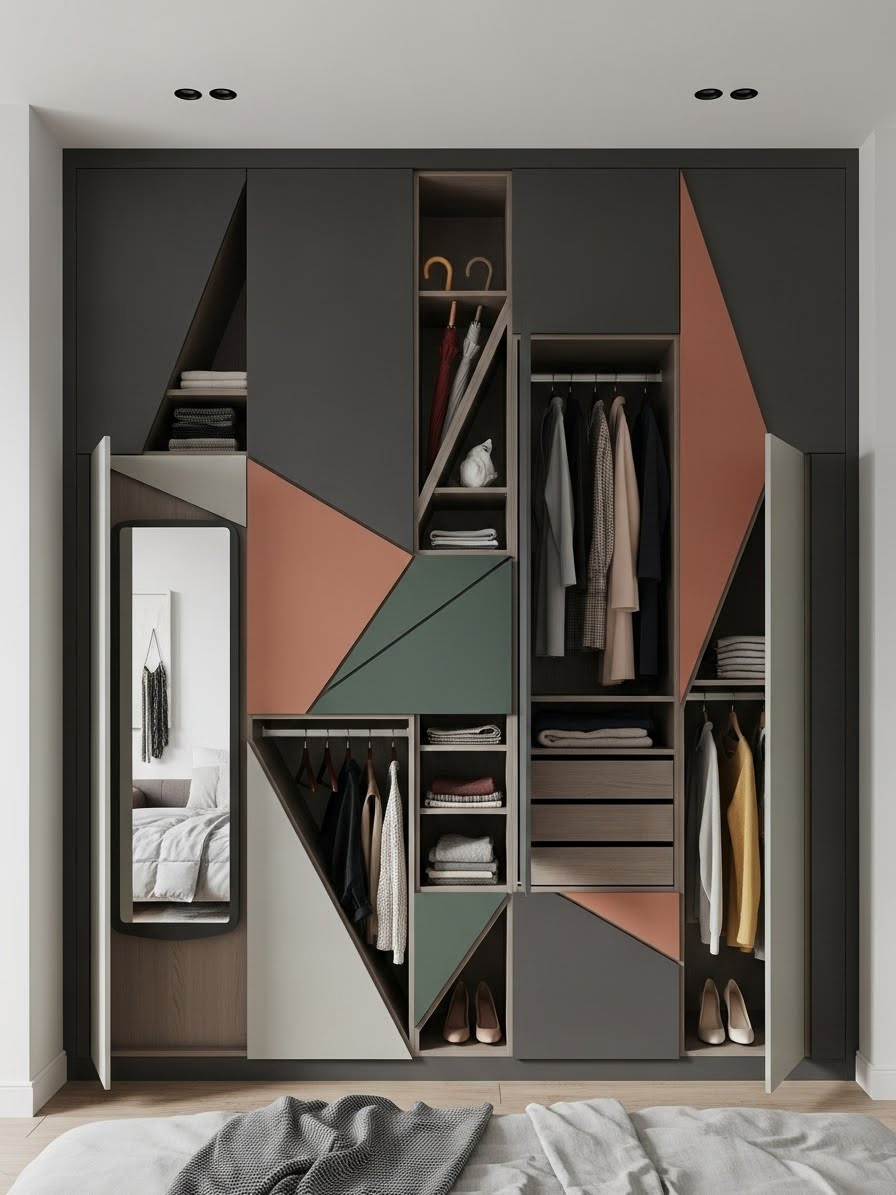
This bespoke wardrobe is a daring solution that uses asymmetrical, geometric designs and contrasting colors to achieve highly personalized storage. The unconventional, angled doors and panels make the unit a striking focal point while concealing numerous storage opportunities. The design demonstrates that organization does not have to be boring or boxy.
When opened, the angled cabinets reveal surprisingly deep and diverse storage compartments, including triangular sections that are perfect for items like umbrellas or oddly shaped gear. The full-length mirror is integrated onto the inside of one door, conserving wall space. The central open section provides hanging space and drawers, ensuring conventional needs are met, while the unexpected angles utilize every bit of vertical and horizontal space for unique storage.
DIY Instruction: Utilizing Diagonal and Triangular Storage Space
Material Required List
- Shallow wicker or wire baskets (varying sizes)
- Measuring tape
- Marker
Equipment Required List
- None
DIY Instruction Step by Step
- Identify the Corner: Locate the triangular or diagonal corner space that is currently unused or where items tend to pile up haphazardly.
- Measure the Space: Measure the depth and width of the most awkward parts of the corner. The goal is to find storage containers that can sit close to the diagonal, minimizing the wasted gap.
- Source Appropriate Containers: Look for specialized curved, pie-shaped, or simply very small, shallow rectangular baskets or trays. Wicker baskets are excellent here because they are forgiving and often come in various sizes.
- Fit and Stack: Place the baskets into the corner, arranging them to follow the angle of the wall as closely as possible. You may need to stack smaller baskets on top of larger ones to maximize the vertical space within the awkward corner.
- Categorize: Assign categories to these baskets (e.g., “Socks,” “Small Tools,” “Umbrella Storage”).
- Organize: By using small, flexible containers, you convert the unusable triangular corner into a structured storage area, preventing small items from getting lost or creating a messy pile.
34. Planter and Tool Wall Organizer
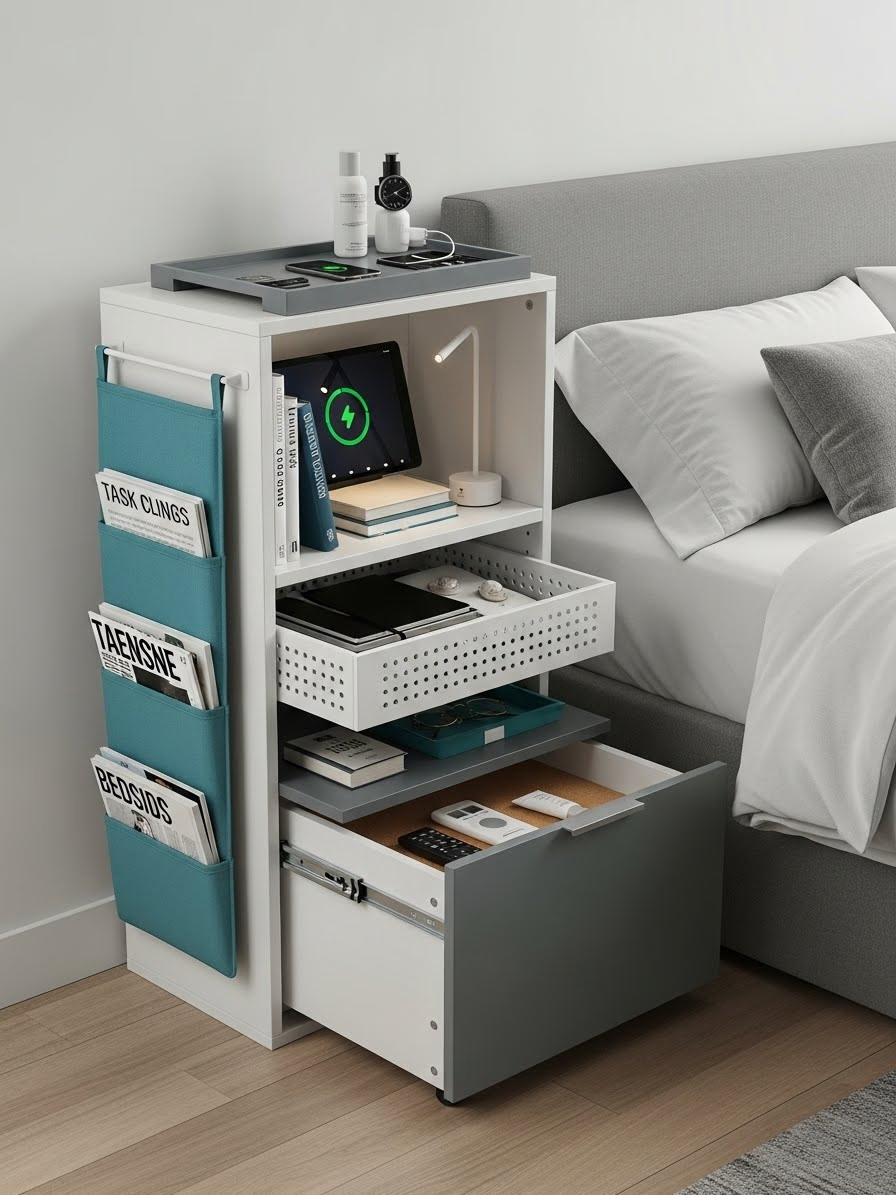
This highly textured and unique design integrates organization with nature, using concrete-look surfaces and copper accents. The key organizing feature is the tall, open unit which incorporates planter boxes into its top shelves. This allows the user to bring greenery into the room without sacrificing storage space. The planters are visually defined by copper rods, which also serve as support.
Lower down, the organization focuses on utility. Beneath the copper wire baskets, the wall features a dedicated vertical tool storage section with hooks, perfect for gardening tools or craft supplies. Drawers and a large open cubby below offer varied storage. This entire unit is a refreshing alternative to traditional closets, offering structured storage for clothing, tools, and decorative elements in one cohesive, visually interesting system.
DIY Instruction: Installing Open Copper Wire Baskets
Material Required List
- Two metal wire baskets (desired size, preferably copper or spray painted copper)
- Four sturdy wall anchors (appropriate for your wall type)
- Four small screws or hooks (to match the basket holes)
- Drill and drill bits
- Level
Equipment Required List
- Drill
- Level
- Screwdriver
DIY Instruction Step by Step
- Measure and Mark: Decide on the location for your baskets. Use the level to mark two points for the top screws, ensuring they are perfectly horizontal.
- Install Wall Anchors: Drill pilot holes at the marked points. Gently tap the wall anchors into the pilot holes.
- Mount the First Basket: Hold the basket against the wall, aligning the top rear edge with the anchors. Drive screws through the wire holes into the wall anchors.
- Mount the Second Basket: Measure the desired vertical distance between the two baskets. Repeat steps 1–3 for the second basket, ensuring it is level and secure.
- Utilize: Since these baskets are open and visible, use them for neatly folded towels, rolled-up magazines, or scarves. The exposed storage encourages quick cleanup and organization.
35. Multi-Functional Bedside Cart with Magazine Pockets
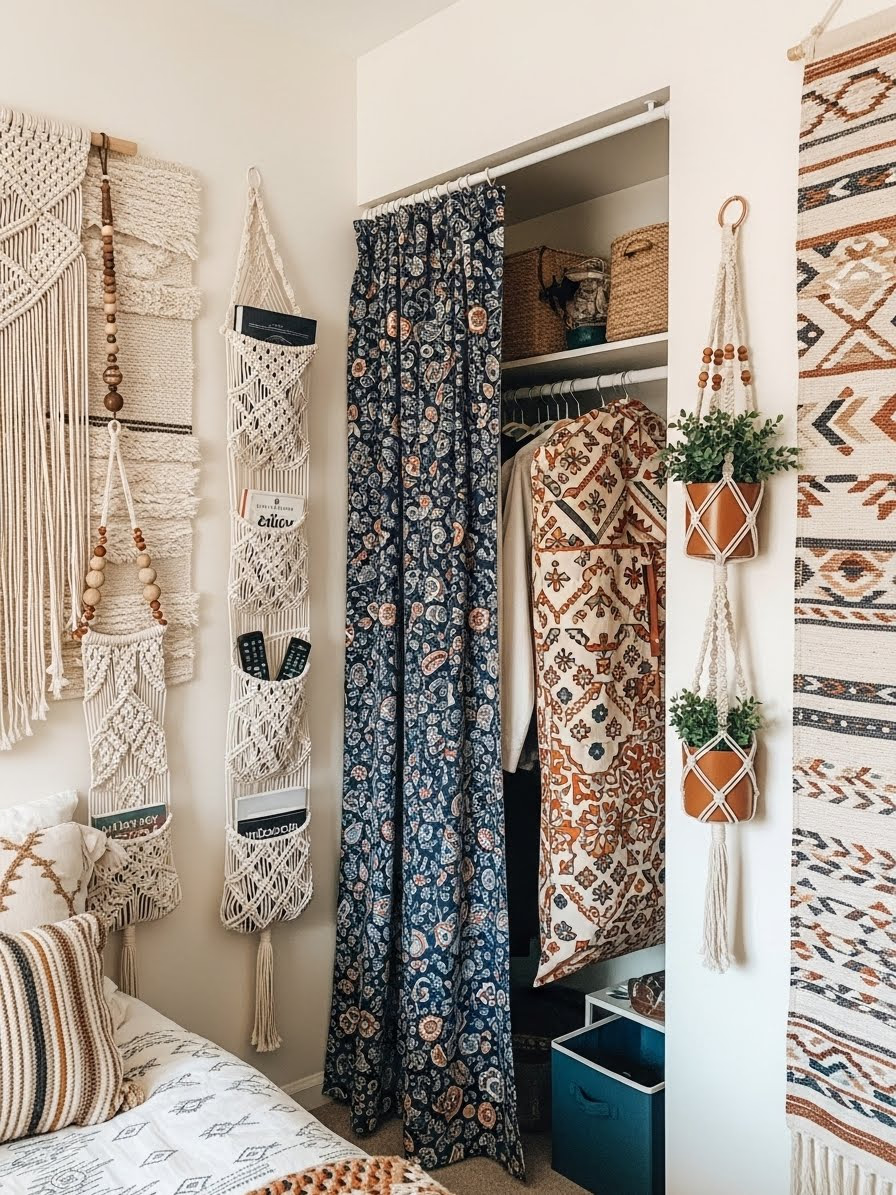
This contemporary nightstand takes a small piece of furniture and maximizes its storage potential. The mobile unit features open shelves and two pull-out drawers, providing both concealed and visible storage options. The top surface features a defined tray area, which is great for holding phones and small items in one spot, preventing them from scattering.
The key organizing innovation is the side storage. Attached to the exterior of the nightstand is a fabric pocket organizer, perfect for magazines, tablets, and current reading material. This vertical storage system eliminates the need to stack books on the floor or the bedside surface. The drawers utilize internal storage dividers, keeping everything from remote controls to jewelry tidy and easily found.
DIY Instruction: Adding a Fabric Pocket Organizer to Furniture
Material Required List
- Pre-made fabric pocket organizer (or similar sturdy fabric pockets)
- Thin dowel rod or flat metal bar (to secure the top)
- Small L-brackets or hooks (to attach the rod/bar)
- Small screws
- Drill and drill bits
Equipment Required List
- Drill and appropriate bit
- Screwdriver
DIY Instruction Step by Step
- Prepare the Organizer: If your organizer does not have a rigid top, slide a dowel rod or flat metal bar through the top casing of the fabric to give it structure.
- Mark the Attachment Points: Hold the fabric organizer against the side of the nightstand where you want it to hang. Mark two points near the top of the nightstand where you will attach the L-brackets or hooks that will hold the rod.
- Install the Brackets: Drill pilot holes and then screw the L-brackets or hooks securely to the side of the nightstand or cabinet.
- Hang the Organizer: Rest the dowel rod (which is inside the top of the organizer) onto the mounted brackets.
- Stabilize the Bottom (Optional): If the organizer swings, you can add two small eye hooks and corresponding fabric loops or snaps near the bottom of the fabric to secure it loosely to the bottom edge of the nightstand.
- Organize: Use the various pockets to sort reading materials, remote controls, or electronic charging accessories, keeping them contained and within easy reach.
36. Window Frame Storage and Window Seat
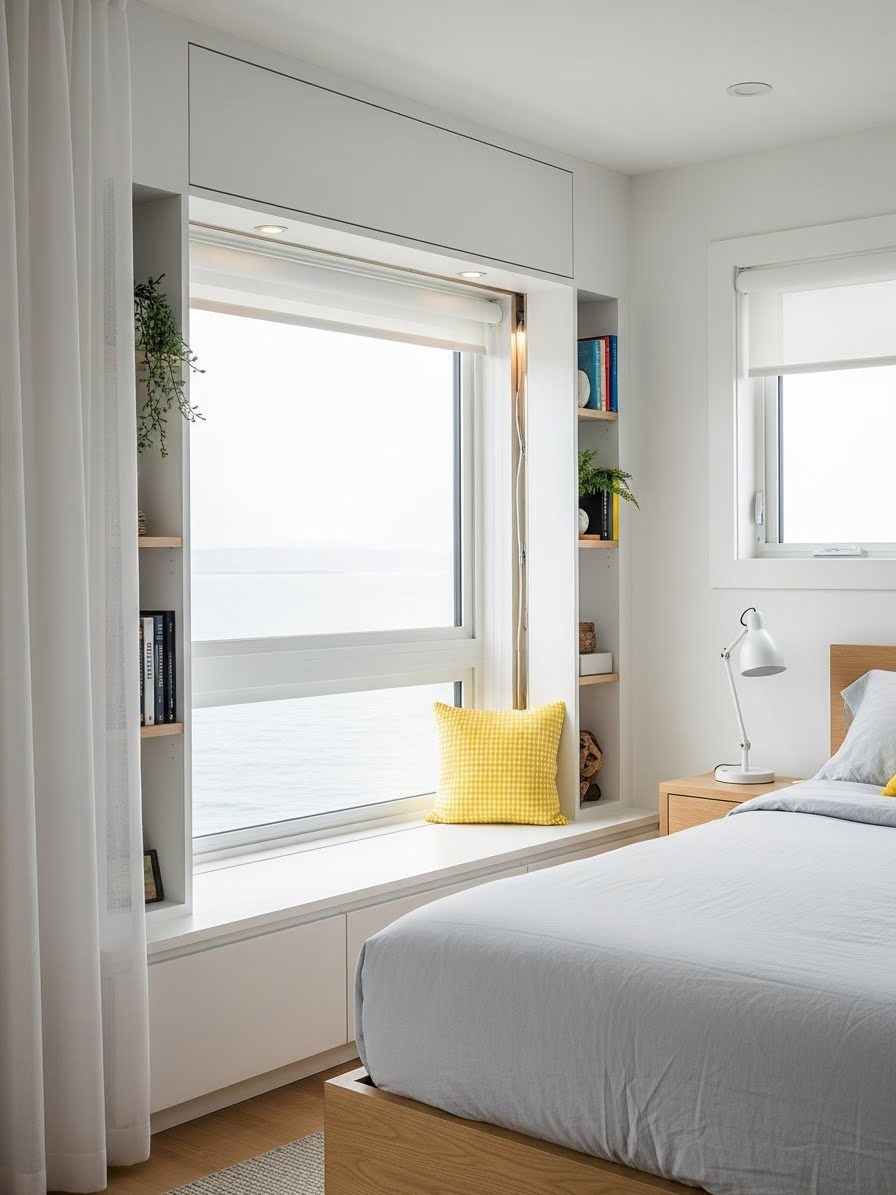
This bright, minimalist bedroom design smartly incorporates storage around the window opening, maximizing utility without sacrificing natural light. The window opening is framed with narrow, recessed shelving on the sides and a shallow cabinet above. The side shelves are excellent for displaying small books, plants, and curated items, turning the window space into a tidy display.
Below the window is a substantial built-in seat with hidden storage drawers. This not only provides a comfortable spot but also offers deep, concealed space for storing bulky items like seasonal blankets or overflow supplies. The drawers are handle-less, maintaining the clean, minimalist look. This cohesive, custom unit is a highly effective way to add storage and seating without encroaching on the main room space.
DIY Instruction: Installing Recessed Window Shelving
Material Required List
- Thin plywood or MDF board (1/2 inch or 12 mm thickness)
- Small L-brackets or shelf pins
- Wood glue
- Small screws or finishing nails
- Paint or wood filler
Equipment Required List
- Measuring tape
- Level
- Jigsaw or handsaw
- Drill and drill bits
DIY Instruction Step by Step
- Measure the Window Cavity: Measure the depth of the window cavity (the thickness of the wall) and the width of the space available on the sides. The shelves should be shallow, maximizing the opening.
- Cut the Shelves: Cut the plywood or MDF to the desired depth and width for your shelves. Sand the edges smooth.
- Mark Shelf Placement: Decide on the vertical spacing for your shelves. Use the level to mark the exact horizontal placement for each shelf on the side wall of the window cavity.
- Install Shelf Supports: At each marked shelf location, drill pilot holes and install small L-brackets or shelf pins into the wall. Alternatively, you can use the cleat method: cut small wooden support strips and glue and nail them to the wall to support the shelves.
- Install the Shelves: Apply a small amount of glue to the support brackets or pins. Place the cut shelf boards onto the supports, ensuring they are held securely. You can further secure them with small finishing nails if using wooden cleats.
- Finish: Fill any nail holes with wood filler, sand, and paint the shelves to match the surrounding window trim. Use these narrow shelves for small books, jewelry, or decorative items, keeping the window seat clear.
37. Bohemian Hanging Storage and Macrame Pockets
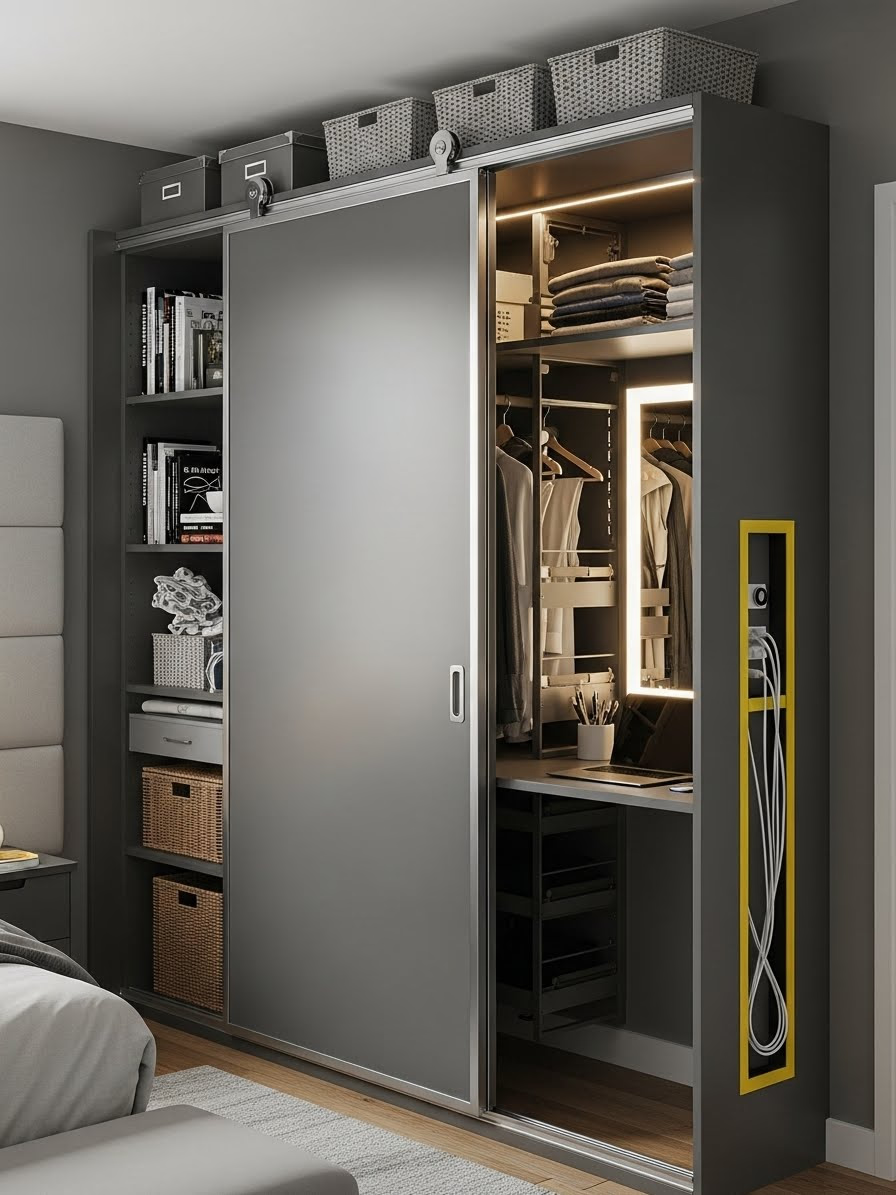
This bohemian-style bedroom uses textured, soft solutions for organization, proving that storage can be decorative. The central feature is the use of hanging macrame planters and wall pockets. The wall pockets, woven with rope, provide dedicated storage slots for small books, remote controls, and glasses, keeping them contained near the bedside.
A curtain replaces a traditional closet door, adding softness and hiding the main storage area. Inside the closet, organization is handled by natural baskets and hanging rods. The use of soft storage, like the macrame pockets and the curtain, makes the small room feel cozy and avoids the visual harshness of hard cabinets. This is an excellent solution for achieving tidiness in a rented space or one where a soft aesthetic is preferred.
DIY Instruction: Creating Simple Rope Wall Pockets
Material Required List
- Thick cotton rope or decorative cord
- Small wooden dowel (about 12 inches or 30 cm long)
- Hot glue gun and strong glue sticks
- Scissors
- Hooks (for mounting to the wall)
Equipment Required List
- Hot glue gun
- Scissors
DIY Instruction Step by Step
- Cut the Rope: Cut one long piece of rope for the hanging loop. Cut several longer pieces (e.g., 5-6 feet) that will form the body and pockets of the organizer.
- Create the Base Hanger: Tie the long piece of rope to both ends of the wooden dowel, forming a loop for hanging.
- Attach the Vertical Ropes: Fold the long rope pieces in half. Loop the folded end over the dowel and pull the ends through the loop (lark’s head knot). Do this for all your rope pieces, evenly spacing them along the dowel.
- Form the First Pocket: Working a few inches down from the dowel, take two adjacent ropes and tie them together with a simple knot. Repeat this across the row. In the next row, use one rope from each adjacent knotted pair and knot them together below the first row. This forms a mesh. Continue this mesh until the pocket is as deep as you desire.
- Define the Pocket Bottom: To close the bottom of the pocket, gather all the ropes at the bottom and tie them together securely with one large knot or wrap them tightly with another piece of cord and secure with hot glue.
- Continue for Second Pocket: Repeat steps 4 and 5 further down the ropes to create a second pocket below the first.
- Mount and Organize: Hang the dowel from a sturdy wall hook. Use the pockets to hold remotes, reading glasses, or small books. The flexible rope structure contains the clutter while adding soft texture to the room.
The journey from an unorganized room to a serene sanctuary is entirely achievable through the implementation of thoughtful systems. We have seen that the most effective solutions maximize unused vertical space—from floor to ceiling—and prioritize items disappearing behind cohesive fronts. Adopting multi functional furniture, like storage ottomans and hidden desks, is essential for maintaining a clean aesthetic.
The key to long term success is not constant cleaning, but building organization into the structure of your room itself. Using consistent containers, adding specialized internal dividers, and utilizing clever DIY projects ensures everything has a designated home. Start small with one or two projects, such as a custom drawer insert or a decorative peg rail, and watch the positive momentum grow.
Key Takeaways
- Prioritize Verticality: Always look upward to maximize storage using tall shelves, loft beds, and wall mounted systems.
- Concealment is Key: Rely heavily on drawers, cabinets, and uniform bins to hide visual clutter and create a calm atmosphere.
- Multi Functionality Rules: Choose furniture pieces that serve more than one purpose, such as storage ottomans, platform beds with drawers, and integrated desk units.
- Divide and Conquer: Never let large containers become “junk” zones. Always use custom dividers, small boxes, or specialized inserts to categorize items within drawers.