
Stop walking into a room only to be met by a cold, hard, uninspired floor. If your space feels unfinished, the culprit is often staring right back at you from beneath your feet. Bare floors, whether hardwood or tile, fail to provide the necessary warmth, definition, and personality a truly engaging room requires.

Area rugs are more than just decorative accents. They act as the ultimate foundation, instantly grounding furniture arrangements and adding layers of crucial texture and color. A thoughtfully chosen rug is essential for turning a house into a cohesive, inviting home.
This collection of 45 stunning ideas is here to prove that your floor has massive, untapped potential. Prepare to discover how bold patterns, plush textures, and unexpected shapes can transform any room—from the grand entryway to the quietest bedroom nook.
It is time to move beyond basic beige and give your floors the vibrant, stylish life they deserve.
1. Serene Coastal Wave Area Rug
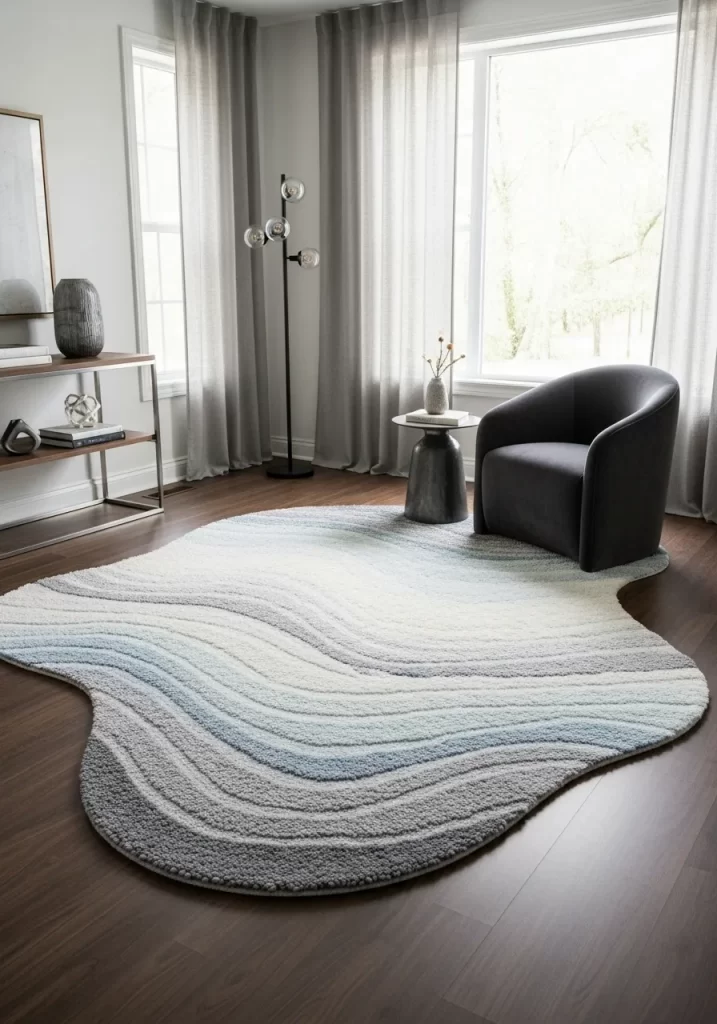
This abstract, freeform rug immediately commands attention, transforming a plain hardwood floor into a captivating focal point. Its organic, cloud-like shape breaks free from the common rectangle, adding a sophisticated, artistic flair to any room.
Experience the calming depth created by the layered, undulating stripes. Shades transition smoothly from deep slate gray through tranquil blues to soft, airy white, mimicking gentle ocean tides or wind-swept sands. This shaggy texture feels luxurious and inviting underfoot, providing unmatched warmth and comfort. Use this contemporary piece to anchor a cozy reading nook or a main seating area, instantly making the room feel more cohesive and stylish. This rug truly elevates simple floor coverings into a piece of modern floor art.
DIY Focus: Creating a Custom, Organic Rug Boundary
Since this rug itself is a purchased item, the accompanying DIY is focused on a related task that a homeowner might undertake to enhance the space or mimic the organic shape using paint or stencils around a smaller rug. For this specific rug, we will focus on maintaining its shape and placement.
Materials Required
- High-quality, non-slip rug pad (felt and rubber combination is best)
- Painter’s tape or removable chalk
- Cleaning solution for wood floors
- Microfiber mop or cloth
Equipment Required
- Measuring tape
- Scissors or utility knife (for trimming the rug pad)
- Vacuum cleaner
DIY Instruction: Securing Your Freeform Rug
The key to a stunning area rug is proper placement and security.
- Prepare the Floor: Begin by thoroughly cleaning the area where the rug will rest. Use your microfiber mop and cleaning solution to ensure the hardwood is free of dust, dirt, and debris. Any trapped dirt will scratch the floor or prevent the pad from gripping. Allow the floor to dry completely before proceeding.
- Determine the Outline: Carefully unroll the freeform rug and position it exactly where you want it in the room. This shape is meant to flow, so ensure it looks balanced with the surrounding furniture, like the chair and side table.
- Mark the Boundaries: Once the rug is in place, gently lift a small edge and use painter’s tape or removable chalk to trace the general outline of the rug onto the floor beneath. This guides your pad placement.
- Measure and Cut the Pad: Lay the non-slip rug pad flat on the floor, centered within your marked outline. Crucially, the rug pad should be trimmed about two inches inside the final edge of the rug. This ensures the pad remains hidden, preventing trips and giving the rug a softer, more tailored edge that truly grounds the space. Use sharp scissors or a utility knife for clean cuts.
- Place the Rug: Slowly and carefully unroll the freeform rug back over the trimmed rug pad. Start from one end and smooth it out as you go, ensuring there are no wrinkles or buckles in either the rug or the pad beneath.
- Final Adjustment: Stand back and check the placement. If the rug needs minor shifting, gently walk the rug into position rather than dragging it, which prevents scratching the floor. Enjoy how the non-slip pad now keeps your unique rug securely in place.
2. Mid-Century Geometric Sunburst Rug
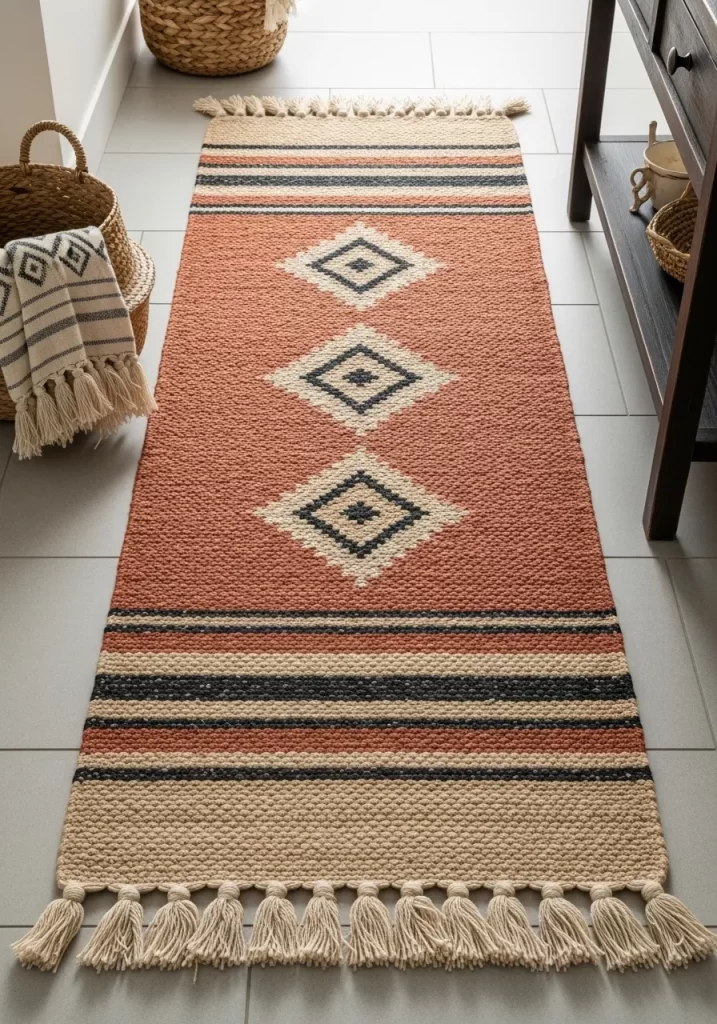
Stop letting a dining area feel drab and lifeless; this circular rug offers a burst of energy and color. The dynamic mid-century design features interlocking circles and half-moons in vivid shades of mustard yellow, teal blue, and cool gray.
Round rugs are especially effective in rooms featuring circular tables, elegantly defining the eating space and ensuring chairs remain comfortable when pulled in and out. The bold palette perfectly complements the rich wood table and the warm tone of the surrounding chairs. This statement piece introduces a playful, artistic structure to any contemporary room. It transforms an ordinary floor into an engaging foundation that truly ties together your dining or kitchen nook design.
DIY Focus: Protecting and Centering a Dining Area Rug
A dining rug needs extra protection from spills and consistent chair movement.
Materials Required
- Stain-resistant spray treatment (suitable for rug material)
- Furniture floor protectors/glides (felt or plastic caps)
- Measuring tape or long straight edge
- Removable adhesive dots or tape (optional for corners)
Equipment Required
- Step ladder (for viewing overhead alignment)
- Handheld cleaning brush
DIY Instruction: Centering Your Dining Room Rug
Centering a round rug beneath a table is essential for aesthetics and function.
- Treat for Protection: Before placing the rug, lay it flat outside or in a well-ventilated garage. Apply the stain-resistant spray according to the product directions, covering the entire surface. This crucial step creates an invisible barrier against inevitable food and drink spills. Allow the rug to dry completely before bringing it inside.
- Establish Center Point: Move the dining table and chairs out of the way. Use your measuring tape to find the absolute center point of the room or the intended dining area. Mark this lightly on the floor with removable chalk or painter’s tape.
- Place the Rug: Line up the center of the circular rug directly over your marked center point. Ensure the rug is flat and smooth, with no bumps or creases.
- Reposition the Table: Carefully bring the table back into the space. The center post or legs of the table should align perfectly with the rug’s center point. This might require two people to avoid dragging the table across the new rug.
- Apply Chair Protection: Lift each dining chair and apply felt floor protectors or furniture glides to the bottom of the legs. This makes pulling the chairs in and out smoother, reducing wear on the rug fibers and minimizing noise.
- Check Coverage: Ensure that when the chairs are pulled out for sitting, all four legs remain fully on the rug. If they consistently slip off, you may need a larger rug size to prevent floor damage and awkward movement.
3. Terracotta and Black Tribal Runner
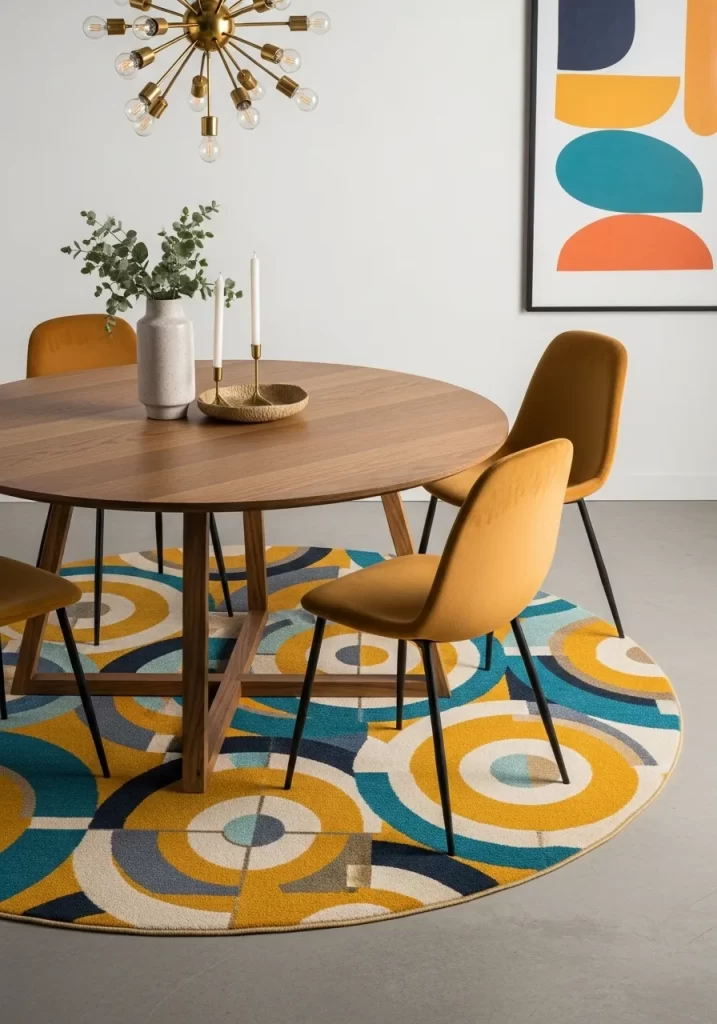
Runners are wonderful for adding personality and warmth to utilitarian spaces like hallways, entryways, and kitchens. This distinctive piece showcases a gorgeous hand-woven aesthetic with its rich terracotta hue and bold, contrasting tribal patterns.
The chunky, alternating bands of black, cream, and burnt orange create visual interest while providing durability. Prominent diamond motifs run down the center, lending a charming, global texture to the space. Beautiful tassels line both ends of the runner, introducing a playful, textural element that softens the look of hard tile floors. The sturdy, tight weave makes this a resilient and stylish choice for high-traffic areas where floor surfaces often feel cold and unwelcoming.
DIY Focus: Adding Grip to a Hallway Runner
Runners in hallways can easily shift and buckle, becoming a tripping hazard. Proper installation is key.
Materials Required
- High-quality, thin non-slip pad (rubber waffle or mesh grip)
- Double-sided rug tape (optional, for extra security)
Equipment Required
- Measuring tape
- Heavy-duty scissors or utility knife
DIY Instruction: Securing a High-Traffic Runner
A secure runner prevents movement, protecting both the rug and your family.
- Measure the Space: Determine the exact length and width of the runner itself. Also, measure the length of the hallway or entryway where it will sit. Ensure your runner leaves a consistent amount of floor visible on all sides for a clean look.
- Cut the Non-Slip Pad: Unroll the non-slip pad and use your measurements to cut it. Remember that the pad should be approximately two to three inches smaller than the rug on all four sides. This keeps the pad completely hidden and prevents it from gathering dust along the edges.
- Place the Pad: Lay the cut pad down in the center of the hallway where the runner will rest. Ensure it is straight and flat against the hard floor surface.
- Apply Tape (Optional): For marble or extremely slick tile, consider applying strips of double-sided rug tape onto the pad before the next step. This provides maximum grip.
- Align the Runner: Carefully lay the runner directly over the non-slip pad. Start from one end and smoothly work your way to the other, ensuring the runner is perfectly straight and centered over the pad.
- Test for Movement: Firmly step along the entire length of the runner. It should not slide or wrinkle beneath your feet. The finished look will be neat, aligned, and substantially safer.
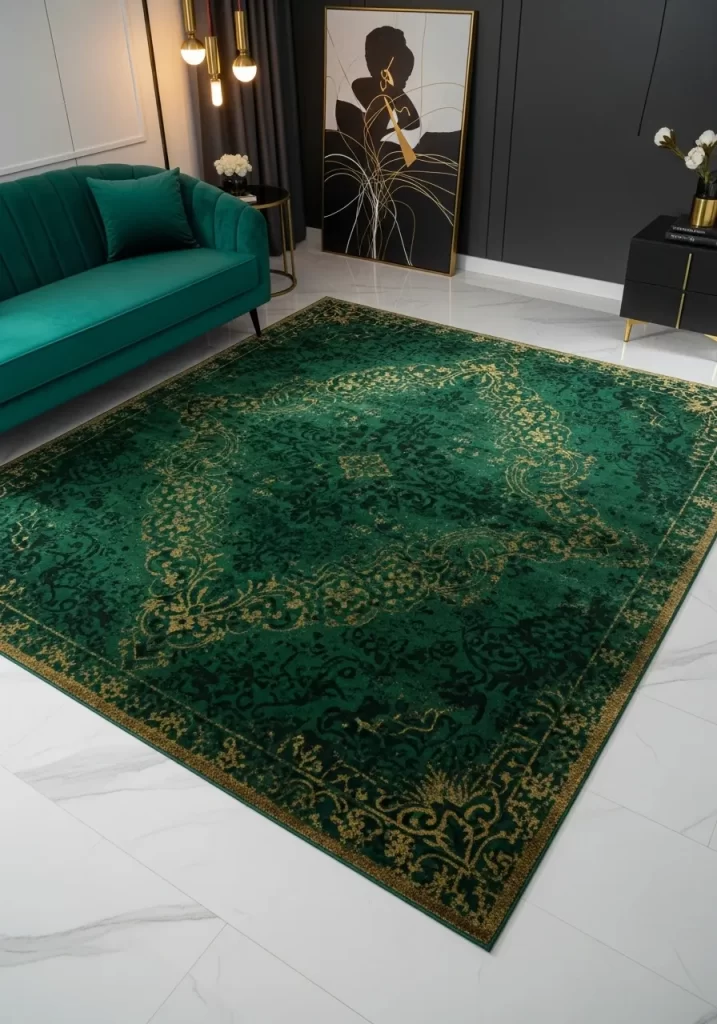
4. Emerald Regal Medallion Rug
This rug is a genuine statement of luxury and richness, instantly evoking the feeling of a sophisticated, high-end sitting room. The deep, captivating emerald green color is beautifully offset by the intricate gold medallion pattern woven throughout the pile.
The traditional design features a heavily detailed central motif surrounded by complementary border work, giving the rug an antique, heirloom quality. Its soft sheen and rich color palette warm up the stark, cold look of large white marble tiles. When paired with plush velvet seating, as seen here, the result is a dramatically styled space full of glamour and depth. This piece effectively anchors the seating arrangement, transforming a bland room into a vibrant, jewel-toned sanctuary.
DIY Focus: Protecting a Dark, High-Contrast Rug from Fading
Dark, rich colors like emerald green can be vulnerable to sun damage, leading to fading over time.
Materials Required
- UV protection window film (clear or lightly tinted)
- Glass cleaner
- Lint-free cloth
Equipment Required
- Spray bottle with water and a drop of dish soap
- Squeegee or credit card (for smoothing film)
- Utility knife or scissors
DIY Instruction: Guarding Against Sun Fading
Protecting textiles from direct sunlight keeps colors vibrant and rich for years.
- Assess Sunlight Exposure: Determine which nearby windows allow direct, intense sunlight to fall onto the rug for prolonged periods during the day. This sun exposure is the primary culprit for color fading.
- Clean the Window: Thoroughly clean the inside surface of the window glass using glass cleaner and a lint-free cloth. Residual dust or streaks will be visible once the film is applied.
- Cut the Film: Measure the size of the window pane and cut the UV protection film accordingly, leaving a small, half-inch border around the edges.
- Apply the Solution: Lightly mist the clean window glass with the water and soap solution. This allows you to slide and position the film before it adheres completely.
- Peel and Position: Carefully peel the backing off the UV film and gently place the sticky side onto the wet glass. Adjust its position until it sits perfectly aligned with the window pane.
- Smooth the Film: Using a squeegee or the edge of a credit card, start from the center and firmly push outward to remove all the water bubbles and creases. Wipe away any excess solution that runs out from the edges. This process drastically reduces harmful UV rays, preserving the rich emerald color of your beautiful rug.
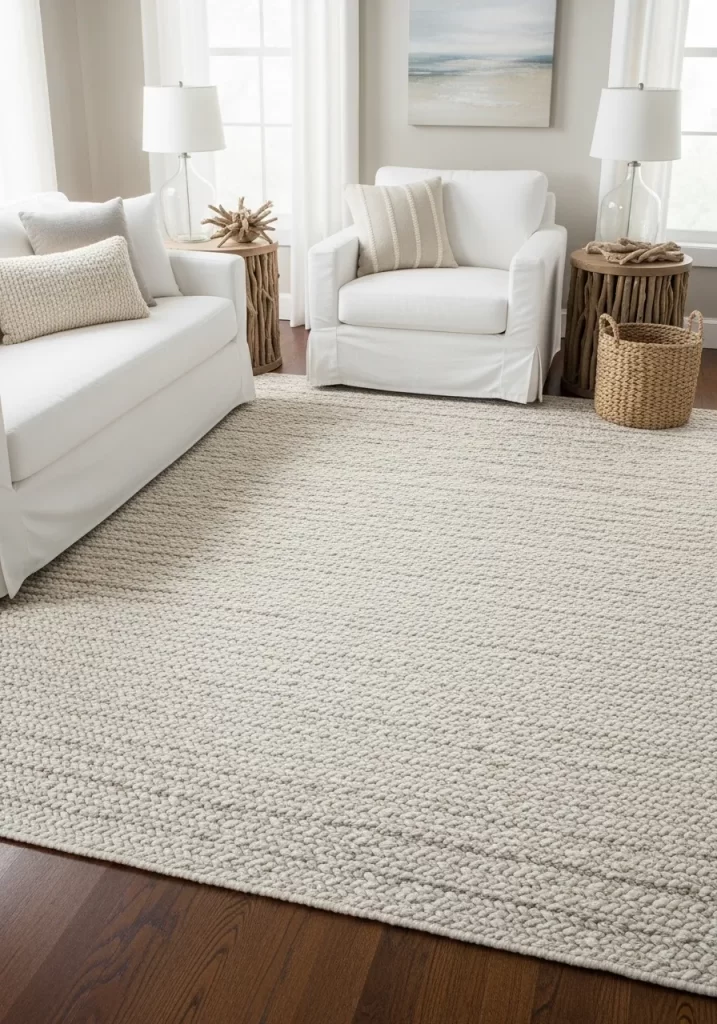
5. Cozy Chunky Hand-Braided Rug
Introduce an unmistakable sense of relaxed, coastal comfort with this chunky, hand-braided area rug. The neutral, off-white and soft gray fibers are woven together to create a durable, textured surface that feels incredibly soft.
Its substantial, large-scale weave adds immediate visual weight and depth to the floor, beautifully contrasting the dark hardwood beneath. This rug is a wonderfully understated foundation for a bright, airy room with natural light and rustic furnishings. The subtle, varied tone provides an anchor without competing with other decorative elements, such as the white slip-covered furniture and driftwood side tables. It’s a versatile choice, offering both warmth and a laid-back sophistication that works perfectly in living rooms and bedrooms alike.
DIY Focus: Simple Refresh for Natural Fiber Rugs
Natural fiber rugs, like braided wool or cotton blends, can sometimes develop a slight “shed” or smell.
Materials Required
- Baking soda
- Essential oil (Lemon or Lavender, optional)
- Clean cloth
Equipment Required
- Vacuum cleaner (with a brush-less floor attachment)
- Sturdy outdoor clothesline or rack (optional)
DIY Instruction: Deep Cleaning and Freshening Your Rug
Simple maintenance keeps your cozy, braided rug looking and smelling fresh.
- The Deep Vacuum: Use your vacuum cleaner set to a high-pile setting and use an attachment that doesn’t have a rotating brush bar, which can snag and damage the braid. Vacuum the rug slowly and thoroughly, making multiple passes in different directions to lift embedded dirt from the chunky weave.
- Apply Baking Soda: Lightly sprinkle an even layer of plain baking soda across the entire surface of the rug. Baking soda is a natural deodorizer that safely absorbs smells and moisture.
- Add Scent (Optional): If you wish to add a fresh scent, place 10-15 drops of your chosen essential oil onto the baking soda layer. This is a gentle, natural way to freshen the space.
- Allow Time to Work: Let the baking soda mixture sit on the rug for a minimum of 30 minutes, but longer (several hours) is better to truly absorb deeply set odors.
- Final Vacuum: Slowly and carefully re-vacuum the rug thoroughly to lift all the baking soda and dirt. The rug will immediately feel and smell cleaner.
- Aerate (Seasonal): If possible, twice a year, hang the rug outdoors on a sunny, dry day for a few hours. This natural aeration is an excellent way to deep-freshen the fibers without harsh chemicals.
6. Abstract Urban Grid Runner
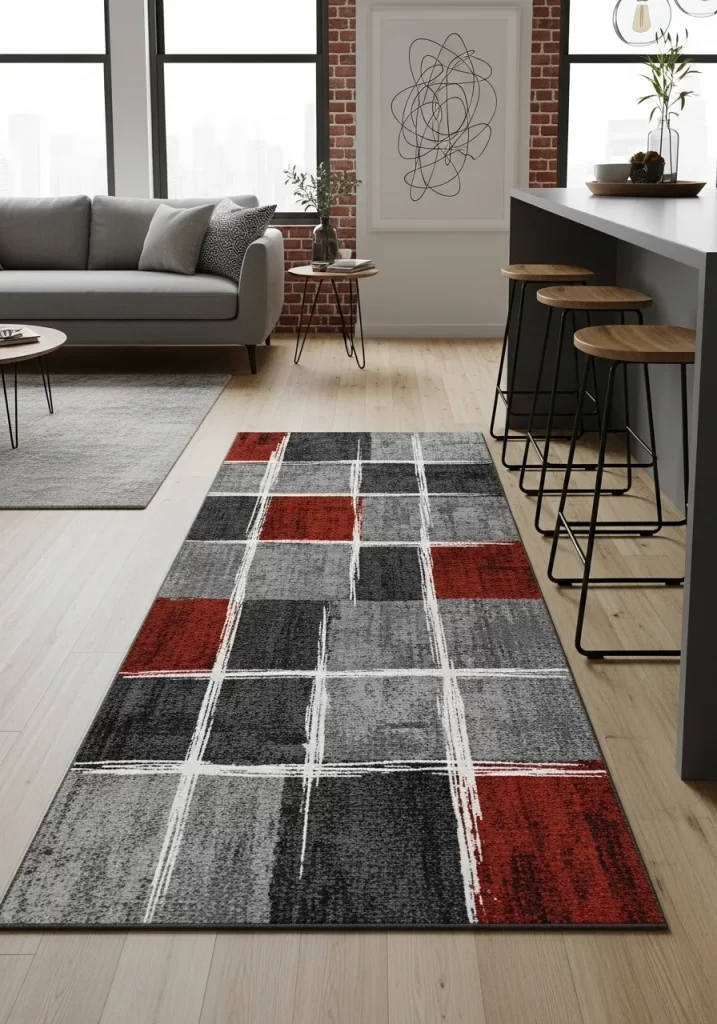
This striking runner introduces a bold, contemporary edge to any open-concept living space or hallway. The design features an energetic, hand-drawn grid pattern composed of thick, expressive white lines.
Squares of varying shades of charcoal gray, deep black, and vibrant burnt red fill the grid, creating a lively, geometric mosaic underfoot. This rug successfully defines the transition between the comfortable living area and the functional bar seating, acting as a visual bridge. Its durable, low pile makes it an astute choice for spots experiencing high foot traffic, offering a dramatic color pop without sacrificing resilience. This runner is certainly not boring—it is a piece of modern art for your floor.
DIY Focus: Seamlessly Merging Two Rug Zones
When one room transitions into another, like the living area rug into the runner, thoughtful placement is necessary to create flow.
Materials Required
- Non-slip pad for the runner (thin rubber mesh)
- Rug pad for the main living area rug (felt/rubber blend)
- Measuring tape
- Painter’s tape
Equipment Required
- Scissors or utility knife
- Level or long straight edge
DIY Instruction: Creating a Defined Transitional Space
This method ensures both rugs look intentional and flow correctly without overlap.
- Prep Both Areas: Clean the floor surfaces where both the main rug and the runner will be placed, ensuring they are free of debris.
- Define the Gap: Use painter’s tape to mark the edge of where the main living area rug will stop. You should leave a small, deliberate gap of exposed floor (usually 6-12 inches) between the two rugs for a clean, professional look.
- Position the Main Rug: Lay down the rug pad and then the large area rug in the living space. Ensure its edge is straight and aligns with your initial tape mark.
- Place the Runner Pad: Measure the runner’s length and width. Trim the runner’s non-slip pad so it is two inches smaller than the runner on all sides. Lay this pad down, ensuring the edge closest to the main rug maintains the desired gap distance.
- Align the Runner: Carefully lay the runner directly over the non-slip pad. Start from one end and smoothly work your way to the other, ensuring the runner is perfectly straight and centered over the pad.
- Secure the Edges: Gently press down on the edges of the runner to adhere it to the non-slip pad. The resulting visual gap clearly defines each zone while the color palette keeps the overall design cohesive.
7. Vintage Floral Patchwork Rug
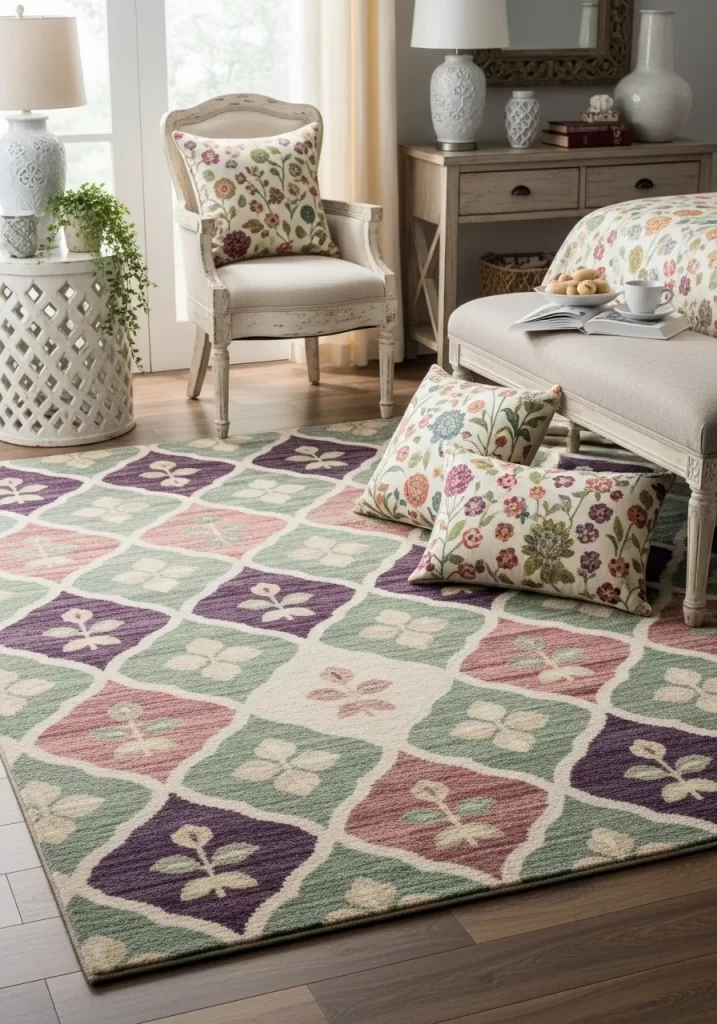
This charming rug beautifully combines a classic floral motif with a contemporary patchwork grid, making it an excellent addition to a farmhouse or shabby-chic setting. The design features a delicate, repetitive pattern of stylized flowers and leaves contained within contrasting diamond-shaped squares.
The color story is soft and romantic, blending gentle sage green, muted mauve, and rich amethyst purple. This inviting palette coordinates perfectly with the upholstered seating and floral print pillows, creating a cohesive, peaceful atmosphere. The slightly distressed look adds an aged, comforting feel to the hard wood floors. This floor covering acts as a lovely soft landing, bringing garden charm and comforting color depth to a serene sitting room or bedroom.
DIY Focus: Keeping Upholstery from Damaging the Rug
The heavy legs of furniture can crush the rug pile and create permanent indentations, especially over time.
Materials Required
- Clear rubber or plastic furniture coasters/cups
- Heavy-duty felt furniture pads (optional)
Equipment Required
- Measuring tape
- Vacuum cleaner
DIY Instruction: Preventing Pile Crush from Furniture
Protecting the rug pile ensures longevity and avoids unsightly damage.
- Establish Placement: Vacuum the rug thoroughly and ensure it is placed exactly where you want it to anchor the seating area.
- Lift and Apply: With assistance, gently lift one piece of heavy furniture (like the chair or console) at a time. Do not drag the furniture.
- Install Protectors: Place a rubber or plastic coaster directly under each leg of the furniture that rests on the rug. Alternatively, for lighter pieces, large, thick felt pads work well to distribute the weight. Use clear protectors where possible to keep them hidden.
- Check for Level: Ensure all pieces of furniture feel stable and level after applying the protectors. The goal is to evenly distribute the substantial weight across the rug fibers and prevent the sharp edges of the furniture legs from crushing the pile down to the backing.
- Routine Maintenance: During regular vacuuming, gently move the coasters slightly out of the way, fluff the rug fibers beneath them with your fingers, and then replace the coasters. This simple action helps the pile recover its shape.
8. High-Pile Black and White Grid Rug
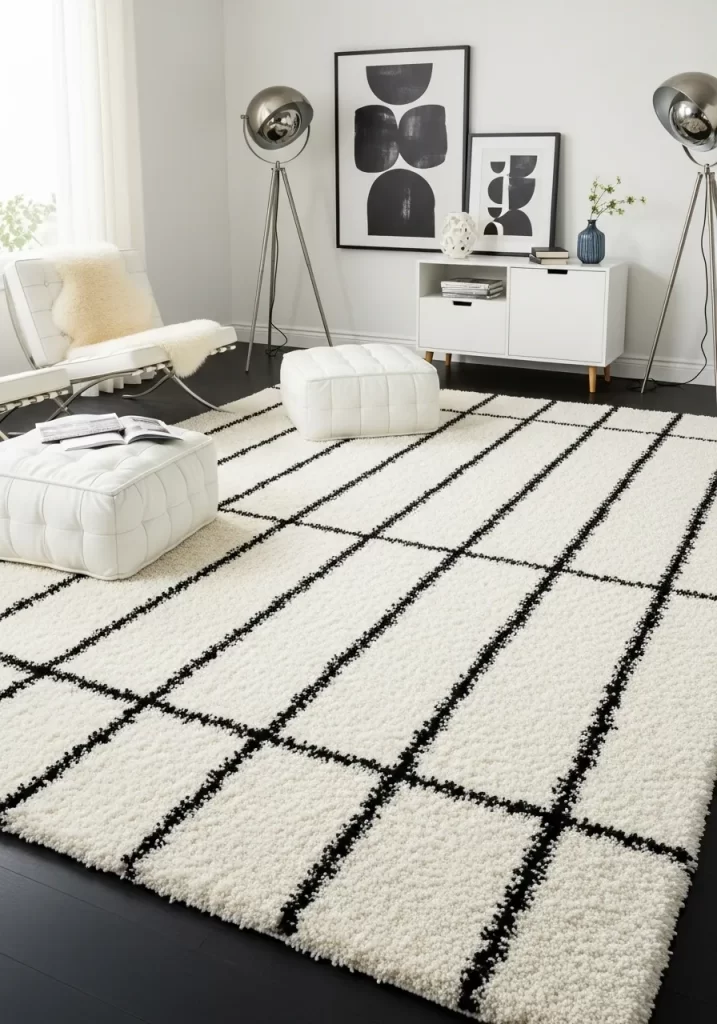
For rooms needing a clean, minimalist yet cozy foundation, this black and white shag rug is an absolute standout. The luxurious, deep pile feels wonderfully soft, offering incredible warmth and texture against a dark floor.
A sharp, simple black grid design is layered over the creamy white, highly textured shag fibers. This striking contrast is dynamic without being overwhelming, perfectly complementing the modern, high-contrast decor—from the white leather poufs to the streamlined cabinetry. This rug powerfully grounds the sleek, minimalist furniture, effectively defining the lounging zone. It provides a bold, graphic element that keeps the monochrome space interesting and inviting, moving the floor far beyond basic utility.
DIY Focus: Restoring and Fluffing a Shag Rug Pile
Deep-pile shag rugs are prone to matting and losing their initial loft over time, especially in walked-on areas.
Materials Required
- Wide-tooth comb or a rug rake tool
- Baking soda (optional, for freshening)
Equipment Required
- Vacuum cleaner (using the hose attachment only)
DIY Instruction: Maintaining the Shag Pile’s Loft
Simple techniques restore the luxurious bounce of a high-pile rug.
- Deodorize (Optional): If the rug needs freshening, sprinkle a light layer of baking soda over the entire surface. Allow it to sit for at least an hour before proceeding.
- Vacuum Carefully: Instead of using the heavy upright vacuum head, which can damage and pull the fibers, use the hose attachment only. Gently “float” the hose over the surface to suck up the baking soda (if applied) and any loose debris from the top layer of the fibers.
- Spot Fluffing: Identify areas where the pile looks flattened, usually around the edges of furniture or heavy foot paths.
- Use the Rug Rake: Starting at one end, gently use the wide-tooth comb or rug rake tool to vertically lift and separate the individual fibers. Do this systematically across the entire rug surface. This manually reintroduces air into the fibers, restoring the beautiful, plush loft.
- Avoid Steam: Never use a steam cleaner on shag rugs, as the moisture can damage the backing and the heat can cause synthetic fibers to melt or harden. Stick to manual fluffing and spot cleaning.
9. Psychedelic Rainbow Shag Rug
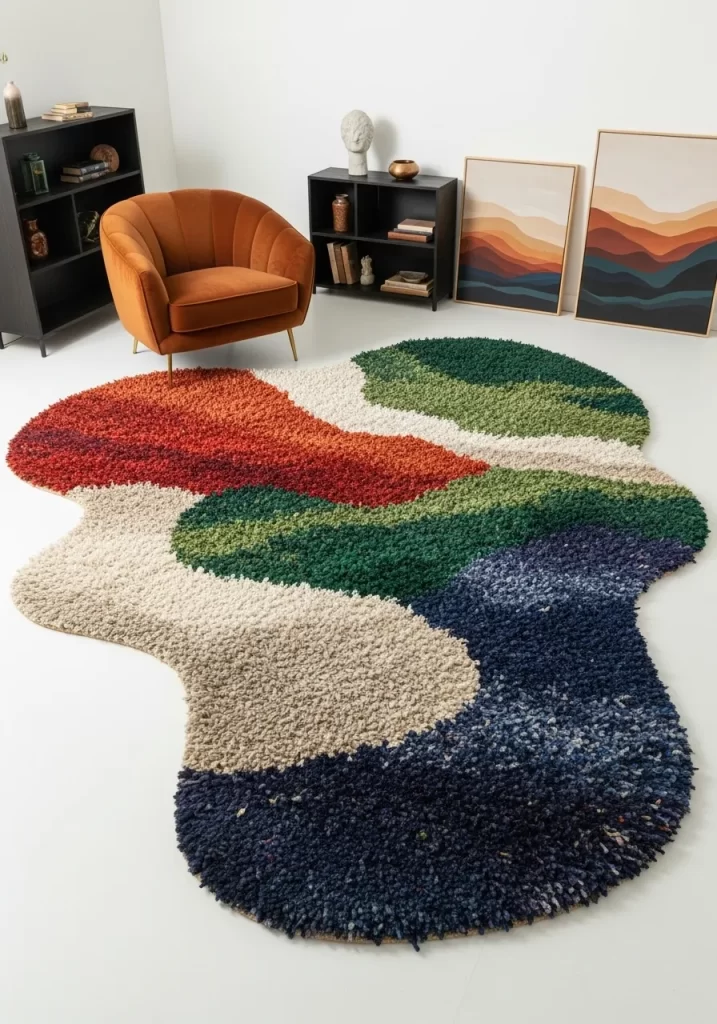
Throw out the rulebook with this spectacularly fun, freeform rug that rejects conventional shape and color. The design features large, undulating waves of deep shag pile in an incredible spectrum of rich, saturated hues—from fiery red and orange to moss green and oceanic blue.
This piece is a maximalist’s dream, serving as a huge, colorful exclamation point in a simple room. Its unusual, amoeba-like shape beautifully breaks up the severity of the white floor and dark furniture, injecting a playful energy. The deep texture is immensely inviting, suggesting cozy relaxation and bold self-expression. Place this rug in a lounge, studio, or children’s play area to guarantee smiles and make the room an unforgettable, artistic centerpiece.
DIY Focus: Creating a Cohesive Design Scheme with Bold Color
The challenge with a rug this colorful is ensuring the room still feels balanced, not chaotic.
Materials Required
- Small paint samples (matching one or two main rug colors)
- Throw pillows or blankets (matching rug colors)
- Artwork or decorative vases (in coordinating colors)
Equipment Required
- None (focusing on decorative coordination)
DIY Instruction: Balancing a High-Impact Rug
Bold rugs need thoughtful surrounding elements to tie the entire room together.
- Choose Anchor Colors: Select two or three dominant colors from the rug’s palette (e.g., the burnt orange and the deep green). These are your visual anchors for the rest of the room.
- Select Artwork: Find artwork that uses similar tones but maybe in a slightly more subdued fashion, as demonstrated by the landscape pieces in the image. This repetition makes the rug’s colors feel intentional.
- Use Key Furniture: The velvet orange chair is an excellent example of using furniture to pull one of the rug’s most prominent colors up into the room. If your furniture is neutral, add color through accessories.
- Accessorize Thoughtfully: Purchase throw pillows, a small lamp base, or decorative objects in your chosen anchor colors. Distribute these items around the room, making sure they are not all clumped together.
- Maintain Neutrality Elsewhere: Keep the walls, main shelving, and ceiling a simple, neutral color (like white, gray, or black) to prevent the rug from feeling overwhelming. This contrast allows the rug’s color to truly pop.
- Avoid Clashing Patterns: Since the rug is so busy, avoid introducing other loud, competing patterns in curtains or large upholstery. Stick to solid colors and simple textures to allow the floor to remain the star.
10. Mosaic Octagonal Grand Entry Rug
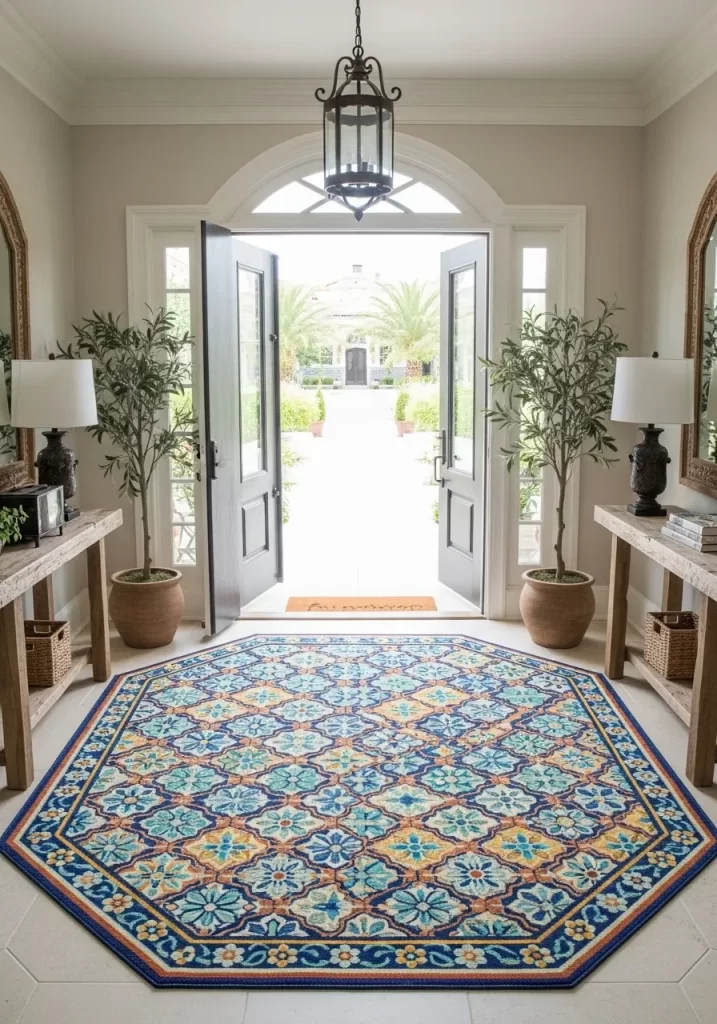
Make a profound first impression right at the front door with this remarkable octagonal rug. Its unique eight-sided shape immediately draws the eye, perfectly mirroring the archway and setting a truly grand, customized tone for the entryway.
The vibrant design showcases an elaborate mosaic of geometric and floral motifs, characteristic of Mediterranean or Spanish tile work. A rich palette of blues, turquoise, and sunny yellow creates a warm and sophisticated welcome. Unlike typical rectangular mats, the octagon introduces soft angles that complement the flow of the space. This durable rug is an astounding way to protect the underlying tile floor while instantly injecting personality and warmth into a large, cold foyer.
DIY Focus: Installing a Unique Shaped Rug in a Grand Entryway
For unique shapes like an octagon, precise centering in a large space is vital for a high-end look.
Materials Required
- Non-slip rug pad (cut to octagon shape, slightly smaller)
- Measuring tape
- Removable chalk or painter’s tape
- Vacuum cleaner
Equipment Required
- Long straight edge or level (optional)
DIY Instruction: Achieving Precision Centering
Symmetrical placement is crucial when a rug acts as the main focal point upon entry.
- Find the Room’s Center: Use your measuring tape to find the center point of the entryway floor. Measure from wall to wall and mark the halfway point in both directions. The intersection is the dead center.
- Create Guidelines: From the center point, use painter’s tape to create two perpendicular lines (an ‘X’) extending out to the corners or side walls. This serves as a precise guide for aligning the rug’s edges.
- Prepare the Pad: Cut your non-slip pad into an octagonal shape, ensuring it is 2-3 inches smaller than the rug on all sides. Lay the pad down, aligning it precisely with your center point and guidelines.
- Place the Rug: Carefully unroll and center the octagonal rug over the pad. The key is to make sure the main axis of the rug pattern aligns perfectly with the center lines you marked.
- Check Edges: Stand back into the doorway and ensure the reveal of the surrounding floor is even and consistent on all eight sides. Minor adjustments should be made carefully.
- Enjoy the Symmetry: The finished result is a perfectly centered, visually stunning rug that makes a statement of intentional design right at the threshold of your home.
11. Modern Minimalist Kitchen Runner
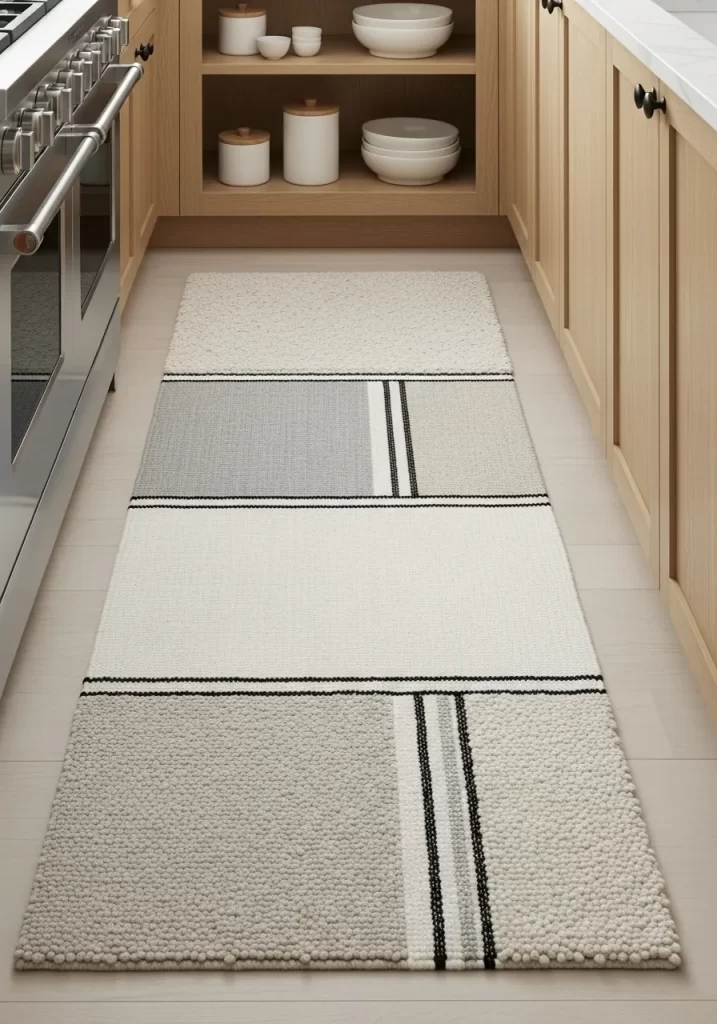
This sophisticated runner is an excellent example of how to bring contemporary design into a utilitarian space like the kitchen. It features clean, balanced blocks of color, combining off-white, light gray, and textural mottled gray.
Strong black and white striped details strategically interrupt the neutral blocks, adding a compelling, graphic structure. The blend of textures, from the flat woven middle to the nubby, felted ends, offers both visual interest and practical durability. Its low-profile construction is especially useful in front of cabinetry and appliances, ensuring doors and drawers open without obstruction. This piece elevates a simple kitchen floor, providing warmth and style while defining the workspace between the counter and the stove.
DIY Focus: Keeping a Kitchen Runner Clean and Flat
Kitchen rugs face constant moisture, grease, and foot traffic, requiring specific cleaning and securing techniques.
Materials Required
- Machine-washable, thin non-slip pad
- Mild liquid dish soap or delicate laundry detergent
- White vinegar
- Microfiber towel
Equipment Required
- Washing machine (confirm rug care label allows)
- Clothesline or drying rack
- Scrub brush (for spot cleaning)
DIY Instruction: Cleaning and Securing a Washable Kitchen Runner
Easy maintenance is essential for rugs in high-splatter zones.
- Vacuum Daily: Use the hose attachment to vacuum the runner daily, paying attention to the edges that trap crumbs. Quick removal of debris prevents stains from setting.
- Immediate Spot Treatment: If a spill (like sauce or oil) occurs, blot the area immediately with a clean, dry cloth. Do not rub. Use a drop of mild dish soap diluted in water and gently scrub the spot with a soft brush, then rinse with water and a tiny bit of white vinegar to cut grease.
- Secure with a Pad: Lay the runner’s thin, machine-washable non-slip pad down first. Kitchen runners must be completely flat to prevent trips while carrying hot items. Trim the pad so it is two inches smaller than the runner all around.
- Full Wash Cycle: When the entire rug needs cleaning, follow the care label. Usually, this runner style can be washed on a cold, delicate cycle with a mild detergent.
- Air Dry Only: After washing, never put the runner in the dryer, as this can damage the backing and cause shrinkage. Hang it outside or drape it over a rack to air dry completely before returning it to the kitchen floor.
12. Monochromatic Buffalo Plaid Runner
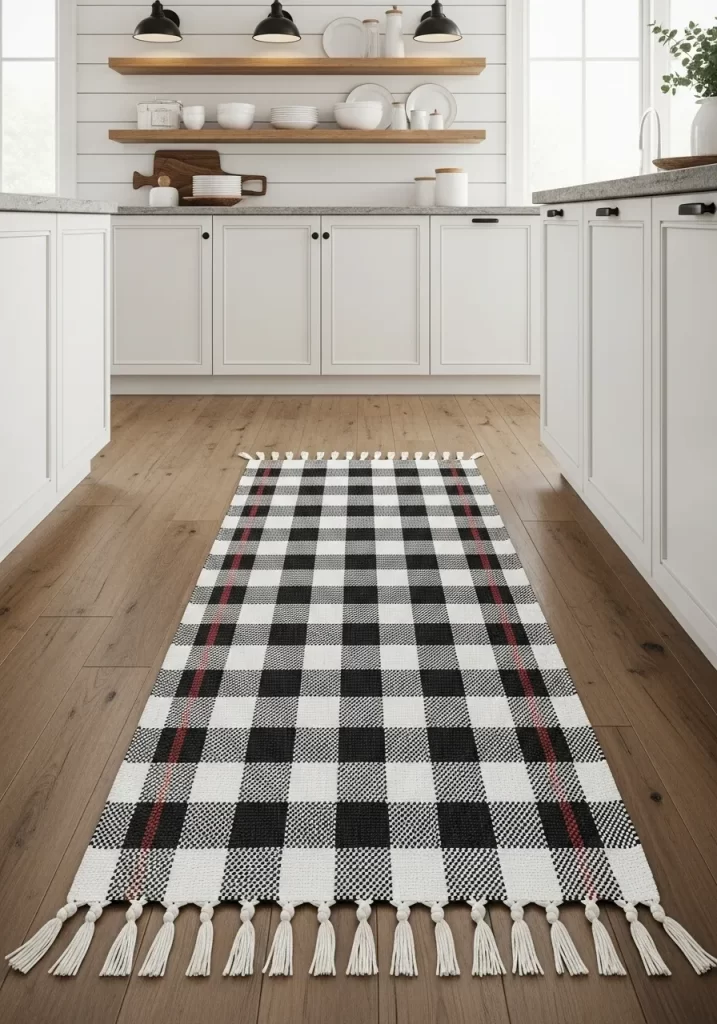
Inject a cozy farmhouse or modern rustic sensibility into your home with this charming Buffalo Plaid runner. The timeless pattern uses high-contrast black and white squares, woven together to create a distinctive checkerboard effect.
A fine, subtle line of red is woven in occasionally, adding just a whisper of color interest and visual warmth to the design. Generous, chunky tassels finish the ends, lending a playful, hand-crafted touch. This durable, flat-woven runner is an exceptional choice for hardwood kitchen floors, effortlessly complementing the white cabinetry and light wood tones. It offers a soft landing pad in front of the sink or stove while creating a welcoming, familiar style that instantly makes a kitchen feel warmer and more inviting.
DIY Focus: Protecting Floor from Kitchen Spills Under the Rug
A kitchen rug pad should protect the floor beneath from water and moisture damage, particularly near the sink.
Materials Required
- Rubber-backed, moisture-resistant rug pad
- Mild soap and water
- Cleaning cloth
Equipment Required
- Utility knife or sturdy scissors
- Measuring tape
DIY Instruction: Creating a Moisture Barrier for Hardwood
Water damage is a common issue in kitchens; protecting the floor is a priority.
- Measure and Cut Pad: Measure the runner. Use a utility knife to cut the moisture-resistant, rubber-backed rug pad, making it 2 inches smaller on all sides than the rug itself.
- Clear the Area: Move the rug and clean the hardwood floor thoroughly. Ensure the area is completely dry before placing the pad.
- Lay the Barrier: Place the cut rubber-backed pad on the floor. The rubber layer should face the hardwood floor to provide grip and act as a water barrier.
- Place the Runner: Carefully position the Buffalo Plaid runner on top of the pad, ensuring it is centered.
- Routine Check: Every three to four months, or immediately after a large spill, roll up the runner and its pad. Check the hardwood floor beneath for any trapped moisture or standing water. Wipe the floor dry before replacing the pad and rug. This simple check prolongs the life of your floor.
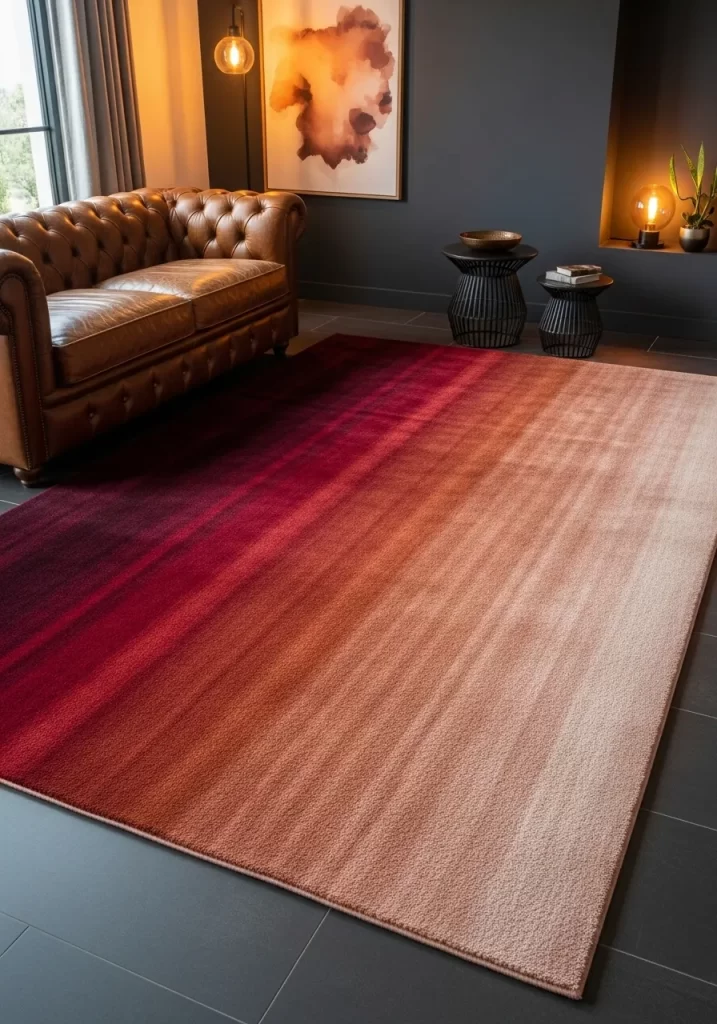
13. Deep Ombré Ruby Gradient Rug
This rug is pure drama, offering a sophisticated wash of color that instantly creates a moody, luxurious atmosphere. The design features a stunning ombré effect, fading seamlessly from a deep, velvety burgundy and rich ruby red to a soft, barely-there blush pink.
The subtle linear texture running horizontally gives the color transition a feeling of depth and movement, resembling a sweeping sunset. This rug provides crucial warmth against the cool, dark tile floor and deep charcoal walls. It anchors the plush leather Chesterfield sofa, effectively defining the high-end reading or conversational lounge. This statement piece introduces both color and texture, making the room feel enclosed, intimate, and decidedly warm despite the dark surroundings.
DIY Focus: Enhancing the Luxurious Feel with Padding
A luxurious rug deserves an equally luxurious feel underfoot, which is achieved through high-quality padding.
Materials Required
- Thick, high-density felt rug pad (1/4 to 1/2 inch thickness)
- Measuring tape
- Utility knife
Equipment Required
- None
DIY Instruction: Maximizing Comfort and Insulation
Adding a quality felt pad enhances the rug’s insulating qualities and soft feel.
- Measure and Cut: Measure the exact dimensions of the ombré rug. Use the utility knife to cut the thick felt pad 3 inches inside the perimeter of the rug. A thick pad needs to be well-hidden to avoid an obvious bulge.
- Clean the Floor: Vacuum the hard tile floor thoroughly, making sure there is no trapped grit that could compress into the pad or scratch the floor.
- Lay the Pad: Place the thick felt pad in the exact location where the rug will rest.
- Position the Rug: Carefully unroll the heavy rug over the pad. The thickness of the pad adds significant cushioning and insulation, making the room feel warmer, quieter, and far more opulent.
- Enjoy the Cushion: Step on the rug to feel the difference. The increased density of the combined layers will also help dampen sounds, contributing to the room’s overall intimate and cozy atmosphere.
14. Mod Abstract Primary Color Rug
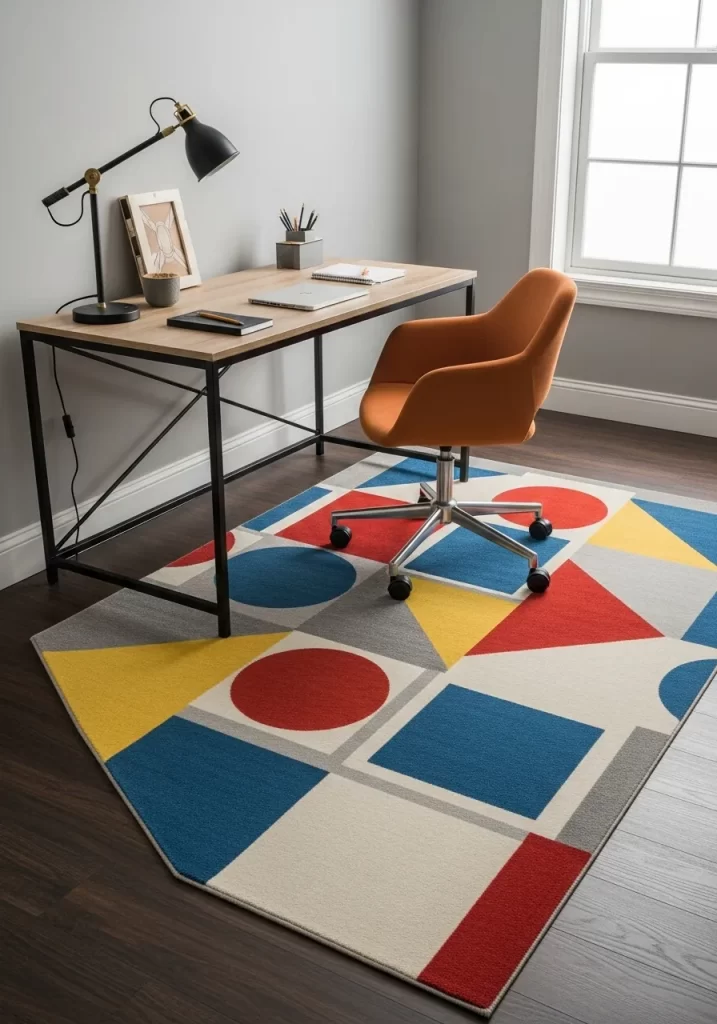
Add an instant jolt of retro energy to a workspace with this bold, abstract geometric rug. Inspired by mid-century modern art movements, it features large, interlocking blocks of primary colors—vibrant red, sunny yellow, and striking blue—set against neutral white and gray fields.
The shapes, including circles, squares, and triangles, are intentionally juxtaposed, creating a playful yet structured foundation for the office. The hard corners are softened by a cut-off corner detail, allowing the rug to tuck neatly into the room without jutting out unnecessarily. This rug effectively anchors the small desk and bright orange chair, providing a visually stimulating environment that breaks up a potentially dull work area. It is a stunning way to incorporate color without commitment, making the floor the most inspiring element of the room.
DIY Focus: Protecting Carpeted Floors from Rolling Office Chairs
If this rug is placed over existing carpet, a different type of protection is needed beneath the chair wheels.
Materials Required
- Clear vinyl or polycarbonate chair mat (office floor protector)
- Rug pad (if placing on hardwood)
Equipment Required
- Measuring tape
DIY Instruction: Preserving Rug Fibers Under Wheels
Rolling chairs can quickly damage or compress rug fibers, shortening their lifespan.
- Assess the Wear: Look at where the chair casters typically roll—this area needs protection. If the entire rug is used as a chair mat, it will wear out quickly.
- Purchase a Mat: Acquire a clear vinyl or polycarbonate mat designed specifically for rolling office chairs. Ensure the mat is large enough to cover the entire area where the chair moves, even when rolling back from the desk.
- Place the Mat: Position the protective mat directly on top of the geometric area rug, centering it beneath the desk chair. The mat’s smooth surface allows the chair to glide easily, reducing strain on the rug fibers.
- Alternative (Hardwood): If the rug is on hardwood, ensure the rug pad is secure, then place the clear chair mat on top. This is the only way to effectively prevent long-term damage from concentrated wheel pressure and friction.
- Routine Lift: Periodically lift the chair mat to vacuum the rug beneath it, removing any trapped debris that could rub against the fibers and cause premature wear.
15. Plush Dusty Rose Fluted Rug
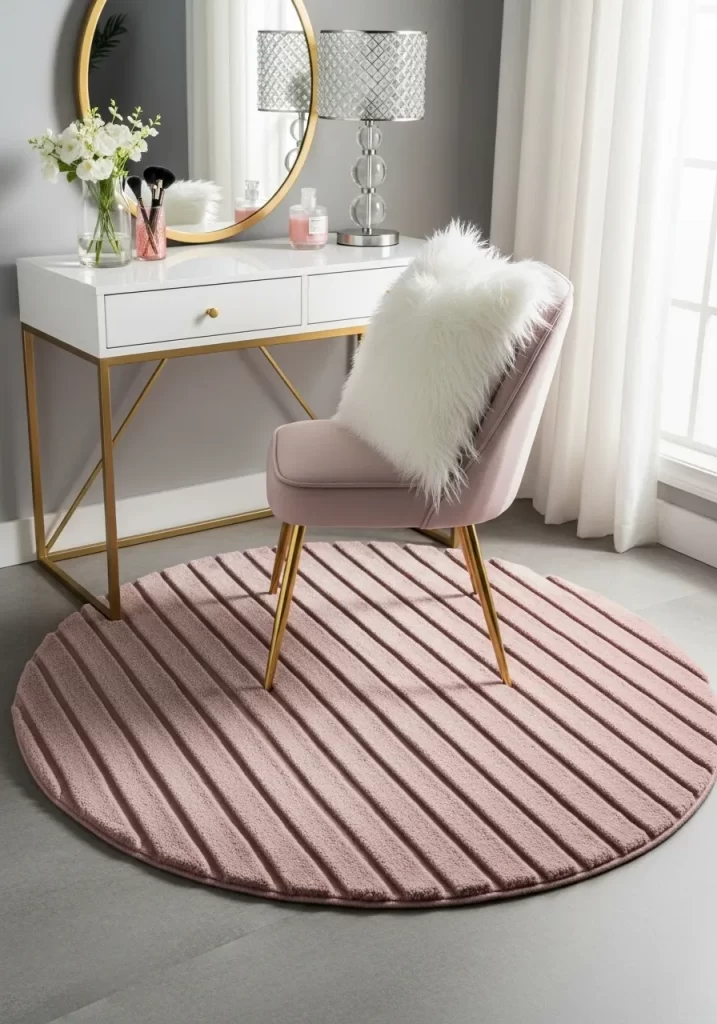
Introduce a touch of unapologetic femininity and glamour to a dressing area or vanity with this beautiful, round dusty rose rug. The gentle color is soothing and complements the gold accents of the furniture and mirror beautifully.
What truly distinguishes this piece is the textural effect: thick, carved lines run diagonally across the surface, giving the rug a contemporary fluted or ribbed look. This subtle texture adds depth and tactile interest that a plain rug cannot match. The circular shape perfectly frames the vanity chair, defining a dedicated self-care zone while providing a soft, warm landing for bare feet. This is a wonderfully stylish accessory that elevates a simple corner into a curated, stylish sanctuary.
DIY Focus: Adding Scent to a Bedroom or Vanity Rug
Creating a signature scent adds an extra layer of luxury and ambiance to a dressing area.
Materials Required
- Baking soda
- Essential oil (Rose, Vanilla, or Linen Scent)
- Small, sealed container
Equipment Required
- Sifter or fine mesh strainer
- Vacuum cleaner
DIY Instruction: Infusing Your Rug with Scent
A gently scented rug contributes beautifully to a peaceful, personal space.
- Prepare the Scent Powder: Fill the small, sealed container with baking soda. Add 15-20 drops of your preferred essential oil and mix thoroughly. Let the mixture sit overnight to fully absorb the fragrance.
- Apply Gently: Using the sifter, lightly dust the fragrant baking soda evenly over the entire surface of the dusty rose rug. A light layer is sufficient; avoid clumping.
- Allow Time to Absorb: Leave the scented powder on the rug for at least one hour, or longer if possible. This allows the odor-absorbing qualities to work while infusing the scent into the fibers.
- Vacuum Clean: Use your vacuum cleaner to thoroughly remove all traces of the baking soda mixture. You should be left with a soft, clean rug that emits a subtle, relaxing fragrance, enhancing the vanity space experience.
- Repeat as Needed: Repeat this simple process every few weeks to maintain the light, pleasant aroma.
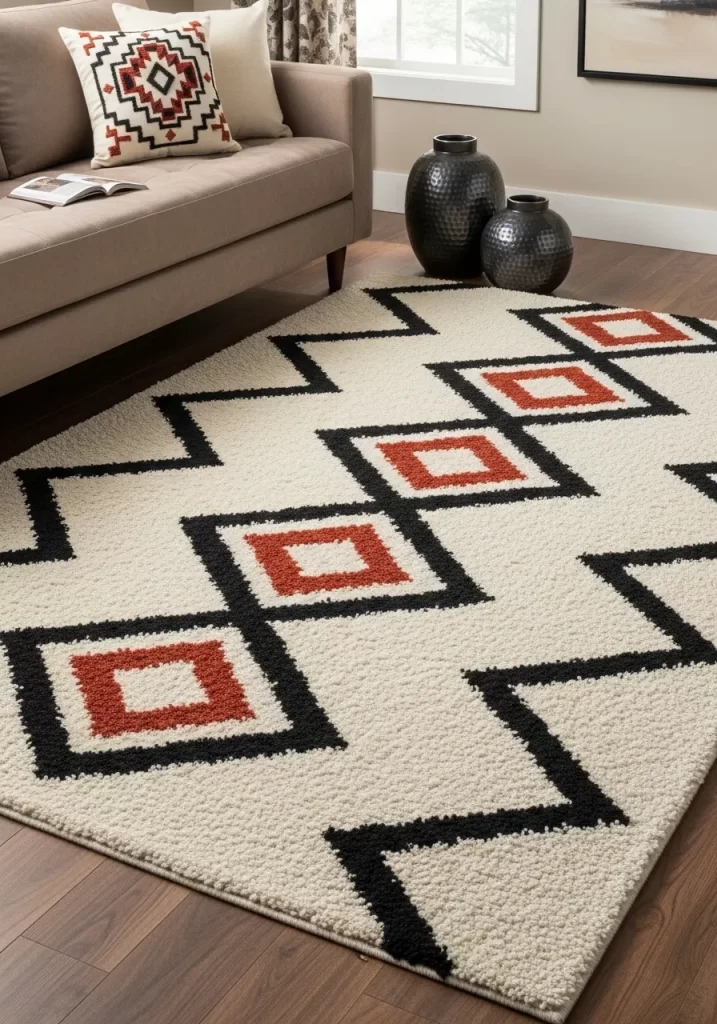
16. Contemporary Southwest Diamond Rug
This rug expertly blends a chunky, inviting texture with a structured, graphic pattern inspired by Southwestern and tribal textiles. The creamy, high-pile background provides softness and warmth against the dark wood floor.
Sharp zig-zagging lines of black create a distinct path across the surface, which is interrupted by striking geometric diamonds framed in terracotta red. The restrained color palette of cream, black, and rust ensures the rug remains sophisticated while adding a strong visual interest that complements the neutral sofa and patterned toss pillow. This rug is a marvelous way to anchor a neutral living space, introducing texture and an exotic visual rhythm that defines the sitting area with style and comfort.
DIY Focus: Removing Deep Indentations from Furniture
After furniture has sat on a rug for a long time, dents can remain when the furniture is moved.
Materials Required
- Ice cubes
- Stiff brush or spoon
Equipment Required
- Vacuum cleaner
- Hair dryer
DIY Instruction: Lifting Crushed Pile Fibers
Restoring the pile in compressed areas is surprisingly easy with moisture and heat.
- Place the Ice: Lay a single ice cube directly into the center of each indentation left by the furniture leg. Allow the ice to melt completely, which usually takes about 30 minutes. The melting water will slightly swell the compressed synthetic fibers.
- Blot Excess: Gently blot up any excess water using a clean, dry cloth. Do not rub the spot.
- Brush the Pile: Use a stiff brush or the back of a spoon to gently lift and fluff the dampened rug fibers back into a vertical position. Use light, circular motions.
- Apply Heat: Set your hair dryer to a low-heat setting and hold it several inches above the spot. While gently brushing, warm the fibers. The combination of brushing and low heat encourages the pile to stand back up, removing the noticeable dent.
- Final Fluff: Once dry, give the entire area a quick, gentle vacuum to ensure the newly lifted fibers blend seamlessly with the surrounding pile.
17. Artistic Fiddle Leaf Nursery Rug

This beautiful, round rug introduces a fresh, botanical element perfect for a nursery or sun-filled reading nook. The crisp white background provides a clean, neutral foundation that maximizes the natural light.
Delicate, continuous green line work depicts rambling fiddle-leaf fig branches and leaves, giving the rug a sophisticated, modern, nature-inspired feel. The circular shape works well in this bright space, framing the area defined by the two large potted plants and the crib. This rug avoids cliché nursery patterns, instead offering a peaceful, airy aesthetic that is both calming and charming. It is a soft, grounding piece that brings the relaxing feel of the outdoors inside.
DIY Focus: Easy Cleaning of Spills in a Nursery
Nursery rugs face frequent spills from bottles, food, and other liquids, requiring immediate, gentle action.
Materials Required
- Warm water
- Clear, non-bleach dish soap
- White vinegar
- Clean, white microfiber towels
Equipment Required
- Spray bottle
DIY Instruction: Handling Wet and Food Spills Gently
Quick response to spills is essential to prevent staining on a light-colored rug.
- Act Immediately: When a spill occurs, first use a dry white towel to blot up as much of the liquid as possible. Press hard and lift; never rub, as rubbing forces the spill deeper into the fibers.
- Make Cleaning Solution: In a spray bottle, mix 1 teaspoon of clear dish soap with 1 cup of warm water and 1 tablespoon of white vinegar (the vinegar helps neutralize odors and set stains).
- Apply and Blot: Lightly spray the cleaning solution directly onto the stained area. Immediately blot the area again with a fresh, clean, white towel until the liquid is absorbed. Repeat this spray-and-blot process until the stain is lifted.
- Rinse Thoroughly: Blot the cleaned area using a towel dampened only with clean water. This step is crucial to remove all traces of soap, which can attract dirt later.
- Air Dry: Ensure the area is completely dry before walking on it. Place a fan nearby if needed to speed up the drying process.
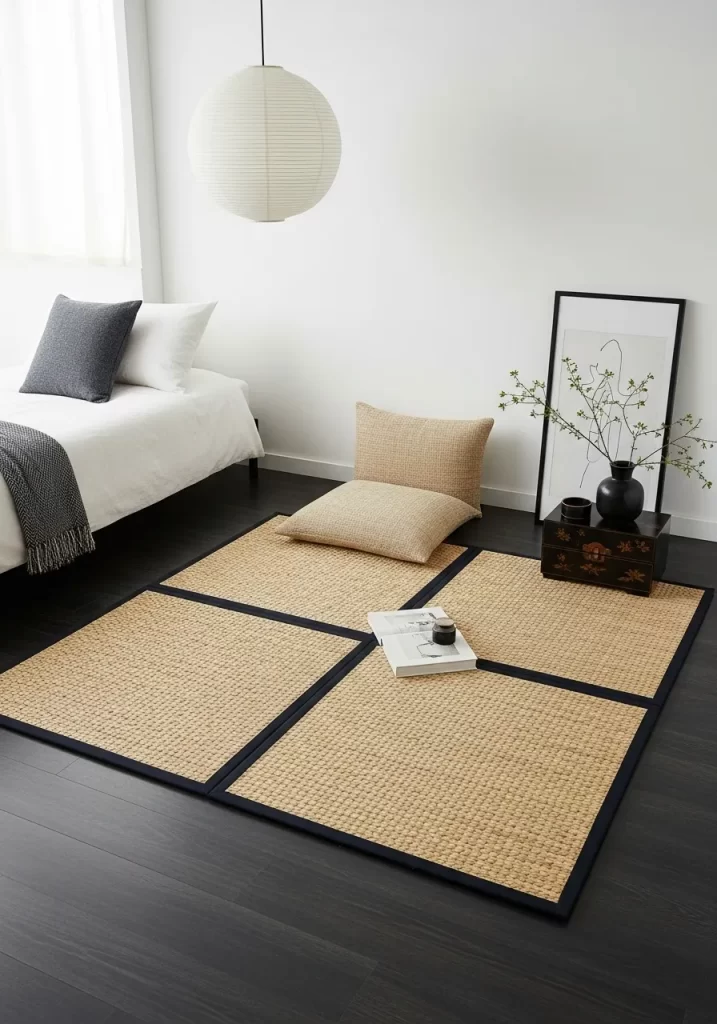
18. Japanese-Style Tatami Floor Mats
For a unique way to define a minimalist, calming zone, consider these modular Japanese-style floor mats. Made from natural woven rush or similar straw, they offer a textured, earthy feel that contrasts beautifully with the dark hardwood floor.
The mats are trimmed with simple black fabric borders, defining the individual square sections and creating a clean, structured aesthetic. These mats are traditionally used for sitting or sleeping, immediately suggesting an atmosphere of peace, simplicity, and low-profile living. Placing them in a corner instantly creates a dedicated space for meditation, reading, or tea. This functional floor covering offers a striking, cultural alternative to traditional rugs, bringing a quiet sense of structured tranquility into the bedroom or study.
DIY Focus: Seasonal Cleaning and Sunning of Natural Fiber Mats
Natural fiber mats benefit greatly from aeration and sun exposure to stay fresh and mildew-free.
Materials Required
- Dry, clean cloth
- Baking soda (optional, for odor absorption)
Equipment Required
- Vacuum cleaner with brush-less attachment
- Sunny, dry outdoor space or porch
DIY Instruction: Freshening Natural Woven Mats
Natural mats need specific care to prevent moisture buildup and keep them smelling fresh.
- Gentle Vacuuming: Use a vacuum with a soft brush or the hose only on a low setting. Vacuum the top surface gently to remove dust and debris trapped in the weave.
- The Sun Treatment: At least once every six months, on a dry, non-humid, sunny day, carry the mats outside. Prop them up vertically or lay them flat in the sun.
- Allow Aeration: Let the mats sit in direct sunlight for 2-4 hours. The sunlight acts as a natural sanitizer, killing mildew spores and helping to dissipate any moisture or musty odors. Flip the mats halfway through to expose both sides.
- Wipe Down: Before bringing them back inside, use a dry, clean cloth to wipe down both sides, removing any surface dust.
- Avoid Moisture: Never steam clean or saturate natural fiber mats with water, as this can cause them to swell, warp, and grow mildew. Spot clean only with minimal moisture and dry immediately.
19. Jackson Pollock-Inspired Splatter Rug
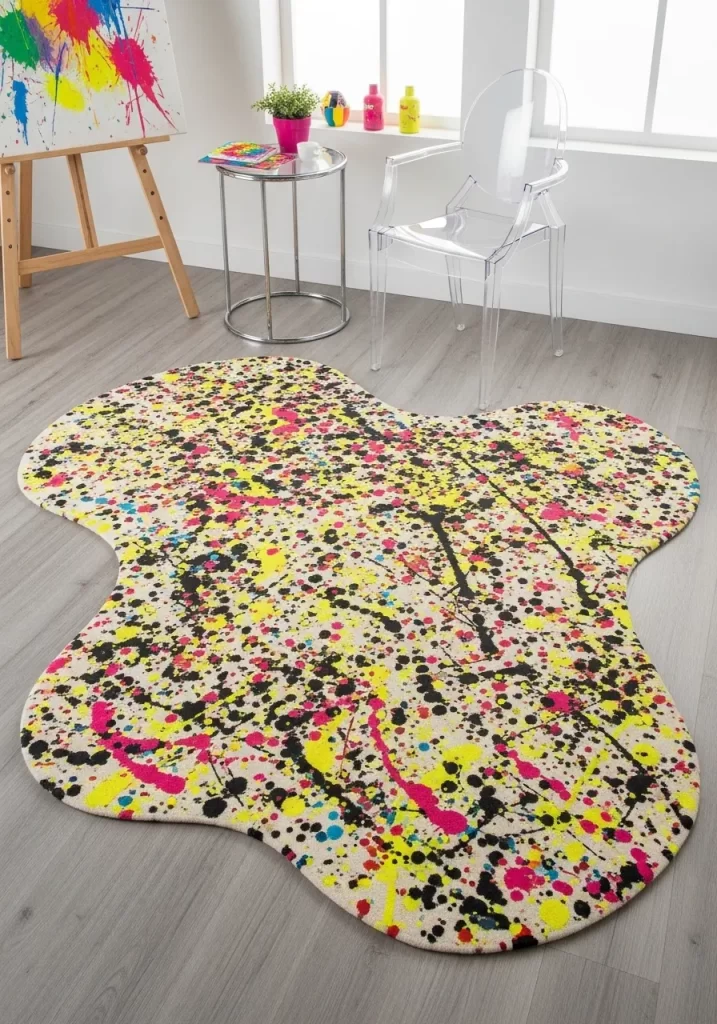
Embrace your inner artist with this explosively colorful and fun freeform rug. Its non-traditional shape and vivid design instantly make it the centerpiece of the room.
The foundation is a soft cream, which is absolutely covered in a dense, chaotic pattern of abstract splatter, including neon yellow, electric pink, teal, and deep black. This design is highly energetic, suggesting movement and creative freedom, making it an excellent choice for a studio, child’s playroom, or an artistic home office. The organic, kidney-like shape softens the room’s hard lines, injecting a playful energy. This rug guarantees a high-impact, conversation-starting foundation for any creative space.
DIY Focus: Removing Sticky Residue or Gum from Shag Rugs
In a creative or play area, sticky substances are inevitable on the rug.
Materials Required
- Small bag of ice or an ice pack
- Plastic sandwich bag
- Dull knife or spoon
Equipment Required
- Vacuum cleaner
DIY Instruction: Freezing Sticky Messes
Freezing the substance allows you to chip it away without damaging the fibers.
- Isolate and Freeze: Place the ice directly onto the sticky substance (gum, sticky putty, spilled glue, etc.) and cover the ice with the plastic bag to prevent water from soaking the rug.
- Harden the Mess: Leave the ice in place for at least 10-15 minutes until the substance is completely frozen and brittle.
- Gently Chip Away: Use the dull knife or the edge of a spoon to gently scrape or chip the frozen substance off the rug fibers. Work slowly and carefully from the outside edges toward the center.
- Repeat if Needed: If any residue remains, repeat the freezing and chipping process. Avoid pulling the fibers, as this can permanently damage the weave.
- Fluff: Once the residue is removed, use your fingers to gently fluff the rug pile back into its original position. Vacuum the area lightly to remove any lingering tiny fragments.
20. Starlit Midnight Blue Ombré Rug
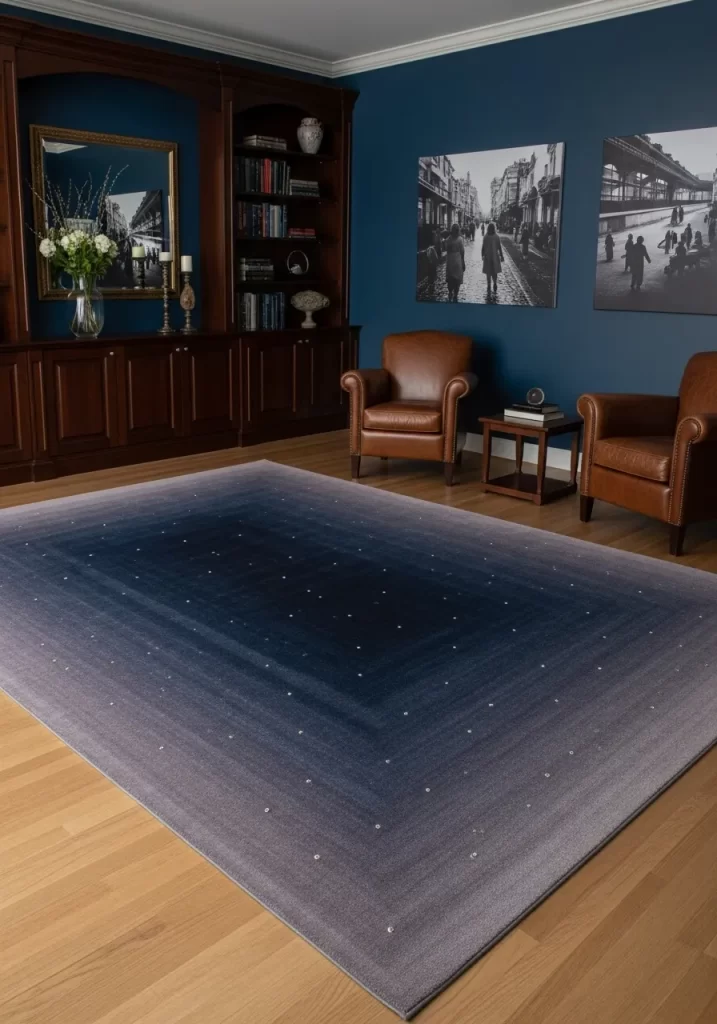
This rug is sophisticated and moody, creating an atmosphere reminiscent of a clear night sky. It utilizes a striking ombré effect where the color deepens dramatically from a soft, smoky gray border to an intense, inky midnight blue center.
Tiny, scattered light accents resembling stars dot the perimeter and the darkest areas, adding a subtle touch of magic and depth. This piece works perfectly to ground a formal or intellectual space, contrasting beautifully with the rich wood bookshelves and the vibrant blue walls. Its substantial size and rich, fading color pattern effectively contain the seating arrangement, making the room feel both expansive and intimately styled. This rug is a powerful design choice that moves far beyond a simple floor covering.
DIY Focus: Reducing Static Electricity in Rugs
Large rugs, especially those made with synthetic fibers in dry environments, can accumulate static electricity.
Materials Required
- Liquid fabric softener
- Water
- Spray bottle
Equipment Required
- None
DIY Instruction: Eliminating Static Cling
A simple treatment prevents shocking interactions and dust attraction.
- Prepare the Anti-Static Spray: Mix one capful of liquid fabric softener with approximately four cups of water in a spray bottle. Shake the mixture well.
- Mist the Rug: Set the spray bottle to a fine mist setting. Lightly and evenly mist the entire surface of the rug with the mixture. You want the fibers to be slightly damp, not soaking wet.
- Allow to Dry: Let the rug air dry completely. The fabric softener residue coats the fibers, helping to dissipate static charge buildup.
- Vacuum After Drying: Once fully dry, vacuum the rug lightly to reset the pile.
- Repeat as Needed: This static-reducing treatment typically lasts for several weeks or months, depending on the dryness and humidity levels of the room. Repeat the light misting whenever static buildup becomes noticeable again.
21. Vibrant Tie-Dye Foyer Rug
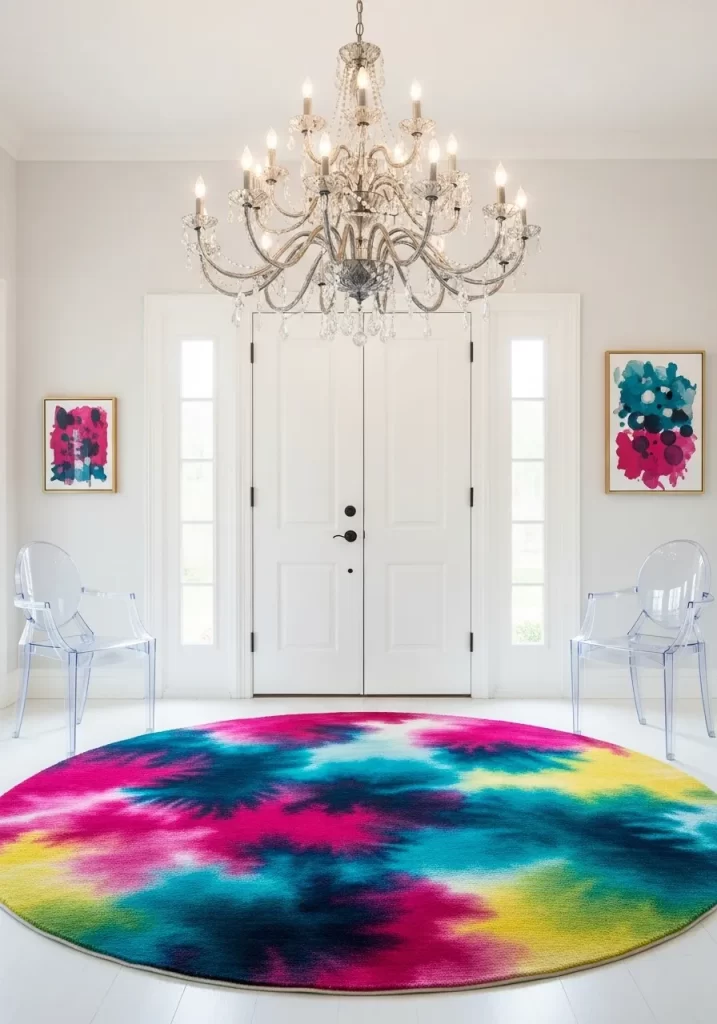
Make a bold and unforgettable entrance with this spectacularly colorful round rug. The design explodes with a dynamic tie-dye pattern, blending electric pink, vivid teal, and sunny yellow in an uninhibited, abstract swirl.
This round shape dramatically contrasts with the crisp white double doors and the elegant crystal chandelier, adding a playful, artistic counterpoint to a formal entryway. It instantly transforms a potentially staid space into a cheerful and welcoming one. The matching abstract art on the walls pulls the rug’s colors up, creating a cohesive and deliberately expressive design statement. This rug is a true showstopper, turning a mundane floor into a vibrant celebration of color and modern style.
DIY Focus: Protecting a Light-Colored Foyer Rug from Dirt
Entryway rugs are the first line of defense against outdoor dirt; special protection helps maintain their vibrancy.
Materials Required
- Stain and water repellent spray (suitable for rugs)
- Door mat or shoe tray (for outside the entry)
- Vacuum cleaner with crevice tool
Equipment Required
- None
DIY Instruction: Keeping a Bright Entryway Rug Clean
Regular preventative measures are key to maintaining the brilliance of a vibrant rug.
- Deep Clean First: Before any treatment, thoroughly vacuum the rug. If it’s brand new, a quick vacuum is still a good idea. For an existing rug, ensure it’s spotless.
- Apply Repellent: Take the rug outdoors or to a well-ventilated area. Apply the stain and water repellent spray evenly across the entire surface according to the product instructions. This creates an invisible shield against dirt and liquid spills. Allow it to dry completely.
- Use an Outer Barrier: Place a functional, coarse door mat outside the main entrance. This captures the vast majority of dirt, mud, and debris before it ever reaches your vibrant interior rug. A shoe tray inside the door is also useful.
- Enforce Shoe Removal: Encourage guests and family members to remove shoes upon entry. This is the single most effective way to keep an entryway rug spotless.
- Frequent Vacuuming: Vacuum the rug every 1-2 days, especially during wet or snowy seasons. Use the crevice tool to get into edges and ensure no dirt gets tracked further into the home.
22. Textured Felt Ball Hearth Rug
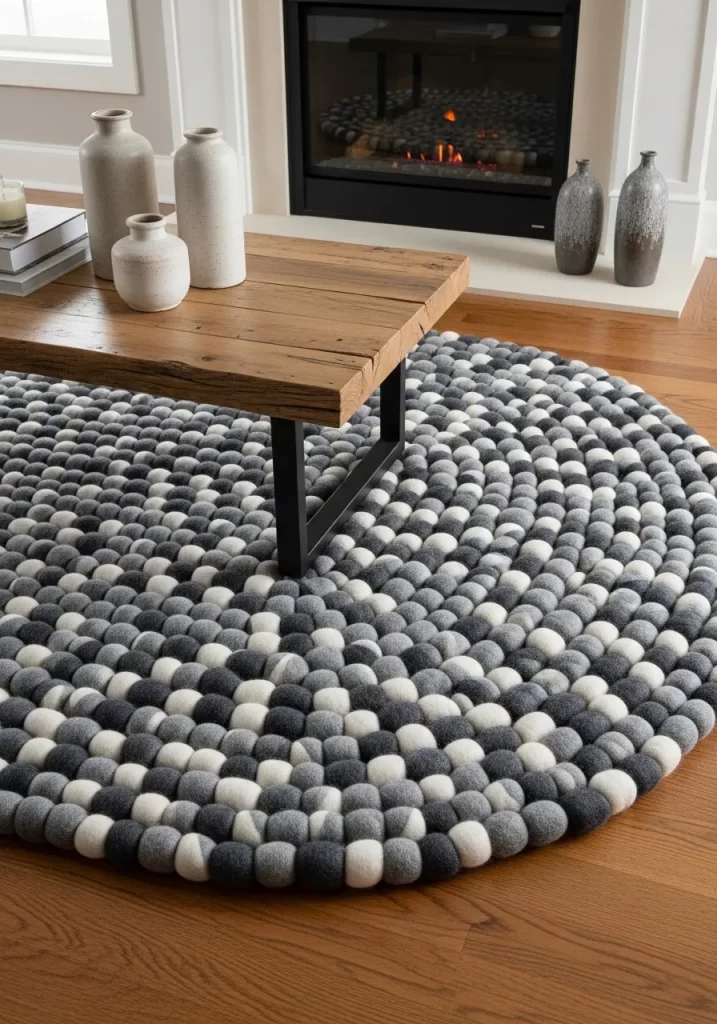
This delightful round rug offers a unique tactile experience, bringing whimsical texture and warmth to a cozy sitting area by the fireplace. It features hundreds of hand-felted wool balls, tightly packed together in varying shades of charcoal gray, light gray, and creamy white.
The subtle gradient of color, combined with the three-dimensional bobble texture, creates an incredibly inviting surface. This round shape is highly effective at defining a snug spot for reading or relaxing, especially when placed near a natural wood coffee table. It provides exceptional comfort and a touch of rustic charm, contrasting beautifully with the smooth hardwood floors. This rug goes beyond a simple floor covering; it’s a tactile art piece that adds soft, playful character to any fireside retreat.
DIY Focus: Spot Cleaning Felt Ball Rugs
Felt ball rugs require specific, gentle cleaning methods to avoid damaging their delicate wool construction.
Materials Required
- Mild wool-safe detergent or soap flakes
- Clean, white microfiber cloths
- Warm water
Equipment Required
- Small bowl
- Soft brush (like a toothbrush)
DIY Instruction: Caring for Your Felt Ball Rug
Gentle cleaning maintains the integrity and beauty of individual felted balls.
- Vacuum Gently: Use a vacuum with a soft brush attachment or the hose only on a low setting. Gently vacuum the rug to remove loose dust and debris. Avoid aggressive suction that could pull at the felt balls.
- Immediate Blotting for Spills: For liquid spills, immediately blot with a clean, dry white cloth. Do not rub, as this can felt the wool further and spread the stain.
- Prepare Cleaning Solution: Mix a tiny amount of wool-safe detergent (or soap flakes dissolved in warm water) in a small bowl. The solution should be slightly sudsy.
- Spot Clean: Dip a clean microfiber cloth into the sudsy solution, wring it almost dry, and gently dab the stained area on the felt balls. Work on a small section at a time.
- Rinse and Dry: Use a separate cloth dampened with plain warm water to gently dab away any soap residue. Finally, blot the area dry with a clean, dry towel. Allow the rug to air dry completely, potentially with a fan, before walking on it. Avoid excessive moisture, which can cause mildew.
23. Classic Bordered Sisal-Look Rug
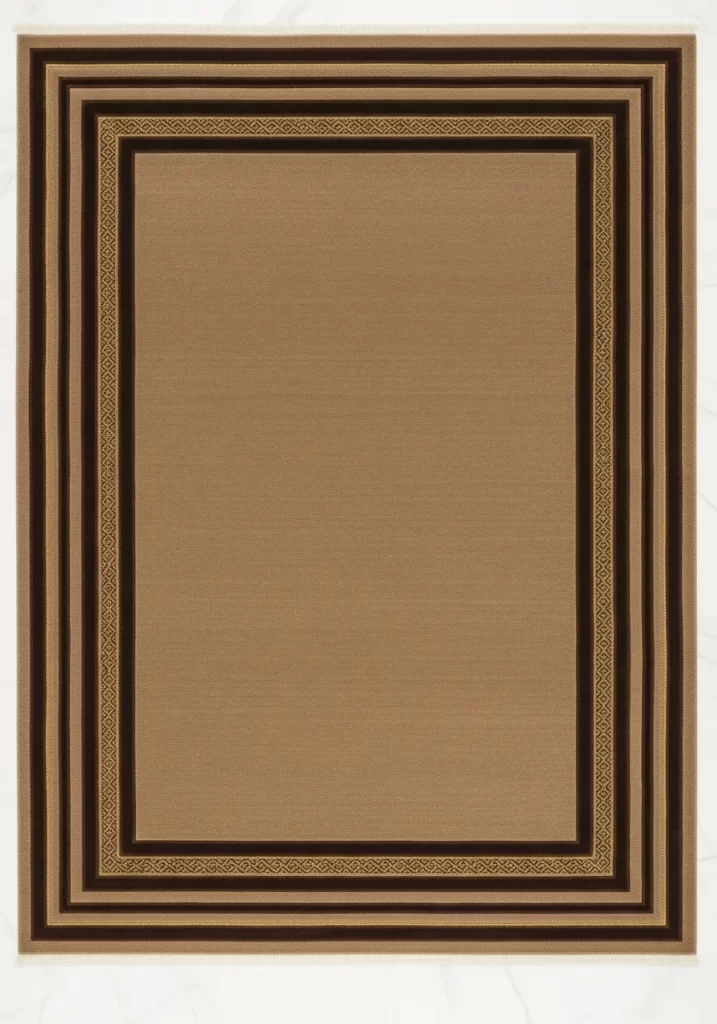
For a sophisticated and grounding foundation, this sisal-look rug provides texture and understated elegance. Its rectangular shape and neat, multi-layered dark border give it a traditional, refined presence in any room.
The central field is a warm, light tan or caramel color, mimicking the natural, durable fibers of sisal without the rough texture. This classic design is versatile, adding a sense of structure and formality to a tiled floor. The varying dark brown and gold borders, some with subtle geometric patterns, add visual depth and frame the rug like a piece of art. It’s an astute choice for dining rooms, living areas, or larger entryways where you desire a durable, low-pile rug that still speaks to classic design principles. This rug brings a warm, timeless appeal.
DIY Focus: Preventing Curling Edges on Low-Pile Rugs
Low-pile, flat-weave rugs sometimes develop curling edges, creating a tripping hazard and looking untidy.
Materials Required
- Double-sided rug tape (specifically for hard floors)
- Heavy objects (books, weights)
Equipment Required
- Measuring tape
- Scissors
DIY Instruction: Flattening and Securing Rug Edges
A simple trick ensures your rug lays perfectly flat and stays in place.
- Clean the Floor: Ensure the tiled floor underneath the rug is completely clean and dry. Any dust or debris will prevent the tape from adhering properly.
- Apply Tape to Edges: Flip the rug over. Apply strips of double-sided rug tape along the underside of the perimeter of the rug, especially focusing on the corners and any areas that are prone to curling. Do not remove the backing from the top side of the tape yet.
- Position and Flatten: Carefully flip the rug back over and position it exactly where you want it.
- Activate Adhesion: Once the rug is perfectly placed, lift one corner or edge at a time, remove the tape backing, and firmly press the rug down onto the floor. Smooth out any wrinkles.
- Weight it Down: For stubborn curls, place heavy books or other flat, heavy objects along the edges of the rug for 24-48 hours. This helps the tape bond and encourages the fibers to relax into a flat position.
24. Tropical Parrot Geometric Rug
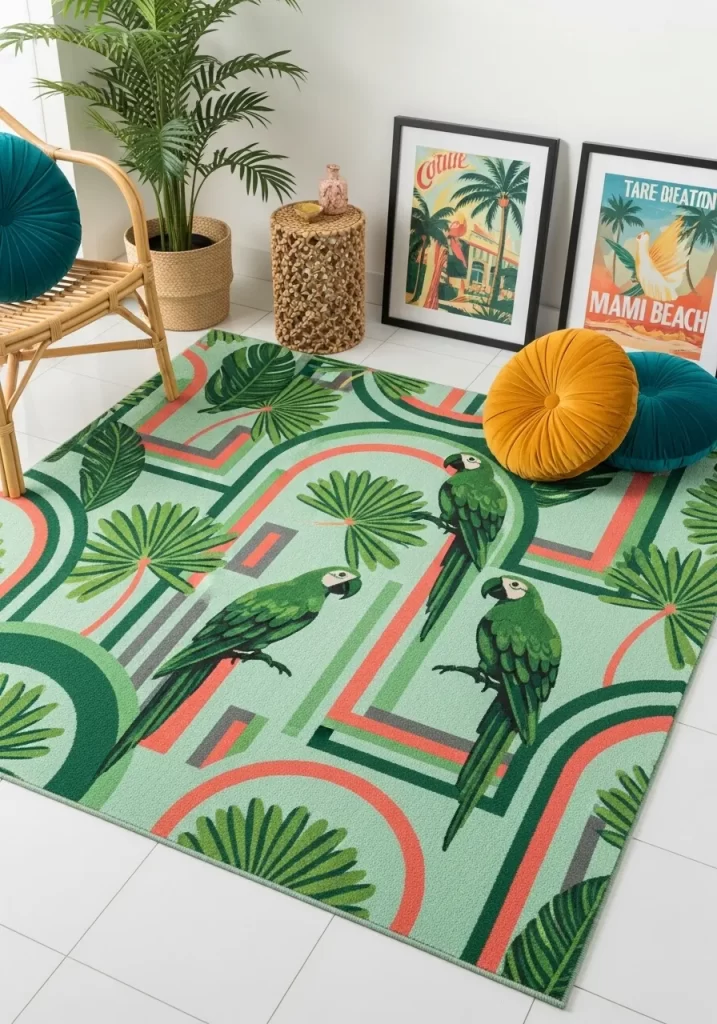
Bring the lush vibrancy of the tropics directly into your home with this undeniably cheerful and lively rug. The design features bold, stylized green parrots perched among large, graphic palm fronds and modern geometric shapes.
The refreshing mint green background is complemented by various shades of deep and light greens, interspersed with vibrant coral and soft gray accents. This rug acts as a powerful statement piece, instantly infusing any room with a playful, resort-like atmosphere. It pairs brilliantly with natural rattan furniture and travel-inspired artwork. This low-pile rug is a fantastic way to introduce dynamic color and pattern, transforming an ordinary floor into an exotic, inviting escape.
DIY Focus: General Cleaning for Patterned Low-Pile Rugs
Vibrant, patterned rugs need regular, straightforward cleaning to keep their colors bright and details sharp.
Materials Required
- Mild dish soap
- Warm water
- Clean sponge or soft brush
- White vinegar (optional, for odor/brightness)
- Clean, white microfiber towels
Equipment Required
- Vacuum cleaner
DIY Instruction: Refreshing a Patterned Rug
Regular care keeps detailed patterns crisp and colorful.
- Frequent Vacuuming: Vacuum the rug at least once a week, and more often in high-traffic areas. Use a regular vacuum setting, as a low-pile rug can handle the brush bar. This prevents dirt from becoming embedded.
- Spot Cleaning: For spills or muddy footprints, immediately blot the area with a dry, clean towel. Then, mix a few drops of mild dish soap diluted in water. Apply this solution with a clean sponge or soft brush, gently working it into the stain.
- Rinse and Dry: Use a fresh cloth dampened with plain water (or a water/vinegar solution for extra brightening) to blot and “rinse” the area. Repeat until all soap residue is gone. Finally, use a dry towel to absorb as much moisture as possible.
- Air Dry Completely: Allow the rug to air dry thoroughly. You can place a fan nearby to speed up the process. Never put a rug in a dryer unless the care label explicitly states it’s safe.
- Rotate Regularly: If possible, rotate the rug 180 degrees every 3-6 months. This ensures even wear and prevents one area from fading or compressing more than others due to sunlight or foot traffic.
25. Chunky Knit Oval Fireside Rug

This incredibly cozy oval rug practically radiates warmth and comfort, making it the ultimate companion for a stone fireplace hearth. It features an exceptionally thick, hand-knitted pattern in a soft, natural cream color.
The substantial, oversized loops of yarn create a deeply textured, inviting surface that beckons you to sink your feet in. The oval shape is a charming alternative to a rectangular rug, softening the hard lines of the hearth and the surrounding floor. Placed on a neutral broadloom carpet, it adds another layer of plushness and visual interest, creating a dedicated zone for relaxation and warmth. This rug is a true tactile pleasure, offering unmatched comfort and a charming, rustic aesthetic to any fireside retreat.
DIY Focus: Cleaning and Fluffing a Chunky Knit Rug
Chunky knit rugs are delicate and can unravel or pill if not cleaned correctly.
Materials Required
- Mild wool-safe detergent
- Cool water
- Clean, soft cloths
- Fabric shaver or lint roller (for pilling)
Equipment Required
- Large basin or bathtub
- Several large towels
DIY Instruction: Hand-Washing and Maintaining Knit Rugs
Gentle cleaning maintains the integrity and beauty of individual felted balls.
- Shake Out First: Take the rug outside and give it a good shake to dislodge loose dust and debris. Do not beat it, as this can stretch or damage the knit.
- Spot Clean Minor Areas: For small spots, mix a tiny amount of wool-safe detergent with cool water. Dip a clean cloth into the sudsy water, wring it out almost dry, and gently blot the stain. Rinse by blotting with a cloth dampened with plain cool water.
- Hand Wash (if necessary): For a full clean, fill a large basin or tub with cool water and a small amount of wool-safe detergent. Submerge the rug and gently squeeze the water through the fibers. Do not agitate or wring forcefully, as this can cause stretching or felting.
- Rinse Thoroughly: Drain the soapy water and refill the tub with clean, cool water. Continue to gently squeeze and rinse until all soap is gone.
- Squeeze and Roll: Gently press out as much water as possible. Lay several large, dry towels on the floor, place the rug on top, and roll both up together. Press firmly to absorb more water. Repeat with fresh towels.
- Flat Dry: Lay the rug flat on a clean, dry surface (or on a clean drying rack) away from direct sunlight or heat. Reshape it as it dries to prevent distortion. It may take several days to dry completely.
- Address Pilling: If small fuzz balls (pilling) appear, gently remove them with a fabric shaver or a lint roller to keep the knit looking neat.
26. Regal Distressed Amethyst Medallion Rug
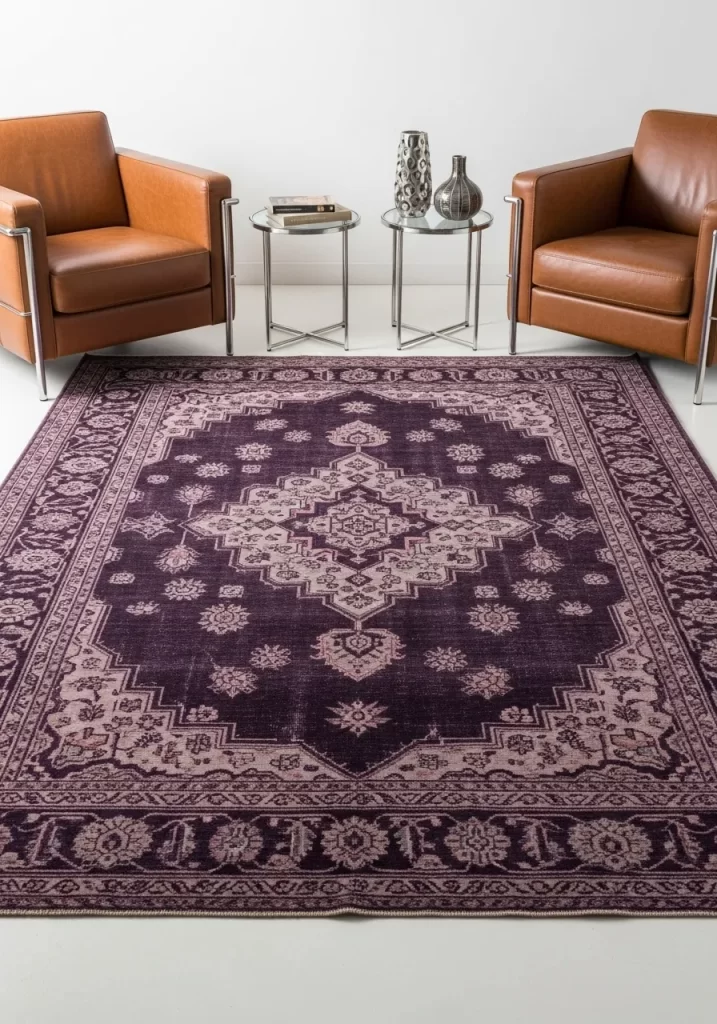
This majestic rug brings a touch of antique grandeur and rich color to any sophisticated living space. The design features a sprawling central medallion, surrounded by intricate floral and vine patterns, all rendered in deep shades of amethyst purple and a muted, distressed mauve.
The intentionally faded appearance gives the rug the charm of an aged heirloom, providing character without being overwhelming. Its substantial size effectively anchors the seating area, creating a defined zone of luxury and warmth on a clean white floor. The deep purple hue adds a striking accent that pairs wonderfully with warm leather chairs and metallic side tables. This rug is a beautiful way to introduce both historical elegance and a rich color story, making the floor a captivating foundation.
DIY Focus: Preserving Color in Distressed-Look Rugs
Distressed-look rugs can appear older and worn, so maintaining their specific color and texture is key.
Materials Required
- Mild, color-safe rug shampoo
- Clean, soft-bristle brush
- White vinegar (for brightening)
- Clean, white microfiber cloths
Equipment Required
- Vacuum cleaner
- Bucket
- Wet/dry vacuum or powerful shop vac (optional, for deeper cleaning)
DIY Instruction: Gentle Cleaning for Faded Hues
Protecting the subtle nuances of a distressed rug’s colors requires a careful cleaning approach.
- Regular Vacuuming: Vacuum the rug 1-2 times a week using a low-suction setting or hose attachment. Avoid aggressive beater bars that can further distress the fibers.
- Spot Clean Carefully: For spills, blot immediately with a dry cloth. Then, mix a small amount of color-safe rug shampoo with water. Apply with a clean cloth, gently dabbing the stain. Blot dry with a clean, wet cloth (plain water) to rinse, then with a dry cloth.
- Avoid Over-Wetting: When cleaning the entire rug, never saturate it. Use a damp (not wet) cloth with the diluted shampoo, working in small sections.
- Restore Brightness: After cleaning, a light mist of a 50/50 white vinegar and water solution can help restore some of the color vibrancy without causing bleaching. Blot dry immediately.
- Professional Cleaning: Consider professional cleaning every 1-2 years for distressed rugs. They have the expertise to clean without further damaging the intentionally aged look or altering the delicate color palette.
27. Retro Checkerboard Terracotta Rug

This vibrant rug offers a playful, retro-inspired aesthetic with its bold checkerboard pattern. It features an alternating grid of rustic terracotta orange, deep olive green, and soft, creamy beige.
The geometric pattern creates a dynamic visual foundation that instantly brightens and energizes the room. This particular color combination feels both modern and a little vintage, making it versatile for various decor styles from bohemian to mid-century. Placed against simple tile, it introduces warmth and a distinctive visual rhythm, effectively defining the lounging area. The low pile is practical for high-traffic zones, making it a stylish yet durable choice for kitchens, living rooms, or entryways seeking a burst of color.
DIY Focus: Rotating Rugs for Even Wear and Fading
A patterned rug, especially one with bold colors, benefits from regular rotation to prolong its life and appearance.
Materials Required
- None
Equipment Required
- None (just strong arms!)
DIY Instruction: Extending Rug Lifespan with Rotation
Even wear helps a rug maintain its appearance for many years.
- Assess Wear: Observe your rug for areas that receive more sunlight, foot traffic, or are frequently under furniture legs. These spots will show wear or fading first.
- Clear the Area: If possible, temporarily move small furniture items off the rug to make rotation easier.
- The 180-Degree Turn: With the help of another person for larger rugs, carefully lift and rotate the entire rug 180 degrees. This swaps the ends of the rug.
- Benefits: The previously high-traffic end will now be in a lower-traffic area, and vice-versa. Areas that received direct sunlight will now be in the shade, helping to equalize any sun fading.
- Frequency: For high-traffic areas or rugs exposed to significant sunlight, rotate every 3-6 months. For lower-traffic areas, once a year is usually sufficient. This simple action significantly extends the life and beauty of your rug.
28. Architectural Maze Runner
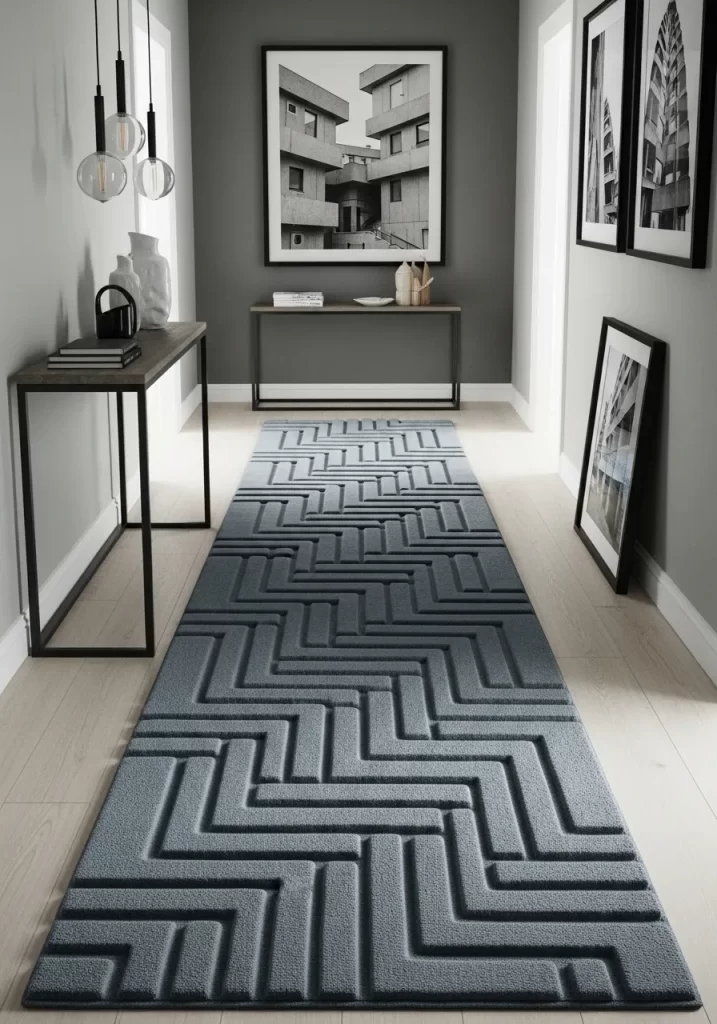
This striking runner is a masterclass in modern, masculine design, offering a bold statement in a contemporary hallway. Its deep, textural relief features an intricate, continuous maze-like pattern carved into a soft gray base.
The raised, geometric lines create a fascinating play of light and shadow, giving the rug a three-dimensional quality that draws the eye down the length of the hall. The dark gray against the lighter gray floor creates a strong, sophisticated contrast, complementing the minimalist console tables and abstract artwork. This runner transforms a simple passageway into an architectural feature, adding unexpected depth and a high-design feel to a functional space. It is a stunning example of how a rug can be both practical and a piece of modern floor sculpture.
DIY Focus: Deep Cleaning for Textured/Carved Rugs
Rugs with deep textures or carved patterns can trap more dirt and debris, requiring extra effort to clean.
Materials Required
- High-quality rug shampoo (foam or low-moisture type)
- Clean water
- Clean, white microfiber cloths
- Stiff-bristle, non-abrasive brush
Equipment Required
- Vacuum cleaner with crevice tool
- Wet/dry vacuum or powerful shop vac (optional, for extraction)
DIY Instruction: Reaching Deep into Carved Rugs
Specialized tools and techniques are needed to clean intricate textures.
- Thorough Pre-Vacuum: Begin with an extremely thorough vacuuming. Use the crevice tool along all the carved lines and patterns to extract as much loose dirt and dust as possible from the depressions.
- Spot Treat First: Address any specific stains or heavily soiled areas first with a small amount of diluted rug shampoo and the stiff brush, working gently into the texture. Blot clean.
- Foam/Low-Moisture Cleaning: For a full clean, opt for a foam or low-moisture rug shampoo. Apply it lightly and evenly over a small section of the rug at a time.
- Brush into Texture: Use the stiff-bristle brush to gently work the shampoo into the carved lines and the raised surfaces. The goal is to lift the dirt without saturating the rug.
- Extract/Blot Clean: If you have a wet/dry vacuum, use it to extract the cleaning solution and lifted dirt. If not, use clean, damp microfiber cloths to blot up the dirt and shampoo residue, rinsing the cloth frequently.
- Air Dry Completely: Ensure the rug is completely dry before returning to use. If any moisture remains trapped in the carved depressions, it could lead to mildew. A fan can help speed drying.
29. Rattan Pillar Collar Rug
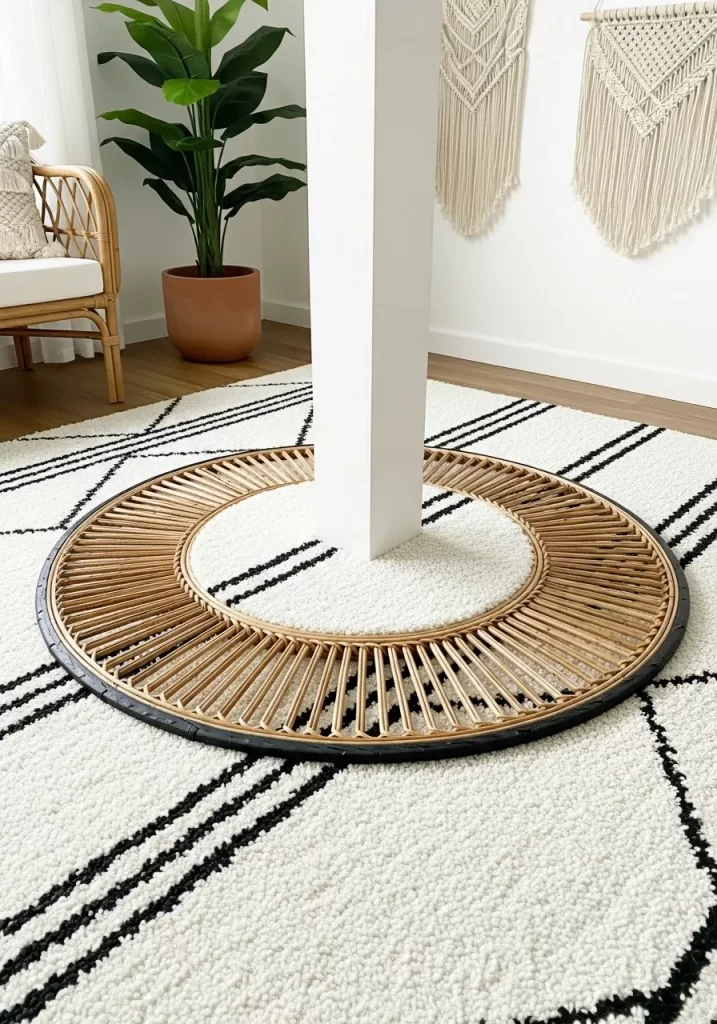
This exceptionally unique “rug” is actually a clever decorative collar designed to elegantly frame a central pillar or column. Constructed from natural rattan or bamboo, its circular shape and open weave add a distinct bohemian-chic texture to the floor.
The warm, earthy tones of the rattan contrast beautifully with the stark white pillar and the plush, high-pile black and white rug beneath. It introduces a touch of natural, organic style, transforming a structural element into a decorative feature. This piece is a wonderful solution for open-concept spaces with load-bearing columns, giving them a softened, more integrated appearance. It speaks to thoughtful, custom design, moving beyond basic floor coverings to create an interesting architectural detail.
DIY Focus: Cleaning and Maintaining Rattan/Woven Accents
Natural woven materials like rattan need specific care to prevent drying out or cracking.
Materials Required
- Mild dish soap
- Warm water
- Soft brush (toothbrush or small cleaning brush)
- Lemon oil or furniture polish (for conditioning)
- Clean, soft cloths
Equipment Required
- Vacuum cleaner with brush attachment
DIY Instruction: Caring for Woven Natural Materials
Proper care preserves the flexibility and appearance of rattan or wicker.
- Dust Regularly: Use a vacuum cleaner with a soft brush attachment to gently remove dust and debris from between the rattan strands. A dry paintbrush can also help dislodge dust from tight spots.
- Spot Clean Spills: For any spills, immediately blot with a dry cloth. Then, dip a soft cloth or brush into a mild dish soap and water solution (not too sudsy), wring it almost dry, and gently clean the spot.
- Rinse and Dry Thoroughly: Use a separate clean, damp cloth (plain water) to wipe away soap residue. Crucially, dry the rattan completely with a clean towel and allow it to air dry fully. Do not leave it wet, as this can encourage mold.
- Conditioning (Every Few Months): To prevent the rattan from drying out and becoming brittle, apply a small amount of lemon oil or furniture polish to a soft cloth and gently wipe down the rattan. This helps to moisturize and protect the fibers.
- Avoid Direct Sunlight: If possible, avoid placing rattan pieces in prolonged direct sunlight, which can cause the material to fade and become brittle over time.
30. Distressed Pastel Floral Dining Rug
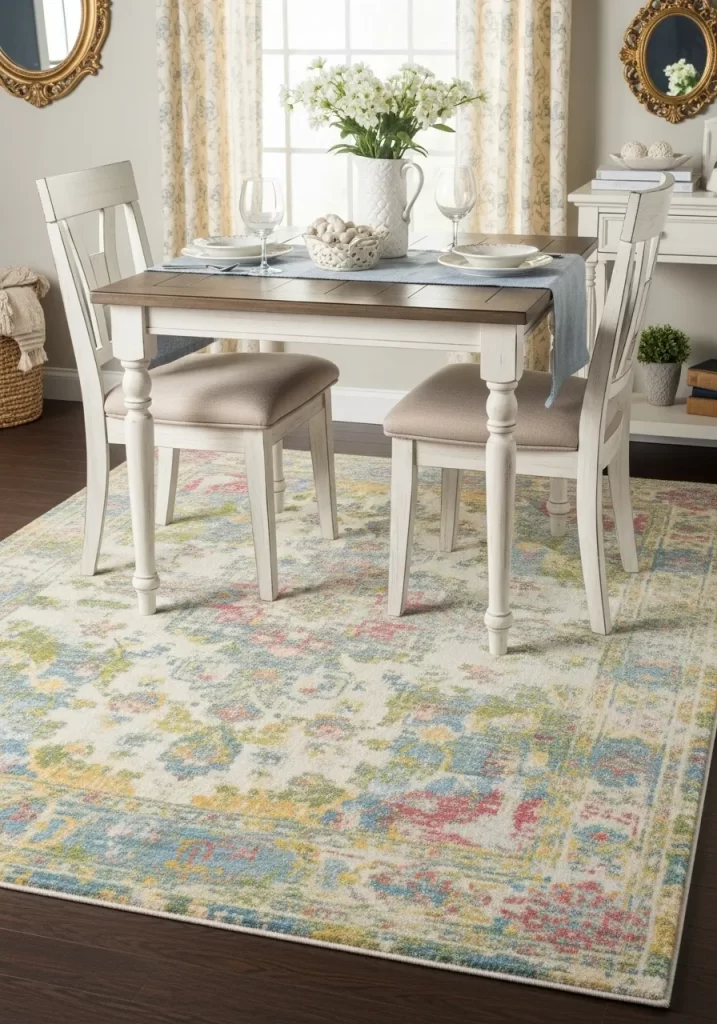
This charming dining rug offers a soft, inviting foundation with a beautifully faded, watercolor-like floral pattern. The design features an abstract blend of muted pink, soft green, sky blue, and gentle yellow, resembling blooming garden petals.
The intentionally distressed finish gives the rug an heirloom quality, softening its presence and allowing it to blend seamlessly into a bright, airy dining space. Its rectangular shape comfortably anchors the white farmhouse-style dining table and chairs, adding a subtle touch of color and pattern without overwhelming the room. This rug is an excellent choice for those seeking a delicate, romantic aesthetic that adds warmth and artistic flair to a dining area without demanding too much attention.
DIY Focus: Protecting a Dining Rug from Chair Scrapes
Dining chair legs frequently scrape across rugs, causing premature wear and potential fiber damage.
Materials Required
- Felt chair leg pads (self-adhesive)
- Clear plastic chair cups (optional, for heavier chairs)
Equipment Required
- None
DIY Instruction: Guarding Against Chair Leg Wear
Preventing constant friction prolongs the life and beauty of your dining room rug.
- Clean Chair Legs: Turn each dining chair upside down. Thoroughly clean the bottom of each chair leg to ensure they are free of dirt or old adhesive residue. The surface must be clean for new pads to stick.
- Apply Felt Pads: Peel off the backing from the self-adhesive felt pads. Center one pad on the bottom of each chair leg and press firmly. Ensure the pad covers the entire surface that will contact the rug.
- Consider Cups: For exceptionally heavy dining chairs or those that move very frequently, clear plastic chair cups (often available for furniture legs) can offer even more robust protection, encasing the leg and distributing weight more broadly.
- Test Movement: Flip the chairs back over and test them on the rug. They should glide smoothly without snagging or dragging the rug fibers.
- Regular Check: Inspect the felt pads every few months. They wear down over time and will need replacing to continue providing effective protection. Worn pads are less effective and can actually collect grit that scratches the floor or rug.
31. Architectural Blueprint Area Rug

For those who appreciate modern design and a unique conversation starter, this architectural blueprint rug is simply stunning. It features a detailed house plan and grid lines, rendered in crisp white against a soothing robin’s egg blue background.
The design creates a fascinating, intellectual focal point on the floor, perfectly complementing the minimalist aesthetic of the room, from the sleek white sofas to the abstract wall art. A subtle red line adds a pop of contrast, drawing the eye into the intricate details. This rug beautifully grounds the floating furniture arrangement, defining the living space with an unexpected, artistic flair. It is a brilliant way to showcase personality and a love for design.
DIY Focus: Keeping a Large Rug Flat and Wrinkle-Free
Large, thin rugs can sometimes ripple or develop wrinkles, which look untidy and can be a tripping hazard.
Materials Required
- Rug pad (thin, non-slip felt-rubber blend)
- Heavy books or flat weights
- Double-sided rug tape (optional, for stubborn areas)
Equipment Required
- Measuring tape
DIY Instruction: Achieving a Smooth, Flat Rug Surface
A truly stunning rug lays perfectly flat, enhancing the room’s overall aesthetic.
- Preparation is Key: Start by thoroughly cleaning the hardwood floor beneath where the rug will go. Any debris can cause bumps or prevent the rug from lying flat.
- Use a Quality Pad: Place a thin, non-slip rug pad that is cut 2-3 inches smaller than the rug on all sides. This not only provides grip but also helps to prevent wrinkles by creating a stable base.
- Unroll and Position: Carefully unroll the blueprint rug over the pad, working from one end to the other. Ensure the pattern is aligned straight with the room’s main axis or the furniture.
- Smooth from Center: Once laid, use your hands or a soft broom to gently smooth the rug from the center outwards, pushing any air bubbles or minor wrinkles towards the edges.
- Apply Weight: If persistent ripples remain, place heavy books or flat weights evenly across the affected areas. Leave them for 24-48 hours. The pressure helps the rug relax and conform to the floor.
- Edge Tape (Optional): For very thin rugs or in high-traffic areas, applying double-sided rug tape along the rug’s perimeter (on the underside, adhering to the pad or floor) can provide extra security against movement and curling.
32. Boho Tasseled Square Rug
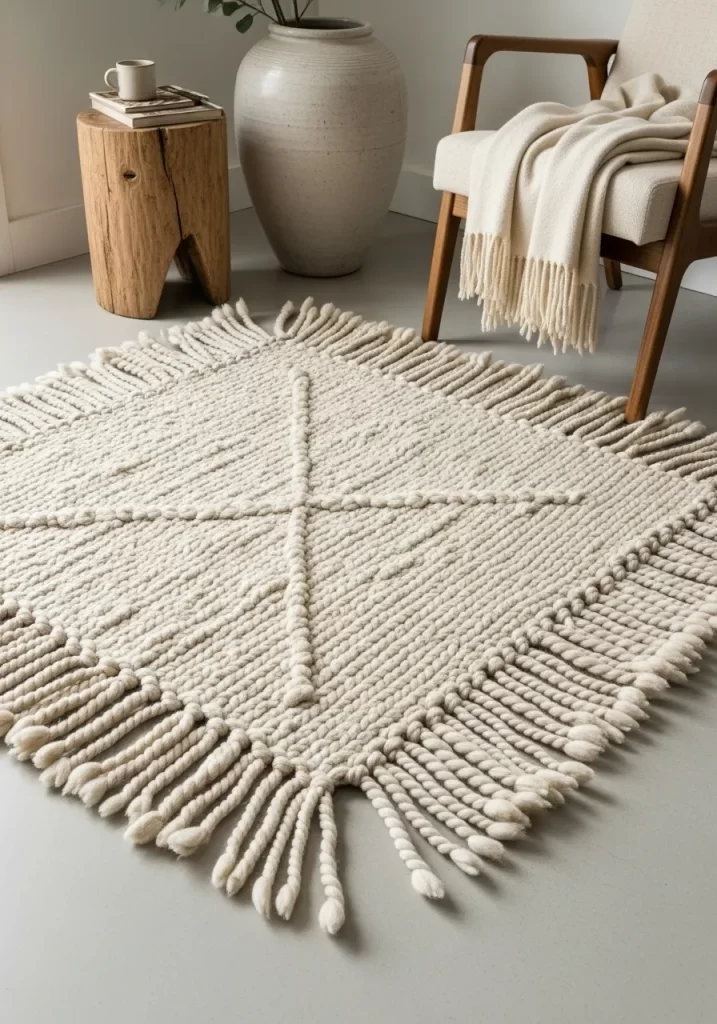
This textural square rug immediately draws the eye with its luxurious, hand-crafted aesthetic and delightful fringed edges. Made from thick, natural fibers in a creamy off-white, it exudes a charming, bohemian warmth.
The raised, textured cross in the center adds a subtle yet compelling dimension, creating visual interest without overwhelming the senses. Abundant, long tassels spill out from all four sides, adding a playful and incredibly soft border that enhances its cozy appeal. This rug is a marvelous choice for anchoring a relaxed seating area, such as beneath an armchair, providing a comfortable landing for bare feet. It’s a beautiful way to bring rich texture and artisan charm to a minimalist floor.
DIY Focus: Preventing Tangles and Maintaining Tassels
Long, abundant tassels are a signature feature but can easily tangle or become matted.
Materials Required
- Wide-tooth comb or pet brush (specifically for detangling)
- Spray bottle with water (optional)
- Fabric softener (a tiny amount, optional)
Equipment Required
- None
DIY Instruction: Keeping Tassels Neat and Flowing
Well-maintained tassels elevate the hand-crafted look of your rug.
- Daily Finger Combing: Take a few moments each day to gently run your fingers through the tassels, separating any strands that are beginning to tangle. This preventative measure is very effective.
- Regular Detangling: Once a week, or as needed, use a wide-tooth comb or a dedicated pet brush (with soft bristles) to gently comb through the tassels. Start from the ends and work your way up towards the rug body.
- Dampen for Stubborn Tangles (Optional): For particularly stubborn tangles, lightly mist the affected tassels with water (or a very diluted water/fabric softener mix) before combing. This helps the fibers relax.
- Avoid Vacuuming Tassels: Never run the main vacuum head over the tassels; they can get caught, damaged, or pulled off. Use only the hose attachment with low suction to clean around them.
- Spot Clean Tassels: If tassels get dirty, spot clean them separately with mild soap and water, then gently comb them straight and allow them to air dry.
33. Retro Patchwork Herringbone Rug

This vibrant rug offers an explosion of color and pattern, bringing a playful, eclectic energy to any space. It features a bold black and white herringbone base, a classic pattern known for its dynamic visual appeal.
Randomly placed strips of bright, contrasting colors—including vivid pink and electric blue—are stitched across the herringbone, creating a chaotic yet artistic patchwork effect. This rug is a statement piece, an art installation for your floor that thrives in a room with a modern, edgy, or industrial aesthetic. It demands attention and provides immense personality, proving that rugs can be the most exciting element in a room. It adds unique texture and a joyful rebellion against conformity.
DIY Focus: Protecting a Textured Rug in a High-Traffic Zone
Rugs with varying textures and stitched-on elements need protection from excessive wear.
Materials Required
- Thin, firm rug pad (felt and rubber blend)
- Fabric protector spray (for the colored strips)
Equipment Required
- Measuring tape
- Scissors or utility knife
DIY Instruction: Maintaining a Multi-Textured Rug
Special care ensures the unique elements of this rug remain intact and vibrant.
- Proper Padding: Always use a firm rug pad cut slightly smaller than the rug. This prevents the rug from shifting, which can cause the stitched elements to snag or wear unevenly.
- Treat Colorful Strips: If the colored fabric strips are particularly delicate or prone to staining, consider applying a fabric protector spray specifically to these areas. This creates a barrier against spills.
- Gentle Vacuuming: Use a vacuum with adjustable height settings, or use the hose attachment. Avoid aggressive brush bars that could pull at the stitched fabric strips. Vacuum in the direction of the herringbone pattern to avoid snagging.
- Spot Clean Promptly: For spills on the colored strips, blot immediately. Use a very mild, diluted detergent and a soft cloth, dabbing gently. Rinse with a damp cloth (plain water) and blot dry.
- Rotate if Possible: If the rug is in a very high-traffic area, rotate it every 6 months. This distributes wear evenly across the surface, especially the delicate stitched elements, extending its overall lifespan.
34. Minimalist Grid Dining Rug
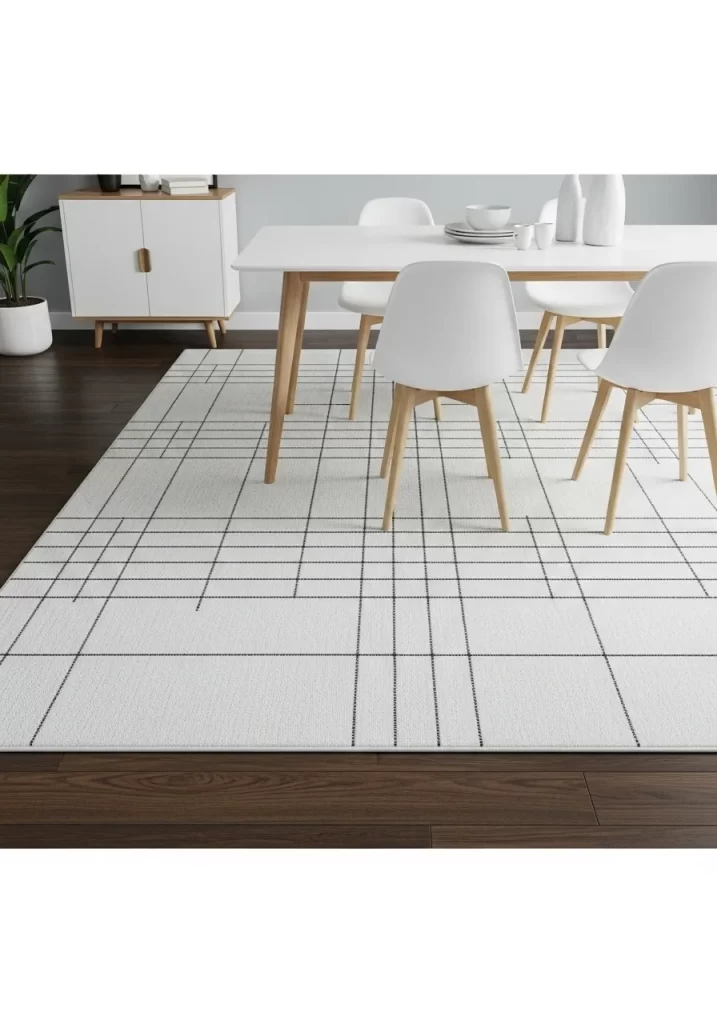
This contemporary rug offers a clean, understated elegance that anchors a modern dining space beautifully. Against a crisp white background, a delicate, fine black grid pattern is subtly woven across the entire surface.
The minimalist design provides structure and definition without overwhelming the room’s light and airy feel. Its rectangular shape effortlessly grounds the modern dining table and chairs, creating a cohesive visual zone. The dark hardwood floors contrast wonderfully with the rug’s light hue, making the dining area feel brighter and more expansive. This rug is an astute choice for those seeking a modern aesthetic that prioritizes clean lines and subtle visual interest over bold color, ensuring the floor enhances rather than distracts.
DIY Focus: Keeping a Light-Colored Dining Rug Spotless
Light-colored rugs in a dining area are prone to showing spills; proactive protection and quick cleaning are vital.
Materials Required
- Fabric protector spray (for light-colored rugs)
- Clear vinyl or plastic mat (optional, for underneath chairs)
- Mild dish soap
- White vinegar
- Clean, white microfiber towels
Equipment Required
- Vacuum cleaner
DIY Instruction: Maintaining Purity in a Dining Space
A spotless, bright dining rug makes the entire room feel fresh and inviting.
- Apply Fabric Protector: Before placing the rug in the dining area, take it outside or to a well-ventilated space. Apply a high-quality fabric protector spray (suitable for rugs) across the entire surface. This invisible shield repels liquids and makes spills easier to clean. Allow it to dry completely.
- Consider Chair Mats: For extra protection, especially if chairs are frequently slid in and out, place a clear vinyl or plastic mat under the chairs. This protects the rug from scuffs and concentrated wear.
- Immediate Spill Response: Blot any spills immediately with a clean, dry white towel. Do not rub.
- Gentle Cleaning Solution: Mix a few drops of mild dish soap with water and a splash of white vinegar in a spray bottle. Lightly mist the stained area.
- Blot and Rinse: Blot the area repeatedly with a clean, white towel until the stain lifts. Follow with a towel dampened with plain water to rinse away soap residue. Blot dry.
- Regular Vacuuming: Vacuum the rug at least twice a week. Frequent vacuuming removes dirt and debris before it can be ground into the light fibers, helping to preserve the rug’s pristine appearance.
35. Cloud-Like Cream Petal Rug
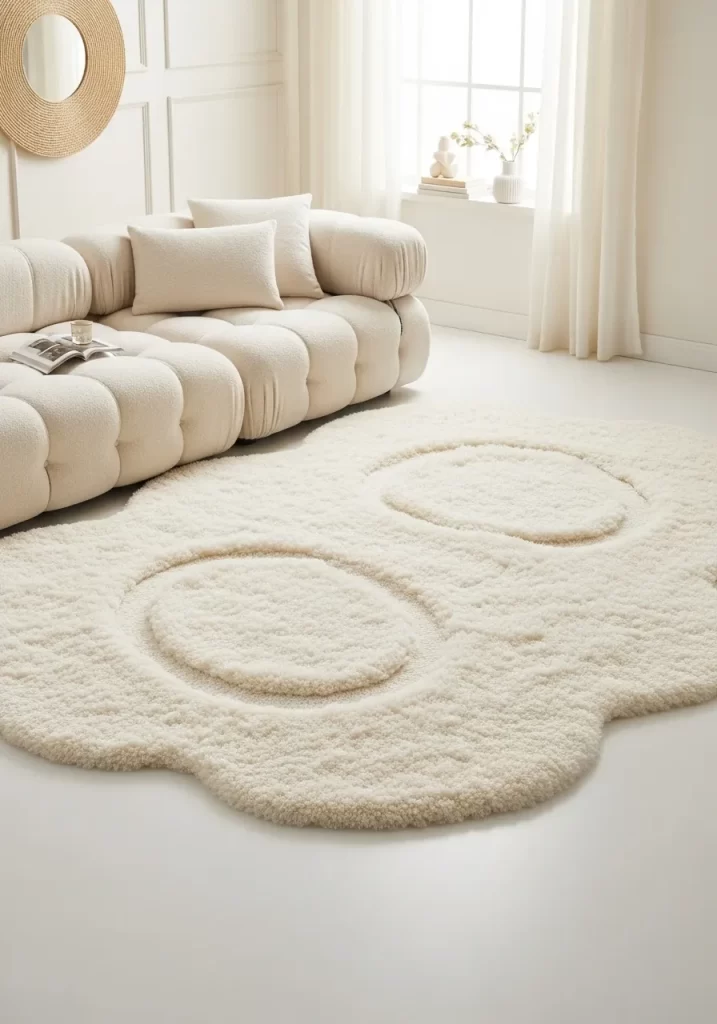
This charming, irregularly shaped rug brings a playful yet sophisticated softness to a minimalist room. Crafted from a sumptuous, deep cream-colored shag pile, it evokes the whimsical appearance of an oversized cloud or abstract flower.
The two subtle, raised oval shapes on its surface add dimension and textural interest, hinting at a whimsical design without being overtly childish. Placed against a light floor, the rug creates a serene, monochromatic haven that defines the lounging area with immense comfort. Its soft, curvilinear lines contrast beautifully with the straight lines of the modern sofa, introducing organic elegance. This rug is an exceptional choice for adding luxurious texture and a touch of artistic flair, ensuring the floor feels incredibly inviting and visually soft.
DIY Focus: Deep Cleaning and Reviving a Light Shag Rug
Light-colored, deep-pile rugs are prone to showing dirt and can lose their fluffiness over time.
Materials Required
- Baking soda
- Cornstarch (optional, for oil absorption)
- Gentle rug shampoo (foam or dry powder)
- White vinegar
- Clean, white towels
Equipment Required
- Vacuum cleaner (hose attachment only)
- Stiff-bristle brush or rug rake
- Spray bottle
DIY Instruction: Restoring the Plushness of a Cream Shag Rug
Careful cleaning keeps light-colored shag rugs looking fluffy and bright.
- Heavy Duty Pre-Vacuum: Use only the hose attachment of your vacuum. Slowly work over the entire rug, lifting and separating the deep pile as you go to remove as much dry dirt as possible.
- Powder Treatment: Mix equal parts baking soda and cornstarch (if dealing with potential oil stains). Sprinkle this mixture generously over the rug. Let it sit for several hours, or even overnight, to absorb odors and light grime.
- Vacuum Powder: Thoroughly vacuum up all the powder using the hose attachment, making multiple passes.
- Spot Clean: For any remaining spots, use a very small amount of gentle rug shampoo diluted with water. Apply with a clean cloth, gently dabbing. Rinse by blotting with a clean cloth dampened with plain water (or a 50/50 water/white vinegar solution for brightening). Blot dry vigorously.
- Fluff and Restore: Once completely dry, use a stiff-bristle brush or a rug rake tool to gently lift and separate the rug fibers. Work in small sections to restore the deep pile’s luxurious fluffiness. Never use a steam cleaner on shag rugs.
36. Southwestern Stripe Kitchen Runner
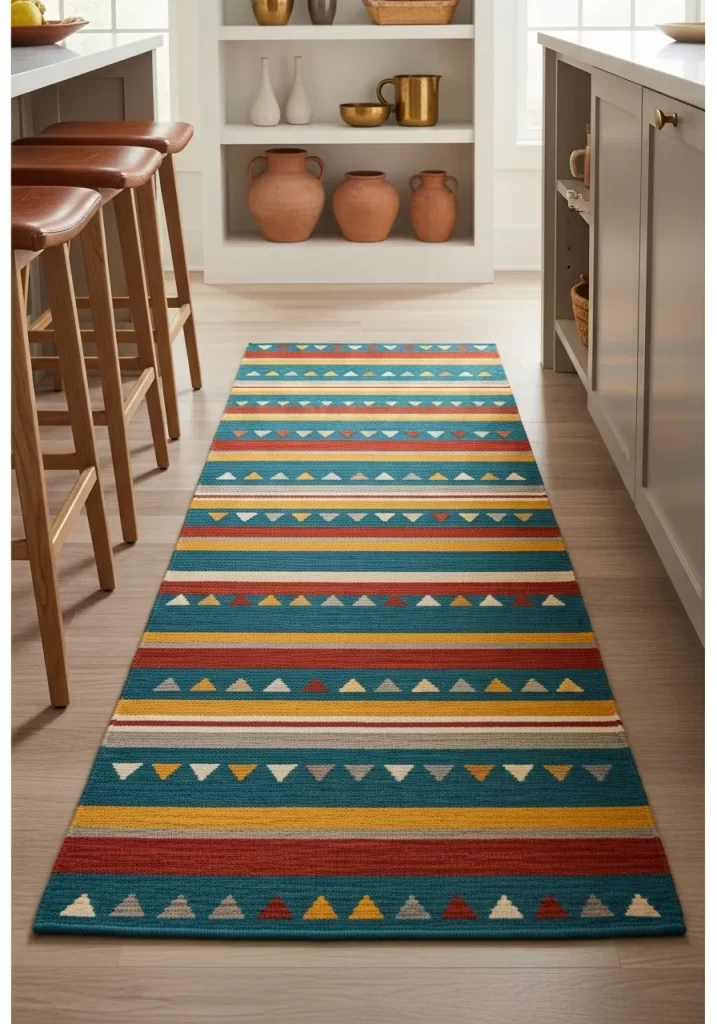
This vibrant runner infuses a kitchen with energetic color and a distinct Southwestern flair. It features an engaging pattern of multi-colored stripes and small, geometric triangle motifs in a lively palette of teal, mustard yellow, earthy red, and crisp white.
The bold horizontal stripes create a sense of movement, drawing the eye down the length of the kitchen. This runner offers crucial softness and warmth against the hard floor, making tasks at the counter or stove more comfortable. Its durable, flat-weave construction is practical for high-traffic, spill-prone kitchen environments. This rug is an excellent way to introduce a touch of global design and a cheerful color scheme, transforming a functional space into an expressive and inviting one.
DIY Focus: Keeping a Kitchen Runner Flat and Slip-Proof
Kitchen environments can be slick; a secure runner is essential for safety.
Materials Required
- Machine-washable, low-profile rug pad with good grip
- Double-sided rug tape (specifically for washable rugs)
- Mild laundry detergent
Equipment Required
- Measuring tape
- Scissors or utility knife
DIY Instruction: Ensuring Kitchen Runner Safety
Preventing slips and trips in the kitchen is a top priority.
- Measure and Trim Pad: Measure the runner’s dimensions. Cut the machine-washable rug pad so it is 1-2 inches smaller than the rug on all sides. This ensures the pad remains completely hidden.
- Clean Floor: Thoroughly clean the kitchen floor area. It must be dry and free of grease or debris for the rug pad to adhere properly.
- Apply Tape (Optional but Recommended): For maximum security, apply several strips of double-sided rug tape to the top side of the rug pad before placing the runner. This helps to bond the rug directly to the pad.
- Position Pad and Runner: Lay the pad down, then carefully center the Southwestern runner on top, pressing firmly to engage the tape.
- Regular Washing: Since it’s machine washable, wash the runner frequently (every 2-4 weeks) on a cold, delicate cycle with mild detergent. Remove the rug tape if applicable (some types are washable).
- Air Dry: Always air dry kitchen runners to prevent shrinking or damage to the backing. Ensure it is completely dry before returning it to the floor.
37. Playful Multi-Color Confetti Rug
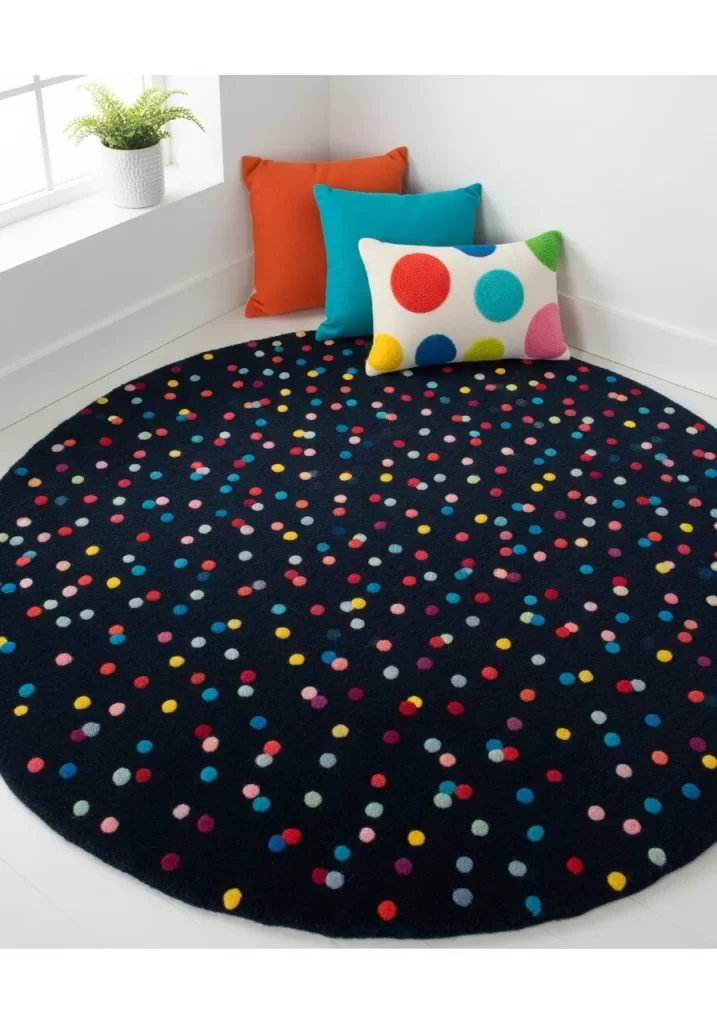
This delightful round rug is a burst of unadulterated joy, perfect for adding a whimsical touch to any room. Against a deep navy blue background, hundreds of small, colorful felt dots are scattered across the surface, resembling a shower of confetti.
The playful mix of red, yellow, pink, blue, and green dots creates an incredibly cheerful and inviting atmosphere. The round shape is excellent for defining a cozy corner, a reading nook, or a child’s play area, making it feel like its own special zone. It offers a soft, tactile experience that’s visually stimulating and happy. This rug is a fantastic choice for those who want to inject boundless fun and vibrant color, transforming a plain floor into a canvas of pure happiness.
DIY Focus: Emergency Cleaning for Craft-Related Stains
In a child’s play area, craft supplies like glue, paint, or playdough are common culprits for rug stains.
Materials Required
- Isopropyl alcohol (for ink/marker)
- White vinegar (for paint/playdough)
- Mild dish soap
- Clean, white towels
- Small brush
Equipment Required
- Spray bottle
DIY Instruction: Tackling Creative Messes
Knowing how to handle different types of craft spills saves your rug from permanent stains.
- Identify the Stain: The cleaning method depends on the type of spill.
- Water-based paint/Playdough: Mild dish soap and water solution.
- Ink/Marker: Isopropyl alcohol (test in an inconspicuous area first).
- Glue: Freeze it (see “Removing Sticky Residue” DIY).
- Blot, Don’t Rub: Regardless of the stain, always blot immediately with a clean, dry white towel to absorb as much as possible.
- Apply Solution:
- For paint/playdough: Spray a mixture of water and a few drops of mild dish soap and a splash of white vinegar onto the stain. Gently dab with a clean towel or a soft brush.
- For ink/marker: Dab isopropyl alcohol onto a clean cloth and gently blot the stain.
- Rinse and Dry: Once the stain lifts, blot the area with a cloth dampened with plain water to rinse away residue. Finally, blot vigorously with a dry towel.
- Air Dry: Ensure the rug is completely dry. Placing a fan nearby helps. Act quickly, and most craft-related messes can be removed without a trace.
38. Grand Traditional Gold Medallion Rug

This magnificent rug exudes timeless elegance and opulent grandeur, instantly transforming a room into a luxurious haven. It features a sweeping central medallion design, surrounded by an incredibly detailed border of intricate floral and scroll patterns.
The rich, warm golden yellow background is beautifully contrasted by the creamy ivory and beige patterns, creating a sophisticated monochromatic palette. This large rug powerfully grounds the entire room, turning a simple floor into a work of art. The traditional design and meticulous detailing give it the feel of an antique heirloom. It is a spectacular choice for a formal living room or dining area, where it provides both warmth and a strong sense of enduring style and refinement.
DIY Focus: Rotating and Maintaining a Very Large Rug
Large, heavy rugs require strategic rotation to ensure even wear and prevent specific areas from flattening or fading.
Materials Required
- Heavy-duty rug sliders (optional, for easier movement)
Equipment Required
- Strong, willing helpers (at least two people)
- Measuring tape
DIY Instruction: Handling Large, Delicate Rugs
Proper rotation extends the life of a grand, heavy rug.
- Plan the Rotation: Decide which end of the rug receives more sunlight or foot traffic. The goal is to rotate the rug 180 degrees so the more worn end moves to a less-used section of the room.
- Clear the Area: Remove all furniture from the rug. This is crucial for safety and ease of movement.
- Lift and Turn: With at least one other strong person, carefully lift and turn the rug 180 degrees. If the rug is extremely heavy, consider using heavy-duty rug sliders under the corners to help it pivot without dragging.
- Check Alignment: Once rotated, gently adjust the rug to ensure it is straight and properly centered in the room. Use a measuring tape to check distances from walls or other fixed points.
- Replace Furniture: Carefully return furniture to its place. Place furniture coasters or pads under heavy legs to prevent pile compression.
- Frequency: For very large rugs, a rotation every 6-12 months is generally sufficient, depending on the room’s usage. This simple act significantly prolongs the rug’s beauty and prevents uneven wear.
39. Nautical Denim Patchwork Runner
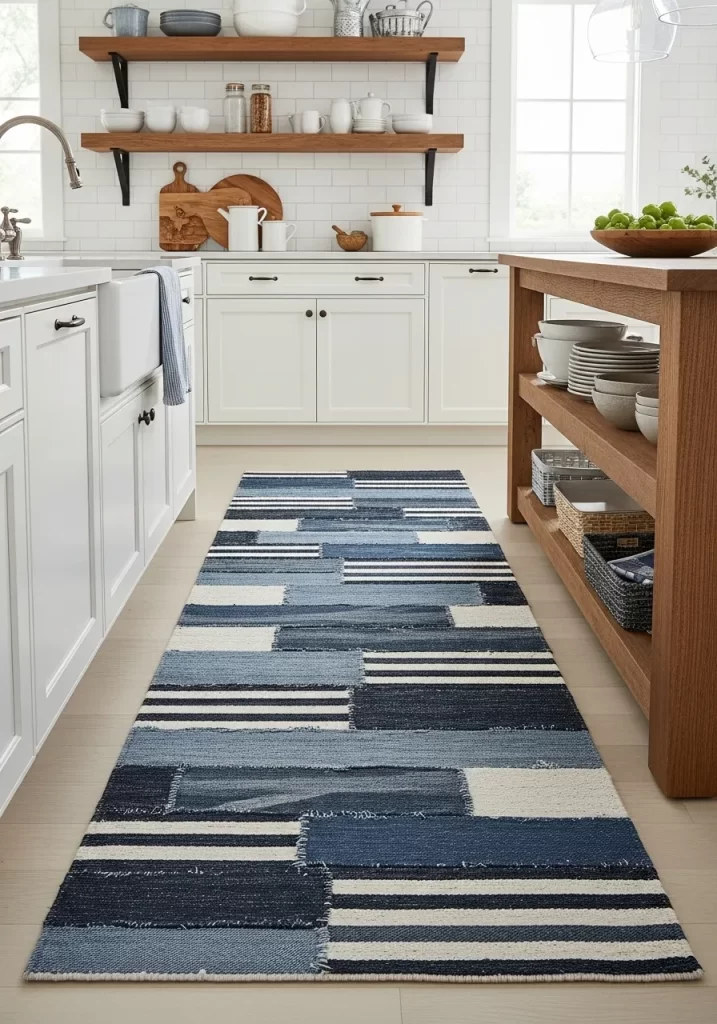
This charming runner brings a fresh, coastal-inspired vibe to any kitchen, hallway, or laundry room. It features a compelling patchwork design crafted from various shades of blue denim, interspersed with crisp white and beige stripes.
The different textures and hues of denim create a rustic, reclaimed aesthetic, giving the rug a unique character. The strong horizontal lines of the stripes add a sense of movement and visual interest, perfectly complementing the white kitchen cabinetry and light wood floors. Its durable, flat-weave construction makes it highly practical for high-traffic areas prone to spills. This runner is a fantastic way to introduce a relaxed, nautical, or farmhouse feel, making the floor a practical and stylish element.
DIY Focus: Spot Cleaning and Maintaining a Denim Rug
Denim rugs are durable but can show water marks or fade if not cleaned correctly.
Materials Required
- Mild liquid laundry detergent (gentle on colors)
- Cold water
- White vinegar (optional, for color setting)
- Clean, white microfiber towels
Equipment Required
- Soft brush
DIY Instruction: Caring for Your Denim-Inspired Runner
Specific care helps preserve the colors and texture of a denim rug.
- Vacuum Regularly: Vacuum the runner at least once a week using a regular vacuum setting or a brush attachment. This prevents dirt from embedding deep into the woven denim fibers.
- Immediate Spill Response: For spills, blot immediately with a clean, dry white towel. Do not rub, as rubbing can push the stain deeper and potentially cause color transfer.
- Spot Clean Gently: Mix a tiny amount of mild liquid laundry detergent with cold water. Dampen a clean cloth with this solution, wring it almost dry, and gently dab the stain. For tougher stains, use a soft brush.
- Rinse Thoroughly: Blot the cleaned area with a fresh cloth dampened with plain cold water (a little white vinegar in the rinse water can help set colors and remove soap residue). Blot until all soap is gone.
- Air Dry Flat: Lay the runner flat to air dry completely. Avoid direct sunlight during drying, as it can cause denim to fade unevenly. Never put a denim rug in a machine dryer, as it can shrink and damage the backing.
- Color Fastness Test: Before using any new cleaning solution, always test it on an inconspicuous area of the rug to ensure it does not cause color bleeding or fading.
40. Natural Jute Ring Rug with Terracotta Center
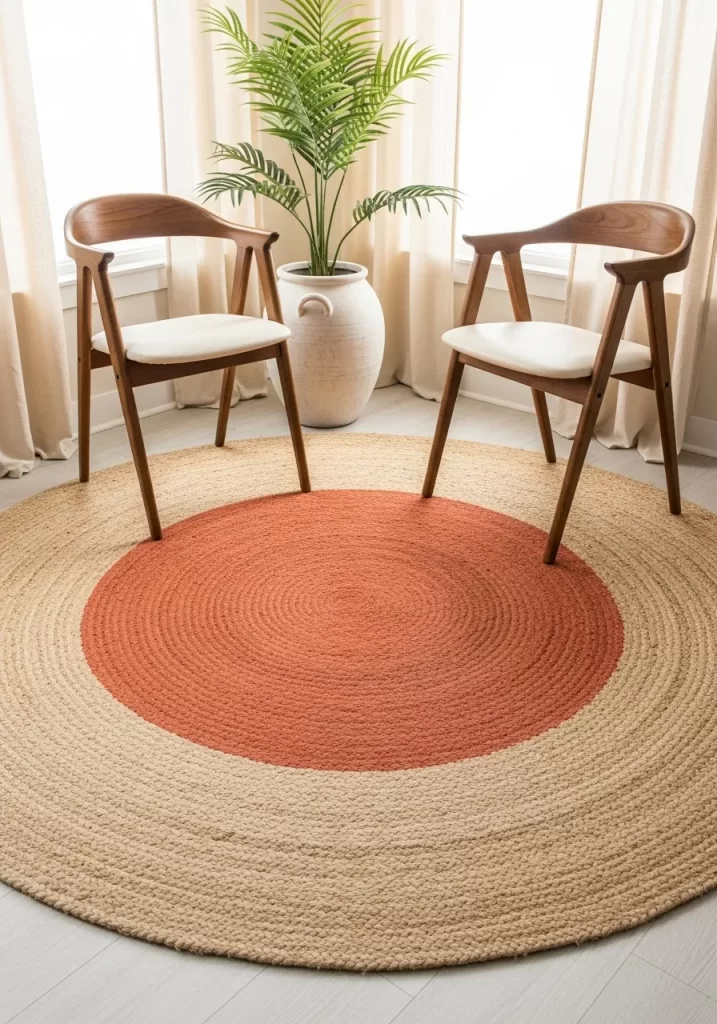
This earthy, round rug offers a beautiful blend of natural texture and a warm, inviting color. The main body is crafted from tightly braided natural jute, giving it a rustic, organic feel and exceptional durability.
A contrasting terracotta-colored inner circle creates a striking focal point, adding a pop of warm color that draws the eye inward. The round shape is ideal for defining a small sitting area, such as this cozy spot with two wooden chairs, creating an intimate space. This rug is an excellent choice for adding bohemian, coastal, or rustic charm, providing a grounding, textural element that is both resilient and stylish. It proves that natural materials can be incredibly chic.
DIY Focus: Cleaning and Preventing Mold/Mildew in Jute Rugs
Natural fiber rugs like jute are beautiful but can be prone to moisture damage, leading to mildew.
Materials Required
- Dry, clean cloths
- Mild dish soap
- White vinegar
- Baking soda
- Stiff brush
Equipment Required
- Vacuum cleaner with hose attachment
- Dehumidifier or fan (for drying)
- Sunny, dry outdoor space
DIY Instruction: Protecting Natural Jute from Moisture
Proper drying and prevention are crucial for maintaining jute rugs.
- Regular Vacuuming: Vacuum the jute rug frequently using the hose attachment to get into the crevices of the braid. This removes loose dirt and prevents it from becoming embedded.
- Blot Spills Immediately: Jute is very absorbent. Blot any spills immediately with a clean, dry cloth. Never rub, as this pushes liquid deeper.
- Minimal Spot Cleaning: For stubborn spots, mix a tiny amount of mild dish soap with cold water. Dampen a clean cloth (not wet) and gently dab the stain. Immediately blot dry with a fresh cloth.
- Tackle Mold/Mildew: If you notice any musty smell or visible mildew, move the rug to a sunny, dry outdoor area. Brush off any visible mildew. Sprinkle baking soda over the affected area, let it sit for a few hours, then vacuum. A solution of 50/50 white vinegar and water can also be lightly dabbed on (test first!) to kill spores, then dried thoroughly.
- Ensure Complete Drying: This is the most critical step for jute. After any cleaning, ensure the rug dries completely. Use fans or a dehumidifier if indoors. If possible, sun the rug outdoors to ensure no moisture remains trapped in the fibers.
41. Futuristic Glitch Pattern Rug
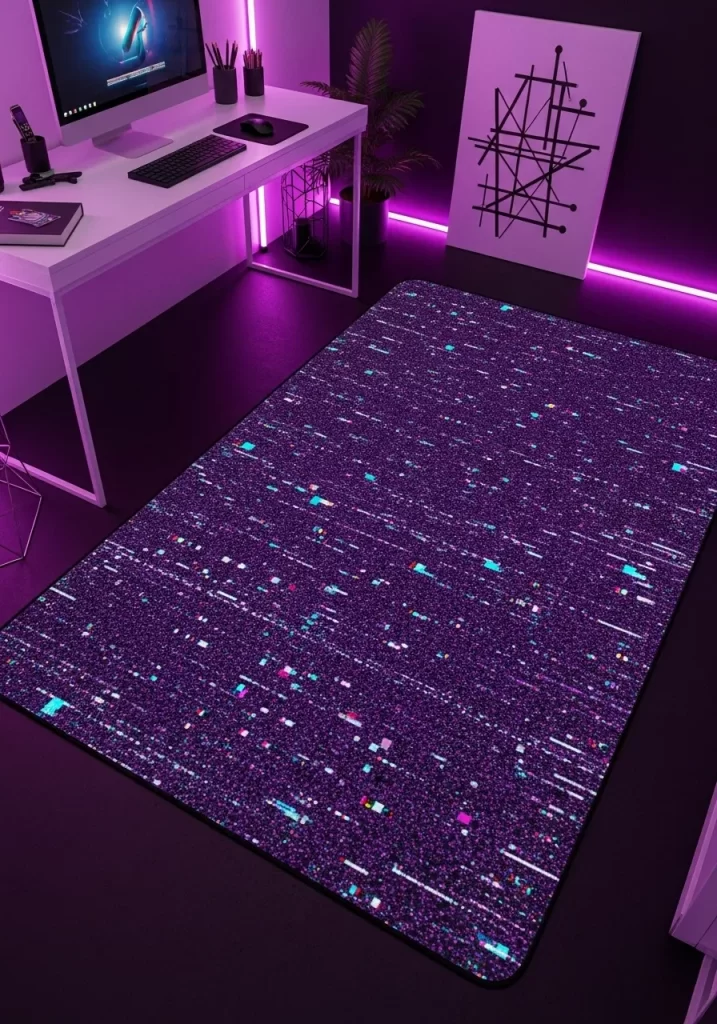
This rug is a striking statement piece, perfectly suited for a modern, tech-inspired interior with a touch of cyberpunk aesthetic. Its deep purple background is overlaid with a chaotic yet mesmerizing “glitch” pattern of scattered white, teal, and pink pixels and horizontal lines, mimicking a digital screen malfunction.
The vibrant neon purple lighting in the room intensifies the rug’s futuristic vibe, creating an immersive and dynamic workspace. This rug defines the desk area with an edgy, artistic flair, proving that floor coverings can be a powerful extension of a room’s theme. It’s an ideal choice for a gaming room, creative studio, or any space desiring a bold, contemporary, and distinctly digital aesthetic.
DIY Focus: Keeping a Dark Rug from Showing Lint and Dust
Dark-colored rugs, especially in rooms with neon lighting, can make lint and dust more visible.
Materials Required
- Lint roller (heavy-duty)
- Rubber gloves (optional, for pet hair)
- Baking soda (for odor and fine dust)
- Fabric softener spray (diluted, for static)
Equipment Required
- Vacuum cleaner (with excellent suction)
DIY Instruction: Maintaining the Pristine Look of Dark Rugs
Regular and specific cleaning methods keep dark rugs looking sharp.
- Frequent Vacuuming: Vacuum the rug at least twice a week. Use a vacuum with strong suction and a clean brush bar (if safe for the rug’s pile). Always vacuum in multiple directions to lift embedded dust.
- Lint Rolling for Surface Debris: For visible lint, pet hair, or light dust between vacuuming, use a large, heavy-duty lint roller across the entire surface of the rug. For pet hair, wearing damp rubber gloves and wiping the rug can also effectively gather it.
- Baking Soda Treatment: Every few weeks, lightly sprinkle baking soda over the rug. This helps to absorb fine dust and odors. Let it sit for 15-30 minutes, then vacuum thoroughly.
- Anti-Static Spray: Dark, synthetic rugs can sometimes generate static, which attracts dust and lint. Lightly mist the rug with a diluted fabric softener spray (1 part softener to 4 parts water) to reduce static buildup.
- Clean Lights and Surfaces: Ensure surrounding surfaces (desk, shelves) and light fixtures are also regularly dusted. This reduces the amount of new dust settling on the rug.
42. Minimalist Striped Runner
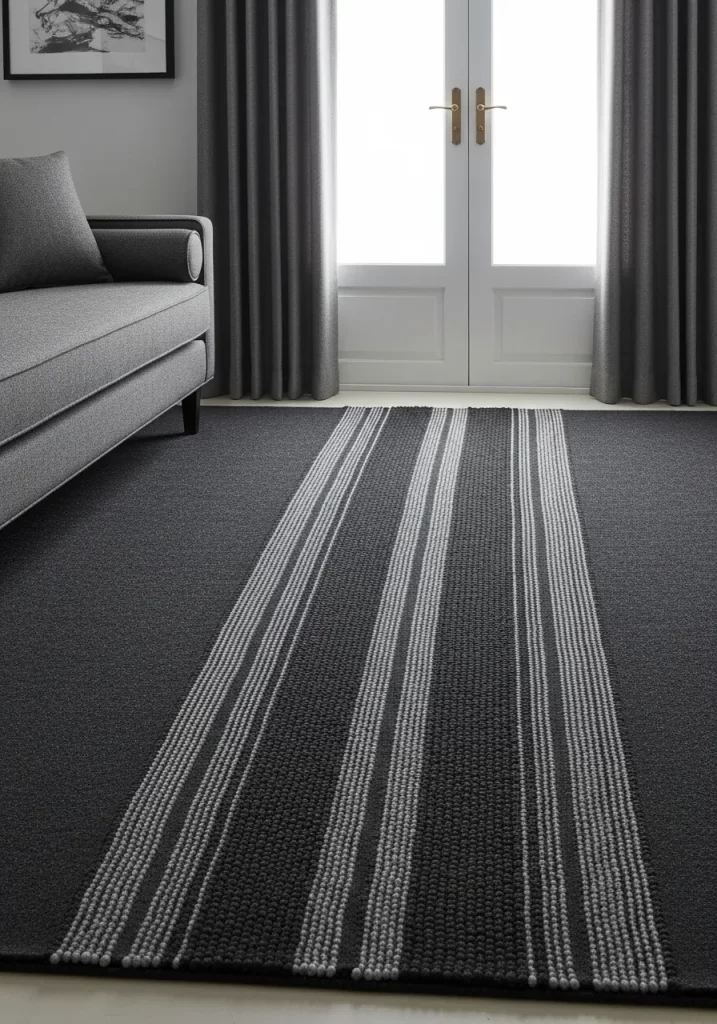
This sophisticated runner brings understated elegance and a calming rhythm to any space, particularly a serene living room or hallway. The deep charcoal gray base is subtly textured, providing a rich, solid foundation.
Running down the center are multiple parallel stripes of varying widths in soft, light grays and creamy whites. These textural stripes create a gentle sense of movement and visual interest without overwhelming the room. The rug perfectly complements the plush gray sofa and soft drapery, enhancing the monochromatic and minimalist aesthetic. This durable, low-pile runner is an excellent choice for adding definition and a touch of quiet sophistication, ensuring the floor feels both warm and effortlessly stylish.
DIY Focus: Preventing Shifting on Hard Floors
Runners, especially in high-traffic areas, tend to shift and bunch, creating a tripping hazard.
Materials Required
- Non-slip rug pad (rubber waffle or felt-rubber blend)
- Double-sided rug tape (specifically for hard floors)
Equipment Required
- Measuring tape
- Scissors or utility knife
DIY Instruction: Securing a Runner for Safety and Aesthetics
A non-slip runner is essential for both appearance and preventing accidents.
- Clean the Floor: Thoroughly clean and dry the hard floor surface (wood or tile) where the runner will be placed. Any dust or debris will compromise the grip.
- Measure and Cut Pad: Measure the runner’s length and width. Cut the non-slip rug pad approximately 1-2 inches smaller than the runner on all four sides. This ensures the pad remains completely hidden.
- Place the Pad: Lay the cut rug pad down in the desired location, ensuring it is straight.
- Apply Tape (Optional but Recommended): For maximum security, apply several strips of double-sided rug tape directly to the top side of the rug pad. This helps to bond the runner to the pad.
- Position the Runner: Carefully unroll and place the runner directly on top of the pad, aligning it perfectly straight. Press down firmly to engage the rug tape.
- Test for Movement: Firmly walk and even slide your foot across the runner. It should not budge or wrinkle, creating a safe and aesthetically pleasing pathway.
43. Whimsical Rainbow Leaf Rug
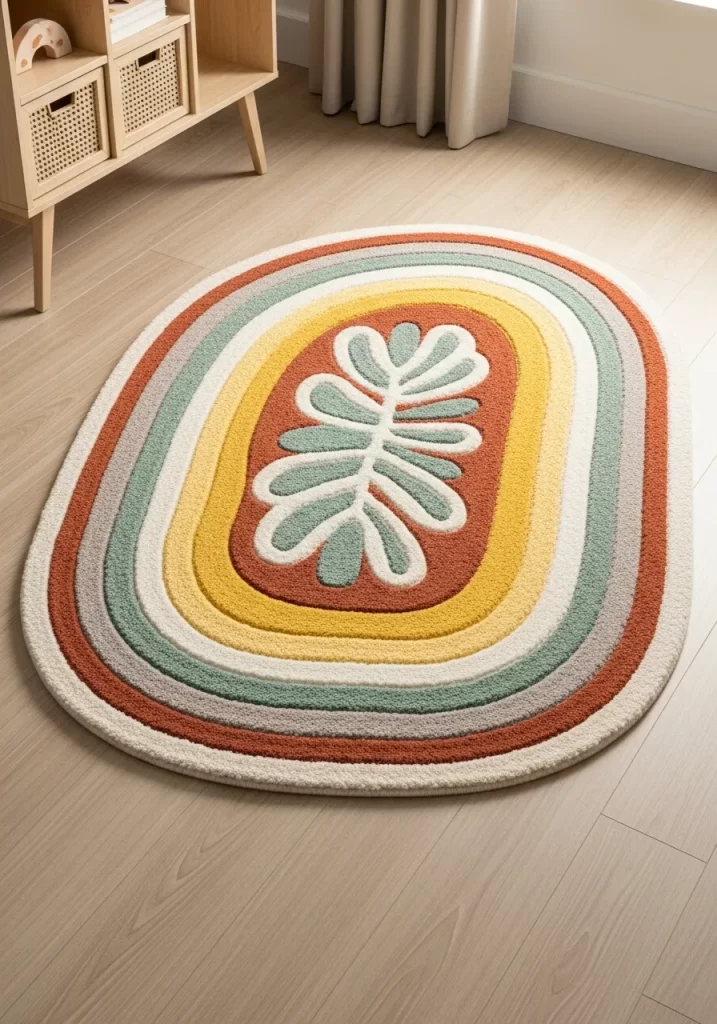
This charming oval rug is a delightful burst of cheerful color and organic design, perfect for brightening any space. Its unique, irregular oval shape adds a playful touch that contrasts beautifully with traditional rectangular rugs.
The rug features concentric rings of soft, muted rainbow colors—from earthy terracotta and warm yellow to sage green and creamy white. In the center, a stylized, large leaf motif in cool blue-green adds a touch of nature-inspired whimsy. This rug is a fantastic choice for a child’s room, a creative studio, or any space that benefits from vibrant yet calming hues. It offers a soft, inviting surface that is both imaginative and grounded, turning the floor into an inviting, colorful landscape.
DIY Focus: Removing Playdough or Clay Stains
In playful environments, moldable materials like playdough or modeling clay can get embedded in rug fibers.
Materials Required
- Dull knife, spoon, or stiff brush
- Vacuum cleaner
- Ice cube (optional, for hardening)
- Mild dish soap
- White vinegar
- Clean, white cloths
Equipment Required
- Spray bottle
DIY Instruction: Tackling Playdough/Clay Messes
Removing these soft, colorful stains requires a gentle yet effective approach.
- Let it Dry (or Harden): If the playdough or clay is soft, allow it to air dry and harden completely. For very sticky fresh playdough, you can place an ice cube in a plastic bag on top of it for a few minutes to harden it.
- Scrape/Brush Off: Once dry and hard, use a dull knife, spoon, or stiff brush to gently scrape and brush away as much of the hardened material as possible. Work carefully to avoid damaging the rug fibers.
- Vacuum Debris: Use your vacuum cleaner to thoroughly remove all the dislodged crumbs and particles.
- Spot Clean Residue: For any remaining color or residue, mix a few drops of mild dish soap with warm water and a splash of white vinegar in a spray bottle. Lightly mist the stain.
- Blot and Rinse: Blot the area repeatedly with a clean, white cloth until the stain lifts. Follow with a cloth dampened with plain water to rinse away soap residue.
- Air Dry: Blot dry with a clean towel and allow the rug to air dry completely. A fan can help speed up the process.
44. Serene Bamboo Slat Runner

This runner brings a distinct sense of calm and natural simplicity, perfectly embodying a minimalist or Asian-inspired aesthetic. It features individual bamboo slats, carefully aligned and held together by thin, unseen threads, creating a uniform, earthy surface.
The natural variations in the bamboo’s light green and beige tones offer subtle visual interest, while the dark brown fabric border frames the runner with a neat, tailored finish. Its low-profile design is practical for high-traffic areas, allowing chairs to slide easily without snagging. This runner is an excellent choice for a dining area, kitchen, or entryway, where it provides a durable, eco-friendly, and visually light-filtering alternative to traditional fabric rugs. It connects the space with nature.
DIY Focus: Cleaning and Maintaining Bamboo Runner Rugs
Bamboo rugs are durable but require specific care to prevent warping or mold.
Materials Required
- Mild dish soap
- Warm water
- Clean sponge or soft cloth
- White vinegar (optional, for deep cleaning)
Equipment Required
- Vacuum cleaner (hose attachment only)
- Soft-bristle brush (optional, for crevices)
DIY Instruction: Caring for Natural Slat Runners
Proper cleaning prevents warping and maintains the natural beauty of bamboo.
- Regular Vacuuming: Use the hose attachment of your vacuum cleaner to gently clean between the bamboo slats. A soft-bristle brush can also help dislodge dust and debris from the crevices.
- Immediate Spill Wipe-Up: Bamboo is somewhat water-resistant but not waterproof. Wipe up any spills immediately with a clean, dry cloth to prevent liquid from seeping into the wood and causing warping or mold.
- Spot Cleaning: For stubborn spots, mix a few drops of mild dish soap with warm water. Dampen a sponge or cloth with this solution (do not saturate) and gently wipe the affected bamboo slats.
- Rinse and Dry Thoroughly: Use a separate clean, damp cloth (plain water, or water with a bit of white vinegar for a deeper clean) to wipe away any soap residue. The most crucial step is to immediately and thoroughly dry the bamboo with a clean, dry towel.
- Air Dry Flat: Always allow the bamboo runner to air dry completely flat. Do not roll it up or put it away until it is bone dry, as trapped moisture can cause mildew and warping.
- Avoid Excessive Moisture: Never steam clean, immerse in water, or use harsh chemical cleaners, which can damage the natural finish and structure of the bamboo.
45. Organic Curvilinear Abstract Rug
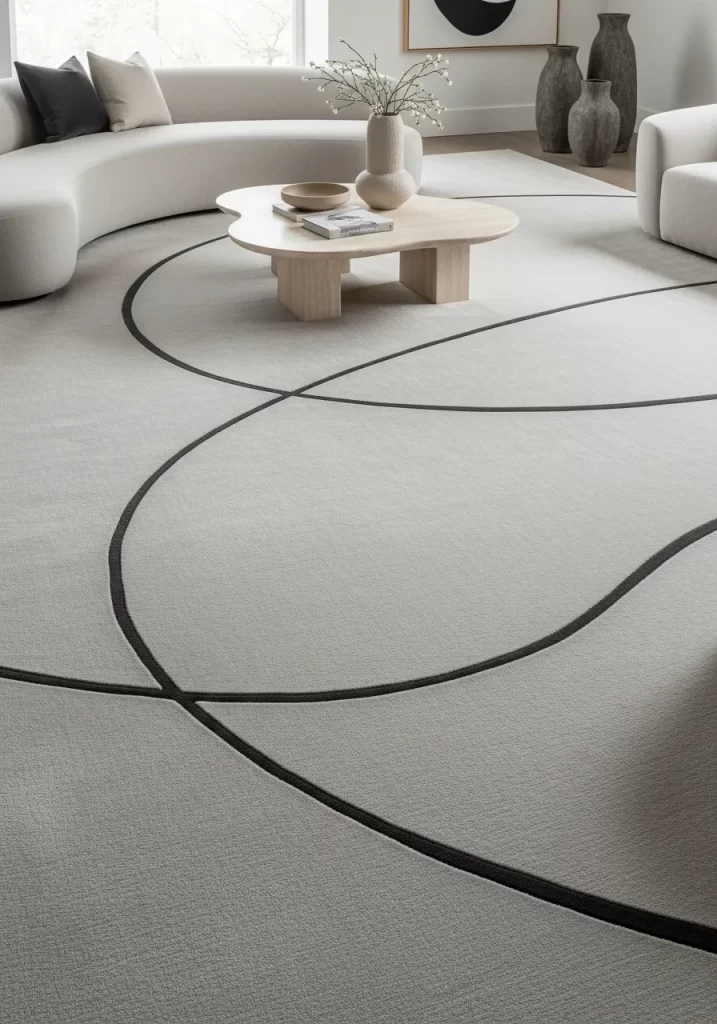
This stunning rug is a masterpiece of minimalist modern design, offering a subtle yet powerful statement in a sophisticated living room. Against a soft, light gray background, fluid black lines weave and intersect in graceful, organic curves.
The abstract pattern creates a sense of continuous movement and artistic elegance, beautifully complementing the curvaceous modern sofa and the soft, neutral color palette of the room. This rug acts as a visual anchor, subtly defining the lounging area without overwhelming the serene atmosphere. Its simplicity and graphic strength allow the unique furniture shapes and natural textures of the space to truly shine. It’s a perfect choice for adding modern art to the floor, fostering a tranquil yet visually engaging environment.
DIY Focus: Gentle Cleaning for High-End, Low-Pile Rugs
High-end, low-pile rugs with intricate designs benefit from gentle cleaning to protect their texture and pattern integrity.
Materials Required
- High-quality, pH-neutral rug shampoo (often labeled for wool or fine rugs)
- Clean, soft-bristle brush
- Clean, white microfiber towels
- White vinegar (optional, for brightening)
Equipment Required
- Vacuum cleaner (hose attachment only)
- Wet/dry vacuum (optional, for extraction)
DIY Instruction: Preserving Delicate Design and Texture
Careful cleaning maintains the refined appearance of a high-quality rug.
- Pre-Vacuum Thoroughly: Use the vacuum’s hose attachment to gently and meticulously vacuum the entire rug. Focus on getting deep into the pile to remove all loose dirt and dust without damaging the fibers or the stitched pattern.
- Spot Treat Carefully: For any specific spots or stains, mix a tiny amount of pH-neutral rug shampoo with water. Apply it with a clean cloth, gently dabbing the stain. Avoid aggressive rubbing, which can distort the pile or spread the stain.
- Shampoo in Sections: If cleaning the entire rug, work in small sections. Apply the diluted shampoo with a soft-bristle brush, working it gently into the fibers in the direction of the pile.
- Rinse and Extract: Use clean, damp microfiber cloths (or a wet/dry vacuum if you have one) to blot and extract the shampoo and dirt. Rinse the cloth frequently. Follow with cloths dampened with plain water (or water with a splash of white vinegar for extra brightness) to ensure all soap residue is removed.
- Blot Dry Vigorously: Use several clean, dry towels to blot up as much moisture as possible.
- Air Dry Flat: Allow the rug to air dry completely flat. Placing a fan nearby will help speed up the drying process. Ensure it’s bone dry before replacing any furniture to prevent mildew or pile compression.
Congratulations—you are now armed with 45 unique ways to conquer boring floors forever. We have explored everything from the cozy depth of high-pile shags to the structured elegance of minimalist geometry. Every single rug idea here offers a powerful opportunity to redefine your space.
A quality area rug does more than simply look appealing. It insulates, dampens sound, protects your underlying floor, and provides unmatched tactile comfort. It is the single most effective element for tying together disparate furniture pieces and injecting focused personality into a room.
The journey to an engaging home starts literally from the ground up. By choosing a rug that speaks to your personal style—be it retro, regal, bohemian, or brilliantly modern—you create a foundation that is warm, cohesive, and genuinely unforgettable. Go ahead; roll out the color and texture your home has been waiting for.
Key Takeaways
- Rugs are Essential Anchors: The most crucial function of a rug is to anchor and define a room’s main zone, ensuring furniture arrangements look cohesive and intentional.
- Texture Equals Warmth: Even in neutral color palettes, choosing rugs with deep texture, like chunky braids or plush shags, drastically increases a room’s perceived warmth and comfort level.
- Color as a Statement: Use rugs with bold colors and abstract patterns—like the Ombré or Geometric Sunburst designs—to introduce personality without having to repaint walls or replace large furniture items.
- Shapes Soften Edges: Non-traditional shapes, such as round, oval, or freeform rugs, are highly effective at softening the hard, straight lines of furniture, walls, and doorways.
- Safety Through DIY: Simple maintenance tasks, like using non-slip pads, rotating the rug, and implementing furniture protection, extend the rug’s life and improve home safety.
- Match Rug to Zone: Low-pile, durable rugs are best for high-traffic areas like kitchens and entryways, while deep-pile textures are better suited for low-traffic comfort zones like bedrooms and reading nooks.