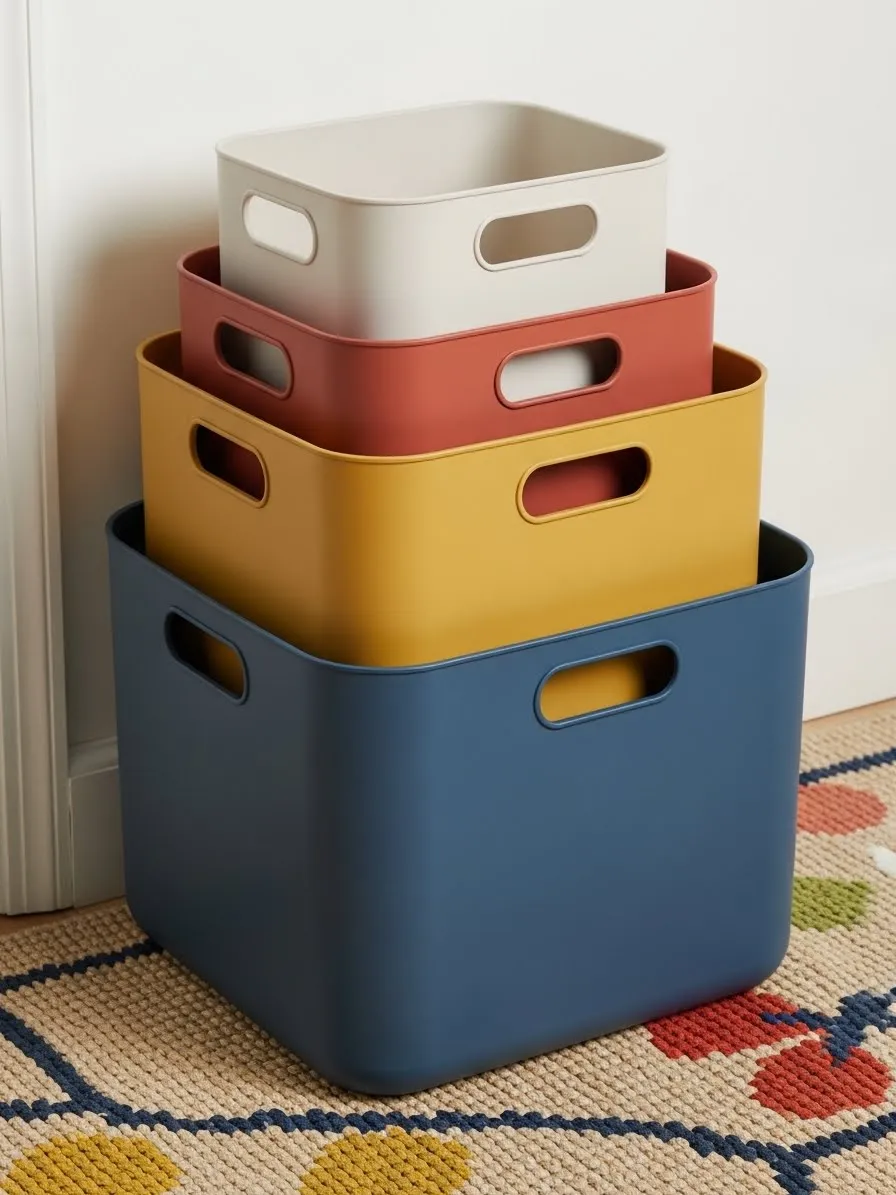
Many of us look around our homes and feel a creeping sense of chaos, where clutter seems to multiply overnight. Achieving a truly tidy space often feels like a constant, frustrating battle against the everyday accumulation of stuff. This common problem does not require drastic renovation or a total lifestyle overhaul.
The secret to lasting order often lies in maximizing the power of simple, contained storage. Baskets and bins are not just functional catch-alls; they are versatile design elements that can introduce texture, color, and a sense of calm sophistication. They allow you to define boundaries for clutter, making cleanup simple and intuitive for everyone.
This comprehensive guide offers 40 inspiring ways to transform your living areas, from maximizing cabinet efficiency to displaying beautiful floor storage. We will explore clever solutions for every room, complete with materials lists and simple DIY instructions for personalizing your containers. It is time to stop hiding the mess and start organizing with intentional style.
1. Versatile Tiered Storage Caddy
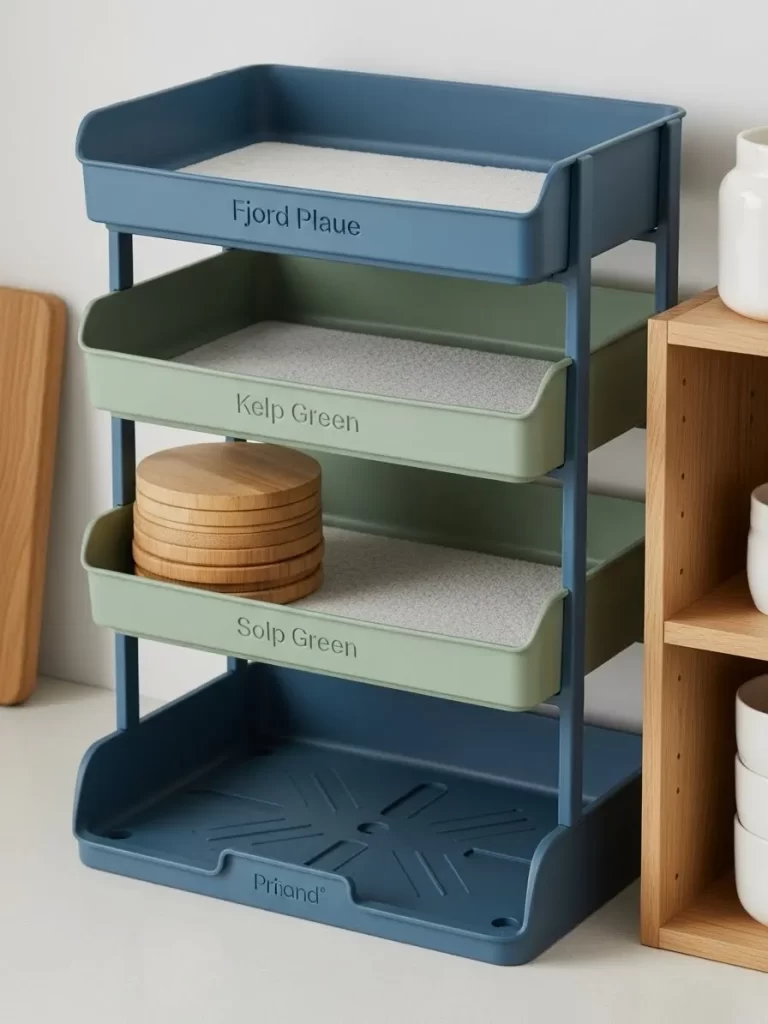
This compact tiered organizer brings instant order to countertops, cabinets, or pantry shelves. The soothing colors, deep blue and soft sage, make organizing visually appealing instead of clinical. Durable plastic construction means it can handle everything from spices and seasonings to small kitchen gadgets.
The open design of each shelf allows for quick identification of stored items, saving valuable time during busy routines. Notice the removable liners; these are incredibly helpful for catching crumbs or minor spills, keeping the entire unit much cleaner. You can use it vertically to save space or disassemble it for individual tray use inside deep drawers. This system is a wonderful solution for maximizing vertical storage in any kitchen, laundry room, or bathroom cabinet that feels cluttered.
Materials Required (If you were to paint/customize this item)
- Tiered plastic storage unit (as shown)
- Fine-grit sandpaper (220-grit)
- Plastic-friendly spray primer (adhesion promoter)
- Spray paint in your desired color (specifically formulated for plastic)
- Painter’s tape
- Drop cloth or old newspapers
Equipment Required
- Safety glasses
- Ventilation mask (for spray painting)
- Screwdriver (if minor assembly/disassembly of the unit is required before painting)
- Clean, lint-free cloth
DIY Instruction: Giving Your Caddy a Custom Color
- Prepare the Surface: Completely disassemble the tiered unit if possible. Using the fine-grit sandpaper, lightly scuff the entire surface of all plastic pieces. This step is crucial for giving the paint something to grip onto.
- Clean Thoroughly: Wipe down all pieces with a clean, lint-free cloth to remove all dust from sanding. Any residue will interfere with paint adhesion. Let the pieces dry fully.
- Apply Primer: Set the pieces out on your drop cloth in a well-ventilated area (or outdoors). Wearing your safety glasses and mask, apply a thin, even coat of the plastic-friendly spray primer. Focus on long, sweeping motions to avoid drips. Allow this coat to dry according to the manufacturer’s instructions, typically 15–30 minutes.
- Paint the First Coat: Once the primer is dry, apply a light, even coat of your chosen spray paint. Again, keep the can moving constantly. It is always better to apply two thin coats than one thick coat that will run or drip. Let this coat dry completely, usually several hours.
- Apply the Second Coat: Once the first coat is dry, apply a second, slightly heavier, but still even, coat of spray paint. Check all angles to ensure thorough coverage.
- Cure Time: Let the painted pieces cure (fully harden) for 24–48 hours before reassembling. This prevents the finish from chipping or sticking when the parts are put back together.
- Reassemble: Carefully reassemble the storage unit. Your customized caddy is now ready to organize your space!
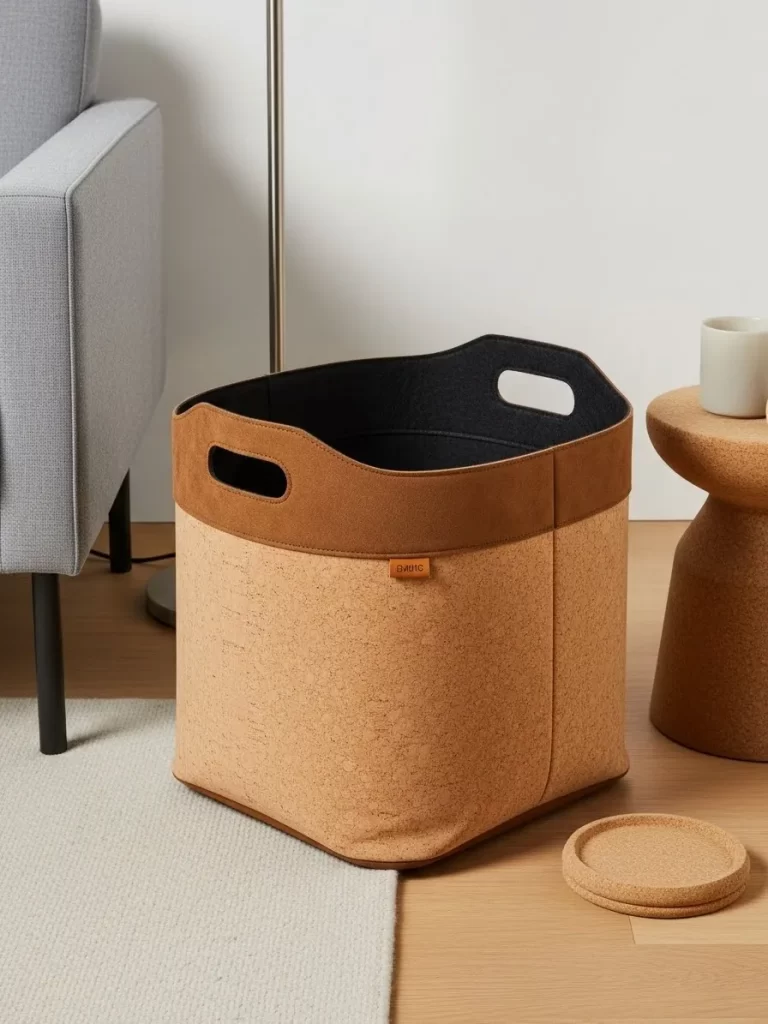
2. Contemporary Cork and Felt Storage Basket
This large storage container showcases a beautiful mix of textures that truly elevates its look beyond simple utility. The body is made from natural cork, providing a light, organic feel, contrasted by a sophisticated black interior and a rich, brown suede-like rim. It is an excellent way to contain living room clutter like throws, magazines, or extra pillows.
The clean, square shape ensures it fits neatly against furniture or shelving units, maximizing floor space. Built-in handles cut into the rim make moving the basket simple, even when it is fully loaded. This piece demonstrates how functional storage can become a purposeful decorative accent, bringing warmth and modern style to any space, whether situated next to a cozy chair or at the foot of a bed.
Materials Required (For customizing the rim)
- Felt or soft suede fabric (enough to cover the existing rim)
- Strong fabric adhesive or hot glue sticks
- Scissors or rotary cutter
- Measuring tape or ruler
Equipment Required
- Hot glue gun (if using hot glue)
- Clips or clothespins (to secure fabric while drying)
- Iron and ironing board (optional, for crisp edges)
DIY Instruction: Creating a New Fabric Rim
- Measure and Cut Fabric: Use the measuring tape to find the dimensions of the existing brown rim—both the height and the circumference (distance all the way around). Cut a strip of your new felt or suede fabric to match these dimensions, adding about one inch to the length for overlap and a half-inch to the height for a clean edge.
- Prepare the Fabric: If your fabric allows, iron it gently to remove any wrinkles and ensure a flat surface for gluing.
- Apply Adhesive: Start at the back seam of the existing basket rim. Apply a thin, continuous bead of strong fabric adhesive or hot glue to the surface of the basket’s rim where the new fabric will attach. Work in small sections, maybe a foot at a time, so the glue does not dry prematurely.
- Attach the Fabric: Carefully lay the edge of your cut fabric strip onto the glued area, ensuring the bottom edge is straight and aligned. Press firmly. Slowly continue gluing and wrapping the fabric around the entire perimeter of the rim.
- Secure the Seam: When you reach the starting point, overlap the fabric strip by about half an inch. Trim any excess fabric neatly. Secure this final overlapping seam with a generous amount of glue and use clips or clothespins to hold it tightly while the adhesive sets.
- Finishing Touches: If the basket has handles, carefully use the scissors to cut out the handle shapes from your new fabric, ensuring clean edges. Allow the adhesive to dry completely, following the manufacturer’s directions, before using the basket.
3. Slatted Bamboo Countertop Bin
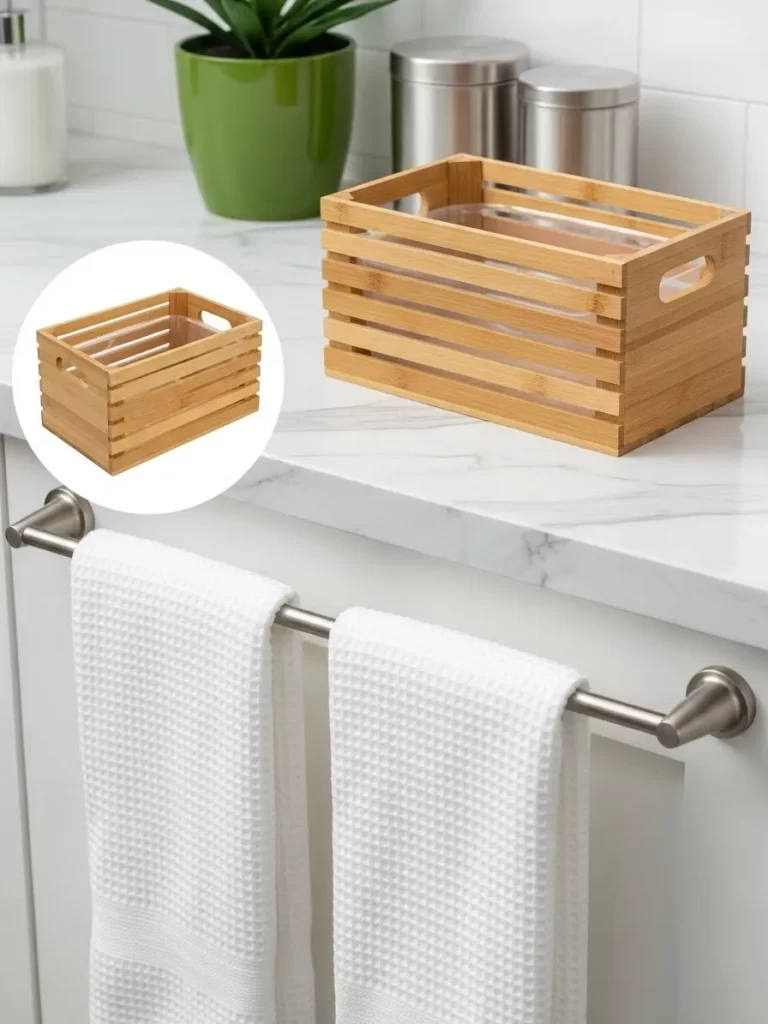
A durable bamboo bin offers an elevated way to organize clutter in kitchens, bathrooms, or offices. The light, natural wood grain brings a calming, spa-like feel to any surface, sitting perfectly on a crisp white countertop. Its slatted design provides necessary ventilation, making it a great container for holding cleaning cloths, fresh fruits, or toiletries.
The small cut-out handles on the short sides make lifting and repositioning the container simple and safe. Although small, this storage piece is extremely functional; it even includes a clear liner, protecting the wood from moisture and spills, a crucial feature in wet areas like the bathroom or sink area. This crate is an attractive alternative to basic plastic containers, blending utility with a touch of organic style.
Materials Required (For creating a custom bamboo label)
- Thin piece of bamboo veneer or lightweight wood
- Small brass eyelets or small decorative nails
- Fine-tipped permanent marker or wood-burning tool
- Clear varnish or sealant (optional)
Equipment Required
- Small hand saw or utility knife (to cut the wood)
- Drill with a small bit (for eyelet holes)
- Small hammer (for nails)
- Sandpaper (medium and fine grit)
DIY Instruction: Making a Decorative Label Tag
- Design and Cut the Tag: Decide on the shape and size for your label tag; a simple rectangle, oval, or shield works well. Use the small saw or utility knife to carefully cut the bamboo veneer or wood to your chosen dimensions. Remember to keep it proportional to the bin.
- Smooth the Edges: Use the medium-grit sandpaper to shape the edges of the tag. Switch to the fine-grit sandpaper to achieve a smooth finish that won’t splinter.
- Prepare for Attachment: Hold the tag against the bin to determine where you want to attach it. Use the small drill bit to create tiny holes in the top corners of the label tag. These holes will be used for securing the tag to the wood crate.
- Apply Finish (Optional): If you plan to use the bin in a wet area, brush a light coat of clear varnish or sealant onto the tag to protect it from moisture. Let it dry completely.
- Write the Label: Use the fine-tipped permanent marker or, for a more rustic look, the wood-burning tool to write the category (e.g., “Cloths,” “Snacks,” “Lotions”) neatly onto the bamboo tag.
- Attach the Tag: Line up the finished label tag with the front of the bamboo bin. Carefully tap the small decorative nails or brass eyelets through the holes in the tag and into the wood of the bin, securing the label firmly in place.
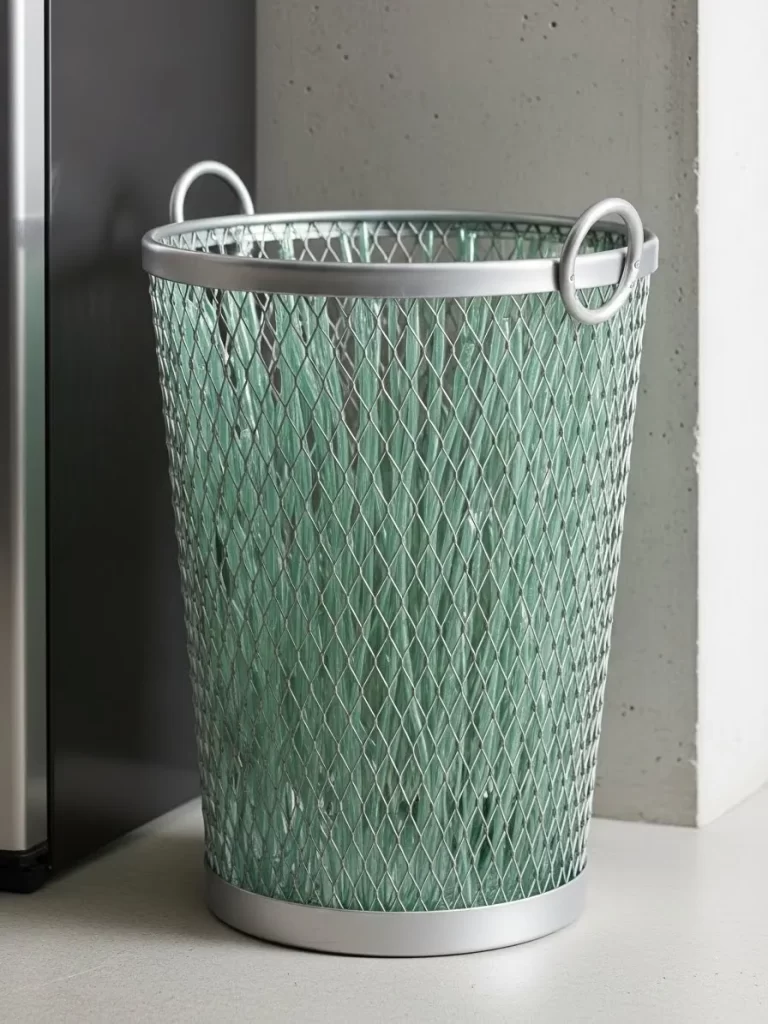
4. Modern Mesh Waste Bin
This striking metal waste bin instantly upgrades any office or laundry space with its distinctive, contemporary design. The diamond-patterned mesh exterior gives it a sturdy, industrial feel, while the bright silver rim and base offer a clean, polished contrast. It is significantly more stylish than a simple plastic receptacle.
The green-tinted interior lining peeking through the metal grid adds an unexpected pop of color and texture, making the container feel less utilitarian. It includes two strong ring handles at the top, making it easy to carry or empty when full. This container is not just for trash; it can also be creatively repurposed as storage for wrapping paper rolls, yoga mats, or laundry items in a stylized manner.
Materials Required (For adding a decorative fabric liner)
- One yard of sturdy, patterned fabric (e.g., canvas or cotton duck)
- Matching thread
- Measuring tape
- Pins
Equipment Required
- Sewing machine
- Iron and ironing board
- Sharp fabric scissors
DIY Instruction: Creating a Custom Fabric Liner
- Measure the Bin: Measure the height of the bin from the bottom to just under the handles. Measure the circumference (the distance around the top) and the diameter of the bottom base.
- Cut the Base Circle: Use the diameter measurement to cut one circular piece of fabric for the base of the liner. Add one inch all the way around for seam allowance.
- Cut the Side Panel: Cut a rectangular piece of fabric for the sides. The width should be the circumference measurement plus one inch for seam allowance. The height should be the bin’s height measurement plus two inches for the top hem and one inch for the bottom seam.
- Sew the Side Seam: Fold the rectangular fabric piece lengthwise, right sides together. Sew the two short ends together with a half-inch seam allowance to form a large cylinder shape. Press the seam open with an iron.
- Attach the Base: Pin the circular base piece to the bottom edge of the cylinder, matching raw edges. Sew all the way around with a half-inch seam allowance. Use the iron to press this seam.
- Create the Top Hem: Turn the liner right side out. At the top raw edge, fold the fabric down one inch toward the wrong side and press. Fold it down another one inch and press again. This creates a clean, durable double-fold hem.
- Stitch the Hem: Sew around the top edge close to the inner fold to secure the hem.
- Insert the Liner: Place the finished fabric liner inside the mesh bin, allowing the clean hemmed edge to rest neatly just below the bin’s metal rim.
5. Structured Fabric Storage Cube with Label
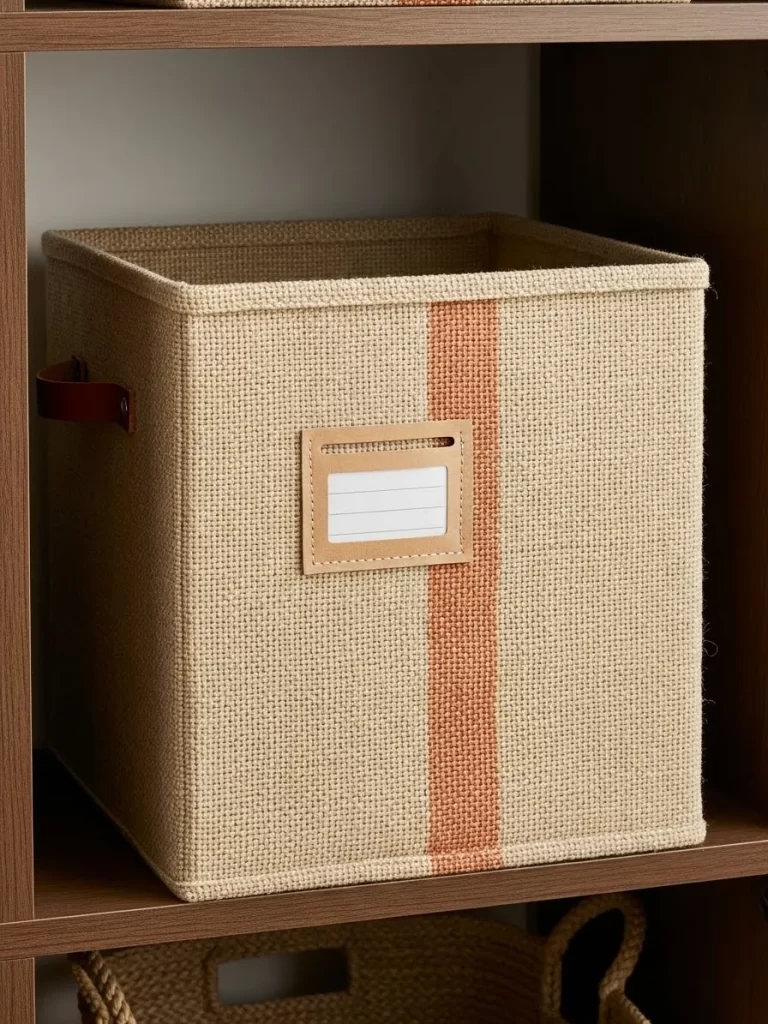
This is the ultimate organizational accessory for shelves and cubbies, combining both rugged texture and smart functionality. Constructed from sturdy fabric, perhaps jute or canvas, this cube holds its shape even when empty, ensuring a clean line on any bookshelf. The neutral color scheme is beautifully accented by a bold terracotta stripe running down the middle.
A small leather pull handle on the side makes retrieving the cube from deep shelving simple and effortless. The feature that really sells this container is the dedicated front label holder. This clear pocket allows for quick insertion of paper labels, making it easy to swap out contents and keep track of what is stored inside, whether it is craft supplies, children’s toys, or office paperwork.
Materials Required (For customizing the label holder)
- Cardstock in a contrasting color or patterned paper
- Permanent markers or stamps (for labeling)
- Leather scraps or ribbon (optional, for decorative trim)
- Clear packing tape or laminating sheet
Equipment Required
- Scissors or paper cutter
- Hole punch (if using ribbon)
DIY Instruction: Creating Personalized, Durable Labels
- Measure the Label Holder: Carefully measure the visible opening of the label pocket on the fabric cube. This ensures your custom card fits perfectly without buckling.
- Design and Cut the Label: Cut your chosen cardstock or decorative paper slightly smaller than the measured opening so it slides in easily. Using permanent markers, neat handwriting, or stamps, create a clear, descriptive label (e.g., “Summer Clothes,” “Board Games,” “Tax Documents 2024”).
- Add Decoration (Optional): If desired, use a hole punch and thread a piece of thin leather scrap or ribbon through one corner of the card before inserting it. This decorative element can hang slightly outside the holder.
- Laminate for Durability: To make the label last longer and resist fingerprints or dust, cover the written side of the card with a piece of clear packing tape, smoothing out any air bubbles, or run it through a small laminating machine. Trim the edges neatly.
- Insert the Label: Slide the finished, customized label into the transparent pocket of the fabric storage cube.
- Organize: Now that your cube is clearly labeled, place it back on the shelf and fill it with its designated items, keeping your space tidy and easy to navigate.
6. Under Shelf Hanging Woven Basket
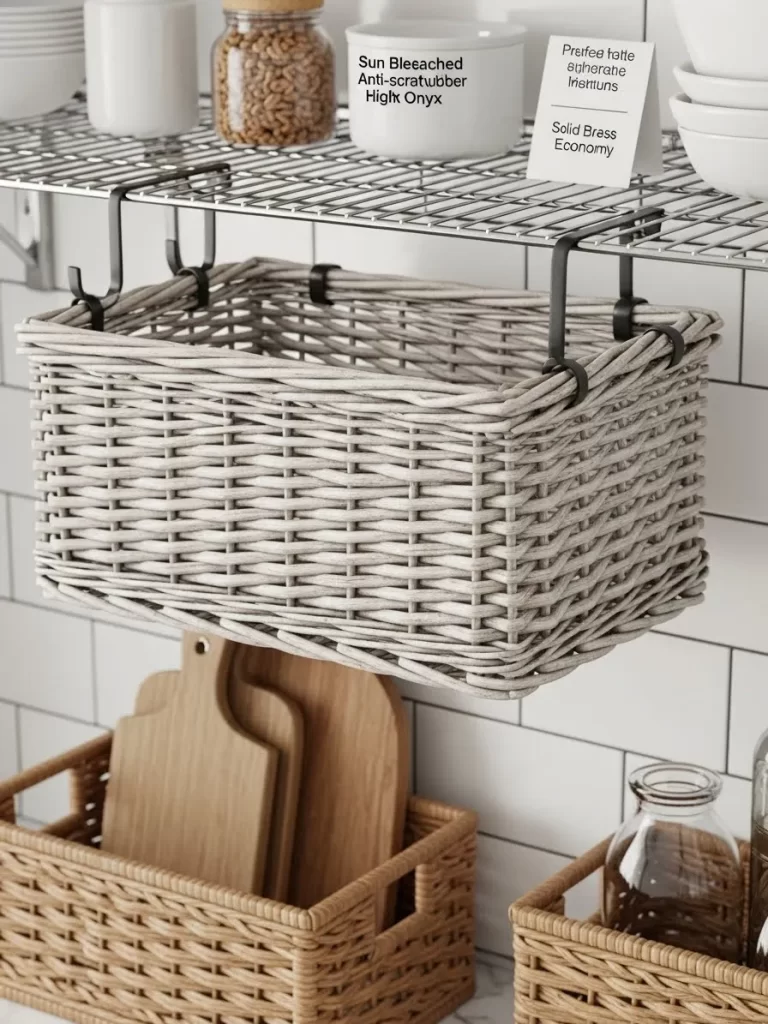
This clever storage solution maximizes wasted vertical space beneath existing shelving units. The woven basket features a beautiful light gray finish, giving it a stylish, rustic farmhouse appeal that brightens any kitchen or pantry. It attaches securely to wire shelving using robust black metal hooks that slide directly onto the rack.
Because it hangs, it frees up countertop space while keeping essential items easily accessible, such as cleaning towels or dry goods. The open-top design means you can quickly toss things inside or grab items without hassle. The light wicker material is durable and brings a necessary element of warmth and texture to typically cold, functional areas. Using these baskets is a smart way to gain extra storage without needing to purchase new furniture.
Materials Required (For customizing the basket color)
- Woven basket (as shown)
- Chalk paint or latex paint (specifically for porous surfaces)
- Small paintbrush or sponge brush
- Drop cloth
- Clean, damp cloth
Equipment Required
- Fine-grit sandpaper (optional, if the existing finish is glossy)
- Stiff-bristled brush (for cleaning the weave)
DIY Instruction: Giving Your Basket a Fresh Painted Look
- Prepare the Basket: Use the stiff-bristled brush to thoroughly clean any dust or debris trapped within the wicker weave. If the basket has a heavy, shiny glaze, lightly rub the exterior with fine-grit sandpaper to help the paint adhere better. Wipe it down with a damp cloth and let it dry completely.
- Set Up the Area: Lay your drop cloth down in a well-ventilated space. Elevating the basket slightly (perhaps on small blocks) helps ensure you can paint the bottom edges evenly.
- Apply the First Coat: Use the chalk paint, which adheres wonderfully to natural materials, or a suitable latex paint. Apply a thin, even coat using the paintbrush or sponge brush, paying close attention to pushing the paint into all the crevices of the weave. Ensure you cover all surfaces without letting paint pool or drip.
- Allow Drying Time: Let the first coat dry fully, which may take several hours depending on the paint type and humidity. If the original color is still visible, this is fine; the next coat will provide better coverage.
- Apply the Second Coat: Apply a second, slightly more generous coat of paint. Check the basket from all angles to ensure consistent coverage and a professional-looking finish.
- Cure and Rehang: Allow the basket to dry and cure completely, possibly for 24 hours, before attempting to hang it back up or place items inside. Once dry, slide the hooks onto your shelf, attach the basket, and enjoy your newly customized storage.
7. Entryway Catch-All Trays in Black Matte
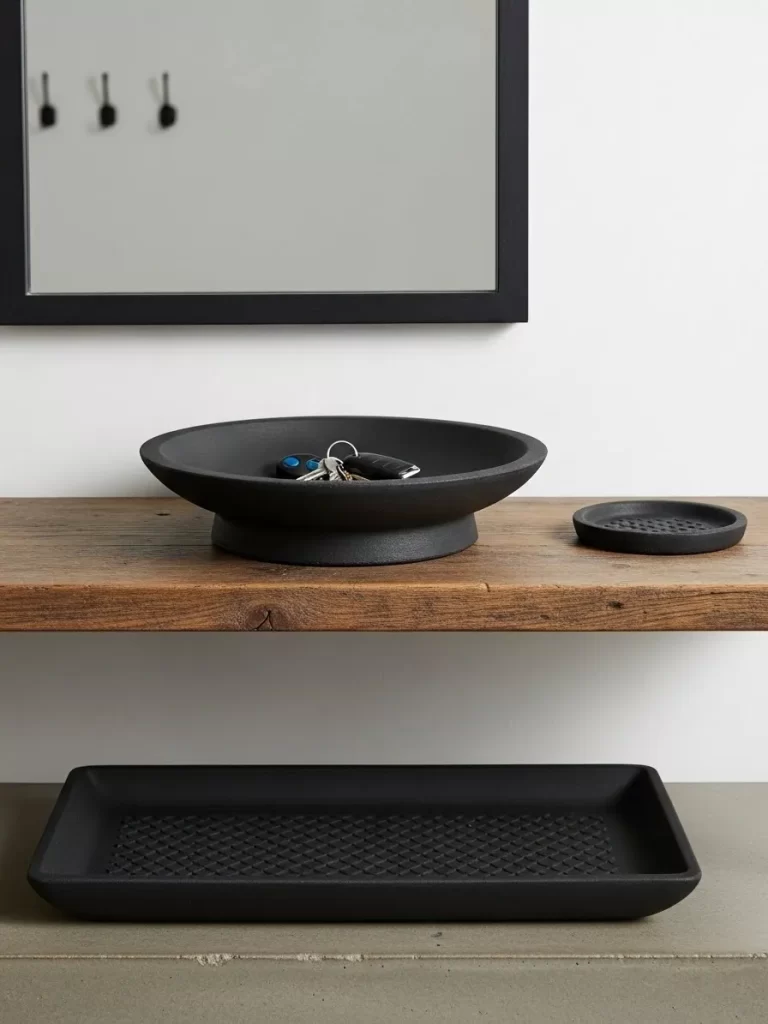
These sleek, matte black catch-all containers offer a stylish and subtle way to manage clutter in the busy entry area. The set includes a rectangular tray and two smaller round dishes, allowing for flexible organization on a console table or shelf. Their minimalist black finish contrasts sharply with the rustic wood shelf, creating a modern, grounded aesthetic.
The larger rectangular tray features a tactile, patterned base, which helps prevent items like coins or phones from sliding around. The raised edges on the dishes ensure that keys and wallets remain contained, preventing them from accidentally falling off the surface. Placed near the door, these pieces provide a designated spot for frequently used items, ensuring you never search frantically for keys when rushing out the door. They are highly functional pieces that double as compelling decorative accents.
Materials Required (For creating a custom non-slip liner)
- Thin sheet of cork or adhesive-backed shelf liner material
- Decorative paper or fabric (optional, for aesthetics)
- Contact cement or spray adhesive (if cork or liner is not adhesive)
Equipment Required
- Utility knife or rotary cutter
- Straight edge or ruler
- Cutting mat
- Pencil
DIY Instruction: Adding a Custom Liner to the Trays
- Measure the Tray Interiors: Use the ruler to measure the exact length and width of the bottom interior of the rectangular tray and the diameter of the circular trays. Measure only the flat section where items rest.
- Mark the Material: Using a pencil, carefully transfer the measurements onto the non-slip material (cork or liner). Remember to mark the shape exactly, keeping the corners square for the rectangular tray and ensuring a clean circle for the round dishes.
- Cut the Liner: Place the material on a cutting mat. Use a sharp utility knife and a straight edge to precisely cut out the shapes. Sharp equipment is necessary for clean edges.
- Apply Adhesive (If Needed): If you are using plain cork or non-adhesive material, apply a thin, even coat of contact cement or spray adhesive to the bottom interior of the plastic trays. Follow the adhesive instructions carefully regarding drying time before placement.
- Insert the Liner: Gently place the cut-out liner pieces into the corresponding trays, starting with one edge and slowly smoothing it down to prevent air bubbles or wrinkles. For adhesive-backed liners, slowly peel the backing as you press the liner into place.
- Finalize: Let the adhesive set fully. The new liner adds a custom look and provides a cushioned surface for delicate items like jewelry or glasses.
8. Modular Faux Leather Drawer Organizers
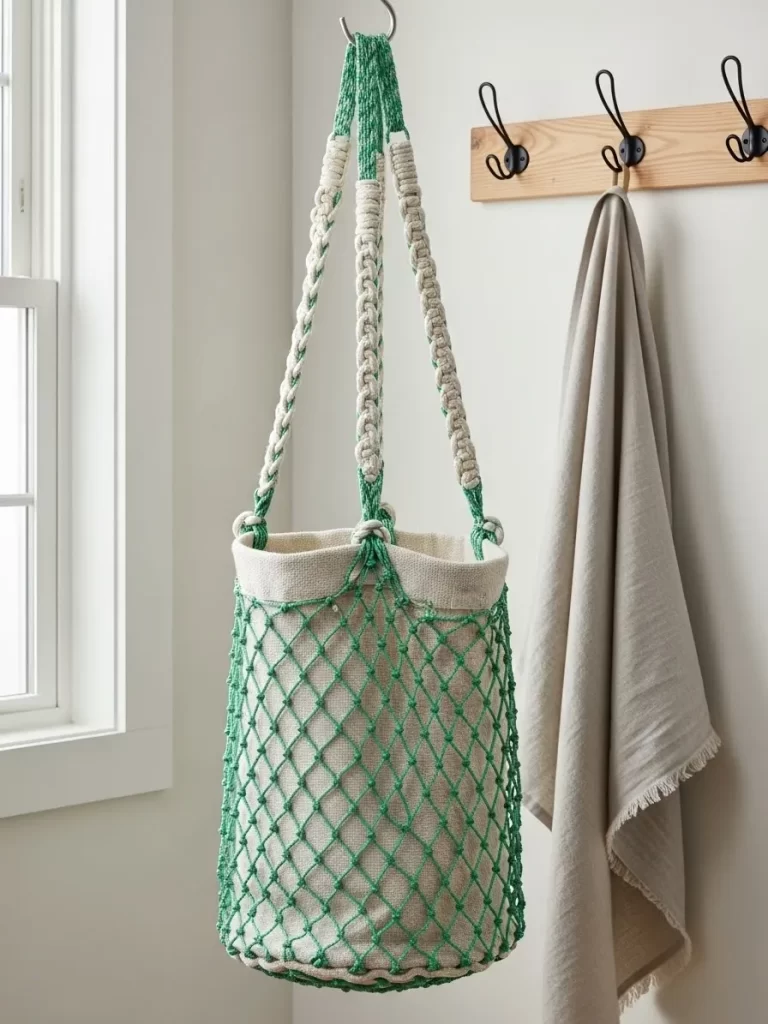
These sophisticated organizers elevate the humble drawer into a luxurious storage space. Made from durable faux leather in a rich caramel tone, these modular pieces feature neat stitching and metal snap details, giving them the high-end appearance of bespoke built-ins. They utilize various shapes—rectangular, square, and round—to accommodate cutlery, jewelry, or office supplies.
The rectangular pieces are spacious enough for larger utensils, while the smaller boxes often feature a soft felt lining inside, protecting delicate items from scratches. Because they are modular, you can arrange them in countless ways to suit the specific dimensions and contents of any drawer in your kitchen, dresser, or desk. This system transforms a chaotic jumble into a beautifully ordered display, making it simple to find exactly what you need immediately.
Materials Required (For adding decorative interior snaps)
- Small, decorative snap fasteners (four per module)
- Faux leather or leather scraps (optional, for decorative pull tabs)
- Thin felt or fabric (if lining the entire drawer base)
Equipment Required
- Snap setting tool and anvil
- Small hammer
- Awl or small hole punch
- Measuring tape
DIY Instruction: Securing Modules Together with Decorative Snaps
- Map the Arrangement: Decide on the final layout of the modules inside your drawer. Use a pencil to lightly mark where the connecting edges of the containers meet within the drawer.
- Measure and Mark Snap Placement: Using the measuring tape, decide where you want the decorative snaps to attach one module to the next (typically near the top corner edges). Mark the spot on the faux leather.
- Punch the Holes: Use the awl or hole punch to carefully make a small hole at the marked spots on the sides of the containers where they will connect. You will need one snap on each connecting side (one male and one female piece).
- Attach the Snaps: Following the instructions of your snap setting tool, secure the two halves of the snap set into the prepared holes. Generally, this involves placing the cap and post through the hole, setting the second piece on the post, and tapping it firmly with the hammer and setting tool.
- Connect the Modules: Snap the newly finished modules together according to your desired layout. The snaps hold the entire system securely in place, preventing the individual organizers from shifting every time the drawer is opened or closed.
- Line the Drawer (Optional): If you desire an extra touch, cut and place a piece of non-slip felt or fabric across the base of the drawer before placing the snapped-together modules inside.
9. Terrazzo-Look Storage Tub
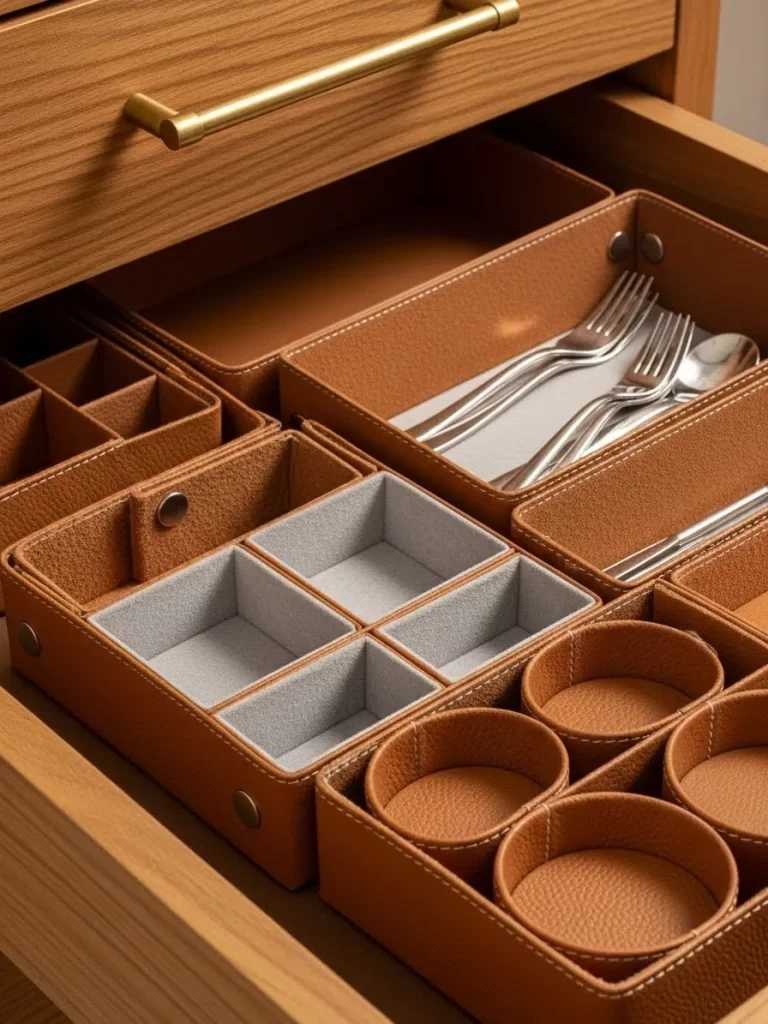
This sizable storage tub adds a touch of playful, modern design to floor storage with its appealing terrazzo pattern. The body features a speckled finish composed of various colored chips (terrazzo style), offering a contemporary alternative to standard woven baskets. Its smooth, rounded base prevents floor scratching, making it safe for any room.
Large, integrated circular handles at the top ensure easy lifting and carrying, even when holding heavy items like firewood or blankets. The addition of a soft, drawstring fabric liner inside protects the basket’s contents and prevents smaller items from spilling out. This tub is an excellent choice for a contemporary living room, a bright nursery toy bin, or even a decorative plant pot cover, offering robust capacity and eye-catching style.
Materials Required (For custom handles)
- Thick cotton rope or leather straps (long enough for both handles)
- Heavy-duty needle and thread (matching rope or strap)
- Scissors
Equipment Required
- Lighter or clear glue (for sealing the ends of the cotton rope)
DIY Instruction: Upgrading the Handles with Rope or Leather
- Remove Existing Handles: If the tub has existing removable handles, carefully detach them. If they are integrated into the material, you will simply cover them.
- Measure the Rope/Strap: Measure the distance around the existing handle opening on the tub. Cut two lengths of your chosen cotton rope or leather strap. Each piece should be slightly longer than the circumference of the opening to account for wrapping and finishing.
- Seal Rope Ends (if using rope): If using cotton rope, use a lighter or clear glue to carefully seal the cut ends. This prevents fraying.
- Wrap the Handle: Starting at the bottom inner edge of one handle opening, use the heavy-duty thread to securely knot and stitch the end of the rope or strap to the tub material. Begin tightly wrapping the rope/strap around the handle opening, covering the entire existing structure. Keep the wraps tight and flush against each other.
- Secure the End: When you reach the start point, cut the rope/strap neatly, leaving a small tail. Use the heavy-duty needle and thread to securely stitch the final end piece down to the material, tucking the knot out of sight on the inside of the handle.
- Repeat: Repeat the process for the second handle. This simple upgrade adds a custom, handcrafted texture and strengthens the handles of the stylish storage tub.
10. Hanging Macrame and Canvas Utility Bag
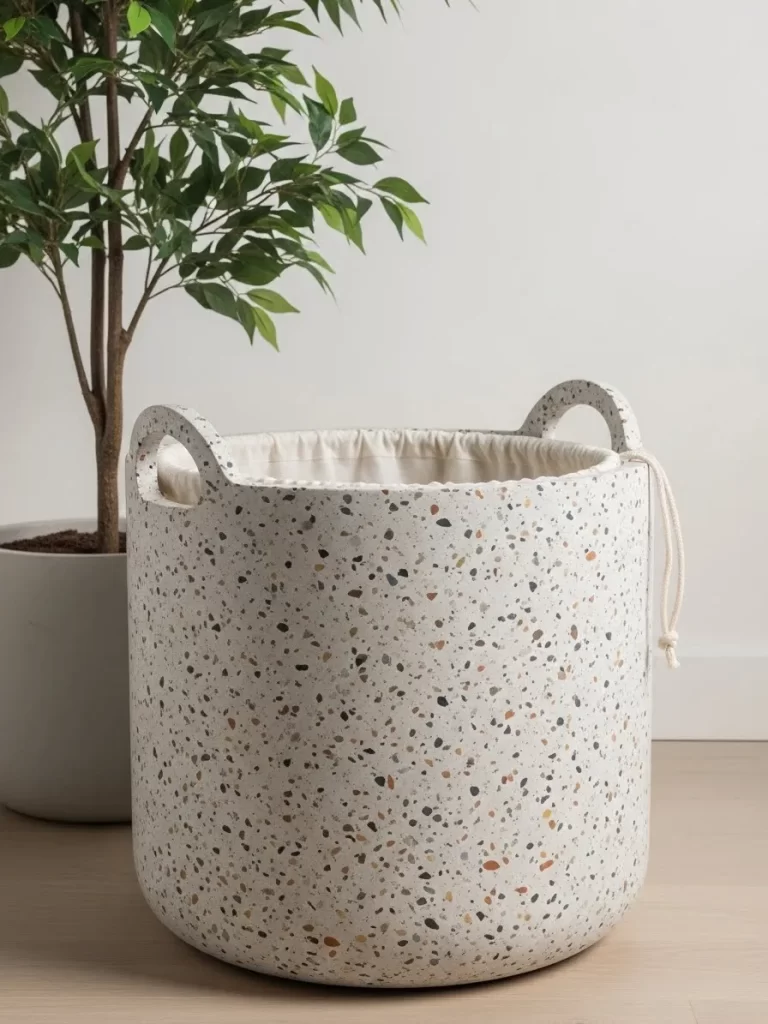
This decorative hanging storage solution creatively saves floor space while adding textural appeal to a laundry room or mudroom. The main body of the container is a sturdy canvas liner, housed within a beautiful outer netting made of bright green cord, offering an attractive contrast to the neutral walls.
The bag hangs from three sturdy, braided rope handles that meet at a single loop for simple hanging on a coat hook or peg rack. This vertical storage is genuinely versatile; it can hold dirty clothes waiting for the wash, be used to store fresh towels, or even act as a catch-all for sports equipment near the back door. Its airy, textile construction is lightweight and easily portable when it is time to move the contents.
Materials Required (For enhancing the braided handles)
- Two different colored strands of embroidery floss or thin twine
- Clear-drying fabric glue
- Scissors
Equipment Required
- None—this is a hand-crafting project
DIY Instruction: Adding a Colorful Tassel to the Handles
- Determine Tassel Length: Decide how long you want your finished tassel to be. Cut one piece of floss/twine double this length, plus an inch for knotting (the tie piece). Cut many strands of floss/twine (about 40-50 strands) all to the same desired length.
- Gather and Fold: Gather all the long strands together neatly. Fold the bundle of strands in half over the tie piece, so the top loop of the bundle is formed over the center of the tie piece.
- Tie the Head: Use the tie piece to wrap tightly around the entire bundle of strands, about a half-inch below the fold (this forms the “head” of the tassel). Wrap the tie piece around several times and secure it with a tight, double knot. Trim the ends of the tie piece neatly.
- Trim the Bottom: Holding the tassel firmly, use sharp scissors to trim the bottom loops, ensuring all the strands are cut evenly to create a straight edge.
- Attach the Tassel: Find a visible spot on one of the braided handles, perhaps where the green and natural ropes meet. Apply a small dot of clear-drying fabric glue to that spot. While the glue is wet, use the original loop at the top of the tassel to knot the tassel securely onto the handle.
- Enjoy the Detail: Repeat this process for the other handles if desired. This small, colorful accent adds a delightful, handcrafted detail to the hanging bag.
11. Sturdy Industrial Wire Baskets
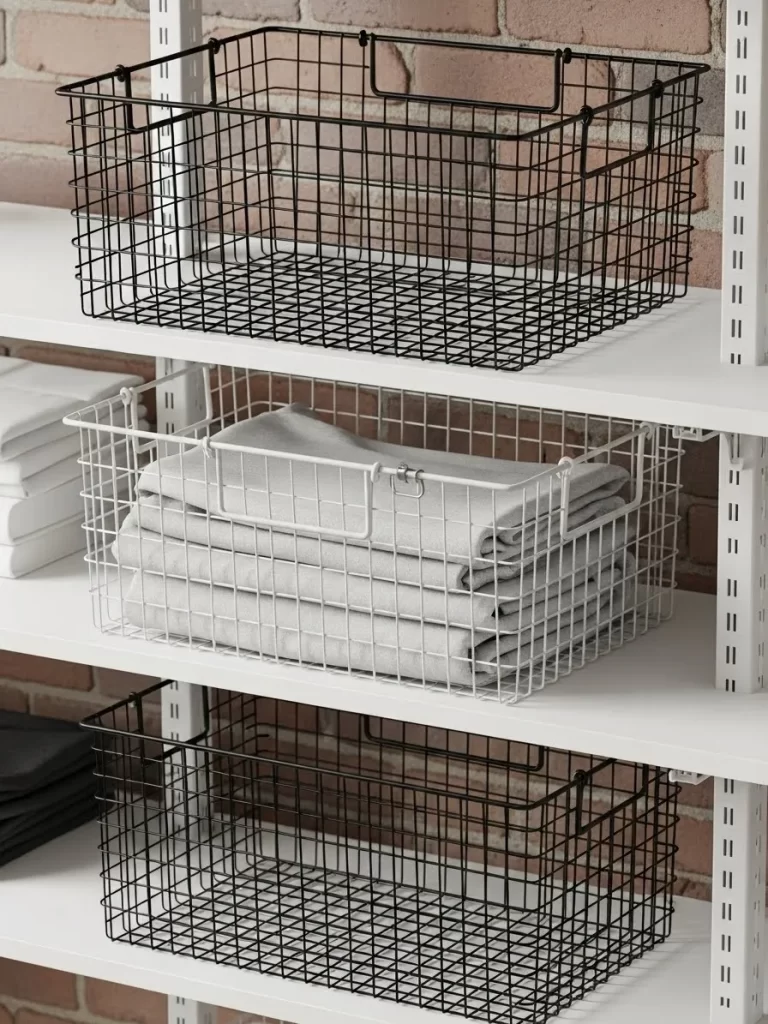
These large rectangular wire baskets offer a practical yet chic solution for visible shelving storage. Constructed from strong metal wire, they provide complete visibility of the contents, which is extremely helpful when organizing laundry supplies, linen closets, or bulk pantry items. The contrast between the black and white finishes creates a dynamic, modern look, allowing you to choose a color that best suits your existing decor.
Integrated handles on the sides make pulling the baskets off the shelf and carrying them to another room simple. They are deep enough to hold folded blankets, bulky towels, or even seasonal clothing with ease. Placing these bins on open shelving instantly elevates the look of a storage space, replacing messy piles with neat, organized sections. This is a wonderfully efficient way to manage vertical storage space.
Materials Required (For custom fabric liners)
- Two yards of sturdy, neutral-colored cotton fabric (like canvas)
- Matching thread
- Measuring tape
- Pins
Equipment Required
- Sewing machine
- Iron and ironing board
- Fabric scissors
DIY Instruction: Sewing Simple Canvas Liners for Wire Baskets
- Measure the Basket: Carefully measure the length, width, and height of the inside of the wire basket. Write down these measurements.
- Cut the Fabric Pieces: You need two pieces: the base and the sides.
- Base: Cut one rectangle using the basket’s length and width, adding a half-inch seam allowance to all four sides.
- Sides: Cut one long rectangle. The length is the basket’s circumference (Length + Width + Length + Width) plus a one-inch seam allowance. The height is the basket’s height plus three inches for the top hem and one inch for the bottom seam.
- Sew the Side Seam: Fold the long side rectangle in half (right sides together) and sew the two short ends together with a half-inch seam allowance to form a loop. Press this vertical seam open and flat.
- Attach the Base: Pin the base rectangle to the bottom edge of the side loop, aligning all raw edges. Sew all the way around with a half-inch seam allowance, using the machine to pivot neatly at the corners.
- Create the Top Hem: Turn the entire liner right side out. At the top raw edge, fold the fabric down one inch toward the inside and press it. Fold it down another two inches and press again to create a neat, double-fold hem.
- Stitch the Hem: Sew around the top of the liner, close to the inner fold, to secure the hem.
- Insert the Liner: Place the finished fabric liner inside the wire basket. The liner prevents smaller items from snagging on the wire and gives the basket a cleaner, softer look.
12. Modern Felt and Leather Magazine Sling

This piece functions as both an attractive piece of modern furniture and a practical storage solution for the living area. The unique structure features a light gray felt sling suspended between four smooth, light wooden legs. A thick, caramel-colored leather strap creates a supportive handle, making the piece easy to move.
The hammock-like sling is the storage area, comfortably holding items like tablets, magazines, or remote controls right next to the sofa. Its open design ensures that the contents are always visible and within easy reach, preventing the usual clutter from accumulating on coffee tables. This magazine holder truly proves that organizational tools can bring elevated style and warmth to a contemporary home setting.
Materials Required (For a custom leather handle embellishment)
- Small piece of contrasting leather or vinyl scrap (about 12 inches long)
- Heavy-duty thread (matching or contrasting color)
- Leather hole punch
- Straight edge ruler
Equipment Required
- Leather needle (for hand sewing)
- Rotary cutter or sharp scissors
DIY Instruction: Adding a Decorative Wrap to the Leather Handle
- Cut the Embellishment Strip: Use the rotary cutter and straight edge to cut a very narrow strip of the contrasting leather or vinyl scrap. A width of about a quarter-inch works well.
- Punch Attachment Holes: Decide where you want the decorative wrap to start on the main handle. Using the leather hole punch, make two small, parallel holes near one end of the narrow strip.
- Secure the Start: Place the narrow strip against the underside of the main leather handle. Thread the heavy-duty needle. Push the needle up through one hole and back down through the second hole you punched, securing the narrow strip to the main handle with a tight stitch. Knot and trim the thread neatly underneath.
- Wrap the Handle: Begin tightly winding the narrow strip around the main leather handle. Ensure each wrap is flush against the last, creating a continuous, decorative band. Wrap for a few inches, creating a contrast section.
- Secure the End: When you reach the desired end point, wrap the strip twice more around the handle. Use the scissors to trim the strip, leaving about an inch of excess. Use the heavy-duty thread and needle to tightly stitch this end piece to the main handle, similar to how you secured the start, ensuring the knot is hidden beneath the handle.
- Final Polish: The new leather wrap adds a unique touch and provides extra grip to the main handle.
13. Stackable Transparent Shoe Boxes
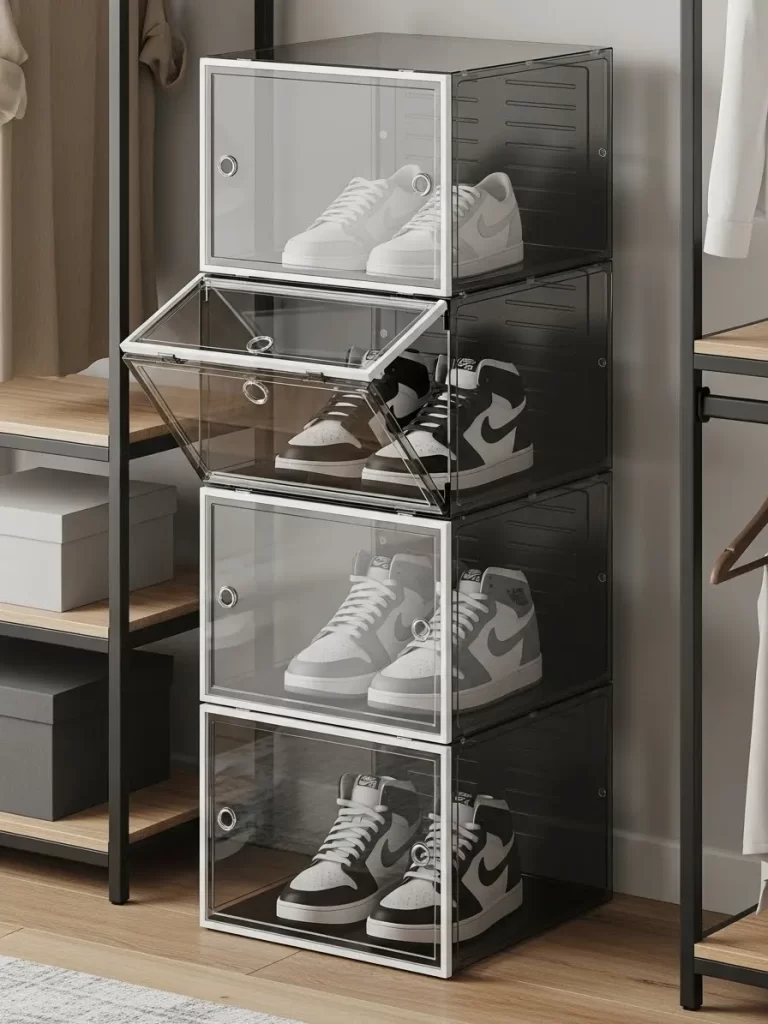
This sleek, modern solution keeps sneaker collections organized, protected, and visually displayed. These containers feature a clear front and sides, allowing immediate identification of the shoes inside without needing to open the box. The design makes them fully stackable, creating a tidy, vertical shoe wall that saves significant closet floor space.
The hinged front door features a small, functional handle, providing easy access to any pair, even those at the bottom of the stack. This type of container is excellent for protecting expensive footwear from dust and damage while showing off the collection. Placed neatly within a closet or bedroom shelf unit, these boxes bring instant order to what is often the most cluttered part of a bedroom setup.
Materials Required (For custom shoe inserts/risers)
- Rigid foam core board or thick cardboard
- Decorative adhesive vinyl or felt (color of your choice)
- Utility knife or box cutter
- Straight edge ruler
Equipment Required
- Hot glue gun or strong craft adhesive
DIY Instruction: Creating Shoe Display Risers
- Measure the Box Interior: Measure the length and width of the base of the shoe box. This ensures the riser you create fits inside neatly.
- Cut the Riser Base: Decide on the height you want your shoes elevated (e.g., 2 or 3 inches). Cut two identical rectangular pieces of foam core board or thick cardboard using the box width and desired riser height. These will be the end supports. Cut one piece using the box length and width; this is the top surface.
- Cover the Riser: Wrap and secure the decorative vinyl or felt material onto all visible surfaces of the three cut pieces. This gives the riser a polished, professional look that coordinates with your shoe box. Use the hot glue or adhesive to secure the material smoothly.
- Assemble the Riser: Stand the two height-support pieces upright. Apply strong adhesive or hot glue along the top edges of these two pieces. Carefully set the top surface piece onto the supports, creating an open rectangle (like a bridge). Let the adhesive dry completely.
- Place the Riser: Slide the finished, covered riser into the transparent shoe box. You can now place one shoe flat on the base and the other shoe angled on top of the riser, giving your display a dynamic, boutique-like appearance.
14. Collapsible Silicone Storage Containers
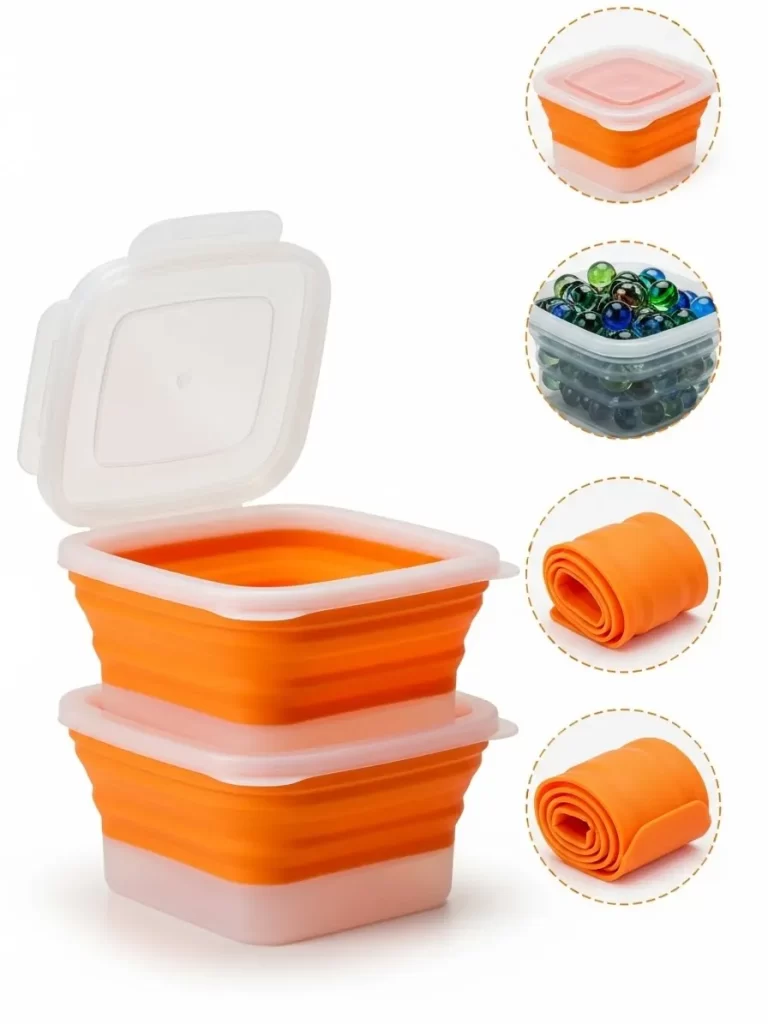
These highly functional containers solve the problem of limited cabinet space because they compress flat when not in use. Made from bright orange silicone, they are sturdy enough to hold marbles, craft beads, or small hardware when expanded, but they easily fold down into a thin stack when empty. The contrasting white base and clear, tight-fitting lid provide security for the contents.
Their flexible, durable construction makes them suitable for a wide variety of non-food storage needs around the home, from organizing a junk drawer to holding small travel supplies. The small size makes them excellent for organizing hobby supplies or keeping tiny items contained in a toolbox. This is a genuinely smart solution for temporary storage or maximizing space in crowded drawers and pantries.
Materials Required (For custom labeling)
- Small chalkboard labels or decorative vinyl sticker labels
- Liquid chalk marker or fine-tip permanent marker
- Rubbing alcohol (for cleaning the surface)
Equipment Required
- None
DIY Instruction: Applying and Writing on Custom Labels
- Clean the Surface: Wipe the area of the plastic lid or the silicone side where you plan to place the label using a small amount of rubbing alcohol. This removes any oils or residue, ensuring the sticker adheres properly. Let the surface air dry.
- Apply the Label: Carefully peel the backing from your chosen label (chalkboard or vinyl). Align the label straight onto the container surface, pressing firmly from the center outward to smooth out any air bubbles.
- Write the Content: Use the liquid chalk marker (for chalkboard labels, allowing for changes) or a permanent marker (for vinyl labels) to write the container’s contents clearly. Examples include “Beads,” “Spare Keys,” “Batteries,” or “Sewing Needles.”
- Allow to Set: If using a liquid chalk marker, allow the label to dry completely before handling or stacking the containers, usually about five minutes. This prevents smearing.
- Organize and Stack: With the contents clearly identified on the outside, you can now quickly locate small items. The labels remain visible even when the containers are stacked or collapsed for storage.
15. Geometric Perforated Desk Set

This stylish set proves that office supplies can be visually appealing. It features a rich forest green file box with a perforated pattern and shiny brass trim, complemented by a navy blue pencil cup and dark blue bookends. The mixture of deep colors and metallic accents creates an upscale look, elevating a standard desk setup.
The file box is sized to hold folders, magazines, or notebooks, keeping them neatly upright and easily accessible. The perforated design is not just decorative; it also allows for air circulation, preventing papers from becoming musty. Cut-out handles on the file box allow for simple retrieval from shelves. This is an excellent way to consolidate office clutter into coordinated, luxurious-looking pieces.
Materials Required (For enhancing the brass trim)
- Brass polish or tarnish remover (if the trim is real brass)
- Small, soft polishing cloth
- Gold leaf paint or gold metallic permanent marker (if the trim is plastic/painted)
- Painter’s tape
Equipment Required
- Small cotton swabs (for reaching tight corners)
DIY Instruction: Refreshing or Enhancing the Gold/Brass Trim
- Clean the Trim: Use a damp cloth to wipe down all the gold or brass trim, removing any dust or fingerprints. Ensure it is completely dry.
- Polish (For Real Brass): If the trim is real brass that has dulled, apply a small amount of brass polish to a soft cloth. Gently rub the trim until the shine is restored. Use cotton swabs to polish tight corners and around the perforations.
- Enhance (For Painted Trim): If the trim is plastic or painted and needs enhancing, carefully tape off the green surfaces adjacent to the gold trim using painter’s tape. This prevents stray marks.
- Apply Gold Paint: Using a thin brush and gold leaf paint, or the gold metallic marker, carefully trace over the existing gold trim to deepen the color and shine. Apply thin, even coats, focusing on achieving a consistent finish.
- Remove Tape and Cure: Immediately peel off the painter’s tape before the paint dries completely. Allow the painted trim to cure according to the paint instructions.
- Reassemble: Your desk set now boasts a refreshed, striking metallic border, ready to add glamor to your workspace organization.
16. Reflective Chrome Waste Bin
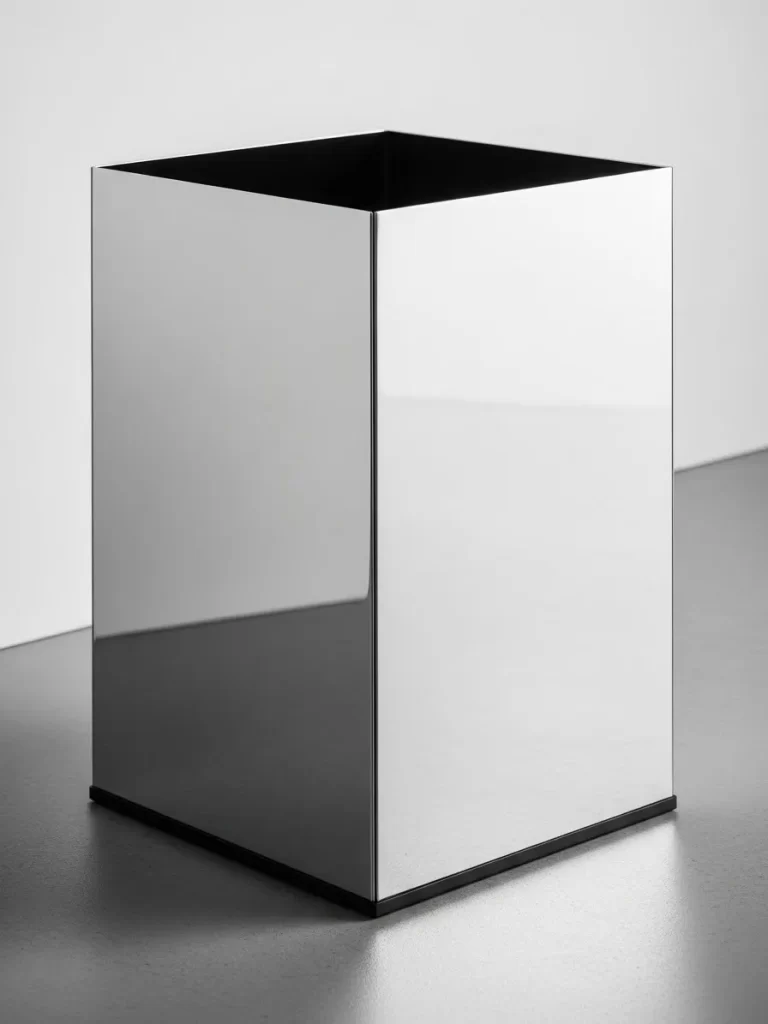
This highly contemporary waste bin functions as a statement piece in any sleek bathroom or modern office environment. Made with mirrored, chrome-plated sides, the square container beautifully reflects the surrounding light and colors, making the piece feel integrated into the room despite its utility. The polished surface demands attention and adds a sense of high-end design.
The simple, geometric form is clean and unobtrusive, making it an excellent fit for minimalist decor. While it is certainly functional for disposal, its reflective qualities also make it a striking stand for holding oversized dried arrangements or acting as decorative storage for towels in a luxurious spa-like setting. This bin is a great example of maximizing storage without sacrificing sophisticated aesthetics.
Materials Required (For creating a contrasting bottom border)
- Black or deep-colored matte vinyl wrap or decorative adhesive paper
- Utility knife or rotary cutter
- Straight edge ruler
Equipment Required
- Heat gun or hair dryer (for vinyl application)
- Squeegee or credit card (for smoothing vinyl)
DIY Instruction: Adding a Matte Accent Border
- Measure and Mark: Decide on the height for your contrasting border (e.g., 3-4 inches from the base). Use the ruler to measure the exact length of all four sides of the container at that height.
- Cut the Vinyl Strips: Use the utility knife and ruler to carefully cut four strips of the matte vinyl wrap to the determined length and border height. Ensure your cuts are perfectly straight.
- Clean the Surface: Wipe the area near the bottom of the container with a clean cloth to ensure the vinyl adheres smoothly.
- Apply the Border: Peel back a small section of the vinyl’s backing. Align the vinyl strip precisely at the desired height on the container’s side. Slowly peel the backing off while simultaneously pressing the vinyl onto the chrome surface, using the squeegee or credit card to smooth out air bubbles.
- Seal the Edges: Wrap the vinyl around the container, aligning the corners neatly. If using heat-activated vinyl, gently heat the edges and corners with a hair dryer and press firmly to seal the border.
- Finalize: The matte border provides a sharp, visually appealing contrast to the reflective chrome surface, grounding the container while adding a custom detail.
17. Abstract Curvaceous Storage Bin
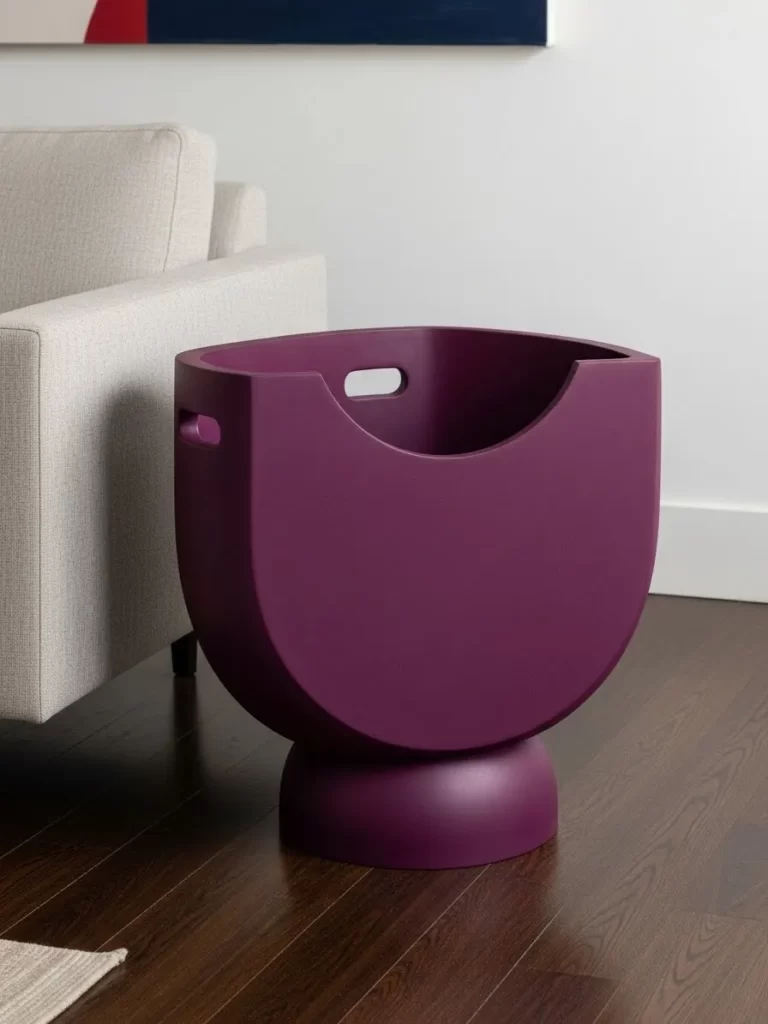
This storage container is a true sculptural accent, moving far beyond basic utility with its artistic, abstract shape. The bold plum color and matte finish make it an undeniable focal point in any room. Its robust plastic construction sits on a subtle circular base, and the deep curvature of the body is aesthetically unique.
The large semi-circular cut-out on the front allows for simple viewing and retrieval of contents, such as magazines, children’s books, or knitting supplies. Small integrated handles on the sides offer simple portability. Used next to a sofa or armchair, this container is a chic alternative to standard baskets, bringing dramatic color and a strong contemporary form into the living space while keeping clutter neatly controlled.
Materials Required (For creating a custom cushion or lid)
- Sturdy piece of circular plywood or thick cutting board (for the top/lid)
- Two coordinating colors of spray paint (one for the bin, one for the lid)
- Strong adhesive suitable for wood and plastic
Equipment Required
- Fine-grit sandpaper
- Drop cloth
- Ventilation mask
DIY Instruction: Creating a Matching Decorative Top
- Prepare the Surface: Ensure the circular plywood or cutting board is smooth by lightly sanding all edges and surfaces. Wipe off the dust.
- Paint the Lid: Place the wooden circle on a drop cloth in a well-ventilated area. Apply several light, even coats of your chosen spray paint to the top and edges of the wood. Allow ample drying time between coats.
- Customize the Bin (Optional): If you wish to change the bin’s color, follow the spray-painting instructions provided in the guide for item 1, ensuring the paint is suitable for the plastic material.
- Attach Cushioning (Optional): If you intend to use the lid as a seat or resting surface, cut and adhere a thin piece of foam or felt to the underside of the painted wood to prevent scratching the plastic bin.
- Place the Top: The finished wooden circle now rests directly on the top rim of the abstract storage bin, instantly converting it into a stylish side table with hidden storage inside.
18. Desktop Cable Management Box
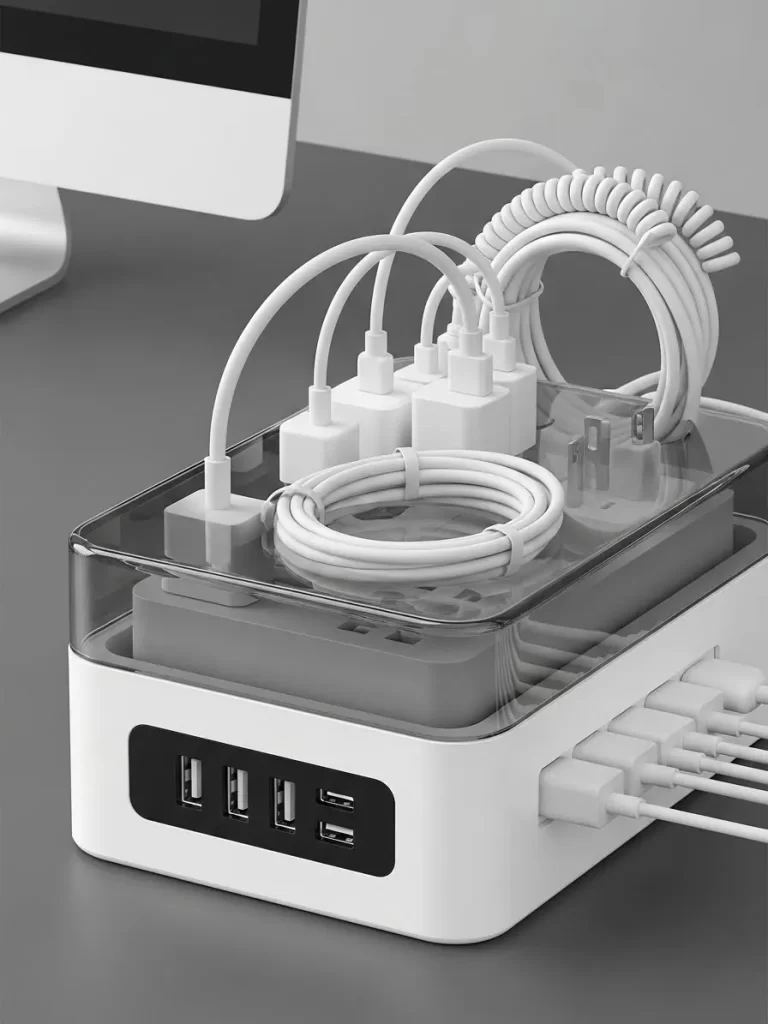
This innovative device is a must-have for any tidy workspace, consolidating unsightly power strips and tangled wires into a single, clean unit. The design features a white base housing the surge protector, topped by a translucent lid that keeps the charging bricks and coiled cables out of sight. It effectively prevents dust buildup on the power strip itself.
Multiple USB ports and standard outlets are neatly accessible through the front and back openings, allowing numerous devices to charge simultaneously. Keeping all cords and chargers organized within this box instantly cleans up the look of a desk or nightstand. This simple, contained solution manages the digital clutter that often plagues modern home offices.
Materials Required (For creating labeled cable entry points)
- Small white or clear address labels
- Fine-tip permanent marker
- Electrical tape (matching the box color, optional)
Equipment Required
- None
DIY Instruction: Labeling Cable Entry Points
- Identify the Cables: Unplug and untangle all the cables connected to the box. Determine which device each cable belongs to (e.g., “Phone,” “Laptop,” “Camera”).
- Prepare the Labels: Using the small address labels, write a short, clear identifier for each cable using the fine-tip permanent marker.
- Apply Labels to the Box: Stick the corresponding label neatly next to the entry point (hole) on the cable management box where that specific cord goes in or comes out. Ensure the label is smooth and does not obstruct the entry point.
- Label the Cables (Optional): For further organization, wrap a small piece of electrical tape around the end of the cable (near the adapter plug) and write the device name on the tape.
- Re-Route and Secure: Plug all the chargers and cords back into the box, routing them through the clearly labeled openings. The labels simplify the process of identifying which cord belongs to which device, reducing future confusion and clutter.
19. Carbon Fiber Patterned Tech Tray
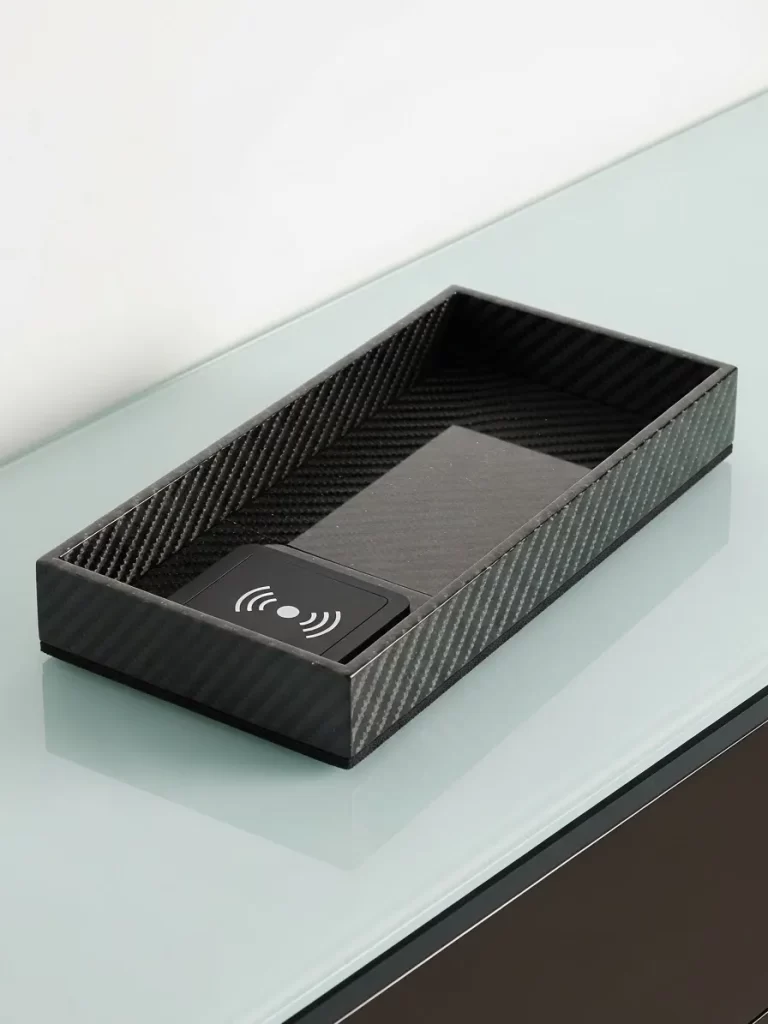
This sleek, rectangular tray offers a high-tech solution for entryway or bedside organization. Its striking carbon fiber pattern gives it an expensive, sporty appearance. The tray is perfectly sized to hold essential items like keys, loose change, and sunglasses.
The standout feature is the integrated wireless charging pad built directly into the base of the tray. This provides a discreet spot to power up a smartphone without cluttering the surface with cables. The raised edges of the tray ensure that small accessories remain contained, creating a centralized, functional command center for daily essentials. This piece seamlessly merges sophisticated design with the practicality of modern technology.
Materials Required (For a custom contrasting liner)
- Thin piece of textured rubber or felt (in a bright color like red or orange)
- Double-sided tape or spray adhesive
- Utility knife
Equipment Required
- Straight edge ruler
- Cutting mat
DIY Instruction: Adding a High-Contrast Non-Slip Liner
- Measure the Tray Interior: Use the ruler to measure the exact length and width of the interior base of the tray, working around the integrated charging pad.
- Mark and Cut the Liner: Carefully mark the measurements onto the back of your chosen rubber or felt material. Use the utility knife and cutting mat to precisely cut the material to fit snugly around the charging pad and into the tray base. Precision is important for a polished look.
- Apply Adhesive: If using double-sided tape, apply strips to the entire base of the tray interior. If using spray adhesive, apply a thin coat to the base and allow it to tack up according to the directions.
- Insert the Liner: Gently place the cut-out rubber or felt liner into the tray, starting from one edge and pressing it down firmly. Smooth out any wrinkles or bubbles.
- Finalize: The brightly colored, textured liner provides a visual pop against the black carbon fiber, making small items like keys more visible and offering a soft, non-slip surface for jewelry and phones (outside the charging pad area).
20. Geometric Concrete Storage Box
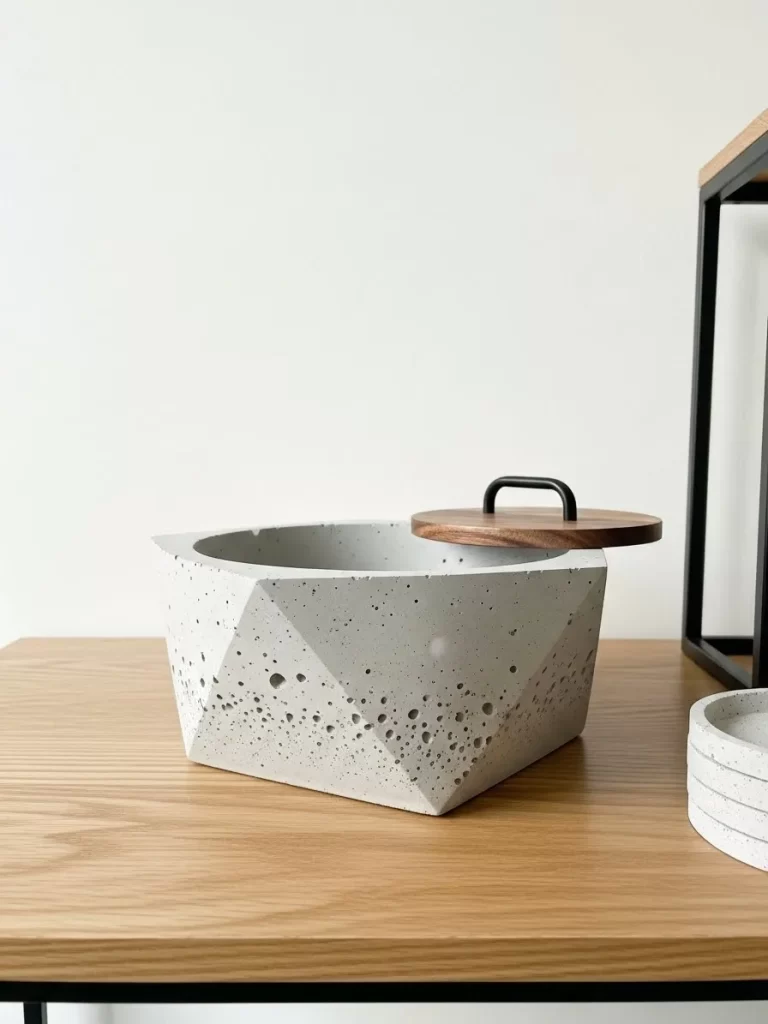
This unique container brings a strong architectural element to tabletop storage. The textured gray concrete is shaped with sharp, geometric facets, giving it a raw, Brutalist appeal that contrasts beautifully with the warm wood lid. The unfinished concrete surface features natural air pockets, enhancing its modern, industrial character.
The heavy, sturdy construction makes it an excellent item for holding paperweights, desk supplies, or even acting as a sugar bowl on a coffee station. The contrasting wood lid features a simple black metal handle, providing easy access while protecting the contents from dust. This box proves that even the smallest storage pieces can contribute significantly to a room’s design story, mixing natural texture with clean, contemporary lines.
Materials Required (For staining the wood lid)
- Wood stain (in a darker or lighter tone than the existing wood)
- Clean rags or foam brushes
- Fine-grit steel wool or sandpaper
- Polyurethane sealant (matte or semi-gloss)
Equipment Required
- Gloves
- Drop cloth
DIY Instruction: Customizing the Wooden Lid Finish
- Prepare the Lid: Gently remove the black metal handle (if possible). Using the fine-grit steel wool or sandpaper, lightly buff the entire surface of the wooden lid to remove any existing finish and open the wood grain. Wipe off all dust with a rag.
- Apply the Stain: Wearing gloves, dip a clean rag or foam brush into your chosen wood stain. Wipe the stain onto the lid, moving in the direction of the wood grain. Allow the stain to sit for a few minutes; the longer it sits, the darker the color.
- Wipe Excess: Use a clean, dry rag to wipe off any excess stain. Allow the lid to dry completely according to the stain manufacturer’s instructions.
- Seal the Wood: Once the stain is dry, apply a light, even coat of polyurethane sealant using a clean foam brush. This protects the wood and gives it a finished appearance. Allow the sealant to dry completely.
- Reassemble: Reattach the black metal handle if you removed it. The newly stained lid provides a custom contrast that complements the concrete box perfectly.
21. Textured Loop-Knit Storage Ottoman
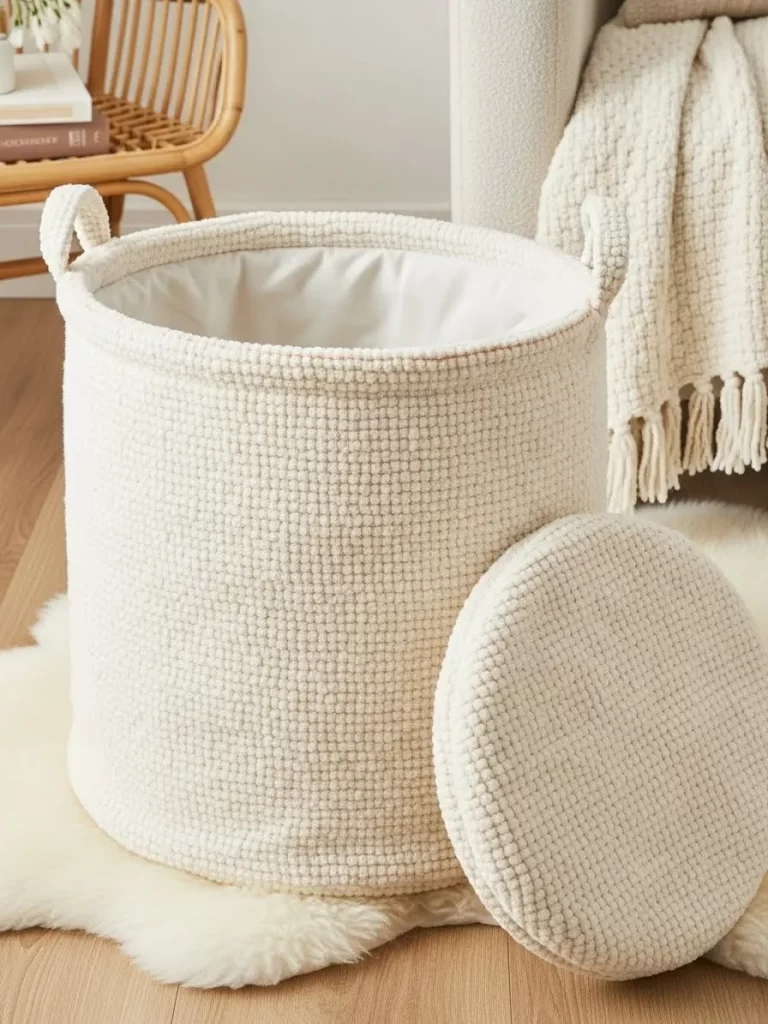
This cozy, oversized storage basket brings a soft, tactile element to any living space, doubling effortlessly as an accent piece. The exterior is covered in a thick, textured, loop-knit fabric, giving it a comforting, handcrafted appearance. Its gentle off-white color blends well with soft furnishings and neutral color palettes.
The circular lid lifts off easily, revealing ample storage capacity inside for blankets, magazines, or extra throw pillows. A lightweight interior liner protects the stored contents. The loop handles on the sides make moving the piece around the room simple and convenient. This piece is a truly attractive way to add hidden organization and texture right next to a sofa or accent chair.
Materials Required (For reinforcing the lid for seating)
- Circular piece of plywood (the same diameter as the lid)
- Heavy-duty upholstery fabric or matching basket fabric
- High-density foam (thin layer, optional)
- Strong spray adhesive or staple gun and staples
Equipment Required
- Jigsaw (if cutting plywood is needed)
- Screws (optional, for permanent attachment)
- Drill (optional, for pilot holes)
DIY Instruction: Creating a Reinforced, Cushioned Lid
- Cut the Plywood: If the existing lid is not sturdy, cut the circular plywood to match the diameter of the lid precisely. This piece will provide necessary structural support.
- Add Cushioning (Optional): If you desire a softer top, cut a thin circle of high-density foam slightly smaller than the plywood. Secure it to the top of the plywood using spray adhesive.
- Cover the Plywood: Cut a piece of upholstery fabric large enough to cover the foam and plywood, leaving enough excess to wrap around the edges to the underside. Stretch the fabric tautly over the foam and plywood.
- Secure the Fabric: Using a staple gun, carefully staple the fabric to the underside of the plywood, pulling firmly to eliminate wrinkles on the top surface. Ensure the fabric edge is neat.
- Attach to Existing Lid: Place the newly covered, reinforced plywood on top of the original lid. You can simply rest it there, or for a more secure finish, use a few screws drilled discreetly from the underside of the original lid into the plywood (ensure the screws do not pierce the top surface).
- Use as a Seat: The basket now functions as a durable, stylish ottoman for seating, with the storage capacity remaining intact.
22. Tall Woven Umbrella and Yoga Mat Caddy
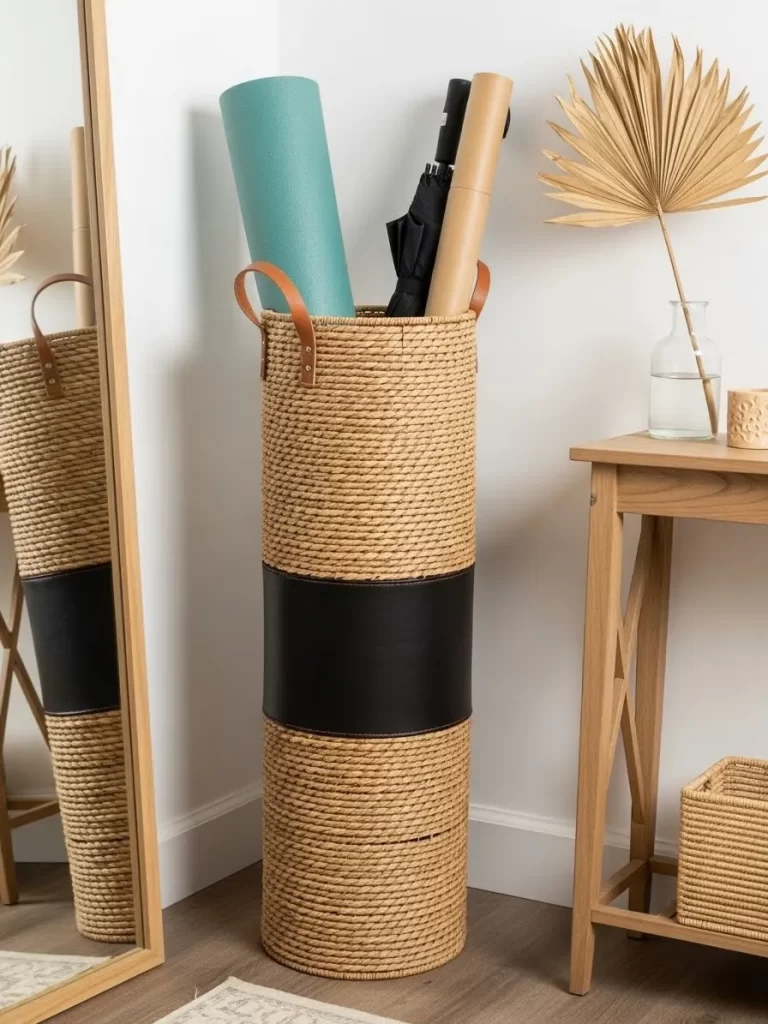
This striking cylindrical basket is a tall, narrow storage solution, perfect for those vertical items that often lean awkwardly in corners. Crafted from natural rush or sea grass, it provides a warm, organic texture to any entryway or studio space. The dark, contrasting black band of faux leather adds a strong, contemporary detail to the woven body.
The height is excellent for containing rolled-up yoga mats, umbrellas, walking sticks, or rolls of wrapping paper. Thick brown faux leather handles are stitched securely to the top rim, allowing for easy lifting and repositioning. Placed next to a mirror or console table, this caddy brings both necessary function and visual height to a room, keeping long items tidy and accessible without dominating the floor space.
Materials Required (For securing the umbrella/yoga mat contents)
- Sturdy piece of fabric or decorative webbing (about 3 feet long)
- Velcro strips or large metal snap fasteners
- Measuring tape
Equipment Required
- Sewing machine or hand sewing needle and thread
- Scissors
DIY Instruction: Adding an Internal Securing Strap
- Determine the Strap Length: Measure the circumference of the inside of the basket near the top. This determines the length of the strap needed to wrap around and hold the contents. Add three inches for overlap and closure.
- Prepare the Strap: Cut the fabric or webbing to the measured length. If using fabric, hem the raw edges for a clean finish.
- Attach Closure: Sew the loop side of the Velcro strips onto one end of the strap and the hook side onto the other end, ensuring they align when wrapped. Alternatively, attach the male and female parts of the metal snap fastener to the ends.
- Install the Strap Inside: Align the strap horizontally inside the basket, about two inches below the rim. Use a strong needle and thread to hand-stitch the strap securely to the inside of the woven material at several points (e.g., at four equally spaced intervals). Sew through the weave and the fabric strap multiple times for durability.
- Secure Contents: Place your yoga mat and umbrellas inside the basket. Wrap the strap around the items and secure the closure. The strap keeps the contents tidy and prevents the items from flopping outwards when the basket is bumped.
23. Quilted Velvet Divided Storage Case
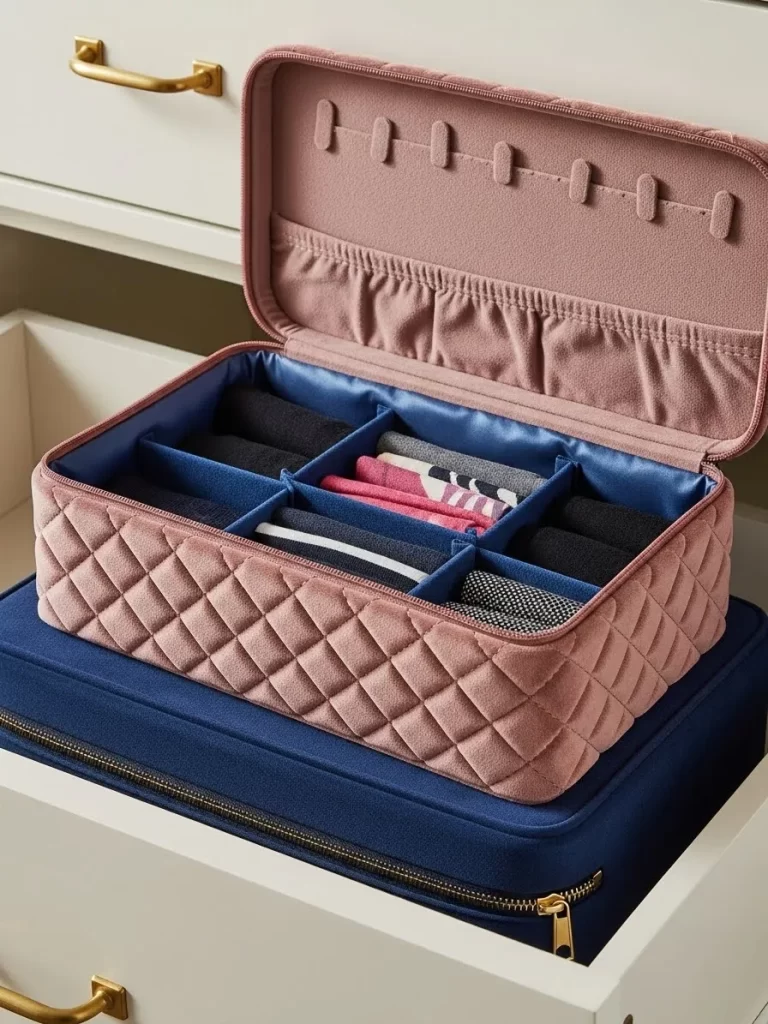
This luxurious storage container is designed to bring order and elegance to drawer contents, particularly for intimate apparel or accessories. The exterior features a soft, quilted velvet in a beautiful dusty rose color, contrasted with a plush, silky blue lining. The zipper closure ensures everything remains dust-free and contained.
The interior is divided into multiple compartments using adjustable dividers, which is helpful for keeping socks, ties, or folded undergarments separate and neatly rolled or folded. The lid of the case has small hanging loops, making it an excellent travel jewelry organizer if you choose to adapt it. Sitting on top of another drawer organizer, this piece adds a beautiful texture and color pop to a typically overlooked storage space.
Materials Required (For customizing the dividers)
- Stiff cardboard or foam core board
- Velvet or satin fabric scraps (matching or contrasting the interior)
- Strong craft glue
- Utility knife
Equipment Required
- Straight edge ruler
- Cutting mat
DIY Instruction: Creating Custom-Sized Compartments
- Measure the Existing Grid: Measure the depth and length of the existing compartments within the case. Decide how many smaller, sub-compartments you need (e.g., to hold small jewelry or rings).
- Cut New Dividers: Using the utility knife and ruler, cut strips of the stiff cardboard or foam core board to the measured depth of the case interior. These will be your new, smaller dividers.
- Cover the Dividers: Cut strips of velvet or satin fabric slightly wider than the cardboard strips. Wrap the fabric tightly around the cardboard, securing the edges with craft glue. This ensures the new dividers match the luxurious interior feel.
- Slot the Dividers: Mark where you want the smaller sections to be. Use the utility knife to cut small, vertical slots halfway down the center of the existing dividers and corresponding slots in the center of your new custom dividers.
- Assemble the Grid: Slide the new dividers into the slots of the existing dividers, creating a snug, interconnected grid system. Place the entire grid back inside the storage case.
- Organize Small Items: The expanded grid now offers individualized spots for smaller items like earrings, cufflinks, or rolled belts, maximizing the organization within the case.
24. Heavy-Duty Waxed Canvas Utility Tote
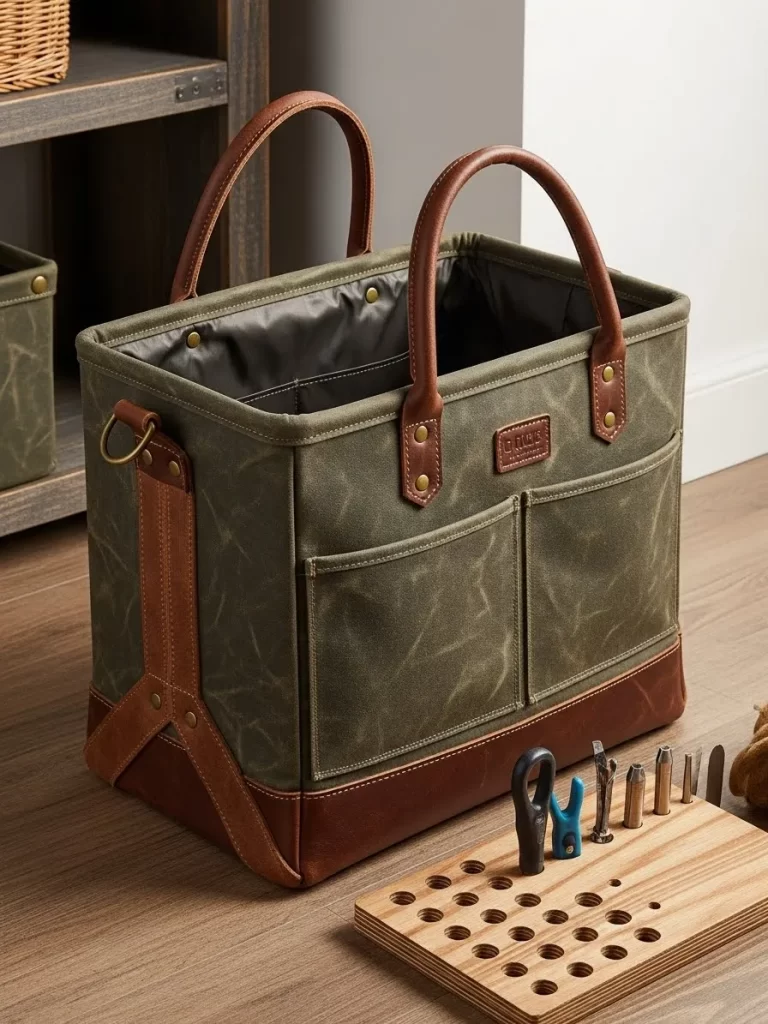
This robust, structured tote bag is designed for serious storage, whether for crafts, cleaning supplies, or tools. The body is made from durable, olive green waxed canvas, giving it a rugged, water-resistant quality. The rich brown leather handles and base provide significant structure and reinforcement.
It features multiple external pockets, which are very useful for keeping small, frequently needed items like pencils, scissors, or brushes easily accessible. The reinforced leather base ensures the tote stands upright and protects the bottom from wear and tear. This is a genuinely smart portable organizer, making it simple to move your project or tools from one room to another without leaving a mess behind.
Materials Required (For customizing the external pocket liner)
- Brightly colored or patterned cotton fabric (small amount)
- Spray adhesive or fabric glue
- Scissors
Equipment Required
- Iron and ironing board (optional, for crisp edges)
- Pins
DIY Instruction: Adding Custom Liners to External Pockets
- Measure the Pockets: Measure the length and width of the interior of the external pockets on the tote. Cut the cotton fabric to match these dimensions exactly.
- Prepare the Liners: Hem the top edge of each cut fabric piece by folding it over a quarter of an inch twice and stitching or gluing it down. This prevents fraying.
- Apply Adhesive: Apply a light, even layer of spray adhesive or fabric glue to the inside surfaces of the waxed canvas pockets. Work quickly, as the adhesive may dry fast.
- Insert the Liner: Carefully slide the fabric liner into the pocket, aligning the bottom and side edges. Press firmly with your fingers to ensure the liner adheres smoothly to the canvas.
- Secure the Edges: Pay special attention to pressing the top hem of the liner firmly just inside the rim of the pocket.
- Final Look: The vibrant fabric liner makes small items easier to see inside the deep pockets and adds a fun, customized detail to the rugged exterior.
25. Stackable Ceramic Storage Bowls
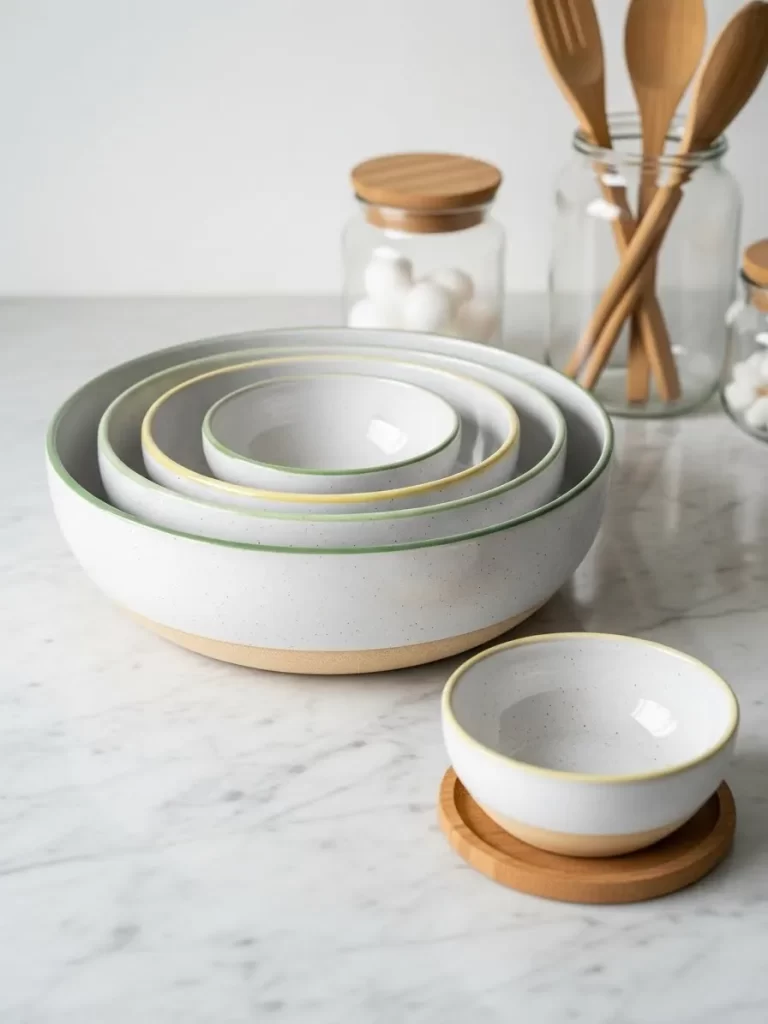
While technically bowls, this set functions as elegant, space-saving storage for small kitchen or office items because of their beautiful nesting capability. The speckled ceramic body is visually appealing, resting on a bare, unglazed base. The gentle colored rim—yellow on the smallest, green on the next—adds a subtle decorative touch.
Because they nest together perfectly, they occupy minimal cabinet space when not in use. You can use the smallest bowl, perhaps resting on a bamboo coaster, as a stylish dish for measuring spoons or paperclips on a desk. The larger bowls are excellent for keeping tea bags, coffee pods, or small stationery supplies neatly contained on an open shelf, combining pottery aesthetics with useful organization.
Materials Required (For creating custom protective lids)
- Thin cork sheet (must be flexible)
- Utility knife
- Strong craft adhesive
- Small wooden drawer pull or knot (for a handle)
Equipment Required
- Compass or bowl tracing tool
- Cutting mat
- Small drill (for the handle)
DIY Instruction: Crafting Cork Dust Covers/Lids
- Trace the Bowl Rims: Place the largest bowl upside down onto the cork sheet. Use a pencil to carefully trace the exact outer diameter of the bowl rim. Repeat for the other bowls.
- Cut the Cork Circles: Use the utility knife and cutting mat to precisely cut out the traced cork circles. A clean cut ensures a snug fit.
- Add a Handle (Optional): On the largest cork circle, mark the center point. Drill a tiny pilot hole slightly smaller than the drawer pull screw. Attach the wooden drawer pull or knot to the center of the cork circle using strong adhesive or the screw from the pull.
- Personalize (Optional): You can use permanent markers to write the contents (e.g., “Sugar,” “Clips”) onto the cork lids.
- Use as Covers: Place the finished cork circles on top of the ceramic bowls. These lids protect the contents from dust and allow the bowls to be easily stacked on a counter or in a pantry.
26. Multi-Textured Knit Storage Ottoman
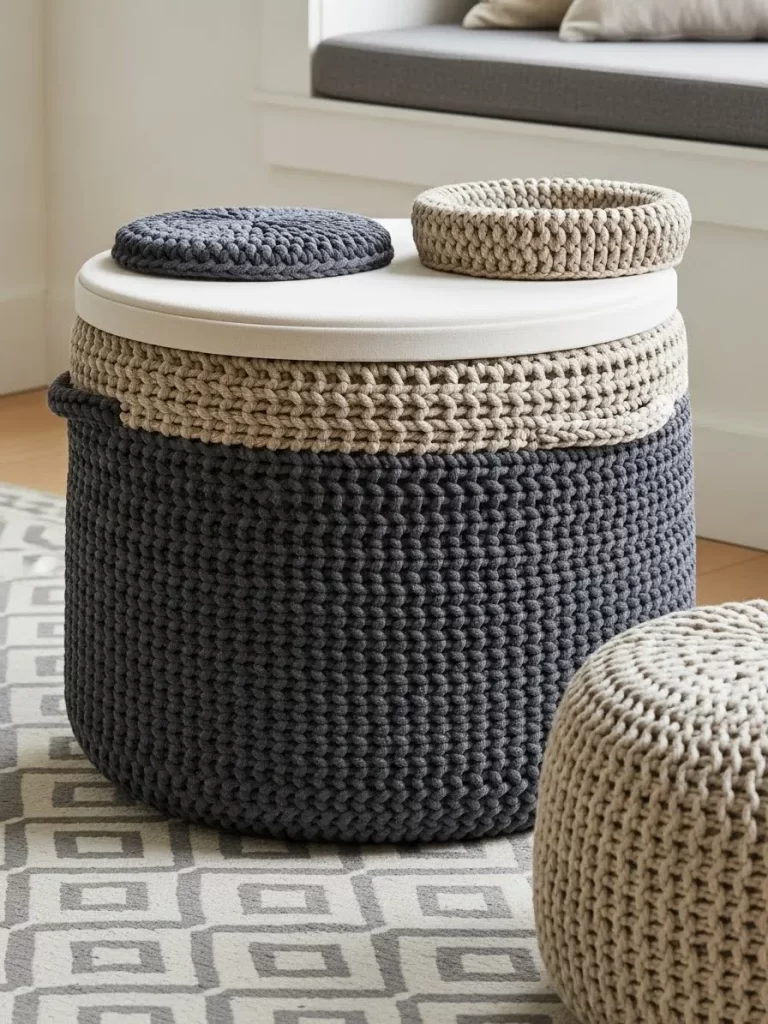
This attractive, generously sized ottoman is a versatile piece that offers stylish seating, a surface for trays, and significant hidden storage. The base features a thick, dark charcoal chunky knit, providing great texture and weight. A lighter beige knitted band wraps the upper section, complemented by a white wooden top serving as the lid.
The flat lid easily lifts off to reveal deep storage space inside, making it an excellent container for extra blankets or seasonal items. Small knit rings and a knit coaster rest on top, adding a decorative element when the unit is closed. This container is a beautiful example of storage blending seamlessly into comfortable, multifunctional furniture for a modern living room.
Materials Required (For custom surface trays)
- Small wooden tray (round or square)
- Medium-grit sandpaper
- Wood stain or acrylic paint (coordinating with the knit colors)
- Clear sealing spray (optional)
Equipment Required
- Foam brush
- Clean rags
DIY Instruction: Creating a Custom Surface Tray for the Lid
- Prepare the Tray: Lightly sand the entire surface of the small wooden tray with medium-grit sandpaper. Wipe off any dust.
- Stain or Paint: Apply wood stain or acrylic paint to the tray using a foam brush or rag. Choose a color that coordinates with the knit (like the beige or dark gray) for a cohesive look. Apply thin, even coats, allowing sufficient drying time between layers.
- Seal the Finish: Once the color is dry, apply a coat of clear sealing spray or varnish. This protects the finish from spills and makes it easy to wipe clean.
- Add Grips (Optional): To prevent the tray from sliding on the smooth ottoman lid, attach four small felt furniture pads to the underside of the tray corners.
- Use as Serving Surface: The finished tray can now be placed securely on the flat white lid, instantly converting the ottoman into a functional spot for drinks or snacks while maintaining the storage function below.
27. Suede Patterned Valet Tray
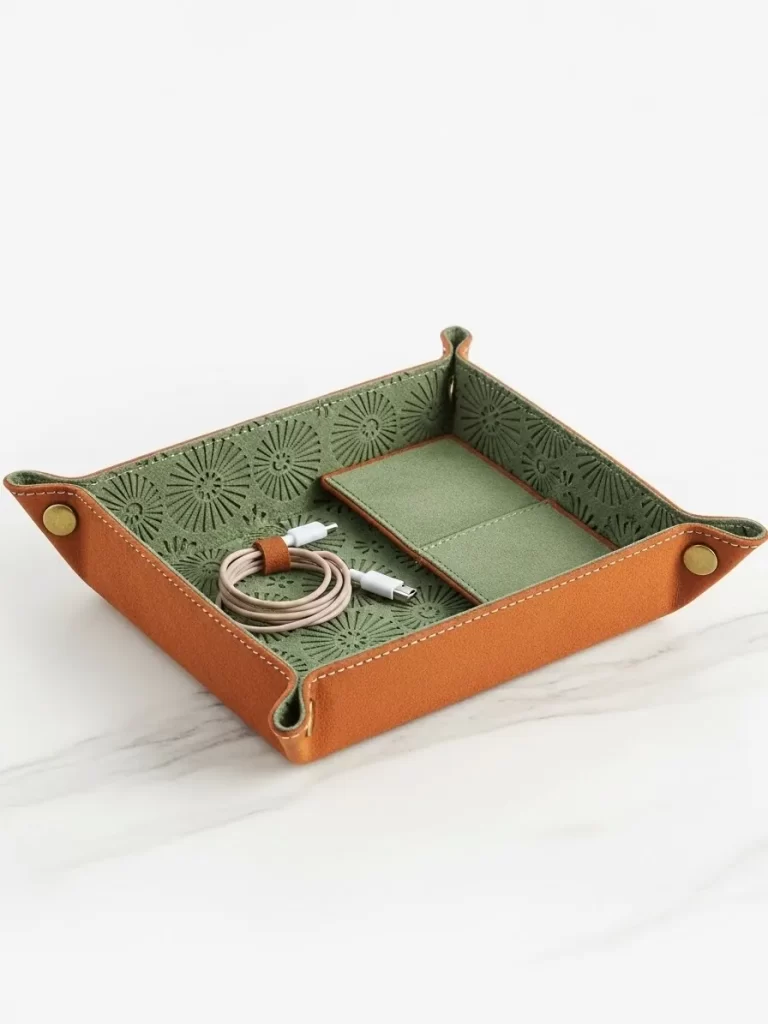
This small, elegant catch-all features a sophisticated combination of materials and colors, making it an attractive piece for a nightstand or dresser. The exterior is a rich tan suede-like material, contrasted with an inner lining of vibrant olive green suede featuring a decorative, laser-cut burst pattern. Brass snaps secure the corners, turning a flat piece of material into a structured tray.
Its small size makes it a useful spot for managing everyday carry items, like charging cables, watches, or small change. The soft lining protects delicate items, such as glasses or jewelry, from scratches. The vibrant interior pattern adds a playful detail, making this accessory tray a genuinely stylish way to keep small desktop or bedroom essentials grouped together.
Materials Required (For custom corner embellishments)
- Small metal charms or decorative tacks (four needed)
- Strong, clear jewelry adhesive
- Needle-nose pliers
Equipment Required
- None
DIY Instruction: Adding Decorative Corner Charms
- Select the Charms: Choose four small, flat-backed metal charms (perhaps a simple star, flower, or geometric shape) that complement the brass snaps on the corners.
- Prepare the Surface: Ensure the area around the brass snaps is clean and free of dust or oils.
- Apply Adhesive: Apply a tiny dot of strong, clear jewelry adhesive onto the back of one metal charm.
- Position the Charm: Carefully place the charm directly onto the brass snap at one corner of the valet tray. Press down gently and firmly for a few seconds to secure the bond. Use needle-nose pliers to hold the charm if needed.
- Repeat: Repeat the process for the remaining three corners, ensuring all charms are aligned similarly.
- Cure Time: Allow the adhesive to cure completely, following the product instructions, before handling the tray or placing items inside. The custom charms add a personalized, decorative touch to the already stylish accessory tray.
28. Molded Fiber Storage Box with Wood Lid
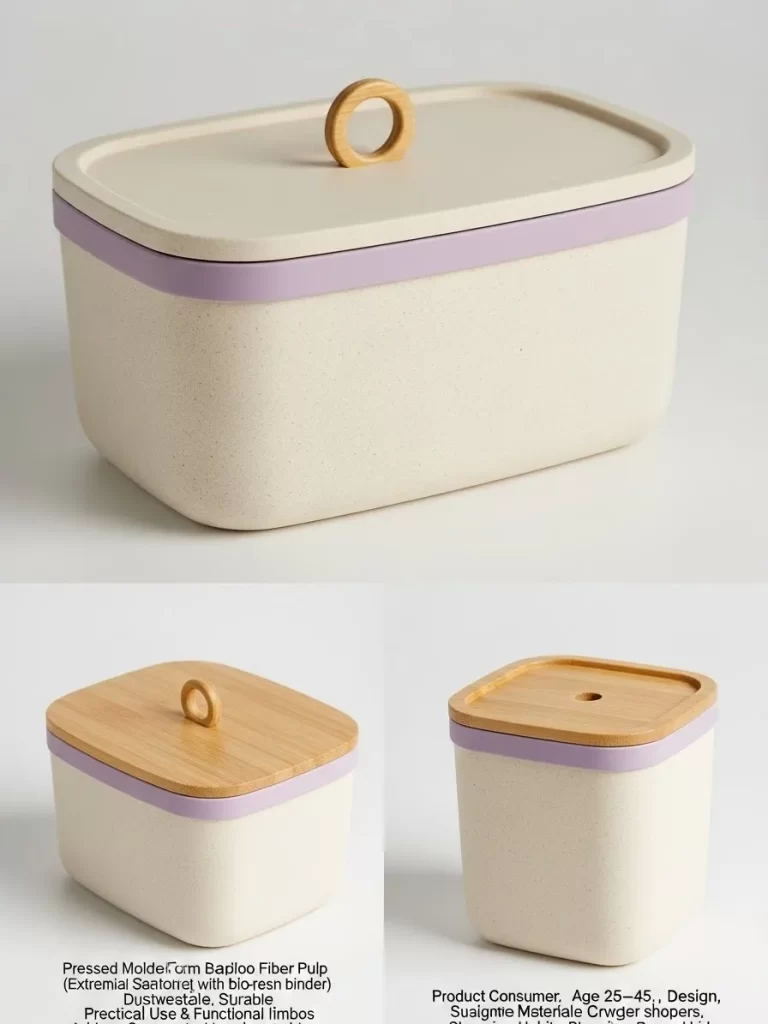
This container is an exercise in minimalist, sustainable design, offering versatile storage with a clean, Scandinavian aesthetic. The main body is made from molded plant fiber, giving it a light, specked, matte finish that feels durable and modern. A pale lavender band encircles the top, adding a subtle pop of color.
The box is topped with a smooth wooden lid featuring a simple, rounded wooden pull ring for easy access. This piece is excellent for keeping bathroom shelves tidy, storing linens, or organizing small pantry staples. Its attractive, subdued look allows it to sit out on open shelving without creating visual clutter, serving as both decoration and necessary function.
Materials Required (For replacing the colored band)
- Flexible, decorative vinyl wrap or adhesive ribbon (in a different color)
- Utility knife
- Measuring tape
Equipment Required
- Scissors
- Rubbing alcohol (for cleaning)
DIY Instruction: Changing the Color Band
- Clean the Surface: Wipe down the existing lavender band area with rubbing alcohol to ensure the adhesive material sticks firmly. Let it dry completely.
- Measure the Band: Use the measuring tape to measure the exact circumference of the box where the band is located. Also, measure the width of the existing band.
- Cut the New Material: Cut a strip of your chosen vinyl wrap or adhesive ribbon to the measured circumference length. The width should match the existing band perfectly.
- Apply the New Band: Carefully align the edge of the new vinyl strip against the top edge of the existing band. Slowly peel the backing off the vinyl as you wrap it tightly around the box, pressing out any air bubbles as you go. Ensure the edges meet neatly at the back.
- Trim the Seam: If there is a slight overlap at the back seam, use the utility knife to carefully trim the vinyl for a clean, butt joint where the ends meet.
- Final Look: The new color band instantly updates the box, allowing you to match it to a different room’s decor without replacing the entire container.
29. Large Woven Rattan Storage Trunk
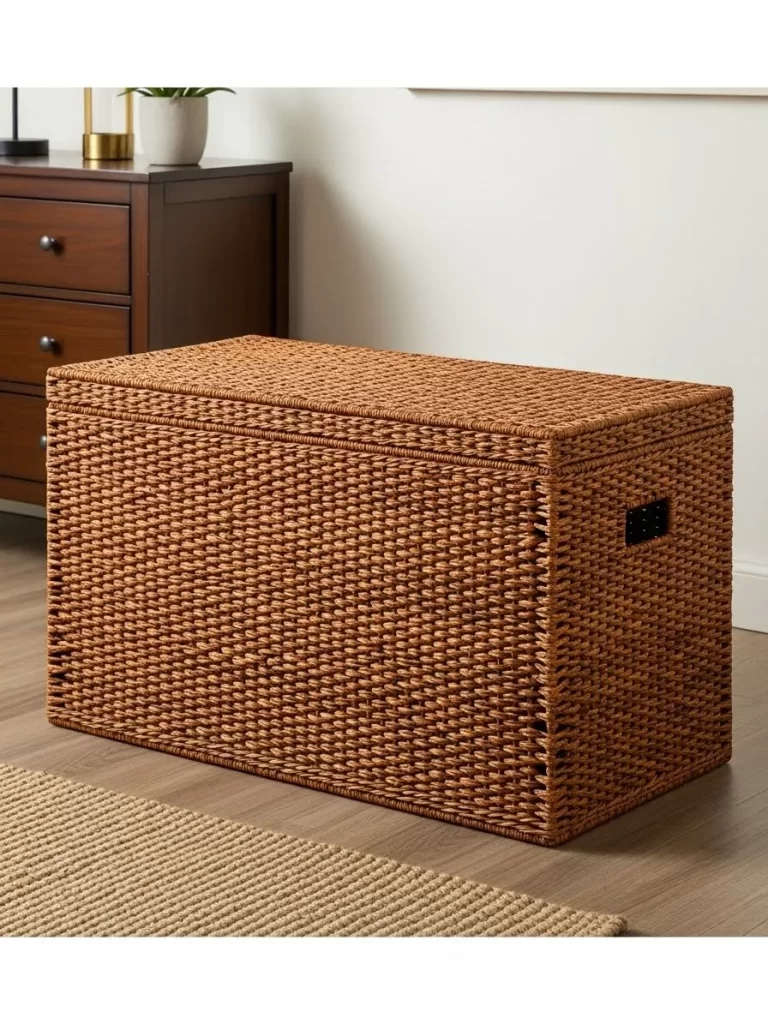
This substantial rectangular trunk offers a significant amount of floor storage, functioning as a beautiful accent piece at the foot of a bed or along a wall. The construction is a dense, tight weave of natural-colored rattan, giving it a classic, high-quality furniture appearance. The hinged lid allows simple access to the large storage space inside.
A small black cutout handle on the side provides a simple way to reposition the trunk when needed. Its solid form and size make it an excellent container for storing linens, seasonal decor, or extra games in a living room. This piece is far more stylish than basic plastic tubs, blending functional capacity with timeless, natural texture.
Materials Required (For an anti-scuff base)
- Thick, dark felt sheet
- Strong contact cement or industrial-strength adhesive
- Scissors
- Measuring tape
Equipment Required
- None
DIY Instruction: Attaching an Anti-Scuff Felt Base
- Measure the Base: Turn the trunk upside down. Measure the exact length and width of the base of the woven rattan trunk.
- Cut the Felt: Use the scissors to cut a rectangle of the thick felt sheet to the dimensions of the base. Cut slightly smaller (about a quarter-inch less all around) than the base measurement. This prevents the felt from being visible when the trunk is right side up.
- Apply Adhesive: Apply a generous, even layer of contact cement or industrial-strength adhesive directly to the entire bottom surface of the rattan trunk. Follow the adhesive instructions regarding drying time before bonding.
- Attach the Felt: Carefully center the cut felt piece onto the adhesive-covered base. Press down firmly and evenly across the entire surface.
- Cure Time: Allow the adhesive to cure fully according to the instructions, possibly placing weights inside the trunk to ensure a strong bond between the rattan and the felt.
- Protect the Floor: The felt base prevents the rough rattan from scratching hardwood floors or catching on carpets when the heavy trunk is moved.
30. Modular Drawer Organizer Set
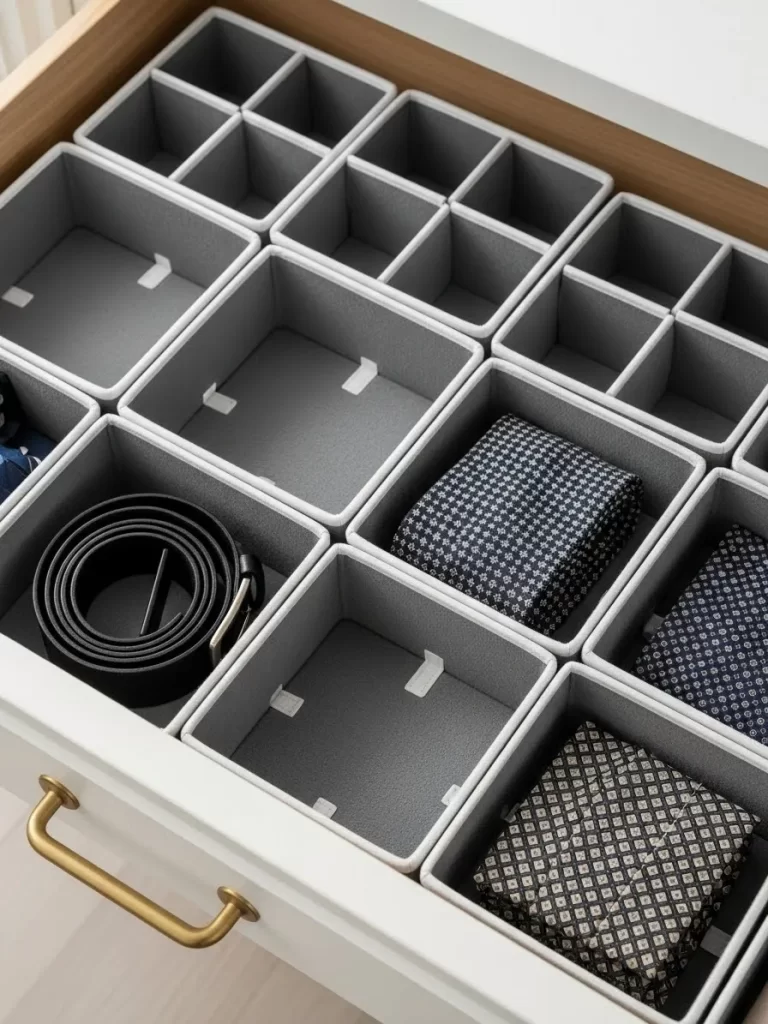
This set of small, structured containers offers the flexibility to completely customize drawer organization for clothing or accessories. The soft gray fabric construction is framed by clean white edges, providing a neutral, tidy aesthetic. The pieces come in various sizes, including open squares and divided cubbies, to accommodate different items.
The modular design allows you to mix and match the containers to perfectly fit the dimensions of any dresser or vanity drawer. They are especially useful for separating rolled ties, belts, socks, or underwear, keeping everything neatly separated and accessible. By using these bins, the contents of a drawer remain orderly and wrinkle-free, which is a simple way to elevate your daily routine.
Materials Required (For custom labeling tabs)
- Small scraps of ribbon or thin leather/vinyl (two inches long each)
- Fabric paint pen or permanent marker
- Small safety pins or strong fabric glue
Equipment Required
- Scissors
- Straight edge ruler
DIY Instruction: Adding Labeled Pull Tabs
- Cut the Tabs: Cut small pieces of ribbon or leather/vinyl, each about two inches long. Cut one piece for each open bin you plan to label.
- Write the Label: Use the fabric paint pen or permanent marker to write the category (e.g., “Socks,” “Belts,” “Ties”) onto the center of each tab. Allow the ink to dry fully.
- Attach the Tabs: Fold the tab in half to create a loop.
- Temporary Attachment: Use a small safety pin to secure the folded tab discreetly to the top inner rim of the organizer bin.
- Permanent Attachment: Use strong fabric glue to secure the folded tab to the top inner rim of the bin. Hold the tab firmly in place until the glue sets slightly.
- Position and Use: Position the bins inside your drawer. The labeled tabs stick up slightly, providing a quick visual guide to the contents and a small handle for lifting the bin out if needed.
31. Divided Tech Accessories Box with Charger

This sleek, modern organizer is a clever way to keep small electronics, ear buds, and cables contained and dust-free. The gray plastic body features a hinged lid and multiple compartments inside, ensuring various accessories remain separated. One section features a built-in wireless charging coil, allowing you to power up small devices simply by placing them inside.
The closed container keeps sensitive electronics protected from spills and dirt, making it excellent for a bedside table or office shelf. Its minimalist design blends into the background while performing multiple functions—storage, separation, and charging. The thoughtful integration of technology with simple storage makes this a highly functional addition to any home.
Materials Required (For custom interior labels)
- Thin plastic sheet or cardstock
- Clear packing tape
- Permanent marker
- Scissors
Equipment Required
- None
DIY Instruction: Creating Permanent Section Labels
- Determine Section Contents: Decide what will be stored in each compartment (e.g., “Earbuds,” “Watch,” “Cables”).
- Create the Labels: Cut small, rectangular pieces of the plastic sheet or cardstock to fit neatly inside the bottom of each compartment. Use the permanent marker to write the content name clearly on each piece.
- Laminate the Labels: Cover the entire surface of each label (including the writing) with clear packing tape. This protects the ink from wear and moisture, making the labels durable. Trim the tape neatly around the edges.
- Secure the Labels: Apply a tiny dot of strong, clear craft glue to the back of each label. Place the labels firmly into the bottom center of their respective compartments.
- Cure Time: Allow the glue to cure completely before closing the box or placing items inside. The permanent labels ensure everyone knows where to put their accessories, keeping the box organized consistently.
32. Narrow Sliding Spice Rack Pull-Out
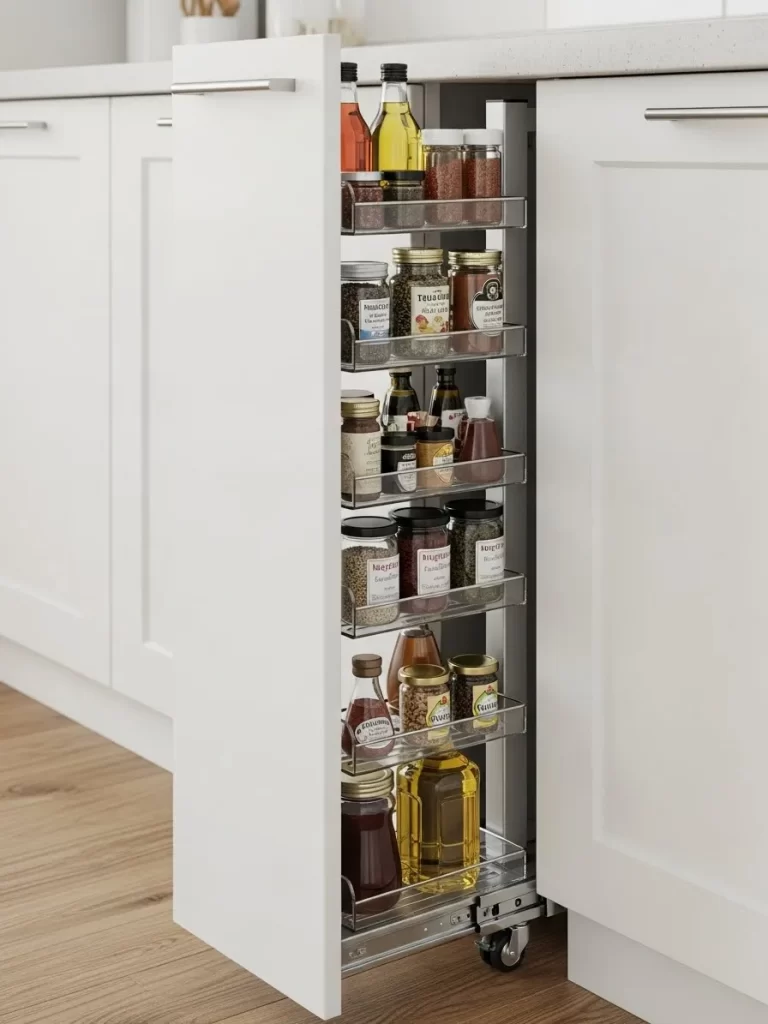
This vertical, rolling drawer system is an ingenious solution for maximizing the tiny, unused cabinet space next to a stove or sink. The slim unit features multiple metal shelves with raised sides, capable of holding a surprising amount of spices, oils, and small jars. It rolls smoothly out on its base, providing immediate, easy access to all the contents.
The pull-out design means no more digging or reaching to the back of a cupboard; everything is visible and accessible from the side. The wire and metal construction is durable and easy to clean. This specialized organizer is a genuine space-saver, transforming awkward fillers into valuable, functional storage in a compact kitchen.
Materials Required (For custom non-slip shelf liners)
- Thin, clear or colored plastic shelf liner (non-slip grip style)
- Scissors
- Permanent marker
Equipment Required
- Measuring tape or ruler
DIY Instruction: Adding Non-Slip Shelf Liners
- Measure Each Shelf: Use the measuring tape to measure the exact length and width of each individual metal shelf within the pull-out unit. Since shelves can vary slightly, measure each one separately.
- Cut the Liner Pieces: Using the permanent marker, trace the measured dimensions onto the back of the non-slip shelf liner. Use scissors to cut out one liner piece for each shelf.
- Clean the Shelves: Wipe down the metal shelves to ensure they are clean and dry before applying the liner.
- Place the Liners: Lay the cut non-slip liners onto the surface of each metal shelf, starting with one end and smoothing them down to eliminate air bubbles. The liner material naturally grips the metal.
- Load the Jars: Place your spices and jars back onto the shelves. The non-slip surface prevents glass containers from sliding, tipping, or rattling loudly when the pull-out unit is opened and closed rapidly.
33. Over-the-Sink Colander and Drying Basket
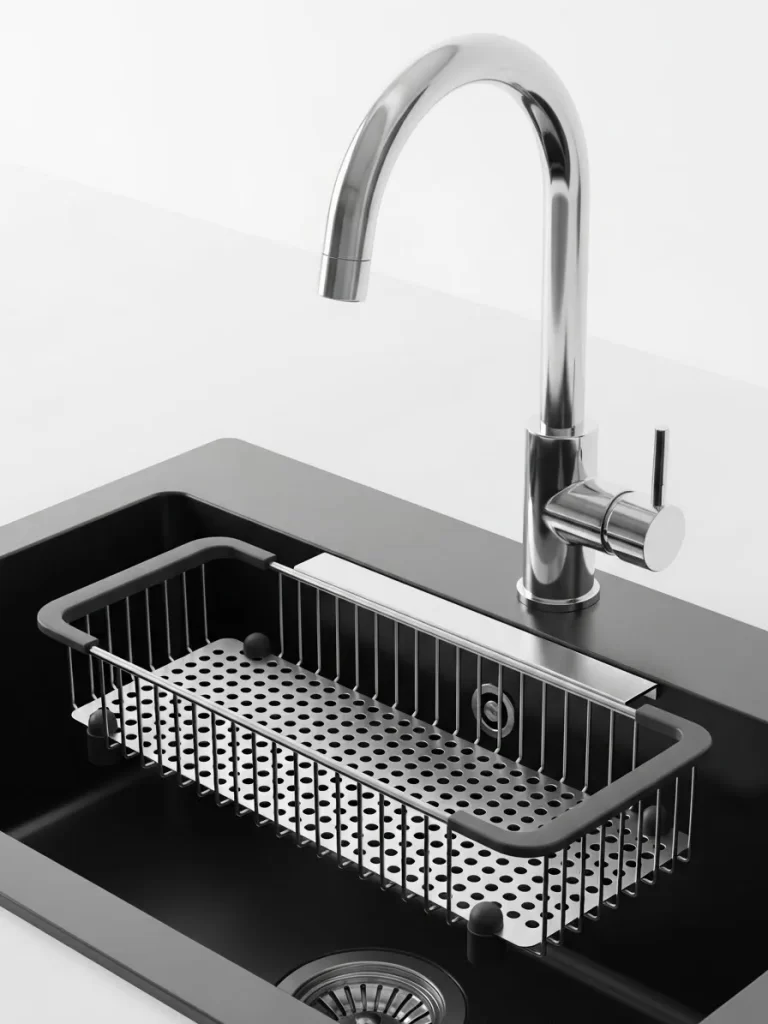
This highly practical and space-saving metal basket is designed to sit securely inside a kitchen sink bowl. It features a perforated base for drainage and adjustable sides, allowing it to fit various sink widths. Constructed from durable stainless steel and plastic, the container is sturdy and easy to clean.
Sitting over the sink drain, it functions as a compact drying rack for small items, a strainer for produce, or a temporary holding spot for sponges and scrub brushes. This clever placement keeps items off the countertop, maintaining a clean and clear work surface in the kitchen. The versatile design is a fantastic aid for streamlining food prep and dishwashing routines.
Materials Required (For custom storage compartments)
- Small plastic suction cups (4 needed)
- Waterproof plastic dividers or small plastic trays
- Strong, clear silicone sealant
Equipment Required
- None
DIY Instruction: Creating Divider Zones Inside the Basket
- Determine Zones: Decide how you want to divide the basket (e.g., one section for sponges, one for silverware).
- Prepare Dividers: If using small plastic trays as dividers, ensure they fit the depth of the basket. If creating a vertical divider, you may need a small, rigid piece of waterproof plastic.
- Attach Suction Cups: Attach the suction cups to the bottom of the basket or the sides of the basket where the divider will rest. The suction cups provide a secure grip on the sink basin.
- Secure the Dividers: Use a small amount of clear silicone sealant to adhere the chosen waterproof dividers or trays to the interior sides of the metal basket. This creates fixed zones for different items. Allow the sealant to cure completely, ensuring the area is dry.
- Organize Tools: Once the sealant is dry, place your sponge, scrub brush, and possibly a few small utensils into their designated zones. The dividers keep the cleaning tools separated and organized while they dry.
34. Hanging Canvas Pocket Organizer
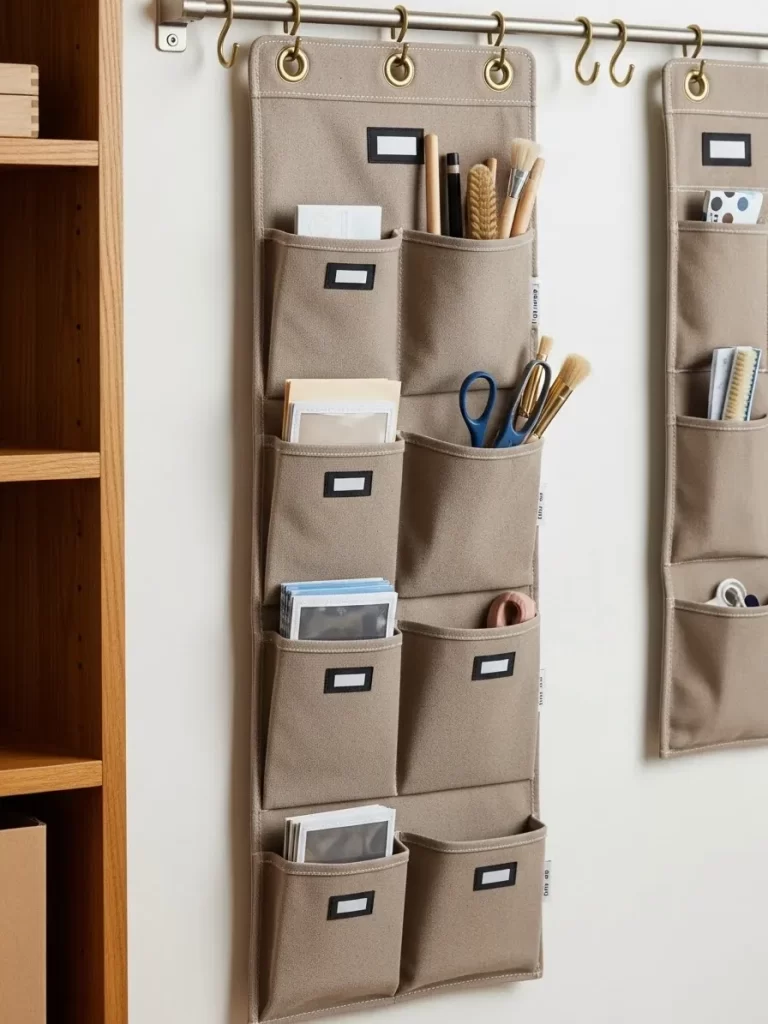
This vertical storage solution is excellent for utilizing wall space in a closet, craft room, or entryway. Made from durable, neutral-toned canvas, it features multiple deep pockets of varying sizes, perfect for sorting small items. Metal grommets along the top allow it to hang securely from a rod or simple wall hooks.
Each pocket is trimmed with a contrasting black label space, making it easy to categorize and identify the contents, from pens and brushes to mail and receipts. This wall-mounted organizer is genuinely helpful for keeping small, frequently used accessories contained and off tabletops. The vertical design maximizes space and brings order to cluttered workstations.
Materials Required (For custom embroidered or stenciled labels)
- Embroidery floss and needle or fabric stencil set
- Permanent fabric marker or small white cardstock labels
- Scissors
Equipment Required
- Iron (to set stencil ink, if applicable)
DIY Instruction: Creating Personalized Fabric Labels
- Prepare the Labels: Decide if you will use white cardstock labels slipped into the existing black holders or if you will mark directly on the black trim or above the pocket.
- Stenciled Labels (Direct Fabric): If stenciling, lightly secure the stencil above the pocket opening. Use the fabric marker to fill in the letters (e.g., “PENS,” “MAIL,” “CRAFTS”). Carefully remove the stencil and allow the ink to dry completely. Set the ink with an iron if required by the manufacturer.
- Embroidered Labels (Direct Fabric): Using the embroidery needle and floss, stitch the name of the contents directly onto the black trim or the top edge of the canvas pocket. This provides a handcrafted, durable label.
- Cardstock Labels (Inside Holder): If using cardstock, write the label clearly with a permanent marker. Cut the cardstock to fit precisely inside the black plastic holder.
- Load the Pockets: Once labeled, the organizer makes it simple to store and retrieve your supplies quickly, keeping your workspace efficient and tidy.
35. Under-Shelf Hanging Storage Jars
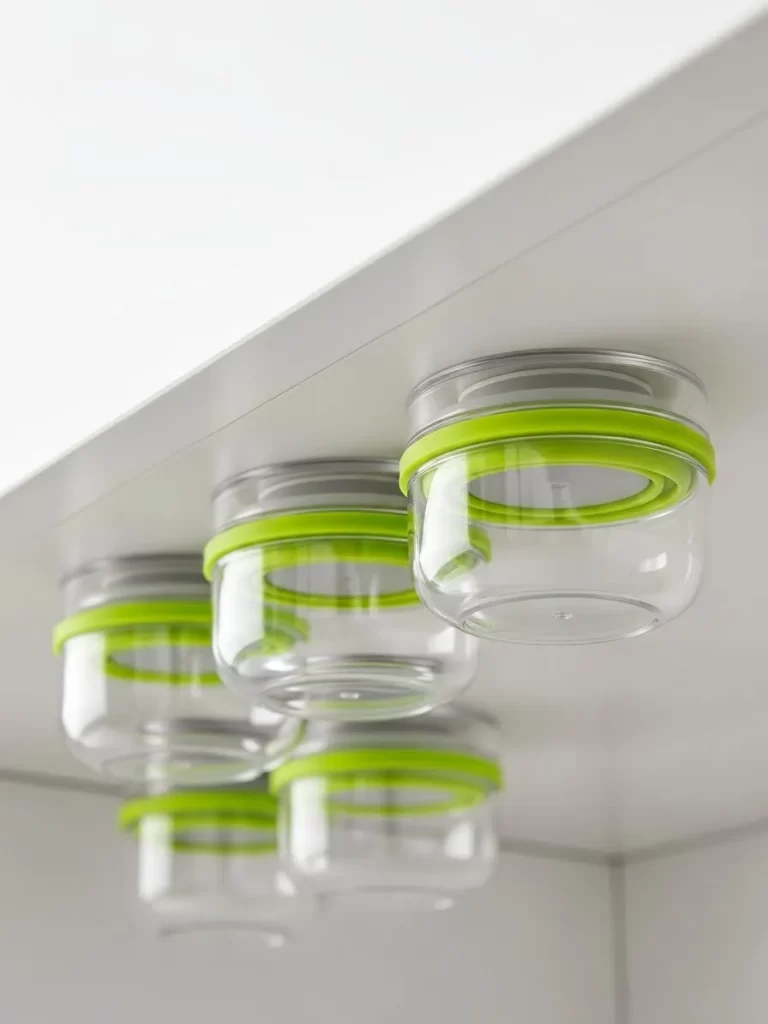
These clear plastic jars offer an ingenious, space-saving storage method by attaching to the underside of a cabinet or shelf. The lids features a specialized ring attachment that screws directly into the shelf, allowing the jar body to hang down. Clear plastic construction with a bright green ring provides easy visibility of the contents.
This system is an excellent way to store small, dry items like spices, sprinkles, craft beads, or office staples. Hanging the jars frees up valuable counter or shelf space, utilizing often-wasted vertical space. This clever organization method is especially helpful in cramped kitchens or utility areas where surface space is limited.
Materials Required (For installation and sealing)
- Small wood screws (appropriate size for jar lids)
- Small drill bit (smaller than the screw diameter)
- Pencil
Equipment Required
- Power drill or screwdriver
- Step ladder (for reaching high shelves)
DIY Instruction: Installing the Hanging Jars
- Determine Placement: Decide where you want the jars to hang under the shelf. Use a pencil to mark the exact spot for each jar’s lid. Ensure there is enough clearance to twist the jar off and back on easily.
- Drill Pilot Holes: Wearing safety glasses, use the power drill and a small drill bit (slightly smaller than the wood screws) to drill pilot holes into the shelf at the marked spots. Pilot holes prevent the wood from splitting.
- Secure the Lids: Hold the jar lid up to the shelf, aligning the holes in the lid with the newly drilled pilot holes. Insert the wood screws and use the power drill or screwdriver to secure the lid tightly to the underside of the shelf.
- Fill the Jars: Fill the plastic jars with your chosen contents (e.g., sprinkles, fasteners).
- Attach the Jars: Twist the filled jars securely onto the installed lids. The contents are now off the counter and neatly displayed for easy access.
36. Single Cubby Storage Bin with Handle
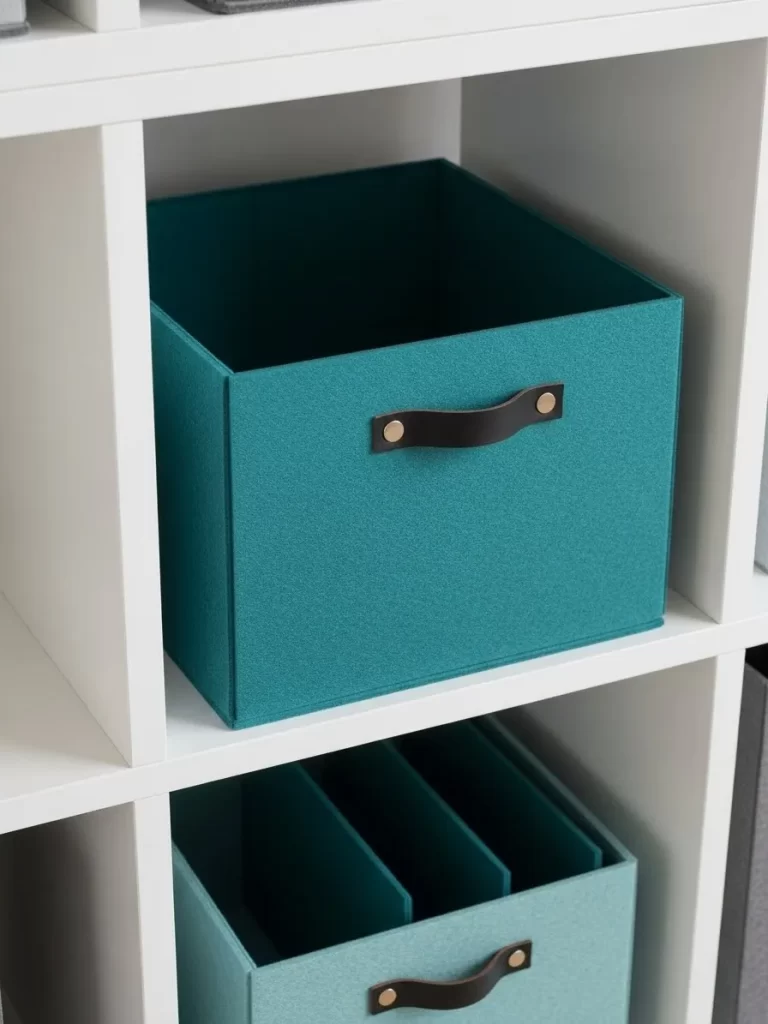
This simple fabric storage cube offers an easy and stylish way to organize shelving units, particularly those with modular cubby systems. The sturdy construction maintains its square shape, fitting perfectly into the designated space. The vibrant teal color adds a striking contrast against the white shelving unit, making organization visually appealing.
A dark brown faux leather pull handle, secured with brass rivets, is centered on the front. This handle is both a decorative detail and a useful element for easily sliding the bin out of the cubby. These bins are wonderful for containing toys, books, folded clothes, or crafting materials, instantly tidying a cluttered space while introducing texture and color.
Materials Required (For custom handle material)
- Thick felt, webbed strapping, or heavy ribbon (color of choice)
- Small metal rivets or decorative buttons
- Heavy-duty thread
Equipment Required
- Ruler
- Hole punch or drill
- Rivet setting tool (if using rivets)
- Hammer
DIY Instruction: Replacing the Handle with Custom Material
- Remove Existing Handle: Carefully remove the existing handle, paying attention to how the rivets or screws are attached. You will reuse the existing attachment points.
- Measure and Cut New Handle: Measure the length of the old handle. Cut a piece of your chosen felt, webbing, or ribbon to this length, adding one inch for securing the ends.
- Prepare Attachment Points: Punch or drill two holes in the new handle material, matching the distance between the holes on the original handle.
- Secure the New Handle (Rivet Method): Line up the holes on the new handle with the original attachment holes on the fabric bin. Push the rivet post through the fabric and handle. Place the cap on the post and use the rivet setting tool and hammer to firmly set the new decorative rivets, securing the new handle in place.
- Secure the New Handle (Sewing Method): Use a heavy-duty needle and thread to sew the ends of the new handle material firmly to the existing attachment points on the fabric bin. Stitch multiple times for strength.
- Style Update: The customized handle provides a fresh look, allowing you to easily personalize cubby storage to match different room aesthetics.
37. Wood-Grain Textured Outdoor Deck Box
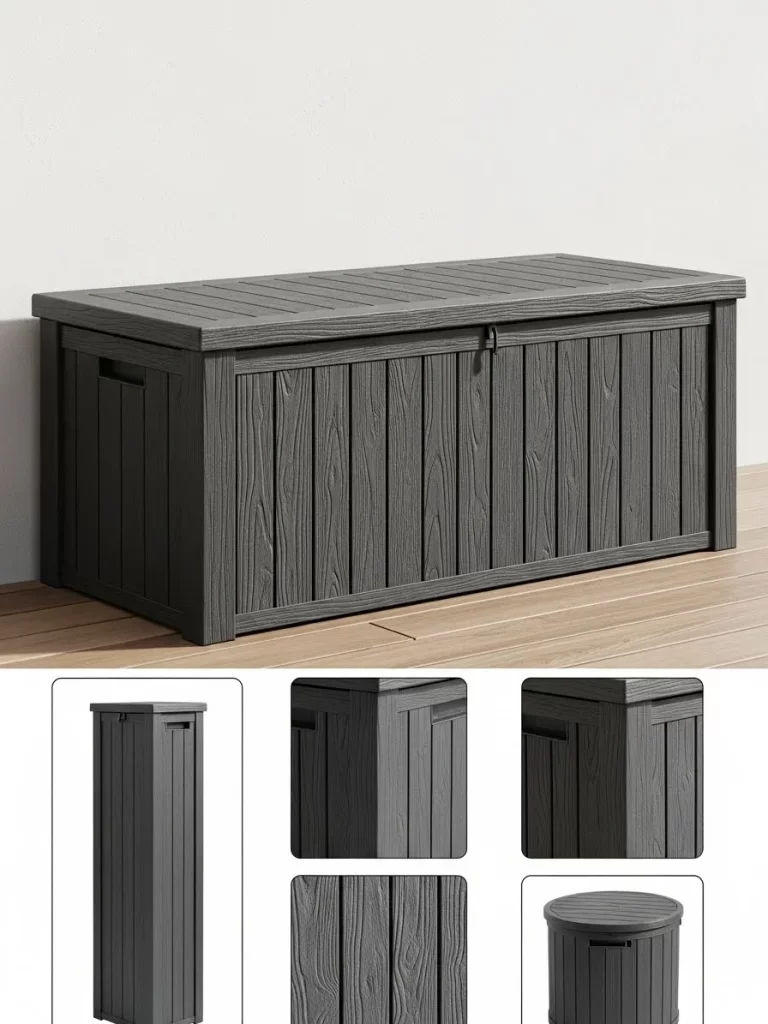
This large, durable storage chest is designed specifically for outdoor use, providing substantial space for patio cushions, garden tools, or pool toys. The exterior features a detailed wood-grain texture in a sophisticated dark gray color, offering the aesthetic appeal of wood without the maintenance concerns. The structure is waterproof and weather-resistant.
The wide, hinged lid ensures simple access to the entire interior. Built-in handles on the sides allow for easy repositioning on a deck or patio. This piece functions effectively as both a spacious outdoor container and a functional bench for extra seating. Its robust construction ensures your outdoor items remain dry and organized throughout the year.
Materials Required (For adding internal divisions)
- Waterproof plastic or moisture-resistant treated wood panels
- Strong, waterproof adhesive (suitable for plastic/wood)
- Measuring tape
- Pencil
Equipment Required
- Saw (if using wood) or utility knife (if using plastic panels)
DIY Instruction: Adding Internal Divider Walls
- Measure the Interior: Measure the length, width, and height of the inside of the deck box. Determine where you want the vertical divider walls to create separate zones (e.g., one for cushions, one for tools).
- Cut the Dividers: Cut the plastic or treated wood panels to the desired height and width of your internal sections. Ensure the panels fit snugly against the base.
- Clean the Interior: Wipe down the interior surfaces of the deck box where the dividers will be attached to remove any dirt or residue.
- Apply Adhesive: Apply a continuous bead of strong, waterproof adhesive along the edges of the divider panels that will connect with the deck box walls and base.
- Install the Dividers: Carefully place the divider panels inside the box, pressing them firmly into place against the walls and floor. If you are creating a center divider, apply adhesive to all four edges.
- Cure Time: Allow the adhesive to cure completely, which may take 24–48 hours, ensuring the dividers are rigid and stable before loading heavy items. The internal walls keep your different outdoor supplies neatly separated and easy to find.
38. Rolling Under-Shelf Storage Bin
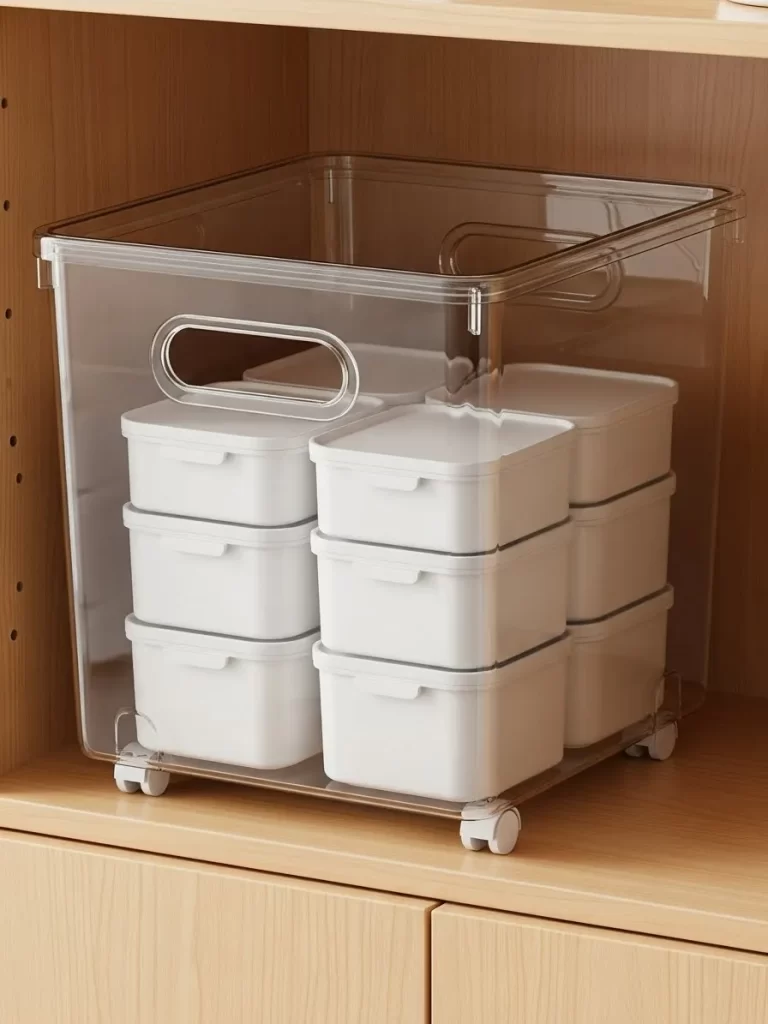
This clear plastic container is a highly visible and movable storage solution, designed to maximize space inside deep cabinets or on lower shelves. The robust plastic body is completely transparent, allowing you to see the contents immediately. Its main feature is the inclusion of small wheels on the base.
The wheels allow the bin to glide effortlessly in and out of a cabinet, eliminating the need to strain when reaching for items stored in the back. The large built-in handle on the front makes pulling and pushing simple. The bin is large enough to hold several stacked smaller containers, making it an excellent utility organizer for cleaning supplies, canned goods, or craft supplies.
Materials Required (For securing internal bins)
- Small Velcro dots (adhesive-backed)
- Rubbing alcohol (for cleaning surfaces)
Equipment Required
- None
DIY Instruction: Securing Inner Bins to the Base
- Clean the Surfaces: Use rubbing alcohol to wipe down the bottom of the small internal bins and the corresponding areas on the floor of the large clear bin. This ensures the adhesive Velcro sticks securely.
- Attach the Velcro: Peel one side (hook) of the Velcro dot and attach it to the bottom of the smaller storage bin. Peel the other side (loop) and attach it to the corresponding spot on the floor of the large rolling bin.
- Place the Bins: Firmly press the small bins onto the Velcro dots on the base of the large rolling container.
- Test the Movement: Load the contents and test the rolling bin. The Velcro prevents the individual small bins from shifting, tipping over, or rattling around every time the main container is rolled in or out of the cabinet.
39. Stacked Colorful Square Bins

This collection of rounded, square plastic containers showcases how coordinating colors can make storage a purposeful design element. The containers nest beautifully when empty, saving space, and they stack securely when full, thanks to their uniform shape. The soft, matte finish of the plastic prevents a cheap, glossy look.
The deep blue base container is the largest, supporting a cascade of warm tones including mustard yellow, terracotta red, and a soft pale gray. Each bin features generous cut-out handles, making them easy to lift and carry, even for children. These containers are genuinely helpful for organizing open shelves in a playroom, laundry room, or utility closet, offering durable, colorful, and highly versatile storage.
Materials Required (For custom chalk labels)
- Large chalkboard vinyl sheet (adhesive-backed)
- Liquid chalk markers (multiple colors)
- Scissors or rotary cutter
- Straight edge ruler
Equipment Required
- None
DIY Instruction: Adding Large Chalkboard Labels
- Determine Label Size: Measure the front surface of each bin where you want the label to go. Decide on a size that is large enough to be easily readable but does not overwhelm the front surface.
- Cut the Labels: Use the ruler and scissors or rotary cutter to cut one rectangle of chalkboard vinyl for each bin, matching your determined size.
- Clean the Bins: Wipe the front surface of the bins with a clean, damp cloth to remove any dust, ensuring the adhesive sticks well.
- Apply the Labels: Peel the backing off the vinyl. Carefully apply the label to the center of the front of each bin, smoothing it out from the center to prevent bubbles.
- Write and Organize: Use the liquid chalk markers to write the contents (e.g., “Legos,” “Towels,” “Gloves”) onto the chalkboard labels. The ability to erase and rewrite means you can easily change the contents and relabel the bins as your storage needs evolve.
40. High-Security Digital Safe Box

While not a traditional bin or basket, this small digital safe is the ultimate protective storage solution for sensitive or valuable documents and personal items. The solid metal construction offers high security, disguised with a sleek, modern exterior and a mirrored digital keypad. The compact size allows it to be discreetly placed within a shelf or cabinet.
The electronic lock requires a personal code for access, keeping jewelry, passports, and essential paperwork securely contained. The addition of a safe provides peace of mind by centralizing important valuables in one highly secure location. This item is essential storage for anyone prioritizing security in their home organization.
Materials Required (For internal cushioning and moisture control)
- Thin felt sheet or micro-fiber cloth
- Desiccant packets (silica gel)
- Strong double-sided tape
Equipment Required
- Scissors
DIY Instruction: Adding Interior Protection and Moisture Control
- Measure and Cut Liner: Open the safe door. Measure the dimensions of the interior floor and the side walls. Cut the felt or micro-fiber cloth to fit these interior surfaces precisely.
- Install Liner: Apply strips of strong double-sided tape to the interior walls and floor of the safe. Carefully press the felt pieces onto the taped surfaces. The soft liner protects valuables like jewelry or watches from scratching against the metal interior.
- Add Moisture Control: Place several small desiccant packets (silica gel) into a corner of the safe. These absorb moisture and humidity, protecting paper documents and metal items from damage or tarnishing.
- Organize and Secure: Place your important documents and valuables inside the now-cushioned and protected safe. Set your digital code and secure the door.
Organizing your home truly is a journey, not a single destination. We have explored forty distinct ways to leverage the power of smart, stylish bins and baskets, demonstrating that function and beauty can coexist effortlessly. Achieving a space that supports your life, rather than fighting against it, is possible with intentional storage choices.
Remember to choose containers that not only hold your belongings but also complement your home’s aesthetic. A beautiful basket or a thoughtfully labeled bin is much more likely to be used correctly and consistently. This shift from seeing storage as merely utilitarian to seeing it as decoration changes the entire mood of a room.
Take these principles and begin implementing them slowly, focusing on one cluttered area at a time. By adding structured, appealing storage to your spaces, you create a harmonious and efficient environment for yourself and your family. Start enjoying the lasting sense of calm a well-organized home provides.
Key Takeaways
Smart storage is about utilizing wasted vertical space, such as under-shelf racks and hanging containers. Look up in cabinets and down in drawers to find hidden organizational potential.
Texture matters when organizing. Choosing materials like natural cork, woven rattan, or chunky knits introduces warmth and keeps your home from feeling cold or sterile.
Labeling is key for consistency. Permanent labels, chalkboard vinyl, or clear tags ensure every member of the household knows where items belong, simplifying cleanup dramatically.
Think outside the typical container. Items like rolling bins, decorative trunks, and multi-functional ottomans provide capacity and versatility beyond a basic plastic box.
Customize your solutions to fit your style. Simple DIY additions, like custom paint, internal liners, or decorative handles, make mass-produced containers feel unique and high-end.