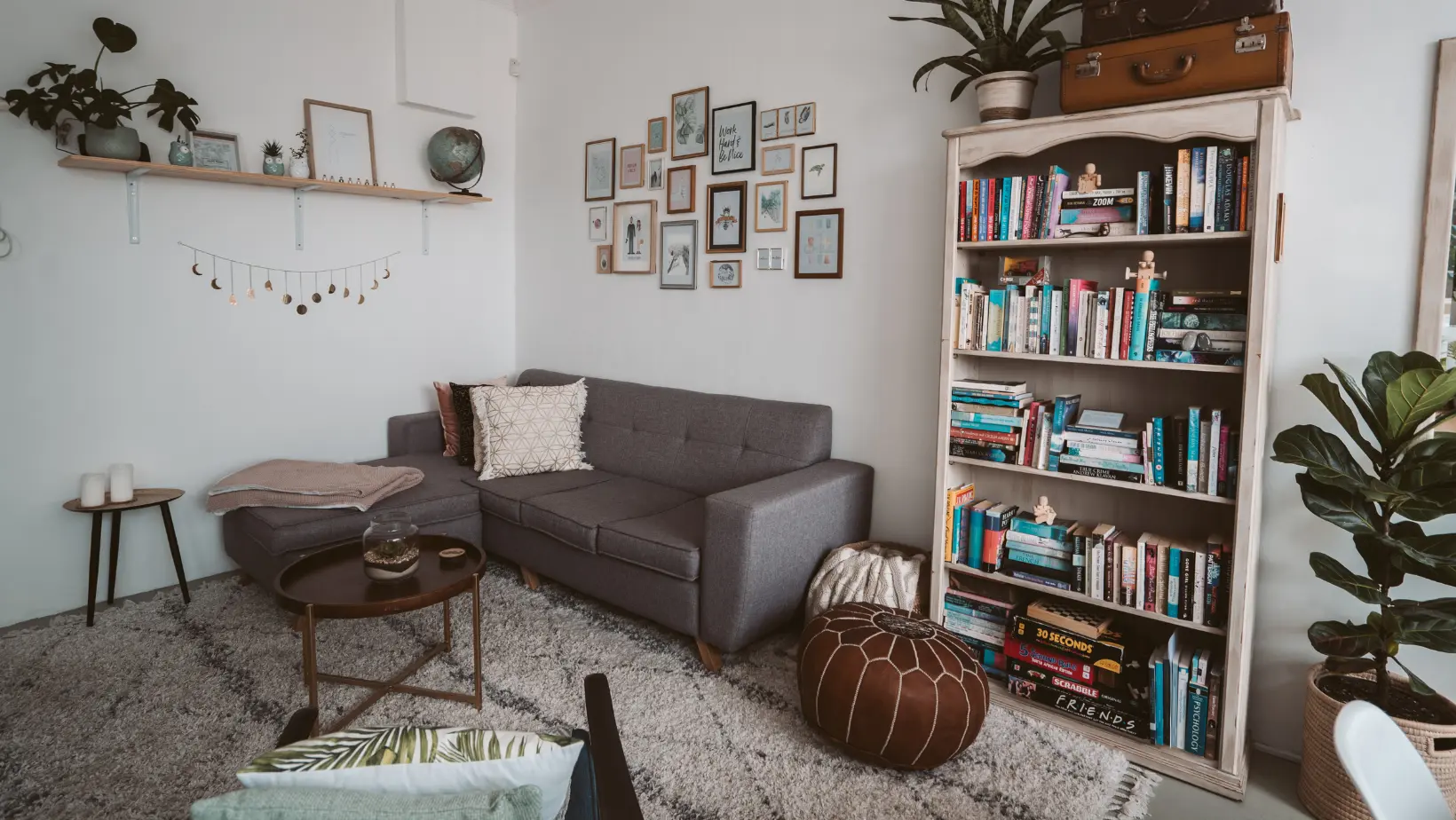
Does your living space feel more like a bowling alley or a hallway than a cozy retreat? Rectangular footprints create a dreaded tunnel effect. It becomes incredibly frustrating to position your seating and televisions without creating a cramped obstacle course.
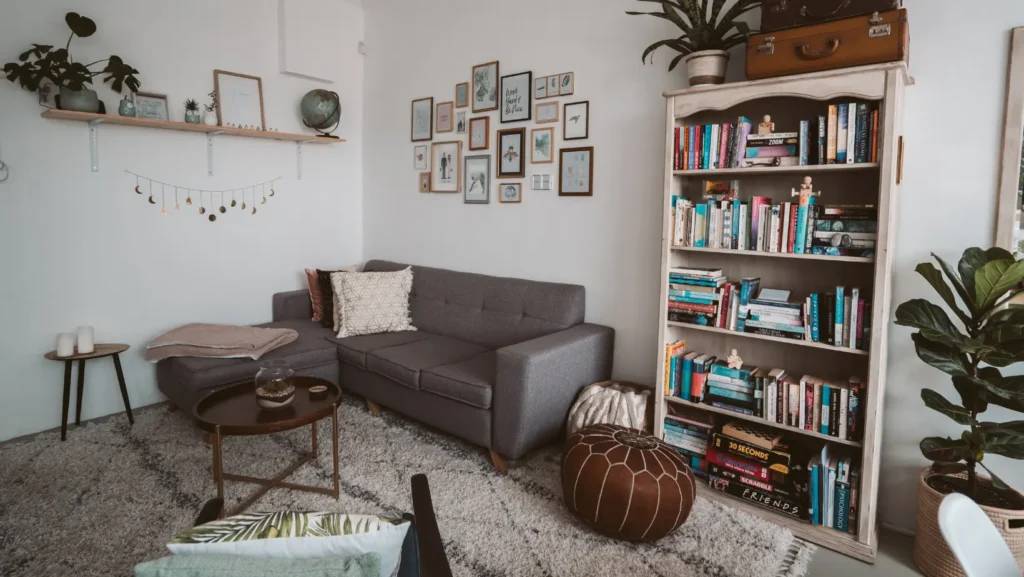
But it gets better. You do not have to live in a space that feels like a waiting room.
The exact mathematical rules and spatial planning secrets interior designers use can fix this. You will learn how to visually widen your space and build functional zones. If you want to know how to arrange furniture in a long narrow living room, you are in the right place. A proper narrow living room layout changes everything.
1. Stop Pushing Furniture Against the Wall (Float It)
Narrow Room Fixer 🛋️
Break the “tunnel effect”! Set the right wall clearance to float your furniture and establish a safe traffic pathway.
You might think the best way to save space is by pressing your sofa tight against the wall. In reality, this is the worst thing you can do.
Lining your pieces up against the walls emphasizes the length of the room. It creates a sterile waiting room effect. You need to let the room breathe. Pull your sofa at least 12 to 24 inches away from the wall. This is called floating your furniture. Floating creates a sense of airiness that makes the room feel wider.
Here is the secret. Instead of using one long sofa placed lengthwise, try placing two small sofas facing each other widthwise. This visually pushes the walls outward.
Once your sofa is floated, the next step is establishing clear walkways. You must follow the 36 inch rule. Always leave at least 30 to 36 inches of clear pathway for traffic flow. This stops people from bumping into things. A smart narrow living room furniture arrangement respects these traffic lanes.
Grab your tape measure right now and ensure you have exactly 36 inches of clearance for your main walkways.
2. Divide the Long Space into Distinct Zones
The Room Divider Planner 📏
Don't leave a 12x20 room as one awkward rectangle. Slide the console table to split the space into a primary lounge and a secondary zone.
People often assume a large room must serve just one single purpose. That is completely wrong.
If you treat a long rectangle as one single area, it will always feel awkward. You need to break the long rectangle into two distinct squares. Dedicate the primary zone to lounging and watching TV. Then use the secondary zone for a workspace, a reading nook, or a small dining table.
Think about it. If you have a 12 by 20 foot open space, do not leave it empty. Split it into a 12 by 12 foot seating area and a 12 by 8 foot home office nook. This is exactly how to decorate a long living room effectively.
Pro Tip: You can place a console table directly behind your floating sofa. This acts as a physical divider between these two new zones. It clearly tells the brain where one area ends and another begins.
Now that you have established your zones, you need to define them. Go look at your room and decide exactly where the dividing line will sit today.
3. Soften the Tunnel Effect with Curved Furniture
The Curved Layout Sandbox 🛋️
Straight lines emphasize the "tunnel effect" in a narrow room. Soften the geometry and dial in the perfect coffee table spacing.
Title
Message
You might believe straight lines look cleaner and save space. Actually, straight lines make a narrow room look even longer.
Long rooms already have too many straight horizontal lines. You must introduce soft and rounded lines to break up that harsh geometry. This softens the entire space. Spatial planning experts at places like Apartment Therapy recommend mixing shapes to add visual relief.
Best furniture shapes for narrow rooms:
- Round coffee tables
- Curved bucket armchairs
- Large circular mirrors
- Oval side tables
When you arrange furniture in a long narrow living room, spacing is critical. Keep exactly 14 to 18 inches of distance between your round coffee table and the sofa edge. This allows for comfortable legroom while keeping your drinks within easy reach.
Small seating pieces grouped together create a cozy feeling. Look at the famous Brooklyn railroad apartment layout. They use three small seating pieces to create a U shaped conversation area instead of one massive sectional. Stand in your room and count the sharp corners. Replace at least two of them with something round.
4. Anchor Your Layout with the Right Rug Proportions
The Rug Demarcation Rule 📏
Rugs create invisible borders. Scale your rug correctly and anchor the space so it doesn't look like a floating bathmat.
Title
Message
Many people think rugs are just for decoration. In a long room, they are your best structural tool.
Rugs are the absolute easiest way to demarcate your new zones without building actual walls. You should use different rugs for your TV zone and your secondary zone. Just make sure the colors complement each other. You must ensure your rug is scaled correctly. A tiny rug makes the room look cheap and disjointed. It will look like a tiny bathmat stranded in the middle of the floor.
Designer Secret: Always use the two thirds rule for your rugs. The rug should be at least two thirds the length of your sofa. Additionally, all front legs of your seating should rest firmly on it.
This grounds the space beautifully. A successful long narrow living room layout relies heavily on these invisible borders. Check the front legs of your sofa and chairs right now. Pull your rug out until all those front legs sit flat on the fabric.
5. Optimize TV Placement and Eye Level Design
The TV Wall Optimizer 📺
Prevent the tunnel effect! Set your ideal viewing distance, balance the vertical space, and center your artwork precisely.
You might think the biggest wall is automatically the best place for your television. That is often a huge mistake.
Do not place a massive TV on the longest wall if your seating is pushed too close to it. It ruins the viewing experience and makes the room feel tight. You need to calculate the proper viewing distance. The ideal viewing distance is 1.5 to 2.5 times the diagonal width of your TV screen. For example, a 50 inch TV requires about 6 to 10 feet of distance between the screen and your eyes.
But it gets better. You must also draw the eye vertically. This distracts people from the narrow width of the floor. Use tall bookcases or high hung curtains to force the eyes up toward the ceiling. This vertical design trick makes people forget how narrow the floor space actually is. You should also center your wall art exactly 57 inches from the floor to balance the room scale properly.
If you struggle with planning, use AI layout tools like ReimagineHome.ai or digital planners like RoomSketcher. They let you preview your narrow living room furniture arrangement before moving heavy items. Measure the distance from your sofa to your TV screen right now and adjust it to fit the math.
Conclusion
Fixing an awkward space comes down to simple math and smart choices. Remember to pull your pieces away from the wall to float your furniture. Break the long shape into two functional zones using console tables and properly sized rugs. Add curved tables and chairs to soften the harsh straight edges. Always respect the 36 inch pathway rule so traffic flows easily.
You can completely transform your home without knocking down any walls. Which layout trick do you plan to try first? Grab your measuring tape and test your walkways right now. Tell me your results in the comments below. When you follow these specific steps, it becomes incredibly easy to arrange furniture in a long narrow living room.