Living in a studio apartment does not mean your bed must sit in the middle of your kitchen. You want distinct areas for sleeping, working, and lounging. But traditional renovations are expensive, permanent, and usually banned by landlords. Renting a single room often feels chaotic when every activity happens in one open space.
Figuring out how to divide a studio apartment without building walls is the absolute key to creating a home you actually love. In this guide, you will discover the most stylish, damage free ways to zone your floor plan using strategic furniture, textiles, and visual tricks. You do not need expensive construction skills to pull this off.
You just need the right strategy. We will show you exactly what to buy and where to put it. Get ready to use the best renter friendly studio apartment dividers to transform your space into a structured sanctuary.
Loading client request…
1. Select Tension Rod
Standard Rod
$5
Heavy Duty Rod
$15
2. Select Fabric Panel
Sheer Linen
$25
Heavy Cotton
$28
Velvet Blackout
$34
Premium Silk
$45
1. Anchor the Room with Open Back Bookshelves
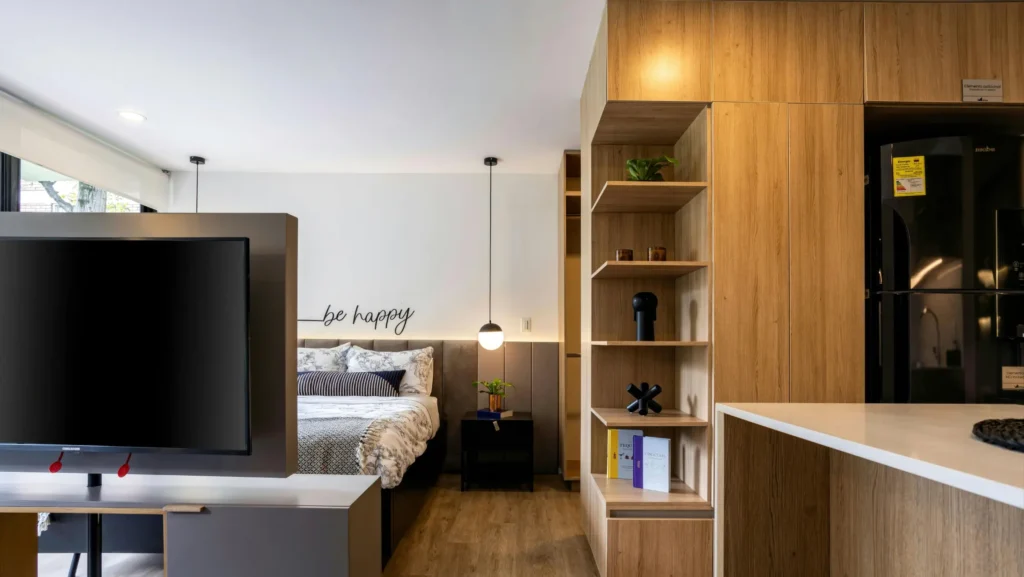
If you want to maximize storage while splitting your room in half, open back shelving is your absolute best friend. Use freestanding modular shelving to create a physical barrier that lets sunlight pour through. The famous IKEA Kallax hack works perfectly here.
The IKEA Kallax Strategy
Vertical storage dividers can effectively increase your usable footprint by up to 30 percent. Alternate books, trailing plants, and decorative objects in the empty cubbies. This creates an airy, aesthetic look that feels completely intentional.
But it gets better: You get double the function without losing any precious daylight. While shelving is great for storage, safety is your top priority. Make sure the unit is completely secured to the wall or wide enough to prevent accidental tipping.
Budget Hack: Add lockable caster wheels to the bottom of a cheap shelf to create mobile small space room partitions you can roll aside when hosting guests.
Opt for units that are at least five feet tall to create a true sense of division. This height blocks the view of your bed while keeping the ceiling open.
2. Hang Soft Textiles Using Heavy Duty Tension Rods
Hanging curtains is the fastest way to carve out a private bedroom nook in minutes. While bulky furniture takes up floor space, sometimes you need a solution that feels soft and luxurious. Tension rods require absolutely zero drilling. This makes them the ultimate temporary fix for strict leases.
The 2026 Tension Rod Trend
A massive 2026 DIY trend involves using a $15 heavy duty tension rod paired with inexpensive linen panels to create a custom fabric wall for under $50. Here are the best materials to use:
- Sheer linen for breezy, light filtering privacy.
- Velvet blackout drapes for a snug, dark sleeping cave.
- Heavy cotton blends for a crisp, clean look.
Ceiling mounted temporary tracks are also a fantastic option for a highly customized look.
Designer’s Pro Tip: Place your rod as close to the ceiling as possible to make your walls look taller and much more expensive.
These simple textiles make the best renter friendly studio apartment dividers available today. Always measure your wall width twice before buying your rod.
3. Install Sliding Glass or Frameless Partitions
Glass room dividers give you the luxury of a separate room without sacrificing a single drop of natural sunlight. While curtains offer soft privacy, sleek glass stops sound dead in its tracks. Glass partitions block noise from the kitchen or living area while letting daylight reach across the entire home.
Here is the secret: You can install these modern systems without tearing up your apartment.
Why Glass Beats Drywall
Track systems can be installed in just 1 to 3 days, compared to the 1 to 3 weeks required to build traditional drywall. Matte black aluminum frames bring an incredible industrial chic vibe to your space. Ribbed and fluted glass panels are massive trends right now. They hide your messy bed brilliantly while maintaining an incredibly bright atmosphere.
According to interior glass manufacturers, sliding glass dividers are significantly more eco friendly and cost a fraction of permanent walls. They instantly modernize a tired, outdated space. Figuring out how to divide a studio apartment without building walls is easiest when you let the light flow freely. Think about it: traditional walls block sunlight and make small rooms feel like cramped boxes. Glass does the exact opposite.
Designer’s Pro Tip: Use a free online 3D room planner to drag and drop these glass walls into your layout before spending any money.
Look for pressure mounted track systems to ensure you get your full security deposit back when you move. These systems grip the floor and ceiling tightly without needing heavy screws. This gives you absolute peace of mind and incredible style.
4. Create a Living Wall with Tall Indoor Plants
Bringing nature indoors is a brilliant way to build a vibrant, breathing barrier between your living zones. While glass panels look sleek, sometimes a room needs lush, organic textures to feel truly welcoming. Use rectangular planter boxes filled with tall, dense greenery.
Best Plants for Privacy
Biophilic design is proven to reduce stress, which is a crucial benefit for people working and sleeping in the exact same room. Try picking up these tall varieties:
- Snake plants for straight, vertical height.
- Bamboo palms for wide, leafy coverage.
- Pothos vines to drape over a rolling garment rack.
Biophilic Zoning Planner
Use nature to divide your studio and lower stress
Loading layout challenge…
Snake Plant
Straight, vertical height
Bamboo Palm
Wide, leafy coverage
Pothos Vine
Trailing and draping
Alternatively, you can use a rolling garment rack to build a bohemian, mobile room divider. Plants improve indoor air quality while softening the harsh angles of small apartments.
Budget Hack: Propagate cuttings from friends to fill out your indoor jungle completely for free.
These open layout zoning techniques breathe fresh life into dark corners. Mix different plant heights to make the barrier look completely natural and full. Planter boxes also hide messy wires from your lamps and chargers.
5. Map Out Zones with Rugs and Smart Lighting
You do not always need a physical barrier to separate your living areas effectively. While tall plants block lines of sight, visual zoning tricks the eye into seeing entirely different rooms. Interior designers constantly advocate for visual continuity. You use a consistent color palette but completely different textures to separate areas without making them feel claustrophobic.
Place a large, textured rug under the living room setup. Then drop a contrasting, softer rug right under the bed.
The Power of Visual Continuity
Arcadium 3D room planner data shows that dropping a textured carpet under a sofa instantly anchors a living zone without taking up vertical space. Use pendant lights directly over the dining area. Place warm floor lamps by the sofa to earmark the exact purpose of each corner.
Designer’s Pro Tip: Keep all your light bulbs at a warm 2700K color temperature so the different zones feel cozy and cohesive at night.
Mastering these open layout zoning techniques makes your home feel twice as big. Layer your lighting to establish clear boundaries after the sun goes down. This prevents the room from feeling like one giant, confusing space. Smart lighting tells your brain exactly where to relax and where to work.
Conclusion
You do not need an expensive contractor to create a multi functional home. By leveraging open shelving, tension rod curtains, glass partitions, and smart visual zoning, you can define your space beautifully. Creating separate areas gives your daily routine structure and much needed peace. You deserve a home that works for your specific lifestyle.
Which of these room divider hacks are you going to try in your apartment? Let us know in the comments below, and do not forget to save this post to your home decor Pinterest board for later! Learning how to divide a studio apartment without building walls is the first step to building your dream sanctuary.